


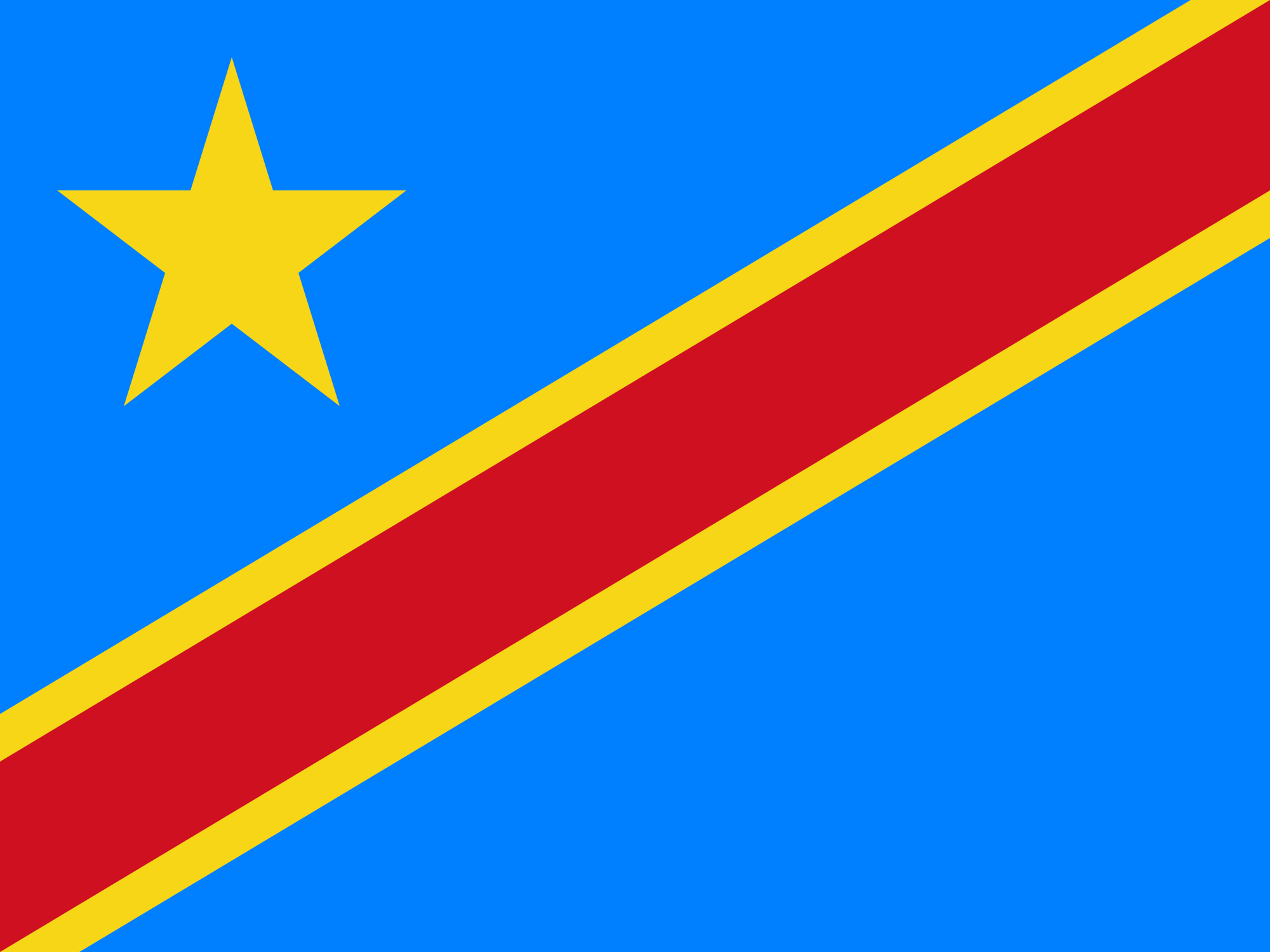
Community hub
Recent from talks
Contribute something to knowledge base
Content stats: 0 posts, 0 articles, 1 media, 0 notes
Members stats: 0 subscribers, 0 contributors, 0 moderators, 0 supporters
Subscribers
Supporters
Contributors
Moderators
Hub AI
Democratic Republic of the Congo AI simulator
(@Democratic Republic of the Congo_simulator)
Hub AI
Democratic Republic of the Congo AI simulator
(@Democratic Republic of the Congo_simulator)
Democratic Republic of the Congo
The Democratic Republic of the Congo (DRC), also known as the DR Congo, Congo-Kinshasa, or simply the Congo, or more infrequently Zaire (its official name from 1971 to 1997) is a country in Central Africa. By land area, it is the second-largest country in Africa and the 11th-largest in the world. With a population of around 112 million, the DR Congo is the second most populous in Africa and the most populous nominally Francophone country in the world. French is the official and most widely spoken language, though there are over 200 indigenous languages. The national capital and largest city is Kinshasa, which is also the economic center. The country is bordered by the Republic of the Congo, the Cabinda exclave of Angola, and the South Atlantic Ocean to the west; the Central African Republic and South Sudan to the north; Uganda, Rwanda, Burundi, and Tanzania (across Lake Tanganyika) to the east; and Zambia and Angola to the south. Centered on the Congo Basin, most of the country's terrain is covered by dense rainforests and is crossed by many rivers, while the east and southeast are mountainous.
The territory of the Congo was first inhabited by Central African foragers around 90,000 years ago and was settled in the Bantu expansion about 2,000 to 3,000 years ago. In the west, the Kingdom of Kongo ruled around the mouth of the Congo River from the 14th to the 19th century. In the center and east, the empires of Mwene Muji, Luba, and Lunda ruled between the 15th and 19th centuries. These kingdoms were broken up by Europeans during the colonization of the Congo Basin. King Leopold II of Belgium acquired rights to the Congo territory in 1885 and called it the Congo Free State. In 1908, Leopold ceded the territory after international pressure in response to widespread atrocities, and it became a Belgian colony. Congo achieved independence from Belgium in 1960 and was immediately confronted by a series of secessionist movements, the assassination of Prime Minister Patrice Lumumba, and the seizure of power by Mobutu Sese Seko in 1965. Mobutu renamed the country Zaire in 1971 and imposed a personalist dictatorship.
Instability caused by the influx of refugees from the Rwandan Civil War into the eastern part of the country led to the First Congo War from 1996 to 1997, ending in the overthrow of Mobutu. Its name was changed back to the DRC and it was confronted by the Second Congo War from 1998 to 2003, which resulted in the deaths of 5.4 million people and the assassination of President Laurent-Désiré Kabila. The war, widely described as the deadliest conflict since World War II, ended under President Joseph Kabila, who restored relative stability to much of the country, although fighting continued at a lower level mainly in the east. Human rights remained poor, and there were frequent abuses, such as forced disappearances, torture, arbitrary imprisonment and restrictions on civil liberties. Kabila stepped down in 2019, the country's first peaceful transition of power since independence, after Félix Tshisekedi won the highly contentious 2018 general election. Since the early 2000s, there have been over 100 armed groups active in the DRC, mainly concentrated in the Kivu region. One of its largest cities, Goma, was occupied by the March 23 Movement (M23) rebels briefly in 2012 and again in 2025. The M23 uprising escalated in early 2025 after the capture of multiple cities in the east, with military support from Rwanda, which has caused a conflict between the two countries. A peace agreement brokered by the United States was signed by Rwanda and the DRC on 27 June 2025.
Despite being incredibly rich in natural resources, the DRC is one of the poorest countries in the world, having suffered from political instability, a lack of infrastructure, rampant corruption, centuries of both commercial and colonial extraction and exploitation, followed by more than 60 years of independence, with little widespread development. The nation is a prominent example of the "resource curse". Besides the capital Kinshasa, the two next largest cities, Lubumbashi and Mbuji-Mayi, are both mining communities. The DRC's largest exports are raw minerals and metal, which accounted for 80% of exports in 2023, with China being its largest trade partner. For 2023, DR Congo's level of human development was ranked 171 out of 193 countries by the Human Development Index. It is classified as being one of the least developed countries by the United Nations (UN). As of 2022[update], following two decades of various civil wars and continued internal conflicts, around one million Congolese refugees were still living in neighbouring countries. Two million children are at risk of starvation, and the fighting has displaced 7.3 million people. The country is a member of the United Nations, Non-Aligned Movement, African Union, COMESA, Southern African Development Community, Organisation Internationale de la Francophonie, and Economic Community of Central African States.
The Democratic Republic of the Congo is named after the Congo River, which flows through the country. The Congo River is the world's deepest river and the world's third-largest river by discharge. The Comité d'études du haut Congo ("Committee for the Study of the Upper Congo"), established by King Leopold II of Belgium in 1876, and the International Association of the Congo, established by him in 1879, were also named after the river.
The Congo River was named by early European sailors after the Kingdom of Kongo and its Bantu inhabitants, the Kongo people, when they encountered them in the 16th century. The word Kongo comes from the Kongo language (also called Kikongo). According to American writer Samuel Henry Nelson: "It is probable that the word 'Kongo' itself implies a public gathering and that it is based on the root konga, 'to gather' (trans[itive])." The modern name of the Kongo people, Bakongo, was introduced in the early 20th century.[citation needed]
The Democratic Republic of the Congo has been known in the past as, in chronological order, the Congo Free State, Belgian Congo, the Republic of the Congo-Léopoldville, the Democratic Republic of the Congo and the Republic of Zaire, before returning to its current name the Democratic Republic of the Congo.
At the time of independence, the country was named the Republic of the Congo-Léopoldville to distinguish it from its neighbour Congo, officially the Republic of the Congo. With the promulgation of the Luluabourg Constitution on 1 August 1964, the country became the DRC but was renamed Zaire (a past name for the Congo River) on 27 October 1971 by President Mobutu Sese Seko as part of his Authenticité initiative.
Democratic Republic of the Congo
The Democratic Republic of the Congo (DRC), also known as the DR Congo, Congo-Kinshasa, or simply the Congo, or more infrequently Zaire (its official name from 1971 to 1997) is a country in Central Africa. By land area, it is the second-largest country in Africa and the 11th-largest in the world. With a population of around 112 million, the DR Congo is the second most populous in Africa and the most populous nominally Francophone country in the world. French is the official and most widely spoken language, though there are over 200 indigenous languages. The national capital and largest city is Kinshasa, which is also the economic center. The country is bordered by the Republic of the Congo, the Cabinda exclave of Angola, and the South Atlantic Ocean to the west; the Central African Republic and South Sudan to the north; Uganda, Rwanda, Burundi, and Tanzania (across Lake Tanganyika) to the east; and Zambia and Angola to the south. Centered on the Congo Basin, most of the country's terrain is covered by dense rainforests and is crossed by many rivers, while the east and southeast are mountainous.
The territory of the Congo was first inhabited by Central African foragers around 90,000 years ago and was settled in the Bantu expansion about 2,000 to 3,000 years ago. In the west, the Kingdom of Kongo ruled around the mouth of the Congo River from the 14th to the 19th century. In the center and east, the empires of Mwene Muji, Luba, and Lunda ruled between the 15th and 19th centuries. These kingdoms were broken up by Europeans during the colonization of the Congo Basin. King Leopold II of Belgium acquired rights to the Congo territory in 1885 and called it the Congo Free State. In 1908, Leopold ceded the territory after international pressure in response to widespread atrocities, and it became a Belgian colony. Congo achieved independence from Belgium in 1960 and was immediately confronted by a series of secessionist movements, the assassination of Prime Minister Patrice Lumumba, and the seizure of power by Mobutu Sese Seko in 1965. Mobutu renamed the country Zaire in 1971 and imposed a personalist dictatorship.
Instability caused by the influx of refugees from the Rwandan Civil War into the eastern part of the country led to the First Congo War from 1996 to 1997, ending in the overthrow of Mobutu. Its name was changed back to the DRC and it was confronted by the Second Congo War from 1998 to 2003, which resulted in the deaths of 5.4 million people and the assassination of President Laurent-Désiré Kabila. The war, widely described as the deadliest conflict since World War II, ended under President Joseph Kabila, who restored relative stability to much of the country, although fighting continued at a lower level mainly in the east. Human rights remained poor, and there were frequent abuses, such as forced disappearances, torture, arbitrary imprisonment and restrictions on civil liberties. Kabila stepped down in 2019, the country's first peaceful transition of power since independence, after Félix Tshisekedi won the highly contentious 2018 general election. Since the early 2000s, there have been over 100 armed groups active in the DRC, mainly concentrated in the Kivu region. One of its largest cities, Goma, was occupied by the March 23 Movement (M23) rebels briefly in 2012 and again in 2025. The M23 uprising escalated in early 2025 after the capture of multiple cities in the east, with military support from Rwanda, which has caused a conflict between the two countries. A peace agreement brokered by the United States was signed by Rwanda and the DRC on 27 June 2025.
Despite being incredibly rich in natural resources, the DRC is one of the poorest countries in the world, having suffered from political instability, a lack of infrastructure, rampant corruption, centuries of both commercial and colonial extraction and exploitation, followed by more than 60 years of independence, with little widespread development. The nation is a prominent example of the "resource curse". Besides the capital Kinshasa, the two next largest cities, Lubumbashi and Mbuji-Mayi, are both mining communities. The DRC's largest exports are raw minerals and metal, which accounted for 80% of exports in 2023, with China being its largest trade partner. For 2023, DR Congo's level of human development was ranked 171 out of 193 countries by the Human Development Index. It is classified as being one of the least developed countries by the United Nations (UN). As of 2022[update], following two decades of various civil wars and continued internal conflicts, around one million Congolese refugees were still living in neighbouring countries. Two million children are at risk of starvation, and the fighting has displaced 7.3 million people. The country is a member of the United Nations, Non-Aligned Movement, African Union, COMESA, Southern African Development Community, Organisation Internationale de la Francophonie, and Economic Community of Central African States.
The Democratic Republic of the Congo is named after the Congo River, which flows through the country. The Congo River is the world's deepest river and the world's third-largest river by discharge. The Comité d'études du haut Congo ("Committee for the Study of the Upper Congo"), established by King Leopold II of Belgium in 1876, and the International Association of the Congo, established by him in 1879, were also named after the river.
The Congo River was named by early European sailors after the Kingdom of Kongo and its Bantu inhabitants, the Kongo people, when they encountered them in the 16th century. The word Kongo comes from the Kongo language (also called Kikongo). According to American writer Samuel Henry Nelson: "It is probable that the word 'Kongo' itself implies a public gathering and that it is based on the root konga, 'to gather' (trans[itive])." The modern name of the Kongo people, Bakongo, was introduced in the early 20th century.[citation needed]
The Democratic Republic of the Congo has been known in the past as, in chronological order, the Congo Free State, Belgian Congo, the Republic of the Congo-Léopoldville, the Democratic Republic of the Congo and the Republic of Zaire, before returning to its current name the Democratic Republic of the Congo.
At the time of independence, the country was named the Republic of the Congo-Léopoldville to distinguish it from its neighbour Congo, officially the Republic of the Congo. With the promulgation of the Luluabourg Constitution on 1 August 1964, the country became the DRC but was renamed Zaire (a past name for the Congo River) on 27 October 1971 by President Mobutu Sese Seko as part of his Authenticité initiative.
Recent media
Recent media