


Community hub
Recent from talks
Contribute something
Nothing was collected or created yet.
Tim Donaghy
View on Wikipedia
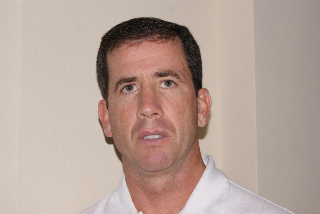
Timothy Francis Donaghy (/ˈdɒnəɡi/ DON-ə-ghee; born January 7, 1967)[2] is an American former basketball referee who worked in the National Basketball Association (NBA) for 13 seasons from 1994 to 2007 until he was caught in a gambling scandal.[3] During his career in the NBA, Donaghy officiated in 772 regular season games and 26 playoff games.[3]
Key Information


Donaghy resigned from the league on July 9, 2007,[4] after reports of an investigation by the Federal Bureau of Investigation (FBI) for allegations that he bet on games that he officiated during his last two seasons and that he made calls that affected the point spread in those games.[5] Donaghy later admitted to betting on games he officiated in each of the 2003–04, 2004–05, 2005–06, and 2006–07 seasons.[6] On August 15, 2007, Donaghy pleaded guilty to two federal charges related to the investigation. He was sentenced to 15 months in federal prison on July 29, 2008.[7] He served 11 months in a federal prison camp in Pensacola, Florida, and the remainder of his sentence in a halfway house,[8][9] but was sent back to prison in August for violating his release terms. After serving out his sentence, he was released on November 4, 2009.
Early life and education
[edit]Born in the Philadelphia suburb of Havertown, Pennsylvania, Donaghy attended Cardinal O'Hara High School in Springfield, Pennsylvania[3] along with three other NBA referees: Joey Crawford, Mike Callahan, and Ed Malloy.[10] His father, Gerry Donaghy, was a referee at the highest levels of NCAA men's basketball association for a long time.[11] In 1989, Donaghy graduated from Villanova University with a degree in sales and marketing.[3][8] While at Villanova, he played on the school's baseball team.[1][3] According to the National Basketball Referee's Association, Donaghy participated and earned All-Catholic and All-Delaware County honors in baseball and All-Delaware County honors in basketball during high school,[2] but then-Villanova baseball coach George Bennett contends that Donaghy did not play on the varsity team and that no records indicate that he was selected to the All-Catholic team in baseball or named to the All-Delaware County basketball team.[12]
Personality and behavior
[edit]As the father of Donaghy's lifelong best friend and fellow NBA scandal co-conspirator, Tommy Martino, said of him, "Timmy…(had) a very short temper and a penchant for wanting to get revenge for anything that he perceived as having been done to him where he was wrong."[13] Donaghy's character flaws informed and influenced decisions in the federal NBA betting scandal investigation.[14] He was notorious for his temper and "short fuse" dating at least to high school straight through the NBA scandal when a federal official described him as "a fucking loose cannon".[15] He was arrested for allegedly harassing a mail carrier.[16] He was sued by neighbors for harassment and invasion of privacy (suit was dropped, but Donaghy was suspended from his country club as a result of his actions).[16] Another neighbor said Donaghy "was so bad you can’t imagine…The guy had a personality problem from day one, with 99% of people" with whom Donaghy came in contact. "Unless everything went his way…he just became a flaming maniac".[17] The mayor of his township said Donaghy had "a very dictatorial personality, a very aggressive personality".[17] Donaghy admitted to having someone else take his SAT exams for him when applying to Villanova University[18] and one of Donaghy's high school teachers was quoted saying, "I taught him for a year, and I think every homework assignment he turned in to me was copied."[19] Donaghy's wife, soon after filing for divorce, requested a restraining order because he allegedly threatened to "knock [her] head off [her] body" and that he was "enraged, out of control, cursing at [her] in front of [their] four children and making threats", although the matter was dropped when she didn't appear in court.[20]
When Donaghy's name was publicized in 2007 as the referee involved in the scandal, reporters reached out to his former colleagues, teammates, classmates, and associates to learn more about him. The Delco Times wrote: "every teammate, classmate, or associate contacted…by the [Delco] Daily Times either chose not to comment on Donaghy or didn’t return phone calls…While there are those empathetic to Donaghy and his gambling-related plight, many others consider his a karmic downfall".[21] The New York Daily News wrote, "Plenty of people did not remember Donaghy fondly. 'I think he's one of those guys who always thought he was smarter than the adults. He felt like he could do what he wanted and get away with it,' said one, adding, 'he would always talk to you like he was a genius and you were a dummy.'"[19] National writers wrote similar assessments, including Yahoo! Sports NBA columnist Adrian Wojnarowski: "several sources described him as fairly unpopular with his peers, past and present…From his Philly basketball roots to his peers in the NBA, Donaghy isn’t described with much affection."[22]
Officiating career
[edit]Before officiating in the NBA, Donaghy spent five years officiating in Pennsylvania[2] high school basketball and seven seasons in the Continental Basketball Association (CBA), and he was the head official for the 1993 CBA All-Star Game.[23] The following year, he joined the NBA, where he worked for 13 years, officiating in 772 regular-season games and 20 playoff games.[3] Donaghy was a participant in the NBA's Read to Achieve program, for which he participated in an event at the Universal Charter school during the 2002 NBA Finals.[3] His uniform number was 21.[2]
During a 2003 regular-season game, Donaghy called a technical foul on Rasheed Wallace, then playing with the Portland Trail Blazers, for throwing a ball at another official during a game.[24] Wallace confronted Donaghy after the game, screaming obscenities and, according to Donaghy, threatening him. Wallace was suspended for seven games;[24][25] this was the longest suspension issued by the league for an incident not involving violence or drugs.[26]

Donaghy was one of three referees who worked the Pacers–Pistons brawl at The Palace of Auburn Hills on November 19, 2004, which ended in a fight between Pacers players and Pistons fans.[27][28][29][30]
Betting scandal
[edit]On July 20, 2007, columnist Murray Weiss of the New York Post reported an investigation by the FBI into allegations of an NBA referee betting on games and controlling the point spread.[31] It was revealed that Donaghy, who claimed during the sentencing phase of his case he had a gambling problem, placed tens of thousands of dollars in bets on games during the 2005–06 and 2006–07 seasons and had allegedly been approached by low-level mob associates to work on a gambling scheme.[32] Reporters, especially those who worked crime beats and who had quality law enforcement and "street" sources, soon discounted the supposed involvement of the mob in the scandal, however.[33][34][35] Mike Missanelli of The Stephen A. Smith Show suggested that Donaghy had gotten himself into debt and tried to make it up by betting on games.[36]
While the league devotes significant resources to monitor officials' performance, it found out about the affair only when the FBI stumbled upon Donaghy in the midst of a broader organized crime investigation.[37] NBA Commissioner David Stern said in a statement, "We would like to assure our fans that no amount of effort, time or personnel is being spared to assist in this investigation, to bring to justice an individual who has betrayed the most sacred trust in professional sports, and to take the necessary steps to protect against this ever happening again."[32] He called the scandal a "wakeup call that says you can't be complacent."[38]
On July 27, U.S. Representative Bobby Rush of Illinois, the chairman of the U.S. House Committee on Energy and Commerce's Commerce, Trade and Consumer Protection Subcommittee, asked to meet with Stern regarding the Donaghy matter. In a letter to Stern, Rush indicated that he might call a hearing "should the facts warrant public scrutiny." He also said that the affair could potentially be "one of the most damaging scandals in the history of American sports."[39]
Earlier that day, federal sources told the New York Daily News that Donaghy would surrender to the FBI and plead guilty to gambling charges. The Daily News also learned that the bookies in the scandal were two high school classmates of Donaghy's who embellished their mob ties. The Daily News reported that at his friends' request, Donaghy had passed word about the crews working the games on which they planned to bet.[40] The Associated Press identified one of the men as James Battista, a former owner of a sports bar in Havertown, Pennsylvania, a Philadelphia suburb. Battista's lawyer told the AP that his client expected to be indicted.[41] It was later learned that it was Donaghy who embellished the supposed involvement of organized crime in the scandal, and that the bets for the 2003–04, 2004–05, 2005–06, and 2006-07 NBA seasons were almost exclusively on games officiated by Donaghy.[6] Indeed, researchers investigated the sociology of the bets using electronic betting records and betting line data and concluded there was no evidence to support Donaghy's contention he bet almost as equally on games he officiated, and considerable evidence the bets were on games he officiated (which supported the FBI submissions of Donaghy's best friend and NBA co-conspirator Tommy Martino and of pro gambler cooperators).[42]
At his home in Bradenton, Donaghy did not initially comment on his situation. He reportedly claimed to be "the butler" to visiting reporters and turned his sprinklers on a freelance photographer for the New York Times when he got too close.[40] His then-wife Kimberly passed a note to reporters telling them not to bother asking them any questions.[43]

On August 15, Donaghy appeared in a Brooklyn federal court and pleaded guilty to conspiracy to engage in wire fraud and transmitting wagering information through interstate commerce. Donaghy told U.S. District Judge Carol Amon that he used coded language to tip Battista about players' physical condition and player/referee relations. In doing so, Donaghy disclosed classified information that he obtained as an NBA referee. Donaghy initially received $2,000 per correct pick, but his calls were so accurate that Battista increased his take to $5,000. In total, he received $300,000 to pass inside information to the bookies.[44] Another high school friend of Donaghy, Thomas Martino, acted as the middle man. Donaghy also claimed that he had a severe gambling addiction for which he was taking antidepressants.[45] Researchers explained the "coded language" referenced by Donaghy was significant because it supported the contention of his co-conspirators (who each discussed the code) that the bets were on games Donaghy officiated (i.e., if Donaghy phoned in a pick using the code "Mom" for the home team, the only way his middleman Martino could know which team to pick was if the game/matchup was known).[46]
Donaghy specifically admitted to passing information about two games during the 2006–07 season. Prosecutors also said that Donaghy bet on games himself. Donaghy was fined $500,000 and ordered to pay at least $30,000 in restitution.[47] ESPN legal analyst Lester Munson believed that Battista was one of the FBI's prime targets, based on the large amounts of money he bet.[48]
Donaghy was released on a $250,000 bond and awaited sentencing on January 25, 2008.[49] On June 19, 2008, the NBA filed a demand that Donaghy reimburse the league for the costs of his airfare and meals, complimentary game tickets, and other expenses, including $750 in shoes. Donaghy's lawyer said this was the league trying to retaliate against Donaghy for his misconduct.[50] A judge delayed sentencing to allow for more time to decide how much restitution Donaghy and his two co-conspirators should pay the NBA for their roles in the betting scandal. The NBA claimed Donaghy owed it $1.4 million, including $577,000 of his pay and benefits over four seasons, plus hefty legal fees and other expenses related to an internal investigation. His lawyer argued that the punishment should apply to only one season, a position supported by the government in court papers.[51]
According to the Associated Press, Andrew Thomas, the former county attorney for Maricopa County, Arizona, asked the NBA and FBI if Donaghy intentionally miscalled two Phoenix Suns road playoff games. The games in question occurred on April 29, 2007, versus the Los Angeles Lakers and May 12, 2007, versus the San Antonio Spurs. In a letter to Stern and FBI Director Robert Mueller, Thomas said that Donaghy's conduct may have violated Arizona criminal law, and could face charges there.[52]
Allegations against NBA
[edit]On June 10, 2008, Donaghy's attorney filed a court document alleging, among other things, that Game 6 of the 2002 Western Conference Finals between the Los Angeles Lakers and Sacramento Kings had been fixed by two referees. The letter states that Donaghy "learned from Referee A that Referees A and F wanted to extend the series to seven games. Tim knew Referees A and F to be 'company men', always acting in the interest of the NBA, and that night, it was in the NBA's interest to add another game to the series."[53] The Lakers won Game 6, attempting 18 more free throws than the Kings in the fourth quarter, and went on to win the 2002 NBA Finals. The teams were not named, but the Western Conference Finals was the only seven-game series that year.[54] The document claimed that Donaghy told federal agents that to increase television ratings and ticket sales, "top executives of the NBA sought to manipulate games using referees."[53] It also said that NBA officials would tell referees not to call technical fouls on certain players and stated that a referee was privately reprimanded by the league for ejecting a star player in the first quarter of a January 2000 game.[53] Stern denied the accusations, calling Donaghy a "singing, cooperating witness".[54] Federal authorities investigated Donaghy's claims and found no evidence to support them. About this, AUSA Jeffrey Goldberg told the court, "we’ve never taken the position that Mr. Donaghy has lied to us. But there is a difference between telling the truth and believing you’re telling the truth and finding out later that a number of the allegations don’t hold any water."[55]
Sentencing
[edit]On July 29, 2008, Donaghy was sentenced in the United States District Court for the Eastern District of New York[56] to 15 months in prison for his participation in the gambling scandal. Donaghy could have faced up to 33 months, but Judge Carol Amon reduced his sentence to 15 months (two 15-month terms served concurrently, followed by three years of supervised release) in exchange for his cooperation. Judge Amon noted she held Donaghy "more culpable" than his two co-conspirators and added, "Without Mr. Donaghy, there was no scheme."[57] His lawyer, John Lauro, asked for probation, but the request was denied. Donaghy apologized in court: "I brought shame on myself, my family and the profession."[7] Battista and Martino were sentenced earlier that month, receiving sentences of 15 months and 366 days, respectively.[58]
Effect on NBA
[edit]As a result of the betting scandal, Stern revised the guidelines on the behavior of NBA referees during the Board of Governors' meeting in 2007. Despite the labor agreement for referees, which restricted them from participating in almost all forms of gambling, it was revealed that about half of the NBA's officials had made bets in casinos, albeit not with sportsbooks. In addition, all referees had admitted to engaging in some form of gambling. Stern stated that the "ban on gambling is absolute, and in my view it is too absolute, too harsh and was not particularly well-enforced over the years." The gambling rules were revised to allow referees to engage in several forms of betting but not on sports. There were several other referee-related rule changes made: the announcement of the referees calling a game was moved from 90 minutes before tip-off to the morning of the game, to reduce the value of the information to gamblers; referees received more in-season training and counseling on gambling; more thorough background checks were carried out; the league declared its intention to analyze the statistical relationship between NBA games and referees' gambling patterns for those games; and the interactions between referees and NBA teams were made easier and more formal.[59]
Post-sentencing
[edit]In the federal prison camp in Pensacola, Florida, Donaghy started to write his memoir, Blowing the Whistle: The Culture of Fraud in the NBA. The book was to have covered his NBA career, described his dealings with the "underworld" during the betting scandal, and explained how he would determine the winning team in the games he refereed. Donaghy also promised to "discuss the relationship that players, coaches and referees have with each other."[8] The book was due to be published in October 2009. However, Donaghy's publisher, Triumph Books, canceled it because of liability concerns. Pat Berdan, Donaghy's liaison with Triumph, said the book was canceled after the NBA threatened legal action—which the NBA denies.[60] Donaghy found a new publisher, VTi-Group, willing to release the book, which was renamed Personal Foul: A First-Person Account of the Scandal That Rocked the NBA. The book was released in December 2009.[61][62] Many of the key claims Donaghy makes in the book and in related appearances have been debunked with evidence. Some of the main falsehoods debunked concern specifics about the NBA (e.g., game outcomes, related player stats) and especially about the scandal itself (e.g., the origin of the scandal, allegations of organized crime involvement and threats, which games were bet, the sociology of the betting, how the scandal ended) along other vital issues pertaining to the FBI's investigation, the government's prosecution, and the sentencing judge's assessment of his actions.[63][64][65][66][67][68] In 2020, prominent sports journalist and frequent NBA betting scandal commentator Henry Abbott said, "I’ve never encountered someone who lies as much as (Donaghy). He’s soooooo full of crap."[69]
Donaghy claims that while imprisoned, he was attacked and threatened. He also claims that in November 2007 a man claiming to be an associate of the New York Mafia struck Donaghy with a paint roller extension bar, resulting in injuries to his knee and leg which required surgery.[8][9] FBI SSA (ret.) Philip Scala and his colleagues scoffed at the notion a mobster harmed Donaghy in prison. Said Scala, "If organized crime wanted to hurt Donaghy, he wouldn't be around today."[70]
Donaghy was released from prison after serving 11 months and was due to finish his sentence in a recovery house near Tampa, Florida, where he was to be treated for his gambling addiction, as mandated by the court.[8][9] He was arrested and put in the county jail in late August after being caught at a health club without permission, when he should have been at work. His lawyer and his ex-wife both insisted that Donaghy should not have been taken into custody, as he was allowed to visit the center to rehabilitate his injured knee.[71][72]
On November 4, 2009, Donaghy was released from prison in Hernando County after serving out the remainder of his sentence.[73]
Donaghy sued VTi-Group, the publisher of his memoir, for not paying him. In June 2012, a jury found VTi liable for breach of contract.[74] Donaghy was awarded $1.3 million.
On April 22, 2014, Donaghy claimed that the league office was going to push referees to fix playoffs games to have the Brooklyn Nets beat the Toronto Raptors, so they could advance to the second round and face the Miami Heat because it would be good for ratings,[75] which it was.[76] On May 4, 2014, the Nets eliminated the Raptors after winning game seven of the series by a point.
Donaghy was featured in the 2016 released documentary film Dirty Games – The dark side of sports.[77]
Before Game 5 of the 2017 NBA Finals, Donaghy claimed that referees would be instructed to extend the series for financial reasons.[78] However, the series ended in Game 5 with the Golden State Warriors defeating the Cleveland Cavaliers 4–1.
On November 1, 2019, the movie Inside Game was released in theaters. The official film description focuses on Donaghy's take on the NBA betting scandal.[79][80] While promoting the film, Martino admitted he and Donaghy had agreed years prior to lie about the threats Donaghy allegedly heard from the third co-conspirator, pro gambler Jimmy Battista.[81]
Professional wrestling
[edit]On January 27, 2021, Donaghy made his debut as a professional wrestling referee for Major League Wrestling (MLW), helping Richard Holliday defeat Savio Vega in a title match for the IWA Caribbean Heavyweight Championship. He has a "heel referee" gimmick with numerous references to the gambling scandal intertwined in storyline.[82]
Personal life
[edit]Donaghy married his wife Kimberly in 1995. They have four daughters. In September 2007, shortly after the scandal broke, Kim filed for divorce.[83] Donaghy is Catholic.[84]
Donaghy was arrested on December 22, 2017, for aggravated assault. He was released on $5,000 bond and given an arraignment, scheduled for January 19, 2018. Donaghy had been looking for his 19-year-old daughter, who he believed was doing drugs at a friend's house. The two got into an argument; Donaghy told the house owner that he was going to hit him with a hammer if he came any closer. Donaghy's attorney said that he was "just trying to be a good dad."[85]
References
[edit]- ^ a b MacMullan, Jackie (July 22, 2007). "Officially, it's quite a mess". The Boston Globe. Archived from the original on November 3, 2012. Retrieved July 23, 2007.
- ^ a b c d "Tim Donaghy #21". National Basketball Referees Association. Retrieved July 20, 2007.
{{cite web}}:|archive-url=is malformed: timestamp (help)CS1 maint: url-status (link) - ^ a b c d e f g "Donaghy under investigation for betting on NBA games". ESPN. July 20, 2007. Archived from the original on October 27, 2011. Retrieved July 20, 2007.
- ^ "NBA Commissioner David Stern Press Conference". National Basketball Association. July 24, 2007. Archived from the original on December 14, 2007. Retrieved July 29, 2007.
- ^ Schwartz, Alan; Rashbaum, William K. (July 21, 2007). "N.B.A. Referee Under Investigation". The New York Times. Archived from the original on June 5, 2015. Retrieved July 20, 2007.
- ^ a b "United States v Battista". Find Law. August 6, 2009. Retrieved June 26, 2023.
- ^ a b "Donaghy sentenced to 15 months in prison in gambling scandal". ESPN. July 29, 2008. Archived from the original on October 18, 2011. Retrieved July 29, 2008.
- ^ a b c d e "Donaghy to serve at halfway house". ESPN. June 17, 2009. Archived from the original on June 20, 2009. Retrieved July 28, 2009.
- ^ a b c Goldsmith, Samuel (June 11, 2009). "Former NBA referee Tim Donaghy to be released from prison; claims he was beaten by mobbed up inmate". New York Daily News. Archived from the original on July 21, 2009. Retrieved July 28, 2009.
- ^ Sheridan, Chris (July 20, 2007). "The Donaghy File". ESPN. Archived from the original on August 28, 2007. Retrieved July 20, 2007.
- ^ "How former ref Tim Donaghy conspired to fix NBA games". Archived from the original on January 2, 2020. Retrieved January 3, 2020.
- ^ Hamilton, Brad; Winter, Jana (July 29, 2007). "Ref Made His Own Rules". New York Post. Archived from the original on September 29, 2007. Retrieved August 1, 2007.
- ^ "Whistleblower: Timmy and Tommy on Apple Podcasts". Apple Podcasts. Retrieved July 1, 2023.
- ^ Griffin, Sean Patrick (March 1, 2011). Gaming the Game: The Story Behind the NBA Betting Scandal and the Gambler Who Made It Happen (First ed.). UNKNO. ISBN 978-1-56980-444-5.
- ^ Griffin, Sean Patrick (October 31, 2019). Gaming the Game: The Story Behind the NBA Betting Scandal and the Gambler Who Made It Happen. Independently published. ISBN 978-1-7040-5085-0.
- ^ a b "He got his share of fouls both on and off the court". New York Daily News. July 21, 2007. Archived from the original on July 1, 2023. Retrieved July 1, 2023.
- ^ a b Bender, William (July 25, 2007). "Donaghy remembered locally as someone 'out of control'". Philadelphia Daily News.
- ^ Fitzpatrick, Frank (December 10, 2009). "Little left in life of Tim Donaghy". www.inquirer.com. Archived from the original on October 15, 2019. Retrieved July 1, 2023.
- ^ a b "Bad bounces along his way". New York Daily News. July 29, 2007. Archived from the original on October 29, 2011. Retrieved July 1, 2023.
- ^ "Tim Donaghy avoids foul call by wife". New York Daily News. March 25, 2008. Retrieved July 1, 2023.
- ^ SanFilippo, Anthony (July 6, 2008). "Donaghy's downfall leaves many scars". The Delco Times.
- ^ "The real Tim Donaghy?". Yahoo Sports. July 21, 2007. Retrieved July 1, 2023.
- ^ The Hot List, ESPNews, July 20, 2007.
- ^ a b Aldridge, David; Narducci, Marc (July 20, 2007). "FBI investigating area NBA referee". The Philadelphia Inquirer. Archived from the original on September 29, 2007. Retrieved July 21, 2007.
- ^ Aldridge, David]date=January 29, 2003. "What really happened between ref, Rasheed". Archived from the original on January 22, 2017. Retrieved July 14, 2018.
{{cite news}}: CS1 maint: multiple names: authors list (link) CS1 maint: numeric names: authors list (link) - ^ Thomsen, Ian (January 29, 2003). "Inside the NBA". CNN Sports Illustrated. Archived from the original on November 6, 2007. Retrieved July 21, 2007.
- ^ "Carlisle: 'I was fighting for my life out there'". ESPN. November 19, 2004. Archived from the original on November 25, 2004. Retrieved July 29, 2009.
- ^ "Indiana Pacers vs. Detroit Pistons – Box Score – November 19, 2004". ESPN. February 8, 2009. Archived from the original on October 31, 2011. Retrieved July 29, 2009.
- ^ Johnson, Kevin; McCarthy, Michael (July 20, 2007). "FBI probes whether NBA ref bet on games". USA Today. Archived from the original on August 4, 2010. Retrieved July 23, 2010.
- ^ Griffin, Sean Patrick (March 1, 2011). Gaming the Game: The Story Behind the NBA Betting Scandal and the Gambler Who Made It Happen (First ed.). UNKNO. ISBN 978-1-56980-444-5.
- ^ Weiss, Murray (July 20, 2007). "NBA in a 'Fix'". New York Post. Archived from the original on September 15, 2007. Retrieved July 21, 2007.
- ^ a b Wojnarowski, Adrian (July 20, 2007). "Questionable calls". Yahoo!. Archived from the original on August 10, 2007. Retrieved July 20, 2007.
- ^ "Ref's alleged bookie is in a foul mood". New York Daily News. July 27, 2007. Retrieved July 2, 2023.
- ^ "Insider: Ref pal just bagman in old gamble ring". New York Daily News. July 30, 2007. Retrieved July 2, 2023.
- ^ Ph.D, Sean Patrick Griffin (February 17, 2011). "On "the mob" and the NBA Betting Scandal". Sean Patrick Griffin. Retrieved July 2, 2023.
- ^ "The Stephen A. Smith Show". The Stephen A. Smith Show. July 20, 2007. Archived from the original on October 25, 2007. Missanelli did not identify Donaghy by name because at the time of the broadcast, it had not yet been confirmed that he was the target of the probe.
- ^ Jones, Bomani (July 20, 2007). "Corruption on the court is bad news for NBA". ESPN. Archived from the original on September 8, 2007. Retrieved July 21, 2007.
- ^ Nance, Roscoe (August 16, 2007). "NBA ref scandal is 'wakeup call,' Stern says". USA Today. Archived from the original on June 20, 2009. Retrieved July 28, 2009.
- ^ "Congressman requests meeting with Stern to discuss gambling scandal". ESPN News. July 27, 2007. Archived from the original on February 9, 2008. Retrieved July 27, 2007.
- ^ a b Jaccarino, Mike; John Marzulli; Bill Hutchinson (July 27, 2007). "Rogue ref's bookies old HS chums". New York Daily News. Archived from the original on September 30, 2007. Retrieved July 28, 2007.
- ^ "Lawyer for Donaghy's high school classmate expecting to be indicted". ESPN. July 27, 2007. Archived from the original on February 7, 2008. Retrieved July 27, 2007.
- ^ Griffin, Sean Patrick (March 1, 2011). Gaming the Game: The Story Behind the NBA Betting Scandal and the Gambler Who Made It Happen (First ed.). UNKNO. ISBN 978-1-56980-444-5.
- ^ Block, Dorian (August 10, 2007). "Ref still hiding & wife blows the whistle on media". New York Daily News. Archived from the original on September 30, 2007. Retrieved October 10, 2007.
- ^ Yaniv, Oren (August 17, 2007). "Donaghy huddles with family after admitting he got $30G in bet plot that rocked NBA". New York Daily News. Archived from the original on September 30, 2007. Retrieved August 18, 2007.
- ^ "Ex-NBA ref pleads guilty in betting scandal". CNN. August 14, 2007. Archived from the original on December 9, 2007. Retrieved August 14, 2007.
- ^ "Donaghy scandal's ringleader speaks". ESPN.com. February 17, 2011. Retrieved July 2, 2023.
- ^ "Donaghy pleads guilty, could face up to 25 years in prison". Associated Press. August 15, 2007. Archived from the original on August 31, 2007. Retrieved October 10, 2007.
- ^ Munson, Lester (August 15, 2007). "Donaghy's guilty pleas don't answer all the questions". ESPN. Archived from the original on November 3, 2012. Retrieved October 10, 2007.
- ^ "Donaghy's sentencing postponed; ex-ref forfeits $300,000". ESPN. October 17, 2007. Archived from the original on October 18, 2007. Retrieved October 27, 2007.
- ^ "NBA to Donaghy: Pay for your gym shoes". NBC Sports. July 21, 2008. Archived from the original on April 4, 2012. Retrieved July 29, 2008.
- ^ "Judge Delays Disgraced NBA Ref's Sentencing". New York Post. July 9, 2008. Archived from the original on January 12, 2009. Retrieved May 21, 2009.
- ^ "Raging Arizona: Donaghy could face state charges". Associated Press. August 16, 2007. Archived from the original on February 7, 2008. Retrieved August 16, 2007.
- ^ a b c "Re: United States v. Timothy Donaghy" (PDF). ESPN. June 10, 2008. Archived (PDF) from the original on March 27, 2009. Retrieved June 11, 2008.
- ^ a b Sheridan, Chris (June 11, 2008). "2002 Lakers-Kings Game 6 at heart of Donaghy allegations". ESPN. Archived from the original on January 11, 2012. Retrieved June 11, 2008.
- ^ Robinson, Joshua (July 10, 2008). "Prosecution Plays Down Cooperation of Donaghy". The New York Times. Archived from the original on December 29, 2019. Retrieved December 29, 2019.
- ^ Shuster, Rachel (July 30, 2008). "Donaghy sentenced to 15 months in gambling probe". USA Today. Archived from the original on October 20, 2008. Retrieved August 30, 2009.
- ^ "Donaghy sentenced to 15 months in gambling case". July 29, 2008. Archived from the original on December 14, 2019. Retrieved December 29, 2019.
- ^ Cohen, Stefanie; Goldsmith, Samuel; Lisi, Clemente (July 30, 2008). "Judge Throws a 'Pass' at Ref". New York Post. Archived from the original on June 18, 2009. Retrieved July 28, 2009.
- ^ Sheridan, Chris (October 26, 2007). "NBA to revamp ref gambling rules; Jackson, Nunn see roles reduced". ESPN. Archived from the original on January 12, 2012. Retrieved July 28, 2009.
- ^ Alipour, Sam (October 28, 2009). "Donaghy book canceled over liability". ESPN. Archived from the original on October 31, 2009. Retrieved October 28, 2009.
- ^ Craggs, Tommy (November 30, 2009). "Tim Donaghy Has Found A Publisher". Deadspin. Archived from the original on December 4, 2009. Retrieved December 3, 2009.
- ^ Belson, Ken (December 3, 2009). "Disgraced Referee's Book Describes Gambling on N.B.A. Games". The New York Times. Archived from the original on June 29, 2013. Retrieved December 3, 2009.
- ^ Abbott, Henry (December 7, 2009). "Tim Donaghy's claims on trial". ESPN.com. Retrieved June 10, 2023.
- ^ "Tim Donaghy's tale of Dick Bavetta". ESPN.com. December 8, 2009. Retrieved June 10, 2023.
- ^ "Donaghy sticks to story: Biases helped bets". ESPN.com. December 7, 2009. Retrieved June 10, 2023.
- ^ "Tim Donaghy and the lie detector". ESPN.com. December 17, 2009. Retrieved June 10, 2023.
- ^ "Has the FBI exonerated Tim Donaghy?". ESPN.com. December 16, 2009. Retrieved June 10, 2023.
- ^ "My assessments of Tim Donaghy's claims". Sean Patrick Griffin. Retrieved June 10, 2023.
- ^ Blow The Whistle, September 7, 2022, retrieved June 11, 2023
- ^ "NBA Scandal: On "the mob" and the NBA Betting Scandal". February 17, 2011. Archived from the original on December 29, 2019. Retrieved December 29, 2019.
- ^ Bender, William (August 26, 2009). "Disgraced NBA referee Donaghy back in jail for rule violation". Philadelphia Daily News. Archived from the original on August 30, 2009. Retrieved August 30, 2009.
- ^ Fitzpatrick, Frank (August 27, 2009). "Wife says Donaghy 'treated unfairly' in Florida". The Philadelphia Inquirer. Archived from the original on August 30, 2009. Retrieved August 30, 2009.
- ^ "Disgraced former NBA ref leaves jail". ESPN. November 4, 2009. Archived from the original on November 4, 2012. Retrieved November 26, 2009.
- ^ "Ex-ref Tim Donaghy wins lawsuit". ESPN. June 18, 2012. Archived from the original on June 20, 2012. Retrieved June 18, 2012.
- ^ "Disgraced former referee Tim Donaghy claims NBA has pressured officials to call games for Nets in Raptors series". New York Daily News. April 23, 2014. Archived from the original on April 26, 2014. Retrieved June 28, 2014.
- ^ "NBA Playoffs TV Ratings: Heat/Nets Strong on TNT; Other Games Solid". May 14, 2014. Archived from the original on July 23, 2014. Retrieved June 28, 2014.
- ^ "Dirty Games (2016) – IMDb". IMDb. Archived from the original on August 14, 2020. Retrieved July 1, 2018.
- ^ "Mediaite". Archived from the original on June 13, 2017. Retrieved June 13, 2017.
- ^ "Inside Game (2019) – Rotten Tomatoes". Rotten Tomatoes. Archived from the original on October 30, 2019. Retrieved October 29, 2019.
- ^ "Inside Game (2019) – IMDb". IMDb. Archived from the original on October 30, 2019. Retrieved October 29, 2019.
- ^ Ph.D, Sean Patrick Griffin (September 29, 2020). "NBA betting scandal co-conspirator admits he and referee Tim Donaghy have been lying for the past decade". Sean Patrick Griffin. Retrieved June 10, 2023.
- ^ Justin Barasso (January 28, 2021). "Disgraced NBA Official Tim Donaghy Makes Pro Wrestling Debut as Crooked Ref". Sports Illustrated. Archived from the original on February 8, 2021. Retrieved January 28, 2021.
- ^ El-Ghobashy, Tamer (September 7, 2007). "Tim Donaghy's wife files for divorce". New York Daily News. Archived from the original on November 7, 2009. Retrieved July 28, 2009.
- ^ "Does This Ex-Con, Ex-Referee Know the NBA Better Than LeBron?". Intelligencer. June 15, 2015. Retrieved October 16, 2023.
- ^ Benjamin, Cody (December 22, 2017). "Ex-NBA ref Tim Donaghy arrested after allegedly threatening a man with a hammer". CBSSports.com. CBS. Archived from the original on June 23, 2018. Retrieved June 23, 2018.
External links
[edit]

Tim Donaghy
View on GrokipediaEarly Life and Background
Childhood and Family
Tim Donaghy was born on January 7, 1967, in Havertown, Pennsylvania.[7] His father, Gerry Donaghy, was a longtime basketball referee who officiated high school games in the Philadelphia Catholic League and collegiate contests in conferences including the Atlantic Coast Conference (ACC) and the National Collegiate Athletic Association (NCAA) for over three decades.[8] [9] [3] Donaghy's family environment emphasized basketball, with his uncle Bill Oakes serving as a longtime NBA official.[10] This background provided early exposure to the sport and officiating, as Donaghy later credited his father for instilling a love of basketball from a young age.[3] He followed in his father's footsteps into refereeing, beginning with foundational training influenced by Gerry's professional approach to the rules and game observation.[8]Education and Early Basketball Involvement
Tim Donaghy attended Cardinal O'Hara High School in Springfield, Pennsylvania, graduating in 1985.[7] During his time there, he participated in basketball, though not at a varsity level that propelled him to collegiate play.[11] Following high school, Donaghy enrolled at Villanova University, attending classes at night while working and graduating in 1989 with a degree in sales and marketing.[12] At Villanova, he briefly joined the varsity baseball team but quit after two months, forgoing further athletic involvement at the intercollegiate level.[13] There is no record of him playing competitive basketball during his university years, though he maintained an interest in the sport influenced by his father, Jerry Donaghy, a respected college basketball referee.[14] After graduation, Donaghy began officiating basketball games in Pennsylvania, starting with high school matches to build experience.[8] He progressed to college-level games and then to the Continental Basketball Association (CBA), the NBA's developmental league, where he refereed for several seasons in the early 1990s, honing skills in faster-paced, professional environments.[3] This period established his foundational competence in game management, leading to NBA scouting and his hiring as a league official in 1994 after approximately four years in the CBA.[3]NBA Officiating Career
Entry and Initial Assignments
Tim Donaghy entered the NBA as a referee in 1994 after several years officiating in the Continental Basketball Association (CBA), a minor professional league, following his initial experience in Pennsylvania high school basketball. His consistent performance and physical fitness in the CBA, where he handled games involving professional players, positioned him for recruitment through the NBA's officiating development program, which emphasized candidates capable of managing high-intensity contests. Hired at age 28, Donaghy joined a staff of about 60 full-time referees during a league era marked by physical, transition-oriented play and expansion-related scheduling demands, though major team additions had occurred earlier in the decade.[15][16][17] In his initial assignments, Donaghy was typically scheduled for regular-season games in non-prime markets or midweek slots, avoiding high-stakes matchups or playoffs as a novice. These duties centered on enforcing rules such as traveling, charging, and defensive positioning amid the league's 82-game schedule per team, with referees rotating crews of three per contest to maintain impartiality and coverage. By 2007, after 13 seasons, he had officiated over 1,000 regular-season and playoff games combined, reflecting steady workload accumulation typical for advancing officials. Early performance metrics, tracked internally via video reviews and supervisor feedback, highlighted his ability to keep pace with fast breaks and limit procedural errors, though specific foul call disparities were not publicly detailed at the time.[7][18] Adaptation to NBA officiating involved mentorship from veteran referees, who provided on-site guidance during training camps and postseason evaluations, focusing on crew communication and handling coach protests without escalation. Donaghy's first-year reviews noted competence in maintaining game flow under pressure from athletic players, aligning with the league's emphasis on referees who could withstand physical contact while signaling calls accurately. This period established his routine of pre-game preparation, including studying team tendencies, as he integrated into the broader officiating hierarchy without notable controversies.[19]Officiating Style and Notable Games
Donaghy's officiating approach emphasized enforcement of contact rules in physically demanding matchups, often resulting in higher foul counts to control game flow amid the era's escalating player athleticism and intensity.[3] Among NBA officials, he carried a reputation for deliberate misinterpretations of plays on occasion, though peers viewed him as far from the most egregious in that regard.[10] His postseason workload encompassed approximately 20 games across multiple series, underscoring internal league assessments of reliability for elevated stakes prior to 2007.[14] Key assignments included contests in the 2007 Western Conference Finals pitting the San Antonio Spurs against the Phoenix Suns, where early foul calls on key players like Amar'e Stoudemire influenced rotations and drew scrutiny from participants for perceived overzealousness.[20] Player reactions to his whistle varied, with some decrying excessive interruptions to play continuity while league evaluations credited his adherence to standards in high-pressure environments.[10]Career Progression and Internal Evaluations
Tim Donaghy entered the NBA as a full-time referee prior to the 1994–95 season, marking the start of a 13-season tenure that lasted until his resignation in July 2007.[1] Over this period, he officiated 772 regular-season games and 20 playoff games, with postseason assignments reflecting successful progression through the league's selective evaluation process for advanced duties.[14] Advancement in NBA officiating relied on annual performance ratings, which determined eligibility for playoff crews and higher-profile regular-season matchups; Donaghy's consistent playoff roles from the early 2000s onward indicated favorable internal assessments of his game management and rule application.[3] These evaluations, conducted by league supervisors, prioritized accuracy in foul calls, crew coordination, and handling of high-stakes situations, areas where Donaghy earned sufficient grades to maintain elite status among approximately 60 full-time referees. Financially, Donaghy's compensation advanced alongside his experience and the NBA's burgeoning revenues from media rights and expansion. Starting at roughly $80,000–$90,000 annually in the mid-1990s, his base salary plus per-game and playoff bonuses reached over $300,000 by the 2006–07 season, a trajectory common for veteran officials amid the league's shift toward six-figure earnings for top performers.[21][22]Personal Characteristics and Predispositions
Personality Traits Observed by Colleagues
Colleagues in the NBA officiating community described Tim Donaghy as possessing a quick temper, evidenced by a physical altercation with fellow referee Joey Crawford during a league training camp in Toronto in October 2003, where the two exchanged blows following a dispute in a hotel room.[23] This incident, reported by multiple outlets, highlighted tensions within referee interactions and Donaghy's propensity for heated confrontations among peers.[24] The NBA referees' association spokesman, Lamell McMorris, characterized Donaghy's interpersonal style as marked by a pattern of intimidation and ongoing temper issues, including threats directed at union representatives and disputes extending beyond professional settings, such as neighborhood conflicts investigated by the league.[25] These observations from referee leadership underscored friction in team dynamics, contrasting with the day-to-day conduct of other officials, though specific post-game critique behaviors were not detailed in peer accounts.[25] On-court demeanor reportedly contributed to strained player interactions in certain games, as noted in contemporaneous reports of his enforcement style, but verifiable footage analyses primarily emerged post-scandal.[11]Emergence of Gambling Addiction
Donaghy's gambling activities originated in 1994, coinciding with the start of his NBA officiating career, when he began wagering up to $500 per golf hole and participating in card games at local clubs near his Pennsylvania home.[26] These initial bets, described in a psychological evaluation for his sentencing as the onset of compulsive behavior, represented a shift from recreational play to habitual risk-taking, despite his stable professional income as a referee.[26] By 1998, after joining a country club in West Chester, Pennsylvania, Donaghy expanded his wagers, aggressively betting and influencing betting lines in social settings, which colleagues later noted as an unusual eagerness for high-stakes involvement.[3] The progression intensified around 2003, when Donaghy placed his first documented bet on an NBA game he officiated, partnering with a personal acquaintance to wager on outcomes using his insider access, in direct violation of league prohibitions.[3] Court records indicate this marked a departure from non-professional gambling to exploiting his position, with bets escalating in frequency and volume over the subsequent years, even as his annual salary reached approximately $260,000 by 2007.[2][14] Peers observed his reputation for compulsive tendencies, including persistent pursuit of wagers that strained personal finances despite overall betting successes estimated at $10,000 to $30,000 annually from NBA-related picks.[14][27] By late 2006, Donaghy's habits evolved into structured arrangements with professional gambler James Battista, receiving cash payments—up to $5,000 per accurate pick—for NBA game predictions, reflecting a deepening reliance on gambling for thrill and financial supplementation amid self-acknowledged addiction patterns.[28][14] This phase underscored personal accountability, as Donaghy disregarded internal NBA evaluations of his behavioral risks and continued escalating stakes, prioritizing the addictive cycle over professional integrity and fiscal prudence.[26]The Betting Scandal
Betting Operations and Game Influences
Donaghy conspired with professional gambler James "Jimmy" Battista and bookmaker Tommy Martino to place bets on NBA games he officiated, providing them with "picks" based on his insider access to officiating crews, player conditions, and team dynamics.[2][3] The arrangement began on December 12, 2006, with Donaghy receiving cash payments of $2,000 per correct pick, later increased to $5,000, communicated via coded phone calls using pseudonyms like "Johnny" for the visiting team and "Chuck" for the home team.[3] These picks exploited his knowledge of referee tendencies and game spreads to ensure bets covered point totals, with Donaghy admitting in his guilty plea to compromising his objectivity due to financial incentives from December 2006 through April 2007.[2] In the 2006–2007 season, Donaghy provided information or bet on approximately 14 to 16 games he officiated, using subtle manipulations such as disproportionate foul calls to shift outcomes by 4 to 6 points in favor of the wager.[29][30][3] For instance, on December 13, 2006, in the Boston Celtics versus Philadelphia 76ers game, Donaghy's calls contributed to the Celtics covering a 2.5-point spread in a victory.[3] On January 30, 2007, during Dallas Mavericks versus Seattle SuperSonics, he issued 11 consecutive fouls against the Sonics, enabling Dallas to cover a 12-point spread.[3] Another example occurred in a February 2007 Knicks-Heat matchup in New York, where Donaghy called multiple fouls favoring the Knicks, resulting in them attempting 39 free throws to Miami's 8, helping cover the spread via a late foul on Jamal Crawford.[3] Donaghy's profits from these operations totaled around $100,000, derived from per-pick payments rather than direct wagers, with Battista placing large bets—up to $1 million per game—on Donaghy's information, though FBI investigations confirmed no evidence of broader outcome fixation beyond Donaghy's admitted influences.[3][2] He utilized burner phones and cash handoffs to maintain secrecy, drawing on nonpublic details like crew assignments to predict and adjust calls for betting edges.[3]Federal Investigation and Arrest
The Federal Bureau of Investigation launched its investigation into NBA referee Tim Donaghy's gambling activities in October 2006, prompted by a tip from an informant linked to the Gambino crime family who reported that an NBA official was supplying gamblers with inside information on games.[3] By early 2007, agents identified Donaghy as the target, scrutinizing phone records and betting records that connected him to Tommy Martino, a childhood friend acting as an intermediary, and James "Jimmy" Battista, a professional gambler who placed wagers based on Donaghy's picks.[3] The probe revealed a scheme dating back approximately four years, where Donaghy provided nonpublic details such as referee crew assignments and player injury statuses to influence bets on approximately 30 NBA games, including some he officiated.[2] Key evidence included unusual betting line movements exceeding 1.5 points in Donaghy-officiated games—far above typical fluctuations—and coded communications via disposable phones between Donaghy, Martino, and Battista, who executed bets totaling tens of thousands of dollars.[3] FBI agents confronted Donaghy at his home in June 2007, leading to his cooperation with investigators amid the league's parallel internal review.[3] The NBA, notified by federal authorities, compelled Donaghy's resignation on July 9, 2007, stripping him of his credentials before the public disclosure of the probe on July 20, 2007.[31] The revelation sparked immediate media attention, with outlets like The New York Post and ESPN reporting on Donaghy's isolated role in transmitting gambling information for personal gain, while emphasizing the FBI's focus on his wire fraud conspiracy rather than widespread league corruption.[3] Coverage highlighted the NBA's cooperation with law enforcement but largely framed the incident as an aberration attributable to Donaghy's gambling addiction and associations, avoiding early speculation on broader officiating integrity failures.[31]Guilty Plea, Sentencing, and Imprisonment
On August 15, 2007, Donaghy pleaded guilty in federal court in Brooklyn to two felony counts: conspiracy to engage in wire fraud and transmitting betting information across state lines.[4][2] The charges stemmed from his role in a scheme where he provided gamblers with inside information on NBA games he officiated, accepting payoffs in return.[32] As part of the plea agreement, Donaghy cooperated with federal investigators, which prosecutors cited as a factor in recommending leniency.[33] Donaghy was sentenced on July 29, 2008, by U.S. District Judge Carol Bagley Amon to 15 months in federal prison, followed by three years of supervised release.[34][5] The judge described Donaghy's actions as having undermined the integrity of basketball, though she acknowledged his cooperation and lack of prior criminal history in imposing a term below the maximum possible.[35] He was required to surrender to prison authorities on September 23, 2008, and was permanently banned from NBA employment as a direct consequence of the scandal.[36] Donaghy served his sentence at a federal prison camp in Pensacola, Florida, completing 11 months there before transfer to a halfway house in June 2009.[37] He violated supervised release conditions by failing to report for work at the halfway house, resulting in his return to full custody.[38] Donaghy was ultimately released on November 4, 2009, after serving the full adjusted term, with supervised release terms prohibiting gambling and requiring restitution payments tied to his illicit gains.[39][40]Allegations of Broader NBA Corruption
Claims in "Personal Foul" and Public Statements
In his 2009 book Personal Foul: The Broken Promises, Broken Dreams, and Broken Game of the National Basketball Association, Tim Donaghy alleged that NBA referees systematically favored star players through biased officiating and strategic assignments, citing examples such as the repeated deployment of referee Joe Borgia to protect Michael Jordan during high-profile games.[41] He claimed this favoritism extended to playoff manipulations orchestrated by league executives, who purportedly influenced referee crews to extend series for increased television ratings and ticket revenue, including the 2002 Western Conference Finals between the Los Angeles Lakers and Sacramento Kings, which he asserted was rigged to force a decisive seventh game.[42][43] These assertions drew from Donaghy's firsthand observations as a referee from 1994 to 2007, though they relied primarily on his personal accounts and lacked independent corroboration beyond his described logs of referee tendencies.[44] In public statements following the book's release, particularly in interviews after 2010, Donaghy expanded on claims of biased referee assignments designed to safeguard home teams and elite performers, asserting that knowledge of individual referees' predispositions—such as leniency toward superstars or home crowds—enabled bettors to achieve win rates exceeding 70% without insider fixes.[45] He referenced anecdotal records from his career, including patterns of calls that allegedly protected trailing home teams in playoffs to avoid fan backlash, positioning these practices as entrenched league dynamics rather than isolated incidents.[46] Donaghy maintained that such biases were evident in game logs he compiled, but emphasized their unverifiable nature due to the NBA's opaque assignment processes and absence of public data trails. Donaghy's commentary evolved in the 2020s to highlight vulnerabilities amplified by legalized sports betting, warning in 2024 that while overt referee corruption remains unlikely, the expanded gambling ecosystem exposes systemic weaknesses akin to his era's underground operations.[47] In October 2025 interviews amid investigations into NBA players' mafia-linked betting, he described recent arrests as merely "the tip of the iceberg," arguing that legalized platforms, despite aiding detection through cooperation, inadvertently normalize high-stakes wagers that test officials' and players' integrity under intensified scrutiny.[48][49] These statements framed his earlier allegations as prescient cautions against causal pressures from revenue-driven incentives and easy betting access, though they continued to hinge on his experiential insights without empirical datasets.[50]Specific Instances of Alleged Referee Bias
Donaghy alleged that referees in Game 6 of the 2002 Western Conference Finals between the Los Angeles Lakers and Sacramento Kings manipulated calls to favor the Lakers, including fabricating fouls on Kings players to provide extra free-throw opportunities for Lakers stars Shaquille O'Neal and Kobe Bryant while overlooking violations by the Lakers.[42] He claimed this extended the series to a seventh game, benefiting league interests in marquee matchups involving high-profile teams like the Lakers.[42] Game logs show the Lakers attempting 40 free throws to the Kings' 27, with disputed calls such as touch fouls ejecting Kings centers Vlade Divac and Scot Pollard, though such disparities can arise from aggressive playstyles rather than intent. In the 2006 NBA Finals, Donaghy asserted that officials favored the Miami Heat over the Dallas Mavericks through inconsistent foul calls, particularly benefiting Dwyane Wade with lenient contact rulings that inflated his free-throw volume.[51] He attributed this to referees' tendencies to protect star players and extend series for television revenue, citing internal peer discussions on prioritizing "entertaining" outcomes.[52] Series statistics reveal Wade attempting 97 free throws across six games—far exceeding counterparts like Dirk Nowitzki's 50—amid complaints from Mavericks owner Mark Cuban about uncalled physicality on his team, yet analyses note Wade's drive-heavy style as a confounding factor for apparent imbalances.[53] Donaghy further described systemic leniency toward marquee franchises like the Lakers, drawing from referee locker-room communications where officials reportedly admitted to easing calls for teams in large media markets to boost attendance and broadcasts.[54] He pointed to patterns of overlooked star-player infractions, such as ignoring travels or charges against players like Michael Jordan in earlier eras, as normalized practice to maintain competitive narratives.[55] However, the NBA's 2008 Pedowitz investigation, reviewing thousands of games and referee conduct, found no corroborating evidence for widespread manipulation or favoritism beyond Donaghy's isolated actions, attributing cited disparities to statistical variance in officiating crews rather than conspiracy.[56][57] This report emphasized that while referee errors occur, Donaghy's broader claims lacked substantiation from logs, witness statements, or betting patterns indicating coordinated bias.[56]NBA Denials and Counterarguments
The NBA commissioned an independent review led by former federal prosecutor Lawrence B. Pedowitz, which concluded in October 2008 that Donaghy's misconduct was an isolated incident with no evidence of other referees engaging in betting or influencing games improperly.[57] The 116-page Pedowitz Report examined thousands of games officiated by Donaghy and others, reviewing call data, communications, and financial records; it found no patterns of systematic bias or corruption beyond Donaghy's actions, attributing apparent irregularities to normal variability in officiating rather than deliberate favoritism.[57][58] NBA Commissioner David Stern, in a July 24, 2007, press conference, described Donaghy as a "rogue, isolated criminal" and emphasized the league's rigorous referee training and monitoring processes, stating that no other officials were implicated and that the scandal did not indicate broader integrity issues.[59] Stern highlighted that comprehensive audits of referee performance showed call discrepancies consistent with random human error, not orchestrated bias, and noted the NBA's cooperation with federal investigators who similarly viewed the case as confined to Donaghy.[59][60] Critics and media analysts, including those from ESPN, have argued that Donaghy's post-scandal claims of league-wide referee favoritism served primarily as self-justification amid his gambling addiction and legal consequences, lacking corroborating evidence from independent probes.[27] The NBA reiterated this in its February 2019 response to renewed ESPN reporting, asserting that extensive reviews over a decade found no material proof of game-fixing beyond Donaghy and dismissing broader allegations as unsubstantiated.[18] While some unresolved skepticism lingers regarding potential undetected influences in high-stakes games, no verifiable data from subsequent audits or investigations has contradicted the NBA's findings of isolation.[18][61]League Response and Reforms
Internal Probes and Policy Changes
In response to Tim Donaghy's July 2007 resignation and subsequent guilty plea, NBA Commissioner David Stern commissioned former federal prosecutor Lawrence Pedowitz to lead an internal investigation into the integrity of league officiating. The probe, spanning from August 2007 to October 2008, entailed interviews with all 60 NBA referees—many conducted twice—along with examinations of over 40,000 games officiated by them from 2005 to 2007, financial records, phone logs, and betting patterns. It concluded that Donaghy was the sole referee involved in criminal gambling activities, refuting his claims of broader referee misconduct or league-directed game manipulation to extend playoff series.[57][62][56] The Pedowitz report prompted structural reforms to the NBA's officiating program, including mandatory ethics training for referees on gambling risks and conflicts of interest, as well as heightened financial monitoring to detect unexplained wealth or lifestyle discrepancies. To enhance surveillance, the league deployed advanced computerized analytics to flag irregularities in referees' foul-calling patterns across games and intensified tracking of betting-line fluctuations that could signal insider influence. Referees were also barred from associating with known gamblers or bookmakers, extending prior prohibitions on wagering.[57][3] Further preventive measures included delaying the public announcement of referee assignments until approximately two hours before game time, diminishing the betting value of leaked crew information that Donaghy had exploited. The NBA bolstered its preexisting Sports Betting Integrity Unit with additional staff and resources, fostering closer collaboration with federal authorities and betting operators for real-time data sharing on suspicious wagering activity. Short-term officiating adjustments incorporated expanded post-game video reviews of controversial calls to promote accountability and transparency in decision-making.[63][64][3]Impact on NBA Integrity and Public Trust
The Donaghy scandal, breaking in July 2007 amid the NBA Finals, immediately undermined perceptions of officiating fairness, prompting fans to vocalize suspicions of fixes during games and eroding short-term confidence in the league's competitive integrity.[14] Media coverage highlighted risks to stakeholder trust, with commentators warning that revelations of a referee betting on games he officiated could foster lasting doubts about unresolved playoff outcomes, such as those in the 2007 Western Conference semifinals between the Phoenix Suns and San Antonio Spurs, where Donaghy worked multiple games.[65] [3] NBA Commissioner David Stern publicly framed the incident as isolated to one individual, asserting no broader conspiracy and emphasizing internal safeguards to mitigate panic, which helped frame the league's narrative around robust accountability rather than systemic failure.[59] Despite initial alarm, measurable indicators of public engagement revealed resilience rather than collapse; NBA franchise revenues rose in the seasons following the scandal, countering expectations of fan exodus and attributing gains partly to amplified publicity that drew curiosity-driven viewership.[63] The league's star-driven product, bolstered by figures like LeBron James entering peak contention years, sustained attendance and television interest without documented dips attributable to the controversy, as evidenced by steady playoff ratings through 2008.[66] This recovery reinforced the perception of effective containment, with Donaghy's singular prosecution serving as a deterrent symbol that preserved overall trust among casual fans. On balance, the episode spotlighted officiating vulnerabilities—prompting heightened scrutiny and preventive measures—yet perpetuated skepticism in gambling circles, where Donaghy's insider actions lent credence to theories of referee influence beyond his scope, even as empirical outcomes showed no widespread corruption.[14] [67] While the NBA's swift federal cooperation and transparency claims assuaged mainstream concerns, residual wariness among bettors underscored unresolved tensions between game purity and external pressures, without derailing the league's commercial trajectory.[3]Long-Term Effects Amid Legalized Betting Era
Following the U.S. Supreme Court's 2018 overturning of the Professional and Amateur Sports Protection Act (PASPA), which enabled widespread state-level legalization of sports betting, the NBA deepened its commercial ties to the industry, including a landmark July 31, 2018, partnership with MGM Resorts International as its official gaming partner.[68] This deal encompassed collaborative integrity protocols, such as data-sharing for anomaly detection and joint monitoring to safeguard game outcomes, reflecting the league's shift from opposition to integration amid projected revenue growth exceeding $10 billion annually in legal wagers by 2023.[69] Donaghy, reflecting on these developments in 2020s interviews, cautioned that legalized betting amplifies referee vulnerabilities, particularly in proposition (prop) bets—wagers on specific in-game events like player points or fouls—where subtle influences evade traditional spread-based scrutiny, unlike his own 2005–2007 point-spread manipulations.[47] Subsequent scandals have partially validated Donaghy's warnings, with federal probes uncovering insider betting schemes that parallel his era's risks, though centered on players and staff rather than outright referee fixes. In April 2024, Toronto Raptors center Jontay Porter received a lifetime NBA ban for disclosing injury details to bettors and manipulating prop outcomes in at least four games, prompting heightened league surveillance.[70] Escalating in October 2025, U.S. authorities indicted over 30 individuals, including Miami Heat guard Terry Rozier, Portland Trail Blazers coach Chauncey Billups, and others, for a multi-year operation involving leaked non-public game information to facilitate illegal prop and parlay bets totaling hundreds of thousands of dollars across seven contests from 2023 to 2024.[71] Donaghy described these as merely the "tip of the iceberg," attributing persistence to unchecked access points in expanded betting markets, yet NBA-commissioned integrity firms like U.S. Integrity report detecting few anomalies relative to the trillions in handle, suggesting isolated greed-driven acts over endemic corruption.[72][73] Empirical patterns from Donaghy's case and recent incidents underscore personal incentives—financial desperation amid high-stakes betting volumes—as primary causal drivers, rather than league-wide coercion, with no verified evidence of systemic referee collusion post-2007 despite intensified monitoring. Donaghy himself admitted his actions stemmed from mounting debts and bookmaker pressures, not NBA directives, a dynamic echoed in 2025 probe details of individual actors exploiting proximity for gain.[3] League responses, including real-time sportsbook alerts and federal collaborations, have contained breaches, but Donaghy advocates structural deterrents like enhanced referee compensation—averaging $300,000–$550,000 annually in the 2020s, up from his era's $200,000–$400,000—to narrow the greed temptation gap against billion-dollar betting flows.[74] Overall, while scandals persist at low incidence rates (under 0.01% of games flagged per integrity audits), Donaghy's prescient alerts highlight legalized betting's dual edge: revenue boon alongside perpetual integrity tests rooted in human fallibility.[50]Post-Release Career and Activities
Entry into Professional Wrestling
Following his release from federal prison in November 2009, Donaghy transitioned into various post-NBA endeavors before entering professional wrestling in late 2020.[75] He signed with Major League Wrestling (MLW), an independent promotion, to serve as a referee in scripted storylines that explicitly incorporated elements of match-fixing and bribery, mirroring his real-life notoriety for theatrical effect.[76] This role debuted on the January 27, 2021, episode of MLW's Fusion television program, where Donaghy officiated a match between Alex Hammerstone and Savio Vega, culminating in a controversial finish involving alleged interference and payoffs.[77] Donaghy's wrestling involvement emphasized adapting his officiating expertise to wrestling's predetermined outcomes and dramatic narratives, such as accepting on-screen bribes to favor certain wrestlers, which aligned with the promotion's emphasis on "hardcore" and storyline-driven content.[75] In MLW events, he enforced rules selectively to advance plots, including disqualifications and ejections that heightened audience engagement through his controversial persona.[78] This niche application drew media attention for its ironic commentary on sports integrity within wrestling's entertainment framework, positioning Donaghy as a "heel" (villainous) authority figure.[76] His stint contributed to MLW's efforts to blend real-world scandal with scripted drama, though it remained limited to select appearances rather than full-time commitment.[77] Donaghy has cited the role as a way to repurpose his refereeing skills in a medium where outcomes are openly performative, without the constraints of competitive sports governance.[75]Media, Books, and Consulting Roles
Donaghy published Personal Foul: A First-Person Account of the Scandal that Rocked the NBA on December 4, 2009, following the cancellation of an earlier publishing deal due to liability concerns.[79] The 272-page book provides an insider's account of his gambling activities, referee decision-making processes, and broader allegations of systemic bias and favoritism within NBA officiating crews.[80] He promoted the book through media tours, including a December 7, 2009, interview with ESPN's Alan Schwarz in Tampa, Florida, where he discussed betting on games he officiated and patterns in referee assignments.[81] In 2022, Donaghy's story gained renewed visibility through the Netflix documentary Untold: Operation Flagrant Foul, released on August 30, which revisited his scandal, prison term, and claims of league-wide irregularities beyond his individual actions.[82][83] The episode, part of the Untold series produced by The Players' Tribune, featured Donaghy's direct narration on referee incentives, game manipulation techniques, and the NBA's internal handling of gambling risks.[84] Donaghy has consulted for media outlets and podcasts, offering expertise on NBA referee mechanics such as foul-calling tendencies, crew dynamics, and point-spread influences.[3] Appearances include the Whistleblower podcast series, which examines his 2007 arrest and its implications for sports integrity, positioning him as a commentator on officiating vulnerabilities.[85] These roles have contributed to his financial recovery, with speaking engagements on gambling addiction and referee ethics fetching approximately $5,000 each as of 2011.[86] Through these platforms, Donaghy has critiqued the NBA's expansion into legalized sports betting since 2018, warning of heightened corruption risks from prop bets and player incentives amid surges in league partnerships with wagering firms from 2023 to 2025.[47] He has highlighted how high player salaries reduce referee temptation but increase insider betting networks, drawing from his experience with gamblers who exploited referee tendencies for millions in wagers.[3][87]Recent Commentary (2010s–2025)
In the 2010s, Donaghy highlighted systemic pressures on NBA referees, including high workloads that contributed to mental fatigue and inconsistent decision-making during extended seasons and playoffs.[88] He argued that such burnout, exacerbated by the league's demanding schedule, created vulnerabilities for errors or external influences, a concern echoed in his post-prison reflections on officiating demands.[89] By 2023, Donaghy revisited historical officiating controversies, claiming in retrospectives that the Dallas Mavericks were disadvantaged in the 2006 NBA Finals through league-orchestrated manipulations to prolong the series after an early Mavericks lead, rather than outright game-fixing.[52] He maintained that these patterns reflected broader biases against certain teams or owners, drawing from his insider perspective without implicating himself directly in those events.[90] In 2024 interviews, Donaghy warned of persistent risks in NBA betting vulnerabilities, emphasizing exploitable dynamics within referee crews where peer pressure or subtle influences could compromise integrity, even as he downplayed direct referee corruption post his scandal due to heightened scrutiny.[47] These prescient alerts gained validation amid the 2025 arrests of NBA figures including Chauncey Billups, Damon Jones, and Terry Rozier in a mafia-linked gambling and game-fixing probe, which Donaghy described as merely the "tip of the iceberg" for organized crime's infiltration of legalized sports betting.[91][48] Throughout this period, Donaghy balanced his critiques with personal accountability, repeatedly attributing his 2007 downfall to a severe gambling addiction that impaired judgment and led to federal charges, rather than solely external league factors.[91] He has sought treatment and shared regrets over the addiction's role in betraying his role, underscoring it as a primary causal driver in his compromises.Personal Life and Reflections
Family Dynamics and Relationships
Tim Donaghy married Kimberly Donaghy on May 27, 1995.[13] The couple had four daughters, born between approximately 1996 and 2001.[93] The 2007 betting scandal severely strained the marriage, with Kimberly filing for divorce in September 2007, shortly after federal charges were announced, citing an irretrievable breakdown due to Donaghy's actions.[3] In March 2008, she sought a restraining order, alleging Donaghy had threatened physical harm and emotionally abused their children.[94] Donaghy's gambling debts, which exceeded $100,000 and involved associations with organized crime figures pressuring repayment, contributed to household financial instability and marital discord prior to the public revelations.[95] The divorce was finalized while Donaghy was incarcerated, granting Kimberly full custody of the daughters.[96] Post-release in late 2009, Donaghy reported ongoing challenges in rebuilding relationships with his children, who remained primarily aligned with their mother.[86] The family has maintained a low public profile since, with limited details emerging only through Donaghy's occasional interviews, where he has expressed regret over the separation's effects.[3]Addiction Recovery and Personal Accountability
Following his release from federal prison on November 4, 2009, after serving 11 months of a 15-month sentence, Donaghy engaged in mandated mental health treatment for his gambling addiction, including ongoing therapy and participation in Gamblers Anonymous meetings.[6][13] Court records from prior to his incarceration noted his attendance at weekly Gamblers Anonymous sessions as part of early recovery efforts, which he continued post-release to address the compulsive behaviors that escalated from routine sports betting to compromising his professional integrity.[13] Donaghy has since described this period as a deliberate commitment to sobriety, with no verified reports of relapse in the subsequent 15 years, coinciding with his transition to non-gambling-related pursuits such as authoring books and public speaking.[97] In reflections shared in interviews and his 2009 book Personal Foul, Donaghy emphasized personal agency in overcoming addiction, attributing his betting involvement to individual moral lapses rather than external pressures or excuses.[80] At his July 29, 2008 sentencing, he stated, "I accept full responsibility for my conduct," acknowledging the causal chain from unchecked gambling urges to transmitting betting information across at least 30 NBA games between 2005 and 2007.[98] This stance rejects narratives framing addiction as mitigating accountability, instead framing recovery as a self-directed rejection of victimhood, evidenced by his sustained abstinence and professional repurposing of experiences to warn others of gambling's destructive incentives.[97] Donaghy's milestones include launching a speaking career focused on gambling risks by the 2010s, drawing directly from his recovery trajectory without reversion to prior habits, as corroborated by biographical profiles highlighting "ongoing recovery" as a core motivator.[99] This shift underscores causal realism in addiction management: individual discipline, supported by structured programs like Gamblers Anonymous, disrupts the cycle of escalation that once led him to wager up to $5,000 daily on non-officiated games alongside influenced ones.[3]Legacy and Ongoing Controversies
Donaghy's conviction for transmitting betting information across state lines and conspiracy to commit wire fraud, resulting in a 15-month federal prison sentence in 2008, cemented his role as a betrayer of professional sportsmanship, with many viewing his manipulation of at least 30 NBA games from 2005 to 2007 as an isolated act of personal greed driven by gambling addiction and ties to low-level criminal associates.[3][2] This perspective emphasizes the empirical damage: his actions fueled immediate skepticism toward referee calls, contributing to a measurable dip in fan trust metrics post-scandal, as evidenced by contemporaneous league surveys showing heightened perceptions of bias in officiating.[100] However, a counterview positions Donaghy as an inadvertent whistleblower whose insider disclosures prompted the NBA to overhaul referee evaluation protocols, including enhanced monitoring of betting patterns and internal audits that identified officiating inconsistencies unrelated to outright fixing.[1] Critics, including NBA officials and independent investigators, have dismissed much of Donaghy's broader assertions—such as claims of mafia payrolls for multiple referees or league-sanctioned game manipulation—as unsubstantiated fabrications, noting that federal probes found no evidence of systemic corruption beyond his circle, which undermined his post-release narratives in books and media.[101][102] His arguments linking low referee salaries (around $400,000 annually at the time for veterans) to vulnerability for misconduct lack causal data, as subsequent pay increases to over $600,000 by 2025 have not eliminated betting-related incidents, suggesting individual agency over structural incentives as the primary driver.[103] Yet, these critiques coexist with acknowledgments that Donaghy's case exposed real causal risks in opaque decision-making environments, where referees' discretionary power over foul calls (averaging 40-50 per game) intersects with unregulated insider knowledge, a flaw partially addressed through post-2007 transparency measures like public referee report cards.[3] Debates persist into 2025, amplified by a federal indictment of over 30 individuals, including an NBA coach and players, in a mafia-linked gambling scheme involving insider prop bets on injuries and strategies—echoing Donaghy's warnings of organized crime's enduring grip on sports outcomes.[104][48] Donaghy described these arrests as "the tip of the iceberg," predicting escalation in professional and college basketball amid legalized betting's expansion, which has correlated with a 300% rise in U.S. sports wagers since 2018 and heightened scandal frequency, including prior NBA bans for player violations.[105][106] This revives the core question: was Donaghy a rogue outlier, or a symptom of unchecked authority in high-stakes environments where betting volumes now exceed $100 billion annually, outpacing regulatory safeguards?[107] Empirical patterns of post-Donaghy incidents, from Jontay Porter's 2024 lifetime ban to the 2025 bust, support the latter as a realistic causal framework, though definitive proof of league-wide complicity remains absent.[108]References
- https://www.[espn.com](/page/ESPN.com)/nba/story/_/id/25980368/how-former-ref-tim-donaghy-conspired-fix-nba-games
- https://www.[espn.com](/page/ESPN.com)/nba/story/_/id/46711353/congress-asks-nba-silver-briefing-gambling-scandal