


Community hub
Recent from talks
Contribute something
Nothing was collected or created yet.
Tokat
View on WikipediaTokat is a city of Turkey in the mid-Black Sea region of Anatolia. It is the seat of Tokat Province and Tokat District.[2] Its population is 163,405 (2022).[1] It is located at the confluence of the Tokat River (Tokat Suyu) with the Yeşilırmak.
Key Information


History
[edit]
The city was established in the Hittite era. During the time of King Mithradates VI of Pontus, it was one of his many strongholds in Asia Minor.
Known as Evdokia or Eudoxia,[a] ecclesiastically it was later incorporated into the western part of the Byzantine Greek Empire of Trebizond.

Some authors like Guillaume de Jerphanion[4] and William Mitchell Ramsay[5] identified Tokat with the ancient and medieval Dazimon, with Ramsay saying, "Dazimon, which seems to have been a fortress, must have been the modern Tokat, with its strong castle.[5]
Henri Grégoire, on the other hand, refuted this as implausible, because a 13th-century text written by Ibn Bibi clearly distinguishes Dazimon and Tokat as separate places.[4] Instead, he said, Tokat should be identified with the town of Dokeia (Greek: Δόκεια) mentioned in another 10th-century text, by Theophanes Continuatus, which says that the Byzantine general John Kourkouas was born in a village near Dokeia sometime in the 9th century.[4] According to Grégoire, the name "Dokeia" does not have a Greek etymology and probably represents an old Anatolian place name.[4] The supposed derivation from "Eudokia", he claimed, is only a folk etymology that came much later.[4]
After the Battle of Manzikert the town, like most of Asia Minor, came under the control of the Seljuk Turks. After the death of Sultan Suleiman ibn Qutulmish in 1086, the Emir Danishmend Gazi took control of the area, operating from his power base in the town of Sivas. It would be many decades before the Seljuks re-took control of that region, in the reign of Kilij Arslan II. After the Battle of Köse Dağ, Seljuk hold over the region was lost, and local Emirs such as the Eretna took power until the rise of the Ottomans, who captured the town in 1392 under Sultan Bayazid I.[3]
Climate
[edit]Tokat has a hot-summer Mediterranean climate, or alternatively a continental climate (Köppen: Csa, Trewartha: Dc). Due to the relatively high altitude and inland location, winters are fairly cold with average lows below the freezing point and significant snowfall.
Highest recorded temperature:47.2 °C (117.0 °F) on 29 July 2025
Lowest recorded temperature:−23.4 °C (−10.1 °F) on 20 January 1972[6]
| Climate data for Tokat (1991–2020, extremes 1929–2025) | |||||||||||||
|---|---|---|---|---|---|---|---|---|---|---|---|---|---|
| Month | Jan | Feb | Mar | Apr | May | Jun | Jul | Aug | Sep | Oct | Nov | Dec | Year |
| Record high °C (°F) | 21.9 (71.4) |
22.8 (73.0) |
31.1 (88.0) |
35.1 (95.2) |
37.2 (99.0) |
39.8 (103.6) |
47.2 (117.0) |
42.1 (107.8) |
42.6 (108.7) |
35.3 (95.5) |
30.8 (87.4) |
26.0 (78.8) |
47.2 (117.0) |
| Mean daily maximum °C (°F) | 6.5 (43.7) |
8.8 (47.8) |
13.8 (56.8) |
19.4 (66.9) |
24.1 (75.4) |
27.6 (81.7) |
30.2 (86.4) |
30.9 (87.6) |
27.4 (81.3) |
21.5 (70.7) |
13.6 (56.5) |
8.0 (46.4) |
19.3 (66.7) |
| Daily mean °C (°F) | 2.1 (35.8) |
3.6 (38.5) |
7.8 (46.0) |
12.6 (54.7) |
16.6 (61.9) |
20.1 (68.2) |
22.9 (73.2) |
23.3 (73.9) |
19.6 (67.3) |
14.6 (58.3) |
7.6 (45.7) |
3.7 (38.7) |
12.9 (55.2) |
| Mean daily minimum °C (°F) | −1.4 (29.5) |
−0.6 (30.9) |
2.9 (37.2) |
6.6 (43.9) |
10.3 (50.5) |
13.7 (56.7) |
16.3 (61.3) |
16.7 (62.1) |
13.0 (55.4) |
9.0 (48.2) |
3.0 (37.4) |
0.4 (32.7) |
7.5 (45.5) |
| Record low °C (°F) | −23.4 (−10.1) |
−22.1 (−7.8) |
−21.2 (−6.2) |
−6.3 (20.7) |
0.0 (32.0) |
2.7 (36.9) |
6.1 (43.0) |
6.7 (44.1) |
2.4 (36.3) |
−3.2 (26.2) |
−11.8 (10.8) |
−21.0 (−5.8) |
−23.4 (−10.1) |
| Average precipitation mm (inches) | 41.1 (1.62) |
33.8 (1.33) |
45.8 (1.80) |
52.5 (2.07) |
61.7 (2.43) |
40.4 (1.59) |
12.7 (0.50) |
10.1 (0.40) |
18.2 (0.72) |
41.4 (1.63) |
43.1 (1.70) |
42.1 (1.66) |
442.9 (17.44) |
| Average precipitation days | 11.13 | 10.5 | 12.67 | 12.47 | 13.87 | 9.17 | 2.93 | 2.73 | 5.17 | 8.33 | 8.83 | 11.6 | 109.4 |
| Average snowy days | 7.48 | 6.05 | 4.95 | 0.5 | 0 | 0 | 0 | 0 | 0 | 0.14 | 1.09 | 4.23 | 24.44 |
| Average relative humidity (%) | 71 | 65.5 | 60.8 | 58.9 | 62.3 | 61.2 | 57.9 | 58.4 | 59.9 | 65.7 | 71.1 | 73.6 | 63.9 |
| Mean monthly sunshine hours | 81.9 | 103.2 | 140.7 | 184.5 | 223.7 | 233.3 | 266.1 | 280.9 | 243.0 | 180.3 | 126.7 | 75.6 | 2,137.4 |
| Mean daily sunshine hours | 2.7 | 3.7 | 4.6 | 6.1 | 7.2 | 7.8 | 8.4 | 9.1 | 8.2 | 5.6 | 4.0 | 2.5 | 5.9 |
| Source 1: Turkish State Meteorological Service[7] | |||||||||||||
| Source 2: NOAA NCEI(humidity, sun 1991-2020),[8] Meteomanz(snowy days, extremes 2021-present)[9] | |||||||||||||
Economy
[edit]Historically, copper was mined in the area. According to Greek researcher, Dimosthenis Oeconomidis (1858–1938):
The town was notorious for its textile industry and its copper manufacturing plants which were reliant on the Kempan Maden mine, a mine which has since been depleted but which in the prior century kept 600 factories in operation.
— [3]

Culture
[edit]Education
[edit]
Tokat Gaziosmanpaşa University is one of Turkey's newer tertiary institutions, founded in 1992. It was named after the local hero Gazi Osman Paşa.
Sports
[edit]Football is the most popular sport: in the older districts above the city center children often kick balls around in the evenings in the smallest streets. The city's football club is Tokatspor, which plays its games at the Tokat Gaziosmanpaşa Stadium.
Basketball, volleyball, tennis, swimming, cable skiing (in summer), horse riding, go karting, paintballing, martial arts and many other sports are played. Cycling and jogging are only common along the sea front, where recreational fishing is also popular.
Cuisine
[edit]
Foods distinctive to Tokat include Tokat kebabı and Zile pekmezi, the latter being served in a wooden pot. Tokat kebabı consists of sliced lamb, aubergines, potatoes, green bell peppers and tomatoes. The slices are laid on their sides in rows in a dish and baked with cloves of garlic.[10] Zile pekmezi is a grape-molasses confection, prepared from a variety of small green grapes, which are pressed (traditionally by foot but nowadays by machine) and then evaporated to a thick syrup by boiling. Egg-whites are then beaten into the syrup until it forms a pale marshmallow-like paste. It is sold commercially in tubs.[11]
Tourism
[edit]
The most important landmark is Tokat Castle, an Ottoman citadel with 28 towers on a rocky hill overlooking the town. Vlad the Impaler, who may have inspired Bram Stoker's fictional character Count Dracula, was imprisoned in one of its dungeons.[12][13] Other sights include the remains of several Greek Orthodox churches and a cathedral, the Garipler Mosque dating to the 12th century, the Ali Paşa Mosque (16th century), the Hatuniye Külliyesi, also 16th century and the Gök Medrese (Pervane Bey Darussifasi), which was constructed in 1270. It was founded as a school of theology, and was converted into a museum, housing archaeological finds from the area, until that function was transferred in 2012 to another location.
-
 Tokat Ali Pasha Mosque
 -
 Tokat Ali Pasha Mosque View along side
 -
 Tokat Ali Pasha Mosque View along side
 -
 Tokat Ali Pasha Mosque Entrance
 -
 Tokat Ali Pasha Mosque Entrance
 -
 Tokat Ali Pasha Mosque Interior
 -
 Tokat Ali Pasha Mosque Interior
 -
 Tokat Ali Pasha Mosque Mausoleum


The Latifoglu Konak, a late 18th-century Ottoman residence, is an example of Baroque architecture. The two-story building has been restored and has been converted into a small museum. Much of the furniture in the kitchen, study, visitors' rooms with bath and toilet, bedroom, master's room, and harem is original.
Ballıca Cave is a small cave situated at 6 km (3.8 mi) southeast of Pazar, Tokat Province.
-
 Ballıca Cave Image
 -
 Ballıca Han Door decoration
 -
 Ballıca Han Decoration at entrance
 -
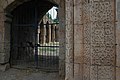 Ballıca Han View into closed courtyard
 -
 Ballıca Han Exterior wall
 -
 Tokat Clock Tower.


Notable people
[edit]
- Apkar Tebir Tokhatetsi (1520?–1572?), Armenian printer and typographer
- Gazi Osman Paşa (1832–1897), Ottoman commander
- Symeon Savvidis (1859–1927), Greek painter
- Mehmet Emin Tokadi Hazretleri (1664–1745), Sufi saint of Istanbul
- Krikor Balakian (1875–1934), Armenian bishop
- Cahit Külebi (1917–1997), Turkish poet
- Engin Günaydın (born 1972), Turkish actor and comedian
- Hüseyin Akbaş (1933–1989), Turkish World and Olympic Champion in wrestling
- Seda Sayan (born 1964), Turkish pop folk singer, actress and TV variety-show hostess
- Aziz Kocaoğlu (born 1948), mayor and politician.
International relations
[edit]Tokat is twinned with:
|
Europe
|
Africa |


See also
[edit]Notes
[edit]- ^ The town was called "Tokation", then it was renamed to Evdokia (Evdoksia), after Byzantine Emperor Heraclius' daughter, Eudoxia Epiphania.[3]
References
[edit]- ^ a b "Address-based population registration system (ADNKS) results dated 31 December 2022, Favorite Reports" (XLS). TÜİK. Retrieved 22 May 2023.
- ^ İl Belediyesi, Turkey Civil Administration Departments Inventory. Retrieved 22 May 2023.
- ^ a b c "Tokat - Τοκάτη". pontosworld.com. 5 February 2017.
- ^ a b c d e Grégoire, Henri (1935). "Dazmana est bien Dazimon". Byzantion. 10 (2): 760–3. JSTOR 44169796. Retrieved 4 February 2022.
- ^ a b Ramsay, William Mitchell (1890). The Historical Geography of Asia Minor. London. pp. 329–30. Retrieved 4 February 2022.
{{cite book}}: CS1 maint: location missing publisher (link) - ^ "İllerimize Ait Genel İstatistik Verileri" (in Turkish). Turkish State Meteorological Service. Retrieved 19 July 2024.
- ^ "Resmi İstatistikler: İllerimize Ait Mevism Normalleri (1991–2020)" (in Turkish). Turkish State Meteorological Service. Retrieved 7 August 2021.
- ^ "World Meteorological Organization Climate Normals for 1991-2020: Tokat" (CSV). ncei.noaa.gov. National Oceanic and Atmosoheric Administration. Retrieved 19 July 2024.
WMO number: 17086
- ^ "Tokat - Weather data by months". meteomanz.
- ^ Tokat Kebabı on YouTube
- ^ "Zile pekmezi", Zile haber (Commerce of Zile), Tokat, Turkey (Turkish)
- ^ 'Dracula's Dungeon' Discovered by Archaeologists at Tokat Castle in Turkey
- ^ Archaeologists In Turkey Say They've Discovered Dracula's Dungeon
- ^ Tokat'ın kardeş şehir ve belediyeleri Archived 2016-03-07 at the Wayback Machine, Tokat Newspaper, (16 June 2013)
- ^ İllere Göre Kardeş Şehirler Archived 2016-03-04 at the Wayback Machine, Presidency of Religious Affairs (2013)
Sources and external links
[edit]
- Tokat at kultur.gov.tr
- Tokat web news
| Municipalities | |
|---|---|
| Villages |
|


| International | |
|---|---|
| National | |
| Geographic | |
| Other | |

Tokat
View on GrokipediaHistory
Ancient and Hittite Periods
Archaeological evidence indicates continuous human habitation in the Tokat region since the Chalcolithic period, with settlements in the Yeşilırmak River basin dating to around 4000 BCE, as attested by artifacts displayed in the Tokat Museum from early farming communities.[6] These include pottery and tools reflecting adaptation to the fertile valley's resources, transitioning into the Early Bronze Age by circa 3000 BCE at sites like Maşat Höyük, where stratified layers reveal mound-based villages exploiting riverine agriculture and trade routes.[7] The Hittite Empire (circa 2000–1200 BCE) elevated the area's strategic significance, with Maşat Höyük serving as the administrative center of Tapigga, featuring a fortified palace, cuneiform tablet archives documenting royal correspondence, and defensive structures that highlight its role in northern Anatolian governance and military logistics.[7] Komana, located northeast of modern Tokat along the Yeşilırmak, functioned as a key Hittite religious sanctuary dedicated to the mother goddess Ma, evidenced by temple foundations and cultic continuity that positioned it as a pilgrimage and economic hub amid the empire's expansive trade networks.[8][9] Post-Hittite collapse around 1200 BCE, the region saw Phrygian cultural influences during the Iron Age (circa 1000 BCE), marked by distinctive pottery styles and settlement patterns at Maşat Höyük that suggest local adaptation amid broader Anatolian migrations.[7] This phase preceded integration into the Achaemenid Persian Empire by the mid-6th century BCE, followed by Hellenistic rule after Alexander's campaigns in 333 BCE, which introduced Greek administrative and architectural elements while preserving indigenous temple traditions at sites like Komana.[8]Byzantine and Seljuk Eras
Following the decline of Comana Pontica by the 7th century, Tokat ascended as a fortified Byzantine outpost, with its Dazimon castle serving as a critical defensive stronghold against invasions, notably highlighted in accounts around 1021 when Armenian ruler Senekerim sought refuge in the region.[10][11] The city's strategic location along trade routes facilitated its role as a hub for military logistics and commerce amid the empire's weakening control in Anatolia after Arab raids and internal strife. After the Battle of Manzikert in 1071, which accelerated Byzantine losses in Anatolia, Tokat fell under the Danishmendids, a Turkmen dynasty that established a principality encompassing north-central regions including Sivas and Tokat, promoting Islamic scholarship and architecture while engaging in conflicts with Crusaders and Byzantines.[12][13] The Danishmendids fostered cultural exchanges through patronage of Persianate arts and Sufi orders, blending Central Asian nomadic traditions with local Anatolian elements. By the mid-12th century, the dynasty was absorbed into the Seljuk Sultanate of Rum, under which Tokat thrived as a defensive and commercial center on paths linking the Black Sea to central Anatolia. Seljuk rule in Tokat from the late 12th to 13th centuries emphasized fortification enhancements and madrasa construction, exemplified by the Gök Medrese built circa 1270, featuring turquoise-tiled portals and geometric motifs characteristic of Anatolian Seljuk design that symbolized educational and religious centrality.[14] Military exchanges persisted, with Seljuk forces using Tokat as a base against Byzantine remnants and Mongol threats. The 1243 Mongol victory at Köse Dağ near Sivas subjected the Seljuks to Ilkhanid overlordship, causing temporary depopulation and economic disruption in the region through raids and tribute demands.[15] Despite Mongol incursions, Tokat's position on Silk Road branches enabled recovery as a trade node by the late 13th century, with caravansersaries and markets handling silk, spices, and metals under stabilized Mongol oversight that reduced banditry, though local resilience stemmed from pre-existing Seljuk infrastructure rather than direct Ilkhanid investment.[16] This era marked a transition to Turco-Mongol influences, evident in hybrid architectural styles and increased Persian administrative practices.Ottoman Rule and Modern Transition
Tokat was incorporated into the Ottoman Empire in the late 14th century following the conquests of Bayezid I, with effective control solidified by 1396 when the local Turkmen emirate submitted to Ottoman authority.[10] The region formed part of the Rum Eyalet (also known as Rumiye-i Sugra), an early Ottoman province in northern Anatolia established around 1398, where Tokat initially served as the administrative center before it shifted to Sivas.[17] As a key sanjak (district), Tokat functioned as a regional hub for governance, trade, and military logistics, benefiting from its strategic position along interior routes.[17] During the 19th century, amid Ottoman Tanzimat reforms aimed at modernization, Tokat maintained significance as one of the larger cities in Asian Turkey, with a diverse population including Greeks and Armenians engaged in commerce and crafts.[18] [10] The province produced prominent military leaders, notably Gazi Osman Pasha (1832–1900), a native of Tokat who commanded Ottoman forces at the Siege of Plevna in 1877–1878 during the Russo-Turkish War, where his five-month defense delayed Russian advances and earned him the honorific "Gazi" from Sultan Abdul Hamid II.[19] [20] With the founding of the Republic of Turkey on October 29, 1923, Tokat transitioned into a modern province within the restructured administrative system, aligning with Atatürk's secular and centralizing reforms that abolished the sultanate and caliphate while promoting national unity.[21] The 1923 Convention Concerning the Exchange of Greek and Turkish Populations led to the relocation of Tokat's residual Greek Orthodox inhabitants to Greece, further homogenizing the demographic amid broader Anatolian shifts.[18] In the post-World War II era, Tokat enjoyed comparative stability, avoiding the ethnic tensions or insurgencies seen elsewhere in Turkey, as the province integrated into national development initiatives emphasizing agriculture and infrastructure without significant disruptions from political upheavals.[22]Geography
Location and Topography
Tokat is situated in the central Black Sea Region of northern Anatolia, Turkey, at geographic coordinates 40°19′24″N 36°33′8″E.[23] The city serves as the capital of Tokat Province and lies approximately 422 kilometers east of Ankara by road.[24] Positioned inland from the Black Sea coast, Tokat occupies a strategic location along ancient trade and migration routes, facilitated by its position between the Pontic Mountains to the north and the Anatolian plateau to the south. The Yeşilırmak River, originating northeast of Sivas and flowing westward past Tokat toward the Black Sea, dominates the local hydrology and has historically supported settlement through its provision of water for agriculture and transportation.[25] The river carves a broad valley through the region, creating fertile alluvial plains amid surrounding rugged terrain, which enhances connectivity between central Anatolia and the Black Sea littoral.[26] Topographically, Tokat features a varied landscape of riverine lowlands rising to encircling hills and mountains, with the urban center at an elevation of about 623 meters above sea level.[27] Karst formations are prominent, exemplified by Ballıca Cave near Pazar district, a fossil cave system extending 680 meters in Permian-Triassic marble and limestone, showcasing stalactites, stalagmites, and other speleothems indicative of the area's geological history dating back 3.5 million years.[28] Thermal springs in the Sulusaray district further reflect geothermal activity linked to tectonic processes in the underlying strata.[29] The region lies proximate to the North Anatolian Fault Zone, subjecting it to seismic activity, with historical records indicating multiple earthquakes of magnitude 7 or greater since 1900.[30] Despite this, Tokat has experienced fewer major destructive events in recent decades compared to eastern Anatolian locales, contributing to its topographic integrity.[31]Climate and Natural Resources
Tokat province features a continental climate with distinct seasonal variations, marked by cold winters and warm summers. Average temperatures in January, the coldest month, reach a high of about 5°C and a low of -3°C, often accompanied by snowfall. February typically features average highs of 6–9°C and lows of -2 to 1°C, with frequent precipitation often as snow or rain-snow mix under partly cloudy to overcast skies. In contrast, July averages highs of 28°C and lows of 15°C, contributing to a growing season constrained by frost risks in early spring and late autumn.[32] [33] Annual precipitation averages approximately 450 mm, predominantly in spring and fall, with summer months experiencing drier conditions that heighten drought vulnerability in unirrigated areas.[34] This pattern aligns with a Köppen-Geiger classification of warm-summer humid continental (Dsb) in much of the province, transitioning to Mediterranean influences in lower elevations.[34] The climate's variability, including occasional extreme cold snaps below -10°C in winter and heatwaves exceeding 35°C in summer, influences environmental stability, with irregular rainfall exacerbating soil moisture deficits. Fertile alluvial soils in the Yeşilırmak River basin benefit from seasonal runoff, yet the region's topography amplifies erosion risks during heavy rains, leading to sediment loss estimated through models like the Universal Soil Loss Equation (USLE).[35] Drought episodes, as recorded in recent decades, strain water resources, prompting adaptive farming practices rooted in historical resilience to such fluctuations.[36] Natural resources include modest forest cover, primarily oak and pine in upland areas, which faces degradation from overgrazing and erosion, with conservation initiatives focusing on reforestation and terracing to mitigate annual soil losses averaging 10-20 tons per hectare in sloped terrains.[37] Mineral deposits, such as lignite and minor metallic ores, occur sporadically but remain underexploited due to economic and environmental constraints. Efforts under national programs emphasize erosion control and sustainable land management to preserve these assets against climate-induced pressures like intensified runoff.[38] [39]Demographics
Population Trends
The population of Tokat Province reached 606,934 in 2023, up from 602,567 the previous year, yielding an annual growth rate of about 0.7 percent amid broader national deceleration in population expansion.[40][41] The central district, encompassing Tokat city, accounted for 207,741 residents in 2023, comprising roughly one-third of the provincial total and indicating concentrated urban settlement patterns.[41] This subdued growth contrasts with higher rates in coastal and southeastern provinces, primarily due to sustained out-migration driven by limited local employment opportunities beyond agriculture. Internal migration data reveal persistent rural-to-urban outflows from Tokat, with younger cohorts relocating to metropolitan areas like Istanbul and Ankara for economic prospects, contributing to demographic stagnation.[42] While Turkey's overall urbanization rate exceeds 75 percent, Tokat exhibits relatively higher rural population retention—particularly in agricultural districts—compared to industrialized western provinces, where rural depopulation accelerates faster.[43] This dynamic sustains a balanced urban-rural divide, with over 80 percent of residents in district centers or towns by 2023, yet villages preserving traditional livelihoods. Demographic aging is evident in Tokat, exacerbated by youth emigration, aligning with national trends where the median age rose to 34.4 years by 2024; provincial indicators suggest a comparable or slightly elevated profile due to lower fertility and out-migration.[44] The 2023 southeastern earthquakes prompted limited internal displacement, with minor inflows to central provinces like Tokat from harder-hit areas, but official records show no substantial net population shift or disruption to local trends.[45]Ethnic and Religious Makeup
Tokat's population is ethnically homogeneous, consisting primarily of Turks of Central Asian Oghuz origin who settled the region during medieval Turkic migrations. Non-Turkic minorities, such as Circassians and other Caucasian groups, exist in small, scattered communities but do not exceed a few percent province-wide. The 1923 population exchange with Greece, which compulsorily resettled nearly all remaining Orthodox Christians from Anatolia to Greece, effectively eliminated Greek ethnic presence in Tokat, while prior 20th-century events had already reduced Armenian communities to negligible levels. Kurdish populations, which form significant shares in southeastern Turkey, are minimal in Tokat, with estimates indicating less than 1% based on birthplace and linguistic data from demographic studies focused on mother-tongue speakers.[46][47] Religiously, residents are overwhelmingly Muslim, comprising over 99% of the population as per official registrations, with the Hanafi school of Sunni Islam dominant and shaping conservative norms such as adherence to traditional family structures and modest dress. A notable Alevi minority, following a syncretic tradition blending Shia elements, Sufism, and folk practices, is concentrated in rural northern districts, though precise provincial percentages are unavailable due to lack of official censuses; national estimates place Alevis at 10-15% of Turkey's Muslims, with Tokat among regions of higher density. Non-Muslim faiths, including remnant Christian denominations, number in the low hundreds at most, reflecting the post-exchange homogenization.[48][46] Sustained low immigration, both domestic from diverse urban centers and international, has maintained this ethnic and religious continuity; Tokat's 2022 population of 596,454 shows stability with net migration rates near zero, per provincial statistics, avoiding the diversification seen in coastal or metropolitan areas.[49]Government and Politics
Administrative Divisions
Tokat Province is administratively divided into 12 districts: Almus, Artova, Başçiftlik, Erbaa, Niksar, Pazar, Reşadiye, Sulusaray, Turhal, Yeşilyurt, Zile, and the central Tokat district, which encompasses the provincial capital.[50] Each district is governed by a kaymakam, an appointed official responsible for local coordination with central authorities, while district municipalities handle services such as waste management and urban planning within their boundaries.[51] The Tokat central municipality, led by a mayor elected through direct popular vote in nationwide local elections conducted every five years under Turkey's Municipal Law No. 5393, oversees urban services for the capital city, including public transportation and zoning regulations.[52] The provincial governor, appointed by the President on the recommendation of the Ministry of Interior, directs overarching administrative functions, ensuring alignment with national policies on public order and resource allocation.[53] Central provincial administration manages key infrastructure, including the maintenance of approximately 2,500 kilometers of roads spanning the province's districts and the distribution of water resources primarily sourced from the Yeşilırmak River basin, which supplies irrigation and municipal needs through regulated dams and channels.[36] The Yeşilırmak River Basin Management Plan, implemented since 2021, coordinates flood control and water quality under joint provincial and national oversight to support sustainable usage across districts.[54] In recent years, the central government has channeled investments into rural development in Tokat, focusing on upgrading village roads and irrigation systems to enhance connectivity and agricultural productivity in peripheral districts like Almus and Reşadiye, as part of broader national programs under the Twelfth Development Plan (2024-2028).[55] These efforts, totaling billions of lira in regional incentives, aim to reduce urban-rural disparities by prioritizing infrastructure resilience in less-developed areas.[56]Electoral Patterns and Conservatism
In the 2023 Turkish parliamentary elections, Tokat province exhibited strong backing for conservative alliances, with the People's Alliance—primarily the Justice and Development Party (AKP) and Nationalist Movement Party (MHP)—capturing 64.6% of the vote and securing 4 of the province's 5 seats in the Grand National Assembly.[57] The AKP alone polled 37.4% (151,130 votes), while the MHP received 22.1% (89,188 votes), reflecting voter preferences for platforms emphasizing family structures, religious values, and rural economic policies over urban secularism.[57] In contrast, the main opposition Republican People's Party (CHP) obtained 20.7% (83,611 votes) for its single seat, and the Good Party (İYİ) 11% (44,606 votes), with no representation.[57] This electoral outcome underscores Tokat's low volatility and alignment with stability-oriented conservatism, as leftist and ethnic minority-focused parties, such as the Green Left Party (YSP/DEM predecessor) at under 1%, failed to gain traction amid the province's homogeneous Turkish Sunni demographic.[57] Voter turnout reached 91%, indicating robust participation driven by traditionalist priorities rather than ideological experimentation.[57] Such patterns diverge from coastal or metropolitan areas, where opposition alliances draw from progressive or cosmopolitan bases, and instead prioritize policies reinforcing agricultural heritage and social continuity against Istanbul-centric secular influences. Tokat's conservatism manifests in sustained support for right-leaning governance since the AKP's emergence, with minimal shifts toward alternatives despite national fluctuations, as evidenced by the alliance's dominance in retaining parliamentary control.[57] This resilience counters broader narratives of urban-driven political liberalization, highlighting causal ties to the province's inland, family-centric socioeconomic fabric.Economy
Agricultural Base
Agriculture in Tokat province centers on the cultivation of grains, fruits, and vegetables in the fertile alluvial soils of the Yeşilırmak River valley, supplemented by livestock rearing, which together underpin local food self-sufficiency and rural livelihoods. Dominant field crops include wheat, barley, and corn, grown across expansive plains suited to rain-fed and irrigated farming, while horticultural production features high-value fruits such as cherries and walnuts, particularly in districts like Niksar and central Tokat. In 2022, cherry orchards spanned 13,277 hectares, yielding 21,815 tons, with production contributing substantially to provincial export revenues through shipments to markets in Russia, Germany, and Iraq.[58] Walnut cultivation, emphasizing varieties like Chandler and local types, averages yields of 8-22 kg per tree in Niksar, with the district harvesting around 2,000 tons annually, supporting both domestic consumption and processing.[59][60] Livestock husbandry complements crop farming, with traditions in sheep and goat herding for meat and dairy, alongside poultry production dominated by native breeds in village systems. Although provincial shares of national herds have historically included notable portions of cattle (around 2.7%) and water buffalo (10.6%), recent emphases lie in integrated smallholder operations that enhance soil fertility via manure and provide diversified income amid crop seasonality.[61] The Yeşilırmak basin's 39% cultivated land coverage facilitates these activities, though irrigation from river diversions and reservoirs is critical for yield stability.[62] Climate variability poses challenges, including periodic droughts and flooding in the basin, which can disrupt sowing and harvest cycles, yet resilient smallholder models—characterized by family-operated plots and mixed farming—sustain productivity through adaptive practices like crop rotation and on-farm storage. Agriculture employs a significant share of Tokat's workforce, reflecting the province's rural demographic, even as sectoral output faces pressures from national trends toward mechanization and market integration.[63]Industry, Trade, and Recent Developments
Tokat's industrial sector emphasizes small-scale manufacturing, with textiles prominent in districts such as Erbaa, where firms like Akarteks operate multiple factories spanning 60,000 m² and employing over 2,000 workers in garment production.[64] Similarly, Aster Textile maintains a facility in Erbaa Organized Industrial Zone, contributing to apparel output with 188 employees as of recent operations.[65] Metalworking, encompassing traditional coppersmithing rooted in Ottoman-era smelters, persists alongside modern furniture and auto-mechanic repair services, identified as competitive clusters by sectoral analyses.[66] Food processing facilities handle value-added products from local inputs, though scale remains modest compared to national hubs.[67] Trade relies on regional routes connecting Tokat to Black Sea ports and inland markets, facilitating exports of textiles and metal goods via improved logistics.[68] Highway expansions, part of Turkey's broader infrastructure push, have enhanced access to national networks, supporting incremental export growth post-2020 despite global disruptions.[68] Recent developments from 2021 to 2025 include infrastructure upgrades like the Tokat Airport terminal, operational since expansions in the early 2010s but aiding trade logistics amid rising domestic manufacturing.[67] Foreign direct investment remains limited, with local entrepreneurship prioritized through vocational programs fostering SMEs in machinery and repair sectors.[69] Sustainability efforts focus on efficient production in competitive industries, though without significant hype, reflecting pragmatic regional growth amid Turkey's 3.2% national GDP expansion in 2024.Culture
Historical Traditions and Festivals
Tokat's enduring traditions reflect Ottoman influences, particularly in the communal observance of major Islamic holidays that emphasize social cohesion and ritual continuity. During Eid al-Adha (Kurban Bayramı), a four-day feast commemorating Abraham's sacrifice, residents perform ritual animal sacrifices—typically sheep, goats, or cattle—sharing portions with family, neighbors, and the needy, a practice rooted in Ottoman-era customs that reinforced community interdependence and charity as core social mechanisms.[70][71] Similarly, Eid al-Fitr (Şeker Bayramı), marking the end of Ramadan fasting, involves mosque prayers, family visits across extended kin networks, and distribution of sweets, sustaining pre-modern patterns of reciprocity that prioritize familial and neighborhood ties over individualistic pursuits.[72][73] A key living heritage is yazmacılık, the Ottoman-era technique of woodblock printing on fabrics using natural dyes and hand-carved molds, practiced in Tokat for over 700 years as a specialized craft that produced patterned textiles for clothing and household use. This tradition, which involves boiling fabrics in mordants before printing intricate floral and geometric motifs, has persisted through guild systems into the present, symbolizing resistance to industrial homogenization via skilled, labor-intensive methods passed intergenerationally.[74][75][76] Efforts to revive it, including artist collectives from Izmir, underscore its role in cultural preservation amid modern economic shifts.[74] Historical family customs in Tokat, evident from early 19th-century court registers (1811–1826), featured extended households integrating multiple generations and religious communities, fostering stability through patrilineal inheritance and communal decision-making that buffered against Ottoman administrative disruptions.[77] These structures, blending Muslim, Christian, and other elements in a multicultural Ottoman framework, prioritized collective welfare and elder authority, patterns that have evolved yet retained emphasis on kinship solidarity in rural and urban settings.[77]Cuisine and Daily Life
Tokat's cuisine features hearty dishes prepared with local ingredients, including lamb from Karayaka sheep raised in the region's highlands and vegetables such as eggplants, tomatoes, green peppers, and potatoes grown in fertile soils.[78][79] Tokat kebabı, a signature meat dish, consists of sliced lamb shank, tail fat, and these vegetables layered and slow-cooked horizontally in wood-fired clay ovens, imparting a distinctive smoky flavor unique to the province.[80][81] This preparation method, using meat from 6- to 9-month-old male lambs, has earned geographical indication status, emphasizing its ties to local pastoral traditions.[78] Complementing meat-based meals are grain-heavy staples like Tokat bat, a cold salad or dip made from cooked green lentils, fine bulgur, tomato paste, fresh herbs such as green onions, dill, and parsley, walnuts, and often lemon juice, served with simmered vine leaves.[82][83] Tokat Keşkeği, a local variant of the traditional Keşkek, incorporates unique ingredients such as chickpeas and çemen (fenugreek paste), imparting a tangy, spiced flavor, along with garlic and sometimes tomato paste. Unlike standard ceremonial Keşkek, which undergoes vigorous pounding to achieve a smooth porridge-like consistency with finely shredded meat, Tokat Keşkeği involves less or no pounding, resulting in a thick stew with visible grain texture and larger, tender meat chunks. It is often slow-cooked on the stove or baked in a stone oven as a family gathering dish, suitable even for breakfast, rather than exclusively for communal rituals.[84][85] Another traditional item is Tokat Çöreği, a pastry made from wheat flour dough leavened with chickpea yeast, often filled with walnuts or other ingredients, and slow-baked over wood fire, which holds geographical indication status and reflects the province's baking heritage.[86] These home-cooked foods prioritize whole, unprocessed components over fast food, aligning with agrarian self-sufficiency where families utilize seasonal harvests and animal products directly from farms.[80] Daily life in Tokat revolves around agricultural cycles, with residents engaging in routines of planting, tending, and harvesting crops like wheat and vegetables, alongside livestock rearing for meat and dairy.[80] This physical labor, combined with communal meals featuring nutrient-dense local fare, supports active lifestyles in rural areas, where obesity prevalence was reported at 29.5% overall in a 2012 study—lower than the national average of 36% at the time and notably less than in urban centers due to differences in diet and activity.[87][88] Mosque attendance punctuates the day for the predominantly Muslim population, fostering social cohesion amid these rhythms, though empirical data on adherence remains limited to general regional patterns of religious observance.[89]Education and Sports
Tokat Gaziosmanpaşa University, founded in 1992 as a public institution, anchors higher education in the province with roughly 32,820 enrolled students distributed across faculties of agriculture, engineering, education, and natural sciences, alongside multiple vocational schools.[90] The university prioritizes practical programs aligned with regional economic demands, including associate degrees in forestry products, greenhouse technology, and agricultural economics, which equip graduates for employment in Tokat's dominant farming and resource sectors.[91][92][93] Vocational training extends to secondary levels through specialized Anatolian high schools focused on agriculture, providing hands-on instruction in crop management and related fields to support the province's agrarian base.[94] Adult literacy in Turkey stands at 97% as of recent national surveys, reflecting broad access to basic schooling in provinces like Tokat where primary enrollment nears universal levels under compulsory education policies.[95][96] Sports engagement centers on football through local teams such as Tokat Belediyespor, which competes in regional amateur divisions and draws community participation via youth academies and matches. Traditional Turkish wrestling, practiced in informal clubs and festivals, promotes physical fitness and local traditions, though organized leagues remain secondary to national efforts in urban centers.[97] Community-based activities in both disciplines emphasize discipline and teamwork, with facilities maintained by municipal and university programs to sustain participation amid rural demographics.[98]Tourism
Cultural and Historical Sites
Tokat Castle, perched on a rocky peak overlooking the city center, features 28 towers and dates to ancient fortifications guarding the Kızıliniş pass near the confluence of the Tokat and Yeşilırmak rivers.[99] Restoration projects initiated in recent years aim to preserve its structure and enhance accessibility, with efforts including structural reinforcements completed by July 2025 to counteract erosion and support tourism while maintaining historical integrity.[100] Historical accounts link the site to the imprisonment of Vlad III (Dracula) in the 15th century, underscoring its role in medieval defense and captivity.[101] The Gök Medrese, constructed between 1269 and 1270 under the patronage of Mu'in al-Din Suleyman during the Anatolian Seljuk era, represents one of the region's earliest open-domed madrasas with a two-story design and turquoise tile accents.[102] Preservation work in 2024 uncovered Ottoman-era storage jars within its courtyard, confirming layered historical usage and prompting further conservation of its Seljuk architectural elements like portals and vaults.[103] Adjacent structures such as the Taş Han caravanserai complement its context as part of Tokat's medieval educational and trade hubs.[104] The Ali Pasha Mosque, built in 1572 by Kemer Ali Paşa—a son-in-law of Şehzade Bayezid—exemplifies Ottoman classical architecture with a grand central dome over its prayer hall, accompanied by a hamam and türbe.[105] Finely restored to highlight its intricate stonework and proportions, the complex reflects 16th-century imperial patronage in provincial settings.[106] Tokat Museum, relocated in 2012 to a 15th-century nine-domed Ottoman bedesten (covered bazaar), displays artifacts spanning the Chalcolithic to Ottoman periods, including Hittite tablets from Maşathöyük excavations and a Hellenistic-period sword.[6] The venue's adaptive reuse preserves the bedesten's architectural form while showcasing Seljuk-era stone carvings and ceramics that verify Tokat's role in Anatolian trade routes.[5] Ongoing archaeological excavations at Sebastopolis, an ancient Roman city in Sulusaray district, have uncovered gladiatorial arena remnants and urban layouts since 2004, with intensified efforts in 2025 led by Ondokuz Mayıs University confirming Tokat's Hellenistic and Roman heritage through stratified finds.[107] Preservation strategies emphasize in-situ protection and public integration to sustain these sites amid urban pressures.[108] Traditional Ottoman houses, renovated for cultural functions, further illustrate vernacular timber-frame construction adapted for modern conservation.[26]Natural and Thermal Attractions
Ballıca Cave, located 23 km southwest of Tokat in the Pazar district on Akdağ mountain, represents the province's premier geological attraction, featuring extensive stalactites, stalagmites, columns, cave pearls, and colorful rock formations within a 680-meter accessible limestone labyrinth estimated at 3.4 million years old.[109][110] The site, inscribed on UNESCO's World Heritage Tentative List, drew 90,000 visitors in 2024, with its microclimate purportedly aiding respiratory conditions like asthma due to high humidity and negative ions, though such health claims require medical validation.[111] Access is limited to preserve formations, spanning multiple halls up to 85 meters high.[112] Thermal tourism in Tokat centers on Sulusaray Hot Spring, situated amid ancient Nicopolis ruins, where waters emerge at elevated temperatures suitable for therapeutic bathing; facilities were modernized post-1962 to support regional health visits.[113] Recent drilling of new geothermal wells addresses declining output from prior sites, aiming to bolster sustainable thermal infrastructure without expanding beyond verified resource capacity.[114] The province's river valleys, including the confluence of the Tokat River and Yeşilırmak, alongside forests like Erbaa Forest at the Canik Mountains' base, facilitate eco-activities such as hiking, birdwatching, and camping amid diverse flora and fauna.[115][116] Additional sites like Almus Dam Lake and Zinav Lake Nature Park offer water-based recreation, with conservation efforts emphasized since the 2021 Ecotourism and Sustainable Tourism Conference hosted in Tokat to promote low-impact visitation.[117][118] These areas prioritize habitat preservation over mass development, aligning with measured tourism growth evidenced by Ballıca's attendance figures.Notable Individuals
Military and Historical Figures
The Danishmendids, a Turkic dynasty that controlled Tokat as part of their emirate centered in Sivas, Niksar, and Tokat from the late 11th century, played a pivotal role in the conquest and defense of the region against Byzantine forces. Danishmend Gazi, the founder, captured Tokat and surrounding areas from the Byzantines in the aftermath of the Battle of Manzikert in 1071, establishing a frontier principality that resisted Byzantine reconquests and expanded Turkic influence in central Anatolia through ghazi warfare.[119] Successors like Emir Gümüşhtigin continued these efforts, fortifying Tokat as a base for raids and alliances with the Seljuk Sultanate of Rum until the dynasty's absorption by the Seljuks in the 12th century.[119] In the Ottoman era, Tokat produced notable military leaders, most prominently Gazi Osman Pasha (1832–1900), born Osman Nuri into a local family in Tokat. Educated at the Ottoman Military Academy in Constantinople, he served in the Crimean War (1853–1856) and later suppressed revolts in Lebanon and Crete.[120] His defining achievement came during the Russo-Turkish War of 1877–1878, commanding Ottoman forces at Plevna (now Pleven, Bulgaria), where he repelled three major Russian assaults between July and December 1877, sustaining 30,000 Ottoman casualties while inflicting over 40,000 on the attackers despite numerical inferiority.[120] This prolonged defense delayed Russian advances toward Constantinople, earning him the honorary title "Gazi" from Sultan Abdul Hamid II and medals from European powers, including Prussia.[120]Scholars and Modern Contributors
Mehmed Emin Tokadî (1664–1745), born in Tokat, emerged as a key figure in Ottoman religious scholarship through his leadership in the Naqshbandi-Mujaddidi Sufi order. After initial studies in Istanbul and Mecca, he established a significant following in the capital, authoring works on tasawwuf and transmitting the Mujaddidiyya lineage, which emphasized spiritual purification and adherence to Sharia.[121][122] His efforts helped integrate North Indian Naqshbandi influences into Ottoman religious life, with biographical accounts preserved by disciples highlighting his role in guiding elite and common adherents alike.[123] In the 20th century, Emin Saraç (1932–2021), hailing from Tokat province, advanced hadith studies as a specialist in prophetic traditions, lecturing extensively in Istanbul and training generations of scholars through private circles and institutions. His career focused on textual analysis and oral transmission of hadith sciences, contributing to the preservation of classical Islamic methodologies amid modern educational shifts.[124] Saraç's influence persisted through recorded lessons and disciples, emphasizing empirical fidelity to primary sources over interpretive innovation.[124]International Relations
Sister Cities and Partnerships
Tokat has pursued a limited number of formal sister city agreements, prioritizing practical cooperation in economic development, trade, and cultural exchange over symbolic gestures. These partnerships, often formalized through municipal protocols, aim to leverage shared regional interests, such as agriculture and tourism, to generate tangible mutual benefits like joint projects and market access.[125] In April 2023, Tokat established a sister city relationship with Gölbaşı in Ankara Province to promote unity, shared governance practices, and long-term collaboration between the municipalities.[126] A protocol with Gaziantep was signed in July 2025, emphasizing developmental initiatives, cultural integration, and economic partnerships to foster kalkınma (development) and reciprocal support.[127] In August 2025, Tokat formalized a sister city project with Mosul, Iraq, through a signed agreement focused on collaborative ventures in agriculture, tourism, gastronomy, industry, and trade to enhance bilateral economic opportunities and strengthen post-conflict recovery ties.[128][129] Tokat also maintains a partnership with Karalar Municipality in İdil District, Şırnak Province, supporting local administrative exchanges and regional solidarity.[130]| Partner | Location | Establishment Year | Primary Focus |
|---|---|---|---|
| Gölbaşı | Ankara, Turkey | 2023 | Governance collaboration and unity[126] |
| Gaziantep | Gaziantep, Turkey | 2025 | Economic development and cultural ties[127] |
| Mosul | Nineveh, Iraq | 2025 | Trade, agriculture, tourism, and industry[128] |
| Karalar | Şırnak, Turkey | Pre-2025 | Administrative and regional support[130] |