
Hubbry Logo
Human tooth sharpeningHuman tooth sharpeningMain
Open search
Human tooth sharpening
Community hub
Human tooth sharpening
logo
8 pages, 0 posts
0 subscribers
Be the first to start a discussion here.
Human tooth sharpening
from Wikipedia
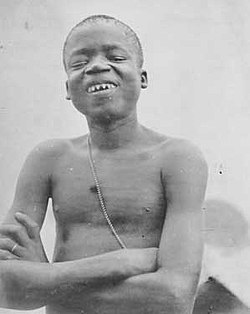
Ota Benga, a famous Congolese pygmy, shows off his sharpened teeth.
A man with filed teeth (probably Mentawai) smokes in a photograph by Dutch photographer Christiaan Benjamin Nieuwenhuis, who worked in Sumatra.

Human tooth sharpening is the practice of manually sharpening the teeth, usually the front incisors. Filed teeth are customary in various cultures. Many remojadas figurines found in parts of Mexico have filed teeth and it is believed to have been common practice in their culture. The Zappo Zap people of the Democratic Republic of Congo are believed to have filed their teeth.

Historically it was done for spiritual purposes, with some exceptions, but in modern times it is usually aesthetic in nature as a form of body modification.[1]

History

[edit]

Many cultures have practised this form of body modification. In Bali, in a ritual known as Potong gigi or cut teeth, teenagers have their canine teeth filed down because it is thought they represented negative emotions such as anger and jealousy.[2] It is also seen as a way to spiritually separate them from their animalistic instincts and ancestors.[2] After this tradition is completed the teens are now considered adults and are allowed to marry.[2] During this ritual the person receiving the procedure is dressed in traditional clothing and would be carried from place to place by their parents as they are not allowed to touch the ground.[2] This is done to avoid encountering evil forces. In a more modernized version of the ritual, the teen would wear socks to walk from place to place in order to stay off the ground.[2]

Around the year 1910, the African Herero people participated in forms of tooth sharpening. Both the boys and girls at puberty would have four of their lower teeth knocked out using a sledgehammer. This was followed by the top teeth being sharpened to points that resembled a "V". The tribe regarded this tradition as a form of beauty. It was said that a girl that had not undergone this procedure would not be able to attract a lover.[3]

In ancient China, a group called Ta-ya Kih-lau (打牙仡佬, literally "仡佬 (Gelao people) who beat out their teeth") had every woman about to wed knock out two of her anterior teeth to "prevent damage to the husband's family."[4] Some cultures have distinctions between which sex does what to their teeth. In the central Congo region, the Upoto tribe has men file only teeth in the maxillary arch, whereas women file both maxillary and mandibular arches.[5]

The Mentawai people have also traditionally engaged in this practice.[6] The Mentawai people believed that the soul and body were separate. If the soul was not pleased by its body it would leave and the person would die. As a result, the Mentawai people started modifying their bodies to be more beautiful. In Mentawai culture, those with teeth that have been sharpened are deemed more beautiful. Tooth sharpening would have been traditionally done at puberty, though contact with outside civilizations has resulted in a decline of tooth sharpening.[7] Today, the Mentawai people use a sharpened chisel and another object that acts as a hammer. They use no anesthetics or pain killers, and bite down on a piece of wood.[8] Green bananas are bitten on to reduce pain after the procedure.[7]

David Livingstone mentioned a number of African tribes who practiced teeth-filing, including the Bemba, Yao, Makonde, Matambwe, Mboghwa and Chipeta.[9]

Koesbardiati, Toetik mentions Indonesian tribes that practice human teeth sharpening in the prehistoric and Islamic populations of Indonesia.[10][11] In the prehistoric populations of Java, Bali, Sumba, and Flores, dental modifications primarily occurred in canines and incisors but not all of the modifications were for survival.[11] The extraction method practiced by the Flores was for beauty purposes.[11] Human teeth sharpening also continued to occur during the 17th century but this was mostly practiced by those in nobility or those with social prominence.[12] Skeletal remains in the area show that dental filing occurred.[11]

Examples in the modern world

[edit]
  • Horace Ridler, "the Zebra man", included tooth sharpening as one of many body modifications he underwent in order to serve as a circus performer.
  • In the Indonesian population of Bali, there is a sacred religious practice in which the maxillary front teeth are filed for the purpose of refraining from evil lust.[11] Note that the teeth are flattened, not sharpened.
  • In the Indonesian population of Timor, residents file the occlusion surface for beauty purposes as it makes the residents feel more comfortable around others.[11]
  • Among the Mentawai people in Indonesia, the wife of the soon-to-be chief decides to have her teeth sharpened as a sign of great beauty.[7]

References

[edit]
[edit]
Revisions and contributorsEdit on WikipediaRead on Wikipedia
from Grokipedia
Human tooth sharpening, also known as tooth filing or chipping, is a traditional form of intentional dental modification wherein the edges of teeth, typically the incisors, are manually ground or carved to create pointed or sharpened shapes, often resembling those of animals like or . This practice has been documented across diverse indigenous cultures globally, serving primarily as a marker of , social status, maturity, or tribal identity, and is performed without using rudimentary tools. While historically widespread, it carries significant health risks, including enamel damage, , and , leading to its decline in many communities due to modernization and improved dental awareness. The origins of tooth sharpening trace back to , with evidence of related dental modifications, such as , dating to approximately 13,000 years ago in northwest , though specific sharpening practices emerged later in various regions. Archaeological and ethnographic records reveal its prevalence in (e.g., among the Makonde of and tribes in , Congo, and ), (e.g., of ), and the (e.g., ancient Maya and modern in Panamá). In Panamá, for instance, the practice was introduced post-European contact in the early colonial period (circa 1519–1673 CE) among individuals of African ancestry, later adopted by the as a cultural emblem, with no pre-contact evidence in local samples of over 1,000 teeth examined. The process typically involves skilled community practitioners who use tools like stones, chisels, files, or to gradually shape the teeth during rites of passage, such as or preparations, often in ceremonial settings. Among Mentawai , sharpening occurs during as a symbol of adulthood and attractiveness, targeting the upper front incisors to form sharp points, a tradition now largely limited to older generations amid health concerns. Similarly, in African contexts, it may mimic predatory animal for or aesthetic enhancement, underscoring its role in expressing cultural values and group affiliation. Anthropologically, tooth sharpening provides insights into human social structures, roles, and intercultural exchanges, as seen in its diffusion via migration and , while also aiding of remains from affected populations. Despite its fading practice, it remains a poignant example of tied to identity, with contemporary echoes in elective cosmetic procedures in some urban settings as of the early .

Overview

Definition and Types

Human tooth sharpening refers to the intentional modification of teeth through processes, primarily targeting the anterior to reshape them into pointed, conical, or otherwise altered forms. This practice constitutes a subset of broader intentional dental modifications, defined as irreversible alterations to the teeth's natural morphology for non-curative, often ritualistic or aesthetic purposes, distinguishing it from therapeutic interventions or unintentional damage. Unlike natural occlusal wear resulting from diet or age, or accidental trauma such as fractures, tooth sharpening involves deliberate abrasion using tools like files, stones, or chisels to achieve specific aesthetic or symbolic outcomes. The main types of tooth sharpening encompass variations in the degree and pattern of abrasion applied to the enamel and . Point filing, the most characteristic form, entails grinding down the lateral edges of incisors or canines to create sharp, conical tips, often resembling animal fangs for symbolic enhancement of ferocity or beauty. Notching introduces linear incisions, V-shaped grooves, or decorative chips along the incisal edges, sometimes combined with filing to accentuate the sharpened appearance. Following primary sharpening, decorative enhancements may be applied, such as inlays of precious materials or pigments inserted into filed cavities to add contrast or cultural motifs, though these are secondary to the abrasion process itself. This practice is explicitly differentiated from related dental alterations like full tooth avulsion (extraction for spacing or rites), tooth blackening or (color modification without shape change), and modern veneers (adhesive coverings rather than subtractive reshaping).

Purposes and Motivations

Human tooth sharpening has been motivated by a range of spiritual beliefs, often aimed at warding off evil spirits or purifying the soul. In Balinese Hindu traditions, for instance, the practice known as mapandes involves filing the canines to symbolically eliminate negative traits such as greed, desire, and anger, thereby protecting the individual from malevolent forces. Similarly, among certain African groups like the Makonde of , tooth chipping serves as a to invoke spiritual protection during initiation ceremonies. As a , tooth sharpening frequently marks transitions such as or entry into adulthood, reinforcing roles or maturity within the community. For example, in Mentawai Island societies, women undergo the procedure upon reaching adulthood to signify readiness for and social responsibilities. This aspect underscores the practice's role in communal bonding and personal transformation across various cultures. Aesthetic ideals also drive the practice, with sharpened teeth viewed as enhancing beauty, ferocity, or vitality in specific societies. In some Southeast Asian and African contexts, pointed teeth are considered more attractive than natural ones, symbolizing and . Social signaling further motivates sharpening, as it indicates status, tribal affiliation, or marital eligibility; for instance, among Ngäbe communities in , modified teeth denote ethnic identity and group belonging. Psychologically and symbolically, teeth represent strength, vitality, and , with sharpened forms perceived as intimidating or alluring depending on the society. This symbolism can convey power or resilience, as seen in practices mimicking teeth for totemic associations. Such modifications thus serve as visible markers of personal and collective heritage. Over time, the purposes of tooth sharpening have evolved from predominantly spiritual and ritual functions in ancient and pre-modern eras to more aesthetic and body modification-oriented motivations in contemporary settings. While traditional practices persist among indigenous groups, modern adherents often pursue it for personal expression or fashion, reflecting broader shifts in .

Historical Development

Ancient Origins

The practice of human tooth sharpening, involving the intentional filing of teeth to create points or altered shapes, traces its origins to prehistoric and early historic societies, where it emerged as a form of potentially influenced by tool-making techniques and symbolic expressions. Archaeological evidence suggests associations with groups, who may have adapted stone or metal tools used for and to modify teeth, reflecting early experiments in personal adornment or ritual marking. While direct skeletal evidence from the is limited, related dental modifications such as date to approximately 13,000 years ago in northwest , with specific sharpening practices emerging later in various regions. The technique's antiquity is underscored by its prevalence in subsequent early civilizations, indicating ritualistic beginnings tied to spiritual or social identity. One of the earliest documented instances of tooth filing appears in , with evidence from the dating to approximately 1300 BCE, where intentional shaping of teeth into points or decorative forms was practiced among early populations as part of cultural traditions. This prehistoric context highlights possible links to symbolic behaviors, such as rites of passage or aesthetic enhancement, among and early agricultural communities. Such modifications likely served spiritual purposes, symbolizing maturity or connection to ancestral spirits, though interpretations vary based on regional artifacts. In , the Remojadas culture of , (circa 500 BCE–500 CE), provides compelling evidence through ceramic figurines depicting individuals with prominently filed teeth, indicating the practice was widespread and culturally significant during the Preclassic period. These smiling figures, often showing pointed or notched incisors, suggest tooth sharpening was a common aesthetic or status marker in daily life and rituals. Transitioning into the Classic period, the Maya (250–900 CE) integrated tooth sharpening with inlays of or , reserving such elaborate modifications for elites to signify high social standing and divine favor. Skeletal remains and artifacts from sites like reveal filed incisors combined with embedded gems, demonstrating advanced techniques using abrasives like for precise shaping.

Pre-Modern Regional Practices

In various African societies during the , sharpening served as a marker of identity and , reflecting broader sub-Saharan traditions of dental alteration for rites of passage and status assertion. In , pre-modern sharpening practices varied across regions, often tied to aesthetic ideals and social harmony. In the Indonesian archipelago during pre-colonial eras, filing was prevalent among Austronesian communities in and surrounding islands, where it served as a to curb base desires and promote social harmony, with evidence from archaeological sites indicating its continuity from earlier periods into the . European colonial encounters in the Pacific islands, starting with Spanish expeditions in the , documented similar practices among Visayan and Tagalog groups in the , where filing teeth level or into points, often followed by blackening or gold inlays, signified beauty, status, and differentiation from animals; chroniclers like Pigafetta noted these during interactions in and , viewing them as exotic customs amid alliances and conflicts. By the 18th and 19th centuries, British and Dutch reports from other Pacific locales, such as the Mentawai Islands, described analogous filing for aesthetic and ritual purposes, highlighting geographic adaptations of .

Cultural Significance

African Traditions

Tooth sharpening, known locally as practices like chipping or filing the incisors to create pointed or peg-shaped forms, has been a significant cultural among various African ethnic groups, often tied to rites of passage and social identity. These modifications predate colonial influences and trace back to prehistoric times, with archaeological evidence indicating intentional dental alterations in as early as 13,000 years ago in northwest . The practice persisted through pre-colonial eras, sometimes spreading via trade routes such as those connecting East African coastal societies with inland communities, though it has declined in many areas due to modernization and health concerns. Among the of southeastern and northern , tooth sharpening involves chipping the enamel of the upper and lower incisors to form pointed, peg-like shapes, a typically performed during ceremonies marking the transition from to adulthood. This modification symbolizes , maturity, and enhanced attractiveness, with men often filing teeth to resemble shark-like points as a display of strength, while women may undergo more extensive filing before to emphasize and . The practice, executed using simple tools like knives or files, underscores gender-specific roles in Makonde society, where sharpened teeth serve as visible markers of and ethnic pride, continuing from pre-colonial times despite partial suppression under post-independence policies promoting national unity. In , among certain Igbo subgroups such as the Umudioka clan in the region, tooth filing—referred to as iwa eze—entailed chipping the front teeth to create distinctive shapes, historically performed as part of broader rituals including (ichi and mbubu). This practice, carried out by specialized surgeons during initiation rites, signified ethnic identity, nobility, and passage into manhood, primarily among males to denote achievement and community standing, though women in priestess roles occasionally received related alterations for spiritual purposes. Rooted in pre-colonial Igbo cosmology, where such modifications linked individuals to ancestral lineages, the tradition maintained continuity through oral histories and festivals, even as colonial-era and urbanization led to its near-extinction by the mid-20th century; symbolic revivals occur today in cultural events like the Nka Dioka Festival. These African traditions highlight tooth sharpening's role in initiation ceremonies across genders, with variations emphasizing allure for women and status or bravery for men, while their endurance reflects resilience against external influences like and .

Asian and Oceanic Traditions

In , the of practice tooth sharpening primarily among women as a marking adulthood, using natural tools such as stones and chisels to file the four front teeth into pointed shapes. This enhances perceived and promotes spiritual by satisfying the and warding off misfortune, often performed without in a communal setting. Among the Balinese, tooth filing, known as metatah or mepandes, involves grinding down the upper and lower canine teeth to blunt points during as a to symbolize the transition to maturity and suppress animalistic instincts like greed and anger. Tied to Balinese , the practice is believed to prevent the possession by evil spirits, such as the demon Sangut represented by protruding canines, and is accompanied by offerings and incantations led by a . In the , indigenous groups like the Igorot in the region historically filed teeth as a form of to signify tribal identity, , and aesthetic appeal, often combined with blackening using plant-based pigments during rites. This practice served as a marker of cultural belonging and maturity, distinguishing community members in pre-colonial societies. Papua New Guinea features tooth sharpening among certain groups, reflecting broader Melanesian emphases on bodily adornment for social hierarchy. In Oceanic contexts, the people of western maintain a of filing teeth to sharp points using machete sharpeners, a practice among both men and women that may trace to African influences via the slave trade, often integrated with shell or metal inlays to affirm ethnic identity and resilience. This fusion of aesthetic modification and cultural symbolism highlights adaptive rituals in indigenous communities.

Other Global Examples

In , particularly among the ancient Maya during the Postclassic period (ca. 900–1500 CE), individuals practiced tooth sharpening through filing the edges of their incisors and canines into pointed shapes, often followed by inlaying or other precious stones to signify divine status and social prestige. This modification, achieved using bow drills and stone tools, was reserved for nobility and may have symbolized a connection to deities or rites of passage, with archaeological evidence from sites like revealing filed teeth adorned with green for aesthetic and enhancement. Skeletal remains indicating intentional dental alterations for and military contexts. In , indigenous groups in the , such as certain tribes practicing mutilations, filed their maxillary central incisors to sharp points for shamanic and aesthetic purposes, believing the modification enhanced spiritual power or protected against malevolent forces during healing ceremonies. These global examples highlight tooth sharpening as a marker of identity and power beyond dominant regional traditions, often tied to or contexts.

Methods and Techniques

Traditional Filing Processes

Traditional filing processes for human tooth sharpening relied on simple, locally available tools and materials, including stones, chisels crafted from metal or , metal files, , and strips as abrasives. These implements were operated manually by experienced community elders or designated specialists, who performed the procedure without to ensure the individual's endurance as part of the cultural rite. The process generally commenced with the careful selection of , focusing on the incisors and canines, which were targeted for their visibility and symbolic importance in expressions of maturity and . Filing occurred incrementally over several sessions, with the practitioner applying the abrasive tool in controlled strokes to grind down the edges gradually, allowing time for recovery between applications to manage discomfort. This methodical approach shaped the teeth into desired points or peg-like forms, often culminating in a ceremonial completion marked by communal observation. Cultural variations in these processes reflected regional resources and aesthetic ideals. Among the of , young women at underwent sharpening using a rock held as a and struck with another object to form sharp, pointed cusps, emphasizing elongated, shark-like profiles as a marker of adulthood and allure. Among West African groups like the Dogon of , elders filed the front teeth into uniform sharp points using stones or files, creating a comb-like effect symbolizing creative and social weaving in their cosmology. East African tribes such as the Makonde further adapted the technique by chipping upper and lower incisors into peg shapes with chisels and stones, performed as a ritual to signify readiness for marriage. In , the ancient Maya filed teeth using stone tools to create pointed or shaped forms, often in combination with inlays, as part of elite status displays.

Modern and Cosmetic Approaches

In modern , sharpening, also known as enameloplasty or , involves the precise removal of small amounts of to create pointed or angular shapes, often for aesthetic enhancement. Professional procedures typically employ high-speed rotary handpieces equipped with diamond burs or abrasive strips to gently file the enamel surface, allowing for controlled reshaping without compromising structure. This method contrasts with traditional manual filing by incorporating , such as intraoral scans or X-rays, to measure enamel thickness—usually limiting removal to 0.5-1 mm per —to ensure precision and minimize risks. may be applied for patient comfort during more extensive , though it is often unnecessary as enamel lacks endings. For dramatic effects, such as vampire-inspired fangs, dentists may combine filing with composite , where tooth-colored is applied, shaped into points, and hardened using a curing light before polishing. This additive approach allows for reversible modifications if desired, with results lasting 5-10 years depending on and bite alignment. In specialized clinics, these techniques are adapted for "extreme smile" makeovers, drawing from pop culture influences like endorsements, where subtle canine elongation creates a predatory aesthetic without full alteration. veneers or custom crowns serve as alternatives for permanent sharpening, bonded over filed surfaces for durability up to 15 years. Within subcultures, particularly those inspired by gothic or aesthetics in Western scenes, at-home DIY methods persist despite professional warnings, often using nail files or power tools like Dremels for self-sharpening. These practices, prevalent in online communities since the early , aim for bold, pointed transformations but lack medical oversight. Professional artists, trained in dental techniques, sometimes offer supervised filing services, emphasizing sterile environments and post-procedure care to align with cosmetic standards. Safety advancements in the have transformed these procedures, with mandatory sterilization protocols using autoclaves and disposable tools to prevent , alongside pre-operative assessments via 3D imaging for optimal outcomes. Clinics now integrate laser-assisted contouring for even finer control, reducing recovery time to hours rather than days, and providing custom mouthguards to protect sharpened teeth from wear. These evolutions, adopted widely since the , reflect a shift toward regulated, health-focused modifications in both dental and body art contexts.

Health Implications

Risks and Complications

Human tooth sharpening procedures, especially in traditional contexts using non-sterile tools, pose significant immediate health risks due to the direct abrasion of tooth structures and surrounding tissues. Excessive frequently occurs as filing disrupts gingival blood vessels and exposes underlying . Infections represent a primary complication, with entering through open filing wounds from unsterilized instruments or environmental contaminants. This can result in localized abscesses. Historical cases in practices have also linked these procedures to , particularly when performed in regions with poor wound care. The filing process may irritate dental nerves, leading to intense pain and in the affected teeth and surrounding areas. Among communities practicing tooth filing, such as the Baka pygmies in , over half of participants report the procedure as highly painful, with nearly two-thirds experiencing persistent pain afterward and 40% noting tooth sensitivity. In settings without , this pain can induce shock or fainting during the procedure. Procedural errors, including excessive enamel removal, heighten vulnerability by creating cracks in the tooth structure. These dangers are amplified in humid tropical environments common to many traditional practices, where bacterial proliferation in filing wounds is facilitated by moisture and limited access to hygiene.

Long-Term Effects and Care

Human tooth sharpening, whether through traditional filing or modern cosmetic techniques, can result in chronic dental sensitivity due to the exposure of underlying dentin, which lacks the protective enamel layer and transmits stimuli such as temperature changes directly to the nerve endings. This heightened sensitivity often persists lifelong and may intensify with age or further wear. Additionally, the removal of enamel accelerates overall tooth wear, as the sharpened surfaces are more susceptible to abrasion from food and brushing, potentially leading to uneven attrition over decades. Studies on traditional practices, such as those among Mentawai (n=8), reveal increased risks of , characterized by gingival inflammation (Gingival Index score of 2.2) and supragingival/subgingival accumulation, stemming from altered tooth morphology that complicates plaque removal and promotes bacterial buildup. These changes can contribute to over time, exacerbating pocket formation and bone loss if hygiene remains suboptimal. Furthermore, the irregular surfaces created by sharpening heighten decay risk by trapping food particles and fostering acid-producing . Structurally, enamel weakening from filing reduces the tooth's resistance to fracture, as the thinned layer fails to distribute occlusal forces effectively, raising the likelihood of chipping or cracking under normal biting pressures. Bite alignment may also be compromised, leading to where uneven contact causes compensatory jaw strain or accelerated wear on opposing teeth. To mitigate these effects, individuals with sharpened teeth require specialized dental care, including enhanced protocols such as twice-daily brushing with fluoride toothpaste to remineralize exposed surfaces and prevent further demineralization. Professional applications of or gels are recommended periodically to strengthen remaining enamel and reduce sensitivity. Dental sealants can provide a protective barrier over filed areas to minimize decay risk, though they must be applied carefully to avoid trapping debris in irregular shapes. Regular monitoring through biannual dental exams is essential to detect erosion, s, or periodontal progression early, with interventions like or crowns possible for cosmetic cases but limited by irreversible enamel loss in traditional sharpening.

Contemporary Practices

Ongoing Cultural Traditions

Among the of Indonesia's Island, tooth sharpening remains a living tradition primarily practiced by women as a marker of beauty, maturity, and upon reaching adulthood. This , known as pasipiatsot, involves filing the canines and incisors to sharp points using stone chisels, symbolizing an idealized aesthetic that distinguishes human beauty from animal-like features. Despite pressures from modernization, the practice persists in remote villages like Buttui Hamlet in Madobag Village, where older women (aged 38-75) continue to maintain sharpened teeth, though it is increasingly rare among those under 35 due to awareness of associated pain and health risks. In , the of southeastern and northern uphold tooth filing as an ongoing initiation rite, chipping the enamel of upper and lower incisors to create peg-shaped points that signify passage into adulthood and ethnic identity. This tradition, which enhances perceived attractiveness and social belonging, is integrated into cultural ceremonies and has been documented as continuing into the , even as it faces decline in urbanizing areas. Among the , the practice is performed on both men and women, often using metal files, and serves as a visible emblem of resilience against historical colonial suppression. Continuity of these traditions is challenged by , which exposes younger generations to Western beauty standards and modern dental care, leading to adaptations such as less invasive filing or complete abandonment. influences have historically prohibited such practices, viewing them as pagan, while in some Indonesian regions, colonial-era bans on body modifications persist indirectly through health regulations that discourage non-medical procedures. Ethnographic studies, including a 2024 periodontal examination of Mentawai women, highlight cultural resilience, revealing that despite suboptimal and gingival inflammation linked to sharpened teeth, participants value the tradition for its role in preserving identity amid .

Revival in Body Modification Subcultures

In the early 20th century, the case of , a Mbuti man from the Congo whose teeth had been traditionally filed into sharp points as part of his , became a forced exhibit at the Bronx Zoo in 1906, where his modified teeth were highlighted to portray him as a primitive curiosity alongside apes. This display, which drew public outrage and lasted three weeks, reinforced Western stereotypes of tooth sharpening as an exotic or savage practice, influencing later perceptions in subcultures by framing it as a symbol of otherness and transformation. The practice saw a resurgence in vampire and goth subcultures in the United States and starting in the , where individuals sought aesthetic alterations to emulate fangs for a predatory, undead appearance as part of personal identity and style terrorism within these communities. By the , actual tooth filing emerged as an extreme form of this trend, exemplified by London-based filmmaker Tessa Edwards, who in 2019 underwent professional filing of her canines into subtle fangs by a using enamel reduction and resin bonding to achieve a feline, empowering vibe aligned with her interests in . Such modifications, often motivated by aesthetic transformation, were documented in cases like that of extreme body modifier Dennis Avner, who filed his teeth in the early as part of over 40 alterations to mimic a , highlighting the subculture's embrace of permanent dental changes for symbolic expression. Post-2020, social media platforms like amplified the trend through DIY tooth filing videos, with users attempting to create pointed or peg-shaped teeth—often dubbed "shark teeth"—using household tools to prepare for veneers or achieve a vampiric look, garnering millions of views under hashtags like #DIYdentist. These amateur efforts, popularized during the era, reflected a broader subcultural push toward accessible but raised alarms from dental professionals due to risks like enamel damage and . Professional body modification artists began offering controlled tooth sharpening services in studios during this period, with companies like Kaos Kustom Fangs in the U.S. providing custom acrylic prosthetics for subcultural enthusiasts since the early 2000s, emphasizing safe, reversible options over irreversible grinding. The practice spread globally to urban areas in , particularly , where it intersected with and scenes; Tokyo-based Fangophilia, founded in 2012 by dentist Taro Hanabusa, crafts custom fang implants and jewelry inspired by mythological aesthetics, appealing to cosplayers and urban youth seeking hybrid dental-art expressions. In 2024, musician Machine Gun Kelly underwent cosmetic tooth sharpening to create pointed 'vampire fangs,' further popularizing the trend among celebrities and influencing public interest in elective dental modifications. This revival has sparked debates on cultural appropriation versus personal expression, with critics arguing that adopting tooth sharpening—rooted in indigenous rituals—by Western subcultures risks commodifying sacred practices without historical context, while proponents view it as inclusive self-modification transcending cultural boundaries. Ethical concerns in modern contexts, including health risks and consent, mirror broader discussions on balancing individual autonomy with respect for origins, as seen in ongoing analyses of dental mutilations in global .

References

Add your contribution
Related Hubs
User Avatar
No comments yet.