Hubbry Logo
search
logo
Ukhta
Ukhta
current hub
2154697

Ukhta

logo
Community Hub0 Subscribers
Read side by side
from Wikipedia

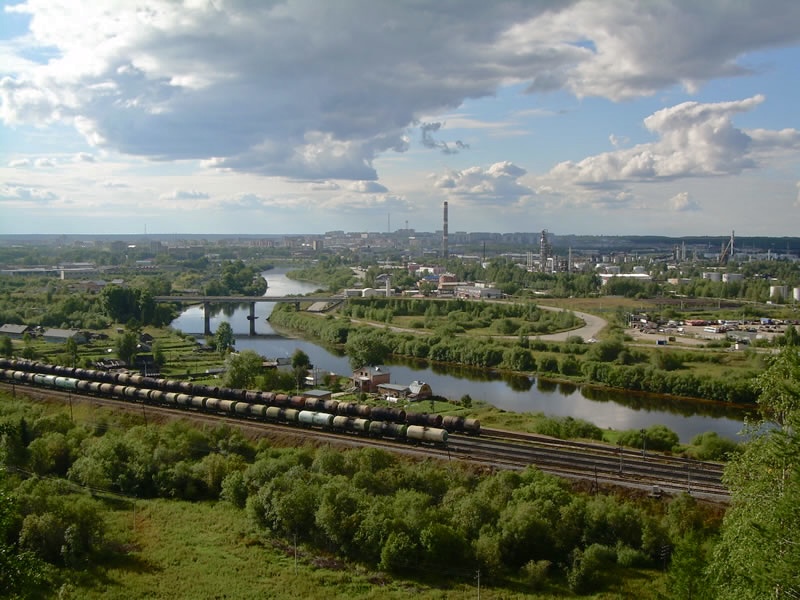
Ukhta (Russian: Ухта́; Komi: Уква, Ukva) is an important industrial town in the Komi Republic of Russia. Population: 97,899 (2021 Census);[7] 99,591 (2010 Census);[2] 103,340 (2002 Census);[8] 110,548 (1989 Soviet census).[9]

Key Information

It was previously known as Chibyu (until 1939).

History

[edit]

Oil springs along the Ukhta River were already known in the 17th century. In the mid-19th century, industrialist M. K. Sidorov started to drill for oil in this area. It was one of the first oil wells in Russia. There was homecraft oil-field in 1920–1921 in Ukhta. Lying on the river of the same name, the settlement was founded as the village of Chibyu in 1929, but in 1939 it was renamed Ukhta.[citation needed] It was granted town status in 1943 when it was linked to the Pechora Railway.[citation needed] To the east of the town is Sosnogorsk, and to the southwest—Yarega. In addition to its rail link, Ukhta also has an airport.

The town expanded in the 1940s and 1950s by use of political prisoners' forced labor (see: gulag).

Administrative and municipal status

[edit]

Within the framework of administrative divisions, it is, together with four urban-type settlements (Borovoy, Vodny, Shudayag, and Yarega) and thirteen rural localities, incorporated as the town of republic significance of Ukhta—an administrative unit with the status equal to that of the districts.[1] As a municipal division, the town of republic significance of Ukhta is incorporated as Ukhta Urban Okrug.[3]

Economy

[edit]

Ukhta lies within the Timan-Pechora Basin, an important oil and gas-producing region. The oilfields lie just south of the city. Some of the Ukhta's oil is refined locally; most, however, is piped to oil refineries between St. Petersburg and Moscow. There have been a few gas pipeline explosions at a distance of Eight kilometres (five miles) from the town since the 1990s.

Climate

[edit]

Ukhta has a continental subarctic climate[10] (Dfc) with long, very cold winters and short, warm summers. Compared with areas at a similar latitude in Siberia, winters are less extreme, but still much longer than summer and bitterly cold by European standards.

Climate data for Ukhta
Month Jan Feb Mar Apr May Jun Jul Aug Sep Oct Nov Dec Year
Record high °C (°F) 2.5
(36.5)
3.0
(37.4)
13.0
(55.4)
23.8
(74.8)
30.1
(86.2)
33.5
(92.3)
35.2
(95.4)
32.5
(90.5)
27.4
(81.3)
20.0
(68.0)
8.2
(46.8)
3.6
(38.5)
35.2
(95.4)
Mean daily maximum °C (°F) −13.1
(8.4)
−10.9
(12.4)
−2.4
(27.7)
4.6
(40.3)
12.0
(53.6)
19.0
(66.2)
22.1
(71.8)
17.3
(63.1)
10.7
(51.3)
2.8
(37.0)
−6.0
(21.2)
−10.6
(12.9)
3.8
(38.8)
Daily mean °C (°F) −16.5
(2.3)
−14.7
(5.5)
−6.8
(19.8)
−0.5
(31.1)
6.3
(43.3)
13.3
(55.9)
16.5
(61.7)
12.4
(54.3)
6.9
(44.4)
0.4
(32.7)
−8.9
(16.0)
−13.8
(7.2)
−0.5
(31.1)
Mean daily minimum °C (°F) −20.0
(−4.0)
−18.1
(−0.6)
−10.9
(12.4)
−5.0
(23.0)
1.5
(34.7)
8.2
(46.8)
11.6
(52.9)
8.4
(47.1)
4.0
(39.2)
−1.8
(28.8)
−11.3
(11.7)
−17.2
(1.0)
−4.2
(24.4)
Record low °C (°F) −48.5
(−55.3)
−43.9
(−47.0)
−39.2
(−38.6)
−28.4
(−19.1)
−16.9
(1.6)
−4.2
(24.4)
−0.4
(31.3)
−3.9
(25.0)
−8.8
(16.2)
−26.4
(−15.5)
−37.8
(−36.0)
−49.0
(−56.2)
−49.0
(−56.2)
Average precipitation mm (inches) 32
(1.3)
26
(1.0)
29
(1.1)
28
(1.1)
44
(1.7)
66
(2.6)
71
(2.8)
69
(2.7)
54
(2.1)
55
(2.2)
40
(1.6)
39
(1.5)
553
(21.8)
Source: Weatherbase[11]
Historical population
YearPop.±%
19392,700—    
195936,154+1239.0%
197062,923+74.0%
197987,467+39.0%
1989110,548+26.4%
2002103,340−6.5%
201099,591−3.6%
202179,899−19.8%
Source: Census data

Notable people

[edit]

References

[edit]
[edit]
Revisions and contributorsEdit on WikipediaRead on Wikipedia
from Grokipedia
Ukhta is an industrial city in the Komi Republic of northwestern Russia, situated on the Ukhta River within the Timan-Pechora Basin, a prolific sedimentary province containing substantial reserves of oil and natural gas.[1] The settlement originated in 1929 as the village of Chibyu, established for oil prospecting amid early 20th-century explorations that built on historical knowledge of oil seeps dating back to the 17th century and small-scale drilling from the late 19th century.[1] Renamed Ukhta in 1939 and elevated to city status in 1943, it became a hub for Soviet-era hydrocarbon development, highlighted by the 1932 discovery of productive oil fields that marked a pioneering achievement in Russian petroleum engineering under harsh subarctic conditions.[2] The local economy centers on extraction and processing, including the Ukhta refinery operational since 1934 and managed by Lukoil, which processes crude from nearby fields piped to larger facilities.[3] As of the 2021 Russian census, the city's population stood at 97,899, reflecting a decline from prior decades amid regional demographic shifts.

Geography

Location and topography

Ukhta is located in the Komi Republic of northwestern Russia, approximately 1,500 kilometers northeast of Moscow, at geographic coordinates 63°34′N 53°42′E.[4] The city lies on the banks of the Ukhta River, a 199-kilometer-long left tributary of the Izhma River, which drains into the broader Pechora River basin.[5] This positioning places Ukhta within the subarctic taiga zone, roughly 300 kilometers south of the Arctic Circle.[5] The topography of Ukhta features a gently sloping hilly plateau at an average elevation of 95 meters (312 feet) above sea level, dissected by rivers and streams of the Izhma River basin.[6][7] The surrounding landscape consists of flat to undulating terrain characteristic of the Pechora River's featureless basin, dominated by dense coniferous forests of spruce and fir, with peat bogs and occasional low ridges.[8] This relief influences local hydrology, supporting a network of waterways amid the permafrost-affected soils typical of the region.[6]

Climate

Ukhta features a subarctic climate (Köppen Dfb), characterized by long, severe winters and brief, mild summers.[9] The average annual temperature stands at 0.2 °C, reflecting the region's continental influences moderated slightly by proximity to the Arctic.[9] Annual precipitation totals approximately 676 mm, distributed relatively evenly but with higher rainfall in the warmer months and significant snowfall during winter.[9][7] The cold season extends from mid-November to early March, during which average daily highs remain below -6 °C; January, the coldest month, records average highs of -13 °C and lows of -19 °C.[7] Summers are short, spanning late May to late August, with average highs exceeding 14 °C; July, the warmest month, averages 21 °C highs and 11 °C lows.[7] Extreme temperatures are infrequent but possible, rarely dropping below -34 °C or rising above 29 °C based on historical observations at nearby stations.[7] Precipitation patterns show a wetter period from late April to early November, with August experiencing the highest rainfall (averaging about 70 mm and 11 wet days).[7] Snowfall predominates from late September to late May, accumulating most heavily in November (around 183 mm equivalent); the snowy period contributes to persistent overcast conditions, with January seeing up to 89% cloud cover.[7] Winds are strongest in winter, averaging 11 km/h in January, while summers are calmer at about 6 km/h.[7] These conditions support a limited growing season of roughly 109 days from late May to mid-September.[7]

History

Pre-20th century origins

The Ukhta River region, located in the northern Ural Mountains within the territory historically inhabited by the Komi (Zyrians), featured natural oil seeps known to indigenous populations for medicinal and illuminative uses prior to Russian expansion into the area during the 14th century. The Komi, a Finno-Ugric people, maintained sparse settlements across the Pechora Basin, relying on hunting, fishing, and trade with Novgorod merchants who ventured north from the 11th century onward, though no permanent village is documented at the modern Ukhta site before the 18th century.[10] Russian fur traders and explorers gradually penetrated the region following Moscow's annexation of Perm lands in the late 15th century, establishing seasonal outposts but limited permanent infrastructure due to the harsh taiga climate and remoteness.[11] The area's significance emerged in the early 18th century with the identification of petroleum resources. In 1724, approximately 25 liters of oil collected from Ukhta River seeps were transported to St. Petersburg for analysis, marking one of the earliest documented Russian encounters with northern crude.[12] Systematic exploitation began in 1745 when Arkhangelsk merchant Fyodor Savelievich Pryadunov received permission from Russia's Mining Board on November 18 to construct an oil extraction and refining facility along the river.[13] Pryadunov employed hand-dug shafts to access surface-level oil and operated a small distillery, producing lamp oil and other derivatives; this enterprise represented Russia's inaugural petroleum refinery and predated similar industrial efforts elsewhere. Operations remained artisanal, yielding limited volumes for local and export markets, with refining conducted in rudimentary workshops, including those associated with nearby monasteries.[10] By the late 18th and 19th centuries, intermittent prospecting continued amid broader geological surveys of the Pechora Basin, but economic viability was constrained by transportation challenges and rudimentary technology, preventing large-scale settlement or development.[14] Knowledge of the Ukhta oil manifestations influenced early Russian petroleum science, informing expeditions that analyzed samples for fuel and lubricant potential, though commercial focus shifted southward until the 20th century. The site's pre-industrial legacy thus centered on these nascent extraction efforts rather than urban foundations, embedding the region in Russia's proto-energy history.[11]

Soviet industrialization and Gulag involvement

The Soviet Union's push for rapid industrialization in the 1930s extended to the remote Komi ASSR, where Ukhta's peat bogs and suspected hydrocarbon deposits were targeted for exploitation under the First Five-Year Plan (1928–1932), prioritizing forced labor to overcome logistical challenges in the Arctic periphery. The Ukhta-Pechora Corrective Labor Camp (Ukhtpechlag), established in June 1931 as part of the OGPU's (later NKVD) Gulag network, served as the primary mechanism, with headquarters in Chibyu (modern Ukhta area), employing prisoners for geological prospecting, peat harvesting, and initial oil drilling amid subzero temperatures and rudimentary equipment.[15] Prisoner populations expanded dramatically to support these efforts, peaking at 54,792 inmates by 1938, many convicted under Article 58 for political offenses or during the Great Purge, enduring high mortality from malnutrition, disease, and accidents while manually digging test shafts and building extraction infrastructure. This labor force enabled the 1932 discovery of oil seeps in the Yarega field west of Ukhta, leading to the construction of the USSR's first oil mine there by 1939, where convicts operated hand pumps to yield initial crude output of several tons daily, fueling local power plants and laying groundwork for the Pechora oil basin's development.[2][15] Ukhtpechlag's operations integrated with broader northern camp systems like USLON (Northern Camps of Special Designation), contributing to railway extensions and worker barracks that coalesced into Ukhta's proto-urban core, with peat production alone reaching thousands of tons annually by the mid-1930s to support regional energy needs. The camp closed in May 1938 following NKVD reorganizations and peaking terror, succeeded by subordinate units like Vorkutlag for coal synergies, but its outputs—estimated at foundational to 10–15% of early Soviet northern fuel supplies—exemplified Gulag economics, where convict productivity subsidized industrialization at the cost of over 10% annual death rates per archival estimates.[16][17][18] Post-closure, many survivors were amnestied or resettled locally under Stalin's 1940s expansions, blending forced and semi-free labor to sustain oil flows amid World War II demands, with Ukhta's facilities producing 50,000 tons of oil by 1945 despite equipment shortages. This Gulag-driven foundation transformed Ukhta from a wilderness outpost into an industrial node, though systemic inefficiencies—such as tool shortages and sabotage from demoralized workers—limited yields compared to voluntary sectors, highlighting forced labor's role in causal extraction rather than optimal efficiency.[2]

Post-Soviet era and modern developments

Following the dissolution of the Soviet Union in 1991, Ukhta's economy underwent privatization as state-owned enterprises in the oil sector transitioned to market-oriented operations. The local oil industry, centered on the Timan-Pechora Basin, saw former Soviet entities like Komineft restructured and acquired by private firms, including Lukoil, which assumed control of key assets such as the Ukhta refinery operational since 1934.[19][3] This shift maintained oil extraction as the dominant economic driver, with production focused on fields like Yaregskoye, discovered in 1932 and developed for high-viscosity heavy oil using advanced techniques including mining-assisted recovery and thermal stimulation.[20][21] Population in Ukhta peaked at approximately 110,500 in the 1989 Soviet census but declined steadily thereafter, reaching 103,300 by 2002 and 97,900 by 2021, reflecting broader outmigration from Russia's Arctic regions amid economic uncertainty and reduced state subsidies in the 1990s.[22] This depopulation was exacerbated by the harsh subarctic climate and remoteness, though oil revenues provided relative stability compared to deindustrializing northern peers. A notable environmental incident in 1994 involved a major oil spill from Komineft operations in the Komi region, highlighting early post-Soviet infrastructural vulnerabilities before consolidation under larger firms like Lukoil.[23] In the 2000s and 2010s, developments emphasized technological upgrades for heavy oil, including the construction of heat-insulated pipelines from Yarega to Ukhta and on-site heating facilities to enhance flow efficiency, sustaining output despite global fluctuations in commodity prices.[21] The Ukhta refinery processes blended crudes from Komi fields via the Usa-Ukhta pipeline, supporting downstream chemical and power sectors, though the economy remains heavily resource-dependent with limited diversification.[19] Recent infrastructure efforts in the Komi Republic include expanded fiber-optic networks aiding industrial logistics, but Ukhta continues to face challenges from aging Soviet-era pipelines and workforce shortages due to ongoing demographic decline.[24]

Demographics

Population dynamics

The population of Ukhta expanded rapidly during the Soviet era, driven by the development of the local oil industry and influxes associated with industrialization, growing from a small settlement of fewer than 1,000 residents in the early 1930s to 110,548 by the 1989 Soviet census.[25] This growth reflected broader patterns in the Komi Republic, where urban centers like Ukhta benefited from resource extraction projects and state-directed migration, increasing the republic's overall population by over 2.4 times in certain decades.[26] Following the dissolution of the Soviet Union, Ukhta's population entered a phase of sustained decline, dropping to 103,340 in the 2002 Russian census, 99,591 in the 2010 census, and 97,899 in the 2021 census.[25] This trajectory aligns with demographic challenges in Russia's northern periphery, including negative natural increase from fertility rates below replacement levels (typically 1.3-1.5 children per woman in the region) and elevated mortality linked to industrial hazards, harsh climate, and historical health issues like alcoholism.[27] Net out-migration, particularly among younger cohorts seeking opportunities in more accessible urban centers, has exacerbated the shrinkage, though Ukhta exhibits relatively lower outflux rates compared to other Komi cities like Vorkuta due to its university and somewhat diversified economy.[28] Recent estimates indicate an ongoing annual decline of approximately 0.6-1.5%, projecting a population around 96,000 by mid-2020s, amid Russia's national trends of persistent natural decrease unoffset by migration gains in remote areas.[22][29] Stabilization efforts, such as infrastructure investments tied to energy sectors, have not reversed the trend, as economic dependence on extractive industries limits broad-based retention of residents.[27]

Ethnic and social composition

The ethnic composition of Ukhta reflects its history as an industrial center attracting migrant labor from across Russia, resulting in a predominantly Slavic population with limited representation of the indigenous Komi people. According to analysis of 2010 census data, ethnic Komi comprise approximately 7.5% of Ukhta's urban population, significantly lower than the 23.7% share in the broader Komi Republic.[30] This disparity stems from Soviet-era industrialization and resource extraction, which drew ethnic Russians and other groups to the city while Komi populations concentrated in rural areas.[26] Russians form the overwhelming majority, estimated at over 80% based on municipal district figures from the same period, with Ukrainians and Tatars as notable minorities at around 4% and 1%, respectively.[27] Detailed ethnic breakdowns from the 2021 census at the city level remain limited in public official releases, though national trends indicate stable or declining minority shares amid overall population contraction in remote industrial areas.[31] Socially, Ukhta's residents are largely working-class, with a high concentration of labor tied to oil and gas sectors; the influx of temporary workers and shift migrants contributes to transient social dynamics, including elevated mobility and family separation rates compared to more stable regional counterparts.[32] Language use is overwhelmingly Russian, with Komi spoken minimally in urban settings despite nominal bilingual policies in the republic.

Government and administration

Administrative divisions

Ukhta, as a town of republic significance in the Komi Republic, forms the Ukhta Municipal Okrug (formerly known as Ukhta Urban Okrug), an administrative unit with status equivalent to the republic's districts (raions). This okrug encompasses the city proper along with subordinate settlements classified as areas of the Far North.[33] The okrug's composition includes four urban-type settlements (posyolki gorodskogo tipa): Borovoy, Vodny, Shudayag, and Yarega. These settlements are directly under the administration's jurisdiction and support industrial activities, particularly oil-related infrastructure. Additionally, it incorporates 14 rural localities organized into three rural administrations (selskiye administratsii), such as areas around Tobys, Gerdel, and Nizhny Domanik, which primarily consist of villages and hamlets tied to resource extraction support.[33][34] Within the city limits of Ukhta itself, there are no formal internal districts (rayony) as in larger Russian metropolises; governance is centralized through the city administration, with informal neighborhoods like the Central area and Pioneer Hill referenced in local contexts but lacking official administrative status.[35] The overall structure reflects the Soviet-era model of concentrating authority in industrial hubs, prioritizing resource management over subdivided urban zoning.[33]

Governance structure

The municipal okrug "Ukhta" operates under a dual structure of local self-government typical of urban districts in Russia, with a representative legislative body and a separate executive administration accountable to the Komi Republic's framework.[36] The legislative functions are performed by the Council of the Municipal Okrug "Ukhta" (Совет муниципального округа «Ухта»), an elected body of deputies responsible for enacting local laws, approving the budget, adopting the charter, and supervising executive activities. The Council determines its internal organization, including standing committees on budget, social issues, and urban planning, and is led by a chairman who coordinates its sessions and operations. As of 2023, Aristarkh Anisimov holds the position of chairman.[37][38] Executive authority resides with the Head of the Municipal Okrug "Ukhta," who also directs the Administration and handles implementation of policies, resource allocation, public services, and intergovernmental coordination. The position is currently filled on an acting basis by Marina Nikolaevna Metelyova, appointed as of June 9, 2025. The Administration features a hierarchical setup beneath the Head, including a first deputy for overall coordination, specialized deputy heads for sectors like economics, social welfare, and infrastructure, and functional departments covering finance, property management, education, housing utilities, and cultural affairs.[39][36][40]

Economy

Resource extraction dominance

Ukhta's economy is overwhelmingly dominated by the extraction and processing of oil and natural gas, stemming from its position as a central hub in the Timan-Pechora Basin, one of Russia's key hydrocarbon provinces.[5] The sector accounts for the majority of local industrial output and employment, with upstream activities including drilling and field development, alongside downstream refining and pipeline infrastructure. Major operators, such as Lukoil-Komi, manage territorial production units like Ukhtaneftegaz, which oversee extraction from fields in and around the city.[41] This reliance has persisted since the Soviet era, when Ukhta emerged as a pioneer in Russian oil production, with the region's first refinery operational since 1934.[42] Key assets include the Yarega heavy oil field, located near Ukhta, where Lukoil employs thermal recovery methods to extract high-viscosity crude, contributing significantly to regional output.[20] In 2021, Lukoil-Komi's overall production reached 14.9 million tons of oil, representing a substantial portion of the Komi Republic's total hydrocarbon extraction.[43] Across the republic, oil and condensate production hit 14.3 million tons in 2022, up 7.6% from the prior year, underscoring the sector's growth amid challenging Arctic conditions.[44] Ukhta's Ukhta refinery, also under Lukoil, processes local crude with a Nelson Complexity Index of 3.7, supporting fuel production despite occasional disruptions like the June 2024 fire.[42][45] Pipeline networks further cement extraction's primacy, with Ukhta serving as a nexus for gas transmission, including the upcoming 972 km Ukhta–Torzhok-3 line operated by Gazprom to transport output from northern fields.[46] This infrastructure facilitates exports, where oil constitutes the Komi Republic's main commodity, with historical daily output around 257,000 barrels in 2014.[23] The sector's dominance exposes the local economy to global price volatility and sanctions, yet it remains the foundational driver, dwarfing secondary industries like chemicals and power generation.[5] Diversification efforts in the broader Komi region have been limited, as mineral extraction continues to underpin fiscal revenues and population stability in resource-dependent settlements like Ukhta.[47]

Industrial diversification and challenges

Efforts to diversify Ukhta's economy beyond oil and gas extraction have focused on construction materials and innovation support. The Ukhta Construction Materials Plant has planned investments to develop production of high-quality lime for domestic and export markets, as part of the Komi Republic's broader 2021-2026 diversification strategy approved by Russia's Ministry of Economic Development, which includes 41 investment projects across the region aiming to attract RUB 90 billion in non-coal investments and create 4,000 jobs.[47] Additionally, Ukhta State Technical University operates a 3,000 m² business incubator established around 2012, serving as the first in the city and functioning within a high-tech technopark framework; it supports small businesses and youth entrepreneurship through internal on-site residencies (up to 32 offices and co-working spaces for companies under three years old) and correspondence remote services, with extensions to branches in Vorkuta and Usinsk, targeting over 1,800 offline participants and generating 35 potential projects to foster innovation beyond traditional resource sectors.[48] Despite these initiatives, diversification faces significant challenges rooted in Ukhta's structural dependence on hydrocarbons, which dominate employment and revenue amid global price volatility and geopolitical pressures. The city's economy remains vulnerable to fluctuations in oil and gas markets, exacerbated by Russia's Arctic conditions including thawing permafrost that damages infrastructure and increases operational costs for non-resource ventures.[49] Limited success in scaling non-extractive industries stems from the remote location, harsh climate hindering logistics and investment attraction, and a skilled labor pool oriented toward energy sectors, with the business incubator's focus still leaning on oil-and-gas-adjacent innovation rather than fully detached alternatives.[47] Environmental legacies from extraction, such as pollution and land degradation, further complicate shifts to sustainable manufacturing or services, while regional plans like Komi's have prioritized mineral processing extensions over radical pivots.[23]

Infrastructure vulnerabilities

Ukhta's infrastructure faces significant risks from thawing permafrost, which underlies much of the Komi Republic's territory and destabilizes foundations for buildings, roads, pipelines, and refineries. Climate-driven permafrost degradation has accelerated in the Russian Arctic, with projections indicating that by mid-century, near-surface thaw could affect up to 70% of existing infrastructure in permafrost zones, including oil and gas facilities critical to Ukhta's economy. This subsidence leads to pipeline deformations, road cracking, and structural failures, as frozen ground thaws and loses load-bearing capacity, exacerbating maintenance costs in a remote region where repairs are logistically challenging.[50][51] The city's heavy reliance on aging oil and gas pipelines amplifies these vulnerabilities, as permafrost thaw causes differential settling that stresses welds and supports, increasing rupture risks. In Russia's Arctic energy sector, including pipelines serving Ukhta's fields, such ground movement has already contributed to leaks and deformations, with estimates suggesting nearly 70% of permafrost-based energy infrastructure at high risk from sinking soils. Extreme winter temperatures, reaching -50°C, further compound issues by promoting corrosion and brittle fractures in uninsulated sections, while limited redundancy in remote networks heightens outage potential from even minor failures.[52][53] Industrial incidents underscore operational fragilities, such as the June 2, 2024, fire at the Lukoil-Ukhta refinery that killed two workers and disrupted processing at the facility handling local crude. Investigations attributed the blaze to a compressor station explosion, highlighting vulnerabilities in equipment maintenance amid harsh conditions and resource strain. While geopolitical events like the August 10, 2025, drone strike on the same refinery demonstrate exposure to external sabotage—damaging storage and halting operations temporarily—these incidents reveal broader systemic weaknesses in perimeter security and rapid response for isolated sites.[45][54] Transportation networks, including the Ukhta-Syktyvkar highway and rail links, suffer from permafrost-induced heaving and erosion, leading to frequent closures and repair needs that strain regional budgets. Power grids, dependent on above-ground lines vulnerable to icing and subsidence, face blackout risks during storms, as seen in broader Arctic outages from similar failures. Mitigation efforts, such as elevated pipeline designs and thermosyphons to stabilize ground, have been implemented selectively but lag behind degradation rates, leaving much of Ukhta's extractive infrastructure exposed to escalating environmental pressures.[55][56]

Transportation and connectivity

Key transport networks

Ukhta is integrated into Russia's Pechora Railway, a key northern line extending from Kotlas through the Komi Republic to Pechora and beyond to Vorkuta, facilitating freight and passenger transport of oil, coal, and industrial goods since its extension to the region in the early 1940s. Daily passenger trains connect Ukhta to Pechora in approximately 4 hours and to Vorkuta in about 14 hours, supporting regional mobility amid harsh subarctic conditions.[57] Freight volumes on this line include significant oil and coal exports from Komi, underscoring its role in resource logistics.[58] The city's transport infrastructure centers on an extensive gas pipeline network, with Ukhta serving as a primary compression and distribution hub for Gazprom's Unified Gas Supply System. The Bovanenkovo–Ukhta pipeline system, linking Yamal Peninsula fields to central Russia, includes the original line operational since 2012 and the parallel Bovanenkovo–Ukhta 2, a 1,265 km route commissioned on January 18, 2017, capable of delivering up to 30 billion cubic meters of gas annually.[59] These pipelines operate at pressures up to 11.8 MPa and integrate with downstream lines like Ukhta–Torzhok, enabling exports to Europe via systems such as Yamal–Europe, though volumes have fluctuated with geopolitical shifts.[60] Pipeline infrastructure dominates due to the region's resource-heavy economy, with over 16,000 km of Gazprom lines converging at Ukhta for processing and transit.[60] Road connectivity relies on regional highways linking Ukhta to Syktyvkar (approximately 300 km southwest) and Usinsk (northeast), but the network faces limitations from permafrost, seasonal flooding, and sparse paving, prioritizing rail and pipelines for bulk transport. Federal maintenance supports these routes for local trucking of oilfield equipment, though total road density in Komi remains low at under 1 km per 100 km², reflecting prioritization of extractive over general mobility infrastructure.[61] Ukhta Airport (IATA: UCT, ICAO: UUYH), located 5 km east of the city, functions as the main civilian airfield for Ukhta and nearby settlements like Sosnogorsk in the Komi Republic, with a single runway (18/36) supporting operations at elevations around 147 meters above sea level.[62][63] The facility primarily accommodates domestic passenger flights, handling scheduled services from regional carriers amid the area's remote northern location and harsh subarctic climate, which limits year-round accessibility.[64] Direct flights from UCT connect to key Russian hubs, including Moscow's Sheremetyevo (SVO) and Vnukovo (VKO) airports, St. Petersburg's Pulkovo (LED), and occasionally destinations like Surgut or Mineralnye Vody, operated by airlines such as UTair and Severstal Avia with small to medium aircraft suited for short runways.[65][66] These routes, typically 2-4 daily to Moscow, facilitate worker transport for the oil and gas sector and general regional mobility, though service frequency varies seasonally due to weather and demand.[67] Beyond air access, Ukhta integrates into the Komi Republic's ground transport network via the Pechora Railway line, with the local station enabling passenger trains southward to Kirov and Moscow (journey times exceeding 20 hours) and northward to Vorkuta (about 14 hours), supporting freight for resource extraction alongside limited commuter services.[68] Road connections include the federal M8 highway extension linking Ukhta to Syktyvkar (250 km southeast) and further to European Russia, supplemented by regional routes to oil fields and Usinsk, though winter icing and permafrost pose maintenance challenges.[69] This multimodal setup underscores Ukhta's role as a transit node for the Timan-Pechora Basin, prioritizing industrial logistics over high-volume passenger traffic.[70]

Society and culture

Education and research institutions

Ukhta's primary higher education institution is Ukhta State Technical University (USTU), established as the Ukhta Industrial Institute in 1967 and elevated to university status on April 14, 1999.[71] With approximately 15,000 students, including over 500 international enrollees from 30 countries, USTU offers 23 degree programs across institutes focused on geology, oil and gas production, pipeline transportation, civil engineering, economics, and related fields.[71] It serves as a key training ground for the region's resource extraction industries, having graduated more than 25,000 engineers and economists since its inception.[71] USTU maintains over 100 modern laboratories equipped for technical experimentation and operates a design and project institute dedicated to the oil and gas sector.[71] Research efforts are organized around 12 specialized schools addressing topics such as resource prospecting, extraction technologies, and industrial engineering, with the university hosting more than 15 scientific conferences annually.[71] These activities align closely with Ukhta's economic reliance on hydrocarbons, emphasizing practical applications in drilling, pipeline integrity, and environmental monitoring within the Arctic context.[71] Vocational and secondary education in Ukhta supports the local workforce through institutions affiliated with USTU or regional networks, though specific enrollment data remains limited; the broader Komi Republic operates over 450 secondary schools serving around 180,000 students. USTU's branches, such as in nearby Usinsk, extend technical training to remote oil fields, integrating education with on-site industry needs.[72]

Cultural and recreational aspects

Ukhta hosts several museums dedicated to local history and industry, including the Ukhta Museum of Local History, which exhibits artifacts from the region's indigenous Komi heritage and Soviet-era development, and the Museum of Oil and Gas, focusing on the extraction technologies that shaped the city's economy since the 1930s.[73] These institutions provide insights into Ukhta's transition from a remote settlement to an industrial hub, with collections emphasizing geological samples and drilling equipment from early oil discoveries in 1929.[73] Recreational facilities center around urban parks and university-managed sites, such as Ukhtinskiy Park of Culture and Recreation, featuring a pond with waterfowl, monuments honoring military personnel like sailors and paratroopers, a chess club, and landscaped flowerbeds for public leisure.[74] The "Krokhal" recreational center, operated by Ukhta State Technical University, offers organized rest activities including outdoor pursuits suited to the subarctic climate, accommodating students and locals for seasonal events.[75] Sports infrastructure supports community engagement through diverse clubs and venues, with the Neftyanik complex providing an artificial turf football pitch and fitness areas for year-round training.[76] Ukhta State Technical University maintains over 40 sports sections, encompassing athletics, basketball, boxing, chess, football, hockey, judo, table tennis, skiing, and swimming, alongside facilities like the "Burevestnik" gymnasium and a swimming pool.[77][78] These programs, which also include 15 cultural activity areas, promote physical health in a region marked by harsh winters, drawing participation from residents beyond the academic community.[78]

Environmental impact

Resource exploitation effects

Oil and gas extraction in Ukhta, centered on the Timan-Pechora basin, generates substantial air pollution through gas flaring, refining emissions, and vehicle exhaust from industrial operations, resulting in elevated concentrations of sulfur dioxide, nitrogen oxides, and particulate matter that exceed permissible limits in surrounding areas. These emissions contribute to acid rain and respiratory health risks for residents, with monitoring data indicating persistent exceedances in urban and industrial zones despite reported reductions by operators like Lukoil.[79][80][81] Hydrocarbon contamination of surface and groundwater occurs via wastewater discharge, pipeline corrosion, and infiltration from storage sites, degrading water quality in the Pechora River basin and local tributaries that supply Ukhta. Studies document increased total petroleum hydrocarbons and heavy metals in sediments, impairing aquatic biodiversity and potable water sources, with indirect effects including groundwater deterioration from oil production activities.[82][83][84] Soil degradation from drilling muds, spills, and illegal waste disposal has contaminated thousands of hectares, reducing fertility and necessitating remediation efforts such as the removal of over 130 cubic meters of polluted soil at Lukoil's Ukhta refinery following incidents. Infrastructure development for extraction fragments habitats, disrupts reindeer migration patterns vital to indigenous Nenets and Komi communities, and accelerates erosion in the permafrost-affected taiga, compounding biodiversity loss. Official Russian reports often understate these impacts due to regulatory capture, while independent assessments highlight systemic non-compliance with waste management standards.[85][86][87][88]

Incidents, spills, and responses

In April 2016, an oil spill from abandoned wells drilled in the 1930s and 1950s occurred near Ukhta, discovered on April 15, leading to contamination of the Ukhta River, the most affected waterway in the incident.[89] [90] The spill prompted local discontent and calls for improved monitoring, with a thin oil layer covering the river's width, though official responses focused on containment without disclosing full volumes leaked.[90] Lukoil-Komi, the primary operator in the Ukhta area, reported multiple pipeline ruptures, including one in October 2016 at the Verkhne-Vozeyskoye field where a joint failure near an oil-gathering line caused a spill; the company stated the affected area was isolated, but environmental groups highlighted ongoing risks from aging infrastructure.[91] In May 2021, another Lukoil pipeline leak in the Komi Republic spilled oil into local ecosystems, with the company claiming full cleanup by July, while independent environmental assessments indicated persistent contamination.[92] A February 2024 spill at a Lukoil facility in Komi further underscored recurring issues, though specifics on volume and direct Ukhta impact were limited in public reports.[93] Responses to these incidents have typically involved operator-led cleanups under Russian regulatory oversight, but critics from groups like Bellona note inadequate enforcement and underreporting, with Komi Republic seeing 22 oil-related accidents in 2019 alone due to pipeline corrosion and poor maintenance.[81] Lukoil-Komi annually reports around 6,000 tons of oil entering the environment from its operations, prompting incremental infrastructure upgrades but limited transparency on long-term ecological remediation.[94]

Notable residents

Sergei Kapustin (13 February 1953 – 4 June 1995), Soviet ice hockey left winger, was born in Ukhta and started his career with the local team Neftyanik Ukhta before joining Krylya Sovetov Moskva in 1971. He represented the USSR at three Olympics, earning gold medals in 1972 and 1976, and silver in 1980, while accumulating 69 goals and 42 assists in 96 international games; Kapustin was drafted by the New York Rangers in the 1982 NHL Entry Draft (141st overall).[95][96][97] Roman Abramovich (born 24 October 1966), Russian oligarch, politician, and former owner of Chelsea Football Club, was orphaned by age four and raised by an uncle and aunt in Ukhta, a northern industrial city in the Komi Republic. His early life there preceded his rise in business through oil trading and privatization in the 1990s, amassing a fortune estimated at $14.5 billion as of 2022 before Western sanctions related to Russia's invasion of Ukraine.[98][99] Dmitri Aliev (born 1 June 1999), Russian figure skater, was born in Ukhta and trains in Saint Petersburg. He won the 2020 European Championships, the 2020 Russian national title, and a silver medal at the 2022 Winter Olympics in the team event, with career-best short program scores including 100.56 at the 2020 Europeans.[100][101] Yuliya Samoylova (born 7 April 1989), Russian singer and songwriter with spinal muscular atrophy requiring a wheelchair, was born in Ukhta. She gained international attention representing Russia at the Eurovision Song Contest in 2017 (canceled due to entry ban) and 2018, where "I Won't Break" placed 15th, following wins in Russian competitions like Golos and international festivals.[102][103]

References

User Avatar
No comments yet.