Hubbry Logo
Xbox 360 technical problemsXbox 360 technical problemsMain
Open search
Xbox 360 technical problems
Community hub
Xbox 360 technical problems
logo
8 pages, 0 posts
0 subscribers
Be the first to start a discussion here.
Xbox 360 technical problems
from Wikipedia

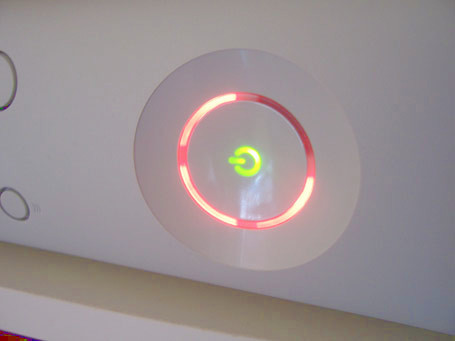
Three red lights, representing a "General Error requiring service of the Console or Power Adapter", nicknamed the "Red Ring of Death"

The Xbox 360 video game console was subject to a number of technical problems and failures, some as a result of design flaws. Some issues could be identified by a pattern of red lights on the front face of the console; these colloquially became known as the "Red Ring of Death" or the "RRoD".[1][2] There were also other issues, such as discs becoming scratched in the drive and "bricking" of consoles due to dashboard updates.

There were many conflicting estimates of the console's unusually high failure rate.[3][4][5] The warranty provider SquareTrade estimated it at 23.7% in 2009,[6] while a Game Informer survey reported 54.2%.[7] Among the consoles owned by employees of Joystiq, which saw heavy use for games journalism purposes, the failure rate had reached 90% by the end of 2007.[8] The crisis was ultimately abated from 2009 by design revisions to the later-produced Xbox models; the S model in particular was far more resilient. By 2012 the failure rate for the Xbox 360 family was comparable to the PS3 failure rate.[9]

The issues proved extremely damaging for Microsoft. Repairs and shipping of replacement hardware cost the company US$1.15 billion. The issues triggered multiple lawsuits,[10] cost the Xbox ground in the console wars and threatened the long term viability of the Xbox brand.[11]

History

[edit]

The design of the Xbox 360 was a hurried process subject to a number of late changes. This included the addition of a hard disk drive, which compromised airflow in the machine. The holes in the case were added to try to ameliorate this airflow issue. Time pressures also resulted in insufficient testing. Microsoft were aware of a myriad of technical challenges as early as August 2005, including "overheating graphics chips, cracking heat sinks, cosmetic issues with the hard disk and the front of the box, underperforming graphics memory chips from Infineon, a problem with the DVD drive – and more". Thermal issues with the GPU were ultimately what caused the infamous "Red Ring" issues, while the DVD drive issue was later responsible for scratching discs. An engineer requested a shut down of the production line that month, but this did not occur out of fear of a delay to console delivery in some regions.[12]

The console launched in November 2005 in North America, swiftly followed by other regions. However, consoles began failing "almost immediately". Microsoft initially dismissed these concerns as "isolated reports", that were within the normal range of failure (around 2%).[12][13][14][15][16] In late 2005, Microsoft's internal data was reporting a failure rate during manufacturing of around 6–7%. These consoles were not shipped to consumers but remained in warehouses. By March 2006, around 30% of consoles manufactured were either returned or had failed checks at the factory. At one point Microsoft's yield was as low as 32% (meaning a failure rate of 68%).[17]

Peter Moore (pictured in 2006) advocated for the Xbox 360 return and replacement program within Microsoft.

Peter Moore, the Vice President of Microsoft's Interactive Entertainment Business division in 2015 detailed a conversation he had with Microsoft CEO Steve Ballmer on his planned response to the incident in the mid 2000s. He stated:

"...here's what we have to do: we need to FedEx an empty box to a customer who had a problem - they would call us up - with a FedEx return label to send your box, and then we would FedEx it back to them and fix it. ... I always remember $240m of that was FedEx. ... It was sickening. I was doing a lot of interviews. ... We couldn't figure it out. ... There was a theory. We had changed our solder, which is the way you put the GPU and the fans, to lead-free. ... We think it was somehow the heat coming off the GPU was drying out some of the solder, and it wasn't the normal stuff we'd used, because we had to meet European Standards and take the lead out. ... He said, 'what's it going to cost?' I remember taking a deep breath, looking at Robbie, and saying, 'we think it's $1.15bn, Steve.' He said, 'do it.' There was no hesitation. ... If we hadn't made that decision there and then, and tried to fudge over this problem, then the Xbox brand and Xbox One wouldn't exist today."[11]

In July 2007 Moore published an open letter recognizing the console's problems, as well as announcing a three-year warranty from the original date of purchase for every Xbox 360 console that experienced the "general hardware failure" (Red Ring) issue.[18] That October a class action lawsuit was brought against Microsoft due to the problems the console had with disc scratching, which could render games unplayable.[19] The case was lengthy and worked through the court system over the following decade, with litigation focusing on the validity of class certification. In 2017 the matter was decided by the United States Supreme Court in Microsoft Corp. v. Baker, which settled in favor of Microsoft.

US Army personnel express their dismay regarding the Xbox 360's 'Red-Ring of Death' technical issues.

During the Game Developers Conference in February 2008, Microsoft announced that the failure rate had "dropped", but did not mention any specifics.[20] The same month, electronics warranty provider SquareTrade published an examination of 1040 Xbox 360s and said that they suffered from a failure rate of 16.4%. Of the 171 failures, 60% were due to a general hardware failure (and thus fell under the 3 year extended warranty). And of the remaining 40% which were not covered by the extended warranty, 18% were disc read errors, 13% were video card failures, 13% were hard drive freezes, 10% were power issues and 7% were disc tray malfunctions.[21][22] SquareTrade also stated that its estimates are likely significantly lower than reality due to the time span of the sample (six to ten months), the eventual failure of many consoles that did not occur within this time span and the fact that most owners did not deal with SquareTrade and had their consoles repaired directly through Microsoft via the extended RROD warranty.

From 2009 the crisis began to abate due to design revisions. The Jasper models sold that year had a failure rate of under 4%, with the overall product family rate at around 12% in the first quarter.[23] The Xbox 360 S launched in 2010 and had a far lower failure rate. The S models did not include segmented outer ring lights like the launch model, and were not included in the extended warranty.[24] The 360 family as a whole was discontinued in 2016, but Microsoft continued to offer repairs for a time after that.[25]

Microsoft did not reveal the full technical details of the problem until a 2021 documentary on the history of Xbox, though earlier independent investigations had correctly identified the issues with the GPU and soldering.[26] In a nod to the incident, Microsoft sold Red Ring holiday sweaters in December 2024. The item was popular among Microsoft employees.[27]

General Hardware Failure ("Red Ring") errors

[edit]
Xbox 360 error Codes
The error codes of the original Xbox 360 model

The launch model of the Xbox 360 includes four lights in a ring around the power button, on the front face of the console. Green indicated normal operation, while red lights were used for error codes. Most famously, three red lights indicated a "general hardware failure".[28] The error was coined the "Red Ring of Death" after Windows' Blue Screen of Death error. The error was sometimes preceded by freeze-ups, graphical problems in the middle of gameplay, such as checkerboard or pinstripe patterns on the screen, and sound errors; mostly consisting of extremely loud noises that couldn't be affected by the volume control, and the console only responding when the power button was pressed to turn it off.[29] The problem was most prevalent in early models.

This error code was usually caused by the failure of one or more hardware components, although it could indicate that the console is not receiving enough power from the power supply. This could be caused by a faulty or improperly connected power supply. The three flashing lights could also be caused by power surges. Unplugging and restarting the console fixed this issue in some cases.[30][31]

On the Xbox 360 S and E models, the power button utilizes a different design that does not incorporate the same style of lighting that past models used.[32] A flashing red light means that the console is overheating, similar to the two-light error code on the original model Xbox 360; however, an on-screen message also appears, telling the user that the console will automatically power off to protect itself from overheating. A solid red light is similar to the one-light error if an "E XX" error message is displayed and a three-light error code if the error message is absent.

E74 error

[edit]
Example of an E74 error message

The related E74 error caused only a single of the red ring quadrants to illuminate, and the screen to display an error message in multiple languages: "System Error. Contact Xbox Customer Support", with the code E74 at the bottom. Much like the infamous Red Ring issue, the error was related to connection issues with the GPU, but could also be caused by a more general GPU failure or failing eDRAM. The E74 issue was covered by the three-year extended warranty from 2009 as Microsoft considered it part of the same issue as the Red Ring, and customers who previously paid Microsoft for out-of-warranty service to correct the E74 error received a refund.[33][34][35]

Four light segment error code

[edit]

The console would illuminate all four lights if it could not detect an AV cable. This was not triggered by later revisions of the console which included an HDMI port. In some cases the four lights indicated a more serious problem with the console, followed by a 2-digit error code.[36] The four lights would also be illuminated briefly by power issues such as surges or brief outages.

Causes

[edit]
Teardown of an Xbox 360 S

Microsoft did not reveal the cause of the issues publicly until 2021, when a 6-part documentary on the history of Xbox was released. The Red Ring issue was caused by the cracking of solder joints inside the GPU flip chip package, connecting the GPU to the substrate interposer, as a result of thermal stress from heating up and cooling back down when the system is power cycled.[37] Microsoft had switched to lead-free solder due to regulations in the European Union, but using the incorrect alternative resulted in fracturing.[12]

While the cause was not confirmed by Microsoft until 2021, many independent investigations came to similar conclusions at the time, identifying thermal stress on the GPU and the solder as the culprit. The German computer magazine c't blamed the problem primarily on the use of the wrong type of lead-free solder, a type that when exposed to elevated temperatures for extended periods of time becomes brittle and can develop hair-line cracks that are almost irreparable.[38] Microsoft designed the chip in-house to cut out the traditional ASIC vendor with the goal of saving money in ASIC design costs. After multiple product failures, Microsoft went back to an ASIC vendor and had the chip redesigned so it would dissipate more heat.[39][40]

The Guardian also claimed that using Xbox Kinect with an old Xenon generation Xbox would cause the Red Ring, but this was denied by Microsoft.[41]

Scratched discs

[edit]
Disc that has been scratched by the Xbox 360 console

The design of the disc drive was flawed, and could cause scratches on discs, particularly if the console was moved while the disc was spinning. Unlike the Red Ring issues, the disc scratching was not resolved by hardware revisions and was present in the S and E models. Those versions shipped with a sticker informing users that moving the console while powered on posed a risk.[42] Even on static footing however, normal floor vibrations that would occur in a household environment were enough to cause disc scratches.[43] The issue was particularly prevalent in 2006 models.

The issue was subject to multiple independent investigations, initially by the Dutch television program Kassa and later by the European Commissioner for Consumer Protection and the BBC. The BBC investigation in particular involved laboratory conditions for testing.[44] The issue ultimately led to a Supreme Court case which was ruled in favor of Microsoft in 2017.[45][46]

Disc replacement

[edit]

Although discs scratched by the Xbox 360 were not covered under its warranty,[47] Microsoft's Xbox Disc Replacement Program[48] sold customers a new copy of discs scratched by the Xbox 360, if they were published in countries where the Xbox was originally sold, at a cost of $20.[49] The published list of games that qualify, however, was limited.[50] Third party games were only ever replaced at the discretion of the publishers. Electronic Arts for example offered replacements made within 90 days of purchase.[51]

Causes

[edit]

Independent investigations concluded that the disc drives lacked a mechanism to secure the disc solidly in place.[52] Tilting or moving the console, when operating with a disc spinning inside, can potentially cause damage to the disc and in some cases render the disc unplayable as a result.[53] Microsoft engineers were aware of the issue ahead of launch, around September or October of 2005. However, installing "bumpers" to prevent the discs moving out of alignment would have added 50 cents to the production cost of each console, and was not implemented. An alternative would have been to slow the disc rotation speed but this would have led to increased loading times, and magnetic adjustments would not have been possible due to the disc tray locking mechanism.[54]

Problematic updates

[edit]

Several Xbox 360 system updates caused major issues for users.

November 2006 patch

[edit]

An update patch released on November 1, 2006 was reported to "brick" consoles, rendering them useless.[55] The most obvious issue occurs after the installation of the patch, after which the console immediately reboots and shows an error message. Usually, error code E71 is shown during or directly after the booting animation.

In response to the November 2006 update error that "bricked" his console, a California man filed a class action lawsuit against Microsoft in Washington federal court in early December 2006.[56] The lawsuit seeks $5 million in damages and the free repair of any console rendered unusable by the update. This was the second such lawsuit filed against Microsoft, the first having been filed in December 2005, shortly after the 360's launch. Following Microsoft's extension of the Xbox 360 warranty to a full year, from the previous 90 days, the California man's attorney confirmed to the Seattle Post Intelligencer that the lawsuit had been resolved under confidential terms.[57]

"New Xbox Experience"

[edit]

On November 19, 2008, Microsoft released the "New Xbox Experience" (NXE). This update provided streaming Netflix capability and avatars; however, some users have reported the update has caused their consoles to not properly read optical media.[1] Others have reported that the update has disabled audio through HDMI connections.[58] A Microsoft spokesperson stated the company is "aware that a handful of Xbox LIVE users are experiencing audio issues, and are diligently monitoring this issue and working towards a solution." Microsoft released a patch on February 3, 2009 for the HDMI audio issues.[59]

May 2011 patch

[edit]

A patch released in May 2011 prevented some users from playing games from discs. The update involved "a change in the disc reading algorithms", but would simply inform users that the disc was unreadable and ask them to clean it with a cloth.[60]

Issues with peripherals

[edit]

Wireless Racing Wheel

[edit]
The racing wheels also had overheating issues, and were nicknamed "Hotwheels".

In 2007, the official steering wheel peripheral faced issues with overheating and releasing smoke, prompting the "Hotwheels" nickname. Microsoft encouraged users to only use the steering wheel in battery mode rather than while plugged in.[61] That August a product recall was issued, with Microsoft retrofitting the existing steering wheels to remedy the problem.[62]

Nyko Intercooler

[edit]

The Nyko Intercooler was a popular aftermarket cooler, purchased by users who wished to improve air flow in an attempt to avoid the red-ring issue. While the exact cause of red-ring was not yet public in the late 2000s, it was known that temperature was an issue.[63][64] Unfortunately, the Nyko Intercooler itself had issues and its usage could cause the red-ring or damage the power DC input.[64] The Intercooler could also melt itself onto the 360, melt the powercord, or make itself extremely hard to remove.[65]

Microsoft stated that the peripheral drained too much power from the console (the Intercooler power cord was installed between the Xbox 360 power supply and the console itself), could cause faults to occur, and stated that consoles fitted with the peripheral would have their warranties voided. Nyko released an updated Intercooler that used its own power source, and claimed the problem no longer occurred, but this did not affect Microsoft's stance on the warranty.

See also

[edit]

References

[edit]
[edit]
Revisions and contributorsEdit on WikipediaRead on Wikipedia
from Grokipedia
The Xbox 360 technical problems encompassed a range of hardware and software malfunctions that affected 's console, launched in November 2005, with the most prominent being the "Red Ring of Death" (RROD), a diagnostic indicator of general hardware signaled by three flashing red lights around the power button. These issues, including overheating, solder joint fractures, and disc drive defects, led to widespread customer dissatisfaction and significant financial repercussions for , prompting extended warranties and free repair programs. According to a study by warranty provider analyzing over 16,000 consoles in their first two years of ownership, the experienced a 23.7% hardware rate, far exceeding the 10% for and 2.7% for , with approximately half of attributed to RROD. The RROD primarily stemmed from fractured connections between the GPU and , exacerbated by rapid cycling as users frequently powered the console on and off, causing components to expand and contract unevenly under high operating temperatures. addressed the problem through hardware revisions, such as the 2007 Falcon with improved cooling, and later the 2008 Jasper model featuring better power efficiency and reduced heat output, which significantly lowered failure rates in subsequent production runs. In response to the crisis, extended the standard one-year warranty to three years specifically for RROD-affected units in July 2007 and committed to repairing all qualifying consoles at no cost, a move that ultimately cost the company an estimated $1.15 billion in charges for repairs, warranty extensions, and reduced shipments. Beyond RROD, other notable technical problems included disc scratching caused by vibrations in the optical drive during gameplay or console movement, which could render game discs unreadable; Microsoft acknowledged awareness of this defect pre-launch but deemed reported incidents—around 0.4% of units by 2008—insufficient for redesign, leading to a class-action that reached the U.S. in 2016. Software-related issues, such as the E74 error (often linked to AV connector failures or overheating) and problematic system updates that occasionally caused crashes or connectivity losses, further compounded user experiences, though issued patches and support updates to mitigate them. These collective problems, while not universal, highlighted design and manufacturing challenges in the console's early lifecycle, influencing 's approach to hardware reliability in .

History and Background

Timeline of Issues

The Xbox 360 launched on November 22, 2005, in , marking the debut of Microsoft's second-generation console amid high anticipation. Almost immediately following the release, users began reporting initial technical problems, including overheating and disc reading errors, with scattered complaints surfacing in late 2005 and escalating into early 2006 as more units reached consumers. By mid-2006, hardware failures intensified, particularly the Red Ring of Death (RRoD), recognized as the most widespread issue affecting the console's GPU and CPU joints. Estimates suggested that up to 30% of units were failing by 2007, prompting widespread user frustration and returns. Disc scratching complaints peaked between 2007 and 2008, stemming from drive design flaws that allowed movement of spinning discs during console handling, leading to over 55,000 reported cases by April 2008 and resulting in class-action litigation. Software-related problems also emerged periodically, including the December 2006 Fall Update, which bricked some consoles and sparked a class-action seeking damages for affected users. Similar issues arose with the November 2008 New Experience (NXE) update, causing audio output failures and marketplace access disruptions for certain HDMI-connected setups. In 2011, a update damaged disc drives on older models, leading to offer free replacements. Power supply failures gained prominence after 2008, particularly as early units aged, with incidents including overheating power bricks cited in fire investigations and contributing to broader reliability complaints. A comprehensive 2009 analysis by warranty provider revealed an overall hardware failure rate of 23.7% for consoles within the first two years of ownership, far exceeding rates for competitors like the (10%) and (2.7%). Failure reports began declining post-2010, attributable to hardware revisions such as the motherboard introduced in late 2007, which shrank the CPU to 65 nm for better thermal efficiency, and the Jasper revision in late 2008, which further optimized power consumption and cooling to mitigate RRoD occurrences.

Microsoft's Response and Extended Warranties

In late 2006, amid growing reports of hardware failures shortly after the 360's launch, initially extended the standard 90-day warranty to one year for all consoles purchased in the and , covering repairs at no cost to affected customers. This measure also included reimbursements for previous out-of-warranty repairs related to or video output issues. By mid-2007, as complaints about the "Red Ring of Death" (RRoD)—a diagnostic indicator of general hardware failure—escalated, publicly acknowledged the widespread nature of the problem in an from Xbox general manager Peter Moore. On July 5, 2007, the company announced a further extension to a three-year specifically for RRoD errors, targeting failures in the GPU and components and applying retroactively to about one-third of all units sold up to that point. This policy shift incurred a financial charge of $1.05 billion to $1.15 billion against 's earnings to fund anticipated repairs and replacements. In response to ongoing issues, expanded warranty coverage in subsequent months to encompass the full , ensuring broader protection against RRoD-related failures. The company established free repair programs for RRoD and problems, processing millions of consoles and often providing refurbished replacement units to expedite service. These programs remained active through at least 2010, after which paid repair options were introduced for out-of-warranty systems. The technical problems also prompted multiple class-action lawsuits against , including suits filed in 2008 alleging defective hardware design and failure to disclose known risks, which sought damages and extended coverage. Settlements from these cases between 2008 and 2010 primarily involved compensation for affected users and disc replacements, without broad additional warranty extensions beyond the existing three-year policy. To address the root causes of overheating and component stress without public fanfare, rolled out unannounced hardware revisions starting in 2007, such as the Zephyr motherboard with enhanced cooling and the revision featuring a 65 nm CPU process to lower power draw and thermal output. By 2010, as a long-term solution, launched the S (also known as the "Slim") model, a redesigned successor with a more compact form factor, integrated , a quieter fan system, and overall improved reliability to minimize failure rates. This iteration marked a shift toward sustainable hardware amid the original model's challenges.

Core Hardware Failures

Red Ring of Death (RRoD) Errors

The Red Ring of Death (RRoD) refers to a hardware indicator on the Xbox 360 console, characterized by three flashing red lights in the Ring of Light surrounding the power button, signaling a general error requiring service to the console or its power adapter. This typically manifests after the console powers on, often accompanied by an attempt to display a green power light that quickly transitions to the red pattern. The visual indicator of three red lights flashing in a specific quadrant configuration helps diagnose the issue, distinguishing it from normal operation where one to four green lights appear. To further diagnose the specific cause of the RRoD or other failure states, users can retrieve a secondary four-digit error code when the console is in an error state and unable to boot normally. For the original "fat" Xbox 360 models, follow these steps:
  1. Power on the console until the error state appears (e.g., three or four red lights flashing on the Ring of Light).
  2. Press and hold the sync button (the small button on the front of the console for connecting wireless controllers).
  3. While holding the sync button, press and release the disc eject button. The Ring of Light will flash rapidly to indicate the first digit of the 4-digit secondary error code (1 flashing quadrant = 1, 2 = 2, 3 = 3, all 4 = 0).
  4. Continue holding the sync button and press/release the eject button again for the second digit, then a third time for the third digit, and a fourth time for the final digit.
  5. Press the eject button a fifth time (still holding sync) to return to the original error pattern.
The resulting 4-digit code (e.g., 0101 or 1023) can then be looked up in an error code database to identify the specific issue. The process is similar for Xbox 360 S and E models, though the light display may use green flashes or blinks instead of red quadrants. Common symptoms of RRoD errors include sudden console shutdowns, system freezing during gameplay or menu navigation, loss of video output, and distorted audio or visual artifacts such as checkerboard patterns on the screen. These issues prevent normal use and often occur without warning, leading to user frustration as the console becomes inoperable. A related but distinct error is the E74 code, which features one flashing red light in the lower-right quadrant of the Ring of Light alongside a multilingual on-screen message stating "System error. Contact Xbox Customer Support. Status code: E74," typically linked to a graphics processing unit (GPU) failure exacerbated by overheating. Power supply problems can occasionally cause similar shutdowns without the full red light pattern. The RRoD primarily affected early Xbox 360 models, including the revision launched in 2005 and the Zephyr revision introduced in late 2006, which featured minor updates like support but retained similar hardware vulnerabilities. Later revisions, such as and starting in 2007 and 2008 respectively, showed reduced incidence due to design improvements, though issues persisted in some units. Failure rates for these early models were notably high, with a 2009 survey reporting up to 54.2% of consoles experiencing failures within the first two years, many attributed to RRoD, contributing to widespread user dissatisfaction and significant repair demands. Independent analysis confirmed an overall failure rate of 23.7% in the first two years for consoles purchased through 2008, with RRoD accounting for over half of these cases in pre- models.

Power Supply and Connection Failures

The external power supply unit (PSU) for the , often referred to as the "power brick," was prone to overheating and failure, particularly in early models, leading to sudden power loss or intermittent operation. Overheating typically occurred due to inadequate ventilation, dust accumulation, or prolonged use in enclosed spaces, causing the internal components to exceed safe temperatures and trigger protective shutdowns. This issue manifested as the PSU's LED indicator progressing from solid green (normal operation) to flashing orange (overheating warning) and eventually solid red (fault condition), at which point the console would fail to power on or shut down abruptly after brief operation. In severe cases, users reported a humming or whining noise from the PSU before failure, signaling strain or fan issues within the unit. Common symptoms of PSU failure included the console powering on momentarily before dying, no response to the power button, or complete lack of LED illumination on the brick, affecting all Xbox 360 variants but becoming more prevalent with age and heavy usage. These failures were exacerbated by power surges or unstable electrical outlets, which could damage the circuitry without visible external signs. While not all power issues triggered the Red Ring of Death (RROD), some overlapping symptoms like sudden shutdowns could initially resemble internal hardware faults signaled by console lights. Four flashing red lights on the console's Ring of Light indicate a connection error, such as a faulty AV cable or issues with a memory unit. Connection-related problems often stemmed from damage to the port or faults in AV cables, distinct from PSU issues but sometimes compounding power symptoms. port failures, commonly caused by physical stress from frequent cable insertion/removal or accidental drops, resulted in no video output, intermittent signal loss, or a loose connection despite secure plugging. AV cable faults, such as poor seating or internal wire breaks, triggered four flashing red lights on the console's power button, indicating the system could not detect the audio/video connection and preventing boot-up. These issues were widespread, with port damage reported as a frequent repair need due to the port's fragile sheet-metal design prone to bent pins or cracks. The original Xbox 360 models used a 203 W PSU, which was more susceptible to overheating and failure compared to the revised 150–175 W units in and models and 135 W (Slim) or 100–120 W (E) units in later variants, benefiting from improved efficiency and heat dissipation. Troubleshooting PSU problems involved checking the LED status—solid green or orange indicated functionality, while flashing orange, solid red, or no light required unplugging from the wall and console, allowing 30 minutes to cool, and testing a different outlet without surge protectors. If unresolved, replacement was necessary; post-warranty, official PSUs could be ordered via their support site, typically costing $20–$50 from authorized retailers, though third-party options were cheaper but risked compatibility issues. For connection faults, reseating cables or substituting alternatives often resolved four red lights, while repairs required professional desoldering if pins were damaged.

Optical and Disc Drive Issues

Disc Scratching

The disc scratching issue in the Xbox 360 console arises primarily from mechanical vibrations and jolts to the optical drive, which cause the spinning disc to wobble and contact the laser assembly or internal components, resulting in circular scratches on the underside of the disc. This typically occurs when the console is moved, tilted, or bumped while a game is loading or playing, as the disc spins at high speeds without sufficient securing mechanisms to prevent misalignment. The scratches manifest as concentric rings on the data surface, often rendering the disc unreadable after repeated incidents of contact, depending on the severity. Reports of this problem emerged prominently between 2006 and 2008, coinciding with the early adoption phase of the console, and affected a subset of users with the initial hardware models. Microsoft acknowledged receiving over 55,000 consumer complaints about scratched discs by April 2008, estimating the issue impacted less than 1 percent of all Xbox 360 units sold. Primarily Xbox 360 game discs, which are DVD-based, were affected, with single-layer variants appearing more susceptible due to their data layer being closer to the vulnerable underside, though dual-layer discs could also sustain damage leading to read errors. In response, launched the Disc Replacement Program in 2007, offering to replace damaged discs published by for a $20 processing fee, while examining and repairing affected consoles under if necessary. The program processed requests for titles but did not extend free replacements to third-party games, prompting class-action lawsuits alleging prior knowledge of the design flaw and inadequate remedies. The primary class-action lawsuit reached the in Corp. v. Baker (2017), where the Court ruled 8-0 against allowing immediate appeals of class certification denials, dismissing the case on procedural grounds. maintained that user handling, such as moving the console during operation, contributed to the incidents, and the issue was not covered under the standard for non- discs. To mitigate the risk, users were advised to keep the console on a level, stable surface, avoid any movement or tilting while discs were spinning, and ensure the drive area remained free of dust, though these measures addressed symptoms rather than the underlying drive calibration and vibration tolerances in early models. Later revisions, such as the Slim models introduced in 2010, incorporated improved drive mechanisms that reduced but did not eliminate such occurrences.

Drive Mechanism Failures

Drive mechanism failures in the involve the complete breakdown of the optical drive's internal hardware, leading to an inability to read or eject discs due to mechanical or optical component wear, separate from issues caused by disc surface damage. Common symptoms include the "Open " error, where the console repeatedly prompts the user to open the disc even when it is closed and a disc is inserted, accompanied by grinding or clicking noises from the drive or a total failure to spin the disc. Users may also encounter a "disc unreadable" message on screen, often accompanied by three flashing red lights (Red Ring of Death) indicating general hardware failure, potentially with secondary E66 for DVD drive issues. These failures typically arise from prolonged use over 2-5 years, causing wear on critical parts such as the drive belts that control tray movement and disc engagement, degradation of the that reduces its ability to focus on the disc surface, or malfunction of the spindle motor that powers disc rotation. All models experienced these issues, though early production units equipped with or optical drives showed higher susceptibility to failure compared to later revisions using drives, which incorporated improved . Repair typically requires replacing the faulty drive mechanism, with aftermarket replacement kits available for $20-50 and supported by widespread DIY tutorials that detail disassembly and installation steps. Drive mechanism failures represented a notable portion of hardware issues, contributing to the console's overall post-warranty repair volume alongside other faults like the Red Ring of Death. In some instances, prior disc scratching from tray misalignment could signal impending full drive breakdown.

Software and Update Problems

Problematic System Patches

The November 2006 system update for the , released on November 1 as part of the Fall Dashboard refresh, introduced significant issues for some users, including widespread reports of consoles "bricking"—becoming completely inoperable—and random freezing during . These problems affected a small minority of systems, particularly modded consoles. In many cases, the bricking prevented normal booting or . Microsoft acknowledged the faults and rapidly deployed a hotfix update on November 2, 2006, which resolved the bricking for affected new or refurbished consoles by addressing installation errors and compatibility bugs. However, rollbacks to previous firmware versions were not possible due to the mandatory nature of system updates, leaving some users without immediate recourse beyond warranty repairs. The incident impacted a notable subset of the installed base, contributing to broader scrutiny of Xbox 360 reliability and prompting class-action lawsuits alleging inadequate testing. Subsequent updates in later years echoed similar challenges, though on a smaller scale. For instance, a May 2011 patch led to disc-reading errors in a limited number of consoles. These bugs commonly included loss of wireless connectivity, dashboard crashes during navigation, and reduced compatibility with , forcing to issue targeted hotfixes in select instances. Overall, while no single patch affected millions directly, the cumulative disruptions underscored the risks of mandatory updates on aging hardware, with relying on warranty extensions and rapid patches to mitigate widespread fallout.

Dashboard and Firmware Glitches

The New Xbox Experience (NXE), released on November 19, 2008, introduced a redesigned interface featuring avatars and enhanced online features, but it was marred by software instabilities that affected navigation and performance. Users reported frequent dashboard freezes, particularly during menu transitions and avatar editing sessions, with some experiencing multiple lockups requiring reboots within short periods. These glitches were attributed to high server load from the simultaneous update rollout to millions of consoles, impacting a small but noticeable percentage of users. Additionally, the NXE exhibited slow loading times on older hardware models, such as the original Xenon-based consoles, due to the increased graphical demands of the new interface. acknowledged the issues, attributing them to unprecedented user activity and promising ongoing fixes. Firmware updates across various dashboard versions, from the original Blades interface through the Metro redesign in late 2011, introduced persistent bugs related to profile management and system stability. Corrupted gamer profiles became a common complaint, often triggered by incomplete synchronization during updates or online sessions, leading to errors like code 80070026 when downloading profiles from Xbox Live. Achievement sync failures also plagued users, where unlocked accomplishments failed to register properly on profiles due to temporary desynchronization with , requiring manual recovery by deleting and redownloading the profile. The "" on boot emerged as a symptom in some cases, stemming from botched firmware installations that halted the dashboard loading process, though this was distinct from hardware faults. Common fixes for sign-in failures on the Xbox 360, particularly after attempting to use an app password for Microsoft accounts enabled with two-factor authentication, include deleting the gamer profile from the console (selecting the option to preserve games and saves), clearing the system cache three times, redownloading the profile, and testing the network connection in the console's settings. These steps help resolve issues related to corrupted credentials or synchronization problems. Symptoms of these glitches extended to operational disruptions, including freezing during menu navigation, sudden multiplayer disconnects in Xbox Live sessions, and console bricking after interrupted updates, where the system became unresponsive without external intervention. The Fall 2011 Metro dashboard transition (version 2.0.14699.0), intended to align with aesthetics, exacerbated connection issues and reports of bricked units during rollout, with Xbox Live outages compounding the problems. responded with server-side patches for online components and advised users to perform offline system updates or clear system cache to mitigate incomplete installations. User impacts were significant, particularly data loss from corrupted profiles that erased saved progress and custom settings, forcing reliance on cloud backups where available. For online features, server-side fixes from Microsoft eventually resolved many sync issues, but affected players often faced temporary bans or restricted access until profiles were recovered. These glitches persisted into later firmware versions, notably in the backward compatibility layer for original Xbox games, where dashboard transitions caused launch failures or freezes in titles like those exhibiting "the game could not start" errors due to incompatible emulation layers. By 2013, with dashboard version 2.0.16537.0, residual instabilities lingered in profile handling, though Microsoft continued issuing targeted patches to stabilize the ecosystem.

Peripheral and Accessory Problems

Controller Drift and Connectivity

One prevalent issue with the standard Xbox 360 wireless controller was analog stick drift, where the registers unintended movement even when not touched, leading to inaccurate in-game actions such as drifting camera views or character movement. This problem typically arose from dust accumulation inside the controller or wear on the potentiometers after prolonged use, often manifesting within 1-2 years of regular gaming. Symptoms included unreliable aiming in first-person shooters or unintended inputs in multiplayer sessions, frustrating users during precise . Connectivity problems with the Xbox 360 wireless controllers were also frequently encountered, particularly involving rapid battery drain, sync button malfunctions, or signal interference that caused sudden disconnects, especially in multiplayer environments. Low battery levels often triggered these issues, with the controller's lights flashing rapidly before turning off, indicating a failed connection to the console. Environmental factors like wireless interference from other devices could exacerbate disconnects, disrupting online play. These complaints were common among users from 2007 to 2010, as documented in official support resources and repair guides. Initial fixes for stick drift involved cleaning the analog sticks with and a to remove dust buildup, followed by drying and reassembly, though this provided only temporary relief in many cases. Recalibration through in-game deadzone adjustments or software tools could mitigate minor drift, but hardware wear often necessitated full replacement. For connectivity, solutions included replacing batteries with fresh ones, the console and controller, or resyncing via the sync buttons; however, persistent issues like faulty sync mechanisms required professional repair or substitution. Official replacements cost between $40 and $50, while third-party alternatives were available at lower prices but frequently exhibited similar drift and connectivity flaws.

Specialized Peripherals (Wheels and Coolers)

The Xbox 360's specialized peripherals, such as racing wheels and cooling units, introduced unique technical challenges beyond standard controllers, often stemming from hardware integration flaws and issues. These accessories, designed to enhance immersion or mitigate console heat buildup, frequently suffered from reliability problems that led to input inconsistencies and system instability. Official peripherals like the Wireless Racing Wheel exhibited mechanical wear, while third-party options, including Nyko's , sometimes exacerbated the very overheating they aimed to prevent due to suboptimal designs. The Wireless Racing Wheel, released in 2007, commonly faced vibration motor failures where the device failed to provide haptic feedback during gameplay. This issue typically arose from defective motors, low battery levels preventing sufficient power delivery, or disabled vibration settings in games, resulting in a loss of immersive force feedback essential for racing simulations. In August 2007, Microsoft issued a recall for all Wireless Racing Wheels manufactured in 2006 and 2007 due to reports of the device overheating and emitting smoke, posing a potential safety hazard; the company provided free retrofit kits to affected owners. Pedal mechanisms also proved prone to looseness or sticking, caused by accumulated dirt, residue, or degraded springs, which disrupted precise throttle and brake inputs. Calibration loss manifested as input lag or erratic steering—such as the wheel registering as "stuck" in one direction—often due to hardware faults or mismatched sensitivity configurations, particularly noticeable in titles like Forza Motorsport. These problems were compounded by firmware incompatibilities; for instance, a 2012 Xbox 360 system update disrupted connectivity and functionality for the Wireless Racing Wheel, rendering it unresponsive until Microsoft issued fixes. Cooling peripherals like the Nyko Intercooler, a third-party USB-powered fan attachment, intended to improve airflow but often worsened thermal issues through poor design. Its excessive power draw from the console's USB ports could overload the power supply, leading to adapter melting and sudden console freezes or crashes during extended play sessions. Unlike official ventilation solutions, which relied on the Xbox 360's integrated fans, third-party coolers like the Nyko unit diverted airflow inefficiently, trapping heat within the rather than expelling it effectively and contributing to overall system instability. This drew unnecessary power, straining the console's resources and potentially accelerating hardware degradation. Other specialized peripherals encountered similar integration hurdles. The Kinect sensor, launched in 2010, frequently experienced disconnects indicated by error codes such as C0051207 or C00000C2, often due to improper cabling, outdated , or interference preventing stable USB recognition. Headset microphones, integral to voice chat accessories, suffered failures where others could not hear the user, typically from dirty controller ports, misconfigured , or inherent hardware defects in the wired unit. Compatibility differences between official and third-party peripherals were stark, with firmware mismatches after console updates causing broader instability, such as input lag in from uncalibrated wheels or power fluctuations from overtaxed coolers.

References

Add your contribution
Related Hubs
User Avatar
No comments yet.