



Community hub
Recent from talks
Contribute something
Nothing was collected or created yet.
Z-factor
View on WikipediaThe Z-factor is a measure of statistical effect size. It has been proposed for use in high-throughput screening (HTS), where it is also known as Z-prime,[1] to judge whether the response in a particular assay is large enough to warrant further attention.
Background
[edit]In HTS, experimenters often compare a large number (hundreds of thousands to tens of millions) of single measurements of unknown samples to positive and negative control samples. The particular choice of experimental conditions and measurements is called an assay. Large screens are expensive in time and resources. Therefore, prior to starting a large screen, smaller test (or pilot) screens are used to assess the quality of an assay, in an attempt to predict if it would be useful in a high-throughput setting. The Z-factor is an attempt to quantify the suitability of a particular assay for use in a full-scale HTS.
Definition
[edit]Z-factor
[edit]The Z-factor is defined in terms of four parameters: the means () and standard deviations () of samples (s) and controls (c). Given these values (, , and , ), the Z-factor is defined as:


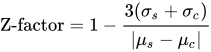
For assays of agonist/activation type, the control (c) data (, ) in the equation are substituted with the positive control (p) data (, ) which represent maximal activated signal; for assays of antagonist/inhibition type, the control (c) data (, ) in the equation are substituted with the negative control (n) data (, ) which represent minimal signal.


In practice, the Z-factor is estimated from the sample means and sample standard deviations

Z'-factor
[edit]The Z'-factor (Z-prime factor) is defined in terms of four parameters: the means () and standard deviations () of both the positive (p) and negative (n) controls (, , and , ). Given these values, the Z'-factor is defined as:
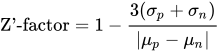
The Z'-factor is a characteristic parameter of the assay itself, without intervention of samples.
Interpretation
[edit]The Z-factor defines a characteristic parameter of the capability of hit identification for each given assay. The following categorization of HTS assay quality by the value of the Z-Factor is a modification of Table 1 shown in Zhang et al. (1999);[2] note that the Z-factor cannot exceed one.
| Z-factor value | Related to screening | Interpretation |
|---|---|---|
| 1.0 | An ideal assay | |
| 1.0 > Z ≥ 0.5 | An excellent assay | Note that if , 0.5 is equivalent to a separation of 12 standard deviations between and . |
| 0.5 > Z > 0 | A marginal assay | |
| 0 | A "yes/no" type assay | |
| < 0 | Screening essentially impossible | There is too much overlap between the positive and negative controls for the assay to be useful. |

Note that by the standards of many types of experiments, a zero Z-factor would suggest a large effect size, rather than a borderline useless result as suggested above. For example, if σp=σn=1, then μp=6 and μn=0 gives a zero Z-factor. But for normally-distributed data with these parameters, the probability that the positive control value would be less than the negative control value is less than 1 in 105. Extreme conservatism is used in high throughput screening due to the large number of tests performed.
Limitations
[edit]The constant factor 3 in the definition of the Z-factor is motivated by the normal distribution, for which more than 99% of values occur within three times standard deviations of the mean. If the data follow a strongly non-normal distribution, the reference points (e.g. the meaning of a negative value) may be misleading.
Another issue is that the usual estimates of the mean and standard deviation are not robust; accordingly many users in the high-throughput screening community prefer the "Robust Z-prime" which substitutes the median for the mean and the median absolute deviation for the standard deviation.[3] Extreme values (outliers) in either the positive or negative controls can adversely affect the Z-factor, potentially leading to an apparently unfavorable Z-factor even when the assay would perform well in actual screening .[4] In addition, the application of the single Z-factor-based criterion to two or more positive controls with different strengths in the same assay will lead to misleading results .[5] The absolute sign in the Z-factor makes it inconvenient to derive the statistical inference of Z-factor mathematically.[6] A recently proposed statistical parameter, strictly standardized mean difference (SSMD), can address these issues.[5][6][7] One estimate of SSMD is robust to outliers.
See also
[edit]References
[edit]- ^ "Orbitrap LC-MS - US". thermofisher.com.
- ^ Zhang, JH; Chung, TDY; Oldenburg, KR (1999). "A simple statistical parameter for use in evaluation and validation of high throughput screening assays". Journal of Biomolecular Screening. 4 (2): 67–73. doi:10.1177/108705719900400206. PMID 10838414. S2CID 36577200.
- ^ Birmingham, Amanda; et al. (August 2009). "Statistical Methods for Analysis of High-Throughput RNA Interference Screens". Nat Methods. 6 (8): 569–575. doi:10.1038/nmeth.1351. PMC 2789971. PMID 19644458.
- ^ Sui Y, Wu Z (2007). "Alternative Statistical Parameter for High-Throughput Screening Assay Quality Assessment". Journal of Biomolecular Screening. 12 (2): 229–34. doi:10.1177/1087057106296498. PMID 17218666.
- ^ a b Zhang XHD, Espeseth AS, Johnson E, Chin J, Gates A, Mitnaul L, Marine SD, Tian J, Stec EM, Kunapuli P, Holder DJ, Heyse JF, Stulovici B, Ferrer M (2008). "Integrating experimental and analytic approaches to improve data quality in genome-wide RNAi screens". Journal of Biomolecular Screening. 13 (5): 378–89. doi:10.1177/1087057108317145. PMID 18480473. S2CID 22679273.
- ^ a b Zhang, XHD (2007). "A pair of new statistical parameters for quality control in RNA interference high-throughput screening assays". Genomics. 89 (4): 552–61. doi:10.1016/j.ygeno.2006.12.014. PMID 17276655.
- ^ Zhang, XHD (2008). "Novel analytic criteria and effective plate designs for quality control in genome-wide RNAi screens". Journal of Biomolecular Screening. 13 (5): 363–77. doi:10.1177/1087057108317062. PMID 18567841. S2CID 12688742.
Further reading
[edit]- Kraybill, B. (2005) "Quantitative Assay Evaluation and Optimization" (unpublished note)
- Zhang XHD (2011) "Optimal High-Throughput Screening: Practical Experimental Design and Data Analysis for Genome-scale RNAi Research, Cambridge University Press"
Z-factor
View on GrokipediaZ' = 1 - [3(σₚ + σₙ)] / |μₚ - μₙ|,
where μₚ and μₙ represent the mean signal values of the positive and negative controls, respectively, and σₚ and σₙ are their corresponding standard deviations.[1] This equation integrates both the dynamic range of the assay signal (the difference between control means) and the precision of the measurements (the combined variability).[1] Interpretation of the Z'-factor provides clear benchmarks for assay suitability: values of 0.5 or greater indicate an excellent assay with robust separation; values between 0 and 0.5 suggest a marginal assay that may require refinement; and values of 0 or below signal poor quality, where control signals overlap too much for effective screening.[1] A perfect Z' of 1 is theoretically ideal but practically unattainable due to unavoidable experimental noise.[1] In practice, the Z'-factor has become a cornerstone metric in HTS workflows, applied during assay development to pilot test conditions and ensure reproducibility before screening large compound libraries, often numbering in the millions.[2] It facilitates hit identification by filtering out assays prone to false positives or negatives, thereby streamlining resource allocation in pharmaceutical research.[3] However, while widely adopted, the Z'-factor has limitations, including sensitivity to outliers and assumptions of normality that may not hold in all biological assays, prompting refinements like strictly standardized mean difference (SSMD) in some advanced analyses.[4] Despite these, its simplicity and interpretability continue to make it indispensable for quality control in modern screening platforms.[5]
Introduction
Overview
The Z-factor is a dimensionless statistical parameter used to quantify the separation between signal and noise in biological assays, enabling researchers to evaluate the robustness and reliability of experimental data. It serves as a key metric for assessing how well an assay can distinguish meaningful biological responses from inherent variability, thereby facilitating the identification of true positive signals amid potential false positives or negatives. This parameter is particularly valuable in experimental setups where consistent performance is essential for drawing valid conclusions.[6] In the context of high-throughput screening (HTS) for drug discovery, the Z-factor plays a crucial role by helping to validate assays that test thousands to millions of compounds against biological targets, such as enzymes or cell-based models, to identify potential therapeutic hits. HTS workflows rely on this metric to ensure that assay variability does not obscure genuine drug-like activity, allowing for efficient prioritization of promising candidates while minimizing resource waste on unreliable data. By providing a standardized measure of assay quality, the Z-factor supports the scalability and reproducibility required in modern pharmaceutical research.[3] Originating from principles of statistical quality control, the Z-factor was adapted specifically for biological assays to address the challenges of variability in living systems, unlike traditional manufacturing controls. Key terms include negative controls, which represent baseline or inactive conditions (e.g., vehicle-treated samples), and the signal-to-noise ratio, which describes the relative magnitude of the desired biological response compared to background fluctuations. A variant, the Z'-factor, extends this concept for assays incorporating both positive and negative controls to further refine quality assessment.[6][2]Historical Development
The emergence of high-throughput screening (HTS) in the 1990s was driven by the pharmaceutical industry's rapid expansion, fueled by advances in combinatorial chemistry and recombinant DNA technology, which generated vast libraries of potential drug candidates requiring efficient quality assessment tools.[7] During this period, the need for standardized metrics to evaluate assay performance became critical, as traditional methods lacked simplicity and comparability across diverse screening platforms.[1] In 1999, Zhang et al. introduced the Z-factor as a dimensionless statistical parameter to quantify HTS assay quality, reflecting both signal dynamic range and variation in a single metric suitable for optimization and validation.[8] Published in the Journal of Biomolecular Screening, this seminal work addressed the challenges of hit identification from large chemical libraries by providing a tool independent of specific assay types.[8] In the same paper, the authors extended the concept to the Z'-factor, adapted for assays with both positive and negative controls, enhancing its applicability to dual-control experimental designs.[8] By the early 2000s, the Z-factor and Z'-factor had gained widespread adoption among major screening centers, including the National Institutes of Health (NIH) and leading pharmaceutical companies, becoming a de facto standard for assay validation in drug discovery pipelines.[9] This integration facilitated consistent quality control across automated HTS workflows, supporting the screening of millions of compounds annually.[9] Recent literature from 2020 to 2023 has highlighted critiques of the Z-factor's underlying assumptions, particularly its reliance on normal data distributions, which often do not hold in biological assays with skewed or outlier-prone measurements.[4] For instance, studies have noted that the metric's formulation can lead to misleading assessments when distributions deviate from normality, prompting proposals for alternative robust statistics like strictly standardized mean differences (SSMD) to better handle real-world variability.[10] These discussions underscore ongoing refinements to the metric while affirming its foundational role in HTS.[4]Definition and Calculation
Z-factor
The Z-factor is a statistical measure used to evaluate the quality of high-throughput screening (HTS) assays that employ a single type of control, such as either positive or negative controls, by quantifying the separation between the sample (test compound) data distribution and the control data distribution relative to their variabilities.[8] Introduced as a dimensionless parameter, it facilitates the assessment of assay robustness during initial development and optimization stages.[8] The formula for the Z-factor is given by where and are the mean and standard deviation of the sample wells, respectively, and and are the mean and standard deviation of the control wells.[8] This expression derives from the concept of a separation band defined by three standard deviations on either side of the means, normalized by the difference in means, assuming a normal distribution of the data in both sample and control populations.[8] The Z-factor is particularly applicable to assays with only one control type, distinguishing it from the Z'-factor, which incorporates both positive and negative controls.[8] To calculate the Z-factor, first compute the means (, ) and standard deviations (, ) from the raw signal data in the respective wells of the assay plate, typically using at least 20-100 wells per group for reliable statistics.[8] Next, determine the absolute difference in means (), add the standard deviations (), multiply by 3 to account for the separation band, divide this value by the mean difference to obtain the variability ratio, and subtract from 1 to yield the Z-factor.[8] The resulting value ranges from negative infinity to 1, with values between 0 and 1 indicating progressively better separation and lower overlap risk between distributions; a value approaching 1 signifies minimal variability relative to the signal window, while values below 0 suggest substantial overlap.[8] For illustration, consider a hypothetical 384-well plate assay with 100 negative control wells yielding a mean signal and standard deviation , and 284 sample wells (test compounds) yielding and . The mean difference is , the sum of standard deviations is , and . Thus, the variability ratio is , and , approximately 0.6, indicating moderate separation suitable for initial assay refinement.[8]Z'-factor
The Z'-factor is a statistical metric specifically designed for evaluating the quality of high-throughput screening (HTS) assays that incorporate both positive and negative controls, providing a measure of the assay's ability to distinguish between these control populations under simulated full assay conditions.[6] Unlike metrics relying on a single control type, the Z'-factor assesses robustness by accounting for the variability and separation of dual controls, which better mimics the dynamic range expected in actual screening runs with test compounds.[6] It is particularly valuable during assay optimization and validation phases to ensure reliable hit identification prior to large-scale implementation.[6] The formula for the Z'-factor is given by: where and are the means of the positive and negative control samples, respectively, and and are their corresponding standard deviations.[6] This dimensionless parameter ranges from negative values to 1, with values above 0.5 indicating excellent assay quality due to sufficient separation between control distributions (typically assuming normality).[6] To calculate the Z'-factor, first segregate the data from designated positive and negative control wells in a microplate assay, excluding any test compound wells. Compute the mean and standard deviation for each control group separately using standard statistical software or tools. Apply the formula by subtracting the negative control mean from the positive (or vice versa, using absolute value), summing the standard deviations, and scaling by the factor of 3 to represent three standard deviations on either side of the means, which approximates 99.7% of the data under a normal distribution. Edge cases arise when the control distributions overlap significantly, such as when , resulting in Z' < 0, which signals an unsuitable assay requiring redesign due to poor signal separation.[6] For instance, consider simulated data from a 96-well microplate assay measuring fluorescence intensity, with 16 wells each for positive (inhibitor-treated) and negative (vehicle-only) controls. The following table summarizes the raw data means and standard deviations:| Control Type | Number of Wells | Mean () | Standard Deviation () |
|---|---|---|---|
| Positive | 16 | 500 | 50 |
| Negative | 16 | 100 | 20 |
Interpretation
Quality Assessment
The Z-factor serves as a key metric for evaluating the statistical robustness of high-throughput screening (HTS) assays by quantifying the separation between control populations relative to their variability, thereby distinguishing systematic variation—such as consistent edge effects or reagent gradients—from random noise arising from inherent experimental fluctuations.[11] This differentiation is crucial for assessing assay reliability, as systematic errors can be mitigated through normalization techniques, while excessive random noise undermines the assay's ability to detect true biological signals.[3] In practice, a well-designed assay with a favorable Z-factor demonstrates clear separation in signal distributions, enabling researchers to confidently interpret results without conflating technical artifacts with biological activity.[6] In hit identification during screening of compound libraries, the Z-factor directly influences the accuracy of distinguishing active compounds from inactives, as higher values indicate reduced susceptibility to false positives and false negatives by ensuring robust signal discrimination.[12] For instance, assays with strong Z-factors minimize the overlap between test samples and controls, allowing for more reliable prioritization of potential hits and efficient resource allocation in downstream validation.[11] This impact is particularly pronounced in large-scale screens, where even minor improvements in statistical separation can significantly enhance the overall success rate of identifying biologically relevant modulators.[3] Several factors influence Z-factor values, primarily well-to-well variability within plates, which reflects pipetting precision and cell handling consistency, and day-to-day reproducibility across runs, affected by environmental controls and operator training.[6] High well-to-well variability, often stemming from uneven liquid dispensing or incubation inconsistencies, lowers the Z-factor by increasing the standard deviation of control signals, while poor reproducibility introduces batch effects that erode assay stability over time.[12] Optimizing these factors through standardized protocols and quality control measures is essential for maintaining consistent Z-factor performance throughout an HTS campaign.[11] Visual aids such as distribution plots, including histograms of positive and negative control signals overlaid with test samples, provide intuitive representations of the separation and overlap that the Z-factor quantifies, facilitating rapid quality checks during assay development.[6] These plots highlight the degree of distribution separation, making it easier to identify sources of variability and validate assay performance visually. For a holistic assessment, the Z-factor is often integrated with the coefficient of variation (CV), which specifically measures relative variability within control groups (CV = standard deviation / mean), allowing researchers to dissect contributions from signal range and noise independently.[13] This combined approach provides a more comprehensive evaluation, as CV complements the Z-factor by focusing on intra-group precision, enabling targeted improvements in assay design.[3]Threshold Values
The Z-factor and Z'-factor are evaluated using standardized thresholds to classify the quality of high-throughput screening assays, with values greater than 0.5 indicating excellent quality due to robust separation between positive and negative control distributions, values between 0 and 0.5 denoting marginal quality that may be acceptable but requires caution, and values below 0 signaling unsuitable assays with significant overlap that precludes reliable hit identification.[6] These thresholds apply to both metrics, where Z'-factor is preferred for assay validation as it uses positive controls, while Z-factor assesses overall sample variability.[6] The rationale for these thresholds stems from the statistical assumption of normal distributions for control signals, where a Z' or Z value exceeding 0.5 ensures that the separation between the means of positive and negative controls is at least six times the combined standard deviations (three standard deviations from each mean), providing 99.7% confidence that hits can be detected without false positives from overlapping distributions.[6] This 3-standard-deviation rule aligns with common statistical practices for defining significant separation in experimental data, minimizing the risk of misclassification in screening results.[6] Thresholds can vary by assay type, with biochemical assays often requiring stricter criteria (typically Z' > 0.6) due to their lower inherent variability and higher reproducibility, whereas cell-based assays may tolerate slightly lower values (Z' ≥ 0.5 or even 0.4 in some cases) because of greater biological noise from cellular heterogeneity.[2][14]| Assay Quality Category | Z or Z' Value Range | Interpretation | Example |
|---|---|---|---|
| Excellent | > 0.5 | Robust separation; ideal for high-confidence screening | Z' = 0.8 in a ProFluor PKA kinase assay, enabling reliable inhibitor detection in 384-well format[15] |
| Marginal | 0 to 0.5 | Acceptable with caution; potential for hit detection but increased false positives | Cell-based phenotypic screens where variability is managed through statistical power calculations[14] |
| Unsuitable | < 0 | Overlapping distributions; assay redesign needed | Assays showing significant control overlap, requiring optimization of signal dynamic range and variability[6] |
Applications in High-Throughput Screening
Role in Assay Validation
The Z'-factor plays a central role in pre-screening validation of high-throughput screening (HTS) assays by enabling researchers to assess assay readiness using pilot plates or small-scale runs before committing to full library screening.[9] In this phase, Z' is calculated from control wells on 8–24 pilot plates to evaluate signal separation and variability, confirming that the assay meets quality thresholds (typically Z' ≥ 0.5) for proceeding to large-scale HTS.[16] This step identifies suboptimal conditions, such as inconsistent reagent performance or pipetting errors, allowing optimization without excessive resource expenditure.[6] During screening campaigns, the Z'-factor is routinely computed on a per-plate basis to monitor assay performance and detect variability that could compromise data integrity.[17] For each 384-well plate, Z' values are derived from positive and negative control wells, flagging plates with Z' < 0.4 for exclusion or normalization to maintain reproducibility across the entire screen.[9] This ongoing quality control ensures that assay drift or environmental factors do not inflate false positives or negatives, supporting reliable hit identification.[18] In the context of drug development, the Z'-factor is incorporated into established guidelines for HTS assay validation to promote reproducibility, as outlined in the NIH Assay Guidance Manual, which influences practices for regulatory submissions to agencies like the FDA.[9] These protocols emphasize Z' as a key metric for demonstrating assay robustness in early-stage screening. Workflow integration of the Z'-factor begins with strategic control well design, typically allocating 32 positive and 24 negative control wells (about 15% of a 384-well plate) in interleaved patterns to minimize positional bias.[19] Data from these wells are then fed into automated computation tools, such as GraphPad Prism for statistical analysis or CDD Vault for plate-level quality checks, generating Z' values alongside coefficients of variation (CV ≤ 20%) to validate each run.[5][18] This streamlined process facilitates rapid decision-making, from pilot confirmation to real-time adjustments during screening. By enabling early detection of inadequate assays through Z'-factor evaluation, this approach substantially reduces overall screening costs, as poor-performing setups can be refined or abandoned before screening thousands of compounds.[6]Practical Examples
In a cell-based assay for screening G-protein coupled receptor (GPCR) agonists using the xCELLigence real-time cell analysis system, plate data from multiple 96-well plates yielded a Z' factor of 0.36 without a media change step. This marginal value, below the typical threshold of 0.5, highlighted the need for assay optimization, such as implementing a media change followed by incubation at 37°C for 15–60 minutes, which improved Z' values above 0.5 for robust high-throughput screening (HTS).[20] In a biochemical enzyme assay targeting the SARS-CoV-2 main protease (Mpro), the Z' factor was calculated as 0.75 using the nsp4–5-MCA fluorogenic substrate, reflecting low variability in control signals with coefficients of variation (CV%) under 10% for both positive and negative controls across replicate plates. This high quality enabled efficient screening of a 1,280-compound pharmacologically active library, resulting in a low hit rate of approximately 0.3% (4 confirmed inhibitors), which minimized false positives and facilitated downstream validation of potent leads like baicalein derivatives with IC50 values in the micromolar range.[21] A notable case from the literature involves a 2006 screening campaign by the NIH Chemical Genomics Center, where Z' factors were routinely computed to validate assay performance across thousands of 1,536-well plates in quantitative HTS (qHTS) efforts profiling over 100,000 compounds per assay. These validations ensured consistent quality, with average Z' values exceeding 0.5 in robust assays, supporting the identification of concentration-dependent hits from more than 120 diverse biological targets.[22][23] Z factors are commonly computed in commercial platforms such as BMG LABTECH microplate readers, where integrated software like MARS or CLARIOstar analyzes control well data in real-time to generate Z and Z' metrics per plate during HTS runs.[2] Open-source tools, including the zprime function in the R package imageHTS, enable researchers to process raw plate data files (e.g., CSV exports) and calculate Z' factors alongside visualizations of signal distributions for custom quality control.[24] Empirical analyses of HTS datasets have demonstrated a positive correlation between high Z factors (>0.5) and successful lead identification, as these metrics predict higher hit confirmation rates (up to 50% in optimized assays) and reduced attrition in drug discovery pipelines by ensuring reliable separation of true actives from noise.[25]Limitations
Assumptions and Shortcomings
The Z-factor and Z'-factor calculations rely on the fundamental assumption that the signal intensities from positive and negative control samples follow normal (Gaussian) distributions, allowing the use of means and standard deviations to quantify separation between control populations.[26] This assumption underpins the metric's simplicity and interpretability but can lead to inaccurate quality assessments when violated, such as in biological assays exhibiting skewed responses due to inherent data asymmetry or non-normal artifacts.[27] Among the practical shortcomings, the Z-factor is particularly sensitive to outliers, as its reliance on standard deviation amplifies the impact of extreme values in control data, potentially distorting the perceived assay robustness. Edge effects in microplates further compromise reliability by introducing position-dependent variability, such as evaporation or temperature gradients at plate peripheries, which unevenly affect control signals and inflate error estimates.[11] Additionally, the metric does not adequately address non-uniform variance (heteroscedasticity), where variability differs across wells or control groups, leading to biased separation metrics in assays with spatially or biologically heterogeneous responses. In scenarios with small sample sizes, such as limited control wells per plate, the Z-factor becomes unreliable, as estimates of means and standard deviations exhibit high sampling variability, resulting in unstable quality indicators that may fluctuate plate-to-plate.[28] Recent research has highlighted specific limitations in applying Z'-factor thresholds, including a 2020 analysis demonstrating overestimation of assay quality in phenotypic screens with non-normal distributions, where strict adherence to Z' > 0.5 unnecessarily excludes viable assays despite adequate hit identification potential.[14] Complementary findings from 2020 onward in high-content screening contexts underscore Z'-factor overoptimism in heterogeneous assays, where multimodal or skewed control data lead to inflated separation scores without reflecting true discriminatory power.[27] These issues can result in the erroneous rejection of well-performing assays or the acceptance of flawed ones, potentially hindering high-throughput screening efficiency and introducing bias in hit selection.[14]Alternatives and Improvements
One prominent alternative to the Z'-factor is the strictly standardized mean difference (SSMD), which measures the effect size as the mean difference between positive and negative controls divided by the standard deviation of this difference, making it particularly suitable for non-normal data distributions common in high-throughput screening (HTS). Unlike the Z'-factor, SSMD provides a more robust assessment for hit selection by controlling both type I and type II error rates, enhancing its applicability in assays with skewed signals or outliers.[29] Another alternative is the B-score, a normalization method that applies median polishing to correct for plate-specific spatial biases and systematic row/column effects before computing standardized scores, improving data quality in multi-well formats without assuming normality. To address the Z'-factor's sensitivity to outliers, a robust variant replaces the mean with the median and the standard deviation with the median absolute deviation (MAD), yielding a more stable quality metric for assays with noisy or non-Gaussian data, such as those involving cellular responses.[30] This robust Z'-factor has been applied in neuronal screening to better evaluate signal separation, achieving values like 0.61 in spike rate analyses where traditional Z' might underestimate quality due to variability.[27] Additionally, hybrid approaches combine the Z'-factor with the coefficient of variation (CV) to provide a multifaceted quality assessment; for instance, requiring Z' > 0.5 alongside low CV (<20%) in controls ensures both separation and reproducibility, mitigating limitations in assays with variable backgrounds.[28] Emerging methods leverage machine learning to generate quality scores that minimize outlier impacts, as demonstrated in 2023 studies where ensemble models prioritize hits while detecting interferents in HTS datasets, outperforming traditional metrics by integrating multivariate patterns.[31] These approaches, such as deep learning frameworks for time-series HTS data, enable automated anomaly detection and adaptive scoring, reducing false positives in ultra-high-throughput contexts.| Metric | Sensitivity to Non-Normal Data | Applicability for Hit Confirmation | Key Advantage |
|---|---|---|---|
| Z'-factor | Low (assumes normality) | Moderate (focuses on control separation) | Simple for initial assay validation |
| SSMD | High (standardizes difference directly) | High (controls error rates for ranking) | Better for skewed distributions and false discovery control[29] |