Hubbry Logo
ZhigulevskZhigulevskMain
Open search
Zhigulevsk
Community hub
Zhigulevsk
logo
8 pages, 0 posts
0 subscribers
Be the first to start a discussion here.
Zhigulevsk
Zhigulevsk
from Wikipedia

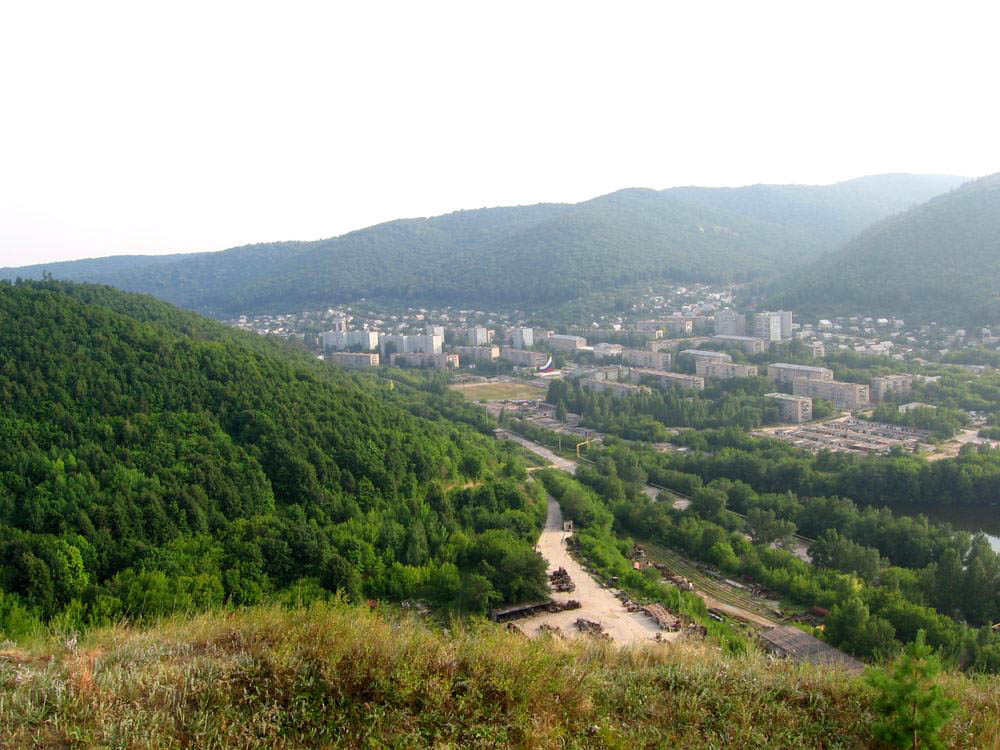
Zhigulevsk (Russian: Жигулёвск, IPA: [ʐɨɡʊˈlʲɵfsk]) is a town in Samara Oblast, Russia, located on the right bank of the Volga River in the Samara Bend near the Zhiguli Mountains, 92 kilometers (57 mi) west of Samara. The population was 55,565 (2010 census);[2] 48,770 (2002 census);[6] 44,801 (1989 Soviet census).[7]

Key Information

Etymology

[edit]

The name Zhigulevsk is taken from the Zhiguli Mountains, but they are named for an earlier settlement of Zhigulevka, itself probably named for an early inhabitant, Zhegul (Жегуль).[8]

History

[edit]

The town occupies the territories of former villages of Otvazhnoye (Отва́жное, known since 1840) and Morkvashi (Моркваши, known since 1647). The work settlement of Otvazhny (Отва́жный) was built here to develop the oil deposits. In 1949, it was merged with the villages and renamed Zhigulevsk.[citation needed] It was granted town status in 1952.[citation needed]

Besides oil, the town also develops limestone deposits.

Administrative and municipal status

[edit]

Within the framework of administrative divisions, it is, together with five rural localities, incorporated as the town of oblast significance of Zhigulevsk—an administrative unit with the status equal to that of the districts.[1] As a municipal division, the town of oblast significance of Zhigulevsk is incorporated as Zhigulevsk urban okrug.[3]

Notable people

[edit]

References

[edit]

Further reading

[edit]
[edit]
Revisions and contributorsEdit on WikipediaRead on Wikipedia
from Grokipedia
Zhigulevsk is a town in , , serving as the administrative center of Zhigulevsk Urban Okrug and located on the right bank of the Volga River within the Samara Bend, immediately adjacent to the Zhiguli Mountains. Founded in 1949 as a workers' settlement to support the construction of the Kuybyshev Hydroelectric Power Station—one of the largest engineering projects of the Soviet era—the town was officially granted city status on February 14, 1952. With a 2021 census population of 50,466 and an estimated 48,564 residents as of 2024, Zhigulevsk occupies an area of 60.8 square kilometers and lies about 92 kilometers west of the oblast capital, Samara. The town's development has been inextricably linked to the sector, particularly the nearby Zhigulevskaya Hydroelectric Power Station (formerly Kuybyshev HPP), which began operations in 1957 and remains the second-largest hydroelectric facility in Europe with an installed capacity of 2,488 megawatts. This infrastructure not only powers much of the but also created the expansive , transforming the local landscape and supporting navigation and irrigation. Beyond energy production, Zhigulevsk's economy increasingly focuses on and , leveraging its position on the edge of the Samarskaya Luka National Park—a UNESCO-recognized reserve established in 1984 that encompasses diverse ecosystems, including forested mountains, steppe landscapes, and unique geological formations along a 180-degree bend in the . Notable features include the hydroelectric dam itself, which offers panoramic views and serves as an engineering , as well as proximity to hiking trails, caves, and historical sites within the that attract visitors for , , and cultural exploration. The town also maintains a local history museum and supports initiatives for , aiming to position itself as a "smart city" with high-tech industries and enhanced tourist infrastructure as part of the broader Samara-Tolyatti agglomeration. While industrial activities remain limited compared to nearby Tolyatti's automotive sector, Zhigulevsk's strategic location fosters growth in services, hospitality, and environmental conservation efforts.

Geography and Environment

Location and Topography

Zhigulevsk is situated at geographic coordinates 53°23′59″N 49°29′43″E. The city lies on the right bank of the River within the Samara Bend, a prominent formed by the river's course around the Zhiguli Mountains, approximately 92 kilometers west of the regional center of Samara. This positioning places Zhigulevsk at the eastern edge of the Samarskaya Luka peninsula, where the creates a natural boundary and scenic backdrop. The city's elevation averages 70 meters above , reflecting its low-lying position along the river while rising gradually toward the adjacent uplands. Immediately to the west and south, the Zhiguli Mountains dominate the local , forming a rugged chain of hills with steep slopes and plateaus that extend parallel to the . These mountains, reaching heights up to 375 meters, are characterized by exposed and dolomite formations dating to the Permian period, which contribute to the area's features, cliffs, and distinctive relief. The deposits not only shape the dramatic skyline but also influence soil composition and vegetation patterns in the surrounding terrain. The urban layout of Zhigulevsk has developed in close adaptation to this riverine and mountainous setting, with residential and industrial zones primarily aligned along the Volga's shoreline for access to water transport and resources. Early settlement patterns followed the relatively flat riverbank terraces, while later expansions navigated the rising slopes toward the mountain foothills, incorporating the natural contours to minimize erosion and integrate with the landscape. This topography has constrained linear growth along the river, fostering a compact urban form that borders the Samarskaya Luka National Park to the west.

Climate

Zhigulevsk experiences a classified as Dfb under the Köppen system, characterized by cold, snowy winters and warm, relatively short summers. This classification reflects the region's continental location, with significant temperature variations between seasons and no prolonged dry period. Winters are dominated by subfreezing temperatures, while summers bring mild to warm conditions conducive to outdoor activities. Average monthly temperatures illustrate the seasonal extremes: in , the mean low reaches -14°C, with highs around -8°C, while July sees average highs of 26°C and lows of 16°C. Annual precipitation totals approximately 500-600 mm, distributed fairly evenly but peaking in summer months like , which contributes to lush vegetation along the riverbanks during warmer periods. The proximity of the Volga River and the surrounding Zhiguli Mountains creates distinct microclimates in Zhigulevsk, moderating s slightly compared to inland areas and fostering frequent fog in autumn and winter due to the river's influence, as well as variable wind patterns channeled through the mountainous terrain. Recorded temperature extremes include lows rarely dropping below -26°C and highs seldom exceeding 32°C, underscoring the harsh winter potential. Climate trends in the from 1966 to 2021 indicate a warming pattern, with annual average air temperatures increasing by 0.27–0.53 °C per decade.

History

Early Settlement

The area encompassing modern Zhigulevsk, part of the Samara Bend region, has evidence of early human activity tied to indigenous and medieval cultures. Archaeological findings in the vicinity of Morkvashi reveal traces of Volga Bulgar culture dating to the 10th–13th centuries, indicating settlement and economic activity by this Turkic-speaking people who established a trading hub along the River. The Samara Bend served as a strategic location for ancient trade routes, where Arab and Persian merchants transported goods to the Bulgar Kingdom, including furs, honey, and slaves destined for the markets. Additionally, the region's dense forests and rugged terrain provided refuge for indigenous Finno-Ugric groups and later for runaway serfs and rebels, such as those during the uprisings led by in the 17th century and in the 18th century. The earliest documented settlements in the area were the villages of Morkvashi and Otvazhnoye, which formed the pre-industrial core of what became Zhigulevsk. Morkvashi was first recorded in the 1647 census as a small owned by landlord Vasily Poretsky, comprising just two households and likely originating from earlier Bulgar-era inhabitants who engaged in basic farming and river-based livelihoods. By the late , it had passed to the Bronsky noble family and later to Count Vladimir Grigoryevich Orlov in the early , reflecting the feudal land allocations common in the Middle Volga region. Otvazhnoye emerged later, established in 1840 when Count Vladimir Petrovich Orlov-Davydov resettled about 30 serf families from his estates to clear land at the foot of the Mogutovaya and Shishka mountains; initial dwellings were rudimentary, with settlers living in a single wooden barrack in what is now the nearby village of Zol'noye. The name Otvazhnoye derives either from the surname of the first village elder, a Ukrainian named Otvazhnenko, or from the perceived bravery of these pioneers in taming the forested wilderness. The name Zhigulevsk itself stems from the surrounding Zhiguli Mountains, which were named after the earlier settlement of Zhigulevka (also known as Zhegulevka or Zhegulikha), founded around and possibly derived from a resident named Semyon Grigoryevich Zhegul, a from Veliky Ustyug. Prior to the , the local economy revolved around , with villagers in Morkvashi and Otvazhnoye cultivating fields like the Alexandrovskoye for grains and vegetables, while the facilitated seasonal trade in timber, fish, and agricultural surplus to nearby towns such as . Forests in the Zhiguli were exploited for under noble oversight, with wood floated down the river or transported via early narrow-gauge railways built by landowners like Orlov-Davydov to support regional commerce. This agrarian focus persisted until industrial shifts, underscoring the area's role as a peripheral outpost in the Volga trade network.

Industrial Development and Modern Era

Zhigulevsk was founded in through the merger of the villages of Otvazhnoye and Morkvashi with the workers' settlement of Otvazhny as part of the preparations for constructing the Kuybyshev Hydroelectric , incorporating ongoing exploration activities in the region that dated back to the early . The integration aimed to centralize operations for the major engineering project while supporting resource extraction, transforming the area from rural settlements into an industrial hub. In 1952, the workers' settlement achieved town status via a decree from the Presidium of the Supreme Soviet of the RSFSR on February 21, formalizing its role as an administrative center. Concurrently, the development of limestone quarries accelerated to supply construction materials for the nearby Kuibyshev Hydroelectric ; three key quarries were established for of high-purity Zhiguli , supporting production and builds. During the Soviet , these industries expanded significantly, with oil extraction scaling up through state investments and the construction materials sector growing to provide aggregates for regional and urban development, leading to population influx and foundational like housing and factories by the 1970s. Following the in 1991, Zhigulevsk underwent economic transitions from state-dominated and materials production to a more diversified model, incorporating private enterprises and potential tied to the Samarskaya Luka National Park. Challenges included of quarries and assets, but by the , stabilization occurred with ongoing operations at the Zhigulevsky Limestone Plant and energy sector ties. Developments in the mid-2010s emphasized infrastructure renewal, such as road repairs exceeding 200 million rubles since 2014, reconstruction of the Kristall Stadium in 2014, and the Atlant sports complex reopening in 2015, alongside strategic plans for socio-economic growth through 2030 focusing on and support.

Government and Administration

Administrative Status

Zhigulevsk holds the status of a town of oblast significance in , a federal subject of the Russian Federation within the . As a municipal division, the town is incorporated as the Zhigulevsk Urban Okrug, an administrative-territorial unit that includes the town itself and the subordinate rural localities of Shiryaevo, Bakhlova Polyana, Zolnoe, , and Solnechnaya Polyana. The boundaries of the urban okrug are defined by the Law on Administrative-Territorial Structure, encompassing an area of 94.15 square kilometers along the right bank of the River. The postal code assigned to Zhigulevsk is 445350, and the town observes the UTC+4 time zone (MSK+1), consistent with Samara Oblast. This administrative framework has remained stable as of 2025, with no reported reforms altering the town's oblast significance or urban okrug incorporation since the initial granting of town status in 1952.

Local Governance

Zhigulevsk operates as an urban okrug, with its local governance structured around a representative legislative body and an executive administration. The City Duma (Дума городского округа Жигулевск) serves as the primary representative organ, consisting of elected deputies who oversee legislative functions and approve key administrative decisions. The Duma is elected by direct popular vote every five years, with the most recent election occurring in September 2025, resulting in a new convocation that retained 14 deputies from the previous term. The executive branch is led by the Head of the Urban Okrug, who is appointed by the City following a competitive selection process among finalists. As of November 2025, the Head is Nikolaevich , elected unanimously by the on October 15, 2025, succeeding Ilya Sukhikh. , who had served as interim head, was selected from a shortlist that included deputy head Alexander Katkov. The , chaired by Elena Rebrova in its current convocation, holds sessions to deliberate and vote on such appointments. The administration, operating under the Head's leadership, holds primary responsibility for as outlined in the Urban Okrug Charter. Key duties include preparing, executing, and reporting on the local budget to ensure fiscal management and for municipal needs. It also oversees , coordinating land use, construction regulations, and infrastructure development to support sustainable growth. Additionally, the administration supervises public services, encompassing , provision, social welfare programs, and public order enforcement. Residents and stakeholders can engage with local governance through the official website at zhigulevsk.org, which provides access to documents, news, and online services. Contact mechanisms include the administration's central office at 445350, Zhigulevsk, Pushkina Street 17; telephone 8 (84862) 2-45-43; fax 8 (84862) 7-91-80; and email [email protected].

Demographics

The population of Zhigulevsk experienced steady growth from the late Soviet era through the early 2000s, peaking in the 2010 census before entering a period of decline amid broader post-Soviet economic shifts. According to official census data from Rosstat, the town recorded 44,801 residents in 1989, rising to 48,770 by 2002—a roughly 9% increase over 13 years driven by industrial expansion. This upward trend continued, with the 2010 census showing 55,565 inhabitants, marking the highest recorded figure and reflecting influxes tied to local employment opportunities. Subsequent years saw a reversal, with the 2021 census reporting 50,466 residents, a 9.1% drop from 2010. Recent estimates indicate further reduction, projecting 48,070 by January 1, 2025, at an annual decline rate of about 1.5%. This contraction aligns with national patterns in mono-industrial towns, where out-migration exceeds natural growth due to limited diversification.
YearPopulationChange from Previous (%)Source
198944,801-Rosstat (Soviet Census)
200248,770+8.9Rosstat
201055,565+13.9Rosstat
202150,466-9.1Rosstat
2025 (est.)48,070-4.8 (from 2021)Rosstat via City Population
Early growth was primarily fueled by the industrial boom surrounding the Zhiguli Hydroelectric Station's construction (1950–1957) and subsequent operations, which created jobs in energy and related sectors, drawing workers to the . Urbanization reached near-complete levels by the , with over 95% of the population residing in urban areas, supported by state-driven development. Post-1991, economic restructuring led to slowdowns and , prompting net out-migration—particularly among younger demographics—to larger centers like and Samara for better prospects. By the 2020s, migration patterns continued to reflect , with inflows limited to retirees and limited tourism-related roles, contributing to the observed depopulation.

Ethnic and Social Composition

Zhigulevsk's ethnic composition is predominantly Russian, accompanied by a diverse array of minorities that reflect the city's role as an industrial hub attracting migrants from across and the former . Key ethnic groups include , , , , Chuvash, , , , , , Roma, and others, as documented in regional ethnographic surveys. This diversity stems from historical settlements tied to the construction of the in the and , which drew laborers from various republics, fostering a multicultural social fabric. The exhibits a imbalance typical of many Russian urban areas, with women comprising approximately 56% and men 44% of residents, based on estimates derived from aggregates. Age distribution highlights an aging demographic: working-age adults (31–60 years) form the largest group at about 43%, followed by the elderly over 60 at 22%, youth aged 19–30 at 12%, teenagers (8–18 years) at 12%, and children under 7 at 10%. These patterns underscore challenges in maintaining a balanced labor force amid regional depopulation trends. Education levels in Zhigulevsk align closely with averages from the 2010 , where over 60% of adults aged 15 and older held at least , and about 25% possessed higher education degrees, supporting the city's technical and industrial needs. Community organizations, such as the local Mordvin, Tatar, and Chuvash cultural associations established between 2011 and 2013, promote educational initiatives including through library resources in minority languages like Chuvash, Tatar, Bashkir, and Turkmen. Socially, family structures emphasize nuclear households, with community efforts focused on integration via events like "Wreath of Friendship" since 2000, which celebrates ethnic diversity. Healthcare access is facilitated by institutions such as the Zhigulevsk Central City Hospital, serving the population's primary needs, though rural pockets within the urban district may face transportation barriers. These elements contribute to a cohesive yet multifaceted shaped by the city's industrial origins.

Economy

Primary Industries

The primary industries in Zhigulevsk are centered on energy production, oil extraction, and , which have shaped the town's economic foundation since its establishment in 1949 as a workers' settlement to support the construction of the Kuybyshev Hydroelectric , with early development also involving local oil deposits. The Zhigulevskaya Hydroelectric (HPP), located adjacent to the town and operational since 1957, is a key asset with an installed capacity of 2,400 MW, making it the second-largest in . Managed by RusHydro, it generates significant revenue through production for the , supports the Kuybyshev for and , and employs local workforce while contributing to the town's energy-focused identity. Oil production began in the late with the exploration of oil fields in the Zhiguli Mountains, contributing to the Soviet Union's wartime and energy needs; by 1941, the oil field near Zhigulevsk accounted for 17.2% of the regional trust's total output. Today, the Neftgazodobyvayushchee Upravlenie (NGDU) "Zhigulevskneft," a key operational unit, handles extraction in the area as part of Rosneft's Samaraneftegaz , focusing on mature fields with enhanced recovery techniques to sustain production. While specific annual output from Zhigulevsk fields is not publicly detailed, Samaraneftegaz as a whole produced over 9.7 million tons of oil in recent reporting periods, underscoring the subunit's role in maintaining the 's position as the third-largest oil producer in the . This sector supports regional and exports, with oil from Zhigulevsk contributing to broader processing in facilities. Limestone mining and processing form another cornerstone, leveraging the town's location in the limestone-rich Zhiguli Hills for construction materials production. The Yablonevy Ovrag deposit and the quarry on the southern slope of Mount Mogutovaya provide high-quality limestone, with extraction dating back to the mid-19th century but intensifying post-World War II to supply cement and aggregates. The primary operator, ZAO "Zhigulevskie Stroy Materialy," part of the Eurocement Group since 2005, operates an integrated complex producing Portland cement (grades M400 and M500), crushed stone (fractions 5-20 mm, 20-40 mm, 40-80 mm), lime, and dolomite byproducts, with a focus on low-impurity stone suitable for building and industrial uses. The facility's annual capacity exceeds 1 million tons of cement equivalents, supporting infrastructure projects across Samara Oblast and beyond, though operations face environmental constraints within the Samarskaya Luka National Park boundaries. This industry bolsters the regional economy by providing essential raw materials for construction, reducing import dependency, and employing a significant portion of the local workforce. These sectors have spurred limited diversification into related areas, such as derivatives from and specialized cement variants like (up to 305,000 tons annually) for high-end applications, enhancing Zhigulevsk's integration into Samara Oblast's industrial cluster. Overall, energy, , and account for the bulk of the town's industrial output, contributing approximately 20-25% to the municipal GDP through direct production and linkages.

Economic Development and Challenges

Following the collapse of the Soviet Union, Zhigulevsk underwent significant economic transitions as part of broader Russian reforms. The town's key assets, including the Zhigulevskaya Hydroelectric Power Plant (HPP) established in the Soviet era and small-scale oil extraction operations in the nearby Otvazhny settlement, were subject to privatization in the 1990s. These processes transferred state-owned enterprises to private entities, with the HPP becoming part of RusHydro, a publicly traded company, fostering initial market-oriented growth but also leading to workforce restructuring and temporary instability in the local energy sector. Mining activities, focused on nonmetallic minerals like limestone, similarly saw privatization, contributing to modest industrial output amid the shift from planned to market economics. As of 2025, Zhigulevsk's economy remains integrated into Samara Oblast's broader framework, where the town contributes through energy production and emerging sectors, though its share of the oblast's gross regional product (GRP) of approximately 3.1 trillion RUB is limited due to its small population of approximately 50,000 (2025 estimate). Unemployment stands at a record low of 0.47% as of October 2025, reflecting robust local labor demand driven by tourism and infrastructure projects, compared to the national rate of 2.1%. Average monthly incomes hover around 50,000–60,000 RUB, with variations by sector: educators earn about 54,000–63,000 RUB, while construction and utilities roles range from 31,000 to 77,000 RUB, supporting stable household consumption but lagging behind urban centers like Samara. These metrics underscore a resilient yet modest economic base, with investments in high-tech initiatives bolstering growth. Key challenges include in local oil and deposits, which have constrained extractive industries since the post-Soviet era, and environmental impacts from the HPP, such as altered River ecosystems and flooding in the Samara Bend area, affecting biodiversity in the adjacent Middle Volga Biosphere Reserve. Diversification efforts aim to mitigate overreliance on and , which account for a declining share of output amid maturing fields. Local authorities have pursued sustainable growth through the 2030 Socio-Economic Development Strategy, emphasizing transformation into a high-tech "smart city" and premier tourist destination leveraging the Zhiguli Mountains and heritage. Initiatives include expanding the Zhigulevskaya Dolina Technopark, which added 12 residents in 2025 to foster innovation in IT and , and federal support for infrastructure under national projects, targeting a 20–30% increase in visitor numbers by 2030 to drive non-extractive revenue. These measures, aligned with Russia's , seek to balance economic expansion with ecological preservation.

Infrastructure

Transportation

Zhigulevsk is well-integrated into the regional road network, with direct access to the federal M5 Ural Highway, which facilitates connections to Samara approximately 90 kilometers to the east-southeast and approximately 20 kilometers to the northwest. The journey from Samara to Zhigulevsk by car typically takes about 1.25 hours via local roads branching off the M5, supporting both commuter and freight traffic in the . This proximity to major highways enhances the town's accessibility for residents and visitors traveling to the broader . Rail transport in Zhigulevsk centers on the local railway station, which serves as a key stop on the Samara-Zhigulevsk line operated by Russian Railways. Daily regional trains connect Zhigulevsk to Samara, with the trip lasting around 2 hours, while longer routes extend to Moscow and other major cities. Public transit within and around the town relies on an extensive bus network, including fixed-route minibuses such as route 607 to Samara and local lines like buses 9, 628, and 776 serving nearby areas and the Zhigulevsk bus station. The town's location on the right bank of the River enables river-based mobility, with services and water routes linking Zhigulevsk to Samara, , and other Volga ports for both passenger and cargo needs. Although Zhigulevsk lacks its own major port facility, the navigable supports seasonal boat excursions and transport options integrated with the regional waterway system. For , the nearest facility is Kurumoch International Airport (KUF), situated about 45 kilometers northwest near Samara, offering domestic and international flights with ground connections via bus or taxi. As of 2025, no major airport expansion projects specific to Zhigulevsk are underway.

Public Utilities and Services

Zhigulevsk's water supply is primarily sourced from the Volga River, specifically the Kuibyshev Reservoir formed by the Zhigulevskaya Hydroelectric Power Station, which serves as a key regional water resource despite seasonal variability in quality due to algal blooms and nutrients. The town's wastewater treatment facilities, with a designed capacity of 16,200 m³/day, were reconstructed starting around 2014 to incorporate advanced biological processes including nitrification-denitrification in anoxic and aerobic zones, chemical phosphorus removal, and tertiary filtration via a brush-type bioreactor, followed by UV irradiation for disinfection. Prior to these upgrades, treatment relied solely on mechanical settling with approximately 50% efficiency for biochemical oxygen demand (BOD₅) and suspended solids, resulting in effluents that exceeded regulatory limits for nitrogen, phosphates, and oil products; the reconstruction enhanced treatment efficacy without interrupting inflow and reduced environmental impact on receiving waters. Sanitation services integrate with these facilities, ensuring hygienic wastewater management aligned with national standards for urban areas in the Volga basin. Electricity in Zhigulevsk is predominantly generated by the adjacent Zhigulevskaya Hydroelectric Power Station (HPP), a 2,488 MW facility operated by RusHydro that harnesses the Volga's flow through 20 units, providing reliable power to the local grid and supporting the town's energy needs as one of Europe's largest hydroelectric plants. Modernization efforts at the HPP, including turbine replacements completed on 14 units by 2015, have improved efficiency and capacity utilization for sustained electricity supply. Heating systems rely on centralized district networks typical of Russian urban infrastructure, drawing from the regional power grid to meet residential and public demands during the extended heating season, though specific local boiler capacities remain integrated with broader energy distribution. The primary healthcare facility is the State Budgetary Health Institution of the Samara Region "Zhigulyovsk Central City Hospital," which offers comprehensive and outpatient services, including care, and serves the town's through state-funded operations. This hospital has been involved in regional medical and donor programs, ensuring access to essential treatments amid ongoing administrative oversight. Additional clinics support , with the system aligned to federal healthcare standards for small urban centers. Telecommunications in Zhigulevsk include mobile and fixed services, with high-quality expanded to the town's settlements by 2024 through regional initiatives in , achieving coverage for populations over 100 via providers offering speeds up to 100 Mbps. Local infrastructure, such as the Zhigulevsk Cable Network, supports wired connections, while national operators ensure / mobile coverage, though nationwide restrictions on in 2025 have occasionally impacted service reliability in the . As of late 2025, average download speeds in nearby areas like align with 50-60 Mbps, indicative of Zhigulevsk's connectivity levels amid federal digital development efforts.

Society and Culture

Education

Zhigulevsk's education system encompasses a comprehensive network of general education institutions, including primary and secondary schools that serve students from grades 1 through 11. The town operates approximately 22 public schools, such as State Budgetary Educational Institution Secondary School No. 10, No. 13, and Multi-Profile Lyceum No. 16, which provide compulsory basic and upper secondary education in accordance with federal standards. These institutions focus on core subjects like mathematics, sciences, and languages, with some offering specialized tracks in humanities and natural sciences to prepare students for further studies or vocational paths. Vocational education is supported by institutions like the Zhigulevsky State College (ГАПОУ СО "ЖГК"), a multi-profile secondary vocational facility that trains students in technical and professional skills relevant to the local economy. Programs here include specializations in mechanics, information technology, and economics, with an emphasis on practical training for industries such as manufacturing and energy. Additionally, Professional School No. 32 offers targeted vocational programs in trades like machining and automotive repair, historically adapting to regional needs since its establishment. Higher education access in Zhigulevsk is provided through branches and representative offices of universities, including Togliatti State University (TolSTU), which offers programs in , and applied sciences via its local campus. Ties to Samara National Research University and other regional institutions enable residents to enroll in bachelor's and specialist degrees, often with flexible formats for working students. Key programs highlight technical training for the oil industry, such as courses in oil and gas extraction and equipment operation, delivered in collaboration with local enterprises like the Zhigulevskneft Oil and Gas Production Department to meet workforce demands. The town's educational outcomes align with national benchmarks, where adult rates exceed 99.7% for those aged 15 and above. Enrollment statistics reflect high participation, with gross primary enrollment at 97.75% and secondary enrollment at 92.48% as of 2023 data, maintaining stability into 2025 amid ongoing federal initiatives for inclusive . These rates underscore near-universal access to compulsory schooling, supported by regional efforts in to enhance infrastructure and teacher training.

Cultural Life and Attractions

Zhigulevsk's cultural life is deeply intertwined with the natural beauty of the surrounding Zhiguli Mountains and the River, fostering a heritage centered on artistic inspiration and ecological awareness. Local preserve the artistic legacy of the region, particularly through sites associated with renowned painter , who drew inspiration from the Samara Bend for works like . The Historical and Museum Complex in Shiryaevo, located within the Samarskaya Luka area near Zhigulevsk, features Repin's house-, the home of poet Alexander Shiryaevtsa, and a recreated 19th-century merchant's room, offering insights into the area's historical and artistic past. Similarly, the Samarskaya Luka Local Lore and History in Zhigulevsk itself exhibits artifacts and exhibits on the local ethnography, geology, and cultural traditions of the . Community events and festivals highlight Volga traditions, blending folk arts, music, and seasonal celebrations. The annual Repin Festival in , held in Shiryaevo, honors Repin's contributions with art exhibitions, performances, and workshops that attract artists and visitors to the scenic riverside setting. In mid-August, the Zhiguli Cherry Festival in Shiryaevo celebrates local culinary heritage through cherry pie tastings, folk dances, and markets featuring regional produce, reflecting the area's agricultural traditions tied to the fertile lands. The LukAmorye eco-cultural , organized in the Samarskaya Luka near Bakhilovo village, promotes environmental themes alongside folk crafts, music, and storytelling, drawing on the mythical motifs of the 's ancient landscapes. Natural attractions dominate the recreational landscape, providing opportunities for outdoor activities amid the dramatic topography. Samarskaya Luka National Park, encompassing the Zhiguli Mountains and the Volga's sharp bend, offers extensive hiking trails with panoramic river views and diverse flora, including rare species protected in the Zhiguli Nature Reserve. Visitors can explore peaks like Mount Strelnaya for breathtaking vistas of the reservoir formed by the Zhigulevskaya Dam, a monumental structure that enhances the scenic allure while symbolizing the region's industrial heritage. The City Park of Culture and Leisure in Zhigulevsk serves as a local hub for picnics, walks, and community gatherings, integrating urban green spaces with waterfront access. Local media supports cultural engagement through regional outlets that cover Zhigulevsk events, though specific town-based publications are limited. Coverage of festivals and attractions often appears in newspapers and radio stations, such as those affiliated with the media network, promoting and community traditions.

Notable People

(born April 2, 2004) is a professional player who began her career on the in 2023 after starting training in nearby at age four and moving to at nine for advanced coaching. As of November 2025, she holds a career-high singles ranking of world No. 11 achieved in May 2025 and is currently ranked No. 21, with two WTA doubles titles to her name. Shnaider, a left-handed player with a two-handed , has earned over $2 million in prize money and represented in international competitions. Alexei Semyonov (born December 10, 1986) is a former goaltender who developed through the youth system of before playing in Russia's top leagues. Standing at 6'1" and weighing 198 pounds, he competed in the (KHL) and its affiliates, including stints with teams like and , accumulating over 100 games in professional play. Semyonov retired after the 2018–19 season, having been a reliable netminder in the Russian leagues. Igor Esaulenko (March 18, 1956 – August 19, 2025) was a prominent Russian physician, educator, and medical administrator who served as rector of Voronezh State Medical University named after N.N. Burdenko from 2000 until his death. A Doctor of Medical Sciences and professor, he authored more than 400 scientific publications on and , earning recognition as a Merited Worker of Higher Education of and of the Russian Academy of . Esaulenko graduated with honors from the same university in 1979 and advanced through academic roles, contributing to healthcare reforms and international collaborations during his 25-year tenure.

References

Add your contribution
Related Hubs
User Avatar
No comments yet.