Hubbry Logo
Al Jackson Jr.Al Jackson Jr.Main
Open search
Al Jackson Jr.
Community hub
Al Jackson Jr.
logo
8 pages, 0 posts
0 subscribers
Be the first to start a discussion here.
Al Jackson Jr.
Al Jackson Jr.
from Wikipedia

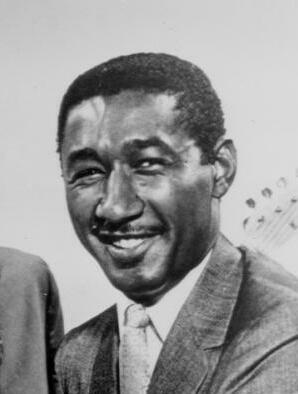
Albert J. Jackson Jr.[1] (November 27, 1935 – October 1, 1975) was an American drummer, producer, and songwriter. He was a founding member of Booker T. & the M.G.'s, a group of session musicians who worked for Stax Records and produced their own instrumentals. Jackson was affectionately dubbed "The Human Timekeeper" for his drumming ability. He was posthumously inducted into the Memphis Music Hall of Fame in 2015, and the Rock and Roll Hall of Fame as a member of Booker T. & the M.G.'s in 1992.

Key Information

Early life

[edit]

Jackson's father, Al Jackson Sr., led a jazz/swing dance band in Memphis, Tennessee. The young Jackson started drumming at an early age and began playing on stage with his father's band in 1940, at the age of five. He later played in producer and trumpeter Willie Mitchell's band and at the same time was holding down a chair in the popular Ben Branch Band.

In an interview with Drum! magazine, Mitchell recalled,

Al Junior was about 14 years old then. I said to his father, 'Hey, let's use your son!' He said, 'Oh, man, he can't play this stuff!' But he did make the gig. He set up his kit – a cymbal, a snare drum, and a bass drum – and I kicked the thing off. And, man, that thing went off at 20 tempos!

But that was around 7:00 o'clock. And by the time Al Senior came in an hour later, at 8:00 o'clock, Al Jackson Jr. was swinging that damn band like a pro.[2]

Future bandmates Steve Cropper and Donald "Duck" Dunn first heard Jackson playing in Mitchell's band at the Flamingo Room, and the all-white Manhattan Club. Mitchell had also hired Booker T. Jones for his band. It was Jones who suggested Jackson be brought to Stax. He said, "You guys need to know about Al." Dunn said that Jackson almost caused his wife to divorce him, because after finishing his own gig at one o'clock, he would stop by a club to hear Jackson and would get home at four or five in the morning; "He was that good!" said Dunn. At first, Jackson was reluctant to join Stax. He felt he could make more money playing live than doing session work. He wanted a guaranteed regular salary to come over to Stax (although he continued to play on sessions produced by Mitchell for Hi Records). And so he became the first Stax session musician to be on a weekly salary.[3]

Career

[edit]

At Stax, Jackson formed the M.G.'s with Booker T. Jones, Steve Cropper and Lewie Steinberg (later to be replaced by Duck Dunn). During his tenure at Stax, he became one of the most influential drummers in the history of recorded music, providing an instantly recognizable backbeat behind the label's artists, including Rufus Thomas, Carla Thomas, Eddie Floyd, Sam & Dave, Otis Redding and blues guitarist Albert King (whose work Jackson also produced).

In the 1970s, he co-wrote and played on several hits by Al Green, including "Let's Stay Together" and "I'm Still in Love with You", at Hi, and he was also a session drummer for many artists, such as Elvis Presley, Bill Withers, Wilson Pickett, Leon Russell, Jerry Lee Lewis, Eric Clapton, Jean Knight, Aretha Franklin, Major Lance, Ann Peebles, Rod Stewart, Shirley Brown, Donny Hathaway and Herbie Mann.

In 1975, four years after the release of their last album, Melting Pot, the members of Booker T. & the M.G.'s decided to wrap up their individual projects and devote three years to a reunion of the band. A few months later, Jackson was murdered in his home.[4]

Death

[edit]

On September 30, 1975, Jackson was scheduled to fly from Memphis to Detroit, to produce a Major Lance session, but he delayed the session so he could watch the "Thrilla in Manila" on the big screen at the Mid-South Coliseum. After the fight, Jackson returned to the home he shared with his estranged wife, Barbara Jackson. That July, Barbara Jackson had shot her husband in the chest after he had assaulted her, with attempted murder charges against Barbara Jackson being dropped when a Memphis City court judge determined she had acted in self-defense. Al Jackson had since started the process of filing for a divorce and was intending to move.[5]

At approximately 11:00 p.m., Barbara Jackson had returned home from a beauty parlor and was ambushed inside the home by a single black male who demanded money before restraining her while he searched the house. Al Jackson soon returned home and was accosted by the intruder, who forced Jackson to lie on the floor before shooting him multiple times with a pistol.[5] Barbara Jackson managed to free herself enough to leave the house, where a police sergeant passing by saw her. Police found Jackson dead from five gunshots in the back. The killer, described as a "tall black man, 25-30 years old, with an Afro haircut and a moustache", had fled with some jewelry and the contents of Jackson's pockets. He would never be identified.[5]

Various theories have been proposed for the motivation behind Jackson's murder. Some believe he was simply in the wrong place at the wrong time; others believe the murder was tied to an alleged lawsuit against Stax Records over unpaid royalties, but Jackson's former bandmates have all dismissed this theory.[5] Various theories have also implicated Barbara Jones, who was initially investigated by the police as a suspect, as well as her friend, singer Denise LaSalle, who was later accused of harboring a fugitive wanted for armed robbery, but no charges in Jackson's death have ever been filed.[5]

Equipment

[edit]

For recording Jackson typically used various combinations of Ludwig and Rogers drums and Zildjian cymbals. Two studio kits played by Jackson are on display in museums; a Ludwig kit (with a Rogers Powertone snare drum) from Stax Records in the Musicians Hall of Fame & Museum, and a Rogers kit (with a Ludwig Acrolite snare drum) from Hi Records in the Stax Museum.

According to Steve Cropper, as quoted in Give the Drummer Some! by Jim Payne, a grey pearl Rogers floor tom was used in the mix 'n' match kit at Stax.

Collaborations

[edit]

With The Rance Allen Group

  • A Soulful Experience (Truth Records, 1975)

With William Bell

  • The Soul of a Bell (Stax Records, 1967)
  • Bound to Happen (Stax Records, 1969)
  • Relating (Stax Records, 1974)

With Shirley Brown

  • Woman to Woman (Truth Records, 1974)

With Booker T. & the M.G.'s

With Eric Clapton

With Delaney & Bonnie

  • Home (Stax Records, 1969)

With The Emotions

With Eddie Floyd

With Aretha Franklin

With Alan Gerber

  • The Alan Gerber Album (Shelter Records, 1971)

With Al Green

With Donny Hathaway

With Albert King

With Wilson Pickett

With David Porter

  • Victim of the Joke? An Opera (Enterprise Records, 1971)

With Elvis Presley

With Otis Redding

With Leon Russell

With The Soul Children

  • Genesis (Stax Records, 1972)
  • Friction (Stax Records, 1974)

With The Staple Singers

  • Soul Folk in Action (Stax Records, 1968)

With Mavis Staples

With Rod Stewart

With Carla Thomas

  • Memphis Queen (Stax Records, 1969)
  • Love Means... (Stax Records, 1971)

With Bill Withers

References

[edit]
[edit]
Revisions and contributorsEdit on WikipediaRead on Wikipedia
from Grokipedia
Al Jackson Jr. (November 27, 1935 – October 1, 1975) was an American drummer, producer, and songwriter renowned for his foundational role in shaping the sound as a and founding member of Booker T. & the M.G.'s at . Born in Memphis, Tennessee, to bandleader Al Jackson Sr., he began performing on drums with his father's jazz band at age five and turned professional at 14 under Willie Mitchell. Joining Stax in 1962, Jackson's precise, groove-driven style—earning him the nickname "The Human Timekeeper"—propelled hits like Booker T. & the M.G.'s "Green Onions," which peaked at number three on the Billboard Hot 100, and backed artists including Otis Redding, Sam & Dave, Carla Thomas, Albert King, and Rufus Thomas on tracks such as "In the Midnight Hour" by Wilson Pickett. Beyond Stax, he contributed to Hi Records successes with Al Green, co-writing and drumming on songs like "Let's Stay Together" and producing others. Jackson's career ended tragically when he was shot and killed by burglars at his Memphis home on October 1, 1975, at age 39; months earlier, his wife had shot him in the chest during a domestic dispute, though he chose not to press charges amid an impending . His rhythmic innovations influenced subsequent generations of drummers and cemented his legacy in production.

Early life and musical beginnings

Childhood in Memphis

Albert J. Jackson Jr. was born on November 27, 1935, in , to Al Jackson Sr., a local and who directed an 18-piece and swing ensemble influenced by arrangers such as Count Basie. The Jackson family resided in Memphis during the height of the city's in the late 1930s and 1940s, where live music performances were commonplace in venues catering to and dance bands. From infancy, Jackson was immersed in a musical household, with his father's professional activities providing constant exposure to ensemble rehearsals and gigs featuring brass-heavy swing rhythms and upright bass lines typical of the period's regional scene. He demonstrated early aptitude for percussion, beginning to play drums informally within the family setting before making his first onstage appearance with his father's band in 1940, at the age of five. This precocious involvement reflected the hands-on training dynamics common in Memphis musical families of the era, where children often apprenticed directly under parental ensembles rather than through formal instruction.

Initial training and influences

Al Jackson Jr. began performing onstage with his father Al Jackson Sr.'s swing band at age five in 1940, initially playing simple patterns on a reduced during live shows in Memphis. This early immersion provided hands-on experience in maintaining rhythm amid ensemble dynamics, fostering foundational timing skills through repetitive band rehearsals and performances. His training blended informal mentorship from Memphis's local music scene with self-directed practice, as his father's role as a and exposed him to and swing ensembles from childhood. By his early teens, Jackson transitioned to a full , drawing influences from the city's burgeoning and emerging R&B traditions, which emphasized groove and feel over technical flash. This period honed his precision in pulse and subdivision, attributes later recognized as the basis for his enduring nickname "The Human Timekeeper," derived from consistent practice under live pressure rather than formal lessons.

Professional career

Formation of Booker T. & the M.G.'s

Al Jackson Jr. joined keyboardist , guitarist , and bassist in 1962 to form the instrumental quartet Booker T. & the M.G.'s at in . Recruited by Cropper from Willie Mitchell's band, where Jackson had honed his skills, the group solidified as Stax's house band, blending R&B grooves with an interracial lineup unusual for the era. The band's debut single, "Green Onions," recorded in June 1962 during an impromptu studio jam, showcased Jackson's role as the "Human Timekeeper," delivering a tight backbeat that propelled the track's signature riff and groove. Released in August 1962 on the Volt subsidiary, it climbed to number 3 on the by September, selling over a million copies and establishing the group's sound rooted in soulful, understated precision. Jackson's drumming provided the steady pulse that allowed improvisational interplay among the members, marking an early empirical success for the ensemble. Through the mid-1960s, Booker T. & the M.G.'s released albums including Green Onions (1962), Soul Dressing (1965), And Now! (1966), and Hip Hug-Her (1967), each building on the foundational groove where Jackson's impeccable timing enabled the band's telepathic dynamics and improvisational freedom. His consistent, economical style—often using minimal fills to maintain momentum—underpinned tracks that influenced soul and rock instrumentation, as evidenced by the albums' chart performance and enduring catalog status. The quartet's chemistry, with Jackson anchoring the rhythm section alongside Steinberg (later replaced by Donald "Duck" Dunn in 1965), fostered a sound that prioritized feel over flash, contributing to Stax's golden era output.

Session drumming at Stax Records

Al Jackson Jr. functioned as the core session drummer for during the and early , laying down rhythms for numerous tracks by label artists in a live-to-tape recording process that demanded unflinching precision. His contributions emphasized pocket grooves over virtuosic displays, with drum patterns that locked in bass lines, horns, and vocals to create cohesive soul ensembles. Dubbed the "Human Timekeeper" for his metronomic accuracy, Jackson's drumming underpinned the urgency of one-take sessions, ensuring temporal stability amid improvisational energy. On Sam & Dave's "Soul Man" (released 1967), Jackson delivered a crisp, driving backbeat that propelled the track's call-and-response dynamics and horn stabs, helping it reach No. 2 on the and achieve gold certification. For Otis Redding's "(Sittin' On) The Dock of the Bay" (released 1968), his sparse, syncopated and snare work provided a laid-back sway that mirrored the song's contemplative whistle and lyrics, contributing to its ascent to No. 1 posthumously and sales exceeding four million copies. These performances exemplify how Jackson's subtle fills and consistent tempo supported lead elements without dominating the mix. Jackson's work occurred within Stax's integrated studio setup, unusual for segregated 1960s Memphis, where white and Black musicians collaborated freely under owners Jim Stewart and , yielding hits that crossed racial lines. His timing anchored horn sections and vocalists across sessions with artists like , , and nearly all of Otis Redding's output, as reflected in the label's string of Top 10 singles and albums that collectively sold millions. Adapting to varied styles, Jackson tailored grooves for Carla Thomas's emotive R&B tracks, such as providing steady shuffles that bolstered her phrasing, and uptempo numbers by other Stax vocalists, prioritizing empirical consistency in feel over solos to maintain track momentum. This approach, rooted in supportive rather than showy playing, causally enhanced the commercial viability of Stax's output, with his often emerging prominently in final mixes despite being mixed low during recording.

Production and songwriting roles

Al Jackson Jr. assumed production responsibilities at , particularly as the designated producer for blues guitarist during the mid-1960s. He guided King's sessions, contributing to the development of tracks that blended raw guitar work with tight rhythmic structures, as evidenced in the 1967 single "The Hunter" from King's album . This effort helped propel the album to No. 31 on the R&B chart. Jackson also co-produced recordings for vocal group , partnering with Stax co-founder Jim Stewart on their debut album Genesis (1971) and follow-up (1974). These projects emphasized layered harmonies and groove-oriented arrangements, yielding singles like "" that reached No. 10 on the R&B chart in 1972. His songwriting credits at Stax were selective and collaborative, often prioritizing instrumental grooves and rhythmic innovation over extensive lyrical composition. Jackson co-wrote "The Hunter" alongside , , and , focusing on a propulsive backbeat that defined the track's enduring appeal. While his output remained limited compared to his drumming and production work, these contributions underscored his role in shaping Stax's foundational sound through precise, groove-centric song structures.

Work at Hi Records

In the early 1970s, Al Jackson Jr. began recording at Hi Records, the Memphis-based label run by producer Willie Mitchell, while continuing his primary obligations at Stax amid the latter's mounting financial pressures. Jackson's contributions at Hi centered on drumming for soul singer , whose sessions emphasized meticulous grooves and layered rhythms distinct from Stax's looser, horn-driven energy. This shift highlighted Jackson's adaptability in a competitive local scene, where Hi's output gained traction through refined production techniques. Jackson played drums on Green's 1972 album Let's Stay Together, alternating shifts with Howard Grimes to deliver the track's signature tight, understated backbeat—often captured with minimal overdubs on Hi's eight-track setup. The title single, co-written by Jackson alongside Mitchell, Green, and Al Jackson Sr., propelled the record to number one on both the and Hot R&B Singles charts, holding the R&B summit for nine weeks and marking Green's sole pop chart-topper. He also drummed on subsequent Hi hits like "Call Me" (1973, peaking at number two R&B) and tracks from I'm Still in Love with You (1972), bolstering Green's string of multi-platinum successes. At Hi, Jackson's style leaned toward spare, relentless precision with added percussion elements not typical of Stax, fostering a smoother sonic palette that supported Green's emotive vocals and contributed to the label's chart longevity—evident in fewer but deeper-running hits compared to Stax's volume-driven approach. This dual-label workload, sustained until Stax's 1975 bankruptcy, underscored Jackson's role in bridging Memphis soul's evolving eras, with Hi sessions yielding over a million units sold for Green alone by mid-decade.

Personal life

Marriage and family

Al Jackson Jr. was married to Barbara Jackson, and the couple maintained a household at 2885 Central Avenue in , serving as a domestic anchor during his frequent travel for studio work and performances. This arrangement aligned with common practices among and musicians, who often relied on a stable home base to manage career pressures while prioritizing professional commitments over extended family presence on the road. Publicly available records provide scant details on daily family interactions or child-rearing specifics, reflecting the era's tendency for musicians to shield personal matters from media scrutiny. Jackson fathered at least , who later pursued a career in music as a area. The family's role in his life appears to have offered continuity amid the transient demands of the recording industry, though no contemporary accounts detail Barbara Jackson's direct involvement in household management or support for his endeavors.

Domestic relations and conflicts

Al Jackson Jr. and his wife Barbara experienced chronic relational tensions, marked by repeated separations and legal filings for . In November 1974, the couple submitted petitions amid escalating conflicts, though they temporarily reconciled shortly thereafter. By mid-1975, estrangement had resumed, with Jackson renting an apartment in East Memphis as separation appeared inevitable; he was reportedly in the process of initiating another filing at the time. These periods of separation stemmed in part from emotional and financial stresses tied to the industry's volatility, including Jackson's extensive session and production commitments. Stax Records, Jackson's primary professional base through the early 1970s, encountered mounting financial instability during this era, exacerbated by unfavorable distribution deals, unpaid royalties, and cash flow shortages that left artists and staff, including key figures like Jackson, facing delayed payments and uncertain livelihoods. The label's descent into , formalized by in December 1975, amplified household pressures for musicians reliant on its output, contributing to broader patterns of instability in circles without mitigating personal accountability in relational breakdowns.

Death

Events leading to the shooting

On September 30, 1975, Al Jackson Jr. attended a viewing of the boxing match between and , returning to the couple's home at 2885 Central Avenue in Memphis sometime after midnight on October 1. Though legally married, Jackson and his wife Barbara were estranged and occupying separate areas of the residence amid ongoing divorce proceedings. According to Barbara Jackson's account to Memphis police, an intruder—described as a tall male aged 25–30 with an and mustache, wearing dark clothing—had entered the home earlier, bound her wrists with a phone cord, and was ransacking the premises for valuables when Al arrived. The intruder confronted Jackson by name, demanding money; a brief struggle ensued before the assailant forced him face down onto the den floor and fired five shots into his back using a small-caliber . Barbara reportedly freed herself during or immediately after the shooting and fled outside, where at approximately 12:15 a.m. she flagged down passing officer Sgt. J.S. Massey in a hysterical state, her bindings still partially intact. Officers entering the residence discovered Jackson, aged 39, deceased on the den floor from the gunshot wounds, with forensic confirming close-range shots consistent with a prone victim and the reported timeline. No external witnesses observed the incident, but initial investigation noted minor theft of jewelry and cash from Jackson's pockets, supporting the robbery narrative provided; the scene showed no evident forced entry.

Immediate aftermath and investigation

Barbara Jackson, Al Jackson Jr.'s wife, alerted authorities around midnight on October 1, 1975, after a domestic altercation at their home on Central Avenue in , where Jackson was found deceased from a inflicted by a during the dispute. The Shelby County Medical Examiner's confirmed the cause of death as from a single penetrating , with the entering the upper and no evidence of additional projectiles or defensive wounds indicating external assault. Ballistics analysis matched the weapon recovered at the scene to the wound, supporting a close-range discharge consistent with an interpersonal confrontation rather than a distant shooter. Memphis Police Department investigators examined the residence and determined no signs of forced entry, struggle beyond the couple's interaction, or presence of accomplices, ruling out robbery or third-party involvement in the preliminary assessment. The domestic context was emphasized, noting prior incidents of violence between Jackson and his wife, including a July 1975 shooting where charges were not pursued. Contemporary media accounts, such as those in local Memphis outlets and national music publications, reported the facts of while underscoring Jackson's stature as a stalwart, with colleagues like voicing immediate disbelief and grief over the abrupt end to his contributions. These reports avoided unsubstantiated speculation, focusing on verified police statements amid the music community's mourning.

Trial and acquittal

Barbara Jackson, Al Jackson Jr.'s wife, faced charges of with intent to after shooting him in the chest during a heated domestic altercation on July 31, 1975, at their Memphis residence. She fired two shots from a .22-caliber after Jackson allegedly struck her repeatedly and threw her into a flowerbed, actions he partially corroborated in his by admitting he had hit her and discharged a .38-caliber into the floor amid the dispute. The defense argued , emphasizing the immediate physical threat posed by Jackson's aggression and a documented pattern of marital conflicts that heightened her reasonable fear for her safety. Prosecutors presented evidence of the shooting but lacked sufficient grounds to counter the claim, given Jackson's own account of initiating violence. On August 28, 1975, Memphis City Court Judge McCartie dismissed the charges, ruling that Jackson's behavior constituted extreme provocation placing Barbara Jackson's life in imminent danger, thereby justifying her actions under principles. The judge's rationale centered on the evidentiary support for her perception of threat, including the physical assault and history of disputes, without reliance on expert testimony on firearm handling. Critics of the outcome, including some contemporaries familiar with the couple's volatile relationship, raised questions about the single effective shot's trajectory and whether the response was proportionate, though court-accepted forensics aligned with the defensive posture and no appeal followed. The dismissal precluded a full , reflecting the bench's assessment that prosecution lacked merit beyond .

Musical style, technique, and equipment

Drumming approach and innovations

Al Jackson Jr. earned the moniker "The Human Timekeeper" for his exceptional precision in maintaining and rhythmic lock, enabling seamless band cohesion even in imperfect live takes. His approach emphasized groove mechanics rooted in a steady , where the backbeat on beats 2 and 4 served as the causal anchor, propelling tracks forward while avoiding superfluous complexity that could destabilize the . This manifested in sparse fills and deliberate note omission, prioritizing propulsion over virtuosic display, as evidenced by his use of straight eighth-notes on a slightly opened paired with crisp snare backbeats and simple patterns. In "" (1962), Jackson's patterns delivered an angular, unswinging pulse amid the track's otherwise swinging instrumentation, creating rhythmic tension that empirically heightened the groove's drive without overwhelming the organ riff or bass line. His innovations in soul drumming included subtle snare variations, such as and strategic rests, which added syncopated propulsion and textural depth—lightly accentuating off-beats to enhance forward momentum while preserving the core beat's integrity, as heard in "" (1965). These elements causally contributed to soul's hallmark pocket by filling space dynamically yet sparingly, allowing vocals and horns to dominate without rhythmic clutter. Jackson's adaptations to the live-to-tape recording prevalent at further underscored his technique's realism: operating with limited tracks and a single drum microphone, he compensated for studio delays and ensemble variances through micro-timing adjustments, often introducing a slight behind-the-beat drag to foster an organic, humanized feel distinct from the overdub-reliant methods of contemporaries. This approach locked the rhythm section intuitively, as bassist Duck Dunn noted Jackson "completed the song" by intuitively correcting off-notes mid-take, yielding recordings with inherent vitality over polished artifice.

Signature equipment and setup

Al Jackson Jr. employed a basic four-piece configuration, consisting of a 20-inch , 12-inch rack tom, 16-inch floor tom, and 5-by-14-inch Ludwig Acrolite with an aluminum shell. His setups frequently mixed brands, incorporating Rogers bass and toms alongside the Ludwig snare for studio reliability at Stax and Hi Records. This unadorned arrangement, positioned on risers in slanted-floor studios like the former Stax theater, facilitated direct projection of the backbeat through ambient room acoustics rather than added processing. Cymbals were Zildjian models: 14-inch hi-hats, 16-inch crash, and 18-inch ride, selected for their straightforward response in sparse arrangements. Jackson used conventional wood-tip sticks without specialized grips or modifications, maintaining focus on core kit elements over peripherals. Minimal changes marked his gear progression from the 1960s to 1970s, prioritizing durable, session-proven components over emerging trends, as captured in contemporary studio photos and eyewitness accounts from Stax visits.

Collaborations and discography highlights

Key recordings and artists

Al Jackson Jr. delivered essential drumming on 's posthumously released "(Sittin' On) The Dock of the Bay" in January 1968, which ascended to number one on the chart after Redding's death in December 1967. He also contributed to Redding's earlier sessions, including tracks on the 1965 album Otis Blue/Otis Redding Sings Soul, such as and "I've Been Loving You Too Long," which helped establish Redding's signature sound at . His rhythmic precision underpinned Wilson Pickett's breakthrough single "In the Midnight Hour," recorded in 1965 and released that May, peaking at number one on the Billboard R&B chart and number 21 on the Hot 100. Jackson's backbeat drove the track's infectious groove, recorded during Pickett's initial Stax sessions with Booker T. & the M.G.'s. As a core member of Booker T. & the M.G.'s, Jackson drummed on the band's 1968 soundtrack album Up Tight for the film of the same name, featuring the instrumental "Time Is Tight," which reached number six on the Billboard Hot 100 upon its single release in 1969. The album's tracks, composed primarily by Booker T. Jones, showcased the group's tight interplay during live performances and studio work supporting Stax artists. Transitioning to Hi Records, Jackson's drumming elevated Al Green's early 1970s hits, including from 1971, which topped the Billboard R&B chart and reached number 12 on the Hot 100. He also played on "Let's Stay Together," released in November 1971 and holding the number one R&B position for nine weeks while peaking at number three on the Hot 100. These sessions highlighted Jackson's ability to lock into Green's emotive delivery with subtle, propulsive grooves. Jackson participated in select sessions outside Stax, such as Aretha Franklin's "Rock Steady" from her 1972 album , where his steady pulse complemented the track's funky . Across his career, his contributions appeared on dozens of recordings that charted in the R&B Top 10, including multiple number ones from Redding, Pickett, and .

Notable productions

Al Jackson Jr. produced Johnnie Taylor's 1968 single "Who's Making Love," guiding the track's arrangement to emphasize tight rhythmic interplay among the horns, bass, and vocals, resulting in a polished sound that propelled it to No. 1 on the R&B chart for five weeks and No. 5 on the Hot 100. This production highlighted Jackson's hands-on approach to balancing ensemble elements, drawing on his expertise in groove refinement to achieve commercial impact without sacrificing raw energy. For blues guitarist , Jackson served as primary producer on the 1969 album Years Gone By, where he directed arrangements that integrated King's guitar leads with Stax's dynamics, focusing on precise timing to underscore emotional peaks in tracks like the title song. He also helmed King's 1968 single "," tweaking the session's pacing to heighten its funky drive, contributing to King's sustained presence on R&B charts during Stax's peak era. Jackson co-produced tracks for , including selections on their 1977 album Sunshine—recorded prior to his death—and earlier singles like "" (1971) with Jim Stewart, where he refined vocal harmonies against driving rhythms to yield a cohesive pop-soul blend that peaked at No. 18 on the R&B chart. These efforts exemplified his application of metronomic control to larger ensembles, yielding recordings noted for their locked-in feel and chart viability amid Stax's evolving sound.

Legacy and influence

Impact on soul and rhythm sections

Al Jackson Jr.'s precise pocket playing and locked-in backbeats established a foundational template for rhythm sections at , prioritizing metronomic time and groove cohesion that elevated ensemble dynamics over percussive solos. Described as the "Human Metronome" by contemporaries, his style transformed raw tracks into commercially viable hits by embedding a subtle swing and dynamic restraint, as heard in Booker T. & the M.G.'s recordings like "" (1962), where the snare's crisp, behind-the-beat emphasis created an irresistible propulsion. This approach causally influenced funk drummers, including James Brown's and , who adopted similar tight backbeat phrasing to amplify Brown's rhythmic innovations, bridging Memphis soul's minimalism with 's emergent linear grooves by the mid-1960s. In modern R&B, Jackson's emphasis on "putting a on it"—a Stax axiom for locking bass and —manifested in emulations by session players seeking comparable band unity, though his deliberate simplicity drew critique from purists for subordinating technical display to serviceable minimalism. The endurance of Jackson's Stax rhythms is evident in hip-hop's sampling practices, where "Green Onions" has been looped for its foundational groove in tracks spanning reggae-infused rap like Maxi Priest's "That Girl" (1996) to broader appropriations, sustaining soul's backbeat as a bedrock for beat-driven production and underscoring his indirect role in genre evolution despite the format's reduction of live ensemble interplay.

Posthumous recognition

Al Jackson Jr. was posthumously inducted into the Rock & Roll Hall of Fame in 1992 as a member of Booker T. & the M.G.'s, acknowledging the group's foundational contributions to instrumental soul and R&B. In 2015, he received individual induction into the Memphis Music Hall of Fame, where his role as a session for was cited for establishing precise rhythmic standards that defined the label's sound. Books and specialized publications have since emphasized Jackson's technical precision and groove-oriented approach, including drum transcription collections that analyze his parts on Stax hits for their timing accuracy and minimalist fills. Magazine retrospectives, such as a feature marking the 40th anniversary of his death, portray him as an exemplar of functional mastery over virtuosic display, crediting his work on tracks like Otis Redding's "(Sittin' On) The Dock of the Bay" for its causal impact on ensemble cohesion. Discussions in music journalism have critiqued the historical tendency to overlook groove-centric drummers like Jackson in favor of those emphasizing solos or complexity, as noted in analyses of underrecognized players whose empirical strengths lie in metronomic reliability and pocket feel rather than spectacle. This perspective argues that such biases in drummer narratives undervalue Jackson's verifiable influence on soul rhythm sections, where data from session logs and playback metrics demonstrate his consistent tempo stability—often below 0.5% variance—outweighed flashier contemporaries in studio efficacy. Archival efforts in the and beyond, including Stax catalog compilations and hall-of-fame exhibits, have sustained tributes to his legacy, reinforcing through remastered releases the enduring standards of his and snare techniques in maintaining causal drive across hundreds of recordings.

References

Add your contribution
Related Hubs
User Avatar
No comments yet.