Hubbry Logo
Alan MerrillAlan MerrillMain
Open search
Alan Merrill
Community hub
Alan Merrill
logo
8 pages, 0 posts
0 subscribers
Be the first to start a discussion here.
Alan Merrill
Alan Merrill
from Wikipedia

Key Information

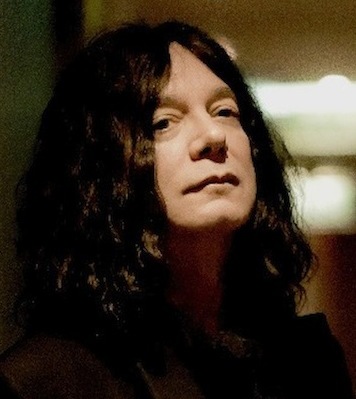
Alan Merrill (born Allan Preston Sachs; February 19, 1951 – March 29, 2020) was an American vocalist, guitarist and songwriter. In the early 1970s, he was one of the few resident foreigners in Japan to achieve pop star status there. He wrote the song "I Love Rock 'n' Roll",[1] and was the lead singer on the original recording of it, made by the band the Arrows in 1975.[2] The song became a breakthrough hit for Joan Jett in 1982.

Merrill was primarily a vocalist and songwriter, but also played the guitar, bass guitar, harmonica, and keyboards.[3] He died during the COVID-19 pandemic due to complications brought on by the virus.

Early life

[edit]

Merrill was born in The Bronx, New York City on February 19, 1951,[4] the son of two jazz musicians, singer Helen Merrill[5] and saxophone/clarinet player Aaron Sachs.[6] He attended Aiglon College[7] in Switzerland from age 9 to 13,[8] schools in New York and Los Angeles and, briefly, Sophia University in Tokyo. He started his semi-professional career in New York City at age 14, when he began playing in Greenwich Village's Cafe Wha? with the bands The Kaleidoscope, The Rayne, and Watertower West, all of which played the club from 1966–1968.[9]

Professional career

[edit]

Japan

[edit]

In 1969, Merrill auditioned for the New York City band, the Left Banke. According to Merrill, the audition was successful, but the band dissolved. Shortly thereafter, he left to reside in Japan, where his mother was living, and began his professional career there by joining the band The Lead, who were contracted to RCA Victor Records. The group was a foreign Tokyo-based act, and had an urgent requirement for a fill-in musician after one of its American members was deported. The Lead had previously had some chart success, but the project soon fell apart when a second member was also deported.[10]

Merrill subsequently signed a solo management deal with Watanabe Productions, who contracted him to Atlantic Records, and changed his professional surname from Sachs to Merrill[11] (his mother's stage name) apparently because "Merrill" was thought to sound less lascivious and more commercially viable when spoken by young Japanese pop music fans.[2] He recorded one album with Atlantic, Alone in Tokyo (February 1971)[12] which yielded a single, "Namida" (Teardrops).

In other activities, Merrill acted on the TV soap opera Jikan Desu Yo and occasionally had his own 'corner' on the TBS's Young 720, a morning show for teens. He was a model in ads for Nissan cars, Jun clothing, AnnAnn, Non-no, and GT Jeans.

In January 1972, an LP of his own compositions titled Merrill 1 was released on the Denon/Columbia record label produced by Mickey Curtis. Later that year, the singer Tiny Tim covered a song from the album, "Movies", on Scepter Records.[13] Merrill then formed the band Vodka Collins, which became a prominent glam rock act.[14] The band included notable Japanese musicians Hiroshi "Monsieur" Kamayatsu and Hiroshi Oguchi. Vodka Collins recorded an LP in 1973, Tokyo – New York, on the Toshiba-EMI Express label[15] The band are best known for recording and releasing the first popular glam rock songs in Japanese, including the double A-sided single "Sands Of Time" and "Automatic Pilot", released June 1973.[16]

A dispute with management led to Merrill's abrupt departure from Japan.[17]

UK

[edit]

In 1974, in London, Merrill formed the band Arrows (as lead singer and bass guitarist), with drummer Paul Varley and guitarist Jake Hooker. Peter Meaden was the Arrows' first manager, but later they signed with Mickie Most's RAK Records. In March 1974, the Arrows were in the top 10 in the UK charts with the song "Touch Too Much".[18] The Arrows became a popular band with teenagers, and once again Merrill had slid back into the teenage market he had fought hard to get out of in Japan.

The Arrows had another hit single with "My Last Night With You" which reached the UK top 30 in 1975, but the band's single releases were few. Recorded at Morgan studio in London 1974 Merrill played bass guitar on drummer Cozy Powell's chart hit single "The Man In Black" and the B-side "After Dark" produced by Mickie Most on RAK records. The recording hit a peak position of No. 18 on the British charts.[19]

With the Arrows, Merrill sang three chart hit records as the band's lead singer, all produced by Mickie Most, "Touch Too Much" (No. 8 UK charts) "Toughen Up" (No. 51 UK charts) and "My Last Night With You" (No. 25 UK charts).[20] They made one more single that would be an important one. "I Love Rock 'n' Roll" (1975) that started out as a B-side to the 45 rpm Arrows single "Broken Down Heart". The song "I Love Rock 'N Roll" was composed by Alan Merrill whilst he was living in Nell Gwynn House in Chelsea. A credit as co-writer went to Arrows bandmate Jake Hooker, to whom Merrill owed some money.[21]

The recording was later flipped to A-side status, and the band made only one television performance with the song. The show's producer Muriel Young was so impressed with the Arrows that she made a pitch to Granada ITV for them to have their own television series. The Arrows then got their own weekly TV series Arrows in 1976, taking over from the Bay City Rollers Granada TV series Shang-a-Lang. The Arrows signed with MAM Management. Their producer Mickie Most was so angry at the band for signing the management deal, that he vowed to never release another Arrows record. So it came to pass that Arrows had their own weekly television series and no records released during that time. Their ratings were so good that they got a second weekly series, but they released no new recordings. The Arrows disbanded shortly after the end of the second series.[22]

In 1977, Merrill formed a new group, the album-oriented rock act Runner, with Steve Gould (Rare Bird), Mick Feat (Van Morrison band), and Dave Dowle (Whitesnake). The Runner album charted in the Billboard top 100 in the United States.[23]

Relationships

In 1977 Merrill met and married fashion model Cathee Dahmen in London, and had their wedding reception at Mr Chow's in Knightsbridge.[24] They subsequently had two children, Laura Ann Sachs and Allan Preston Sachs Jr. In 1980 they relocated to Queens, New York together with Cathee's daughter Sarah Beth Whiting from her previous marriage to Leonard Whiting. Their marriage ended in divorce, and in 1987 Merrill went on to marry Joanna (née Lisanti), with whom he had a second daughter, Allegra Sachs.[11]

Later

[edit]

In 1980, Merrill joined forces with Rick Derringer as a guitarist/vocalist in New York City. They recorded three albums, Good Dirty Fun,[25] Live at The Ritz,[26] Rick Derringer and Friends,[27] and a film, The Rick Derringer Rock Spectacular.[28] Merrill wrote three songs on the Derringer Good Dirty Fun album, "White Heat" (Alan Merrill), "Shake Me" (Alan Merrill/Jake Hooker) and "Lesson Learned" (Alan Merrill/Rick Derringer). "Shake Me" was included in the soundtrack of the film Where the Boys Are '84 (1984).[29]

In 1982, Joan Jett released a cover of "I Love Rock 'N Roll", which was No. 1 on the U.S. Billboard charts for seven weeks and helped launch her career.[4][30] The following year Lou Rawls recorded Alan Merrill's song "When The Night Comes" as the title track of his 1983 Epic Records album.[31] The Rawls' version of the song was taken into space by astronaut Guion Bluford, the first music taken to and played in outer space.[32]

In 1983, Merrill recorded a solo album for Polydor Records, simply titled Alan Merrill, a collection of self-composed tracks. Some friends contributing to this record were Steve Winwood, Mick Taylor and Dallas Taylor. It was released in 1985 and received critical acclaim. In 1986, Merrill joined the Meat Loaf band for the promotional tour of his Blind Before I Stop album, and stayed for several years, and appears on Meat Loaf's 1987 Live at Wembley (1987) album for Arista Records.[33] In 1989, Merrill was offered a role on the television series Encyclopedia Brown on HBO, and was a part of the successful series in his role as principal character Casey Sparkz.[34] Merrill wrote a song for the production, "Who Done It?"[35] which he performed on the series and was featured in the concert scene.

In 1990, a Vodka Collins reunion tour was organized due to popular demand as a result of the successful CD reissue of their vinyl LP Tokyo – New York. The Tokyo-based band toured Japan, then several years later recorded the first in a series of reunion albums, Chemical Reaction (1996) which was followed by Pink Soup (1997), Boy's Life (1998) and Boys in The Band (2004).[36] The Vodka Collins Tokyo – New York album has been reissued again as recently as October 2011 on EMI Japan.[37] While working in Japan with his main project Vodka Collins, Merrill also had a side project in New York, starting with a tribute to Don Covay he began recording with R&B producer Jon Tiven. This led to the "Yes I Ram"[38] and "Blue Guru"[39] albums in the mid-1990s featuring Merrill on lead vocals.

Merrill released the solo albums Never Pet A Burning Dog (1998), Cupid Deranged (2002), A Merrilly Christmas (2001), Double Shot Rocks (2003) - a tribute to songwriters Otis Blackwell and Arthur Alexander, Aleecat (2004), At The Candy Shop (2006), and Rive Gauche (2007) - a tribute to The Left Banke. The reissue Alien in Tokyo, EP single Hard Road, and an in concert album The Aleecat, Live In Japan were all released in 2008. Albums by Merrill titled The Face Of 69 (2010), Numbers (2011), Snakes and Ladders (2012), Songer Singwriter (2013), Arrows, 40th Anniversary Edition (2014), Demo Graphic (2016) On A Blue Avenue (2017) and Radio Zero (2019 ) were also released.[40][41]

The Arrows 1974 top 10 UK hit "Touch Too Much", featuring lead vocals by Merrill appears on the soundtrack of the feature film The Look Of Love, a 2013 biopic of Paul Raymond.[42] "Restless Soul", a song Merrill co-wrote with Shinohara Nobuhiko[43] that was on air nightly on the Asahi TV travel show Sekai No Kaido Wo Yuku (Traveling on the roads of the world)[44] in Japan broadcast from 2014 to 2015. The Arrows' songs "We Can Make It Together" and "Moving Next Door To You" (composed by Merrill and Jake Hooker) were used on the BBC1 TV show Homes Under The Hammer series 18 episode 70 and series 19 episode 53[45] respectively in England, first aired on February 5, 2015.[46] The songs were B-sides of the Arrows RAK records top 30 hit singles "Touch Too Much"[47] and "My Last Night With You"[48] produced by Mickie Most in 1974 and 1975 with lead vocals by Merrill.[49] In September 2015, Merrill added his guitar parts to popular Japanese vocalist Superfly's cover of his composition, "I Love Rock N Roll", released three months later on Warner Brothers-Japan records.[50]

In early June 2016, he released a duet with fellow 1970s UK rock star Bob Bradbury of the band Hello titled "Brothers in Rock" and another duet, this one in Japanese with Bruce Bauer, "Hello Japan", out June 20, 2016.[51] On November 28, 2017, he released a 15-song solo album, On A Blue Avenue.[40] He also did live concerts internationally, both with backing bands and solo acoustic.[52] A film featuring Alan Merrill as a principal actor was released July 1, 2017, titled Re-Agitator / Revenge Of The Parody.[53] On December 15, 2017, Eminem released his album Revival including the title "Remind Me" crediting Allan Sachs (professionally known as Alan Merrill) as one of the song's co-writers for use of "I Love Rock N Roll" samples. The Eminem album made its debut at #1 in the Billboard album charts.[54]

He hosted the television series Across the Pond for the MyJam Music Network.[55] He also wrote and recorded the show's theme song "Across the Pond" which was released March 2018.[56]

In mid-February 2019, Merrill released a Valentine's Day song he wrote titled "Your Love Song."[57]

Death

[edit]

Merrill died of COVID-19 in Manhattan on March 29, 2020, aged 69.[4][58][59] He was survived by his second wife, his three children and his mother.[11]

References

[edit]
[edit]
Revisions and contributorsEdit on WikipediaRead on Wikipedia
from Grokipedia
Alan Merrill (born Allan Sachs; February 19, 1951 – March 29, 2020) was an American rock singer, songwriter, guitarist, and actor best known for co-writing and originally recording the hit song "I Love Rock 'n' Roll" with his band the Arrows in 1975, which later became a global smash for Joan Jett in 1982. Born in the Bronx, New York City, to jazz singer Helen Merrill and saxophonist Aaron Sachs, Merrill grew up in a musical family and began performing in Greenwich Village semi-professional bands as a teenager, including stints with groups like the Rayne and Watertower West. He briefly auditioned for the folk-rock band the Left Banke in the late 1960s before moving to Tokyo in 1968, where his mother was based, and quickly rose to fame as one of the few Western rock performers to achieve major stardom in Japan. In Japan, Merrill released solo albums such as Alone in Tokyo (1971) and Merrill 2 (1972), hosted television shows, acted in films and commercials, and fronted the glam rock band Vodka Collins, whose 1972 album Tokyo – New York helped solidify his teen idol status there. Relocating to London in 1974, he formed the Arrows with guitarist Jake Hooker and drummer Paul Varley, scoring UK Top 10 and Top 30 hits like "Touch Too Much" and "My Last Night with You," while starring in their own Granada TV series The Arrows from 1976 to 1977. The band's raw performance of "I Love Rock 'n' Roll" on television inspired Jett to cover it, propelling Merrill's composition to No. 1 on the Billboard Hot 100. After the Arrows disbanded in 1977, Merrill joined the short-lived band Runner and toured as a with artists including and in the early 1980s, while continuing to release solo material and revive Vodka Collins in the . His later albums included Double Shot Rocks (2003) and (2007), reflecting a career marked by genre-blending rock, glam, and pop influences across continents. Merrill died in from complications of at age 69, as confirmed by his daughter Laura.

Early life

Family background

Alan Merrill was born Allan Sachs on February 19, 1951, in , . His parents were prominent figures in the jazz world: his mother, (née Jelena Ana Milčetić), was a renowned vocalist known for her distinctive style and collaborations with leading artists, while his father, Aaron Sachs, was an accomplished saxophonist and clarinetist who performed with ensembles including the Earl 'Fatha' Hines Band. As an only child in an intensely musical household, Merrill's early childhood was immersed in , with the home environment constantly filled with his parents' recordings, performances, and professional discussions, fostering his initial exposure to music from a young age. In his teens, Merrill adopted the stage name Alan Merrill for professional reasons, a change initiated by his management in 1968 as he began his music career in to better suit the international market and avoid potential mispronunciations of his surname.

Education and musical beginnings

At the age of nine, Alan Merrill was enrolled at , a British-style in the , where he remained until age thirteen. Following this, he attended various schools in New York and as his family relocated within the . Merrill's musical journey began in earnest at age fourteen in 1966, when he launched a semi-professional career performing in clubs, including the Café Wha?. He played guitar in local bands such as the , the Rayne, and Water Tower West, honing his skills amid the vibrant New York folk and rock scene from 1966 to 1968. Drawing from his parents' heritage as a foundational influence, Merrill blended rock and elements in his early style, starting with bass before transitioning to through self-taught practice and club gigs. In 1968, he successfully auditioned for the folk-rock band , but the group soon disbanded. By 1968, at age seventeen, Merrill sought broader opportunities abroad and relocated to , joining his mother who had moved there earlier; this decision marked the end of his formative New York phase and the start of his international career.

Professional career

Breakthrough in Japan

In 1968, at the age of 17, Alan Merrill moved to Japan following his high school graduation in New York, marking the beginning of his professional music career as a resident foreigner in . He soon joined the RCA Victor-signed band The Lead, replacing guitarist and contributing to their singles, including the hit "," which helped establish the group in the Japanese market. Under the management of Watanabe Productions, Merrill's was changed from Allan Sachs to Alan Merrill, and the band released several tracks that blended Western rock influences with local pop sensibilities, laying the groundwork for his rapid rise in the industry. Merrill's solo breakthrough came with his debut album Alone in Tokyo, released in 1971 on Japan, where he became the label's first signing and the first Western artist to achieve pop star status in the country. The album featured the top-10 hit single "Namida" (Teardrops), a Japanese-language track that resonated with young audiences and showcased Merrill's vocal style influenced by his early experiences in bands. As a pioneering foreign act, Merrill appeared in magazines, commercials for brands like and Jun, and hosted the TV segment "Young 720," which amplified his visibility and helped build a dedicated fanbase among Japanese teenagers. In 1972, Merrill formed the glam rock band Vodka Collins with drummer Hiroshi Oguchi (formerly of The Tempters), bassist Take Yokouchi, and rhythm guitarist Hiroshi "Monsieur" Kamayatsu, creating Japan's first outfit that fused English-language originals with Japanese lyrical adaptations and visual flair inspired by acts like T. Rex. Their debut album Tokyo – New York, released in November 1973 on , produced three hit singles—"Sands of Time," "Automatic Pilot," and "Billy Mars"—along with the TV theme "Scratchin'," dominating the domestic rock scene and establishing the band as a cultural phenomenon. Despite facing challenges as a resident foreigner, such as navigating the rigid teen idol expectations of Productions and language barriers in media, Merrill's innovations helped expand the fanbase for Western-influenced rock, making Vodka Collins a consistent seller even in later CD reissues.

Success in the United Kingdom

After leaving his Japanese band Vodka Collins in 1974 due to a management dispute, Alan Merrill relocated to , where he formed the power pop band The Arrows with guitarist Jake Hooker, a former bandmate from their early days in the United States, and drummer Paul Varley. The trio signed with producer Mickie Most's , adopting a glam-influenced image that echoed Merrill's experiences in Japan's rock scene. The band's debut single, "Touch Too Much," released in April 1974 and written by hitmakers and , became their breakthrough, peaking at number 8 on the UK Singles Chart and establishing The Arrows as rising stars in the era. The B-side, "We Can Make It Together," co-written by Merrill and Hooker, showcased the band's harmonious pop sensibilities. Follow-up singles like "Toughen Up" and "My Last Night with You" also charted modestly, with the latter reaching number 30 in 1975, solidifying their presence on RAK. In 1975, Merrill co-wrote "I Love Rock 'n' Roll" with Hooker, initially recording it as the B-side to the single "Broken Down Heart." The song originated as a direct response to The Rolling Stones' "It's Only Rock 'n' Roll (But I Like It)," with Merrill aiming to affirm the genre's joy amid its detractors; he drew from observations of young women selecting records on a pub jukebox, capturing the communal thrill of British rock culture. Though the single did not chart highly at the time, it later gained prominence through covers. The Arrows' visibility surged in 1976 when they landed their own weekly television series, Arrows, on ITV's Television, hosted by Merrill and featuring performances by the band alongside guests like and ; the show ran for two 14-week seasons through 1977, exposing their music to a wide audience and promoting tracks such as "Rockets" from their third album, First Hit. However, internal tensions, including romantic entanglements among members, and disputes with RAK over promotion led to the band's in 1977 after releasing three albums: The Arrows (1974), Broken Down Heart (1975), and First Hit (1976). Following the dissolution, Merrill briefly formed the band Runner in 1979 with musicians including Steve Gould and Mick Feat, whose self-titled debut charted at number 167 on the US before disbanding due to creative differences.

Later career and collaborations

Following his time with the Arrows in the , Alan Merrill returned to the and pursued a solo , building on the rock-oriented songwriting style he developed during his band years. In 1985, he released his self-titled debut solo on Polydor Records, which featured a mix of hard rock tracks including a cover of Bob Dylan's "Get Your Rocks Off." The showcased Merrill's guitar work and vocals, with production emphasizing his glam rock influences from earlier projects. In the mid-1980s, Merrill expanded into notable collaborations. He toured and recorded with from 1980 to 1983, contributing guitar and vocals to albums such as Good Dirty Fun (1983). Later in the decade, Merrill joined Meat Loaf's band for the 1986–1987 "Blind Before I Stop" world tour, providing guitar and backing vocals during live performances of hits like "" at venues including . Merrill's connection to Japan led to multiple reunions with his early band Vodka Collins in the 1990s and 2000s. The first reunion occurred in 1990, featuring original members and performances of classics like "Bridge to the Moon" in cities such as and . Subsequent reunions followed in 1996 and 2003 for anniversaries, including new material and live recordings released as The Aleecat, Live in Japan (2008), capturing the band's energetic sound for Japanese audiences. Throughout the and , Merrill continued solo releases that evolved from to more varied themes. In 1998, he remixed and reissued his 1985 Polydor album under the title Never Pet a Burning Dog on MEC Records, updating tracks like "Love Express" and "She Rocks Me" with a polished edge. By 2001, he ventured into holiday music with A Merrilly Rockin' on MEC, blending rock arrangements of seasonal songs such as "I Don't Want to Spend Alone" and originals like "Alcohol." He released further solo albums including Double Shot Rocks (2003) and (2007). Beyond music, Merrill made media appearances, including an acting role as the rock musician Casey Sparkz in the 1989 HBO TV movie Encyclopedia Brown: The Case of the Missing Time Capsule, where he performed in a concert scene. Into the 2010s, he remained active with live performances and recordings, such as tributes to influences like Lou Reed through covers of songs including "Walk on the Wild Side" during New York shows, up until 2019.

Personal life

Marriages and family

Alan Merrill married fashion model Cathee Dahmen (died 1997) in 1977 in London, with their wedding reception held at Mr. Chow's restaurant in Knightsbridge. The couple relocated to New York in 1980 and had two children together: daughter Laura Merrill and son Allan Preston Sachs Jr. Their marriage ended in divorce in the early 1980s. Merrill's second marriage was to Joanna Lisanti in 1987, with whom he had a daughter, Allegra Sachs. Throughout his career, Merrill balanced his demanding touring and recording schedule with active involvement in his children's lives, often handling school drop-offs and pick-ups despite his distinctive rock 'n' roll appearance, such as leopard-print and a bullet belt. Music permeated family life from an early age, as recording sessions and performances were commonplace in the home, fostering a creative environment for his children. His daughter Laura pursued a career in and , occasionally writing songs influenced by her father's encouragement to explore artistic passions. Merrill maintained close ties with his extended family in his later years, including his mother, jazz singer , who survived him and represented a continuing thread of musical heritage from his parents' jazz background. His father, saxophonist Aaron Sachs, had passed away in 2014.

Residences and later years

After spending approximately six years in from 1968 to 1974, where he established himself in the local music scene, Alan Merrill relocated to in 1974. He remained in the until late 1977, during which time he formed the band Runner and married fashion model , a union that influenced his decision to return to the . In the late 1970s, following the band's activities, Merrill moved back to his native , with the family settling there permanently in 1980. Merrill's life in during the and beyond centered on the vibrant urban environment of , where he immersed himself in the city's dynamic rock community while maintaining a low-key personal routine. He resided primarily in for decades, embracing the fast-paced lifestyle that allowed easy access to local cultural hubs and social circles tied to his roots. Throughout the 1990s and 2010s, Merrill balanced his commitments by supporting his family, including two children from his first marriage to Dahmen and a daughter from his 1987 marriage to Joanna Lisanti, often prioritizing time with them amid the demands of city living. In his later years, Merrill pursued non-musical interests such as meticulously archiving personal memorabilia from his career, including posters, photographs, and documents dating back to 1965, which he stored in steamer trunks as a hobby reflecting his reflective nature. Pre-2020, his daily routines in New York involved a mix of family-oriented activities and occasional engagement with the local scene, fostering a sense of continuity in the city where he was born. He occasionally returned to for personal visits, but New York remained his primary home base, providing stability for his personal life until his final years.

Death and legacy

Illness and death

In early March 2020, Alan Merrill began experiencing symptoms of what he initially believed to be a , but these quickly worsened into severe complications from COVID-19. He was rushed to in , where he was diagnosed with the virus and placed under intensive care. Merrill, a longtime resident of New York, succumbed to the illness on March 29, 2020, at the age of 69. His daughter, Laura Merrill, announced the news on later that day, sharing a heartfelt statement about her final moments with him: "The took my father this morning... I was given 2 minutes to say my goodbyes before I was rushed out. He seemed peaceful." She described him as her "best friend" and urged others to take the seriously, noting the rapid deterioration of his condition. Merrill's wife, Lisanti, later revealed additional details about his hospital experience, including a 15-hour wait for transfer to the ICU amid overwhelmed medical resources, which she described as an "awful truth" contributing to the tragedy. Due to the ongoing and strict public health restrictions, Merrill's funeral was a private family affair, with arrangements handled discreetly to limit gatherings. The family focused on intimate remembrance during this period, honoring his life away from public ceremonies.

Musical impact and tributes

Alan Merrill's co-written song "I Love Rock 'n' Roll," first recorded by his band the Arrows in 1975, has had a profound and lasting influence on , embodying the exuberant spirit of and becoming one of the genre's defining anthems. The track's infectious riff and celebratory lyrics about the joy of resonated widely, inspiring countless artists and cementing Merrill's role as a transatlantic influencer who bridged American songwriting with British and scenes. Joan Jett & the Blackhearts' 1981 cover propelled the song to global stardom, reaching number one on the in March 1982 and spending seven weeks at the top, marking a commercial breakthrough that introduced Merrill's composition to millions and revitalized interest in the original Arrows version. The song has since been covered by numerous artists across genres, including in 2001, Alex Gaudino and Jason Rooney's 2008 electro house remix, and Weird Al Yankovic's satirical take, demonstrating its versatility and enduring appeal in . Merrill's broader impact extended to pioneering glam rock in Japan through his band Vodka Collins, formed in 1971, which released the country's first glam rock album, Tokyo-New York, in 1973 and achieved three hit singles, helping to popularize the style among Japanese audiences and establishing him as one of the first Western pop stars in the market. His early solo work, such as the 1971 album Merrill 1, contributed to the power pop genre with its melodic hooks and energetic arrangements, while his time with the Arrows included starring in their own Granada Television series The Arrows, which showcased original songs and influenced the format of music-driven TV shows in the UK. Following his death, Merrill's discography saw a resurgence in Japan with reissued albums, reflecting renewed appreciation for his foundational role in the region's rock evolution. Posthumously, Merrill received tributes highlighting his songwriting legacy, with posting on social media in March 2020: "I've just learned of the awful news that Alan Merrill has passed. My thoughts and love go to his family, friends and music community as a whole," acknowledging his foundational contribution to her career-defining hit. The covered his passing extensively, noting his role as the song's original performer and co-writer, while his daughter Laura Merrill shared a heartfelt tribute detailing his final moments and emphasizing his artistic influence. These honors, along with fan-driven remembrances, underscored Merrill's lasting impact on rock music's global narrative.

References

Add your contribution
Related Hubs
User Avatar
No comments yet.