Hubbry Logo
Van MorrisonVan MorrisonMain
Open search
Van Morrison
Community hub
Van Morrison
logo
8 pages, 0 posts
0 subscribers
Be the first to start a discussion here.
Van Morrison
Van Morrison
from Wikipedia
Not found
Revisions and contributorsEdit on WikipediaRead on Wikipedia
from Grokipedia

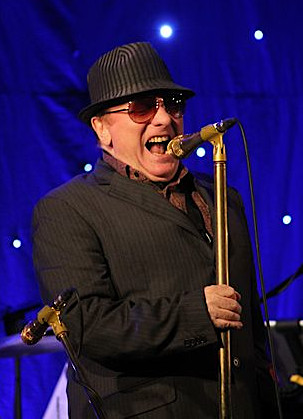
Sir George Ivan Morrison OBE (born 31 August 1945), professionally known as Van Morrison, is a Northern Irish , , and whose six-decade career has blended , soul, jazz, R&B, and Celtic folk into a distinctive body of work characterized by improvisational live performances and poetic, mystical lyrics.
Morrison first gained prominence as the frontman of the band Them, formed in in 1964, which produced the enduring hit "Gloria." His solo breakthrough came with the jazz-infused (1968), followed by the more accessible (1970), both of which established his reputation for emotive vocals and genre-defying innovation. Among his honors are six , induction into the Rock and Roll Hall of Fame in 1993, a knighthood in 2015, and the OBE, reflecting his enduring influence on . Morrison has released over 40 studio albums and continues to tour, while drawing attention for his outspoken criticism of , including the release of protest songs asserting that government measures infringed on personal freedoms and livelihoods.

Life and career

Early life and musical roots: 1945–1964

George Ivan Morrison was born on 31 August 1945 at 125 Hyndford Street in Bloomfield, a working-class area of east , , as the only child of George Morrison, a worker and avid record collector, and Violet Morrison, a singer. His family belonged to the Protestant community in a city marked by sectarian divisions, though Morrison later described his upbringing as culturally insular yet musically rich due to his father's influence. From childhood, Morrison absorbed American musical traditions through his father's collection of approximately 500 records, spanning , , , and genres. Key early exposures included recordings by , performances by , and works featuring , which shaped his affinity for raw, emotive vocal styles and improvisational phrasing. At age 11, his father bought him an , marking the start of his instrumental pursuits; Morrison's first purchased record was by harmonica player , reflecting an initial draw toward folk-blues traditions. By his early teens, Morrison taught himself guitar and expanded to harmonica, keyboards, and , instruments he played proficiently enough to join local bands in Belfast's burgeoning scene during the late 1950s. His professional debut came around age 13 or 14, performing in small venues and contributing to semi-professional groups that covered American R&B and numbers. In , at age 17, he made his first studio recording, playing on "Boozoo Hully " with the International Monarchs, a local outfit. Throughout 1963 and into 1964, Morrison toured with a showband, handling , guitar, and harmonica duties at clubs and U.S. Army bases in , , and , honing a versatile, high-energy stage presence amid the era's beat and R&B revival. These experiences solidified his roots in blues-infused rock, drawing from transatlantic imports rather than indigenous Irish folk, and positioned him as a and frontman in Belfast's competitive club circuit by mid-1964.

Them: 1964–1966

Them, a Northern Irish garage band, was formed in April 1964 in when Van Morrison responded to a local advertisement seeking musicians for performances at the new Maritime Club. The original lineup consisted of Morrison on lead vocals and , Billy Harrison on guitar and vocals, on bass guitar, Ronnie Milling on drums, and on keyboards. Drawing from American blues and R&B influences such as and , the group quickly built a following through energetic live shows at venues, often extending sets with improvisational jams that showcased Morrison's raw, emotive singing and harmonica playing. Under manager Ronnie Millings, Them signed with Decca Records' subsidiary label in the UK, releasing their debut single "Baby Please Don't Go" backed with Morrison's original "Gloria" on 25 October 1964; the A-side, a cover of a Big Joe Williams blues standard, reached No. 10 on the UK Singles Chart in early 1965. "Gloria," though not a UK chart success at the time, became an enduring garage rock anthem due to its primal riff and Morrison's intense delivery, later covered extensively by bands like the Shadows of Knight and the Doors. The band's follow-up single, "Here Comes the Night" (written by Bert Berns and produced by Dick Rowe), entered the UK charts on 13 March 1965 and peaked at No. 2, bolstered by orchestral arrangements that contrasted their raw live sound. Them's debut album, , was released in July 1965, featuring a mix of covers like "" and originals including "Mystic Eyes," recorded at Decca Studios in under producer Tommy Scott. The record captured the band's aggressive R&B style but suffered from overdubbed audience noise added without the group's input, diluting its authenticity. A US tour in April–May 1966, supporting artists like the Yardbirds, exposed Them to American audiences and led to live recordings like those on (released October 1966), which included tracks such as "It's All Over Now, Baby Blue" but was largely compiled after Morrison's exit. Tensions escalated due to management disputes, uneven songwriting credits, and Morrison's growing frustration with the band's direction and promotional control by Decca. In mid-1966, following the tour, Morrison abruptly left Them to pursue a solo career, signing with producer ' Bang Records label in New York; he announced the split to Decca, effectively dissolving his contract with the group. Henderson and others briefly continued as Them with new vocalists, but the original configuration ended, marking Morrison's transition from band frontman to independent artist amid the British Invasion's peak.

Solo debut and breakthrough: 1967–1969

Following the dissolution of Them in 1966, Morrison signed a with Bang Records in New York, marking the start of his solo career. He recorded his debut album, Blowin' Your Mind!, over two days, March 28–29, 1967, at Studios in , with producer overseeing sessions that yielded eight tracks blending R&B, folk, and pop elements. The album was released in September 1967, featuring Morrison's raw vocal style and guitar work backed by a small ensemble including organ, bass, drums, and backing vocals from . The lead single, "Brown Eyed Girl," released in June 1967, became Morrison's first major solo hit, peaking at number 10 on the and achieving similar success on Cash Box charts at number 8. Written by Morrison during a period of personal turmoil, the upbeat track—with its calypso-influenced rhythm and nostalgic lyrics—provided commercial breakthrough amid his transition from band frontman, though Morrison later expressed ambivalence toward it, viewing the album as transitional rather than definitive. Despite the single's airplay success, Blowin' Your Mind! sold modestly, highlighting tensions with Bang over creative control and royalties. Relations with Bang deteriorated rapidly, leading Morrison to record over 30 intentionally absurd demo tracks in a single day in 1967—songs with nonsensical lyrics like "Ring Worm" and "Freight Train"—to fulfill his contractual obligations and exit the label. Warner Bros. Records subsequently bought out his Bang contract, allowing Morrison to sign with the label in 1968 under the guidance of executive Joe Smith. This shift enabled greater artistic freedom; in September–October 1968, Morrison recorded Astral Weeks at Century Sound Studios in New York, employing jazz musicians such as Richard Davis on upright bass and Jay Berliner on guitar for an improvisational, acoustic jazz-folk suite without drums or overdubs. Astral Weeks was released on November 29, 1968, presenting poetic, stream-of-consciousness songs drawing from Morrison's upbringing and spiritual themes, but it achieved minimal commercial impact initially, with low sales reflecting its esoteric style amid the era's rock dominance. Morrison faced financial hardship during this period, later recalling near-starvation while the album languished; critical reception was mixed at launch but grew into widespread acclaim over time for its innovation, though contemporaneous sales underscored the gap between artistic ambition and market breakthrough. By 1969, Morrison began sessions for his follow-up, signaling a pivot toward more structured soul-jazz fusion, though laid the foundation for his enduring reputation as a singular songwriter.

Commercial peak and artistic evolution: 1970–1979

Moondance, released on January 27, 1970, marked Van Morrison's commercial breakthrough, peaking at number 29 on the US Billboard 200 chart and number 32 on the UK Albums Chart. The album shifted from the introspective jazz-folk of Astral Weeks toward a more structured, R&B-infused sound with jazz elements, featuring tracks like the title song, "Into the Mystic," and "Caravan," which showcased Morrison's vocal improvisations and ensemble interplay. Its enduring sales and critical acclaim established Morrison as a prominent artist, contrasting the prior album's limited commercial reach. Later in 1970, His Band and the Street Choir followed in November, incorporating gospel choirs and soulful arrangements, with singles like "Domino" achieving moderate chart success. Tupelo Honey, released October 15, 1971, peaked at number 27 on the Billboard 200, drawing from Morrison's recent marriage and featuring warm, country-soul tracks such as the title song, which reached number 47 on the US pop chart. This period reflected personal stability influencing a brighter, more accessible style compared to earlier mysticism. Saint Dominic's Preview (1972) and (1973) continued prolific output, blending R&B, , and Celtic motifs, though with varying commercial results; the latter included "Snow in San Anselmo," noted for its atmospheric production. The live album It's Too Late to Stop Now (1974) captured intense performances from 1973 tours, highlighting Morrison's commanding stage presence and band dynamics. Veedon Fleece (1974), inspired by a 1973 Ireland visit, emphasized poetic, folk-infused introspection with tracks like "Streets of Arklow," marking a return to Celtic roots and personal reflection amid personal challenges, including divorce. In November 1976, Morrison performed "Caravan" at The Band's farewell concert, , at , , delivering an energetic, improvisational set filmed by . By the late 1970s, (1977), (1978)—which reached number 28 on the chart—and (1979) showed evolution toward radio-friendly pop-soul with hits like "Wavelength," balancing commercial appeal with artistic depth while incorporating and brighter production. This decade solidified Morrison's reputation through consistent releases and stylistic range, from soulful accessibility to exploratory lyricism.

Exploration and consolidation: 1980–1989

In 1980, Morrison released Common One, his twelfth studio album, recorded over nine days in the Bath, England studios of Ronnie Lane's mobile unit. The featured extended improvisational tracks emphasizing spiritual and mystical themes, with influences from Celtic folklore and , marking a shift toward more expansive, jazz-inflected compositions. It achieved modest commercial performance, becoming Morrison's lowest-charting U.S. album since Moondance in 1970, though it received praise for its ambitious scope from reviewers who noted its departure from pop structures. That July, Morrison delivered a notable live performance at the , blending material from Common One with earlier hits like "Moondance," showcasing his evolving stage energy with a led by . Beautiful Vision, released on February 16, 1982, after sessions from May to summer 1981, incorporated Celtic folk elements alongside American , featuring guest guitar from on tracks like "Scandinavia." The album peaked at number 31 on the , reflecting Morrison's continued exploration of introspective, non-R&B territories while maintaining rhythmic drive in songs such as "She Gives Me Religion." Critics highlighted its blend of personal spirituality and accessible melodies, though some observed uneven pacing in its fusion of traditions. The 1983 release , recorded in 1982, included instrumental pieces like "Celtic Swing" alongside vocal tracks exploring transcendence and nature, produced with assistance from David Hayes. This fourteenth studio album emphasized Morrison's interest in wordless expression and Celtic swing rhythms, earning recognition for its atmospheric depth despite limited singles. A Sense of Wonder followed in 1985, drawing on Morrison's Irish heritage and poetic influences, with recordings from 1983 sessions yielding tracks like the title song referencing youth and creativity. The album balanced reflective ballads with upbeat numbers, including a cover of "What Would I Do," and was noted for its lyrical focus on wonder and memory. By 1986, No Guru, No Method, No Teacher—recorded in 1985 and released in July—delved into spiritual self-reliance, featuring collaborations with on and Michele Lind on vocals for tracks like "Got to Go Back" and "Foreign Window." Reviewers commended its gospel-tinged introspection and avoidance of , with Morrison's phrasing evoking raw emotional authenticity. Morrison toured extensively that year, performing over 60 concerts across and the U.S., often emphasizing newer material alongside staples. Poetic Champions Compose, recorded in summer 1987 and released in September, consolidated Morrison's songwriting prowess with concise, literate songs like "Queen of the Slipstream" and "I Forgot That Love Existed," backed by a tight ensemble including drummer Mick Green. The album's polished production highlighted themes of artistic inspiration and romance, receiving acclaim for its melodic economy. In 1988, Morrison collaborated with on Irish Heartbeat, recorded from September 1987 to January 1988 at in , reinterpreting traditional Irish folk songs such as "" and originals like the title track. This eighteenth studio effort underscored Morrison's deepening engagement with Celtic roots, blending and fiddles with his soulful delivery for an authentic revival sound. Avalon Sunset, released on May 30, 1989, marked a commercial resurgence, featuring the duet "Whenever God Shines His Light" with and reflective tracks like "," which later gained broader recognition. Produced with accessible arrangements, it achieved strong sales and critical favor for its mature blend of spirituality and melody, solidifying Morrison's stylistic consolidation. Live recordings from this era, including a November 1989 Beacon Theatre performance, captured his commanding presence in blending eras of his catalog.

Sustained output and refinement: 1990–1999

In the 1990s, Van Morrison maintained a consistent pace of recording and releasing material, producing six studio albums that further honed his signature fusion of , , Celtic soul, and introspective lyricism, while incorporating live performances and compilations to revisit earlier work. This period emphasized thematic depth, with recurring motifs of enlightenment, , and healing drawn from personal reflection and musical improvisation, often featuring collaborations with and musicians. Albums like Enlightenment (1990) and (1991) explored spiritual awakening, while later releases shifted toward blues revival and standards, reflecting Morrison's ongoing refinement of vocal phrasing and ensemble dynamics without diluting his core intensity. Enlightenment, Morrison's twentieth studio album, was released on October 8, 1990, by , peaking at number 5 on the and earning acclaim for its meditative tone amid tracks blending soulful grooves with philosophical lyrics on transcendence and daily epiphanies. The following year saw the double album on September 24, 1991, his first such format, which reached number 5 in the UK and spanned 20 tracks addressing ordinary life, professional frustrations, and , recorded primarily in 1990 with contributions from musicians like . Compilations such as (1990) and Bang Masters (1991) supplemented this output, curating hits and early demos to underscore his evolution from roots to mature artistry. Too Long in Exile, released June 8, 1993, marked a return to and R&B foundations, peaking at number 4 in the UK and praised for its raw energy across 15 tracks, including covers of classics like "Gloria" and originals evoking wanderlust and cultural displacement, recorded at Studios. That year, Morrison was inducted into the Rock and Roll Hall of Fame on January 12, 1993, though he did not attend the ceremony, with accepting on his behalf amid Morrison's cited work commitments. The live album A Night in San Francisco (1994) captured a three-hour performance from that city's Paramount Theatre, highlighting his improvisational prowess with guests like and . Days Like This, the twenty-third studio album, arrived June 20, 1995, offering a eclectic mix of pop-soul and folk elements, with the title track performed live for an audience of 60,000–80,000 during President Bill Clinton's visit to on November 30, 1995. Shifting to territory, How Long Has This Been Going On (subtitled "with and Friends"), recorded live at Ronnie Scott's Club on May 3, 1995, and released December 1995, featured standards like "" and "Sack O' Woe" in a small-group setting, emphasizing Morrison's scat-like vocal improvisations alongside Fame's organ work. The decade closed with on March 4, 1997, reaching number 10 in the UK, where tracks like the title song and "Rough God Goes Riding" balanced gruff blues-rock with introspective ballads, though reviews noted uneven production amid Morrison's push for emotional . This sustained productivity, averaging an album every 1–2 years, demonstrated Morrison's commitment to iterative refinement, prioritizing live energy and thematic consistency over commercial trends, as evidenced by chart performance and critical focus on his undiminished vocal command.

Prolific later years: 2000–2009

In 2000, Morrison released two albums reflecting his early musical roots. You Win Again, a duet project with , consisted of covers of , , and R&B standards such as "Jambalaya" and "Crazy Arms," recorded at in Bath, . Later that year, The Skiffle Sessions – Live in Belfast 1998 appeared, capturing a 1998 reunion concert with skiffle originators and at Whitla Hall, featuring tracks like "It Takes a Worried Man" and "Midnight Special" that evoked Morrison's formative influences from 1950s British . These releases underscored his ongoing interest in archival and collaborative homages to pre-rock traditions. Morrison followed with a series of studio albums blending original compositions and covers across genres. Down the Road (2002) incorporated nostalgic R&B, blues, country, and folk elements in tracks like "Meet Me in the Indian Summer," expanding to fifteen songs over sixty-seven minutes. What's Wrong with This Picture? (2003), his thirtieth studio effort, drew on jazz, blues, and soul with songs such as "All Work and No Play." Magic Time (2005) explored similar territories, including covers and originals like "They Sold Me Out," dedicated in part to the memory of saxophonist Foggy Lyttle. Pay the Devil (2006) shifted to twelve American country and western covers, including "Half as Much" and "Things Have Gone to Pieces." Keep It Simple (2008), comprising original material, addressed themes of hard knocks and entrainment in songs like "How Can a Poor Boy." A 2007 compilation, Van Morrison at the Movies – Soundtrack Hits, gathered nineteen tracks used in films, from "Gloria" to "Into the Mystic." Throughout the decade, Morrison sustained rigorous live activity, with tours encompassing dozens of performances annually in venues across the , , and the , including multiple shows at sites like the Wiltern Theatre in and extensive U.S. dates in 2009. This period's output, marked by five new studio albums amid explorations of Americana and Celtic-infused styles, affirmed his commitment to genre-spanning creativity into his later career, often self-produced and rooted in personal musical history.

Contemporary releases: 2010–2019

Van Morrison's output during the accelerated, with multiple studio albums released in quick succession, emphasizing , , and standards alongside original compositions. This period marked a return to collaborative efforts and reinterpretations of earlier material, while maintaining his signature blend of Celtic and improvisational phrasing. In 2012, Morrison released Born to Sing: No Plan B, his 35th studio album, which incorporated R&B, , and elements with improvisational solos. The album addressed themes of and greed in the wake of the , delivered through Morrison's gravelly vocals backed by horns and a . Critics noted its energetic arrangements, though some highlighted inconsistencies in the band's execution. rated it 3.5 out of 5 stars, praising the alchemy of Celtic soul and influences across its 10 tracks. Duets: Re-working the Catalogue followed in March 2015, featuring 16 reimagined songs from Morrison's extensive catalog performed with guest artists including on "Some Peace of Mind," on "If I Ever Needed Someone," and . The album revisited lesser-known tracks spanning decades, revitalizing them through new interpretations rather than new originals. Released on Exile Productions, it showcased Morrison's selective curation from over 360 songs in his discography. Keep Me Singing, Morrison's 36th studio album of original material, appeared on September 30, 2016, via . Comprising 12 self-written songs, it reflected personal introspection and musical refinement honed over decades. The release aligned with Morrison's pattern of sustained productivity into his later career. The year 2017 saw two albums: Roll with the Punches, released September 22 on , which included blues covers and five new originals, drawing from rock 'n' roll cornerstones with raw, intimate delivery. It peaked at No. 4 on the . Later that year, on December 1, Versatile emerged, focusing on jazz standards like "A Foggy Day" and "Bye Bye Blackbird," underscoring Morrison's affinity for and big-band swing. In 2018, Morrison collaborated with jazz organist on You're Driving Me Crazy, released April 27, blending show tunes, standards, and originals in a jazz framework with organ and trumpet features. The 15-track set highlighted improvisational interplay. Later, , issued December 7, continued the partnership with DeFrancesco, delivering 14 tracks of new material rooted in soul, standards, and jazz blues, marking Morrison's 40th studio album. awarded it 4 out of 5 stars for its stylistic range. Concluding the decade, Three Chords and the Truth, released October 25, 2019, on Exile Productions and Caroline, featured 14 original compositions evoking , and rock influences. Tracks like "March Winds in February" and "Fame Will Eat the Soul" explored themes of spiritual yearning and societal critique. rated it 4 out of 5 stars, noting its encapsulation of Morrison's enduring style.

2020s developments and thematic shifts

In 2020, Van Morrison publicly opposed COVID-19 lockdown measures imposed by the UK and Northern Ireland governments, citing their adverse effects on live music performances and personal freedoms. He released three protest singles that September—"Born to Be Free," "No More Lockdown," and "As I Walked Out"—with lyrics decrying government overreach, pseudoscience, and restrictions on indoor performances, such as accusations of "phony government" and "making up crooked facts." These tracks marked a departure from his prior focus on mystical, Celtic-influenced soul and jazz, incorporating direct socio-political critique amid the pandemic's economic fallout for musicians. This stance escalated into legal disputes; Morrison challenged 's blanket ban on indoor gigs, dropping the suit in August 2021 after policy changes allowed performances. Health Minister countersued for defamation in 2021 over Morrison's claims of mishandled pandemic response, with the case settling out of court in September 2024 without admission of liability. Morrison also pursued action against the Health Department in May 2022 for an article labeling his views as "dangerous," reflecting his broader resistance to institutional narratives on public health mandates. His 2021 album Latest Record Project 1803 amplified these themes across 28 original tracks, his longest studio release, targeting , regulatory "tyranny," and perceived corruption in science and , with songs like "Where Have All the Rebels Gone?" questioning societal . This contrasted his earlier work's emphasis on spiritual introspection and roots music, shifting toward raw, blues-infused polemics that prioritized individual and skepticism of authority—views often framed critically by mainstream outlets as conspiratorial, though rooted in impacts on his profession. Subsequent releases, including What's It Gonna Take? in 2022, sustained this edge with tracks addressing personal resilience and institutional distrust. By mid-decade, Morrison balanced critique with prolific output and live activity, releasing Remembering Now on June 13, 2025—his 47th studio album and first originals since 2022—featuring soul-jazz blends on joy, wonder, and influences like , signaling a partial return to affirmative, genre-rooted expression amid ongoing tours. Performances resumed post-lockdown, including European dates like on July 1, 2025, and U.S. appearances at Summerstage, incorporating new material with classics. This evolution underscored a thematic pivot: from abstract to explicit advocacy against perceived erosions of artistic and civil autonomy, while maintaining his core stylistic fusion of , folk, and .

Live performances

Formative and breakthrough tours: 1960s–1970s

In the mid-1960s, Van Morrison's formative touring experience came as the lead singer of the Northern Irish R&B band Them, which he co-founded in April 1964 in . The group initially performed in local clubs and maritime hotels in and surrounding areas, building a reputation for raw, energetic R&B covers and originals like "Gloria." By early 1965, following UK chart success with "," Them expanded to national tours across the , including high-profile appearances such as the Pollwinners Concert at Empire Pool on April 11, 1965. These shows honed Morrison's stage presence amid tensions with bandmates and management, emphasizing his intense vocal delivery and harmonica work. International exposure followed, with a notable performance of "Gloria" at the Olympia Hall in on October 19, 1965. Them's breakthrough came with their first U.S. tour in May 1966, following the release of and capitalizing on "Gloria"'s popularity stateside. The tour, running from late May to mid-June, included dates alongside acts like and exposed Morrison to American audiences, though internal conflicts led to his departure from the band later that year. Morrison's early solo tours in 1967–1968 were sporadic and marked by personal struggles, including stage fright and contractual disputes after his debut album Blowin' Your Mind! yielded the hit "." His first documented solo outing included a March 1967 trip to the , backed by Cuby + The Blizzards, and a September 1967 concert in , billed as the Van Morrison Group. By April 1968, he performed at venues like the in , promoting emerging material amid a transitional phase. The 1970s saw Morrison's touring resurgence align with his artistic peak after (1970), though performances remained infrequent due to persistent . Key early-decade shows included multiple nights at West in , such as April 26, 1970, where he previewed soul-infused sets blending new tracks with R&B standards. Activity tapered in 1971–1972, with limited U.S. and European dates supporting albums like , focusing on intimate venues rather than extensive tours. Morrison's true breakthrough as a live performer arrived in summer 1973 with a three-month tour of and alongside his 11-piece Caledonia Soul Orchestra, featuring horns, strings, and a for expansive arrangements. Highlights included the Rainbow Theatre in on July 24, 1973, where sets drew from and classics like "," capturing his improvisational intensity. This tour, yielding the live album It's Too Late to Stop Now (1974), marked a shift to confident, orchestral spectacles that solidified his reputation beyond studio work.

Established performer: 1980s–1990s

In the 1980s, Van Morrison solidified his reputation as an established live act through consistent touring, with annual concert counts rising from 18 shows in 1980 to a peak of 69 in 1986, spanning venues in and . These performances typically featured his core band augmented by horns and percussion, allowing for extended improvisational explorations of songs from albums like (1980) and (1982), blending Celtic folk elements with jazz-inflected R&B. A notable example occurred at the on July 10, 1980, where Morrison delivered a set including tracks such as "Moondance" and "Kingdom Hall" alongside saxophonist . The era's live output culminated in the 1984 release of Live at the Grand Opera House Belfast, recorded over two nights on March 11 and 12, 1983, at 's Grand Opera House with a 10-piece ensemble. The album documented Morrison's commanding stage presence, with medleys like "It's All in the Game/You Know What They're Saying" and spiritually themed pieces such as "Dweller on the Threshold," emphasizing his vocal scatting and thematic depth drawn from Celtic mysticism and personal introspection. Morrison also appeared at events like the 1987 , performing songs including "Full Force Gale" and "," which underscored his ability to adapt material for festival audiences. Entering the , Morrison sustained high activity levels, logging 81 concerts in alone across theaters and arenas in the and . His sets often revisited classics like "Gloria" and "" while incorporating newer material from Enlightenment (), with frequent encores featuring high-energy Them-era rockers. This period highlighted his collaborative ethos, as seen in performances with guests like saxophonist . A pinnacle was the 1994 double album A Night in San Francisco, recorded live at San Francisco's Masonic Auditorium and featuring extended sets with blues luminaries John Lee Hooker, Junior Wells, and Jimmy Witherspoon. The recording captured over two hours of material, including a 20-minute rendition of "It's All in the Game" medley and tributes to influences like Hooker via "Serve You Right to Suffer," demonstrating Morrison's command of dynamics and his penchant for loose, jam-oriented structures that could stretch songs into transcendent vehicles. Annual tour volumes remained robust, with 72 shows in 1994, reflecting his enduring draw as a performer prioritizing artistic integrity over commercial predictability.

Modern era and recordings: 2000s–present

In the 2000s, Van Morrison sustained an intensive touring regimen, often performing two or three times weekly across venues in North America and Europe, emphasizing improvisational jazz-inflected renditions of his catalog alongside blues and R&B standards. This period saw the release of The Skiffle Sessions – Live in Belfast in 2000, capturing a 1998 performance at Ulster Hall with guest artists including Micky Most and Lonnie Donegan, highlighting Morrison's roots in skiffle traditions. A pivotal event occurred in late 2008 and early 2009 when Morrison performed his 1968 album in its entirety for the first time at the in , backed by an ensemble including original collaborators like Richard Davis on bass and Connie Kay's successor Jay Berliner on guitar. These concerts, documented on the live album Live at the Hollywood Bowl released in 2009, showcased matured interpretations of the material, extending tracks with spontaneous scatting and modal explorations characteristic of Morrison's stage approach. The featured expanded global touring, including a tour with 48 concerts and a 2018 iteration comprising 52 shows, often incorporating arrangements and covers from his recent studio outputs. Archival live releases supplemented this activity, such as It's Too Late to Stop Now... Vols. 2, 3 & 4 in , drawn from performances but remastered for contemporary audiences. Entering the 2020s, Morrison's live schedule faced disruptions from the , yet he resumed performances, including dates tied to promotional efforts for albums like What's It Gonna Take? (2022). In 2024, he released Live at Orangefield, recorded at his former school, blending career-spanning selections with local tributes. Scheduled appearances in 2025, such as two nights at Belfast's Europa Hotel on June 23 and 24, and in 2026 five shows at the Palace of Fine Arts Theatre in San Francisco on February 17, 18, 19, 23, and 24—all starting at 7:00 PM, with select dates featuring Shana Morrison and special guest Elvin Bishop—underscore his ongoing commitment to live engagement into his late 70s. Throughout this era, Morrison's concerts prioritized artistic experimentation over predictable setlists, frequently favoring lesser-played originals and standards, which elicited varied fan responses regarding accessibility versus authenticity.

Collaborations

Key partnerships: 1960s–1970s

In the mid-1960s, Van Morrison fronted the Belfast-based R&B band Them, formed in 1964, which featured guitarist Billy Harrison, bassist , keyboardist , and drummer Ronnie Millings on early recordings, yielding hits such as "Gloria" (1964) and "" (1965) under producer . After Them disbanded in 1966, Morrison signed with Berns' Bang Records label, collaborating closely with the producer—who had also helmed Them's sessions—on his debut solo album Blowin' Your Mind! (released December 1967), including the single "" recorded on March 28, 1967, at A&R Studios in New York with guitarists and Al Gorgoni. Following Berns' death in late 1967, Morrison moved to Records and partnered with jazz producer Lewis Merenstein, who assembled a ensemble of New York session musicians for (recorded September–October 1968; released November 1968), emphasizing acoustic folk-jazz arrangements without prior rehearsals to capture improvisational intensity. Merenstein's selection included bassist Richard Davis, guitarist Jay Berliner, drummer Connie Kay, flautist John Payne, and percussionist Warren Smith Jr., whose contributions blended Celtic mysticism with urban poetry in tracks like "." By 1970, Morrison shifted toward tighter R&B grooves on (recorded 1969; released February 1970), executive-produced by Merenstein, with a core band comprising guitarist John Platania, saxophonist Jack Schroer, keyboardist Jeff Labes, bassist , drummer Garry Mallaber, and flautist Colin Tilton, enabling hits like the title track and "." This ensemble evolved into Morrison's touring group, incorporating producer for (1971), which featured expanded horns and strings. In 1973, Morrison formed the Caledonia Soul Orchestra, a 10-piece ensemble including Platania on guitar, Labes on keyboards, bassist David Hayes, drummer Dahaud Shaar, , and trumpeter Bill Atwood, alongside string and vocal sections, to support the tour and the live album It's Too Late to Stop Now (recorded 1973; released 1974), capturing extended improvisations on classics like "Cypress Avenue."

Mid-career joint works: 1980s–1990s

In 1988, Van Morrison collaborated with the traditional Irish ensemble The Chieftains on the album Irish Heartbeat, marking his first major joint project emphasizing Celtic musical traditions alongside his established blues and soul influences. Recorded primarily at Windmill Lane Studios in Dublin from September 1987 to January 1988, the album features ten tracks blending Morrison's original compositions with Irish folk standards, such as "Star of the County Down" and "She Moved Through the Fair," arranged for uilleann pipes, bodhrán, and fiddle. Morrison's vocals and harmonica integrate with The Chieftains' instrumentation, including Paddy Moloney's pipes and tin whistle, to evoke a roots-oriented sound that drew on Morrison's Northern Irish heritage. The title track, "Irish Heartbeat," co-written by Morrison and performed as a lively , exemplifies the album's fusion of rhythmic energy and lyrical for home and kin, while other originals like "Celtic Ray" incorporate soulful phrasing over acoustic backings. Released on October 15, 1988, by , Irish Heartbeat achieved commercial success, reaching number 17 on the and earning a Grammy nomination for Best Traditional Folk Recording in 1989. The collaboration extended to live performances, including concerts at in and tours that showcased the album's material, reinforcing Morrison's exploration of Irish identity amid his solo output. Beyond , Morrison's joint endeavors in the 1980s and 1990s remained selective, often limited to guest appearances or backing contributions rather than full co-led projects; for instance, his daughter provided vocals on select tracks from albums like Beautiful Vision (1982) and No Guru, No Method, No Teacher (1986), but these were integrated into his solo releases without constituting standalone collaborations. This period's emphasis stayed on Morrison's individual artistry, with standing as the era's preeminent joint work, bridging his personal Celtic motifs with ensemble traditionalism.

Recent collaborations: 2000s–present

In 2000, Van Morrison released You Win Again, an album of country and western covers recorded in collaboration with , sister of , featuring traditional songs such as "You Win Again" and "". The project emphasized Morrison's affinity for roots music, with Lewis providing harmonies and piano throughout the 23 tracks. Morrison's collaborative output expanded in the 2010s with jazz-oriented recordings alongside organist and trumpeter . Their 2016 album You're Driving Me Crazy presented a mix of standards and originals in a trio format, including tracks like "You're Driving Me Crazy" and "The Way Young Lovers Do". This was followed by Versatile in 2017, which incorporated larger ensembles and guest vocalists such as on "Let It Rhyme" and on "Skye". A major milestone came in 2015 with Duets: Re-working the Catalogue, where Morrison reinterpreted 16 songs from his alongside prominent vocalists. Collaborators included on "Someone Like You", on "If I Ever Needed Someone", on "Wild Night", on "Crazy Love", on "Higher Than the World", on "Wild Honey", and his daughter on "Whenever God Shines His Light". The album highlighted Morrison's selective approach to partnerships, focusing on artists aligned with his stylistic vision. In 2024, Morrison issued New Arrangements and Duets, featuring reinterpretations of his material and fresh vocal pairings. Notable duets encompassed on "Ain't Gonna Moan No More" and "Broken Record", on "Close Enough for ", and on "Someone Like You", alongside orchestral tracks like "Avalon of the Heart". These efforts underscore Morrison's ongoing interest in ensemble reinterpretation over the past two decades.

Musical style and artistry

Vocal technique and delivery

Van Morrison's vocal technique draws heavily from , , and R&B traditions, featuring improvisational elements such as , horn-like phrasing, and sudden bursts of yelps or growls that mimic instrumental solos. This approach treats the voice as a versatile instrument, allowing for real-time extensions of phrases beyond structured , as evident in live recordings where he integrates repetitive motifs and rhythmic scat to build intensity. His delivery often incorporates raw emotional propulsion, with abrupt dynamic shifts—from whispered intimacy to forceful exclamations—that convey urgency and transcendence, distinguishing his performances from more polished vocal styles of contemporaries. Critics note Morrison's precise control over tonal nuances, pitch variations, and rhythmic phrasing, likening his to a "leather " capable of hair-splitting subtleties in volume and attack. Despite his Northern Irish origins, his adopts an Americanized influenced by emulations of artists like , masking much of his accent while retaining a gritty, -infused quality that evokes both pain and ecstatic release. In extended improvisations, such as those on tracks from (1968) or live sets documented in It's Too Late to Stop Now (1974), his voice modulates uniquely—twisting through high soars, squalls, and snuffles—to prioritize experiential depth over semantic clarity, creating a sense of vocal presence that suggests unmediated emotional truth. This technique, rooted in Celtic fusion, yields a "violent transcendence" through sustained rawness, though later works show refined control amid occasional gravelly wear from decades of touring.

Songwriting and lyrical themes

Van Morrison's songwriting draws heavily from blues traditions, particularly the emotive phrasing of artists like and songwriters for Bobby "Blue" Bland, which informed his early techniques for crafting introspective, rhythmically fluid compositions. This foundation merged with folk, jazz, and elements absorbed from his father's extensive record collection, enabling Morrison to structure songs around extended improvisational forms and vivid, narrative-driven verses rather than conventional pop choruses. His process often involves layering personal anecdotes with abstract imagery, as seen in the stream-of-consciousness style of his album , where lyrics evoke sensory memories without rigid rhyme schemes. Central to Morrison's lyrical themes is a quest for spiritual transcendence, infused with Celtic mysticism and references to ancient wisdom, portraying music as a conduit to higher consciousness. Songs like "Into the Mystic" from Moondance (1970) depict a soulful journey toward enlightenment, blending maritime folklore with inner awakening, while "Listen to the Lion" (1972) uses roaring metaphors to symbolize ecstatic release from mundane constraints. These works reflect a recurring motif of escaping urban alienation—rooted in Morrison's Belfast upbringing—toward harmonious union with nature and the divine, often framed through gnostic or Eastern-influenced spirituality rather than orthodox religion. Place serves as a pivotal lyrical device, anchoring abstract mysticism in concrete locales that trigger epiphanies, such as the streets of Belfast in "Cypress Avenue" or Irish landscapes evoking ancestral heritage. This incarnational approach links physical environments to metaphysical insights, as in tracks where everyday settings dissolve into timeless reverie, emphasizing themes of belonging and eternal return. Later lyrics occasionally shift to critiques of the music industry and interpersonal betrayals, though these remain secondary to the persistent undercurrent of soul-searching and cultural rootedness.

Performance approach and stage presence

Van Morrison's live performances prioritize improvisational exploration and vocal intensity over audience interaction or theatrical flair. He frequently treats studio recordings as frameworks for spontaneous extensions, incorporating extended vocal improvisations, scatting, and rhythmic swaying that evoke a trance-like state, as observed in concerts where songs evolve unpredictably through in-the-moment phrasing and ensemble interplay. His stage presence is notably restrained and inward-focused, characterized by minimal , closed eyes during peaks of , and occasional turns away from the , which reviewers have described as detached or stiff yet underscoring the raw authenticity of his delivery. This approach eschews showmanship—no elaborate costumes, banter, or encores in many instances—emphasizing musical labor and Celtic soul-infused transcendence, as Morrison himself references in songs like "I've Been Working." Performances exhibit marked variability, with transcendent highs of emotional depth contrasting frustrating lows, including abrupt set endings or muffled acoustics that have prompted walkouts and mixed reviews, reflecting Morrison's mercurial disposition and aversion to conventional expectations. Live albums like It's Too Late to Stop Now (1974) capture this duality, documenting exhaustive improvisations across three discs that reveal both the exhaustive physicality of his style and moments of profound vocal presence, though some critics find the thoroughness overwhelming.

Genre fusion and evolution

Van Morrison's musical style emerged from a synthesis of , , , and influences absorbed during his youth in . With the band Them in the mid-1960s, he honed an energetic R&B sound, evident in tracks like "Gloria," which fused raw energy with rock structures. This foundation allowed Morrison to transition into solo work by blending these elements with emerging poetic and improvisational tendencies. The 1968 album Astral Weeks marked a pivotal evolution, integrating folk narratives, phrasing, , and Celtic invocations into a cohesive, stream-of-consciousness framework, accompanied by jazz session musicians. Departing from commercial pop like his 1967 single "," the record emphasized Afro-Celtic and spiritual exploration, setting a template for Morrison's genre-defying approach. Subsequent releases expanded this palette: (1970) incorporated soulful brass and jazz-inflected swing reminiscent of , while (1971) drew on country motifs. In the 1970s and 1980s, Morrison deepened Celtic ties, as in (1988) with , merging traditional Irish folk with his soulful delivery. Later works revisited roots in Roll with the Punches (2017), featuring covers of and collaborations with , and embraced standards on Versatile (2017), reinterpreting pieces by and while blending them with gospel, folk, and original Celtic soul compositions. This album highlighted his lifelong affinity, traced back to exposures and echoed in ' improvisational ethos. Throughout his career, Morrison's fusions reflect a deliberate evolution driven by personal influences rather than market trends, resulting in a sound that resists categorization yet consistently merges R&B, soul, jazz, folk, and Celtic elements into transcendent expressions. His ability to evolve while maintaining core stylistic integrity underscores a commitment to musical authenticity over genre boundaries.

Recurring motifs like 'Caledonia'

Van Morrison's oeuvre features recurring motifs drawn from and ancestral landscapes, with Caledonia—the ancient Roman designation for and northern Britain—serving as a potent symbol of ethnic heritage, spiritual questing, and soulful introspection. This imagery evokes a mystical fusion of Irish roots and broader Celtic lore, often intertwined with themes of transcendence and forces, as Morrison's roots lie in the mystical folk traditions of Celtic legends. Such references underscore a causal link between his Northern Irish upbringing in and an imagined primordial homeland, privileging undiluted evocations of place over abstract universality. The motif manifests explicitly in the naming of the Caledonia Soul Orchestra, a ten-piece ensemble Morrison assembled in 1973, incorporating strings and horns to blend R&B propulsion with Celtic-inflected soul during a three-month U.S. and European tour. This group's live performances, captured on the 1974 album It's Too Late to Stop Now released February 1, 1974, exemplify the motif's embodiment in extended improvisations that mimic shamanic journeys, with Morrison's vocal roars and scatting channeling a raw, elemental Caledonian spirit. An associated , "Caledonia Soul Music" from late-1960s or early-1970s sessions possibly linked to , further illustrates this through playful, mandolin-tinged grooves inspired by domestic moments like playing with his daughter Shana, blending familial warmth with archaic soul archetypes. Lyrical invocations of Caledonia recur as waypoints in Morrison's narratives of migration and enlightenment, as in "Listen to the Lion" from 1972's Saint Dominic's Preview, where "sailed to Caledonia" depicts an ancestral voyage from Denmark-like origins to a redemptive northern realm, symbolizing rebirth amid personal turmoil. Similarly, "I Believe I've Transcended" references "heaven Caledonia" amid mountainous ascents, framing the motif within ecstatic visions of otherworldly purity. These elements parallel broader patterns, such as invocations of Irish locales like Cyprus Avenue or astral seas, forming a causal web of geographic mysticism that critiques modern alienation by reclaiming pre-Christian vitality—though academic analyses sometimes overemphasize romanticism at the expense of Morrison's empirical grounding in Belfast's working-class Protestant ethos. Morrison's 1974 cover of the jump blues standard "Caldonia" with the Caledonia Soul Express band reinforces this through rhythmic exuberance, adapting Louis Jordan's 1945 hit to his soul revue style on a single backed by "What's Up Crazy Pup." Such motifs persist, as in 2019's Three Chords and the Truth, where traditional structures gain "Caledonia soul heaviness," evidencing evolutionary continuity rather than novelty.

Influences received and exerted

Van Morrison's musical development was profoundly shaped by the diverse record collection of his , a aficionado and , which exposed him from childhood to , , , and early rhythm and blues artists. Key early influences included , whose folk-blues style remained a constant from Morrison's garage band days with Them in the through his mature catalog. He frequently cited black American musicians as primary sources, learning songwriting techniques from Sam Cooke's slower ballads and the composers behind Bobby "Blue" Bland's hits, while absorbing the gritty delivery of , , , , , Sonny Boy Williamson, and . These roots informed the raw R&B energy of his early work with Them and the soulful structures of solo albums like (1970). Celtic folk traditions from his Northern Irish upbringing intertwined with these American imports, fostering a hybrid "Celtic soul" that emerged distinctly in Astral Weeks (1968), blending stream-of-consciousness lyrics with . influences grew more explicit later, evident in reinterpretations of standards on albums such as Versatile (2017) and You're Driving Me Crazy (2018), where Morrison channeled the improvisational freedom of artists like and the harmonic complexity of his father's favored big bands. , via , also played a role in his formative years, bridging with American . Morrison exerted significant influence on rock, soul, and genres through his genre-blending approach, with Rolling Stone's Encyclopedia of Rock & Roll asserting that only rivals his impact on subsequent singers and songwriters. has credited Morrison's organ-horn arrangements and R&B intensity for shaping his debut albums Greetings from Asbury Park, N.J. (1973) and The Wild, the Innocent & the E Street Shuffle (1973), while covering tracks like "Gloria" and ranking among his favorites. U2's described encountering Morrison as akin to "meeting God," praising his angelic voice and spiritual depth as pivotal to the band's lyrical and vocal evolution, particularly in Irish-rooted rock. Other artists, including , , , and , have drawn from his emotive phrasing and thematic mysticism, often covering songs like "" and "." His pioneering fusion helped define and inspired mid-1970s , though Morrison himself critiqued derivative emulation in the genre.

Personal life

Family background and relationships

George Ivan Morrison was born on 31 August 1945 in Belfast, Northern Ireland, as the only child of George Morrison, a shipyard welder with a collection of American blues, country, and gospel records that profoundly influenced his son's early musical interests, and Violet Stitt Morrison, a singer of Ulster Scots descent. The family resided in the working-class Protestant area of Bloomfield on Hyndford Street, where Morrison's exposure to his father's record collection fostered a deep appreciation for roots music genres. His father died in 1988, and his mother passed away in 2016 at the age of 94. Morrison married American model and photographer Janet Rigsbee (also known as ) in 1970, with whom he had a daughter, Shana Caledonia Morrison, born on 7 1970; Shana later pursued a career as a , occasionally collaborating with her father. The couple divorced in 1975 amid personal and professional strains during Morrison's early solo career. In the mid-1990s, Morrison began a relationship with , a former and lawyer, whom he married; they had two children together, daughter Aibhe Rocca Morrison (born 2006) and son Fionn Ivan Patrick Morrison (born 2007). The marriage ended in 2018, though details remain private as Morrison has consistently maintained a low public profile regarding his family life.

Spiritual and religious explorations

Van Morrison was born into a Protestant family in in 1945, with his mother adhering to , providing him early exposure to that denomination's teachings. This influence appears in his 1978 song "," referencing a Jehovah's Witnesses . Throughout his life, Morrison has pursued an eclectic spiritual path, exploring , —crediting in his 1984 album , Zen Buddhism, and Tibetan esoteric ideas from Alice Bailey's writings. Morrison has identified as a Christian mystic, drawing inspiration from poets like William Blake and John Donne, and emphasizing personal encounters with the divine over institutional religion. He has stated that his songs originate from an external source, reflecting a belief in transcendent inspiration. This mysticism permeates his lyrics, as in "In the Garden" (1986), which depicts a sensory communion with nature and the Holy Ghost, and "If I Ever Needed Someone" (1970), invoking direct reliance on God. Other works, such as "Whenever God Shines His Light" (1989) and the hymn covers in Hymns to the Silence (1991), including "Just a Closer Walk with Thee" and "Be Thou My Vision," underscore a return to Christian themes after earlier esoteric detours. In June 2017, Morrison attended a service at in , where he performed " That I Love You" and described the event as "what an adventure," marking a notable spiritual experience after following the center's teachings remotely. He has distinguished —broad and personal—from , which he views as potentially variable in application. Celtic traditions also inform his spiritual expressions, blending with in songs evoking Irish heritage and soulful transcendence.

Experiences during The Troubles

Van Morrison, raised in the Protestant working-class district of east , experienced the city's ingrained sectarian divisions during his formative years in the and early 1960s, prior to the full outbreak of in late 1968. Born on August 31, 1945, at 23 Hyndford Street, he navigated a landscape of underlying Catholic-Protestant tensions that simmered beneath the surface of daily life, though overt violence remained sporadic until civil rights marches and riots escalated the conflict. By 1965, Morrison had departed for with his band Them, and by 1967, he relocated to the , largely sparing him direct immersion in the intensified bombings, shootings, and civil unrest that claimed over 3,500 lives from 1969 to 1998. From abroad, Morrison reflected on Belfast's pre-Troubles innocence through his music, notably in the 1968 album , recorded in New York but evoking the sensory details of his childhood streets like Cyprus Avenue and Hyndford Street amid the initial stirrings of unrest back home. The album's release coincided with the eruption of political violence in , yet it served as an escapist reverie, contrasting the era's turmoil with personal memories of clubs, influences, and natural landscapes unmarred by partition's scars. Critics have noted how this work captured a longing for a lost harmony, underscoring Morrison's detachment from the conflict's frontline while highlighting the cultural fragmentation it wrought. Morrison later articulated an acute awareness of ' human toll, emphasizing how manipulated deepened communal rifts in a society already strained by historical grievances. In reflections tied to his oeuvre, he conveyed the irreplaceable loss of familiar places—many razed or altered by the violence—evident in later tracks like those on 1991's , which yearn for a return to unaltered roots. Despite occasional returns for performances, such as in during the 1970s amid security risks, Morrison avoided explicit political endorsements, prioritizing artistic transcendence over sectarian allegiance, consistent with his Protestant upbringing in a staunchly unionist enclave.

Political and social views

Stance on COVID-19 policies and lockdowns

Van Morrison voiced strong opposition to lockdown policies, particularly those imposed by the and Northern Irish governments, arguing they infringed on personal freedoms and harmed the music industry. In September 2020, he announced plans to release three singles explicitly targeting the restrictions: "Born to Be Free" on September 25, "As I Walked Out" on October 9, and "No More " on October 23. In such as those in "No More ," Morrison accused authorities of using safety pretexts to "enslave" citizens and labeled government actions as overreach by "fascist bullies disturbing our peace." Morrison extended his critique through public statements and advocacy for affected musicians. On September 29, 2020, he urged Northern Ireland's Health Minister to publicly disclose all scientific evidence justifying the restrictions, emphasizing transparency to allow public scrutiny. Earlier, in July 2020, he joined over 150 artists, including and , in a letter calling for urgent financial aid to Northern Ireland's live music sector, which faced indefinite closures under lockdown rules. His position aligned with concerns over economic fallout for performers, as he planned concerts in defying venue bans and collaborated with on the anti-lockdown track "Stand and Deliver," released December 4, 2020, with proceeds supporting a hardship fund for musicians. Legal disputes underscored Morrison's resistance. In January 2021, he initiated a judicial review challenging Northern Ireland's prohibition on live indoor performances, contending the measures lacked proportionate evidence and devastated livelihoods. By May 2022, he filed proceedings against the Northern Ireland Department of Health and Minister Swann over an opinion piece in Rolling Stone that criticized his songs as undermining public health efforts, alleging defamation and misuse of public funds. These actions drew rebukes from officials, with Swann describing the protest songs as a "smear" on health responses, reflecting tensions between artistic dissent and policy enforcement. Morrison maintained his stance prioritized empirical validation of restrictions over compliance, amid broader debates on their causal impacts versus benefits.

Positions on Northern Irish identity and unionism

Van Morrison was born on August 31, 1945, in 's Hyndford Street, a predominantly Protestant area in east historically associated with unionist sentiments. Raised in a Protestant household by a father who collected American blues records and a mother of Scots descent, Morrison's early environment reflected the cultural and political fabric of unionist , emphasizing resilience amid sectarian tensions. This background positioned him within communities that identified strongly as British and opposed Irish unification, though Morrison has rarely articulated explicit political endorsements. Biographer Johnny Rogan, in Van Morrison: No Surrender (2005), portrays Morrison's personality as embodying the "No Surrender" mentality—a slogan synonymous with unionism's defiance during crises like the of 1974 and opposition to the of 1985. Rogan links this to Morrison's upbringing, where interpersonal conflicts and a siege-like mirrored unionist cultural stubbornness, fostering an inner discovery amid without direct republican alignment. Morrison's acceptance of British honors, including the OBE in 1996 and knighthood in 2016 as Sir George Ivan Morrison, further signals affinity with institutions over Irish republican narratives. Public associations underscore a pragmatic unionist tilt. In June 2021, during a event, Morrison joined DUP MP —a prominent unionist voice—on stage in chanting "Robin Swann is very dangerous," targeting the Unionist health minister over gig cancellations, an act that drew intra-unionist criticism but highlighted Morrison's alignment with hardline figures against perceived overreach. While not overtly partisan, Morrison's lyrics often evoke a localized Northern Irish identity rooted in 's Protestant topography—streets like —prioritizing personal transcendence over pan-Irish unity, as analyzed in cultural critiques of his work. This reflects a unionist-inflected "Northern Irishness" distinct from southern Irish or republican framings, emphasizing empirical ties to place and heritage without romanticized .

Broader critiques of authority and censorship

Van Morrison has articulated a longstanding toward institutional , viewing it as prone to overreach and suppression of individual freedoms. In interviews, he has positioned his artistic output as inherently , emphasizing resistance to both governmental mandates and cultural conformity that stifle creative expression. This perspective manifests in his 2021 album Latest Record Project 7089, where tracks challenge perceived elite control over public narratives, including the song "They Own the Media," whose lyrics decry concentrated media ownership—"They own the media, they control the media"—as enabling biased information dissemination. Critics, including some in Jewish media outlets, interpreted the track's framing as invoking tropes, though Morrison has not directly addressed such charges beyond defending artistic liberty. Morrison's critiques extend to what he describes as a cultural erosion of free speech principles, particularly when dissenting views face professional or public . In a 2021 discussion, he attributed backlash against his work to an environment where "freedom of speech used to be OK. Why not now?" and lamented that expressions of opposition elicit "a very negative reaction" from media and peers. He has accused press coverage of his positions as infringing on open discourse, framing it as part of a broader pattern where artistic protest is marginalized rather than debated. This stance aligns with his historical independence from industry pressures, as seen in early career disputes over song alterations for radio viability, such as the retitling of "Brown Skinned Girl" to "Brown Eyed Girl" in 1967 to avoid content objections, though Morrison himself has rarely commented on such incidents as . In legal actions, Morrison has contested governmental restrictions on live performances, filing a 2022 challenge in against Northern Ireland's health department and minister over policies he argued unlawfully curtailed artistic gatherings without sufficient evidence. Although the suit was later withdrawn, it underscored his contention that authorities prioritize control over empirical justification, echoing first-principles demands for verifiable cause-and-effect in policy-making. Mainstream outlets, often aligned with institutional consensus, have portrayed these efforts as contrarian or fringe, highlighting a where dissenting artists encounter amplified scrutiny compared to compliant voices. Morrison's approach privileges unfiltered personal reasoning over prevailing narratives, as evidenced in his 2022 album What's It Gonna Take?, which continues themes of institutional without deference to orthodox sensitivities.

Recognition and legacy

Awards and honors

Van Morrison has received several prestigious awards and honors for his contributions to music, including inductions into major halls of fame and lifetime achievement recognitions. In 1993, he was inducted into the Rock and Roll Hall of Fame, acknowledging his innovative body of work spanning rock, soul, folk, and jazz influences. In 1994, Morrison was awarded the Brit Award for Outstanding Contribution to Music at the ceremony held in . He received the Award for Lifetime Achievement in 1995, honoring his songwriting prowess. Morrison was appointed Officer of the (OBE) in 1996 for services to music. Morrison has won two out of seven nominations: in 1996 for Best Pop Collaboration with Vocals and in 1998 for the same category, shared with for "Don't Look Back." In 2015, he was knighted in the Queen's for services to music and tourism in , formally receiving the honor from the Prince of in 2016. In , he was presented with the Americana Music Association's Lifetime Achievement Award for Songwriting.

Critical reception and rankings

Van Morrison's solo career began with mixed critical responses, but his early work established a reputation for innovative fusion of R&B, folk, , and Celtic influences, often praised for lyrical depth and emotional intensity. His 1968 album garnered initial indifference or criticism for its abstract, non-commercial structure, with reviewers at the time describing it as monotonous or dull despite its poetic and improvisational elements. Over decades, however, it achieved canonical status, lauded for capturing spiritual yearning and raw vulnerability, with critics like later highlighting its transcendent qualities. The 1970 follow-up marked a commercial and critical breakthrough, receiving immediate acclaim for its accessible yet sophisticated blend of soul, jazz-pop, and upbeat rhythms, solidifying Morrison's status as a major artist. Tracks like "" and "" were singled out for their melodic invention and confident execution, helping to pioneer while achieving strong FM radio play. Subsequent like His and the Street Choir (1970) and (1971) continued this positive trajectory with warm reviews for their soulful accessibility, though later works such as (1980) and No Guru, No Method, No Master (1986) elicited divided opinions, with some praising their exploratory and others critiquing perceived self-indulgence. Overall, aggregate critic scores across his average around 69 out of 100 based on hundreds of reviews, reflecting consistent respect tempered by variability in later output. In rankings, and frequently top lists of Morrison's best albums, with often placed first for its enduring accessibility and influence. Publications like have highlighted both as essential, alongside underappreciated entries like No Guru, No Method, No Master. Morrison himself has been ranked #37 on 's 2023 list of the 200 Greatest Singers of All Time, a placement he publicly dismissed as undervaluing his and phrasing compared to lower-ranked artists. He appears in broader artist rankings, such as #73 on VH1's list of 100 Greatest Artists of All Time, acknowledging his influence on rock, , and traditions despite evolving critical consensus on his prolific but uneven catalog.

Cultural impact and tributes

Van Morrison's fusion of , folk, jazz, Celtic folk, and has shaped the work of numerous singer-songwriters, earning comparisons to Bob Dylan's breadth of influence in blending genres and lyrical depth. His songbook, rooted in and informed by diverse traditions, continues to inspire reinterpretations across rock, , and Americana. Tracks like "" (1967) and "" (1970) have achieved standard status, with covers by , , , and demonstrating their adaptability and enduring appeal. Morrison's early hit "Gloria" (1964, with Them) has been recorded by over 100 artists, including (1975) and , underscoring its foundational role in and punk. In March 2019, an all-star tribute concert at celebrated Morrison's catalog, featuring performances by , , and others who rendered his Celtic soul-infused compositions in fresh arrangements. For his 75th birthday on August 31, 2020, Irish magazine curated "Rave On, Van Morrison," a project involving 75 Irish artists covering 75 of his songs, with contributions from , , and President , broadcast daily on throughout August and September. Dedicated tribute acts, including : The Ultimate Van Morrison Tribute (active since at least 2023) and Van The Band, regularly perform his repertoire, preserving his live energy and drawing audiences to venues across the and . Morrison's 1976 performance of "Caravan" at 's concert further cemented his reputation for improvisational prowess, influencing collaborative rock spectacles.

Discography

References

Add your contribution
Related Hubs
User Avatar
No comments yet.