Hubbry Logo
Alexis TothAlexis TothMain
Open search
Alexis Toth
Community hub
Alexis Toth
logo
8 pages, 0 posts
0 subscribers
Be the first to start a discussion here.
Alexis Toth
Alexis Toth
from Wikipedia

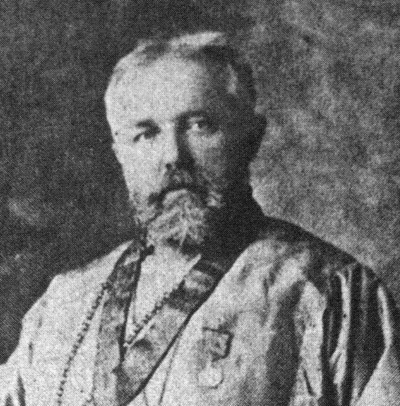
Alexis Georgievich Toth[a] (also Alexis of Wilkes-Barre; March 14, 1853 – May 7, 1909) was a Ruthenian priest who later became a Russian Orthodox missionary in the United States.

Key Information

He was born in the village of Kobylnice in Slovakia, near Prešov, belonging then to Sáros County of the Kingdom of Hungary (part of the Austro-Hungarian Empire). Toth belonged to the Rusyn (Ruthenian) ethnic group that inhabited the Carpathian region.

Toth was originally a Greek Catholic priest. After being rejected by the American Catholic bishop John Ireland, he and many of his parishioners converted to Eastern Orthodoxy, leading to the reception of an estimated 20,000 Eastern Catholics into the Russian Orthodox Church. This movement significantly contributed to the growth of Orthodoxy in the United States and the eventual formation of the Orthodox Church in America. He was glorified as a saint by the Orthodox Church in 1994.

Early life

[edit]

Alexis Toth was born to George and Cecilia Toth (or Tovt) on March 14, 1853, in Kobylnice, near Prešov, in Sáros County of the Kingdom of Hungary (then part of the Austro-Hungarian Empire). He belonged to the Rusyn (Ruthenian) ethnic group, which inhabited the Carpathian highlands. Having completed his primary schooling, he attended a Latin Catholic seminary for one year, followed by three years in a Greek Catholic seminary and later at Charles University in Prague, where he graduated with a degree in theology.

Toth married Rosalie Mihalics on March 12, 1878, and was ordained to the priesthood in 1878 by Bishop Nicholas Toth, the Greek Catholic Bishop of Prešov. Following the death of his wife and child a few years later, he served in local parishes, as diocesan chancellor, and as professor and director at the Greek Catholic seminary of Prešov. In 1889, Fr. Alexis' bishop received a petition from the Ruthenian Catholic Church in the United States, asking that Toth be sent to them as a priest. He arrived on November 15, 1889, and by the 27th of that month was holding services at St. Mary's Greek Catholic Church in Minneapolis, Minnesota. Finding the church barely furnished and deeply in debt, he set about rectifying the situation, ultimately bringing the parish to a place of fiscal stability whilst never drawing a salary.

Conflict with Bishop John Ireland

[edit]

As an Eastern Catholic, Toth honored the custom of paying a visit to the local Latin Church bishop in his area, since there was no Eastern Catholic bishop serving in the United States at that time. The ordinary of the Archdiocese of Saint Paul and Minneapolis was John Ireland, who had been attempting to "Americanize" German and other Catholic immigrants, and was hostile to ethnic parishes such as the one in which Toth served.[1]

When speaking of their meeting, Toth later claimed that Ireland became angry and threw Toth's priestly credentials onto his table while ardently protesting his presence in the city. Toth reported that Ireland said he did not consider Toth or his bishop to be truly Catholic,[2] in clear contradiction of the Union of Uzhhorod and papal decrees to the contrary.[3] Toth reported that the conversation became more heated as it progressed, with both men losing their tempers.[4] Ireland refused to give Toth permission to serve as a priest in Minneapolis, and furthermore ordered his parishes and priests not to have anything to do with the Ruthenian Catholic priest or his parishioners. Although Toth sent letters to his bishop in Hungary, detailing his experience and requesting specific instructions, he reportedly never received a reply.[5]

Toth came to believe that he and other Eastern Catholic priests in North America were to be recalled to Europe, and their parishioners folded into existing Western Catholic congregations in their respective cities.[6]

From Rome to Russian Orthodoxy

[edit]
Holy Trinity Orthodox Cathedral, where Saint Alexis served from 1891 to 1895

Having heard nothing from his own bishop, he and other Eastern Catholic priests who had shared similar experiences began to cast about for a solution to their dilemma. In December 1890, they contacted the Russian consul in San Francisco, California, asking to be put in touch with a Russian Orthodox bishop. Correspondence and personal meetings with Bishop Vladimir Sokolovsky of San Francisco followed, culminating in Toth's decision to formally enter the Russian Orthodox Church in March 1892. Toth was accompanied by 361 fellow Eastern Catholics; thousands more would follow in the years to come, largely due to his own efforts to evangelize them toward this move.[7]

Following his conversion to Orthodoxy, Toth tirelessly preached his new faith to other Eastern Catholics in North America. This, combined with further demands by U.S. Latin bishops against Eastern Rite parishes facilitated the conversion of over 20,000 Eastern-rite Catholics to Russian Orthodoxy by the time Toth died in 1909. The Orthodox Church in America has claimed that by 1916 the Latin Catholic Church had lost 163 Eastern Rite parishes, with over 100,000 faithful, to the Russian missionary diocese.[8]

Death and glorification

[edit]
Icon. Saint Alexis of Wilkes-Barre, 2012

Toth was elevated to the rank of protopresbyter later in life, continuing his efforts to convert the Eastern Catholics of North America to Eastern Orthodoxy. He died on May 7, 1909, in Wilkes-Barre, Pennsylvania, and was honored with a special shrine at St. Tikhon's Monastery in South Canaan, Pennsylvania. On May 29, 1994, Toth was glorified as Saint Alexis of Wilkes-Barre by the Orthodox Church in America.[1]

Notes

[edit]

References

[edit]
[edit]
Revisions and contributorsEdit on WikipediaRead on Wikipedia
from Grokipedia
Alexis Georgievich Toth (1854–1909), canonized as Saint Alexis of Wilkes-Barre, was a Carpatho-Rusyn from the who immigrated to the as a Greek Catholic cleric but, facing latinization demands and rejection of his married status by Roman Catholic bishops, converted to [Eastern Orthodoxy](/page/Eastern Orthodoxy) in 1891, leading his parish and subsequently thousands of immigrants back to the [Orthodox Church](/page/Orthodox Church) while preserving their Byzantine liturgical traditions. Born into a priestly family near Prešov (now in ), Toth was educated in Greek Catholic seminaries, ordained in 1878, and widowed in 1882 before being dispatched to America in 1889 to minister to Rusyn immigrants in . There, Archbishop of the Roman Catholic Archdiocese demanded he adopt Latin Rite practices, recognize Ireland's jurisdiction over Eastern Catholics, and implicitly abandon his marital history, prompting Toth to petition the Russian Orthodox Mission in for reception into on March 25, 1891 (), an act that ignited a widespread return of Uniates to their ancestral faith amid grievances over impositions and . Relocating to , in 1893, Toth organized the Russian Orthodox Catholic Mutual Aid Society in 1895 to support converts, preached across immigrant communities, and facilitated the establishment of parishes under the Russian Orthodox jurisdiction, resulting in over 20,000 Eastern Catholics rejoining by the early through the "Toth Movement" he spearheaded. His unyielding defense of Eastern canons and rejection of Roman innovations earned him as a , though Roman Catholic accounts framed his actions as schismatic; Orthodox sources emphasize his role in safeguarding authentic ecclesial heritage against coercive uniformization. Toth reposed on May 7, 1909, and was glorified by the in 1994.

Early Life and Formation

Birth and Family Background

Alexis Georgievich Toth was born on March 14, 1853, in the village of Kobylnice (now Kobylany), near (then Eperjes), in Šariš County of the Kingdom of , within the (present-day ). He was the son of George Toth, a priest of the Greek Catholic Church (also known as the Uniate Church, in communion with but retaining Eastern rites and traditions), and his wife Cecilia. The Toth family exemplified the clerical heritage common among Rusyn Greek Catholics in the region, with Alexis's father serving in local parishes and instilling ecclesiastical values from an early age. His brother followed in the paternal footsteps to become a , while an rose to the episcopate, reflecting the interconnected networks of Greek Catholic in the Carpathian Rus' communities under Habsburg rule. This environment shaped Toth's initial formation within the Greek Catholic tradition, which emphasized Byzantine liturgy and Slavic customs amid tensions between Eastern autonomy and Roman oversight.

Education and Ordination

Alexis Georgievich Toth was born on March 14, 1853, near Eperjes (now , Slovakia), to the Greek Catholic priest George Toth and his wife Cecilia, receiving his primary education in local state schools. He demonstrated academic aptitude early, eventually mastering multiple languages including Carpatho-Russian, Hungarian, Russian, German, Latin, and a reading knowledge of Greek, which facilitated his later scholarly and pastoral work. Following primary schooling, Toth spent one year studying at a local Roman Catholic before transferring to the Greek Catholic in Ungvar (now , ), where he completed three years of theological formation focused on Eastern Christian traditions. This education prepared him for in the , which maintained Byzantine liturgical rites under papal authority while permitting married clergy for parish service. Upon finishing his studies, Toth married Rosalie Mihaluk, the daughter of a Greek Catholic , on April 18, 1878, adhering to the Eastern tradition requiring marriage prior to for non-monastic . He was to the the same day by the Greek Catholic Bishop of , after which he was assigned as the second in a Uniate , marking the beginning of his active ministry in the .

Ministry in the Austro-Hungarian Empire

Pastoral Assignments

Following his ordination to the priesthood on April 18, 1878, in the United Greek Catholic Church, Alexis Toth was assigned as an assistant priest in Sáros County, within the 's . He soon became the at the parish in Homrogd (now Homrogd in ), serving as the second priest under the primary pastor. During this brief tenure, Toth experienced profound personal loss: his wife, Rosalie Mihalich, whom he had married earlier in 1878, and their infant daughter died within a couple of years, leaving him a widower. In May 1879, Bishop Nicholas Toth of appointed the 25-year-old priest as (secretary) to the and director of an associated in , (then part of the ). These administrative roles involved managing diocesan affairs and overseeing the orphanage's operations, reflecting Toth's growing reputation for competence despite his youth. He continued in these positions even after Bishop Nicholas's death in 1882, serving under the succeeding Bishop John Vályi. By 1881, Toth expanded his responsibilities to include directorship and professorship at the United Greek Catholic Seminary in , where he taught and for approximately a decade. His lectures emphasized historical and canonical traditions of the Eastern churches, drawing on his multilingual proficiency in Latin, German, Hungarian, Russian, and Greek. These seminary duties, combined with his chancellorship, positioned Toth as a key figure in the diocese's intellectual and administrative life until his departure for the in October 1889.

Personal Life and Challenges

Toth, born on March 18, 1854, into a poor Carpatho-Russian family in Kobylnice near in the , followed the tradition of married clergy in the by wedding Rosalie Mihalich, the daughter of a fellow priest, on April 18, 1878—the same day he received to the priesthood. This union aligned with canonical allowances for Eastern-rite priests to marry prior to , reflecting the cultural norms among Carpatho-Russian Uniates at the time. Tragedy struck soon after, as Rosalie died on January 11, 1879, at the age of 20, leaving Toth widowed mere months into his duties as second in a Uniate . Their , an infant daughter named Rosa Ottilia Alexandra Toth, followed her mother in death shortly thereafter, compounding the grief during this formative period of his ministry. These profound personal losses, endured amid the demands of rural service and the socioeconomic hardships of the region, tested Toth's fortitude, yet he persisted in his ecclesiastical roles without recorded lapses in duty.

Arrival and Initial Struggles in America

Immigration to Minneapolis

In 1889, Alexis Toth, a Greek Catholic priest from the of in the , received ecclesiastical approval to emigrate to the following the deaths of his wife and young son, which had freed him from domestic ties and prompted his request for missionary assignment abroad. He was specifically dispatched to , , to lead St. Mary's Greek Catholic Parish, a nascent community formed to serve Carpatho-Rusyn immigrants—primarily laborers from Galicia and northeastern —who had migrated to the for industrial opportunities in flour mills, railroads, and ironworks, drawn by the city's booming economy in the late . Toth departed by and arrived at the port of New York on November 15, 1889, before proceeding inland via railroad to , where he reached the on November 27. The following day, , he conducted his inaugural at St. Mary's, simultaneously organizing the registry to formalize membership and records for the roughly two dozen founding families, many of whom maintained Eastern liturgical traditions amid isolation from their homeland's structures. This arrival positioned Toth as the first resident for the congregation, addressing the spiritual disarray among immigrants who lacked recognized oversight from either Greek Catholic or Roman hierarchies in America.

Immediate Conflicts with Local Authorities

Upon arriving in Minneapolis in October 1889, Alexis Toth was tasked with serving as the first resident priest for St. Mary's Greek Catholic Church, established to minister to Rusin immigrants from the . He celebrated his initial there on Thanksgiving Day, November 28, 1889, using the Eastern Rite in rather than the Latin Rite. Seeking canonical faculties to exercise his priesthood under Roman Catholic oversight, Toth met with Archbishop of Saint Paul and on December 19, 1889, presenting letters of recommendation from his Greek Catholic bishop. Ireland rejected the credentials outright, objecting to Toth's status as a widower—which violated Latin norms prohibiting married clergy—and insisting on local incardination, in accordance with Vatican policies requiring Eastern Rite priests arriving in the United States to report to and obtain approval from the local Latin ordinary. During the encounter, reportedly exclaimed that he had protested to against such priests and viewed neither Toth nor his ordaining bishop as authentically Catholic, declaring no need for Greek Catholic clergy in his archdiocese and deeming a local Polish Latin Rite priest adequate for the immigrants. Toth later recounted kissing Ireland's hand per custom but omitting to kneel, which he believed exacerbated the archbishop's disdain. The denial immediately barred Toth from legally celebrating or administering sacraments, leading Ireland to issue directives forbidding area parishes from recognizing Toth's ministrations and urging the Rusin faithful to attend Latin Rite services instead. Despite these prohibitions, Toth persisted in informal work supported by his congregants, who rejected Ireland's intervention, thereby igniting prompt discord over jurisdiction, rite preservation, and clerical legitimacy.

Dispute with Roman Catholic Hierarchy

Confrontation with Archbishop John Ireland

In November 1889, Father Alexis Toth arrived in , , dispatched by his superior, Bishop John Lopushansky of Presov, to pastor the Ruthenian Greek Catholic parish of , which had been without a since its founding immigrants sought Uniate clergy. As protocol required for Eastern Catholic clergy in a new , Toth sought dimissorial letters and formal recognition from the local Latin Rite ordinary, Archbishop of St. Paul, to exercise his ministry. On December 19, 1889, Toth, accompanied by a local Polish Catholic , met with to present his credentials and request faculties. , a proponent of Americanist reforms emphasizing assimilation of immigrant Catholics into the Latin Rite and opposing distinct Eastern practices, interrogated Toth about his marital history. Upon learning that Toth was a widower—his wife having died in 1881—Ireland rejected his legitimacy as a , citing the incompatibility of prior marriage with Latin disciplinary norms on , despite canonical allowances for married Eastern under unions like (1646). reportedly tossed Toth's documents aside, declaring he did not regard him as a Catholic and withholding permission to serve, while instructing diocesan to shun Toth and bar his parishioners from Latin Rite sacraments or associations. Toth, trained in canon law and familiar with Uniate privileges preserving Eastern traditions including married priesthood, protested the decision as a violation of established ecclesiastical agreements between and the Ruthenian Church. He refused to yield, continuing to minister to his flock informally amid growing isolation, as Ireland's embargo left St. Mary's without recognized access and exacerbated ethnic tensions between Latin and Eastern Catholics. This rebuff, rooted in Ireland's broader campaign against "foreign" rites to foster unified American Catholicism, intensified Toth's parish's distress and prompted initial appeals to higher Roman authorities, though without immediate resolution. Orthodox accounts portray Ireland's stance as discriminatory toward Eastern , while Catholic perspectives attribute it to enforcing uniform discipline amid assimilation pressures; the encounter underscored canonical frictions between rites absent explicit Vatican mediation for U.S. Uniates. Following Archbishop John Ireland's rejection of his faculties on December 19, 1889, Alexis Toth immediately notified his sending bishop, Ioann Chomiyak of Presov, detailing the hostility encountered and requesting guidance on proceeding in . No response or instructions were forthcoming from Presov, leaving Toth without support from his immediate superior. Toth persisted in seeking ecclesiastical redress, leveraging his knowledge of and the terms of the , which preserved Eastern Catholic rites and married clergy. On October 29, 1890, at a meeting of eight Uniate priests in —including Toth—they jointly petitioned their European hierarchs, such as Metropolitan Joseph Sembratovych of , Bishop Ioann of Presov, and Bishop Ioann Malyarsky of Przemysl, to affirm jurisdiction over their American communities independent of Latin-rite bishops like Ireland. These appeals emphasized the incompatibility of Latin oversight with Uniate traditions, but all requests remained unanswered, effectively rejecting the priests' claims to autonomous Eastern governance. Parallel pressures mounted as American Latin-rite bishops, including , communicated directly with the Vatican, demanding the withdrawal of all Uniate clergy from the to enforce uniformity under Roman discipline. The offered no timely intervention or reversal of Ireland's decision, aligning with a broader favoring assimilation of Eastern Catholics into Latin norms—a stance later critiqued but then prevailing amid Americanist influences in the U.S. hierarchy. Toth's arguments, rooted in Uniate privileges for married priests and Byzantine , were thus dismissed in practice, rendering his position untenable under Roman authority. These ecclesiastical rejections extended to legal dimensions in church governance, as Toth's credentials—valid under Austro-Hungarian Uniate standards—were deemed invalid by without beyond local discretion. Strenuous appeals through Catholic channels, including consultations among U.S. Uniate priests, yielded no resolution, confirming the hierarchy's inflexible enforcement of and rite uniformity for Eastern immigrants. The absence of Vatican override underscored a systemic of Latin-rite dominance, contributing to the alienation of Toth and his flock.

Transition to Eastern Orthodoxy

Theological and Canonical Rationale for Conversion

Toth's primary canonical objection centered on the Roman Catholic 's refusal to grant him faculties in the Archdiocese of , due to his married status, which he viewed as a direct infringement on the disciplinary rights enshrined in the (1698), whereby Carpatho-Russian Greek Catholics retained their Eastern rites, liturgical practices, and allowance for married clergy. Upon arriving in in November 1889, Archbishop John demanded Toth's submission to Latin diocesan norms, including celibacy for clergy serving in the United States, effectively nullifying the autonomous status of Eastern Catholic priests in settings without an established Eastern . Toth appealed this decision to the Congregation for the Propagation of the Faith in , arguing that such impositions contradicted the Union's guarantees of rite preservation, but in early 1890, the upheld the local ordinary's authority, decreeing that Uniate priests must seek incardination from Latin bishops and conform to their statutes, a ruling Toth interpreted as subordinating Eastern canon law to Latin precedents. This canonical impasse prompted Toth to question the viability of Uniatism itself, positing that the Roman Church's practical Latinization—evident in demands to replace Uniate with celibate Polish or Irish and to enforce Western customs—eroded the Eastern heritage promised under union terms, rendering continued allegiance untenable for maintaining ancestral discipline. In a meeting of Uniate in , in October 1890, Toth and peers decried the "foreign domination" by Latin bishops, who sought to assimilate Eastern Catholics into Roman norms, including the elimination of married priesthood and Byzantine liturgical elements. Toth's canonical expertise, derived from his prior studies in and at the Prešov seminary, led him to conclude that Orthodoxy offered juridical fidelity to Eastern traditions, as the Russian Orthodox Mission in permitted full exercise of Byzantine practices without interference, aligning with pre-union Carpatho-Russian customs. Theologically, Toth's rationale evolved from these disputes into a conviction that represented the unaltered apostolic faith of his forebears, unencumbered by post-schism Roman developments such as mandatory , the clause, or centralized papal over rites, which he saw as innovations diluting conciliar . In writings and sermons post-conversion, Toth articulated that Uniatism, while initially a bridge, had devolved into a mechanism for gradual Latinization, compelling a return to to safeguard soteriological integrity and patristic purity, as evidenced by his 1891 correspondence expressing a long-held "longing" for the Orthodox Church as the "true way to salvation." This perspective resonated with his parishioners, who, facing similar cultural erasure, petitioned to join the Russian Orthodox Diocese under Bishop (Adoratsky) of , culminating in their collective reception into Orthodoxy on , 1891. Toth's theological shift emphasized Orthodoxy's ecclesial wholeness, where Eastern canons and doctrines remained intact, free from the hierarchical overreach he experienced in Roman governance.

Formal Reception and Parish Realignment

Following unsuccessful appeals to Roman Catholic authorities, Father Alexis Toth initiated contact with the Russian Orthodox Diocese of the Aleutians and Alaska in late 1890, corresponding with Bishop Vladimir (Sokolovsky-Avtonomov) in , who advised patience and adherence to canonical traditions. In February 1891, Toth traveled from Minneapolis to accompanied by parish warden Paul Podnany and several lay representatives to meet Bishop Vladimir in person, where preliminary discussions affirmed the compatibility of their Eastern liturgical practices with and outlined a path for reception via for those already baptized in the name of the . On March 25, 1891, Bishop Vladimir visited in and conducted the formal reception ceremony, chrismating Toth and 361 parishioners—constituting the bulk of the immigrant Carpatho-Russian community there—into the , thereby restoring them to what Orthodox sources describe as their ancestral ecclesial severed by the in 1646. This event marked the first organized return of an Eastern Catholic parish community in America to under Russian diocesan oversight, with Toth retaining his priestly orders upon profession of the Orthodox faith and rejection of Uniate innovations such as . The realignment ensued immediately, as the received members reorganized under Orthodox governance; the church property, originally purchased by parishioners in 1887 for $1,800, remained in their possession despite Roman Catholic claims, facilitated by the congregation's legal ownership and Toth's continued . Toth served as rector of the newly aligned St. Mary's Orthodox , which adopted the and full Eastern Orthodox rubrics, including married clergy provisions, diverging from the Latin-rite impositions previously enforced by Archbishop . This transition preserved the community's Slavic-language services and customs, averting dissolution amid ongoing Latinization pressures from the local Roman hierarchy. Official ratification by the of the followed on July 20, 1892, confirming the reception's validity after reviewing documentation of the rite and professions of faith, thus integrating the parish into the Alaskan diocese's North American mission structure. The realignment set a for subsequent conversions, as Toth's example and epistolary to other Uniate clergy prompted inquiries from over 20 priests across states like and , though full-scale shifts occurred later.

Leadership and Expansion in Orthodoxy

Ministry in Wilkes-Barre and Beyond

Following his reception into , Alexis Toth relocated to , where on December 3, 1892, he assumed leadership of a Carpatho-Rusyn Uniate at the invitation of its trustees, dated November 12, 1892. With unanimous consent, the community formally joined the by the end of December 1892. The following day, December 4, Toth delivered an extensive sermon exceeding one and a half hours, elucidating the historical, theological, and canonical distinctions between and Uniatism to affirm the parishioners' decision. Toth served as rector of the Wilkes-Barre parish, now known as Holy Resurrection Orthodox Cathedral, until his death in 1909, fostering its growth amid the influx of immigrant laborers in the region's mining and mill towns. On April 10, 1895, he convened a meeting that established the Russian American Orthodox Mutual Aid Society, an insurance and benevolent organization that unified 18 brotherhoods within a year and expanded to 224 chapters with nearly 10,000 members, providing financial support and promoting sobriety and education among Orthodox faithful. Beyond Wilkes-Barre, Toth undertook extensive missionary preaching tours across the and , targeting Carpatho-Rusyn and Galician immigrant communities in industrial centers. These efforts contributed to the return of up to 20,000 Uniates to and the establishment or realignment of 17 parishes by 1909. He also authored writings for new converts, emphasizing Orthodox Christian living through practices such as regular , personal hygiene, temperance, and formal education to counter assimilation pressures. In recognition of his labors, the of the awarded Toth a jeweled miter, signifying ecclesiastical honor. Through his direct influence and that of his protégés, Toth's ministry facilitated the broader return of over 250,000 Eastern Catholics to in , solidifying an autonomous Orthodox presence independent of Roman oversight.

Facilitating Mass Conversions of Eastern Catholics

Following his reception into the on March 25, 1891, in , Alexis Toth was appointed by Bishop Nicholas (Adoratsky) of the Aleutians and to minister among Carpatho-Russian and Galician Uniate immigrants in the , where he actively preached the Orthodox faith and facilitated the return of entire parishes from Eastern Catholicism. In , Toth led the conversion of the local Uniate community at Saints Peter and Paul Church, reuniting 361 faithful with by April 1891 and establishing it as St. Mary's Russian Orthodox Greek Catholic Church, the first such parish in the region. Toth's efforts sparked what became known as the "Toth Movement," a wave of conversions driven by his lectures and pastoral visits to immigrant communities in , , , and beyond, emphasizing canonical independence from Roman oversight and preservation of Eastern liturgical traditions amid perceived Latinization pressures from the Catholic . By systematically organizing petitions for reception into , he oversaw the realignment of 17 parishes and the return of approximately 20,000 Carpatho-Rusyn and Galician Uniates between 1891 and his death in 1909. These conversions often involved entire congregations submitting formal requests to the Russian Orthodox synod, which approved receptions en masse after verifying the absence of , as Toth documented in correspondence and reports to ecclesiastical authorities. His role extended to training new from converts and advocating for the use of vernacular Slavonic in services, which appealed to immigrants facing cultural alienation in Latin-rite dominated dioceses. In recognition of these achievements, Toth was elevated to protopresbyter in 1903, enabling him to ordain priests and expand Orthodox infrastructure among the converts.

Later Years and Death

Broader Contributions to American Orthodoxy

Toth's advocacy for Orthodoxy among Eastern Catholic immigrants sparked a widespread movement of conversions, with nearly 50,000 Uniates returning to the Orthodox Church by the time of his death in 1909. His initial reception of 361 parishioners in on March 25, 1891, and 600 more in Wilkes-Barre in 1892 set a precedent that encouraged similar realignments across mill and mining communities in the and . These efforts not only bolstered the numerical strength of the Russian Orthodox mission but also preserved Eastern liturgical traditions among Carpatho-Russian and Galician faithful disillusioned with Latinized practices imposed by Roman Catholic authorities. Organizationally, Toth facilitated the establishment or return of 17 parishes to , serving as bishop's to guide Uniate communities and presiding over the first formal meeting of Uniate in Wilkes-Barre around 1890. His correspondence with the of the secured official recognition for the parish in October 1892, providing canonical legitimacy that extended to subsequent conversions. This structural groundwork laid foundations for enduring Orthodox institutions, including later waves of parish formations in the 1920s through . Through extensive preaching tours and writings, such as pamphlets like Where to Seek the Truth and How We Should Live in America, Toth educated immigrants on Orthodox doctrine, countering perceived deviations in the and promoting communal self-sufficiency despite financial hardships. His role as a emphasized fidelity to apostolic traditions, influencing the theological identity of American and aiding its adaptation to immigrant needs without compromise.

Illness and Repose in 1909

In late 1908, Toth's health began to deteriorate due to a complication of illnesses, marking the onset of a prolonged decline that persisted for approximately five months. Despite his ongoing pastoral duties in , the protopresbyter experienced worsening symptoms that limited his activities, though specific diagnoses beyond general ailments were not publicly detailed in contemporary accounts. On May 7, 1909, Toth reposed in the at 2:00 p.m. in Wilkes-Barre, succumbing to the accumulated effects of his conditions at the age of 62. Funeral services for the burial of a were conducted promptly, reflecting his stature within the Russian Orthodox Mission, after which his body was interred at St. Tikhon's Monastery in South Canaan, Pennsylvania, where he had contributed to its founding four years prior.

Canonization and Legacy

Glorification by the Orthodox Church in America

The Holy Synod of Bishops of the Orthodox Church in America (OCA), having reviewed recommendations from its Canonization Commission, decided during its spring session from March 29 to April 1, 1994, to number Archpriest Alexis Toth among the saints. This formal glorification took place on May 29–30, 1994, at St. Tikhon's Monastery in South Canaan, Pennsylvania, where liturgical services and proclamations marked the event. Toth received the title Confessor and Defender of Orthodoxy in America, reflecting his role in preserving and promoting Orthodox faith amid challenges from Roman Catholic authorities. The Synod's proclamation emphasized Toth's missionary labors as a pivotal in the history of in , particularly his steadfast leadership in guiding thousands of Carpatho-Russian and Galician faithful back to the Orthodox Church from Eastern Catholicism in the late 19th and early 20th centuries. His example was cited as a model for contemporary efforts, underscoring the causal link between his canonical appeals to the Russian Orthodox hierarchy and the realignment of immigrant communities away from perceived Latin innovations. Following glorification, the OCA directed the composition of a proper liturgical service, the preparation of icons, and the publication of his biography to facilitate . Toth's feast day is observed on , the date of his repose in 1909, with additional commemoration on the Second Sunday after as part of the of the Saints of . This by the OCA, an autocephalous church, applies specifically within its jurisdiction and highlights Toth's enduring legacy in bolstering Orthodox presence among Slavic immigrants, distinct from ongoing Eastern Catholic traditions.

Historical Assessments and Debates

Scholars regard Alexis Toth's conversion to in 1891 as a catalyst for the realignment of numerous Carpatho-Rusyn parishes in the United States, with estimates indicating that his efforts directly influenced the return of over 10,000 Eastern Catholics to by the early , bolstering the Russian Orthodox mission's presence amid immigrant communities. This assessment underscores Toth's role in preserving Eastern liturgical traditions against pressures for Latinization, as he invoked historical precedents like the (1646) to argue that papal encroachments had deviated from ancestral Orthodox practices among Rusyns. Within Orthodox historiography, Toth is venerated as a confessor and defender of the faith, with his by the on May 29, 1994, highlighting his missionary zeal in countering what adherents describe as the Unia's erosion of and married . Proponents credit him with legitimate pastoral outreach, emphasizing documented cases where converts affirmed as their forebears' faith, free from Roman jurisdictional overreach, though Orthodox sources occasionally overlook the geopolitical incentives of Russian synodal support in the . Catholic evaluations, conversely, frame Toth's trajectory as a tragic driven by resentment toward Archbishop John Ireland's 1890 denial of faculties—rooted in canon 74 of the 1884 Third Plenary Council of Baltimore, which barred married Eastern priests—rather than doctrinal conviction, portraying his subsequent campaigns as inducing mass defections that fragmented Ruthenian unity under . Critics from this viewpoint, often aligned with institutional narratives prioritizing ecclesial communion, contend that Toth exploited ethnic grievances and Latin rite impositions, though such accounts underemphasize empirical instances of Eastern Catholics' prior complaints against forced liturgical westernization in Habsburg territories. Debates among historians center on the voluntariness and theological validity of the conversions Toth facilitated, with some academic analyses affirming his adherence to reception processes—requiring public renunciations of the —while questioning whether socioeconomic vulnerabilities among immigrants coerced alignments; others highlight Toth's writings decrying papal "abuses" as selective favoring pre-Union precedents, yet corroborated by archival evidence of 17th-century Rusyn resistance to Latin norms. These discussions reflect broader tensions in Eastern Christian studies over the Unia's causality—whether a bridge or rupture—complicated by biases in source selection, where Orthodox scholarship privileges primary convert testimonies and Catholic works stress fidelity to 1596 Brest despite its uneven implementation.

References

Add your contribution
Related Hubs
User Avatar
No comments yet.