


Community hub
Recent from talks
Contribute something to knowledge base
Content stats: 0 posts, 0 articles, 1 media, 0 notes
Members stats: 0 subscribers, 0 contributors, 0 moderators, 0 supporters
Subscribers
Supporters
Contributors
Moderators
Hub AI
Alfred Pleasonton AI simulator
(@Alfred Pleasonton_simulator)
Hub AI
Alfred Pleasonton AI simulator
(@Alfred Pleasonton_simulator)
Alfred Pleasonton
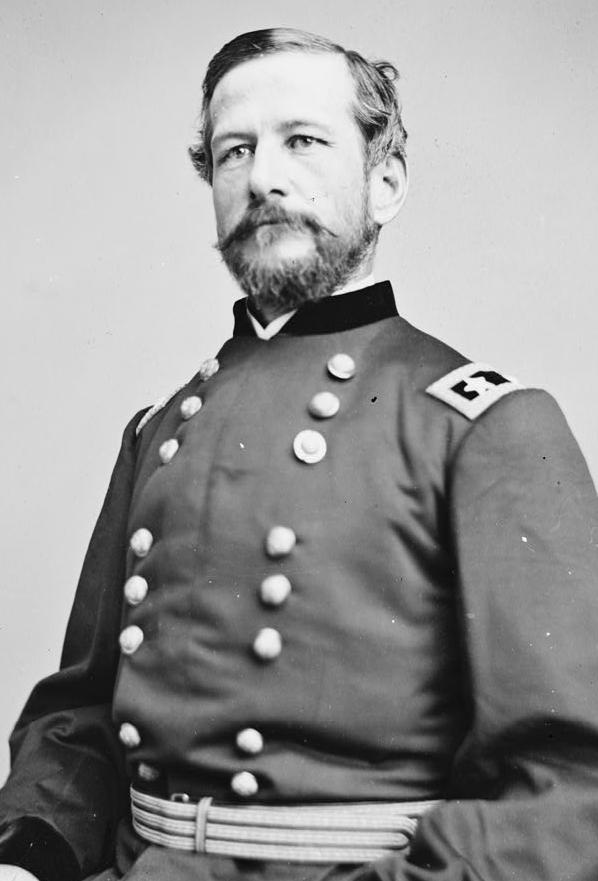
Alfred Pleasonton (June 7, 1824 – February 17, 1897) was a United States Army officer and major general of volunteers in the Union cavalry during the American Civil War. He commanded the Cavalry Corps of the Army of the Potomac during the Gettysburg campaign, including the largest predominantly cavalry battle of the war, Brandy Station. In 1864, he was transferred to the Trans-Mississippi theater, where he defeated Confederate General Sterling Price in two key battles, including the Battle of Mine Creek, the second largest cavalry battle of the war, effectively ending the war in Missouri. He was the son of Stephen Pleasonton and the younger brother of Augustus Pleasonton.
Pleasonton was born in Washington, D.C., on June 7, 1824. He was the son of Stephen and Mary Hopkins Pleasonton. Stephen was well-known at the time of Alfred's birth. During the War of 1812, as a U.S. State Department employee, he saved crucial documents in the National Archives from destruction by the British invaders of Washington, including the original Declaration of Independence and the U.S. Constitution. As Fifth Auditor of the U.S. Treasury, Stephen Pleasonton was the de facto superintendent of lighthouses of the United States from 1820 to 1852. His conservative approach and emphasis on the economy held back advancements in lighthouse construction and technology and led to the deterioration of some lighthouses. Since he had no technical knowledge of the field, he delegated many responsibilities to local customs inspectors. In 1852, the U.S. Congress decided reform was needed and established the Lighthouse Board to take over fiscal and administrative duties for U.S. lighthouses.
Alfred's much older brother, Augustus, attended the United States Military Academy and served as Assistant Adjutant General and paymaster of the state of Pennsylvania; his career direction obviously affected his younger brother's and both boys were assured nomination to the Academy by their father's fame from the War of 1812. Alfred graduated from West Point on July 1, 1844, and was commissioned a brevet second lieutenant in the 1st U.S. Dragoons (heavy cavalry). He was stationed first at Fort Atkinson, Iowa. He followed his unit for frontier duty in Minnesota, Iowa, and Texas. He was promoted to second lieutenant with the 2nd U.S. Dragoons on November 3, 1845. With the 2nd Dragoons, he fought in the Mexican–American War and received a brevet promotion to first lieutenant for gallantry in the Battle of Palo Alto and the Battle of Resaca de la Palma, Texas, in 1846. He was promoted to first lieutenant on September 30, 1849. He served as regimental adjutant from July 1, 1854, to March 3, 1855. Pleasonton was promoted to captain on March 3, 1855.
At the start of the Civil War in 1861, Captain Pleasonton traveled with the 2nd Dragoons from Fort Crittenden, Utah Territory, to Washington D.C. Despite active politicking on his part, attempting to capitalize on the faded political connections of his father (who had died in 1855), Pleasonton did not earn the rapid promotions as some of his colleagues had. He was transferred to the 2nd U.S. Cavalry Regiment on August 3, 1861. He was promoted to major on February 15, 1862. He fought without incident or prominence in the Peninsula campaign, providing Army of the Potomac commander Major General George McClellan with little accurate or valuable information. On May 1, 1862, Pleasonton was nominated by President Abraham Lincoln for promotion to the grade of brigadier general of volunteers to rank from July 16, 1862, and the United States Senate confirmed the appointment on July 16, 1862. President Lincoln formally appointed Pleasonton to the grade on July 18, 1862. He then commanded a brigade of cavalry in the Army of the Potomac.
On September 2, 1862, Pleasonton assumed division command in the cavalry of the Army of the Potomac. As McClellan's chief cavalryman, it was part of Pleasonton's duties to provide his commanding general with intelligence, especially the size of enemy formation. In general, McClellan relied on the erroneous information provided to him by private detective Allan Pinkerton, which resulted in McClellan's idee fixe that he was constantly unnumbered by the Confederate forces he faced. During the Maryland campaign of 1862, Pinkerton had no agents in place, so the task of estimating enemy strength fell to Pleasonton, who turned out to be as inept at it as Pinkerton. As a result, McClellan remained convinced that Confederate General Robert E. Lee's forces outnumbered his two-to-one when the truth was almost exactly the opposite.
He was wounded in the right ear by the concussion of an artillery shell at the Battle of Antietam on September 17. Ever ambitious, Pleasonton was displeased that he was not promoted to major general of volunteers for his actions, claiming erroneously that his division, and particularly the horse artillery assigned to him, had had a decisive effect on the battle. He did receive a brevet promotion to lieutenant colonel in the regular army, probably based solely on the inflated claims of his battle report, which were not substantiated by the reports of other generals.
At the Battle of Chancellorsville, Pleasonton continued his practice of self-promotion. He claimed that he temporarily halted an attack by Stonewall Jackson's Corps and that he was able to prevent the total destruction of the Union XI Corps on May 2, 1863. He was persuasive enough that the commander of the Army of the Potomac, Maj. Gen. Joseph Hooker, told President Abraham Lincoln that Pleasonton "saved the Union Army" at Chancellorsville. Battle reports, however, indicate that Pleasonton's role was considerably less important than he claimed, involving only a small detachment of Confederate infantry on Hazel Grove. Nevertheless, his claims earned him an appointment to the grade of major general of volunteers on and to rank from June 22, 1863, and when the inept Cavalry Corps commander, Maj. Gen. George Stoneman, was relieved after Chancellorsville, Hooker named Pleasonton as his temporary replacement. Pleasonton could not accept even this elevated role gracefully. He wrote to Gen. Hooker "I cannot ... remain silent as to the unsatisfactory condition in which I find this corps ... the responsibility of its present state ... does not belong to me."
Pleasonton's first combat in his new role was a month later in the Gettysburg campaign. He led Union cavalry forces in the Battle of Brandy Station, the largest predominantly cavalry battle of the war. The Union cavalry essentially stumbled into J. E. B. Stuart's Confederate cavalry and the 14-hour battle was bloody but inconclusive, although Stuart was embarrassed that he had been surprised and the Union horsemen had a newfound confidence in their abilities. Subordinate officers criticized Pleasonton for not aggressively defeating Stuart at Brandy Station. Gen. Hooker had ordered Pleasonton to "disperse and destroy" the Confederate cavalry near Culpeper, Virginia but Pleasonton claimed that he had only been ordered to make a "reconnaissance in force toward Culpeper", thus rationalizing his actions.
Alfred Pleasonton
Alfred Pleasonton (June 7, 1824 – February 17, 1897) was a United States Army officer and major general of volunteers in the Union cavalry during the American Civil War. He commanded the Cavalry Corps of the Army of the Potomac during the Gettysburg campaign, including the largest predominantly cavalry battle of the war, Brandy Station. In 1864, he was transferred to the Trans-Mississippi theater, where he defeated Confederate General Sterling Price in two key battles, including the Battle of Mine Creek, the second largest cavalry battle of the war, effectively ending the war in Missouri. He was the son of Stephen Pleasonton and the younger brother of Augustus Pleasonton.
Pleasonton was born in Washington, D.C., on June 7, 1824. He was the son of Stephen and Mary Hopkins Pleasonton. Stephen was well-known at the time of Alfred's birth. During the War of 1812, as a U.S. State Department employee, he saved crucial documents in the National Archives from destruction by the British invaders of Washington, including the original Declaration of Independence and the U.S. Constitution. As Fifth Auditor of the U.S. Treasury, Stephen Pleasonton was the de facto superintendent of lighthouses of the United States from 1820 to 1852. His conservative approach and emphasis on the economy held back advancements in lighthouse construction and technology and led to the deterioration of some lighthouses. Since he had no technical knowledge of the field, he delegated many responsibilities to local customs inspectors. In 1852, the U.S. Congress decided reform was needed and established the Lighthouse Board to take over fiscal and administrative duties for U.S. lighthouses.
Alfred's much older brother, Augustus, attended the United States Military Academy and served as Assistant Adjutant General and paymaster of the state of Pennsylvania; his career direction obviously affected his younger brother's and both boys were assured nomination to the Academy by their father's fame from the War of 1812. Alfred graduated from West Point on July 1, 1844, and was commissioned a brevet second lieutenant in the 1st U.S. Dragoons (heavy cavalry). He was stationed first at Fort Atkinson, Iowa. He followed his unit for frontier duty in Minnesota, Iowa, and Texas. He was promoted to second lieutenant with the 2nd U.S. Dragoons on November 3, 1845. With the 2nd Dragoons, he fought in the Mexican–American War and received a brevet promotion to first lieutenant for gallantry in the Battle of Palo Alto and the Battle of Resaca de la Palma, Texas, in 1846. He was promoted to first lieutenant on September 30, 1849. He served as regimental adjutant from July 1, 1854, to March 3, 1855. Pleasonton was promoted to captain on March 3, 1855.
At the start of the Civil War in 1861, Captain Pleasonton traveled with the 2nd Dragoons from Fort Crittenden, Utah Territory, to Washington D.C. Despite active politicking on his part, attempting to capitalize on the faded political connections of his father (who had died in 1855), Pleasonton did not earn the rapid promotions as some of his colleagues had. He was transferred to the 2nd U.S. Cavalry Regiment on August 3, 1861. He was promoted to major on February 15, 1862. He fought without incident or prominence in the Peninsula campaign, providing Army of the Potomac commander Major General George McClellan with little accurate or valuable information. On May 1, 1862, Pleasonton was nominated by President Abraham Lincoln for promotion to the grade of brigadier general of volunteers to rank from July 16, 1862, and the United States Senate confirmed the appointment on July 16, 1862. President Lincoln formally appointed Pleasonton to the grade on July 18, 1862. He then commanded a brigade of cavalry in the Army of the Potomac.
On September 2, 1862, Pleasonton assumed division command in the cavalry of the Army of the Potomac. As McClellan's chief cavalryman, it was part of Pleasonton's duties to provide his commanding general with intelligence, especially the size of enemy formation. In general, McClellan relied on the erroneous information provided to him by private detective Allan Pinkerton, which resulted in McClellan's idee fixe that he was constantly unnumbered by the Confederate forces he faced. During the Maryland campaign of 1862, Pinkerton had no agents in place, so the task of estimating enemy strength fell to Pleasonton, who turned out to be as inept at it as Pinkerton. As a result, McClellan remained convinced that Confederate General Robert E. Lee's forces outnumbered his two-to-one when the truth was almost exactly the opposite.
He was wounded in the right ear by the concussion of an artillery shell at the Battle of Antietam on September 17. Ever ambitious, Pleasonton was displeased that he was not promoted to major general of volunteers for his actions, claiming erroneously that his division, and particularly the horse artillery assigned to him, had had a decisive effect on the battle. He did receive a brevet promotion to lieutenant colonel in the regular army, probably based solely on the inflated claims of his battle report, which were not substantiated by the reports of other generals.
At the Battle of Chancellorsville, Pleasonton continued his practice of self-promotion. He claimed that he temporarily halted an attack by Stonewall Jackson's Corps and that he was able to prevent the total destruction of the Union XI Corps on May 2, 1863. He was persuasive enough that the commander of the Army of the Potomac, Maj. Gen. Joseph Hooker, told President Abraham Lincoln that Pleasonton "saved the Union Army" at Chancellorsville. Battle reports, however, indicate that Pleasonton's role was considerably less important than he claimed, involving only a small detachment of Confederate infantry on Hazel Grove. Nevertheless, his claims earned him an appointment to the grade of major general of volunteers on and to rank from June 22, 1863, and when the inept Cavalry Corps commander, Maj. Gen. George Stoneman, was relieved after Chancellorsville, Hooker named Pleasonton as his temporary replacement. Pleasonton could not accept even this elevated role gracefully. He wrote to Gen. Hooker "I cannot ... remain silent as to the unsatisfactory condition in which I find this corps ... the responsibility of its present state ... does not belong to me."
Pleasonton's first combat in his new role was a month later in the Gettysburg campaign. He led Union cavalry forces in the Battle of Brandy Station, the largest predominantly cavalry battle of the war. The Union cavalry essentially stumbled into J. E. B. Stuart's Confederate cavalry and the 14-hour battle was bloody but inconclusive, although Stuart was embarrassed that he had been surprised and the Union horsemen had a newfound confidence in their abilities. Subordinate officers criticized Pleasonton for not aggressively defeating Stuart at Brandy Station. Gen. Hooker had ordered Pleasonton to "disperse and destroy" the Confederate cavalry near Culpeper, Virginia but Pleasonton claimed that he had only been ordered to make a "reconnaissance in force toward Culpeper", thus rationalizing his actions.
Recent media
Recent media