Hubbry Logo
AmericanahAmericanahMain
Open search
Americanah
Community hub
Americanah
logo
8 pages, 0 posts
0 subscribers
Be the first to start a discussion here.
Americanah
Americanah
from Wikipedia

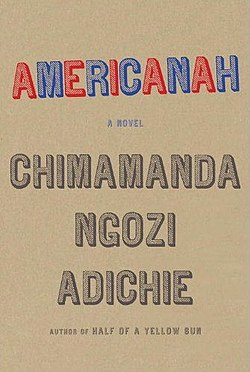
Americanah is a 2013 novel by Chimamanda Ngozi Adichie. Her third novel and fourth book, it was published on 14 May 2013 by Alfred A. Knopf. The novel recounts the story of a young Nigerian woman, Ifemelu, who emigrates to the United States to attend a university. It won the National Book Critics Circle Award for Fiction in 2013.

Key Information

The novel tells the story of a young Nigerian woman and her male schoolmate, who did not know about the trans-Atlantic slave trade in school and had no understanding of racism in the United States or social class in the United Kingdom.[1][2] A commercial success upon publication, a 2015 report by France 24 revealed that Americanah has sold more than 500,000 copies in the US and has been translated into 25 languages.

Background

[edit]

Adichie, in her 2009 TED talk entitled "The Danger of a Single Story" argued for the understanding of the multiplicity of African experiences. With her second novel Half of a Yellow Sun, Vogue classified her as the first in a series of young African authors writing about their countries with Western audiences in mind. Adichie started writing fiction at Johns Hopkins University and later got a master's in African studies at Yale University.[3]

Adichie said that when she was growing up, "everyone wanted to go to America. But I never wanted to until I realised it would be a way of escaping becoming a doctor", hence, after a year of studying medicine, she dropped out and left Nigeria to the US at 19 years-old to live with her sister in Brooklyn, and then to Philadelphia, where she studied. It took Adichie four years to write the novel. The title "Americanah" is a Lagosian slang for "Nigerians newly returned after a spell Stateside ranging from dissects, satirises, and, at its most potent, simply describes the immigrant experience, the myriad forms of racism, how race is viewed and experienced differently in America and Britain, and how we have to leave a place to belong to it".[4]

The novel was published in French by Gallimard in 2015.[5]

Plot summary

[edit]

Two Nigerian teenagers, Ifemelu and Obinze fell in love in their school days at Lagos. The country is ruled by the military and people seek to exit the country. Ifemelu moves to the United States to study, however she begins seeing another view of her from the people. Such views includes racism and for the first time, she begins understanding being black. Obinze, on his side hopes that he would join her but his visa gets denied following the September 11 attack in the US. He eventually moves to London and becomes an undocumented immigrant after his visa expires.

After many years, Obinze returns to Nigeria. He has become wealthy since he works as a property developer. Ifemelu gains attention in the United States following her blog about race. The blog is named "Raceteenth or Various Observations About American Blacks (Those Formerly Known as Negroes) by a Non-American Black". When she returns to Nigeria, the two consider reviving a relationship in light of their diverging experiences and identities during their many years apart.

Reception

[edit]

Critical reviews

[edit]

In her review for San Francisco Chronicle, Catherine Chung wrote, "Americanah is an exhilarating, mind-expanding pleasure of a read. It is a brilliant treatise on race, class and globalization, and also a deep, clear-eyed story about love — and how it can both demand and make possible the struggle to become our most authentic selves".[6] Kristy Davis of Oprah Daily wrote that the novel is "an expansive, epic love story. It pulls no punches with regard to race, class and the high-risk, heart-tearing struggle for belonging in a fractured world",[7] while NPR wrote that "Adichie weaves whole entries into the narrative, and these tart editorials add yet another dimension to Americanah, which is as capacious, absorbing and original a novel as you will read this year".[8] Eugenia Williamson of The Boston Globe wrote, "a cerebral and utterly transfixing epic...Americanah is superlative at making clear just how isolating it can be to live far away from home".[9] Mike Peed of The New York Times Book Review wrote that it is "a novel that holds the discomfiting realities of our times fearlessly before us...A steady-handed dissection of the universal human experience".[10]

In her review for The Washington Post, Emily Raboteau praised the author, writing that "Adichie is uniquely positioned to compare racial hierarchies in the United States to social striving in her native Nigeria. She does so in this new work with a ruthless honesty about the ugly and beautiful sides of both nations".[11] The Dallas Morning News called the novel "a bright, bold book with unforgettable swagger that proves it sometimes takes a newcomer to show Americans to ourselves".[12] John Timpane of The Philadelphia Inquirer acknowledged that "Americanah tackles the U.S. race complex with a directness and brio no U.S. writer of any color would risk",[13] while Vogue and The Seattle Times wrote that "Americanah is that rare thing in contemporary literary fiction: a lush, big-hearted love story that also happens to be a piercingly funny social critique"[3] and "a near-flawless novel",[14] respectively.

In a review for The Chicago Tribune, Laura Pearson wrote, "sprawling, ambitious and gorgeously written, 'Americanah' covers race, identity, relationships, community, politics, privilege, language, hair, ethnocentrism, migration, intimacy, estrangement, blogging, books and Barack Obama. It covers three continents, spans decades, leaps gracefully, from chapter to chapter, to different cities and other lives".[15]

Awards and nominations

[edit]

Americanah won the 2013 National Book Critics Circle Award for Fiction.[16] It was shortlisted for the Baileys Women's Prize for Fiction in 2014.[17] It won the 2013 Heartland Award for Fiction by The Chicago Tribune.[18]

It was rated in 2013 as "one of the Best Books of the Year" by The New York Times, NPR, Chicago Tribune, The Washington Post, The Seattle Times, Entertainment Weekly, and Newsday. The novel was selected as one of the 10 Best Books of 2013 by New York Times Book Review.[19] In March 2017, Americanah won the "One Book, One New York" program by One City One Book.[20][21] In 2024, it was ranked #27 in the list of 100 best books of the 21st century by The New York Times.[22]

Legacy

[edit]

A France 24's 2015 report shows that Americanah sold more than 500,000 copies and has been translated into 25 languages.[5] The novel remained for 78 weeks on NPR's Paperback Best-Seller list.[23] The New York Times included it to their list of best books of 2013. Sales soared high and by 23 December 2013, it was on no. 179 on Amazon's list of its 10,000 best-selling books.[24]

Censorship

[edit]

In 2022, Americanah was banned in the Clay County School District in Florida.[25]

Adaptations

[edit]

In 2014, it was announced that David Oyelowo and Lupita Nyong'o would star in a film adaptation of the novel,[26] to be produced by Brad Pitt and his production company Plan B.[27] In 2018, Nyong'o told The Hollywood Reporter that she was developing a television miniseries based on the book, which she would produce and star in.[28] It was announced on September 13, 2019, that HBO Max would air the miniseries in ten episodes, with actor and playwright Danai Gurira as writer and showrunner.[29] On October 15, 2020, it was reported that the miniseries would not move forward due to scheduling conflicts.[30]

References

[edit]
[edit]
Revisions and contributorsEdit on WikipediaRead on Wikipedia
from Grokipedia
is a novel by the Nigerian author Chimamanda Ngozi Adichie, first published in 2013 by Alfred A. Knopf. The story centers on Ifemelu and Obinze, two young Nigerians who share a romance before immigrating; Ifemelu attends university in the United States, where she confronts racial categorizations and becomes a blogger on the subject, while Obinze faces undocumented life in Britain after post-9/11 restrictions bar him from America, before both return to Nigeria. Through their experiences, the novel explores themes of race, identity, love, immigration, and the contrasts between Nigerian and Western societies. It received critical acclaim, including the National Book Critics Circle Award for Fiction in 2013 and the Chicago Tribune Heartland Prize for Fiction in the same year. The book has been translated into 29 languages and selected for programs such as "One Book, One New York" in 2017.

Background and Publication

Writing Process and Inspiration

Chimamanda Ngozi Adichie drew primary inspiration for Americanah from her own experiences as a Nigerian immigrant in the United States, arriving at age 19 in the late 1990s to study at in , where she pursued degrees in communication and before transferring to and graduating in 2001. These years exposed her to American racial classifications, which she later described as a process of "learning to be black," a concept unfamiliar in her Nigerian upbringing where ethnic tribal identities predominated over skin color as a social divider. This firsthand immersion informed the novel's grounding in empirical realities of cultural dislocation, prioritizing direct observation over abstracted media portrayals of race. Adichie's writing process emphasized personal and observed insights into racial dynamics, including the protagonist's blogging on American obsessions with identity from a non-American black perspective, which mirrored her own reflections on encounters like casual racism and performative allyship in academic and social settings. She contrasted this with Nigerian diaspora narratives she witnessed, where migration stemmed from pragmatic economic incentives—such as pursuing education or professional opportunities—rather than the identity-driven victimhood often highlighted in U.S. discourse, drawing from stories of middle-class Africans navigating assimilation without prior exposure to America's racial binaries. This approach favored causal realism rooted in lived causation over ideologically filtered accounts, enabling a critique of how American contexts impose new hierarchies on African arrivals.

Publication Details and Editions

was first published in hardcover on May 14, 2013, by Alfred A. Knopf in the United States. The UK edition appeared the same year from Fourth Estate, an imprint of HarperCollins. Knopf announced an initial print run of 60,000 copies for the US release. A paperback edition was issued on March 4, 2014, by Anchor Books, a Knopf Doubleday imprint. versions have been produced, including a narration by released by Recorded Books. By 2025, the novel had been translated into more than 30 languages, supporting international editions across multiple continents. Initial marketing campaigns leveraged Adichie's prior critical success with works like to position Americanah as a major literary release with broad commercial appeal.

Plot Summary

The narrative begins in the present with Ifemelu, a Nigerian in , undergoing hair braiding in preparation for her return to after fifteen years in the United States, during which she has ended a relationship and ceased updating her blog on racial experiences. The story then shifts to flashbacks detailing her adolescence in military-ruled , where she meets Obinze in , and the two develop a romantic relationship marked by shared dreams of emigrating to the West. Frequent university strikes disrupt their studies, prompting Ifemelu to secure a and scholarship to attend college in . Upon arrival in the U.S., Ifemelu initially resides with her aunt Uju and young cousin Dike in before relocating to , where she faces financial difficulties, resorts to illegal employment using a false identity, and endures a traumatic experience with an employer, leading to depression and a severance of contact with Obinze. She later enters a relationship with Curt, a wealthy white executive who aids her in obtaining legitimate work and a , though she ends the affair after infidelity. Ifemelu subsequently launches a successful chronicling racial dynamics from the perspective of a non-American black person and begins dating Blaine, an academic, with their bond straining during political events like Barack Obama's presidential campaign but temporarily reconciling. Parallel to Ifemelu's arc, Obinze attempts to join her in the U.S. but is denied a after the ; he instead travels undocumented to , engaging in menial jobs under borrowed identities and attempting a for legal status, which results in his and back to . Returning to , Obinze builds a career in , marries Kosi, and fathers a child, achieving affluence amid Nigeria's evolving economy. The non-linear structure incorporates Ifemelu's blog entries and additional flashbacks to illuminate past events as characters reflect on their experiences. Upon her to , Ifemelu resumes contact with Obinze, initiating an affair that prompts him to Kosi; after a period of separation, the two reunite, contemplating their future together.

Characters

Ifemelu serves as the novel's central , depicted as an intelligent, stubborn, and outspoken young Nigerian woman who relocates to the to pursue university studies, where she encounters challenges in adapting to her new environment. Her character drives key relational and personal dynamics through her directness and evolving self-awareness, influencing interactions with both Nigerian and American figures around her. Obinze appears as Ifemelu's initial romantic partner, characterized by a calm, thoughtful demeanor and a strong appreciation for authenticity in others, which shapes his responses to personal and migratory pressures. His experiences as an immigrant underscore practical struggles tied to and economic survival, propelling his independent arc parallel to Ifemelu's. Among supporting figures, Aunty Uju, Ifemelu's paternal cousin who functions as an elder sister, embodies pragmatic adaptation as a single mother navigating professional and relational opportunities in and later abroad, with her decisions impacting family dependencies. Curt, a wealthy American introduced as Ifemelu's early boyfriend in the U.S., provides material support through his resources and connections, highlighting contrasts in cultural and socioeconomic approaches to assistance.

Themes and Motifs

Race, Identity, and American Obsessions

In Americanah, protagonist Ifemelu experiences race as an imposed American construct upon her arrival from , where social hierarchies revolve around class, education, and rather than skin color, rendering "blackness" an apolitical default rather than a defining obsession. This contrast underscores the novel's depiction of racial identity as context-dependent, with Ifemelu initially perplexed by U.S. whites treating her as interchangeable with native-born blacks, despite her lack of shared historical grievances or cultural references. Her adaptation involves internalizing subtle cues—like speech or —to access opportunities, highlighting how American racial protocols demand performative conformity absent in her African milieu. Ifemelu's anonymous blog, titled Raceteenth or Various Observations About American (That Make Me a Non-American ) by a Non-American , serves as a platform for dissecting hypocrisies in U.S. identity politics, such as the ritualistic invocation of to explain disparities while ignoring agency or cultural variances among blacks. Posts like "Dear Non-American , when you make the choice to come to America, you become ," satirize the expectation that immigrants adopt a victim-centric , contrasting it with African immigrants' typical rejection of such framing in favor of individual effort. These entries expose performative elements, including whites' exaggerated deference or used to signal virtue, which Ifemelu views as detached from the economic dominating Nigerian , where skin tone elicits indifference unless tied to colonial-era . The novel juxtaposes African immigrants' merit-driven trajectories against native-born black emphases on systemic barriers, reflecting observable diaspora outcomes where Nigerian Americans attain median household incomes of $68,000–$80,000—exceeding the U.S. average—and college graduation rates over 60% for first-generation arrivals, driven by pre-migration selection for skilled professionals and cultural norms prioritizing achievement. This success pattern, per Migration Policy Institute data, stems from human capital imports rather than racial evasion, challenging grievance narratives by demonstrating that outcomes correlate more with work ethic and education than pigmentation in non-incentivized environments. Adichie's portrayal critiques the "non-American black" label as a U.S.-specific artifice that enforces through shared , rendering it causally inert outside policy regimes like or welfare structures that amplify race over competence. Ifemelu's observations reveal this as an American fixation, where institutional rewards sustain racial , whereas in , equivalent hierarchies operate via without racial mediation, affirming class as the primary causal driver of opportunity absent engineered divisions.

Immigration, Diaspora, and Cultural Dislocation

In Americanah, emigration from is depicted as a pragmatic response to systemic failures, including frequent university strikes that disrupt and pervasive that stifles . Ifemelu leaves for the in the early 2000s to pursue higher education amid these instabilities, reflecting broader family aspirations for overseas opportunities despite the risks of separation and . Obinze, denied a U.S. visa, turns to the , where he enters illegally around 2001, undertaking menial jobs like cleaning toilets to survive, highlighting the harsh economic trade-offs of undocumented migration. These choices underscore causal drivers such as 's issues—, mediocrity, and exploitation—that propel youth toward Western prospects, without idealizing the homeland's poverty as mere backdrop. Obinze's trajectory illustrates the precarious benefits and acute costs of diaspora life, culminating in his 2002 arrest during an attempted sham marriage for legal status, followed by detention and deportation that erodes his initial ambitions. Back in , he adapts by leveraging local networks in , achieving material success but retaining a grounded perspective shaped by his ordeals, contrasting idealized narratives of effortless reintegration. Ifemelu, meanwhile, undergoes a profound transformation in the U.S., adopting mannerisms and priorities that earn her the label "Americanah" among compatriots—a term denoting the cultural alienation acquired abroad, marked by heightened and detachment from Nigerian norms. This dislocation manifests empirically in her struggles with isolation, financial hardship, and identity shifts, weighing potential career gains against personal fragmentation. Upon around 2009, both characters confront reverse , debunking myths of seamless . Ifemelu arrives in overwhelmed by its chaotic energy, traffic, and superficial elite circles obsessed with status displays, feeling like an outsider despite her roots and struggling to reconcile her American-influenced worldview with local realities. Her unease with the —preoccupied with imported luxuries and evasion of civic duties—highlights identity loss's lingering toll, as she pivots to critiquing Nigerian rather than fully reclaiming belonging. Obinze, by contrast, exhibits greater rootedness, navigating pragmatically to build stability, yet their reunion reveals migration's uneven ledger: economic footholds abroad often yield hybrid identities that complicate rather than resolve familial and societal ties. This portrayal prioritizes observable outcomes—temporary opportunities versus enduring cultural rupture—over romanticized or return.

Gender Roles and Relationships

In Americanah, Ifemelu's romantic entanglements exemplify a pursuit of amid economic , where relationships serve as temporary buffers against but reveal underlying dependencies shaped by class and cultural differences. Her liaison with Curt, a privileged white executive, affords material support—such as funding for her and —yet culminates in rupture when Ifemelu perceives the dynamic as patronizing, prompting her to prioritize over sustained . This contrasts with her subsequent involvement with Blaine, a politically engaged academic, where ideological alignment initially fosters equality, but Ifemelu's intermittent withdrawal underscores relational strains from mismatched expectations of emotional interdependence. Obinze's marital choices upon returning to Nigeria highlight pragmatic adaptations to patriarchal norms and economic instability, where gender roles facilitate household stability through complementary divisions of labor. Marrying Kosi, a conventionally attractive woman who embodies domesticity by managing childcare and social appearances, enables Obinze to channel energies into real estate ventures amid Nigeria's volatile markets, reflecting a causal trade-off: transactional security over passionate reciprocity. Kosi's adherence to these roles—prioritizing family harmony and deference—mirrors broader Nigerian patterns where women navigate scarcity by leveraging relational leverage for familial provision, often at the expense of individual agency. The critiques rigid gender expectations across contexts without endorsing either, portraying Nigerian as enforcing resilience through necessity—evident in Aunty Uju's entrepreneurial survival tactics post-abandonment—while American appears performative to Ifemelu, insulating women from raw economic pressures that demand adaptive compromises. In , women's roles often hinge on bargaining within constrained systems for incremental gains, fostering endurance amid resource deficits; in the , affluence permits assertions of that Ifemelu finds superficial when decoupled from , as in peers who decry inequality yet evade personal exertions. These dynamics underscore causal power imbalances: relationships as strategic arenas where emerges not from but from navigating material realities, with neither culture's norms yielding unalloyed .

Satire of Social and Political Norms

Adichie's novel employs satire through Ifemelu's blog, "Raceteenth or Various Observations About American Blacks (That Make Me Laugh But Also Make Me Angry)," to expose the performative absurdities of American racial discourse, such as the hypersensitivity to symbols like watermelon, which carry no such connotations in Nigeria but evoke stereotypes in the U.S. context. This format allows detached, ironic jabs at normalized pieties, prioritizing sharp observation over prescriptive advocacy, as seen in posts dissecting interracial dating dynamics and the euphemistic language of "racially charged" events to soften admissions of racism. On U.S. campuses, the narrative mocks progressivist norms by portraying voluntary , with African-American students clustering in Black Student Unions while recent African immigrants form separate African Students Associations, highlighting that prioritize group affiliations over broader substantive engagement. politics receives particular ridicule as a proxy for racial authenticity debates, where natural choices become battlegrounds for cultural validation amid patronizing liberal attitudes that exoticize or pity black features under the guise of progressive . In parallel vignettes of Nigerian society, Adichie satirizes Lagos elite behaviors, depicting social climbers who flaunt oil-derived wealth and corrupt connections while adopting affected "Americanah" mannerisms upon return from abroad, equating ostentatious consumerism with status without invoking victimhood narratives akin to U.S. racial grievance culture. The pervasive culture of in —encompassing for basic services and elite —mirrors American material excesses but underscores causal hypocrisies in governance failures, where personal ambition trumps systemic reform. These portrayals critique normalized elite pretensions across contexts, revealing how ideological posturing distracts from empirical realities like policy inefficacy and resource mismanagement.

Critical Analysis

Strengths in Realism and Observation

Critics have commended Americanah for its realistic portrayal of immigrant agency, particularly through the protagonist Ifemelu's navigation of middle-class Nigerian aspirations amid economic and racial barriers , diverging from stereotypical narratives of undocumented hardship. This depiction draws on verifiable social dynamics, such as the protagonist's job struggles tied to hair texture biases and selective assimilation, reflecting empirical patterns in African immigrant outcomes where and networks enable upward mobility despite systemic frictions. The novel's nuanced examination of race earned it the 2013 National Book Critics Circle Award for Fiction, with reviewers highlighting its avoidance of reductive binaries in favor of observational depth on how racial categories operate differently across Nigeria, Britain, and America. Ifemelu's first-person reflections, informed by the author's own transatlantic experiences, dismantle monolithic views of blackness by illustrating causal factors like class intersections and performative identities, fostering clarity on why racial perceptions vary contextually rather than universally. Adichie's integration of faux blog posts from Ifemelu's "Racist Sometime" enhances this realism, embedding raw, anecdotal observations—such as microaggressions in salons or corporate diversity rhetoric—that mimic authentic online discourse and convey social mechanics with unfiltered immediacy. These interludes break narrative linearity while amplifying empirical fidelity, as they prioritize lived causality over abstract ideology, making complex dynamics accessible and verifiable against real-world immigrant testimonies.

Criticisms of Portrayal and Oversimplifications

Critics have contended that Americanah imbalances its portrayal of and the by foregrounding American racial dynamics while underemphasizing systemic Nigerian failures, such as entrenched and breakdowns that affect the broader populace. Nigerian commentator Ikhide Ikhide argues the novel indulges in upper-middle-class introspection in , evincing scant compassion for those devastated by elite predation and institutional dysfunction, thus oversimplifying the drivers of and return. This selective focus, per Ikhide, renders the depiction of Nigerian realities superficial, prioritizing individual navel-gazing over the pervasive material hardships stemming from policy failures and economic mismanagement. Accusations of have targeted the novel's satirical renderings of American liberals and black Americans, which some view as flattening complex groups into reinforcing despite the author's intent to . Characters like Blaine, Ifemelu's Yale boyfriend, embody a stereotypical of passionless, politically orthodox , contributing to a preachiness that prioritizes didactic race commentary over nuanced character development. Ikhide extends this to the overuse of exaggerated figures across the narrative, which he deems excessive and authenticity-eroding, potentially amplifying broad strokes at the expense of realistic depth. Ideologically, the book's external critique of American identity fixations has faced pushback for inadequately confronting analogous African phenomena, including tribal ethnic loyalties and , thereby oversimplifying the causal roots of experiences. While Ifemelu's return to is romanticized as a reclamation of authentic selfhood, detractors like Ikhide highlight the narrative's evasion of how entrenched and perpetuate cycles of underachievement, framing as more aspirational than structurally viable. This selective scrutiny, they argue, mirrors the very obsessions the novel lampoons in the U.S., substituting one form of cultural myopia for another without rigorous parity.

Reception

Literary Reviews

The New York Times review of Americanah, published on June 7, 2013, praised the novel for its trenchant satire on American racial obsessions and the immigrant experience, describing it as "witheringly trenchant and hugely empathetic, both worldly and geographically precise." The review highlighted Adichie's ability to blend sharp social observation with personal narrative, noting the book's dissection of how race becomes newly salient for non-American blacks in the United States. Similarly, The Guardian's April 15, 2013, assessment lauded it as a "superb dissection of race in the UK and the USA," emphasizing the fresh perspective on cultural dislocation and the protagonist Ifemelu's blog as a vehicle for incisive commentary on American pretensions. Critics appreciated the satire's edge, often preferring its unsparing critique of social hypocrisies—such as liberal guilt and —over potential sentimentality in the romance between Ifemelu and Obinze. One review noted the novel's strength in avoiding maudlin tropes, instead favoring "subtly provocative" explorations of and through diasporic lenses. However, contrarian views pointed to weaknesses in the romantic subplot's predictability, arguing that Adichie "disappointingly allows her story to slip to the level of a simple romance," subordinating complex to a conventional will-they-won't-they tension. Others critiqued the narrative as "hearty, overcooked," with the expansive scope on race and stretching the plot thin despite Adichie's lyrical prose. Post-2020 reassessments have situated Americanah within the surge of diaspora literature, valuing its prescient take on identity fluidity amid global migration debates. A 2021 analysis commended the novel's enduring relevance for portraying alienation and cultural negotiation, though it flagged flaws in pacing and occasional as trade-offs for its breadth. Recent scholarship, including a 2024 study, reinforces its role in postcolonial discourse on epidermal narration and otherness in works, underscoring how Ifemelu's American awakening critiques fixed racial categories without resolving them neatly.

Commercial Success

Americanah, released on May 14, 2013, by in the United States, rapidly achieved status, with sales exceeding one million copies domestically by 2025. Initial reports indicated 500,000 units sold in the US within two years, marking it as Adichie's fastest-selling title at the time. The novel's commercial performance extended internationally, bolstered by translations into 25 languages and sustained demand in markets like the , , and , where it resonated with readers. Key drivers included organic word-of-mouth growth rather than heavy marketing campaigns, amplified by Adichie's prior visibility from TED Talks such as "The Danger of a Single Story" (), which had garnered millions of views and positioned her as a voice on global identity issues. Its appeal crossed literary boundaries, attracting enthusiasts drawn to the book's empirical observations on race and migration as lived experiences, contributing to steady post-release sales in the and . This grassroots momentum, evident in prolonged bookstore presence and reader endorsements, underscored the title's enduring market viability without reliance on celebrity endorsements or short-term hype.

Awards and Honors

Americanah received the National Book Critics Circle Award for Fiction in 2013, an honor bestowed annually by a voting body of book critics for works demonstrating exceptional literary quality and insight into contemporary experience, selected from finalists including Donna Tartt's The Goldfinch. The novel was shortlisted for the Baileys in 2014, which awards £30,000 to the best full-length novel originally written in English by a woman from any nationality, judged on criteria emphasizing narrative power, originality, and emotional resonance. In 2015, it advanced to the shortlist for the International IMPAC Literary Award, nominated by libraries worldwide and selected for the prize's €100,000 payout based on universal appeal, linguistic quality, and innovative storytelling. The book has been included in retrospective honors, such as ' list of the top ten books of , affirming its sustained critical acclaim for incisive . Americanah did not receive a nomination, though its nominations and wins underscore recognition for strengths in observational realism over more conventional prize circuits.

Controversies

Book Bans in Educational Settings

Americanah was removed from school libraries and classrooms in Florida's Clay County District during the 2022–2023 , as documented in the Florida Department of Education's objection report listing materials discontinued following parental challenges. This action formed part of a district-wide purge affecting 177 titles, the highest in , amid state-mandated reviews under laws like House Bill 1069 requiring evaluation of instructional materials for alignment with educational standards, often citing concerns over sexual content and racial themes. Statewide, recorded approximately 300 such removals that year across 21 counties. PEN America's index tracked this as one of 3,362 documented bans nationwide for 2022–2023, spanning 1,557 unique titles, predominantly in response to organized challenges focusing on themes of race, sexuality, and identity. The organization's data, derived from and media reports, highlights 's role in 40% of national instances that year, though Americanah did not feature prominently in subsequent cycles. For 2023–2024, PEN recorded 10,046 bans across 4,231 titles, and in 2024–2025, 6,870 instances affecting diverse works, with no elevated removals of Americanah noted beyond the initial Florida case. Chimamanda Ngozi Adichie addressed book bans in a 2023 discussion, framing restrictions on like hers as evidence of its capacity to provoke thought and unsettle norms, rather than positioning herself as a victim of suppression; she emphasized the enduring power of contested words in cultural debates. No further verified attempts to remove Americanah from U.S. educational settings have been reported through 2025, per tracking by and state education departments.

Ideological Critiques and Viewpoint Debates

Some progressive commentators have viewed Americanah's satirical treatment of American racial sensitivities—such as Ifemelu's blog posts ridiculing overreactions to perceived microaggressions and everyday racial awkwardness—as "problematic" for implying hypersensitivity among black Americans, thereby questioning the depth of systemic racism by framing such issues as culturally specific exaggerations rather than universal oppressions. This outsider critique of identity-driven narratives, including the novel's distinction between African immigrants' pragmatism and African Americans' historical grievance focus, has discomforted some left-leaning readers who see it as aligning with "race realism" that dilutes collective victimhood claims. In contrast, reviewers critical of "" excesses have appreciated the novel's exposure of American as a peculiar, performative obsession—absent in Nigerian contexts—while emphasizing individual agency, as in Ifemelu's self-made success through blunt observation rather than reliance on racial or privilege . This aligns with conservative-leaning analyses that interpret the protagonists' choices, like Obinze's undocumented hustle and Ifemelu's rejection of welfare mentalities, as endorsing personal merit over structural excuses, though the narrative's occasional preachy interludes on privilege have drawn even sympathetic critics' ire for echoing Tumblr-era pieties. Debates over the novel's repatriation arc center on its portrayal of Nigeria as a viable site for triumphant return and , despite empirical indicators of institutional rot impeding such outcomes; scored 25 out of 100 on Transparency International's 2023 , ranking 145th out of 180 countries, reflecting persistent bribery, impunity, and that Adichie has publicly decried as policy failures. Critics argue this optimism privileges anecdotal agency over causal realities of corruption's drag on private initiative, while defenders contend it realistically counters diasporic escapism by affirming cultural rootedness amid verifiable dysfunction.

Adaptations

Film and Television Projects

In 2014, a film adaptation of Americanah was announced, with cast as the protagonist Ifemelu and as her love interest Obinze. The project transitioned to a television format in September 2019, when HBO Max ordered a 10-episode limited series starring Nyong'o, with attached as and pilot writer. Additional casting included and in supporting roles, and was set to direct the first two episodes. Production delays arose from the , which conflicted with Nyong'o's schedule and led to her exit from the series. As a result, Max shelved the project in 2020. In September 2022, development revived as a , with Nyong'o returning to star as Ifemelu. This effort was reaffirmed in June 2025 via an announcement on author Chimamanda Ngozi Adichie's . As of October 2025, no further production updates, release dates, or additional casting details have been publicly confirmed for the film.

Legacy and Influence

Cultural and Intellectual Impact

Americanah has contributed to scholarly and public discourse on race and migration by foregrounding the perspectives of high-achieving African immigrants, who often outperform native-born in education and income metrics, thereby complicating monolithic narratives of black disadvantage . The novel's depiction of protagonist Ifemelu's observations underscores experiential divergences, such as continental Africans' unfamiliarity with America's historical racial baggage, prompting analyses of how recent members—frequently classified as "model minorities" due to selective policies favoring skilled workers—disrupt entrenched victimhood frameworks in U.S. black . This has manifested in academic literature exploring tensions between African immigrants and , with the text cited for initiating dialogues on cultural disconnects, including stereotypes of Africans as more entrepreneurial and less grievance-oriented. The work's satirical portrayal of American racial obsessions, through Ifemelu's anonymous dissecting identity performances, has echoed in subsequent critiques of hyper-racialized , influencing writers and commentators who adopt immigrant-outsider lenses to question dogmatic identity frameworks. Post-2013 publications reference Americanah in examining how such narratives expose the artificiality of imposed racial solidarity, particularly among educated Africans who prioritize individual agency over collective . While not directly invoked in formal policy proceedings, the novel's themes have informed broader debates on selective migration's socioeconomic outcomes, highlighting how African inflows—averaging over 100,000 skilled visas annually since the —yield upward mobility trajectories atypical of legacy minority groups. In academic settings, Americanah is frequently integrated into identity and studies curricula, serving as a primary text for dissecting intersectional race, , and migration dynamics from a non-Western vantage. Its adoption reflects praise for illuminating hybrid Afropolitan identities that transcend binary oppressor-oppressed dichotomies, though analyses often balance this with acknowledgments of the novel's emphasis on personal resilience amid systemic barriers, countering potential idealizations of immigrant . This incorporation, evident in theses and journals since 2013, underscores a shift toward incorporating immigrant success stories in race , challenging academia's predominant focus on domestic inequities.

Ongoing Relevance in Discussions of Race and Migration

The Nigerian-born population in the United States expanded from roughly 250,000 in the early 2010s to 476,000 by 2023, reflecting an average annual growth rate of 4.8 percent and more than doubling over two decades, driven largely by skilled migration through employment and family channels. This demographic shift mirrors Americanah's central narrative of Nigerian professionals navigating American life, where racial categorization imposes unfamiliar hierarchies on immigrants who arrive with high aspirations but encounter incentives that prioritize group identity over individual merit. Sub-Saharan African immigrants, including Nigerians, now constitute about 5 percent of the total U.S. foreign-born population of 50.2 million as of 2024, with their numbers rising amid broader post-pandemic immigration trends that added over five million foreign-born residents between 2022 and 2024. Such data underscores the novel's prescient exploration of how migration amplifies debates on assimilation, as African diaspora communities often achieve above-average educational and economic outcomes—Nigerian-Americans, for instance, boasting median household incomes exceeding the national average—challenging assumptions of inherent disadvantage tied to race. In the context of the 2023 Supreme Court ruling in Students for Fair Admissions, Inc. v. President and Fellows of , which invalidated race-conscious in higher education admissions by a 6-3 margin, Americanah offers causal insights into the distortions of racial incentives foreseen over a decade earlier. The decision, grounded in the , rejected policies that treat applicants as avatars of racial groups, echoing the Ifemelu's dissections of how such frameworks encourage performative victimhood and erode personal agency among minorities, including high-achieving immigrants. By highlighting America's "racial " as a barrier to genuine equality, the anticipates critiques that perpetuates division, fostering resentment and mismatched expectations rather than merit-based integration, as evidenced by post-ruling enrollment shifts where selective institutions grapple with diversified applicant pools absent racial proxies. The post-2020 surge in U.S. , exceeding two million annual entrants under relaxed , has intensified border policy debates that resonate with Americanah's themes of migration's selective and the psychological toll of cultural . While the focuses on voluntary Nigerian relocation via and work visas, current encounters at the southern border—totaling over 10 million since 2021, including rising African asylum seekers—expose parallel tensions in vetting and integration, where lax policies strain resources and amplify racial framing in public discourse. Ifemelu's return to after disillusionment with American racial obsessions prefigures arguments for prioritizing economic migrants who contribute without relying on grievance narratives, as African immigrants' overrepresentation in STEM fields demonstrates causal links between skill-based selection and societal value over open-border . Adichie's subsequent reflections have amplified the novel's rejection of perpetual victimhood, as in her 2020 statement that "victimhood is not a " and discrimination does not confer moral superiority, positioning resilience as key to immigrant success amid . This stance reinforces Americanah's causal realism—that racial hinders —informing 2020s critiques of policies incentivizing grievance over agency, particularly as growth reveals self-reliant trajectories contradicting institutional narratives of systemic barriers.

References

Add your contribution
Related Hubs
User Avatar
No comments yet.