Hubbry Logo
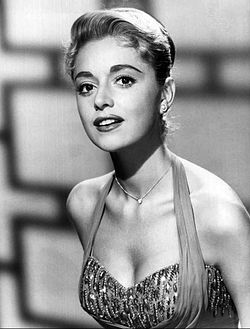
Anna Maria AlberghettiAnna Maria AlberghettiMain
Open search
Anna Maria Alberghetti
Community hub
Anna Maria Alberghetti
logo
8 pages, 0 posts
0 subscribers
Be the first to start a discussion here.
Anna Maria Alberghetti
from Wikipedia

Anna Maria Alberghetti (Italian: [ˈanna maˈriːa alberˈɡetti]; born May 15, 1936) is an American actress and soprano. Alberghetti sang in concert from the time she was a child and performed at Carnegie Hall at age 13.

Key Information

Alberghetti began working in American films at age 15 with Frank Capra's 1951 musical Here Comes the Groom. She continued to act in film throughout the 1950s, before turning her focus to theater in the 1960s. In 1962, she won a Tony Award for Best Actress in a Musical for her performance in Carnival! Her stage work also included roles in Kismet, West Side Story, and Cabaret.

Alberghetti appeared on The Ed Sullivan Show more than 50 times.

Biography

[edit]

Alberghetti was born on May 15, 1936, in Pesaro, Marche, in central Italy. She starred on Broadway and won a Tony Award in 1962 as Best Actress (Musical) for Carnival![1] (she tied with Diahann Carroll for the musical No Strings).

Alberghetti was a child prodigy. Her father was an opera singer and concert master of the Rome Opera Company. Her mother was a pianist. At age six, Anna Maria sang in a concert on the Isle of Rhodes with a 100-piece orchestra. She performed at Carnegie Hall in New York at the age of 13.[1][2] At 15, she was introduced to American film audiences in Frank Capra's 1951 musical Here Comes the Groom, which starred Bing Crosby. At 16, she was Red Skelton's opening act during his Sahara Hotel engagement in Las Vegas.

Her family's new life in the U.S. was aided by a Congressional bill, passed in August 1954, sponsored by Nevada senator Pat McCarran—because her father "admitted he had been an 'involuntary fascist'" during WWII.[3]

Her younger sister, Carla, also became a musical artist, who appeared in many stage productions. She eventually became Anna Maria's replacement in her Tony Award-winning role on Broadway. She has a brother, Paul Alberghetti, who is an entertainment attorney and film producer. He is married to filmmaker Michele Noble.

Professional career

[edit]

Alberghetti appeared twice on the cover of Life magazine.[4][5] She appeared on The Ed Sullivan Show more than 50 times.[6] She guest-starred in 1957 on NBC's The Gisele MacKenzie Show.[7] That same year, she performed in the premiere episode of The Pat Boone Chevy Showroom on ABC.

Alberghetti with Dean Martin in 1956

Alberghetti co-starred with Dean Martin in 1957's Ten Thousand Bedrooms and with Jerry Lewis in The Jazz Singer in 1959, and Cinderfella 1960, not long after the Martin and Lewis comedy team parted ways.

Alberghetti also appeared in 1955's The Last Command, which starred Sterling Hayden, and had the female lead in the Western Duel at Apache Wells in 1957.

In 1959, the 22-year-old Alberghetti played the lead in "The Conchita Vasquez Story" of NBC's Wagon Train. She was cast as part of a gang of Comancheros who intend to attack the wagon train to steal rifles headed to the United States Army. Instead, she decides to leave the Comancheros and move west after she falls in love with scout Flint McCullough, played by Robert Horton. Tragically, as the episode ends, Conchita is killed by a bullet from her own people when they ambush the wagon train.[8]

On March 1, 1961, she appeared as a guest contestant on the television series I've Got a Secret. She guest-starred on The Andy Williams Show on March 28, 1963 and performed on The Hollywood Palace variety program's episode of May 2, 1964.

(L-R): Jimmy McHugh, Anna Maria Alberghetti, Barbara Rush and Louella Parsons in Modern Screen, 1960

Alberghetti appeared as a mystery guest on What's My Line on November 23, 1958. She appeared for a second mystery-guest appearance on April 30, 1961. In 1965, Alberghetti went on tour and performed on stage with Bob Hope in Okinawa for U.S. servicemen.

Alberghetti also appeared as herself in an episode of the comedy show Fractured Flickers, talking with the host Hans Conreid.

Alberghetti has toured in many theatrical productions and continues with her popular one-woman cabaret act. She had roles in a pair of 2001 films: The Whole Shebang and Friends & Family.

Alberghetti appeared in television commercials for Good Seasons salad dressing during the 1970s and early 1980s, where she was cast as "The Good Seasons Lady".

There are some references to Alberghetti in the novel Rosemary's Baby by Ira Levin, amongst which, in one of Rosemary's dreams, she is seen, tiny, in the filigree silver ball on the Pope's ring. The author describes how Terry Gionoffrio, a fellow tenant in the Bramford, resembles Alberghetti. (Victoria Vetri in the film version).

Personal life

[edit]

Alberghetti became a U.S. citizen in 1961.[9]

She was married to television producer-director Claudio Guzmán from 1964 to 1974. They had two children: Alexandra (b. 1966) and Pilar (b. 1970).[10][11]

In a 2022 Vanity Fair article, Alberghetti gave an interview alleging incidents of the late comic actor Jerry Lewis sexually harassing her.[12]

Partial filmography

[edit]
Alberghetti in 1959
Year Title Role Notes
1951 The Medium Monica
1951 Here Comes the Groom Theresa
1953 The Stars Are Singing Katri Walenska
1955 The Last Command Consuelo de Quesada
1957 Duel at Apache Wells Anita Valdez
1957 Ten Thousand Bedrooms Nina Martelli
1959 Wagon Train Conchita Vasquez Episode: 'The Conchita Vasquez Story'
1960 Cinderfella Princess Charming
1967 Kismet Marsinah TV movie
2001 Friends & Family Stella Patrizzi
2001 The Whole Shebang Lady Zito

Stage work

[edit]
Alberghetti in Carnival!

Discography

[edit]
  • Songs By Anna Maria Alberghetti (Mercury Records, 1955)
  • I Can't Resist You (Capitol Records, 1957)
  • Warm And Willing (Capitol Records, 1960)
  • Love Makes The World Go Round (MGM Records, 1962)
  • Merry Christmas from Anna Maria Alberghetti And Introducing Reino Moisio (Celebrity House, 1984)

References

[edit]

Further reading

[edit]
[edit]
Revisions and contributorsEdit on WikipediaRead on Wikipedia
from Grokipedia
Anna Maria Alberghetti (born May 15, 1936) is an Italian-born American and celebrated as a for her operatic performances and later acclaimed for her Broadway triumphs, including a Tony Award for in a Musical for her role as Lili in Carnival! (1962). Born in , , to cellist Daniele Alberghetti and pianist Vittoria Ricci Alberghetti, she was the eldest of three children in a deeply musical family that nurtured her talent from infancy. Alberghetti began singing professionally at age six, debuting with a full of 100 musicians in , and by age 12 had completed her first European . Her family immigrated to the in 1950, where she made her American concert debut at on April 28, 1950, at age 13, impressing audiences with her in opera arias despite . Alberghetti became a naturalized U.S. citizen in 1961. Transitioning to acting, Alberghetti made her film debut at age 14 as Monica in the opera adaptation The Medium (1951), directed by , followed by roles in musicals such as Here Comes the Groom (1951) with and , The Stars Are Singing (1953), and Ten Thousand Bedrooms (1957) opposite . She also appeared in Westerns like Duel at Apache Wells (1957) and comedies including (1960) with , showcasing her versatility beyond . On television, she guest-starred in episodes of Make Room for Daddy (1954), (1959), and specials like The Bob Hope Show (1952), while recording albums for labels including Capitol and Columbia that highlighted her vocal range in classical and popular genres. Alberghetti's stage career peaked on Broadway, where she originated the role of Lili, the puppeteer, in Carnival!, a musical adaptation of Marcel Pagnol's Marcel stories, earning critical praise for her poignant portrayal and winning the 1962 Tony Award. She later starred in revivals such as Fanny (1963), West Side Story (1964) as Maria, and the 1967 television production of Kismet as Marsinah, demonstrating her enduring appeal in musical theater. In her later years, Alberghetti continued performing in concerts and regional theater into the 1990s and beyond, including a notable 1992 appearance reflecting on her career.

Early Life

Family and Childhood

Anna Maria Alberghetti was born on May 15, 1936, in Pesaro, a coastal resort town in the Marche region of central Italy, during the era of the Kingdom of Italy. She was the eldest of three children born to Daniele Alberghetti, a cellist, baritone, and concertmaster of the Rome Opera Company, and Vittoria Alberghetti, a pianist who had performed with the Scuola Reggia Musicale on the island of Rhodes. Her younger siblings included sister Carla, who later pursued a career in singing, and brother Paolo (also known as Paul), who showed early interest in music by conducting to phonograph records. The family environment was deeply immersed in music, with her parents' professional backgrounds shaping daily life around classical repertoire and instrumental practice. Growing up in , Alberghetti experienced a childhood filled with the sounds of the sea and her family's musical pursuits, as her father relentlessly trained all three children in vocal and instrumental skills from a very young age. Daniele, known for his strict teaching style, emphasized and , while Vittoria accompanied on , creating an atmosphere where music was not just a profession but an inescapable household constant. Her siblings participated actively; Carla joined family musical activities, and mimicked conducting roles even as a young boy, fostering a collaborative yet demanding creative space. This immersion provided Alberghetti with constant exposure to sophisticated pieces, honing her innate talent amid the backdrop of wartime . Alberghetti's earliest musical expressions emerged informally within this nurturing yet rigorous setting, where she began singing around the age of six, often performing simple arias and songs encouraged by her parents. By age eight, during the Allied advance through Italy in 1944, she entertained American troops with her voice in exchange for candy, an experience that highlighted her precocious abilities in a more spontaneous context. These formative years in Pesaro laid the foundation for her vocal development, blending familial discipline with the joys of a seaside upbringing before the family relocated to the United States.

Musical Training and Debut

Anna Maria Alberghetti's musical training began under the guidance of her father, Daniele Alberghetti, a cellist and taskmaster who served as her primary instructor from the age of six, emphasizing operatic technique and vocal discipline without initial enrollment in a formal conservatory program. Her mother, Vittoria, a pianist, provided accompaniment and further nurtured the family's musical environment, though the parents remained her sole teachers during these early years to safeguard her developing voice. This home-based education, rooted in the family's artistic heritage, positioned Alberghetti as a child prodigy, with her father resigning his position at the Pesaro Conservatory to focus on her development. In 1942, at age six, Alberghetti made her professional debut during on the Isle of , performing with a 100-piece orchestra in concerts for Allied troops, marking the start of her emergence as a young . Seeking greater opportunities amid postwar challenges in , her family immigrated to the in 1949 when she was 13, settling in to pursue her career in a more supportive environment. Alberghetti's American debut followed swiftly on April 28, 1950, at , where the 13-year-old sang a program of Italian arias, captivating audiences with her pure tone and unaffected poise despite . Critics praised her performance as that of a genuine wunderkind, noting the and congratulations from established singers, which propelled her into extensive concert tours across and the as a celebrated up to age 15.

Professional Career

Opera and Concert Performances

Alberghetti transitioned from her early acclaim as a to establishing herself as a professional operatic in the . Throughout the , Alberghetti embarked on extensive concert tours across the and , collaborating with leading orchestras to perform selections from the Italian operatic canon, including arias by Puccini, , and Rossini. Her programs often featured demanding pieces that showcased her agile voice and technical precision, drawing large audiences eager for her blend of youthful charm and vocal maturity. A pivotal moment in her American career was her debut recital at on April 29, 1950, where the 13-year-old sang "Caro nome" from Verdi's and "Una voce poco fa" from Rossini's , earning praise for producing "some of the purest, loveliest sounds" amid the venue's acoustics. She graced prominent venues during these years, including outdoor spectacles like the Lewisohn Stadium in New York, where in June 1950 she performed four Italian arias to an audience of 13,000 under conductor Alexander Smallens, further solidifying her reputation on major concert stages. Alberghetti also appeared at international festivals such as the in the and , contributing to programs that bridged classical traditions with emerging American entertainment scenes. By the 1970s, Alberghetti's concert style evolved toward a more versatile approach, incorporating lighter operatic excerpts alongside popular songs to engage diverse crowds during her ongoing tours and nightclub engagements. This shift allowed her to sustain a active performing career into later decades, performing in venues from showrooms to regional orchestras while maintaining her roots in technique.

Film Roles

Alberghetti made her film debut at age 14 in The Medium (), a screen adaptation of Gian Carlo Menotti's chamber of the same name, directed by Menotti himself. Alberghetti played the role of a young daughter in the eerie tale of a fraudulent spiritualist, delivering both poignant and vocal performances that earned critical praise for her emotional depth and pure tone. The film, entered into the , marked her as a versatile talent capable of blending with dramatic cinema. She followed this with her first musical comedy role later that same year at age 15 in Here Comes the Groom, directed by and starring and , where she portrayed Theresa, a blind Italian with a remarkable singing voice. In the film, her character performs an extended operatic aria, "Caro nome" from Giuseppe Verdi's , showcasing her talents amid the story of Crosby's character adopting war orphans. This role introduced her more broadly to American audiences, leveraging her operatic background while highlighting her youthful innocence. Throughout the 1950s, Alberghetti appeared in several notable films, including The Stars Are Singing (1953), where she portrayed a Polish émigré befriended by Rosemary Clooney's character and sang songs like "My Kind of Day." A highlight was her leading role opposite in Ten Thousand Bedrooms (1957), her sole musical, as Nina Martelli, a young Italian woman who falls for Martin's character during a set in . Directed by , the film featured her in lighthearted, romantic sequences, though it received mixed reviews for its formulaic plot. Another significant appearance was in Vittorio De Sica's The Last Judgment (1961), an Italian-French comedy-drama where she contributed to the exploring themes of and human folly. Over her Hollywood tenure from 1951 to 1964, Alberghetti starred in approximately 10 films, often typecast in roles emphasizing her ethereal beauty and innocence, such as orphans, princesses, or romantic ingénues. Early in her career, she faced challenges with the , having immigrated from as a and initially struggling with dialogue delivery, which sometimes limited her to musical or supporting parts. Despite these hurdles, her film work bridged her operatic roots with cinematic acting, paving the way for her later stage successes.

Broadway and Stage Productions

Alberghetti made her Broadway debut in the musical Carnival!, which opened on April 13, 1961, at the and ran for 719 performances until January 5, 1963. In the production, adapted from the film Lili, she portrayed the lead role of Lili, a young orphan who joins a carnival troupe and forms a bond with a . Her performance, blending operatic vocals with vulnerable innocence, earned critical acclaim and led to her winning the 1962 Tony Award for Best Actress in a Musical, tying with for . This role marked a pivotal shift in her career from opera and film toward musical theater, showcasing her versatility in live stage settings. Following her Broadway success, Alberghetti reprised Lili in the national touring production of Carnival!, performing as a replacement from April 20, 1962, through March 9, 1963, across multiple engagements. She did not return to Broadway for another original production, focusing instead on regional theater and , where she took on leading roles in classic musicals during the 1960s and 1970s. In regional venues, Alberghetti starred as the title character in Fanny during a 1963 summer stock tour produced by John Kenley, including stops at the Ohio Theatre in Columbus. She played Maria in a 1964 touring version of [West Side Story](/page/West Side Story), emphasizing her lyrical soprano in songs like "." Other notable roles included Marsinah in Kismet (1965), Luisa in (1968), and Sally in (1970), performed at venues such as the South Shore Music Circus in , and the Oakdale Musical Theatre in . Later credits encompassed the Mother Abbess in at the Terrace Theater in (1989), and Carlotta in a 1992 production of Phantom at the North Shore Music Theatre in . These performances, spanning over a dozen productions, highlighted her enduring appeal in musical theater beyond New York.

Recordings and Television Appearances

Alberghetti's recording career spanned several decades, beginning in the early with a focus on operatic and classical selections before transitioning to popular standards and show tunes. Her discography includes a mix of solo albums, cast recordings, and compilations, primarily released by labels such as Mercury and . Notable early works feature her voice in Italian folk songs and arias, reflecting her classical training. One of her key albums, Warm and Willing (1960, ), showcased a jazz-influenced style with arrangements by , highlighting tracks like "Just Squeeze Me" and "I'll Never Be Free." This release marked a shift toward more contemporary pop interpretations while retaining her operatic . Another significant recording, Love Makes the World Go Round (1962, RCA Victor), included romantic ballads such as "Theme from " and "," drawing from her Broadway successes. These albums exemplified her versatility, blending heartfelt renditions of standards with original material. Alberghetti's discography encompasses over 20 albums from the 1950s through the 1980s, encompassing opera arias, American standards, and pop songs. Representative examples include Songs by Anna Maria Alberghetti (1954, ), featuring Italian classics like "Giannina Mia" and "Musetta's Waltz"; I Can't Resist You (1957, ), with upbeat tracks such as "Kiss, Kiss, Kiss"; and cast recordings like (1958 TV cast). Hits such as "Come Back to " and "" appeared on various releases, often performed in her signature warm, vibrato-rich style. In television, Alberghetti made frequent appearances on variety shows, leveraging her singing to reach wide audiences. She performed on more than 50 times between the 1950s and 1960s, debuting as a with arias like the "Queen of the Night" from in 1953 and later delivering medleys of standards such as "I've Got the World on a String" and "Tonight" from in 1960. These spots often featured her in elaborate gowns, emphasizing her as a "singing angel." Television specials highlighted her musical theater prowess, including the lead role of Marsinah in the 1967 ABC production of Kismet, where she sang numbers like "Stranger in Paradise" alongside Alfred Drake. She also appeared in musical episodes of anthology series, such as a 1958 Westinghouse Desilu Playhouse installment portraying a young Italian singer. Guest spots on programs like The Andy Williams Show (1963) and The Hollywood Palace (1964) included performances of pop hits and Broadway excerpts. In the 1980s, she made guest appearances on episodic shows like The Love Boat, often incorporating light musical moments into dramatic roles. Her TV work extended into concert specials and voiceovers through the 1990s, maintaining her presence in media beyond live stage performances.

Personal Life

Marriage and Family

Anna Maria Alberghetti married Chilean-American television director and producer Claudio Guzmán on September 12, 1964, at Saint Victor Catholic Church in West Hollywood, California. The couple, who had known each other since the early 1960s through professional circles in Hollywood, shared a decade-long marriage that ended in divorce in 1974. The marriage produced two daughters: Alexandra, born in October 1966, and Pilar, born in 1970. Alexandra pursued a career as a family therapist in Los Angeles, while Pilar became a prominent journalist and editor, serving as editor-in-chief of Condé Nast Traveler and later editorial director of Oprah Daily. Following the divorce, Alberghetti raised her daughters as a single mother, significantly scaling back her professional commitments during the to focus on family life. She emphasized the importance of being present for her children during their formative years, fostering close family bonds that remained a priority throughout her life. Alberghetti did not remarry after the divorce.

Later Years and Retirement

Following the success of her Broadway and film career in the 1950s and 1960s, Anna Maria Alberghetti significantly slowed her professional activities in the to prioritize family life after the births of her daughters, in October 1966 and Pilar in 1970. She effectively retired from performing in the early , particularly after her 1974 divorce from director Claudio Guzman, during which she underwent five years of Freudian therapy and focused on raising her children. Alberghetti staged a comeback in the late 1970s, approximately seven or eight years after her retirement, beginning with singing engagements in , , and Reno. This resurgence included a starring role as Maria in a 1984 Milwaukee production of , which led to further regional theater appearances, such as a 1985 run in . She also took on endorsement roles, including a long-term contract with Good Seasons and promotions for Mon Cheri chocolates, helping maintain her public visibility without demanding full-time commitments. Throughout the 1980s, she limited her schedule to no more than 11 days away from home per month, balancing performances with lectures and recitals. By the 1990s, Alberghetti had adopted a semi-retired lifestyle, resuming sporadic concerts, nightclub shows, and television appearances once her daughters reached school age. At age 55, she toured in the revue Broadway Tonight alongside and performed on luxury cruise ships, including the Queen Elizabeth 2 and the Rotterdam of the . She expressed openness to a potential television series but preferred selective work, limiting engagements to 1 to 10 days per month to allow time at her Beverly Hills home. In reflections shared during this period, Alberghetti emphasized the importance of balancing fame with personal privacy and family, noting regrets over her lost childhood due to early stardom but valuing her role as a above intense career pursuits. She described enjoying a quieter life centered on her daughters and fiancé Alfred Pasternak (with whom she planned to marry in 1985), while appreciating the flexibility of her reduced schedule. This approach to semi-retirement allowed her to sustain her passion for singing without the pressures of her prodigy years. In later years, she managed a talent agency in and has remained retired as of 2025.

Awards and Legacy

Major Awards

Alberghetti achieved her most prestigious accolade with the Tony Award for Best Actress in a Musical in 1962 for her portrayal of Lili in the Broadway production Carnival!. This performance, based on the film Lili, showcased her versatile talents as both singer and actress, earning her the award in a tie with for . The win marked the pinnacle of her stage career and was her sole Tony honor, highlighting her transition from operatic roots to musical theater success. As a in during the , Alberghetti gained early recognition through concert performances starting at age six, including a notable appearance with a 100-piece orchestra on the Isle of , though specific formal awards from that period remain undocumented in primary records.

Cultural Impact and Recognition

Anna Maria Alberghetti emerged as a pioneering Italian-American in post-World War II American entertainment, embodying the success story of immigrant families navigating opportunities in Hollywood and Broadway. Alberghetti became a naturalized U.S. citizen in 1961, solidifying her integration into American cultural life. Alberghetti's trajectory influenced subsequent generations of young sopranos breaking into mainstream entertainment, serving as an early model for performers like by demonstrating the viability of transitioning from classical opera to popular media while maintaining vocal purity. Her rejection of extensive Hollywood roles in favor of Broadway triumphs, such as her Tony-winning performance in Carnival! (1961), highlighted a path for artistically driven careers that prioritized stage authenticity over film glamour. Alberghetti's legacy persists in media retrospectives on singers and icons, with her frequent appearances on —over 50 times—featured in archival tributes that underscore her role in bridging and American television during the and . Documentation of Alberghetti's activities from the through the remains limited, as she intentionally scaled back her public career after her divorce to focus on family, making only occasional returns to theater and concerts, which has left gaps in comprehensive records of her later contributions and potential memoirs. This selective presence has fueled interest in updated accounts of her fan interactions and personal reflections, positioning her as a figure whose impact continues to inspire without exhaustive contemporary coverage.

References

Add your contribution
Related Hubs
User Avatar
No comments yet.