Hubbry Logo
Arena (countermeasure)Arena (countermeasure)Main
Open search
Arena (countermeasure)
Community hub
Arena (countermeasure)
logo
8 pages, 0 posts
0 subscribers
Be the first to start a discussion here.
Arena (countermeasure)
from Wikipedia

Arena (Russian: Арена) is an active protection system (APS) developed at Russia's Kolomna-based Engineering Design Bureau for the purpose of protecting armoured fighting vehicles from destruction by light anti-tank weapons, anti-tank guided missiles (ATGM), and flyover top attack missiles.[1] It uses a Doppler radar to detect incoming warheads. Upon detection, a defensive rocket is fired that detonates near the inbound threat, destroying it before it hits the vehicle.

Key Information

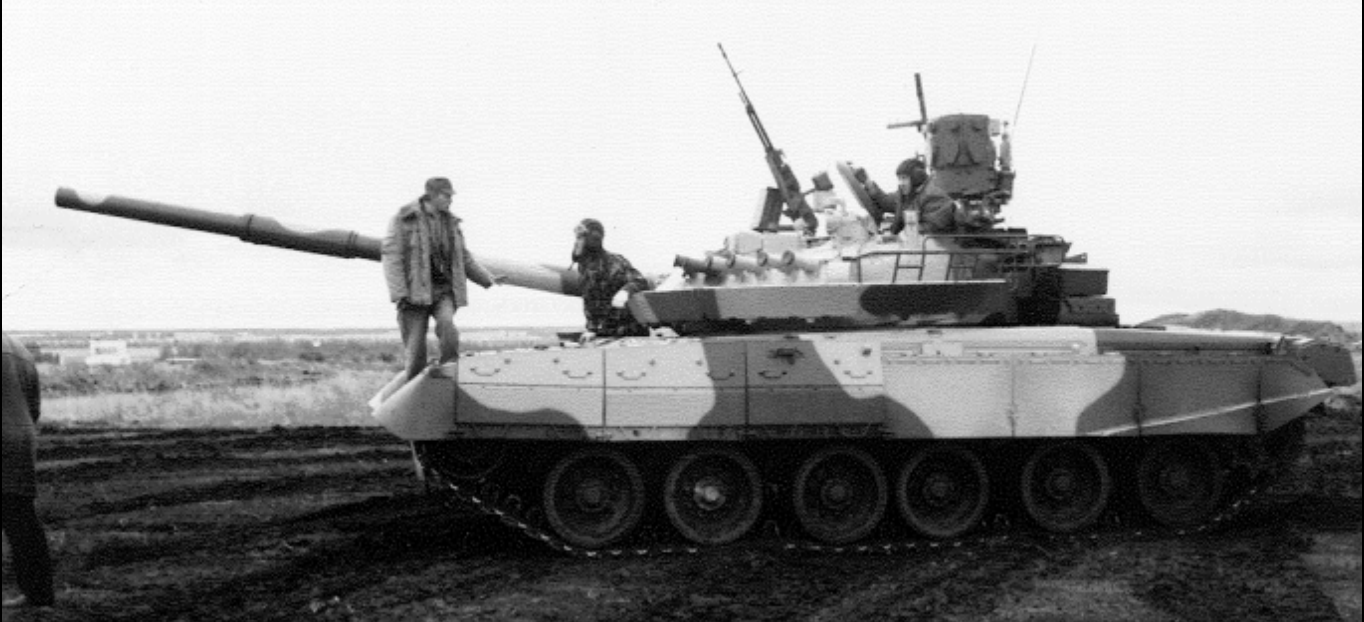
Arena is similar to Drozd, a Soviet active protection system from the late 1970s, which was installed on several T-55s during the Soviet–Afghan War. Drozd was followed by Shtora in the late 1980s, which used an electro-optical dazzlers or expendable so (smoke/IR smoke) to confuse the seeker head or defeat the user. In late 1994 the Russian Army deployed many armoured fighting vehicles to Chechnya, where they were ambushed and suffered heavy casualties. The effectiveness of Chechen rocket-propelled grenades against Russian combat vehicles prompted the Kolomenskoye machine-building design bureau to devise the Arena active protection system in the early and mid-1990s. An export variant, Arena-E, was also developed. The system has been tested on the T-80UM-1, demonstrated at Omsk in 1997.

Background

[edit]

The Soviet Union developed the first active protection system between 1977 and 1982, named Drozd (Russian: Дрозд).[2][3] This system was designed as an alternative to passive or reactive armour, to defend against enemy anti-tank weapons.[4] The system's development was stimulated in large part by the introduction of new high-explosive anti-tank warheads. Drozd was designed to destroy these warheads before they hit the armour of a vehicle being attacked.[5] It was composed of three main parts: two launcher arrays placed on either side of the gun turret and an auxiliary power unit located to the rear of the turret.[6] The arrays were controlled by two millimeter-wave radar antennae. The system used a 19 kilograms (42 lb), 107 millimeters (4.2 in) cone-shaped fragmentation warhead. Drozd could protect a tank between the elevations of −6 and 20 degrees along the vertical plane, and between 40 and 60 degrees along the horizontal plane.[2][7] Although reported to offer an 80% increase in survival rate during its testing in Afghanistan, the radar was unable to adequately detect threats and the firing of its rockets caused unacceptably high levels of collateral damage.[2] About 250 Drozd systems were manufactured, all of which were installed on T-55s belonging to the Soviet Union's naval infantry.[6]

In the late 1980s, the Soviet Army began development of the Shtora-1 electro-optical jammer.[2] It was first mounted on a T-80U in 1989, and later showcased on an Upgraded T-72B. Shtora-1 is designed to jam incoming SACLOS guided anti-tank missiles using a one-kilowatt infrared radiator.[8] The Shtora-1 entered service on the T-80UK in 1991 and on the T-90 in 1992. In 1995, it was fitted on a Ukrainian T-84. The Shtora-1 system consists of an infra-red radiator interface station, composed of the jammer, modulator and control panel, a number of forward-firing grenade discharges capable of producing a smoke screen, a laser warning receiver and a general control panel.[2] Shtora offers 360 degree all-around protection, between the elevations of −5 and 25 degrees. The system is activated when the laser warning system alerts the tank commander, who responds by pressing a button on his control panel which automatically orients the turret towards the threat. This triggers the grenade launch, creating a smoke screen to reduce the ability of the missile to lock-on the vehicle. The jammers are designed to jam the infra-red seekers on the inbound missiles.[9] According to the manufacturers, Shtora decreases the chances of a tank being hit by an anti-tank missile, such as the Dragon, by a factor of 4–5:1.[10]

The large number of Russia's casualties during the First Chechen War prompted Russia to consider the development of a new active protection system.[11] During the Battle of Grozny, for example, the Russian Army lost between 200 and 250[12] armoured fighting vehicles to Chechen rebels.[13] Vehicles which were knocked-out included main battle tanks such as the T-72 and T-80, and lighter armoured vehicles such as the BMP-2.[14] The majority of tanks deployed to Chechnya were not issued with explosive reactive armour, due to the "lack of time and funds", while some of those that were issued with reactive armour did not have the explosive charge to start the reaction.[15] Some of the most dangerous threats to Russian armour were rocket-propelled grenades fired from buildings in Grozny.[16] As a result of these vulnerabilities, Kolomenskoye developed the Arena active protection system, with the goal of providing Russian armour more reliable protection against these threats.[17]

System details

[edit]
Diagram

The Arena system was primarily designed to defeat threats such as the rocket propelled grenade and the anti-tank missile, including newer anti-tank missiles with longer ranges.[11] The active protection system can protect against missiles fired from both infantry carried rocket launchers and from helicopters, which attack the vehicle directly or by overflying it.[18] Modern rocket propelled grenades can penetrate almost 1 metre (39 in) of steel armour, posing a serious threat to tanks operating in environments of asymmetric warfare. Therefore, increased tank protection requires either an increase in armour thickness and weight, or alternatively the use of an active protection system, like Arena.[19]

The system is designed to defeat light anti-tank weapons, such as this RPG-7.

The system uses a multi-function Doppler radar, which can be turned on and off by the tank commander.[20] In conjunction with radar input, a digital computer scans an arc around the tank for threats, and evaluates which of the tank's 26 quick-action projectiles it will release to intercept the incoming threat.[21] In selecting the projectile to use for defeating the threat, the ballistic computer employs the information processed by the radar, including information such as flight parameters and velocity.[22] On the T-80UM, the computer has a reaction time of 0.05 seconds and protects the tank over a 300-degree arc, everywhere but the rear side of the turret.[10][23][24] On the T-72M1, Arena covers the frontal 260-degrees.[25] Arena ordinarily covers an elevation from -85 degrees to +65 degrees.[26] On the BMP-3M, the Arena-E covers the frontal 275 degrees from an elevation of -5 degrees to +15 degrees.[23] The system engages targets within 50 metres (55 yd) of the vehicle it is defending, and the ammunition detonates at around 1.5 metres (1.6 yd) from the threat.[10] It will engage any threat approaching the tank between the velocities of 70 metres per second (230 ft/s) and 700 metres per second (2,300 ft/s), and can disregard false targets, such as outgoing projectiles, birds and small caliber bullets.[11] If the computer detects that the projectile is heading towards an already discharged panel it can rotate the turret to point an active panel at the threat.[26] Arena works during the day and night, and the lack of electromagnetic interference allows the system to be used by multiple vehicles as a team.[27] The 27-volt system requires approximately one kilowatt of power, and weighs around 1,100 kilograms (2,400 lb).[11] Arena increases a tank's probability of surviving a rocket-propelled grenade by between 1.5–2 times.[11][28]

Shtora was a soft-kill system, designed to passively defeat anti-tank missiles by jamming their guidance systems. By contrast, Arena is a hard-kill system like Drozd, designed to destroy the warhead through the use of munitions before the missile can engage the vehicle being protected.[3]

Arena-M

[edit]

The modernized Arena-M's manufacturer claims it is able to intercept munitions coming from all aspects, including true top-attack missiles like the Javelin and that it will be installed on Russian T-80 and T-90 tanks.[29][30]

In 2023, Russian state news agency RIA Novosti reported that Russia would soon equip its T-90M and T-80BVM tanks with Arena-M. The report also said that Russia was also exploring installing the system on T-72B3 and T-72B3M tanks.[31]

Development

[edit]

Arena evolved from the earlier Shater (Tent) active protection system first fitted to the Obiekt 478M. Arena was first fitted to the Obiekt 219E, a T-80B series experimental tank that later became known as the T80BM1. The existence of this program was revealed in 1992.[32]

The Arena active protection system was first tested at the Kubinka proving grounds in early 1995, successfully defending a Russian tank against an anti-tank guided missile.[33] A Russian T-80UM-1, with Arena, was first demonstrated to the public at Omsk in late 1997.[34] Arena was also mounted on the BMP-3M modernization package, developed by the Kurganmashzavod Joint Stock Company, although the package has received no export orders.[35]

Arena was to be fitted on the Russian Black Eagle which debuted in 1998.[36] As of 2011, Arena had not entered quantity production.[37]

Exports

[edit]

As of 1996, the German–French firm TDA was reported to have been involved in further developing Arena.[26] In 1998, American defense contractor General Dynamics Land Systems (GDLS) proposed licensing Arena from KBM for sale to Turkey and the United States. For the Turkish Land Forces, GDLS sought to integrate Arena onto the M60-2000 and M1A2 Abrams. For the U.S. Army, GDLS proposed integrating Arena onto the M1A1 and M1A2 Abrams tanks.[38] As of 2000, Russia had agreed to the deal pending U.S. approval.[39]

In 2011, Russia offered India the Arena system for use on the T-72. It is unknown whether India accepted any deliveries of Arena as of 2011.[40]

Arena-E on BMP-3 model, 2008

An export variant, named Arena-E (Арена-Э), is available, costing an estimated $300,000. It weighs about 900 kilograms (2,000 lb).[23] In 2007 South Korea and KBM Design Bureau reached an agreement to fit the Arena-E on the K2 main battle tank. The agreement was worth about US$27.5 million.[37]

Notes

[edit]

References

[edit]
Revisions and contributorsEdit on WikipediaRead on Wikipedia
from Grokipedia
Arena is a Russian active protection system (APS) developed by the Kolomna-based Engineering Design Bureau (KBM) in the 1990s to defend armored fighting vehicles, particularly main battle tanks, against incoming anti-tank guided missiles (ATGMs), rocket-propelled grenades, and top-attack warheads by detecting and intercepting threats at a standoff distance using and explosive countermeasures. The system was initially designed in response to vulnerabilities observed in Russian tanks during the Chechen conflicts of 1994–1995, with its announcement at a military conference in on 20 February 1995. The original Arena system features a modular design weighing 1,000–1,100 kg, with a power consumption of 1 kW and a detection equipment volume of 30 m³, providing an 110-degree arc of protection against threats approaching at speeds of 70–700 m/s within a 50 m range. It employs a Doppler radar for automatic threat tracking and launches up to 22–26 reloadable explosive projectiles that detonate to create a fragmentation field, neutralizing threats in approximately 0.07 seconds while resetting in 0.2–0.4 seconds; this setup is immune to electronic countermeasures and does not interfere with nearby vehicles. Primarily intended for integration on T-80 main battle tanks, the system doubles vehicle survivability and reduces losses by 1.5–1.7 times against anti-tank weapons, though budget constraints limited its widespread deployment in the post-Soviet era. A modernized variant, Arena-M, builds on the original by enhancing capabilities to counter advanced threats, including top-attack ATGMs like the FGM-148 Javelin and SPIKE, as well as unmanned aerial vehicle (UAV) munitions, using improved radar sensors and maneuverable pyrotechnic countermeasures launched via impulse engines to form a debris stream near the vehicle, though as of November 2025, reports indicate limitations in intercepting small FPV drones due to radar detection issues. Integrated onto the Russian Army's T-90M and T-72B3M tanks since 2024–2025, with initial batches delivered and public showcase in May 2025, Arena-M includes a turret-mounted radar suite, rear sensors (without rear-facing radar), a computing module, and two side-mounted effector modules holding up to 12 countermeasures each, with a simple on/off interface for the commander; it has been confirmed operational as of 2025 amid ongoing debates about production capacity, and is available for export under the designation Arena-E to upgrade Russian or Soviet-era tanks.

History and Development

Origins and Precursors

The heavy losses of Russian armored vehicles during the (1994–1995), particularly in the urban Battle of , exposed critical vulnerabilities in tank protection against anti-tank guided missiles (ATGMs) and rocket-propelled grenades (RPGs). In the initial assault on on December 31, 1994, Russian forces suffered devastating casualties, with estimates indicating that 62 s were destroyed in the first month of fighting, over 98% due to impacts on unprotected upper surfaces and sides from close-range RPGs and ATGMs. This prompted the Russian military to prioritize the development of advanced hard-kill active protection systems (APS) to counter such asymmetric threats in urban and low-intensity conflicts, as acknowledged by Defense Minister , who highlighted the T-80U's shortcomings in short-range engagements and thin roof armor during a 1995 conference. The conceptual foundations of Arena trace back to earlier Soviet-era countermeasures, notably the APS, the world's first operational hard-kill system developed between 1977 and 1982 by the Tula-based Scientific Research Institute of Steel. utilized radar-guided interceptors to destroy incoming threats and was tested on modified T-55 tanks (T-55AD variants), providing a prototype for active interception against RPGs and ATGMs, though limited by its narrow and export restrictions. Complementing this, the system, introduced in the late 1980s as a soft-kill electro-optical jammer, influenced Arena's multi-layered approach by disrupting guidance on semi-automatic command-to-line-of-sight (SACLOS) missiles like TOW and ; first mounted on T-80U tanks in 1989, it emphasized non-destructive countermeasures against laser- and wire-guided threats. In the early , the Engineering Design Bureau (KBM) synthesized these precursors into the design, aiming to create a comprehensive hard-kill APS that addressed the limitations of Drozd's reactive projectiles and Shtora-1's passive jamming by integrating radar detection with explosive countermeasures. Key objectives included safeguarding s from a broad spectrum of threats, such as ATGMs, RPGs, and emerging top-attack munitions like the TOW and , with the system projected to double tank survivability in assaults and reduce losses by 1.5 to 1.7 times. This effort marked a transition toward full-scale development by the mid-, building directly on Chechen War lessons.

Initial Development and Testing

The development of the Arena active protection system commenced in the mid-1990s at Russia's Kolomna Engineering Design Bureau (KBM), motivated by the vulnerabilities of armored vehicles revealed during the First Chechen War. Building briefly on radar advancements from Soviet-era precursors such as Drozd, the system was designed to intercept incoming anti-tank guided missiles (ATGMs) and rocket-propelled grenades (RPGs) using Doppler radar and explosive countermeasures. Initial static tests occurred at the proving ground in February 1995, where the prototype successfully detected and neutralized simulated threats, including warheads and early ATGMs, in approximately 0.07 seconds. These trials demonstrated the system's ability to protect a 110-degree frontal arc on test vehicles, with evaluations confirming interception effectiveness against threats traveling at 70–700 m/s. followed on series tanks, including the T-80U variant, focusing on compatibility with existing vehicle systems and threat neutralization in dynamic scenarios. A notable public demonstration of the Arena-equipped T-80UM-1 occurred at in 1997, showcasing live interceptions to international observers. Early challenges included the system's substantial weight of approximately 1,100 kg, which reduced vehicle mobility on lighter platforms, and its power draw of 1 kW at 27 V, which strained electrical systems during prolonged operations. By 2000, despite promising test results that projected a 1.5–1.7-fold reduction in losses, the Russian Ministry of Defense opted against full-scale production due to high costs—estimated at around $300,000–$600,000 per unit—and unresolved reliability concerns related to integration and maintenance. In 1998, U.S. firm expressed interest through a licensing proposal to KBM, aiming to adapt Arena for American and Turkish vehicles, which led to preliminary joint evaluations but ultimately no adoption owing to technical and political hurdles.

Recent Modernization

The intensification of threats from top-attack munitions during the Ukraine conflict in the prompted a revival of the Arena , leading to the development of the Arena-M variant specifically designed to counter weapons like the . The Arena-M initiative was announced in by the Kolomna-based KBM Bureau, with development building on prototypes tested from 2017 onward, focusing on enhanced interception capabilities against high-angle attacks from advanced anti-tank guided missiles. Between 2023 and 2025, significant progress was made in integrating Arena-M onto operational platforms, with the first batches of upgraded T-90M and T-72B3M tanks equipped with the system delivered to in 2024 and 2025. These deliveries marked a shift toward broader fielding amid ongoing requirements. In May 2025, a T-72B3M variant fitted with Arena-M was publicly showcased for the first time during a in , highlighting its readiness for deployment. Key modernizations in Arena-M included an overall system weight of approximately 1,000–1,100 kg, alongside an upgraded providing enhanced all-around coverage via a turret-mounted suite and rear sensors (without rear-facing ) to detect and engage threats from multiple azimuths, including top-attack profiles. Efforts to adapt the system against first-person-view (FPV) drones encountered limitations, with reports in November 2025 indicating persistent detection shortcomings that hindered reliable of small, low-signature UAVs. Production advanced with operational confirmation from KBM at the IDEX 2025 exhibition in , where representatives verified Arena-M's integration and functionality on T-90M tanks for the Russian Army. Ongoing batches are being prepared for the T-80BVM, though industrial capacity constraints at facilities like have raised concerns about scaling output beyond 150–250 units annually amid sanctions and resource demands.

System Description

Core Components

The Arena active protection system comprises several key physical and electronic components designed to detect and neutralize incoming anti-tank threats. The is a single multi-functional millimeter-wave mounted on a folding mast at the rear of the turret, providing threat detection up to 50 meters in a 110° arc centered on the gun tube, excluding the rear sector. These radars evolved from the simpler setup in the precursor system. The launcher features 26 armored arranged in a collar around the turret base, each containing an that deploys a directed fragmentation pattern to destroy incoming threats. These are protected by armored covers to shield against shrapnel and small-arms fire, ensuring reliability in combat environments. The control unit is an automated processor housed within the turret, responsible for threat classification based on speeds ranging from 70 to 700 m/s and analysis to distinguish valid targets from false positives like outgoing rounds or environmental clutter. It supports a manual override option via the commander's panel, allowing intervention if needed while integrating with the vehicle's for enhanced .

Operational Mechanism

The operational mechanism of the Arena active protection system begins with the detection phase, where a multi-functional millimeter-wave mounted on a folding antenna mast continuously scans a protected sector in front of the vehicle. This identifies incoming threats, such as anti-tank guided missiles and rocket-propelled grenades, by analyzing their velocity—typically ranging from 70 to 700 m/s—and trajectory within an effective detection range of 50 meters. The system employs algorithms to filter out non-threats, including , outgoing projectiles from the vehicle itself, birds, bullets, and debris, ensuring selective engagement only against confirmed hostile incoming munitions. Upon detection, the automatically switches to tracking mode, providing on the threat's position, speed, and predicted impact point to the system's computer for rapid . The then initiates, with the computer selecting the optimal protective cartridge from one of the 22–26 arranged around the vehicle's turret. A single or pair of cartridges is launched via pyrotechnic ejectors, detonating at a standoff of 1.3 to 3.9 meters from the vehicle to create a directed fragmentation cloud that destroys the incoming through blast and shrapnel effects, without requiring a direct hit. This interception occurs within an azimuthal coverage of ±110 degrees and an range from -6° to +20°, forming a protective "dome" that neutralizes threats approaching from low trajectories typical of anti-tank weapons. The entire process from detection to achieves a reaction time of 0.07 seconds, with full engagement and neutralization completing in 0.2 to 0.4 seconds per threat, allowing for sequential handling of multiple incoming projectiles. features are integrated throughout, including safety interlocks that prevent activation unless the system is in mode and the vehicle's hatches are closed, thereby avoiding accidental near the . External warning lights signal to accompanying when the system activates, defining a 20–30 meter danger zone behind the vehicle due to potential fragmentation, while the armored silos protect against external damage and ensure no harm to the from or during operation. The system remains inoperative in non-combat conditions to mitigate risks in friendly areas.

Technical Specifications

The Arena active protection system has a total weight of approximately 1,100 kg for the original configuration, including , countermeasures, and control units. It requires a of 1 kW at 27 V DC, which integrates with the vehicle's electrical system without significant modifications. This addition increases the overall vehicle mass by approximately 2–3% for main battle tanks. The system's provides horizontal coverage of 110° centered on the gun tube. It engages projectiles traveling at velocities between 70 m/s and 700 m/s, such as antitank guided missiles (ATGMs) and rocket-propelled grenades. Deployment of the increases the vehicle's survival probability against ATGMs by 1.5–2 times compared to passive armor alone, by intercepting threats before impact. The countermeasures consist of 26 explosive projectiles arranged around the turret, with each round creating a fragmenting . Manual reloading of the system takes 10–15 minutes under field conditions, requiring access to the launchers for replacement. Arena operates reliably in temperatures ranging from -40°C to +50°C and functions in all weather conditions, including while the vehicle is moving or the turret is traversing. The radar's rate is maintained below 1% through velocity thresholding that discriminates threats from environmental clutter, such as birds or . Additionally, the system produces no that affects the vehicle's main gun firing or other onboard electronics.

Variants

Arena-E

The Arena-E represents the export variant of the Arena active protection system, adapted as a baseline from the original Russian to suit international markets through enhanced compatibility and operational simplifications. Developed in the late specifically for foreign sales following the core Arena's maturation, it entered public visibility with demonstrations in 1997 and subsequent testing on the BMP-3M to evaluate its fit on lighter armored platforms. This version prioritized broader applicability, including proposals for integration on Western systems like the M1A2 Abrams and the upgrade package. Key design adaptations in the Arena-E focus on reducing overall system weight to approximately 1,100 kg, enabling easier mounting on diverse vehicle hulls without excessive structural modifications. Controls were simplified for quicker integration and operator training, while maintaining the essential radar-guided logic. These changes aimed to lower barriers for adoption by cost-sensitive customers. The system retains the original's core mechanism for detecting and neutralizing anti-tank guided missiles and rocket-propelled grenades at velocities of 70–700 m/s but uses export-compliant electronics to adhere to international regulatory standards. Equipped with 24–26 fragmentation projectiles arranged in a protective belt around the turret, the Arena-E creates a defensive zone effective against side and rear threats within a 50-meter . It was showcased at international arms exhibitions throughout the , highlighting its all-weather, automatic operation and multi-threat engagement potential to attract global interest. These demonstrations emphasized its reliability in controlled intercepts without collateral risks to nearby dismounted troops, thanks to integrated warning signals. As of 2025, it remains available for to existing Russian or Soviet-era tanks. A notable limitation of the Arena-E in its initial configuration is the lack of dedicated top-attack countermeasures, with coverage primarily oriented toward azimuthal threats from -5° to +15° , making it optimized for side and rear on lighter vehicles like infantry fighting vehicles rather than heavy tanks requiring omnidirectional defense. This focus aligns with its role in enhancing survivability for export-oriented lighter armored forces against common low-trajectory anti-armor weapons.

Arena-M

The Arena-M represents an advanced iteration of the Arena active protection system, tailored for integration into Russian main battle tanks to address contemporary s such as top-attack munitions and high-velocity projectiles. Developed by the Engineering Design Bureau, it builds on the original system's core principles while incorporating enhancements for broader threat detection and capabilities. Key upgrades in the Arena-M include enhanced radar sensors to detect and counter top-attack weapons like the and Spike missiles, enabling defense against overhead trajectories that the original Arena could not reliably engage. The system also features turret-mounted providing frontal and lateral coverage, with additional rear sensors (no rear-facing ), enabling protection against threats from multiple aspects but with potential blind spots, allowing it to intercept incoming projectiles at speeds of 70–700 m/s from distances of up to 50 meters. These modifications reduce the overall weight to approximately 1,000 kg, improving compatibility with vehicle platforms without excessive burden. First batches were delivered to in 2024–2025, integrated on T-90M and T-72B3M tanks. Development of the Arena-M began around 2016, with initial testing reported in 2017 on and series tanks, and it achieved operational integration between 2023 and 2025, particularly on the T-90M variant. This timeline reflects post-2013 unveilings and iterative improvements driven by real-world combat needs, enhancing effectiveness against munitions through refined . Further enhancements include multi-threat prioritization algorithms that allow the to simultaneously track and engage multiple incoming projectiles, coupled with a response time of approximately 0.07 seconds from detection to interception. The Arena-M maintains with the original Arena's launcher silos, upgraded with smart fuses in the interceptors for precise timing and reduced collateral risk. However, 2025 assessments indicate ongoing vulnerabilities to first-person-view (FPV) drones due to and software limitations in detecting small, low-signature . Additionally, the increased complexity has raised demands, necessitating specialized training and logistical support for sustained operational readiness.

Operational Deployment

Vehicle Integrations

The Arena active protection system was initially integrated on the Russian T-80UM main battle tank, with the first public demonstration occurring at Omsktransmash in late 1997. The upgraded Arena-M variant began operational integration on the T-90M tank in 2024, with initial deliveries of equipped units to Russian Ground Forces reported in early 2025. Similarly, Arena-M installations on the T-72B3M commenced in 2025, enhancing the survivability of this modernized T-72 derivative against anti-tank guided missiles and rocket-propelled grenades. Integration efforts have also extended to the T-80BVM, where Arena-M installations began in May 2025, following plans announced in 2023, to provide comprehensive protection across upgraded T-80 variants. For lighter armored platforms, the Arena-E export variant has been incorporated into the BMP-3M infantry fighting vehicle as part of its modernization package, offering defensive capabilities against incoming projectiles without compromising the vehicle's amphibious operations. Adapting systems to these vehicles requires targeted modifications, including the installation of protective around the turret base to house countermeasures, which necessitates structural reinforcements to maintain balance and integrity during high-mobility maneuvers. Electrical upgrades are essential to accommodate the and control units' power demands, often involving enhanced onboard generators or battery reinforcements to ensure reliable operation in combat environments. Critically, these integrations are designed to avoid interference with core vehicle functions, such as autoloaders on and series tanks or electro-optical sighting systems, preserving firing rates and targeting accuracy. Arena's modular architecture facilitates retrofitting across the family, allowing bolt-on installation of antennas, countermeasures, and control modules with minimal hull alterations, thereby extending service life for legacy tanks. This design adds approximately 10-15 cm to the turret profile due to the elevated array, slightly increasing the vehicle's but enabling 360-degree threat detection.

Combat Applications and Effectiveness

The Arena-M active protection system has seen deployment on T-90M tanks during the Russia-Ukraine conflict starting in 2025, with initial batches integrated and delivered to frontline units by mid-2025. However, as of November 2025, production challenges have limited the number of equipped vehicles, with only initial batches deployed. In combat operations, it has demonstrated effectiveness in intercepting anti-tank guided missiles (ATGMs) and rocket-propelled grenades (RPGs), particularly those employing shaped-charge warheads, thereby providing a claimed 1.5–2 times increase in vehicle survivability according to manufacturer assessments from KBM . Independent analyses from November 2025 highlight limitations in real-world performance, including failures against first-person view (FPV) drones due to radar detection shortcomings and against tandem warheads that overwhelm the system's interception timing. As of late 2025, confirmed combat intercepts of top-attack munitions remain unverified by independent sources, despite laboratory demonstrations and unconfirmed footage from earlier in the year suggesting potential capability. KBM maintains that the system achieves an 80–90% intercept rate against targeted threats under optimal conditions, though field evaluations indicate vulnerabilities to radar jamming that can degrade detection reliability. Operationally, Arena-M reduces crew exposure by neutralizing incoming projectiles before impact, enhancing tank survivability in direct engagements. However, its hard-kill mechanism poses risks of to nearby from explosive fragments, limiting close-support tactics. Additionally, the system's finite countermeasures—typically requiring manual reloading outside of active —can lead to vulnerabilities during prolonged fights against sustained threats.

International Aspects

Export Offers and Negotiations

Efforts to export the Arena active protection system began in the late 1990s, with U.S.-based proposing to license the technology from Russia's Kolomna-based KBM for potential integration on American and Turkish armored vehicles, including demonstrations of Arena on upgraded tanks. This initiative highlighted early interest in adapting the system for Western platforms like the M1A2 Abrams, though it did not lead to production contracts. In parallel, the export-oriented Arena-E variant was considered for integration on the South Korean main battle tank during discussions in the mid-2000s. Subsequent negotiations in the focused on Asian markets, but faced significant hurdles. offered the Arena system to in 2011 for upgrading its fleet, amid broader modernization talks, yet no deliveries materialized due to competing priorities and cost concerns. Export challenges intensified after , when Western sanctions restricted access to dual-use technologies and components essential for Russian defense production, severely limiting international sales of systems like Arena. The Arena-E's estimated unit cost of around $300,000 per installation further deterred buyers, especially when competing against more affordable or locally developed alternatives such as Israel's system, which gained traction in global markets through partnerships like those with for the K2 . Geopolitical tensions and sanctions continued to impede progress into the , with no major export contracts secured for Arena despite ongoing promotional efforts. At the IDEX 2025 exhibition in , KBM emphasized the system's operational maturity on Russian T-90M tanks and actively sought Middle Eastern partners to bolster prospects. Demonstrations of Arena-E integrated on vehicles like the BMP-3M at international arms fairs, including events in the , showcased its capabilities to potential buyers but failed to convert interest into deals, underscoring persistent barriers in pricing, integration, and .

Adopted Systems Abroad

The Arena active protection system has not been operationally adopted by any foreign military as of 2025, remaining primarily in service with Russian forces. Despite demonstrations and upgrades to the export-oriented Arena-E variant, including enhanced integration capabilities for platforms like the T-90MS, no production contracts or deliveries to international clients have been verified. Early export efforts in the 2000s and 2010s, such as considerations for integration on the South Korean tank, did not progress to adoption, with opting instead for its domestically developed Korean Active Protection System (KAPS). Similarly, offers to equip Indian T-72 tanks were made around 2011, but no installations or operational use have been confirmed, as Indian armored vehicles continue to rely on passive defenses like explosive reactive armor. Kolomna KBM continues to promote Arena variants at international defense exhibitions, targeting potential markets in the region amid growing demand for advanced countermeasures, though no verified combat applications or large-scale integrations abroad exist.

References

Add your contribution
Related Hubs
User Avatar
No comments yet.