Hubbry Logo
Arthur PinkArthur PinkMain
Open search
Arthur Pink
Community hub
Arthur Pink
logo
8 pages, 0 posts
0 subscribers
Be the first to start a discussion here.
Arthur Pink
Arthur Pink
from Wikipedia

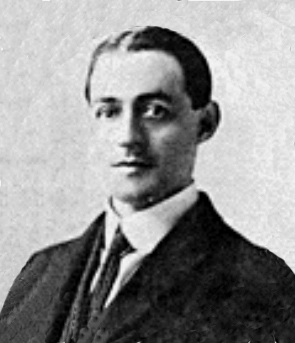
Arthur Walkington Pink (1 April 1886 – 15 July 1952) was an English Bible teacher who sparked a renewed interest in the exposition of Calvinism or Reformed Theology. Little known in his own lifetime, Pink became "one of the most influential evangelical authors in the second half of the twentieth century."[1]

Key Information

Biography

[edit]

Arthur Walkington Pink was born in Nottingham, England, to a corn merchant, a devout non-conformist of uncertain denomination, though probably a Congregationalist.[2] Otherwise, almost nothing is known of Pink's childhood or education except that he had some ability and training in music.[3] As a young man, Pink joined the Theosophical Society, an occult gnostic group in contemporary England, and he apparently rose to enough prominence within its ranks that Annie Besant, its head, offered to admit him to its leadership circle.[4] In 1908 he renounced Theosophy for evangelical Christianity.[5]

Desiring to become a minister but unwilling to attend a liberal theological college in England, Pink very briefly studied at Moody Bible Institute in Chicago in 1910 before taking the pastorate of the Congregational church in Silverton, Colorado. In 1912 Pink left Silverton, probably for California, and then took a joint pastorate of churches in rural Burkesville and Albany, Kentucky.[6] In 1916, he married Vera E. Russell (1893–1962), who had been reared in Bowling Green, Kentucky, and Pink's next pastorate was at Scottsville Baptist Church, Scottsville, Kentucky.[7] Then the newlyweds moved in 1917 to Spartanburg, South Carolina, where Pink became pastor of Northside Baptist Church.[8]

By this time Pink had become acquainted with prominent dispensationalist Fundamentalists, such as Harry Ironside and Arno C. Gaebelein, and his first two books, published in 1917 and 1918, were in agreement with that theological position.[9] Yet Pink's views were changing, and during these years he also wrote the first edition of The Sovereignty of God (1918), which argued that God did not love sinners who had not been predestined unto salvation, and that He had deliberately created "unto damnation" those who would not accept Christ.[10] Whether because of his Calvinistic views, his nearly incredible studiousness, his weakened health, or his lack of sociability, Pink left Spartanburg in 1919 believing that God would "have me give myself to writing."[11] But Pink then seems next to have taught the Bible—with some success—in California for a tent evangelist named Thompson while continuing his intense study of Puritan writings.

In January 1922, Pink published the first issue of Studies in the Scriptures, which by the end of the following year had about a thousand subscribers and which was to occupy most of his time for the remainder of his life and become the source for dozens of books, some arranged from Studies articles after his death.[12] In 1923 Pink suffered a nervous breakdown, and he and his wife lived with friends in Philadelphia until he regained his health. In 1925, the Pinks sailed to Sydney, Australia, where he served as both an evangelist and Bible teacher at the Ashfield Tabernacle. But his impolitic preaching of Calvinist doctrine resulted in a unanimous resolve of the Baptist Fraternal of New South Wales not to endorse him. From 1926 to 1928, Pink served as pastor of two groups of Strict and Particular Baptists.[13]

Returning to England, Pink was invited to preach at a pastorless church in Seaton, Devon; but though he was welcomed by some members, the overseers thought his installation as pastor would split the church.[14] In the spring of 1929, Pink and wife returned to her home state of Kentucky where he intended to become pastor of the Baptist church in Morton's Gap. Once again his hopes were unrealized. To a friend he wrote, "I am more firmly convinced today than I was 14 months ago that our place is on the 'outside of the camp.' That is the place of 'reproach,' of loneliness, and of testing."[15] In 1930 Pink was able to start a Bible class in Glendale, California, while also turning down opportunities to speak in some Fundamentalist churches.[16] The following year, the Pinks rented an unpainted wooden house in Union County, Pennsylvania, where a small group met; then in 1933 they moved to York, Pennsylvania.

Pink decided that if his ministry was to be totally one of writing, he could do that just as well in England. In September 1934 he and his wife moved to Cheltenham, Gloucestershire, near honorary agents of Studies in the Scriptures. Pink seems to have finally given way to despair. To a friend he wrote "that those of my friends who would dearly like to help me are powerless to do so; while those who could, will not. And in a very few years at most it will be too late. What I have gone through the last seven years is so reacting on my physical and mental constitution, that ere long I shall be incapacitated even if doors should be opened unto me. However, I can see nothing else than to attempt to seek grace to bow to the Lord's sovereign pleasure, and say, 'Not my will, but thine be done.'"[17]

In 1936, the Pinks moved to Hove, on the south coast near Brighton. After the death of his father in 1933, Pink received enough of the estate to allow him and his wife to live very simply without financial concerns; and between 1936 until his death in 1952, Pink devoted himself completely to Studies in the Scriptures. Vera believed her husband's almost unrelenting work schedule unhealthy, and she remarkably succeeded in having him take up stamp collecting as a hobby.[18] In 1940, Hove became a regular target of German air raids, and the Pinks moved to Stornoway, Isle of Lewis, Outer Hebrides, Scotland, where they remained for the rest of his life. The island was a bastion of Calvinism, but church services were held mostly in Scots Gaelic, and visitors were not especially welcomed in any case.[19] Pink governed his time in study and writing with "military precision." To a friend he wrote that he went out to shop and get exercise for an hour, six days a week, but that otherwise he never left his study except when working in a small garden. While in Hove, he even published a note in Studies advising subscribers that "it is not convenient for us to receive any visitors, and respectfully ask readers who may visit these parts to kindly refrain from calling upon us, but please note that we are always glad to hear from Christian friends."[20] Rather than attend church, on Sunday mornings, Pink spent time ministering to readers by letter.[21]

In 1951 Vera became aware that Pink was failing. He lost weight and was in pain but refused to take any medicine that might dull his mind and hinder him from completing his work. He died on 15 July 1952. His last words were "The Scriptures explain themselves." Pink left enough written material to allow publication of Studies until December 1953.[22] Vera Pink survived her husband by ten years and after his death made new friends and mingled more freely with others.[23]

Influence

[edit]

It is alleged that Pink's personality made it difficult for him to have a successful pastoral ministry. He has been criticized for being too individualistic and of too critical a temperament, lacking the benefit of thorough theological discussions with other men of similar gifts. One young pastor, Rev. Robert Harbach who corresponded with Pink for years remembered a very different Pink, who possessed a "pastor's heart." Pink's correspondence with Harbach (until Pink's failing health ended their correspondence in 1949) was warm, heartfelt and fatherly. Early in their correspondence, Pink wrote "I want you to feel perfectly free to call on me for any help I may be able to render you. I am in touch with a number of young pastors, and I deem it part of my work, and a privilege, to offer what advice I can."[24]

Pink's acclaimed contemporary Martyn Lloyd-Jones received spiritual benefit from reading Pink and recommended him to others. To one young minister, he said, "Don't waste your time reading Barth and Brunner. You will get nothing from them to aid you with preaching. Read Pink."[25] But Lloyd-Jones also said, "If I had behaved as Pink did, I would have achieved nothing. Nothing at all… I had to be very patient and take a very long-term look at things. Otherwise I would have been dismissed and whole thing would have been finished."[26] Furthermore, without the assistance and companionship of his wife, who dedicated herself completely to him and his work, Pink would have (as he freely admitted) "been overwhelmed" and probably would have achieved little even in writing.[27]

Theologically Pink was rejected during his lifetime because of his opposition to Arminianism; but after his death, there was a major shift of evangelical opinion towards Calvinistic theology. By 1982, Baker Book House had published 22 of Pink's books and sold 350,000 total copies. Nevertheless, it was Pink's Sovereignty of God that did "more than any other in redirecting the thinking of a younger generation." After Banner of Truth Trust republished it in 1961—modifying it to remove Pink's alleged hyper-Calvinism—the book sold 177,000 copies by 2004.[28][a]

Publications

[edit]
  • The Sovereignty of God
  • The Attributes of God
  • Satan and His Gospel
  • Gleanings in Genesis
  • Gleanings in Exodus
  • Gleanings in Joshua
  • Gleanings from Elisha
  • Gleanings from Paul
  • Practical Christianity
  • The Divine Inspiration of the Bible
  • Interpretation of the Scriptures
  • Profiting from the Word
  • The Beatitudes and the Lord's Prayer
  • The Seven Sayings of the Saviour on the Cross
  • The Doctrine of Salvation
  • Eternal Security
  • An Exposition of Hebrews Vol 1.
  • An Exposition of Hebrews Vol 2.

Bibliography

[edit]

Notes

[edit]

References

[edit]
[edit]
Revisions and contributorsEdit on WikipediaRead on Wikipedia
from Grokipedia
Arthur Walkington Pink (1886–1952) was a British-American theologian, pastor, and prolific author renowned for his staunch Calvinist expositions on divine sovereignty, , and biblical exposition, most notably through his seminal work The Sovereignty of God (1918). Born on April 1, 1886, in , , to a devout Christian father, , and his wife Agnes, Arthur grew up in a religious household but rebelled in his youth, becoming involved with the and the . His dramatic conversion to evangelical occurred in 1908 at age 22, prompted by his father's challenge using Proverbs 14:12 ("There is a way that seemeth right unto a man, but the end thereof are the ways of death"), which led him to embrace orthodox biblical faith. Eager to deepen his understanding, Pink immigrated to the in 1910 to attend in , where he immersed himself in Reformed theology and dispensational . Pink's pastoral ministry spanned several countries and denominations, beginning with brief pastorates in rural churches in (1910–1912) and (1912–1913), followed by a more extended role at the Baptist Church in Morton’s Gap, (1915–1917), where he met and married his wife, Vera Russell, in November 1916; the couple had no children. He continued pastoring in Spartansburg, (1917–1920), before moving to in 1925 to serve as pastor of the Sydney Bible Institute and churches in until 1928. Disillusioned with institutional church life and facing personal hardships, including the , Pink and his wife returned to in 1928 but soon relocated back to the United States, finally settling permanently in in 1934 and moving to on the Isle of Lewis, , in 1940, where they lived reclusively for the remainder of their lives. Vera passed away in 1962, and both were buried in unmarked graves in Sandwick Cemetery. Theologically, Pink was a convinced Calvinist who emphasized core doctrines such as God's absolute sovereignty, human , , and justification by faith alone, often critiquing and modernism in his writings. Initially influenced by during his American years, he underwent a significant shift in toward historic and hyper-Calvinistic views, which isolated him from broader evangelical circles but deepened his focus on . His literary output was extraordinary, comprising over 50 books—including The Seven Sayings from the Cross (1919), Gleanings in the Psalms (1921–1923), and The Life of David (1925)—and more than 2,000 articles serialized in his self-published monthly magazine Studies in the Scriptures, launched in 1922 and circulated to a modest but devoted "paper flock" of around 1,000 subscribers worldwide until his death on July 15, 1952. During his lifetime, Pink remained largely obscure, pastoring small congregations and from remote locations, including Swengel, (1921) and Millmont, (1931), due to his perfectionist tendencies and aversion to denominational politics, which led to frequent moves and conflicts. However, his works gained posthumous acclaim in the mid-20th century, influencing prominent figures such as , who urged readers to "read Pink," and contemporary Reformed leaders like John MacArthur. Today, Pink's writings continue to shape conservative Protestant thought, particularly within Baptist and Presbyterian traditions, underscoring his enduring legacy as a defender of biblical orthodoxy amid theological liberalism.

Biography

Early Life and Family

Arthur Walkington Pink was born on 1 April 1886 in , , near the River Trent, to Thomas Clement Pink, a corn merchant born in 1849, and Agnes Ann Hunt, whom he had married in 1884. The family resided at 4 Claremont Terrace on Francis Street in a working-class neighborhood, where Thomas worked diligently in the local markets before fulfilling his duties as a local in the Nottingham East Circuit of the Methodist church, a role he undertook from at least 1885. Pink had two younger siblings, Frank (born around 1888) and Agnes Louise (born around 1890), and the household emphasized Christian devotion, with his mother reportedly dedicating him to Christ before his birth. Pink's childhood unfolded in this devout environment, marked by regular family worship, Bible readings led by his father, and strict observance, including putting away toys on Saturdays and exposure to works like John Bunyan's and John Foxe's Book of Martyrs. Despite this, family tensions emerged as young Pink began to rebel against the faith, influenced by a lack of deeper personal conviction. His formal education was limited to local schooling until age 16, after which he pursued training in vocal and instrumental music while familiarizing himself with English literature and . In his teenage years, Pink increasingly engaged in secular pursuits, drifting from his upbringing amid godless companions, which culminated around 1905 in his involvement with the Theosophical Society—a movement founded in 1875 that blended Eastern religions with occult and anti-Christian elements. This period of spiritual curiosity outside Christianity was deepened by the emotional weight of his father's death after the 1901 census, which removed the steady Christian influence of Thomas and left Pink more vulnerable to external temptations.

Conversion and Education

Arthur Walkington Pink underwent a dramatic spiritual conversion in 1908 at the age of 22 in his family home in , . Raised by devout Christian parents, Thomas and Agnes Pink, he had earlier rejected the faith of his upbringing, becoming deeply involved in and spiritism, even receiving an invitation from to lead the movement in . One evening, as he hurried upstairs past his father, the elder Pink quoted Proverbs 14:12—"There is a way that seems right to a man, but its end is the way to death"—a verse that pierced his conscience and initiated three days of anguished and self-examination in his room, ending in his surrender to Christ and abandonment of practices. Immediately after his conversion, Pink proclaimed to his former Theosophist associates, marking the beginning of his evangelistic zeal. Without access to formal training, he pursued rigorous self-study of the and , immersing himself in Scripture and key works that shaped his emerging convictions. Influenced by R.A. Torrey's writings, such as What the Bible Teaches, and early dispensationalist literature, Pink initially aligned with premillennial and Arminian-leaning interpretations prevalent in evangelical circles at the time. In 1910, two years after his conversion, Pink sought structured theological education by immigrating to the and enrolling at the in . However, dissatisfied with what he perceived as superficial instruction, he departed after only two months, opting instead to continue his independent studies. By , through extensive reading of Puritan and Reformed authors like John Owen and Jonathan Edwards, Pink had transitioned to a robust Calvinist framework, emphasizing God's sovereignty in salvation. This shift intensified in the 1920s when he repudiated , critiquing its division of Scripture into rigid eras as undermining covenantal unity and leading to erroneous .

Ministry Career

Arthur Walkington Pink began his formal ministry career in 1910 after a brief stint at in , accepting his first pastorate at the Congregational church in , a remote mining town. This two-year tenure from 1910 to 1912 marked the start of his pastoral work amid challenging frontier conditions, during which Pink's theological convictions increasingly aligned with , influencing his preaching and leading to tensions with more Arminian-leaning congregations. He then pastored the First Baptist Church in Garden Grove, , , from 1912 to 1913. Following his time in California, Pink engaged in itinerant preaching across the United States, including pastorates in Albany, Burkesville, and Scottsville, Kentucky, from 1915 to 1916, where he met and married his wife, Vera Russell, in November 1916 in Scottsville, and a role at Northside Baptist Church in Spartanburg, South Carolina, from 1917 to 1920, where doctrinal differences over baptism and sanctification contributed to his resignation. In 1920–1921, while in California, Pink had a notable clash with prominent dispensationalist Harry A. Ironside during a teaching ministry, highlighting early opposition to his emerging anti-dispensational views. These short tenures reflected growing conflicts with fundamentalist circles, prompting a shift toward independent work, including the launch of his periodical Studies in the Scriptures in 1922, which began publishing early articles on key doctrines. In 1925, Pink relocated to , where he pastored in for five years, initially preaching at churches like Ashfield Baptist Tabernacle and Burton Street Tabernacle before taking the pulpit at Belvoir Street Particular Baptist Church from September 1925 to 1927. His emphasis on divine sovereignty and rejection of drew sharp opposition from fundamentalist leaders within the Baptist Union, including disendorsement by the Ministers’ Fraternal in 1925 for his Calvinistic teachings on , which they viewed as incompatible with broader evangelical sentiments. This period saw Pink's evolving theological views solidify, but mounting resistance from both dispensationalists and those wary of strict limited his influence. Returning to the in 1928 after a brief stay in , Pink attempted further pastoral roles but faced continued doctrinal disputes, resulting in short tenures and unsuccessful invitations that underscored his marginalization within American fundamentalist networks. By late 1928, following his resignation from the Summer Hill church in earlier that year due to irreconcilable differences over human responsibility and , Pink permanently stepped away from formal pastoral positions, redirecting his energies toward itinerant preaching, extensive writing, and editing Studies in the Scriptures, which by 1926 had already begun circulating his influential articles on topics like the sovereignty of .

Later Years and Death

In 1916, Arthur Pink married Vera E. Russell in Scottsville, , forming a childless union that lasted until his death; Vera served as his devoted editor, secretary, and companion during their increasingly isolated years. The couple shared a close , with Vera handling much of the administrative work for his writings while they lived in relative poverty. Following their return from in 1928, the Pinks had a brief stay in , , , in 1928–1929, before returning to the , where they lived in , , and until 1934. They then resettled in until 1940, amid financial hardships and limited social contact. That year, due to German air raids during , they relocated to on the Isle of Lewis in the of , embracing a life of seclusion that persisted until Pink's death. In , they maintained a modest existence, supported primarily by subscriptions to Pink's publications, far removed from public ministry. Pink's daily routine in these years centered on intensive Bible study and writing, often laboring late into the night by hand to produce his monthly periodical Studies in the Scriptures, which he began in 1922 and continued uninterrupted for three decades. This disciplined schedule, sustained with Vera's assistance, allowed him to reach a small but dedicated audience of around 500 subscribers, whom he termed his "paper flock." Pink's health began to decline in 1951 due to a painful form of , leading to his death on July 15, 1952, at the age of 66 in . His funeral was sparsely attended, with fewer than ten people present, and he was buried in an in Sandwick Cemetery, . After his passing, Vera meticulously organized and prepared his unpublished manuscripts for publication, ensuring many of his works reached wider audiences in the ensuing decades.

Theology

Development of Beliefs

Following his conversion in 1908, Arthur Pink initially embraced Arminian and dispensational leanings, shaped by the and the Keswick movement's emphasis on victorious Christian living. During his time at from 1910 to 1912, where dispensational was prominent, Pink absorbed these views, viewing as a cooperative process involving human response and seeing history divided into distinct dispensations culminating in a future millennial kingdom. This period marked a transition from his pre-conversion entanglement with —a mystical blending Eastern and Western esoteric traditions—to an evangelical framework, though still retaining semi-Arminian elements like free-will decisionism. During his early ministry in the 1910s, Pink's Calvinistic convictions strengthened, culminating in his full embrace of five-point by 1918, as articulated in early editions of The Sovereignty of God, where he emphasized , , and without compromising the gospel's universal offer. This evolution distanced him from broader fundamentalist circles, particularly as hyper-Calvinistic leanings emerged in the 1920s during his time in Australia. The writings of Puritan theologians profoundly impacted Pink's maturing convictions, particularly John Owen's treatises on divine decrees and perseverance, and Jonathan Edwards's defenses of God's absolute sovereignty in works like Freedom of the Will. Around 1930, Pink abandoned upon adopting historic , eventually aligning with and explicitly critiquing in articles published in 1952. A personal in 1927, marked by severe depression amid ministry isolation in , further refined Pink's emphasis on God's over human will, prompting on assurance and sanctification as divine initiatives rather than personal striving. This episode, echoing earlier breakdowns, solidified his conviction that true spiritual vitality stems from submission to providential rule, free from self-reliant efforts.

Core Doctrinal Positions

Arthur W. Pink's theology was firmly rooted in strict , emphasizing 's absolute sovereignty in through the doctrines collectively known as the five points of Calvinism. He taught , asserting that humanity, due to the fall of , is spiritually dead and utterly incapable of seeking or contributing to without divine initiative, as humans are enslaved to and under 's wrath by nature. Pink viewed this depravity as affecting every faculty of the —mind, heart, will, and conscience—rendering natural man morally paralyzed and blind to spiritual truths. Complementing this, he upheld , where sovereignly chooses individuals for based solely on His eternal decree and good pleasure, not on any foreseen merit or in the . Pink further affirmed limited atonement, maintaining that Christ's sacrificial death was specifically intended and efficacious only for the elect, securing their redemption as part of God's unchanging counsel rather than a general provision for all humanity. He described irresistible grace as the Holy Spirit's sovereign work in effectually drawing the elect to faith, overcoming their inherent resistance and making them willing in the day of God's power, without possibility of refusal. On perseverance of the saints, Pink insisted that those elected and regenerated are eternally preserved by God's power, unable to ultimately fall away, as their security rests in His immutable promise and decree. Central to these soteriological tenets was Pink's rejection of "free will" in salvation, arguing that the human will is in bondage to sin and cannot choose God apart from regenerating grace, thus rendering salvation entirely a divine monergistic act. Foundational to Pink's system were his views on God's attributes, particularly sovereignty, immutability, and holiness, which he saw as underpinning all doctrine. God's sovereignty means He governs all things according to His eternal purpose, working everything after the counsel of His will for His glory, with no event occurring outside His decree. Immutability denotes that God's purposes and character are unchangeable, without variation or shadow of turning, ensuring the stability of His electing grace. Holiness, in Pink's teaching, highlights God's perfect moral purity and hatred of sin, manifesting in His just wrath against the reprobate while glorifying His mercy toward the elect. Pink's strict Calvinism led to accusations of hyper-Calvinist leanings, particularly in his early career, where he emphasized limited evangelistic calls, preaching primarily to those showing conviction of rather than indiscriminately offering to all as a . Contemporaries and later critics, such as those in Reformed circles, critiqued this as downplaying human responsibility and the free offer of , potentially hindering broad , though Pink himself engaged in evangelistic efforts like tent meetings and affirmed the duty to proclaim to every creature. Over time, his views evolved toward a more balanced historic , rejecting hyper-Calvinism's extremes while maintaining a strong anti-Pelagian stance against any notion of autonomous human will in salvation.

Writings

Major Works

Arthur W. Pink's most influential book, The Sovereignty of God, first appeared in 1918 and was revised in 1928, establishing itself as a foundational text on the theme of divine control over creation, salvation, and human history. Drawing extensively from Scripture, the work defends God's absolute authority against human-centered views of religion, emphasizing , providence, and the compatibility of divine sovereignty with human responsibility. Written during Pink's early years as an in the United States, it reflects his early embrace of Reformed themes amid dispensational influences, later revised to align with his matured . It was initially published independently before gaining wider recognition. Another key contribution, The Attributes of God, originated as a series of articles in 1930-1931 and was published in book form during his lifetime, offering a systematic exploration of 31 aspects of 's character, including , immutability, holiness, and veracity. Pink structures the treatment thematically, using biblical exposition to illustrate how each attribute informs and conduct, with the goal of countering shallow conceptions of prevalent in his era. The work drew from Pink's extensive notes, providing a devotional framework that connects doctrinal truths to everyday . Pink's Gleanings in the Scriptures series, developed from the through the , comprises verse-by-verse commentaries on select biblical books, such as Gleanings in Genesis (1922), Gleanings in Exodus (1924–1929), and Gleanings in (1945–1953). These volumes deliver detailed, chapter-by-chapter analysis aimed at uncovering the spiritual and theological depths of narratives, often linking them to fulfillment in Christ. The later volumes, such as Gleanings in , were composed amid Pink's isolated ministry in , expanding initial periodical articles into fuller treatments using supplementary notes. Many of these works originated as serialized articles in his periodical Studies in the Scriptures. Notable among his earlier writings is Gleanings in the Psalms (1921–1923), which applies an expository lens to the to demonstrate its role in personal devotion, , and doctrinal instruction. This work, like others in his oeuvre, seeks to equip believers with practical tools for deriving transformative insights from . Throughout his career, Pink's remained expository and devotional, prioritizing clear scriptural interpretation over abstract speculation to edify lay readers in sound doctrine and holy living. His total output encompassed over 50 books, with the majority—more than 30—composed after , frequently revised and expanded from unpublished manuscripts and serial contributions to his monthly periodical. These efforts underscore his commitment to accessible theology rooted in the and Reformed tradition. Many of these works originated as serialized articles in his periodical Studies in the Scriptures.

Periodicals and Publication Challenges

In 1922, Arthur Pink founded the monthly periodical Studies in the Scriptures, a 28-page expository digest that ran uninterrupted for over 30 years until 1953, producing 368 issues in total. The content focused on sequential studies, beginning with of John and progressing through other books, while emphasizing and doctrinal exposition through six to eight articles per issue. Pink self-financed the publication entirely through reader subscriptions, which peaked at around 1,000 worldwide, limiting its reach but sustaining a dedicated audience among English-speaking . Economic struggles were acute, as the family lived frugally—often in near-poverty—to cover costs, with Pink frequently working late into the night to meet production demands. Printing occurred in during Pink's years in , but distribution faced significant disruptions during , exacerbated by wartime paper shortages that affected output and mailing reliability across the and beyond. Vera Pink, his wife, played a crucial editorial role, handling much of the administrative and proofreading work amid their isolated circumstances, and she compiled and issued the final volume in 1953 using her husband's prepared material after his death in 1952. In addition to Studies in the Scriptures, Pink briefly published the serial Eternal Evangel in the and contributed articles to journals such as Prophetic Truth, though these efforts were short-lived compared to his main periodical.

Legacy

Posthumous Recognition

After Arthur Pink's death in 1952, his widow Vera played a crucial role in ensuring the preservation and wider distribution of his writings by sending the remaining manuscripts, including unpublished materials and back issues of his periodical Studies in the Scriptures, to individuals associated with the newly formed Banner of Truth Trust in the years following his death. This initiative paved the way for the revival of his publications, with the Trust reprinting The Sovereignty of God in 1961 as the first major effort to reintroduce his work to a broader . The reprints quickly gained traction, leading to substantial sales growth; as of March 2002, The Sovereignty of God had sold over 176,000 copies through Banner of Truth editions. Pink's full corpus of works was republished comprehensively by the 1970s, involving key publishers such as Banner of Truth, Moody Press, and Baker Books, which issued titles like Gleanings in Exodus and The Attributes of God. By the , digital accessibility expanded further with the establishment of the Arthur W. Pink Archive online at awpink.org in 2019, providing free access to digitized manuscripts, letters, sermons, and periodicals. In the 2020s, Pink's works continue to see renewed interest through fresh reprints and adaptations, including audiobooks narrated for platforms like Audible. Assessments as of highlight enduring print runs, with ongoing demand sustaining multiple editions and translations that maintain Pink's relevance in theological publishing. Biographical efforts have also contributed to his posthumous recognition, notably Iain H. Murray's The Life of Arthur W. Pink, first published in 1981 and revised and enlarged in 2004 to incorporate newly available manuscripts and letters. Additionally, Richard P. Belcher's Arthur W. Pink: Born to Write—A Biography, originally released in 1980 with a revised edition in 1993, offers an early detailed account of Pink's life and literary output.

Influence on Modern Thought

Arthur Pink's writings played a pivotal role in the mid-20th-century revival of , particularly through the 1961 republication of his seminal work The Sovereignty of God, which reintroduced doctrines of sovereign grace, , and divine to an evangelical landscape that had largely marginalized Reformed orthodoxy. This resurgence was notably advanced by influential figures such as , who praised Pink's doctrinal depth and advised aspiring ministers to prioritize his scriptural expositions over contemporary theologians like and , emphasizing their superior alignment with . Pink's emphasis on rigorous biblical exposition contributed significantly to the resurgence of among modern Reformed leaders. John MacArthur, for instance, has lauded Pink as a "master of biblical exposition" whose works demand careful, discerning engagement with Scripture's full counsel, influencing MacArthur's own commitment to verse-by-verse preaching. Similarly, frequently quotes Pink in teachings on God's and human depravity, incorporating his books into personal study and recommendations for doctrinal formation. Pink's themes on divine attributes and align with critiques of modern theology by figures like , who highlighted the repugnance of ignoring divine . In the New Calvinism movement of the 2000s to 2020s, Pink's writings served as foundational resources in Reformed seminaries, fostering a renewed emphasis on covenant theology and God's absolute sovereignty. However, Pink has faced critiques for alleged hyper-Calvinism, particularly in his early views on the gospel offer, which some interpret as limiting evangelism by restricting proclamation to those showing signs of conviction, potentially undermining the free offer of the gospel. Modern scholarship defends Pink against this charge, arguing that his mature theology aligns with historic Calvinism's balance of divine sovereignty and human responsibility, as evidenced in later revisions to his works and his consistent calls for preaching the full gospel. Recent 2025 analyses, such as those in the Australian Presbyterian, highlight Pink's ongoing relevance amid global Reformed revivals, noting his impact extends beyond the and to strengthen in and other regions through translated works and reprint editions that continue to shape preaching and theological worldwide.

References

Add your contribution
Related Hubs
User Avatar
No comments yet.