Hubbry Logo
Asa PackerAsa PackerMain
Open search
Asa Packer
Community hub
Asa Packer
logo
8 pages, 0 posts
0 subscribers
Be the first to start a discussion here.
Asa Packer
Asa Packer
from Wikipedia

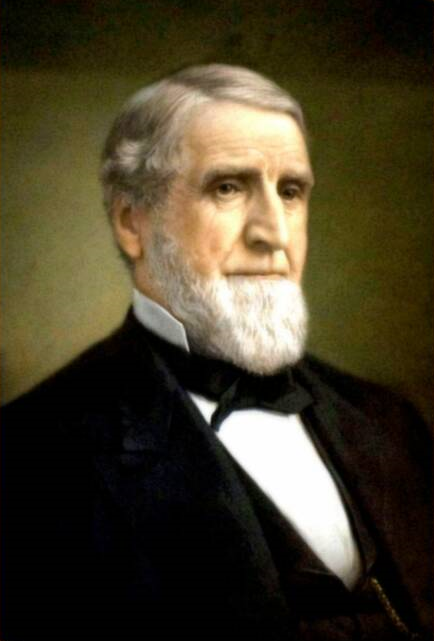
Asa Packer (December 29, 1805 – May 17, 1879) was an American businessman who pioneered railroad construction, was active in Pennsylvania politics, and founded Lehigh University in Bethlehem, Pennsylvania. He was a conservative and religious man who reflected the image of the typical Connecticut Yankee. He served two terms in the United States House of Representatives from 1853 to 1857.

Key Information

Early life

[edit]

Packer was born in Mystic, Connecticut in 1805 and moved to Pennsylvania, where he became a carpenter's apprentice to his cousin Edward Packer in Brooklyn Township, Pennsylvania. He also worked seasonally as a carpenter in New York City and later in Springville Township, Pennsylvania, where he met his wife Sarah Minerva Blakslee.

Early career

[edit]
Lehigh University's first library, constructed at the cost of $100,000 by Packer as a memorial to his daughter, Lucy Packer Linderman
Packer Memorial Church at Lehigh University, erected by Mary Packer Cummings in memory of her family
Asa Packer statue at Lehigh University

Packer and his wife settled on a farm. In the winter months, he went to Tunkhannock, Pennsylvania on the Susquehanna River and used his skill in carpentry to build and repair canal boats. This continued for 11 years.[1] In 1833, Packer settled in Mauch Chunk in present-day Jim Thorpe, Pennsylvania, where he became the owner of a canal boat, which transported anthracite coal from Pennsylvania's Coal Region to Philadelphia. He then established A. & R. W. Packer, a firm that built canal boats and locks for the Lehigh Coal & Navigation Company.[2]

Railroad

[edit]

Packer urged the Lehigh Coal & Navigation Company to adopt a steam railway as a coal carrier, but the project was not then considered feasible.[3] In 1851, he became the major stockholder of the Delaware, Lehigh, Schuylkill & Susquehanna Railroad Company, which became the Lehigh Valley Railroad in January 1853, and they built a railway line from Mauch Chunk to Easton between November 1852 and September 1855.[4] Construction commenced on the Mauch Chunk-Easton line just as Packer's five year charter was to expire.[3] He built railways connecting the main line with coal mines in Luzerne and Schuylkill counties, and he planned and built the extension of the line into the Susquehanna Valley and thence into New York state to connect at Waverly with the Erie Railroad.[2] Among his clerks and associates during this period was future businessman and soldier George Washington Helme.

Politics

[edit]

Packer also took an active part in politics. In 1842 and 1843, he was a member of the Pennsylvania House of Representatives. In 1843 and 1844, he was county judge in Carbon County under Governor David R. Porter.

Congress

[edit]

He served two terms as a Democratic member of the U.S. House of Representatives beginning in 1853.[2]

1868 Democratic Convention

[edit]

George Washington Woodward at the 1868 Democratic National Convention entered Packer's name as a candidate for President as a Favorite son despite himself not being present or actively campaigning. Packer earned a nearly consistent 26 delegates through the 14th round of the ballot and due to him being little known outside of Pennsylvania, with the statement from one delegate; "Who in the hell is Packer?" being used as the headline for many New York journalists, who started to see Packer as an unoffensive moderate candidate that could increase the Democratic party's electability.[5] However, the convention instead went with Horatio Seymour, for largely the same reason but also due to Seymour's name recognition. Interestingly, Woodward attempted to forge a Packer - Blair ticket, however, Francis Preston Blair Jr. was instead named Seymour's running-mate.[6] Packer made an unsuccessful bid for the Democratic Party's Presidential nomination in 1868.

Campaign for governor

[edit]

He got the party's nod for the 1869 Pennsylvania Governor's race, but lost the campaign to John W. Geary by 4,596 votes, one of the closest statewide races in Pennsylvania history.

Lehigh University

[edit]

Packer endeavored to found a university in the Lehigh Valley, an industrial region located in eastern Pennsylvania.[7] The university was located on South Mountain in Bethlehem, Pennsylvania, which then was a Moravian religious community that later became the global manufacturing and corporate headquarters of Bethlehem Steel, the second-largest steel manufacturing company in the world for most of the late 19th and early 20th centuries.

In 1865, Packer gave $500,000 and 60 acres (243,000 m²), later increased to 115 acres (465,000 m²), for the establishment of a technical trade school for engineers. In 1866, the year following the end of the American Civil War, the school, named Lehigh University, was chartered and began instruction.[2] The first main building, Packer Hall, was completed in 1869.[8] With Packer's generosity, Lehigh was able to offer education tuition free for its first 20 years from 1871–1891. Economic troubles in the 1890s forced the university to then reverse this policy.

After the initial gift of one half million dollars, Packer continued to support the university and took an active role in its management.[9] His will bequeathed $1,500,000 as an endowment for the university, $500,000 to the university library, and granted the university an interest of nearly one third in his estate upon its final distribution.[2]

Personal life

[edit]

Packer was married to Sarah Minerva Blakslee (1807–1882), daughter to Zophar and Clarinda Whitmer Blakslee. The Packers had seven children:

  • Lucy Packer Linderman (1832–1873)
  • Catherine Packer (1836–1837)
  • Mary Hannah Packer Cummings (1839–1912)
  • Malvina Fitzrandolph Packer (1841–1841)
  • Robert Asa Packer (1842–1883)
  • Gertrude Packer (1846–1848)
  • Harry Eldred Packer (1850–1884)

Death

[edit]

Packer died on May 17, 1879 in Philadelphia, at age 73.[10]

Legacies

[edit]
Stereotype card of the Asa Packer Mansion

Packer's residence, Asa Packer Mansion, became a museum, opened for tours in 1956, and was named a National Historic Landmark in 1985. Packer was a member of St. Mark's Episcopal Church in Jim Thorpe, Pennsylvania and contributed large amounts of money to this Gothic Revival Church. St. Mark's was declared a National Historic Landmark in 1987. There is an elementary school in Bethlehem, Pennsylvania named after Packer.

Lehigh University continues to honor him with a large portrait by Charles A. Boutelle and an annual celebration of Founder's Day.[11] A life-sized bronze by Karel Mikolas, donated by the Lehigh University Class of 2003 and dedicated in 2008, stands outside Lehigh University's Alumni Memorial Building.[12] Lehigh Valley Railroad named a passenger train after him, the Asa Packer which ran to and from New York City to Pittston, Pennsylvania until 1959.

See also

[edit]

References

[edit]
[edit]
Revisions and contributorsEdit on WikipediaRead on Wikipedia
from Grokipedia
Asa Packer (December 29, 1805 – May 17, 1879) was an American industrialist, railroad executive, philanthropist, and founder of , whose fortune derived primarily from developing infrastructure for anthracite coal transport in eastern . Born in , Packer apprenticed as a carpenter in , after moving there in 1822, later operating canal boats before shifting to railroads amid the mid-19th-century boom in coal and iron industries. In 1851, he acquired control of the struggling , Lehigh, Schuylkill and Susquehanna Railroad, personally financing its extension from Mauch Chunk to Easton by 1855 and renaming it the , of which he remained president until his death, transforming it into a major artery for coal shipment to New York markets. Packer's political involvement as a Democrat included two terms in the (1842–1843) and service as Carbon County judge, culminating in an unsuccessful 1869 gubernatorial campaign marred by unproven bribery allegations tied to his railroad interests, though he was later exonerated. His defining legacy, however, lies in : in 1865, he endowed with $500,000—the era's largest gift to an educational institution—and 115 acres in South Bethlehem for a technical school aimed at training local youth in and industry, providing further funds to sustain it through early financial woes. Packer also donated millions for in Mauch Chunk, including churches, a , and facilities, reflecting his commitment to community advancement without reliance on intervention.

Early Life

Birth and Upbringing in Connecticut

Asa Packer was born on December 29, 1805, in , to Packer Jr. and Desire Packer. His family resided on the Packer Homestead along the west bank of the , reflecting the modest agrarian life typical of early 19th-century . Packer's upbringing was marked by humble circumstances and rudimentary formal education, limited to the basic instruction available in local district schools of the era. With his mother passing away in 1811 and limited resources, young Packer contributed to family labor from an early age, fostering self-reliance that later influenced his entrepreneurial pursuits. By his mid-teens, he sought opportunities beyond the constrained rural environment of Connecticut, setting the stage for his relocation westward.

Migration to Pennsylvania and Initial Settlements

In 1822, at the age of 17, Packer departed , and walked westward to Hop Bottom in , marking his initial migration from to the developing coal regions. There, he apprenticed as a carpenter under his Packer, acquiring practical skills in construction amid limited formal education confined to district schools in ./) He subsequently worked as a carpenter and engaged in farming and local contracting in the Brooklyn-Hop Bottom area of Susquehanna County, establishing his early economic foothold through manual labor and small-scale enterprises. Packer married Sarah Blakslee, a local woman from Susquehanna County, on October 20, 1827, and the couple initially resided in the region, where they began raising a family amid the agricultural and rudimentary industrial pursuits of . By the early , economic opportunities in transportation drew him southward; in the winter of 1832, responding to demand for barge captains on the , Packer relocated to Mauch Chunk (present-day ) in Carbon County, purchasing a canal boat to haul anthracite downriver to markets. This move solidified his settlement in the , transitioning from rural carpentry and farming to involvement in the burgeoning canal trade, which laid the groundwork for his later ventures in regional infrastructure.

Business Career

Entry into Canal and Boating Operations

In 1833, Asa Packer relocated to Mauch Chunk (present-day , the hub of the Lehigh Coal and Navigation Company's canal operations, where he entered the boating trade by operating and personally captaining a canal boat to transport down the to markets. This initial venture capitalized on the growing demand for Pennsylvania's , facilitated by the canal's completion in the early , and quickly proved profitable due to Packer's diligent and the region's boom. Leveraging his prior experience as a carpenter, Packer soon expanded into construction and repair, building specialized decked canal boats designed for extended hauls that could navigate connecting waterways, including direct shipments to via bays and rivers. In partnership with his brother Robert, he established two transportation lines along the and another route from Pottsville to New York, becoming the first to deliver in unbroken cargoes over this extended path, which enhanced efficiency and reduced transshipment costs. These operations integrated boating with early merchandising and leasing of lands, such as the Room Run Mines acquired in , laying the groundwork for Packer's broader involvement in regional resource extraction and transport. Following the destructive flood of 1841, Packer collaborated with associates like W. Harlan on reconstruction efforts, further solidifying his stake in the while maintaining a fleet of boats for hauling. By the late , his boating enterprises had scaled significantly, with output from associated mines increasing over threefold by Robert's death in 1848, though precise fleet sizes remain undocumented in primary records; this phase marked Packer's transition from individual boat ownership to managing integrated canal-based logistics amid competition from emerging railroads.

Transition to Railroads and Early Ventures

In the early , Asa Packer shifted his business focus from canal boating to railroads, driven by the inefficiencies of water transport for anthracite amid growing demand and seasonal limitations of . Having amassed capital through operating a fleet of canal boats on the since the 1830s, Packer identified railroads as a more reliable means to connect coal fields in the to eastern markets. In October 1851, Packer acquired nearly all the controlling stock in the unfinished Delaware, Lehigh, Schuylkill and Susquehanna Railroad Company, a line chartered in 1846 but stalled due to financial issues, thereby becoming its major stockholder and assuming significant personal financial risk. The company was renamed the Lehigh Valley Railroad Company on January 7, 1853, with Packer serving as its first secretary and treasurer. Construction commenced on May 1, 1853, following surveys initiated on May 11, 1852, targeting a 45.72-mile route from Mauch Chunk (now ) to Easton to facilitate shipment. Packer financed much of the project personally, drawing on profits from a partnership with Joseph Noble and Barnabas Hammett in canal and lumber operations, despite challenges including rocky terrain, labor shortages, and limited initial capital. The line partially opened on June 11, 1855, between Allentown and Easton, extending fully to Mauch Chunk by October 1, 1855, and generating $2,781.62 in profit during its first three months of operation. This venture marked Packer's pivotal entry into railroading, laying the foundation for regional economic expansion through enhanced transport.

Founding and Expansion of the Lehigh Valley Railroad

The Lehigh Valley Railroad was incorporated on April 21, 1846, through an act of the Pennsylvania General Assembly, with Asa Packer serving as a primary projector and early advocate for the venture aimed at transporting anthracite coal from the Lehigh Valley region. Packer, leveraging his experience in canal boating and anthracite transport, secured the charter's implementation by financing initial surveys and organization efforts, including the appointment of commissioners such as himself to open stock books by November 1846. Between 1852 and 1855, Packer personally financed and oversaw the construction of the railroad's main line from Mauch Chunk (present-day ) eastward to , a distance of approximately 46 miles, in exchange for the company's stocks and bonds. The line's completion in September 1855 marked a pivotal advancement in regional coal shipment capabilities, with initial anthracite tonnage moving efficiently to markets via connections to the . Under Packer's leadership, the railroad pursued aggressive expansion starting in the early 1860s. In 1864, it absorbed the Beaver Meadow Railroad, incorporating an existing 11-mile feeder line originally chartered in 1830 to serve nearby coal mines, thereby enhancing access to anthracite resources. The company further extended its network by acquiring the North Branch Canal in 1866, adding over 70 miles of waterway infrastructure that complemented rail operations for coal distribution. By 1869, connections reached the New York State Finger Lakes region, including a primary coal transport line to Athens, Pennsylvania, which broadened market access amid surging Civil War-era demand for fuel. These developments solidified the Lehigh Valley Railroad's role in the anthracite trade, with Packer directing leasing arrangements and mergers to extend reach without immediate full ownership costs.

Business Strategies and Economic Contributions

Packer's business strategies emphasized aggressive infrastructure investment to capitalize on the anthracite coal trade, transitioning from seasonal canal operations to year-round rail transport despite the prohibitive costs of railroad construction over canals. In 1851, he acquired majority control of the moribund Delaware, Lehigh, Schuylkill and Susquehanna Railroad Company, reorienting it toward efficient coal hauling from the Lehigh Valley's mines to eastern markets, a move that leveraged his prior experience in canal boating to mitigate risks through established coal supply chains. Starting in 1852, Packer financed construction primarily through personal credit, directing engineer Robert Sayre to build eastward from Mauch Chunk (now Jim Thorpe) to Easton, completing the initial 46-mile line by September 1855, which immediately boosted coal shipments by enabling reliable, weather-independent delivery. Under Packer's leadership, the Lehigh Valley Railroad (LVRR) pursued rapid expansion to secure competitive advantages, incorporating feeder lines and connections to broaden market access for coal and agricultural products, with Packer overseeing development of the entire Lehigh Valley's mineral and timber resources. By 1869, extensions linked the system to New York State networks, culminating in direct New York City access that year, transforming the LVRR into a 400-mile network by the 1870s focused on high-volume bulk freight. This vertical integration strategy—controlling transportation from inland mines to coastal ports—minimized intermediaries and maximized margins on anthracite, which Packer positioned as the railroad's core revenue driver, accounting for over 70% of tonnage by the Civil War era. Packer's ventures significantly advanced Pennsylvania's economy by establishing the LVRR as the primary conduit for , fueling industrial expansion in the Northeast and generating sustained employment in , rail operations, and related industries. The railroad's completion unlocked the Lehigh Valley's reserves, facilitating annual shipments that grew from modest post-1855 volumes to millions of tons by the , underpinning production and urban heating demands that propelled regional GDP growth. By providing efficient links between Pennsylvania's interior resources and seaboard markets, Packer's spurred ancillary development, including and manufacturing hubs in and Allentown, while creating thousands of construction and operational jobs that stabilized post-canal economies in northeastern Pennsylvania. His foresight in rail over canal investment yielded dividends that not only recouped initial outlays but also positioned the LVRR as a of the state's industrial ascent, with revenues funding further expansions that integrated the trade into national supply chains.

Political Career

Service in Pennsylvania State Legislature

Asa Packer entered politics as a Democrat, securing election to the from County for the 1841 session. He was reelected for the subsequent 1842–1843 terms, representing the district that encompassed Mauch Chunk (now ), where he resided and operated early business ventures in coal transportation. /) During his legislative service, Packer supported infrastructure-related measures aligned with his canal and emerging railroad interests, including advocacy for the creation of Carbon County in 1843 from portions of and Monroe counties, which facilitated regional in anthracite regions. This act elevated Mauch Chunk to status, enhancing local governance efficiency for mining and transport operations. No records indicate leadership roles or committee assignments beyond standard membership, reflecting his focus on practical economic rather than partisan prominence at the state level./) His tenure ended in 1843, after which he was appointed associate judge of Carbon County, transitioning from elected to judicial service.

Tenure in U.S. Congress

Asa Packer served two terms as a Democratic representative from in the United States , first elected to the 33rd and taking office on March 4, 1853, for the term ending March 3, 1855. He represented in eastern , including and Monroe counties, areas central to his and transportation enterprises. Re-elected to the 34th , Packer continued serving until March 3, 1857, when he declined renomination to prioritize his expanding railroad business. Throughout his tenure, he aligned with Democratic priorities favoring limited federal intervention while advocating measures supporting in Pennsylvania's industrial sectors. A notable position Packer took was his vote in favor of the Kansas-Nebraska Act on May 30, 1854, which organized the territories of and under , effectively repealing the Missouri Compromise's restriction on 's expansion. Biographer W. Ross Yates interpreted this support as driven by Packer's interest in promoting western settlement and facilitating a , viewing the act as a pragmatic step for national infrastructure over strict sectional debates on . This stance reflected his broader pro-business outlook, though it contributed to partisan realignments that weakened Northern Democrats amid rising abolitionist sentiment. Packer's congressional record emphasized internal improvements tied to transportation, consistent with his role in canal boating and early rail ventures, though specific committee assignments remain sparsely documented in primary records. As a Pennsylvania Democrat, he navigated tensions between party orthodoxy against expansive federal spending and regional demands for protective tariffs and rail subsidies to bolster coal and iron industries. His service occurred amid pre-Civil War debates on economic policy, but no major floor leadership or authored legislation is prominently attributed to him, with focus shifting post-Congress to private enterprise.

Role in the 1868 Democratic National Convention

At the , convened from July 4 to 9 at in , Asa Packer emerged as one of 12 candidates for the presidential nomination, primarily supported by the delegation as a "" candidate. Nominated by George W. Woodward, who delivered a lengthy speech extolling Packer's and political service, the effort aimed to honor Packer's stature within the state while signaling potential for his gubernatorial bid the following year. Packer's national profile remained low, prompting confusion among out-of-state delegates and reporters, one of whom reportedly murmured, "Who in the hell is Asa Packer?" upon hearing his name. On the initial ballot, Packer secured fifth place with votes confined almost exclusively to Pennsylvania's unanimous delegation of 52, reflecting scant broader appeal amid the convention's deadlocked proceedings over Reconstruction-era divisions and opposition to Republican policies. The Pennsylvania bloc persisted through 14 ballots before switching support, contributing to the eventual nomination of on the 22nd ballot after multiple failed attempts, including Woodward's unsuccessful push for a Packer-Francis Preston Blair Jr. ticket pairing Packer with the Missouri Democrat. Packer's candidacy underscored Pennsylvania Democrats' preference for a proven industrialist and Union loyalist over more divisive figures like Southern sympathizers, though his lack of national recognition and the party's internal fractures—exacerbated by post-Civil sectional tensions—limited any viable path to the top spot. 's subsequent defeat by in the general highlighted the Democrats' challenges, with Packer's brief convention role serving more as state-level positioning than a serious national contention.

1869 Gubernatorial Campaign and Associated Controversies

In July 1869, the nominated Asa Packer as its candidate for governor at its state convention, following his earlier involvement in the where he received some delegate support but was not selected for the presidential ticket. Packer's nomination leveraged his reputation as a self-made industrialist and his prior service in the and U.S. , positioning him as a champion of working-class interests against the Republican incumbent, , a Civil War general seeking re-election. The campaign centered on economic recovery post-Civil War, railroad expansion, and opposition to Republican policies on Reconstruction and taxation, with Democrats portraying Packer as an advocate for Pennsylvania's laboring classes amid industrial growth. The election occurred on October 12, 1869, resulting in a narrow Republican victory, with Geary receiving 290,552 votes to Packer's 285,956, a margin of 4,596 votes out of 576,508 total cast. This outcome represented one of the closest gubernatorial contests in history up to that point, with Republicans maintaining a slim statewide despite Democratic strength in rural and coal-producing regions. Some contemporary accounts and later historical analyses suggested irregularities, including potential Republican vote manipulation in , may have influenced the result, though no formal investigations substantiated widespread fraud. Controversies during the campaign primarily stemmed from partisan Republican attacks exploiting Packer's business background, including allegations that his had overcharged the federal government for coal supplies during the Civil War, though these claims lacked documented evidence of illegality and were denied by Packer's supporters as politically motivated smears. Additional accusations involved , with claims that Packer falsely claimed residency to minimize liabilities, and criticism for failing to site railroad facilities in Allentown, which opponents argued deprived local workers of jobs. Packer faced charges of draft dodging for not serving in the Union Army during the war, despite his age (over 55 at outbreak) and business exemptions, and unverified reports of campaign bribery, such as distributing $5,000 to delegates or providing free whiskey at rallies, which Democrats dismissed as fabricated by a hostile press. These issues, amplified in Republican-leaning newspapers, framed Packer's vast wealth—estimated in the millions—as evidence of undue corporate influence, contrasting with Geary's military heroism, though Packer countered by emphasizing his rags-to-riches story and contributions to infrastructure.

Philanthropy

Establishment of Lehigh University

In 1865, Asa Packer donated $500,000—the largest single endowment to an educational institution at that time—and 57 acres of land in South Bethlehem, Pennsylvania, to establish a technical university aimed at the "intellectual and moral improvement" of the Lehigh Valley region. Despite suggestions to name it Packer University, Asa Packer chose Lehigh University to reflect his connection to the Lehigh Valley and the Lehigh Valley Railroad. This gift reflected Packer's vision for an institution focused on practical education in engineering and sciences, drawing from his experience in railroads and industry to train skilled professionals for regional economic needs. The donation's scale underscored Packer's commitment to local development, as the funds supported initial construction and operations without reliance on tuition from students. Packer appointed key trustees, including William Bacon Stevens as the first president of the board, to oversee the project, and the legislature granted a on February 9, 1866, incorporating as a polytechnic institute empowered to award degrees in the liberal arts, sciences, and applied fields. The emphasized technical instruction, aligning with Packer's intent to foster in and transportation amid the post-Civil War industrial boom. Classes commenced on September 1, 1866, with an initial enrollment of 40 students in preparatory and programs, housed in temporary facilities on the donated site. Subsequent contributions from Packer expanded the endowment; in 1871, he provided an additional $500,000, enabling free tuition for all students and further infrastructure development, though these built upon the foundational 1865 gift that secured the university's viability. By prioritizing empirical training over classical curricula, Packer's establishment positioned Lehigh as a pioneer in American technical , directly causal to its role in advancing industrial capabilities in eastern .

Additional Charitable and Institutional Gifts

In 1873, Packer donated $100,000 to Lehigh University specifically to fund the construction of its first library, which was dedicated in honor of his daughter, Lucy Packer Linderman. Packer served as a principal benefactor for St. Mark's Episcopal Church in Mauch Chunk (present-day Jim Thorpe), Pennsylvania, funding its initial Gothic Revival construction around the 1840s and its rebuilding after a fire to accommodate his wife Sarah. In support of regional healthcare, Packer and his sons contributed $10,000 in 1876 toward acquiring the site for St. Luke's Hospital's new facility in , aiding its expansion from earlier quarters. Packer also extended aid to in Allentown, providing a gift that facilitated the addition of courses to its curriculum during the .

Personal Life

Family and Marriage

Asa Packer married Sarah Minerva Blakslee on January 23, 1828. Following their marriage, the couple rented and farmed land owned by Sarah's father, though crop yields were poor. Packer and Blakslee had seven children, four of whom reached adulthood: daughters Lucy Evelyn (1832–1873) and Mary Hannah (1839–1912), and sons Robert Asa (1842–1883) and Harry Eldred (1850–1884). The three children who died young were Catherine Lippincott Packer (1836–1837), Malvina Fitz Randolph Packer (1841–1841), and Gertrude Packer (1846–1849). The Packers marked their fiftieth wedding anniversary on January 23, 1878, after more than five decades of marriage; their union lasted fifty-one and a half years until Asa's death in 1879. survived him by three years, dying in 1882. Asa, , and their two adult sons were interred together in Mauch Chunk Cemetery.

Residences and Lifestyle

Asa Packer's principal residence was the Asa Packer Mansion in Mauch Chunk, Pennsylvania (present-day Jim Thorpe), completed in 1861 at a cost of $14,000. Designed by Philadelphia architect Samuel Sloan, the Italianate villa featured a cast iron frame, three stories with 18 rooms, a red-ribbed tin roof, and a central cupola overlooking the town. The Packer family settled into the home on October 16, 1861, where it served as their primary dwelling until after his death. Prior to the mansion's construction, Packer had relocated to Mauch Chunk in the spring of 1833 following his early ventures in carpentry and canal boating. Following the family's move of business headquarters to in the 1860s, Packer retained the Mauch Chunk property as his main home, underscoring his ties to the coal and rail operations centered there. In 1874, he commissioned a nearby Italianate mansion as a wedding gift for his son Harry, reflecting his commitment to family amid growing wealth. Packer's lifestyle evolved from modest agrarian beginnings—renting and farming his father-in-law's land after marrying Sarah Minerva Blakslee in 1828—to the comforts of a railroad , marked by the opulent yet functional design of his . The home's high-quality construction and preserved Victorian interiors indicate a household emphasizing durability and family stability over extravagance, consistent with Packer's self-made and dedication to local institutions. Despite his fortune, detailed accounts of daily personal habits remain limited, with emphasis in historical records on his industrious routine and 50th wedding anniversary celebration in 1878.

Death and Estate

Final Years and Health Decline

In the decade following his 1869 gubernatorial campaign, Asa Packer focused on managing the and expanding his philanthropy, particularly through additional endowments to , which he had founded in 1865. He continued to demonstrate vigor in his affairs, remaining mentally sharp and physically robust into his seventies. On January 23, 1878, Packer and his wife, , marked their golden wedding anniversary, underscoring the stability of his personal life amid professional demands. Packer's health took a sudden turn in early 1879 when he experienced an unfortunate fall, precipitating a brief but fatal illness. Despite his prior activity, this incident marked the onset of his decline, leading to his peaceful death on May 17, 1879, in , , at the age of 73.

Will, Inheritance, and Posthumous Distribution

Asa Packer's last , executed with a codicil prior to his death on May 17, 1879, placed his entire estate—primarily consisting of stock in the Lehigh Valley Railroad, valued at approximately $54.5 million (equivalent to roughly $1.8–4 billion in 2020s dollars)—into a trust managed by five named executors. The trust structure, as specified in the will, aimed to maintain undivided control and influence over the railroad's management through these trusted trustees. The trustees were instructed to divide the net annual income equally among his three surviving children, Mary Hannah Packer, Robert Asa Packer, and Harry Eldred Packer. This structure ensured lifelong income support for these beneficiaries while preserving the principal corpus. Smaller specific bequests included provisions for his widow, Sarah Minerva Packer, granting her lifetime occupancy of the family mansion in Mauch Chunk (present-day ), with occupancy rights transferring to Mary Packer thereafter. The will granted each child a limited testamentary power of appointment over half of their prospective share of the principal, allowing them to direct it to designated individuals or institutions upon their death, while the other half would pass to their issue or revert to the trust's other beneficiaries in default. Robert Asa Packer died in 1883 without issue, and Harry Eldred Packer died in 1884 without issue, consolidating income payments to Mary Packer during the interim. Mary, who married Charles Henry Cummings in 1885, received the full income from the undivided estate as the sole surviving child until her death on November 15, 1912. Through her own will, she exercised her power of appointment to allocate significant portions—exceeding $10 million—to Lehigh University, funding expansions such as the Packer Memorial Church (dedicated 1887 but enhanced posthumously) and library facilities, thereby amplifying her father's earlier lifetime endowment. The trust's core provisions stipulated termination twenty-one years after the death of the survivor among , Mary, and Harry Packer, effectuated in 1933 to comply with Pennsylvania's . With no surviving direct issue from Asa Packer's three surviving children, the principal—augmented to over $100 million through trustee-managed investments in railroads and other assets—distributed primarily to Lucy Linderman's surviving children (Asa Packer's grandchildren), including Garrett B. Linderman Jr. and siblings, as fallback beneficiaries. Court proceedings, notably Packer's Estate (246 Pa. 116, 1914), resolved disputes over assignments, bankruptcies, and trust interpretations, upholding the allocations while enforcing Mary's appointments and excluding invalid claims; for instance, one nephew's trustee interest was reassigned but ultimately limited. This posthumous framework reflected Packer's intent to prioritize family support and institutional legacies over immediate outright , sustaining intergenerational wealth transfer amid legal scrutiny.

Legacy

Industrial and Economic Influence

Packer's primary industrial legacy stemmed from his leadership in railroad development, particularly through the (LVRR), which he financed and expanded starting in 1852 to connect Mauch Chunk (now ) to , by 1855. This 46-mile line initially focused on transporting coal from the Lehigh Valley's mines to eastern markets, bypassing slower systems and enabling faster, more reliable shipment volumes that reached millions of tons annually by the post-Civil War era. By securing state legislative support during his tenure as a legislator in the 1840s and 1850s, Packer obtained the charter and bonds necessary for construction, leveraging his political influence to prioritize rail over competing interests. The LVRR's growth under Packer's direction extended northward, linking to New York State by 1869 and integrating with broader networks, which amplified its role in regional commerce by facilitating not only coal but also iron ore, passengers, and manufactured goods. This infrastructure catalyzed economic expansion in northeastern Pennsylvania's anthracite basin, where coal output surged due to improved market access; for instance, the railroad's operations streamlined supply chains for downstream industries like iron smelting, as Packer acquired coal fields to secure raw materials and reduce production bottlenecks. His strategic monopolization of early-stage resources fostered vertical integration, allowing affiliated ironworks to process more anthracite efficiently, though it drew criticism for concentrating economic power among a few industrialists. Economically, Packer's ventures generated substantial wealth—estimated at $20 million by his death in 1879—and stimulated job creation in rail construction, , and , contributing to the Lehigh Valley's transformation from agrarian isolation to an industrial hub. The LVRR's dominance in coal freight, carrying over 10 million tons by the 1870s, underscored its causal role in fueling national industrialization, as anthracite powered urban heating and steel production amid rising demand. While Packer's model emphasized private capital and engineering innovation over government subsidies, it exemplified the era's dynamics, where rail barons like him shaped regional prosperity but also entrenched dependencies on extractive industries vulnerable to market fluctuations.

Political and Social Assessments

Asa Packer identified as a Democrat throughout his political career, beginning with election to the for terms in 1841 and 1842. He subsequently served as Carbon County judge for five years before election to the , representing Pennsylvania's 13th district from March 4, 1853, to March 3, 1857. In Congress, Packer backed the Kansas-Nebraska Act of 1854 to promote western settlement under , opposed reductions in import tariffs to protect domestic industry, and supported legislation prohibiting the international slave trade. A northern Democrat, Packer personally opposed slavery and supported the Union cause during the Civil War, including by sustaining wages for employees who enlisted in 1864. , he pursued higher office as the Democratic nominee for U.S. president at the 1868 convention, finishing behind , before securing the party's gubernatorial nomination in for the October 12, 1869, election. He lost narrowly to Republican incumbent by 4,596 votes amid allegations from opponents, including the Lehigh Register, of wartime profiteering via inflated coal prices to the federal government, of convention delegates, through claimed residency, and evasion of . Contemporary political assessments portrayed Packer as a Jacksonian Democrat rooted in New England frugality and self-reliance, valued by his party for unifying fractured postwar ranks through business prestige rather than oratory, though critics highlighted his infrequent campaigning and perceived opportunism. His congressional support for territorial slavery expansion via popular sovereignty reflected pragmatic party loyalty over abolitionist zeal, despite Unionist wartime actions. Socially, Packer was evaluated as a devout Episcopalian emphasizing discipline and industriousness, channeling wealth into institutions for ethical formation amid rapid industrialization. His affiliation with the Pennsylvania Colonization Society from October 8, 1866, until approximately 1877 aligned him with efforts to facilitate African American emigration to , signaling postwar endorsement of racial over domestic integration amid Reconstruction debates. Assessments of his character underscored simplicity and restraint—eschewing ostentation despite a fortune exceeding $50 million by the —positioning him as an exemplar of capitalist virtue grounded in religious restraint, though his limited public articulation of views left interpretations reliant on actions and affiliations.

Modern Recognition and Debates

perpetuates Asa Packer's legacy through its annual celebration, a event honoring his vision as founder, which began in 1879 and continued into 2025, marking 146 years of tradition focused on the university's past, present, and future. The event underscores Packer's establishment of the institution in 1865 with a $500,000 endowment—equivalent to a substantial modern sum—aimed at providing practical, technical education to develop industrial leaders. Campus features named after Packer, including a statue erected in his honor, symbolize ongoing recognition of his role as a self-made industrialist and philanthropist who rose from canal boat operator to railroad . The Asa Packer Society, established to honor donors giving $10,000 or more annually, explicitly draws on his example as a "pioneer, leader, philanthropist, and visionary" in 19th-century American industry. Exhibitions, such as those for his 200th birthday in , have highlighted his life timeline and contributions through artist books and special collections at . Modern assessments of Packer's legacy emphasize his enduring impact on technical education and regional economic development via the Lehigh Valley Railroad, with Lehigh portraying his bequest as an investment yielding long-term societal benefits rather than mere charity. While historical debates have centered on his brief political career, including his 1868 Democratic presidential nomination amid post-Civil War tensions over civil rights and reconstruction policies, contemporary discourse largely avoids controversy, focusing instead on his alignment with practical capitalism and institutional founding without prominent reevaluations questioning his philanthropy or business ethics in recent scholarship. Packer's narrative remains one of uncontroversial veneration at Lehigh, contrasting with more polarized views of fellow Gilded Age figures, as no major modern critiques—such as labor exploitation claims or environmental impacts from anthracite mining—have gained traction in academic or public forums.

References

Add your contribution
Related Hubs
User Avatar
No comments yet.