Hubbry Logo
Lehigh ValleyLehigh ValleyMain
Open search
Lehigh Valley
Community hub
Lehigh Valley
logo
8 pages, 0 posts
0 subscribers
Be the first to start a discussion here.
Lehigh Valley
Lehigh Valley
from Wikipedia

40°42′N 75°30′W / 40.700°N 75.500°W / 40.700; -75.500

Key Information

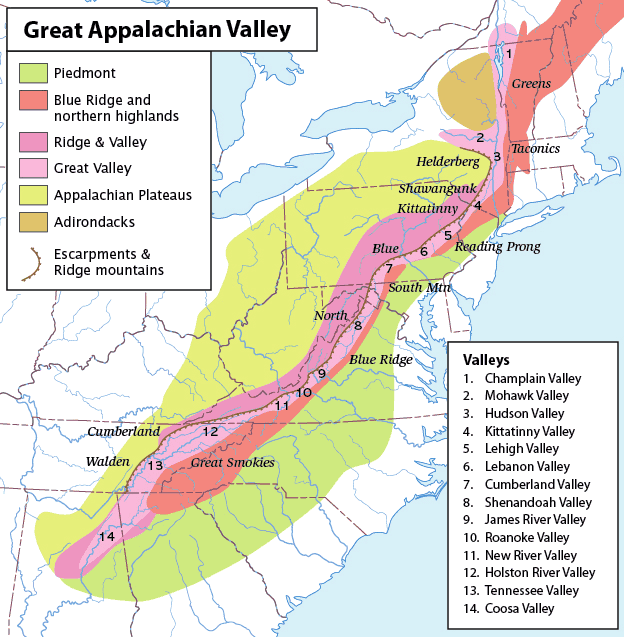
The Lehigh Valley (/ˈlh/) is a geographic and metropolitan region formed by the Lehigh River in Lehigh and Northampton counties in eastern Pennsylvania. It is a component valley of the Great Appalachian Valley bounded to its north by Blue Mountain, to its south by South Mountain, to its west by Lebanon Valley, and to its east by the Delaware River and Warren County, New Jersey.[1] The Lehigh Valley is about 40 miles (64 km) long and 20 miles (32 km) wide.[2] The Lehigh Valley's largest city is Allentown, the third-largest city in Pennsylvania and the county seat of Lehigh County, with a population of 125,845 residents as of the 2020 census.[3]

The Allentown–BethlehemEaston metropolitan area, which includes the Lehigh Valley, is Pennsylvania's third-most populous metropolitan area after those of Philadelphia and Pittsburgh, and the nation's 66th-largest metropolitan area with a population of 886,418 as of 2023. Lehigh County is among Pennsylvania's fastest-growing counties, and the Lehigh Valley leads Pennsylvania in terms of population growth in the 18- to 34-year-old demographic, which constitutes a significant portion of the labor workforce.[4] The region's core population centers are located in southern and central Lehigh and Northampton counties along Interstate 78, Interstate 476, Pennsylvania Route 309, and U.S. Route 22.

The Lehigh Valley has historically been a global leader in steel and other heavy manufacturing industries, which represented a considerable portion of its employment and economic production for most of the 20th century. Beginning in the early 1980s, however, the region's heavy manufacturing sector experienced a rapid downfall, highlighted by the downsizing, bankruptcy, and ultimate closure of Bethlehem Steel, the world's second-largest steel manufacturer for most of the 20th century, and other Lehigh Valley–based manufacturing companies. Throughout the late 20th century, the Lehigh Valley's economy struggled considerably, and it was often cited as one of the most prominent examples of the impact of deindustrial economic decline in the nation's Rust Belt during the late 20th century.[5]

In the early 21st century, the Lehigh Valley's economy began rebounding, and it emerged as a national center for the U.S. logistics industry, especially in warehousing and intermodal transport.[6][7] As of 2023, the Lehigh Valley's gross domestic product (GDP) was $55.7 billion, led by its manufacturing sector, which comprised $9 billion, or 16 percent.[8] In March 2024, the Lehigh Valley was named the nation's top mid-sized market for economic development by Site Selection magazine based on its number of projects that met criteria for job creation, investment, and size over the previous year.[9]

The region's primary commercial airport is Lehigh Valley International Airport in Hanover Township, which in 2023 was utilized by 930,946 passengers and trafficked over 275,000 pounds of cargo, an all-time cargo record for the airport.[10]

The Lehigh Valley is located in the center of the U.S. Northeast megalopolis, providing ease of access and close proximity to many of the nation's largest population centers, airports, terminals, railways, and seaports, including New York City, the nation's largest city, which is 80 miles (130 km) to its east, and Philadelphia, the nation's sixth-most populous city, which is 50 miles (80 km) to its southeast. The region is located geographically within a one-day drive to over a third of the U.S. population and over half of Canada's population, which has been a factor in its 21st century emergence as a North American leader in light manufacturing and commercial distribution.

Since its settlement in the 18th century, the Lehigh Valley has been the birthplace or home to several notable Americans who have proven influential across a broad range of fields, including academia, art and music, business, government and politics, the military, professional and Olympic-level athletics, and other fields.

History

[edit]

Colonial era

[edit]
Constructed by Pennsylvania German settlers in 1734, Shelter House in Emmaus is the Lehigh Valley's oldest continuously occupied building structure and one of the oldest in the state.
The Soldiers and Sailors Monument, erected in 1899 at 7th and Hamilton streets in Center City Allentown, honors men from Allentown and its suburbs killed in their volunteer service in the 47th Pennsylvania Infantry Regiment and other Union army units during the American Civil War.

The Lehigh Valley was settled over the first half of the 18th century largely by German immigrants fleeing war and religious persecution. Prior to their arrival, the region was inhabited by Lenape Indian tribes, who hunted, fished, and quarried jasper in the region. The region was initially established in 1682 as part of Bucks County. Shelter House in Emmaus, constructed in 1734 by Pennsylvania German settlers, is the oldest still-standing building structure in the Lehigh Valley and believed to be one of the oldest in the state.[11]

In 1737, sons of provincial Pennsylvania founder William Penn acquired much of the Lehigh Valley in the Walking Purchase during the colonial period. Lenape Indians subsequently retaliated with raids against European settlers in the region throughout the 1750s and early 1760s, but were moved out of the region by the mid-1760s. In 1752, the region became part of Northampton County, and Lehigh County was later separated from Northampton County and formally established in 1812.[12]

American Revolutionary War

[edit]

Allentown and its surrounding communities played an important and historic role in the emergence of the American Revolution. Some of the first resistance to British colonialism began in Allentown and its surrounding Lehigh County communities in the Lehigh Valley. As early as June 21, 1774, patriot forces in Allentown began meeting to formulate resistance plans to British colonial governance. On December 21, 1774, a Committee of Observation was formally established by Allentown-area patriot militias.[13] Following the signing of the Declaration of Independence, the Colonial British government in Allentown began dissolving and these patriot militias seized control, pressuring Tories out of the region.[14]

In recognition of the strong pro-revolutionary sentiment in the region, Easton was one of only three designated locations, along with Philadelphia and Trenton, New Jersey, where the Declaration was read aloud in public for the first time on July 8, 1776 at noon.[15]

Following their victory at the Battle of Trenton several months later, Washington and his Continental Army staff traveled through the present-day Lehigh Valley, proceeding up Lehigh Street, which was then called Water Street. Washington and his staff stopped at the foot of Lehigh Street at a large spring on what is the present-day Wire Mill Arboretum in Allentown. They rested there, watered their horses, and then proceeded to their post of duty.[16] Allentown supported the Revolution, establishing the first hospitals for the treatment of wounded Continental Army troops at various city locations, including at the current location of the Farr Building at 739 Hamilton Street.[17]

As the Revolutionary War progressed, Washington and his commanders also established two POW camps in Allentown, one at 8th and Hamilton streets and another on Gordon Street, to house captured Hessian mercenaries.[18] In addition to visiting Allentown after his victory at the Battle of Trenton, Washington returned to the city and region several additional times during and following the Revolution.[19]

Allentown also played a historical role in protecting the Liberty Bell from British capture following the fall of Philadelphia to the British Army on September 26, 1777, concealing the Liberty Bell for nine months from September 1777 to June 1778 under floor boards in Allentown's Zion Reformed Church. After Washington and the Continental Army's defeat at the Battle of Brandywine on September 11, 1777, the revolutionary capital of Philadelphia was left defenseless and Pennsylvania's Supreme Executive Council, anticipating Philadelphia's fall, ordered that eleven Philadelphia bells, including the Liberty Bell, then known as the State House Bell, be taken down and moved to present-day Allentown, which was then called Northampton Towne. In Allentown, the Liberty Bell and other bells were hidden under floorboards at Zion Reformed Church on West Hamilton Street to protect them from being seized and melted down by the British Army for use as munitions.[citation needed]

American Civil War

[edit]

The region again proved influential in the American Civil War. Following the Union army's defeat at the Battle of Fort Sumter and Abraham Lincoln's proclamation on April 15, 1861 calling for state militia to provide 75,000 volunteers to defend the national capital in Washington, D.C., Allentown immediately deployed its Allen Infantry, which defended Washington, D.C. from Confederate attack following Fort Sumter's fall. Also known as the Allen Guards, the Allen Infantry mustered in for duty on April 18, 1861. During the late summer and early fall of 1861, members of this unit and other volunteers from within and beyond the Lehigh Valley came together to form the 47th Pennsylvania Infantry Regiment, which was established on August 5 and later proved influential in expanding the Union army's reach into the Deep South, permitting it to launch successful attacks against Confederate positions in the Battle of St. Johns Bluff in 1862 and throughout the Red River campaign in the Trans-Mississippi theater and Sheridan's Shenadoah Valley campaign across Virginia in 1864. These victories helped to tip the Civil War in the Union's favor.[20]

On October 19, 1899, a monument in honor of the Lehigh Valley men killed in their volunteer service to the Union's preservation, the Soldiers and Sailors Monument, was erected at Seventh and Hamilton streets in Center City Allentown, where it still stands.[21]

Industrial Revolution

[edit]
Bethlehem Steel in Bethlehem, was the world's second-largest steel manufacturer for most of the 20th century, and played an influential role in building many of the nation's most prominent buildings, bridges, ships and military equipment that contributed to the rise of America's defense strength.

The opening of the Lehigh Canal in 1827 contributed significantly to transforming Allentown and the Lehigh Valley from a rural agricultural area dominated by German-speaking people into one of the nation's first urbanized industrialized areas. The Lehigh Valley underwent significant industrialization throughout the 19th and most of the 20th centuries and was a major manufacturing hub in the American Industrial Revolution.

The Lehigh Valley is named for the Lehigh River, which runs through the region. It owes much of its development and history to anthracite coal, timber, and ore that was only commercially possible with the development of the Lehigh Canal and the Lehigh Valley's extensive railway infrastructure that permitted these minerals and later the region's manufactured steel to be transported for sale in major national and overseas markets.

The Lehigh Canal operated into the Great Depression, feeding ports up and down the Delaware River, the Pennsylvania Canal, and transoceanic demand, and was integral to the industrialization of the greater Delaware Valley region. Morris Canal, the 22–23 miles (35–37 km) anthracite coal feeder of Delaware and Raritan Canal. and locks at New Hope on the Delaware Canal were built to fuel anthracite energy needs of Trenton, Newark, Jersey City, and New York City.

In 1899, Bethlehem Steel was formed in Bethlehem in the Lehigh Valley. The company developed into the nation's second-largest manufacturer of steel, and its steel was used in developing many of the nation's earliest and largest infrastructure and building projects, including the Empire State Building, Madison Square Garden, and Rockefeller Center in New York City, Merchandise Mart in Chicago, the George Washington, Verrazzano, and Golden Gate Bridges, and warships and other military equipment that proved essential in American-led victories in both world wars.[22]

Bethlehem Steel's downfall

[edit]

During the 20th century, Bethlehem Steel's ascent was prominently associated with the emergence of the U.S. as both a world leader in global manufacturing and as the world's largest economy, and its late 20th century downfall has often been cited as an example of one of the nation's most prominent first stumbling points in the face of growing foreign trade competition and other economic challenges that contributed to the nation's emergence of its Rust Belt.

In 1982, following nearly a century of global leadership, growth, and profitability in steel manufacturing, Bethlehem Steel abruptly reported operating losses of $1.5 billion, citing foreign competition from Asian economies and costly U.S. governmental regulations and labor costs for the losses. The company abruptly reduced operations, resulting in considerable Lehigh Valley layoffs and a dramatic related economic downturn in the region.[23]

Bethlehem Steel continued functioning on a vastly reduced scale for a period, but ultimately ceased steel manufacturing entirely at its primary Bethlehem-based manufacturing plant in 1995. In 2001, the company filed for bankruptcy protection and, in 2003, the company was dissolved. In the late 20th and early 21st centuries, the downturn and ultimate demise of Bethlehem Steel, once one of the most iconic and prominent symbols of American global economic power and leadership, emerged as an example cited by those who believe American global economic leadership is now in either gradual or even rapid descent.[24]

21st century

[edit]

In 2023, U.S. News & World Report ranked the Lehigh Valley the ninth-best place in the nation to retire.[25] Also in 2023, realtor.com ranked the Lehigh Valley "the 21st hottest housing market" in the nation.[26]

Geography

[edit]

The Lehigh Valley is geologically and geographically part of the Great Appalachian Valley, a geographic region made up of limestone that stretches along the eastern edge of the Appalachian Mountains. The Lehigh Valley is so named because it is located geographically within an actual valley formed by the Lehigh River that lies between two mountain ridges, Blue Mountain in the Valley's north and South Mountain in the Valley's south.[2] The Lehigh Valley is the lower part of the drainage basin of the Lehigh River.[27]

Cities and location

[edit]
The city skyline of Allentown, the largest city in the Lehigh Valley and third-largest city in Pennsylvania at Christmas 2017
The Easton–Phillipsburg Toll Bridge connects Easton and Phillipsburg, New Jersey, in the Lehigh Valley
Christmas lights at Lehigh Valley Zoo in Schnecksville in December 2020

The Lehigh Valley has three principal cities: Allentown, Bethlehem, and Easton. The region is located between two of the nation's largest population centers, 90 miles (140 km) west of New York City, the nation's largest and world's 11th-largest city, and 60 miles (97 km) north of Philadelphia, the nation's sixth-largest and world's 68th-largest city. The region borders Carbon County and the Coal Region to its north, the Delaware River and Warren County, New Jersey to its east, Bucks and Montgomery Counties in suburban Philadelphia to its south, and Berks and Schuylkill Counties to its west.

Cities

[edit]

Municipalities with more than 10,000 people

[edit]

Municipalities with fewer than 10,000 but more than 5,000 people

[edit]

Municipalities with fewer than 5,000 people

[edit]

Census-designated places and villages

[edit]

Metropolitan and Combined Statistical Areas

[edit]
Allentown–Bethlehem–Easton,
PA–NJ Metropolitan Statistical Area
Clockwise from top left: Allentown, Bethlehem, Easton, and Phillipsburg, NJ
Map of the Allentown-Bethlehem-Easton, PA-NJ Metro Area
Country United States
States Pennsylvania
New Jersey
Principal citiesAllentown
Bethlehem
Easton
Rank68th
Area
 • Total
1,453 sq mi (3,760 km2)
Population
 (2020 U.S. Census)
 • Total
861,889[29]
 • Density593.2/sq mi (229.0/km2)
Time zoneUTC−5 (ET)
 • Summer (DST)UTC−4 (EDT)
Area codes484 and 610

The Allentown-Bethlehem-Easton, PA-NJ Metropolitan Statistical Area is a Metropolitan Statistical Area that includes Carbon County in the Coal Region, Lehigh and Northampton counties in the Lehigh Valley, and Warren County in the Skylands region of northwest New Jersey.[28][30] As of 2023 census estimates, it is the 67th-largest metropolitan area in the nation with a population of 873,555.[31]

In July 2023, the area was added to the newly created Allentown-Bethlehem-East Stroudsburg PA-NJ Combined Statistical Area (CSA).[32] This area also includes Monroe County in the Pocono Mountains region of Pennsylvania. As of the 2020 census, the Allentown-Bethlehem-East Stroudsburg, PA-NJ CSA had a population of 1,030,216, the 59th-largest CSA in the nation.

Climate

[edit]

The Lehigh Valley has four distinct seasons, which typically include hot and humid summers, cold winters, and short and mild springs and falls. It has a humid continental climate (Dfa/Dfb) and the hardiness zone ranges from 5b in higher elevation locations in northern Carbon County to 6b, the principal zone in Lehigh, Northampton, and southern Warren Counties.[33] The 1991-2020 hardiness zone for Lehigh Valley International Airport and lower elevations is 7a.

Month Jan Feb Mar Apr May Jun Jul Aug Sep Oct Nov Dec Year
Record high °F (°C) 72
(22)
81
(27)
87
(31)
93
(34)
97
(36)
100
(38)
105
(41)
100
(38)
99
(37)
93
(34)
81
(27)
72
(22)
105
(41)
Mean maximum °F (°C) 60.2
(15.7)
60.6
(15.9)
70.6
(21.4)
83.2
(28.4)
89.3
(31.8)
92.6
(33.7)
94.8
(34.9)
92.8
(33.8)
89.2
(31.8)
80.4
(26.9)
70.9
(21.6)
61.7
(16.5)
95.9
(35.5)
Mean daily maximum °F (°C) 38.4
(3.6)
41.6
(5.3)
50.8
(10.4)
63.4
(17.4)
73.5
(23.1)
81.9
(27.7)
86.4
(30.2)
84.3
(29.1)
77.4
(25.2)
65.5
(18.6)
53.8
(12.1)
43.1
(6.2)
63.3
(17.4)
Daily mean °F (°C) 30.1
(−1.1)
32.4
(0.2)
40.7
(4.8)
51.8
(11.0)
62.0
(16.7)
70.9
(21.6)
75.6
(24.2)
73.6
(23.1)
66.3
(19.1)
54.6
(12.6)
43.9
(6.6)
35.0
(1.7)
53.1
(11.7)
Mean daily minimum °F (°C) 21.8
(−5.7)
23.2
(−4.9)
30.5
(−0.8)
40.3
(4.6)
50.6
(10.3)
59.9
(15.5)
64.7
(18.2)
62.8
(17.1)
55.2
(12.9)
43.8
(6.6)
34.1
(1.2)
26.8
(−2.9)
42.8
(6.0)
Mean minimum °F (°C) 4.2
(−15.4)
5.9
(−14.5)
14.1
(−9.9)
25.9
(−3.4)
35.3
(1.8)
46.5
(8.1)
53.7
(12.1)
51.1
(10.6)
39.9
(4.4)
28.7
(−1.8)
19.1
(−7.2)
11.7
(−11.3)
1.8
(−16.8)
Record low °F (°C) −15
(−26)
−12
(−24)
−5
(−21)
12
(−11)
28
(−2)
39
(4)
46
(8)
41
(5)
30
(−1)
21
(−6)
3
(−16)
−8
(−22)
−15
(−26)
Average precipitation inches (mm) 3.30
(84)
2.77
(70)
3.63
(92)
3.67
(93)
3.65
(93)
4.40
(112)
5.30
(135)
4.56
(116)
4.84
(123)
4.14
(105)
3.24
(82)
3.86
(98)
47.36
(1,203)
Average snowfall inches (cm) 9.8
(25)
10.8
(27)
6.3
(16)
0.5
(1.3)
0.0
(0.0)
0.0
(0.0)
0.0
(0.0)
0.0
(0.0)
0.0
(0.0)
0.2
(0.51)
0.9
(2.3)
4.6
(12)
33.1
(84)
Average extreme snow depth inches (cm) 6.4
(16)
7.9
(20)
4.9
(12)
0.3
(0.76)
0.0
(0.0)
0.0
(0.0)
0.0
(0.0)
0.0
(0.0)
0.0
(0.0)
0.2
(0.51)
0.6
(1.5)
2.9
(7.4)
12.4
(31)
Average precipitation days (≥ 0.01 in) 11.4 10.1 10.9 11.8 12.4 11.4 11.0 10.2 9.6 9.9 8.9 11.5 129.1
Average snowy days (≥ 0.1 in) 5.1 4.3 2.6 0.3 0.0 0.0 0.0 0.0 0.0 0.0 0.5 2.9 15.7
Average relative humidity (%) 70 66 62 61 66 68 70 72 74 72 70 71 69
Percentage possible sunshine 43 48 53 47 54 63 57 56 54 53 45 42 51
Source: NOAA (relative humidity 1981–2010)[34][35][36]

Demographics

[edit]
Historical population
CensusPop.Note
1900231,341
1910289,68625.2%
1920346,66419.7%
1930391,51612.9%
1940396,6731.3%
1950437,82410.4%
1960545,05724.5%
1970594,1249.0%
1980635,4817.0%
1990686,6888.1%
2000740,3957.8%
2010821,62311.0%
2020861,8894.9%

The Lehigh Valley has a total population of 861,889 residents as of the 2020 U.S. census, making it the third-largest metropolitan area in Pennsylvania and 68th-largest metropolitan area in the nation.[37]

A 2018 American Community Survey conducted by the U.S. Census Bureau found that 87.1% of the Lehigh Valley's population was White American, 4.6% was Black or African American, 0.1% was American Indian, 2.3% was Asian American, 0.1% was Native Hawaiian, 0.1% were Pacific Islander Americans, 4.3% were of some other race, and 1.5% belonged to two or more races. Hispanics and Latinos of any race made up 11.3% of the population and represent the Lehigh Valley's fastest-growing demographic. Lehigh County is in the top 1% of all U.S. counties for inward migration from international locations, according to Select USA, a U.S. Department of Commerce program.[4] The Lehigh Valley leads Pennsylvania in terms of population growth in the 18-to-34 year old demographic, according to 2020 census data.[4]

The Lehigh Valley's population growth is partly a result of a growing influx of residents from New Jersey and New York drawn to the Lehigh Valley's lower cost of living, its employment opportunities, and its close proximity to Philadelphia and New York City, the nation's sixth and largest cities, respectively. The Valley's population is expected to increase by 227,000 people by 2040, making it one of the fastest-growing areas in the state and nation.[38]

County 2022 Estimate 2020 Census Change Area Density
Lehigh County 376,317 374,557 +0.47% 345 sq mi (890 km2) 1,091/sq mi (421/km2)
Northampton County 318,526 312,951 +1.78% 370 sq mi (960 km2) 861/sq mi (332/km2)
Warren County 110,926 109,632 +1.18% 356.92 sq mi (924.4 km2) 311/sq mi (120/km2)
Carbon County 65,460 64,749 +1.10% 381 sq mi (990 km2) 172/sq mi (66/km2)
Total MSA Population 871,229 861,889 +1.08% 1,452.92 sq mi (3,763.0 km2) 600/sq mi (232/km2)

Median household income for the region increased from $57,288 to $81,709 between 2015 and 2024.[39][40]

Economy

[edit]
The now dormant but still standing steel stacks of Bethlehem Steel in Bethlehem, once the second-largest steel manufacturer in the world. The company ceased most of its operations in 1982, declared bankruptcy in 2001, and was dissolved in 2003.
The Lehigh Valley's tallest building, the 24-story PPL Building in Allentown
Lehigh Valley Hospital–Cedar Crest on Cedar Crest Boulevard in Allentown, the largest current employer in the Lehigh Valley and third-largest hospital in Pennsylvania with 877 beds and 46 operating rooms
Lehigh Valley Mall in Whitehall Township, the Lehigh Valley's largest indoor shopping mall with 146 stores

The Lehigh Valley's economy has been known historically and globally for its leadership throughout the 19th and 20th centuries in heavy manufacturing. Beginning in the 1980s, however, the region's manufacturing sector declined rapidly as a result of foreign competition, trade practices, operational costs, regulations, and other factors. The most prominent example was the plight of Bethlehem Steel, the world's second-largest manufacturer of steel for much of the 20th century. Headquartered in Bethlehem, Bethlehem Steel abruptly suspended most of its operations in the early 1980s, declared bankruptcy in 2001, and was dissolved in 2003.

Since the late 20th century, the Lehigh Valley has recovered and evolved substantially from the loss of its once powerful manufacturing and steel production base with other industry sectors having emerged in the region, providing a much more diversified regional economy. The region has frequently been cited and heralded nationally as a rust belt success story for this dramatic revitalization. Site Selection magazine has named the Lehigh Valley one of the top 5 best performing mid-sized markets in the country repeatedly since at least 2014 and the top performing mid-sized market in the country as 2023.[40]

As of 2020, the Valley's top five industries were finance, manufacturing, health care and education, professional and business services, and information. Other major industry sectors in the area include transportation, retail trade, and restaurants and hospitality. In 2023, the Lehigh Valley's total gross domestic product was $55.7 billion. The Lehigh Valley boasts a workforce of over 365,900 people residing within the region and over 1.7M people residing within a one-hour commute of the region as of 2023.[41][40]

Bethlehem Steel

[edit]

The Lehigh Valley is known historically for its production of steel, Portland cement, silk, and apparel. Bethlehem Steel, founded in 1899 and based in Bethlehem, was a foundation of the Lehigh Valley's economy for nearly a century from 1899 through the early 1980s. At the pinnacle of its success, Bethlehem Steel was the nation's second-largest and one of the world's largest steel manufacturers. Bethlehem Steel was instrumental in the development of many of the nation's most prominent 20th century infrastructure projects. Its steel was used to build 28 Liberty Street, Chrysler Building, the Empire State Building, Madison Square Garden, Rockefeller Center, and the Waldorf Astoria hotel in New York City and Merchandise Mart in Chicago. Among major bridges, the company's steel was used to construct the George Washington Bridge and Verrazzano-Narrows Bridge in New York City, the Golden Gate Bridge in San Francisco, and the Peace Bridge between Buffalo and Fort Erie, Ontario. The Roosevelt administration relied heavily on Bethlehem Steel during World War II, utilizing the company to produce the steel necessary for shipbuilding, ammunition, and other military equipment that proved essential to the Allies' ability to prevail in these conflicts.

In the late 20th century, however, a variety of factors, including the practices of foreign competitors, began eroding Bethlehem Steel's once historical global leadership in steelmaking. In 1982, the company announced it was discontinuing most of its operations. In 2001, the company declared bankruptcy. In 2003, it was dissolved. Throughout the late 20th century, other heavy manufacturing companies in the Lehigh Valley that once served as backbones for the region's economy suffered similarly, either downsizing significantly or dissolving, which destabilized the region considerably.

In the early 2000s, seeking to replace the heavy manufacturing companies that had been the region's foundation for decades, the Lehigh Valley began developing other economic sectors, including financial services, health care, life sciences, and technology. The Lehigh Valley also began emerging as a national warehouse and distribution hub, due in part to its proximity to many of the largest U.S. markets and relatively lower operating costs compared to other Northeast U.S. regions.[42] More recently, a movement to reestablish manufacturing activities in the U.S., driven by customer demand for American-made products, faster product delivery, increased overseas wages, and inflated costs and extended timeframes for shipping has led to some renewed growth in the Valley's manufacturing sector.[43] Several large companies from China and Germany have invested tens of millions of dollars into developing significant operations in the Lehigh Valley, which has generated thousands of new jobs in the region.[44]

Largest employers

[edit]

As of 2024, the Lehigh Valley's five top private sector employers are: 1.) Lehigh Valley Health Network (headquartered in Allentown); 2.) St. Luke's Hospital and Health Network (headquartered in Fountain Hill); 3.) Amazon (with a 1,100,000 ft (335,280.0 m) square foot facility in Palmer Township); 4.) Mack Trucks (with manufacturing headquarters in Macungie); and 5.) Air Products (globally headquartered in Trexlertown).[45]

Other notable Lehigh Valley companies include C. F. Martin & Company in Nazareth, which manufacturers Martin Guitars, used by some of the world's most prominent guitarists, including Johnny Cash, Elvis Presley, Bob Dylan, Hank Williams, Neil Young, John Lennon, Willie Nelson, Kurt Cobain, Eric Clapton, and others.

Business and economic environment

[edit]

The Lehigh Valley is one of the fastest-growing and largest economies in Pennsylvania and the United States with a total GDP of $55.7 billion (as of 2023) that saw a four percent increase between 2022 and 2023 alone driven by strong manufacturing, financial, health care, and professional services industry segments.[46][47] It was named in March 2024 as the top mid-sized market in America by Site Selection Magazine for economic development based on the number of projects that met certain criteria for job creation, investment and size in 2023.[48]

It is centrally located in the Northeast megalopolis with ease of access and close proximity to several of the largest U.S. markets, population centers, airports, terminals, railways, and seaports, including the New York City and Philadelphia metropolitan areas. The Lehigh Valley is within a one-day drive to over a third of the U.S. population and to over half the population of Canada.[49][50] The Valley has a lower cost of living, more affordable real estate, lower taxes, and a larger and more affordable labor pool than many other Northeastern U.S. metropolitan regions.[51] These attributes and others, including sizable investments in business development incentive programs and a friendlier regulatory environment, provide the area with a comparatively favorable business climate compared to surrounding metropolitan areas.[52][50][53][54][55][56]

Due in large part to this comparably favorable business climate and mature business support programs,[57] the Lehigh Valley has been very successful in luring established businesses as well as new startup companies from higher cost areas such as New York and New Jersey, generating thousands of new jobs and significant new investments in the region.[52][58] Large companies such as Amazon.com have praised the Lehigh Valley for its commitment to business support, infrastructure investment, and incentive programs, citing these as major reasons for their continuing expansions and increased hiring in the region[59][60] and Allegiant Air, a low-cost budget airline, opened a new flight base at the Lehigh Valley International Airport in February 2020, noting the area's rapid growth, lower operational business costs, and its proximity to popular destinations as significant reasons for expanding their Lehigh Valley International Airport flights.[61]

Other large national and international companies either based in the Lehigh Valley or with significant operations there include Broadcom Corporation (in Allentown), Avantor Performance Materials (in Allentown), Air Products (in Trexlertown), Crayola (in Easton), Buckeye Partners (in Emmaus), HeidelbergCement (in Fogelsville), Just Born (in Bethlehem, maker of Peeps candies), Mack Trucks (in Allentown), Martin Guitar (in Nazareth), Olympus Corporation (in Center Valley), OraSure Technologies (in Bethlehem), PPL Corporation (in Allentown), Wind Creek Bethlehem (in Bethlehem), Dun & Bradstreet (in Center Valley), Victaulic (in Easton), and others.

In 2014, 2017, 2018, and 2019, the Lehigh Valley was recognized by Site Selection magazine as the second-best performing region of its size for economic development in the nation and the best performing region in the Northeast U.S..[62] It was ranked by Fortune in 2015 as one of the top 10 best places in the U.S. to locate corporate finance and information technology operations, including call and IT support centers.[63][64] Allentown, the Lehigh Valley's largest city, was cited as a "national success story" in April 2016 by the Urban Land Institute for its downtown redevelopment and transformation that has led to $1 billion worth of new development projects there between 2015 and 2019, one of only six communities nationally to achieve this distinction.[65][66]

The Lehigh Valley is one of the leading areas on the East Coast for warehouses and distribution centers. Because of this, it is sometimes referred to as the nation's "second Inland Empire" for freight.[67] Large national companies that own and operate warehouses and distribution centers in the Lehigh Valley include Amazon.com, B. Braun, Boston Beer Company (brewer of Samuel Adams brand beer), BMW, Bridgestone, FedEx SmartPost, FedEx Ground, Home Depot, J. C. Penney, Nestlé Purina, ShopRite, Stitch Fix, The Coca-Cola Company, Ocean Spray, Phillips Pet Food and Supplies, True Value, Uline, Zulily, and others. Most of these warehouses and distribution centers are located along the Valley's southern U.S. Route 22, Interstate 78, and Interstate 476 corridors, which provide direct access to numerous major markets throughout the Northeast U.S. and beyond.

In September 2018, FedEx Ground constructed their largest distribution hub in the country near Lehigh Valley International Airport at a cost of $335 million. This hub can process up to 45,000 packages per hour and employs over 2,000 people. By 2030, it is expected to have a total size of 1,100,000 square feet (100,000 m2) square feet and employ over 3,000 people.[68][69]

The Boston Beer Company operates its largest U.S. production brewery facility in Breinigsville in the Lehigh Valley, which produces over 2/3rds of all Samuel Adams beer globally. The company continues to upgrade and expand operations at this facility and has cited the location as central to its overall corporate success.[70] Additionally, Ocean Spray, a popular maker of juice drinks and other fruit products, produces 40 percent of its total national beverage volume at its Lehigh Valley plant in Breinigsville.[71] Due to Pennsylvania's lack of an excise tax on cigars and the Lehigh Valley's close proximity to major markets, the region is home to some of the nation's largest cigar distributors and retailers.[72]

Retail shopping

[edit]

The largest retail shopping area in the Lehigh Valley is the PA Route 145/MacArthur Road corridor, just north of Allentown in Whitehall Township, which is anchored by Lehigh Valley Mall and Whitehall Mall.

Other Lehigh Valley malls include Palmer Park Mall in Easton, South Mall in Salisbury Township, and Westgate Mall in Bethlehem. In October 2006, Promenade Saucon Valley, located off Route 309 in Upper Saucon Township in the Lehigh Valley, opened. Promenade is roughly half the size of the Lehigh Valley Mall but features higher end stores not available in Lehigh Valley Mall. In 2011, The Outlets at Wind Creek Bethlehem opened at Wind Creek Bethlehem in Bethlehem, becoming the Lehigh Valley's first outlet mall.[73]

Media

[edit]

Television

[edit]

The Lehigh Valley is part of the Philadelphia television market, the nation's fourth-largest television market, and also receives television stations from the New York City and Scranton/Wilkes-Barre television markets. Lehigh Valley–based stations include WBPH-TV, a Christian television licensed to Bethlehem with studios in Allentown, WFMZ-TV, an independent commercial television station on South Mountain in Allentown, and WLVT-TV, the PBS station licensed to Allentown with studios in Bethlehem.

Radio

[edit]

The Lehigh Valley is home to over 35 radio stations, including both English and Spanish-language stations and a range of formats, including all-news, sports radio, talk radio, and NPR. Lehigh Valley station music formats include Top 40, hip hop, rhythmic, country, oldies, polka, soft rock, classic rock, hard rock, and several campus radio stations.

Newspapers

[edit]

Lehigh Valley–based daily newspapers include The Morning Call and The Express-Times, both of which have been media sources in the Lehigh Valley dating back to the mid-1800s, and NJ.com, an aggregation website that carries news articles from multiple Lehigh Valley and New Jersey–based newspapers.

Two magazines cover the region. Lehigh Valley Style is a regional lifestyle publication based in Easton. Lehigh Valley Magazine, based in Harrisburg, is the region's oldest lifestyle publication.

Film

[edit]

Multiple movies have been fully or partially filmed in the Lehigh Valley, including M. Night Shyamalan's Glass in 2019, indie dark-comedy Getting Grace starring Daniel Roebuck, Taylor A. Purdee's folk rock musical Killian & the Comeback Kids, and others.[74]

Education

[edit]
The campus of Muhlenberg College in Allentown in March 2014

Colleges and universities

[edit]

Seven colleges and universities are based in the Lehigh Valley:

The Lehigh Valley has two community colleges:

High schools

[edit]
Allen High School, one of Allentown's two large public high schools in the Allentown School District, in July 2008
Liberty High School in Bethlehem, in February 2020

The Lehigh Valley is the third-most populous metropolitan region in Pennsylvania and served by several large school districts, public and private high schools, middle schools, and elementary schools, including:

The largest high schools in the Lehigh Valley and the Poconos (18 in all) compete athletically in the Eastern Pennsylvania Conference. Smaller Lehigh Valley high schools compete in the Colonial League.

Sports

[edit]
Coca-Cola Park in East Allentown, home field for the Lehigh Valley IronPigs, the Triple-A affiliate of the Philadelphia Phillies, in April 2009
Fisher Stadium's scoreboard in Easton following Lafayette College's victory over Lehigh University in the 142nd edition of The Rivalry in 2006. The series between the two colleges, which are 17 miles (27 km) away from each other in the Lehigh Valley, is the most-played rivalry in college football history with 158 meetings since 1884.
J. Birney Crum Stadium, a 15,000-capacity stadium in Allentown, is the largest high school football stadium in the Mid-Atlantic United States and the home field for three Eastern Pennsylvania Conference high school football teams: Allen, Central Catholic, and Dieruff high schools.
PPL Center in Allentown, the home arena of the Lehigh Valley Phantoms of the American Hockey League and the primary development team of the Philadelphia Flyers
Valley Preferred Cycling Center in Breinigsville, in April 2014
Club League Sport Venue Established Championships
Lehigh Valley IronPigs IL Baseball Coca-Cola Park 2008 0
Lehigh Valley Phantoms AHL Ice hockey PPL Center 1996 2 1997-98 and 2004-05
Lehigh Valley Roller Derby WFTDA Roller Derby Bethlehem Municipal Ice Rink 2006 0
Lehigh Valley United USL League Two Soccer Rocco Calvo Field 2009 1 2012 (conference)

Football

[edit]

College football

[edit]

The Lehigh Valley is home to the nation's longest-standing college football rivalry in the nation. Known as "The Rivalry," Lafayette College in Easton and Lehigh University in Bethlehem have played each other 160 times since 1884, making it the most-played rivalry in college football history.[75] Two other Lehigh Valley colleges, Moravian University in Bethlehem and Muhlenberg College in Allentown, have competitive collegiate football programs; Muhlenberg plays their home football games at Scotty Wood Stadium on the Muhlenberg campus in Allentown.

National Football League

[edit]

From 1996 until 2012, the Lehigh Valley hosted the pre-season training camp for the NFL's Philadelphia Eagles, which was held each summer at Goodman Stadium and other football fields at Lehigh University in Bethlehem. On August 5, 2012, Garrett Reid, the 29-year-old son of then Eagles head coach Andy Reid, was found dead in his Lehigh University dorm room during training camp from a heroin overdose.[76] The following year, in 2013, following the Garrett Reid overdose and the hiring of new head coach Chip Kelly, the Eagles chose to move their training camp to the NovaCare Complex in South Philadelphia.

Gymnastics

[edit]

Parkettes National Gymnastics Training Center in Allentown has been the training ground for numerous Olympic and U.S. national gymnastics champions. In 2003, CNN aired a highly critical documentary on the center, Achieving the Perfect 10, which depicted its as a hugely demanding and excessively competitive training program.

High school athletics

[edit]

The 18 largest high schools in the Lehigh Valley and Pocono Mountain regions compete athletically in the Eastern Pennsylvania Conference (EPC), one of the nation's premier athletic divisions. An additional 14 Lehigh Valley high schools too small to compete in the EPC belong to the Colonial League.

The EPC has produced numerous professional and Olympic athletes, including MLB, the NBA, and the NFL professional athletes. The EPC's football, basketball, field hockey, and wrestling teams are often ranked among the nation's best.[77] In high school field hockey, Emmaus High School in Emmaus has won 33 consecutive EPC championships as of 2021.[78]

The Lehigh Valley's high school wrestling programs have been described as "among the nation’s best in the sport for nearly three decades"[79] and WIN magazine has ranked the region's wrestling programs best in the nation.[80]

Professional baseball

[edit]

In 2008, Coca-Cola Park, an 8,278-seat Minor League baseball stadium, opened in east-side Allentown.[81] The stadium is the home field for the Lehigh Valley IronPigs, the Triple-A affiliate of the Philadelphia Phillies of Major League Baseball. The team previously played as the Ottawa Lynx from 1993 until moving to Allentown in 2008.[82] The club's move to the Lehigh Valley brought the franchise closer to Philadelphia and the Phillies' large Lehigh Valley fan base. The team's name is a reference to pig iron, which is used in steelmaking for which the Lehigh Valley area is known worldwide. Groundbreaking ceremonies for Coca-Cola Park were held September 6, 2006, and construction was completed in December 2007. The stadium's first game was March 30, 2008, featuring the Phillies major league team playing the Lehigh Valley IronPigs.

Professional ice hockey

[edit]

On September 10, 2014, the PPL Center, an 8,500-seat arena in Center City Allentown, was opened as the new home arena for the Lehigh Valley Phantoms, the American Hockey League affiliate of the Philadelphia Flyers, and for other sporting and entertainment events. The Phantoms began play at PPL Center with their 2014–15 season. The arena takes up the entire block between Seventh and Eighth and Hamilton and Linden streets.[83]

Roller derby

[edit]

Lehigh Valley Roller Derby (LVRG) is a Women's Flat Track Derby Association league based at Bethlehem Municipal Ice Rink in Bethlehem in the Lehigh Valley. The league's teams compete nationally and internationally.

Running events

[edit]

The Lehigh Valley Health Network Via Marathon, sponsored by Lehigh Valley Health Network, features a certified marathon, five-person team relay, a 20-mile (32 km) training run, and 5K walk annually in September. The 42.195-kilometer (26.219 mi) course follows the Lehigh River Canal Towpath from Allentown to Easton. In 2015, the marathon came under scrutiny when Mike Rossi achieved viral fame after allegedly cheating in the marathon to qualify for the Boston Marathon. In response, Via Marathon organizers added timing mats and video surveillance on the course.[84] Lehigh University's Paul Short Run is held annually at the Goodman Cross Country Course; participation has climbed to over 5,000 runners spread throughout 14 college and high school races. The Emmaus 5K race is held annually in mid-October, coinciding with Emmaus' annual Halloween parade.[85]

Track cycling

[edit]

The Lehigh Valley is home to the Valley Preferred Cycling Center, a cycling velodrome in Breinigsville that hosts professional and amateur cycling competitions, including Union Cycliste Internationale-sponsored competitions. Valley Preferred Cycling Center has given rise to several Olympian cycling medal winners.

Culture

[edit]

The Allentown Art Museum, located in Center City Allentown, is the Lehigh Valley's largest museum with over 11,000 works of art. Lehigh University's Zoellner Arts Center and Lafayette College's smaller Williams Center for the Arts host a variety of plays, concerts, and performances throughout the year. The Allentown Symphony Orchestra, conducted by Diane Wittry since 1995, performs at Allentown's historic Miller Symphony Hall. The Banana Factory, located in South Bethlehem, has several art studios and galleries open to the public.[86]

Recreation

[edit]
Dorney Park's Steel Force and Thunderhawk roller coasters in South Whitehall Township in the Lehigh Valley. Steel Force is the eighth-tallest steel roller coaster in the world with a first drop of 205 feet (62 m) and a top speed of 75 miles per hour (121 km/h).[87]
Musikfest, the nation's largest free music festival, held annually in Bethlehem
The ski lodge at Bear Creek Mountain Resort in Macungie

Amusement park

[edit]

The Lehigh Valley is home to Dorney Park & Wildwater Kingdom, a popular amusement and water park, located in South Whitehall Township. Dorney Park is known nationally for its elaborate roller coasters and water rides.[88]

Casino

[edit]

In 2009, Sands Casino Resort, an $879 million casino, hotel and apartment complex then owned by the Las Vegas Sands opened in Bethlehem, Pennsylvania, bringing legalized table and sports gambling to the Lehigh Valley for the first time. In 2018, the casino was renamed Wind Creek Bethlehem following its $1.3 billion sale to Wind Creek Hospitality. Wind Creek Bethlehem is one of only 13 authorized gaming sites in Pennsylvania.

Festivals

[edit]

Several large festivals are held annually in the Lehigh Valley. The Great Allentown Fair, first held in 1852, is held annually in late August through early September at the Allentown Fairgrounds in Allentown.[89] Musikfest, a large, eleven-day music festival, is held annually in Bethlehem, Pennsylvania each August.[90] Das Awkscht Fescht, an antique car festival, is held annually the beginning of August in Macungie's Memorial Park.[91] Blues, Brews, and Barbeque, launched in 2014, is held annually in May in Center City Allentown.[92] Mayfair Festival of the Arts, a three-day arts festival, is held annually the end of May on the campus of Cedar Crest College in Allentown.[93]

Golf and skiing

[edit]

The Valley's multiple golf courses include Saucon Valley Country Club in Upper Saucon Township, which hosted the 2009 U.S. Women's Open. Others include Allentown Municipal Golf Course, Brookside Country Club in Macungie, Green Pond Country Club in Bethlehem, Lehigh Country Club on Cedar Crest Boulevard in Allentown, Olde Homestead Golf Club in New Tripoli, Riverview Country Club in Easton, Shepherd Hills Golf Club in Wescosville, Steel Club in Hellertown, Southmoore Golf Course in Bath, Wedgewood Golf Course in Coopersburg, Willow Brook Golf Course in Northampton, and others.

Ice sports and skiing

[edit]

The region's primary ski resort is Bear Creek Mountain Resort, a 23 slope resort in Macungie.[94] Three Lehigh Valley locations exist for ice skating, ice hockey, figure skating, and speed skating. Steel Ice Center is on East 1st Street in Bethlehem,[95] The Rink Ice Arena is in Lehigh County,[96] and the City of Bethlehem maintains a covered 23,000-square-foot outdoor ice rink from November through March. Bethlehem Skateplaza on Steel Avenue in Bethlehem is a city park for skateboarding and freestyle BMX.[97]

Parks and zoo

[edit]

The Lehigh Valley Zoo in Schnecksville is a 29-acre (11.7 ha) zoo open year-round. The Lehigh Valley has a number of public parks, including the 629-acre (254.5 ha) Lehigh Parkway along the Lehigh River in Allentown and the 1,108-acre (448.4 ha) Trexler Nature Preserve in Schnecksville.

Transportation

[edit]

Air transportation

[edit]
Main terminal at Lehigh Valley International Airport in Hanover Township, March 2014

The Lehigh Valley's primary commercial airport is Lehigh Valley International Airport (IATA: ABE, ICAO: KABE) in Hanover Township in the Lehigh Valley, roughly 7 miles (11 km) north-northeast of Allentown, 4 miles (6.4 km) northwest of Bethlehem, Pennsylvania, and 11 miles (18 km) west-southwest of Easton. The airport was utilized by 851,000 passengers in 2020. Allegiant Air recently completed a significant expansion at the airport.[98][99][100][101]

The Valley is also served by Allentown Queen City Municipal Airport, a two-runway general aviation facility located off Allentown's Lehigh Street, used predominantly by private aviation. Other general-aviation airports include Braden Airpark (also owned by the Lehigh-Northampton Airport Authority) in Easton, Pennsylvania, Hackettstown Airport in eastern Warren County, New Jersey, and Jake Arner Memorial Airport in Lehighton.

Bus transportation

[edit]
A LANta bus in Allentown in June 2025

Public bus service in Lehigh Valley is available through LANta, the region's public transportation service. In New Jersey, bus service is provided by NJ Transit, including to the Easton Intermodal Transportation Center in Easton.

The Lehigh Valley has several commercial bus services, including Greyhound Lines, Klein Transportation, and Trailways, and others, that provide transportation to and from New York City, Philadelphia, Reading, Harrisburg, and other regional destinations throughout the day. OurBus provides service to and from Philadelphia. Martz Trailways provides transport from the region to Scranton via Wilkes-Barre, and also provides service to Philadelphia as an Amtrak Thruway route that connects to Amtrak at 30th Street Station in Philadelphia. Chinatown bus lines operates multiple round trip bus lines daily between Manhattan and Wind Creek Bethlehem in Bethlehem; as of 2014, more than 3,000 passengers daily utilized Chinatown bus lines' service from Manhattan to Wind Creek Bethlehem.[102]

Commercial rail

[edit]

The Lehigh Valley is a major national thruway for commercial rail transport with roughly 65 commercial trains passing through the Valley daily. The region's largest freight rail operator is Norfolk Southern Railway, which uses two former rail lines, Lehigh Valley Railroad's Lehigh Line and Reading Railroad's Reading Line. Norfolk Southern Railway has major classification rail yards in both Allentown and Bethlehem.

Passenger rail

[edit]

Passenger train service in the Valley is available just outside the Lehigh Valley at Doylestown (31.2 miles (50.2 km) southeast), at Annandale, New Jersey (roughly 41.8 miles (67.3 km) east), and at Hackettstown station in Hackettstown, New Jersey (49.5 miles (79.7 km) northeast). The Valley's closest Amtrak station is Bryn Mawr SEPTA, 50.4 miles (81.1 km) miles south of the Valley. Two major passenger rail hubs, 30th Street Station in Philadelphia and Newark Penn Station in Newark, New Jersey, are roughly 60 miles (97 km) southeast and 81.9 miles (131.8 km) west, respectively.

In March 2023, the Pennsylvania Department of Transportation funded a preliminary study to assess the feasibility of restoring passenger rail to the region.[103]

Roads

[edit]
US 22 eastbound in Whitehall Township in the Lehigh Valley, in October 2011

The Lehigh Valley is accessible from four major highways:

Other major Lehigh Valley roads include:

Telecommunications

[edit]

The Lehigh Valley area initially was served only by the 215 area code from 1947 (when the North American Numbering Plan of the Bell System went into effect) until 1994. With the region's growing population, the Lehigh Valley was granted area code 610 in 1994. Today, the Lehigh Valley is mainly covered by 610. An overlay area code, 484, was added to the 610 service area in 1999.[104] Area code 835 entered service on September 2, 2022.[105]

Wine

[edit]

Lehigh Valley AVA, which was designated an official American Viticultural Area in March 2008, includes 230 acres (93 ha) of vineyards planted to several Vitis vinifera and French-American hybrid grape varieties. Blue Mountain Vineyards in New Tripoli accounts of over 50 acres (20 ha) of the 230 acres and has won national and international awards. As of 2008, an estimated 15 to 20% of all wine produced commercially in Pennsylvania comes from grapes grown in the Lehigh Valley AVA.[106]

Notable people

[edit]

Since its settlement in the 18th century, the Lehigh Valley has been the birthplace or home to several famous Americans, including:

Notes

[edit]
[edit]
Revisions and contributorsEdit on WikipediaRead on Wikipedia
from Grokipedia
The Lehigh Valley is a metropolitan region in eastern Pennsylvania, comprising Lehigh and Northampton counties and encompassing 62 municipalities, including the three principal cities of Allentown, Bethlehem, and Easton. Spanning 726 square miles within the Great Appalachian Valley, it is bounded by Blue Mountain to the north, the Delaware River to the east, South Mountain and the Pennsylvania Highlands to the south, and rolling hills to the west that separate the Lehigh and Schuylkill River watersheds. With a population of 708,644 as of 2025, the region has experienced rapid growth, adding over 21,000 residents since 2020, particularly among young adults aged 18 to 34, making it one of Pennsylvania's fastest-growing areas. Geographically positioned at the center of the Northeast's consumer market, the Lehigh Valley lies about one hour north of Philadelphia and approximately 1 hour 40 minutes to 1 hour 52 minutes west of New York City via I-78, providing strategic access to major urban centers and transportation hubs. Its landscape features a mix of urban centers, suburban communities, woodlands, wetlands, and meadows, supporting diverse recreational opportunities along streams and trails. Historically, the region is rooted in pre-colonial Native American presence, early American settlement by Moravians in Bethlehem—a National Historic Landmark District with over 300 years of preserved architecture—and a 19th-century industrial boom driven by iron production, coal mining, cement manufacturing, slate quarrying, canals like the Lehigh Canal, and railroads that fueled national economic development. Today, it blends this industrial heritage with modern revitalization, including the 2024 designation of Bethlehem's Moravian Church Settlements as a UNESCO World Heritage Site. Economically, the Lehigh Valley ranks as the 65th largest metropolitan area in the United States, generating $55.7 billion in gross domestic product as of 2023 and supporting over 15,000 businesses across key sectors. Manufacturing remains the largest industry, home to global brands such as Mack Trucks, Air Products, B. Braun Medical, Crayola, and Nestlé Purina, while health care and transportation/warehousing also drive employment, with major employers including Lehigh Valley Health Network, St. Luke's University Health Network, and Amazon. The region has been ranked third among U.S. mid-sized markets for economic development by Site Selection magazine in 2024, fueled by a skilled workforce, robust infrastructure including major highways and Lehigh Valley International Airport, and ongoing population influx that supports business expansion. Culturally vibrant, it offers a high quality of life with festivals, concert venues, sports events, and outdoor attractions, positioning it as a hub for innovation in life sciences, business services, and food and beverage industries.

Geography

Location and boundaries

The Lehigh Valley is a metropolitan region primarily encompassing Lehigh and Northampton counties in eastern Pennsylvania. This area is defined by its urban cores of Allentown, Bethlehem, and Easton, often referred to as the "ABC" cities, which serve as the economic and cultural anchors of the region. The region's boundaries cover approximately 726 square miles, bordered by the Delaware River to the east, Blue Mountain to the north, South Mountain to the south, and rolling hills to the west that separate the Lehigh and Schuylkill River watersheds, extending southward toward the Philadelphia metropolitan area. These natural and administrative limits position the Lehigh Valley as a distinct valley within the broader Appalachian system, influencing its development as a transitional zone between rural and urban landscapes. Located about 60 miles north of Philadelphia and 90 miles west of New York City, the Lehigh Valley functions as a key commuter and logistics hub due to its strategic position along major interstate corridors like I-78 and I-476. This proximity facilitates daily workforce flows to both larger metros while supporting regional industries such as manufacturing and distribution. Administratively, the Lehigh Valley aligns with the Allentown–Bethlehem–Easton, PA–NJ Metropolitan Statistical Area (MSA), which includes Warren County, New Jersey, and had a population of 873,555 as of 2023 according to U.S. Census Bureau estimates. The core area of Lehigh and Northampton counties, however, supports a population of approximately 708,000 as of mid-2025.

Topography and hydrology

The Lehigh Valley lies within the foothills of the Appalachian Mountains, characterized by rolling hills, narrow valleys, and prominent ridges that form a varied terrain shaped by ancient geological processes. Elevations range from approximately 100 feet (30 meters) along the Delaware River in the east to over 1,000 feet (305 meters) in the northern areas near Blue Mountain, creating a landscape of undulating plateaus and steep slopes that transition from the higher Poconos to the broader Great Valley. Karst features, including sinkholes and limestone pavements, are prevalent due to the region's carbonate bedrock, which contributes to unique subsurface drainage patterns and occasional geological hazards. Geologically, the Lehigh Valley is dominated by sedimentary rocks from the Ordovician period, such as limestones and shales deposited in ancient marine environments, with some Triassic sedimentary formations in the surrounding ridges. These rocks, particularly the abundant limestone deposits, supported early quarrying operations that fueled the local cement and construction industries. The underlying strata reflect the Taconic orogeny, which folded and faulted the region, resulting in the valley's characteristic east-west trending ridges and valleys. The hydrology of the Lehigh Valley is centered on the Lehigh River, a 109-mile-long (175 km) tributary that originates in the Pocono Plateau near Pocono Peak Lake at an elevation of about 2,100 feet (640 meters) and flows generally southeast to join the Delaware River at Easton. Historically, the river powered numerous mills and supported the Lehigh Canal, constructed between 1829 and the 1830s by the Lehigh Coal & Navigation Company to transport anthracite coal downstream until railroads largely supplanted it in the 1940s. Key tributaries include the Little Lehigh Creek, a 24-mile-long limestone-influenced stream originating in springs near Allentown, and the Monocacy Creek, which drains limestone-rich areas in Northampton County and enters the Lehigh south of Bethlehem, enhancing the watershed's biodiversity and water quality. Environmental challenges in the region include periodic flooding, as seen in the 2004–2006 Delaware River Basin floods, which caused significant overflow along the Lehigh River due to heavy rainfall from tropical systems and resulted in infrastructure damage and erosion. More recently, flash flooding occurred in July 2025 due to heavy thunderstorms dumping up to 6 inches of rain, causing road closures and underscoring persistent flood vulnerabilities. Ongoing conservation efforts focus on river restoration, such as those led by the Wildlands Conservancy and the Watershed Coalition of the Lehigh Valley, which promote riparian buffers, mine reclamation, and ecosystem flow management to mitigate flood risks and improve habitat for aquatic species. These initiatives, supported by federal programs like the EPA's Section 319 grants, aim to address legacy pollution from historical industrial activities while preserving the watershed's ecological integrity.

Climate and environment

The Lehigh Valley experiences a humid continental climate classified as Köppen Dfa, characterized by hot, humid summers and cold winters. Average high temperatures in July reach 85°F (29°C), while January lows average 21°F (-6°C), with an annual precipitation of approximately 45 inches and snowfall around 30 inches. These conditions support a mix of temperate vegetation and seasonal agricultural activities. Seasonal weather patterns include frequent summer thunderstorms that contribute to the region's rainfall, and winter nor'easters that bring heavy snow and coastal influences. The area remains vulnerable to tropical storm remnants, as evidenced by the severe flooding from Hurricane Ida in September 2021, which caused widespread inundation along the Lehigh and Delaware rivers due to 6-10 inches of rain in hours. Such events underscore the valley's exposure to intensified precipitation from climate variability. Forests cover about 27% of the land in the Lehigh Valley, primarily deciduous types, alongside wetlands concentrated along the Lehigh and Delaware rivers that serve as critical habitats and flood buffers. Air quality has improved since the post-industrial decline of heavy manufacturing in the late 20th century, reducing emissions from steel production, though recent urban sprawl and warehouse development have introduced ongoing challenges with particulate matter. Water sources face contamination from PFAS "forever chemicals," detected in public supplies like those of the Lehigh County Authority and Emmaus Borough, prompting monitoring and treatment efforts. Conservation initiatives, such as the Lehigh Valley Greenways Conservation Landscape established in 2004, protect over 100 miles of trails and open spaces, including 54 miles of the Appalachian Trail that traverse the northern ridges. These efforts enhance biodiversity and recreational access while mitigating habitat fragmentation from development. In 2025, community health assessments, including those by Lehigh Valley Health Network, emphasize building climate resilience amid projected 14.4% population growth by mid-century, highlighting needs for improved air quality, flood mitigation, and sustainable land use to address environmental pressures on public health.

History

Early settlement and colonial period

The Lehigh Valley region was long inhabited by the Lenape (also known as Delaware) people, members of the Algonquian language group, who had occupied the area for over 10,000 years prior to European contact. The Lenape utilized the Lehigh River and the Minsi Trail—a key indigenous pathway—for trade, hunting, and seasonal migration, establishing villages and relying on the valley's fertile lands and waterways for sustenance. Their displacement began in the early 18th century as European settlers encroached, culminating in the Walking Purchase of 1737, a controversial agreement orchestrated by the sons of William Penn that fraudulently ceded vast Lenape territories in the Delaware and Lehigh Valleys to the Province of Pennsylvania through a rigged land measurement. European settlement in the Lehigh Valley began in the late 1720s with Scotch-Irish immigrants establishing early communities, followed by German settlers in the 1730s. The Moravians, a Protestant sect from Germany, founded Nazareth in 1740 and Bethlehem in 1741 as planned mission communities focused on communal living, religious piety, and outreach to Native Americans, though tensions with the Lenape persisted amid broader colonial expansion. Early settlers, primarily German immigrants and English Quakers, engaged in subsistence agriculture, cultivating wheat, rye, and livestock on the valley's rich soils, while rudimentary industries emerged, including timber harvesting and iron production at sites like the Durham Iron Furnace, operational from 1727 and owned by ironmaster George Taylor. During the American Revolutionary War, the Lehigh Valley played a supportive role on the frontier, with limited direct skirmishes but significant contributions to the Patriot cause. Easton, designated as Northampton County's seat in 1752, served as a key logistical hub and frontier outpost, hosting a Continental Army hospital and a state armory for weapon repairs. Local iron forges, including Durham, supplied pig iron and castings for cannons and munitions, bolstering colonial forces. In 1777, Allentown temporarily safeguarded the Liberty Bell from British capture, underscoring the region's strategic importance. The colonial population of the Lehigh Valley expanded rapidly by the end of the 18th century, driven by waves of German Palatines and English settlers seeking fertile lands and religious freedom. This growth reflected broader patterns in Pennsylvania's backcountry, where the valley's resources attracted families establishing homesteads and small mills. The Moravians' emphasis on education and music subtly shaped early community culture, fostering a legacy of communal harmony amid agrarian life.

Industrialization and 19th century growth

The anthracite coal boom in the Lehigh Valley began with the completion of the Lehigh Canal in 1829 by the Lehigh Coal and Navigation Company, which facilitated the transport of coal from mines in Summit Hill down to Philadelphia markets via the port at Mauch Chunk (now Jim Thorpe). This infrastructure project, engineered by Josiah White and Erskine Hazard, overcame the Lehigh River's challenging hydrology with locks, dams, and a pioneering gravity railroad switchback system, enabling the first large-scale shipment of anthracite coal and sparking regional economic expansion. Mauch Chunk emerged as a vital hub for loading coal onto canal boats, handling millions of tons annually by mid-century and drawing investment that transformed the valley from agrarian isolation into an industrial corridor. Transportation innovations further fueled growth, with the Lehigh Valley Railroad chartered on April 21, 1846, initially to haul anthracite but soon extending lines that connected the region to New York City via partnerships with the Central Railroad of New Jersey. This rail network supplemented the canal, reducing transit times and costs for coal and emerging iron products, while integrating the Lehigh Valley into broader markets. By 1900, these developments had driven a population surge, with Lehigh County reaching 93,893 residents and Northampton County 99,687, reflecting the influx of workers to support mining and related industries. The iron and steel sector originated with breakthroughs in Catasauqua, where Welsh immigrant David Thomas established the Crane Iron Works in 1839, launching America's first successful anthracite-fueled hot-blast furnace in 1840 and producing pig iron on an industrial scale. This innovation shifted iron production from charcoal to abundant local coal, paving the way for rolling mills that processed iron into rails and structural shapes. In 1857, the Saucona Iron Company was founded in South Bethlehem by investors including Augustus Wolle, reorganizing as the Bethlehem Iron Company in 1860 under superintendent John Fritz, who introduced advanced rail-rolling technology and expanded output to meet national demand. During the Civil War, Lehigh Valley ironworks played a critical role in supplying the Union Army, with facilities like the Bethlehem Iron Company producing rails for military transport and ordnance components under Fritz's direction, including contributions to heavy forging for artillery. Allentown's iron operations, including furnaces and forges, provided essential pig iron and wrought products that supported rail infrastructure and armaments, bolstering Northern logistics amid wartime shortages. Waves of immigration reshaped the region's social fabric, as Irish laborers built canals and railroads in the 1820s–1840s, followed by German settlers in farming and manufacturing, and Welsh skilled workers in iron furnaces during the 1850s–1870s, comprising a significant portion of the industrial workforce. These groups, often facing harsh conditions in mines and mills, led to labor unrest, exemplified by the Great Railroad Strike of 1877, when Lehigh Valley Railroad workers protested wage cuts amid post-panic economic pressures, joining nationwide actions that halted freight and highlighted tensions between capital and labor.

20th century peak and decline

The Lehigh Valley reached the zenith of its industrial prominence in the 20th century, driven primarily by Bethlehem Steel, which built upon its 19th-century foundations in iron production to become a global powerhouse in steelmaking and shipbuilding. During World War II, Bethlehem Steel emerged as the world's largest shipbuilder, constructing over 1,100 vessels—including destroyers, aircraft carriers, cruisers, and cargo ships—from its 15 shipyards between 1941 and 1945, outpacing all other builders in supporting the Allied war effort. At its wartime peak in the 1940s, the company employed 300,000 workers across its operations, with a significant portion in the Lehigh Valley plants fueling economic expansion and population growth in Bethlehem and surrounding areas. Following the war, Bethlehem Steel sustained robust growth amid Cold War demands, reaching a local employment high of approximately 30,000 workers at its Bethlehem facilities in the 1950s, spanning a five-mile industrial corridor. The company played a key role in national defense by supplying steel for projects like the Polaris submarine-launched ballistic missiles, which bolstered U.S. nuclear deterrence capabilities during the era. Complementary industries bolstered the region's economy; Mack Trucks, founded in 1900 by the Mack brothers and relocated to Allentown in 1905, became a major manufacturer of heavy-duty vehicles, contributing to the area's transportation and logistics sectors. In Nazareth, cement production thrived on abundant local limestone deposits, with companies like the Nazareth Cement Company—established in 1906—operating multiple kilns to produce Portland cement that supported infrastructure projects nationwide throughout the mid-20th century. By the 1970s, however, the Lehigh Valley's industrial dominance began to erode under intensifying global competition from lower-cost foreign producers, particularly in Japan and Europe, which undercut U.S. steel prices through more efficient technologies and favorable trade conditions. The 1973 oil crisis exacerbated these pressures by driving up energy costs for energy-intensive steel production, straining profitability amid rising inflation and labor expenses. Bethlehem Steel's resistance to modernization, coupled with frequent labor strikes and outdated facilities, accelerated the downturn, leading to plant idlings and workforce reductions throughout the decade. These challenges culminated in the company's bankruptcy filing in 2001 and the final closure of its Bethlehem mills in 2003, resulting in the loss of around 20,000 jobs in the region and marking the end of large-scale steelmaking there. The decline inflicted profound social repercussions on the Lehigh Valley, with unemployment rates climbing to over 8 percent by the mid-1980s—peaking amid the early 1980s recession—and contributing to widespread urban decay in Allentown and Bethlehem through abandoned factories, population outflows, and deteriorating infrastructure. Families dependent on steel-related livelihoods faced chronic underemployment, while the shuttering of mills symbolized the broader Rust Belt transition, leaving lasting scars on community cohesion and economic vitality.

21st century revitalization

In the early 2000s, the Lehigh Valley began transforming its post-industrial landscape, particularly the vast former Bethlehem Steel site, which spanned approximately 1,600 acres and had been a symbol of the region's 20th-century economic decline. A key initiative was the redevelopment of this brownfield into mixed-use spaces, with Bethlehem's SteelStacks arts and cultural district opening in 2011 as a centerpiece. Developed by ArtsQuest in partnership with the Bethlehem Redevelopment Authority, the 9.5-acre SteelStacks campus preserved iconic industrial structures like blast furnaces while creating venues for performances, festivals, and education, attracting over one million visitors in its first year and fostering a vibrant cultural hub. This renewal extended to infrastructure and population growth, with the region adding more than 21,000 residents between 2020 and 2024, driven by its appeal to young adults aged 18-34. Developments like the Sands Casino Resort, which opened in 2009 on the former steel site at a cost of $800 million, injected economic vitality through tourism and employment. Subsequent expansions under Wind Creek Hospitality, including a $160 million hotel and convention center upgrade completed in 2023 that added 268 rooms and a spa, further enhanced the area's hospitality offerings and supported ongoing urban revitalization. The COVID-19 pandemic disrupted these gains from 2020 to 2022, with unemployment spiking to a peak of 16.6% in April 2020 amid widespread business closures. Recovery accelerated through federal support, including the 2021 Bipartisan Infrastructure Law, which allocated about $380 million to the Lehigh Valley for projects like airport expansions and water system upgrades, bolstering transportation and resilience. By 2025, the region's economic outlook projected 2.5% GDP growth, reflecting sustained momentum in logistics and manufacturing, while the Lehigh Valley Health Network's Community Health Needs Assessment highlighted housing shortages affecting up to 13% of households in certain areas, prioritizing affordable options as a social determinant of health. Amid these advances, the Lehigh Valley faced persistent social challenges, including an opioid crisis that peaked in the late 2010s with overdose deaths in Pennsylvania rising 65% from 2015 to 2017 due to fentanyl proliferation. Lehigh Valley Health Network responded with initiatives like the Hospital Opioid Support Team, established in 2017, which integrates addiction treatment in emergency settings and promotes safe prescribing practices to reduce misuse and support recovery.

Government and politics

Regional and county governance

The Lehigh Valley is primarily governed at the county level by Lehigh County, established in 1812 by the division of the original Northampton County, and Northampton County, reestablished in the same division with boundaries finalized in 1813. Each county operates with a three-member board of commissioners serving as the legislative branch, elected to staggered four-year terms and responsible for enacting ordinances, adopting budgets, and overseeing county operations. There is no unified regional government for the Lehigh Valley; instead, coordination across the two counties is facilitated by the Lehigh Valley Planning Commission, founded in 1961 to develop comprehensive plans guiding orderly growth, transportation, and land use in the region. Key regional agencies include the Lehigh Valley Economic Development Corporation (LVEDC), established in 1995 as a public-private partnership to attract businesses and support economic initiatives, and the Allentown-Bethlehem-Easton Development Authority, created to manage urban renewal projects and infrastructure development in the core cities. The region encompasses numerous municipalities, with approximately 37 in Lehigh County (including one city, nine boroughs, and 27 townships) and 36 in Northampton County (two cities, 15 boroughs, and 19 townships), leading to a fragmented local governance structure that addresses services like zoning and public safety. Major cities such as Allentown and Bethlehem have adopted home rule charters—Allentown in 1996 and Bethlehem in 1994—granting them greater autonomy in municipal administration compared to traditional Pennsylvania local governments. Recent governance initiatives focus on enhancing regional cooperation, including discussions in 2025 about potential municipal consolidations to mitigate urban sprawl and improve service efficiency amid population growth. Additionally, the Lehigh Valley's regional wastewater management, coordinated through authorities like the Lehigh County Authority established in the 1970s, supports shared infrastructure for treatment and distribution across county lines.

Political representation and recent elections

The Lehigh Valley, encompassing Lehigh and Northampton counties in Pennsylvania, is represented in the U.S. House of Representatives by Republican Ryan Mackenzie in Pennsylvania's 7th Congressional District, following his victory over incumbent Democrat Susan Wild in the 2024 election. This district, which includes much of the Lehigh Valley, has long been a political battleground, reflecting the region's swing status in national elections. In the 2016 presidential race, Donald Trump carried the area with a margin of approximately 3 percentage points over Hillary Clinton, while Joe Biden secured a narrow 5-point victory in 2020. The 2024 presidential contest saw Trump reclaim the region, flipping Northampton County and expanding support among Latino voters in urban centers like Allentown, contributing to his statewide win in Pennsylvania by 2.1 percentage points. Voter turnout in the 2024 presidential election reached about 73% in Lehigh County and similarly high levels in Northampton, underscoring the area's electoral significance. At the state level, Lehigh County is divided among the 14th, 16th, and 18th Senate districts, while Northampton County spans the 16th, 18th, and 20th districts following 2022 redistricting. Key representatives include Democrat Nick Miller in the 14th (Lehigh-focused), Republican Jarrett Coleman in the 16th (spanning both counties), and Democrat Lisa Boscola in the 18th (Northampton-heavy). The region's state delegation played a pivotal role in Pennsylvania's battleground politics, particularly during the 2025-26 state budget impasse, which delayed funding for infrastructure projects like bridge repairs and public transit expansions critical to the Lehigh Valley's logistics hub until its resolution. The budget was signed into law on November 12, 2025, ending the 135-day stalemate and allocating funds for education and infrastructure. Education equity emerged as a flashpoint during the impasse, with local districts warning of potential program cuts due to the funding shortfall, though the resolution mitigates these risks. Local elections in 2025 highlighted competitive dynamics, with Democrat Matt Tuerk securing re-election as Allentown mayor in a contest against Ed Zucal, who ran as a Republican despite his Democratic registration. County commissioner races saw partisan battles, including in Northampton where Democrat Tara Zrinski won the executive position over Republican Tom Giovanni by a margin exceeding 16,000 votes, reflecting strong Democratic turnout in an off-year cycle with about 40% participation. Politically, the Lehigh Valley has transitioned from a blue-collar Democratic stronghold to a more mixed suburban landscape, influenced by economic diversification and demographic shifts; 2024 analyses noted increased Latino voter engagement in Allentown, though with growing Republican appeal among this group on issues like jobs and public safety. As Pennsylvania remains a national bellwether, the Lehigh Valley's evolving electorate continues to amplify its influence on statewide outcomes, including anticipation for the 2026 gubernatorial race.

Demographics

The population of the Lehigh Valley, encompassing Lehigh and Northampton counties in Pennsylvania, has exhibited steady growth since the mid-19th century, driven initially by industrialization and later by economic diversification and regional appeal. In 1850, the combined population of these counties was approximately 60,000, with Lehigh County alone recording 32,479 residents. By 2000, this figure had expanded to about 579,000, reflecting a more than ninefold increase over 150 years amid waves of immigration and urban development. The post-2000 period marked a surge, with the regional population reaching roughly 708,000 by 2025, fueled by an average annual increase of approximately 5,300 residents since 2020. The broader Allentown–Bethlehem–Easton Metropolitan Statistical Area (MSA), which includes portions of Warren County, New Jersey, provides a more comprehensive view of the region's scale and had an estimated population of 878,487 in 2023, ranking it as the approximately 70th-largest MSA in the United States. This MSA population stood at 740,390 in 2000 and grew to 861,899 by the 2020 Census, incorporating cross-state commuting patterns and economic ties. Within the core Pennsylvania counties, urban centers have experienced more modest growth compared to surrounding suburbs; Allentown, the largest city, had 125,845 residents in 2020, while Bethlehem counted 75,781 and Easton 26,800. In contrast, suburban townships have seen robust expansion, exemplified by Upper Macungie Township's population rising approximately 25% from 21,160 in 2010 to 26,377 in 2020, highlighting a shift toward peripheral development. Recent population dynamics have been propelled by migration, particularly an influx of commuters from the Philadelphia and New York City metropolitan areas seeking affordable housing and quality of life. Between 2020 and 2024, the Lehigh Valley recorded a net domestic migration gain of about 6,800 individuals, alongside nearly 17,000 international migrants, contributing to an overall net migration of roughly 6,000 people annually. This pattern underscores the region's attractiveness to young professionals and families, with the 18–34 age group expanding by nearly 9,000 residents during the same period. The median age in the region was approximately 41.5 years as of 2023. Looking ahead, the Lehigh Valley Planning Commission projects the core county population to reach approximately 750,000 by 2030, continuing the trajectory of moderate but sustained growth amid infrastructure and housing investments. This forecast aligns with broader estimates anticipating an addition of nearly 100,000 residents by 2050, emphasizing the need for planned regional development.

Racial and ethnic composition

The Lehigh Valley's population exhibits a diverse racial and ethnic makeup, with non-Hispanic White residents comprising approximately 66% as of 2023 estimates, followed by Hispanic or Latino individuals at 21%, Black or African American at 6%, and Asian at 4%. Lehigh County is notably more diverse, with Hispanic or Latino residents accounting for 27% of its population, compared to 15% in Northampton County, reflecting concentrated urban diversity in areas like Allentown. The Hispanic or Latino community is predominantly Puerto Rican, particularly in Allentown where they form over half of the city's residents. Historically, the region's ethnic composition has shifted significantly, with the non-Hispanic White majority declining from over 95% in 1980 to around 70% by 2020, driven largely by Hispanic population growth. In Lehigh County, the Hispanic or Latino share rose from about 5% in 1990 to 19% by 2010 and 27% by 2023, fueled by migration to Allentown for economic opportunities. Asian communities, particularly in Bethlehem's technology sectors, have also expanded, with the Asian Indian population more than doubling during the 1990s due to job attractions in engineering and IT. Recent immigration patterns continue to diversify the area, with a net influx of nearly 17,000 international migrants since 2020, including notable waves from India and China that contributed to a 2% growth in the Asian population between 2010 and 2020. Approximately 13% of residents were foreign-born in 2023, with higher concentrations in Lehigh County at 13.2%. Cultural enclaves highlight this diversity, including annual Puerto Rican festivals and parades in Allentown that celebrate heritage through music, food, and community events. African American history is deeply tied to the steel mills, where migrants from the South found employment at Bethlehem Steel starting in the early 20th century, contributing to industrial growth despite facing discrimination. Remnants of Native American presence persist through Lenape heritage sites, such as the Museum of Indian Culture in Allentown and the Lenape Nation Cultural Center, which preserve artifacts and trails from the indigenous Lenni Lenape people who originally inhabited the region. As of 2025, community health reports underscore ongoing disparities among minority groups, with higher rates of chronic conditions and limited access to care affecting Hispanic and Black residents in Lehigh Valley. These demographic trends have influenced local politics, contributing to increased representation of minority voices in regional governance.

Socioeconomic characteristics

The Lehigh Valley exhibits a median household income of $81,709 as of 2023, surpassing both the Pennsylvania state median of $76,081 and the national median of $78,538, reflecting robust economic growth driven by diversification in manufacturing, logistics, and healthcare sectors. In Lehigh County specifically, the median household income stood at $77,493 in 2023, indicating slight variations across the region. The overall poverty rate for the Lehigh Valley was 10.5% in 2023, a decline of 0.5 percentage points from five years prior, though it remains higher in urban areas such as Allentown at 21.6%. Educational attainment in the Lehigh Valley is strong relative to national averages, with 92.1% of adults aged 25 and older holding a high school diploma or higher equivalent as of the latest American Community Survey data. Approximately 33.4% of the adult population in Lehigh County possess a bachelor's degree or higher, contributing to a skilled workforce that supports the region's innovation economy. Attainment levels tend to be lower in urban cores like Allentown, where only about 78% have a high school diploma and 18% hold a bachelor's degree, compared to suburban areas exceeding 95% high school completion and 35% college graduation. Housing in the Lehigh Valley faces increasing affordability pressures amid rising demand, with the median home value reaching $370,000 in mid-2025, up from previous years due to low inventory and population influx. Homeownership rates stand at approximately 65.2% in Lehigh County, aligning with regional figures around 67%, though this masks challenges for younger and lower-income residents. Renters, comprising about 33% of households, have encountered a 15% rise in rent burden—defined as spending more than 30% of income on housing—between 2020 and 2024, exacerbated by average rents climbing to $1,791 monthly. Religious affiliation in the Lehigh Valley reflects a diverse Christian heritage, with roughly 40% identifying as Protestant, 25% as Catholic, and 20% as unaffiliated, based on recent surveys of the broader Pennsylvania population adjusted for local trends. The Moravian Church holds particular historical and cultural influence, with about 5% adherence, stemming from its founding role in Bethlehem and ongoing community institutions. Health indicators in the Lehigh Valley show a life expectancy of 78.4 years, slightly above the national average, supported by access to major medical centers like Lehigh Valley Health Network. However, 2025 assessments identify obesity affecting 33.8% of adults as a key concern, with rates climbing steadily since the early 2000s and contributing to chronic disease burdens. Rural areas in Lehigh and Northampton counties face ongoing challenges with healthcare access, including longer travel times to providers and higher uninsured rates compared to urban zones. Ethnic health disparities persist, with higher obesity and limited preventive care among Hispanic and Black residents, tying into broader demographic patterns.

Economy

Historical industries

The Lehigh Valley's economy in the 19th and early 20th centuries was profoundly shaped by the anthracite coal industry, which fueled America's industrial revolution through mining and transportation networks. Anthracite production in Pennsylvania, with the Lehigh Valley as a central hub, peaked at over 100 million tons in 1917, driven by demand for clean-burning coal in heating and manufacturing. The Lehigh Valley Railroad played a pivotal role, hauling vast quantities of coal from mines in the region's northern reaches to ports and markets, establishing the area as a key node in the national coal trade. This infrastructure not only boosted local prosperity but also spurred related developments in iron production, as anthracite-powered blast furnaces proliferated along the Lehigh River by the mid-19th century. Heavy manufacturing, particularly steel, became the region's hallmark by the early 20th century, with Bethlehem Steel emerging as a global powerhouse. During the 1940s, amid World War II demands, Bethlehem Steel contributed a substantial share of U.S. steel output, producing materials essential for ships, aircraft, and weaponry that supported over a quarter of the nation's armor plating and related forgings. The company's operations, leveraging local iron ore and coal resources, exemplified the Valley's shift toward large-scale industrial complexes. Complementing steel was the cement sector, born from the area's abundant limestone deposits in the Jacksonburg Formation. The Lehigh Valley pioneered Portland cement production in the U.S., with early plants like Coplay Cement Company manufacturing the first batches in 1871; by the early 1900s, regional firms such as those later associated with Essroc supplied over half of the nation's Portland cement. Other industries diversified the economic base, including textiles and silk production. In the 1800s, Easton hosted numerous textile mills along the Lehigh River, capitalizing on water power and canal access to process cotton and wool into fabrics for domestic markets. Silk manufacturing flourished particularly in Northampton County from the 1880s onward, with mills like those in Bethlehem and Easton employing thousands in throwing, weaving, and dyeing raw silk imported from Asia; this sector thrived until the 1950s, when synthetic alternatives led to widespread mill closures. By 1950, manufacturing dominated the workforce in the Allentown-Bethlehem area, employing about half of all workers—around 92,400 individuals—in sectors like steel, cement, and textiles. These industries contributed the majority of the region's economic output prior to 1970, underscoring the Valley's identity as an industrial heartland. The late 20th century marked a transition, with plant closures such as those at legacy iron works in the 1980s signaling the onset of deindustrialization and paving the way for economic diversification.

Modern sectors and diversification

In the 21st century, the Lehigh Valley's economy has diversified significantly beyond its historical manufacturing roots, with healthcare emerging as the dominant sector. Healthcare and social assistance contribute approximately 15% to the region's gross domestic product, driven by major providers like the Lehigh Valley Health Network (LVHN). In 2023, this sector accounted for 20% of total employment, supporting over 64,000 jobs across hospitals, clinics, and related services. Recent expansions underscore this growth, including LVHN's new behavioral health hospital near the Muhlenberg campus, which broke ground in 2024 and is slated to open in fall 2025, adding specialized capacity for mental health services. Additionally, a major emergency department expansion at the Muhlenberg campus, announced in early 2025, will double its size to 83 beds, enhancing trauma and resuscitation capabilities to meet rising demand. Logistics and distribution have also become pivotal, leveraging the region's strategic location near the Port of New York and New Jersey. The Interstate 78 corridor positions the Lehigh Valley as a key East Coast freight hub, facilitating efficient goods movement to one-third of the U.S. population within a day's drive. In 2023, transportation and warehousing employed 12.2% of the workforce, reflecting robust infrastructure investments and the influx of e-commerce operations. Facilities operated by companies such as Amazon and UPS, including multiple fulfillment centers and distribution hubs, collectively support over 5,000 jobs, bolstering the sector's role in supply chain resilience. Emerging growth areas further illustrate diversification efforts. Higher education institutions, including Lehigh University and Northampton Community College, contribute significantly to employment, with education services forming a key component of the broader 20% healthcare and education sector share. In Bethlehem, the Southside Keystone Innovation Zone—enhanced through initiatives like the Pi: Partnership for Innovation incubator—has fostered tech and biotech startups since expansions around 2015, attracting ventures in biomedical research and digital innovation. Retail and services round out the landscape, comprising about 25% of jobs through trade, professional services, and consumer-facing roles; recent developments at the Lehigh Valley Mall, such as new store openings like Dry Goods in 2025, signal ongoing retail revitalization. Looking to 2025, the Lehigh Valley Economic Development Corporation (LVEDC) projects continued expansion, with manufacturing employment up 28.8% since the Great Recession—three times the national rate—and emphasis on advanced manufacturing and life sciences to drive job creation. While specific overall job growth hovers around 2-4% amid cooling national trends, strategic priorities include sustainable practices in industrial reuse and targeted recruitment in high-value sectors like biomedical R&D, positioning the region for resilient, diversified progress.

Major employers and economic indicators

The Lehigh Valley's economy is anchored by several major employers, particularly in healthcare, manufacturing, and logistics. As of the first quarter of 2025, Lehigh Valley Health Network employs approximately 15,000 people, making it the region's largest employer. St. Luke's University Health Network follows with around 12,000 employees in the area, underscoring the dominance of healthcare services. In manufacturing, Mack Trucks employs about 4,000 workers at its Lehigh Valley operations, while logistics giants like UPS (3,500 employees) and Amazon (3,000 employees) support the region's role as a key distribution hub. The labor force in the Lehigh Valley stands at roughly 400,000, with an unemployment rate of 4.3% as of August 2025, comparable to the national rate of 4.3%. This reflects steady job growth amid national economic recovery, though seasonal fluctuations and sector-specific hiring challenges persist. The region's gross domestic product reached $55.7 billion in 2023, with a per capita GDP of approximately $65,000, driven by annual growth of 2.8% from 2020 to 2024. As of 2024, the region's GDP is estimated to have grown further, though official figures are pending release. Despite these strengths, the Lehigh Valley faced economic challenges including supply chain disruptions from 2022 to 2023, which impacted manufacturing and logistics sectors reliant on global imports. Wage stagnation in service-oriented jobs, with a median annual wage of $45,000, has also pressured household finances in lower-wage roles. Key economic indicators highlight the area's competitiveness: the cost of living is 98% of the U.S. average, supporting affordability for residents and businesses. Additionally, the business climate ranked in the top 20 nationally by Site Selection Magazine in 2024, particularly strong in mid-sized markets for economic development. The ongoing growth in the healthcare sector, tied to diversification efforts, continues to bolster employment stability.

Education

K-12 education

The Lehigh Valley is served by 17 public school districts across Lehigh and Northampton counties and parts of Carbon and Monroe counties, providing K-12 education to approximately 87,000 students as of 2025. Notable districts include the Allentown School District, the fourth-largest in Pennsylvania with around 16,500 students as of the 2023-24 school year, and the Bethlehem Area School District, which enrolls approximately 12,900 students as of 2023-24 and spans multiple municipalities. Other prominent districts encompass Parkland School District, known for high academic performance, and Easton Area School District, serving urban and suburban communities. Academic performance in the region varies, with an overall four-year graduation rate of about 88% across public schools as of the class of 2024, though urban districts face challenges such as funding disparities and socioeconomic factors. In Allentown School District, the graduation rate stands at approximately 79% as of recent data, reflecting ongoing efforts to address achievement gaps through targeted interventions. Parkland High School, part of Parkland School District, ranks #97 among public high schools in Pennsylvania according to U.S. News & World Report's 2024 evaluations, with strong performance in college readiness and AP course participation. Private K-12 schools number over 50 in the Lehigh Valley, offering alternatives with religious, independent, and specialized curricula. Moravian Academy, founded in 1742 as one of the oldest educational institutions in the region, provides rigorous college-preparatory programs across its multiple campuses. Allentown Central Catholic High School, established in 1926, serves approximately 650 students with a faith-based education emphasizing academics and extracurriculars. Innovations in K-12 education include STEM-focused initiatives in the Bethlehem Area School District, such as the Broughal Middle School STEM Academy, which integrates project-based learning in science, technology, engineering, and math. Vocational training is supported by centers like the Lehigh Career & Technical Institute, founded in 1966, where students from multiple districts access hands-on programs in fields like healthcare, manufacturing, and information technology. Enrollment trends show a regional decline, with total public enrollment at approximately 87,000 as of 2025, and urban districts experiencing continued drops, such as about 5.5% in some areas from 2019 to 2024, following a roughly 10% decline from 2010 to 2020 due to demographic shifts and population migration. These K-12 systems often serve as pathways to local higher education institutions, facilitating seamless transitions for graduates.

Higher education institutions

The Lehigh Valley is home to several prominent higher education institutions, with Lehigh University serving as a flagship research university founded in 1865 by industrialist Asa Packer in Bethlehem, Pennsylvania. It enrolls approximately 7,700 students across undergraduate and graduate programs, with a strong emphasis on engineering, sciences, and interdisciplinary research through its P.C. Rossin College of Engineering and Applied Science. Moravian University, established in 1742 in Bethlehem as one of the nation's oldest institutions, focuses on liberal arts education and enrolls around 2,800 students as of 2024 in undergraduate and graduate programs, emphasizing personal attention and professional preparation. DeSales University, founded in 1965 in Center Valley as Allentown College of St. Francis de Sales, serves about 3,000 students with strengths in theater, health sciences, and business, offering a Catholic liberal arts perspective. Other key institutions include Cedar Crest College, a women's liberal arts college founded in 1867 in Allentown, which enrolls approximately 870 students as of 2024 in programs blending hands-on learning with majors in nursing, forensic science, and the humanities; Lafayette College, a private liberal arts college in Easton founded in 1826 enrolling about 2,700 students with strengths in engineering and humanities; and Lehigh Carbon Community College, established in 1974, serving around 6,000 students with associate degrees and workforce training. Northampton Community College, established in 1967 with its main campus in Bethlehem, provides associate degrees and workforce training to over 10,000 credit students annually across two campuses and satellite locations, supporting accessible education in fields like business, health, and technology. These institutions collectively form a diverse ecosystem, awarding more than 10,000 degrees each year and fostering regional talent development. Together, the Lehigh Valley's 11 higher education institutions enroll about 45,000 students, with roughly 40% from out-of-state or international origins, bolstering the local housing and service sectors. They contribute over $2.2 billion annually to the regional economy through operations, student spending, and alumni employment, supporting nearly 16,000 jobs. Lehigh University alone generates $1.4 billion in economic impact yearly, including through research initiatives like its nanotechnology programs, which have secured multimillion-dollar National Science Foundation grants for projects such as the Nano::pak initiative and human interfaces research. Recent developments highlight innovation and adaptation, with Lehigh University achieving 100% renewable energy coverage for its electricity consumption in 2024 via on-site solar and renewable energy certificates, advancing its Sustainability Strategic Plan 2030. DeSales University has expanded its online programs post-COVID, earning top rankings in U.S. News & World Report's 2025 evaluations for graduate programs in nursing, business, and health, reflecting increased accessibility for non-traditional learners.

Culture

Arts, museums, and performing arts

The Lehigh Valley boasts a vibrant arts scene anchored by prominent museums that preserve and showcase diverse cultural heritage. The Allentown Art Museum, established in 1934 during the Great Depression through a grassroots initiative led by artist and critic Walter Emerson Baum, houses a collection exceeding 20,000 works spanning European Renaissance and Baroque paintings, American art, textiles, and works on paper. Its holdings include notable American pieces, such as Gilbert Stuart's portrait of Ann Penn Allen, acquired in 1978, emphasizing the region's connection to broader artistic traditions. Complementing this, the National Museum of Industrial History, a Smithsonian affiliate opened in August 2016 on the SteelStacks campus in Bethlehem, features over 200 artifacts from the iron, steel, textiles, and manufacturing eras, including items from the 1876 Centennial Exposition and remnants of Bethlehem Steel's operations. Housed in a restored 1905 Electric Repair Shop from the former Bethlehem Steel plant, the museum highlights the Lehigh Valley's pivotal role in America's industrial past through interactive exhibits on technological innovation. Performing arts thrive through historic venues that host professional and community productions. The State Theatre Center for the Arts in Easton, originally opened in 1926 as a vaudeville and movie house and revitalized as a nonprofit in 1981, offers a 1,500-seat auditorium for Broadway tours, concerts, live theater, and classic films, drawing over 60,000 patrons annually. Its Spanish Renaissance-style architecture and role in events like the FREDDY Awards underscore its status as a regional hub for diverse performances. Nearby, the Civic Theatre of Allentown, founded in 1927 by local journalists John Kohl and Fred McCready as part of the national "little theatre" movement, is among the longest continuously operating community theaters in the U.S., with its first production staging the one-act play Suppressed Desires. Relocating to the historic Nineteenth Street Theatre in 1957, it has produced nearly 400 shows, fostering local talent through educational programs and inclusive productions. The region's literary culture is rooted in enduring institutions and events that promote reading and writing. The Moravian Book Shop in Bethlehem, founded in 1745 by the Moravian Church under manager Samuel Powell, holds the distinction of being the oldest continuously operating bookstore in the United States, predating even London's John Smith & Son by six years. Originally located at the Crown Inn and later expanded to include church publications, it now serves as a multifaceted retail space offering books, local specialties, and Moravian University merchandise while preserving its historic charm on Main Street. Complementing this legacy, the annual Write Stuff Writers Conference, organized by the Greater Lehigh Valley Writers Group since the early 1990s, provides workshops, keynote sessions, and networking for writers across genres, with events like the 2010 edition featuring author James N. Frey to support emerging regional voices. Arts organizations drive ongoing creative initiatives across the Valley. ArtsQuest, a nonprofit founded in 1984, manages the 10-acre SteelStacks campus in Bethlehem, curating year-round events, exhibits, and educational programs that transform the former Bethlehem Steel site into a center for arts and culture. Its efforts include family-oriented festivals and community celebrations, emphasizing accessibility to arts for Lehigh Valley residents. The Banana Factory Arts Center, opened in 1998 in Bethlehem's SouthSide Arts District, provided subsidized studios for over 100 artists, galleries, and workshops until its closure in 2025 for redevelopment into the larger ArtsQuest Creative Factory. This facility fostered collaboration in visual arts, sculpture, and crafts, serving as a cornerstone for local creative expression. Recent developments reflect the Valley's evolving arts landscape, with a focus on diversity and innovation post-pandemic. In 2023–2024, the Allentown Art Museum presented "Nostalgia for My Island: Puerto Rican Painting from the Museo de Arte de Ponce (1786–1962)," featuring 20 works by artists like José Campeche y Jordán and Francisco Oller y Cestero, exploring themes of cultural identity, migration, and Puerto Rican heritage amid U.S. annexation. Supported by endowments from the Bernard and Audrey Berman Foundation, the exhibit highlighted the region's growing recognition of Latino contributions to art. In 2025, the Lehigh Valley Arts & Cultural Alliance awarded project grants of $500–$2,500 to independent artists and small nonprofits for new initiatives in digital arts and other disciplines, prioritizing community-engaged works in Allentown's Neighborhood Improvement Zone to aid recovery and innovation after COVID-19 disruptions. These efforts, totaling $15,000, underscore a commitment to accessible, inclusive programming through August 2025.

Festivals and traditions

The Lehigh Valley hosts a rich tapestry of annual festivals and longstanding traditions that celebrate its multicultural heritage, including Moravian influences, European ethnic roots, and growing Latino communities. These events, often centered in Bethlehem and Allentown, attract hundreds of thousands of visitors each year, fostering community bonds and boosting local commerce through tourism and cultural exchange. Organized primarily by nonprofits like ArtsQuest and community groups, they emphasize music, crafts, food, and historical reenactments, with many adapting to include virtual components following the COVID-19 pandemic to enhance accessibility. Musikfest, launched in Bethlehem in 1984 by ArtsQuest, stands as the nation's largest non-gated music festival, spanning 10 days and 11 nights with performances across 15 stages. In 2025, it drew a record 1.449 million attendees from 49 U.S. states and seven countries, surpassing the previous high of 1.33 million in 2023 by nearly 9 percent, while also setting new ticket sales records for headliners. The event features over 300 musical acts ranging from local bands to national artists, alongside food vendors and family activities, contributing to Bethlehem's revitalization in the post-industrial era. The Mayfair Festival of the Arts in Allentown, established in the 1980s and hosted on the Allentown Fairgrounds, showcases juried arts, crafts, live entertainment, and culinary offerings during Memorial Day weekend. At its peak in 1991, it recorded an all-time high attendance of 332,000 over five days, though recent iterations have drawn tens of thousands amid shifts in organization and post-pandemic recovery. Organized by Cedar Crest College since 2018, it emphasizes visual arts and community performances, providing a platform for more than 300 exhibitors. Bethlehem's Christkindlmarkt, inaugurated in 1993 at the historic SteelStacks site, replicates authentic German Christmas markets with wooden huts selling handmade crafts, ornaments, and seasonal foods like glühwein and pretzels. Now in its 33rd year as of 2025, it operates over four weekends from late November to Christmas, attracting approximately 128,000 visitors in 2024, a record high. The event ties into Bethlehem's Moravian and industrial heritage, featuring live music, artisan demonstrations, and appearances by St. Nicholas. Longstanding traditions include the Moravian Easter Sunrise Service, a solemn liturgy originating in the Moravian Church's 18th-century practices and held in Bethlehem since 1743 at the God's Acre cemetery. This dawn gathering, attended by thousands, features trombone choirs, hymns, and a procession to symbolize resurrection, continuing a global Moravian custom started in Herrnhut, Germany, in 1732. In Allentown, the Puerto Rican Day Parade, rooted in the 1950s and 1960s migration of Puerto Ricans to the Lehigh Valley for industrial jobs, has evolved into an annual summer event since the 1970s, organized by the Puertorrican Culture Preservation group. It features colorful floats, music, and dances along city streets, celebrating Puerto Rican heritage and drawing community members from across the region. Ethnic festivals further highlight the Valley's diversity, such as Bethlehem's Italian Festival on Main Street and in the Sun Inn Courtyard in historic downtown Bethlehem, an annual event that offers authentic Italian cuisine, wine tastings, and cultural performances. Similarly, the Celtic Classic, begun in 1988 and formalized with Highland Games by 1991, transforms downtown Bethlehem into a Scottish-Irish celebration with athletic competitions like caber tossing, pipe bands, clan gatherings, and folk music over four days in September. Collectively, these festivals and traditions generate more than $136 million in annual economic impact for the Lehigh Valley through visitor spending on lodging, dining, and retail, as reported by ArtsQuest for its programming. Post-COVID adaptations, including live-streamed performances implemented during 2020-2022, have persisted in hybrid formats for select 2025 events to accommodate remote participants while maintaining robust in-person attendance.

Recreation and tourism

Parks, zoos, and outdoor recreation

The Lehigh Valley offers abundant opportunities for outdoor recreation through its extensive network of parks and trails, emphasizing conservation and public access to natural landscapes. The Lehigh Valley Greenways Conservation Landscape, established in 2004, encompasses a 726-square-mile region across Lehigh and Northampton counties and coordinates over 330 miles of land and water trails that connect communities, natural areas, and cultural sites. These greenways promote hiking, biking, and environmental education, fostering regional landscape conservation amid urban growth. Key parks within the region include the Jacobsburg Environmental Education Center, a 1,168-acre state park in Northampton County dedicated to natural history interpretation and outdoor activities. Visitors can explore more than 18 miles of trails through old-growth forests like Henry's Woods, supporting hiking, birdwatching, and educational programs on local ecology. The center highlights the area's geological and biological diversity, tying into broader environmental conservation efforts in the valley's Appalachian foothills. The Lehigh Valley Zoo, founded in 1972 and located in Schnecksville, Pennsylvania, spans 29 acres within the Trexler Nature Preserve and houses approximately 340 animals from over 130 species, many of which are endangered or threatened. The zoo emphasizes conservation, particularly through breeding programs for red pandas, a vulnerable species, and participates in the Association of Zoos and Aquariums' Species Survival Plan to support global wildlife protection. Outdoor enthusiasts enjoy diverse activities, including sections of the Appalachian Trail that traverse the Lehigh Valley, offering about 20 miles of rugged hiking with scenic views of the Lehigh River and Kittatinny Ridge. Whitewater rafting on the Lehigh River, popularized by outfitters since the mid-1970s, provides class II and III rapids through Lehigh Gorge State Park, with guided trips highlighting the river's historical and ecological significance. Biking is facilitated by the Delaware & Lehigh (D&L) Trail, a 165-mile multi-use path built on a former 19th-century rail corridor, which winds through the valley's industrial heritage sites and natural corridors. State parks on the region's periphery enhance recreational options. Hickory Run State Park, at the northern edge in Carbon County, covers 15,990 acres in the Pocono Mountains foothills and features over 40 miles of hiking trails, trout streams, and unique geological sites like the 16-acre Boulder Field. Beltzville State Park, encompassing about 2,938 acres around a 949-acre lake, supports boating, fishing, swimming on a 525-foot sand beach, and 15 miles of trails through forests and fields. Significant portions of the Lehigh Valley's land remain preserved as open space or farmland, safeguarding habitats and recreation amid development pressures. In 2025, initiatives like Allentown's Parks Plan aim to expand inclusive, accessible trails, addressing climate resilience through enhanced green infrastructure and equitable outdoor access.

Entertainment venues and events

The Lehigh Valley offers a diverse array of indoor entertainment options, anchored by historic amusement parks and modern gaming facilities that draw millions of visitors annually. Dorney Park & Wildwater Kingdom, originally established as a trolley park in 1884 on the site of an earlier 1860s fish hatchery, is owned and operated by Cedar Fair Entertainment Company and features more than 60 rides, including roller coasters, thrill attractions, and a water park component. The park attracts over 1 million visitors each year, contributing significantly to the region's recreational economy. Gaming enthusiasts frequent Wind Creek Bethlehem, which opened in November 2009 in a historic former steel mill site and has become one of Pennsylvania's top casinos. It houses over 3,000 slot machines and more than 200 table games, including poker, blackjack, and craps, generating approximately $530 million in gaming revenue for fiscal year 2024. Major venues enhance the area's live entertainment scene. The PPL Center in Allentown, opened in September 2014, is an indoor arena with a capacity of 8,500 for hockey and over 10,000 for concerts, hosting major musical acts, family shows, and other performances year-round. Complementing this, the Levitt Pavilion at SteelStacks in Bethlehem presents nearly 50 free summer concerts annually as part of the Levitt Summer Concert Series, featuring a range of genres from local bands to national tribute acts in an open-air setting. Signature events further bolster indoor and structured entertainment. The Lehigh Valley Spooktacular Hot Air Balloon Festival, held September 5–7, 2025, at Slatington Airport, includes morning and evening balloon launches with over 20 colorful hot air balloons, tethered rides, live music, and nighttime glows with fireworks. In Bethlehem, winter celebrations like the Christkindlmarkt feature live ice sculpting demonstrations, transforming blocks into intricate artworks amid holiday markets and lights. These venues and events drive substantial tourism, with visitor spending in the Lehigh Valley reaching $2.5 billion in 2023, supporting local jobs and businesses. Following the 2020 pandemic downturn, the sector has seen robust recovery, including 17% growth in visitor spending by 2022 and continued gains in recreational attendance.

Sports

Professional and minor league teams

The Lehigh Valley region hosts several professional and minor league sports franchises, primarily in baseball and ice hockey, reflecting its longstanding tradition of organized athletics. Minor league baseball has been a staple since 1884, when the Allentown Dukes joined the original Eastern League, marking the area's entry into professional play. Over the decades, various teams have represented the region until a 47-year hiatus ended with the arrival of the current franchise in 2008. Ice hockey affiliations trace back to the mid-1990s, bolstering the area's sports landscape with high-level minor league competition. These teams draw strong local support, contributing to community engagement and economic vitality through events at modern venues like Coca-Cola Park and PPL Center. The Lehigh Valley IronPigs are the region's premier baseball team, competing as the Triple-A affiliate of the Philadelphia Phillies in the International League. Established in 2008, the IronPigs play their home games at Coca-Cola Park in Allentown, a 10,100-seat stadium that has hosted consistent crowds, averaging 7,990 fans per game in 2023 and leading all Minor League Baseball with an average of 8,242 in 2025. The team has made four playoff appearances in the Governors' Cup since inception, including a memorable 2011 run where they swept the Pawtucket Red Sox in the semifinals before falling to the Columbus Clippers in the finals, 4-1. Known for their resilient play and family-friendly promotions, the IronPigs embody the region's industrial heritage with their nickname honoring local steel production. Ice hockey is represented by the Lehigh Valley Phantoms, the American Hockey League affiliate of the Philadelphia Flyers, with roots dating to 1996 when the franchise began as the Philadelphia Phantoms. Relocating to Allentown in 2014, the Phantoms play at the 8,500-seat PPL Center and have captured two Calder Cup championships (1998 and 2005) during their Philadelphia era, along with multiple conference titles. In the 2024-25 season, the team posted a 37-30-7-4 record, securing a playoff spot in the Atlantic Division, where they advanced to the semifinals before a 3-2 series loss to the Hershey Bears in May 2025. The Phantoms emphasize player development, serving as a key pipeline for Flyers prospects with a gritty, fast-paced style that resonates with local fans. Beyond the major team sports, the region features elite competitive programs in gymnastics through the Parkettes National Gymnastics Training Center in Allentown. Founded in 1978, Parkettes has produced numerous national champions and Olympians, including gold medalists like Shannon Miller, and fields competitive teams across USA Gymnastics levels that regularly qualify for national events such as the Junior Olympic Championships. In 2025, 14 Parkettes athletes advanced to the U.S. Gymnastics Championships in Salt Lake City, highlighting the program's rigorous training and success in developing top-tier talent. Additionally, the Lehigh Valley Flight competes in The Basketball League (TBL), a professional men's circuit, playing home games in Allentown and focusing on regional talent development. These franchises collectively underscore the Lehigh Valley's vibrant minor league sports scene, with ties to collegiate athletics enhancing community-wide participation.

Collegiate and amateur athletics

The Lehigh Valley is home to several collegiate athletic programs that emphasize competitive sports within educational frameworks. Lehigh University, located in Bethlehem, fields the Mountain Hawks teams in the Patriot League conference of NCAA Division I, sponsoring 24 varsity sports including football at the Football Championship Subdivision (FCS) level. The program's wrestling team has a storied history, with recent success at the 2025 NCAA Championships where multiple wrestlers earned All-American honors and the team placed 15th overall out of 60 competing programs. Moravian University, also in Bethlehem, competes as the Greyhounds in NCAA Division III through the Landmark Conference, offering 22 varsity sports focused on student-athlete development without athletic scholarships. High school athletics in the Lehigh Valley thrive under the Pennsylvania Interscholastic Athletic Association (PIAA), particularly in District 11, which encompasses schools from Allentown, Bethlehem, and Easton. Parkland High School's Trojans football team captured the PIAA Class 4A state championship in 2002, defeating Woodland Hills 34-12, and continues to excel, completing an undefeated 10-0 regular season in 2025 and advancing to the District 11 6A championship with a 12-0 record before a 17-42 loss to Easton Area High School in the final on November 14, 2025, for a season record of 12-1. Emmaus High School's Green Hornets basketball program has a strong tradition, advancing to PIAA state tournaments multiple times, including a notable 2017 playoff thriller victory over Harrisburg. District 11 hosts regional gymnastics competitions, where Lehigh Valley schools like those in the East Penn Conference regularly qualify athletes for PIAA state events. Amateur sports in the region foster community engagement through clubs and facilities. The Lehigh Valley Road Runners, established in 1993, is a premier running club promoting distance running with group runs, youth programs, and over 20 annual races, including kids-only events to encourage fitness. The Valley Preferred Cycling Center, known as T-Town, opened in 1975 as the Lehigh County Velodrome and serves as an Olympic training site, having hosted U.S. national championships and produced numerous Olympians in track cycling. Local events often qualify runners for major races like the Philadelphia Marathon, a Boston Marathon qualifier held annually in November, with Lehigh Valley participants training through club series such as the LVRR Summer Series 5K. Youth and amateur participation in Lehigh Valley sports remains robust, supported by Title IX compliance that has significantly expanded opportunities for girls since its 1972 enactment. Local programs report stable or growing involvement in high school sports, with football participation holding steady amid national trends and girls' sports benefiting from increased access, leading to higher female athletic engagement across the region.

Transportation

Roadways and highways

The Lehigh Valley's roadway network is dominated by Interstate 78 (I-78), a major east-west corridor that spans approximately 70 miles through the region, linking western Pennsylvania via Harrisburg to New Jersey and beyond, facilitating both commuter and freight movement. The drive to New York City via I-78 typically takes 1 hour 40 minutes to 1 hour 52 minutes, with relatively stable travel times. This interstate serves as the primary artery for east-west travel, with segments experiencing annual average daily traffic (AADT) volumes exceeding 100,000 vehicles, particularly in Lehigh County where counts reach up to 120,000 near Allentown. Complementing I-78 is Interstate 476 (I-476), known as the Northeast Extension of the Pennsylvania Turnpike, which provides a critical north-south connection from the Lehigh Valley to Philadelphia and New York City, spanning rural and suburban areas with toll facilities. These interstates form the backbone of the area's transportation infrastructure, supporting daily commutes and contributing to the region's role as a logistics hub. U.S. Route 22 (US 22), designated as the Lehigh Valley Thruway, runs approximately 20 miles as a limited-access expressway parallel to and north of I-78, connecting Allentown, Bethlehem, and Easton while crossing the Delaware River via the Easton-Phillipsburg Toll Bridge. This route handles significant local and regional traffic, with business spurs providing access to urban centers in Allentown and Bethlehem. Pennsylvania Route 309 (PA 309) serves as a key north-south state highway through the valley, intersecting I-78 and US 22 near Allentown and extending northward to connect with rural areas and beyond. Together, these routes manage high volumes, though congestion remains a challenge, costing the region an estimated $421 million annually in lost productivity and fuel in 2024. Maintenance and improvements are overseen by the Pennsylvania Department of Transportation (PennDOT) and the Pennsylvania Turnpike Commission, with notable projects including the 2023 widening of I-476 between the Lehigh Valley and Quakertown interchanges to add lanes and enhance safety. Ongoing efforts address bridge rehabilitation and pavement upgrades across these corridors. In 2025, expansions of electric vehicle (EV) charging infrastructure continue along I-78 and I-476 under the National Electric Vehicle Infrastructure (NEVI) program and Turnpike initiatives, with new high-speed stations added at service plazas to support growing EV adoption.

Public transit and rail

The Lehigh and Northampton Transportation Authority (LANTA), established in March 1972 to address a regional transportation crisis, operates the primary bus system serving Lehigh and Northampton counties in the Lehigh Valley. With 23 fixed routes and 10 special routes, LANTA provides intra-regional connectivity between key cities such as Allentown, Bethlehem, and Easton, as well as suburban and outlying areas. The system facilitates over 5.6 million passenger rides annually, supporting daily commutes, shopping, and access to employment centers. LANTA connects to broader regional networks, including NJ Transit bus routes at the Easton Transportation Center, where NJ Transit service 890/891 offers direct trips to New York City in approximately 90 minutes. Local bus fares are set at $2.00 for a one-way cash ride, with options like a $4 day pass for unlimited travel. Following post-pandemic expansions in 2022, including enhanced rural service, LANTA reported a ridership increase of about 35% in fiscal year 2023, reaching near pre-COVID levels of 95% recovery by 2024. Complementing fixed routes, LANTA introduced LANtaFlex in 2019 as an on-demand, reservation-based service for flexible travel within designated suburban zones, improving access in less dense areas. For riders with disabilities, the LANtaVan paratransit program delivers door-to-door service via a fleet of 118 vans, handling over 400,000 trips per year and serving around 1,000 eligible users monthly through ADA-compliant accommodations. Rail options remain limited within the Valley, with no dedicated intra-regional commuter rail service; however, NJ Transit buses provide the primary link to New York City from Easton and Bethlehem. Amtrak's Keystone Service operates from Allentown's Transportation Center to Philadelphia, offering frequent trips of about 1 hour 20 minutes to connect with additional regional and national rail lines. Despite expansions, public transit in the Lehigh Valley faces challenges, particularly coverage gaps in rural areas where fixed routes are sparse and demand-response services like LANtaFlex are essential but limited by funding. Ongoing budget pressures, including potential 2026 service cuts without increased state aid, highlight the need for sustainable investments. LANTA integrates with major roadways through park-and-ride facilities, easing transitions for commuters combining bus and highway travel.

Airports and freight logistics

Lehigh Valley International Airport (ABE), located in Allentown, serves as the region's primary commercial aviation hub, handling both passenger and cargo traffic. In 2023, ABE accommodated 930,946 passengers, marking the highest volume since 2004 and reflecting growth in air travel demand. In 2024, passenger numbers reached a record 1,012,000, an 8.7% increase from 2023. July 2025 marked the airport's best month on record with 102,634 passengers. The airport is a base for Allegiant Air and features service from Delta Air Lines, United Airlines, and American Airlines, with nonstop flights to major destinations including Orlando, Atlanta, and Chicago. Cargo operations at ABE processed 275,605,699 pounds in 2023, an all-time record, before declining to 249,609,324 pounds in 2024 amid broader supply chain adjustments. Queen City Airport (XLL), also in Allentown, supports general aviation activities, including private and corporate flights, with two runways measuring 3,950 feet and 3,160 feet. It caters to light jets, turbine aircraft, and flight training, serving as a key facility for non-commercial aviation in the Lehigh Valley without scheduled passenger services. Freight logistics in the Lehigh Valley are bolstered by Norfolk Southern's rail operations, particularly the Lehigh Line and Bethlehem Yard in Allentown, which function as a major intermodal hub. The corridor supports approximately 25-30 freight trains per day, facilitating the movement of goods such as intermodal containers and bulk commodities to eastern U.S. markets. The region's logistics parks and distribution centers, concentrated along Interstate 78, employ thousands in warehousing and supply chain roles, with sectors like transportation and logistics showing steady demand for workers. Interstate 78 stands out as a premier U.S. trucking corridor, carrying over 89,000 vehicles daily in peak sections, with truck traffic comprising up to 25% of the volume and ranking among the top industrial markets for freight activity. Recent developments include a 2024 groundbreaking for a north cargo facility at ABE, featuring a 125,000-square-foot building and expanded taxiways to enhance freight capacity. The logistics sector contributes significantly to the Lehigh Valley's $55.7 billion GDP in 2023, driven by e-commerce and manufacturing distribution, though it faced challenges from the 2021 supply chain crisis, including port congestion and material shortages that spurred 8 million square feet of new warehouse development. Public transit connections, such as LANta bus routes to ABE, integrate air travel with regional ground transport.

Media

The print and digital news landscape in the Lehigh Valley has evolved significantly since the 19th century, with early publications laying the foundation for comprehensive local coverage. The region's newspaper history traces back to the mid-1800s, when the first local papers emerged, such as the bi-weekly Die Biene in Bethlehem in 1846, focusing on community and German-language news for the area's growing immigrant population. By the late 19th century, daily newspapers became staples, including The Morning Call, established in Allentown in 1883 as a voice for industrial and civic developments in the burgeoning steel and manufacturing hub. Similarly, The Express-Times, founded in Easton in 1885, provided coverage of regional trade and politics, becoming one of the longest continuously published newspapers in the United States until its print edition ceased in February 2025. The Morning Call remains the dominant daily newspaper in the Lehigh Valley, serving Allentown, Bethlehem, Easton, and surrounding areas with reporting on local government, education, and economic shifts. Owned by Alden Global Capital since 2021, it maintains a print edition alongside robust digital access via mcall.com, emphasizing investigative journalism on issues like urban development and public safety. In contrast, The Express-Times transitioned fully to digital in 2025 under Advance Local, integrating its content into lehighvalleylive.com to sustain coverage of Easton and Northampton County amid rising production costs and reader preferences for online formats. This shift reflects broader industry trends, with print circulation in the region declining by about 3-6% annually in the early 2010s due to competition from digital media and advertising losses. By 2025, print readership had continued to decline significantly from 2010 levels, prompting outlets like The Express-Times to end physical distribution entirely in favor of apps and websites. Alternative publications fill niche roles, particularly in business and community news. Lehigh Valley Business, a monthly magazine launched in 1989, specializes in economic analysis, profiling manufacturing growth, real estate, and healthcare sectors that define the region's $55.7 billion economy. Its digital counterpart, lvb.com, offers daily updates on corporate expansions and industry leaders, such as the 2025 recognition of top privately held companies thriving on diverse manufacturing. For hyperlocal digital news, Saucon Source, established in 2014, covers southern Lehigh and Northampton counties with stories on township governance, schools, and events, operating independently without print. Other digital platforms, like LehighValleyNews.com, provide nonprofit, ad-supported reporting on daily life, reaching audiences through free access and community donations. The digital transition has spurred subscription growth, with paywalls introduced post-2020 helping stabilize revenue for legacy outlets. For instance, Tribune Publishing (predecessor to Alden for The Morning Call) reported a 36% increase in digital subscribers from 2019 to 2020, a trend continuing as readers shifted online during the pandemic. By 2025, digital access accounted for the majority of readership, with platforms like lehighvalleylive.com emphasizing mobile apps for breaking news. Coverage often centers on local politics and the steel industry's enduring legacy, from Bethlehem Steel's historical role in building America's infrastructure to modern manufacturing revivals. In 2025, outlets intensified reporting on municipal elections, including races for county executives in Lehigh and Northampton, highlighting voter turnout and policy debates on economic recovery.

Broadcast media

The Lehigh Valley is primarily served by WFMZ-TV, an independent television station broadcasting on channel 69 from Allentown, which launched on November 25, 1976, under the ownership of Maranatha Broadcasting Company. WFMZ-TV emphasizes local news, weather, sports, and community programming tailored to the region, reaching households across eastern Pennsylvania and western New Jersey. Residents also receive over-the-air signals from Philadelphia-based network affiliates, including WPVI (channel 6, ABC), which provides broader national and regional coverage to the Lehigh Valley audience. Additionally, public television is available through WLVT-TV (channel 39, PBS39), a community-owned station licensed to Allentown, Bethlehem, and Easton, offering educational and cultural content since its inception in 1965. Radio broadcasting in the Lehigh Valley features a diverse array of more than 20 stations, with significant ownership by major media conglomerates such as iHeartMedia. WZZO (95.1 FM), a classic rock outlet based in Bethlehem, has been a staple since signing on in 1946 and adopting its current format in the 1970s, delivering music and local events programming. WAEB (790 AM), operating from Allentown as a news and talk station, provides 24-hour coverage of local, national, and sports updates, having evolved from its 1949 origins into a key information source for the area. Cumulus Media owns several stations in the market, including WCTO (96.1 FM, country) and others contributing to the commercial landscape. Public and community radio options include WDIY (88.1 FM), a listener-supported NPR member station that began broadcasting in 1995 from Bethlehem, offering news, music, and talk shows with a focus on regional issues. WLVR-FM (91.3 FM), operated by Lehigh University in Bethlehem, functions as a student-run service providing NPR programming and campus content; it expanded its operations through a 2019 partnership with Lehigh Valley Public Media, with recent student involvement highlighted in 2025 amid organizational challenges. Overall, broadcast media in the Lehigh Valley maintains strong local ties, with radio listenership supporting community engagement and television emphasizing hyper-local reporting that complements print and digital news outlets.

Notable people

The Lehigh Valley has been home to numerous notable individuals in various fields, including entertainment, sports, business, and music.

Arts and entertainment

  • Amanda Seyfried (born 1985), actress known for roles in Mean Girls (2004), Mamma Mia! (2008), and Les Misérables (2012); born and raised in Allentown.
  • Christine Taylor (born 1971), actress recognized for The Brady Bunch Movie (1995) and her marriage to Ben Stiller; attended Allentown Central Catholic High School.
  • Jonathan Frakes (born 1952), actor best known as Commander William Riker in Star Trek: The Next Generation (1987–1994); graduated from Bethlehem's Liberty High School.
  • Daniel Roebuck (born 1963), actor appearing in The Fugitive (1993) and Lost (2004–2010); graduated from Bethlehem Catholic High School.
  • Kate Micucci (born 1980), actress, comedian, and musician in Garfunkel and Oates, with roles in The Big Bang Theory (2007–2019); graduated from Nazareth Area High School.

Sports

  • Dwayne "The Rock" Johnson (born 1972), actor, wrestler, and producer known for the Fast & Furious franchise and WWE career; attended and graduated from Freedom High School in Bethlehem.
  • Mario Andretti (born 1940), auto racing legend and 1978 Formula One World Champion; immigrated to Nazareth in 1955 and began his racing career there.
  • Larry Holmes (born 1949), former heavyweight boxing champion (1978–1985), known as the "Easton Assassin"; raised in Easton from age six.
  • Andre Reed (born 1964), Pro Football Hall of Fame wide receiver for the Buffalo Bills; graduated from Allentown's Dieruff High School.
  • Marty Nothstein (born 1971), Olympic cyclist with gold (2000) and silver (1996) medals; graduated from Emmaus High School.

Business and science

  • Lee Iacocca (1924–2019), automotive executive who led Chrysler through its turnaround in the 1980s; born and raised in Allentown.

Music

  • Keith Jarrett (born 1945), influential jazz pianist and composer known for The Köln Concert (1975); born in Allentown.

References

Add your contribution
Related Hubs
User Avatar
No comments yet.