Hubbry Logo
Atle SelbergAtle SelbergMain
Open search
Atle Selberg
Community hub
Atle Selberg
logo
8 pages, 0 posts
0 subscribers
Be the first to start a discussion here.
Atle Selberg
Atle Selberg
from Wikipedia

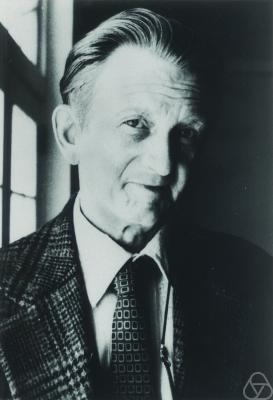
Atle Selberg (14 June 1917 – 6 August 2007) was a Norwegian mathematician known for his work in analytic number theory and the theory of automorphic forms, and in particular for bringing them into relation with spectral theory. He was awarded the Fields Medal in 1950 and an honorary Abel Prize in 2002.

Key Information

Early years

[edit]

Selberg was born in Langesund, Norway, the son of teacher Anna Kristina Selberg and mathematician Ole Michael Ludvigsen Selberg. Two of his three brothers, Sigmund and Henrik, were also mathematicians. His other brother, Arne, was a professor of engineering.[2] While he was still at school, he was influenced by the work of Srinivasa Ramanujan and he found an exact analytical formula for the partition function as suggested by the works of Ramanujan; however, this result was first published by Hans Rademacher.

He studied at the University of Oslo and completed his doctorate in 1943.[2]

World War II

[edit]

During World War II, Selberg worked in isolation due to the German occupation of Norway. After the war, his accomplishments became known, including a proof that a positive proportion of the zeros of the Riemann zeta function lie on the line .[3]

During the war, he fought against the German invasion of Norway, and was imprisoned several times.

Post-war in Norway

[edit]

After the war, he turned to sieve theory, a previously neglected topic which Selberg's work brought into prominence. In a 1947 paper he introduced the Selberg sieve, a method well adapted in particular to providing auxiliary upper bounds, and which contributed to Chen's theorem, among other important results.

In 1948, Selberg submitted two papers in Annals of Mathematics in which he proved by elementary means the theorems for primes in arithmetic progression and the density of primes.[4][5] This challenged the widely held view of his time that certain theorems are only obtainable with the advanced methods of complex analysis. Both results were based on his work on the asymptotic formula

where

for primes . He established this result by elementary means in March 1948, and by July of that year, Selberg and Paul Erdős each obtained elementary proofs of the prime number theorem, both using the asymptotic formula above as a starting point.[6] Circumstances leading up to the proofs, as well as publication disagreements, led to a bitter dispute between the two mathematicians.[7][2]

For his fundamental accomplishments during the 1940s, Selberg received the 1950 Fields Medal.[8]

Institute for Advanced Study

[edit]

C.L. Siegel invited Selberg to visit the Institute for Advanced Study in Princeton, New Jersey in 1947. He moved to the United States and was an associate professor at Syracuse University briefly. He returned to the IAS in 1949, where he remained until his death.[1][9] During the 1950s, he worked on introducing spectral theory into number theory, culminating in his development of the Selberg trace formula, the most famous and influential of his results. In its simplest form, this establishes a duality between the lengths of closed geodesics on a compact Riemann surface and the eigenvalues of the Laplacian, which is analogous to the duality between the prime numbers and the zeros of the zeta function.

He generally worked alone. His only coauthor was Sarvadaman Chowla.[10][11]

Selberg was awarded the 1986 Wolf Prize in Mathematics. He was also awarded an honorary Abel Prize in 2002, its founding year, before the awarding of the regular prizes began.

Selberg received many distinctions for his work, in addition to the Fields Medal, the Wolf Prize[12] and the Gunnerus Medal. He was elected to the Norwegian Academy of Science and Letters, the Royal Danish Academy of Sciences and Letters and the American Academy of Arts and Sciences.

In 1972, he was awarded an honorary degree, doctor philos. honoris causa, at the Norwegian Institute of Technology, later part of Norwegian University of Science and Technology.[13]

His first wife, Hedvig, died in 1995. With her, Selberg had two children: Ingrid Selberg (married to playwright Mustapha Matura) and Lars Selberg. In 2003, Atle Selberg married Betty Frances ("Mickey") Compton (born in 1929).

He died at home in Princeton, New Jersey on 6 August 2007 of heart failure. Upon his death, he was survived by his widow, daughter, son, and four grandchildren.[14]

Selected publications

[edit]
  • Selberg, Atle (1940). "Bemerkungen über eine Dirichletsche Reihe, die mit der Theorie der Modulformen nahe verbunden ist". Archiv for Mathematik og Naturvidenskab. 43 (4): 47–50. JFM 66.0377.01. MR 0002626. Zbl 0023.22201.
  • Selberg, Atle (1942). "On the zeros of Riemann's zeta-function". Skrifter Utgitt av Det Norske Videnskaps-Akademi I Oslo. I. Mat.-Naturv. Klasse. 10: 1–59. MR 0010712. Zbl 0028.11101.
  • Selberg, Atle (1943). "On the normal density of primes in small intervals, and the difference between consecutive primes". Archiv for Mathematik og Naturvidenskab. 47 (6): 87–105. MR 0012624. Zbl 0028.34802.
  • Selberg, Atle (1944). "Bemerkninger om et multiplet integral". Norsk Matematisk Tidsskrift. 26: 71–78. MR 0018287. Zbl 0063.06870.
  • Selberg, Atle (1946). "Contributions to the theory of the Riemann zeta-function". Archiv for Mathematik og Naturvidenskab. 48 (5): 89–155. MR 0020594. Zbl 0061.08402.
  • Selberg, Atle (1949). "An elementary proof of the prime-number theorem". Annals of Mathematics. Second Series. 50 (2): 305–313. doi:10.2307/1969455. JSTOR 1969455. MR 0029410. Zbl 0036.30604.
  • Selberg, Atle (1954). "Note on a paper by L. G. Sathe". Journal of the Indian Mathematical Society. New Series. 18 (1): 83–87. MR 0067143. Zbl 0057.28502.
  • Selberg, A. (1956). "Harmonic analysis and discontinuous groups in weakly symmetric Riemannian spaces with applications to Dirichlet series". Journal of the Indian Mathematical Society. New Series. 20 (1–3): 47–87. MR 0088511. Zbl 0072.08201.
  • Selberg, Atle (1960). "On discontinuous groups in higher-dimensional symmetric spaces". Contributions to Function Theory. Bombay: Tata Institute of Fundamental Research. pp. 147–164. MR 0130324. Zbl 0201.36603.
  • Selberg, Atle (1965). "On the estimation of Fourier coefficients of modular forms". In Whiteman, Albert L. (ed.). Theory of Numbers. Proceedings of Symposia in Pure Mathematics. Vol. VIII. Providence, RI: American Mathematical Society. pp. 1–15. doi:10.1090/pspum/008/0182610. MR 0182610. Zbl 0142.33903.
  • Selberg, Atle; Chowla, S. (1967). "On Epstein's zeta-function". Journal für die Reine und Angewandte Mathematik. 227: 86–110. doi:10.1515/crll.1967.227.86. MR 0215797. Zbl 0166.05204.
  • Selberg, Atle (1992). "Old and new conjectures and results about a class of Dirichlet series". In Bombieri, E.; Perelli, A.; Salerno, S.; Zannier, U. (eds.). Proceedings of the Amalfi Conference on Analytic Number Theory. Salerno: Università di Salerno. pp. 367–385. MR 1220477. Zbl 0787.11037.

Selberg's collected works were published in two volumes. The first volume contains 41 articles, and the second volume contains three additional articles, in addition to Selberg's lectures on sieves.

References

[edit]

Further reading

[edit]
[edit]
Revisions and contributorsEdit on WikipediaRead on Wikipedia
from Grokipedia
Atle Selberg (14 June 1917 – 6 August 2007) was a Norwegian mathematician renowned for his foundational contributions to analytic number theory, the spectral theory of automorphic forms, and related areas of discrete groups. Born in Langesund, Norway, as the youngest of nine children in a family with strong academic ties—his father held a doctorate in mathematics—Selberg earned his doctorate from the University of Oslo in 1943 and later joined the Institute for Advanced Study in Princeton in 1949, where he served as a permanent member and professor until retiring as emeritus in 1987. His most celebrated achievement was an elementary proof of the prime number theorem in 1949, published in the Annals of Mathematics, which demonstrated that the number of primes up to x is asymptotically x / log x without relying on complex function theory, a result he initially developed independently before collaborating with Paul Erdős to extend it. Selberg also introduced the Selberg sieve for estimating prime distributions, the Selberg trace formula linking eigenvalues of Laplacians on Riemann surfaces to lengths of closed geodesics, and advanced sieve methods generalizing classical techniques. For these innovations, he received the Fields Medal in 1950 at the International Congress of Mathematicians, the Wolf Prize in Mathematics in 1986 (shared with Samuel Eilenberg), and an honorary Abel Prize in 2002 recognizing his lifetime impact on mathematics.

Early Life and Education

Family and Childhood

Atle Selberg was born on June 14, 1917, in Langesund, Norway. He was the youngest of nine children—five sons and four daughters—born to Ole Michael Ludvigsen Selberg and Anna Kristina Selberg (née Brigtsdatter Skeie). His father, Ole Michael Selberg, held a doctorate in mathematics and worked as a high school teacher and researcher focused on mathematics education. His mother, Anna Kristina, was a teacher from a family of educators. The couple had married on July 30, 1903, in Halandsdal, establishing an academic household that emphasized intellectual pursuits. Several of Selberg's siblings pursued advanced studies in mathematics, reflecting the family's scholarly environment: his brother Henrik Selberg became a mathematician known for work in complex analysis; twins Sigmund and Arne Selberg, born August 11, 1910, also engaged in mathematical research, with Sigmund serving as a professor. Selberg displayed an early interest in mathematics during his boyhood, influenced by his father's encouragement and access to mathematical literature in the home. The family later relocated, with Selberg attending high school in Gjøvik after growing up near Bergen.

University Studies and Initial Research

Selberg enrolled at the University of Oslo in 1935, majoring in mathematics. He demonstrated early aptitude in number theory, publishing his first paper, "Über einige arithmetische Identitäten" (On some arithmetical identities), in 1936 while still an undergraduate; this 23-page work in German explored identities involving sums over primes and laid groundwork for his later sieve methods. He attended the Scandinavian Mathematical Congress in Helsinki in 1938, delivering a 20-minute talk on his ongoing research. Selberg completed the cand.real. degree, equivalent to a master's, in the spring of 1939. Following this, he pursued doctoral studies independently, as formal PhD supervision was not structured in the modern sense at Oslo during that era. In 1942, amid escalating World War II tensions, Selberg was appointed a research fellow at the university. His doctoral work, interrupted by the German occupation, was completed in isolation in Gjovik; he defended his thesis, "Om Riemanns zetafunksjons nuller" (On the zeros of Riemann's zeta-function), on October 22, 1943, shortly before the university's closure by occupying authorities. This research focused on the distribution and properties of zeta-function zeros, contributing foundational insights to analytic number theory that influenced his subsequent elementary approaches to prime distribution problems.

Career in Norway

Pre-War Academic Positions

Selberg enrolled at the University of Oslo in 1935 after graduating from high school in Gjøvik. Majoring in mathematics, he completed the cand. real. degree—equivalent to a master's—in the spring of 1939 under the Norwegian system, which emphasized independent study with limited formal supervision. During his undergraduate and graduate studies, Selberg pursued independent research, publishing his first paper, "Über einige arithmetische Identitäten," in 1936 while still a student; it was refereed by G. N. Watson and presented via connections with Carl Størmer. He further demonstrated early prominence by delivering a 20-minute talk at the Scandinavian Mathematical Congress in Helsinki in 1938. In 1939, following his degree, Selberg secured a stipend from the University of Oslo for advanced study abroad in Hamburg, Germany, but the outbreak of war prevented the trip; he redirected funds to visit Uppsala, Sweden, initiating focused work on analytic number theory topics like the Riemann zeta function. This grant represented his initial formal research support, though without teaching duties or permanent affiliation, as Norwegian universities at the time offered limited temporary roles for young scholars prior to doctoral completion. No full-time academic appointment preceded the 1940 German invasion of Norway.

World War II Isolation and Independent Work

During the Nazi occupation of Norway, which began with the German invasion on 9 April 1940, Selberg actively resisted the invaders by fighting in Gudbrandsdalen and Østerdalen that same month, after which he was captured and held as a prisoner of war at Trandum camp before his release to Gjøvik. He returned to mathematical pursuits amid escalating restrictions, completing his doctoral thesis on the zeros of the Riemann zeta function, which was awarded on 22 October 1943 following a defense in autumn of that year. This defense occurred shortly before Nazi authorities ordered the closure of the University of Oslo in November 1943, effectively halting formal academic activities for the remainder of the war. Following his thesis defense, Selberg faced further persecution, including arrest by occupation forces, though he was soon released and retreated to Gjøvik to evade ongoing threats. Cut off from international mathematical communities due to wartime isolation and severed communications, he pursued independent research without institutional support or collaboration, focusing intensely on analytic number theory. This period of seclusion enabled solitary advancements, notably in the study of the Riemann zeta function, where he proved that a positive proportion of its non-trivial zeros lie on the critical line Re(s) = 1/2, a significant step toward understanding the Riemann hypothesis. Selberg's wartime efforts yielded several foundational papers on the zeta function and related prime distribution problems, conducted under duress with limited resources, as Norway's universities and libraries operated under severe constraints until liberation in May 1945. These isolated contributions, initially unpublished or disseminated only locally due to the occupation, laid critical groundwork for his post-war breakthroughs, including sieve methods and asymptotic formulas for primes, which gained global recognition only after the conflict ended.

Post-War Developments in Oslo

Following the German occupation's end in May 1945, the University of Oslo reopened, enabling Selberg to continue his research fellowship, a position without formal teaching duties but providing institutional support since 1942. During 1945–1947, he consolidated wartime insights on analytic number theory, including estimates involving the Riemann zeta function and early explorations of sieve techniques, which had been limited by isolation and lack of access to international journals. In the summer of 1946, Selberg identified connections between his zeta function approximations and prime distribution estimates, advancing toward elementary approaches independent of complex analysis. This period marked a shift toward sieve theory, revitalizing a field dormant since Eratosthenes by introducing novel combinatorial bounds on primes and integers free of small factors. His Oslo-based efforts culminated in foundational formulas later formalized, earning domestic notice amid Norway's mathematical recovery. By 1947, Selberg's productivity—spanning over a dozen pre-war publications plus wartime manuscripts—prompted an invitation as temporary member to the Institute for Advanced Study for 1947–1948, signaling global recognition of his Oslo work. While still affiliated with Oslo until departure, he prepared sieving innovations that underpinned the 1948 Selberg symmetry formula, θ(x) log x + ∑_{p≤x} log p · θ(x/p) = 2x log x + O(x), announced shortly after amid collaboration with Paul Erdős.

Transition to the Institute for Advanced Study

Invitation and Relocation

In 1947, Carl Ludwig Siegel, a prominent mathematician at the Institute for Advanced Study (IAS) in Princeton, New Jersey, invited Atle Selberg to spend a year as a visiting member. This invitation came shortly after Selberg's groundbreaking elementary proof of the prime number theorem gained international recognition, prompting interest from leading American institutions seeking to bolster their analytic number theory expertise amid post-World War II academic migrations. Selberg accepted the offer and relocated from Norway to the United States that same year, marking a permanent shift from his European base. During his initial stint at IAS from 1947 to 1948, he married Hedvig Lieberman, whom he had met in Oslo, facilitating his establishment in Princeton. Following this period, Selberg briefly served as an associate professor at Syracuse University in 1948–1949, but returned to IAS in 1949 as a permanent faculty member in the School of Mathematics, where he remained until his retirement. This transition solidified his career in the U.S., away from the constraints of Norway's recovering academic environment, and positioned him within a hub of advanced research unhampered by wartime disruptions.

Settlement in Princeton

Selberg returned to Princeton in 1949 as a permanent member of the School of Mathematics at the Institute for Advanced Study, marking the establishment of his long-term residence in the area. Following his brief tenure as associate professor at Syracuse University from 1948 to 1949, this move solidified his transition from Norway and temporary U.S. positions to a stable base conducive to uninterrupted research. He and his wife, Hedvig Liebermann, whom he had married in 1947 prior to their initial arrival in the United States, raised their two children, daughter Ingrid Maria and son Ole, in Princeton. The Selberg family integrated into the intellectual community surrounding the Institute, where Atle resided until his death on August 6, 2007, at age 90 in his Princeton home. After Hedvig's death in 1995, Selberg married Betty Compton, a Princeton local, further embedding his personal life in the town. This settlement enabled decades of focused work at the Institute, where he advanced to professor in 1951 and later emeritus status, while maintaining a low-profile existence centered on mathematics rather than public engagements.

Major Mathematical Contributions

Elementary Proof of the Prime Number Theorem

In 1949, Atle Selberg published the first fully elementary proof of the prime number theorem, establishing that the prime-counting function π(x)\pi(x) satisfies π(x)x/logx\pi(x) \sim x / \log x as xx \to \infty, without invoking complex analysis or the zeta function, in contrast to the 1896 analytic proofs by Jacques Hadamard and Charles Jean de la Vallée Poussin. The approach relies on arithmetic identities and inequalities for sums over primes and prime powers, building on Chebyshev's earlier estimates that θ(x)<cx\theta(x) < c x for some constant c>1c > 1 and xx large. The core of Selberg's method is a symmetry formula for the Chebyshev theta function ϑ(x)=pxlogp\vartheta(x) = \sum_{p \leq x} \log p, derived by considering the double sum mnxΛ(m)Λ(n)\sum_{m n \leq x} \Lambda(m) \Lambda(n), where Λ\Lambda is the von Mangoldt function (Λ(k)=logp\Lambda(k) = \log p if k=pjk = p^j for prime pp and integer j1j \geq 1, and 0 otherwise). Through explicit computation of terms where m=nm = n and mnm \neq n, and bounding error from higher powers, Selberg obtained the identity ϑ(x)logx+pxlogpϑ(xp)=2xlogx+O(x).\vartheta(x) \log x + \sum_{p \leq x} \log p \cdot \vartheta\left(\frac{x}{p}\right) = 2x \log x + O(x). This relation captures the "balance" between ϑ(x)\vartheta(x) and weighted sums over smaller arguments, with the error term controlled via elementary estimates on the number of primes and divisors. To derive the asymptotic ϑ(x)x\vartheta(x) \sim x, Selberg assumed an initial bound ϑ(y)=O(y)\vartheta(y) = O(y) for y<xy < x (from sieve methods or Chebyshev) and substituted into the identity, isolating the main term to show that deviations from xx must be small on average over dyadic intervals [2k,2k+1][2^k, 2^{k+1}]. By positivity of the left side and induction on these intervals, the error E(x)=ϑ(x)xE(x) = \vartheta(x) - x satisfies 2kx<2k+1E(x)2=o(x2/logx)\sum_{2^k \leq x < 2^{k+1}} |E(x)|^2 = o(x^2 / \log x), implying E(x)=o(x)E(x) = o(x) via Cauchy-Schwarz or direct summation. This yields ϑ(x)=x+o(x)\vartheta(x) = x + o(x), and by partial summation, the prime number theorem follows, as π(x)=2xϑ(t)tlogtdt+O(1)xlogx\pi(x) = \int_2^x \frac{\vartheta(t)}{t \log t} dt + O(1) \sim \frac{x}{\log x}. Refinements extend to stronger error terms, such as π(x)=li(x)+O(xexp(clogx))\pi(x) = \mathrm{li}(x) + O(x \exp(-c \sqrt{\log x}))
Add your contribution
Related Hubs
User Avatar
No comments yet.