Hubbry Logo
Lars AhlforsLars AhlforsMain
Open search
Lars Ahlfors
Community hub
Lars Ahlfors
logo
8 pages, 0 posts
0 subscribers
Be the first to start a discussion here.
Contribute something
Lars Ahlfors
Lars Ahlfors
from Wikipedia

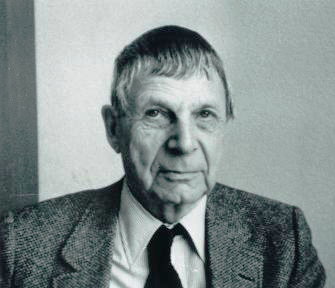
Lars Valerian Ahlfors (18 April 1907 – 11 October 1996) was a Finnish mathematician, remembered for his work in the field of Riemann surfaces and his textbook on complex analysis. In 1936, Ahlfors was awarded the first Fields Medal, along with American mathematician Jesse Douglas.[citation needed]

Background

[edit]

Ahlfors was born in Helsinki, Finland.[1][2] His mother, Sievä Helander, died at his birth. His father, Axel Ahlfors, was a professor of engineering at the Helsinki University of Technology. The Ahlfors family was Swedish-speaking, so he first attended the private school Nya svenska samskolan where all classes were taught in Swedish. Ahlfors studied at University of Helsinki from 1924, graduating in 1928 having studied under Ernst Lindelöf and Rolf Nevanlinna.[1] He assisted Nevanlinna in 1929 with his work on Denjoy's conjecture on the number of asymptotic values of an entire function. In 1929 Ahlfors published the first proof of this conjecture, now known as the Denjoy–Carleman–Ahlfors theorem.[3] It states that the number of asymptotic values approached by an entire function of order ρ along curves in the complex plane going toward infinity is less than or equal to 2ρ.

He completed his doctorate from the University of Helsinki in 1930.

Career

[edit]

Ahlfors worked as an associate professor at the University of Helsinki from 1933 to 1936. In 1936 he was one of the first two people to be awarded the Fields Medal[1][2] (the other was Jesse Douglas). In 1935 Ahlfors visited Harvard University.[2] He returned to Finland in 1938 to take up a professorship at the University of Helsinki. The outbreak of war in 1939 led to problems although Ahlfors was unfit for military service. He was offered a position at the Swiss Federal Institute of Technology at Zurich in 1944 and finally managed to travel there in March 1945. He did not enjoy his time in Switzerland, so in 1946 he jumped at a chance to leave, returning to work at Harvard, where he remained until his retirement in 1977;[1][2] he was William Caspar Graustein Professor of Mathematics from 1964. Ahlfors was a visiting scholar at the Institute for Advanced Study in 1962 and again in 1966.[4] He was awarded the Wihuri International Prize in 1968 and the Wolf Prize in Mathematics in 1981. He served as the Honorary President of the International Congress of Mathematicians in 1986 at Berkeley, California, in celebration of his 50th year of the award of his Fields Medal.

His book Complex Analysis (1953) is the classic text on the subject and is almost certainly referenced in any more recent text which makes heavy use of complex analysis. Ahlfors wrote several other significant books, including Riemann surfaces (1960)[5] and Conformal invariants (1973). He made decisive contributions to meromorphic curves, value distribution theory, Riemann surfaces, conformal geometry, quasiconformal mappings and other areas during his career.

Personal life

[edit]

In 1933, he married Erna Lehnert, an Austrian who with her parents had first settled in Sweden and then in Finland. The couple had three daughters. Ahlfors died of pneumonia at the Willowwood nursing home in Pittsfield, Massachusetts in 1996.[1][2]

See also

[edit]

Bibliography

[edit]

References

[edit]
[edit]
Revisions and contributorsEdit on WikipediaRead on Wikipedia
from Grokipedia
Lars Valerian Ahlfors (April 18, 1907 – October 11, 1996) was a Finnish who made foundational contributions to , particularly in the study of Riemann surfaces, quasiconformal mappings, and Kleinian groups. He is best remembered as the first recipient of the in 1936, awarded for his work on the Denjoy conjecture and the development of . Born in , , Ahlfors entered the in 1924, where he studied under prominent mathematicians Ernst Lindelöf and Rolf Nevanlinna, earning his in 1928 and PhD in 1930. His early research focused on conformal mappings and meromorphic functions; at age 22, he proved Denjoy's conjecture using quasiconformal mappings, a breakthrough that established his international reputation. In 1935, while visiting , he extended Nevanlinna's value distribution theory into a geometric framework, influencing subsequent advances in Teichmüller theory and uniformization. Ahlfors held academic positions at the (professor, 1938–1945), the Swiss Federal Institute of Technology in (1945–1946), and (1946–1977), where he served as the William Caspar Graustein Professor of Mathematics until his retirement. His seminal textbook (1953, revised 1966 and 1979) became a standard reference, and he authored nearly 100 papers on topics ranging from entire functions to discrete groups. Later honors included the (1981) and honorary doctorates from several institutions, including the and . Ahlfors' work bridged with applications in physics and , cementing his legacy as one of the 20th century's leading analysts.

Early Life and Education

Family and Childhood

Lars Valerian Ahlfors was born on April 18, 1907, in (then known as Helsingfors), , which was part of the at the time, into a Swedish-speaking family. His mother, Sievä Matilda Helander, died during childbirth, leaving him without a maternal figure from the outset. His father, Karl Axel Mauritz Ahlfors, was a prominent professor of at the (then the Polytechnical Institute), originally from the Islands, and he provided a stable though stern household environment. Following his mother's death, Ahlfors was initially raised by his aunts on the Åland Islands for the first three years of his life, an arrangement that offered him early familial care amid the tragedy. At age three, he joined his father in Helsinki, where the family, supported by a maid, cook, and governess, maintained a structured, intellectually oriented home despite the absence of a stepmother until his father remarried in 1915. This remarriage to Héléne Alice Palmroth introduced a half-sister, Unga, born in 1917, contributing to a more conventional family dynamic during his formative years. Ahlfors spent his childhood in , attending the Nya Svenska Samskolan, a private Swedish-language high school that aligned with his family's linguistic heritage and emphasized a rigorous classical education. From an early age, he displayed a keen interest in , influenced by the concepts prevalent in his father's professional library and discussions at home, which sparked his curiosity beyond the standard school curriculum. As a teenager, he independently studied using his father's textbooks, since the subject was not covered in his high school program, laying the groundwork for his prodigious talent in the field. This self-directed learning, nurtured within the academic atmosphere of his father's career, profoundly shaped his early passion for .

Academic Training

Ahlfors enrolled at the in 1924 at the age of 17, where he pursued studies in mathematics under the guidance of two leading Finnish mathematicians, Ernst Lindelöf and Rolf Nevanlinna. Lindelöf, a renowned analyst known for his work on boundary behavior of analytic functions, served as a key influence during Ahlfors' undergraduate years, while Nevanlinna, fresh from his own groundbreaking contributions to value distribution theory, introduced him to advanced topics in . By his freshman year, Ahlfors was already engaging with sophisticated coursework, including advanced calculus, which fueled his rapid development in the field. During his time at Helsinki, Ahlfors began his early research in , focusing on the asymptotic properties of . In 1929, he published a seminal proof of Arnaud Denjoy's conjecture from 1907, establishing that an entire function of finite order with pp distinct asymptotic values must satisfy ρp2\rho \geq \frac{p}{2}, where ρ\rho is the order of the function; this result is now known as the Denjoy–Carleman–Ahlfors theorem due to independent contributions by Torsten Carleman. The proof appeared in his paper "Über die asymptotischen Werte der ganzen Funktionen endlicher Ordnung" in the Annales Academiae Scientiarum Fennicae. This work, accomplished while still a , demonstrated Ahlfors' exceptional talent and laid the foundation for his lifelong contributions to function theory. In the fall of , following the completion of his master's examinations in the spring of that year, Ahlfors accompanied Nevanlinna to , where Nevanlinna held a temporary position replacing at the Eidgenössische Technische Hochschule (ETH). There, from 1928 to 1929, Ahlfors continued his studies in a vibrant international environment, immersing himself further in complex function theory. He later made extended visits to during 1930–1932, where he interacted with prominent analysts such as Denjoy and Paul Montel, broadening his exposure to French traditions in analysis. These abroad experiences were crucial in refining his research approaches before returning to . Ahlfors received his doctorate from the in 1930, with a centered on topics in that built upon his earlier work on asymptotic values and meromorphic functions. Supervised primarily by Lindelöf with input from Nevanlinna, the dissertation incorporated elements of his Denjoy proof and explored related properties of analytic functions, marking the culmination of his formal training. This achievement positioned him as one of the rising stars in European mathematics at a young age.

Professional Career

Early Appointments in Europe

Following his doctoral studies, Ahlfors secured his first academic position as a lecturer in at Åbo Akademi, the Swedish-language university in , , in 1930. This role marked the beginning of his independent teaching career, where he focused on shortly after defending his on the Denjoy . The appointment provided stability in a familiar academic environment, allowing him to build on his early research in function theory while engaging with a smaller institution dedicated to Swedish-speaking scholars. In 1933, Ahlfors advanced to the position of adjunct professor at the , returning to the institution where he had completed his studies under influential mentors like Rolf Nevanlinna. This promotion reflected recognition of his growing expertise in and enabled deeper involvement in the Finnish mathematical community. During this period, he continued to collaborate closely with Nevanlinna, contributing to advancements in value distribution theory through geometric interpretations that extended classical results. From 1935 to 1938, Ahlfors held a visiting lectureship at in the United States, an opportunity facilitated by international recommendations and funding. This extended stay exposed him to American mathematical traditions and provided a platform for international collaboration, during which he began developing foundational ideas on quasiconformal mappings, introducing the term in a 1935 paper and exploring their applications to broader classes of functions. The Harvard experience not only broadened his perspective but also culminated in his receipt of the inaugural in 1936 for work on covering surfaces related to value distribution.

Wartime and Postwar Positions

In 1938, Ahlfors returned to Finland from his visiting position at to accept a professorship at the , driven by homesickness despite the rewarding experience in . The outbreak of in 1939 severely disrupted his work; during the (1939–1940), his family was evacuated to for safety, and the closed due to the bombardment of the city and the conscription of male students. Ahlfors remained in in air raid shelters, though academic research was hampered by limited resources and ongoing threats. The Continuation War (1941–1944) exacerbated these challenges, with Finland's alliance with Germany complicating international academic ties and further isolating Ahlfors from European scholarly networks. In 1944, facing financial hardship and the worsening geopolitical situation, Ahlfors accepted an offer for a professorship at the University of Zürich (Swiss Federal Institute of Technology), marking his decision to emigrate permanently. To fund the escape from Finland, he smuggled out his 1936 Fields Medal and pawned it in a Stockholm shop for train fare to southern Sweden, later redeeming it with assistance from a temporary position at Uppsala University. He arrived in Zürich in March 1945 after a circuitous journey via Stockholm, Scotland, and Paris, but found the postwar environment unwelcoming for a foreign professor amid Switzerland's economic strains and xenophobia. Ahlfors held the Zürich position only until 1946, using it as a bridge to seek more stable opportunities. In the early postwar years, Europe's political upheavals—including Finland's shift toward neutrality and the broader reconfiguration of academic institutions—prompted his efforts to secure a permanent role outside the continent, leveraging prior U.S. connections from his 1935–1938 Harvard visit. These transitions culminated in his acceptance of a tenured professorship at Harvard in 1946, providing the stability absent during the war.

Career at Harvard

In 1946, Lars Ahlfors received a permanent appointment as a full professor of mathematics at , where he had previously served as a visiting from 1935 to 1938. This marked the beginning of his long-term affiliation with the institution, following a brief return to Europe during and after . He held the position until his retirement in 1977, during which time he also occupied the William Caspar Graustein Professorship starting in 1964. Ahlfors played a key role in strengthening Harvard's department, serving as its chairman from 1948 to 1950 and fostering an environment that attracted international talent. He supervised numerous graduate students, contributing to the department's reputation in advanced function theory. His teaching emphasized , delivered through clear and elegant lectures that earned him the nickname "Mr. Complex Variable" among students; these courses profoundly shaped the training of American mathematicians in the field during the mid-20th century. Upon retiring in 1977, Ahlfors assumed emeritus status and remained engaged with Harvard, delivering occasional lectures on and related topics into the 1980s. His enduring presence helped sustain the department's focus on and influenced subsequent generations of scholars.

Mathematical Work

Contributions to Complex Analysis

Ahlfors made a significant early contribution to by proving Denjoy's in 1929, which established the Denjoy–Carleman–Ahlfors theorem. The theorem states that if an of finite order ρ\rho has pp distinct asymptotic values, then ρp/2\rho \geq p/2. This result, published when Ahlfors was just 22, built on Arnaud Denjoy's 1907 and Torsten Carleman's partial progress, providing a sharp bound on the growth rate of based on their asymptotic behavior. His proof, appearing in two papers—"Sur le nombre des valeurs asymptotiques d'une fonction méromorphe presque entière" in the Annales Academiae Scientiarum Fennicae and "Über die asymptotischen Werte analytischer Funktionen" in the Acta Societatis Scientiarum Fennicae—employed innovative geometric arguments to relate the function's values at to its order. Ahlfors' collaboration with Rolf Nevanlinna profoundly shaped the theory of meromorphic functions and value distribution. During his time in in 1928–1929, Ahlfors assisted Nevanlinna in refining aspects of the Denjoy conjecture, leading to joint advancements in understanding how meromorphic functions distribute their values in the . Their work extended Nevanlinna's 1925 fundamental theorems, which quantify value distribution via the T(r,f)T(r, f), proximity function m(r,a)m(r, a), and counting function N(r,a)N(r, a). Ahlfors contributed geometric interpretations that clarified these theorems, showing how exceptional values (where m(r,a)=o(T(r,f))m(r, a) = o(T(r, f))) form sets of logarithmic capacity zero, thus providing deeper insights into the global behavior of meromorphic functions. Ahlfors pioneered geometric approaches to conformal mappings, applying them to broader problems in function theory. He viewed conformal mappings not merely as transformations but as tools to reveal structural properties of analytic functions, such as their extension to surfaces. This perspective, evident in his early papers from the late and , used to analyze how conformal maps preserve angles and shapes, facilitating applications to distortion estimates and extremal problems in the unit disk or plane. For instance, his methods bounded the number of times a function omits certain values, linking conformal geometry directly to value distribution without relying solely on . These contributions were heavily influenced by his mentors Ernst Lindelöf and Rolf Nevanlinna, who guided his development of techniques. At the from 1924 to 1928, Lindelöf instilled a rigorous foundation in complex function theory, emphasizing precise handling of singularities and continuations along paths. Nevanlinna, during the same period and later in , introduced Ahlfors to advanced topics in meromorphic functions, inspiring techniques for across branch points and onto Riemann surfaces. This mentorship enabled Ahlfors to integrate continuation principles with geometric insights, as seen in his proofs of bounds on exceptional sets during continuation. His early European appointments, including at , provided the collaborative environment to refine these ideas.

Riemann Surfaces and Kleinian Groups

During the 1930s, Ahlfors advanced the understanding of Riemann surfaces through his innovative geometric approach to covering theory. In his 1935 paper "Zur Theorie der Überlagerungsflächen," he interpreted the image of a as a branched covering surface over the , applying the Gauss-Bonnet theorem to derive estimates on the total branching and curvature, which implied bounds on the local sheet numbers of the covering. This work established the Ahlfors finiteness theorem in the context of value distribution, demonstrating that under suitable growth conditions on the function, the covering surface has only finitely many sheets over any compact subset of the base, thereby limiting the complexity of the structure. Ahlfors' 1935 provided a topological framework for quantifying the multiplicity of preimages in meromorphic mappings, bridging theory with the global of Riemann surfaces and influencing subsequent studies on branched covers. By 1937, he extended these ideas using to connect the topology of covering surfaces with integrals, further refining the finiteness constraints on sheet numbers via the . In the mid-20th century, Ahlfors played a pivotal role in revitalizing the study of Kleinian groups, defined as discrete subgroups of the Möbius transformation group acting on the . His 1964 paper "Finitely Generated Kleinian Groups" formalized key properties of these groups, introducing the Ahlfors finiteness theorem, which asserts that for a finitely generated Kleinian group Γ\Gamma, the quotient of the ordinary set (region of discontinuity) by Γ\Gamma is a of finite type, with only finitely many connected components, cusps, and branch points. This analytic proof, relying on extremal length and modulus estimates rather than topological methods, resolved longstanding questions about the boundedness of quotient topologies and marked the inception of modern Kleinian group theory. Ahlfors' finiteness theorem for Kleinian groups found direct applications in the , as it characterizes the possible hyperbolic Riemann surfaces arising as quotients of the unit disk or upper half-plane by such discrete actions, thereby classifying non-simply connected surfaces up to conformal equivalence through their representations. Additionally, his earlier development of conformal invariants and extremal length, in joint work with Arne Beurling during the , served as a precursor to Teichmüller theory by providing metric tools to parameterize the of Riemann surfaces, enabling the measurement of deformations via quadratic differentials and length extremals. Ahlfors collaborated extensively with Leo Sario on the boundary properties of , culminating in their 1960 monograph Riemann Surfaces, which systematically explored the behavior of analytic and harmonic functions near the ideal boundary. In this work, they introduced the concept of regular partitions of the extended boundary, allowing the classification of boundary components as weakly or strongly accessible, and proved results on the continuity and boundedness of analytic functions across these boundaries using potential-theoretic methods and sheaf cohomology. Their analysis established that principal functions—those harmonic except at isolated singularities—exhibit controlled boundary values on finitely generated surfaces, with implications for the theorems and the extension of Dirichlet problems to infinite-sheeted covers. This joint effort unified geometric and analytic perspectives on boundaries, influencing later developments in bordered theory.

Quasiconformal Mappings

In 1935, Lars Ahlfors introduced the concept of quasiconformal mappings in his seminal work on covering surfaces, generalizing the classical conformal mappings by allowing a controlled amount of distortion while preserving orientation and homeomorphic properties. This generalization proved essential for analyzing mappings that distort angles and shapes in a bounded manner, parameterized by a constant K1K \geq 1, where K=1K=1 recovers the conformal case. Ahlfors' innovation addressed limitations in earlier approaches, such as those by Grötzsch, by providing a framework for studying non-conformal but nearly conformal transformations in . Ahlfors formalized the notion of a KK-quasiconformal mapping as a f:ΩΩf: \Omega \to \Omega' between domains in the that satisfies the analytic condition max(fzfzˉ,fzˉfz)K\max\left( \frac{|f_z|}{|f_{\bar{z}}|}, \frac{|f_{\bar{z}}|}{|f_z|} \right) \leq K almost everywhere, where fzf_z and fzˉf_{\bar{z}} are the complex partial derivatives. This definition captures the bounded of infinitesimal circles into ellipses with eccentricity controlled by KK, ensuring the mapping remains ACL (absolutely continuous on lines) and has finite distortion. Equivalent geometric formulations, developed further by Ahlfors, rely on the modulus of curve families, where the modulus M(Γ)M(\Gamma) of a family of s Γ\Gamma transforms under ff such that K1M(Γ)M(f(Γ))KM(Γ)K^{-1} M(\Gamma) \leq M(f(\Gamma)) \leq K M(\Gamma). Ahlfors applied quasiconformal mappings extensively to Teichmüller spaces, collaborating with Lipman Bers in 1960 to establish a generalized for variable metrics, which parametrizes the space of hyperbolic metrics on surfaces up to quasiconformal equivalence. This work provided a rigorous foundation for understanding moduli spaces of Riemann surfaces. In parallel, quasiconformal theory intertwined with the modulus of curve families, a conformal invariant measuring the "width" of collections, enabling proofs of quasiconformal invariance and results. Ahlfors, jointly with Arne Beurling in 1956, introduced extremal length as the reciprocal power of the modulus, λ(Γ)=1/M(Γ)\lambda(\Gamma) = 1 / M(\Gamma), offering a variational tool to extremize path lengths under quadratic differentials and resolve problems in function theory. The influence of Ahlfors' quasiconformal mappings extends to geometric function theory, where they facilitate distortion estimates and boundary behavior , and to partial differential equations, particularly through the Beltrami fzˉ=μfzf_{\bar{z}} = \mu f_z with μ<1\|\mu\|_\infty < 1, whose solutions yield quasiconformal maps central to nonlinear elliptic theory. These contributions have shaped modern developments in Teichmüller theory and higher-dimensional generalizations.

Major Publications

Lars Ahlfors's most influential publication is his Complex Analysis: An Introduction to the Theory of Analytic Functions of One Complex Variable, first published in 1953 by McGraw-Hill. This work serves as a standard graduate-level introduction to the field, emphasizing rigorous treatment of integration theory, residue calculus, and conformal mappings while maintaining an elementary level accessible to advanced undergraduates and beginning graduate students. The book underwent revisions in its second edition (1966) and third edition (1979), incorporating updates to reflect evolving pedagogical needs, and has been reprinted by the American Mathematical Society's Chelsea Publishing series, ensuring its continued availability. Widely regarded as a classic, it remains one of the most used in due to its clarity and depth, influencing generations of mathematicians in their understanding of analytic functions. In 1960, Ahlfors co-authored Riemann Surfaces with Leo Sario, published by as part of the Princeton Mathematical Series. The book provides a comprehensive survey of modern theory, focusing on topics such as covering spaces, the , and harmonic functions on these surfaces, integrating topological and analytic perspectives. It has been praised for offering an excellent entry point for researchers seeking to grasp the structural properties of without excessive prerequisites. This text has significantly shaped the study of complex manifolds and their applications in geometry and . Ahlfors's Lectures on Quasiconformal Mappings, based on his 1964 Harvard course and first published in 1966 by Van Nostrand, offers a foundational exposition of quasiconformal theory. It develops the subject from basic principles, including a self-contained treatment of the Beltrami equation and results on normal families of mappings, making it suitable for graduate students. A second edition in 2006, published by the , includes additional chapters by other authors updating applications, underscoring its enduring relevance. The lectures have had a profound impact on the field's development, serving as a primary resource for understanding the less rigid generalizations of conformal mappings and their geometric implications. Later in his career, Ahlfors published Conformal Invariants: Topics in Geometric Function Theory in 1973 with McGraw-Hill, later reprinted by the AMS Chelsea series in 1996. This advanced text explores conformal invariants through extremal problems, capacity, and their connections to , drawing on Ahlfors's earlier research from the 1920s onward. It emphasizes practical applications in solving boundary value problems and has been recognized as a major contribution to the literature, influencing subsequent work in function theory and Teichmüller spaces. These publications, along with Ahlfors's two-volume Collected Papers, edited with the assistance of Rae Michael Shortt and published by Birkhäuser (1982–1983), have standardized key aspects of education and research. Multiple editions and translations of his textbooks have ensured their global adoption, solidifying their role in shaping the discipline's foundational literature.

Recognition and Awards

Fields Medal

In 1936, at the in , Lars Ahlfors received the inaugural , sharing the honor with Jesse Douglas of the . The award recognized Ahlfors' pioneering research on covering surfaces related to Riemann surfaces of inverse functions of entire and meromorphic functions, which opened a new field in . This work built on his earlier contributions to the theory of meromorphic functions, including theorems on Riemann surfaces that advanced value distribution theory. The was established through the endowment of Canadian mathematician , who served as secretary of the 1924 and sought to create an international prize for outstanding mathematical achievement, often likened to a "Nobel Prize" for the discipline due to its prestige and focus on future promise. Fields' vision emphasized recognizing young mathematicians under 40, aiming to foster global collaboration amid interwar divisions. The medals were first struck in 1936, with two awarded to highlight exceptional early-career impact. At age 29, the recognition came as a complete surprise to Ahlfors, who learned of it only hours before the ceremony, dramatically elevating his international profile as a leading figure in . This accolade arrived amid rising political tensions in Europe, including the remilitarization of the Rhineland and the onset of the , which foreshadowed broader conflict and underscored the award's role in affirming mathematical excellence during uncertain times.

Later Honors

Following the Fields Medal, which marked his early breakthrough in , Ahlfors continued to receive major accolades affirming his lifelong impact on the field. In 1968, the Jenny and Antti Wihuri Foundation awarded him the Wihuri International Prize for his pioneering contributions to , including work on Riemann surfaces, quasiconformal mappings, and value distribution theory. The followed in 1981, presented by the Wolf Foundation in recognition of his over five decades of leadership in the theory of functions of a complex variable; the jury highlighted his geometric derivation of , generalizations of the , and foundational results on Riemann surfaces, quasiconformal mappings, and Teichmüller spaces. Ahlfors earned numerous honorary doctorates later in his career, including from in 1953, Åbo Akademi in 1970, the University of Zürich in 1977, the in 1978, and in 1973. He was also elected to leading scholarly academies, such as the American Academy of Arts and Sciences and the Finnish Academy of Science and Letters (Societas Scientiarum Fennica).

Personal Life and Legacy

Family

Lars Ahlfors married Erna Lehnert in 1933 upon his return to from studies in ; she was an Austrian born in whose family had relocated first to and then to . The couple had three daughters—Cynthia Mary, Vanessa Elisabeth, and Caroline Gertrud—and one son, Christopher, who died in infancy. Family life was deeply affected by the outbreak of ; in 1939, as the Soviet-Finnish began, Erna and their two young daughters were evacuated to , where they stayed with relatives for safety amid the escalating conflicts. Ahlfors remained in initially, as the university closed due to the war, but the separation strained the family until reunions were possible later in the conflict. After the war, the family relocated to the in 1946 when Ahlfors joined , establishing their home in , where they remained for the duration of his career. Erna provided essential support throughout Ahlfors' professional life, contributing to the stability that allowed him to focus on his mathematical research amid frequent relocations and academic demands. The couple's marriage lasted 63 years until Ahlfors' death, marked by mutual companionship and shared experiences across continents.

Death and Influence

Ahlfors retired from his position as the William Caspar Graustein Professor of at in 1977, after more than three decades of service. Following retirement, he resided in Nassau, New York, with his wife Erna, though he later spent time in , where he remained engaged with contemporary developments in , including the study of William Thurston's work on . He maintained an active intellectual life, free from the pressures of formal research or publication, until his health declined in his later years. Ahlfors passed away on October 11, 1996, at the age of 89 in , due to . Ahlfors's enduring legacy in mathematics is evident in his profound influence on modern , achieved through both his mentorship of students and the widespread adoption of his seminal textbooks. He supervised 24 doctoral students at Harvard, many of whom became prominent figures in the field, and his collaborations extended to key mathematicians such as Lipman Bers and Halsey Royden, fostering advancements in quasiconformal mappings and related areas. His textbook (first published in 1953 and revised in subsequent editions through 1979) remains a cornerstone for graduate education worldwide, shaping generations of analysts with its rigorous yet accessible treatment of the subject. This pedagogical impact, combined with his research, positioned Ahlfors as a pivotal figure whose ideas permeate ongoing work in Teichmüller theory and . In recognition of his contributions, established the Ahlfors Lecture Series in 2015, an annual event honoring his tenure as professor from 1946 to 1977 and featuring leading mathematicians delivering talks on and related topics. Beyond academia, Ahlfors played a crucial role in bridging European and American mathematical traditions in the post-World War II era, having trained in and before first visiting the in 1935 and emigrating permanently in 1946; his presence at Harvard facilitated the transfer of advanced European techniques in function theory to American scholars, enhancing transatlantic collaboration and elevating the global stature of . His work continues to receive frequent citations in research on Riemann surfaces and , underscoring his lasting intellectual heritage.

References

Add your contribution
Related Hubs
Contribute something
User Avatar
No comments yet.