



Community hub
Recent from talks
Knowledge base stats:
Talk channels stats:
Members stats:
Sacco and Vanzetti
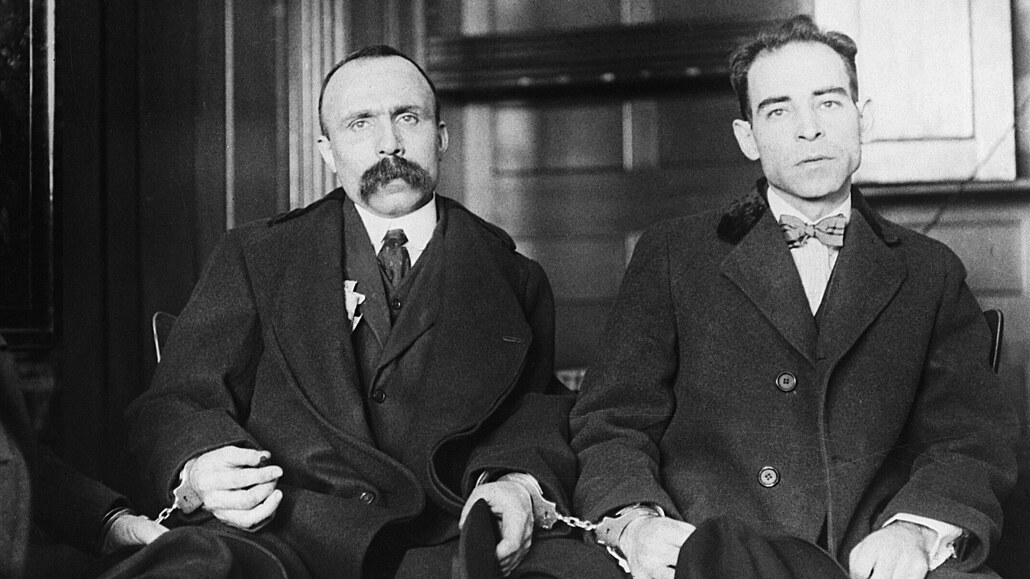
Nicola Sacco (Italian: [niˈkɔːla ˈsakko]; April 22, 1891 – August 23, 1927) and Bartolomeo Vanzetti (Italian: [bartoloˈmɛːo vanˈtsetti, -ˈdzet-]; June 11, 1888 – August 23, 1927) were Italian immigrants and anarchists, controversially accused of murdering Alessandro Berardelli and Frederick Parmenter, a guard and a paymaster, during the April 15, 1920, armed robbery of the Slater and Morrill Shoe Company in Braintree, Massachusetts, United States. Seven years later, they were executed in the electric chair at Charlestown State Prison. Regardless of the uncertainty surrounding their actual guilt, their controversial trial and execution made them symbols of intolerance, racism and injustice, with most historians considering their conviction unfair due to prejudice against immigrants and radicals.
After a few hours' deliberation on July 14, 1921, the jury convicted Sacco and Vanzetti of first-degree murder and they were sentenced to death by the trial judge. Anti-Italianism, anti-immigrant, and anti-anarchist bias were suspected as having heavily influenced the verdict. A series of appeals followed, funded largely by the private Sacco and Vanzetti Defense Committee. The appeals were based on recanted testimony, conflicting ballistics evidence, a prejudicial pretrial statement by the jury foreman, and a confession by an alleged participant in the robbery. All appeals were denied by trial judge Webster Thayer and also later denied by the Massachusetts Supreme Judicial Court. By 1926, the case had drawn worldwide attention. As details of the trial and the men's suspected innocence became known, Sacco and Vanzetti became the center of one of the largest causes célèbres in modern history. In 1927, protests on their behalf were held in every major city in North America and Europe, as well as in Tokyo, Sydney, Melbourne, São Paulo, Rio de Janeiro, Buenos Aires, Dubai, Montevideo, Johannesburg, Mexico City and Auckland.
Celebrated writers, artists, and academics pleaded for their pardon or for a new trial. Harvard law professor and future Supreme Court justice Felix Frankfurter argued for their innocence in a widely read Atlantic Monthly article that was later published in book form. Even the Italian fascist dictator Benito Mussolini was convinced of their innocence and attempted to pressure American authorities to have them released. The two were scheduled to be executed in April 1927, accelerating the outcry. Responding to a massive influx of telegrams urging their pardon, Massachusetts governor Alvan T. Fuller appointed a three-man commission to investigate the case. After weeks of secret deliberation that included interviews with the judge, lawyers, and several witnesses, the commission upheld the verdict. Sacco and Vanzetti were executed in the electric chair just after midnight on August 23, 1927.
Investigations in the aftermath of the executions continued throughout the 1930s and 1940s. The publication of the men's letters, containing eloquent professions of innocence, intensified the public's belief in their wrongful execution. A ballistic test performed in 1961 suggested that the pistol found on Sacco was used to commit the murders, though later commentators have questioned its reliability and conclusiveness, given questions about the chain of custody and possible manipulation of evidence. On August 23, 1977—the 50th anniversary of the executions—Massachusetts Governor Michael Dukakis issued a proclamation that Sacco and Vanzetti had been unfairly tried and convicted and that "any disgrace should be forever removed from their names". The proclamation however, did not include a pardon.
Sacco was a shoemaker and a night watchman, born April 22, 1891, in Torremaggiore, Province of Foggia, Apulia region (in Italian: Puglia), Italy, who migrated to the United States at the age of seventeen. Before immigrating, according to a letter he sent while imprisoned, Sacco worked on his father's vineyard, often sleeping out in the field at night to prevent animals from destroying the crops. Vanzetti was a fishmonger born June 11, 1888, in Villafalletto, Province of Cuneo, Piedmont region. Both left Italy for the US in 1908, although they did not meet until a 1917 strike.
The men were believed to be followers of Luigi Galleani, an Italian anarchist who advocated revolutionary violence, including bombing and assassination. Galleani published Cronaca Sovversiva (Subversive Chronicle), a periodical that advocated violent revolution, and a bomb-making manual called La Salute è in voi! (Salvation Is within You!). At the time, immigrant Italian anarchists—in particular the Galleanist group—ranked at the top of the United States government's list of dangerous enemies. Since 1914, the Galleanists had been identified as suspects in several violent bombings and assassination attempts, including an attempted mass poisoning. Publication of Cronaca Sovversiva was suppressed in July 1918, and the government deported Galleani and eight of his closest associates on June 24, 1919.
Other Galleanists remained active for three years, 60 of whom waged an intermittent campaign of violence against US politicians, judges, and other federal and local officials, especially those who had supported deportation of alien radicals. Among the dozen or more violent acts was the bombing of Attorney General A. Mitchell Palmer's home on June 2, 1919. In that incident, Carlo Valdinocci, a former editor of Cronaca Sovversiva, was killed when the bomb intended for Palmer exploded in the editor's hands. Radical pamphlets entitled "Plain Words" signed "The Anarchist Fighters" were found at the scene of this and several other midnight bombings that night.
Several Galleanist associates were suspected or interrogated about their roles in the bombing incidents. Two days before Sacco and Vanzetti were arrested, a Galleanist named Andrea Salsedo fell to his death from the US Justice Department's Bureau of Investigation (BOI) offices on the 14th floor of 15 Park Row in New York City. Salsedo had worked in the Canzani Printshop in Brooklyn, to where federal agents traced the "Plain Words" leaflet.
Hub AI
Sacco and Vanzetti AI simulator
(@Sacco and Vanzetti_simulator)
Sacco and Vanzetti
Nicola Sacco (Italian: [niˈkɔːla ˈsakko]; April 22, 1891 – August 23, 1927) and Bartolomeo Vanzetti (Italian: [bartoloˈmɛːo vanˈtsetti, -ˈdzet-]; June 11, 1888 – August 23, 1927) were Italian immigrants and anarchists, controversially accused of murdering Alessandro Berardelli and Frederick Parmenter, a guard and a paymaster, during the April 15, 1920, armed robbery of the Slater and Morrill Shoe Company in Braintree, Massachusetts, United States. Seven years later, they were executed in the electric chair at Charlestown State Prison. Regardless of the uncertainty surrounding their actual guilt, their controversial trial and execution made them symbols of intolerance, racism and injustice, with most historians considering their conviction unfair due to prejudice against immigrants and radicals.
After a few hours' deliberation on July 14, 1921, the jury convicted Sacco and Vanzetti of first-degree murder and they were sentenced to death by the trial judge. Anti-Italianism, anti-immigrant, and anti-anarchist bias were suspected as having heavily influenced the verdict. A series of appeals followed, funded largely by the private Sacco and Vanzetti Defense Committee. The appeals were based on recanted testimony, conflicting ballistics evidence, a prejudicial pretrial statement by the jury foreman, and a confession by an alleged participant in the robbery. All appeals were denied by trial judge Webster Thayer and also later denied by the Massachusetts Supreme Judicial Court. By 1926, the case had drawn worldwide attention. As details of the trial and the men's suspected innocence became known, Sacco and Vanzetti became the center of one of the largest causes célèbres in modern history. In 1927, protests on their behalf were held in every major city in North America and Europe, as well as in Tokyo, Sydney, Melbourne, São Paulo, Rio de Janeiro, Buenos Aires, Dubai, Montevideo, Johannesburg, Mexico City and Auckland.
Celebrated writers, artists, and academics pleaded for their pardon or for a new trial. Harvard law professor and future Supreme Court justice Felix Frankfurter argued for their innocence in a widely read Atlantic Monthly article that was later published in book form. Even the Italian fascist dictator Benito Mussolini was convinced of their innocence and attempted to pressure American authorities to have them released. The two were scheduled to be executed in April 1927, accelerating the outcry. Responding to a massive influx of telegrams urging their pardon, Massachusetts governor Alvan T. Fuller appointed a three-man commission to investigate the case. After weeks of secret deliberation that included interviews with the judge, lawyers, and several witnesses, the commission upheld the verdict. Sacco and Vanzetti were executed in the electric chair just after midnight on August 23, 1927.
Investigations in the aftermath of the executions continued throughout the 1930s and 1940s. The publication of the men's letters, containing eloquent professions of innocence, intensified the public's belief in their wrongful execution. A ballistic test performed in 1961 suggested that the pistol found on Sacco was used to commit the murders, though later commentators have questioned its reliability and conclusiveness, given questions about the chain of custody and possible manipulation of evidence. On August 23, 1977—the 50th anniversary of the executions—Massachusetts Governor Michael Dukakis issued a proclamation that Sacco and Vanzetti had been unfairly tried and convicted and that "any disgrace should be forever removed from their names". The proclamation however, did not include a pardon.
Sacco was a shoemaker and a night watchman, born April 22, 1891, in Torremaggiore, Province of Foggia, Apulia region (in Italian: Puglia), Italy, who migrated to the United States at the age of seventeen. Before immigrating, according to a letter he sent while imprisoned, Sacco worked on his father's vineyard, often sleeping out in the field at night to prevent animals from destroying the crops. Vanzetti was a fishmonger born June 11, 1888, in Villafalletto, Province of Cuneo, Piedmont region. Both left Italy for the US in 1908, although they did not meet until a 1917 strike.
The men were believed to be followers of Luigi Galleani, an Italian anarchist who advocated revolutionary violence, including bombing and assassination. Galleani published Cronaca Sovversiva (Subversive Chronicle), a periodical that advocated violent revolution, and a bomb-making manual called La Salute è in voi! (Salvation Is within You!). At the time, immigrant Italian anarchists—in particular the Galleanist group—ranked at the top of the United States government's list of dangerous enemies. Since 1914, the Galleanists had been identified as suspects in several violent bombings and assassination attempts, including an attempted mass poisoning. Publication of Cronaca Sovversiva was suppressed in July 1918, and the government deported Galleani and eight of his closest associates on June 24, 1919.
Other Galleanists remained active for three years, 60 of whom waged an intermittent campaign of violence against US politicians, judges, and other federal and local officials, especially those who had supported deportation of alien radicals. Among the dozen or more violent acts was the bombing of Attorney General A. Mitchell Palmer's home on June 2, 1919. In that incident, Carlo Valdinocci, a former editor of Cronaca Sovversiva, was killed when the bomb intended for Palmer exploded in the editor's hands. Radical pamphlets entitled "Plain Words" signed "The Anarchist Fighters" were found at the scene of this and several other midnight bombings that night.
Several Galleanist associates were suspected or interrogated about their roles in the bombing incidents. Two days before Sacco and Vanzetti were arrested, a Galleanist named Andrea Salsedo fell to his death from the US Justice Department's Bureau of Investigation (BOI) offices on the 14th floor of 15 Park Row in New York City. Salsedo had worked in the Canzani Printshop in Brooklyn, to where federal agents traced the "Plain Words" leaflet.