Hubbry Logo
Before the LawBefore the LawMain
Open search
Before the Law
Community hub
Before the Law
logo
8 pages, 0 posts
0 subscribers
Be the first to start a discussion here.
Contribute something
Before the Law
Before the Law
from Wikipedia
"Before the Law"
Short story by Franz Kafka
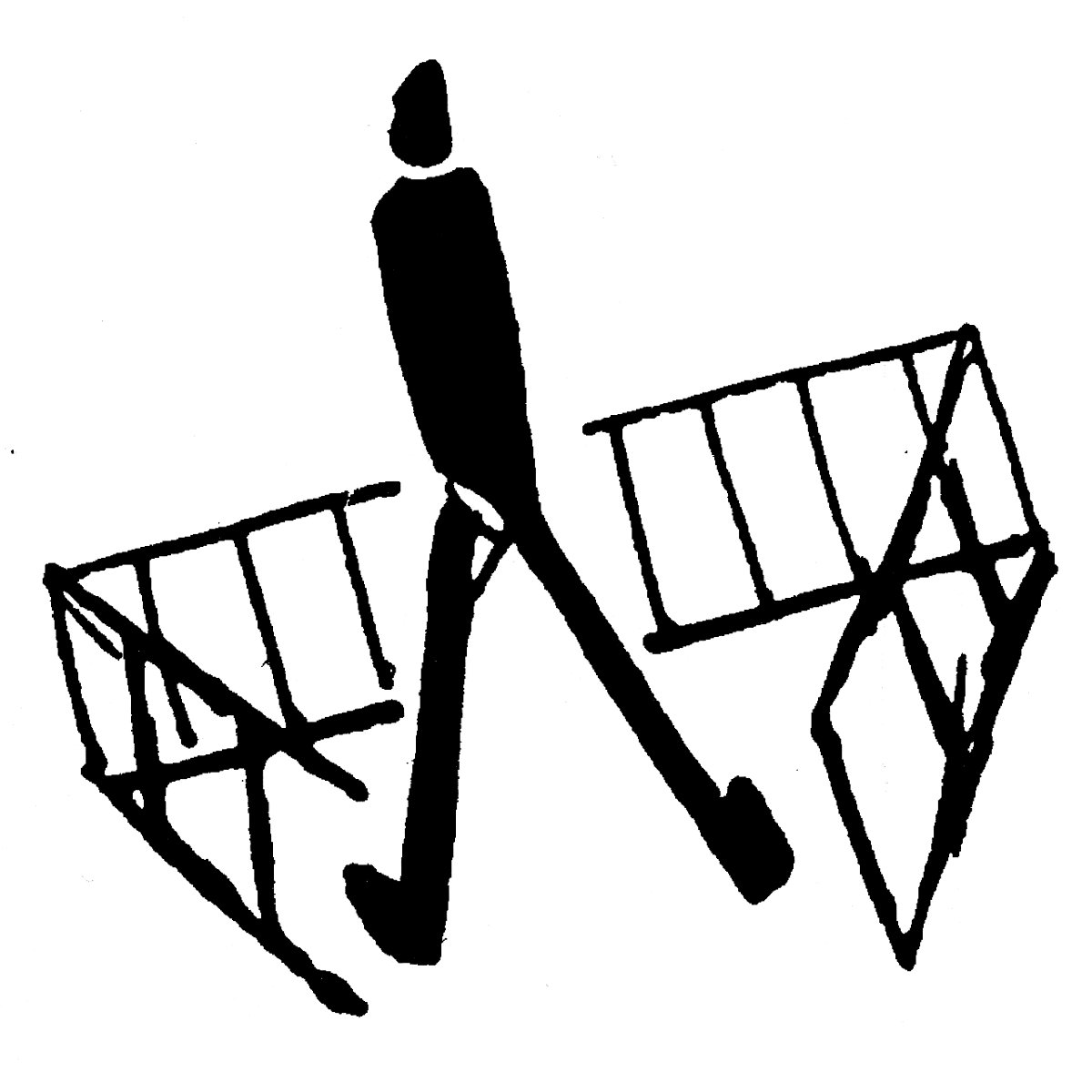
Drawing by Kafka used to illustrate the "Cathedral" chapter of The Trial
Original titleVor dem Gesetz
LanguageGerman
Publication
Published inSelbstwehr (1915)
Ein Landarzt (1919)
Der Process (1925)
PublisherKurt Wolff (1919)
Publication date1915

"Before the Law" (German: "Vor dem Gesetz") is a short story by Czech writer Franz Kafka. It was printed twice during Kafka's life, but is best known as an embedded narrative in the posthumously published novel The Trial (German: Der Prozess). In the novel, "Before the Law" is delivered as a parable by a priest who stands in judgement over the protagonist’s case. The tale is offered as an allegorical explanation of Joseph K.’s guilt. Given that the precise nature of K.’s crime has never been explained to him by the court, the parable is offered in place of naming the crime of which he has been accused or as a substitute for an outline of the charges stacked against him.

Plot summary

[edit]

"Before the Law"

[edit]

A man from the country seeks "the law"[1] and wishes to gain entry to it through an open doorway, but the doorkeeper tells the man that he cannot go through at the present time. The man asks if he can ever go through, and the doorkeeper says it is possible "but not now (jetzt aber nicht)". The man waits by the door for years, bribing the doorkeeper with everything he has. The doorkeeper accepts the bribes, but tells the man he only accepts them "so that you do not think you have left anything undone". The man does not attempt to gain entry by force, but waits at the doorway until he is about to die. Right before his death, he asks the doorkeeper why, even though everyone seeks the law, no one else has come in all the years he has been there. The doorkeeper answers, "No one else could ever be admitted here, since this gate was made only for you. I am now going to shut it."

In The Trial

[edit]

Josef K has to show an important client from Italy around a cathedral. The client does not show up, but just as K is leaving the cathedral, the priest calls out K's name, although K has never met the priest. The priest reveals that he is a court employee, and he tells K the story (Before the Law), prefacing it by saying it is from "the opening paragraphs [introductory] to the Law". The priest and K then discuss interpretations of the story before K leaves the cathedral.

Publication

[edit]
Ein Landarzt, first edition

"Before the Law" was published twice in Kafka's lifetime, first in the 1915 New Year's edition of the independent Jewish weekly Selbstwehr, then in 1919 as part of the collection Ein Landarzt (A Country Doctor). The Trial, however, was not published until 1925, after Kafka's death.

References in other works

[edit]

References

[edit]
[edit]
Revisions and contributorsEdit on WikipediaRead on Wikipedia
from Grokipedia
"Before the Law" (Vor dem Gesetz in the original German) is a short parable by Franz Kafka, composed around 1914 and first published in the 1915 New Year's edition of the independent Jewish weekly Selbstwehr. The narrative centers on a man from the country who arrives at a door leading to the Law, where a doorkeeper denies him immediate entry, prompting the man to wait indefinitely outside, bribing the guard and enduring hardships until his deathbed, when he learns the door was intended only for him and then shuts forever. Later reprinted in Kafka's 1919 collection In the Penal Colony and incorporated as a pivotal inset parable in his posthumously published novel The Trial (1925), the story exemplifies Kafka's recurring motifs of bureaucratic inaccessibility, the elusiveness of justice, and existential futility in confronting opaque authority structures. Interpretations often highlight its critique of institutional gatekeeping and the individual's thwarted quest for meaning or absolution, reflecting Kafka's experiences in Austro-Hungarian administrative roles and broader observations of modern alienation, though scholarly analyses vary on whether it allegorizes religious exclusion, legal arbitrariness, or inherent human limitation.

Overview and Summary

Parable Narrative

The "Before the Law" describes a from the country who approaches a seated before the entrance to the and requests admittance. The gatekeeper refuses immediate entry, stating that it is possible later but not now, and the man, surprised by the barrier despite believing access to the Law is universally open, settles in to wait, initially for three days before attempting to force his way past, only to be threatened with a and retreat. Over subsequent days and years, the man sits on a stool provided by the , repeatedly his case, enduring small interrogations about his origins and circumstances, and learning of successive, increasingly powerful inner gatekeepers that render passage through the first gate essential yet elusive. Wealthy at first, he exhausts his resources in bribes, which the gatekeeper accepts solely to forestall any sense of omission, remaining impassive throughout. In his final moments, as death approaches and his hearing fades, the man inquires why, given universal striving toward the Law, no one else has sought this entrance in all the years. The gatekeeper, perceiving the end, bellows that no others could enter because this specific gate was designated exclusively for the man himself, and with that revelation, he shuts the door.

Integration in The Trial

In Franz Kafka's novel The Trial, published posthumously in 1925, the parable "Before the Law" forms the core of the chapter titled "In the Cathedral," where the prison chaplain narrates it to the protagonist, Josef K., amid a discussion of K.'s unexplained arrest and trial. The chaplain, encountered by K. during a rainstorm in the dimly lit cathedral, introduces the story as an illustrative tale from the scriptures of the court's teachings, drawing a parallel to K.'s persistent yet fruitless efforts to comprehend and confront the opaque legal apparatus pursuing him. The parable's placement serves to deepen the novel's exploration of inaccessible authority, with the chaplain positing it as a commentary on K.'s guilt and the inherent barriers to the law, much like the countryman's exclusion from the gate despite his lifelong wait. This integration underscores the thematic unity between the standalone parable—originally composed around 1914—and the broader narrative of The Trial, where bureaucratic inaccessibility mirrors the man's predicament, reinforcing K.'s isolation without resolution. Following the parable's recitation, the chapter extends into a protracted , with K. challenging the chaplain's interpretation and invoking varied glosses from the court's scholarly students, who debate elements such as the doorkeeper's deception, the gate's exclusivity, and the man's agency in his exclusion. These interpretations, ranging from views of the doorkeeper as subservient to more servile or even supreme in , highlight interpretive ambiguity without consensus, paralleling the novel's unresolved legal proceedings and emphasizing the law's elusiveness as a rather than a resolvable enigma. Kafka's inclusion thus transforms the concise into a pivotal lens for the trial's metaphysical dimensions, amplifying motifs of passivity and deferred central to K.'s fate.

Authorship and Historical Context

Franz Kafka's Life and Influences

Franz Kafka was born on July 3, 1883, in , then part of the , into a middle-class, German-speaking Jewish family. He was the eldest of six children to Hermann Kafka, a domineering traveling salesman and later wholesaler of fancy goods, and Julie Löwy, whose more refined family contrasted with Hermann's coarser . Two younger brothers died in infancy, leaving Kafka with three sisters—Ottla, Elli, and Valli—who later perished in . The family's assimilated , marked by and German cultural affiliation amid Prague's Czech majority, fostered Kafka's lifelong sense of alienation in a multicultural yet stratified environment. Kafka attended German elementary and high schools in , excelling academically despite health issues like migraines and that plagued him from youth. He enrolled in 1901 at the German Charles-Ferdinand University (now ), initially studying chemistry and before switching to , earning a in 1906 with a on the regulation of cooperatives. Professionally, he briefly worked at an Italian insurance firm before joining the Worker's Institute for the Kingdom of in 1908, where he rose to council secretary by 1922, handling claims involving industrial accidents and bureaucratic processes that later informed his depictions of impersonal authority. His career provided but drained his energy, conflicting with his nocturnal writing habits and contributing to chronic exhaustion. Personal relationships underscored Kafka's insecurities and fears of commitment. He proposed twice to between 1912 and 1917, breaking off both engagements amid intense correspondence revealing his self-doubt and dread of marriage's demands. A passionate affair with in 1920 similarly ended due to his emotional turmoil, though she translated some of his works. In his final year, he found brief companionship with in . Health deteriorated with a tuberculosis diagnosis in 1917, leading to sanatorium stays and his retirement in 1922; he succumbed to the disease on June 3, 1924, near , at age 40, requesting his unpublished works be burned—a wish largely disregarded by executor . Kafka also grappled with clinical depression, , and hypochondria, viewing his physical appearance as repulsive despite contrary perceptions from acquaintances. Kafka's literary influences drew from 19th-century realists and psychological explorers, including Gustave Flaubert's precise style, Fyodor Dostoevsky's probing of guilt and inner conflict, and Heinrich von Kleist’s concise narratives of ambiguity. Biographer Reiner Stach notes his engagement with Goethe, Grillparzer, Strindberg, and Hebbel, shaping a prose blending irony, precision, and existential unease. The paternal dominance, immortalized in his 1919 "Letter to His Father"—a 100-page unpublished indictment of Hermann's authoritarianism—profoundly impacted themes of powerlessness and filial guilt. His insurance role exposed him to legalistic red tape and human suffering, fueling bureaucratic motifs, while Prague's Jewish ghetto heritage and Zionist encounters via Brod added layers of identity crisis, though Kafka remained ambivalent toward religious observance. These elements coalesced in works like "Before the Law," reflecting lived estrangement from authority and self.

Composition and Early Circulation

"Before the Law" (German: Vor dem Gesetz) was composed by Franz Kafka in 1914, during the initial phase of writing his novel The Trial, to which the parable was later integrated as an embedded narrative in the "In the Cathedral" chapter. Scholarly analysis places the specific drafting on December 13, 1914, aligning with Kafka's documented bursts of productivity amid personal and wartime stressors. Originally envisioned as an independent parable, it exemplifies Kafka's concise allegorical style, drawing from his observations of bureaucratic alienation and existential barriers. The parable achieved its first public circulation through publication in the Prague-based Zionist newspaper Selbstwehr on September 7, 1915, in volume 9, issue 34. Selbstwehr, an independent Jewish weekly advocating cultural and political , provided a platform for Kafka's work within German-Jewish literary networks, though its reach remained limited to intellectual and community readers in . This appearance marked one of Kafka's few sanctioned printings during his lifetime, reflecting his ambivalence toward publication despite encouragement from editor . In 1919, "Before the Law" was reprinted in Kafka's short story collection Ein Landarzt (A Country Doctor), published by Verlag Die Schmiede in Berlin. This anthology broadened its exposure among avant-garde literary audiences, as Ein Landarzt compiled several of Kafka's parables and stories, yet sales were modest, confining early dissemination primarily to German-speaking regions. Posthumous inclusion in The Trial (1925), edited by Brod against Kafka's wishes, vastly expanded its influence, but pre-1925 circulation relied on these sparse outlets and private readings among Kafka's circle.

Textual and Structural Analysis

Narrative Technique and Style

"Before the Law" is narrated from a third-person perspective, delivering events in a detached, objective fashion that prioritizes external actions over psychological interiority, thereby amplifying the parable's allegorical detachment and the inscrutability of its bureaucratic encounter. This approach confines the reader's insight to observable and behaviors—the countryman's entreaties, bribes, and lifelong , juxtaposed against the doorkeeper's unyielding refusals—fostering a sense of impartial reportage that belies the underlying surreal logic. The absence of character names or further universalizes the figures, rendering them archetypes in a timeless standoff . The exemplifies Kafka's minimalist style: terse, factual, and economical, encapsulating decades of stagnation in under 650 words, as the piece was drafted in one sitting on , 1914. Precise, logical phrasing structures the narrative as logical reportage—"There he sits for days and years"—melding everyday persistence with improbable revelations, such as the gate's singular designation for the man, to evoke absurdist disquiet without overt embellishment. This restraint heightens ironic subtexts, where mundane deferral spirals into cosmic exclusion, blending Talmudic concision with modern existential sparsity. Structurally, the tale adheres to a linear, event-concentrated arc: initial approach, iterative negotiations, temporal erosion, and terminal disclosure, culminating in a pointe that subverts expectations and underscores futility. Literary devices like repetition in the man's appeals and the progressive unveiling of hierarchical build escalating tension through , while the formal tone infuses folkloric elements with bureaucratic alienation, eschewing resolution to mirror perpetual . Such techniques not only distill Kafka's distrust of opaque power but also invite interpretive multiplicity, as the narrative's surface masks interpretive chaos.

Key Symbols: The Gate, Doorkeeper, and Man

The symbolizes the Law as an ostensibly accessible yet elusive domain of ultimate , truth, or authoritative order, remaining perpetually open throughout the to underscore its theoretical availability to the individual seeker. In the , the gate is explicitly designated for the countryman alone, implying a personalized portal that closes only upon his , which highlights the causal role of individual agency in realizing access rather than inherent inaccessibility. Legal analyses interpret this as a of procedural barriers in systems, where formal contrasts with practical exclusion through intermediary hurdles. Philosophers like view the gate as embodying an aporetic structure of indefinite suspension, a non-originating event that defers fulfillment eternally, though this reading overlooks the text's revelation that entry hinged on the man's initiative. The doorkeeper represents bureaucratic or hierarchical as a deferral mechanism, positioning himself as the initial guardian in an ascending of increasingly powerful figures, which creates the of insurmountable obstacles and perpetuates inaction. He neither physically bars entry—since the gate stays open—nor possesses absolute power, as he admits to being merely the lowest in rank, yet his warnings and of bribes sustain the man's without resolution. This figure inverts by enforcing passivity through suggestion rather than force, symbolizing how systems of power rely on perceived rather than actual prohibitions to maintain control. In Giorgio Agamben's interpretation, the doorkeeper embodies law's "empty ," vulnerable to , as evidenced by the man's unwitting role in the gate's closure, which disrupts the structure at its end. Such symbolism critiques modern bureaucracies, where intermediaries prioritize procedure over substance, deterring direct with foundational principles. The man from the country embodies the passive individual confronting opaque power, whose lifelong wait—marked by futile bribes, pleas, and of others—stems from to rather than intrinsic of access. His origin as a rural figure suggests or outsider status, yet the attributes failure to his to seek permission instead of proceeding, as the gate's exclusivity to him reveals self-imposed exclusion. This passivity illustrates a causal chain: hesitation begets prolonged submission, culminating in at , without of external beyond verbal dissuasion. Existential readings portray him as the trapped in futile striving, but the narrative's mechanics emphasize personal responsibility, as entry required only overriding the doorkeeper's non-binding assertions. Derrida sees this as embracing inevitable failure in relating to , whereas Agamben casts the man as a messianic disruptor whose liberates by nullifying the gate, though both undervalue the text's implication of avoidable inaction.

Core Themes

Authority, Bureaucracy, and Access to Law

In Kafka's , the doorkeeper functions as an intermediary of , stationed immediately before the entrance to the law yet empowered to deny access indefinitely, illustrating the bureaucratic enforcement of rules without recourse to higher judgment. The countryman's persistent entreaties, bribes, and pleas are met with deferral, as the doorkeeper cites an escalating of stronger guardians beyond the visible gate, evoking the layered, opaque structures of administrative systems where initial functionaries wield discretionary power insulated from . This setup underscores a core dynamic: manifests not as direct imposition but through procedural gatekeeping, rendering the law physically proximate—visible from the threshold—yet causally inaccessible, as the man expends his life waiting without entering. Kafka's professional experience at the Workers' Accident Institute for the Kingdom of , where he served from 1908 until 1922 assessing claims and navigating Austro-Hungarian administrative protocols, directly informed this portrayal of bureaucratic inertia. In his role, Kafka documented industrial accidents and enforced compensation regulations amid a rigid , observing how claimants often faced protracted delays and denials due to procedural formalities rather than substantive merit, a frustration mirrored in the parable's endless postponement. These encounters with the alienating logic of —prioritizing documentation and over individual exigency—fueled Kafka's depiction of as an self-perpetuating apparatus that demands submission without granting fulfillment. Interpretations emphasize the parable's critique of modern legal and administrative systems, where access to justice is mediated by functionaries who neither create nor fully comprehend the rules they enforce, leading to individual disempowerment. Legal scholars argue that the narrative exposes the fallacy of formalist adjudication, in which procedural barriers eclipse the law's purported universality, as the man's isolation before a gate meant solely for him reveals authority's arbitrary personalization amid apparent impersonality. This structure anticipates real-world bureaucratic pathologies, such as those in early 20th-century European states, where citizens encountered infinite regress in seeking redress, a theme resonant with Max Weber's contemporaneous analysis of rational-legal domination's tendency toward "iron cage" entrapment, though Kafka's vision amplifies the existential futility over Weber's functionalism. The doorkeeper's final revelation and gate closure upon the man's death further highlight causality in passivity: the system's authority endures precisely because subjects internalize deferral, forsaking alternative paths.

Individual Agency and the Consequences of Passivity

In Franz Kafka's "Before the Law," the man from the country arrives at the gate seeking admittance to the Law but accepts the doorkeeper's statement that entry is possible yet not at present, opting to wait indefinitely rather than challenge the barrier. Throughout his life, he employs bribes, pleas, and studies of the doorkeeper's countenance for signs of permission, yet refrains from attempting to cross the unguarded threshold, even when the doorkeeper briefly steps aside. This pattern of exemplifies a forfeiture of individual agency, as the man subordinates his pursuit to the intermediary's authority, effectively postponing any autonomous decision to enter. The consequences of this passivity are total exclusion: the man expends his existence in the antechamber, growing frail and dying without accessing the Law, only to learn from the doorkeeper that the gate stood open exclusively for him and is now irrevocably shut. Legal scholarship interprets this denouement as arising from the man's self-restraint, where respect for the law's formal —manifested as endless —transforms potential access into perpetual deferral, eroding his and reducing him to a state of dejected isolation. The causal mechanism is evident in the parable's structure: inaction in the face of ambiguous ensures the sought object remains unattained, as the man's voluntary submission to "not yet" indefinitely supplants any exercise of will. Interpretations emphasize that this passivity is not merely circumstantial but a deliberate to "put off deciding," aligning the with the law's reified rather than asserting desire against it. Consequently, the critiques how unasserted agency before opaque leads to the reification of the self as a passive supplicant, yielding psychological subordination and the ultimate nullification of life's purpose—access to transcendent meaning or . Empirical parallels in bureaucratic encounters, such as workers' humbled petitions documented in Kafka's own administrative observations, reinforce this as a realistic depiction of how perpetuates powerlessness.

Interpretive Debates

Philosophical and Existential Readings

Philosophical interpretations of Kafka's "Before the Law" often frame the as an for the human encounter with an inscrutable order, where the countryman's futile underscores the limits of rational access to foundational truths. Existential readings emphasize the inherent in the man's passive endurance, portraying his lifelong deferral as a manifestation of alienation in a meaningless , with the gate symbolizing barriers to authentic self-realization amid bureaucratic or cosmic indifference. This aligns with broader existential motifs of isolation and the absence of transcendent purpose, as the doorkeeper's authority enforces a structure that mocks individual agency without revealing its rationale. Jacques Derrida's deconstructive analysis highlights the aporia at the parable's core: the gate stands open yet impassable, instituting law through narrative fiat rather than any originary event, with access perpetually deferred in a play of différance. Derrida views the countryman's failure not as defeat but as a radical exposure of law's non-foundation, where interpretation itself performs the threshold's guardianship, blurring distinctions between fiction, authority, and legitimacy. In contrast, Giorgio Agamben interprets the scenario as a sovereign ban, with the man's unwavering patience functioning as a messianic strategy to exhaust and thereby inoperativize the law's bare command, opening potential for existence beyond legal capture. Heideggerian perspectives connect the parable to the ontology of Dasein, positing the Law as an elusive disclosure of Being obscured by everyday inauthenticity, where the countryman's wait reflects into a world of withheld essence, evoking anxiety over nothingness and the call to authentic resoluteness that remains unheeded. These readings collectively reveal Kafka's text as a on authority's performative opacity, challenging assumptions of transparent causality in human pursuits of or meaning while resisting reductive closure. Legal scholars have interpreted Kafka's as an for the inaccessibility of in modern legal systems, where bureaucratic gatekeepers enforce formal procedures that obscure substantive rights. The doorkeeper symbolizes intermediaries—such as court officials or bar examiners—who wield discretionary power to delay or deny entry to the law, despite its nominal openness to all, mirroring how procedural hurdles can trap individuals in perpetual . This reading underscores the remoteness of legal understanding for the average person, emphasizing preparation as essential to navigating such barriers rather than passive waiting. In analyses drawing on Kafka's bureaucratic background, the law emerges as a reified, empty structure—an autonomous entity detached from social context, prioritizing calculable form over equitable content. Victor Fleming argues the parable warns the legal profession against the "cruelty when form triumphs over substance," as the man's failure stems from unprepared deference to apparent authority rather than assertive engagement with the system's substance. Similarly, examinations of the parable alongside The Trial portray law as an "empty norm" whose power derives from its mysterious opacity, compelling subordination through impersonal mechanisms that alienate individuals from meaningful justice. These views critique how codified systems entrench legitimacy via rigidity, reducing law to a machine of necessity and punishment devoid of transparent origins. Politically, the critiques hierarchical bureaucracies where low-level enforcers exercise unchecked over distant, unknowable centers of power, fostering subservience and inefficiency in . The gatekeeper's deflection of responsibility exemplifies how modern administrative states—through endless formalities in areas like welfare or —transform citizens into supplicants, guarding an empty that structures without delivering . This dynamic reflects Kafka's observation of Austro-Hungarian officialdom, prophesying the diffusion of power in 20th-century regimes, where 's impersonality breeds alienation and passivity, enabling systemic opacity to sustain control. Interpretations extend this to democratic contexts, where bureaucratic labyrinths can arbitrarily favor elites while marginalizing others, echoing real-world scandals of dehumanizing oversight. Kafka's depiction thus highlights the causal peril of unaccountable intermediaries: they perpetuate injustice not through overt tyranny but through the mundane erosion of agency.

Religious and Cultural Perspectives

In Jewish interpretive traditions, Kafka's "Before the Law" has been read as a modern echoing Midrashic narratives, such as the legend of confronting four angelic gatekeepers en route to Sinai to receive the , symbolizing the barriers between humanity and divine revelation. This perspective frames the countryman's lifelong wait as a for the Jewish individual's quest for unmediated access to sacred , thwarted by intermediaries who claim yet ultimately reveal the gate's exclusivity. Kafka, who grappled with his amid early 20th-century assimilation pressures, first published the story in in Selbstwehr, a Czech-Jewish nationalist weekly, underscoring its resonance within contemporary Jewish intellectual circles. Scholars like those examining Kafka's "subjective Judaism" interpret the doorkeeper not as a divine emissary but as a of institutional powers—rabbinic or otherwise—that impose dogmatic barriers in the name of representing the ineffable , reflecting Kafka's ambivalence toward and authority. In this view, the critiques how such gatekeepers perpetuate exclusion, mirroring historical Jewish experiences of marginalization under secular and religious hierarchies alike. Broader religious readings, including Christian theological lenses, occasionally parallel the narrative to humanity's futile striving before an inaccessible divine justice, though these diverge from Kafka's Jewish-inflected by emphasizing over covenantal longing. Culturally, the parable has been situated within the paradoxes of Jewish social inclusion in modern Europe, where the "gate" represents elusive entry into civic or national law, with the eternal countryman embodying the assimilated Jew forever deferred from full belonging. This reading highlights Kafka's era of rising antisemitism and legal exclusions, as experienced by Jews in Habsburg Bohemia, where bureaucratic law often masked discriminatory intent. In contemporary cultural analyses, the story critiques universal themes of cultural gatekeeping, such as how traditional societies impose hierarchical access to communal norms, yet interpretations grounded in Kafka's Jewish context emphasize the parable's specificity to experiences of otherness rather than abstract universality.

Reception and Legacy

Initial Critical Responses

Max Brod, Kafka's literary executor and close friend, provided one of the earliest substantive interpretations of "Before the Law" in his afterword to The Trial (1925), where the parable serves as a pivotal embedded narrative. Brod viewed the story as an allegory critiquing modern bureaucracy's dehumanizing effects, drawing from Kafka's experiences in the Austro-Hungarian civil service, and emphasized the man's fatal passivity in deferring to the gatekeeper rather than asserting direct access to the law, which Brod saw as symbolizing ultimate truth or divine justice reserved exclusively for the individual. He argued that the parable illustrates how individuals unwittingly empower obstructive authorities through bribery and hesitation, leading to self-imposed exclusion from enlightenment. Contemporary Jewish critics in , such as Felix Weltsch, echoed Brod's reading by framing the parable within a , interpreting the gatekeeper's endless as a for the barriers of assimilation and the futility of seeking spiritual fulfillment through secular or institutions, urging a return to authentic Jewish . These initial responses, limited largely to Kafka's inner circle due to his modest fame at the time, praised the parable's precision and ambiguity as vehicles for exploring guilt, , and existential isolation, though they noted its resistance to definitive resolution. German literary journals in the mid-1920s offered sparse but affirmative early notices of The Trial, with reviewers like those in the Prager Tagblatt highlighting "Before the Law" as a masterful distillation of the novel's themes of inaccessible justice and arbitrary power, attributing Kafka's style to influences from expressionism and Jewish mysticism without overt politicization. However, broader public engagement remained muted until the 1930s, as Kafka's works circulated primarily among intellectual elites, with initial critiques prioritizing philosophical depth over psychological or legal analysis.

Modern Scholarly Analyses and Cultural Impact

Jacques Derrida's deconstructive reading posits the man's endless wait as the essence of law's , an irresolvable where the gate's openness defers access indefinitely via , intertwining force and signification without resolution or transcendence. , conversely, frames the inaction as an exercise of potentiality that inoperates the law's empty command, with the man's death closing the door in a messianic act that disrupts and creates space beyond juridical power. These interpretations, contrasted in recent , underscore law's foundational : accessible yet perpetually withheld, rejecting both hopeless suspension and illusory escape. In legal theory, the exemplifies the impossibility of law's , as the —intended exclusively for the supplicant—embodies self-referential paradoxes that paralyze introspection and decision-making, echoing critiques from Derrida and systems theorists like . Bureaucratic analyses portray the doorkeeper not as an external but as a manifestation of the seeker's passivity and unpreparedness, urging modern practitioners to prioritize in navigating institutional barriers to . Such views inform examinations of contemporary legal systems, where procedural opacity mirrors Kafka's depiction of as mystical and contingent rather than rational. The parable's cultural resonance extends to philosophy, where it fuels discourses on power's inscrutability and individual subjection, influencing biopolitical and deconstructive frameworks. In film, Orson Welles's 1962 adaptation of The Trial integrates it as an opening narration with pinscreen animation by Alexandre Alexeïeff, amplifying motifs of futile judgment and embedding Kafkaesque absurdity in visual media. Literary and theatrical echoes appear in works critiquing bureaucracy, from Bertolt Brecht's dramatic gestures to postmodern explorations of surveillance and dehumanization in democratic contexts. Its enduring provocation of reflection on authority persists in recent annotated editions and ethical studies of judicial practice.

References

Add your contribution
Related Hubs
Contribute something
User Avatar
No comments yet.