Hubbry Logo
Yosef HayyimYosef HayyimMain
Open search
Yosef Hayyim
Community hub
Yosef Hayyim
logo
8 pages, 0 posts
0 subscribers
Be the first to start a discussion here.
Yosef Hayyim
Yosef Hayyim
from Wikipedia

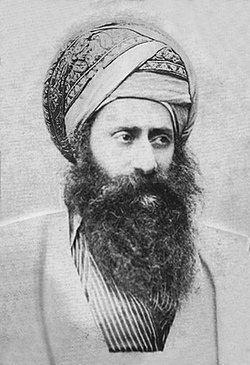
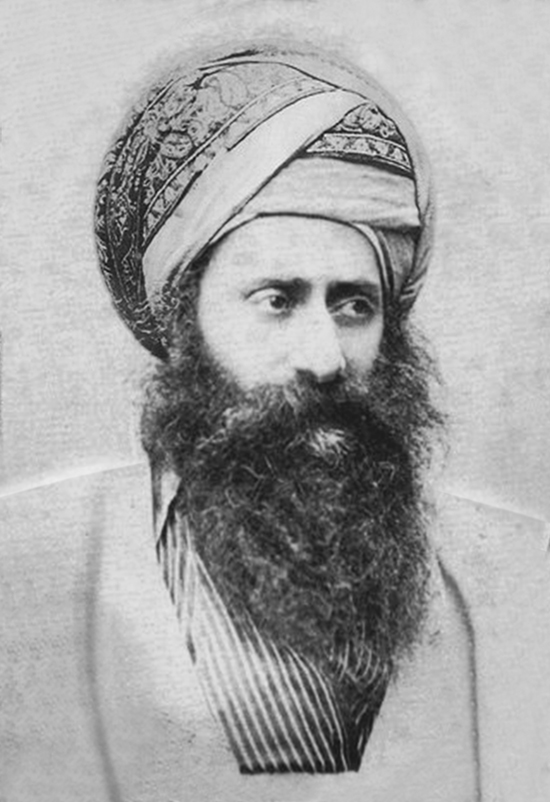
Yosef Hayim (1 September 1835 – 30 August 1909) (Iraqi Hebrew: Yoseph Ḥayyim; Hebrew: יוסף חיים מבגדאד; or Yosef Chaim) was a leading Baghdadi hakham (Sephardi rabbi), authority on halakha (Jewish law), and Master Kabbalist. He is best known as author of the work on halakha Ben Ish Ḥai (בן איש חי‎) ("Son of Man (who) Lives"), a collection of the laws of everyday life interspersed with mystical insights and customs, addressed to the masses and arranged by the weekly Torah portion.

Key Information

Biography

[edit]

Hayim initially studied in his father's library, and, at the age of 10, he left the beth midrash and began to study with his uncle, David Hai Ben Meir, who later founded the Shoshanim LeDavid yeshiva in Jerusalem. In 1851, he married Rachel, the niece of Abdallah Somekh, his prime mentor, with whom he had a daughter and two sons.

When Hayim was only twenty-five years old, his father died.[1] Despite his youth, the Jews of Baghdad accepted him to fill his father's place as the leading rabbinic scholar of Baghdad, though he never filled the official position of Hakham Bashi. The Sephardic Porat Yosef Yeshiva in Jerusalem was founded on his advice by Joseph Shalom, of Calcutta, India—one of Hayim's patrons.

Hayim clashed with the reformist Bavarian Jewish scholar Jacob Obermeyer, who lived in Baghdad from 1869 to 1880, and Hayyim excommunicated him.[2] Part of the contention was due to Obermeyer and Hayim's conflicting views on promotion of the Zohar.[3]

Works

[edit]

The Ben Ish Hai (בן איש חי) is a standard reference in some Sephardi homes (functioning as "a Sephardi Kitzur Shulchan Aruch") and is widely studied in Sephardi yeshivot.[4] Due to the popularity of this book, Hakham Yosef Hayim came to be known as Ben Ish Hai. The book is a collection of homilies he gave over two years discussing the weekly parsha or Torah portion. Each chapter begins with a mystical discussion, usually explaining how a Kabbalistic interpretation of a certain verse relates to particular halakha, and then continuing to expound on that halakha with definitive rulings.

Hakham Yosef Hayim authored over thirty other works, and there are many published Iraqi rite siddurim (prayer books) based on his rulings, which are widely used by Sephardi Jews. Amongst the best known of his works are:

  • Me-Kabtziel (Miqqabṣiʾel): an esoteric exposition of Jewish law providing a more detailed explanation of the reasoning underlying certain decisions. It has been speculated that Yosef Hayim's insistence on having all his works printed in the Jerusalem Sanjak prevented this essential work from being published.
  • Ben Yehoyada (Ben Yəhoyadaʻ) and Benayahou: his commentary on the Talmud, considered a basic resource in understanding the Aggada (narrative sections of the Talmud).
  • The responsum (Hebrew: She'elot U-Teshuvot) Rav Pe'alim (Rab Pəʻalim)[5][6] and Torah Lishmah.
  • Sefer Ben Ish Ḥai (Halakhot) (in Hebrew). Jerusalem: Merkaz ha-sefer. 1986. OCLC 492903129. (reprinted in 1994)

The names Ben Ish Hai, Me-Kabtziel, Rav Pe'alim and Ben Yehoyada derive from 2 Samuel 23:20. He chose these names because he claimed to have been a reincarnation of Benayahu ben Yehoyada, described as Ben Ish Hayil "son of a valiant man"; the man in whose merit, it is said, both the first and second Temple in Jerusalem stood.

Yosef Hayim was also noted for his stories and parables.[7] Some are scattered through his halakhic works, but have since been collected and published separately; others were published as separate works in his lifetime, as an alternative to the European-inspired secular literature that was becoming popular at the time. His Qânûn-un-Nisâ (قانون النساء) is a book filled with parables concerning self-improvement. The book, directed towards, but not limited to women, is rare since it was composed in Baghdad Jewish Arabic.[8] It was last published in Israel in the 1940s.

See also

[edit]
  • Jonatan Meir, "Toward the Popularization of Kabbalah: R. Yosef Hayyim of Baghdad and the Kabbalists of Jerusalem", Modern Judaism 33(2) (May 2013), pp. 147–172
  • Kaf HaChaim — a more discursive, and contemporaneous, Sephardi work of Halakha by Rabbi Yaakov Chaim Sofer.
  • Yalkut Yosef, a contemporary Sephardi work of Halakha, based on the rulings of Rabbi Ovadia Yosef.
  • Yehuda Fatiyah — a student of Yosef Chaim.
  • Ben Ish Hai," [1] Archived 2013-04-05 at the Wayback Machine - The Life & Times of Hacham Yosef Haim by Yehuda Azoulay

References

[edit]
[edit]
Revisions and contributorsEdit on WikipediaRead on Wikipedia
from Grokipedia
Yosef Hayyim (1834–1909), widely known as the Ben Ish Chai, was a prominent Sephardic , Torah scholar, and kabbalist who led the Jewish community of for over fifty years, becoming one of the most influential authorities on Jewish law and in the . Born into a distinguished rabbinic family on 27 Av 5594 in , , he succeeded his father, Eliyahu Hayyim, as the community's spiritual guide at the age of twenty-five following the latter's death in 1859. Hayyim's teachings blended rigorous halakhic analysis with Kabbalistic insights and aggadic narratives, delivered through daily lectures after morning prayers and extended discourses that drew thousands of attendees to Baghdad's Great Synagogue. His most renowned work, the Ben Ish Chai, organizes practical laws and customs according to the weekly portions, serving as a foundational text for Sephardic observance globally and emphasizing the integration of Sephardi and broader Jewish traditions. Other major contributions include Ben Yehoyada, a commentary on the Talmud's aggadic sections; Rav Pe'alim, a multi-volume collection of responsa addressing halakhic and mystical queries; and Hukkei Ha-Nashim, a guide to women's religious practices written in Judeo-Arabic to promote education among them. Beyond scholarship, Hayyim actively supported Jewish settlement in the , undertaking a there in 1869 where he printed portions of his works and declined an offer to serve as rabbi in , preferring to strengthen his Baghdad community amid challenges like modernization and influences. Known for his —including a six-year period of daily and personal acts of charity—he fostered unity among Jewish denominations and left a lasting legacy through institutions named after him and the continued study of his writings in Sephardic communities worldwide. He passed away on 13 5669 in , mourned by over 10,000 people at his funeral.

Early Life and Education

Birth and Family Background

Yosef Hayyim was born in 1832 in , part of the . He was the son of Eliyahu Hayyim, a respected Torah scholar and communal leader in the Jewish community. Through the family's extensive library, he gained early exposure to , immersing himself in sacred texts amid a household steeped in tradition. In 1851, at the age of nineteen, Yosef Hayyim married , the niece (or possibly a close relative) of his teacher Abdallah Somekh, connecting him further to Baghdad's rabbinic circles. The couple had one daughter and two sons; the sons, including Yaacov Hayyim, later pursued rabbinic careers, continuing the family's scholarly legacy. Yosef Hayyim grew up in Baghdad's vibrant Sephardi Jewish , one of the largest and most influential in the during the late Ottoman period, known for its economic prominence and deep religious observance. Under Ottoman rule, the maintained strong Iraqi Jewish traditions, blending ancient Mesopotamian heritage with Sephardi , while navigating the empire's administrative reforms and multicultural environment. This setting fostered a culture of scholarship and communal solidarity, shaping his formative years.

Studies and Mentors

Yosef Hayyim began his education at home under the guidance of his father, Eliyahu Hayyim, utilizing the extensive family library, which provided early access to foundational Jewish texts from a young age. This initial phase of learning, starting around age five, laid the groundwork for his profound engagement with in Baghdad's vibrant scholarly milieu. By age ten, he transitioned from traditional schooling to advanced private instruction with his maternal uncle, David Hai Ben , a noted scholar who later established the Shoshanim LeDavid in . Under his uncle's tutelage, Yosef Hayyim delved deeply into , , and introductory , demonstrating remarkable aptitude that foreshadowed his future mastery. Subsequently, around age fifteen, he joined the prominent led by Rabbi Abdallah Somekh, his primary mentor, where he refined his expertise in these disciplines alongside Sephardi customs and , benefiting from Somekh's rigorous pedagogical approach. Renowned for his self-study habits, Yosef Hayyim often secluded himself for extended, solitary sessions of intense learning, committing vast swaths of to memory by adolescence. This disciplined routine, conducted in the quiet of his home, complemented his formal training and accelerated his intellectual development within Baghdad's Sephardi Jewish community, where exposure to mystical traditions through his mentors shaped his holistic scholarly worldview.

Rabbinic Career

Leadership Roles in Baghdad

Yosef Hayyim rose to prominence in the Baghdad Jewish community at the age of twenty-five, following the death of his father, Rabbi Eliyahu Hayyim, in 1859, when he was appointed to succeed him as the community's leading (sage). His early education under prominent mentors, including Abdallah Somekh, the of Bet Zilkha, equipped him with the expertise to assume this role. Although he never held the formal title of , Yosef Hayyim functioned as the de facto spiritual leader, advising the community on religious matters and serving as an arbiter in halakhic disputes. In his communal roles, Yosef Hayyim headed several yeshivot in , including teaching advanced classes at institutions like Bet Zilkha, and guided the observance of Sephardi customs throughout the community. He also acted as a central advisor to the , ensuring adherence to Jewish law amid the challenges of 19th-century Ottoman rule. His daily responsibilities included delivering hour-long lectures on law and at the Tsallat L’ziri , as well as more extensive weekly sermons (derashot) expounding on the parashat hashavua () during services at the Great Synagogue. Yosef Hayyim's leadership extended from 1859 until his death on August 30, 1909, spanning over fifty years of dedicated service to Baghdad's Jewish population, which numbered around 50,000 by the early . Through his guidance, he influenced thousands of , fostering strict observance of , kosher laws, and traditional practices that defined communal life.

Conflicts and Challenges

During his tenure as a leading rabbinic figure in Baghdad, Yosef Hayyim encountered significant opposition from Jacob Obermeyer, a Bavarian Jewish scholar and missionary who resided in the city from 1869 to 1876. Obermeyer sought to introduce European-style reforms to the local Jewish community, criticizing traditional practices and accusing Hayyim of promoting outdated mysticism through his emphasis on the Zohar, a key kabbalistic text. Obermeyer's critiques extended to Hayyim's perceived affinities with Hasidic customs, such as incorporating elements from the Bratzlaver Hasidic prayer collection Likutey Tefilot, which Obermeyer publicly denounced in the newspaper ha-Magid in 1876 and in his book Modernes Judentum im Morgen- und Abendlande. These attacks portrayed Hayyim as a reactionary force hindering communal progress, sparking a heated clash over the direction of Baghdadi Judaism. In response, Hayyim and his allies issued public denunciations against Obermeyer, culminating in his via a cherem (ban) pronounced in 1876 and read aloud in all Baghdad synagogues, effectively barring him from communal religious life. This action was framed as a defense against Obermeyer's reformist agenda, which aimed to Europeanize Iraqi Jewish customs, including education and , in ways that Hayyim viewed as erosive to Sephardi traditions. The conflict underscored deeper tensions, as Obermeyer's efforts aligned with broader external influences seeking to modernize the community. Beyond the Obermeyer episode, Hayyim faced wider challenges from Ottoman Tanzimat reforms in the mid-19th century, which promoted , legal equality, and administrative centralization, often clashing with established Jewish communal . He resisted these modernization pushes, advocating instead for the preservation of traditional Sephardi practices and viewing Ottoman frameworks as preferable to European emancipation models, which he criticized as a veiled Christianizing mission. In 1879, this stance led to public backlash when impoverished community members protested against him during a sermon, highlighting class divides exacerbated by his associations with elite interests like the David Sassoon trading company. These conflicts ultimately reinforced Hayyim's authority among traditionalists by rallying the community against perceived threats, yet they also exposed fractures between conservative factions and those open to , contributing to ongoing debates within Baghdadi Judaism. His decisive measures, including prohibitions on critics entering synagogues, solidified defenses of but intensified internal divisions.

Literary Output

The Ben Ish Chai

The Ben Ish Hai, Yosef Hayyim's magnum opus, originated as a series of weekly sermons delivered during his tenure as a leading rabbinic figure in , drawing on his extensive experience as a teacher and adjudicator of Jewish law. These sermons were compiled and published in two volumes between 1898 and 1904, with the first volume titled Ben Ish Hai and the second Od Yosef Chai, encompassing homilies for two complete yearly cycles of the readings. The work is meticulously organized by , the , with approximately 100 units in total, each structured to include sections on (Jewish law), (narrative and interpretive traditions), (mystical teachings), and ethical guidance. This format allows for a layered exploration within each entry, blending legal rulings derived from Sephardi with Lurianic kabbalistic insights, moral parables, and practical advice tailored to everyday life in the Sephardi community. Key themes emphasize the integration of into daily observance, such as for and holidays, alongside ethical exhortations to foster and communal harmony, reflecting Hayyim's commitment to making profound teachings accessible. Upon publication, the Ben Ish Hai received immediate acclaim in , where it was hailed as a authoritative compendium comparable to the works of major European sages, and quickly spread to Jewish communities across the and beyond, establishing itself as a foundational text for study and halakhic decision-making among Sephardi . Its dissemination was facilitated by its first publication in starting in 1898 and later editions that expanded its reach, solidifying Yosef Hayyim's reputation as the "Ben Ish Hai."

Other Major Works

In addition to his flagship work, the Ben Ish Chai, Yosef Hayyim produced over thirty other compositions spanning halakhah, , , and , many of which were published during his lifetime and aimed at guiding Sephardi Jewish communities. These works reflect his role as a prolific author addressing both scholarly and practical needs, with several drawing on to make esoteric concepts accessible. His responsa collection, Rav Pe'alim, comprises four volumes published between 1901 and 1905 in , compiling practical halakhic rulings in response to queries from correspondents across various countries, including and the . The work emphasizes authoritative interpretations of Jewish law for everyday application, often integrating Kabbalistic insights into legal decisions. A major contribution to Talmudic study is Ben Yehoyada, a multi-volume commentary (five volumes in total) on the aggadic portions of the Babylonian , composed and published progressively from around 1891 to 1909 in . It elucidates narrative sections () through explanations infused with Kabbalistic interpretations, serving as a foundational resource for understanding Talmudic lore among Sephardi scholars. Among his esoteric texts, Me-Kabtziel explores the hidden, mystical dimensions of Jewish law, providing deeper rationales for halakhic decisions often referenced in his other writings. Complementing the Ben Ish Chai, Od Yosef Chai expands on its themes through collections of sermons (derashot) and halakhic rulings, published in the early , to offer spiritual and legal guidance for communal observance. Other notable works include Qanun al-Nisa (Laws for Women), published in 1905 in , a guide to Jewish laws and rituals tailored for women, written in Judeo-Arabic to reach a broad female audience with parables and ethical teachings. His oeuvre also encompasses ethical treatises, over 200 piyyutim (liturgical poems), and additional volumes on prayer and , such as Tikun Tefilah (1870), demonstrating his commitment to blending devotion with instruction. Yosef Hayyim's writing style typically employed accessible Hebrew interspersed with , designed for Sephardi readers seeking clarity in both and mystical .

Teachings and Philosophy

Halakhic Contributions

Yosef Hayyim adhered strictly to the as the foundational code of Jewish law, while incorporating the established Iraqi Sephardi customs to guide practical observance in daily life, , and commerce. His rulings emphasized the preservation of local traditions, recommending changes only when compelling halakhic reasons necessitated them, thereby maintaining the integrity of Baghdadi Jewish practice amid evolving social conditions. For instance, in matters of , he issued decisions on women's halakhic obligations that reflected Sephardi norms, such as protocols for betrothal and familial duties. In commerce, his guidance addressed ethical trade practices under Ottoman regulations, ensuring compliance with both Jewish law and imperial decrees. Among his key innovations, Yosef Hayyim adopted relatively lenient positions on select issues related to women's roles, such as permitting a woman to continue singing in the presence of men reciting the Shema under certain circumstances, prioritizing communal harmony over stricter interpretations. Conversely, he remained conservative on ritual matters, upholding rigorous standards for prayer and festivals to safeguard Sephardi piety. A distinctive feature of his methodology was the integration of Kabbalistic insights into halakhic decision-making, where mystical principles informed but did not override legal precedents, as seen in his explanations of precedents as non-absolutely binding to allow contextual flexibility. The responsa collection Rav Pe'alim, comprising four volumes of over 500 inquiries, served as his primary vehicle for halakhic adjudication, resolving 19th-century dilemmas arising from Ottoman legal reforms, including secularization pressures and intercommunal relations in . These responsa addressed queries from across the Sephardi world, providing authoritative solutions to contemporary challenges like adapting Jewish courts to imperial oversight. His decisions profoundly influenced community application, standardizing practices in Baghdad's synagogues through codified for and lifecycle events, which were later incorporated into Sephardi siddurim and halakhic manuals. Works like the Ben Ish Chai further disseminated these rulings, blending them with ethical guidance to shape everyday observance.

Kabbalistic Interpretations

Yosef Hayyim demonstrated profound devotion to the foundational texts of , particularly the Zohar and the teachings of (the Arizal), which formed the cornerstone of his Lurianic Kabbalistic framework. He viewed the as an essential guide for spiritual elevation and actively defended its study against external critics, including the reformist scholar Jacob Obermeyer, whom he confronted during Obermeyer's time in from 1869 to 1880, ultimately leading to Obermeyer's for undermining traditional Kabbalistic reverence. This defense not only preserved the sanctity of these texts but also elevated Yosef Hayyim's stature among contemporary Kabbalists in and beyond. Central to his mystical thought were efforts to popularize Kabbalah for ordinary laypeople, employing accessible parables to link esoteric ideas with everyday ethics and moral conduct, thereby making complex concepts approachable without diluting their depth. He emphasized key Lurianic principles such as tikkun (soul rectification), portraying it as a process of repairing spiritual flaws through mitzvot and ethical living to avert reincarnation (gilgul) and achieve redemption, as detailed in his work Tikkunei haNefesh. Yosef Hayyim also explored divine emanations (sefirot), interpreting them as dynamic channels of divine energy that interact with human actions to facilitate cosmic harmony and personal transformation. In his major writings, Yosef Hayyim integrated these mystical layers seamlessly, as seen in the Ben Ish Chai, where each portion begins with Kabbalistic drawn from the and Arizal before transitioning to practical guidance. Similarly, Ben Yehoyada, his multi-volume commentary on the , unveils esoteric dimensions of Aggadic narratives, revealing hidden Kabbalistic meanings in Talmudic stories to illuminate soul dynamics and divine processes. Philosophically, Yosef Hayyim advocated a balanced approach to , harmonizing with strict adherence to to prevent excesses or antinomian tendencies, insisting that true esoteric study must align with ethical and legal observance. He subtly encouraged Kabbalistic learning among women through works like Qanun al-Nisa, a Judeo-Arabic guide that interweaves halakhic rules with mystical insights and parables tailored for female audiences, thereby broadening access to sacred knowledge.

Legacy

Influence on Sephardi Judaism

Yosef Hayyim's literary output, especially the Ben Ish Hai, became a foundational text in Sephardi yeshivot across and, following the community's relocation, in , where it served as a core curriculum for halakhic and kabbalistic study among students and scholars alike. His rulings on Jewish law and directly influenced the compilation of Sephardi siddurim, including the Tefilat Yesharim , which integrated his kabbalistic insights and gained widespread use in Sephardi synagogues during the mid-20th century. These institutional impacts solidified the Ben Ish Hai as a standard reference manual in Sephardi households and educational settings, akin to a concise guide for everyday observance. The dissemination of his printed works facilitated the spread of his teachings to Sephardi communities in , , , and the , where Baghdadi emigrants established synagogues and study groups centered on his halakhic decisions. This global reach helped standardize the Iraqi Sephardi rite, ensuring uniformity in customs and prayers among dispersed populations despite varying local influences. By the early , his major compositions had undergone numerous reprints and editions, amplifying their accessibility and authority within these networks. Prominent 20th-century Sephardi rabbis, such as , extensively cited Yosef Hayyim's rulings in their own responsa and commentaries, including Yosef's multi-volume Halikhot Olam, which analyzed and built upon the Ben Ish Hai. During the mass migrations of Iraqi Jews in the mid-20th century, his writings provided a portable anchor for cultural and religious continuity, enabling communities to sustain traditional practices in exile and resettlement.

Modern Relevance and Veneration

Yosef Hayyim's work, particularly the Ben Ish Chai, remains a cornerstone of contemporary Sephardi Jewish study, with regular classes held in synagogues and yeshivot worldwide that draw on his halakhic and kabbalistic insights for practical guidance. These sessions often follow the structure of his original lectures, emphasizing portions alongside everyday laws, and serve as a standard reference in Sephardi homes akin to a concise code of Jewish practice. Digital accessibility has further amplified this engagement, with platforms like offering free online texts of his writings and mobile apps providing daily portions of the Ben Ish Chai for sermons and halakhic rulings, enabling users to integrate his teachings into modern routines. Veneration of Yosef Hayyim as a tzaddik, or righteous sage, persists strongly within Sephardi and Hasidic-Sephardi communities, where he is honored for his piety, humility, and mastery of . Annual hillulot, or commemorative gatherings marking his yahrtzeit on the 13th of , take place in —often at Har HaZeitim (), site of a attributed to him amid controversy over whether his remains were transferred from —and have been observed in historically, though contemporary events there are limited due to regional instability. These celebrations include prayers, storytelling, and communal meals, reflecting his enduring status as a spiritual beacon in Sephardi lore. In modern adaptations, Yosef Hayyim's influence extends to Israeli politics through the party, whose spiritual leader frequently referenced his halakhic positions in his rulings, informing Sephardi approaches to Jewish law and social welfare for Mizrahi communities. Popular media has also popularized his life and parables, with recent books such as Timeless Tales: The Ben Ish Chai (post-2020 editions) retelling his stories for younger audiences and The Ben Ish Chai's Guarantee compiling anecdotes of his holiness to inspire ethical living. Scholarly analyses since 2020 continue to highlight his relevance in bridging traditional Sephardi thought with contemporary .

References

Add your contribution
Related Hubs
User Avatar
No comments yet.