


Community hub
Recent from talks
Contribute something
Nothing was collected or created yet.
Bennett College
View on Wikipedia |
Bennett College is a private historically black liberal arts college for women in Greensboro, North Carolina. It was founded in 1873 as a normal school to educate freedmen and train both men and women as teachers.[4] Originally coed, in 1926 it became a four-year women's college. It is one of two historically black colleges that enroll only women, the other being Spelman College.[5]
Key Information


In 1956, Willa Beatrice Player was installed at Bennett College, becoming the first African-American woman president of an accredited, four-year liberal arts college. She encouraged her students to be activists in the issues of the day.[6] Beginning in 1960, Bennett students took part in the ultimately successful campaign in Greensboro to integrate white lunch counters at local variety stores. The college expanded its academic offerings and classes related to women's leadership.
In December 2018, the college's regional accrediting body, the Southern Association of Colleges and Schools Commission on Colleges, announced that it intended to revoke Bennett College's accreditation. The college had been on probation for two years due to its considerable financial challenges.[7] The college launched an emergency funding campaign, Change and Progress for Bennett, to raise at least $5 million. By February 2019, the campaign raised $8.2 million.[8] That same month, SACS withdrew accreditation from the college despite fundraising efforts; however, Bennett College filed a lawsuit against the accreditor and the court ordered the accreditation to remain in place pending the legal challenge.[9][10]
On June 27, 2019, Bennett announced that Suzanne Walsh would be its new president.[11]
History
[edit]
Bennett College was founded on August 1, 1873, as a normal school for teacher training. It opened with seventy African-American men and women (freedmen, or former slaves). The school's founder, Albion W. Tourgee, was a Civil War veteran and jurist from Ohio who worked in North Carolina during Reconstruction and championed the cause of racial justice.[12]
The school held its inaugural classes in the basement of Warnersville Methodist Episcopal Church North (now St. Matthew's United Methodist) in Greensboro. Bennett was coeducational and offered both high school and college-level courses, to help many blacks compensate for their previous lack of educational opportunity. The year after its founding, the school became sponsored by the Freedman's Aid Society and Southern Education Society of the northern Methodist Episcopal Church (like the Baptists, the Methodist churches had split in the years before the war over the issue of slavery, and established two regional conferences). Bennett remained affiliated for 50 years with the Freedman's Aid Society.
In 1878, freedmen purchased land for a future college campus (which was developed as the current site). Hearing about the college, New York businessman Lyman Bennett (1801–1879)[13] provided $10,000 in funding to build a permanent campus. Bennett died soon after. The college was named Bennett Seminary. Hearing of Bennett's philanthropy, his coworkers commissioned a bell to be made in his honor and continued his mission by donating the bell to the school.[14]
In 1888, Bennett Seminary elected its first African-American president, the Reverend Charles N. Grandison. Grandison spearheaded a successful drive to have the school chartered as a four-year college in 1889. Two of the first African-American bishops of the Methodist Episcopal Church were graduates of the college, including Robert Elijah Jones, an 1895 graduate. His brother was the future Bennett College president David Dallas Jones. Under the direction of Reverend Grandison and succeeding President Jordan Chavis, Bennett College grew from 11 undergraduate students to a total of 251 undergraduates by 1905. The enrollment leveled out in the 1910s at roughly 300.
In 1916, a survey conducted by the Phelps-Stokes Foundation recommended Bennett College be converted to a college exclusively for women. The Women's Home Missionary Society, which had supported women at the college since 1886, had found that there was no four-year college exclusively for African-American women, and they wanted to establish such a college. The North Carolina Board of Education offered Bennett College for that purpose.
After ten years, during which it studied other locations and conducted fundraising, the Women's Home Missionary Society and the NC Board of Education decided to develop the college in its current location. Bennett fully transitioned to a women's college in 1926. (Note: The Women's Home Missionary Society's on-campus involvement with Bennett women dates back to 1886.)[15] Around this time, Bennett alumnae were nicknamed the "Bennett Belles" and the school gained a reputation as an institution of quality.[16]
In 1926, David Dallas Jones was installed as president of the new women's college and served. Under his leadership, the college expanded, reaching an enrollment of 400. It became known in the black community as the Vassar College of the South, and Jones recruited faculty, staff, and students, from all cultural and ethnic backgrounds. The school was expanded to a 42-acre campus with 33 buildings, and its endowment increased to $1.5 million.[12] Although he had major achievements, Jones's tenure was also marked with controversy.
In 1937, Bennett students protested downtown Greensboro movie theaters because of their segregation, which was state law at the time, and the depictions of black women in films they were showing. Frances Jones, daughter of the college president, led the protest; she was in her first year. This protest during the Great Depression and under Jim Crow conditions in the South, resulted in President Jones being investigated by the FBI and other government agencies. They were concerned about communist and leftist activities, as these groups were politically active in the United States. They ordered him to prohibit the students from protesting. Jones refused.[14]
At his invitation, First Lady Eleanor Roosevelt came to the college on March 22, 1945, to meet with an integrated group of schoolchildren from Greensboro. Other visitors to the campus included Benjamin Elijah Mays, former Morehouse College president; poet Robert Frost, and writer James Weldon Johnson. Jones led the college for almost 30 years until he became ill in 1955, when he named Willa B. Player interim president.[14] Player was the first female president of Bennett College, and the first black female president of any accredited four-year college in the United States.[17] During Player's tenure, Bennett became the first black college to be fully accredited by the Southern Association of Colleges and Schools.[16] Note: (Bennett's brother college is Morehouse College in Atlanta, Georgia. This relationship developed through the historic friendship of David Dallas Jones and Benjamin E. Mays.)
In October 1956, Willa Beatrice Player was inaugurated as President of Bennett College. She was the first African-American woman to be president of a four-year, fully accredited liberal arts college or university. During Player's tenure, Bennett in 1957 was one of the first historically black colleges to receive accreditation from the Southern Association of Colleges and Schools (SACS). On February 11, 1958, Player allowed civil rights leader Rev. Martin Luther King Jr. to speak at the school; he was prohibited by the city from speaking publicly anywhere else in Greensboro. His speech was entitled "A Realistic Look At Race Relations," and was delivered to a standing-room-only audience at Annie Merner Pfeiffer Chapel on campus. Player said about this visit, "Bennett College is a liberal arts college where 'freedom rings,' so King can speak here." King, Howard Thurman and Benjamin Elijah Mays inspired Bennett students to begin protests, and they became known as "Bennett Belles".[14]
Civil Rights Movement
[edit]
Civil rights activism at Bennett increased throughout the Civil rights movement. In February 1960 students from Bennett College and North Carolina A&T began a civil rights protest in downtown Greensboro that sparked the Greensboro sit-ins. Bettye Davis, class of 1963, committed to sitting at the white-only lunch counter of F. and W. Woolworth's variety store with students from A&T, and to keep returning until the store integrated the facility. On February 4, 1960, close to a dozen "Bennett Belles" were arrested due to their continuing protest at Woolworth's.[18]
On April 21, 1960, Bennett and A&T students were arrested for trespassing at the white S.H. Kress & Co. lunch counter.[18] On April 22, 1960, The Daily News of New York broke the story of the arrests nationally, with front-page headlines and a picture of well-dressed female students entering the back of a paddy wagon without any help from the police officers surrounding it. It reported that Greensboro police were surprised that the "Bennett Belles" had protested, as they were considered refined young women from an "elitist finishing school." At the peak of the sit-in movement, more than 40% of Bennett's student body was jailed.[18] President Player personally visited the students in jail, carrying assignments to them so they would not fall behind in their studies.[19]
Willa B. Player led Bennett until 1966. She was succeeded by Isaac H. Miller. His father had been an administrator at Bennett during President Frank Trigg's tenure. Miller maintained the "Bennett Ideal," despite the social changes of the late 1960s. Students protested the strict dress codes, disciplinary policies, and curfew. During the 1967–1968 school year, freshwomen walked out of dormitories one minute before curfew. Students took over the student union while demanding change to college policies. Miller surrounded the buildings with campus security, and brought in family and sleeping bags, changing the protest to a campus-wide "sleepover". Students were required to wear dresses or skirts, and hats and gloves until the early 1970s.[14]
Miller collaborated with other colleges and universities in Greensboro to form a consortium that expanded Bennett's academic program by giving students access to other local universities. His administration developed the biomedical research and interdisciplinary studies programs, along with a bridge program in conjunction with Meharry Medical College of Nashville, Tennessee. He collaborated with other HBCU presidents to establish the National Association for Equal Opportunity in Higher Education, serving on the first board of directors. Miller's plans were supported by alumnae, who donated material and fiscal resources.
Miller increased Bennett's endowment and also completed the construction of four new buildings on campus. He served as president for 21 years, the second-longest presidential tenure in Bennett College history, and during a period of considerable social change. He retired in 1987. Gloria Randle Scott became Bennett's 12th president and its second woman in that position.[14]
Gloria Randle Scott started as President of Bennett College on July 1, 1987. She established the Women's Leadership Institute and the Center for African Women and Women of the African Diaspora. Bennett admitted new African immigrants as well as students who were African nationals. In 1989, poet and activist Maya Angelou was installed as a member of the board of trustees. Scott was President of Bennett for 14 years before retiring in 2001.[14]
21st Century
[edit]
Bennett underwent numerous changes under Sister President Emerita Johnnetta B. Cole, who was inaugurated in July 2002. In her first year at Bennett, Cole erased the school's $3.8 million deficit and raised an estimated $15 million in funding.[20] Before Cole's tenure, Bennett College had been under SACS probation for two years, which was finally lifted in 2002.[17] The school was revitalized and much-needed renovations were made to campus buildings; new buildings were built. In total, she led a $50 million campaign.
Numerous prominent figures spoke at the campus and some helped raise funds for its operations. Former President Bill Clinton, former US Senator Robert Dole, trustee emerita Maya Angelou, and Oprah Winfrey have all assisted in fundraising. The campaign closed successfully at the end of Cole's tenure on June 30, 2007.[14]
On July 1, 2007, Julianne Malveaux became President of Bennett College. She led a $21 million expansion and renovation project for the college. She increased enrollment, added four new buildings, including a multimedia center, and renovated additional buildings. Malveaux enhanced the overall academic curriculum, which focuses on women's leadership, entrepreneurship, communications, and global studies.[21]
On July 1, 2012, Esther Terry '61 became the first alumna to lead the college. Already serving as the college's provost, Terry was made interim president for a full academic year. In 2013, the Board of Trustees announced Terry would be the sixteenth president of Bennett College.
Former provost Phyllis Worthy Dawkins assumed the presidency on August 15, 2016. Dawkins focused on faculty/staff recruitment and reinvigorating living-learning communities; she launched a leadership institute. She was replaced in 2019[22] by Suzanne Walsh, who was previously deputy director of the Bill & Melinda Gates Foundation's Postsecondary Success division.
Since 1930, Bennett has graduated more than 7,000 students.[23]
Accreditations and memberships
[edit]In 1930, on the graduation of its first four women with a four-year bachelor's degree, the "A" rating was granted to the college by the North Carolina State Department of Education. This same rating was granted to the college in 1936 by the Southern Association of Colleges and Schools (SACS), the college's regional accreditor. Today, the college is accredited by the Council on Social Work Education (CSWE) and the National Council for the Accreditation of Teacher Education (NCATE).
In 1957, Bennett was one of the first and the only private black college to be admitted into full membership in the Southern Association of Colleges and Schools. It has also been a member of the American Association of Colleges, The Commission on Black Colleges of the University Senate, the American Association of Registrars and Admission Officers, the American Council of Education, the American Association of Colleges of Teacher Education, the College Fund/UNCF, the Council on Independent Colleges, the Women's College Coalition, the North Carolina Association of Independent Colleges and Universities, the NCB Piedmont Automated Library System (NCBPALS), the Greater Greensboro Consortium, and the New York University Faculty Resource Network.[14]
The college lost its accreditation from SACS on February 18, 2019. It was on probation for two years in the early 2000s because the college was struggling with significant financial challenges. In 2016, SACS placed the college on probation again for the same reason. In December 2018, SACS voted to withdraw the college's accreditation. The college launched a fundraising campaign and appealed the SACS decision.[24]
In February 2019 it lost accreditation although it had succeeded in building its financial resources.[9] A court ordered the accreditation to remain upright while the college filed a lawsuit against the accreditor.[10]
Presidents
[edit]Bennett College
[edit]
- 1874–1877: W.J. Parker (principal)[25]
- 1877–1881: Edward Olin Thayer[25]
- 1881–1889: Wilbur F. Steele[25]
- 1889–1892: Charles N. Grandison[25]
- 1892–1905: Jordan D. Chavis[25]
- 1905–1913: Silas A. Peeler[25][26]
- 1913–1915: James E. Wallace[25]
- 1915–1926: Frank Trigg[25]
Bennett College for Women
[edit]- 1926–1955: David Dallas Jones
- 1955–1966: Willa Beatrice Player – Bennett's first female president[19]
- 1966–1987: Isaac H. Miller, Jr.
- 1987–2001: Gloria Randle Scott
- 2001–2002: Althia F. Collins
- 2002–2007: Johnnetta B. Cole
- 2007–2012: Julianne Malveaux
- 2012–2013: Esther Terry – Bennett's first alumna president
- 2013–2016: Rosalind Fuse-Hall
- 2016–2019: Phyllis Worthy Dawkins
- 2019–present: Suzanne Walsh
Academics
[edit]Bennett College offers 24 majors and nineteen minors under three divisions: the Division of Natural and Behavioral Sciences and Mathematics, the Division of Social Sciences and Education, and the Division of Humanities. These disciplines include degrees in Bachelor of Arts, Bachelor of Science, Bachelor of Arts and Science in interdisciplinary studies, bachelor of Social Work, and the Bachelor of Fine Arts. Bennett also offers five dual degree programs including Chemistry/Chemical Engineering with NC A&T, Chemistry/Pharmacy with Howard University, Mathematics/Mechanical Engineering with NC A&T, Mathematics/Electrical Engineering with NC A&T, and Mathematics/Industrial Engineering with NC A&T.
The Early/Middle College at Bennett College
[edit]The Middle College at Bennett is one of only two all-female high schools in the state of North Carolina. It began in 2003 as a "middle college", serving female 11th- and 12th-grade students who were at risk of dropping out of high school. By 2006, with the help of The New Schools Project Reform Initiative, The Middle College expanded to include 9th and 10th graders and began offering dual enrollment.[27] With dual enrollment, students take college courses and earn transferable college credit as they earn their high school diploma. Students begin taking college courses in their 9th-grade year and may earn up to two years of transferable college credit hours by completion of their senior year.
Campus
[edit]- Global Learning Center houses administrative offices of the President and Institutional Advancement. The GLC has four classrooms, study rooms and a multipurpose room.
- Susie W. Jones Alumnae House, the oldest structure on campus, was built in 1915. Later named for the wife of Bennett's President David D. Jones it is used to house alumnae activities and offices.
- Wilbur F. Steele Hall, erected in 1922, is named for the Reverend Wilbur Steele, president of Bennett from 1881 to 1889. Renovations were completed in 2004.
- Robert E. Jones Residence Hall, built in 1922, is named for the first black minister elected as a general superintendent with full Episcopal responsibilities in the Methodist Church.
- John H. Race Administration Building, erected in 1925, is named for a Methodist church Publishing House official and trustee of Bennett College. It houses Business and Finance, Human Resources, Global Studies, the Entrepreneurship Institute, and Public Relations.
- Enrollment Management Center houses the offices of Financial Aid and Admissions.
- Pfeiffer Residence Hall, constructed in 1924, was the nucleus of the current Bennett College campus and the first of five structures that bear some variation of the names of Mr. and Mrs. Henry Pfeiffer, the institution's most generous early benefactors.
- Black Hall was built in 1937 as Henry Pfeiffer Science Hall and was renamed for Ethel F. Black, a Bennett College trustee, when a new Henry Pfeiffer Science Hall was built in 1967–68. It is one of two principal classroom buildings. The building houses the administrative offices of Enrollment Management, the Registrar's Office, the Division of Social Sciences and Education including the Departments of Business and Economics, Curriculum and Instruction, Political Science and Social Work/Sociology, and one computer laboratory.
- Annie Merner Residence Hall bears the maiden name of Mrs. Henry Pfeiffer and was erected in 1937–38. It currently houses faculty offices and The Institute For Academic Success (IAS).
- Thomas F. Holgate Library was built in 1939 and was named for a former trustee of Bennett College. It was funded by the General Education Board of the Methodist Church. Renovations to this building were completed in 2004.
- Annie Merner Pfeiffer Chapel and Little Theater, erected in 1941, forms the north boundary of the quadrangle around which most of the major buildings cluster.
- Carnegie Building, formerly a branch library of the City of Greensboro, was acquired by Bennett College in 1967 and renovated for use as a center for outreach programs. This facility houses the Truth and Reconciliation Archives and a portion of Information Technology IT.
- Jessie M. Reynolds Residence Hall, built in 1948, was named for Mrs. Reynolds, a Bennett College trustee from 1936 to 1948 and president of the Woman's Division of Christian Service of the Methodist Church from 1940 to 1948.
- David D. Jones Student Union, erected 1949–50, was named for the president of the college from 1926 to 1955 and is said to have been the first building erected as a student union on a predominantly black college campus in North Carolina. It houses the dining hall, central storeroom, bookstore, snack bar, post office, SGA offices, Commuter Student Lounge, Bennett Boutique, and recreational areas as well as the offices of the Student Affairs, Career Services, Residence Life, and Student Activities.
- Martin Dixon Intergenerational Center, the Bennett College laboratory preschool, is used as a pre-observational and training site for elementary education majors before their official field experiences in a public school setting. The first five-star, licensed child-care facility in Guilford County, the preschool is also used by other departments in the college for students to gain exposure to and experiences in working with young children. The Martin Dixon Intergenerational Center also serves as a training/field exposure site for the Department of Curriculum and Instruction, the Department of Psychology, the Department of Political Science and Social Work/Sociology, and the Department of Visual and Performing Arts. It is named for donor and Bennett alumna Joyce Martin Dixon '56.
- The President's Home forms the south base of the college quadrangle and was constructed in 1955.
- Laura H. Cone Residence Hall was built in 1961–62. Mrs. Cone was a Bennett College trustee and chairperson of the Trustee Committee on Buildings and Grounds.
- The Ida Haslip Goode Health and Physical Education Building is named for a long-time trustee of Bennett College who was also president of the Women's Home Missionary Society of the Methodist Church.[28] The gymnasium contains an Olympic-style swimming pool, a standard basketball court, a combined stage and ballet studio, a corrective exercise gymnasium, faculty offices, four classrooms, and a seminar-conference room. This facility provides classrooms for the Early/Middle College High School at Bennett, a partnership program with the Guilford County School System.
- Willa B. Player Residence Hall was named for the first woman president of Bennett College (1955–66) and was occupied for the first time in the fall of 1967.
- Henry Pfeiffer Science Building was built in 1968. In addition to classrooms and laboratories, this structure contains four computer laboratories, one electronic classroom, an animal laboratory with an adjacent greenhouse, and the faculty development resource room and faculty lounge.
- The Honors Residence Hall, completed in 2010, is the largest residence hall. This facility has a capacity for 144 honor students, guest suites, a seminar room to accommodate lectures and special programs, and a computer lab for the residents.
- Pfeiffer Science Computer Laboratories serves all students on campus in a wide variety of disciplines. The computer labs, located on the first floor of Pfeiffer Science Building, are used as electronic classrooms for specific classes as well as for general academic purposes.
- Rose Catchings Complex, built in 1981, houses the administrative office of the Provost and Senior Associate Provost of the college; Student Health Services, Counseling Center, Information Technology IT, and Administrative Services.
- Merner Pfeiffer Plant – Journalism and Media Studies Building was adapted for reuse as an academic building in 2009. This historic building originally constructed in 1935 as the heating plant for the campus, houses the Department of Journalism & Media Studies.
- The Bennett College Micro-Laboratory for Effective Teaching housed in the Department of Curriculum and Instruction in Black Hall, is a simulated laboratory.
Student life
[edit]There are over sixty campus social, service, religious, and student government association organizations. Bennett College also has collegiate sports.
Notable alumnae
[edit]| Name | Class year | Notability | Reference(s) |
|---|---|---|---|
| Dorothy L. Brown | 1941 | First African-American woman surgeon from the Southeastern United States and first African-American woman to serve in the Tennessee General Assembly, Brown was also the first African American woman to be made a fellow of the American College of Surgeons | |
| Maidie Norman | 1934 | Actress and educator. Maidie Norman's most famous role came in the 1962 horror and suspense film Whatever Happened to Baby Jane? alongside veteran actresses Joan Crawford and Bette Davis. Norman is also widely known in Hollywood for fighting against stereotypical movie roles of African Americans. | |
| Carolyn R. Payton | 1945 | Tapped by President Jimmy Carter as the first woman, first African American, and first psychologist to head the Peace Corps. She is also a pioneer in women's psychology | |
| Jacquelyn Grant | 1970 | Author of the widely acclaimed White Women's Christ and Black Women's Jesus: Feminist Christology and Womanist Response. Jacquenlyn Grant is the first African American woman to earn a doctoral degree in systematic theology at Union Theological Seminary. She is also an author, theology professor and minister. | |
| Beverly Buchanan | 1962 | African-American artist whose works include painting, sculpture, video, and land art. Buchanan is noted for her exploration of Southern vernacular architecture through her art. | |
| Yvonne Johnson | 1962 | First African American Mayor of Greensboro, NC and Educator. | |
| Gladys A. Robinson | 1971 | Democratic member of the North Carolina Senate representing the 28th district. | |
| Belinda J. Foster | 1979 | First African American female District Attorney in the State of North Carolina. | |
| Talia Melanie McCray | 1990 | Professor and noted research scientist. | |
| Sara Lou Harris Carter | 1943 | First African American model to be featured in a national poster advertisement campaign in the 1940s for Lucky Strike cigarettes. She was also an Actress, Educator and Humanitarian. | |
| I. Patricia Henry | 1969 | First African American woman to manage a major American brewery, making her a master brewer for Miller Brewing Company now MillerCoors. | |
| Hattie Caldwell | 1971 | noted African American Physicist | |
| Frances Jones Bonner | 1939 | First African American woman to train and to become a faculty member at Massachusetts General Hospital. She also led a successful protest and boycott of downtown Greensboro, NC movie theaters in 1937. | |
| Linda Beatrice Brown | 1961 | Author, Civil Rights Activist, Willa Beatrice Player Distinguished Professor of the Humanities at Bennett College for Women. | |
| Miriam Higgins Thomas | 1940 | food chemist for the United States Army at Natick Laboratories | |
| Joyce Martin Dixon | 1956 | Businesswoman and Philanthropist | |
| Laura Mitchell | 1991 | Superintendent of Cincinnati Public Schools | |
| Nelle A. Coley | 1931 | Famed educator and civil rights activist in Beaufort, North Carolina. She taught at the James B. Dudley Senior High for over thirty years. | |
| Alice Holloway Young | 1942 | Pioneer in American education who developed the first and oldest voluntary racial integration program in the U.S. | |
| Regina Lynch-Hudson | publicist, historian, and first African-American descendent of Colonel John Hazzard Carson to join the Daughters of the American Revolution. |
Notable faculty
[edit]| Name | Department | Notability | Reference |
|---|---|---|---|
| Johnnetta Cole | Served as President from 2002-2007 | ||
| R. Nathaniel Dett | Visiting Director of Music. Advisor to Frances Jones Bonner during 1937 downtown Greensboro, NC boycott and protest. | ||
| Helen Elise Smith Dett | wife of R. Nathaniel Dett, taught piano. | ||
| Julianne Malveaux | African-American economist, author, liberal social and political commentator, and businesswoman. Began as a visiting professor of economics before serving as president 2007–2012. | [29] | |
| Alma Adams | Was elected to North Carolina House of Representatives in 1994. Served as professor of art and former director of Steele Hall Art gallery. | ||
| Merze Tate | Department chair of Social Science and professor. | [1] | |
| Willa Beatrice Player | Served as President from 1955-1966 |
-
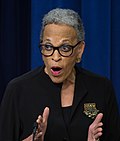 Dr. Johnnetta Cole, Director of the Smithsonian National Museum of African Art
 -
 Robert Nathaniel Dett
 -
 Helen Elise Smith Dett
 -
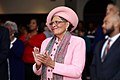 Alma Adams
 -
 Merze Tate


.jpg)
See also
[edit]References
[edit]- ^ "About Us". Bennett College. Archived from the original on April 16, 2014. Retrieved April 16, 2014.
- ^ "Student Affairs". Bennett College. Archived from the original on April 16, 2014. Retrieved April 16, 2014.
- ^ "National Register Information System – (#92000179)". National Register of Historic Places. National Park Service. July 9, 2010.
- ^ "History". Bennett College. Retrieved June 20, 2025.
- ^ "Bennett College | NCpedia". www.ncpedia.org. Archived from the original on December 12, 2018. Retrieved May 16, 2019.
- ^ Linda Beatrice Brown (1998). The Long Walk: The Story of the Presidency of Willa B. Player at Bennett College. Bennett College.
- ^ Seltzer, Rick (December 12, 2018). "Bennett College in Line to Lose Accreditation". Inside Higher Ed. Archived from the original on December 14, 2018. Retrieved December 14, 2018.
- ^ "Bennett College surpasses $5M fundraising goal of staying open". NBC News. February 4, 2019. Archived from the original on February 6, 2019. Retrieved July 19, 2020.
- ^ a b "Bennett College loses accreditation despite massive fundraising effort". myfox8.com. February 22, 2019. Archived from the original on February 23, 2019. Retrieved February 22, 2019.
- ^ a b Jaschik, Scott (February 22, 2019). "Bennett College Loses Appeal; Court Restores Accreditation". Inside Higher Ed. Archived from the original on February 23, 2019. Retrieved February 23, 2019.
- ^ Fain, Paul. "Bennett College Taps Gates Official as President". Inside Higher Education. Archived from the original on June 29, 2019. Retrieved June 28, 2019.
- ^ a b Brooks, F. Erik; Starks, Glenn L. (September 30, 2011). Historically Black Colleges and Universities: An Encyclopedia. ABC-CLIO. p. 60. ISBN 978-0-313-39415-7.
- ^ "Bennett Seminary," Archived November 25, 2023, at the Wayback Machine by Rev. E.O. Thayer (né Edward Olin 1852–1942), A.M., Principal of the Seminary, Twelfth Annual Report of the Freedman's Aid Society of the Methodist Episcopal Church (1879), pps. 37–39
- ^ a b c d e f g h i "Bennett.edu" (PDF). Archived from the original (PDF) on March 3, 2016. Retrieved May 2, 2015.
- ^ "Bennett College Concentrated on Educating Black Women". African American Registry. Archived from the original on December 3, 2013. Retrieved April 16, 2014.
- ^ a b The Crisis. The Crisis Publishing Company, Inc. September 2006. p. 19.
- ^ a b Gasman, M.; Tudico, Christopher L. (December 8, 2008). Historically Black Colleges and Universities: Triumphs, Troubles, and Taboos. Springer. p. 44. ISBN 978-0-230-61726-1.
- ^ a b c "Bennett College's Civil Rights Timeline". Bennett's Sit-in Story. Bennet College Journalism and Media Studies Department. Archived from the original on May 3, 2010. Retrieved April 16, 2014.
- ^ a b "Willa Player Encouraged and Taught Many". African American Registry. Archived from the original on February 4, 2014. Retrieved April 16, 2014.
- ^ Jet. Johnson Publishing Company. November 3, 2003. p. 38.
- ^ "Julianne Malveaux resigns as president of Bennett College". TheGrio. February 28, 2012. Archived from the original on September 27, 2021. Retrieved November 25, 2020.
- ^ Hazelrig, Nick. "Four Presidents Out, Without Notice or Explanation". Inside Higher Education. Archived from the original on June 26, 2019. Retrieved June 25, 2019.
- ^ "Bennett Belles have storied history of activism, leadership". April 6, 2018. Archived from the original on July 28, 2020. Retrieved July 28, 2020.
- ^ "Bennett Accreditation Revoked, Saint Augustine's Removed from Probation". HBCU Digest. December 11, 2018. Archived from the original on December 14, 2018. Retrieved December 14, 2018.
- ^ a b c d e f g h "Bennett College, a haven for Education ..." The African American Registry. August 1, 2005. Archived from the original on December 1, 2007. Retrieved September 30, 2007.
- ^ Arnett, Ethel Stephens (1973). For Whom Our Public Schools Were Named, Greensboro, North Carolina. Piedmont Press. p. 274.
- ^ Adams, Caralee J. (August 22, 2012). "Early-College Model Brings Lessons, Results in N.C. - Education Week". Education Week. Archived from the original on October 31, 2020. Retrieved November 25, 2020.
- ^ Wallace, Rich (September 1996). "Ida Haslup Goode Leaves Legacy". Traveling Through Time. Shelby County Historical Society. Archived from the original on August 1, 2013. Retrieved April 16, 2014.
- ^ "Julianne Malveaux Resigns as President of Bennett College". The Grio. February 28, 2012. Archived from the original on April 16, 2012. Retrieved April 16, 2014.
{{cite journal}}: Cite journal requires|journal=(help)
External links
[edit]

| International | |
|---|---|
| National | |
| Geographic | |
| Other | |

Bennett College
View on GrokipediaHistory
Founding and Early Years (1873–1926)
Bennett College originated in 1873 in Greensboro, North Carolina, when newly emancipated African Americans initiated educational sessions in the unplastered basement of the Warnersville Methodist Episcopal Church (now St. Matthew's United Methodist Church) to provide primary and secondary instruction for freed individuals and train teachers.[1] Approximately 70 African American men and women enrolled as the first students.[7] The effort was supported by northern white philanthropists and formalized in 1874 under the oversight of the Freedmen's Aid Society of the Methodist Episcopal Church.[7] The institution was named Bennett College in recognition of Lyman Bennett, a benefactor from Troy, New York, whose $10,000 donation—equivalent to about $243,580 in 2022—facilitated the purchase of land and construction of the first building, Bennett Hall.[1] Early funding primarily derived from the Freedmen's Aid and Southern Education Society of the Methodist Episcopal Church, which sustained operations amid post-Civil War challenges.[1] By 1878, following the land acquisition, the college expanded to offer collegiate-level courses alongside its preparatory programs.[7] Enrollment grew to nearly 250 students by 1879, with the curriculum encompassing English, normal (teacher training), and theological studies.[1] The college received its official charter as Bennett College in 1889, marking formal incorporation; that year also saw the introduction of athletic programs and the appointment of Dr. Charles N. Grandison as the first African American president.[1] Under subsequent leaders including Dr. Jordan Chavis and Rev. Silas A. Peeler, the institution began offering courses in African American history, reflecting its commitment to culturally relevant education.[1] Throughout its early decades as a coeducational seminary, Bennett emphasized practical skills for upliftment, graduating individuals who became educators and community leaders in the Reconstruction-era South.[7] By the mid-1920s, evaluations from bodies such as the Board of Education, Women's Home Missionary Society, and Phelps-Stokes Foundation recommended reorganization to focus exclusively on women's higher education, setting the stage for its transition in 1926.[1]Transition to Women's College
In the early 1920s, Bennett College, originally established as a co-educational institution in 1873, faced strategic reevaluation amid post-World War I shifts in educational opportunities for African American students, particularly women seeking advanced training for social and professional roles.[8] The Women's Home Missionary Society (WHMS), which had long supported female students at the college, advocated for transforming Bennett into a dedicated women's institution to address the growing demand for higher education tailored to Black women.[9] A pivotal 1926 reorganization was driven by recommendations from a joint study conducted by the Board of Education of the Methodist Episcopal Church and the WHMS, supplemented by a survey from the Phelps-Stokes Fund, which assessed the institution's viability and concluded that focusing exclusively on women would enhance its mission and sustainability as a four-year liberal arts college.[1] This shift eliminated male enrollment, aligning with the WHMS's vision for a senior women's college amid limited options for Black female undergraduates at the time.[10] Dr. David Dallas Jones, a Greensboro native and Methodist educator, was appointed as the first president of the restructured women's college in 1926, overseeing the transition that included curriculum realignment toward women's leadership development and expansion of facilities, which at the time comprised nine buildings serving an initial enrollment of women-focused students.[11][10] The reorganization solidified Bennett's identity as one of the few historically Black colleges dedicated solely to women, with its first baccalaureate class graduating in 1930 after completing the newly emphasized programs in liberal arts, teacher education, and vocational skills suited to emerging opportunities for African American women.[12] Under Jones's leadership, which extended until 1950, the college grew its enrollment and infrastructure, establishing a foundation for empowering "Bennett Belles" as educators, professionals, and community leaders, though the transition initially required navigating financial dependencies on church support and philanthropic surveys.[13]Civil Rights Era Involvement
Bennett College students exhibited early resistance to segregation practices. In 1938, Bennett Belles joined more than 1,000 demonstrators in boycotting the Carolina and National Theaters in Greensboro for portraying African Americans in stereotypical roles and censoring positive depictions.[3] The college's activism intensified in the late 1950s under President Willa B. Player, who served from 1956 to 1966 and emphasized social justice as the "unfinished business of democracy." In 1958, Bennett hosted a speech by Martin Luther King Jr., prompting the formation of a student protest group. Player's leadership encouraged political engagement, including voter registration drives.[4][14] Bennett women were central to the 1960 Greensboro sit-ins, which began on February 1 when four North Carolina A&T students protested at Woolworth's segregated lunch counter. Bennett Belles quickly joined, participating in planning, strategy sessions, picketing, and occupations; by February 3, demonstrations included dozens of students with women comprising about one-third of participants, many from Bennett. From 1960 to 1963, roughly 40% of Bennett's students engaged in local protests, nearly half enduring arrest, while the college supplied jailed demonstrators with food, blankets, and educational sessions. These actions aided desegregation of Greensboro lunch counters, including Woolworth's by July 1960, and fueled the national sit-in wave.[3][4][15]Post-Civil Rights Expansion and Mid-20th Century Developments
Willa B. Player assumed the presidency of Bennett College in 1956, becoming the first African American woman to lead a four-year accredited liberal arts institution.[16] Under her administration, which lasted until 1966, the college revised its curriculum to bolster liberal arts education alongside preparation for professional roles, while expanding co-curricular programs designed to foster leadership skills among students.[17] These developments emphasized the cultivation of Black women's intellectual and civic capacities in an era of heightened social change. Player also advanced the college's international orientation, laying groundwork for global engagement that persisted beyond her tenure.[18] Player's leadership culminated in the securing of full accreditation, a pivotal milestone that affirmed Bennett's academic rigor and enabled expanded opportunities for its graduates.[19] This period marked institutional maturation, with focused efforts on enhancing faculty qualifications and student outcomes amid the broader mid-century push for educational equity at historically Black colleges. Following Player's departure to a federal education role in 1966, Isaac H. Miller Jr. served as president until 1987, guiding the college through post-civil rights transitions.[12] During his extended tenure, Bennett constructed four new campus buildings, supporting improved instructional and residential facilities, and grew its endowment to strengthen financial foundations.[20] These expansions addressed evolving needs in a time of national unrest, including campus demonstrations, while upholding the institution's commitment to women's higher education and community impact.[21]Late 20th Century to Early 21st Century Challenges
In the 1990s and early 2000s, Bennett College grappled with persistent financial vulnerabilities common to small historically black colleges and universities (HBCUs), including heavy dependence on tuition revenue amid fluctuating enrollment and limited endowment growth.[22] These pressures intensified post-2008 recession, as the institution's enrollment declined from 780 students in 2010 to 493 by 2017, eroding its primary income stream and contributing to annual operating deficits exceeding $1 million by the mid-2010s.[22][23] The Southern Association of Colleges and Schools Commission on Colleges (SACSCOC) placed Bennett on probation in 2016, citing inadequate financial resources and stability as core deficiencies, a status that persisted for two years without resolution despite internal restructuring efforts.[24] In December 2018, SACSCOC revoked the college's accreditation, determining that emergency fundraising— which raised over $9 million through the "Change Starts Here" campaign—failed to demonstrate long-term viability, threatening federal aid eligibility for students and prompting operational cutbacks including staff reductions.[25][26] This decision drew criticism for applying a uniform financial threshold ill-suited to under-resourced women's HBCUs, as evidenced by comparably deficit-plagued institutions like St. Augustine's University retaining accreditation despite larger shortfalls.[23][27] Bennett responded aggressively, filing a federal lawsuit in February 2019 against SACSCOC for alleged procedural violations; a court temporarily restored accreditation pending appeals, allowing continuity of operations while enrollment stabilized temporarily through targeted recruitment.[28] After exhausting SACSCOC appeals, the college transitioned to candidacy with the Transnational Association of Christian Colleges and Schools (TRACS) in 2020, achieving full accreditation under this alternative body by 2021, though this shift limited access to some federal programs and underscored broader accreditation inequities facing niche HBCUs.[29] Lingering effects included elevated student debt burdens, with over $1 million in past-due accounts canceled via nonprofit intervention in 2022, reflecting deferred maintenance and fiscal strain from the prior decade.[30]Governance and Administration
List of Presidents
The following is a chronological list of presidents of Bennett College, including early principals who served in leadership roles prior to the institution's formal transition to a women's college in 1926.[12]| Name | Term |
|---|---|
| W.J. Parker (principal) | 1874–1877 |
| Edward O. Thayer | 1877–1881 |
| Wilbur F. Steele | 1881–1889 |
| Charles N. Grandison | 1889–1892 |
| Jordan D. Chavis | 1892–1905 |
| Silas A. Peeler | 1905–1926 |
| David D. Jones | 1926–1955 |
| Willa B. Player | 1956–1966 |
| Gloria R. Scott | 1967–1969 |
| Inez LaMar Reid | 1969–1987 |
| Gloria Carpenter | 1987–1993 |
| Ethel J. Harris | 1993–2002 |
| Johnnetta B. Cole | 2002–2007 |
| Rod Gregg | 2007–2008 |
| Christa Porter | 2008–2010 |
| Phyllis Worthy Dawkins | 2010–2019 |
| Suzanne E. Walsh | 2019–2025 |
Accreditation History and Status
Bennett College maintained accreditation from the Southern Association of Colleges and Schools Commission on Colleges (SACSCOC) for decades until financial instability prompted scrutiny. In 2016, SACSCOC placed the institution on probation for failure to demonstrate compliance with standards related to financial resources and institutional effectiveness.[33] This probation was extended in 2017 following a review that identified ongoing deficiencies in financial stability and governance.[33] On December 9, 2018, the SACSCOC Board of Trustees voted to terminate Bennett's accreditation, citing inadequate financial resources despite the college's fundraising campaigns, including the #StandWithBennett initiative that raised over $9 million.[34] [25] Bennett appealed the decision, but in February 2019, SACSCOC's Appeals Committee upheld the termination.[35] The college then filed a federal lawsuit against SACSCOC, securing a court injunction that temporarily restored accreditation on a probationary basis pending litigation, allowing continued access to federal Title IV funding.[36] [28] This status persisted through 2020, during which Bennett remained on SACSCOC probation while pursuing alternative accreditation pathways.[35] Facing prolonged uncertainty with SACSCOC, Bennett sought accreditation from the Transnational Association of Christian Colleges and Schools (TRACS), a federally recognized body emphasizing standards aligned with U.S. Department of Education requirements.[37] In December 2020, TRACS granted the college candidacy status, marking progress toward full recognition.[38] SACSCOC accreditation effectively lapsed thereafter as Bennett transitioned accreditors. On January 1, 2023, TRACS awarded Category II accreditation status, effective for up to five years, following a comprehensive evaluation of institutional integrity, resources, and outcomes.[37] This was publicly announced on April 28, 2023, affirming Bennett's eligibility for federal aid and program-specific recognitions.[5] As of 2025, Bennett College holds full institutional accreditation from TRACS, which is recognized by the U.S. Department of Education and the Council for Higher Education Accreditation.[37] [39] Specialized accreditations include the Council on Social Work Education for its social work program.[37] The shift to TRACS resolved prior financial and compliance challenges but highlighted debates over accreditor equity for small historically Black institutions, as TRACS standards were deemed comparable to SACSCOC's by college leadership.[29]Academics
Degree Programs and Curriculum
Bennett College offers baccalaureate degrees primarily in the liberal arts and professional studies, with a total of approximately 20 majors across divisions including the Division of Arts and Sciences, Division of Professional Studies, and Division of Natural and Behavioral Sciences and Mathematics.[39] Majors include Biology (B.S.), Business Administration (B.S.), Chemistry (B.S.), Education Studies (B.S.), Elementary Education (K-6, B.S.), English (B.A.), History (B.A.), Interdisciplinary Studies (B.A. or B.S., with tracks in Traditional or Africana Women's Studies), Journalism and Media Studies (B.A.), Mathematics (B.S.), Music (B.A.), Psychology (B.A.), Social Work (B.S.W.), Sociology (B.A.), and Visual Arts (B.A.); select programs such as Computer Science (B.S.) and Political Science (B.A.) are not accepting new students.[39] Minors are available in areas such as Biology, Chemistry, English, Entrepreneurship, Global Studies, History, Journalism and Media Studies (with concentrations in Digital Social Media, Narrative and Documentary Storytelling, Strategic Media Communications, or Self-Designed), Mathematics, Music, Psychology, Sociology, Theatre, and Women's Studies.[39] Degree programs require a minimum of 120 to 128 credit hours, including 35 to 47 hours of general education courses, major-specific coursework, and electives, with the final 30 hours completed in residence and a minimum C average overall (C or better in major and English general education courses).[39] The general education curriculum emphasizes foundational skills through requirements in communications (6 hours, including Literature and Writing I and II), foreign language (6 sequential hours), mathematics (6 hours), physical education (2 hours), research methods (3 hours), fine arts (3 hours), natural sciences (3-4 hours), social and behavioral sciences (3 hours), and history/philosophy/religion (3 hours), plus orientation and electives; programs like Elementary Education mandate 47 general education hours and alignment with North Carolina Department of Public Instruction standards, including practicum experiences.[39] Community service is integrated as an experiential component, requiring 40 hours for the 2024-2025 academic year (increasing to 80 hours thereafter).[39] The curriculum incorporates interdisciplinary approaches, such as customizable tracks in Interdisciplinary Studies and concentrations in Journalism and Media Studies, alongside unique features like the Minimester program (dividing semesters into short intensive terms for focused study) and cooperative partnerships with institutions including Life University for health sciences and Duquesne University for law, enabling enhanced options in chiropractic, sport health, and legal studies.[39] Social Work follows a person-in-environment framework with 55 core hours and Council on Social Work Education accreditation through 2027, while education programs include edTPA preparation for licensure.[39] Overall, programs aim to develop critical thinking, civic engagement, and professional readiness through service-learning, internships, study away, and research, reflecting the institution's liberal arts mission for women.[39]Faculty and Research
Bennett College maintains a small faculty dedicated to undergraduate teaching across liberal arts disciplines, with a student-to-faculty ratio of 7:1 reported for fall 2023.[40] As of 2023, the institution employed 13 assistant professors and 2 associate professors among its instructional staff, totaling approximately 15 faculty receiving $832,000 in compensation.[41] Faculty expertise spans departments including the Division of Arts and Sciences, Business, Economics and Entrepreneurship, and Science, Technology, Engineering, and Math (STEM), with many holding doctoral degrees and emphasizing mentorship for women of color.[42] Historically, notable faculty included composer and educator R. Nathaniel Dett, who directed the music department from 1937 to 1942 and revived community singing traditions at the college.[43] Current faculty examples include Dr. Shenna M. Shearin in STEM coordination and Dr. Claire Heckel in global and interdisciplinary studies, supporting curriculum in scientific reasoning and professional development.[42] Research at Bennett College centers on undergraduate opportunities, particularly in STEM, rather than large-scale faculty-led initiatives typical of research universities. The Biology Department initiated the Sea-Phages Research Program to enable students to conduct phage discovery and genomic analysis.[44] In November 2024, the college joined Duke University's NIH-funded STEM Research Pathway, providing training for Black students in otolaryngology and communication sciences research.[45] Students have engaged in external programs, including a 2017 National Science Foundation Math-Bio Research Experience for Undergraduates, fostering interdisciplinary skills.[46] Faculty have guided applied mathematics projects since 2008, directing 17 undergraduate efforts funded by the National Science Foundation.
Admissions and Enrollment
Admissions Criteria and Process
Bennett College, as a private women's liberal arts institution, admits only female applicants.[47] The college follows a rolling admissions process, evaluating applications as they are received without fixed deadlines for submission, though final official high school transcripts are due by August 1 for fall entrants and December 1 for spring entrants.[48] This selective process yields an acceptance rate of 34 percent, based on recent data from approximately 700 applicants annually.[49] First-year applicants must submit an online application, an official high school transcript (or GED certificate with scores), and a required personal essay addressing topics such as motivation for attending Bennett College, self-introduction, or a writing sample.[48] Standardized test scores from the SAT or ACT are optional, though recommended for applicants over age 24 without prior college credits; the college does not specify minimum scores but considers them in holistic review.[48] High school coursework should include at least 16 units, with recommendations for 4 in mathematics, 3 in science, 2 in social sciences, 2 in foreign languages, and 3 electives.[48] No minimum GPA is mandated, but students with a cumulative high school GPA below 2.5 may qualify for the Emerging Scholars program, which provides additional academic support.[48] An optional letter of recommendation from a teacher or counselor may strengthen applications.[48] Transfer students follow a similar online application process, submitting official transcripts from all prior institutions attended; a minimum cumulative GPA of 2.0 is typically required, though holistic factors are evaluated.[50] Upon conditional acceptance, new students complete orientation, submit proof of immunization, and confirm enrollment by paying a deposit, with final transcripts verifying good standing from prior schools.[51] The Office of Admissions, reachable at (336) 370-8624 or [email protected], assists throughout, emphasizing fit for the college's supportive environment for women pursuing liberal arts degrees.[52]Enrollment Trends and Demographics
Bennett College's enrollment has fluctuated significantly in recent decades, reflecting broader challenges faced by small private historically Black colleges and universities (HBCUs). Total fall enrollment peaked at 534 students in 2018 before declining sharply to 301 in 2019 amid financial and accreditation pressures, reaching a low of 168 in 2022.[53] By fall 2023, enrollment rebounded modestly to 195 students, nearly all full-time (189), with the incoming first-time full-time freshman cohort increasing from 30 in 2022 to 49 in 2023.[53] [40] For fall 2025, the college reported a 16.67% overall increase, bringing enrollment to approximately 228 students, driven by enhanced recruitment efforts targeting high-achieving women.[54]| Year | Total Enrollment | Full-Time | Part-Time |
|---|---|---|---|
| 2016 | 474 | 390 | 84 |
| 2017 | 493 | 400 | 93 |
| 2018 | 534 | 463 | 71 |
| 2019 | 301 | 279 | 22 |
| 2020 | 233 | 208 | 25 |
| 2021 | 207 | 181 | 26 |
| 2022 | 168 | 158 | 10 |
| 2023 | 195 | 189 | 6 |