



Community hub
Bir Hakeim
View on Wikipedia | This article has multiple issues. Please help improve it or discuss these issues on the talk page. (Learn how and when to remove these messages)
|

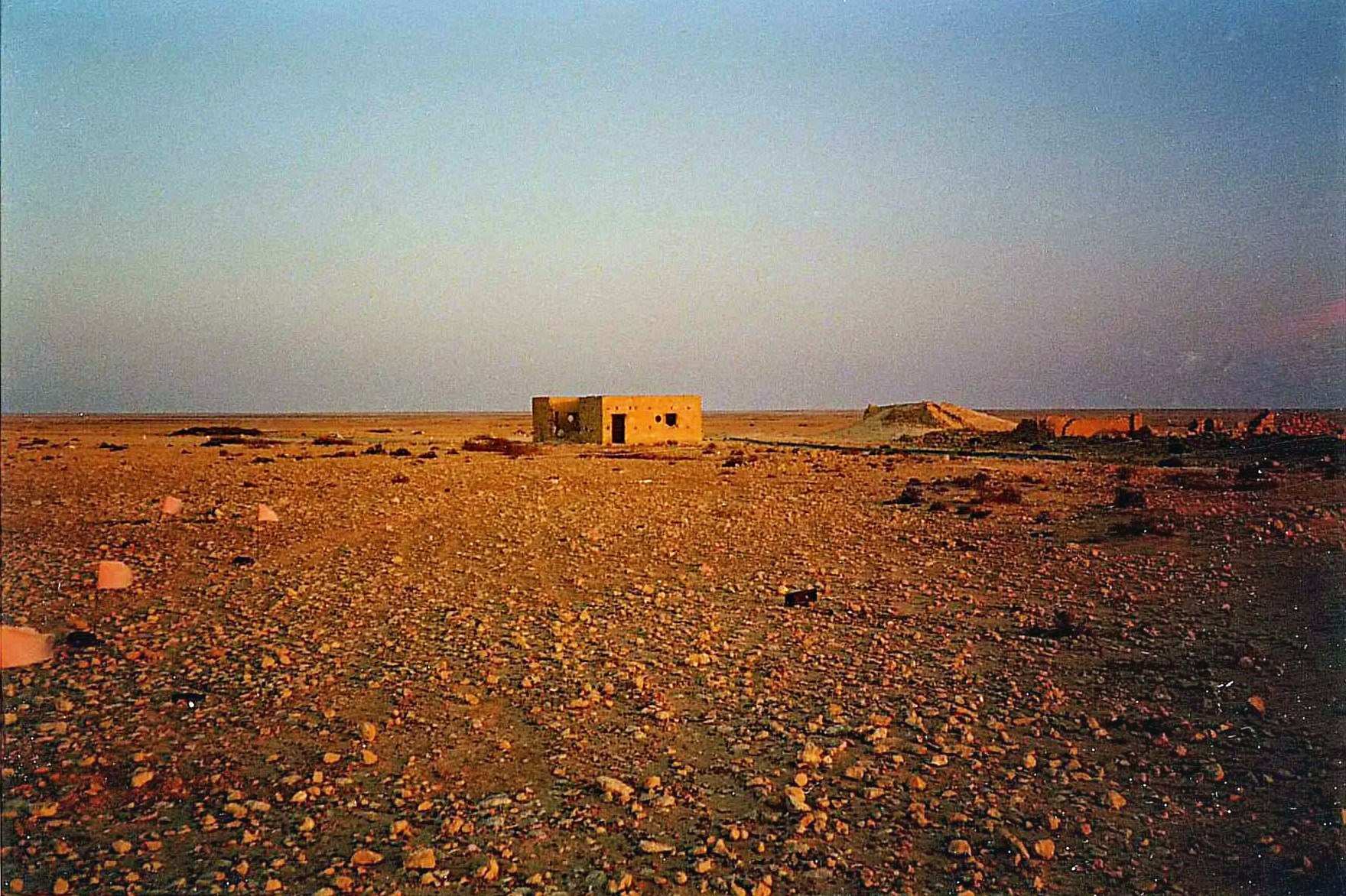
Bir Hakeim (Arabic: بئر حكيم, romanized: biʾr ḥakīm, lit. 'wise well', pronounced [biʔr ħaˈkiːm] ⓘ, sometimes written Bir Hacheim) is the site of a former Ottoman fort in the Libyan desert. The fort was built around the site of an ancient Roman well, dating to the period when the oasis was part of Ottoman Tripolitania. It is about 160 km (99 mi) west of Sollum on the Libyan coast and 80 km (50 mi) south-east of Gazala. Bir Hakeim is best known for the battle of Bir Hakeim, which took place there during World War II.
Key Information


The battle occurred during the Battle of Gazala (26 May – 21 June 1942) when the 1st Free French Brigade of Général de brigade, future Maréchal de France Marie-Pierre Kœnig defended the site from 26 May – 11 June against much larger German and Italian forces, commanded by Generaloberst Erwin Rommel.[1]
Capitaine Pierre Messmer was one of the French officers of the 13th half-brigade of the French Foreign Legion. Messmer had graduated from St Cyr Military School. He was commanding the 3rd battalion of the Legion. Many of his soldiers were from Spanish and German origin, and many of them Jews[citation needed]. The Kaddish was said most evenings at Bir-Hakeim. The other half-brigade of the 1st Free French Division included units that did not belong to the French Foreign Legion, such as the Bataillon de Marche n°2 de l'Afrique équatoriale française (BM2), the Bataillon du Pacifique (French Polynesia, New Caledonia and New Hebrides), the 1st Bataillon of Infanterie de Marine, the 1st Regiment of Artillerie, the 1st Bataillon of Fusiliers Marins in association with troop D of the 43rd Battery of the 11th City of London Yeomanry Regiment and the 22nd North-African French Armored Company.
Pierre Messmer was the first French Foreign Legion soldier to be elected to the Académie Française. He would later become Prime Minister of the French Republic under President Georges Pompidou.
During these 14 days, 3700 French soldiers immobilized 40 000 Axis soldiers. Out of these 3700, 800 died or went missing. This half-brigade had already fought the German Army at Narvik on 27 May 1940.
Although the Afrika Corps captured Tobruk ten days later, the delay imposed on the Axis offensive by the defence of Bir Hakeim influenced the cancellation of Operation Herkules, the planned German invasion of the Suez Canal and Malta. The stand by the Free French gave the defeated and retreating British Eighth Army enough time to recover from its heavy losses and to reorganize.[2] The British then stopped the German advance at the First Battle of El Alamein.[3] The Algerian and Moroccan units of the 1st Free French Division gave birth to the French Expeditionary Corps under the command of Général Alphonse Juin, future Maréchal de France, and Général Joseph de Goislard de Monsabert. They also took part in the Battle of Monte Cassino. There the 3rd Division d'Infanterie Algérienne (3rd DIA) and the Groupement des Tabors Marocains of Général Augustin Guillaume were recognized in breaking through the German defences of the Gustav Line.
This battle would serve as the namesake for Bir-Hakeim (Paris Métro), a station on the Paris Métro, and Pont de Bir-Hakeim, a bridge.
Bir Hakeim had been the site of a daring rescue during World War I. On 14 March 1916 Major Hugh Grosvenor led an armoured car squadron, part of the Western Frontier Force, to Bir Hakeim after having travelled 120 miles across the desert from Sollum. There they rescued 91 British POWs from HMS Tara and HMT Moorina. German U-boats had captured the British sailors after torpedoing their vessels and had turned their prisoners over to the local Senussi, who were allied with the Germans.
As a result of the Italo-Turkish War (1911-1912), Italy captured the Ottoman Tripolitania Vilayet (province), which became known as Italian Libya. The Italian army stationed a unit of its Zaptié Meharista at Bir Hakeim.
See also
[edit]References
[edit]- ^ "The Battle of Bir Hakeim | Chemins de mémoire". www.cheminsdememoire.gouv.fr. Retrieved 2025-06-30.
- ^ "The battle of Bir Hakeim | Chemins de mémoire". www.cheminsdememoire.gouv.fr. Retrieved 2025-06-30.
- ^ "'Rejuvenating French pride': The Battle of Bir Hakeim, 80 years on". France 24. 2022-05-27. Retrieved 2025-06-30.
| International | |
|---|---|
| National | |

Bir Hakeim
View on GrokipediaGeography and Etymology
Location and Topography
Bir Hakeim occupies a position in the Libyan Desert, within the Cyrenaica region of eastern Libya, at approximately 31°35′N 23°29′E.[6] This places it roughly 35 kilometers southwest of Tobruk and about 160 kilometers west of the Egyptian border town of Sollum, inland from the Mediterranean coast amid the expansive North African desert.[7] The site forms the southern anchor of the Gazala Line area, characterized by hyper-arid conditions with minimal annual precipitation, extreme temperatures, and vast stretches of open sand and gravel plains interrupted by low rocky outcrops. The core feature is a small oasis centered on an ancient well, which serves as the primary water source in an otherwise resource-scarce environment.[5] Surrounding the well is a circular fort constructed by the Ottoman Empire on elevated rocky terrain, providing a natural strongpoint elevated several meters above the surrounding flat expanse. This rocky base contrasts with the encircling sand dunes and intermittent dry wadis, limiting vegetation to sparse desert shrubs and accentuating the challenges of mobility and sustenance due to the fort's isolation and dependence on the well for water. Topographically, the site's slight elevation offers vantage points for observation across the unobstructed horizon, enhancing visibility in all directions over the featureless desert. However, the absence of significant natural barriers—such as escarpments or dense wadi networks—renders it susceptible to approaches from any angle, with the flat, open surroundings facilitating rapid traversal by vehicles but complicating sustained defense through exposure to envelopment and logistical strain from distant supply routes.[7]Name Origin and Historical Designations
The name Bir Hakeim originates from the Arabic biʾr ḥakīm (بئر حكيم), which literally translates to "well of the wise" or "wise man's well," reflecting the site's primary feature as a water source associated with wisdom or a sage figure.[8][9] In Arabic, bir denotes a well or spring, crucial for sustaining Bedouin nomadic communities traversing the arid Cyrenaican desert, while ḥakīm signifies a wise person, judge, or healer, possibly alluding to a local notable or the well's reputed life-sustaining value.[10][8] This etymology underscores the pre-colonial cultural emphasis on oases as vital waypoints, with the name predating European cartography and lacking ties to major urban or sedentary Berber nomenclature. Historical designations of the site maintained close fidelity to its Arabic roots, with Ottoman-era references treating it as a strategic water point and rudimentary fort without substantive alteration, though European transliterations occasionally rendered it as Bir Hacheim to approximate pronunciation.[11] No verified records indicate significant pre-Islamic or Berber linguistic variants diverging from ḥakīm, and archaeological assessments confirm the absence of large-scale settlements prior to Ottoman construction, affirming the name's origin in transient pastoral reliance on isolated wells rather than fixed habitation.[8]Pre-20th Century History
Ancient Roman Presence
The site of Bir Hakeim preserves evidence of Roman engineering in the form of ancient wells, which functioned as essential watering points amid the Libyan desert's harsh conditions. These structures supported transient Roman activities, such as patrols and logistical relays along desert routes during the empire's control over North Africa, spanning roughly from the 1st century BCE to the 5th century CE.[12] Archaeological traces indicate a modest Roman footprint limited to hydraulic features like the wells, without signs of fortified garrisons, substantial buildings, or urban infrastructure that would suggest prolonged occupation. The wells' stone linings and design reflect practical adaptations for sustaining small detachments in arid frontiers, prioritizing water extraction over permanent settlement. This aligns with Roman strategies in marginal zones, where oases and wells enabled mobility against nomadic threats rather than static defense.[13]Ottoman Fort Construction and Use
The Ottoman Empire constructed a fort at Bir Hakeim during its control of Tripolitania, utilizing the site's ancient Roman well as a central feature for a defensive outpost in the Libyan desert.[14] This followed the reimposition of direct Ottoman administration in 1835 after the Karamanli dynasty's autonomy, as part of broader efforts to stabilize frontier regions through limited fortifications amid tribal unrest.[15] The structure comprised a rudimentary enclosure, primarily of local stone and mud-brick, designed for sparse garrisoning rather than heavy fortification, reflecting the logistical constraints of desert campaigning. Strategically, the fort monitored caravan crossroads linking Tripolitania and Cyrenaica, serving to deter raids by Bedouin groups and the rising Senussi order, which challenged Ottoman authority from the 1840s onward in eastern Libya.[16] Small detachments, constrained by acute water shortages at the well-dependent site, numbered no more than 50–100 troops, focusing on patrols and signaling rather than sustained combat; records indicate few major engagements, as the isolation favored hit-and-run tribal tactics over Ottoman offensives.[17] By the late 19th century, administrative decay and recurrent provincial revolts eroded maintenance, leaving the fort as a dilapidated waypoint by the 1911 Italian invasion, when Ottoman garrisons in Libya were overstretched and ineffective against modern colonial forces.[17]Italian Colonial Period
Infrastructure Developments
Following the Italo-Turkish War of 1911–1912, which granted Italy control over Ottoman Libya including Cyrenaica, the pre-existing fort at Bir Hakeim—a remote desert outpost centered on an ancient well—was retained and modestly reinforced to facilitate control over nomadic tribes and secure interior routes. Basic engineering enhancements, such as concrete reinforcements to the mud-brick Ottoman structure, supported small garrisons amid ongoing pacification campaigns against Senussi fighters in the 1920s.[18] [19] Water infrastructure received attention through well maintenance and potential borehole additions, essential for sustaining military patrols in the water-scarce region, though these efforts remained rudimentary given the site's isolation from major coastal developments like the Via Balbia highway completed in 1937. Agricultural initiatives under fascist colonization aimed at oasis cultivation and Bedouin resettlement faltered due to persistent aridity and soil infertility, limiting Bir Hakeim to a sparse network of minor outposts with a resident population below 200 by the late 1930s, underscoring the impracticality of large-scale desert settlement schemes.[20] [21] In the mid-1930s, as Italy mobilized for the invasion of Ethiopia (1935–1936), defensive modifications at forward positions like Bir Hakeim included provisional anti-aircraft emplacements and perimeter minefields, prioritizing rapid militarization over enduring civilian infrastructure amid broader imperial ambitions that often ignored environmental constraints. These upgrades reflected Mussolini's emphasis on fortified frontiers but yielded limited strategic depth in Libya's vast hinterlands, where logistical challenges persistently hampered fascist projections of a "Fourth Shore" colony.[20]Strategic Role in Cyrenaica
Bir Hakeim, situated in the Gazala region of Cyrenaica, functioned primarily as a remote forward observation post in Italian Libya's eastern frontier defenses during the interwar period. This positioning allowed limited monitoring of potential cross-border activities from British-controlled Egypt, including smuggling routes and nomadic movements, though actual Egyptian incursions were negligible absent formal conflict. Connected to Tobruk by rudimentary desert tracks but distant from major supply hubs like Benghazi—over 200 kilometers to the west—the site's isolation underscored its secondary status in broader colonial security arrangements. Militarily, Bir Hakeim held modest value as a reconnaissance station rather than a fortified stronghold, garrisoned by a small company of Zaptié Meharisti—native camel-mounted troops under Italian command—typically numbering around 100-150 personnel for patrolling vast arid expanses. Logistical constraints, including sparse water sources and dependence on camel transport, precluded larger deployments or significant armament, prioritizing mobility over static defense in a region where internal pacification efforts had largely concluded by 1931. This setup reflected Italy's focus on coastal concentrations and settler protection over deep-desert fortifications, leaving peripheral outposts like Bir Hakeim vulnerable to rapid envelopment. Empirical evidence from subsequent operations highlights Italian underinvestment in Cyrenaica's forward defenses: by late 1940, British forces under Operation Compass overran much of the province with minimal resistance, capturing tens of thousands of Italians amid exposed supply lines and inadequate desert mobility. Bir Hakeim's pre-war configuration, reliant on obsolete Ottoman-era structures minimally adapted for Meharisti use, exemplified these failings, as later Axis advances under Rommel in 1941-42 exploited analogous weaknesses in terrain denial and reinforcement speed—contradicting any portrayal of robust colonial preparedness. Such causal vulnerabilities stemmed from prioritizing propaganda-driven settlement over hardened logistics, rendering sites like Bir Hakeim observation points at best, not integral bastions.[22]World War II Context
North African Campaign Prelude
The British Eighth Army, commanded by Lieutenant General Neil Ritchie, withdrew to the Gazala Line in western Libya after the Axis capture of Tobruk on 21 May 1942, establishing a series of fortified infantry "boxes" backed by minefields and anti-tank ditches stretching about 40 miles from the Mediterranean coast to Bir Hakeim in the south. This defensive position, prepared earlier in the spring, aimed to contain Panzerarmee Afrika's momentum following its victories in Operation Theseus, which had pushed eastward from El Agheila since January. Bir Hakeim's role as the southern anchor derived from its topographic advantages—low hills and Ottoman-era ruins providing cover for entrenched defenses—despite inherent logistical vulnerabilities, including scarce groundwater that necessitated reliance on rationed wells and vulnerable supply convoys from the rear. Allied planners prioritized these static defenses over deeper mobile reserves, reflecting a calculation that the site's isolation would force Axis forces into costly frontal assaults rather than unhindered encirclement.[2][23] In early May 1942, the 1st Free French Brigade under Brigadier General Marie-Pierre Koenig, totaling approximately 3,700 personnel drawn from French Foreign Legion battalions, Moroccan riflemen, and Senegalese tirailleurs, occupied Bir Hakeim as part of the Gazala dispositions. Equipped with limited artillery, anti-tank guns, and small arms but lacking heavy armor, the brigade received explicit orders from Eighth Army to hold for a minimum of 48 hours against probing attacks, allowing time for the main British armored formations—concentrated in "boxes" like Knightsbridge—to maneuver and counter any Axis breakthrough. This directive stemmed from empirical assessments of prior skirmishes, which downplayed the potential scale of Axis artillery barrages and combined-arms integration, prioritizing positional rigidity amid supply strains from Axis interdiction of Tobruk's port. The deployment underscored a broader Allied strategy of attrition over fluid maneuver, constrained by inferior air cover and stretched lines of communication.[2][7] Erwin Rommel's Panzerarmee Afrika, comprising roughly 100,000 Axis troops with 560 tanks and strong Luftwaffe support, initiated its offensive against the Gazala Line on 26 May 1942 under the broader umbrella of operations designed to shatter British cohesion. Initial dispositions featured Italian infantry pinning Allied boxes frontally, while German panzer divisions under the Afrika Korps prepared to swing wide south of Bir Hakeim for a double envelopment, exploiting perceived gaps in southern coverage. This approach leveraged Axis advantages in operational tempo and reconnaissance, contrasting with Eighth Army's compartmentalized command structure, which fragmented responses across isolated strongpoints. Bir Hakeim's fixation role was thus pivotal in Allied contingency plans, intended to buy time for armored reserves to pivot, though underlying misjudgments of Axis fuel logistics and reinforcement flows tempered expectations of prolonged resistance.[24]Free French Deployment to Bir Hakeim
The 1st Free French Brigade, under the command of Brigadier General Marie-Pierre Koenig, garrisoned Bir Hakeim with approximately 3,700 to 4,000 personnel, forming the southern anchor of the Gazala Line.[2] The core comprised the 13th Demi-Brigade of the Foreign Legion (13e DBLE), supplemented by units such as the 1st Battalion of Marine Infantry (1er BIM), the 2nd March Battalion, and the 1st Pacific Battalion, incorporating riflemen from French colonies including Senegal, Madagascar, and Equatorial Africa.[25] This multinational force, unified under General Charles de Gaulle's Free French Forces, included legionnaires from over 20 nationalities—ranging from Eastern European refugees to Spaniards and others evading their home regimes—contrasting with the higher defection rates in Vichy French units during similar campaigns.[26] Koenig's command structure emphasized a defensive doctrine of attrition warfare, focusing on static positions to bleed attacking forces rather than risking counteroffensives with limited resources, while maintaining operational autonomy amid tensions with British Eighth Army oversight.[25] Preparations from February 1942 involved fortifying the dilapidated Italian-era fort with extensive minefields encircling a 3-kilometer perimeter, slit trenches, and anti-tank obstacles, augmented by 12 British 25-pounder field guns and a handful of Bren carriers for reconnaissance and supply runs.[5] Logistical challenges compounded the empirical rigors of desert deployment, including acute water shortages rationed to 2 liters per soldier daily—insufficient for hydration in temperatures exceeding 45–50°C—and reliance on sporadic resupply convoys vulnerable to interdiction.[27] Colonial troops, particularly Senegalese tirailleurs unaccustomed to such constraints despite their equatorial origins, faced heightened strain, underscoring causal factors in unit endurance like disciplined rationing and improvised water conservation amid British logistical prioritization of core imperial forces.[25] Koenig later highlighted British high command's decision to isolate Bir Hakeim as a forward outpost without reinforced flanks, prioritizing broader maneuvers over integrated relief, which amplified the brigade's self-reliant preparations.[2]The Battle of Bir Hakeim
Initial Axis Assaults (May 26–31, 1942)
The initial Axis assaults on Bir Hakeim began on May 27, 1942, as part of Erwin Rommel's offensive during the Battle of Gazala, with the Italian 132nd Armored Division "Ariete" targeting the southeastern defenses held by the 1st Free French Brigade under General Pierre Koenig.[2][28] At approximately 9:30 a.m., Ariete's 132nd Tank Regiment advanced with around 70 tanks supported by the 8th Bersaglieri Regiment's infantry in unarmored trucks, aiming to breach the French perimeter's minefields and barbed wire.[27][28] French artillery immediately responded with a barrage that caught the exposed Bersaglieri troops, while 75 mm field guns and 47 mm anti-tank guns, positioned in fortified trenches, engaged the tanks at close range.[5][27] The Ariete assault faltered as tanks triggered mines and faced concentrated fire; six vehicles briefly penetrated the lines but were destroyed in hand-to-hand combat by French Foreign Legionnaires and artillery spotters.[28][27] By midday, Ariete had lost 32 tanks—18 to mines alone—and withdrew, leaving behind 100 prisoners including Lieutenant Colonel Angelo Prestisimone, though French records claim up to 43 Axis tanks and 8 armored cars abandoned by May 30 from ongoing probes.[2][5] Koenig's forces, equipped with 26 75 mm guns, exploited the open desert terrain for effective counter-battery fire, repulsing the attack without territorial concessions.[5] Subsequent efforts by the German 90th Light Division, supported by Italian Trieste Motorised Division elements and Luftwaffe Stuka dive-bombers, focused on minefield breaches and encirclement from May 28 onward, but these failed to achieve breakthroughs amid persistent French resistance.[5] French night raids and patrols disrupted Axis infantry advances, capturing 180 prisoners by May 30 and inflicting additional vehicle losses, though ammunition shortages began to strain defenses by the period's end, necessitating a resupply convoy on May 31.[27] No significant Axis gains occurred, exceeding the defenders' anticipated 48-hour hold against the "cauldron" maneuver.[2]Intensified Siege and Defenses (June 1–10, 1942)
As Axis forces consolidated their encirclement of Bir Hakeim by early June 1942, the German 90th Light Division and Italian Trieste Motorised Division positioned heavy 150mm artillery batteries within range, subjecting the Free French positions to relentless shelling and Luftwaffe bombing runs that inflicted mounting casualties and strained fortifications.[2] General Marie-Pierre Koenig's 1st Free French Brigade, numbering around 3,700 men after initial losses, maintained defensive strongpoints in minefields and trenches, repelling probing infantry assaults while conserving ammunition through disciplined fire.[2] Koenig rebuffed multiple German surrender ultimatums delivered on June 2, 3, and 5, reportedly replying to one with artillery fire on the envoy's position, underscoring the garrison's determination to hold despite encirclement and dwindling supplies.[29] RAF resupply missions attempted parachute drops of water, food, and munitions, but many failed due to anti-aircraft fire, poor visibility, and wind dispersion, with only limited aid reaching the defenders; internal wells provided critical hydration, though rationed severely amid desert heat exceeding 40°C (104°F).[2] Attrition from thirst, dysentery, and exhaustion accounted for approximately 200 non-combat losses by mid-June, exacerbating combat casualties from artillery and air attacks that totaled over 500 dead and wounded.[2] The prolonged resistance delayed Erwin Rommel's Panzerarmee Afrika advance by at least 10 days, disrupting Axis envelopment of the Gazala Line and allowing British Eighth Army partial regrouping, though Rommel later minimized the obstacle in his memoirs, attributing delays primarily to logistical strains.[29] [2] Post-battle analyses highlighted controversies over Allied coordination, with French accounts criticizing British command for failing to launch relieving tank thrusts or armored breakouts toward Bir Hakeim, contrasting Axis efficiency in envelopment despite their own supply vulnerabilities; Koenig had urged such support via radio, but Eighth Army priorities focused on countering the broader Axis thrust.[2] This resilience, rooted in pre-built defenses and tactical immobility, exemplified attrition warfare's effectiveness against mobile forces but underscored the limits of isolated holdings without integrated relief.[29]Breakout and Evacuation (June 11, 1942)
On the night of June 10–11, 1942, with ammunition nearly exhausted and water supplies critically low after sixteen days of siege, General Pierre Koenig ordered the 1st Free French Brigade to attempt a breakout from Bir Hakeim under cover of darkness.[2] The approximately 2,700 remaining able-bodied survivors, including wounded carried by comrades, formed a convoy of vehicles and infantry, prioritizing the destruction of heavy equipment to prevent its capture.[16] To facilitate the maneuver, Koenig engaged in protracted radio negotiations with Axis forces, feigning discussions of surrender terms relayed through intermediaries, which distracted pursuing patrols and bought critical hours for assembly and initial movement.[30] The column advanced northwest through dense minefields and Italian-held sectors, engaging in close-quarters combat with 90th Light Division outposts; French machine-gun teams and engineers cleared paths amid sporadic artillery fire, though navigational challenges in the moonless desert led to fragmentation of the group.[31] During the escape, roughly 500 French troops were killed or captured by Axis ambushes and patrols, representing losses from vehicle breakdowns, disorientation, and intensified pursuit as dawn broke on June 11.[16] Despite these setbacks, the deception and disciplined execution enabled about 70% of the breakout force—over 1,900 men—to evade encirclement, dispersing into small parties that navigated 50–100 kilometers of hostile terrain, linking up with British Eighth Army units near Tobruk by June 15 after foraging and avoiding roving Afrika Korps elements.[2][27] Axis forces, initially misled by the simulated parleys, discovered the evacuation by midday June 11, prompting Erwin Rommel to redirect limited reserves for immediate sweeps, though the French withdrawal precluded a full-scale annihilation and allowed the site's rapid abandonment without further fixed defenses.[31] This tactical dispersal underscored the brigade's resilience, as survivors reformed ad hoc fighting groups en route, sustaining minimal additional attrition from dehydration and skirmishes before reaching Allied lines.[16]Casualties and Tactical Assessment
Allied Losses and Axis Inflicted Damage
The Free French brigade defending Bir Hakeim suffered approximately 141 killed, 229 wounded, and 814 captured during the siege from May 26 to June 11, 1942, out of a force of about 3,700 men.[16] Material losses included 53 guns and around 50 vehicles destroyed or abandoned.[16] These figures reflect the intense Axis bombardment and assaults, which depleted ammunition and water supplies, culminating in the breakout under fire on the night of June 10–11.[27] In return, the defenders inflicted significant damage on Axis forces, primarily through minefields, anti-tank guns, and artillery. The Italian Ariete Armored Division lost at least 37 tanks to mines and defenses during the initial assault on May 27, with additional vehicles destroyed in subsequent probes, mauling its effective strength.[28] Overall Axis vehicle losses reached 164, including tanks from both Italian and supporting German units.[16] Axis personnel casualties totaled around 3,300 killed or wounded and 227 captured, concentrated during failed infantry and armored attacks against fortified positions.[16] Aircraft losses numbered 49, many attributable to French anti-aircraft fire amid repeated Luftwaffe and Regia Aeronautica strikes, with the latter alone losing 21 planes.[16]| Category | Allied (Free French) Losses | Axis Losses Inflicted |
|---|---|---|
| Personnel | 141 killed, 229 wounded, 814 captured[16] | ~3,300 KIA/WIA, 227 captured[16] |
| Vehicles | ~50 destroyed/abandoned[16] | 164 destroyed (incl. ≥37 Italian tanks)[16][28] |
| Guns/Artillery | 53 lost[16] | N/A |
| Aircraft | N/A | 49 shot down (many to AA)[16] |