Hubbry Logo
logo
CSKT Bison Range
Community hub

CSKT Bison Range

logo
0 subscribers
Read side by side
from Wikipedia

The CSKT Bison Range (BR) is a nature reserve on the Flathead Indian Reservation in western Montana established for the conservation of American bison. Formerly called the National Bison Range, the size of the bison herd at the BR is 350 adult bison and welcomes 50–60 calves per year. Established as a National Wildlife Refuge in 1908, the BR consists of approximately 18,524 acres (7,496 ha) within the Montana valley and foothill grasslands. Management of the site was transferred back to the Confederated Salish and Kootenai Tribes in 2022 from the U.S. Fish and Wildlife Service after more than a century of federal management and nearly two decades of negotiations.

Key Information

The BR has a visitor center, and two scenic roads that allow vehicular access to prime viewing areas. The range is approximately one hour north of Missoula, Montana, off of U.S. Highway 93 directing visitors to the entrance at Moiese, Montana, and the range headquarters.

Context

[edit]
Bison now flourish from the early herd from an East Coast zoo.

The range protects one of the most endangered ecosystems in North America, the intermountain bunchgrass prairie.[2] This diverse ecosystem includes grasslands, Douglas fir and ponderosa pine forests, riparian areas and ponds.[3] In addition to the 350 to 500 bison, many other mammal species may be seen on the refuge, including coyote, black bear, elk, mule deer, bighorn sheep, white-tailed deer, pronghorn, mountain cottontail, Columbian ground squirrel, muskrat, yellow-pine chipmunk, badger, and cougar.[4] Over two hundred bird species have been seen on the refuge.[5] The Bison Range also contains many plant species, including the bitterroot, ponderosa pine, and buffalo grass.[6]

Prior to the 1800s, bison were believed to number in the tens of millions, they once were found in all the current U.S. states, except Hawaii, and also throughout Canada.[7] Bison were nearly extinct by 1890, having been part of a Federal government sponsored program of eradication during the Indian Wars, thereby removing a vital food source from the Plains Indians diet, and ensuring easier relocation onto Indian reservations.[8] Bison play an important role in Native culture which includes a deep spiritual connection.[9]

Early role in conservation

[edit]

Oral accounts of the tribes recall a man of the Pend d’Oreille tribe named Atatice who knew something needed to be done as the buffalo disappeared. Atatice’s son Latati, or Little Peregrine Falcon, eventually led six orphan bison west to the Flathead Reservation.[9] His stepfather, Samuel Walking Coyote, sold them to horse traders Michel Pablo and Charles Allard in 1884.[10] The Pablo-Allard herd grew to about 300 when in 1896 Allard died and his half of the herd was sold to Charles E. Conrad of Kalispell by his widow.[11][12] Pablo’s herd continued to grow and range wild along the Flathead River.[13] By the early 1900s, the Pablo-Allard herd was said to be the largest collection of the bison remaining in the U.S.[14] Pablo was notified in 1904 that the government was opening up the Flathead Reservation for settlement by selling off parcels of land.[15] After failed negotiations with the U.S. government, Pablo sold the herd to the Canadian government in 1907.[16] The transfer took until 1912, as the bison were captured and shipped by train from Ravalli, to Elk Island to establish a conservation herd.[17]

Big Medicine on display at the Montana Historical Society museum in 2005

The American Bison Society appointed Morton J. Elrod, founder of the Flathead Lake Biological Station, to examine potential reserves in Montana and he suggested the Flathead Reservation.[18] The National Bison Range was established on May 23, 1908 out of a portion of the Reservation.[19] President Theodore Roosevelt signed legislation authorizing funds to purchase land for bison conservation when for the first time Congress appropriated tax dollars to buy land specifically to preserve wildlife.[20] The initial herd of thirty-four American bison were purchased from the Conrad herd by the American Bison Society in 1909.[11] To supplement this, Alicia Conrad added two of her finest animals to the effort. The Refuge also received one bison from Charles Goodnight of Texas and three from the Corbin herd in New Hampshire.[3] The Range was established as a native bird refuge by Congress in 1921.[19] The Civilian Conservation Corps built many of its buildings.[21]: 1, 14, 18–22  A white buffalo, "Big Medicine" (1933–1959), spent his life at the Bison Range.[22][21]: 70–73  Tribal members visited him to pray and held him in high esteem.[23][24][25] In the early 1950s the Montana Historical Society made arrangements to move Big Medicine upon his death to the state's museum to be permanently preserved and displayed.[26][27] As Indigenous artifacts and culturally significant items are being repatriated by many institutions to tribes, the Montana Historical Society and the state of Montana have committed to transferring ownership to the tribe. The tribe has long desired the return due to the spiritual significance and want to prepare the appropriate infrastructure at the range.[28]

Tribal management

[edit]

Returning the range to tribal control has been desired by members since it was taken over by the federal government without the tribes' consent in 1908.[29] In accordance with the 1994 Self Governance Act, the Confederated Salish and Kootenai Tribes (CSKT) negotiated and entered a government-to-government agreement with the US Fish and Wildlife Service (USFWS).[30] The agreement allowed the tribes to “take part in refuge programs that are of special geographical, historical, or cultural significance”. The tribes continued the campaign with the submission of three proposals to return the range to tribal control.[31] In 2007, a split mission arrangement was cancelled amidst difficulty in the relationship.[32] A replacement bridge over Mission Creek was completed in 2011 after USFWS contracted with the Tribe using funding from the Recovery Act.[33] USFWS issued a final draft of the National Bison Range Comprehensive Management Plan in 2019.[34][35] When surplus animals are released from the Range to other conservation herds around the country, the plan called for more collaboration with local, tribal and state partners.[36] The proposed transfer gathered broad support from the community, conservation groups and politicians.[29] After the transfer was included in the Consolidated Appropriations Act, a two-year transition process began when it became law on December 27, 2020.[37][38] With the Bureau of Indian Affairs (BIA) taking the land into trust for CSKT in June 2021, the range was restored to the Flathead Indian Reservation.[39] Assistant Secretary Tara Katuk Sweeney stated that “The CSKT have strong and deep historical, geographic and cultural ties to the land and the bison, and their environmental professionals have been leaders in natural resources and wildlife management for many decades.”[40]

Tribal officials said the public would see little change during the annual reopening of Red Sleep Drive in May 2021 and all proceeds will be used for the management and operation of the Bison Range.[37] Entrance fees were increased and Federal-use passes are no longer accepted since it is no longer a USFWS or National Park Service facility.[41] January 2022 marked the beginning of the first full season of the Confederated Salish and Kootenai Tribes managing the site.[42] New exhibits in the visitors center were the result of cultural committees from each tribe getting the correct history where the USFWS was unable to provide resources to improve the information being displayed.[43] Both Secretary of the Interior, Deb Haaland, and state Attorney General, Kristen Juras, spoke at a celebration of the restoration in May.[24] Tribal and government officials mentioned how the reunification of the tribe with the bison, the land and the resources righted a wrong in the history of the reservation.[44]

Geology

[edit]

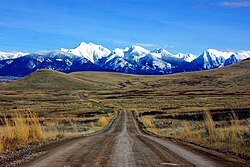
The range is a small, low-rolling mountain connected to the Mission Mountain Range by a gradually descending spur. Range elevation varies from 2,585 feet (788 m) at headquarters to 4,885 feet (1,489 m) at High Point on Red Sleep Mountain, the highest point on the Range. Much of the Bison Range was once under prehistoric Glacial Lake Missoula, which was formed by a glacial ice dam on the Clark Fork River about 13,000 to 18,000 years ago. The lake attained a maximum elevation of 4,200 feet (1,300 m), so the upper part of the Range was above water. Old beach lines are still evident on north-facing slopes. Topsoil on the Range is generally shallow and mostly underlain with rock which is exposed in many areas, forming ledges and talus slopes. Soils over the major portion of the Range were developed from materials weathered from strongly folded pre-Cambrian quartzite and argillite bedrock.[3]

The Jocko River (Salish: nisisutetkʷ ntx̣ʷe [45]) is a tributary of the Flathead River that forms the southern boundary of the range at it flows through the Jocko Valley.

Access

[edit]

The BR has a visitor center, and two scenic roads that allow vehicular access to prime viewing areas. Two gravel roads through the range provide viewing of bison and other wildlife.[46] The range is approximately one hour north of Missoula, Montana, off of U.S. Highway 93 directing visitors to the entrance and the range headquarters at Moiese, Montana.[47]

[edit]

Ken Burns's 2023 film The American Buffalo includes scenes and interviews shot on the range.[48][49][50]

References

[edit]
[edit]
Revisions and contributorsEdit on WikipediaRead on Wikipedia
from Grokipedia
The CSKT Bison Range is an 18,766-acre wildlife conservation area situated in the center of the Flathead Indian Reservation in Montana, managed by the Confederated Salish and Kootenai Tribes' Natural Resources Department and home to a herd of approximately 350 American bison along with diverse other species including elk, deer, pronghorn, bears, coyotes, and numerous birds.[1][2] Originally established in 1908 as the National Bison Range by President Theodore Roosevelt on tribal lands to safeguard the nearly extinct American bison—a species central to the tribes' historical economy and culture—the refuge was administered by the U.S. Fish and Wildlife Service for over a century despite tribal objections to the initial land acquisition, which a 1971 U.S. Court of Claims ruling later deemed unconstitutional.[3][3] In a restoration of tribal sovereignty, the National Bison Range Act within the Consolidated Appropriations Act of 2021 (Public Law 116-260) facilitated the transfer of the lands from federal to tribal control, with the U.S. Department of the Interior placing the approximately 18,800 acres in trust for the tribes on June 23, 2021, following decades of negotiations and interim self-governance compacts that demonstrated the tribes' effective stewardship capabilities.[4][3] The range's bison herd traces its lineage to 19th-century tribal breeding efforts by figures like Michel Pablo and Charles Allard, who amassed the world's largest plains bison population on reservation lands before federal intervention fragmented it, underscoring the tribes' foundational role in the species' survival and the refuge's ongoing function as a self-sustaining conservation model under tribal management since 2022.[3][1]

Historical Background

Establishment and Federal Acquisition

In response to the near-extinction of the American bison, with wild populations reduced to fewer than 1,000 individuals by 1900 due to commercial overhunting and habitat loss following European settlement expansion, Congress incorporated authorization for a protected refuge into the Agricultural Appropriations Act signed on May 23, 1908.[5][6][7] This pragmatic federal initiative aimed to preserve remnant herds through designated ranges, reflecting empirical recognition that unregulated market hunting had decimated herds from tens of millions in the early 1800s to critically low numbers, necessitating captive breeding and habitat security absent private incentives for conservation.[8] The act directed the President to acquire up to 18,521 acres of suitable land within the diminished Flathead Indian Reservation in Montana—home to the Confederated Salish and Kootenai Tribes (CSKT)—specifically excluding unallotted tribal lands but targeting tracts allotted to individual tribal members under the Dawes Severalty Act of 1887.[7][9] These purchases proceeded from allottees holding trust-patented parcels, totaling approximately 18,500 acres by 1909, though the process faced strong opposition from the Tribes, who viewed the federal selection and acquisition as an infringement on reservation integrity without collective consent, a stance later validated in part by a 1971 U.S. Court of Claims ruling that the taking violated the Fifth Amendment due to inadequate compensation mechanisms.[3][10] The allotment policy itself had fragmented communal tribal holdings to promote assimilation and open surplus lands to non-Indian settlement, creating a legal framework for such individual sales but often under economic pressures that undermined full voluntary consent.[11] To stock the newly established National Bison Range, federal agents sourced surplus animals from private herds, initially transferring 37 bison in 1909 to initiate breeding efforts on the acquired lands.[9] This foundational herd, drawn from surviving domestic and semi-wild stocks amid the broader extinction crisis, underscored the refuge's role as a controlled repository rather than a restoration of pre-contact ecological dynamics, prioritizing demographic recovery through enclosure over wild ranging.[12]

Early Conservation Under U.S. Fish and Wildlife Service

The National Bison Range was established in 1908 under the Bureau of Biological Survey, with an initial herd of 37 bison stocked in 1909, consisting primarily of animals sourced from the Pablo-Allard herd to bolster national conservation efforts amid the species' near-extinction.[13][14] Early management emphasized habitat protection on the 18,524-acre grassland and foothill expanse, supplemented by selective breeding to favor robust plains bison traits and winter hay feeding to support population growth through the harsh Montana winters.[3][15] This approach yielded steady herd expansion, driven by natural reproduction rates averaging 50-60 calves annually in stable years, alongside minimal predation losses in the fenced enclosure.[15] By the 1940s, following the Bureau's transfer to the U.S. Fish and Wildlife Service (USFWS) in 1940, the herd had grown to several hundred animals, prompting systematic surplus removals to align with the range's estimated carrying capacity of 500-600 bison and prevent overgrazing-induced habitat degradation.[16][15] USFWS strategies included annual roundups for health assessments, with excess individuals culled, sold at auction, or transferred to seed other federal refuges and state programs, such as contributions to the Wichita Mountains Wildlife Refuge and emerging tribal herds, thereby serving as a key genetic reservoir for broader species recovery.[14][17] These exchanges mitigated inbreeding risks, as evidenced by maintained heterozygosity levels in descendant populations, though culling—often targeting weaker or surplus calves and cows—prioritized ecological balance over unrestricted growth, reflecting causal constraints of finite rangeland productivity rather than idealized wild dynamics.[15][18] Empirical outcomes validated the federal approach's effectiveness: by the mid-1950s, the herd stabilized near 500, contributing foundational stock to over a dozen public conservation programs without reliance on crossbreeding experiments that plagued other early efforts.[15][17] However, hay supplementation persisted until the early 1950s, underscoring habitat limitations where natural forage alone could not sustain peak densities, and culling records indicate targeted removals of 50-100 animals yearly during growth phases to avert forage depletion and soil erosion.[15] This era's data-driven interventions, unburdened by modern political overlays, demonstrably advanced bison from peril to viable metapopulation status, though not without trade-offs in emulating pre-settlement herd behaviors confined by refuge boundaries.[14]

Tribal Advocacy and Failed Co-Management Attempts

The Confederated Salish and Kootenai Tribes (CSKT) asserted sovereignty claims over the National Bison Range starting in the 1970s, arguing that its 1908 federal establishment violated the 1855 Hellgate Treaty by occupying reserved Flathead Reservation lands without tribal consent or compensation.[19] These claims invoked aboriginal title to the area, though the federal acquisition occurred via purchases from individual allottees after the Dawes Act of 1887 enabled sales of surplus allotted lands to non-Indians, fragmenting collective tribal ownership.[20] In 1971, the CSKT sued the U.S. government over early 20th-century land takings on the reservation, securing a monetary award rather than land return, which fueled ongoing advocacy for management authority.[19] Pursuing co-management in the early 2000s, the CSKT leveraged the Tribal Self-Governance Act of 1994 to negotiate delegation of federal refuge functions. The first self-governance agreement for the Bison Range was signed with the U.S. Fish and Wildlife Service (FWS) in 2004, marking an initial step toward shared operations despite internal FWS resistance from some staff.[3] This led to an Annual Funding Agreement (AFA) for fiscal years 2005-2006, effective March 15, 2005, through September 30, 2006, under which the CSKT assumed responsibilities for activities like habitat maintenance, visitor services, and bison herd genetics management.[21] The FWS terminated the 2005-2006 AFA on December 11, 2006, after documenting tribal non-compliance, including deviations from bison genetic purity standards, incomplete facility upkeep, staffing deficits, and administrative reporting failures; of 149 required 2005 management actions, approximately 22 percent were deferred to the following year to ease CSKT workload, but overall performance fell short of obligations.[22][23] The CSKT appealed the termination, attributing issues to FWS micromanagement, but empirical lapses—such as unperformed maintenance and herd management protocols—demonstrated operational unreadiness, prioritizing performance data over narratives of external obstruction.[3] A follow-up AFA for 2008-2010 encountered similar challenges, culminating in a 2010 federal court ruling ending CSKT self-governance authority at the range due to persistent implementation shortfalls.[24] These co-management failures, evidenced by incomplete task execution and governance gaps, engendered skepticism regarding tribal capacity for sustained oversight, informing cautious federal approaches in subsequent negotiations, including 2014-2016 legislative proposals that emphasized verifiable readiness metrics amid broader transfer discussions.[20]

Physical and Environmental Features

Location and Geological Formation

The CSKT Bison Range occupies 18,766 acres (7,596 hectares) in the central Flathead Indian Reservation, northwestern Montana, within the broader Flathead Valley intermontane basin. This positioning places it amid valley grasslands and foothill transitions, connected by a descending spur to the Mission Mountains, with the Jocko River traversing the area and contributing to local hydrology.[1] [25] Elevations across the range span from 2,585 feet (788 meters) at the headquarters area to 4,885 feet (1,489 meters) at High Point on Red Sleep Mountain, reflecting a low-rolling topography that rises from basin floors to foothill crests.[25] [26] Geologically, the range features Mesoproterozoic Belt Supergroup metasedimentary bedrock, including argillite, quartzite, and limestone formations, overlain by Pleistocene glacial deposits such as moraines and outwash plains. These glacial sediments stem from Pleistocene epoch advances, including influences from Glacial Lake Missoula, which submerged much of the area 13,000 to 18,000 years ago, leaving behind strandlines and other flood-related features. Holocene alluvial and colluvial deposits further modify the surficial geology, with the Jocko River's flow eroding and depositing materials that define current drainages and lowlands.[27][25]

Habitats and Ecosystems

The CSKT Bison Range features a mosaic of habitats shaped by its intermontane valley location, with grasslands dominating approximately 75 percent of the roughly 18,800-acre area as bunchgrass prairies adapted to periodic fires and herbivory.[28] These open ranges, comprising native bunchgrasses like bluebunch wheatgrass and fescue alongside forbs, rely on low annual precipitation of about 13 inches, mostly falling in spring and early summer, to sustain dry-land vegetation resilient to drought.[29] [28] Mixed-conifer forests cover around 20 percent, primarily on slopes, where ponderosa pine prevails on warmer, drier southern exposures and Douglas-fir encroaches in cooler, moister sites due to a century of fire suppression disrupting historical low-intensity burn cycles every 1 to 30 years.[28] This suppression has increased fuel accumulation and shifted ecosystems from open, fire-resilient pine stands toward denser, less diverse fir-dominated woodlands, reducing understory forage biomass historically measured in animal unit months (AUMs).[28] Riparian zones, limited to about 5 percent along the Jocko River and Mission Creek, form distinct thickets of black cottonwood and juniper, creating microclimates buffered by streamside moisture and occasional seasonal flooding that replenishes soil nutrients and influences adjacent grassland hydrology.[28] These interactions, including fire's role in preventing woody invasion and sustaining herbaceous cover for forage production, underpin the range's baseline ecological carrying capacity for grazing ungulates, as gauged by federal range surveys documenting forage declines in key basins from 495 AUMs in 1940 to 349 in 2010.[28]

Wildlife and Biodiversity

Bison Herd Dynamics

The bison herd at the CSKT Bison Range consists of approximately 350 animals, with the capacity to support up to 500 without overgrazing the 18,800-acre refuge's grasslands and habitats.[2] This size reflects active management through periodic culling and transfers to other conservation herds, maintaining ecological balance by preventing habitat degradation from excessive foraging pressure, a practice continued from federal oversight into tribal administration post-2022 transfer.[30] Pre-transfer under U.S. Fish and Wildlife Service (FWS) management, the herd stabilized at 350-500 individuals since the mid-20th century, with annual removals of surplus animals to offset natural population growth rates exceeding 10-15% in unmanaged conditions.[31] Genetic diversity in the herd derives primarily from its founder stock, originating from the Pablo-Allard herd imported in the late 19th century, which represented one of the largest surviving plains bison populations and avoided significant cattle hybridization.[3] Subsequent infusions from other conservation herds, including those with verified wild lineages, have sustained heterozygosity levels comparable to other federal bison populations, as documented in molecular analyses showing no inbreeding depression and robust haplotype variation.[32] DNA tracking via microsatellite markers confirms the herd's close relation to genetically diverse groups like Yellowstone's, supporting long-term viability without reliance on artificial selection beyond basic health screening.[32] The herd maintains brucellosis-free status through routine serological testing and quarantine protocols during transfers, distinguishing it from infected populations like Yellowstone's and enabling safe relocations to other ranges.[33] Calving rates under FWS management averaged 50-60 calves annually from a breeding female cohort of about 150-200, yielding gross reproduction rates of 78-100% among mature cows, with low neonatal mortality under supplemental monitoring during winter stressors.[2] Post-transfer tribal records indicate similar stability, with overall annual mortality below 5% attributable to predation, disease, or senescence, bolstered by habitat rotations to mitigate density-dependent factors.[2] In 2022, the mounted remains of Big Medicine, a rare white bison bull born on the range in 1933 and symbolizing genetic anomalies like leucism, were repatriated from the Montana Historical Society via logistical agreement, allowing display and study without live herd integration.[34] This transfer preserved archival genetic material from the herd's early 20th-century composition, aiding baseline comparisons for ongoing diversity assessments rather than altering current demographics.[35]

Associated Species and Ecological Role

The CSKT Bison Range supports a diverse assemblage of mammalian species interacting with the bison herd through shared habitats and trophic relationships. Predators such as black bears (Ursus americanus), mountain lions (Puma concolor), and wolves (Canis lupus) occasionally prey on bison calves or weakened individuals, though adult bison face minimal predation risk due to their size and defensive behavior.[36][29] Herbivores including elk (Cervus canadensis), mule deer (Odocoileus hemionus), white-tailed deer (Odocoileus virginianus), pronghorn (Antilocapra americana), and bighorn sheep (Ovis canadensis) co-occur, competing for forage while benefiting from bison-maintained grasslands that enhance overall vegetation structure.[36] These ungulates exhibit population fluctuations influenced by winter severity and forage availability, with Montana Fish, Wildlife & Parks monitoring indicating stable but variable numbers in the region without specific endangered listings tied to the range.[37] Avian diversity is notable, with over 200 bird species documented, including raptors, waterfowl, and grassland specialists that exploit bison-disturbed habitats for nesting and foraging.[36] Owls and other predators target small mammals like voles (Microtus pennsylvanicus), which serve as primary prey in the grassland food web, sustaining higher trophic levels.[38] Smaller fauna, such as rodents and amphibians, utilize wallows and grazed patches created by bison activity. Bison contribute to trophic dynamics as keystone herbivores, with grazing preventing woody encroachment and promoting forb diversity essential for prey species like pronghorn.[14] Their wallowing aerates soil, fostering microbial activity and creating ephemeral pools that support invertebrates and amphibians, while dung and urine accelerate nitrogen cycling, elevating soil nutrient availability and plant productivity in surrounding areas.[39][40] These processes enhance habitat heterogeneity without relying on external inputs, though invasive grasses exert pressure on native plant communities across Montana grasslands.[41]

Conservation Efforts and Outcomes

Federal-Era Achievements and Shortcomings

Under U.S. Fish and Wildlife Service (USFWS) management from 1908 to 2021, the National Bison Range achieved significant success in stabilizing and growing its bison herd, which expanded from an initial stock of approximately 40 animals to 350–500 by the 2010s, aiding broader Plains bison recovery efforts through maintenance of a genetically diverse conservation population.[42] This growth was supported by active interventions, including periodic culls and translocations of surplus bison exceeding the range's ecological carrying capacity to other refuges and restoration sites, preventing overgrazing and contributing to national herd viability.[43] Habitat preservation efforts maintained over 18,500 acres of grassland and foothill ecosystems largely intact, with federal surveys indicating sustained native vegetation cover essential for bison and associated wildlife.[28] Infrastructure developments under federal oversight included construction of an 11-mile auto tour loop, interpretive trails, and visitor facilities such as overlooks and educational kiosks, facilitating public access and wildlife viewing while minimizing human-wildlife conflicts.[28] These enhancements supported visitor education programs that reached diverse audiences, with surveys showing 93% satisfaction with informational resources on bison ecology and conservation history, drawing annual visitors from across the U.S. and internationally to promote awareness of species recovery.[44][45] Despite these accomplishments, federal management faced shortcomings, including chronic funding shortfalls that led to deferred maintenance on facilities and infrastructure, leaving the range ill-equipped for long-term operational needs as highlighted in critiques from conservation groups.[46] Bureaucratic constraints delayed adaptive management responses, such as timely habitat restoration projects, partly due to competing national priorities within the USFWS budget, which constrained proactive interventions beyond basic herd control.[28] Additionally, while herd numbers were controlled to avoid severe overcrowding, episodic population pressures on forage resources underscored limitations in dynamic ecological monitoring under federal protocols.[43]

Tribal Management Initiatives Post-2021

Following the transfer of the National Bison Range to tribal trust status, the Confederated Salish and Kootenai Tribes (CSKT) assumed full management responsibility on January 2, 2022, marking the end of a two-year transition period that included co-management with the U.S. Fish and Wildlife Service.[47] [3] As an interim framework, the CSKT Tribal Council adopted the U.S. Fish and Wildlife Service's 2020 Comprehensive Conservation Plan, which outlines strategies for habitat preservation, bison population monitoring, and ecosystem health, while permitting tribal adaptations for cultural resource stewardship.[48] [49] This plan's empirical metrics, such as annual bison censuses and habitat assessments, formed the basis for initial tribal operations, prioritizing data-driven herd dynamics over immediate revisions.[28] Staffing fully transitioned to CSKT personnel by early 2022, with tribal biologists leading day-to-day wildlife monitoring and collaborating on broader reservation species management.[41] Under the interim plan, emphasis was placed on verifiable herd health indicators, including disease surveillance and population stability; the bison herd numbered between 300 and 500 animals in 2022, with no documented major die-offs or significant declines reported in subsequent years.[50] Bison transfers to other tribal herds occurred selectively to support genetic diversity and reservation programs, aligning with conservation goals but limited by the need to maintain local population targets.[41] Post-transfer, the CSKT shifted to self-funding without federal appropriations, generating revenue primarily through entrance fees—such as $8 per vehicle and $60 annual passes—and forgoing acceptance of federal recreation passes.[51] Early operations reported facility upkeep enhancements, including infrastructure repairs, though comprehensive independent audits of maintenance efficacy or financial sustainability have not been publicly detailed as of 2024.[10] Adaptation to this model has involved optimizing visitor access via the 19-mile Red Sleep Mountain Drive while balancing resource protection, with ongoing reliance on the 2020 plan's benchmarks for accountability amid the absence of external oversight funding.[1]

Governance and Administrative History

Federal Oversight (1908-2021)

The National Bison Range was established on May 23, 1908, through legislation signed by President Theodore Roosevelt, which directed the use of proceeds from surplus bison sales to acquire approximately 18,500 acres on the Flathead Indian Reservation for a federal preserve dedicated to bison conservation.[4] Initial administration fell under the Bureau of Biological Survey within the U.S. Department of Agriculture, focusing on herd propagation and habitat protection amid broader federal efforts to restore bison populations depleted by 19th-century overhunting.[16] In 1940, following the transfer of biological survey functions to the Department of the Interior, oversight integrated into the newly formed U.S. Fish and Wildlife Service (FWS), placing the Range within the National Wildlife Refuge System and subjecting it to centralized federal refuge management protocols.[16] FWS administrative structures emphasized hierarchical decision-making, with a local refuge manager reporting to the agency's Mountain-Prairie Region office in Denver, Colorado, ensuring compliance with statutes such as the Refuge Recreation Act of 1962 and the National Wildlife Refuge System Improvement Act of 1997.[52] Major policy changes, including habitat alterations or herd adjustments, required environmental assessments or impact statements under the National Environmental Policy Act (NEPA) of 1969, as demonstrated by the 2019 Comprehensive Conservation Plan and Environmental Impact Statement process, which evaluated alternatives for resource management while documenting public and stakeholder input.[45] Staffing consisted of a core team of federal employees, numbering around 14-15 full-time equivalents in the mid-2010s for duties spanning wildlife monitoring, visitor services, and maintenance, though this declined to about 4 by 2018 amid hiring freezes and attrition.[53] [54] Annual operating budgets for the National Bison Range Complex, encompassing the primary Range and satellite units like Ninepipe and Pablo refuges, averaged $1-2 million in the decade before 2021, funding salaries, infrastructure upkeep, and programmatic activities while fluctuating downward from peaks near $2.7 million around 2012 due to broader FWS fiscal constraints.[55] Management policies prioritized empirical data-driven approaches, such as genetic monitoring, vegetation surveys, and adaptive culling to sustain bison populations at 400-600 animals—levels calibrated to habitat carrying capacity via models preventing forage depletion and soil erosion.[28] Habitat quotas guided actions like rotational grazing zones and invasive plant eradication, with decisions rooted in refuge-specific plans that integrated scientific literature on grassland ecology over anecdotal or localized preferences.[28] Federal oversight maintained consistent application of national standards, fostering long-term herd viability through protocols like annual roundups for health checks and surplus removals, but reports indicate it constrained incorporation of proximate tribal ecological knowledge, as FWS staff resistance to collaborative frameworks occasionally prioritized bureaucratic uniformity over adaptive local synergies during self-governance pilots.[3] [54] This structure ensured regulatory accountability yet contributed to perceptions of detached governance, with decision causality tracing inefficiencies to remote approvals delaying site-specific responses, such as weed control or infrastructure repairs.[53]

Legislative Transfer and Tribal Assumption of Control

The Montana Water Rights Protection Act (Public Law 116-260, Division CC, Title VIII), signed into law by President Donald Trump on December 27, 2020, as part of a bipartisan omnibus appropriations package, authorized the transfer of the National Bison Range's approximately 18,800 acres from the U.S. Fish and Wildlife Service (USFWS) to the Bureau of Indian Affairs (BIA) to be held in trust for the Confederated Salish and Kootenai Tribes (CSKT) of the Flathead Indian Reservation.[56][57] This legislation ratified the CSKT-Montana Water Compact, settling tribal water rights claims originating from the 1855 Hellgate Treaty and averting protracted federal litigation over basin-wide allocations in the Flathead River system.[56][58] On January 15, 2021, Secretary of the Interior David Bernhardt issued Secretarial Order 3390, which outlined the procedural steps for transferring administrative functions, bison herds, and associated property to the CSKT, framing the action as an exercise in tribal self-determination by restoring reservation lands to trust status without preconditions on management practices.[59][60] The order directed the BIA to publish notice of the trust acquisition in the Federal Register by January 19, 2021, and facilitated a structured wind-down of USFWS operations.[59] The Department of the Interior formalized the trust transfer on June 23, 2021, placing all range lands—encompassed by the headquarters unit, Red Sleep Mountain, and the bison pasture—under BIA custody for the CSKT, thereby reintegrating them into the reservation's exterior boundaries as established in 1908.[4][61] The statute mandated a two-year co-management phase between the USFWS and CSKT to ensure continuity in wildlife conservation, after which federal involvement ceased.[4][56] The CSKT assumed exclusive operational control on January 2, 2022, marking the end of federal oversight and shifting financial responsibility to tribal resources, with no ongoing appropriations allocated for range maintenance.[62][50] This trust conversion enhanced tribal sovereignty over land use decisions, including bison herd genetics and habitat priorities, while the act's integration of water compact ratification provided a legal model for resolving aboriginal water claims tied to federal refuge holdings, though its applicability to other sites remains subject to case-specific negotiations.[4][56]

Controversies and Criticisms

Disputes Over Original Land Taking and Allotment Context

The establishment of the National Bison Range in 1908 occurred within the framework of U.S. federal allotment policies on the Flathead Indian Reservation, where communal tribal lands had been divided into individual parcels under the General Allotment Act of 1887 (Dawes Act) and the Flathead Allotment Act of 1904.[11] By 1908, allotments had been issued to approximately 2,390 tribal members, covering over 228,000 acres, with the remainder classified as surplus and subject to sale or non-Indian entry.[11] The 18,524 acres selected for the range were acquired through purchases from these individual allottees who had sold or conveyed their holdings, rather than a direct mass expropriation from tribal collective ownership.[4] This process reflected the era's assimilationist approach, which pressured tribal members toward individualized land tenure and often resulted in sales due to economic hardship, inheritance fractionation, or federal incentives, reducing the reservation's overall land base by over two-thirds. Confederated Salish and Kootenai Tribes (CSKT) accounts maintain that the 1908 acquisition violated inherent tribal reserved rights under the 1855 Hellgate Treaty and disregarded tribal sovereignty, framing it as an non-consensual seizure enabled by coercive allotment policies that fragmented communal holdings.[3][49] Tribal narratives emphasize the lack of collective tribal approval and portray the federal action as part of a pattern of unilateral land diminishment without adequate recourse, given the tribes' non-citizen status at the time, which limited legal standing.[63] Federal justifications centered on the urgent conservation imperative, as American bison numbers had collapsed to fewer than 1,000 by 1900 due to commercial overhunting, prompting Congress on May 23, 1908, to authorize President Theodore Roosevelt to procure up to 20,000 acres specifically for a breeding preserve.[4][9] The purchases were documented as voluntary transactions with allottees at prevailing rates, averting immediate extinction risks and enabling herd restoration; over the subsequent century, the range's bison contributed to broader recovery efforts, growing national populations to over 500,000.[9] In 1971, the U.S. Court of Claims determined that the original compensation to allottees—approximately $300 per acre in some cases—fell below fair market value, ruling it a compensable Fifth Amendment taking without addressing the transaction's legality per se, which resulted in a $21.9 million supplemental award to the tribes in 1972.[10][64] Contemporary records from 1908-1909 reveal no evidence of organized, unified tribal protests specifically against the range's land purchases, despite documented resistance to the broader allotment and surplus land openings; federal control subsequently sustained the bison population through enclosure and management amid ongoing reservation encroachments.[65]

Performance Issues in Prior Tribal Agreements

The Confederated Salish and Kootenai Tribes (CSKT) entered into an Annual Funding Agreement (AFA) with the U.S. Fish and Wildlife Service (FWS) in 2005 to co-manage the National Bison Range, covering bison management, facility maintenance, and other operations.[66] This agreement was terminated by FWS in December 2006 after approximately 18 months, primarily due to the tribes' failure to comply with established bison health and management protocols, including inadequate veterinary oversight and disease monitoring.[67][68] FWS audits identified deficiencies in roughly one-third of the 149 required management actions for 2005, such as neglected facility upkeep and incomplete wildlife health reporting, which compromised herd integrity and refuge standards.[23][69] A subsequent AFA attempted in 2008 was rescinded by federal court in 2010 for procedural lapses by FWS, but efforts resumed with a proposed 2014 co-management agreement focusing on biology, fire suppression, maintenance, and visitor services.[70][71] Under this framework, similar performance shortfalls emerged, including delayed reporting on invasive species control and maintenance logs, eroding federal confidence in tribal execution.[66] These lapses were attributed to institutional capacity constraints, such as insufficient trained personnel and administrative bandwidth, rather than intentional neglect, as evidenced by consistent patterns across agreements without evidence of willful misconduct.[69][66] Tribal representatives argued that federal oversight constituted sabotage through underfunding and micromanagement, framing terminations as resistance to sovereignty rather than performance failures.[72] In contrast, critics, including environmental watchdogs, pointed to the recurrent empirical shortfalls—such as unmet bison care benchmarks and reporting gaps—as indicators of inadequate readiness for expanded responsibilities, underscoring risks to conservation objectives.[66][70] These disputes highlighted underlying tensions in co-management, where federal standards clashed with tribal administrative realities, fostering distrust without resolution prior to full transfer discussions.[68]

Opposition to Sovereignty-Based Transfer

Local stakeholders and conservation groups opposed the sovereignty-based transfer of the National Bison Range to the Confederated Salish and Kootenai Tribes (CSKT), framing it as a federal land giveaway that risked eroding the longstanding public trust model for wildlife refuges established in 1908.[73] The Gallatin Wildlife Association criticized the inclusion of the 18,800-acre site in Senate Bill 3019—the Montana Water Rights Protection Act—for bypassing Montana public input, National Environmental Policy Act (NEPA) analysis, and broader consent, arguing it misused the refuge as leverage in water rights negotiations.[32] Polson-area property owners Philip Barney and Wayne Schile, via their group Protect Public Land, warned in a January 2020 op-ed that the transfer represented a "terrible and inappropriate precedent" for public land divestiture.[73] [74] Critics emphasized precedent-setting risks, noting the conveyance would mark the first removal of a National Wildlife Refuge from federal oversight, potentially opening doors to similar actions for other sites like the 68 national parks or 34 additional refuges despite the bill's explicit "no precedent" disclaimer.[32] [75] The Public Employees for Environmental Responsibility (PEER) echoed these fears, with senior counsel Paula Dinerstein stating in 2016 that such a move lacked historical parallel and could undermine national conservation standards.[73] [75] Some right-leaning commentators, including writer Hal Herring, expressed skepticism tied to Republican platforms on federal land management, questioning whether tribal jurisdiction—lacking equivalent federal protections—would sustain the refuge's mission of preserving bison genetic diversity without assured superior outcomes to prior federal stewardship.[74] [32] Non-tribal stakeholders, representing interests in the Flathead Valley's estimated 10,000 non-Indian residents within reservation boundaries, voiced concerns over expanded tribal authority diluting local property rights dynamics, particularly through trust status exemptions from state and county taxes that could strain surrounding fiscal burdens.[76] While proponents cited sovereignty restoration as restorative justice, opponents countered with sparse post-2021 data on management efficacy, arguing the secretive legislative bundling prioritized tribal claims over verifiable public benefits.[32] [74]

Public Access and Utilization

Visitation Policies and Infrastructure

The CSKT Bison Range maintains year-round public access as a fee-based wildlife viewing area, with operations managed by the Confederated Salish and Kootenai Tribes since January 2022. Entry requires payment at the Front Gate kiosk or Visitor Center, with fees set at $20 per day for standard personal vehicles (up to 10 seats), $35 for vans with 10+ seats, and $60 for an annual pass valid through December 31; CSKT tribal members enter free with valid identification. No federal recreation passes, senior discounts, or other exemptions apply following the land transfer.[77][3] Seasonal policies emphasize self-guided vehicular tours, with the 19-mile Red Sleep Drive—a one-way gravel loop ascending to overlooks on Red Sleep Mountain—open only from Mother's Day weekend in May through October 31, operating 7 a.m. to 8 p.m. (last entry 6 p.m.) during summer to accommodate the 10% grades and weather constraints. The shorter 14-mile Prairie Drive remains accessible year-round, including winter hours of 8 a.m. to 6 p.m. (last entry 4:55 p.m.), providing lower-elevation viewing. Visitors must remain in vehicles except at designated picnic spots or short trails like the 0.5-mile High Point Trail, and oversized vehicles exceeding 30 feet require prior staff approval; closures occur on holidays such as Thanksgiving and Christmas, with advisories recommended via phone or social media for road and weather updates.[77][2][78] Key infrastructure consists of the Visitor Center at 58355 Bison Range Road, Charlo, Montana, open daily in summer (7 a.m.–7 p.m.) and winter (8 a.m.–5 p.m.), featuring interpretive exhibits, restrooms, an ATM, and limited snacks; the gravel roads, maintained by tribal staff post-transfer, support these drives without guided tours. Prior federal-era maintenance by the U.S. Fish and Wildlife Service transitioned fully to tribal oversight in 2022, enabling continued operations amid the shift to sovereign management.[2][77][3] Annual visitation exceeded 200,000 under pre-2022 federal administration, reflecting broad public draw via U.S. Highway 93 access points; tribal reports indicate sustained policies with no substantial deviations in usage post-transfer, preserving self-guided access for wildlife observation.[79][80]

Economic and Community Impacts

Following the transfer of management authority to the Confederated Salish and Kootenai Tribes (CSKT) on January 2, 2022, the CSKT Bison Range shifted from federal payroll funding to tribal self-sufficiency, with staffing levels approximating prior federal employment of about 11 permanent and term positions in Lake and Sanders Counties. Tribal operations have sustained a comparable workforce of roughly 10-15 staff to handle wildlife management, visitor services, and maintenance, funded primarily through entrance fees rather than U.S. Fish and Wildlife Service appropriations.[81][47] To achieve financial independence, the tribes implemented vehicle entrance fees starting in May 2021 at $10 per day, which doubled to $20 by 2023 alongside annual passes rising from $20 to $60; commercial vans and buses incur $35 and $45 daily, respectively, with tribal members entering free upon ID verification. These revenues directly support range operations, including staff salaries and infrastructure, without federal subsidies, though potential grants may supplement as needed. Pre-transfer visitor fees were minimal or absent, contributing to the prior site's designation as "popular but poor" in funding.[82][77][83] In the surrounding community near Moiese in Lake County, the transition has elicited mixed fiscal effects, with local officials expressing concerns over diminished federal economic injections from payroll and operations that previously circulated spending in the valley. Tribal land's tax-exempt status reduces county property tax revenue, though the National Bison Range Transfer and Restoration Act of 2020 mandates calculations for payments in lieu of taxes (PILT) to Lake County to offset this. Tourism-driven impacts, historically yielding about $13 million annually from up to 200,000 visitors in 2011, appear sustained under tribal management without reported major declines or boosts in gross domestic product contributions to the region.[84][85][83]

References

User Avatar
No comments yet.