Hubbry Logo
Cecelia ConditCecelia ConditMain
Open search
Cecelia Condit
Community hub
Cecelia Condit
logo
8 pages, 0 posts
0 subscribers
Be the first to start a discussion here.
Cecelia Condit
Cecelia Condit
from Wikipedia

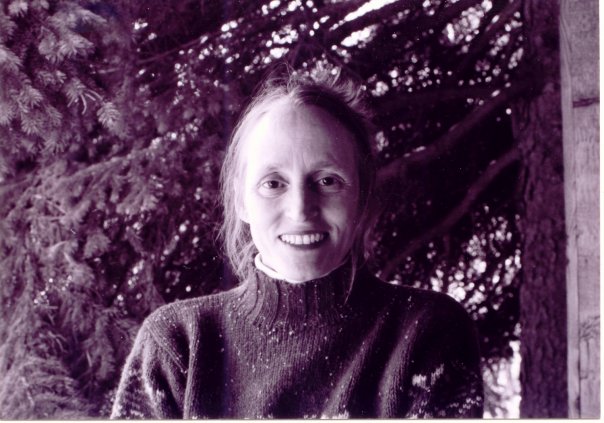
Cecelia Ann Condit[2] (born December 15, 1947) is an American video artist. Condit's films are noted for their attempts to subvert traditional mythologies of female representation and psychologies of sexuality and violence.

Key Information

Condit has received awards from the Guggenheim Foundation, American Film Institute, National Endowment for the Arts, Mary L. Nohl Foundation, Wisconsin Arts Council and National Media Award from the Retirement Research Foundation. Her work has been shown internationally in festivals, museums and alternative spaces and is represented in collections including the Museum of Modern Art in NYC and Centre Georges Pompidou Musee National d'Art Moderne, Paris, France. In 2008, Condit had her first solo show exhibition at the CUE Art Foundation in New York.[3]

Early life and education

[edit]

Condit was born in Philadelphia on December 15, 1947. She studied at the Pennsylvania Academy of the Fine Arts and the University of Pennsylvania. She received a BFA in sculpture from the Philadelphia College of Art and a MFA in photography from Tyler School of Art at Temple University.

Career

[edit]

Condit served as professor and director of the graduate program in the Department of Film, Video, Animation, and New Genres at the University of Wisconsin-Milwaukee.[4] Her work received renewed attention in 2015 after her short film Possibly in Michigan was posted to Reddit.[5] Four years later, an audio clip from the same film became a viral hit on TikTok, with over 22,000 iterations created as of July 2019.[6]

Works

[edit]

Beneath The Skin

[edit]

Beneath the Skin is her first work. A short film, it follows a woman's thoughts and musings towards a recent incident in which she discovered that her boyfriend was hiding the body of his ex-girlfriend in his closet.

It is based on a real-life incident that occurred in Condit's life when she dated Ira Einhorn, also known as the Unicorn Killer. Ira had murdered his ex-girlfriend, Holly Maddux, and hidden her corpse in his closet.[7] Condit, who began dating Einhorn, never found Maddux's corpse due to being on medication that hindered her sense of smell.[8]

Videography

[edit]
Year[9] Title
1981 Beneath the Skin[10]
1983 Possibly in Michigan
1987 Not a Jealous Bone
1996 Suburbs of Eden
1990/2008 Oh, Rapunzel
2003 Why Not a Sparrow
2004 All About a Girl
2005 Little Spirits
2008 Annie Lloyd
2015 Pulling Up Roots
2016 Some Dark Place
2017 Pizzly Bear
2019 We Were Hardly More Than Children
2020 I've Been Afraid
2021 AI and I
2024 A Parable of Now
2025 Monster in Me

Condit considers the following films to be part of the "Jill Sands trilogy", which refers to three of her films which star the actress Jill Sands; Beneath the Skin, Possibly in Michigan, and Not a Jealous Bone.[11]

Select Installations

[edit]

Condit has created a number of video installations including:

Personal life

[edit]

Condit has two grown sons, Schuyler Vogel, the chaplain at Carleton College, and Lloyd Vogel, chief executive officer at Garage Grown Gear.

References

[edit]
[edit]
Revisions and contributorsEdit on WikipediaRead on Wikipedia
from Grokipedia
Cecelia Condit (born 1947) is an American video artist and filmmaker whose works since 1981 have portrayed female heroines navigating psychological tensions between beauty and the , innocence and cruelty, and youth and fragility. Trained in and , Condit earned a B.F.A. from the Philadelphia College of Art and an M.F.A. from Tyler School of Art at before transitioning to , with early pieces like Beneath the Skin (1981) establishing her signature style of subversive fairy tales that probe female subjectivity, sexuality, violence, and environmental vulnerability. Notable films such as (1983) exemplify her surreal narratives, which have been screened internationally at institutions including the in New York and the Centre in . Condit served as Professor Emerita in the Department of Film, Video, Animation, and New Genres at the University of Wisconsin-Milwaukee, where she directed the graduate film program for three decades, and has received prestigious recognitions including the 2024 Stan Brakhage Vision Award, fellowships from the Guggenheim Foundation and , and grants from the . Her contributions have expanded the boundaries of personal cinema through psychological archetypes and explorations of trauma, earning acclaim in film festivals and alternative spaces worldwide.

Biography

Early life and education

Cecelia Condit was born in , , in 1947. Condit initially pursued studies in , attending the Pennsylvania Academy of the Fine Arts before earning a B.F.A. in the discipline from the Philadelphia College of Art. She later shifted focus to photography, obtaining an M.F.A. from the Tyler School of Art at . These formative experiences in laid the groundwork for her transition into video and multimedia work in subsequent years.

Personal life and influences

Cecelia Condit has two sons, Lloyd Vogel and Schuyler Vogel, to whom she has extended acknowledgments in her work Annie Lloyd (2008). Lloyd Vogel has collaborated with her by supplying photographs for projects, such as images from an Alaskan backpacking expedition used in her art. She has described navigating the demands of motherhood, marriage, teaching, and artistic production, observing that ensuring her children's well-being during their formative years imposed a sense of responsibility that temporarily diminished the playfulness in her creative process. Condit has lived with since childhood, a condition that restricted her involvement in physical activities and vocational paths, directing her instead toward art as a means to channel profound emotional experiences. Her artistic influences stem significantly from her family environment, where both parents worked as painters and fostered her early interest in creative expression. Personal formative experiences, including an isolated childhood in a wooded area near and instances of , contributed to her thematic preoccupations with identity, vulnerability, and menace. Among peers, figures such as video artist Mary Lucier provided longstanding inspiration and support. Additionally, she has cited the boldness of photographer and the experimental innovations of Nam June Paik's Global Groove (1973) as impactful, alongside reflections on her mother Annie Lloyd's life in pieces like Annie Lloyd. Longstanding collaborations, such as with performer Jill Sands since 1981, further shaped her practice through interpersonal dynamics integrated into her videos.

Artistic Career

Academic and teaching roles

Condit began her academic career as a faculty member at the Cleveland Institute of Art, serving from 1980 to 1987 and becoming the institution's first professor dedicated to teaching . She joined the University of Wisconsin-Milwaukee in 1986 as a professor in the Department of Film, a position she held until her retirement in 2017, after which she was named Professor Emerita in the Department of Film, Video, Animation & New Genres. During this period, which spanned over three decades, she also served as Director of Graduate Studies in Film. In interviews, Condit has described her teaching experience at the University of Wisconsin-Milwaukee as particularly fulfilling, noting the school's supportive environment for film education. Her pedagogical focus emphasized experimental filmmaking techniques, drawing from her own practice in video and .

Artistic style and themes

Cecelia Condit's artistic style employs elliptical narratives framed as "feminist fairy tales," subverting traditional mythologies of female representation through a personal, female perspective on psychological landscapes drawn from contemporary fairy tales, dreams, and poetry. Her videos integrate diverse techniques, including processed video imagery, Super-8 film elements, found footage, original music compositions, and sung dialogue, blending autobiographical references with archetypal motifs alongside influences from popular genres like soap operas and classical forms such as gothic horror. These operatic narratives oscillate between beauty and the , humor and the , innocence and cruelty, often using live action combined with appropriated television images to evoke dark humor and tabloid-like . Central themes in Condit's work center on the dark side of female subjectivity, exploring how violence, basic cold-heartedness, and trauma shape archetypal characters amid disrupted mundane lives. She contrasts everyday settings—such as backyards or deserted housing projects—with bizarre, uncanny intrusions, addressing , , displacement, dynamics, aging, and loss within a social context of sublimated and . Recurring motifs include aging, children's imaginary s, suburban , and the frailty of an environmentally vulnerable , evoking unsettled through meditations on , childhood, uncertain futures, and humanity's place in nature. In recent works, Condit has shifted toward visual poems and multi-channel installations open to multiple interpretations, such as her 2025 three-channel video A Parable of Now, which emphasizes friendships, age, and while maintaining her focus on the eerie undercurrents of . This evolution preserves her core approach of transforming the commonplace into revelations of subconscious dark fantasies.

Major video works

Cecelia Condit's major video works, produced primarily between the and , blend elements of , horror, and domestic to explore female subjectivity, , and societal expectations. These experimental shorts, often under 15 minutes in length, employ non-linear narratives, original music, and stark visuals to juxtapose the mundane with the , subverting traditional myths of . Her debut major work, Beneath the Skin (1981, 12 minutes), recounts a story through the perspective of a on a swing, contrasting the detached horror of a televised report with personal entanglement in real trauma. Drawing from Condit's own brush with an unsolved killing, the video interweaves innocence and macabre imagery—such as rotting flesh and playful swings—to highlight the visceral gap between public spectacle and intimate fear. Possibly in Michigan (1983, 12 minutes) presents an operatic set in Middle American suburbia, where two women are stalked through a by a cannibalistic figure embodying repressed dread; the narrative reverses as victims turn predators, leaving a cryptic Hefty bag. Infused with humor, sexuality, and consumerist motifs, it critiques Freudian undercurrents of desire and violence, gaining widespread online revival in the via platforms like and , amassing millions of views for its uncanny prescience in aesthetics. In Not a Jealous Bone (1987, approximately 10 minutes), an elderly woman discovers a magic symbolizing after her mother's death, sparking a rivalry with a young girl over its powers. Invoking biblical motifs, the piece inverts ageist cultural hierarchies, using fantasy to probe mortality, , and the allure of through layered and stark confrontations. Suburbs of Eden (1996, approximately 20 minutes) depicts a trapped in a disintegrating dynamic, where unfulfilled dreams manifest as surreal domestic horrors amid abandoned Irish housing. Through musical sequences and symbolic decay, it examines gender roles, relational devastation, and the illusion of suburban paradise, portraying a woman's futile struggle against patriarchal constraints.

Installations and exhibitions

Condit's installations typically employ multi-channel video projections to intertwine human narratives with natural landscapes, emphasizing ecological and existential themes. Her work "Within a Stone's Throw," a three-channel examining coastline in Ireland through megalithic sites and human traces, was exhibited at the Nevada Museum of Art from June 29 to October 13, 2013. The piece highlights connections between ancient human presence and enduring terrain, using layered projections to evoke prehistoric rituals and contemporary environmental reflection. In 2017, Condit presented "Tales of a Future Past," a two-channel installation depicting a solitary gathering extinct animal forms as symbols of lost , at the Lynden in , , opening on March 4 and running through at least June 25. This work critiques via anthropomorphic storytelling, integrating elements to blur indoor projection with outdoor . More recent exhibitions include a 2024 show at the Ewing Gallery of Art + Architecture, , Knoxville, from September 3 to October 27, featuring a monumental installation of her latest film alongside rotating single-channel videos from her oeuvre. Earlier retrospectives, such as "Cecelia Condit: 1981 to Present" at the North Dakota Museum of Art from February 17 to April 11, 2010, incorporated installation elements with her video works spanning fairy-tale motifs and female subjectivity. Her 2008 solo exhibition at CUE Art Foundation in New York, from September 6 to October 13, primarily showcased single-channel videos like "Oh, " and "Annie Lloyd" but laid groundwork for her evolving multi-media spatial presentations.

Reception and Impact

Critical reception

Cecelia Condit's video works have been praised for their surreal, grotesque depictions of female experience, blending fairy-tale narratives with explorations of sublimated violence and patriarchal structures. Critic described Condit as "the most serious practitioner of the grotesque in ," highlighting her ability to evoke unease through hallucinatory reveries and bodily transformations. Her films, such as (1983), garnered acclaim in experimental art circles for subverting domestic mundanity into horror-tinged critiques of and romance, with reviewers noting their enduring relevance to cultural anxieties around female predation and self-destruction. Initial reception in the was polarized, with progressive art venues celebrating the feminist overtones—such as revisions of mythic archetypes to empower menacing women—while conservative outlets condemned the works as anti-male . Possibly in Michigan was specifically vilified on Pat Robertson's 700 Club and in right-wing press for its perceived lesbian undertones and subversion of gender norms, reflecting broader tensions in feminist media during the . Despite such backlash, her oeuvre earned recognition for "sweetly gruesome stories of menaced and menacing women," establishing Condit as a key figure in narrative . In recent decades, Condit's reception has expanded through digital rediscovery, particularly with viraling on around 2019, where its plastic-masked and urban legend-like dread appealed to as a "" video, prompting renewed academic interest in its feminist strategies. Critics have since emphasized her influence on horror-inflected , portraying her as an underrated pioneer whose "feminist fairy tales" probe aging, friendship, and nature's dark undercurrents without didacticism. Exhibitions like "Cecelia Condit: Dark Songs" in 1995 further solidified her provocative reputation, with reviews lauding the installations' immersive provocation of viewer discomfort.

Controversies and criticisms

Condit's brief romantic involvement with , the convicted murderer dubbed the "Unicorn Killer," has drawn occasional commentary in biographical accounts of her early career. Einhorn bludgeoned his girlfriend Holly Maddux to death on September 11, 1977, and stored her remains in a trunk in his apartment, where they remained undiscovered for over 18 months. Condit dated Einhorn for approximately one year starting shortly after Maddux's disappearance, visiting his apartment multiple times without detecting the body or suspecting foul play, though she later recalled an intuitive sense of unease that permeated the space. This experience directly inspired her debut video Beneath the Skin (1981), which poetically probes themes of hidden violence, female intuition, and the uncanny beneath everyday surfaces. The association has not resulted in formal accusations against Condit, who was unaware of the crime during the relationship, nor has it sparked significant public backlash; instead, it underscores the real-world undercurrents of menace in her artistic explorations of domestic horror and sublimated threat. Einhorn, an environmental activist who spoke at the first Earth Day in 1970, fled to Europe upon his 1979 arrest, evading capture until 1997, and died in prison in 2020 while serving a life sentence. Condit has not publicly addressed the matter extensively beyond its influence on her work, and no evidence links her to Einhorn's crimes or suggests complicity. Criticisms of Condit's oeuvre remain largely confined to academic and artistic discourse, focusing on interpretive challenges rather than ethical lapses. Some analysts argue that her surreal, grotesque motifs—such as in (1983)—risk reinforcing rather than fully subverting Freudian castration anxieties, despite her intent to dismantle patriarchal mythologies through feminist revisionism. Others note the niche appeal of her videos' dreamlike opacity, which can alienate broader audiences by favoring hallucinatory symbolism over narrative clarity, as evidenced in discussions of her of fairy-tale innocence with tabloid . These points, however, represent scholarly nuance rather than widespread condemnation, with her contributions to generally upheld for innovating representations of female psyche and violence.

Legacy and recent developments

Condit's video works have exerted a lasting influence on experimental and feminist media art, pioneering surrealist explorations of female subjectivity, blending horror, fairy-tale motifs, and domestic unease to interrogate sexuality, violence, and psychological tension. Her 1983 piece exemplifies this legacy, amassing over 14 million views since 2015 and fostering a for its obscure, dreamlike critique of suburban , which has inspired renewed interest in her oeuvre among contemporary artists and audiences. Represented in permanent collections at institutions such as the and the , her contributions expanded the boundaries of personal cinema, as affirmed by her receipt of the 2024 Vision Award, recognizing decades of innovative single-channel video and installations that disrupt conventional narrative forms. In recent years, Condit has continued producing work amid growing institutional recognition. Her latest project, the 2025 three-channel video installation A Parable of Now, addresses environmental fragility through motifs of childhood innocence and vulnerability, marking an evolution toward ecological themes in her practice. Exhibitions have highlighted this trajectory, including a September 3 to October 27, 2024, presentation at the Ewing Gallery of Art + Architecture at the University of Tennessee Knoxville, featuring a monumental installation of her most recent film alongside rotating screenings of earlier shorts. The 2024 Stan Brakhage Vision Award, presented at the 47th Denver Film Festival on November 10, 2024, underscored her enduring impact, with selections drawn from her full career spanning feminist horror to multimedia experiments. As professor emerita at the University of Wisconsin-Milwaukee, Condit relocated to Minnesota, sustaining her influence through lectures and festival appearances, such as her in-person program at the 2023 Athens International Film + Video Festival.

References

Add your contribution
Related Hubs
User Avatar
No comments yet.