


Community hub
Recent from talks
Contribute something
Nothing was collected or created yet.
Chanka
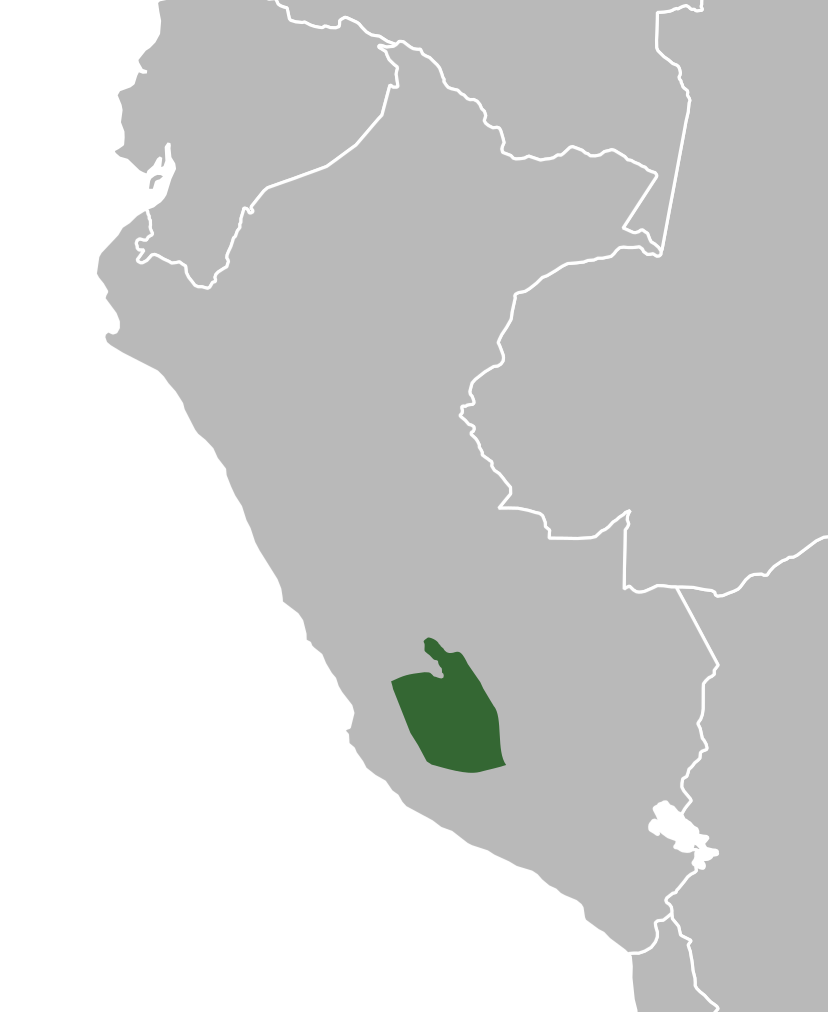
View on WikipediaThe Chanka (or Chanca) were an ethnic group living in Pre-Columbian South America, whose chiefdom was part of the Chanka "confederation":[1] a loose defensive alliance of various chiefdoms, such as the Vilcas, the Huancas, the Chancas, and the Poqras.[2][3]
Key Information


From Catrovirreina, the Chanka migrated to the Andahuailas valley, defeated the local Quechua chiefdoms, and developed an important urban center and a chiefdom described in colonial writings as "rich and warmongering".[4] According to María Rostworowski and Gonzalez Carré, attacks by Chanka groups led to the collapse of the Wari Empire.[5] The Chanka chiefdom was ruled by two chiefs, the "Uscovilca" and the "Ancovilca",[4] and waged war against the Soras[6][4] and the Incas, and were defeated during the Inca-Chanka wars. Following the Incaic victory over the Chanka, the Soras were also subjected to Inca rule.[6] However, the colonial-era ideas of a powerful Chanka entity are often called into question by various archaeologists, historians and anthropologists.[1][2]
Society
[edit]For some archaeologists, the Chanka society is a step backward from the point of view of urban progression, as compared with the Wari culture. Their settlement pattern was the most widespread of small villages (about 100 houses). Other scholars believe, however, that the Chankas had large populations. There are two types of burials: some in mausoleums, and others simply in the ground. There are also burials in caves or rock shelters.
They were not rivals of the Incas because they submitted peacefully to the Quechua of Cusco, losing their influence to their "older brothers," the Parkos or Hanan Chankas, because the Soras and Rucanas were valiant and warriors who fought the Incas many times.
They were characterized as farmers. Their god was a puma deity, they painted their faces and screamed when fighting, and they carried the mummies of their grandparents on their shoulders. The Chankas remained cohesive and managed to develop a major regional lordship, which reached its height in the 13th century.
Organization
[edit]Chanka Andahuaylas were close relatives of the other tribes that inhabited the province of Ayacucho, and as a nation were strengthened after the decline of the Wari expansion. According to Sarmiento de Gamboa, the Chanca territory was divided into three groups, known as Hanan Chanca (Parkos, Ayllus del Ancoyaco), Urin Chanka (Uranmarca, Andahuaylas) and villca or Rukanas (Vilcas). The Chanka nation was composed of the Ancoyaco, Andahuayla, Rucana and Sora tribes.
Regarding the geographic relationship of the native peoples, the Rucanas were divided into three groups: Hanan rucana, Hurin rucana and Andamarca rucana. According to anthropologist Víctor Navarro del Águila, rucana comes from rukak or lukak, which means shippers or mule drivers. The title was given to this province during the times of the Incan empire precisely because they were carriers for the royalty, wearing a distinctive white and red on their heads. The third important province of the Chankas was that of the Soras whose ancient language was Aymara. The Soras were divided into three groups: Hanan soras, Hurin soras and Chalco. They held a snowy mountain called Qarwarasu in great reverence, and were never defeated by the Chankas, but were at constant war with since they were allies with the Incas.
Warfare
[edit]According to Inca sources that told of the Chanka culture, the Hanan Chankas were bloody in battle. When they captured their enemies, they made them prisoners of war. They gave cruel punishments to show the enemy that they should not be messed with, such as scalping, or skinning prisoners alive. These prisoners were hung upside down so the blood concentrated in the upper body as they made small cuts on the front of the toes, and from there they began to tear the skin gradually, while the prisoner screamed and was terrified. Another common way for them to intimidate their enemies was to make cups from the skulls of prisoners, from which they drank the blood of the enemy gaining the contemporary nickname of "Vampires of the Andes".[7]
Economy
[edit]The economy of the Uran Chancas was based primarily on agricultural crops and animals.
They grew various Andean cultivated plants, in different ecological zones, and raised and shepherded llamas, vicuna, alpacas and guanacos, in herds of appreciable size, which were managed from towns with special provisions to control them and feed them while they provided wool and meat.
Culture and ceramics
[edit]Generally the ceramics were flat with a rough surface, and sometimes with a red diluted slip. The decoration was a relief, with the application of buttons or clay figurines, supplemented with incisions or circular stamps. The shapes were open dishes and jugs with narrow necks, that sometimes had rustic faces.
The land where the Chanka culture was located was a strategic place because they dominated the territory and could easily develop defensive actions. The location was close to nearby water sources, and they could take advantage of the resources offered by the land and the presence of several ecological zones in which they were able to use to cultivate plants and rear animals.
Damián de la Bandera said about them:
They all live between the highest and the lowest points in ground cooler than hot, in high places and valleys caused by the rains, where they enjoy both extremes, of the colder land, to graze the domestic cattle, those that have them, and (those that don't) hunt the wild ones, and of the hotter land, to sow seeds, at their time. The villages are no bigger than the water and land will allow and in many of them no more than ten more indians could live for lack of water and ground.[citation needed]
The same Damián tells us that among these people there were three major trades: potters, silversmiths or metal workers, and carpenters. These trades endured until colonial times.
History
[edit]Origin
[edit]According to various myths, its founders were Uscovilca (founder of Lurinchanca) and Ancovilca (founder of Hananmarca or Hanan Chanka).[8] The error incurred until now was that the ethnic group of Hanan Chanka was confused with the Urin Chanka and that the latter joined the Pacor Pocoras in a non-existent entity called the "pocra-chancas confederation."
The Hanan Chankas were an ethnic group that inhabited the region of Ayacucho, Huancavelica, Junín, and part of Apurímac in Peru. They are said to have originated from the lake named Chuqlluqucha and united the colonial "Choclopus" (or "chocorvos") and Urququcha, both in the Huancavelica Department. Their initial territory was located between the Ancoyaco (current Mantaro), Pampas, and Pachachaca Rivers, tributaries of the Apurímac River. They expanded to the "Ancoyaco ayllukuna" area with its headquarters in Paucar and used the Urin Chankas of Andahuaylas as a secondary base. They developed an autonomous culture and spoke a language called puquina. Their capital was Waman Karpa ("falcon's tent"), on the shore of Lake Anori, 35 km from Andahuaylas, on the banks of the Pampas River.
The leader who began the expansion of the Chankas was called Uscovilca, and his mummy was preserved with veneration in Waman Karpa until the time of the Incas.
Apogee
[edit]The height of the Chanka's expansion occurred between the years 1200 and 1438. After 1430, the Chanka nation attacked the Inca Empire in Cusco. Prince Yupanqui, who had previously been sent to a llama ranch, defeated the Chanka.[9] After the war, the Sapa Inca assumed the name Pachacuti after the tough battle, and the city of Cusco ran the risk of being captured by the Apurímac people. According to some Incan traditions, the Urin Chankas had been conquered much earlier, around the year 1230, when the Sapan Incan Mayta Cápac and his army crossed the Apurímac River, formerly called Qhapaq Mayu ("main river"), by means of a huge hanging bridge. The Incan Garcilaso de la Vega (1605) gives Cápac Yupanqui a similar feat one hundred years later. However, the most solidly researched version establishes their defeat and subsequent submission at the hands of the army commanded by the Incan Pachacuti.
Chanka-Inca war
[edit]It was in 1438 that the alleged leader Hanan Chanka "Anccu Hualloc" mythified himself so that the people or the "ayllus of Ancoyaco" (also called Anco Huayllu or Hancoallo) gathered 40,000 warriors and launched the conquest of Cusco. They advanced victoriously to encircle the city. The Incan Viracocha and many of the nobility fled in the direction of Qullasuyu, and were in despair until a prince, Cusi Yupanqui (who later proclaimed himself Pachacutec), bravely led the resistance. While able to gather allies, he offered peace to the besieged, but they rejected the offer. A bloody battle was fought in Yawarpampa ("field of blood"), won by Cusco with the timely arrival of friendly forces. The Indian chronicler, Joan de Santa Cruz Pachacuti Yampa Salcamaygua (1613). He states that the battle would have been lost if the stone soldiers ("pururaucas") had not been brought miraculously to life—stones that were dressed as soldiers to fool the Chankas.
According to the victors, 22,000 Chancas and 8,000 Cusqueños (natives of Cusco) died at Yawarpampa. Anccu Hualloc was injured and captured. The Hanan Chankas were chased as far as Antahualla (Apurímac).
The leader who defended Cusco took up sovereign power and founded a new dynasty. According to the Commentarios Reales de los Incas by Garcilaso de la Vega, the Incan fugitive was the old Yawar Waqaq, and the prince that took up the defence of Cusco was his son, Hatun Topa, afterwards called Viracocha Inca. According to Juan de Betanzos (1551), the fugitive was the old Viracocha and not only him but his successor (and the brother of Cusi Yupanqui), Inca Urco, escaped responsibility, the prince Cusi Yapanqui being their saviour.
According to the victors, the Incan was the fugitive elder Yawar Waqaq and the prince who assumed the defense of Cuzco was his son Topa Hatun, named after Viracocha Inca. This is the most accepted version, which coincides with the chronicle of Miguel Cabello de Balboa (1583) and the most refined chronologies.
Other chroniclers, among them Bernabé Cobo (1653), mention a second attack by the Chankas shortly after, also headed by Anccu Huayco against Pachacútec. The imprisoned leader not only managed to escape, but gathered 8,000 Chanka fighters in Challcumarca and in Suramarca and resumed the war, this time to regain the lost territories. Being inferior in force, he chose to escape to the jungle "to a region of large ponds or lakes," following the course of the Urubamba river.
Spanish Conquest of the Inca Empire
[edit]As the Inca Civil War between Huáscar and Atahuallpa, the sons of Huayna Cápac were tearing down the Inca Empire, the Chankas, who had been enslaved under the mitma for over a hundred years and were already in the verge of extinction, heard stories coming from the north about “mysterious men with pale faces wearing armors and riding beasts (horses)”. Taking advantage of the Civil War, a bunch of Chankas managed to escape to meet these mysterious men who ended up being Spanish Conquistadores. During the meeting, the Spanish were already joined by many Indian auxiliaries: the Cañaris (who have fought on Huáscar's side against Atahualpa), Huancas and Chachapoyas. Chankas using Felipillo as interpreter, proposed them a deal to fight together against the Incas who had stolen their lands, killed their people and enslaving the remaining survivors. The Spaniards seemed interested at first, but after hearing from their Native allies about the savage nature of the Chankas in battle, they immediately refused, since those actions (like drinking the blood of their enemies and keeping their heads as trophies) were "against their Christian values". The Indian auxiliaries refused to cooperate with the Spaniards if they made a deal with the Chankas. But Francisco Pizarro, the leader of the Spanish expedition, seeing potential in them, was the only one who trusted the Chankas and convinced his men and the Indian auxiliaries that they only needed “proper leadership” since their fighting skills were superior to the Huancas, Cañaris and Chachapoyas and their cooperation would guarantee their victory.
Viceroyalty of Peru
[edit] |
With the Spanish victory, as part of the deal, Chankas recovered their freedom and their lands. Most of them were baptized and started learning Spanish. As part of the bond between both cultures, they mixed with Spanish men and women having mestizo children. However, despite playing a crucial part in the fight against the Incas, only the Huancas were recognized by the King Philip II for their help in the Conquest of Peru. Furthermore, while the Chankas were nominally protected by Native Peruvians by the Leyes de las Indias, numerous abuses from Spanish priests went unpunished. These include the crimes of Father Juan Bautista de Albadán, who during a period of ten years (1601–11), sadistically tortured the people of Pampachiri while amassing a personal fortune. Albadán manipulated the juridical and political systems in his favour so that he could avoid any prosecution for his crimes, which included murder, torture and rape. In one incident, it was reported that an artist, Don Juan Uacrau, was stripped naked and tied with leather thongs upside down on the cross. Albadán beat him for hours and burnt his whole body with tallow candles. Uacrau was tortured because he either protested the sexual assault of his daughters, or the wider behaviour of Albadán. The effects of Albadán's reign – a “decade of madness” - would last well into the 18th Century.[10]
Remains
[edit]Their most impressive remains are "Inca Raqay,"[11] which have been studied by Martha Anders.[12] The ruins are on the banks of the Mantaro River, north of Huanta where the Urin Chankas built the outstanding Suntur fort, the metalworking centre of Curamba and the Inti Watana in Uranmarca, strategically located in the most beautiful parts of the Andahuaylas Province. In every district there is also a large variety of remains which demonstrate the legacy of the Wari Pacor, Chanka and Inka cultures.
Although there is information about their military history and warlords, the archaeological remains identified as Chankas do not allow for an exact profile of the life and customs of these people.
Waman Karpa (near Andahuaylas), as well as Carahuasi and Rumihuasi (near Abancay), still require further investigation.
Many Chanka ceramics and instruments are part of expositions in museums located in Apurímac, Ayacucho and Lamas, where the Chanka descendants also live.
References
[edit]- ^ a b Pomacanchari, Cirilo Vivanco; Meddens, Franck (2005). "The Chanca confederation; political myth and archeological reality" (PDF). Xama. 15 (18): 73–99.
- ^ a b Huertas Vallejos, Lorenzo (1990). "Los Chancas: Proceso disturbativo en los Andes". Historia y cultura (20): 25–31.
- ^ Pomacanchari, Cirilo Vivanco; Meddens, Franck (2005). "The Chanca confederation; political myth and archeological reality" (PDF). Xama. 15 (18): 84.
- ^ a b c Huertas Vallejos, Lorenzo (1990). "Los Chancas: Proceso disturbativo en los Andes". Historia y cultura (20): 33–36.
- ^ Rostworowski, María (1999). History of the Inca Realm. Translated by B. Iceland, Harry. Cambridge University Press. pp. 34–35.
- ^ a b Pomacanchari, Cirilo Vivanco; Meddens, Franck (2005). "The Chanca confederation; political myth and archeological reality" (PDF). Xama. 15 (18): 76–77.
- ^ The Bioarchaeology of Societal Collapse and Regeneration in Ancient Peru, page 59
- ^ quoted Purizaga Vega, Medardo (1967). "EL curacazgo chapter Pocra". The Inca Empire and Pocras. p. 34.
Betanzoz speaks of Uscovilca, who for most of the chroniclers was the founder of the nation in its bias Chanca Hanan.
- ^ Packel, John. "Peruvian Americans." Every Culture. (retrieved 2 May 2011)
- ^ "Discovering the Chanka | University of St Andrews news".
- ^ "Inka Rakay, Cochabamba". boliviatravelsite.com.
- ^ "Martha B. Anders". Archived from the original on 2010-06-03. Retrieved 2010-10-30.
External links
[edit]- [1] Province de Andahuaylas, Perú (Spanish)
- Discovering the Chanka | University of St Andrews news Archived 2021-04-22 at the Wayback Machine Discovering the Chanka
Chanka
View on GrokipediaSociety
Political Organization
The Chanka political organization centered on a loose confederation of ayllus divided into dual moieties, Hanan (upper) and Hurin (lower), which structured governance through balanced leadership rather than rigid centralization. This moiety system, evidenced in colonial records reflecting pre-Inca traditions, grouped approximately ten ayllus under higher-status Hanan leaders and subordinate Hurin figures, enabling coordinated decision-making for territorial control in the Andahuaylas Valley and surrounding highlands.[4] Archaeological data from hilltop sites like Sondor reveal settlement hierarchies with defensive features, supporting localized elite oversight without indicators of expansive state bureaucracy.[2] Dual chieftaincy defined apex leadership, with Uscovilca embodying the Hanan moiety's military orientation and Ancovilca the Hurin moiety's administrative and ritual roles, as preserved in ethnohistorical accounts from Spanish chroniclers like Cieza de León and Betanzos. These sources, while biased toward Inca narratives that minimized rival polities' sophistication, align with indigenous oral traditions linking the chiefs to mythic founders who unified disparate communities for expansion. Such division mitigated internal conflicts by distributing power, facilitating mobilization for resource competition in a fragmented Late Intermediate Period landscape.[2][6] Territorial administration relied on tribute systems extracting labor and goods from peripheral sub-groups to sustain core valley elites, inferred from post-conquest patterns and analogous Andean chiefdoms where highland pastoral-agricultural divides drove allegiance. Unlike the Inca Empire's mit'a corvée or Wari's administrative outposts, Chanka control emphasized defensive alliances over conquest integration, as hillfort distributions suggest opportunistic rather than systematic oversight. Empirical settlement surveys indicate this structure prioritized strategic resource monopolies, such as puna grazing lands, over egalitarian ideals often projected onto pre-state societies.[4][2]Economy and Subsistence
The Chanka economy during the Late Intermediate Period (AD 1000–1400) centered on a mixed agro-pastoral system, integrating camelid herding with cultivation suited to highland environments in the Andahuaylas region.[2] Pastoralism intensified, with llamas and alpacas providing meat, wool for textiles, and transport capabilities; archaeological evidence includes camelid skeletal remains and corrals associated with 67% of 159 surveyed sites in puna zones above 3,700 masl, reflecting adaptation to elevated, arid landscapes post-Wari collapse around AD 1000.[4] This shift to higher-altitude settlements in suni-puna ecotones prioritized risk reduction amid climate-driven drought, reducing vulnerability compared to lowland-dependent farming.[7] Agriculture emphasized hardy tubers like potatoes and oca, alongside quinoa, with supplementary maize in accessible valleys; processing tools such as manos and metates from sites like Sondor confirm staple preparation, while dietary isotopes indicate consistent but not dominant maize use (around 33% pre-Chanka, declining thereafter).[2] Vertical ecological exploitation allowed communities to span altitudinal zones for complementary resources—farming in lower suni areas (3,500–3,800 masl) and herding in upper puna—fostering self-sufficiency over broad commerce, as evidenced by localized ceramic production and minimal imported goods beyond occasional Wari-influenced styles.[8] Terraced fields, inherited from earlier horizons, supported potato and quinoa yields but remained subsistence-scale, without widespread intensification markers like expansive irrigation. Settlement aggregation into defensible hilltop sites (1–5+ hectares), driven by aridity and demographic clustering, implies resource strains from rising population densities, prompting efficient herding and land optimization that underpinned expansionist pressures rather than peaceful exchange.[4] Surplus appears limited, tied to brief stability in the later period, with elite access inferred from larger sites but lacking direct storage or tribute artifacts; overall, the system prioritized resilience in marginal highlands, constraining trade to local obsidian or salt exchanges unsupported by abundant nonlocal finds.[2][8]Warfare and Military Practices
The Chanka maintained a highly militarized society during the Late Intermediate Period (ca. AD 1000–1400), where warfare served as a mechanism for territorial expansion and resource acquisition in the rugged Andahuaylas highlands of southern Peru. A prominent warrior class, potentially identified as the Wakcha through distinct cranial modification styles and elevated rates of interpersonal violence, underscored the centrality of martial prowess to social status and cohesion. Primary weapons included slings for hurling sling stones, wooden clubs (macanas), maces, lances, axes, and shields, as attested by ethnohistoric accounts and archaeological recoveries of mace heads and donut-shaped sling projectiles from Chanka sites.[2][9] Military organization emphasized large-scale mobilization, with ethnohistoric sources describing Chanka leaders like Uscovilca dividing forces into multiple units—such as three groups—for coordinated assaults, reflecting strategic adaptation to Andean terrain and enemy dispositions. While direct evidence of mass conscription is limited, the scale of Chanka armies challenging Inca forces implies broad societal involvement in recruitment, driven by incentives in a resource-scarce environment prone to intergroup competition over arable land and water. Hilltop fortifications, known as pukaras, proliferated across ridges at elevations of 3200–4000 meters above sea level, featuring defensive walls, ditches, cliffs, lookouts, and stone sangars to exploit natural defensibility against raids and invasions. These structures, numbering dozens in the Andahuaylas region, facilitated both offensive launches and prolonged sieges, evidencing chronic conflict with neighbors including Quechua groups and possibly the Soras to the south.[2][9] Skeletal evidence from Chanka burials reveals the raw brutality of these engagements, with cranial trauma rates reaching 56.7% in some post-Wari assemblages, including 40% anterior injuries consistent with interpersonal combat using clubs and maces at close quarters. Bioarchaeological analyses indicate both internal factional strife among Chanka subgroups and external raids, fostering a cycle of violence that prioritized dominance through lethal force over negotiated truces. Such empirical patterns of trauma, corroborated by weapon artifacts, counter romanticized views of Andean warfare, highlighting instead its role in perpetuating instability and demographic pressures amid ecological constraints.[2][9]Culture, Religion, and Material Culture
The Chanka maintained a polytheistic religious framework typical of Late Intermediate Period Andean societies, emphasizing ancestor veneration alongside reverence for natural forces such as Pachamama (Mother Earth) and apus (mountain deities). Archaeological evidence from burial contexts, including machays (caves) and chullpas (above-ground tombs), reveals practices of mummification and interment beneath household floors, where malquis—mummified ancestors—served as focal points for rituals involving offerings like miniature ceramic vessels and camelid conopas (figurines).[2][4] Sacred huacas, encompassing monoliths, springs, and landscape features, functioned as shrines for propitiatory rites, with post-conquest accounts noting Chanka consultation of oracular huacas for decision-making, though direct pre-Inca evidence remains inferential from site orientations toward lakes like Pacucha, tied to origin myths of progenitors emerging from waters.[2] Social customs reflected dualistic organization, with moieties (hanan, or upper, and hurin, or lower) structuring communities into ayllus, as evidenced by ethnohistoric correlations and cranial modification patterns (e.g., 76% prevalence) denoting kin categories potentially aligned with these divisions.[4] Festivals such as Sondor Raymi involved llama sacrifices to honor ancestors, underscoring reciprocity between living kin and spiritual entities.[2] Material culture, reconstructed from Andahuaylas sites like Sondor and Achanchi (ca. 1000–1400 CE), featured rustic, utilitarian ceramics with diagnostic traits such as coffee-bean eyes and brittle paste, often bearing Wari-influenced motifs adapted locally; iconography included puma skulls and camelid forms, suggesting totemic associations with predatory power rather than solely agrarian themes.[2][4] Textiles, inferred from spindle whorls and copper needles in burials, utilized camelid wool for regional weaving traditions, while metallurgy centered on copper tools and mining evidence, with limited gold or silver artifacts indicating practical rather than sumptuary focus.[2] These artifacts, deposited as grave goods alongside puma and camelid remains, highlight a worldview integrating martial symbolism—evident in trauma rates on crania (up to 56.7%)—with ancestral and territorial sanctity.[2][4]History
Origins and Early Development
The Chanka emerged in the Andahuaylas region of south-central Peru during the Late Intermediate Period, circa 1000–1200 CE, in the aftermath of the Wari Empire's collapse around 1000 CE. Archaeological surveys reveal continuity from local pre-Wari cultures, such as the Qasawirka phase, with no evidence of population replacement or abrupt stylistic shifts indicative of large-scale migrations. Instead, post-Wari decentralization prompted the aggregation of dispersed agro-pastoralist groups into defensible hilltop settlements at elevations of 3200–4000 meters above sea level, adapting to increased regional conflict and environmental variability through fortified architecture and intensified camelid herding. Key early sites include Achanchi (10 hectares, radiocarbon dated to 1113 ± 32 CE) and Usma (15 hectares, 1123 ± 30 CE), featuring circular stone houses, perimeter walls, and storage facilities that supported small-scale chiefdoms.[2][4] Colonial-era chronicles, drawing on Inca and oral traditions, describe Chanka origins as migrants from distant areas like the altiplano, coastal zones, or Lake Choclococha, often attributing unification to legendary figures such as Uscovilca or Ancovilca. These accounts, however, constitute mytho-history unsupported by empirical data; excavations show gradual cultural development without foreign artifact influxes or settlement discontinuities. Pottery sequences exemplify this local trajectory: Chanka wares, rustic and coil-built with utilitarian forms and occasional coffee-bean-eyed figurines, evolved from Wari-influenced polychromes but lacked elite imports, signaling decentralized production amid fragmented polities rather than heroic conquests or external impositions. Demographic growth, marked by a rise from approximately 31.2 to 50.5 sites per century post-1000 CE, likely stemmed from climatic recovery following Wari-era droughts, enabling social coalescence into ayllus—kin-based units divided into complementary Hanan (upper) and Hurin (lower) moieties, each comprising five subgroups like Guasco or Tomay Guaracas.[2][4][2] Linguistic affiliations place the Chanka among early Quechua speakers, with their dialect centered in Andahuaylas suggesting the valley as a formative hub amid highland Aymara-Quechua interactions, though direct pre-1400 inscriptions or toponyms remain elusive. Bioarchaeological indicators, including high rates of cranial modification (up to 76%) and interpersonal violence (49% trauma incidence in early Chanka remains), further attest to emergent group identities and defensive imperatives driving chiefdom formation from autonomous communities, prioritizing empirical settlement and subsistence patterns over unsubstantiated migration narratives.[4][2]Expansion and Apogee
During the Late Intermediate Period (ca. AD 1000–1400), the Chanka confederation achieved its territorial apogee through systematic conquests, extending control from the Andahuaylas heartland in Apurímac into adjacent Ayacucho valleys and beyond Huancavelica by approximately 1400 CE. Archaeological surveys document this expansion via a marked increase in settlement density and the construction of extensive pukará networks—hilltop fortifications that secured strategic elevations overlooking fertile valleys for defense and resource oversight.[10][8] These structures, often exceeding 5 hectares in fortified complexes, facilitated tribute extraction from subjugated polities, channeling agricultural surpluses and labor to sustain Chanka military campaigns. The confederation's structure, led by dual chiefs Uscovilca and Ancovilca, unified diverse highland groups into a pragmatic alliance geared toward conquest rather than ideological homogeneity, though hierarchical exploitation is evident in uneven settlement investments and resource control. Site distributions reveal a shift toward higher-elevation puna and suni zones, with mid-valley hamlets (typically 0–5 ha) supporting estimated populations of several thousand per major valley cluster, enabling army mobilization through intensified agriculture.[4][11] Terracing and optimized land use enhanced productivity, correlating with soil fertility prioritization amid population pressures, which in turn fueled offensive capabilities without relying on centralized irrigation megaprojects.[8] Ongoing rivalries with neighbors, including the Lucanas to the south and Vilcas subgroups within or adjacent to Chanka territories, drove defensive consolidation and further expansion, as pukará proliferation reflects heightened inter-polity conflict rather than unopposed dominance. This era's achievements in confederative governance balanced territorial pragmatism against internal strains from tribute demands, with no evidence of urban centers rivaling contemporaries in scale or permanence.[12][13]Chanka-Inca War
The Chanka confederation, seeking to expand its influence in the southern Andes, launched a major invasion against the Cusco kingdom around 1438 under leaders Astoy Huaraca and Tomay Huaraca, brothers representing the upper and lower moieties of Chanka society.[14] Advancing from their Andahuaylas heartland, the Chanka forces reached the outskirts of Cusco, besieging the city and exploiting internal Inca divisions. Viracocha Inca, the ruling sovereign, abandoned the capital and fled to safety, leaving his son Cusi Yupanqui—later known as Pachacuti—to rally defenders from loyal ayllus and repel the attackers in a pitched battle likely fought at sites such as Yahuarpampa.[16][2] Pachacuti's forces turned the tide through tactical maneuvers and sheer resolve, inflicting heavy casualties on the Chankas and capturing their leaders, who were subsequently executed. Inca chronicles, such as those compiled by Spanish chroniclers drawing from oral traditions, attribute the victory to divine aid, including the animation of sacred stones (pururaucas) into warriors summoned from heaven—a motif interpreted by scholars as morale-boosting propaganda to legitimize Pachacuti's seizure of power and divine kingship.[17][2] The conflict's brutality is evident in accounts of mass slaughter and the potential for thousands of combatants on both sides, reflecting the Chankas' reputation as formidable warriors equipped with slings, clubs, and bronze weapons, matched against Inca stone-throwing phalanxes and fortifications. The war's historicity relies heavily on Inca-centric narratives recorded decades or centuries later, which exaggerate Chanka numerical superiority (sometimes claimed at 300,000 warriors) and Inca underdog status to glorify Pachacuti's transformative role, while downplaying evidence of military parity between the expansionist powers.[2] Archaeological data from Cusco-area sites reveal heightened interpersonal violence during this transitional period, including perimortem cranial fractures and projectile wounds in skeletal remains, consistent with large-scale clashes but not uniquely attributable to the Chanka invasion.[18] Chanka decentralization, inferred from settlement patterns lacking centralized fortifications, further challenges unified assault portrayals, suggesting the event's scale may blend historical kernel with mythic embellishment to justify Inca hegemony.[19]Defeat, Integration, and Aftermath
Following their defeat at the Battle of Yahuarpampa around 1438, the Chanka forces suffered heavy losses, with Inca armies under Pachacuti subsequently overrunning their core territories in the Andahuaylas region of modern Apurímac, leading to partial annihilation of organized resistance.[19] Surviving Chanka groups dispersed into remote Andean highlands and Amazonian fringes, where oral traditions preserved accounts of flight and enduring autonomy, as documented in ethnohistorical studies among descendant communities. Toponyms such as those referencing Chanka subgroups (e.g., Hanan and Hurin divisions) in peripheral areas indicate this dispersal, supported by archaeological continuity in material culture like ceramic styles.[4] The Incas employed mitimaq resettlement policies to integrate Chanka populations, forcibly relocating thousands of families as colonists to frontier zones like the Collao and northern highlands, diluting potential rebellion through geographic separation and economic dependence on state agriculture.[19] This strategy, involving an estimated 20-30% of conquered subjects across the empire, aimed at demographic control, with Chanka laborers contributing to infrastructure projects under the mit'a corvée system, which demanded rotational service from adult males.[4] Intermarriage with Inca elites further bound elite Chanka lineages to Cusco's administration, incorporating select warriors into imperial armies while suppressing autonomous chiefdoms. Despite administrative incorporation, Chanka resentment persisted, evidenced by sporadic unrest in resettled communities and oral histories of cultural resistance, which prioritized warrior traditions over full assimilation.[20] Inca records, filtered through state propaganda, highlight the absorption of Chanka military prowess as bolstering expansion—such as in campaigns against the Chimu—but overlook underlying tensions from land expropriation and ritual impositions that eroded local ayllus.[21] Demographic analyses suggest a post-war population decline of up to 40% in the heartland due to warfare and relocation, yet resilient subgroups maintained distinct identities through endogamous practices and hidden rituals, bridging into later periods without total erasure.[4]Role in Spanish Conquest and Viceroyalty Period
During the Spanish conquest of Peru in the 1530s, Chanka groups in the Andahuaylas region initially collaborated with Francisco Pizarro's forces, motivated by longstanding resentment toward Inca domination following their defeat around 1440. This alliance enabled Chankas to leverage Spanish military support against neo-Inca remnants, particularly to reclaim control over coca fields in Mayomarca contested by Manco Inca's followers during the 1537 siege of Cuzco.[22] Such cooperation reflected strategic agency amid the empire's collapse, as Chanka leaders exploited the invaders' arrival to settle territorial grudges rather than passive submission.[22] In the immediate aftermath, Chanka communities were incorporated into the encomienda system, with Andahuaylas repartimientos assigned to Spanish grantees such as Diego Maldonado, who extracted labor and tribute, often through coercion that neglected indigenous oversight obligations.[22] By the 1550s, abuses prompted localized resistance, including a 1554 revolt led by Francisco Hernández Girón south of Andahuaylas, where indigenous forces challenged encomendero demands amid broader civil strife between conquistador factions.[21] Further discontent manifested in the 1560s through kuraka refusals of corvée labor and participation in the Taki Onqoy millenarian movement, which rejected Spanish alliances in favor of Andean spiritual revival and unified opposition to colonial exploitation.[22] These actions underscored Chanka agency against encomienda violence, countering narratives of uniform victimhood with evidence of proactive defiance.[22] Under the Viceroyalty of Peru established in 1542, Chanka populations underwent forced resettlement into reducciones orchestrated by Viceroy Francisco de Toledo from 1569 onward, concentrating dispersed ayllus into nucleated villages for taxation and Christianization, with approximately 1.4 million Andeans affected empire-wide by 1575.[23] Tribute demands shifted economies toward Spanish crops like wheat alongside traditional ones, while mita labor drafts funneled survivors to mines such as Potosí, contributing to demographic collapse from diseases and overwork—Andahuaylas populations plummeted by over 90% between 1570 and 1650 per colonial censuses.[2] Yet ethnic markers endured, with communities identified as "Chankas of the Valley" or "Chankas of the Puna" in late 17th-century records, enabling adaptive survival through localized revolts against priestly and administrative abuses into the mid-18th century.[21] This persistence highlights causal resilience amid colonial impositions, as Chanka descendants navigated integration without total erasure..html)Archaeological Evidence and Remains
Excavations in the Andahuaylas region of Apurímac, Peru, have identified Sondor as a primary ceremonial center associated with the Chanka, featuring ushnu platforms integrated into the landscape and dense scatters of Chanka-affiliated ceramics alongside remnants of circular buildings and terraces.[21] Hilltop settlements, including pukara-style fortifications, reveal defensive architecture such as enclosures and vantage points, yielding artifacts like pottery and stone tools indicative of Late Intermediate Period occupation from circa 1200 to 1500 CE.[10] These sites demonstrate sophisticated land use adapted to rugged terrain, with evidence of agricultural terraces supporting subsistence amid frequent conflict.[10] Bioarchaeological analyses of skeletal remains from Chanka ossuaries show prevalent artificial cranial modification, particularly annular types, correlating with elevated frequencies of blunt force trauma—up to twice as high in modified individuals compared to unmodified ones—suggesting targeted violence against a distinct social group, possibly warriors.[24] [25] Trauma patterns, including depressed fractures from high-impact weapons, align with interpersonal and intergroup warfare, while stable isotope data indicate local mobility patterns consistent with regional conflict dynamics around AD 1160–1260.[26] Interpretive challenges persist in attributing features at sites like Sondor, where some ushnu and architectural elements have been debated as Inca impositions rather than indigenous Chanka constructions; however, bioarchaeological evidence, including pre-Inca trauma profiles and ceramic continuity, supports primary Chanka development with later imperial overlays.[27] Modern surveys emphasize the need for expanded excavations to address preservation biases from highland erosion and looting, though comprehensive regional mapping remains limited without widespread remote sensing integration.[21]References
- https://en.[wikisource](/page/Wikisource).org/wiki/The_Incas_of_Peru/Chapter_7