Hubbry Logo
Charles Chaplin Sr.Charles Chaplin Sr.Main
Open search
Charles Chaplin Sr.
Community hub
Charles Chaplin Sr.
logo
8 pages, 0 posts
0 subscribers
Be the first to start a discussion here.
Charles Chaplin Sr.
Charles Chaplin Sr.
from Wikipedia

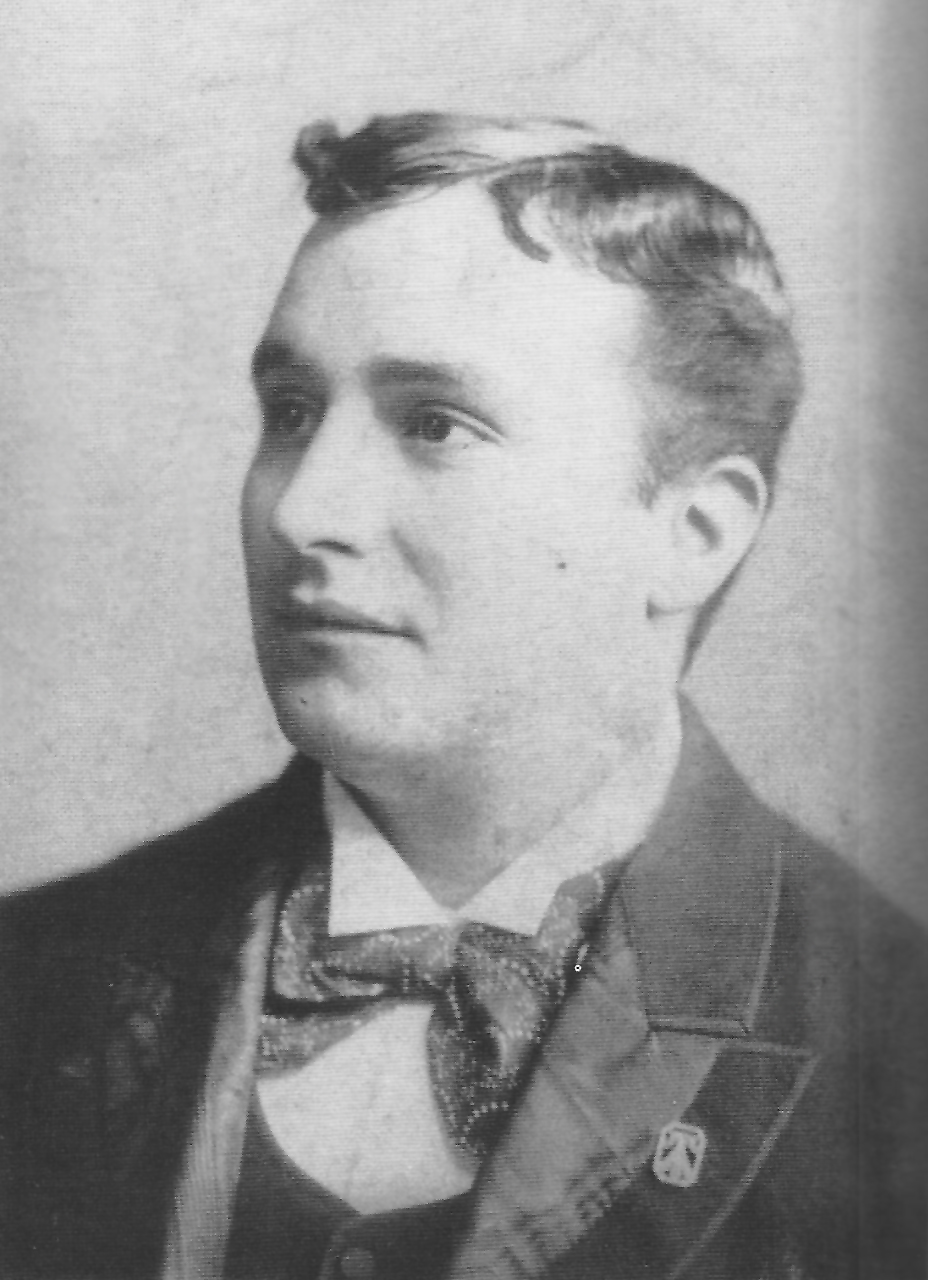
Charles Spencer Chaplin Sr. (18 March 1863 – 9 May 1901) was an English music hall entertainer. He achieved considerable success in the 1890s, and was the father of the actor and filmmaker Sir Charlie Chaplin.

Key Information

Early years

[edit]

Chaplin was born on 18 March 1863 in Marylebone, London.[1] He was the third child of Spencer Chaplin and Ellen Elizabeth Smith; his siblings were Spencer William Tunstle, Ellen Kate, Blanche, Albert Frederick and Harry.[2] Chaplin's father was a butcher, and he had a working-class upbringing.[3] Little is known about Chaplin's early life,[1] although the 1871 and 1881 censuses show his parents and family were living in Rillington Place in Notting Hill, the street in which the murderer John Christie later lived.[4]

In June 1885, aged 22, he married 19-year-old Hannah Hill,[5] who had been his "sweetheart" three years earlier when they starred in the same play.[6] Hannah had a 3-month-old son, Sydney John, who was given Chaplin's surname. On 16 April 1889, Chaplin's biological son and namesake, Charles Spencer Jr. (known as Charlie), was born.[7] Chaplin and Hannah separated by 1891, and remained legally married until his death.[8]

Music hall

[edit]
Sheet music cover for one of Chaplin's popular songs

Although there was no history of performing in his family, Chaplin was drawn to the music hall industry, which was thriving in 1880s South London.[9] He first worked as a mimic, making his debut at the Poly Variety Theatre on 10 June 1887, but soon changed his act to that of a "dramatic and descriptive singer". He sang songs about the troubles of everyday life, such as nagging wives, mothers-in-law, and crying babies, and these were popular with audiences.[10] By 1890, he was getting regular engagements.[11] The music publishers Francis, Day and Hunter published three of his songs in 1890: 'As the Church Bells Chime', 'Everyday Life', and 'Eh, Boys?'.[11]

Chaplin toured America in the summer of 1890, including extended engagements at the Union Square Theatre in New York City.[12] Although he never reached the height of stars like Dan Leno and Herbert Campbell, Chaplin was successful enough to have his name and portrait printed on the cover of sheet music for songs with which he was associated.[13] One of the songs he popularised was 'The Girl Was Young and Pretty'.[14]

Chaplin's peak years were from 1890 to 1896[13] but, by 1897, he was still gaining work in the provinces.[15] In 1898, he was still enough of a draw to share top-billing at the New Empire Palace Theatre in Leicester.[7] His engagements began to decrease around this time, and his last known performance was at the Granville Theatre in Walham Green in September 1900.[16]

Relationship with Charlie Chaplin

[edit]

Chaplin had no contact with his sons after he separated from Hannah, and did not provide financial support.[17] Charlie Chaplin, writing in his memoirs 70 years later, recalled that he "was hardly aware of a father".[18] This was despite the fact that they lived close to each other in Kennington.[19] In 1896, Charlie and Sydney were admitted to a workhouse. Chaplin was contacted by the official authorities, to whom he stated that he would be willing to care for Charlie, but not Sydney. The Board of Guardians decided it was best to keep the brothers together, but ruled that Chaplin was legally responsible for both boys and ordered that he pay 15 shillings a week towards their joint maintenance.[20] He did not pay any of this sum, so after a year Southwark Council issued an arrest warrant on Chaplin for neglecting to maintain his children.[15] The arrest was avoided when Chaplin's brother Spencer provided the back payments.[21]

Charlie and Sydney were re-admitted to a workhouse in July 1898, at which time the Board of Guardians tried to locate their father. They tracked him down in September, and the boys were discharged and put into Chaplin's care.[22] Charlie was nine years old, and only remembered seeing his father twice before: once on the stage, and once when he passed him on the street in Kennington.[23] Chaplin was living with a woman named Louise and their four-year-old son.[24] He was a heavy alcoholic by this time, and was rarely at home.[25] Louise was cruel to the children, and after shutting them out of the house one night they received a visit from the National Society for the Prevention of Cruelty to Children.[26] The boys left Chaplin's care after two months, when their mother was released from a mental asylum. From this point onwards, Chaplin occasionally gave financial support to his sons.[27]

Chaplin was responsible for introducing Charlie to the entertainment industry when, in 1899, he got him a role in The Eight Lancashire Lads clog dancing troupe, which was run by a friend.[28] Charlie later recalled seeing his father in a pub a few weeks before his death; Chaplin was happy to see the boy, and warmly hugged and kissed him for the only time in his life.[29]

Death

[edit]

The nature of music hall performing, whereby stars were expected to encourage customers to purchase drinks, led many in the industry to become alcoholics.[12] Chaplin was one of these, and it was his heavy drinking that gradually brought an end to his career.[30] By 1901, he was suffering from cirrhosis of the liver and dropsy. He was taken to St. Thomas's Hospital in Lambeth on 29 April, and died on 9 May 1901. He was 38 years old.[16] Chaplin was penniless at the time of his death, and he nearly had a pauper's funeral until his younger brother Albert stepped in to pay the burial costs. The funeral took place at Lambeth Cemetery in Tooting on 13 May 1901. Both Hannah and Charlie Chaplin (then 12) attended.[31]

References

[edit]
[edit]
Revisions and contributorsEdit on WikipediaRead on Wikipedia
from Grokipedia
Charles Chaplin Sr. (18 March 1863 – 9 May 1901) was an English entertainer best known as the father of the renowned comedian and filmmaker and stepfather to Charlie's half-brother . A professional comic singer who debuted on in 1886, he gained modest recognition for performing humorous such as “Oui! Tray Bong!”, “Eh! Boys?”, and his own composition “The Girl Was Young and Pretty,” often touring variety theaters in Britain and briefly . His career, however, was overshadowed by personal struggles, including , which led to his separation from his wife in 1889 and ultimately his death at age 38 from of the liver. Born in London to a working-class family, Chaplin Sr. initially worked as a clerk's assistant before entering the entertainment world as a mimic and evolving into a dramatic and descriptive singer, appealing to audiences with his brooding demeanor and melancholic stage presence. He married Hannah Hill, also a music hall performer, on 22 June 1885 at St John the Evangelist Church in Walworth, London, and their son Charles Spencer Chaplin (later known as Charlie) was born on 16 April 1889. The couple's relationship deteriorated amid Chaplin Sr.'s drinking and infidelity, resulting in their informal separation shortly after Charlie's birth; he provided minimal financial support for his son and had limited involvement in his upbringing, though he briefly introduced the young Charlie to the stage by arranging his debut with the troupe The Eight Lancashire Lads in 1899. In 1896, authorities traced him to enforce child support obligations for Charlie and Sydney (Hannah's son from a previous relationship, whom Chaplin Sr. had informally acknowledged), leading to his arrest for neglect. Despite his short life and unremarkable professional trajectory compared to his son's global fame, Chaplin Sr.'s experiences in the rough world of Victorian music halls influenced the themes of and resilience in Charlie Chaplin's later work. He spent his final years living with a longtime partner, Louise, in , London, and was buried in Lambeth Cemetery, Tooting, after his death. His legacy endures primarily through his familial connection to one of cinema's greatest icons, highlighting the harsh realities faced by early entertainers in London's underbelly.

Early Life

Birth and Family Background

Charles Spencer Chaplin Sr. was born on 18 March 1863 in , , . He was the son of Spencer Chaplin, a butcher by trade, and Ellen Elizabeth Smith, who had married in 1854 in , . As the third of six children, Chaplin grew up alongside siblings Spencer William Tunstall, Ellen Kate, Blanche, Albert Frederick, and Harry, in a household shaped by his father's occupation in the meat trade. The Chaplin family resided in central London's working-class districts during the , where socioeconomic conditions for laborers like butchers were marked by modest means and urban density. , a bustling with a mix of artisan workshops and tenements, provided the initial backdrop for Chaplin's early years, though the family later moved to nearby areas amid the era's economic pressures on the . Formal was limited for children of such backgrounds, typically confined to basic reading and writing through rudimentary schooling or apprenticeships, reflecting the broader constraints of 19th-century industrial . This environment of routine labor and community proximity in districts like and later extensions toward fostered an early awareness of urban life, though Chaplin's path diverged from his father's trade as he sought opportunities in .

Childhood and Early Influences

Charles Chaplin Sr. grew up in the working-class neighborhoods of , , during the , the third child of Spencer Chaplin, a , and Ellen Elizabeth Smith. His family's modest circumstances reflected the typical life of 's laboring classes, centered around his father's trade, though specific details of his involvement in the remain undocumented. Formal education for children like Charles was limited in mid-19th-century , often confined to basic at local dame schools or ragged schools until around age 10, after which many entered the workforce to support their families. Self-taught skills in likely emerged from immersion in the vibrant street culture and local entertainments of the time, including amateur recitals and community gatherings common in working-class districts. The area around Marylebone was rich with early music hall venues, such as the Marylebone Music Hall (opened in 1856) and the Theatre Royal, Marylebone (established in 1831 and later used for variety shows), which hosted comic singers, mimics, and variety acts that captivated audiences from the 1860s onward. This proximity to burgeoning entertainment hubs provided formative exposure to the songs, sketches, and theatrical styles that defined Victorian , fostering an early interest in the stage. Possible participation in local amateur groups or street performances honed rudimentary talents in vocals and mimicry, traits later evident in his professional repertoire. Accounts from his son, , portray Charles Sr. as outgoing and charismatic, with a natural aptitude for and a fine voice that earned him popularity in social settings before his professional debut. These personality traits, combined with the cultural influences of his youth, bridged his humble origins to a in music hall entertainment.

Professional Career

Debut in Music Hall

His entry into the industry was motivated by the need to supplement his limited income from odd jobs, drawing on an interest in entertainment sparked by childhood visits to local music halls with his family. Chaplin's first recorded professional engagement took place at the Folly Variety Theatre in during the week of Queen Victoria's Golden Jubilee celebrations, commencing 20 June 1887, where he appeared as a singer and comedian under the stage name Charles Chaplin to avoid confusion with relatives sharing the Spencer surname. His early acts centered on ballad singing interspersed with light comedy routines, often performing descriptive songs that narrated dramatic stories to engage audiences in the rowdy variety theater environment. The initial phase of his career was marked by significant challenges, including meager wages that barely covered travel and lodging expenses, prompting frequent shifts between provincial and London venues as he sought steady bookings. Chaplin gradually built a repertoire of popular ballads and comedic sketches, honing his skills amid the competitive scene while relying on these earnings to sustain his family amid economic instability.

Rise to Prominence and Notable Works

During the period from 1890 to 1896, Charles Chaplin Sr. achieved considerable success in the London circuit, emerging as a versatile entertainer renowned for his multifaceted performances. His career peaked during these years, where he transitioned from modest beginnings to a prominent figure, blending vocal talent with to captivate audiences across major venues. Chaplin's warm voice, combined with witty banter and charismatic delivery, earned widespread praise in contemporary reviews, positioning him as a rising star of the scene. Among his notable works were crowd-pleasing songs such as the "Dear Old Pals," introduced in , which highlighted his ability to evoke sentiment while maintaining an engaging, lighthearted tone. Other ballads and comic numbers further solidified his reputation, with performances often featuring original material that resonated with patrons. This era of prominence brought financial stability, allowing Chaplin to intermittently support his family amid his growing professional demands.

American Tour and Compositions

In the summer of 1890, Charles Chaplin Sr. embarked on a tour of the , marking a significant expansion of his career beyond British music halls. He performed in variety theaters, with extended engagements at the Union Square Theatre in during August and September, where he adapted his comic songs and patter routines for American audiences. Although the tour did not achieve the same level of acclaim as his domestic successes, it exposed him to transatlantic performance styles and helped refine his versatile act, incorporating elements of American humor. Chaplin's creative output extended to songwriting, where he contributed lyrics and collaborated on ballads that became staples in music hall repertoires. In 1890, the publishers Francis, Day and Hunter issued three of his songs: "As the Church Bells Chime," lyrics by Norton Atkins and music by Felix McGlennon; "Everyday Life," under the pseudonym Charles Williams; and "Eh, Boys?," composed with John P. Harrington and George Le Brunn. These works, characterized by witty, observational lyrics suited to his onstage persona, earned him royalties through sheet music sales and performances, underscoring his role as a prolific contributor to Victorian-era entertainment. Later compilations, such as a 2014 songbook by Cecilia H. Porter, preserved six of his long-lost tunes, highlighting their enduring place in music hall history. This period represented the peak of Chaplin's professional breadth, as the American tour infused his style with broader influences before his career began to wane in the late . His compositions not only complemented his live performances but also established a legacy of accessible, humorous ballads that resonated in both and international venues.

Personal Life

Marriage to Hannah Hill

Charles Chaplin Sr. married Hannah Harriet Pedlingham Hill on 22 June 1885 at St John the Evangelist Church in , . Hannah, born in 1865, worked as a music hall singer under the stage name Lily Harley, sharing a professional interest in performance with Charles, who had recently entered the entertainment industry as a comic singer and dancer. Their union aligned with the early stages of Charles's career debut in s, providing initial mutual support in navigating the competitive scene. The couple initially resided in the Walworth area of , near , including at 57 Brandon Street, where they faced financial hardships stemming from the precarious nature of engagements. Both partners experienced irregular work, with Charles performing sporadically and Hannah continuing her stage appearances, yet the instability of the profession often left them in economic strain. Despite these challenges, their shared background in the initially fostered a connection rooted in the vibrant, if demanding, world of Victorian s. By 1891, the marriage had deteriorated, leading to a separation attributed to Charles's and , including his involvement with a mistress named Louise. The split became more formalized around 1894, after which they lived apart, though no divorce was ever pursued, maintaining their legal marital status until Charles's death. This arrangement reflected the informal relationship dynamics prevalent among performers, where separations were common without formal dissolution.

Fatherhood and Family Relationships

Charles Chaplin Sr. assumed the role of stepfather to Sydney John Chaplin, born on 16 March 1885; his biological father was unknown at the time, though a 2023 study proposes Sidney John Hawke, an affluent businessman who may have been a sponsor during Hannah's early career, as the likely father. Marrying Hannah on 22 June 1885, just months after Sydney's birth, Charles initially helped raise the boy alongside their son, Charles Spencer Chaplin Jr. (known as Charlie), born on 16 April 1889. The family briefly toured British music halls together in the late 1880s, but Charles's growing strained the marriage, leading to separation around 1890 when Charlie was approximately one year old. Post-separation, Charles maintained a distant style, with minimal direct involvement in his sons' upbringing due to his career demands and personal issues; he provided sporadic financial assistance to Hannah and the boys during the 1890s, though inconsistently. In 1896, while Hannah was institutionalized for mental health treatment, and Charlie temporarily lived with Charles and his partner Louise. However, by 1898, Charles faced arrest for neglecting court-mandated payments of ten shillings weekly, highlighting his unreliable paternal support. Charles later introduced the 11-year-old Charlie to the stage by arranging his joining the children's troupe The Eight Lads around 1900. Charles shared a notable bond with his younger brother, Albert Frederick Chaplin, who covered the costs of his 1901 funeral when Charles died destitute, preventing a pauper's burial. Interactions with other siblings, including , Blanche, and Harry, were limited amid Charles's ongoing and professional instability. Charlie later reflected on his father in his autobiography as an absent presence, recalling scant memories beyond that brief 1896 stay and vague impressions of a once-charming but troubled man.

Later Years and Death

Health Decline and Alcoholism

Charles Chaplin Sr.'s , a common affliction among music hall performers of the era due to the profession's culture of post-performance drinking, began to severely impact his life and career in the mid-1890s. This escalation was linked to mounting stress from the demands of his rising fame and personal turmoil, including his 1890 separation from and the start of a new family with Louise. By 1898, the condition noticeably affected his onstage reliability, leading to slurred delivery and inconsistent appearances that undermined his reputation as a lion comique. The professional repercussions were swift and profound. Bookings dwindled as theater managers grew wary of his unpredictability, stripping him of his top-billing status that had defined his peak in the early . His final documented engagement came in September 1900 at the Granville Theatre of Varieties in Walham Green, a modest venue far removed from the prestigious halls of his earlier triumphs. After this, Chaplin largely withdrew from performing, unable to secure steady work amid his deteriorating condition. Physically, the alcoholism progressed to advanced stages by 1900, manifesting in of the liver, dropsy (severe ), and overall debilitation that left him frail and immobile at times. Financially ruined, he became penniless and dependent on sporadic aid from family members and the music hall community, a stark contrast to the affluence he had enjoyed during his career's zenith. Despite occasional efforts to regain , the addiction proved insurmountable, further isolating him from the stage and exacerbating his decline.

Death and Burial

Charles Chaplin Sr. spent his final weeks bedridden, his health ravaged by long-term that culminated in of the liver and dropsy. Admitted to St. Thomas's Hospital in on 29 April 1901, he died there on 9 May 1901 at the age of 38. In dire financial straits, he left no will and possessed only a negligible estate, nearly resulting in a . His younger brother, Albert Chaplin, who was living in South Africa, intervened to cover the modest costs of the burial. On 13 May 1901, Chaplin Sr. was interred at Lambeth Cemetery in Tooting, with a simple polished oak coffin. The grave remained unmarked for many years. News of his passing received coverage in music hall trade publications, including The Era, which expressed regret over the loss of the well-known mimic while noting the unsurprising nature of his early death given his drinking. Due to years of estrangement, his estranged wife Hannah and their young sons were not involved in the funeral proceedings.

Legacy

Influence on Charlie Chaplin

Charles Chaplin Sr. played a pivotal role in launching his son's professional career by securing Charlie Chaplin's entry into the juvenile clog-dancing troupe The Eight Lancashire Lads around age nine. This introduction to the music hall world provided Charlie with foundational performance skills, including timing and audience engagement, amid the troupe's rigorous touring schedule across British theaters. In his memoirs, described his father as a talented vaudevillian with a "light voice" who earned up to £40 a week in the 1890s but whose led to their early separation and ultimately his death at age 37 in 1901. This portrayal positioned Charles Sr. as a cautionary figure—a gifted artist undone by personal flaws—whose limited presence and abandonment shaped Charlie's resilient outlook, evident in the character's stoic endurance against hardship and isolation in films like The Kid (1921). The familial legacy extended to Charlie's adoption of the stage name "Chaplin," inherited directly from his , a prominent singer known for ballads such as “The Girl Was Young and Pretty.” Echoes of Charles Sr.'s melodic style appeared in Charlie's early compositions, like the sentimental tunes in (1925), blending humor with poignant lyricism. The father's alcoholism and absence amid family poverty fueled Charlie's relentless drive for success, transforming early struggles into thematic explorations of abandonment and throughout his oeuvre, as seen in depictions of dysfunctional families and resilience in works like The Kid (1921). Charles Chaplin Sr. is primarily depicted in popular culture through accounts of his son Charlie Chaplin's life, where he emerges as a tragic figure—a talented performer undone by and . In Charlie Chaplin's My Autobiography (1964), the father is portrayed as an artist whose promising career was ruined by excessive drinking, leading to his early death at age 37 from of the liver; Chaplin reflects on how this vice not only destroyed his father's potential but also left the family in poverty. Similarly, David Robinson's authoritative Chaplin: His Life and Art (1985) presents Charles Sr. as a skilled singer and songwriter whose personal failings, including chronic , resulted in his abandonment of the family and a diminished legacy overshadowed by his son's fame. In films and television, Charles Chaplin Sr. receives limited but poignant references, often as a cautionary backdrop to Charlie's rise. The biographical documentary The Real Charlie Chaplin (2021), directed by Peter Middleton and James Spinney, highlights his alcoholism and departure from the family when Charlie was young, framing it as a formative trauma that influenced the comedian's worldview and work ethic. No major feature films center on him, reflecting his secondary role in narratives focused on his more illustrious son. His contributions to are revived in literary and musical tributes, emphasizing his compositional talents amid personal decline. Songs from his repertoire have been reissued in collections like Charles Chaplin Senior: Victorian Music Hall Songs (2013), which celebrates his Victorian-era hits while contextualizing them within lore. He also appears in scholarly works on British music hall history, such as Peter Ackroyd's Charlie Chaplin: A Brief Life (2014), as an exemplar of the era's entertainers whose lives blended artistic success with self-destructive tendencies. Modern depictions remain sparse, with occasional nods in podcasts and articles exploring dynamics, portraying Charles Sr. as a symbol of generational dysfunction and the perils of ; however, due to his obscurity compared to his son, no major standalone biographies, films, or dedicated works exist.

References

Add your contribution
Related Hubs
User Avatar
No comments yet.