Hubbry Logo
ChoultryChoultryMain
Open search
Choultry
Community hub
Choultry
logo
8 pages, 0 posts
0 subscribers
Be the first to start a discussion here.
Choultry
Choultry
from Wikipedia
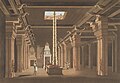
A 1792 painting of a Hindu temple and choultry (a travelers' rest house)

Choultry is a resting place, an inn or caravansary for travelers, pilgrims or visitors to a site, typically linked to Buddhist, Jain and Hindu temples. They are also referred to as chottry, choultree, chathra, choltry, chowry, chawari, chawadi, choutry, chowree or tschultri.[1][2]

This term is more common in South India, Central India and West India, while in North India similar facilities are called Dharmshalas. They are known as a chatra, satram, chatram or dharmasala in eastern regions of India.[3][4][5] The choultry concept and infrastructure in South Asia dates back to at least the 1st millennium, according to epigraphical evidence such as stone and copper plate inscriptions.[6][7]

A choultry provides seating space, rooms, water and sometimes food financed by a charitable institution. Its services are either at no cost, or nominal rates, or it is up to the visitor to leave whatever they wish as a donation. They were also used by officials traveling on public business.[1] Many major temples have mandapam and pillared halls, some called Thousand pillared halls with an attached kitchen for servicing pilgrims and travelers to the temple. The term choultry may overlap with a mandapa.[2][8][9] Many Hindu monasteries (matha) also built and operated such choultries.[10]

Etymology

[edit]

In Telugu and Tamil chaawadi, [tsavadi, chau, Skt. chatur, 'four,' vata, 'road, a place where four roads meet]. Alternatively, it is derived from chatra (छत्र) which means "umbrella, cover", or 'shraaya (श्राय) which means shelter.[11][12] The word satram (సత్రం, സത്രം) is used for such buildings in the Telugu states and in Kerala and chhatra (ಛತ್ರ) in Kannada. In West India the form used is chowry or chowree (Dakhan. chaori). A pillared hall, a shed, or a simple loggia, used by travellers as a resting-place.

Other usages

[edit]

In South India, especially in Karnataka a choultry can also denote a Hindu wedding hall.[citation needed]

[edit]

See also

[edit]

References

[edit]
Revisions and contributorsEdit on WikipediaRead on Wikipedia
from Grokipedia
A choultry, also known as a chattram or choultri, is a traditional South Indian rest house or wayside designed primarily to provide temporary , , and for travelers, pilgrims, and religious mendicants as an act of charity rooted in Hindu traditions. Originating from ancient Indian practices of religious endowment, choultries proliferated in during the 17th to 19th centuries, particularly under the of the Maratha kings of Tanjavur, such as Pratapasimha (r. 1739–1763) and (r. 1798–1832), who constructed or expanded dozens along key routes like that to . These structures served not only as basic accommodations but also supported broader socio-economic functions, including education for students and healthcare provisions, reflecting a blend of royal benevolence and colonial-era influences during British rule from the late onward. Architecturally, choultries embody Dravidian styles with expansive pillared halls (mandapas) featuring intricately carved granite or stone pillars, open courtyards for communal gatherings, and functional elements like kitchens and water tanks; construction typically used durable brickwork with lime plaster, topped by tiled or vaulted roofs, and occasionally incorporated Islamic or European motifs in later examples. Notable surviving choultries include the grand in , built in the 17th century during the Nayak dynasty, renowned for its 124 ornate pillars and role as a travelers' hall adjacent to the , which was meticulously documented through 18th-century British surveys involving detailed drawings and bronze models. In Tanjavur, examples like the Yamunambal Chattram (c. 1740s) and Kalyana Mahal Chattram (early 1800s) highlight the Maratha era's emphasis on inclusive hospitality for diverse groups, including European visitors. Today, many choultries endure as sites, underscoring South 's legacy of communal welfare and architectural innovation, though some have been repurposed or restored amid modern challenges.

History

Origins in Ancient

The earliest evidence for choultries, or traveler rest houses, in ancient dates to the BCE, emerging as part of the infrastructure supporting religious pilgrimage and trade networks. Inscriptions from Buddhist sites, such as those at Sanchi and dating to the 2nd century BCE, record donations for facilities providing shelter near stupas and viharas, enabling ascetics and pilgrims to rest during journeys. Similarly, Jain epigraphs from rock shelters in , like those at from the 2nd century BCE, mention provisions for ascetic residences adjacent to monastic caves, reflecting early communal support for wandering mendicants. These structures played a crucial role in facilitating pilgrimage routes, including paths to sacred sites like , where local guilds and philanthropists erected simple rest houses to aid devotees traveling from distant regions as early as the 3rd century BCE. In southern , Buddhist and established similar shelters to support merchants and pilgrims navigating coastal routes, as implied in associated inscriptions from the 1st century BCE onward. Choultries originated closely with monastic traditions, particularly Buddhist viharas, which offered free lodging to ascetics, pilgrims, and merchants to promote and commerce. Viharas, initially temporary rainy-season retreats, evolved into permanent residences that extended hospitality to lay travelers, as evidenced by donative records from sites like Ajanta, where caves served as monsoon shelters for monks and visitors alike from the 2nd century BCE. This integration of shelter with spiritual practice underscored the ethical imperative of aiding wayfarers in ancient Indian society. Archaeological finds, notably Ashoka's rock edicts from the BCE, provide direct testimony to state-sponsored provisions. In his Seventh Pillar Edict, Ashoka declares: "On the roads, banyan trees have been planted to give shade to beasts and men; groves have been laid out with mango trees; seats have been constructed; wells have been dug; caravanserais [rest-houses] have been built." These initiatives, spaced at intervals of about eight kos (roughly 24 kilometers), implied organized shelters to ease travel across the Mauryan Empire, laying foundational precedents for later choultry systems. Such pillared halls, often near viharas, briefly exemplified early architectural simplicity adapted for communal rest.

Development During Medieval Period

During the 7th to 13th centuries, choultrys evolved significantly under the patronage of the Pallava, Chola, and early empires, transitioning from basic traveler shelters to more structured facilities integrated into temple complexes. Pallava inscriptions from the onward document initial endowments for rest houses near temples in , reflecting early institutional support for pilgrims and merchants. By the , Chola rulers formalized these through royal grants, as seen in copper plate records from that detail land and revenue allocations for choultry maintenance and operations. This period marked a shift toward complex halls, often featuring dedicated spaces for feeding and lodging, funded by a combination of royal decrees and merchant guild contributions. For instance, Chola queen Vira Mādēvi, consort of (r. 1014–1044 CE), endowed resources for daily feeding of 25 Brahmins within a temple choultry, underscoring the role of elite patronage in enhancing these facilities. Merchant guilds, known as nāṭṭu or nāṭṭār, similarly provided endowments, as recorded in temple epigraphs, to support wayfarers along trade routes. The , flourishing from the 7th century, profoundly influenced choultry development by spurring mass pilgrimages to devotional centers, necessitating expanded accommodations. This led to prominent choultrys at sites like and , where inscriptions note provisions for feeding incoming devotees as an extension of temple charity. Under the empire's early phases in the , though extending beyond the core medieval timeframe, similar integrations continued, with epigraphs recording village grants for choultry repairs and gardens at South Indian temples. Key 11th-century inscriptions highlight choultry construction as meritorious acts of , aligning with broader charitable imperatives in temple economies. These records describe endowments for pilgrim rest houses as pious duties, linking them to royal and local piety. Overall, these developments embedded choultrys within temple fiscal systems, where endowments ensured perpetual maintenance through interest-bearing lands and taxes.

Colonial and Post-Colonial Era

During the colonial period, British administrators documented choultrys (also known as chattrams) as integral to South Indian travel and pilgrimage infrastructure, often through artistic and administrative records that highlighted their architectural and social significance. For instance, a watercolor painting by an anonymous artist from circa 1784 depicts a painted choultry at Thanjavur in Tamil Nadu, illustrating its ornate facade and role as a travelers' rest house. Similarly, Francis Swain Ward's oil painting from 1771–1772 portrays a choultry in South India as a pillared structure providing shelter, reflecting early British interest in these indigenous institutions. In administrative contexts, rulers like Serfoji II of Thanjavur appealed to British residents in 1801, detailing the choultrys' functions in feeding pilgrims, educating orphans, and supporting mendicants, amid efforts to protect their endowments from revenue reallocation. As British influence expanded, particularly after the Company's control over regions like by 1799, choultrys underwent partial repurposing to serve colonial needs. Under titular Maratha rulers like (r. 1798–1832), these structures were adapted to accommodate European guests alongside traditional users, blending indigenous hospitality with emerging colonial travel demands. Examples include the expansion of chattrams in Tanjavur to host British officials, maintaining their role in sustaining social ties while responding to governance shifts. However, British policies progressively diverted temple and royal revenues away from choultry maintenance, leading to their gradual underfunding. The mid-19th century marked a significant decline in choultrys' prominence, accelerated by the expansion of the railway network after the , which diminished reliance on foot and bullock-cart pilgrimages and reduced the need for roadside rest houses. Many structures were abandoned, encroached upon, or converted for alternative uses, such as local storage or minor administrative purposes, as pilgrim traffic shifted to rail routes. In the post-colonial era, following India's independence in 1947, choultrys faced further neglect amid urbanization and land pressures, with numerous sites falling into disrepair. Revival efforts emerged through heritage movements in the , including government surveys in the that cataloged surviving structures and assessed their cultural value. The (ASI) played a key role post-1947 by incorporating notable choultrys into tourist circuits, promoting sites like those in as examples of historical and to foster public awareness and preservation.

Architecture and Design

Structural Elements

Choultrys are characterized by open-air pillared halls, or mandapams, designed to provide expansive, shaded spaces for resting travelers and pilgrims. These halls typically feature between 100 and over 900 pillars, crafted from local to support the structure while allowing natural ventilation and light. For instance, the Pudu Mandapam in , a prominent choultry, incorporates more than 120 intricately carved stone piers, while larger examples like the Thousand Pillar Hall at the boast 985 pillars arranged in precise rows for optimal space utilization. The pillars, often monolithic and rising to heights of 10-20 feet, bear elaborate carvings depicting floral patterns, mythical creatures such as yalis, and deities, enhancing both aesthetic appeal and cultural significance. Raised platforms, typically 1-2 feet high, line the peripheries of these halls, offering dedicated areas for seating, sleeping, or communal gatherings. Adjacent water features, including wells or small tanks, are commonly integrated to supply , reflecting the practical needs of long-distance journeys in arid regions. Roofs over these halls vary but prioritize durability and adaptation: flat stone slabs laid directly atop the pillars for monumental structures, or sloping tiled coverings for lighter, more builds, both supported by robust or occasional wooden beams. Ancillary elements frequently include attached kitchens equipped for preparing free meals (annadanam), as observed in temple-affiliated choultrys where daily provisions are distributed, and basic annexes for overnight stays, exemplified in the multifunctional Thousand Pillared Halls. Construction emphasizes precision and resilience, utilizing locally quarried blocks interlocked without mortar through tongue-and-groove joints and dowels, a hallmark of Dravidian techniques that allows flexibility during seismic events. This mortarless assembly, combined with the distributed load of numerous pillars, contributes to the structures' longevity and earthquake resistance, as demonstrated in enduring examples like the Brihadeeswarar Temple's halls.

Regional Variations

In , particularly in , choultry designs emphasize elaborate stone carvings and seamless integration with temple gopurams, creating expansive open halls that serve as multifunctional spaces for pilgrims and community gatherings. These structures often feature robust rock pillars supporting intricately detailed ceilings depicting mythological scenes, such as murals, reflecting the Dravidian architectural tradition's focus on narrative sculpture and vertical grandeur. In , variations incorporate multi-tiered sloping roofs made from local wood and thatch, adapted to the region's heavy rainfall and humid climate, with wooden pillars and latticed screens that promote natural ventilation while maintaining an organic, less monumental aesthetic compared to Tamil Nadu's stone-heavy forms. Moving to Central India, including Karnataka and Andhra Pradesh, choultries evolve into larger pillared halls influenced by post-Vijayanagara styles, blending Dravidian elements with subtle Indo-Islamic motifs like arched niches and geometric patterns. Constructed primarily from stone, these halls showcase ornate monolithic pillars with floral and figural carvings, as seen in kalyana mandapas that prioritize scale and ceremonial utility over the more enclosed designs elsewhere. The use of or chloritic allows for finer detailing, highlighting the region's emphasis on durable, weather-resistant materials suited to varied terrains. In , such as and , choultry-like rest structures adopt simpler, veranda-style forms that often integrate with stepwells (baolis) to facilitate water access for travelers, featuring open colonnades and minimal ornamentation drawn from local . These designs prioritize functionality in arid environments, with shaded verandas extending from wells to provide respite, differing from the temple-centric halls of the south by emphasizing utilitarian water architecture over elaborate religious . Compared to northern dharmshalas, which typically consist of enclosed rooms with walled courtyards for privacy and protection against colder climates, southern and central Indian choultries favor open-air pillared halls that encourage communal interaction and align with warmer, tropical conditions. This distinction underscores broader regional adaptations, where northern structures prioritize and northern Nagara influences, while southern variants remain more expansive and integrated with temple complexes.

Function and Social Role

Traditional Purposes

Choultries, also known as chattrams or dharmaśālās, traditionally served as charitable rest houses providing free or low-cost , , and water to pilgrims, traders, and the poor traveling through ancient and . These structures offered temporary , often accommodating stays of a few hours to several days or weeks, allowing weary travelers to and replenish before continuing their journeys. Facilities typically included basic amenities such as kitchens for preparing meals from grains, vegetables, and other provisions, along with access to water sources, reflecting the Hindu principle of hospitality rooted in . Along ancient trade routes, such as extensions connecting to and , choultries functioned as essential rest stops for merchants transporting goods, facilitating by offering secure halts amid long-distance . These waystations supported economic networks by enabling traders to pause without financial burden, thereby sustaining the flow of goods like spices, textiles, and metals across regions. In addition to support, choultries often doubled as venues for community gatherings, hosting special feasts, cultural performances, and local assemblies that strengthened social bonds among residents and visitors. Operationally, choultries were typically managed by temple priests, local guilds, or appointed officials who oversaw daily functions and ensured equitable access for all users. Funding came primarily from donations by the traveling public, royal grants, and revenues generated from attached lands or endowments, with guilds and temple authorities sometimes collecting minor levies to maintain the facilities. This model, evidenced in ancient inscriptions and medieval records, underscored the communal commitment to aiding transient populations while integrating practical support with broader religious philanthropy.

Charitable and Religious Integration

Choultries were frequently established through dharma-based endowments, regarded as pious acts that accrued eternal merit to donors, including kings and affluent individuals. Inscriptions from the Chola period record grants of land or resources specifically for maintaining choultries attached to temples, crediting rulers like for facilitating perpetual charity in alignment with Hindu principles of righteous giving. These endowments ensured ongoing support for travelers and pilgrims, symbolizing the donor's commitment to and their aspiration for spiritual rewards in afterlife traditions. Choultries were deeply integrated into the religious practices of Hinduism, Buddhism, and Jainism, often situated within or adjacent to temple complexes to provide free meals known as annadanam during festivals and rituals. In Hindu contexts, details endowments for daily distributions and festival feasts, feeding hundreds of devotees as an extension of temple . Similarly, Buddhist and Jain sites in ancient featured analogous rest houses, such as those near viharas in , where dana practices supported monastic hospitality and pilgrim sustenance, reflecting shared emphases on across these faiths. Beyond basic shelter, choultries facilitated social welfare by aiding vulnerable groups, including widows, orphans, and lower castes, through attached institutions that offered , , and medical aid, in keeping with outlined in medieval texts like the . For instance, 18th-century records from Thanjavur's Sarva Vidyalaya choultry describe provisions for 385 non-Brahmin students, embodying prescriptive duties for societal protection. These efforts extended temple philanthropy to broader upliftment, often funded by royal or communal donations. Symbolically, choultries embodied the Indian philosophical ideal of hospitality encapsulated in "" (the guest is god), drawn from the and integrated into dharmic life as a sacred duty to honor visitors as divine. This principle underscored the choultry's role in temple ecosystems, transforming transient rest into acts of spiritual reverence and communal harmony.

Etymology and Terminology

Linguistic Roots

The term "choultry" originates from of , primarily as an anglicized form of the Tamil-Malayalam word cāvaṭi (also spelled chāvadi or sāvaṭi), which denotes a covered resting place, , or hall for travelers and pilgrims. This root emphasizes communal shelters often associated with temples or public spaces, reflecting ancient practices of hospitality in the region. The further identifies parallel borrowings from Telugu čoultry and čāvati, both carrying similar meanings of a pillared hall or protective , underscoring the word's deep embedding in Dravidian linguistic traditions. During the colonial era, "choultry" entered English usage through Portuguese intermediaries in 17th-century India, where European traders and administrators adopted the term to describe local structures. Early records, such as those from the Madras Choultry Court— a judicial and administrative hall—were maintained in until around 1680 before transitioning to English, illustrating the phonetic adaptation from Dravidian pronunciations to Indo-European forms. This evolution highlights how colonial interactions facilitated the word's dissemination beyond , while preserving its core of and assembly. Sanskrit terms like satra, meaning a charitable feeding house or traveler's refuge, appear in ancient inscriptions and may have conceptually influenced Dravidian equivalents, though direct etymological derivation remains unconfirmed in primary linguistic sources. Similarly, chatra (umbrella or protective canopy) evokes ideas of shelter but lacks a verified phonetic link to "choultry," suggesting parallel rather than originative influences in the broader Indo-Aryan and Dravidian linguistic interplay.

Regional Variants and Synonyms

In , the Tamil term satram (or sathram) denotes a charitable rest house providing free lodging for travelers, pilgrims, and the needy, functioning as a direct equivalent to the choultry. This usage stems from traditional Dravidian linguistic adaptations, emphasizing communal hospitality without cost. In neighboring , the variant chatram similarly refers to such public inns or shelters, often associated with temple complexes for accommodating visitors during festivals or journeys. Moving to central and western India, dharmashala serves as the predominant synonym in Marathi and Gujarati-speaking regions, describing enclosed or semi-enclosed rest houses built for religious merit through . These structures, common in and , typically include provisions for temporary stays and basic amenities, differing from open-pillared southern choultrys by their walled designs for privacy and security. In northern India, dharmshala (a phonetic variant of dharmashala) functions equivalently, particularly in where it integrates with Sikh gurdwaras to offer free shelter and community meals to pilgrims and wayfarers. Cross-regionally, the Jain term upashraya parallels the choultry as a dedicated rest abode for ascetics and monks, providing secluded spaces for worship and respite during travels, often maintained by across . Additionally, colonial-era influences introduced serai, borrowed from Persian caravan rest houses, which adapted into Indian contexts as fortified inns for merchants along trade routes, blending Mughal architectural elements with local charitable traditions.

Notable Examples

Prominent Structures in South India

In , choultries (also known as satrams in Tamil or chatram in ) served as essential pilgrim rest houses attached to major temple complexes, providing shelter, food, and assembly spaces during religious gatherings. These structures, often built with enduring and intricate carvings, exemplified Dravidian architectural prowess while fulfilling charitable roles for devotees traveling long distances. Prominent examples from and highlight their historical significance in facilitating temple-centric pilgrimage and festivals. The Ranganathaswamy Temple Choultry in , , features the renowned 14th-century Hall of 1000 Pillars (Aayiram Kaal ), a with 953 intricately carved pillars depicting mythological scenes, serving primarily as a resting and gathering space for pilgrims. Constructed during the period on an earlier site, this open-air hall accommodated thousands during annual festivals like the Vaikunta Ekadasi, where devotees rested and participated in processions. Historical records, including 19th-century European paintings, depict similar choultries adjacent to the temple's riverfront, underscoring their role in pilgrim welfare near the Kaveri River. At the Madurai Meenakshi Temple in , the 16th-century satrams were established through endowments by Nayak rulers, such as Ariyanatha Mudaliyar, who expanded the complex with attached feeding halls to support devotees. These structures, including the Thousand-Pillared Hall (Aayiram Kaal Mandapam) completed in 1569, featured 985 pillars with detailed sculptures and functioned as distribution points for annadhanam (free meals) to pilgrims from afar, integrating rest and sustenance during festivals like Chithirai. Temple inscriptions record grants specifically for maintaining these satrams, ensuring their operation for lower-income pilgrims through revenue from devadana lands. A notable example adjacent to the is Tirumala Nayak's Choultry, built in the 17th century during the Nayak dynasty. Renowned for its over 900 ornate pillars, this travelers' hall provided shelter and was documented through 18th-century British surveys, including detailed drawings and bronze models. In Tanjavur, Maratha-era chattrams such as the Yamunambal Chattram (c. ) and Kalyana Mahal Chattram (early 1800s) exemplify inclusive for diverse groups, including European visitors, along pilgrimage routes. The Chatram in , , comprises 18th-century granite structures rebuilt under Maharaja , blending Kerala and Dravidian styles with high walls and pillared corridors. These chatram facilities, including a corridor of 365 sculptured pillars symbolizing the , provided shaded rest areas for pilgrims during events like the Alpashi and Painkuni festivals, reflecting the temple's role as a major Vaishnava pilgrimage hub. Chola-era inscriptions across further illustrate the foundational support for such choultries, with grants from rulers like Raja Raja Chola I funding temple-attached dharmasalas for pilgrim shelter and festival maintenance. For instance, the Tirumukkudal inscription details endowments for free food and lodging near temples, ensuring operational continuity during large-scale religious events. These early provisions set precedents for later endowments, emphasizing choultries' integration into temple economies for charitable purposes.

Examples in Central and Western India

In Central and , choultries often adapted to regional architectural styles, blending temple complexes with practical facilities for pilgrims and traders, reflecting influences from , Maratha, and medieval Gujarati traditions. The Virupaksha Temple Choultry in , , exemplifies 15th-century -era design as a ruined integrated into the northern adjacent to the temple. This open-pillared hall served as a rest space for travelers amid the bustling marketplace, featuring stone platforms and arches that facilitated commerce and shelter during the empire's peak. Conservation efforts by the highlight its structural integrity, with ongoing restoration of the bazaar to preserve its role in the . Further west in , the Dharmshala embodies medieval origins tied to the site's ancient significance, providing lodging for devotees visiting one of the twelve Jyotirlingas. Dating back to at least the Chalukya period with expansions under subsequent rulers, the dharmshala complex was extensively rebuilt in the post-1950s reconstruction phase following the temple's restoration under Vallabhbhai Patel's initiative, completed in 1951. Unique to the region, it incorporates access, such as the nearby Surya Kund, allowing pilgrims easy water retrieval in the arid coastal environment while maintaining charitable functions. This adaptation underscores 's tradition of integrating water architecture with rest facilities for long-distance journeys. Regional adaptations in Karnataka's choultries often feature Hoysala carvings, showcasing intricate detailing in mandapas that doubled as communal rests. For instance, the open halls in the 12th-century Chennakeshava Temple at Belur exhibit lathe-turned pillars adorned with floral motifs and mythological friezes, providing shaded assembly spaces for pilgrims en route to sacred sites. This chlorite schist medium allowed for fine sculptural work, distinguishing Hoysala contributions from the granite-heavy Dravidian styles further south, while emphasizing ventilation and durability in the terrain.

Modern Usage and Preservation

Contemporary Functions

In contemporary times, choultrys continue to serve pilgrims by providing affordable or free accommodations near major temples in , particularly during large-scale festivals. For instance, the Old Choultry at the Dandayudhapani Swamy Temple in offers double rooms with attached baths for devotees, facilitating stays amid the temple's annual festivals that attract millions. Similarly, during the Mahamaham festival in —regarded as the of , held every 12 years—numerous chattrams (a regional variant of choultry) provide free lodging to participants, supporting the event's role as a massive religious gathering every 144 years when it aligns with northern Kumbh Melas. Several historic choultrys have been repurposed for tourism within Tamil Nadu's temple circuits, evolving into heritage guest houses or budget stays since the 1990s amid rising pilgrim and . The Sri Ramanjaneya Chatram near Rameshwaram Temple, for example, accommodates tourists and pilgrims with AC and non-AC rooms just 100 meters from the site, blending traditional hospitality with modern amenities to cater to the growing influx of visitors to UNESCO-listed temple complexes. This shift aligns with Tamil Nadu's tourism expansion, where domestic tourist arrivals have grown more than 15-fold since the early 1990s, reaching over 300 million as of 2024, positioning choultrys as integral to heritage circuits like the Chola temple trail. In urban settings, choultrys have adapted into community centers and charitable facilities, especially in 's historic Choultry Plain neighborhood, which originated from early traveler rest houses and now functions as a residential and social hub. The Monegar Choultry, established in and still operational, serves as an old-age home and destitutes' shelter, distributing free meals and medical aid to residents while hosting community events. Similarly, the Rajah Choultry in central operates as a multipurpose community building for gatherings and welfare programs. These modern roles contribute to rural economies through pilgrim tourism, where choultrys generate income via nominal fees, donations, and ancillary services like temple annadanam (free meals), supporting local vendors and preserving cultural sites. In temple towns, such facilities bolster , with Tamil Nadu's religious sites drawing over 100 million visitors annually and fostering community-led economic resilience.

Conservation Challenges and Efforts

Choultrys across face significant conservation challenges, primarily from urban encroachment, natural weathering, and chronic funding shortages. Rapid urbanization has led to encroachments on surrounding lands, threatening the integrity of these historical structures, as seen in cases where modern developments encroach upon unprotected heritage sites. For instance, the early 18th-century choultry built by Rani Mangammal in , , has deteriorated due to weathering and neglect, with reports from 2015 highlighting crumbling walls and overgrown vegetation that have rendered parts of the structure unsafe. Funding constraints exacerbate these issues, as the (ASI) and other bodies receive limited budgets—often less than 1% of the national allocation for culture—hindering comprehensive maintenance efforts for thousands of monuments. Preservation initiatives have been bolstered by legal frameworks and institutional actions. The Ancient Monuments and Archaeological Sites and Remains (AMASR) Act of 1958 provides protections for declared monuments, including choultrys, by prohibiting unauthorized constructions within a 100-meter prohibited area and regulating activities to prevent damage. Since the 1960s, ASI has undertaken systematic restorations of protected sites, focusing on structural reinforcement and documentation to comply with the Act's mandates. Non-governmental organizations like the Indian National Trust for Art and Cultural Heritage (INTACH) have conducted surveys and awareness campaigns since the 2000s, listing endangered choultrys such as the Ankamma Choultry in Bengaluru and Muktambal Chattram in Thanjavur on their Heritage at Risk Register to prioritize interventions. Notable case studies illustrate both ongoing struggles and successes. In Ramanathapuram, a 2015 expert team urged ASI intervention to restore the ruined choultry, emphasizing its historical inscriptions and sculptures, though progress remains slow due to resource limitations. In January 2025, the Archaeological Research Foundation appealed for the restoration of a 300-year-old choultry at Maraiyur, underscoring continued local efforts amid resource constraints. Conversely, Hampi's integration into the framework post-1986 has facilitated coordinated conservation, including ASI-led efforts to preserve the site's mandapas and halls—structures akin to choultrys—through international funding and monitoring to mitigate pressures. A successful revival example is Bengaluru's Sajjan Rao Choultry, restored in 2022 by descendants of its founder with community support, transforming the 1934 building into a functional cultural space while retaining its original architecture.

Other Meanings

Ceremonial and Social Uses

In , the term "choultry" frequently denotes wedding halls, or kalyana mantapas, which serve as dedicated spaces for conducting Hindu marriage ceremonies and related rituals. These venues, often budget-friendly and accommodating large gatherings, trace their usage back to 19th-century traditions when traditional rest houses—originally built for travelers and pilgrims—were repurposed for community events, including weddings among local castes and families. This adaptation reflected the evolving social needs of the period, where such halls facilitated elaborate rituals like the tying of the mangalsutra and feasts for attendees, blending architectural heritage with ceremonial functions. The word "choultry" also evokes associations with communal feasting, particularly "choultry meals," which refer to shared banquets provided in these halls during temple rituals and pilgrim gatherings. Colonial records from early 19th-century describe choultries as endowed structures near temples, where travelers and devotees received free meals as part of religious , underscoring their role in sustaining communal rituals tied to festivals and offerings. This practice, rooted in philanthropic endowments by local rulers and merchants, emphasized collective nourishment as an integral aspect of spiritual and social observance. Beyond weddings and feasts, choultries functioned as venues for social assemblies, including village councils and meetings, where disputes were adjudicated and community decisions made. Ethnographic accounts from the early highlight their use as open-air spaces for panchayats or sabhas, often caste-specific, allowing participants to gather under pillared roofs for deliberations on matters like marriages, , and offenses. These meetings reinforced social hierarchies while providing a neutral, accessible forum, distinct from private homes. While originally denoting physical structures like pillared shelters, the term "choultry" has evolved to encompass the event space itself, emphasizing the gathering and activities over the architecture. This extension distinguishes ceremonial and social usages from mere lodging, focusing on the transient, inclusive nature of the events hosted within or symbolized by these halls.

Place Names and Toponyms

The term "choultry" has influenced several place names across , reflecting the historical prevalence of these rest houses as key landmarks in urban and pilgrimage landscapes. In , the Choultry Plain emerged as an important 18th-century British settlement area, named after nearby choultry structures that served as temple-associated rest houses for travelers. Development of the area began in the late 1700s but accelerated after the British defeat of in 1799, transforming open plains into residential zones for European officials and merchants. In , 16th-century merchant inns, where trade guilds operated rest houses to accommodate pilgrims and traders visiting the , served as precursors to formalized choultries and were integral to the city's commercial hubs during the Nayak-era expansions. The toponymic spread of "choultry" extends from northward to . Examples include Kambham Choultry Street in , denoting areas around historical rest houses that facilitated trade routes. Today, these names persist in modern urban contexts, often designating residential or commercial districts that evoke their origins as traveler waypoints, though many original structures have been repurposed or lost to development.

References

Add your contribution
Related Hubs
User Avatar
No comments yet.