Hubbry Logo
Cold creamCold creamMain
Open search
Cold cream
Community hub
Cold cream
logo
8 pages, 0 posts
0 subscribers
Be the first to start a discussion here.
Cold cream
Cold cream
from Wikipedia
Cold cream
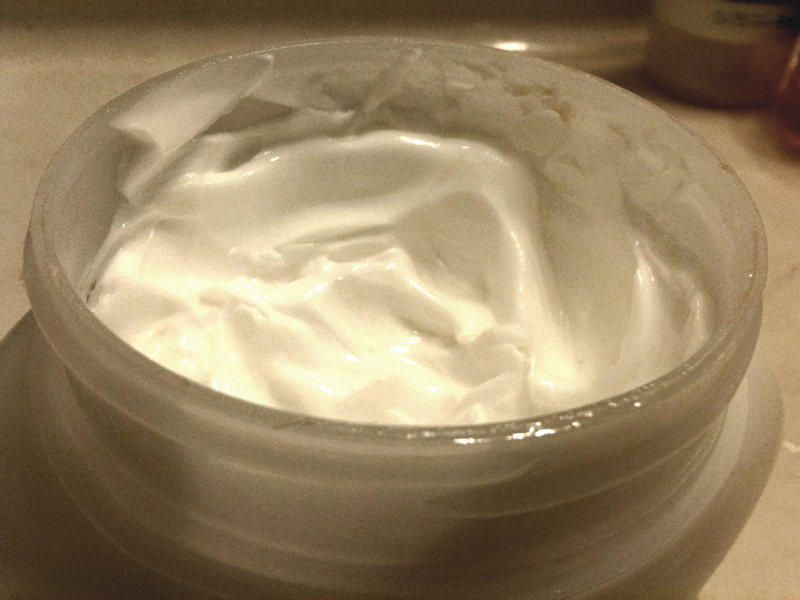
Jar for cold cream from the first half of the 20th century from the Museo del Objeto del Objeto collection.

Cold cream, also known as ceratum refrigerans, is an emulsion of water and certain fats, usually including beeswax and various scent agents, designed to smooth skin and remove makeup. Cold cream is a water-in-oil emulsion (emulsion of small amount of water in a larger amount of oil), unlike the oil-in-water emulsion of vanishing cream, so-called because it seems to disappear when applied on skin. The name "cold cream" derives from the cooling feeling that the cream leaves on the skin. Variations of the product have been used for nearly 2000 years.

Cold cream is mainly used for skin treatment (such as a facial mask or lip balm), due to its moisturizing properties. It can also be used as shaving cream and as a makeup remover.[1]

History

[edit]

The invention of cold cream is credited to Galen, a physician in second century Greece.[2] The original formulation involved rose water, beeswax, and either almond or olive oil. The beeswax is essential to a successful cream, as it is the emulsifying ingredient, but it is extremely inefficient compared to modern emulsifiers. Creams made with only beeswax require extensive mixing and can separate upon standing. Thus, small quantities of borax were later added in addition to the beeswax. Borax saponifies fatty acids in the beeswax and allows for a more stable cream, using the small quantities of soap created as the emulsifying agent.

This 1857 account relates:

The modern formula for cold cream is, however, quite a different thing to that given in the works of Galen, in point of odour and quality, although substantially the same--grease and water. In perfumery there are several kinds of cold cream, distinguished by their odour, such as that of camphor, almond, violet, roses, etc.[3]

In France, this substance is still known as cérat de Galien ('Galen's Wax'). A copy of the London Dispensatory, edited by Nicholas Culpeper and published in the year 1650 included the following formula for this substance:

Take of white wax four ounces, oyl of roses omphacine a pound; melt in a double vessel, then powr it out into another, by degrees putting in cold water, and often powring it out of one vessel into another, stirring it till it be white ; last of all wash it in rose water, adding a little rose water and rose vineger.[4]

— Nicholas Culpeper (1650), London Dispensatory

An 1814 poem credited to "Dr. Russell" gives the following account of the benefits attributed to cold cream in that day:

WHEN a pot of cold cream to Eliza you send,
You with words to this purpose your present commend;
Whoe'er with this cream shall her countenance smear,
All redness and roughness will strait disappear,
And the skin to a wonder be charmingly clear;
If pimples arise, this will take them away;
If the small-pox should mark you, those marks will decay;
If wrinkled through age, or bad dawbing the face is,
'Twill be smooth in a trice, as the best Venice glass is;
All this, and much more (could I spare time to write it,
Or my pen go as fast, as your lips would indite it)
You affirm of your cream: and I would not abuse it,
But pray tell me one thing—Do you yourself use it?[5]

— Dr. Russell, To a Lady: in imitation of the thirtieth Epigram of the fifth Book of Martial

When mixed with water, plant oils spoil rapidly, so cold cream was most often made in small batches at home or in local pharmacies.

Modern formulation

[edit]

Almost all modern cold creams have replaced the plant oils with mineral oil and have added alcohol, glycerin, and lanolin.[2] Beginning in the 1970s, jojoba oil became a common ingredient, used as a substitute of spermaceti from whales.[2] Widely sold brands of cold cream in the United States include Pond's[6] and Noxzema.[7]

Over the centuries, new uses have been found for the product: "As a toilet requisite cold cream is used for softening and cooling the skin after sunburn, as a cleansing cream, to relieve harshness of the skin, etc."[8]

See also

[edit]

References

[edit]
Revisions and contributorsEdit on WikipediaRead on Wikipedia
from Grokipedia
Cold cream is a semisolid, water-in-oil used in skincare, primarily composed of as an emulsifier, or similar fats for moisture retention, and , which provides a cooling sensation upon application, from which the name 'cold cream' derives due to the evaporation-induced cooling, and forms a protective barrier on the . This formulation, classified as a fatty cream in pharmacopeias, is designed to hydrate dry , soften its texture, and facilitate the removal of makeup and impurities while shielding against environmental irritants. The origins of cold cream trace back to the CE, when the Greek physician developed the first known recipe by emulsifying water with molten and , creating a soothing preparation for irritated skin. This early version, later termed ceratum Galeni in honor of its inventor, was documented in the Pharmacopœia Londinensis in 1618 and typically incorporated or almond oil for fragrance and added emollience. By the , industrial advancements introduced ingredients like petrolatum (discovered in 1859) and as a stabilizer, enabling and wider availability as a staple cosmetic. In traditional use, cold cream served as a versatile nighttime and , particularly for sensitive or mature skin, with its thick consistency allowing it to be applied generously before bedtime. Modern formulations may include variations such as for texture or preservatives such as or parabens like , but they maintain the core water-in-oil structure to deliver occlusive benefits without greasiness. Its enduring popularity stems from these emollient properties, making it effective for conditions like by locking in hydration and reducing .

Overview

Definition

Cold cream is a semisolid cosmetic preparation classified as a , in which droplets are dispersed within a continuous oil phase, providing a protective barrier on the skin. This formulation creates a cooling sensation upon application due to the of the content, an that draws heat from the skin's surface. The term "cold cream" originates from an early version formulated by the physician of Pergamum (c. 129–216 CE), known as ceratum Galeni or " cerate," which was designed to soothe and calm inflamed or irritated skin. Unlike lotions, which have a lighter, more fluid consistency due to higher , cold cream exhibits a thicker, semi-solid texture that allows for prolonged contact with the skin. It is specifically formulated for emollient effects, softening the skin and preventing moisture loss through an occlusive oily barrier, rather than absorbent properties that promote quick absorption like those in oil-in-water emulsions such as vanishing creams.

Basic Composition

Cold cream is classically formulated as a water-in-oil , with or vegetable oils serving as the primary emollient base, typically comprising 50-60% of the total composition. These oils form the continuous phase, providing a protective barrier on the skin to prevent loss and deliver occlusive properties. or similar waxes, such as , act as emulsifiers and thickeners, making up about 10-15% of the to stabilize the mixture and impart a semi-solid consistency. Borax functions as the key emulsifying agent at concentrations of 0.5-1%, enabling the dispersion of the aqueous phase into the oil without requiring excessive heat during blending. constitutes the discontinuous aqueous phase, accounting for 30-40% of the cream, which hydrates the and contributes to the eventual cooling sensation upon application through . The roles of these components are interdependent in creating a stable emulsion: the oils establish the essential for emolliency, while the waxes reinforce structural integrity by preventing coalescence of droplets. , as a mild , reacts with the fatty acids in to form a soap-like emulsifier that facilitates phase integration at moderate temperatures. This combination ensures the cream remains homogeneous, with a general oil-to-water ratio of approximately 2:1 by volume promoting long-term stability and resistance to separation.

History

Ancient Origins

The earliest precursors to cold cream emerged in and , where fat-based ointments served as foundational skincare and medical preparations dating back to around 2000 BC. In , during (circa 2686–2181 BC), people utilized animal fats, vegetable oils, and waxes combined with herbal elements like honey and aloe to create emollient mixtures that protected skin from the harsh sun and dry climate while treating wounds and rashes. These formulations, documented in texts such as the (circa 1550 BC), emphasized moisturizing and healing properties through simple emulsions of oils and fats. Similarly, Mesopotamian records from clay tablets around 3000 BCE describe ointments made from , , and resins, applied for skin softening and cosmetic enhancement. The formal invention of cold cream is attributed to the Greek physician of Pergamum (circa 129–216 CE), who developed it around 150 AD while serving as a medical practitioner in . formulated this preparation, known as ceratum refrigerans or "cooling cerate," primarily as a therapeutic remedy for inflammation and wounds, drawing from his experience treating gladiators' injuries. The original recipe involved an of , almond oil (or ), and infused with rose petal oil, creating a soothing ointment whose cooling sensation arose from the of the water content upon application. This marked an innovative step in ancient , blending oil and water phases— a basic concept— to enhance absorption and provide both protective and medicinal benefits. Following its creation, cold cream was documented by the Byzantine physician Oribasius (circa 320–403 CE) in his medical compilations, citing Galen's mixture of wax and for its emollient effects on irritated skin. In medieval , the preparation influenced figures like the 14th-century surgeon Guy de Chauliac, who referenced it in surgical texts for post-operative wound care and inflammation relief. These adaptations maintained its dual role in cosmetic softening and medical treatment, evolving subtly through regional ingredient substitutions while preserving the core cooling and protective qualities.

Modern Developments

The commercialization of cold cream in the transformed it from small-scale concoctions to widely accessible consumer goods, facilitated by industrial advances in and the . Innovations such as the incorporation of for emulsion stability—first noted in recipes around 1844—and petrolatum () for extended shelf life, introduced by in 1869, enabled reliable . By the 1890s, companies like Daggett & Ramsdell launched their Perfect Cold Cream in 1893, marketing it as a luxurious yet affordable skincare essential, while Extract Company followed suit with its iconic cold cream in 1904, shifting production from pharmacies to household brands and using formulas incorporating , , and for broad appeal. The brought further evolution in cold cream production, particularly after , when synthetic emulsifiers like were introduced, minimizing the need for and allowing for smoother, more stable formulations suitable for large-scale manufacturing. This era saw cold cream peak in popularity during the , when it became a staple as a gentle makeup remover and nighttime in women's beauty routines, promoted through aggressive by brands like that highlighted its cleansing and protective qualities. However, by the late , its dominance waned with the advent of water-based cleansers and targeted skincare lines, reducing cold cream to a niche product amid rising preferences for lighter, faster-absorbing alternatives. In the 21st century, cold cream has experienced a resurgence within niche markets, propelled by clean beauty movements that prioritize natural, organic ingredients and multifunctional emollients for sensitive or dry skin. Brands such as Avène and Weleda have reintroduced natural versions, often free of synthetic additives, aligning with consumer demands for sustainable, heritage-inspired skincare that echoes Galen's ancient emulsion while adapting to modern sensitivities. This revival is evidenced by the broader organic skincare sector's robust growth, valued at USD 9.83 billion in 2021 and projected to reach USD 21.16 billion by 2030, reflecting increased sales of organic cold cream formulations amid trends toward transparency and eco-conscious routines.

Formulation and Preparation

Traditional Recipe

The traditional recipe for cold cream, dating back to 19th-century formulations, relies on a simple emulsion of beeswax and oil with water, stabilized by borax to create a soothing, protective ointment suitable for home preparation. This method, adapted from historical pharmaceutical receipts, emphasizes gentle heating and constant stirring to achieve a stable, creamy texture without specialized equipment. A representative basic batch, yielding approximately 8 ounces (226 g) of cream, uses the following ingredients: 2 tablespoons (about 16 g) grated , 1/2 cup (about 110 g) almond oil, 1/4 cup (about 60 g) (rose water may be substituted for fragrance and mild astringency), and 1/8 (about 0.6 g) borax powder. These core components—beeswax for structure, almond oil for emollience, water (or ) as the aqueous phase, and borax as an emulsifier—form the foundation of the . To prepare, begin by dissolving the borax in the water (or ) in a heatproof and set aside; this creates the aqueous phase. Next, combine the and almond oil in another heatproof vessel and melt them together gently over low heat using a double boiler to avoid scorching or separation. Heat the borax-water mixture separately until hot but not boiling. Then, slowly pour the hot aqueous mixture into the oil phase while stirring vigorously—either by hand with a or using a low-speed —to emulsify as the combination cools to , resulting in a thick, white cream. Pour the warm into a clean, sterilized jar and allow it to set completely. For best results, maintain low temperatures throughout to preserve ingredient integrity, and stir continuously during the cooling phase to ensure a uniform, stable that does not separate. Using a double boiler is essential to prevent overheating the delicate oils and . If the emulsion appears too thick, a small amount of additional (or ) can be incorporated during stirring, but avoid overworking to prevent graininess.

Modern Manufacturing

Modern manufacturing of cold cream involves scalable that ensure consistent and for large-scale production. The production begins with the mixing phase, where oil and water phases are combined using high-shear mixers to facilitate emulsification, creating a stable water-in-oil typical of cold creams. This is followed by homogenization, often employing high-pressure homogenizers to reduce droplet sizes to under 5 microns, which enhances emulsion stability and product uniformity by preventing . After emulsification, the mixture undergoes controlled cooling to solidify the while maintaining its texture, and the final product is packaged under sterile conditions in automated filling lines to minimize contamination risks. Additives are incorporated during or after the mixing stage to enhance preservation, sensory attributes, and skin compatibility. Preservatives such as parabens are commonly added to prevent microbial growth, though natural alternatives like () are used at concentrations of 0.1-0.5% for protection against oxidation. Fragrances are blended in at low levels (typically 0.1-1%) to impart scent without irritation, and the formulation's is adjusted to 5.5-6.5 using buffers like to match the skin's natural acidity and optimize stability. Compliance with regulatory standards is integral to modern , ensuring product and . In the United States, producers adhere to FDA Good Manufacturing Practices (GMPs) under the Federal Food, Drug, and Cosmetic Act, which emphasize contamination control and without pre-market approval. In the , the Cosmetic Products Regulation (EC) No 1223/2009 mandates assessments, including microbiological testing and labeling requirements, prior to market entry. Stability testing, such as accelerated aging at 45°C for three months to predict real-time shelf life, confirms a of 2-3 years under normal storage conditions, verifying no degradation in texture, color, or .

Uses and Applications

Skin Care Routines

Cold cream is commonly applied as a gentle cleanser in daily skincare routines, particularly for removing makeup and impurities. To use it this way, a generous amount is spread onto dry skin and massaged gently in circular motions for about one minute to dissolve oil-based dirt and cosmetics, then wiped off with a soft tissue, cotton pad, or microfiber cloth. This approach effectively targets stubborn residues without disrupting the skin's natural oil barrier. As a nighttime moisturizer, cold cream is ideal for those with dry or mature skin on the face and body. After evening cleansing, a thin layer is applied evenly and left on overnight to seal in hydration and prevent moisture loss during sleep. Its emollient properties contribute to sustained softness upon waking. For targeted hydration, cold cream can function as a short-term mask treatment. A thicker layer is spread over chapped lips or rough patches and left on for 10-15 minutes to intensely nourish the area, after which excess is removed with a damp cloth. This method delivers focused relief for localized dryness.

Specialized Uses

Cold cream has been employed as a shaving aid, particularly in vintage grooming practices, where it serves as a to soften and protect the skin from irritation during the process. By forming a protective layer, it helps reduce and provides a smooth glide for the blade, making it a popular alternative to modern foaming products in historical contexts. For instance, brands like , a medicated variant of cold cream, were marketed specifically for in the early , capitalizing on its emollient properties to soothe and hydrate the skin post-shave. In hand and cuticle care, cold cream is applied to soothe and repair cracked or dry hands resulting from manual labor, exposure to harsh weather, or frequent washing, offering deep moisturization through its of oils and waxes. Users the cream into the skin and around the nails to strengthen cuticles, preventing brittleness and promoting healthier nail growth by locking in moisture and forming a barrier against environmental stressors. This use dates back to the Victorian and Edwardian eras, when cold creams were routinely recommended as hand treatments to maintain softness and prevent chapping, especially for those engaged in domestic or outdoor work. As a barrier ointment for minor wounds, cold cream acts to protect small cuts, scrapes, or irritations by creating an occlusive layer that inhibits water loss and shields the affected area from contaminants, thereby supporting the skin's natural in superficial injuries such as minor burns or abrasions. Its formulation, rich in emollients like and almond oil, maintains hydration without serving as a treatment. Historically, this application aligns with its role in treating burns and chapped skin, as noted in early 20th-century , though it should not replace professional wound care. In theatrical applications, cold cream has historically been used to remove heavy stage makeup, such as greasepaint, due to its effective cleansing on oily residues.

Benefits and Efficacy

Moisturizing Effects

Cold cream exerts its moisturizing effects primarily through its occlusive , forming a protective film on the surface composed of emollients like and that minimizes (TEWL). This barrier function has been demonstrated in clinical evaluations of water-in-oil emulsions similar to traditional cold creams, where TEWL was reduced by approximately 48% on xerotic after short-term application, helping to prevent in dry environments. Many modern cold cream formulations incorporate humectants such as glycerin to enhance moisture retention. Dermatological research from the 2010s, including vehicle-controlled trials on individuals with xerotic , has shown that consistent application of such occlusive-humectant moisturizers leads to notable improvements in hydration metrics, with corneometry scores increasing by 60% or more after 2 weeks of twice-daily use. These findings underscore cold cream's role in alleviating dryness and roughness associated with xerosis, supporting its integration into daily skincare routines for barrier-compromised , including where formulations like propolis-loaded cold cream have reduced disease severity scores.

Protective Properties

Cold cream's primary protective mechanism stems from its water-in-oil structure, where and oils such as mineral or vegetable variants form an occlusive layer on the skin's surface. This barrier impedes the penetration of external aggressors like wind, cold temperatures, and airborne pollutants, minimizing and subsequent irritation in adverse environmental conditions. The high lipid content, including long-chain fatty acids from , replenishes deficient components in the , enhancing overall skin resilience against climatic stressors. Historically, Galen's second-century formula—comprising , rosewater, and or oil—was designed to provide soothing protection for inflamed or irritated , leveraging the emollient oils to calm minor redness and . Modern formulations retain these elements, with serving as an emulsifier. Regarding resistance to irritants, cold cream offers mild occlusive protection against low-level chemical and environmental irritants by limiting their diffusion into the , though it does not substitute for dedicated sunscreens or high-SPF products. Emollient-based evaluations indicate potential variability in effects on irritant penetration. This protective role is relevant for conditions like .

Safety and Considerations

Potential Risks

While cold cream is generally well-tolerated, certain ingredients can trigger allergic reactions in susceptible individuals. Lanolin, derived from wool and present in some traditional formulations, is a common allergen that may cause contact dermatitis, affecting approximately 1.2% of patients with dermatitis. Fragrances added for scent in many cold creams can also provoke allergic contact dermatitis, with a prevalence of about 1.9% in the general population exposed to scented cosmetics. Borax, used as an emulsifier in classic recipes, has been associated with skin irritation and allergic reactions such as itching, hives, or rashes upon contact. However, due to safety concerns, borax has been banned in cosmetics in the European Union and California (effective January 2025), and is no longer used in modern commercial cold cream formulations. Individuals experiencing symptoms like redness, swelling, or blistering should undergo patch testing to identify specific allergens. The high oil content in cold cream, often including and , gives it a comedogenic potential that may pores, particularly in acne-prone , potentially leading to breakouts if not thoroughly cleansed from the after use. This risk is heightened for those with oily skin types, where heavy emollients like cold cream are generally not recommended unless formulated as non-comedogenic variants. Overuse of cold cream, such as excessive or prolonged application, can create an occlusive barrier that traps against the skin, elevating the risk of , especially on open wounds or compromised barriers. Cold cream is often suitable for sensitive due to its emollient properties, but individuals should perform a to check for personal sensitivities, especially if the formulation includes potential irritants like fragrances or in older recipes; modern formulations often avoid common allergens to enhance safety.

Storage Guidelines

Cold cream should be stored in a cool, dry place at temperatures below 25°C (77°F) and away from direct sunlight to prevent emulsion separation and rancidity of its oil-based components. Exposure to heat or light can accelerate oxidation and degrade the product's texture and efficacy over time. Unopened cold cream typically has a of 12 to 24 months, with some commercial formulations lasting up to 3 years under ideal conditions; always refer to the manufacturer's on the . After opening, use within 6 to 12 months to ensure safety and effectiveness. Monitor for spoilage indicators such as altered texture (e.g., separation or thinning), off odors, or color changes, and discard if any appear. Using airtight jars or containers minimizes air exposure and oxidation, helping to preserve the product's quality. Homemade cold cream, lacking industrial preservatives, should be refrigerated and used within 3 months for optimal safety. Proper storage supports the long-term stability inherent to cold cream formulations.

References

Add your contribution
Related Hubs
User Avatar
No comments yet.