Hubbry Logo
PedicurePedicureMain
Open search
Pedicure
Community hub
Pedicure
logo
8 pages, 0 posts
0 subscribers
Be the first to start a discussion here.
Pedicure
Pedicure
from Wikipedia
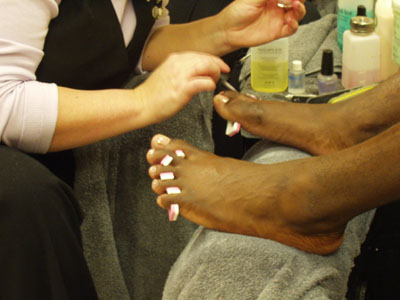
A pedicure in progress
Street pedicure in Bamako

A pedicure is a cosmetic treatment of the feet and toenails, analogous to a manicure.

During a pedicure, dead skin cells are rubbed off the bottom of the feet using a rough stone (often a pumice stone). Skincare is frequently provided up to the knee, including granular exfoliation, moisturizing, and massage.

The word pedicure is derived from the Latin words pedis, which means "of the foot", and cura, which means "care".[1]

History

[edit]

People have been pedicuring their nails for more than 4,000 years. In southern Babylonia, noble people used solid gold tools to give themselves manicures and pedicures. Nail polish can be traced back even further. Originating in China in 3000 BC, nail color indicated one's social status, according to a Ming Dynasty manuscript; royal fingernails were painted black and red. Ancient Egyptians have been manicuring since 2300 BC.

A depiction of early manicures and pedicures was found on a carving from a pharaoh's tomb, and the Egyptians were known for paying special attention to their feet and legs. The Egyptians also colored their nails, using red to show the highest social class. It is said that Cleopatra's nails were painted a deep red, whereas Queen Nefertiti went with a flashier ruby shade. In Ancient Egypt and Rome, military commanders also painted their nails to match their lips before going to battle.

Pedicures in the United States

[edit]

Pedicures generally take approximately 45 minutes to an hour in the US. According to the US Department of Labor, manicure and pedicure specialists earned a median income of around $20,820 in 2015.[2] Most professionals earn an hourly wage or salary, which can be augmented through customer tips. Independent nail technicians depend on repeat and consistent business to earn a living. The most successful independent manicure technicians may earn salaries of over $50,000 per year.[3] Nail technicians can earn up to $100 per hour from performing more technical nail treatments, such as a French pedicure and sculpting, although these treatments are not popular for the feet. A standard pedicure treatment usually costs around $40.

Risks

[edit]

Improper or unsanitary pedicures can increase the risk of infection. First, some pedicure practices can damage the skin if performed too aggressively and thus increase infection risk. For example, using a pumice stone to shave off calluses on the sole can result in abrasions, and cuticle nippers may accidentally remove too much of the cuticle. Second, instruments or foot baths may not be properly sterilized, introducing pathogens into already vulnerable skin. Mycobacterium fortuitum is known to cause infection in foot spas.[4] These risks are particularly high for people with medical conditions that affect blood flow, sensation, immune response, or healing in the feet, such as diabetes. Major health organizations such as the CDC recommend that diabetics do not soak their feet or remove calluses and often have a podiatrist cut their toenails, which are some of the key parts of many pedicures.[5]

Solutions and chemicals used to cleanse or soak feet can also cause skin irritation. There can be a risk of developing an ingrown toenail from improper trimming.[6]

References

[edit]
[edit]
Revisions and contributorsEdit on WikipediaRead on Wikipedia
from Grokipedia
A pedicure is a cosmetic treatment focused on the care of the feet, toes, and toenails, typically involving soaking the feet in warm water, exfoliating dead skin, trimming and shaping the nails, managing cuticles, massaging the feet and lower legs, and often applying nail polish for aesthetic enhancement. The origins of pedicure practices trace back over 5,000 years to ancient civilizations, where women in India, China, and Egypt used natural dyes like henna to adorn and protect their nails, signifying status and beauty. Evidence of structured foot care, including washing, massaging, and nail grooming, also appears in ancient Egyptian tomb depictions from the Old Kingdom period (circa 2686–2181 BCE), highlighting its role in hygiene and royal pampering. The modern term "pedicure" derives from Latin roots—pes (foot) and curare (to care)—and evolved into a professional service by the 20th century, with the rise of nail salons in the United States transforming it from a luxury to a widespread grooming routine. In contemporary practice, pedicures offer both aesthetic and therapeutic advantages, such as promoting better nail health through proper trimming to prevent ingrown nails or infections, enhancing skin softness by removing calluses, and improving circulation via massage, which can alleviate foot fatigue and stress. Regular pedicures also support overall foot hygiene, potentially allowing early detection of issues like fungal infections or biomechanical problems. For individuals with conditions such as diabetes or poor circulation, a medical pedicure—performed by licensed podiatrists or trained technicians in a sterile setting—provides heightened safety, focusing on clinical assessment, precise debridement, and infection prevention without cosmetic polishes, thereby reducing risks associated with traditional salon services. Safety guidelines from occupational health authorities emphasize using disinfected tools, avoiding shared basins, and wearing protective gloves to minimize biological hazards like bacterial or fungal transmission during procedures.

Overview

Definition

A pedicure is a cosmetic treatment focused on the care of the feet, toes, and toenails, aimed at improving their appearance, promoting , and enhancing overall comfort. This procedure encompasses various elements such as cleaning, exfoliation, , and specialized nail maintenance to address the unique needs of the lower extremities. Core components of a pedicure generally include soaking the feet in warm water to soften the , trimming and shaping the toenails to prevent irregularities, removing dead skin and calluses through gentle exfoliation, applying moisturizers to the skin, and optionally polishing the nails for aesthetic enhancement. In contrast to a , which targets the hands and fingernails, a pedicure exclusively addresses the feet and toenails, often incorporating treatments for foot-specific concerns such as dry heels or ingrown toenails. The word "pedicure" originates from the French "pédicure," derived from Latin "ped-" (from "pes," meaning foot) and "curare" (to care for, from "cura," meaning care), with its first known use in English dating to 1784.

Benefits

Pedicures offer several physical benefits, primarily through the incorporation of and exfoliation techniques. The component enhances blood circulation by stimulating blood flow to the extremities, which supports tissue health and reduces swelling in the feet. Additionally, the removal of calluses and dead skin alleviates foot associated with thickened areas, providing relief from discomfort caused by pressure or friction. Proper practices during pedicures, such as thorough cleaning and sterilization, help prevent fungal infections by eliminating and fungi that thrive in moist environments. Furthermore, the relaxation induced by these treatments promotes endorphin release, contributing to overall physical well-being. Aesthetically, pedicures improve the appearance of the feet by smoothing rough , shaping , and applying polish, resulting in a more polished and -looking presentation. This enhancement can boost self-confidence, as well-groomed feet contribute to a positive and greater comfort in open . Therapeutically, pedicures aid in managing conditions like -related foot care by allowing early identification of issues such as ulcers or neuropathy through inspection. A 2010 study presented by the American Podiatric Medical Association indicated that a single preventative visit reduces the risk of amputations by nearly 29 percent in diabetic patients. Psychologically, pedicures provide stress reduction similar to a short , with research showing elevated mood and increased positive emotions post-treatment due to the relaxing environment and sensory experience.

History

Ancient Practices

The origins of pedicure-like treatments trace back to around 3000 BCE, where archaeological evidence and historical accounts indicate that foot care was a marker of status among the elite. Tomb paintings and artifacts from this period depict servants applying to color and protect the nails and of pharaohs' feet, a practice symbolizing wealth and ritual purity. Additionally, stones, sourced from volcanic deposits, were routinely used for exfoliating calluses and rough on the feet, integrating natural abrasives into grooming rituals. In Babylonian culture around 3200 BCE, nail care practices involved warriors painting their nails with kohl powder or minerals before battle to instill fear in enemies, using ornate gold implements; these traditions reflected societal emphasis on and may have influenced later foot grooming. This influenced neighboring regions, including , where by the 5th century BCE, herbal soaks incorporating were common for softening and nourishing feet, often as part of athletic and daily regimens. The physician further documented foot care in his medical writings, advocating treatments for conditions like corns and emphasizing preventive to maintain overall . Ancient Asian civilizations also developed sophisticated foot care methods tied to wellness and status. In from the (c. 1600 BCE), engaged in bathing rituals as part of broader hygiene practices. Similarly, in , Ayurvedic traditions from around 1500 BCE utilized turmeric-based pastes applied to feet for their and benefits, promoting skin health and preventing infections in tropical climates. By the 1st century CE, Roman public bathhouses institutionalized foot care as a communal activity, where individuals applied to their bodies, including feet, before using curved strigils—metal scrapers—to remove dirt, sweat, and excess oil, ensuring thorough cleansing and exfoliation. These practices underscored the cultural integration of foot grooming into social and therapeutic routines across ancient societies.

Modern Evolution

The modern evolution of pedicures began in 19th-century amid the Victorian era's emphasis on health, hygiene, and refined beauty practices, with the term "pedicure" deriving from Latin pes (foot) and curare (to care). Spas proliferated across Britain and the continent as destinations for therapeutic water treatments and grooming rituals, incorporating early foot care to address issues like calluses from tight and promote overall well-being. In 1830, French podiatrist Dr. Sitts invented the first commercial set, which extended to pedicure tools for nail trimming and cuticle care, marking a shift toward professionalized foot maintenance. Around the same period, precursors to emerged in , with women using carmine-based dyes mixed with oils or varnishes to tint nails a subtle or , reflecting and emerging cosmetic trends. In the early , pedicures gained prominence following the era, when beauty salons proliferated and foot care surged alongside the popularity of open-toed shoes and shorter hemlines. The introduction of automobile-inspired glossy enamels in the catalyzed this trend, as salons offered combined manicure-pedicure services to enhance leg and foot aesthetics. Revlon's 1932 launch of the first opaque, long-lasting nail enamel in shades like democratized colored toenails, integrating pedicures into mainstream beauty culture and making them a staple in urban salons. Post-World War II suburban expansion in the fueled the rise of at-home pedicure kits, allowing middle-class women to replicate salon experiences with affordable tools like clippers, files, and polishes sold in drugstores. This era's domestic focus emphasized as , with kits often bundled in compact cases for convenience. By the , the burgeoning spa industry incorporated into pedicures, using essential oils like lavender and for relaxation and skin soothing, aligning with the wellness movement's holistic approach. In the , pedicures evolved toward and health integration, with eco-friendly products gaining traction since the 2000s through non-toxic, plant-based polishes free of harmful chemicals like . Brands pioneered "5-free" formulations using bio-sourced ingredients to reduce environmental impact while maintaining durability. Concurrently, pedicures merged with medical , particularly for diabetics, as the American Podiatric Medical Association (APMA) endorsed specialized protocols to prevent complications like infections, emphasizing safe, certified practices in professional settings.

Types

Basic Pedicure

A basic pedicure represents the standard, entry-level foot grooming service designed for routine maintenance of the toenails and surrounding skin, emphasizing cleanliness, shaping, and aesthetic enhancement without incorporating therapeutic or luxury add-ons. This foundational treatment promotes foot hygiene by addressing common issues like dry skin and uneven nails, making it accessible for everyday care in salons or at home. The core elements of a basic pedicure include an initial foot soak in warm water infused with Epsom salts for 10-15 minutes to soften the skin and relax the feet, followed by trimming the toenails straight across to help prevent ingrown toenails. Cuticles are then gently pushed back to avoid overgrowth, calluses are filed down using a pumice stone for smoother heels and soles, and a moisturizing is massaged into the feet and lower legs to hydrate and stimulate circulation. The service concludes with the application of a base coat, chosen color, and a protective top coat to seal the finish. Typically lasting 30-45 minutes, a basic pedicure costs an average of $30-50 USD in salons as of 2025, varying by location and establishment. It is particularly suitable for general foot , with experts recommending it monthly to sustain healthy feet by preventing buildup of dead skin and nail irregularities. Polish variations in a basic pedicure are limited to simple options such as solid colors, natural sheer finishes, or classic French tips, focusing on and style without embeds, designs, or additional therapies. This straightforward approach forms the base upon which more specialized pedicure variations can build.

Specialized Variations

Spa pedicures represent a luxurious enhancement to basic foot care, incorporating elements of relaxation and holistic wellness such as hot stone massages and oils to promote circulation and stress relief. These treatments emerged as part of the broader U.S. movement in the mid-1980s, driven by growing interest in wellness trends that emphasized preventive and sensory experiences. Hot stones, heated to around 120-140°F, are placed on the feet or used in to ease muscle tension, while essential oils like lavender or are infused into soaks for their calming and properties. Medical or therapeutic pedicures prioritize the treatment of foot pathologies, going beyond aesthetics to address conditions like fungal infections through specialized protocols performed by trained professionals. For instance, antifungal treatments such as soaks with or applications of terbinafine cream can help manage (tinea pedis) by targeting the fungus responsible for itching and scaling. These services often involve sterile tools and techniques to remove thickened skin or nails safely, reducing the risk of complications in diabetic or elderly clients. Certification programs, such as those offered by the Wound, Ostomy and Continence Nursing Certification Board (WOCNCB) for Certified Foot Care Nurses since the early 2000s, ensure practitioners meet standards for infection control and pathology management. Luxury variations elevate pedicures with durable enhancements like or acrylic toenails, which provide extended wear and protection for natural nails prone to breakage. pedicures, cured under , offer a chip-resistant finish lasting up to four weeks, ideal for active lifestyles or formal events. Acrylic toenails, applied as a protective overlay, enhance strength and shape for damaged or short nails, though they require professional removal to avoid weakening. Another niche is the fish pedicure, utilizing Garra rufa fish—native to Turkish hot springs—for natural exfoliation by nibbling dead skin cells. Popularized globally in the mid-2000s after traditional use in for treatment dating back centuries, these have faced bans in several U.S. states (at least 10 as of 2022) due to hygiene risks, including bacterial and fungal transmission in shared tanks. As of 2025, fish pedicures remain banned in several U.S. states due to risks. Eco-friendly or organic pedicures emphasize sustainable, plant-based formulations to minimize environmental impact while delivering therapeutic benefits. Ingredients like , valued for its antifungal and antibacterial properties, are commonly used in soaks to soothe irritated skin without synthetic chemicals. These treatments gained traction post-2010 amid the rise of the clean beauty movement, with spa industry surveys showing an increase in spas offering organic treatments from 57% in 2010 to 65% in 2018, reflecting consumer demand for biodegradable products and reduced water waste.

Procedure

Professional Process

The professional process of a pedicure in a salon setting commences with a comprehensive preparation phase conducted by a licensed esthetician. This includes a client consultation to identify potential allergies, sensitivities, or contraindications such as open wounds, followed by the disinfection of all reusable tools to prevent transmission, adhering to CDC guidelines that recommend disinfecting shared nail grooming implements in commercial environments. Tools are typically cleaned with soap and water before immersion in an EPA-registered for 10-30 minutes, as outlined in OSHA protocols for nail salons. The initial treatment step involves soaking the client's feet in warm water, often enhanced with salts or essential oils, for 10-20 minutes to soften the skin, relax muscles, and prepare the nails for care. This duration allows sufficient time for hydration without over-softening the skin. Following the soak, nail care proceeds with trimming the toenails straight across to promote healthy growth and prevent ingrown toenails, followed by filing the edges into the desired shape, typically square or rounded. work is then performed gently using non-metal tools, such as wooden orangewood sticks or pushers, to loosen and push back cuticles, minimizing the risk of cuts or irritation to the surrounding tissue. Exfoliation follows to remove dead cells, beginning with the application of a scrub or gentle , then using a stone to smooth rough areas like heels and calluses. This is complemented by a moisturizing lasting 5-10 minutes, where is applied and worked into the feet and lower legs, targeting pressure points along the arches, heels, and toes to enhance circulation and provide therapeutic relief. The process concludes with polish application for those opting for color: a base is first applied to protect and promote , followed by two thin layers of chosen color polish, and sealed with a top for shine and durability. Each layer requires approximately 5 minutes of drying time under a fan or UV lamp if using gel products. Finally, a dusting of foot powder absorbs excess moisture, and disposable sandals are provided to protect the fresh pedicure during departure. In specialized variations like spa pedicures, an additional dip may be incorporated after exfoliation to further and soothe the skin.

At-Home Methods

Performing an at-home pedicure begins with proper setup to ensure safety and hygiene. Gather essential tools such as nail clippers, a foot file or stone, and a basin, ensuring all items are sanitized with alcohol or before use to prevent infections. Work in a clean environment, using a to monitor soak durations and avoid prolonged exposure that could soften excessively. The simplified steps adapt professional techniques for individual use, focusing on gentle actions to minimize injury risk. Start by removing any old polish with acetone-free remover if possible, then soak feet in a basin of warm, soapy water for 10-15 minutes to soften nails and without over-softening. Next, trim toenails straight across using clean clippers, followed by gentle filing of edges and rough areas with a foot file, which offers better control than a pumice stone to avoid over-exfoliation or cuts. Gently push back cuticles with a soft tool after soaking, but never cut them to reduce risk. Finish by applying a quick layer of to moisturize and lock in hydration, particularly on heels and soles. For beginners, visibility is key—use a handheld mirror to inspect hard-to-see areas like the undersides of toes during filing or trimming. Always avoid cutting cuticles or using sharp tools aggressively, as these can lead to bacterial entry points. Perform the full routine every 2-4 weeks to maintain foot health without over-processing the skin. At-home methods offer significant cost savings compared to salon visits, with basic DIY kits available for under $20 USD that include clippers, files, and buffers. Common drugstore polishes and soaks can further reduce expenses while achieving similar results.

Tools and Products

Essential Equipment

Essential equipment for pedicures encompasses a range of tools designed for safe nail trimming, exfoliation, soaking, application, and maintenance, suitable for both professional salons and home use. These items prioritize durability, ease of sterilization, and prevention, aligning with guidelines from authorities to minimize risks like bacterial or fungal transmission. Cutting tools form the foundation for precise nail and cuticle care. Toenail clippers with straight edges are recommended to trim nails squarely, reducing the risk of ingrown toenails by preventing curved cuts that can lead to skin irritation. These clippers are typically made of stainless steel for sharpness and longevity, allowing reuse after proper cleaning. Cuticle nippers, also constructed from sterilizable metal such as surgical-grade stainless steel, enable the safe removal of excess cuticles without aggressive pushing, which can cause tears or infections if done improperly. Both tools must be washed with soap and water, soaked in an EPA-registered disinfectant for 10-30 minutes, rinsed, dried, and stored in a clean, covered container after each use to comply with occupational safety standards. Exfoliation devices address calluses and rough , essential for smoothing heels and soles post-soaking. Pumice stones, formed from natural , provide a porous, surface ideal for gently buffing away dead when feet are wet, promoting even exfoliation without excessive abrasion. Foot files, available as disposable emery boards coated with particles or reusable metal rasps, offer varied grit levels for targeted removal of hardened areas; emery boards are single-use to avoid germ trapping, while metal rasps can be disinfected similarly to cutting tools. These devices are used after a 5-10 minute warm soak to soften , ensuring effective yet gentle application in professional or at-home routines. Soaking and application tools facilitate preparation and finishing steps. Non-porous basins serve as foot tubs for soaking, chosen for their smooth, easy-to-clean surfaces that resist bacterial and allow thorough disinfection after each session. balls, absorbent and lint-free, are standard for applying removers or solutions during polish removal, providing precise control to avoid excess on surrounding . For gel-based pedicures, UV/LED lamps emit light to cure gel polishes, hardening them in 30-60 seconds depending on wattage (typically 36-48W for professional use), ensuring durable results without smudging. Hygiene items are critical for preventing cross-contamination. Disposable plastic liners fit inside basins to create a single-use barrier, discarded after each client to eliminate residue buildup and reduce infection risks like infections in foot spas. sprays, formulated with EPA-registered bactericidal agents, are applied to feet and tools pre-service to kill surface microbes, complementing broader disinfection protocols. In salons, chemical disinfection with EPA-registered solutions for 10-30 minutes is standard; where required by state regulations, heat sterilization methods like autoclaving can provide additional microbial elimination for heat-resistant metal tools like clippers and nippers. These practices ensure equipment remains safe for repeated use across settings.

Key Ingredients and Formulations

Pedicure soaking solutions often incorporate salts, chemically known as , which serve as a relaxing agent by drawing out toxins and soothing muscle tension when dissolved in warm water. This compound is typically used at concentrations of around 1/2 cup per gallon of water to alleviate foot fatigue and minor aches during the initial stage of a pedicure. Essential oils, such as lavender, are frequently added to these solutions for their properties, which help prevent bacterial growth on the skin and nails while providing a calming aroma. Lavender oil's and components exhibit antifungal and antibacterial effects, making it suitable for reducing the risk of infections like in foot soaks. Safety considerations include diluting essential oils to 1-2% to avoid skin irritation, particularly for sensitive individuals. Exfoliants in pedicure formulations typically feature alpha-hydroxy acids (AHAs), with being a prominent example due to its gentle efficacy in removing dead cells from the feet. , derived from or fermented sources, works by breaking down the bonds between keratinized cells, promoting smoother texture without excessive abrasion. These AHAs are effective at mildly acidic levels, enhancing their exfoliating action while minimizing irritation to the surrounding tissue. In scrubs or lotions, concentrations of 5-10% are common for pedicure use, though patch testing is recommended to prevent over-exfoliation or stinging on compromised . Moisturizers applied post-exfoliation often rely on -based creams, which hydrate and soften calluses through keratolytic action at concentrations ranging from 10% for mild dryness to 40% for severe thickening. functions as a and emollient, increasing water retention in the and facilitating the breakdown of hardened skin layers. Complementary natural ingredients like , extracted from the nuts of the paradoxa tree, provide deep hydration by forming an occlusive barrier that locks in moisture and reduces . Shea butter's rich content of fatty acids, including oleic and stearic acids, also offers anti-inflammatory benefits, aiding in the repair of cracked heels. For safety, higher concentrations should be used cautiously on intact skin to avoid potential stinging, and formulations are generally well-tolerated but may cause allergies in those sensitive to nuts. Nail products in pedicures prioritize safety with formaldehyde-free polishes, which eliminate the resin's role as a known irritant and potential carcinogen found in traditional formulations. These polishes use alternative hardeners like tosylamide or nitrocellulose, reducing the risk of allergic contact dermatitis while maintaining adhesion and shine. Gel formulations, conversely, incorporate acrylates such as hydroxyethyl methacrylate (HEMA) as monomers that polymerize into a durable film when cured. Curing occurs via UV/LED lamps emitting light at approximately 400 nm wavelength, which activates photoinitiators to cross-link the acrylates rapidly, typically in 30-60 seconds per layer. Safety protocols emphasize ventilation during application to minimize acrylate vapor inhalation and pre-application allergy screening, as uncured monomers can sensitize the skin. Note that in the European Union, the use of HEMA in cosmetic nail products has been restricted to professional application since 2021, and as of September 1, 2025, the photoinitiator TPO is prohibited in cosmetics.

Cultural Aspects

Regional Variations

In the United States, pedicure practices commonly emphasize acrylic nail enhancements for added durability and aesthetic appeal, alongside quick salon services designed for efficiency, with average sessions lasting about 45 minutes. These services are regulated by state boards to ensure professional standards and safety. In , particularly and Korea, pedicures often occur within environments, featuring herbal baths for soothing and detoxification, with a strong focus on stimulating points to promote overall wellness; these practices gained widespread popularity in the as part of evolving culture. In the , pedicure traditions frequently incorporate intricate designs applied to the feet for cultural events such as weddings and celebrations, symbolizing protection and joy, paired with oil-based massages using argan or herbal oils during sessions for deep nourishment. In , French-style pedicures feature a natural-looking base with white tips on the toenails, providing a clean, elegant finish often seen in high-end salons, while Scandinavian variations prioritize eco-friendly approaches in beauty routines. These regional variations reflect post-1950s commercialization trends that blended traditional elements with modern spa innovations for broader accessibility.

Social Significance

Pedicures have historically been associated with feminine grooming practices, often reinforcing gender norms that positioned foot care as a domain primarily for women. However, in the 2020s, male acceptance has grown significantly, driven by evolving societal views on and , with men increasingly seeking pedicures to challenge traditional stereotypes and embrace gender-neutral beauty standards. This shift aligns with broader trends that promote fluid gender expressions, reducing the stigma around rituals like pedicures. Beyond gender, pedicures serve as markers of class and , particularly through luxury variants that signal wealth and exclusivity. Celebrity endorsements in the , such as Oprah Winfrey's long-term patronage of pedicurist Gloria L. Williams (known as Footnanny), elevated pedicures from routine care to a prestige service, with Williams' products later featured on list, transforming foot care into an aspirational luxury. Such high-profile associations have positioned upscale pedicures as symbols of affluence, often customized for elite clientele and reinforcing socioeconomic hierarchies in consumption. In various cultural contexts, pedicures hold ritualistic importance, embedding foot care within communal and symbolic practices. For instance, in Indian wedding traditions, bridal applications on the feet—using paste to create intricate designs—serve as a beautification ritual that cools the body, brings good fortune, and unites family members during pre-wedding ceremonies like the mehndi night. Similarly, in West African communities, derived from the shea tree is traditionally used for skin hydration and protection, including on feet, as part of natural beauty practices that foster cultural identity. Contemporary has amplified pedicures' visibility, with platforms like showcasing diverse foot care experiences that encourage and inclusivity across body types. This digital influence underscores pedicures' evolution into tools for , extending their social significance beyond to broader dialogues on and representation.

Health and Safety

Potential Risks

Pedicures carry potential health risks, particularly when performed in unsanitary conditions or with improper techniques, leading to infections, chemical exposures, physical injuries, and equipment-related contamination. These hazards can range from mild irritations to severe complications requiring medical intervention.

Infections

Bacterial infections, such as (MRSA), can occur from unsterilized tools that introduce pathogens into small cuts or abrasions during the procedure. Fungal infections like , a nail infection caused by dermatophytes or other fungi, often result from shared foot baths or contaminated files, allowing fungi to penetrate the nail bed. The Centers for Disease Control and Prevention (CDC) has documented multiple outbreaks of mycobacterial and other infections linked to nail salon footbaths, highlighting the role of inadequate disinfection in facilitating transmission. Individuals with compromised immune systems or face heightened severity, as these infections can progress to or systemic illness if untreated.

Chemical Exposures

Exposure to chemicals in nail polishes and removers, such as toluene-sulfonamide-formaldehyde resin (TSFR), can trigger , manifesting as redness, itching, and blistering around the nails and surrounding skin. This sensitization may occur after repeated applications, leading to ectopic reactions on the face or eyelids from vapors. Additionally, burns from hot water soaks or acid-based exfoliants like in removers can cause second- or third-degree injuries if left on too long or used at excessive concentrations, as warned by the (FDA) for similar over-the-counter foot care products. These thermal or chemical burns are particularly dangerous for those with reduced sensation, increasing the likelihood of unnoticed tissue damage.

Physical Injuries

Improper nail trimming or aggressive cuticle pushing during pedicures can result in cuts that lead to ingrown toenails, where the nail edge grows into the skin, causing pain, swelling, and potential secondary infections. Overuse of tools like metal files or rasps may tear the skin, creating entry points for bacteria and exacerbating conditions like . People with are at elevated risk due to neuropathy, which impairs pain detection, and poor from vascular complications, potentially leading to ulcers or amputations from seemingly minor injuries.

Other Risks

Whirlpool foot spas, if not properly cleaned, can harbor bacteria like in their jets and pipes, leading to or hot tub rash characterized by itchy, red bumps on the feet and legs. The U.S. Environmental Protection Agency (EPA) notes that buildup in these systems facilitates microbial growth, even after routine draining, posing risks especially to those with open wounds. Such contamination has been implicated in outbreaks similar to those in public hot tubs, underscoring the need for thorough maintenance.

Preventive Measures

To minimize risks associated with pedicures, such as infections, strict protocols must be followed in professional settings. Salons should prioritize single-use tools for items like files, buffers, and foot files to prevent cross-contamination, or sterilize reusable implements in an at 121°C for 15 minutes to eliminate , viruses, and fungi. Surfaces, including pedicure basins, chairs, and workstations, require cleaning after each client followed by disinfection using EPA-registered hospital-grade products that are bactericidal, virucidal, and fungicidal, applied according to manufacturer instructions. Client preparation is essential to ensure safety, particularly for those with sensitivities or vulnerabilities. Professionals should conduct patch tests on a small area of prior to applying polishes, lotions, or other products to detect potential allergic reactions, allowing 24-48 hours for observation. Pedicures should be avoided if clients have open wounds, cuts, or sores on the feet, as these can introduce pathogens into the bloodstream during the procedure. High-risk groups, including immunocompromised individuals, are advised to consult a healthcare provider before undergoing treatment and select salons with exemplary practices to reduce susceptibility. Regulatory standards enforce these practices to protect . , licensing requirements vary by state, with hours typically ranging from 240 to 600 or more for , covering , control, and safe techniques as part of or specialized manicurist/pedicurist programs. Internationally, authoritative guidelines from organizations like the (OSHA) emphasize comprehensive salon , including proper ventilation, disposal, and worker to align with global best practices for preventing transmission in personal service settings. Post-treatment care further supports prevention by maintaining foot health after the procedure. Clients should dry their feet completely, especially between the toes, using a clean to eliminate residual that could foster bacterial or fungal growth. Wearing open-toe shoes or for the first 24 hours allows air circulation and prevents trapped dampness, thereby reducing the likelihood of post-pedicure infections like .

References

Add your contribution
Related Hubs
User Avatar
No comments yet.