


Community hub
Recent from talks
Contribute something
Nothing was collected or created yet.
Day trading
View on Wikipedia | This article has multiple issues. Please help improve it or discuss these issues on the talk page. (Learn how and when to remove these messages)
|


Day trading is a form of speculation in securities in which a trader buys and sells a financial instrument within the same trading day. This means that all positions are closed before the market closes for the trading day to avoid unmanageable risks and negative price gaps between one day's close and the next day's price at the open. Traders who trade in this capacity are generally classified as speculators. Day trading contrasts with the long-term trades underlying buy-and-hold and value investing strategies.[1][2] Day trading may require fast trade execution, sometimes as fast as milli-seconds in scalping, therefore direct-access day trading software is often needed.[3]
Day trading is a strategy of buying and selling securities within the same trading day. According to FINRA, a "day trade" involves the purchase and sale (or sale and purchase) of the same security on the same day in a margin account, covering a range of securities including options. An individual is considered a "pattern day trader" if they execute four or more day trades within five business days, given these trades make up over six percent of their total trades in the margin account during that period.[4] Pattern day traders must adhere to specific margin requirements, notably maintaining a minimum equity of $25,000 in their trading account before engaging in day trading activities.[5]
Day traders generally use leverage such as margin loans. In the United States, Regulation T permits an initial maximum leverage of 2:1, but many brokers will permit 4:1 intraday leverage as long as the leverage is reduced to 2:1 or less by the end of the trading day. In other countries margin rates of 30:1 or higher are available. In the United States, based on rules by the Financial Industry Regulatory Authority, people who make more than three day trades per one five-trading-day period are termed pattern day traders and are required to maintain $25,000 in equity in their accounts.[6] However, a day trader with the legal minimum of $25,000 in their account can buy $100,000 (4× leverage) worth of stock during the day, as long as half of those positions are exited before the market close. Because of the high risk of margin use, and of other day trading practices, a day trader will often have to exit a losing position very quickly, in order to prevent a greater, unacceptable loss, or even a disastrous loss, much larger than their original investment, or even larger than their account value.[7]
Day trading was once an activity that was exclusive to financial firms and professional speculators. Many day traders are bank or investment firm employees working as specialists in equity investment and investment management. Day trading gained popularity after the deregulation of commissions in the United States in 1975, the advent of electronic trading platforms in the 1990s, and with the stock price volatility during the dot-com bubble.[8] Recent 2020 pandemic lockdowns and following market volatility has caused a significant number of retail traders to enter the market.[9]
Day traders may be professionals that work for large financial institutions, are trained by other professionals or mentors, do not use their own capital, or receive a base salary of approximately $50,000 to $70,000 as well as the possibility for bonuses of 10%–30% of the profits realized.[10] Individuals can day trade with as little as $100.[11]
History
[edit]
Electronic communication networks (ECNs), large proprietary computer networks on which brokers can list a certain amount of securities to sell at a certain price (the asking price or "ask") or offer to buy a certain amount of securities at a certain price (the "bid"), first became a factor with the launch of Instinet in 1969. However, at first, they generally offered better pricing to large traders.[12]
The next important step in facilitating day trading[citation needed] was the founding in 1971 of NASDAQ - a virtual stock exchange on which orders were transmitted electronically.[13]
After Black Monday (1987), the SEC adopted "Order Handling Rules" which required market makers to publish their best bid and ask on the NASDAQ.[14]
In the 1980s, the NASDAQ introduced the Small Order Execution System (SOES).[15] The SOES became so popular among day traders that they were known as "SOES bandits".[15] The SOES system ultimately led to trading facilitated by software instead of market makers via ECNs.[16]
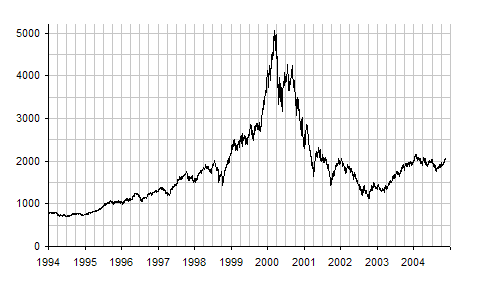
The ability for individuals to day trade via electronic trading platforms coincided with the extreme bull market in technological issues from 1997 to early 2000, known as the dot-com bubble. From 1997 to 2000, the NASDAQ rose from 1,200 to 5,000. Many naive investors with little market experience made huge profits buying these stocks in the morning and selling them in the afternoon, at 400% margin rates. An unprecedented amount of personal investing occurred during the boom and stories of people quitting their jobs to day trade were common.[17]
In March 2000, this bubble burst, and many less-experienced day traders began to lose money as fast, or faster, than they had made during the buying frenzy. The NASDAQ crashed from 5000 back to 1200; many of the less-experienced traders went broke, although obviously it was possible to have made a fortune during that time by short selling or playing on volatility.[18][19]
Profitability and risks
[edit]Because of the nature of financial leverage and the rapid returns that are possible, day trading results can range from extremely profitable to extremely unprofitable; high-risk profile traders can generate either huge percentage returns or huge percentage losses.[20]
Day trading is risky, and the U.S. Securities and Exchange Commission has made the following warnings to day traders:[21]
- Be prepared to suffer severe financial losses
- Day traders do not "invest"
- Day trading is an extremely stressful and expensive full-time job
- Day traders depend heavily on borrowing money or buying stocks on margin
- Don't believe claims of easy profits
- Watch out for "hot tips" and "expert advice" from newsletters and websites catering to day traders
- Remember that "educational" seminars, classes, and books about day trading may not be objective
- Check out day trading firms with your state securities regulator
Most day traders lose money.[22][23][24]
A 2019 research paper analyzed the performance of individual day traders in the Brazilian equity futures market. Based on trading records from 2012 to 2017, it was concluded that day trading Brazilian equity futures is almost uniformly unprofitable:
We show that it is virtually impossible for individuals to compete with HFTs and day trade for a living, contrary to what course providers claim. We observe all individuals who began to day trade between 2013 and 2015 in the Brazilian equity futures market, the third in terms of volume in the world, and who persisted for at least 300 days: 97% of them lost money, only 0.4% earned more than a bank teller (US$54 per day), and the top individual earned only US$310 per day with great risk (a standard deviation of US$2,560). We find no evidence of learning by day trading.[25]
An article in Forbes quoting someone from an educational trading website stated that "the success rate for day traders is estimated to be around only 10%, so ... 90% are losing money," adding "only 1% of [day] traders really make money."[26]
Techniques
[edit]Day trading requires a sound and rehearsed method to provide a statistical edge on each trade and should not be engaged on a whim.[27]
The following are several basic trading strategies by which day traders attempt to make profits. In addition, some day traders also use contrarian investing strategies (more commonly seen in algorithmic trading) to trade specifically against irrational behavior from day traders using the approaches below. It is important for a trader to remain flexible and adjust techniques to match changing market conditions.[28]
Swing trading
[edit]![[icon]](https://en.wikipedia.org/wiki/File:Wiki_letter_w_cropped.svg) | This section is empty. You can help by adding to it. (June 2025) |
Trend following
[edit]Trend following, or momentum trading, is a strategy used in all trading time-frames, assumes that financial instruments which have been rising steadily will continue to rise, and vice versa with falling. Traders can profit by buying an instrument which has been rising, or short selling a falling one, in the expectation that the trend will continue. These traders use technical analysis to identify trends.[29]
Szakmary and Lancaster (2015)[30] validate the effectiveness of trend following in the U.S. stock market, demonstrating its potential for generating positive returns. Similarly, research by Blackstar Funds highlights rigorous applications of trend following in commodities, financial futures, and currencies, although its application to stock trading presented challenges.[31]
Contrarian investing
[edit]Contrarian investing is a market timing strategy used in all trading time-frames. It assumes that financial instruments that have been rising steadily will reverse and start to fall, and vice versa. The contrarian trader buys an instrument which has been falling, or short-sells a rising one, in the expectation that the trend will change.[32]
Range trading
[edit]Range trading, or range-bound trading, is a trading style in which stocks are watched that have either been rising off a support price or falling off a resistance price. That is, every time the stock hits a high, it falls back to the low, and vice versa. Such a stock is said to be "trading in a range", which is the opposite of trending.[33]
Scalping
[edit]Scalping was originally referred to as spread trading. Scalping is a trading style where small price gaps created by the bid–ask spread are exploited by the speculator. It normally involves establishing and liquidating a position quickly, usually within minutes or even seconds.[29]
Scalping highly liquid instruments for off-the-floor day traders involves taking quick profits while minimizing risk (loss exposure).[34] It applies technical analysis concepts such as over/under-bought, support and resistance zones as well as trendline, trading channel to enter the market at key points and take quick profits from small moves. The basic idea of scalping is to exploit the inefficiency of the market when volatility increases and the trading range expands. Scalpers also use the 'fade' technique, when stock values suddenly rise, they short sell securities that seem overvalued.[35]
Rebate trading
[edit]Rebate trading is an equity trading style that uses ECN rebates as a primary source of profit and revenue. Most ECNs charge commissions to customers who want to have their orders filled immediately at the best prices available, but the ECNs pay commissions to buyers or sellers who "add liquidity" by placing limit orders that create "market-making" in a security. Rebate traders seek to make money from these rebates and will usually maximize their returns by trading low priced, high volume stocks. This enables them to trade more shares and contribute more liquidity with a set amount of capital, while limiting the risk that they will not be able to exit a position in the stock.[36]
Trading the news
[edit] | This section is empty. You can help by adding to it. (June 2025) |
Price action trading
[edit] | This section is empty. You can help by adding to it. (June 2025) |
Market-neutral trading
[edit]Market-neutral trading is a strategy that is designed to mitigate risk in which a trader takes a long position in one security and a short position in another security that is related.[29]
Algorithmic trading
[edit]It is estimated that more than 75% of stock trades in United States are generated by algorithmic trading or high-frequency trading. The increased use of algorithms and quantitative techniques has led to more competition and smaller profits.[37]
Cost
[edit]Commission
[edit] | This section is empty. You can help by adding to it. (June 2025) |
Spread
[edit]The numerical difference between the bid and ask prices is referred to as the bid–ask spread.[38] It can be viewed as an estimate of transaction costs.[38]
The bid–ask spread is two sides of the same coin. The spread can be viewed as trading bonuses or costs according to different parties and different strategies. On one hand, traders who do NOT wish to queue their order, instead paying the market price, pay the spreads (costs). On the other hand, traders who wish to queue and wait for execution receive the spreads (bonuses). Some day trading strategies attempt to capture the spread as additional, or even the only, profits for successful trades.[39]
Market data
[edit]Market data is necessary for day traders to be competitive. A real-time data feed requires paying fees to the respective stock exchanges, usually combined with the broker's charges; these fees are usually very low compared to the other costs of trading. The fees may be waived for promotional purposes or for customers meeting a minimum monthly volume of trades. Even a moderately active day trader can expect to meet these requirements, making the basic data feed essentially "free". In addition to the raw market data, some traders purchase more advanced data feeds that include historical data and features such as scanning large numbers of stocks in the live market for unusual activity. Complicated analysis and charting software are other popular additions. These types of systems can cost from tens to hundreds of dollars per month to access.[3]
See also
[edit]References
[edit]- ^ Yell, Tyler (October 3, 2019). "The Similarities Between Day Trading and Gambling". The Balance. Archived from the original on June 17, 2021. Retrieved September 26, 2020.
- ^ Frankel, Matthew (August 24, 2017). "Why Day Trading Stocks Is Not the Way to Invest". The Motley Fool.
- ^ a b Seth, Shobhit (August 17, 2019). "Choosing the Right Day-Trading Software". Investopedia.
- ^ "SEC.gov | Margin Rules for Day Trading". www.sec.gov. Archived from the original on 2024-04-25. Retrieved 2025-10-19.
- ^ Bulkowski, T. N. (2013). Swing and day trading evolution of a trader. In Swing and day trading evolution of a trader (1st edition). Wiley.
- ^ "Day Traders: Mind Your Margin". Financial Industry Regulatory Authority. Archived from the original on 2019-03-15. Retrieved 2019-03-17.
- ^ "Day-Trading Margin Requirements: Know the Rules". Financial Industry Regulatory Authority. Archived from the original on 2019-04-16. Retrieved 2017-09-06.
- ^ Karger, Gunther (August 22, 1999). "Daytrading: Wall Street's latest, riskiest get-rich scheme". American City Business Journals.
- ^ Davis, Anthony A. (2021). "The life of a pandemic day trader".
- ^ Godfrey, Neale (July 16, 2017). "Day Trading: Smart Or Stupid?". Forbes.
- ^ Diamandiev, Damyan (May 26, 2020). "How to Become a Day Trader with $100". Benzinga.
- ^ "Instinet - A Nomura Company - History". instinet.com. Archived from the original on 2019-03-21. Retrieved 2019-03-21.
- ^ Terrell, Ellen. "Research Guides: Wall Street and the Stock Exchanges: Historical Resources: Introduction". guides.loc.gov. Retrieved 2025-06-11.
- ^ Patterson, Scott (September 13, 2010). "Man Vs. Machine: How the Crash of '87 Gave Birth To High-Frequency Trading". CNBC.
- ^ a b Mackintosh, Phil (11 February 2021). "Nasdaq: 50 Years of Market Innovation". nasdaq.com. Retrieved 11 June 2025.
- ^ Goldfield, Robert (May 31, 1998). "Got $50,000 extra? Put it in day trading". American City Business Journals.
- ^ Kadlec, Daniel (August 9, 1999). "Day Trading: It's a Brutal World". Time.
- ^ Nakashima, David (February 11, 2002). "It's back to day jobs for most Internet 'day traders'". American City Business Journals.
- ^ Hayes, Adam (June 25, 2019). "Dotcom Bubble Definition". Investopedia.
- ^ Kuepper, Justin (August 11, 2020). "Day Trading: An Introduction". Investopedia.
- ^ "Day Trading: Your Dollars at Risk". U.S. Securities and Exchange Commission. April 20, 2005.
- ^ Mitchell, Cory (February 12, 2020). "The Difficulties of Making Money by Day Trading". The Balance. Archived from the original on June 18, 2022. Retrieved September 26, 2020.
- ^ Barber, Brad M.; Lee, Yi-Tsung; Liu, Yu-Jane; Odean, Terrance (March 2014). "The cross-section of speculator skill: Evidence from day trading". Journal of Financial Markets. 18: 1–24. doi:10.1016/j.finmar.2013.05.006. S2CID 7979781. SSRN 529063.
- ^ Mahani, Reza; Bernhardt, Dan (June 2007). "Financial Speculators' Underperformance: Learning, Self-Selection, and Endogenous Liquidity". The Journal of Finance. 62 (3): 1313–1340. doi:10.1111/j.1540-6261.2007.01237.x. JSTOR 4622302.
- ^ Chague, Fernando; De-Losso, Rodrigo; Giovannetti, Bruno Cara (February 2020). "Day trading for a living?". SSRN 3423101.
- ^ Godfrey, Neale (July 16, 2017). Day Trading: Smart Or Stupid? Forbes.
- ^ Mitchell, Cory (July 22, 2020). "Weighing a Day Trading Career". The Balance. Archived from the original on July 24, 2021. Retrieved September 26, 2020.
- ^ "Adapting To Change". SFO Magazine. October 2009.
- ^ a b c Duggan, Wayne (December 21, 2018). "4 Popular Day Trading Strategies for Investors". U.S. News & World Report.
- ^ Szakmary, A. C., & Lancaster, M. C. (2015). Trend-Following Trading Strategies in U.S. Stocks: A Revisit. Financial Review, 50(2), 221–255. https://doi.org/10.1111/fire.12065
- ^ https://myhedgedfund.typepad.com/files/does_trendfollowing_work_on_stocks-2.pdf [bare URL PDF]
- ^ Chen, James (March 6, 2019). "Contrarian". Investopedia.
- ^ Chen, James (May 4, 2018). "Trading Range". Investopedia.
- ^ Norris, Emily (September 1, 2020). "Scalping: Small Quick Profits Can Add Up". Investopedia.
- ^ "Type of Day Trader". DayTradeTheWorld. 15 January 2021.
- ^ Blodget, Henry (May 4, 2018). "The Latest Wall Street Trading Scam That Costs You Billions". Business Insider.
- ^ Duhigg, Charles (November 23, 2006). "Artificial intelligence applied heavily to picking stocks - Business - International Herald Tribune". The New York Times.
- ^ a b Ødegaard, Bernt Arne (21 December 2023). "Trading costs - Spread measures" (PDF). ba-odegaard.no. Retrieved 11 June 2025.
- ^ Milton, Adam (July 29, 2020). "Large Bid and Ask Spreads in Day Trading Explained". The Balance.
| Investment strategy |
|  | ||||||||
|---|---|---|---|---|---|---|---|---|---|---|
| Trading | ||||||||||
| Related terms |
| |||||||||
| Investors | ||||||||||
| Governance | ||||||||||


| International | |
|---|---|
| National | |
| Other | |

Day trading
View on GrokipediaDefinition and Fundamentals
Definition of Day Trading
Day trading is the practice of buying and selling financial instruments, such as stocks, options, futures, or currencies, within the same trading day, with the goal of profiting from short-term price movements. All positions are typically closed before the market closes to avoid overnight risks like after-hours news or gaps in price. This approach relies on intraday volatility rather than long-term trends, distinguishing it from strategies that hold assets for days or longer. The primary objective of day trading is to capitalize on small, frequent price fluctuations that occur during market hours, often leveraging high trading volume and liquidity to execute trades quickly. Traders enter and exit positions multiple times a day, focusing on assets with sufficient market depth to minimize slippage and ensure rapid order fulfillment. For instance, in highly liquid markets like major stock exchanges, day traders might exploit bid-ask spreads or brief momentum shifts, aiming for cumulative small gains. Unlike swing trading, which may involve holding positions overnight to capture multi-day trends, day trading strictly adheres to same-day closure to mitigate exposure to external events. This emphasis on liquidity ensures that trades can be executed without significantly impacting the market price, a core mechanic that supports the strategy's feasibility in fast-paced environments.Key Characteristics and Requirements
Day trading is characterized by its intensive time commitment, requiring traders to actively monitor markets throughout the trading day to identify and execute opportunities in real-time. Typically, this involves full-time dedication during standard market hours, often spanning 6 to 8 hours daily, depending on the exchange and session, as traders must remain vigilant to capitalize on short-term price fluctuations without holding positions overnight.[5][6][7] A key requirement for day trading, particularly in the United States, is meeting specific capital thresholds to comply with regulatory rules designed to mitigate risk. Under the Financial Industry Regulatory Authority (FINRA) Pattern Day Trader (PDT) rule, individuals classified as pattern day traders—those executing four or more day trades within five business days in a margin account—must maintain a minimum equity of $25,000 in their account at all times to engage in such activities.[8][9][10] This requirement applies to trading in financial instruments like stocks on major exchanges, ensuring traders have sufficient capital to absorb potential losses from frequent trades.[11] Success in day trading also demands specific skill prerequisites, including strong discipline to adhere to a predefined trading plan amid market volatility, rapid decision-making to enter and exit positions swiftly, and a commitment to continuous learning through market analysis and strategy refinement. These attributes enable traders to manage the high-pressure environment effectively, where emotional control and analytical prowess are essential for consistent execution.[12][13][14]Comparison to Other Trading Styles
Day trading differs from swing trading primarily in the duration of position holding. While day traders open and close all positions within a single trading day to avoid overnight market risks, swing traders typically hold positions for several days to weeks, aiming to capture short- to medium-term price swings based on technical patterns or market momentum. This intraday focus in day trading requires constant monitoring and rapid decision-making, whereas swing trading allows for more flexibility and less time commitment during market hours. Scalping represents a more extreme subset of day trading, characterized by ultra-short-term trades lasting from seconds to minutes, with the goal of profiting from small price changes through high volume. In contrast, day trading encompasses a broader range of intraday holds, which can extend to hours, allowing traders to target larger intraday movements without the intense frequency of scalping. Scalpers often rely on level 2 quotes and time-and-sales data for execution, but both approaches share the core principle of closing positions by the end of the day. Compared to long-term investing, day trading emphasizes short-term price fluctuations and technical analysis over fundamental value assessment. Long-term investors, such as those following buy-and-hold strategies, maintain positions for months or years, focusing on a company's intrinsic worth, dividends, and overall market growth to build wealth gradually. Day trading can complement buy-and-hold approaches by enabling portfolio diversification across different time horizons. In futures markets, day trading avoids roll yield costs incurred by long-term holders when rolling expiring contracts into new ones, particularly negative yields in contango conditions.[15] Day trading seeks quick profits from volatility within the day, often involving higher transaction costs and leverage, which can amplify both gains and losses—though risk levels vary significantly across these styles.History and Evolution
Origins in Traditional Markets
Day trading, in its nascent form, emerged in the 19th century amid the development of organized stock exchanges, particularly the New York Stock Exchange (NYSE), where floor traders began executing rapid buy-and-sell transactions to exploit intraday price fluctuations. The NYSE's roots trace back to the 1792 Buttonwood Agreement, which formalized trading among brokers, but it was during the late 19th century, specifically by the 1870s, that continuous trading sessions took hold, enabling specialists on the trading floor to facilitate quick trades in a burgeoning market driven by industrial expansion and railroad financing.[16][17] By the 1870s, the introduction of continuous trading and the role of floor specialists marked a shift toward more dynamic, same-day trading practices, as brokers shouted orders in an open outcry system to capitalize on short-term opportunities without holding positions overnight.[17][18] The late 19th and early 20th centuries saw further evolution through technological advancements like the ticker tape, a paper ribbon that printed real-time stock prices via telegraphic transmission and was invented in 1867. Widely adopted by the 1900s, the ticker tape profoundly influenced day trading by disseminating market information instantaneously across trading floors and brokerage houses. This technology transformed speculative trading by allowing floor traders to react swiftly to price changes, reducing information asymmetries and accelerating the pace of intraday transactions in traditional markets.[19][20] This technology not only made markets more efficient but also amplified the volume of rapid trades, as brokers could monitor and execute deals based on up-to-the-minute data rather than delayed reports.[21][22] A pivotal event underscoring the risks of speculative day trading occurred with the 1929 stock market crash, which highlighted the dangers of excessive intraday speculation and margin trading on traditional exchanges. The crash, triggered by a speculative frenzy where traders leveraged borrowed funds for rapid buys and sells, led to massive losses as the Dow Jones Industrial Average plummeted nearly 13% on Black Monday, October 28, and another 12% the next day, exposing the vulnerabilities of unchecked short-term trading practices.[23][24] This event, fueled by over-speculation and inadequate oversight, resulted in the market losing nearly half its value within two months, foreshadowing the Great Depression and prompting later regulatory reforms to mitigate such risks in floor-based trading.[25][26]Rise with Electronic Trading
The introduction of electronic trading systems in the 1970s marked a pivotal shift that facilitated the growth of day trading by enabling faster and more accessible market participation. In 1971, the National Association of Securities Dealers launched NASDAQ, the world's first fully electronic stock market, which automated quote distribution and trading, contrasting with traditional floor-based exchanges and allowing for real-time price updates that supported intraday strategies.[27][28] This innovation laid the groundwork for day traders to exploit short-term fluctuations without the delays of manual processes. By the 1980s and 1990s, the proliferation of personal computers and internet connectivity further propelled this evolution, as online brokerage firms emerged to democratize access to markets.[29] A landmark example was the founding of E*TRADE in 1992, which pioneered online trading platforms for individual investors, offering low-cost electronic execution that reduced barriers to entry for retail participants.[30] By the mid-1990s, such platforms had transformed day trading from a domain dominated by institutional players and floor traders into one increasingly accessible to the public, with automated systems enabling rapid order placement and execution. This period saw electronic trading volumes surge, as investors benefited from lower commissions and instantaneous access to market data, fostering a new era of intraday speculation.[31][32] The late 1990s dot-com boom amplified this trend, driving an unprecedented surge in retail day trading participation amid the rapid rise of technology stocks. Fueled by speculative fervor around internet companies, ordinary investors, including many quitting their jobs, flocked to online platforms to engage in full-time day trading, with trading volumes on NASDAQ exploding as retail accounts proliferated.[33][34] By 1999, the ease of electronic access had turned day trading into a cultural phenomenon, with millions of new participants chasing short-term gains in volatile tech sectors, significantly expanding the retail footprint in daily market activity.[35] Following the dot-com bust, the post-2000 era saw high-frequency trading (HFT) emerge as a dominant force, profoundly influencing retail day trading practices through advanced algorithmic execution. HFT firms, leveraging co-located servers and sophisticated software, began dominating order flows by the mid-2000s, executing trades in microseconds and tightening bid-ask spreads while increasing overall market liquidity.[36] This shift compelled retail day traders to adapt their strategies, often incorporating faster decision-making tools to compete with HFT-driven volatility, though it also raised costs for non-HFT participants due to fragmented liquidity and heightened competition.[37] Events like the 2010 Flash Crash highlighted HFT's role in amplifying intraday price swings, prompting retail traders to refine risk-averse approaches amid the technology's pervasive impact on market dynamics.[38]Impact of Regulatory Changes
The formation of the U.S. Securities and Exchange Commission (SEC) in 1934, following the 1929 stock market crash, marked a pivotal regulatory response to curb excessive speculative trading, including practices akin to modern day trading. The SEC was established under the Securities Exchange Act of 1934 to restore investor confidence by regulating securities markets, prohibiting manipulative practices, and requiring brokers to maintain records of transactions. This legislation directly addressed the speculative excesses of the 1920s, where day-like trading contributed to market volatility, by imposing antifraud provisions and oversight on exchanges, thereby reducing the prevalence of speculative short-term trades that had exacerbated the crash.[23] In the United States, the 2001 Pattern Day Trader (PDT) Rule, implemented by the Financial Industry Regulatory Authority (FINRA) under SEC authority, significantly shaped day trading by imposing restrictions on frequent traders in margin accounts. The rule defines a pattern day trader as any investor who executes four or more day trades within five business days in a margin account, provided those trades represent more than 6% of total trades in that period; such traders must maintain a minimum equity of $25,000 in their accounts to continue day trading. This regulation aimed to protect retail investors from the high risks of day trading by limiting access for undercapitalized participants and requiring enhanced disclosures from broker-dealers about the risks involved. Its introduction followed the dot-com bubble burst, addressing concerns over leveraged speculation that led to substantial losses among inexperienced traders. On a global scale, the Markets in Financial Instruments Directive II (MiFID II), enacted in Europe in 2018, influenced day trading through enhanced requirements for execution transparency and best execution practices. MiFID II mandates that trading venues and firms provide detailed pre- and post-trade data, including timestamps and prices, to promote fair competition and reduce hidden costs in fragmented markets, which directly impacts high-volume day traders relying on rapid executions. By requiring algorithmic trading firms to report on their strategies and regulating high-frequency trading through requirements for authorization, reporting, and implementation of trading controls, the directive aimed to mitigate systemic risks while fostering market integrity, though it increased compliance burdens for day traders operating across European exchanges.[39]Strategies and Techniques
Day traders primarily rely on technical analysis to identify and execute trades based on short-term price movements within a single trading day. This approach involves studying price charts, chart patterns, technical indicators, volume, and price action to determine entry and exit points. Intraday charts, such as 1-minute, 5-minute, or 15-minute candlestick charts, are central to this process, enabling traders to analyze real-time price behavior and volatility. Fundamental analysis, which assesses securities based on financial statements, economic indicators, news, and other factors affecting long-term value, is generally of secondary importance in day trading due to the focus on intraday dynamics rather than underlying fundamentals. However, fundamental information may be used supplementally—for example, to select stocks with upcoming earnings reports or news events that could trigger significant intraday volatility or to understand potential catalysts for price moves. The dominance of technical analysis in day trading stems from the need for rapid decision-making in response to market psychology, order flow, and short-term trends.[40][41]Common Day Trading Strategies
Day traders employ various strategies to capitalize on short-term price movements, including scalping, momentum trading, breakout trading (e.g., opening range breakout), mean reversion, trend following, and reversal trading. Successful day traders develop strategies with a proven edge validated through rigorous backtesting on thousands of trades[42], maintain a detailed trading journal to track performance and refine approaches, and specialize in a few major instruments such as currency pairs like EUR/USD during high-volume sessions such as the London/New York overlap. These strategies rely on identifying specific market conditions and executing trades accordingly, often within minutes or hours, to exploit intraday volatility. While technical indicators such as moving averages or volume analysis may support decision-making in these strategies, the core frameworks focus on trend continuation, reversion to averages, or change. Momentum Trading involves identifying assets exhibiting strong directional price movements and entering positions to ride the trend until signs of weakening appear. This strategy is based on the principle that assets with recent upward or downward momentum are likely to continue in that direction in the short term, driven by factors like high trading volume or news catalysts. According to FOREX.com, momentum traders typically scan for securities showing significant price changes accompanied by increased volume, entering long positions for upward momentum or short positions for downward trends. The step-by-step process includes: first, screening for stocks or instruments with above-average volume and price surges, often using real-time data feeds; second, confirming the momentum with indicators like the relative strength index (RSI) to ensure it's not overbought or oversold; third, entering the trade at the point of acceleration, such as during a volume breakout; and fourth, exiting when the momentum fades, typically indicated by slowing volume or price stalling, to lock in profits. QuantInsti notes that this approach is particularly effective in volatile markets like equities or forex, where rapid trends can yield quick returns, though it requires disciplined monitoring to avoid false signals. Breakout Trading focuses on entering positions when an asset's price breaks through established support or resistance levels, anticipating a strong subsequent move in the breakout direction. Examples include the opening range breakout, which uses the high and low of the initial trading period, such as the first 15-30 minutes after market open, to define the range for potential breakouts. This strategy capitalizes on the idea that once a price surpasses a key barrier, it often continues due to increased buyer or seller conviction, especially with confirming volume. Investopedia explains that breakouts commonly occur after periods of consolidation, such as in trading ranges, and are validated by higher-than-average trading volume. The implementation steps are: first, identifying potential breakout levels by analyzing historical price charts for resistance (upper bound) or support (lower bound) lines; second, waiting for the price to decisively close above resistance for a bullish breakout or below support for a bearish one, ideally with a volume spike of at least 50% above the average; third, entering the trade immediately after the breakout confirmation to capture the initial momentum; and fourth, setting a target based on the range's height projected from the breakout point, while monitoring for false breakouts that reverse quickly. Fidelity Investments highlights that breakout trading is popular in day trading for stocks on exchanges like NASDAQ, where intraday volatility can lead to significant moves following earnings announcements or market open. Reversal Trading, also known as counter-trend trading, aims to profit from anticipated changes in the prevailing price direction, often at points of exhaustion in an existing trend. Traders using this strategy look for signs that a trend is losing steam, positioning for a move in the opposite direction, which can be riskier due to the potential for continued trends. Pepperstone describes reversal trading as involving the identification of overextended moves followed by confirming signals of a shift. The step-by-step execution includes: first, spotting potential reversal points through patterns like double tops or bottoms on candlestick charts; second, confirming with divergence in oscillators, such as the RSI showing higher lows while price makes lower lows, indicating weakening momentum; third, entering the trade against the trend once the reversal pattern completes, such as after a key candlestick like a hammer or shooting star forms; and fourth, exiting when the new trend establishes itself or upon hitting a predefined target based on prior swing levels. Investopedia differentiates true reversals from temporary retracements by emphasizing the need for volume confirmation and multiple timeframe alignment to increase reliability in day trading scenarios. Scalping seeks to profit from small price gaps created by bid-ask spreads or order flows, involving numerous trades held for seconds to minutes. Scalpers target highly liquid instruments with tight spreads to minimize costs and maximize the frequency of small gains. The process typically includes: selecting assets with high volume and low latency; using level II quotes or time-and-sales data to spot immediate imbalances; entering trades on tiny price increments, often 1-5 ticks; and exiting rapidly to accumulate profits from volume rather than large moves, with strict stops to limit losses. This strategy demands fast execution and low commissions, as per Investopedia. Mean Reversion assumes prices will revert to their historical average after deviating, allowing traders to buy undervalued or sell overvalued assets in the short term. In day trading, it exploits intraday fluctuations around means like moving averages or Bollinger Bands. Steps involve: identifying deviations using statistical measures or oscillators; confirming with volume or other indicators; entering counter to the deviation; and exiting as price approaches the mean, often with tight risk controls given the risk of continued deviation. Investopedia notes its role in capitalizing on short-term price corrections.Technical Analysis Tools
Technical analysis tools are essential for day traders, who rely on these indicators to identify short-term price trends, momentum shifts, and potential entry or exit points within intraday sessions. These tools, derived from historical price and volume data, help in making rapid decisions in volatile markets without holding positions overnight. In day trading, indicators like moving averages and oscillators are particularly valued for their ability to filter noise and highlight actionable signals on short time frames, such as 1-minute or 5-minute charts.[43] There is no universally "best" technical indicator for day trading, as effectiveness depends on strategy, market conditions, and trader preference. Commonly recommended indicators include Moving Averages (especially Exponential Moving Averages, e.g., 9, 20, 50 periods) for trend identification and crossovers, Relative Strength Index (RSI, typically 14-period) for overbought/oversold conditions, Moving Average Convergence Divergence (MACD) for momentum and signal line crossovers, Bollinger Bands for volatility and potential breakouts/reversals, Volume Weighted Average Price (VWAP) for assessing intraday fair value and institutional activity, and volume indicators (including On-Balance Volume) to confirm price moves. Traders often use combinations (e.g., EMA + RSI + Volume) rather than single indicators to reduce false signals. Backtesting and risk management are essential.[44] Moving averages are fundamental trend-following indicators used by day traders to smooth out price fluctuations and determine the direction of the prevailing trend. The simple moving average (SMA) calculates the arithmetic mean of a security's price over a specified number of periods, providing a straightforward view of average price levels that can act as dynamic support or resistance. For instance, a 20-period SMA on an intraday chart helps traders identify if the price is trading above or below the trend line, signaling bullish or bearish momentum. In contrast, the exponential moving average (EMA) assigns greater weight to recent prices, making it more responsive to new information and thus preferred for day trading's fast-paced environment. Common EMA periods for day trading include 9, 20, and 50.[45][46][43] Crossover signals from moving averages are a key application in day trading, where a shorter-term EMA crossing above a longer-term SMA may indicate a buy signal, suggesting upward momentum, while the opposite suggests a sell. These crossovers are often used on short intervals to capture quick intraday trends, with traders combining them with volume confirmation to avoid false signals in ranging markets.[47][48] The Relative Strength Index (RSI) is a momentum oscillator that measures the speed and change of price movements to identify overbought or oversold conditions in day trading. Developed by J. Welles Wilder, the RSI is calculated using the formula: where is the average gain of up periods divided by the average loss of down periods over a given timeframe, typically 14 periods for intraday analysis. This produces values between 0 and 100, allowing traders to gauge potential reversals.[49][50] In day trading, RSI thresholds of 70 for overbought and 30 for oversold are standard, prompting traders to anticipate pullbacks when RSI exceeds 70 (indicating potential selling pressure) or dips below 30 (suggesting buying opportunities). For example, on a forex pair's 5-minute chart, an RSI reading above 70 might signal an exit from a long position to lock in gains before a correction. Day traders often adjust the period to shorter lengths, like 9 or 7, to suit the rapid pace of intraday movements.[51][52] The Moving Average Convergence Divergence (MACD) is a momentum indicator that displays the relationship between two exponential moving averages, typically a 12-period EMA and a 26-period EMA, with a 9-period EMA serving as the signal line. The MACD line, signal line, and histogram help identify momentum changes, with crossovers (MACD crossing above the signal line for buy signals, below for sell) and divergences used to spot potential reversals or continuations in day trading.[53] Bollinger Bands consist of a middle band (usually a 20-period SMA) and two outer bands set two standard deviations away. They measure volatility, with contracting bands indicating low volatility and potential for breakouts, and expanding bands showing high volatility. Price touching the upper band may signal overbought conditions, and the lower band oversold, making Bollinger Bands useful for identifying breakouts or reversals in intraday trading.[54] The Volume Weighted Average Price (VWAP) calculates the average price weighted by volume since the trading session started, resetting daily. It serves as a benchmark for intraday fair value and reflects institutional trading activity. Day traders use VWAP to determine if a price is trading at a premium or discount to average, often entering long positions when price is below VWAP and short when above, or using it as dynamic support/resistance.[55] Volume indicators, such as On-Balance Volume (OBV), play a crucial role in confirming price trends by incorporating trading volume data, which day traders use to validate the strength of intraday moves. General volume analysis confirms whether price moves are supported by participation, with rising volume on up moves indicating strong buying interest. OBV is a cumulative indicator that adds volume on periods when the price closes higher and subtracts volume on periods when it closes lower, creating a running total that reflects buying or selling pressure. This helps traders discern whether a price advance is supported by increasing volume (bullish confirmation) or if divergences suggest weakening momentum.[56][57] In day trading contexts, OBV can be applied to spot breakouts or breakdowns on short-term charts, though it is generally more effective on daily or longer timeframes due to noise in intraday data; rising OBV alongside rising prices can confirm the validity of an upward move, potentially signaling a continuation trade when used cautiously. For instance, if a stock's price hits a new intraday high but OBV fails to follow (a bearish divergence), traders might prepare for a reversal. OBV's simplicity makes it a staple for confirming signals from other tools like moving averages in high-volume markets such as equities or futures.[58][59][60] Day traders typically combine multiple indicators to improve signal reliability and reduce false positives. For example, an EMA crossover might be confirmed with RSI to avoid overbought entries, and volume or VWAP to validate momentum. Such multi-indicator approaches, when backtested and paired with disciplined risk management, help navigate the challenges of intraday volatility more effectively.Risk Management Practices
Risk management is a cornerstone of day trading, designed to protect capital from the inherent volatility of intraday price movements. Day traders employ various techniques to limit potential losses while allowing for profitable opportunities, ensuring that no single trade can significantly impair their overall portfolio. These practices are essential given the high frequency of trades and the leverage often involved in day trading activities. One fundamental risk management tool is the use of stop-loss orders, which automatically trigger the sale of a position when it reaches a predetermined loss threshold. This mechanism helps traders exit losing trades promptly, preventing small losses from escalating due to emotional decision-making or market gaps. Strong emotional discipline is vital for adhering to these orders, overriding impulses driven by fear or greed to maintain rule-based trading. For instance, if a trader buys a stock at $50 and sets a stop-loss at $48, the order executes if the price drops to that level, capping the loss at 4% of the position value. Stop-loss orders are widely recommended by financial regulators and trading experts to mitigate the risks associated with rapid market fluctuations in day trading. Position sizing is another critical practice, where traders allocate only a small percentage of their total capital—strictly limiting risk to 0.5-1% per trade—to avoid catastrophic losses. This approach is calculated using the formula: Position size = (Account risk / Trade risk), where account risk is the dollar amount one is willing to lose (e.g., 0.5-1% of total capital) and trade risk is the potential loss per share or unit based on the stop-loss distance. By adhering to this method—known as the 1% rule—and maintaining a risk/reward ratio greater than 2:1—cutting losses quickly while letting winning trades run—day traders can endure multiple losing trades without depleting their funds, survive drawdowns, and compound profits toward long-term sustainability in volatile markets, as strict risk management prevents account depletion from losses, enables compounding growth through consistency, and counters unrealistic expectations of daily 1%+ profits that lead to overtrading.[61] This technique is emphasized in professional trading guidelines to balance potential rewards against the high failure rate observed among retail day traders.[62] Diversification within trading sessions involves spreading exposure across non-correlated assets to reduce the impact of adverse movements in any one instrument. Day traders might limit positions to a few unrelated sectors or asset classes, such as combining stocks from technology and healthcare with forex pairs, to avoid over-reliance on correlated markets that could amplify losses during sector-specific downturns. This strategy helps maintain overall portfolio stability throughout the trading day, complementing other risk controls by minimizing simultaneous drawdowns. While market risks like sudden volatility can still arise, diversification within sessions provides a buffer against them.Markets and Instruments
Primary Markets for Day Trading
Day trading primarily occurs in highly liquid financial markets that offer opportunities for rapid execution and short-term price fluctuations. Among these, stock markets such as the New York Stock Exchange (NYSE) and the NASDAQ stand out due to their substantial trading volumes and established infrastructure for intraday transactions.[12] The NYSE, one of the world's largest stock exchanges, facilitates day trading through its electronic trading systems, providing high liquidity that allows traders to enter and exit positions efficiently during the core U.S. trading session from 9:30 a.m. to 4:00 p.m. Eastern Time.[63] Similarly, the NASDAQ, known for listing technology and growth-oriented companies, offers comparable liquidity and volatility, making it a favored venue for day traders seeking to capitalize on sector-specific movements within the same timeframe.[12] These markets' concentrated trading hours contribute to heightened activity, particularly in the opening and closing periods, which amplify price swings suitable for day trading strategies.[63] The foreign exchange (forex) market represents another cornerstone for day trading, characterized by its decentralized, over-the-counter structure and global reach. Operating 24 hours a day, five days a week from Sunday 5:00 p.m. to Friday 5:00 p.m. Eastern Time, it enables traders to engage in continuous sessions across major financial centers like London, New York, and Tokyo.[64] With an average daily trading volume exceeding $9.6 trillion as of April 2025, the forex market's exceptional liquidity minimizes slippage and supports high-frequency trades, particularly in major currency pairs such as EUR/USD, which dominate transaction volumes due to their tight spreads and responsiveness to economic news.[65] This 24/5 accessibility and depth make forex ideal for day traders aiming to exploit short-term fluctuations driven by geopolitical events or central bank announcements, without the constraints of fixed exchange hours.[12] Futures markets, exemplified by the Chicago Mercantile Exchange (CME) Group, provide additional primary avenues for day trading, especially for derivatives on indices and commodities. The CME offers a diverse array of futures contracts, including equity index products like the E-mini S&P 500 and E-mini NASDAQ-100, as well as commodities such as crude oil and gold, traded on its Globex electronic platform.[66] These markets boast high liquidity, with millions of contracts traded daily by a mix of hedgers and speculators, ensuring tight bid-ask spreads and robust order execution even during volatile sessions.[66] Nearly 24-hour trading availability from Sunday evening to Friday afternoon allows day traders to respond to global developments, while inherent leverage—often requiring performance bonds of 3% to 12% of contract value—enables control of larger positions with less capital, amplifying potential returns on intraday moves in indices or commodities.[66] For instance, as of early 2026, an E-mini S&P 500 contract valued at approximately $350,000 might require only about $25,000 in initial margin, facilitating efficient day trading opportunities.[67]Suitable Financial Instruments
Day trading thrives on financial instruments that exhibit high volatility for potential profit opportunities and sufficient liquidity to enable quick entry and exit without significant price impact. Equities, particularly high-volume stocks from established companies, are among the most suitable due to their frequent intraday price swings driven by market news, earnings reports, and trading volume. For instance, technology giants like Apple Inc. (AAPL) often experience substantial intraday movements, making them ideal for day traders seeking to capitalize on short-term fluctuations.[68] Currencies in the foreign exchange (forex) market are another prime choice, as major currency pairs such as EUR/USD or USD/JPY offer tight bid-ask spreads and round-the-clock trading, ensuring high liquidity even during volatile sessions. These pairs are favored for day trading because of their responsiveness to economic data releases and geopolitical events, which can generate rapid price changes without the constraints of fixed market hours.[68][69] Options contracts provide leveraged exposure to underlying assets, allowing day traders to amplify positions without owning the full asset, though this increases risk. Options on volatile stocks or indices enable strategies exploiting time decay and directional moves within a single day. Exchange-traded funds (ETFs), such as the SPDR S&P 500 ETF (SPY) or iShares Core S&P 500 ETF (IVV), offer high liquidity with tight spreads and low expense ratios, facilitating efficient intraday trades, and can be traded on margin for leverage.[68][70][71]Role of Leverage and Margin
In day trading, margin trading allows traders to borrow funds from their broker to increase their purchasing power, enabling them to control larger positions than their own capital would permit. This borrowing is facilitated through a margin account, where the trader deposits a portion of the trade's value as collateral, known as the initial margin. For instance, under the Pattern Day Trader (PDT) rule in the U.S., eligible accounts can access up to 4:1 intraday leverage for stocks, meaning a trader with $25,000 in equity could control up to $100,000 in securities during the trading day.[72][73] Leverage in this context is quantified by the ratio of the total position size to the trader's own capital, amplifying both potential profits and losses. The effective exposure can be calculated as the trader's capital multiplied by the leverage ratio; for example, with $10,000 in capital and 4:1 leverage, the exposure reaches $40,000. Brokers also impose maintenance margin requirements, typically around 25-30% of the position's value, to ensure the account remains sufficiently collateralized against market fluctuations.[74][75][76] A significant risk associated with leverage and margin is the margin call, which occurs when the account's equity falls below the maintenance margin threshold due to adverse price movements. In such cases, the broker may issue a margin call requiring the trader to deposit additional funds or sell positions to restore the required equity level; failure to comply can lead to forced liquidation of holdings, potentially locking in substantial losses. This mechanism underscores the heightened volatility and capital preservation challenges inherent in leveraged day trading.[76][77][73]Tools and Technology
Trading Platforms and Software
Day trading relies on specialized platforms and software that enable rapid execution, analysis, and management of trades within intraday timeframes. These tools are essential for accessing real-time market data, placing orders efficiently, and simulating strategies to minimize risks. Popular platforms are often provided by brokers and cater to different markets, such as equities or forex, with features tailored to high-frequency trading needs.[78][79] One widely used platform for stock and options day trading is thinkorswim, originally developed by TD Ameritrade and now integrated into Charles Schwab's offerings following their 2020 merger. It provides advanced real-time charting with customizable indicators, allowing traders to visualize price movements and technical patterns instantly. The platform supports sophisticated order routing options, including direct market access to exchanges for faster execution, which is crucial for capturing short-term opportunities. Additionally, thinkorswim includes backtesting capabilities, where users can test trading strategies against historical data to evaluate potential performance without financial risk. Broker integration is seamless, with commission-free trades for stocks and ETFs, though options and futures incur per-contract fees, and execution speeds are optimized through partnerships with multiple market makers.[79][80][78] For forex day trading, MetaTrader 4 (MT4) and its successor MetaTrader 5 (MT5) dominate as widely used platforms compatible with numerous brokers worldwide. These platforms offer real-time charting across multiple timeframes and over 30 built-in technical indicators, enabling traders to analyze currency pairs and execute trades swiftly. Order routing in MetaTrader supports various types, such as market, limit, and stop orders, with integration for algorithmic execution if desired. Backtesting features allow strategy optimization using historical tick data, helping traders refine approaches for volatile forex markets. In terms of broker integration, MetaTrader connects easily to providers like FOREX.com, often with competitive spreads starting from 0.0 pips and no commissions on major pairs, while execution speeds benefit from low-latency servers to handle high-volume intraday trades.[81][82][83] Other notable platforms include Interactive Brokers' Trader Workstation (TWS) and TradeStation, which are favored for their robustness in multi-asset day trading. TWS features advanced real-time charting and customizable order routing algorithms that prioritize best execution prices across global exchanges. It also includes comprehensive backtesting tools for simulating complex strategies. TradeStation emphasizes powerful analytics with real-time data visualization and supports direct order routing to electronic communication networks for sub-second executions. Both platforms integrate with their respective brokers, offering tiered commission structures—such as $0.005 per share for high-volume traders on Interactive Brokers—and margin rates as low as 4.83% for day trades, enhancing cost efficiency for active users.[84][78][85] These platforms often incorporate data feeds for seamless integration, providing the live market information necessary for informed decision-making during trading sessions. Overall, the choice of software depends on the trader's market focus, with features like those described ensuring compliance with regulatory requirements for pattern day traders, such as maintaining a minimum $25,000 equity balance in U.S. margin accounts.[80][86] Day traders often employ multi-monitor setups to enhance the utilization of these platforms. Common configurations use 4-6 monitors for entry-level to advanced day traders (up to 6-8 for professionals), with each screen 27-32 inches to reduce neck and eye strain. This allows dedicated displays for charts, real-time quotes, news feeds, and order entry. Such setups are paired with adjustable monitor arms for ergonomic positioning and graphics cards capable of handling multiple high-resolution outputs.[87][88]Data Feeds and Analytics
Day traders rely on real-time data feeds to monitor market movements and make rapid decisions, with Level II quotes serving as a critical component by providing detailed visibility into the order book. These quotes display the full depth of bid and ask prices beyond the top level, including the number of shares or contracts at each price level and the identities of market makers or participants involved. This information allows traders to assess supply and demand dynamics, identify potential support and resistance levels, and gauge market liquidity for NASDAQ-listed securities. For instance, Level II data reveals the order book depth, which can indicate impending price shifts based on accumulating buy or sell orders.[89][90][91] In addition to order book analysis, news feeds integrated into trading workflows enable event-driven strategies by delivering timely information on market-moving events. Services like Bloomberg provide structured, real-time news feeds that include breaking headlines, economic data releases, and corporate announcements in a machine-readable format, allowing traders to react swiftly to volatility spikes caused by such events. These feeds are often normalized for consistency across global markets, facilitating integration with trading platforms for automated alerts on relevant news. Bloomberg's event-driven feeds, for example, emphasize high-impact stories that can influence short-term price action in stocks, currencies, or futures.[92][93][94] Analytics dashboards further enhance day trading by offering customizable tools for scanning and processing data streams into actionable insights. These dashboards typically include volatility scanners that monitor price fluctuations across multiple instruments, generating alerts for unusual activity such as gaps or breakouts based on predefined criteria like percentage changes or volume surges. Traders can configure these scanners to filter for specific conditions, such as high relative volume or momentum shifts, integrating feeds from Level II quotes and news sources for a holistic view. Such tools prioritize real-time processing to support quick identification of trading opportunities without delving into automated execution. While these dashboards may incorporate elements of technical analysis tools like moving averages, their primary focus remains on data aggregation and alert generation.[95][96]Automation and Algorithmic Trading
Automation and algorithmic trading have become integral to modern day trading, enabling traders to execute strategies at speeds and volumes unattainable by humans, particularly in fast-paced markets like equities and forex.[97] These systems use pre-programmed instructions to automate trade decisions based on factors such as price, timing, and volume, reducing emotional biases and allowing for precise implementation of day trading approaches.[98] In day trading contexts, automation often focuses on intraday opportunities, where algorithms can monitor multiple assets simultaneously and close positions before market close to mitigate overnight risks.[97] Algorithm types in day trading vary from simple bots designed for scalping to more sophisticated AI-driven predictors that analyze complex patterns. Simple scalping bots, for instance, operate on basic rules like exploiting small bid-ask spreads through high-frequency executions, often executing hundreds of trades per day to accumulate modest gains from minor price fluctuations.[97] In contrast, complex AI-driven predictors leverage machine learning techniques, such as neural networks or random forests, to forecast short-term price movements by processing vast datasets including historical prices, news sentiment, and market microstructure data.[99] These advanced models, like those using supervised learning for regression-based predictions, adapt over time to improve accuracy in volatile intraday environments, though they require significant computational resources and data quality.[99] While simple bots prioritize speed and low latency for immediate executions, AI predictors emphasize predictive power, often integrating elements from common day trading strategies like momentum or mean reversion in an automated manner.[97] Backtesting is a crucial step in developing and refining algorithmic day trading systems, involving the simulation of strategies on historical market data to assess potential performance without real capital risk.[100] Traders use backtesting to evaluate metrics such as Sharpe ratio, maximum drawdown, and win rate by replaying past price actions through the algorithm's logic, allowing identification of flaws like overfitting or inadequate handling of transaction costs.[100] For day trading algorithms, backtests typically span intraday intervals, incorporating realistic elements like slippage and commissions to ensure the strategy's robustness in live conditions.[101] Platforms like QuantConnect facilitate this process by providing access to high-resolution historical data for multi-asset simulations, enabling iterative code refinements until the algorithm demonstrates consistent profitability across various market regimes.[102] Regulatory oversight by the U.S. Securities and Exchange Commission (SEC) plays a key role in governing high-frequency trading (HFT) algorithms used in day trading, aiming to prevent market disruptions and ensure fair practices.[103] The SEC requires firms employing algorithmic strategies, including HFT, to register as dealers if they meet certain activity thresholds, subjecting them to enhanced supervision for risks like flash crashes or manipulative trading patterns.[104] Additionally, through rules like Regulation SCI, the SEC mandates robust testing, monitoring, and error-handling mechanisms for automated systems to maintain market integrity.[105] FINRA complements this by enforcing supervision requirements under Rule 3110, ensuring that algorithmic trading activities comply with broader securities laws.[105]Risks and Challenges
Financial and Market Risks
Day trading exposes participants to significant financial and market risks due to the rapid pace of transactions and the inherent unpredictability of short-term price movements. Market volatility is a primary concern, as sudden price swings, often triggered by news events or economic data releases, can result in substantial losses within minutes. This risk is heightened in highly volatile assets such as cryptocurrencies, where extreme price fluctuations can lead to rapid and substantial losses. For instance, flash crashes—abrupt, deep declines in asset prices followed by quick recoveries—have been documented in major exchanges, amplifying potential drawdowns for day traders who cannot exit positions swiftly. According to the U.S. Securities and Exchange Commission (SEC), such events, like the 2010 Flash Crash, highlight how algorithmic trading and high-frequency activities can exacerbate volatility, leading to billions in temporary market value evaporation.[106] Liquidity risks further compound these challenges, particularly when trading in less liquid instruments where buy and sell orders may not match efficiently. In illiquid markets, day traders face slippage, the difference between the expected price of a trade and the actual executed price, which becomes pronounced during high-volume or urgent trades. This risk is especially acute in smaller-cap stocks or during off-peak hours in forex markets, where thin order books can cause prices to move adversely before a position is filled. Slippage can erode anticipated profits, turning marginally profitable strategies into losses, and traders are advised to monitor bid-ask spreads as a key indicator of liquidity. Transaction costs represent another critical financial hazard that can systematically undermine day trading viability, as frequent buying and selling incurs commissions, bid-ask spreads, and sometimes exchange fees. Even with low-cost brokers, these expenses accumulate rapidly; for example, a trader executing dozens of trades daily might see costs consume a significant portion of small gains from intraday fluctuations. Moreover, frequent trading triggers short-term capital gains taxes, taxed at ordinary income rates, which further compound costs and challenge consistent profitability. Financial markets are close to efficient at short time horizons, with new information incorporating almost instantly through professional and institutional traders, leaving limited exploitable mispricings for retail day traders. These structural disadvantages—spreads, commissions, slippage, and taxes—can transform even fair expected returns into negative outcomes for retail participants. Consequently, no trading strategy can guarantee profits every single day, as stock markets are inherently volatile and efficient, with persistent risks including transaction costs, slippage, market crashes, and unforeseen events. Even professional quantitative funds experience losing days or periods due to such factors.[107][108][109][110] Such costs are often overlooked by beginners, potentially leading to negative returns despite accurate price predictions, and it is recommended to calculate effective costs per trade to assess strategy sustainability. Additionally, while leverage can amplify these risks by magnifying both gains and losses, it underscores the need for stringent position sizing to mitigate overall exposure. Personal day trading in forex, compared to employing an asset manager, involves much higher risks, with potential 20-50% drawdowns or total losses due to leverage and volatility.[111] Furthermore, it limits diversification to one asset class—currency pairs—unlike multi-asset portfolios managed professionally that spread risk across equities, bonds, and other instruments.Psychological and Behavioral Factors
Day trading, characterized by its fast-paced and high-stakes environment, is profoundly influenced by psychological and behavioral factors that can either enhance or undermine a trader's performance. These elements encompass cognitive biases, emotional responses, and the mental toll of sustained engagement, often leading to suboptimal decision-making despite sound technical knowledge. Research indicates that emotional reactivity, such as intense reactions to gains and losses, correlates with poorer trading outcomes among day traders. Effective management of these factors is crucial, as they distinguish successful traders from those who falter under pressure, and behavioral errors can turn theoretically fair games negative for retail traders. The full-time effort required for effective day trading, particularly in forex, intensifies stress compared to more passive asset management approaches. Day trading, particularly in US stock markets, is suitable for individuals possessing certain personality traits. These include a calm demeanor, strict discipline, strong emotional control, ability to make quick decisions, high stress resistance, and tolerance for frequent small losses. It is unsuitable for individuals who are impulsive, emotionally volatile, thrill-seeking, or risk-averse. Most people's personalities do not align well with the demands of day trading, contributing to the high failure rates among participants.[112] Common biases in day trading include overconfidence, which prompts traders to overestimate their predictive abilities and take oversized positions, resulting in excessive risk exposure. For instance, overconfidence bias leads to overtrading and neglect of risk management, as traders believe they can outperform the market more consistently than is realistic.[113] Similarly, the fear of missing out (FOMO) drives impulsive entries into trades, often fueled by greed and the desire for quick profits, exacerbating losses during volatile periods.[114] These biases are compounded by an illusion of control, where traders attribute successes to skill while dismissing failures as anomalies, further distorting judgment in the rapid decision-making required for day trading.[114] Emotional discipline is essential to counteract phenomena like "tilt," a state of emotional frustration that leads to irrational trading decisions following losses. Techniques such as journaling trades help traders reflect on their emotional patterns, identify triggers, and maintain objectivity by documenting decisions and outcomes.[113] Establishing predefined trading rules, including entry/exit criteria and position sizing, also fosters discipline by reducing the sway of immediate emotions like fear or greed.[112] In high-frequency day trading scenarios, these practices promote self-awareness and prevent impulsive actions that could amplify losses. Burnout represents a significant behavioral challenge in day trading due to the high-stress, screen-intensive routines that demand constant vigilance over market movements. Prolonged exposure to such demands can disrupt sleep, productivity, and overall well-being, leading to emotional exhaustion and reduced decision-making capacity. Day trading also carries a risk of addiction, where the constant stimulation, excitement of quick gains, and frequent trades can lead to compulsive behavior akin to gambling addiction, resulting in escalated psychological pressure, neglect of other life areas, and increased financial losses. Studies of day traders reveal that intense emotional responses to market fluctuations contribute to frustration and dropout rates, particularly during downturns, underscoring the cumulative effects of sustained psychological strain.[114]Common Pitfalls for Beginners
Research indicates that 80%-90% of day traders incur long-term losses, as markets are close to efficient at short horizons, with information incorporating instantly via professionals; retail faces spreads, commissions, slippage, taxes, and behavioral errors that turn even fair games negative; moreover, only the top 5-10% of traders consistently outperform professional asset managers.[115][116] Beginner day traders often fall into the trap of overtrading, which involves executing an excessive number of trades in a short period, frequently driven by emotional impulses such as the fear of missing out or attempts to recover losses quickly. This behavior is particularly evident in revenge trading, where a trader, after experiencing a loss, enters additional positions impulsively to "make back" the money, leading to further financial depletion without a rational strategy. According to trading education resources, overtrading can erode capital rapidly due to accumulated transaction costs and poor decision-making under stress, with many novices failing to recognize it as a symptom of inadequate emotional control.[117][118] To avoid overtrading, beginners should establish strict daily trade limits and incorporate mandatory breaks after losses to prevent emotional escalation, allowing time for objective review of market conditions. Reputable brokers emphasize that successful day traders focus on high-probability setups rather than volume, as excessive activity often stems from a lack of patience and can transform minor setbacks into account-destroying spirals.[119][120] Another prevalent pitfall is ignoring or underestimating trading fees and costs, which can significantly diminish profits in scenarios where individual trades yield only small gains. For day traders engaging in frequent transactions, commissions, spreads, and platform fees accumulate quickly, often turning marginally profitable strategies into net losses; for instance, high-frequency trading can lead to thousands of dollars in annual costs even with low per-trade rates. Authoritative financial analyses highlight that beginners frequently overlook these expenses during initial planning, assuming they are negligible, only to discover their impact when reviewing account statements.[12][121] Mitigating this error requires selecting cost-effective brokers with transparent fee structures and incorporating all expenses into profitability calculations before entering trades, ensuring that potential rewards substantially exceed the total costs involved. Education on these hidden expenses is crucial, as gaps in understanding basic trading mechanics can exacerbate the issue for novices.[122] A lack of a predefined trading plan is perhaps the most fundamental mistake for beginners, involving trades executed without clear entry and exit rules, risk parameters, or overall strategy, resulting in inconsistent and reactive decision-making. Without such a plan, traders are prone to entering positions based on fleeting hunches or exiting prematurely due to panic, which undermines any potential for disciplined profit-taking. Financial strategy guides stress that a solid plan should outline specific criteria for trade initiation, stop-loss levels, and profit targets to maintain objectivity amid market volatility.[123][124] To circumvent this pitfall, aspiring day traders must develop and adhere to a written plan tested through simulation, reviewing it regularly to adapt to changing market dynamics while avoiding ad-hoc adjustments. This structured approach not only fosters consistency but also helps integrate lessons from educational resources into practical application.[125][120]Success Rates and Statistics
Overall Profitability Data
Most day traders never become profitable, with reliable studies showing that only approximately 1-15% achieve consistent profitability, depending on the timeframe, criteria, and market conditions. Recent analyses indicate that around 13% of day traders maintain consistent profitability over six months, while long-term success over five years is rare, often as low as 1%.[29][115] These figures align with earlier studies and confirm persistently low success rates. Less than 1-3% of day traders are consistently profitable net of fees according to aggregated reviews. FINRA data from 2020, still referenced in current analyses, shows 72% of day traders incurring losses in a year.[126] Studies on day trading profitability reveal stark disparities, with the vast majority incurring losses over short periods and consistent long-term profitability remaining rare. Aggregated data from academic and industry analyses show that less than 20% achieve profitability in typical six-month evaluations, dropping further over longer horizons. Research indicates that only about 1% of day traders earn more than a minimum wage equivalent after costs. Overall, estimates indicate that 80-90% of day traders lose money long-term across various markets, supported by regulatory data reporting high loss rates in retail accounts. Specifically, only 4-10% achieve long-term profitability, with 90-95% ultimately losing money or quitting due to transaction costs, slippage, taxes, and market reversals.[127][115] Persistent claims of high daily returns, such as 3% per day, are unrealistic. Even averaging 1% per day leads to implausible compounding outcomes far exceeding observed results. Empirical data confirm negative average annual returns for typical day traders, with success requiring disciplined execution in volatile, efficient markets where professionals and algorithms hold advantages. In cryptocurrency futures, loss rates are estimated at 70-95% due to heightened volatility and leverage. These outcomes are exacerbated by fees, short-term capital gains taxes, slippage, volatility, and behavioral errors. U.S. retail day traders underperform market benchmarks by an average of 10.3% annually.[128] For skilled traders, realistic returns are typically a few percent per month at best, rather than per day. These figures underscore the high-risk nature of day trading, where short-term gains are rare and long-term viability is scarce.Long-Term Survival Rates
Studies on the long-term survival of day traders reveal high attrition rates, with approximately 40% quitting within one month, 80% within two years, and only 13% remaining active after three years. In a comprehensive analysis of Taiwanese day traders from 1992 to 2006, survival rates decline sharply: approximately 44% remain active after one year, 24% after two years, and 15% after three years. Poor performance significantly increases quitting likelihood, with unprofitable traders showing higher hazard rates.[129] Aggregate intraday returns for day traders averaged negative values after fees and taxes. Similar findings from Brazilian day traders show 97% incurring losses, contributing to low persistence. Even experienced unprofitable traders often continue due to overconfidence or behavioral factors. Only a small fraction achieve consistent profitability sufficient for livelihood, with less than 3% generating predictably positive returns net of costs in some datasets, and only 1-4% exceeding minimum wage equivalents across studies.[116]Factors Affecting Trader Success
Experience level plays a crucial role, with research showing positive correlation between trading duration and profitability. Experienced traders better anticipate movements and refine strategies, with top performers outperforming novices significantly, though such success remains rare.[130] Market conditions impact viability: bull markets offer more opportunities for momentum strategies, while bear markets reduce setups and require stricter criteria, often lowering profits. Economic data and global events influence volatility and testing resilience.[131] Discipline, including adherence to predefined rules, risk management (e.g., risking 1-2% per trade, maintaining favorable risk-reward ratios), and emotional control, strongly predicts success for the minority who profit consistently. Education in market basics, technical analysis, and psychology, along with sufficient capital (including compliance with regulations like the U.S. $25,000 minimum equity for pattern day traders), enable better risk assessment and strategy execution.[61] Most beginners fail due to emotions, poor risk management, lack of thorough education, insufficient capital, and underestimating competition from professionals and algorithms. Success often requires years of practice, treating day trading as a full-time skill-building process rather than a path to quick riches, with consistent review of trades and adaptation to changing markets essential for the small percentage who succeed.Regulation and Legal Aspects
Global Regulatory Frameworks
Day trading is subject to a variety of regulatory frameworks worldwide, designed to protect investors, ensure market integrity, and mitigate systemic risks associated with high-frequency, short-term trading activities. These frameworks are enforced by national or regional authorities, which impose requirements on broker-dealers, leverage limits, and disclosure obligations tailored to the volatility of financial instruments like stocks, forex, and derivatives. While regulations vary by jurisdiction, they generally emphasize risk management and suitability assessments for retail participants. In the United States, the Securities and Exchange Commission (SEC) serves as the primary regulator for securities markets, including oversight of broker-dealers engaged in day trading activities. The SEC's Division of Trading and Markets directly regulates major market participants such as broker-dealers and self-regulatory organizations to promote fair and efficient markets. The Financial Industry Regulatory Authority (FINRA), a self-regulatory organization approved by the SEC, handles much of the day-to-day supervision of broker-dealers, focusing on conduct rules, margin requirements, and investor protection measures specific to day trading. For instance, FINRA conducts ongoing reviews of its day trading rules to evaluate their effectiveness in safeguarding retail investors. Specific U.S. rules, such as those defining pattern day traders, are detailed in dedicated regulations. In the European Union, the European Securities and Markets Authority (ESMA) established harmonized guidelines in 2018 to protect retail traders from excessive risks in leveraged products commonly used in day trading, such as contracts for differences (CFDs). Following ESMA's cessation of temporary product intervention measure renewals in July 2019, as national competent authorities implemented permanent measures at least as stringent, leverage limits ranging from 30:1 for major currency pairs to 2:1 for cryptocurrencies continue to be applied uniformly at the national level to ensure comparable risk levels across underlying assets for retail clients.[132] These restrictions also include mandatory margin close-out rules on a per-account basis and negative balance protection to prevent losses exceeding deposited funds. In Asia, regulatory approaches to day trading exhibit significant variations, with Japan's Financial Services Agency (FSA) imposing stringent restrictions on margin trading to curb speculative excesses. Under Japan's Financial Instruments and Exchange Act, the FSA mandates that financial operators collect margins equivalent to at least 4% of the trading amount for new positions in over-the-counter FX transactions, prohibiting continued trading without compliance. These rules, enforced through bodies like the Financial Futures Association of Japan, limit leverage and require robust risk disclosures for retail participants in margin-based day trading. Similar but jurisdiction-specific controls exist across other Asian markets, adapting to local economic conditions while aligning with global standards for financial stability.Pattern Day Trader Rule
The Pattern Day Trader (PDT) rule is a regulation established by the Financial Industry Regulatory Authority (FINRA) and enforced by the U.S. Securities and Exchange Commission (SEC) to protect retail investors from excessive risk in day trading activities.[2] Under this rule, a pattern day trader is defined as any margin account holder who executes four or more day trades within five consecutive business days, provided that the number of day trades represents more than 6% of the total trades in the account during that period.[2] Once designated as a pattern day trader, the account must maintain a minimum equity of $25,000 at all times when engaging in day trading, which includes cash and eligible securities.[2] If the account equity falls below this $25,000 threshold, the broker must restrict day trading activities until the minimum equity level is restored.[2] This equity requirement ensures that pattern day traders have sufficient capital to absorb potential losses, as day trading often involves the use of margin, which amplifies both gains and risks. Separately, if a pattern day trader exceeds their day-trading buying power limitation, the broker will issue a day-trading margin call, requiring the deposit of additional funds within five business days.[2] Until the margin call is met, the account is restricted to a day-trading buying power of only two times the maintenance margin excess. If the call is not met within the five-day period, the account will be further restricted to trading only on a cash available basis for 90 days or until the call is met.[2] Traders seeking to circumvent the PDT rule may opt for cash accounts, which do not allow margin trading and thus are exempt from the designation, though they impose settlement periods that limit the frequency of trades to avoid good faith violations. Another approach involves using offshore brokers not subject to U.S. regulations, but this carries significant risks such as lack of investor protections, potential regulatory violations if trading U.S. securities, and difficulties in fund recovery.Tax Implications for Day Traders
Day traders in the United States face specific tax treatments that differ from those of casual investors, primarily through the recognition of trader status by the Internal Revenue Service (IRS). To qualify as a trader, individuals must demonstrate substantial, regular, frequent, and continuous trading activity aimed at profiting from short-term market fluctuations, rather than long-term investments.[133] Upon achieving trader status, day traders can elect mark-to-market (MTM) accounting under Section 475(f) of the Internal Revenue Code, which treats all gains and losses as ordinary income rather than capital gains.[134] This allows deduction of trading losses as ordinary losses without the $3,000 annual capital loss limitation applicable to investors and provides exemption from wash-sale rules, though gains are taxed at ordinary income rates (up to 37%), which are higher than long-term capital gains rates (0-20%).[134][135] This election must be made by the original due date of the prior year's tax return (without extensions) and applies to securities or commodities trading, allowing traders to report unrealized gains and losses at the end of each tax year as if positions were sold at fair market value.[136] The MTM election provides benefits such as avoiding the $3,000 annual limitation on capital loss deductions and exemption from wash-sale rules, but it also means that all trading income is taxed at ordinary income rates, which can reach up to 37% depending on the trader's bracket.[135][137] In addition to income treatment, qualifying traders can deduct ordinary and necessary business expenses related to their trading activities, which are reported on Schedule C of Form 1040 as part of a sole proprietorship.[138] Deductible expenses include costs for trading software, market data subscriptions, internet services, educational materials specifically for trading, and equipment such as computers used exclusively for trading purposes.[133][139] Home office deductions may also apply if a dedicated space is used regularly and exclusively for trading, covering a portion of rent, utilities, and depreciation based on the square footage allocated to trading.[140] However, commissions and fees directly related to buying or selling securities are not separately deductible but must instead be factored into the calculation of gain or loss on each transaction.[134] These deductions can significantly reduce taxable income, but traders must maintain detailed records to substantiate claims during potential IRS audits.[141] Internationally, tax implications for day traders vary widely, often hinging on whether trading income is classified as capital gains from investments or as business income from professional activities. In many countries, such as the United Kingdom, frequent day trading may be treated as a trade, subjecting profits to income tax rates (up to 45%) and allowing deductions for business expenses, whereas occasional trading qualifies for capital gains tax at lower rates (18-24%).[142][143] In contrast, Australia distinguishes between investors and traders by assessing the intent and frequency of trades; professional day traders are taxed on business income at marginal rates up to 45%, with full expense deductibility, while capital gains for investors receive a 50% discount if held over 12 months.[142] Canada similarly classifies active day traders as carrying on a business, taxing gains as ordinary income (up to 53% combined federal and provincial rates) rather than capital gains (50% inclusion rate), enabling broader deductions but eliminating preferential long-term rates.[142] These classifications depend on factors like trading volume, holding periods, and use of derivatives, and traders operating across borders may face additional complexities such as withholding taxes on foreign-sourced income.[144]Getting Started
Education and Skill Development
Day trading requires a solid foundation in financial markets, technical analysis, risk management, psychological discipline, proficiency in trading platforms, chart analysis tools, and risk management practices, which aspiring traders can build through structured education and hands-on practice. Formal courses offered by institutions like the New York Institute of Finance or online platforms such as Coursera and Udemy provide comprehensive curricula covering market fundamentals, charting techniques, and trading strategies, often led by industry professionals to ensure practical applicability. Books remain a cornerstone of self-study, with classics like "Trading in the Zone" by Mark Douglas emphasizing the mental aspects of trading to overcome emotional biases, while "How to Day Trade for a Living" by Andrew Aziz offers actionable strategies for beginners based on real-world examples. Day trading is a high-risk activity suitable primarily for individuals with specific personality traits: calmness, strict discipline, strong emotional control, quick decision-making ability, high stress tolerance, and the capacity to accept frequent small losses. It is generally unsuitable for those who are impulsive, emotional, thrill-seeking, or risk-averse, as these traits are common and do not align with the demands of day trading. Empirical data and industry observations indicate that the vast majority of retail day traders lose money, with estimates suggesting only 1-15% achieve consistent long-term profitability, often due to emotional factors, poor risk management, and competition from professional traders and algorithms. Day trading should be approached as a full-time skill-building process rather than a means to quick riches; many experts and regulators recommend considering long-term investing as a lower-risk alternative for most individuals.[115][145] Given these realities, aspiring traders must acquire knowledge in trading platforms, chart analysis, and risk management, and gain substantial experience through simulated practice before risking real capital. Extensive simulated trading is essential to test strategies, develop skills, and assess suitability without financial loss.[8][10] To develop skills without financial risk, traders frequently use paper trading simulators, virtual platforms that replicate real market conditions for testing strategies on historical or live data. Popular options include Thinkorswim by TD Ameritrade, which provides advanced charting and backtesting tools, and TradingView's paper trading feature, allowing users to simulate trades across stocks, forex, and futures with detailed performance analytics. These simulators help build experience by enabling experimentation with entry/exit points and position sizing, fostering pattern recognition and decision-making under simulated pressure. Traders should engage in extensive simulator practice, ideally achieving consistent profitability in simulation over an extended period, before transitioning to live trading. For those seeking formal recognition, certifications can enhance credibility and deepen knowledge, though they are optional for day traders. The Chartered Market Technician (CMT) designation, administered by the CMT Association, involves three levels of exams focusing on technical analysis, quantitative methods, and portfolio management, requiring candidates to demonstrate proficiency through rigorous testing and ethical standards. Similarly, the Certified Financial Technician (CFTe) from the International Federation of Technical Analysts offers a global credential emphasizing practical trading skills. These programs typically require prior study and can take several months to complete, providing a structured path for skill validation. Beyond initial learning, ongoing skill development involves joining trading communities or mentorship programs, including online forums such as Reddit's subreddits r/Daytrading and r/Trading. In these communities, experienced traders share insights on adapting to market volatility, though discussions often reveal widespread skepticism toward many paid day trading courses, which users frequently criticize as overpriced or of limited value. Community members commonly recommend free or low-cost resources such as Investopedia, BabyPips, YouTube tutorials, and self-study of methods from authors like Al Brooks and Adam Grimes, while some structured paid programs receive more positive feedback for their organization and insights. For instance, practical steps like maintaining a trading journal to review past simulations can integrate education with real application, as outlined in beginner guides. Continuous education through webinars and market updates from sources like the Securities and Exchange Commission (SEC) ensures traders stay informed on evolving strategies and regulations.[146][147]Capital and Account Setup
Day trading requires establishing a brokerage account with sufficient capital to meet regulatory requirements and support trading activities. In the United States, the Pattern Day Trader (PDT) rule, enforced by the Financial Industry Regulatory Authority (FINRA) and the Securities and Exchange Commission (SEC), mandates a minimum equity of $25,000 in a margin account for traders who execute four or more day trades within five business days. This requirement applies to margin accounts and is intended to ensure traders have adequate resources and typically some prior experience or simulated practice to handle the risks of leveraged day trading. Falling below this threshold restricts day trading until the balance is restored through deposits.[10] [8] While some brokers may allow cash accounts with lower minimums, such as $2,000 for basic margin eligibility under Regulation T, pattern day trading specifically demands the $25,000 floor to access full intraday trading privileges. Outside the U.S., minimum capital requirements vary; for instance, many international brokers impose no such PDT equivalent but recommend starting with at least $5,000 to $10,000 for effective risk management, though for forex day trading in the EU under 30:1 leverage limits, at least €50,000 to €100,000 is often advised to absorb drawdowns.[10][148] Selecting a suitable broker is crucial for day traders, with key criteria including low-latency execution to minimize slippage during volatile market conditions and strict adherence to regulatory standards for investor protection. Low latency, often achieved through direct market access and proximity to exchange servers, enables faster order fills, which is essential for capitalizing on short-term price movements. Regulatory compliance, such as registration with bodies like the SEC, CFTC, or equivalent international authorities (e.g., FCA in the UK or ASIC in Australia), ensures the broker operates transparently and safeguards client funds through measures like segregation of assets and insurance coverage. Other important factors include competitive commission structures, reliable customer support, and access to advanced order types, though day traders should prioritize brokers with proven uptime and minimal downtime during peak trading hours. Day trading accounts primarily come in two types: cash accounts and margin accounts, each with distinct features suited to different trading styles. A cash account requires all purchases to be funded solely with settled cash in the account, limiting traders to buying and selling securities without borrowing, which avoids interest costs but restricts leverage and may impose settlement delays under the T+1 cycle (effective as of May 2024). In contrast, a margin account allows borrowing from the broker to amplify buying power—typically up to four times the maintenance margin for day trades—enabling larger positions but introducing risks like margin calls if the account value drops below required levels. For day traders, margin accounts are standard due to their flexibility, though they demand the aforementioned $25,000 minimum under PDT rules. Funding a day trading account can be accomplished through various methods, depending on the broker's offerings, to quickly meet minimum requirements. Common options include Automated Clearing House (ACH) transfers, which are free or low-cost electronic bank transfers typically settling in 1-3 business days; wire transfers for faster (same-day) funding, albeit with potential fees of 30; and mailing physical checks, which may take longer to clear. Some brokers also support account transfers from other institutions via the Automated Customer Account Transfer Service (ACATS), allowing seamless migration of existing assets without liquidation. Traders should verify the broker's specific funding policies, as international wires or cryptocurrency deposits may incur additional costs or delays, and ensure funds are fully settled before initiating trades to comply with settlement rules.Practical Steps for New Traders
Given the high risks and low success rates of day trading, prospective traders should follow a cautious, structured approach to learning and practice, treating it as a skill requiring extensive preparation and discipline rather than a shortcut to wealth. A realistic step-by-step process typically includes:- Acquire thorough education in market fundamentals, technical analysis (including charts, support/resistance, trends, and patterns), risk management, and trading psychology, using reliable free resources like Investopedia or reputable courses.
- Establish realistic expectations and sufficient capital, risking only money that can be afforded to lose; in the US, pattern day traders require a minimum $25,000 equity to comply with FINRA/SEC rules, and traders should generally allocate no more than 1-2% risk per trade to preserve capital.
- Select a reputable broker and platform with fast execution, real-time data, and low fees (examples include Interactive Brokers or Thinkorswim) and practice the setup.
- Engage in extensive paper trading or simulation using real-time data for several months, tracking performance in a journal and refining strategies such as breakouts or scalping.
- Develop and rigorously test 1-2 simple strategies (such as support/resistance breakouts) through backtesting and forward-testing, avoiding overcomplication.
- Transition to live trading with small positions once consistent profitability is demonstrated in simulation, focusing on high-probability setups and quickly cutting losses.
- Implement robust risk management and emotional controls, including stop-losses, position limits, avoidance of revenge trading, and daily trade reviews while strictly adhering to a predefined plan.
- Commit to ongoing learning, market monitoring, adaptation to changing conditions, and cautious engagement with communities, recognizing that achieving proficiency may require years and is not guaranteed for most.