Hubbry Logo
Deimatic behaviourDeimatic behaviourMain
Open search
Deimatic behaviour
Community hub
Deimatic behaviour
logo
8 pages, 0 posts
0 subscribers
Be the first to start a discussion here.
Contribute something
Deimatic behaviour
Deimatic behaviour
from Wikipedia

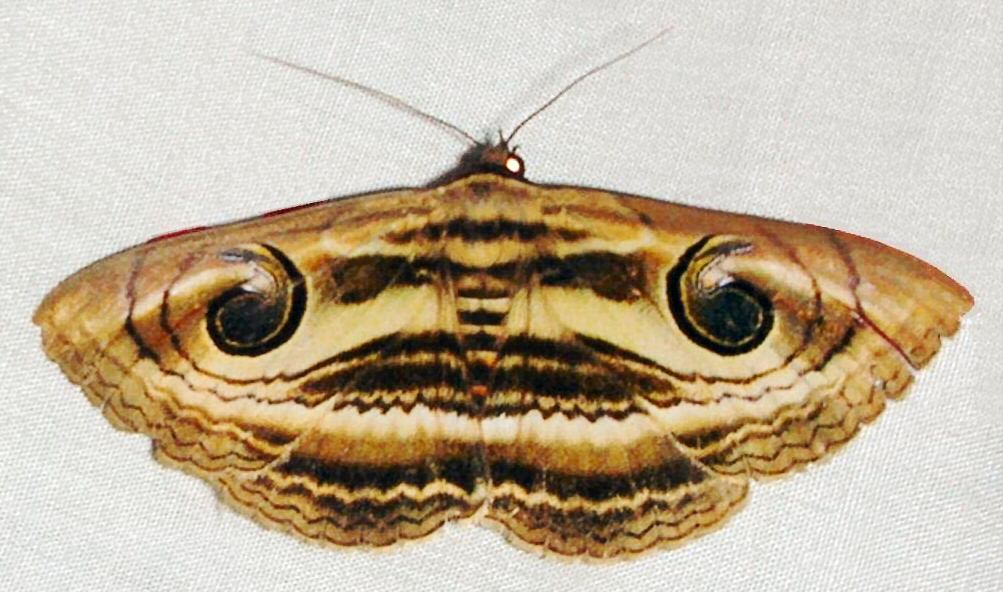
Spirama helicina resembling the face of a snake in a deimatic or bluffing display

Deimatic behaviour or startle display[1] means any pattern of bluffing behaviour in an animal that lacks strong defences, such as suddenly displaying conspicuous eyespots to scare off or momentarily distract a predator, thus giving the prey animal an opportunity to escape.[2][3] The term deimatic or dymantic originates from the Greek δειματόω (deimatóo), meaning "to frighten".[4][5]

Deimatic display occurs in widely separated groups of animals, including moths, butterflies, mantises and phasmids among the insects. In the cephalopods, different species of octopuses,[6] squids, cuttlefish and the paper nautilus are deimatic.

Displays are classified as deimatic or aposematic by the responses of the animals that see them. Where predators are initially startled but learn to eat the displaying prey, the display is classed as deimatic, and the prey is bluffing; where they continue to avoid the prey after tasting it, the display is taken as aposematic, meaning the prey is genuinely distasteful. However, these categories are not necessarily mutually exclusive. It is possible for a behaviour to be both deimatic and aposematic, if it both startles a predator and indicates the presence of anti-predator adaptations.

Vertebrates including several species of frog put on warning displays; some of these species have poison glands. Among the mammals, such displays are often found in species with strong defences, such as in foul-smelling skunks and spiny porcupines. Thus these displays in both frogs and mammals are at least in part aposematic.

In insects

[edit]
Threat displays are not always deimatic bluff. Some stick insects spray the monoterpene chemical dolichodial when attacked, so their displays are honest aposematism.
A puss moth (Cerura vinula) caterpillar displaying its two flagella on its tail and red patches on its head. If the threat does not retreat, the caterpillar can fire formic acid from its flagella.

Deimatic displays are made by insects including the praying mantises (Mantodea) and stick insects (Phasmatodea). While undisturbed, these insects are usually well camouflaged. When disturbed by a potential predator, they suddenly reveal their hind wings, which are brightly coloured. In mantises, the wing display is sometimes reinforced by showing brightly coloured front legs, and accompanied by a loud hissing sound created by stridulation. For example, the grasshopper Phymateus displays red and yellow areas on its hind wings; it is also aposematic, producing a distasteful secretion from its thorax.[3] Similarly the threat display of the walking stick phasmid (Peruphasma schultei) is not a bluff: the insect sprays defensive dolichodial-like monoterpene chemical compounds at attackers.[7]

Among moths with deimatic behaviour, the eyed hawkmoth (Smerinthus ocellatus) displays its large eyespots, moving them slowly as if it were a vertebrate predator such as an owl.[3] Among butterflies, the peacock butterfly Aglais io is a cryptic leaf mimic with wings closed, but displays four conspicuous eyespots when disturbed, in a display effective against insectivorous birds (flycatchers).[8]

An experiment by the Australian zoologist A. D. Blest demonstrated that the more an eyespot resembled a real vertebrate eye in both colour and pattern, the more effective it was in scaring off insectivorous birds. In another experiment using peacock butterflies, Blest showed that when the conspicuous eyespots had been rubbed off, insectivorous birds (yellow buntings) were much less effectively frightened off, and therefore both the sudden appearance of colour, and the actual eyespot pattern, contribute to the effectiveness of the deimatic display.[3]

Some noctuid moths, such as the large red underwing (Catocala nupta), are cryptic at rest, but display a flash of startlingly bright colours when disturbed.[9] Others, such as many species of genus Speiredonia and Spirama, look threatening while at rest. Also saturniid moths of the genera Attacus and Rothschildia display snake heads, but not from the frontal position.[10]

Many arctiid moths make clicks when hunted by echolocating bats; they also often contain unpalatable chemicals. Some such as dogbane tiger moths (Cycnia tenera) have ears and conspicuous coloration, and start to make clicks when echolocating bats approach. An experiment by the Canadian zoologists John M. Ratcliffe and James H. Fullard, using dogbane tiger moths and northern long-eared bats (Myotis septentrionalis), suggests that the signals in fact both disrupt echolocation and warn of chemical defence. The behaviour of these insects is thus both deimatic and aposematic.[11]

In arachnids

[edit]

Both spiders and scorpions are venomous, so their threat displays can be considered generally aposematic. However, some predators such as hedgehogs and spider-hunting wasps (Pompilidae) actively hunt arachnids, overcoming their defences, so when a hedgehog is startled by, for instance, the sounds made by a scorpion, there is reason to describe the display as deimatic.[12]

Spiders make use of a variety of different threat displays. Some such as Argiope and Pholcus make themselves and their webs vibrate rapidly when they are disturbed; this blurs their outline and perhaps makes them look larger, as well as more difficult to locate precisely for an attack.[13] Mygalomorphae spiders such as tarantulas exhibit deimatic behaviour; when threatened, the spider rears back with its front legs and pedipalps spread and fangs bared. Some species, such as the dangerous Indian ornamental tree spider (Poecilotheria regalis) have bright colouring on the front legs and mouthparts which are shown off in its threat display when it "rears up on its hind legs, and brandishes the fore limbs and palpi in the air".[14]

Scorpions perform non-bluffing threat displays, as they have powerful defences, but various predators still eat them. When provoked, they spread their pincers and in some cases raise their abdomens, their tails standing near-erect with the sting ready for immediate use. Some scorpions in addition produce deimatic noises by stridulating with the pedipalps and first legs.[12]

In cephalopods

[edit]
Deimatic display: Callistoctopus macropus generates a bright brownish red colour with white oval spots when disturbed.

Deimatic behaviour is found in cephalopods including the common cuttlefish Sepia officinalis, squid such as the Caribbean reef squid (Sepioteuthis sepioidea) and bigfin reef squid (Sepioteuthis lessoniana), octopuses[15] including the common octopus Octopus vulgaris and the Atlantic white-spotted octopus (Octopus macropus), and the paper nautilus (Argonauta argo). Deimatic cephalopod displays involve suddenly creating bold stripes, often reinforced by stretching out the animal's arms, fins or web to make it look as big and threatening as possible.[16]

For example, in the common cuttlefish the display consists of flattening the body, making the skin pale, showing a pair of eyespots on the mantle, dark eye rings, and a dark line on the fins, and dilating the pupils of the eyes.[16] The common octopus similarly displays pale skin and dark eye rings with dilated pupils, but also curls its arms and stretches out the web between the arms as far as possible, and squirts out jets of water.[16] Other octopuses such as Atlantic white-spotted octopus turn bright brownish red with oval white spots all over in a high contrast display.[16][17] The paper nautilus can rapidly change its appearance: it suddenly withdraws the shining iridescent web formed by its first pair of arms from its shell.[16]

In vertebrates

[edit]
Frill-necked lizard faces predators, making itself look big with head frills, raising its body and waving its tail.

Among vertebrates, the Australian frill-necked lizard (Chlamydosaurus kingii) has a startling display in which wide semicircular frills on either side of the head are fanned out; the mouth is opened wide exposing the gape; the tail is waved over the body, and the body is raised, so that the animal appears as large and threatening as possible.[18]

Frogs such as Physalaemus nattereri, Physalaemus deimaticus, and Pleurodema brachyops have a warning display behaviour. These animals inflate themselves with air and raise their hind parts to appear as large as possible, and display brightly coloured markings and eyespots to intimidate predators. Seven species of frogs in the genus Pleurodema have lumbar glands (making the animals distasteful, so in their case the display is likely aposematic); these glands are usually boldly contrasted in black as a further warning.[19]

Non-bluffing (aposematic) displays occur in mammals which possess powerful defences such as spines or stink glands, and which habitually warn off potential predators rather than attempting escape by running. The lowland streaked tenrec (Hemicentetes semispinosus) raises the spines on its head and back when confronted by a predator, and moves its head up and down. Porcupines such as Erethizon erect their long sharp quills and adopt a hunched, head-down posture when a predator is nearby. The spotted skunk (Spilogale putorius) balances on its front legs, its body raised vertically with its bold pelage pattern conspicuously displayed, and its tail (near the scent glands) raised and spread out.[20]

The domestic cat, Felis catus, arches its back and experiences piloerection when its sympathetic nervous system senses danger. This is an attempt to appear larger and more intimidating so attackers will see fighting as disadvantageous.[21][22][23]

Deimatic or aposematic?

[edit]

In a study of the rattling made by rattlesnakes of different species, the Canadian zoologists Brock Fenton and Lawrence Licht found that the sounds are always similar: they have rapid onset (starting suddenly, and reaching full volume in a few milliseconds); they consist of a "broadband" mixture of frequencies between 2 kHz and 20 kHz, with little energy either in the ultrasonic (above 20 kHz) or in the rattlesnakes' hearing range (below 700 Hz); and the frequencies do not change much with time (the rattling after two minutes having a similar spectrum to that at onset). There was no clear difference in the sounds made by the different species measured: Crotalus horridus, Crotalus adamanteus, Crotalus atrox, Crotalus cerastes, Crotalus viridis and Sistrurus catenatus. This pattern implies that the rattling "could serve as a general attention-getting device", which "is designed as a deimatic or startle display". Its similarity to the "broadband, harsh sounds" used as warning calls by birds and mammals may enhance its effectiveness. Since rattlesnakes can barely hear the sound, it is unlikely to serve as any form of communication to other snakes of the same species. Finally, the sounds are not in themselves loud enough to cause pain and hence keep predators away.[24]

Fenton and Licht note that the effect of a rattlesnake's rattling could be deimatic (startle) in inexperienced animals, whether predators or large animals that might injure the snake by stepping on it, but aposematic (a warning signal) in animals that are aware of the rattle's meaning.[24] They refer to the work of Fenton and his colleague David Bates on the responses of the big brown bat, Eptesicus fuscus, to the defensive clicks made by moths in the family Arctiidae, which includes the garden tiger moth, Arctia caja. This family includes large, furry, bitter-tasting or poisonous moths. They found that while sounds can startle inexperienced bats, after a few trials the bats ignored the sounds if the prey was edible; but the same sounds can warn experienced bats of bitter-tasting prey (an honest signal).[25]

See also

[edit]

References

[edit]

Bibliography

[edit]
Revisions and contributorsEdit on WikipediaRead on Wikipedia
from Grokipedia
Deimatic behaviour, also known as startle display, is an antipredator strategy in which animals suddenly exhibit conspicuous visual, acoustic, or chemical signals to trigger an innate avoidance response in predators, causing them to hesitate or abort an attack during close approach or subjugation. This behaviour is distinct from fleeing or retaliation and relies on the element of surprise, often by revealing hidden features like eyespots or bright colours that were previously concealed under camouflage. Unlike aposematic warning signals, which rely on learned predator avoidance of unprofitable prey, deimatic displays exploit unlearned reflexive responses and are typically brief, lasting seconds to minutes. Documented in over 224 species across diverse taxa including , cephalopods, amphibians, reptiles, and birds, deimatic behaviour has evolved independently multiple times, often co-opting existing physiological mechanisms such as flight muscles for rapid displays. Classic examples include the peacock butterfly (), which abruptly opens its wings to reveal startling eyespots when threatened, deterring bird predators like blue tits by eliciting a that delays attack. Similarly, underwing moths ( spp.) flash colourful hindwings during predator encounters, combining sudden movement with conspicuous patterning to enhance deterrence beyond motion alone. In cephalopods, the European cuttlefish (Sepia officinalis) flattens its body and displays dark eye-like rings to intimidate fish predators, though such displays are selectively used against smaller threats rather than large ones. The evolutionary origins of deimatic behaviour may follow two main pathways: a "startle-first" route, where rapid movements evolve before visual signals, or a "defence-first" route, where displays build on pre-existing warning signals. Experimental supports the startle-first , showing that fast, conspicuous movements alone can significantly prolong predator attack latency in naïve observers, with added visual elements further amplifying the effect. Effectiveness varies with predator experience, habitat, and prey body size, but deimatic displays generally provide a low-cost defence for otherwise vulnerable animals, potentially aiding survival in novel environments by exploiting predator naïveté.

Definition and Characteristics

Definition

Deimatic behaviour, derived from word deimatikós meaning "frightening" or "causing ," refers to a type of defensive display rooted in the ancient term deîma for "terror." The term "deimatic behaviour" was coined by the Argentine ethologist Héctor Maldonado in 1970 to describe a specific antipredator response observed in praying mantises. In essence, deimatic behaviour constitutes a sudden and dramatic bluffing display exhibited by animals that are typically cryptically colored or camouflaged and possess limited physical defenses, aimed at startling a predator or rival to create a momentary opportunity for escape. This involves rapid revelations of hidden features, such as eyespots, bold color patches, or expanded body parts, transforming the animal's appearance from inconspicuous to intimidating in an instant. The display is distinct from fleeing or counterattacking, functioning instead as a brief interruption of the threat's advance by eliciting an innate startle reflex in the receiver. Historically, deimatic displays were first documented in scientific literature through observations of insects, such as the praying mantis Mantis religiosa by Goureau in 1841, and in birds, with early ethological accounts in the late 19th and early 20th centuries describing similar startling postures. The concept gained formal traction in mid-20th-century ethology, particularly following Maldonado's work and Malcolm Edmunds' comprehensive survey in 1974, which categorized it within broader antipredator strategies. Its scope encompasses primarily visual displays but extends to acoustic signals, such as stridulation, or multimodal combinations, primarily targeting visually oriented predators or used in intraspecific contests for dominance or mating. Deimatic behaviour overlaps briefly with general startle responses in antipredator defenses, though it is characterized by its deceptive and non-injurious nature.

Key Characteristics

Deimatic behaviour is characterized by the sudden revelation of hidden, conspicuous patterns that startle predators, often featuring elements like eyespots that mimic the eyes of larger animals. These displays are typically brief, lasting from seconds to a few minutes, allowing the prey to exploit a momentary interruption in the predator's attack before resuming a cryptic posture. Such behaviours are predominantly employed by palatable or undefended prey species, which lack chemical defences or other permanent protections, relying instead on the element of surprise to enhance escape chances. While primarily visual, deimatic displays frequently incorporate multimodal components, combining sudden colour changes, postural adjustments, or pattern exposures with acoustic signals like hissing or wing rasping, and occasionally chemical cues such as odour release. This integration amplifies the startling impact, though visual elements remain the dominant modality in most documented cases. In contrast to aposematism, which may serve as a precursor in some through the of warning signals, deimatic behaviour is not continuously displayed but activated specifically in response to predator detection, such as during approach or contact, differentiating it from always-visible warning signals. The measurement of deimatic behaviour adheres to specific criteria outlined in established frameworks: the display must be concealed at rest to maintain a cryptic baseline, and it must elicit a startling effect through its abrupt onset, thereby disrupting the predator's behaviour. This framework, initially proposed by Umbers et al. in 2015, was refined in the synthesis by Drinkwater et al., which further emphasizes the critical role of surprise in defining and distinguishing deimatic displays from other defensive strategies.

Mechanisms and Ontogeny

Physiological Mechanisms

Deimatic behaviour is mediated by proximate physiological mechanisms that enable rapid activation of displays in response to perceived threats, primarily through neurologically simple stimulus-response processes in the . These involve quick sensory integration, where visual, tactile, or auditory cues from approaching predators trigger motor neurons to initiate the display, often within 100 milliseconds. Such responses typically rely on reflex arcs that bypass higher cognitive processing, allowing for immediate postural changes or revelations of hidden patterns without deliberate decision-making. Muscular and structural adaptations facilitate the sudden and dramatic elements of deimatic displays, such as the expansion of body parts or alteration of apparent and shape. In many cases, these displays incorporate stored in structures like hinges or cuticles, which is released abruptly to unfold wings or limbs, combined with coordinated contractions for sustained postures. For instance, rapid —quick shifts in body form—is achieved through innervated muscular systems that control expandable tissues, with visual components present in approximately 65% of documented cases in addition to movement. A synthesis highlights that while deimatic mechanisms often center on these reflex-based proximate causations, their complexity varies across taxa, with some displays incorporating multimodal sensory inputs (in about 50% of cases) or sustained (50%) versus rhythmical (30%) components, precluding a universal physiological model due to diverse anatomical constraints.

Developmental

Deimatic behaviours often exhibit a combination of innate and learned components, with many displays appearing genetically programmed from an early age but potentially refined through experience. In the double eye-spot mantis (Stagmatoptera biocellata), for instance, deimatic reactions emerge as instinctive responses in intermediate instars, triggered reflexively without prior exposure to predators. Similarly, young sunbitterns (Eurypyga helias) begin practicing wing displays, a deimatic behaviour involving sudden expansion to reveal eyespots, as early as 7 days old, suggesting an innate basis that matures rapidly. However, the role of learning remains underexplored; while deimatic displays do not require predator-specific learning for initial expression, unlike aposematic signals that rely on learned aversion, environmental encounters may enhance timing or intensity, though direct evidence is sparse across taxa. Developmental stages of deimatic behaviours vary by , often aligning with morphological changes and habitat shifts. In insects like praying mantises, early instars rely solely on for defence, with deimatic displays—such as sudden leg spreading and eyespot revelation—appearing only in later stages post partial maturation, becoming the primary strategy in adults. Among vertebrates, salamanders such as Anderson's crocodile newt (Echinotriton andersoni) exhibit deimatic postures, including tail elevation and body coiling, exclusively after from aquatic larvae to terrestrial juveniles, coinciding with the development of lungs and skin glands. In cephalopods, such as the brief squid (Lolliguncula brevis), deimatic ink clouds and posture changes are present in both juveniles and adults, but paralarvae of species like Doryteuthis pealeii prioritize transparency over displays, indicating stage-specific tied to size and vulnerability. Birds like sunbitterns show progressive refinement, with full displays achieved by 12 days and practised until fledging at 2–3 weeks. Environmental factors play a key role in shaping deimatic , with social learning and trial-and-error interactions influencing display proficiency. In group-living , juveniles may observe conspecifics to time displays more effectively, though empirical studies are limited; for example, chicks practise on non-threatening stimuli like parents before facing predators. transitions, such as from aquatic to terrestrial in salamanders, prompt the emergence of displays adapted to new threats, highlighting plasticity driven by ecological pressures. Drinkwater et al. (2022) emphasize significant gaps in ontogenetic , particularly in cephalopods, where developmental plasticity allows for varied deimatic patterns—such as differing body postures and use in hatchlings versus adults of the European cuttlefish (Sepia officinalis)—but the mechanisms of environmental refinement remain poorly understood. Recent studies (2023–2025) have further explored ontogenetic aspects, including polymorphic deimatic responses in yellow-bellied toads and enhanced antipredator effects through environmental modifications in leaf-rolling caterpillars. Intraspecific variation in deimatic behaviours often intensifies with age or reproductive status before declining in . Juvenile cottonmouth snakes () perform deimatic gape displays more frequently than adults, possibly due to higher vulnerability and reliance on bluffing over venomous strikes. In katydids, subadults like those of the mountain katydid (Metrioptera roeselii) sustain displays longer than winged adults, reflecting morphological constraints, while nymphs of Western Australian species (Caedicia) incorporate earlier in development. show age-related shifts, with hatchlings using simpler deimatic postures compared to the complex, multi-component displays of reproductively mature adults, suggesting maturation enhances effectiveness but may wane with senescence due to physiological decline. Overall, these patterns indicate that deimatic balances innate programming with experiential modulation, though comprehensive studies across life stages are needed to clarify these dynamics.

Evolutionary and Functional Aspects

Evolutionary Origins

Deimatic behaviour exhibits a widespread phylogenetic distribution across animal kingdoms, appearing convergently in distantly related lineages such as arthropods, mollusks, and vertebrates, which suggests multiple independent origins from primarily cryptic ancestors. In arthropods, for instance, deimatic displays have and been lost repeatedly within the praying mantis family Mantodea. Similarly, in vertebrates, basal lineages of salamanders show deimatic traits more frequently than derived ones, indicating recurrent tied to specific ecological niches. This pattern of convergence underscores that deimatic behaviour is not a homologous trait but a polyphyletic arising in response to shared predatory pressures across taxa. Selective pressures driving the evolution of deimatic behaviour primarily operate in high-predation environments where an organism's initial or fails upon predator detection, prompting a sudden shift to a startling display to interrupt the attack. A key posits a "startle-first" evolutionary route, where pre-existing reflexive escape movements in prey—such as rapid postural changes or flashes—were initially selected for their ability to elicit innate startle responses in predators, with conspicuous visual elements like eyespots co-evolving later to amplify . This sequence is supported by experimental evidence showing that fast movements alone can delay predator attacks, providing a feasible pathway for the integration of behavioral and morphological components. The synthesis of deimatic behaviour further ties these origins to ancestral startle reflexes, which were refined through to exploit predators' sensory biases in attack scenarios. Fossil evidence for deimatic behaviour is indirect, as behaviors themselves do not fossilize, but preserved morphological features suggestive of startling displays appear in Late terrestrial s from approximately 300 million years ago. Notably, color patterns interpreted as eyespots or disruptive markings on wings and exoskeletons from this period are hypothesized to have served deimatic functions, startling predators in swampy, predator-rich paleo-environments. These fossils represent some of the earliest potential indicators of such anti-predator strategies, predating many modern avian and mammalian predators and implying that deimatic traits may have originated in response to early or threats. The genetic basis of deimatic behaviour is likely polygenic, involving the integration of multiple loci that regulate , rapid movement, and conspicuous signaling, rather than relying on novel mutations. Hypotheses suggest from pre-existing genetic networks, such as those underlying intra-specific communication or basic escape responses, allowing for the rapid assembly of deimatic displays without de novo evolution of entire pathways. For example, genes controlling pigment deposition for may have been repurposed to enable sudden revelations of hidden patterns, while neural circuits for startle reflexes provided the behavioral foundation. Although specific loci remain unidentified due to the trait's complexity and lability, this co-optive model aligns with patterns observed in convergent traits across taxa.

Survival Value

Deimatic behaviour primarily serves an antipredator function by startling predators and creating a brief window of distraction, typically lasting 1-10 seconds, during which the prey can initiate escape. This reflexive response in predators exploits innate neural mechanisms, such as aversion to sudden novel stimuli, thereby increasing prey survival rates. For instance, in laboratory trials with blue tits preying on peacock butterflies (Inachis io), individuals displaying intact eyespots achieved approximately 97% survival over 30-minute encounters, compared to 35% for those with obscured eyespots, demonstrating a substantial protective effect through . A of eyespot patterns in further confirms that such conspicuous deimatic displays reduce predation risk by over 20% across multiple bird predator experiments. Recent research as of has expanded understanding of deimatic functions to include mammalian anti-predator behaviors, such as in , which may serve to intimidate predators and signal escape ability, highlighting broader evolutionary applications. In addition to antipredator roles, deimatic displays may function against conspecific rivals in territorial disputes, allowing individuals to intimidate opponents without escalating to physical combat; however, this application remains underexplored compared to predator-prey contexts. Despite these benefits, deimatic behaviour incurs costs, including energetic expenditure for rapid movements or sound production and heightened predation risk if the display fails to deter or attracts additional attention. Effectiveness also diminishes with predator over repeated exposures, as seen in experiments where experienced reduced survival benefits from katydid displays from 70% to 24%. Experimental evidence supports the survival value of deimatic behaviour, with laboratory studies showing consistent increases in escape success and field observations indicating higher survival among displaying individuals in natural settings, such as mountain katydids (Acripeza reticulata) against wild birds. Nonetheless, research gaps persist, particularly regarding long-term population-level impacts and potential influences of climate variability on display efficacy.

Examples in Invertebrates

In Insects

Deimatic behavior in primarily involves sudden revelations of hidden conspicuous patterns or sounds to startle predators, often serving as a secondary defense after fails. This is particularly prevalent in orders such as and Mantodea, where palatable employ these displays against visually oriented predators like birds. A 2022 synthesis of 246 studies across 224 highlights that approximately 65% of documented deimatic behaviors in feature visual components, with acoustic elements enhancing the startle effect in many cases. In , moths and frequently use hindwing eyespots revealed through rapid wing movements. For instance, the eyed hawkmoth (Smerinthus ocellata) suddenly exposes large blue and black eyespots on its hindwings when disturbed, often accompanied by rocking its body to mimic an aggressive gaze. Similarly, the peacock butterfly () performs rhythmic wing flicking to flash iridescent blue eyespots, producing ultrasonic clicks and swooshing sounds via thoracic muscle contractions that rub specialized wing structures. These displays have demonstrated high efficacy against avian predators; experimental trials showed A. io surviving all 12 encounters with blue tits (Cyanistes caeruleus) and 75% against great tits (Parus major), with sounds alone deterring mice in 79% of attacks. The death's-head hawkmoth (Acherontia atropos) integrates acoustic deimatic elements by generating sharp clicks through tymbalation—inflating and deflating an inflatable pharyngeal membrane—while flashing yellow abdominal bands, creating a multifaceted startle response that mimics vertebrate threats. In Mantodea, praying mantises exhibit deimatic displays through abrupt wing elevation and foreleg raising to expose colorful underwings or produce stridulatory rasps by rubbing wing veins against the abdomen, as seen in species like Mantis religiosa. These behaviors, triggered by tactile or visual stimuli, have evolved independently at least four times within the order and are most effective against inexperienced predators. Variations occur in Phasmatodea, where stick insects like the spiny leaf insect (Extatosoma tiaratum) sway their bodies rhythmically to reveal thorny, leaf-like appendages, transforming into a startling, armed silhouette that deters avian attacks. Overall, these deimatic strategies rely on rapid thoracic muscle contractions for visual exposure and specialized structures for sound production, providing brief windows for escape in palatable facing predation.

In Arachnids

Deimatic behavior in arachnids encompasses sudden postural adjustments and acoustic signals designed to startle predators, providing a brief window for escape. While less documented than in or cephalopods, these displays are evident in spiders and scorpions, often involving multimodal cues such as visual threats and vibrations. Arachnids employ these tactics primarily against predators like birds and small mammals, where the sudden revelation of hidden features or intensified sensory input disrupts the attack. In spiders, tarantulas exemplify postural deimatic displays through threat poses, where individuals rear up on their hind legs and elevate their forelegs to expose fangs, as observed in species like Grammostola rosea. This behavior, common across tarantula genera, functions as a startle response to air puffs or prodding, potentially intimidating predators by altering the spider's apparent size and revealing chelicerae. Old World tarantulas tend to maintain these poses longer and escalate to striking, while New World species like G. rosea pair them with urticating hair flicking for added deterrence. Some orb-weaving spiders, such as Micrathena gracilis, incorporate stridulation—rapid scraping of legs against the body to produce broadband vibrations and sounds—when grasped, creating a multimodal threat that may overload predator senses. These mechanisms often combine leg elevation with silk flicking in web-building species, entangling or distracting close-range threats while the spider repositions. Scorpions demonstrate deimatic displays via arching, where the metasoma is raised over the body to present the , as seen in genera like Androctonus. This posture, triggered by disturbance, startles predators by suddenly emphasizing the scorpion's weaponry and may be enhanced by in certain species, produced by rubbing or pectines to generate warning rasps. In venomous arachnids, such displays can overlap with in adults, but juveniles more frequently rely on deimatic tactics before their fully develops. The ecological role of these behaviors centers on deterring vertebrate predators in terrestrial habitats, where visual and acoustic startle effects buy time for evasion or counterattack. Recent syntheses underscore that arachnid deimatic displays, including those directed at rivals, remain understudied, with calls for experimental validation of their efficacy across taxa.

In Cephalopods

Cephalopods, particularly octopuses and cuttlefish, exhibit some of the most rapid and dynamic deimatic displays among animals, leveraging their specialized skin to suddenly reveal startling patterns after periods of camouflage. These displays typically involve abrupt changes in color, texture, and posture to startle predators, providing a brief window for escape. Unlike static deimatic traits in other taxa, cephalopod displays are highly adaptable, allowing for real-time adjustments based on the threat. A signature example occurs in the common octopus (Octopus vulgaris), which flashes white spots on its mantle alongside rapid color shifts and body expansion when threatened, completing the transformation in as little as 270 milliseconds. Similarly, the giant Pacific octopus (Enteroctopus dofleini) deploys a deimatic display by spreading its web-like arms to appear larger, often accentuating dark eye rings or blotchy patterns that mimic eyespots to intimidate approaching predators. These displays follow an initial camouflage phase, suddenly unveiling bold contrasts to exploit the predator's surprise response. The mechanisms enabling these displays rely on direct neural control of components, including chromatophores for expansion, iridophores for iridescent reflections, and papillae for texture alterations, allowing instantaneous pattern changes without hormonal delays. Chromatophores, in particular, are innervated by motor neurons that coordinate synchronized expansion across fields, producing the dramatic paling or striping essential to deimatic effects. This neural permits cephalopods to transition seamlessly from cryptic to startling revelation. Ecologically, these displays serve primarily against visual predators such as fish (e.g., groupers) and seabirds, where the sudden visual disruption can interrupt an attack, with survival rates in squid species reaching 40-64% during such events. Deimatic behaviors also appear in agonistic encounters between conspecifics, where they deter rivals without escalating to physical conflict. A synthesis underscores cephalopods as premier models for studying surprise in antipredator defenses, given their sophisticated integration of sensory detection and rapid motor responses. Variations are evident in cuttlefish (Sepia spp.), which often escalate from subtle "passing cloud" patterns—wave-like dark bands over a pale body used in hunting or camouflage—to bold, deimatic stripes and eye rings when camouflage fails against predators. For instance, the European cuttlefish (Sepia officinalis) flattens its body, pales its skin, and displays prominent mantle spots and dark eye rings, tailoring the response to specific threats like different fish species. These dynamic shifts highlight the versatility of deimatic displays in aquatic environments.

Examples in Vertebrates

In Reptiles and Amphibians

Deimatic behaviors in reptiles and amphibians primarily involve sudden expansions of body parts through ligament and muscle mechanisms to increase apparent size and startle predators, often combined with vocalizations or gaping for a multimodal effect. In reptiles, these displays rely on specialized structures like dewlaps or frills supported by hyoid ligaments and associated muscles, which allow rapid deployment to reveal hidden colors or patterns. Amphibians employ similar tactics, using inflation of the body or vocal sacs via air intake and muscular contractions, frequently integrating acoustic signals to enhance the startling impact. These ectothermic vertebrates' displays are particularly adapted to moist environments, where rapid physiological changes facilitate quick recovery post-display. A prominent example in reptiles is the frill-necked lizard (Chlamydosaurus kingii), which erects a large, colorful supported by a gular pouch and hyoid ligaments connected to the jaw muscles, suddenly exposing bright pink or yellow linings while gaping and hissing to intimidate predators. This deimatic display momentarily startles avian and reptilian predators, providing an escape opportunity by exploiting their reflexive pause. The mechanism involves rapid to extend the frill, which folds away when relaxed, maintaining during non-threat periods. Studies confirm its effectiveness in wild populations, where the display deters attacks from and snakes by altering the lizard's dramatically. Similarly, the bearded dragon (Pogona vitticeps) puffs out its throat spines, known as the beard, through rapid inhalation and contraction of hyoid and throat muscles, creating a rigid, expanded appearance often paired with mouth gaping to reveal a dark interior. This sudden transformation aims to bluff predators into hesitating, particularly effective against larger reptiles and birds that rely on visual cues for attack decisions. The display's muscular basis allows for quick inflation without expending excessive energy, aligning with the species' lifestyle in arid habitats. Observations in natural settings show it successfully interrupts predatory approaches by mimicking a larger, more threatening form. In amphibians, the (Dyscophus antongilii) exemplifies as a deimatic tactic, swelling its body via air intake and abdominal muscle expansion to appear larger while secreting sticky, adhesive from skin glands, which can clog a predator's . This combined visual and chemical response startles and deters snakes and birds, common threats in Madagascar's humid forests, by creating a sudden, bloated that signals unpalatability. The inflation mechanism involves elastic skin and muscular control, allowing rapid size increase without skeletal support. Research highlights its role in evasion, as the display provides time for the frog to or hop away post-distraction. Overall, these displays in reptiles and amphibians prove effective against visual and auditory predators such as snakes and birds, with from 2022 syntheses indicating higher success against naïve individuals due to the surprise element. examples often incorporate toxins, making displays multimodal and challenging to classify strictly as deimatic, as the chemical cues reinforce the visual startle. This integration enhances survival in predator-rich, ectothermic niches without relying on sustained .

In Mammals and Birds

Deimatic behaviors in mammals often involve sudden postural changes and acoustic signals to startle predators before deploying chemical or physical defenses. In the striped skunk (Mephitis mephitis), individuals stamp their front feet, raise their tail, and sometimes growl or hiss when threatened, creating a visual and auditory warning that precedes the release of noxious spray from anal glands. This display exploits the predator's innate aversion to sudden movements and sounds, buying time for escape or retaliation. Similarly, the North American porcupine (Erethizon dorsatum) erects its quills and rattles them by shaking its body and tail, producing a sharp, rattling noise that signals danger to approaching threats. In birds, deimatic displays frequently incorporate rapid feather movements or acoustic elements to reveal hidden patterns or amplify perceived . These behaviors parallel expansions in threat displays seen in reptiles, where sudden serves similar startling functions. Key mechanisms in mammals and birds include piloerection, where or s are raised via arrector pili muscles to increase apparent size and intimidate, often paired with acoustic signals like growls in mammals or wing claps in birds. For instance, mammalian growls accompany postural threats to heighten the startle effect, while avian wing claps produce sharp snaps that disrupt predator attacks. Ecologically, these displays target mammalian or avian predators, such as foxes or hawks, by eliciting reflexive pauses. A 2022 synthesis highlights that in birds, deimatic behaviors can also serve rival-directed functions during , where sudden displays signal dominance or fitness to competitors.

Distinction from Aposematism

Deimatic behavior differs fundamentally from in its deployment and signaling honesty. involves conspicuous, constant signals that honestly advertise genuine defenses, such as toxins or unpalatability, to facilitate learned avoidance by predators over time. In contrast, deimatic relies on sudden, revealed displays from a typically cryptic baseline, often bluffing the absence of any real defense to elicit an immediate, unlearned that interrupts an attack. Some species exhibit overlap, combining aposematic baseline signals with deimatic flares for enhanced protection. For instance, poison dart frogs (Dendrobatidae) maintain bright aposematic coloration as a constant warning of but may adopt sudden deimatic postures or displays during simulated predation to startle or distract threats. Similarly, the rattling of rattlesnakes ( spp.) serves as an acoustic aposematic signal of venomous defense, potentially functioning in a learned context where predators associate the sound with danger after initial encounters. Theoretical frameworks highlight deimatic behavior's evolutionary ties to through mechanisms like concealment and surprise. According to Umbers et al. (2014), deimatic displays integrate elements of with , deploying sudden revelations to exploit predator , potentially evolving as a "best of both worlds" strategy that conceals signals until needed. Drinkwater et al. (2022) extend this by proposing that deimatic behaviors can precede or complement , with experimental evidence from avian predators showing deimatic displays deterring naïve attackers more effectively than repeated exposures, unlike aposematic signals that gain strength through and learning. These distinctions carry implications for and , as misclassifying deimatic as purely aposematic overlooks vulnerabilities like reduced against experienced predators, increasing susceptibility to repeated attacks. Accurate differentiation is crucial to avoid errors in antipredator studies and to predict evolutionary trajectories in predator-prey dynamics.

Distinction from Other Antipredator Displays

Deimatic behaviour differs fundamentally from or , which rely on continuous concealment to avoid detection by blending with the environment. In contrast, deimatic displays typically begin in a cryptic state but abruptly reveal conspicuous features, such as eyespots or bright coloration, to startle a predator once detection has occurred. This sudden abandonment of marks a shift from evasion to , exploiting the predator's surprise rather than preventing notice altogether. Unlike pursuit deterrence strategies, which signal unprofitability to discourage chasing—such as through tail flags or —deimatic behaviour interrupts an ongoing attack without facilitating escape by increasing distance. Distraction displays, like feigning injury to lure a predator away from vulnerable areas (e.g., eggs or young), redirect attention elsewhere, whereas deimatic displays aim to halt the predator in place through immediate startling, potentially causing confusion but not bluffing relocation. Deimatic behaviour is primarily visual, involving rapid changes in appearance or posture, though it may incorporate secondary multimodal elements like sounds; this sets it apart from purely acoustic startle responses, which depend solely on sudden noises to elicit reflexive . A key distinction from lies in the active, conspicuous nature of deimatic displays, which provoke avoidance through novelty and movement, versus the passive, motionless feigning of in as a last-resort subjugation response. The surprise element, central to deimatic behaviour, triggers unlearned predator hesitation, unlike the prolonged immobility of tonic states. Research on deimatic behaviour reveals gaps in understanding multimodal integration, with only about half of studies examining combined sensory cues and their synergistic effects on predator responses. Effectiveness also varies with predator sensory biases, as visual components may exploit reflexes in birds while acoustic elements target , yet few experiments use ecologically relevant stimuli to test these interactions.

References

Add your contribution
Related Hubs
Contribute something
User Avatar
No comments yet.