


Community hub
Recent from talks
Contribute something
Nothing was collected or created yet.
Dictamnus albus
View on Wikipedia
| Dictamnus albus | |
|---|---|

| |
Scientific classification 
| |
| Kingdom: | Plantae |
| Clade: | Tracheophytes |
| Clade: | Angiosperms |
| Clade: | Eudicots |
| Clade: | Rosids |
| Order: | Sapindales |
| Family: | Rutaceae |
| Genus: | Dictamnus |
| Species: | D. albus
|
| Binomial name | |
| Dictamnus albus | |
| Synonyms[1] | |
|
Synonyms list
| |
Dictamnus albus is a species of flowering plant in the family Rutaceae. It is also known as burning bush,[2] dittany,[2] gas plant[2] or fraxinella.[2] This herbaceous perennial has several geographical variants.[3] It is native to warm, open woodland habitats in southern Europe, north Africa and much of Asia.
Description
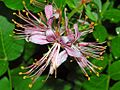
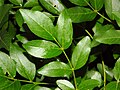
[edit]This plant grows about 40 cm (16 in) to 100 cm (39 in) high. Its flowers form a loose pyramidal spike and vary in colour from pale purple to white. The flowers are five-petalled with long projecting stamens. The leaves resemble those of an ash tree.[3]
Cultivation
[edit]Several varieties and cultivars have been selected for garden use. The variety D. albus var. purpureus in which the violet-purple is confined to veining of white petals with a slight blush, has gained the Royal Horticultural Society's Award of Garden Merit.[4][5] Dictamnus is tap-rooted, making mature plants difficult to establish and resistant to division; young plants often need three years before they begin to flower, and since it is late to break into leaf in spring, even quite mature clumps may be harmed with vigorous soil-working in spring. For all these reasons, added to toxicity of the foliage, Dictamnus is rarely seen in American gardens.[citation needed]
Toxicity
[edit]The leaves have a bitter and unpalatable taste. Despite the lemon-like smell, the plant is acrid when eaten. All parts of the plant may cause mild stomach upset if eaten, and contact with the foliage may cause phytophotodermatitis.[3]
Volatile oils
[edit]The name "burning bush" derives from the volatile oils produced by the plant, which can catch fire readily in hot weather,[6] leading to comparisons with the burning bush of the Bible, including the suggestion that this is the plant involved there. The daughter of Swedish botanist Carl Linnaeus is said to have ignited the air once, at the end of a particularly hot, windless summer day, above Dictamnus plants, using a simple matchstick. The volatile oils have a reputed component of isoprene.
Chemistry
[edit]More than 100 chemical constituents have been isolated from the genus Dictamnus, including alkaloids, limonoid triterpenoids, flavonoids, sesquiterpenoids, coumarins, and Phenylpropanoids.[7]
Gallery
[edit]-
 Illustration from Flora von Deutschland, Österreich und der Schweiz 1885
 -

-

-
-
 Fruit
Fruit -


References
[edit]- ^ "Dictamnus albus L.". Plants of the World Online. Royal Botanic Gardens, Kew. Retrieved 2021-09-21.
- ^ a b c d "Dictamnus albus". Germplasm Resources Information Network. Agricultural Research Service, United States Department of Agriculture. Retrieved 24 June 2015.
- ^ a b c RHS A-Z encyclopedia of garden plants. United Kingdom: Dorling Kindersley. 2008. p. 1136. ISBN 978-1405332965.
- ^ "Dictamnus albus var. purpureus". Royal Horticultural Society. Archived from the original on December 24, 2012. Retrieved 24 July 2013.
- ^ "AGM Plants - Ornamental" (PDF). Royal Horticultural Society. July 2017. p. 29. Retrieved 6 February 2018.
- ^ "Dictamnus albus - Plant Finder".
- ^ Gao X.; Zhao P.-H.; Hu J.-F. (2011). "Chemical constituents of plants from the genus Dictamnus". Chemistry and Biodiversity. 8 (7): 1234–1244. doi:10.1002/cbdv.201000132. PMID 21766445. S2CID 46187608.
External links
[edit]Dictamnus albus
View on GrokipediaTaxonomy
Etymology
The genus name Dictamnus derives from the ancient Greek diktamnon, the name given to the Cretan herb dittany (Origanum dictamnus), which was applied to this species due to its comparable aromatic properties.[2][5] The specific epithet albus is Latin for "white," referring to the typical white coloration of the plant's flowers.[1] Dictamnus albus was first formally described by Carl Linnaeus in the 1753 edition of Species Plantarum.[6] Several common names reflect the plant's distinctive traits and historical associations. "Burning bush" and "gas plant" both stem from the volatile oils the plant produces, which can ignite briefly on hot days—emitting flammable vapors around the flowers that burn without harming the plant.[7] "Dittany" echoes the genus name's origin in the Greek diktamnon. "Fraxinella," meaning "little ash tree" in New Latin, derives from fraxinus (the Latin word for ash tree) combined with the diminutive suffix -ella, owing to the similarity of its compound leaves to those of ash (Fraxinus species).[8][9]Classification
Dictamnus albus belongs to the order Sapindales and family Rutaceae (the citrus family).[10] Its subfamilial placement has varied in recent phylogenetic studies; a 2021 revision placed it in Amyridoideae as an early-branching lineage, while a 2023 study positions it within Zanthoxyloideae.[11][12] These encompass herbaceous genera like Dictamnus with zygomorphic flowers and a base chromosome number of x = 18.[11] The genus Dictamnus comprises three accepted species: the Eurasian D. albus, the Asian D. dasycarpus, and the Iberian D. hispanicus, though D. dasycarpus is occasionally treated as a subspecies (D. albus subsp. dasycarpus) due to morphological similarities in fruit and leaf structure.[13][14][15] No subspecies of D. albus are universally accepted, but a purple-flowered form, often denoted as var. purpureus, is recognized in horticultural contexts for its mauve-pink blooms with reddish veining.[10] Synonyms for D. albus include Fraxinella alba and Dictamnus fraxinella, reflecting historical associations with ash-like foliage, while the common name "dittany" is a misnomer, as it derives from unrelated Mediterranean species like Origanum dictamnus.[15][4] Phylogenetically, Dictamnus forms part of the diverse Rutaceae, with close relatives in genera such as Citrus (in subfamily Aurantioideae) and Ruta (in Rutoideae), sharing chemical traits like volatile oils and alkaloids but diverging in floral symmetry and habit.[11][16]Description
Morphology
Dictamnus albus is a perennial herbaceous plant with a woody base and deep taproot, typically reaching heights of 40-100 cm and spreads of 30-60 cm. It exhibits an upright, clump-forming growth habit, producing rigid, vertical stems that are often pubescent with glandular dots. The plant is slow-growing and long-lived, forming a basal rosette of leaves in its early years before developing flowering stems after 3-4 years.[2][1][15] The leaves are opposite, sessile, and odd-pinnate, consisting of 7-11 elliptic to ovate-lanceolate leaflets measuring 2-5 cm in length. These leaflets are glabrous or sparsely pubescent on the upper surface, with entire to finely serrulate margins, and they emit a strong lemony fragrance when crushed due to aromatic oils; the foliage closely resembles that of the ash tree (Fraxinus), contributing to one of the plant's common names, fraxinella. The leaves are light green, glossy, and remain attractive throughout the growing season.[1][15][17][18][19] Flowers are borne in loose terminal racemes of 10-30 blooms, each 2-2.5 cm across with five oblong, clawed petals that are white to pale purple and often marked with pink veins. The blooms feature long, prominent stamens up to 2 cm in length, giving a spidery appearance, and they are fragrant, attracting pollinators; flowering occurs from May to July. The fruit consists of star-shaped capsules with five compressed, glandular lobes, each containing 2-3 oily, glossy black seeds that dehisce explosively to disperse. During flowering and seeding, the plant releases flammable vapors from its volatile oils, which can be ignited on calm, hot days without damaging the plant.[2][1][15][17]Varieties
Dictamnus albus exhibits variation primarily in flower color and seed pod characteristics, with all forms sharing the species' core upright, clump-forming morphology and aromatic foliage. The variety D. albus var. purpureus features pale to deep purplish-pink flowers with darker veins on the petals, borne in terminal racemes from May to June.[20] This variety grows 2 to 3 feet tall and wide, forming woody-based clumps suitable for herbaceous borders.[20] Several cultivars have been selected for distinct flower colors. 'Albiflorus' produces pure white flowers on upright spikes 2.5 to 3 feet tall, offering a striking contrast to the typical lilac or pink shades of the species.[21] A pinkish-red form, sometimes referred to as 'Rubriflorus' or akin to var. rubra, displays deeper red-toned blooms, enhancing ornamental appeal in garden settings.[22] The Asian form, often classified as D. albus var. dasycarpus or the related species D. dasycarpus, differs notably in having pubescent (hairy) younger stems, leaves, inflorescences, and carpels, with fruit follicles typically 1-2 cm long bearing stylar beaks.[23] Its flowers are pinkish white to pink with purplish stripes, measuring 2-2.5 cm long.[23] This variant is native to southeast Siberia, China, and Korea, and is sometimes treated as a subspecies of D. albus.[23] D. albus var. purpureus has received the Royal Horticultural Society's Award of Garden Merit (AGM) since 1993, recognizing its reliable performance in gardens (hardiness rating H6). These variations maintain the species' lemon-scented leaves and flammable volatile oils but provide diversity in visual interest through color and subtle structural traits like pod hairiness.Distribution and habitat
Native range
Dictamnus albus is native to a wide area spanning southern and central Europe, extending into western and central Asia. In Europe, it occurs in countries such as Italy, Greece, Albania, Bulgaria, Romania, and the former Yugoslavia in the Balkans, as well as in France, Spain, Austria, Germany, Hungary, Poland, Switzerland, and parts of eastern Europe including Ukraine and Russia. Its Asian distribution includes Turkey, the Caucasus region (North Caucasus and Transcaucasus), central Asian countries like Kazakhstan, Kyrgyzstan, Tajikistan, and Uzbekistan, Siberia (Altay region), Iran, and the western Himalayas in Pakistan, reaching elevations up to 2,500 meters.[10][15] It has been introduced to North America, particularly in the northeastern United States (e.g., New York, Vermont, Michigan), and parts of northern Europe, where it is cultivated but has not widely naturalized.[10][24]- D. albus* is not assessed globally by the IUCN, though it faces local declines in some regions due to habitat loss and fragmentation from agricultural development and land-use changes. In Europe, it is assessed as Least Concern by the IUCN, while in specific areas like Switzerland, it is listed as Vulnerable.[25][26]
Preferred conditions
Dictamnus albus thrives in warm, open woodlands, scrublands, rocky slopes, and grasslands, particularly those featuring calcareous soils.[5] It prefers well-drained loamy or sandy soils with a neutral to alkaline pH ranging from 6.5 to 7.5, showing intolerance to waterlogging and heavy, damp conditions.[27][28][1] The species is adapted to Mediterranean and continental climates, corresponding to USDA hardiness zones 3 through 8, where it exhibits drought tolerance once established.[2][29] It flourishes in full sun to light shade, benefiting from cool nights in northern regions.[30] D. albus occurs from sea level up to 2,500 meters in mountainous areas.[10] In its native habitats, it is frequently associated with Quercus (oaks) or Pinus (pines) in woodlands.[15]Ecology
Pollination and reproduction
Dictamnus albus is primarily pollinated by entomophilous vectors, with long-tongued bees serving as the main pollinators due to the flower's structure featuring long stamens and a nectar reward system. Key pollinators include bumblebees (Bombus spp.), honeybees (Apis mellifera), and species such as Habropoda tarsata and Megachile leafcutter bees, which effectively contact the stigma during visits.[31][32] The plant exhibits self-incompatibility, preventing intra-flower self-pollination through protandry (male phase preceding female) and herkogamy (spatial separation of reproductive organs), while nectar gradients guide pollinators in a bottom-to-top progression along the raceme, promoting outcrossing and minimizing geitonogamy.[33][32] Flowering occurs from late spring to early summer, typically May to July in the northern hemisphere, with racemes opening progressively from the base upward over 2-5 days, peaking at around 90% bloom.[1][31] Pollination efficiency varies seasonally and annually, influenced by pollinator behavior and abundance, with higher fruit set (up to 0.60) and seed set (up to 0.69) observed under optimal conditions compared to controls.[31] Pollen fidelity among bees remains high (60-80%), ensuring effective cross-pollination despite occasional visits to other floral resources.[34] Reproduction in D. albus relies mainly on sexual propagation via seeds, with fruits forming dehiscent capsules that explosively release oily seeds upon maturity, facilitating short-distance dispersal.[35] Seeds have short viability and are best sown fresh, though they can be stored under suitable conditions for limited periods.[36] Germination requires cold stratification for 2-6 months to break dormancy, often occurring hypogeously in spring after autumn sowing, though establishment is slow, with plants typically taking 2-3 years (or up to 6 in some conditions) to reach flowering maturity.[1] Vegetative reproduction is rare, occurring occasionally through offsets from the taproot or adventitious roots on the caudex during immature stages, but the species functions as a long-lived perennial, with individuals persisting for 20-50 years once established.[38]Interactions
_Dictamnus albus exhibits notable biotic interactions that contribute to its ecological role, primarily through chemical defenses that deter most herbivores while allowing limited grazing by specialized insects. The leaves and other parts of the plant contain toxic furanocoumarins and volatile oils, rendering them poisonous to most mammals, including livestock and wildlife, which helps protect the plant from broad herbivory.[39][40] These volatile oils, including monoterpenes, play a defensive role by repelling generalist herbivores through their strong scent and potential toxicity, reducing damage from non-adapted feeders.[41] However, certain specialized insects can graze on the foliage, having evolved tolerance to the plant's chemical defenses due to its membership in the Rutaceae family.[39] The plant forms symbiotic associations with arbuscular mycorrhizal fungi (AMF), particularly species clustering with Glomus hoi, which enhance nutrient uptake in nutrient-poor soils by extending the root system's reach for phosphorus and other minerals.[42] These mycorrhizal partnerships are crucial for D. albus in its natural calcareous or rocky habitats, improving phosphorus acquisition and overall plant vigor where soil fertility is low.[42] Dictamnus albus is non-invasive and rarely spreads beyond cultivated plantings, forming stable clumps without aggressive colonization, making it a low-risk ornamental in gardens.[43][44] In cultural and ecological contexts, D. albus has historical significance in European folklore as a protective plant, often associated with warding off poisons, as noted in ethnopharmacological records from regions like the Silesian herbal traditions.[45] Ecologically, its fragrant flowers attract pollinators such as bees and butterflies to gardens, supporting local biodiversity without posing risks to native ecosystems.[46][1] Populations of D. albus face threats from overcollection in the wild for the ornamental trade, particularly in central Europe where it is rare and vulnerable due to small population sizes and habitat fragmentation. It is listed as Vulnerable on regional Red Lists in parts of Europe, such as Switzerland (IUCN criteria C2a(i), 2019).[26][47]Cultivation
Requirements
Dictamnus albus requires full sun, providing at least six hours of direct sunlight daily, for optimal growth and flowering, though it can tolerate light shade with reduced bloom production.[2][43] A sheltered location protected from strong winds is recommended to prevent damage to its upright stems.[43] The plant thrives in well-drained, fertile, humus-rich soils with a neutral to slightly alkaline pH.[43][48] In clay-heavy soils, incorporation of grit or organic matter is essential to improve drainage and avoid waterlogging.[49] Watering should be moderate, maintaining even moisture during the establishment phase, after which the plant becomes drought-tolerant due to its deep taproot; however, prolonged wet conditions, especially in winter, must be avoided to prevent root rot caused by pathogens like Phytophthora.[2][48][50] Dictamnus albus is hardy in USDA zones 3 to 8, performing best in regions with cool summer nights.[2][43] In colder areas within this range, application of a winter mulch provides root protection against freeze-thaw cycles.[51] The plant exhibits strong resistance to deer due to its pungent, citrus-like aroma from volatile oils, and it generally faces few serious pest or disease issues beyond root rot in poorly drained sites.[48][43]Propagation
Dictamnus albus is primarily propagated by seed, as the plant's deep taproot makes vegetative methods challenging.[1][43] Fresh seeds should be sown in autumn directly outdoors in well-drained soil or in containers, allowing natural cold stratification over winter to break dormancy.[52][43] Alternatively, for spring sowing, seeds require artificial stratification: moisten them and refrigerate at 4°C (39°F) for 4-6 weeks after an initial warm period of 2-4 weeks at room temperature.[43] Germination is slow, typically taking 4-8 weeks or up to 6 months to a year, with seedlings needing consistent moisture and protection from pests like slugs.[53][43] Seedlings should be transplanted to their final position after 1-2 years, as they establish slowly and may not flower for 3-4 years.[54] Division of established clumps is possible but difficult due to the long, deep taproot, which resents disturbance and can lead to poor survival rates.[55][54] It is best performed in early spring or autumn every 4-5 years on mature plants: water the clump thoroughly beforehand, dig it up carefully, and separate sections with a sharp tool, ensuring each division has roots and shoots.[56] Replant immediately at the original depth in prepared soil and maintain moisture until re-establishment, though success is limited and the plant is often left undisturbed once planted.[55][54] Root cuttings offer another vegetative option, taken in late winter or early spring from pencil-thick roots cut into 2-3 inch sections, but they have a low success rate and are not recommended for beginners.[56] Plant the sections horizontally in a well-draining medium, optionally using rooting hormone, and keep warm, moist, and brightly lit until roots develop.[56] Overall challenges in propagation include the plant's slow growth rate and sensitivity to root disruption, making it prone to failure if mishandled.[54][43] Due to these difficulties, commercial sources often provide Dictamnus albus as plugs, bare-root plants, or mature specimens rather than seeds.[57]Uses
Ornamental
Dictamnus albus is valued in horticulture as a striking herbaceous perennial for borders, cottage gardens, and herbaceous borders, where its upright form and bushy habit contribute to structured plantings.[2] The plant's glossy, odd-pinnate leaves emit a pleasant lemony fragrance when brushed against, adding an aromatic dimension to garden spaces that enhances sensory appeal throughout the growing season.[2][1] In garden design, Dictamnus albus pairs effectively with companions such as peonies, irises, daylilies, and campanulas, where its vertical flower spikes provide contrast and height in mixed borders.[2] It also complements gray-leaved plants like salvias, accentuating textural differences. The aesthetic appeal lies in its long-lasting racemes of white or purple-tinged flowers that bloom from late spring to early summer, followed by attractive star-shaped seed heads that offer winter interest if left on the plant.[1][20] Certain varieties, such as 'Purpureus' and var. albus, have received the Royal Horticultural Society's Award of Garden Merit (AGM) for their reliability and ornamental quality in UK gardens.[58][59] Despite its desirability, Dictamnus albus remains less common in trade due to its slow establishment, often taking three to four years to flower from seed or young plants, though it becomes a long-lived, low-maintenance addition once mature.[2][1] This rarity underscores its value for gardeners seeking unique, durable specimens.[46]Medicinal and other
In traditional European herbalism, the root bark of Dictamnus albus has been employed since the 4th century BCE as a tonic, diuretic, and antispasmodic agent, addressing a wide array of conditions including gynaecological disorders across 47 disease categories documented between 1000 and 1700 CE.[60] Abortifacient properties were noted in historical gynaecological applications, often prepared in complex herbal formulations.[60] In Asian herbal traditions, particularly Chinese medicine, the root bark serves similar roles as a tonic and antispasmodic, with additional uses for reducing fever, controlling bacterial and fungal infections, and treating skin ailments like eczema.[61] Beyond medicine, D. albus provides essential oils with a distinctive lemony scent, historically utilized in perfumery for their aromatic qualities.[62] Due to its toxicity, modern herbal practices strongly advise against internal use of D. albus, as aqueous extracts can induce bronchoconstriction, hypotension, and other adverse effects even in moderate doses.[39] External applications, such as for skin conditions like scabies or eczema, are rare today owing to risks of phytophotodermatitis from the plant's furanocoumarins.[61] Alkaloids and limonoids extracted from the genus Dictamnus show promise as natural insecticides.[63] Culturally, D. albus holds symbolic significance in folklore as the "burning bush," evoking biblical references to the unconsumed flame in Exodus due to its volatile oils that can ignite spontaneously in hot weather without destroying the plant.[64] This association has persisted for centuries, linking the species to themes of divine mystery and resilience in Judeo-Christian traditions.[65]Chemical composition
Volatile oils
The volatile oils of Dictamnus albus are primarily composed of monoterpenes and their derivatives, such as methyl chavicol (estragole) and limonene, along with sesquiterpenes like germacrene D; a key compound is dictagymnin, which decomposes to release isoprene, a highly flammable hemiterpene.[66][67][68] These oils constitute up to 0.55% of the plant's moisture-free weight, varying by region and plant part, with samples from Turkey showing higher yields than those from Serbia (0.2 mL/kg).[66][68] The vapors from these oils are highly flammable, igniting at ambient temperatures around 40°C to produce a brief, visible flame that envelops the plant without causing harm, due to the low boiling point of isoprene (34°C) and the formation of an ignitable cloud on hot, windless days.[67] This property inspired the common name "gas plant," and historical accounts describe the daughter of botanist Carl Linnaeus igniting the vapors above a specimen in 1762, resulting in a fleeting flash.[64][69] Production of these oils peaks during the flowering and seed-setting stages, when emissions from aged flowers and pods are most intense, contributing to the plant's characteristic lemony-citrus aroma from compounds like limonene and anethole.[66][1] Ecologically, the volatile oils play a dual role: their aromatic profile attracts pollinators such as bees, which forage on the flowers with high fidelity, while the compounds, including isoprene, help deter herbivores through repellent scents and potential thermoprotective effects during heat stress.[70][71][67] The oils are extracted via steam distillation of aerial parts, yielding a fragrant essential oil that, when heavily diluted, finds limited use in aromatherapy for its citrus-like scent and purported calming properties, though caution is advised due to the plant's inherent potency.[72][66]Other compounds
Dictamnus albus contains over 20 alkaloids, primarily furoquinoline types such as dictamnine and skimmianine, which contribute to the plant's bitter taste and exhibit diverse pharmacological activities including antimicrobial and anti-inflammatory effects.[73][74] These alkaloids are concentrated in the roots and aerial parts, with dictamnine serving as a characteristic marker for the genus.[73] Flavonoids and coumarins represent another major class of non-volatile compounds in D. albus, including rutin as a prominent flavonoid glycoside and umbelliferone as a simple coumarin, both displaying antioxidant properties that may support the plant's medicinal applications.[73][74] These phenolics are distributed throughout the leaves and stems, aiding in oxidative stress mitigation.[73] Triterpenoids, particularly limonoids such as fraxinellone and obacunone, are significant constituents that enhance the plant's potential in anti-cancer and neuroprotective therapies.[74] These modified triterpenes occur mainly in the roots and contribute to the overall bioactivity profile of the species.[74] Additional non-volatile compounds include sesquiterpenoids and phenylpropanoids, with more than 100 such constituents isolated from the genus Dictamnus overall through techniques like column chromatography and HPLC.[73][74] The biosynthesis of these compounds draws from the mevalonate pathway for terpenoid-derived structures like limonoids and sesquiterpenoids, and the shikimate pathway for alkaloids, flavonoids, coumarins, and phenylpropanoids.[74]Toxicity
Dictamnus albus contains furocoumarins, particularly psoralens, in its foliage, flowers, fruits, and glandular oils, which can cause phytophotodermatitis—a phototoxic skin reaction—in sensitive individuals upon contact followed by exposure to sunlight or UV light.[75] Symptoms include itchy rashes, redness, blisters, or burn-like streaks appearing within 24–48 hours, typically resolving without scarring but potentially recurring with repeated exposure.[1][75] All parts of the plant are mildly toxic if ingested, potentially causing gastrointestinal upset such as nausea, vomiting, diarrhea, and abdominal pain.[1] In larger doses, it is poisonous and may act as an abortifacient or emmenagogue due to its uterine stimulant effects, similar to related Rutaceae species.[27] Handling or consumption should be avoided, especially by pregnant individuals or those with sensitive skin.References
- https://www.[researchgate](/page/ResearchGate).net/publication/338989296_Features_of_Dictamnus_albus_Rutaceae_in_the_pregenerative_period_of_ontogeny_in_M_M_Gryshko_National_Botanical_Garden_in_Ukraine