Hubbry Logo
Digging barDigging barMain
Open search
Digging bar
Community hub
Digging bar
logo
8 pages, 0 posts
0 subscribers
Be the first to start a discussion here.
Digging bar
Digging bar
from Wikipedia
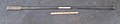
Bar with pointed and blunt end

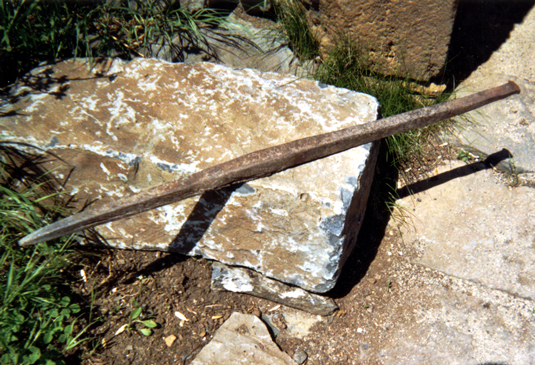
A digging bar is a long, straight metal bar used for various purposes, including as a post hole digger, to break up or loosen hard or compacted materials such as soil, rock, concrete and ice or as a lever to move objects. Known by other names depending on locale, structural features and intended purpose such as a hop bar or crowbar in Britain, Australia and New Zealand,[1] and slate bar, shale bar, spud bar, pinch point bar or San Angelo bar in North America, or just a bar. In Canada, it is often called pry bar.

Uses

[edit]
Using digging bars to move rocks
A girl and a man dig a hole with a heavy digging bar to plant a tree

Common uses of digging bars include breaking up clay, concrete, frozen ground, and other hard materials, moving or breaking up tree roots and obstacles, and making holes in the ground for fence posts. They are often used where space would not allow the use of a pickaxe.

Materials and construction

[edit]

The ends of a digging bar are shaped for various purposes.[2] Typically, each end has a different shape so as to provide two different tool functions in one tool. Common end shapes include:

  • Blunt — a broad, blunt surface for tamping.
  • Point — for breaking hard materials and prying.
  • Wedge — an unsharpened blade for digging, breaking and prying. A San Angelo bar has a wedge at one end.
  • Chisel — a sharpened blade for cutting roots, digging and prying. A pinch point bar has a chisel at one end.

Bars are typically 5 to 6 ft (1.5 to 1.8 m) long and weigh 15 to 23 lb (6.8 to 10.4 kg). They are usually made entirely of cylindrical or hexagonal forged steel with a diameter of approximately 1 in (2.5 cm). Chisel and wedge ends typically have a blade width measuring 1 to 3 in (3 to 8 cm). Blunt ends typically have a diameter of 2 to 3 in (5 to 8 cm).

Variants

[edit]

Bark spud

[edit]

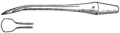
Log-peeling spuds are used to remove the bark from logs. These spuds typically have a wooden or steel handle of length 18 in (0.5 m) to over 6 ft (1.8 m). This tool is also called a Bark spud or a barking iron.[3]

Hop bar

[edit]

A hop bar (also Hop pitcher) is used to make holes in the ground for hop poles, 2 m (79 in) or more long with a heavy, bulbous spike at the digging end.[4]

Ice spud

[edit]

Fishing through holes in ice is common in many parts of the world. One of the earliest methods of cutting these holes was to use a device variously known as an ice spud or ice chisel. Many chisel variations exist, including jagged teeth, skewed edges, and different grind angles and chisel widths. Early ice spuds (before about 1925) often had wooden handles and a steel chisel fixed with a tang and collar or socket, similar to a carpenter's chisel. Ice spuds are still carried by many ice fishermen as a means to test ice thickness and safety; a single forceful thrust of the ice spud will often penetrate unsafe ice.

Lining bar

[edit]

A lining bar is used to shift the alignment of railroad tracks, to manipulate some types of railroad track jacks, to "nip up" or lift ties and rails, and as a digging tool. Lining bars have a tapered form. They often have a square cross section between one and 1-1/2 inches at one end. They may have a pyramidal, wedge, or pinch point. They transition to a tapered round cross section 12 to 18 inches from the point. The handle end may terminate in a ball or may be cut off squarely at 5/8 to 3/4 inch diameter. They are made of forged steel and may be from five to six feet long. Lining bars may also be called jack bars, jack handles, or crowbars in North American railroad jargon.

Spud bar

[edit]

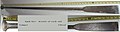
A spud bar has a chisel at one end that is intended for removing material through a chipping or shaving action. In the British Isles these typically have a narrow, unsharpened chisel point at one end and a point at the other end, with diameters up to about 1.5 in (4 cm). Some have plastic grips on the shaft and some have wider chisel ends, or "rakes", for specific jobs such as removing old shingles and tar paper.

See also

[edit]

References

[edit]
Revisions and contributorsEdit on WikipediaRead on Wikipedia
from Grokipedia
A digging bar is a long, straight metal tool designed for breaking up hard or compacted , prying rocks and roots, and tamping earth to facilitate digging operations in , , and . Typically constructed from heavy-duty, heat-treated for durability and strength, it provides leverage through its extended length, which ranges from 5 to 8 feet, and weighs between 14 and 17 pounds depending on the model. These tools feature specialized ends to suit various tasks: a pointed or tip for penetration and a flat tamper head for compacting around posts. Common types include the San Angelo bar, with its narrow pencil point ideal for rocky or rootbound , the telegraph bar for general prying and digging, and the post-hole tamper bar for creating and finishing or deck footings. Digging bars are essential for demanding jobs such as installing fences, removing stumps, breaking or , and preparing deep holes for support beams, often complementing shovels or post-hole diggers for efficiency in tough conditions.

History

Early Origins

The earliest known precursors to the digging bar were wooden digging sticks employed by Neanderthals around 171,000 years ago at the Poggetti Vecchi site near , . These implements, crafted from boxwood and shaped through burning and scraping, measured up to about 90 cm in length and featured pointed ends suitable for excavating tubers, roots, and small animals from the ground. Archaeologists interpret them as multipurpose tools integral to early strategies, preserved exceptionally due to the site's waterlogged conditions. The shift from perishable wooden sticks to durable metal bars began during the period around 3500 BCE, as and later alloys enabled the production of robust digging implements in early urban civilizations. By the Roman era, iron mattocks—versatile tools with an blade on one side and a pick or axe on the other—were widely used for breaking compacted in and quarrying stone for construction across the empire. Examples from , such as those recovered from sites like and Cornhill, demonstrate their role in tillage, weeding, and ditch digging, with blade widths typically ranging from 70 to 90 mm for efficient penetration. Pry bars, akin to early straight digging bars, also appeared in Roman contexts for leveraging heavy materials, as evidenced by chisel-tipped iron examples from 1st-century deposits. In medieval , from the onward, mattocks and similar iron bars remained essential for manual breaking on smallholdings and manors, particularly in preparing heavy clay soils before plowing. These tools, often with wooden handles and forged iron heads, allowed farmers to grub out roots, clear weeds, and create furrows without advanced machinery, embodying basic leverage principles where the long shaft amplified force applied at the fulcrum point near the . Their prominence in agricultural texts and depictions underscores their foundational impact on pre-industrial farming . Before the widespread adoption of powered equipment in the , such manual bars were indispensable for both cultivation and basic projects like drainage and .

Modern Developments

In the 19th century, the refinement of digging bars accelerated with the emergence of forged iron and early variants, driven by the demands of industrial-scale and projects. Miners in operations like those in relied on pry bars to lever coal and rocks from seams, marking a shift toward more robust metal tools suited for repetitive heavy labor. Similarly, during the construction of the in the 1860s, teams of workers employed large iron bars to manually drill into granite bedrock, underscoring their critical role in prying and breaking hard materials for track laying. These developments paralleled advancements in forging techniques, such as the introduced in 1856, which enabled the production of stronger, more uniform bars for demanding applications. By the early , digging bars had become integral to utility infrastructure, particularly for installing telegraph and power poles, where versions facilitated breaking compacted or rocky before mechanical aids were widespread. Crews of 10 to 12 workers used extra-long bars, often measuring around 66 inches, alongside shovels to excavate post holes in regions like the area from the 1910s through the 1940s. Innovations in this era included hex-shaped shafts, which enhanced grip and torque resistance during twisting motions, as seen in specialized telegraph digging bars that improved handling in prolonged fieldwork. Tamper ends also gained prominence, allowing the same tool to compact after digging, thereby streamlining tasks in and . The mid-20th century brought further evolution amid the rise of powered machinery, which diminished but did not supplant manual bars; electric augers and excavators, emerging post-1940s, handled large-scale digging, yet bars persisted for precision work in confined or uneven terrain. Post-World War II standardization efforts refined designs for and durability, exemplified by the San Angelo bar, a heavy-duty model with a pointed end for penetrating hardpan, widely adopted in American construction for its balanced performance in rocky conditions. Companies like Council Tool began tamper and pinch-point variants in the late , incorporating heat-treated to withstand industrial stresses while maintaining the tool's versatile, hand-forged heritage. These refinements ensured digging bars' enduring utility, bridging manual labor traditions with modern efficiency.

Design and Construction

Materials

Digging bars are predominantly constructed from heat-treated , valued for its exceptional durability and ability to resist bending under the high leverage forces encountered during prying and tamping tasks. This material typically features a carbon content of 0.3% to 0.8%, combined with small amounts of and , providing the necessary hardness and tensile strength to withstand repeated impacts in rocky or compacted soils. processes further enhance these properties, ensuring the bar maintains structural integrity during demanding applications like post hole digging or . In modern variants, alternatives such as are employed to reduce overall weight while preserving strength, making the tool more maneuverable for extended use without sacrificing . Historically, bars and similar pry tools evolved from , a fibrous and ductile material low in carbon, to more advanced steels that offer superior strength and uniformity. These shifts reflect broader metallurgical advancements, transitioning from handmade iron bars in the to engineered steels optimized for industrial demands. Selection criteria also emphasize corrosion resistance, achieved through treatments like , which forms a protective barrier against in outdoor environments, or via application for sacrificial protection. These coatings extend tool lifespan by preventing oxidation, particularly in moist or saline conditions. Additionally, material sourcing considerations include the environmental impacts of production, which accounts for 7-8% of global carbon emissions due to energy-intensive and , though can reduce these effects by up to 98% in content. Such factors influence overall strength, as robust materials ensure the bar's form remains effective across physical features like its shaft and ends.

Physical Features

A standard digging bar typically measures between 5 and 7 feet (1.5 to 2.1 meters) in length, with common variants at 60 inches, 69 inches, or 72 inches, allowing for effective leverage in various digging tasks. The bar's generally ranges from 1 to 1.5 inches (25 to 38 mm), such as 1-inch or 1.25-inch shafts, which provide sufficient strength without excessive weight. These dimensions balance portability and , ensuring the tool remains maneuverable for users while delivering the force needed for penetration into dense substrates. The ends of a digging bar are configured for specialized functions, with one end often featuring a point—typically 2 to 3 inches wide—for breaking up compacted , while the opposite end may have a tapered point for probing or a flat tamper plate, around 3/8-inch thick and 2 to 4 inches square, for . These configurations are forged directly into the bar, enhancing durability and precision in material interaction. The shaft profile contributes to ergonomic handling, commonly adopting a hexagonal shape for a non-slip grip that prevents during application, though rounded profiles are also used to minimize hand over prolonged use. Weight distribution is engineered for balance, with the bar's solid construction—typically weighing 14 to 20 pounds—concentrating toward the ends for stability and controlled swinging. Such design elements are facilitated by the malleability of high-grade , allowing precise shaping without compromising integrity.

Uses

General Applications

Digging bars serve as essential manual tools for breaking up compacted , rocks, or clay in , , and farming tasks. In projects, they are used to fracture hard earth for trenching utilities or preparing , allowing workers to loosen material that shovels alone cannot penetrate. In , the bar's pointed end breaks up clay or rocky to ready sites for planting beds or layouts, while in farming, it disrupts hardpan layers to improve without mechanical equipment. The chisel-like tip on one end facilitates initial penetration and prying, enabling efficient soil manipulation across these fields. A primary application involves post-hole digging for installing fences, signposts, or utility poles, where the bar provides critical leverage to loosen compacted earth and remove obstacles like or stones. Operators insert the pointed end into the ground around the intended and apply rocking motions to break up the , creating space for post placement without relying on powered augers. This method is particularly effective in areas with rocky or root-filled terrain, common in rural farming and suburban landscaping settings, ensuring stable installations through manual control. For tamping and leveling, the flat, broad end of the digging bar compacts in pathways, patios, or around newly set posts, promoting stability by distributing downward force evenly across the surface. In , repeated strikes or presses with the bar consolidate backfill material in trenches or foundation bases, reducing voids and enhancing load-bearing capacity. Landscaping applications include firming or layers for walkways, while farmers use it to pack earth around crop supports or animal enclosures, ensuring durability against or foot traffic.

Specialized Techniques

When employing a digging bar, users should adopt a stable stance by positioning their feet shoulder-width apart and standing as close as possible to the insertion point of the bar to maintain balance and control. Bending at the knees and hips rather than the waist allows the legs and core muscles to bear the load, minimizing strain on the lower back during insertion or prying motions. The swinging motion involves a controlled overhead or side arc, gripping the bar firmly with both hands—one near the top for leverage and the other midway for guidance—to drive the pointed end into the ground or rock; smooth, regular actions without jerky extensions prevent excessive torque on the spine and shoulders. For heavy rock breaking, two-person techniques enhance efficiency and safety by distributing effort; one individual inserts and holds the bar steady in a crack or under the rock to create leverage, while the second applies force by striking the bar's upper end with a to the material, alternating roles to avoid . This method exploits the bar's length for , reducing the need for solo high-impact swings that could lead to muscle overuse. Safety protocols are essential given the tool's potential for high-force applications; operators must wear impact-resistant gloves to protect against blisters, cuts, and vibrations, as well as ANSI Z87.1-compliant to guard against flying from impacts. Sturdy, nonslip work boots with ASTM F2413-compliant toes prevent foot injuries from dropped bars or shifting , and a is recommended in dusty environments to filter particulates. Key risks include bar slippage on uneven surfaces, which can cause loss of control and falls, and rebound effects in rocky where the bar may upon striking hard material, potentially leading to strikes or punctures; to mitigate these, users should inspect the ground for stability, maintain a firm grip, and avoid overextending during strikes. In challenging hard surfaces like compacted or , digging bars are often adapted by combining them with a for initial fracturing: the bar is positioned to target weak points, and repeated strikes create fissures before prying to loosen fragments, allowing progressive breakdown without excessive solo effort. This approach is particularly effective in or work where mechanical equipment is unavailable. For ongoing performance, involves cleaning the bar after use to remove and , thoroughly drying metal parts to prevent , and periodically sharpening the or pointed tip with a mill file to restore its edge. The tool should be stored in a dry, elevated position to prolong durability.

Variants

Hop Bar

The hop bar, also known as a hop pitcher, is a specialized variant of the digging bar adapted for use in hop cultivation, primarily to create holes for setting support poles in hop yards. It features a pointed end designed for penetrating to form openings approximately one foot deep and five inches wide at the top, allowing for the secure placement of poles typically 12 to 16 feet tall. These poles form the framework for trellises that support the hop bines, ensuring proper vertical growth and exposure to and air circulation. In , the hop bar is typically a straight, elongated metal implement, often forged from iron or , with a length suited to manual thrusting into the ground, distinguishing it from more general-purpose bars by its optimized taper for precise hole-making in cultivated fields. This tool saw widespread application in 19th-century hop farming across Europe and the United States, particularly in regions like England, Scotland, and New York State, where hop production was a significant agricultural enterprise. During spring planting, workers used the hop bar to prepare hills for hop sets by driving it into the soil after marking positions with temporary stakes, facilitating the insertion of poles around each plant cluster for structural support. Beyond initial setup, the hop bar served in ongoing yard maintenance, such as loosening compacted soil around existing poles or plants to promote root development and improve soil structure in fibrous or clay-heavy terrains common to hop fields. This practice helped mitigate issues like poor drainage, which could lead to waterlogging and root rot in hop cultivation. By the early , as mechanized farming tools emerged, the hop bar remained a staple for small-scale or traditional operations, valued for its simplicity and effectiveness in targeted work without excessive disturbance to nearby plants. Its use declined with the adoption of powered augers for pole installation, but historical accounts highlight its role in sustaining high-yield hop yards during peak production eras, such as New York's dominance in American hop output from the 1860s to the 1890s. The tool's design emphasized durability for repeated impacts, often featuring a reinforced grip to handle the torsional forces encountered in dense, root-laden soils.

Ice Spud

The ice spud is a specialized variant of the digging bar designed specifically for frozen surfaces, characterized by a broad, chisel-like blade that enables chopping through layers up to 6 inches thick with repeated strikes. This blade, often flat or stepped for better bite, is mounted on a heavy shaft typically 4 to 6 feet long to provide leverage and during use. Handles are commonly fitted with wooden or foam grips to offer against extreme cold and a firm hold, reducing hand in subzero temperatures. In , the ice spud is essential for drilling holes to access fish and for routinely testing ice thickness to ensure safety on frozen lakes and rivers, a practice that has been widespread in northern U.S. and Canadian regions since the late 1800s when it served as the primary means of ice penetration before powered augers. Anglers use it proactively by striking ahead of each step, where resistance levels indicate thickness—generally requiring one to three swings for safe 4-inch clear ice, with less signaling danger. Effective techniques involve controlled downward strikes at a slight to maximize penetration while minimizing blade deflection or ice shattering, allowing precise hole formation up to 8 inches in for lines. Modern ice spuds incorporate enhancements like wrist leashes to prevent loss if the tool breaks through , and experienced users often mark the shaft themselves to correlate strike counts with approximate depths for quick assessments.

Lining Bar

The lining bar is a specialized variant of the digging bar designed primarily for alignment and positioning tasks in and work. It features tapered ends on both sides, allowing for effective prying and precise manipulation of heavy materials, with one end often flat and tapered for leverage and the other blunt for tamping or additional support. Typically constructed from forged high-carbon , these bars incorporate hexagonal stock, which provides a secure grip to prevent slipping, especially during team operations. Common lengths range from 60 to 66 inches (approximately 5 to 5.5 feet), offering extended reach and for controlled adjustments, though longer variants up to 72 inches exist in related pry bar designs for enhanced leverage in demanding applications. This length facilitates better control in tasks requiring fine positioning, such as in where the bar's design aids in maneuvering stones without excessive force. The hexagonal profile not only enhances durability but also allows multiple workers to grip the bar simultaneously without hand slippage, a feature rooted in its practical evolution. Originating from 19th-century railroad , the lining bar evolved as an essential tool for gandy dancers—manual track laborers—who used it to align rails and ties during the rapid expansion of North American rail networks, which grew to over 163,000 miles by 1890. These workers operated in coordinated teams, employing the bar as a to shift heavy track components incrementally, often synchronized through chants to maintain rhythm and safety. The tool's design, including its tapered points and grippable hex section, was refined for such collaborative use, ensuring stability under collective pressure. Over time, this railroad heritage influenced its adaptation for broader uses, such as positioning large stones in walls or aligning structural elements like utility poles, where fulcrum points along the bar enable subtle, leveraged adjustments for accuracy.

Spud Bar

The spud bar is a robust variant of the digging bar, characterized by a flat, wedge-shaped tip at one end that excels at splitting roots or penetrating shale layers. This design allows the tool to be driven vertically into the ground with repeated strikes, creating clean cuts through tough organic material or layered rock without the need for lateral force. The opposite end typically features a broad, flat tamper butt, enabling dual functionality for both excavation and soil compaction after backfilling. Constructed from forged high-carbon steel for durability, the spud bar weighs around 15-20 pounds to provide the necessary momentum for effective penetration. In landscaping applications, the spud bar is particularly valued for root removal during tasks like stump extraction or preparing planting beds, where its wide blade—often 3-4 inches across—can chop through multiple small or sever larger ones up to several inches thick with successive blows. It performs well in clay-heavy soils or rocky substrates, loosening compacted earth and breaking apart without excessive effort, making it suitable for deeper hole digging such as post holes or trenches. Users often sharpen the blade periodically to maintain cutting efficiency, and the tool's straight shaft facilitates controlled, overhead strikes for precision in confined spaces. Compared to standard digging bars, the spud bar offers advantages in reduced shock transmission to the user due to its balanced weight distribution and non-prying design, which minimizes bending stress on the tool and hand strain during prolonged use. Common lengths range from 5 to 6 feet, striking a balance between leverage for deep penetration and portability for fieldwork, with the 1-inch handle providing a secure grip even in wet conditions. These dimensions make it a versatile choice for professional landscapers handling root-infested or hardened ground, though it requires proper technique to avoid misuse as a .

San Angelo Bar

The San Angelo bar is distinguished by its end for cutting and prying, paired with a pointed tip for penetration, all forged onto a heavy hexagonal shaft typically weighing 14 to 20 pounds and extending 60 to 84 inches in length. Constructed from drop-forged, heat-treated high-carbon steel, this variant provides superior strength for demanding tasks. Primarily employed in , preparation for , and quarrying operations, the San Angelo bar excels at fracturing and by delivering focused force that breaks material along natural fissures without causing excessive shattering. Its design allows for effective leverage in compacting or loosening hard substrates, making it suitable for large-scale earthworking where precision fracturing is essential. The heat-treated tips ensure prolonged edge retention under repeated impacts, enhancing reliability in prolonged use. This tool saw widespread adoption in 20th-century construction projects across the American Southwest, valued for its durability in arid, rocky terrains common to regional development. Modern iterations continue to incorporate heavy-duty techniques, maintaining the original robust profile while improving material consistency.

References

Add your contribution
Related Hubs
User Avatar
No comments yet.