Hubbry Logo
Double Eagle IIDouble Eagle IIMain
Open search
Double Eagle II
Community hub
Double Eagle II
logo
8 pages, 0 posts
0 subscribers
Be the first to start a discussion here.
Double Eagle II
Double Eagle II
from Wikipedia

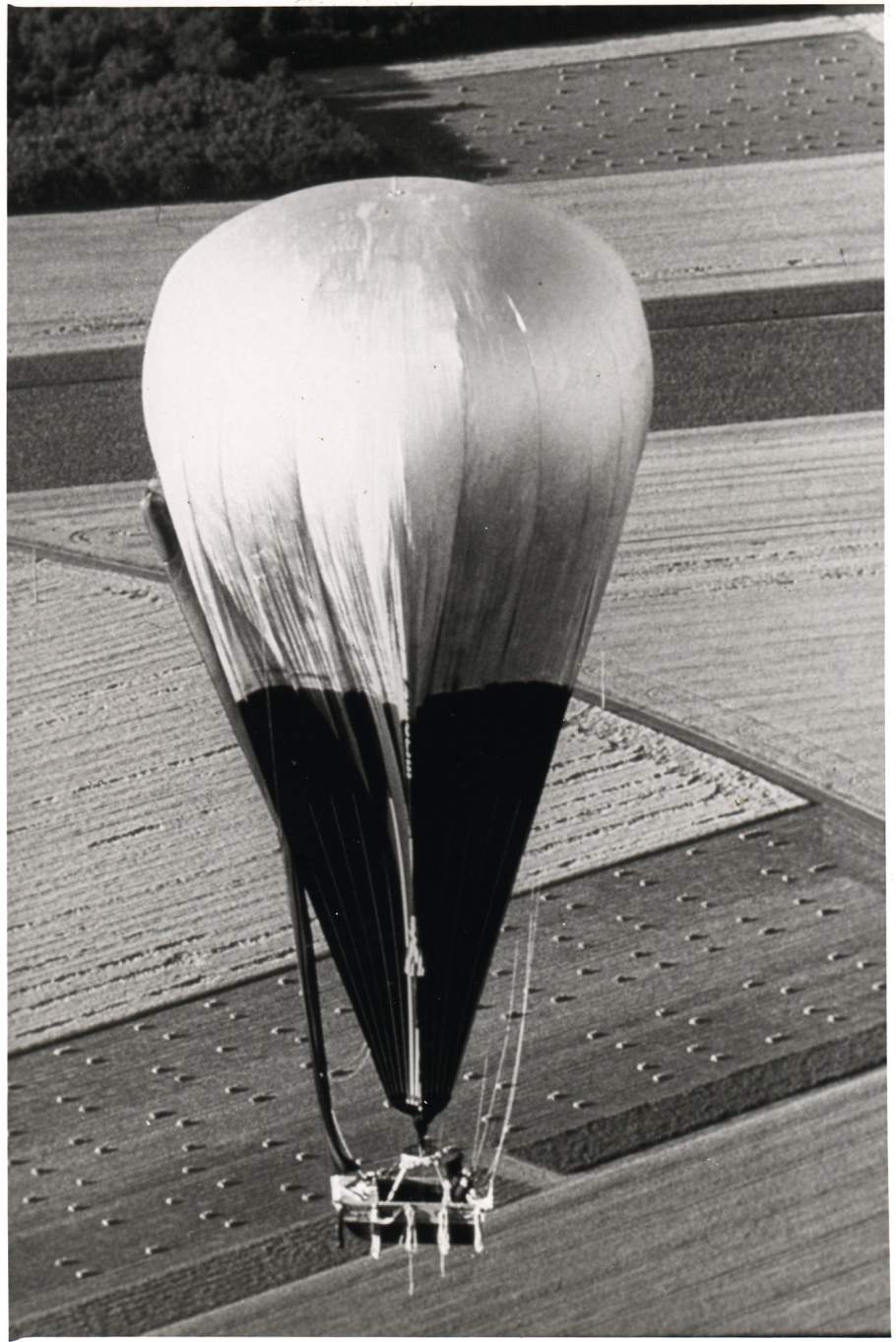
Double Eagle II, piloted by Ben Abruzzo, Maxie Anderson and Larry Newman, became the first balloon to cross the Atlantic Ocean when it landed on 17 August 1978 in Miserey near Paris, 137 hours and 6 minutes after leaving Presque Isle, Maine.[1]

Key Information

It can be regarded as a successful crossing at the point that the Double Eagle II crossed the Irish coast, on the evening of 16 August, an event that Shannon Airport notified the crew about when it happened. Newman originally intended to hang glide from the balloon to a landing, while Anderson and Abruzzo continued to fly, but the hang-glider had to be dropped as ballast earlier on 16 August. While flying over France, they heard by radio that authorities had closed Le Bourget Airfield, where Charles Lindbergh had landed, for them. The crew declined the offer. They were running out of ballast and it would be too risky (to themselves and anyone below) to pass over the suburbs of Paris. They landed in a field of barley, owned by Roger and Rachel Coquerel, in Miserey, 60 mi (97 km) northwest of Paris. Television images showed a highway nearby, its shoulders and outer lanes crowded with stopped cars, people sweeping across the farm field to the landing spot. The gondola was protected, but most of the logs and charts were stolen by souvenir hunters.

The flight, the 14th known attempt at a transatlantic crossing by balloon, was the culmination of more than a century of previous attempts. Some of the people who had attempted it disappeared en route and were never found. Larry Newman won a draw among the three to sleep in the same bed at the United States Embassy that Lindbergh had slept in. British balloonists Don Cameron and Christopher Davey feted the trio at a party that included a balloon shaped like the Double Eagle II. The trio and their wives had made arrangements to return to the United States aboard the supersonic Concorde and, upon the successful crossing, their Concorde trip was accommodated by Air France at no charge to the trio and spouses.

A full chronicle of the voyage can be found in the December 1978 issue of National Geographic. Double Eagle II Airport in New Mexico is named for the balloon. The gondola is displayed at the Steven F. Udvar-Hazy Center of the Smithsonian National Air and Space Museum annex at Washington Dulles International Airport in the Chantilly area of Fairfax County, Virginia, United States.[2] A monument, containing a model of the balloon, was built to commemorate the Double Eagle II and its Atlantic crossing at the field from where the balloon lifted off[3] (46°37′36.54″N 68°1′16.66″W / 46.6268167°N 68.0212944°W / 46.6268167; -68.0212944).

In January 2015, the crew of the Two Eagles Balloon completed a flight across the Pacific Ocean. Their flight duration of 160 hours and 34 minutes record was verified by the Fédération Aéronautique Internationale, officially breaking the time-aloft record of the Double Eagle II.[4]

Statistics

[edit]
  • Builder: Ed Yost; Tea, South Dakota
  • Balloon: 160,000 cu ft (4,500 m3) helium-filled; 112 ft (34 m) high, 65 ft (20 m) in diameter
  • Gondola: 15 × 7 × 4½ foot; name The Spirit of Albuquerque
  • Equipment: 1 VHF radio, 2 single sideband HF radios, 1 ADF beacon transmitter, 1 amateur band radio, 1 maritime radio, hookup to Nimbus 6 satellite.
  • Total weight: 760 lb (340 kg) empty
  • Take-off: 8:43 p.m. EDT - 11 August (00:42 UTC 12 August)
  • Landing: 7:49 p.m. Western Europe Summer Time - 17 August (17:48 UTC 17 August)
  • Total flight time: 137 hours, 6 minutes (5.7 days)
  • Lowest altitude: 3,500 feet (1,070 m) - 13 August
  • Highest altitude: 24,950 feet (7,605 m) - 16 August
  • Total distance: 4,988 km (3,099 mi)
  • Average speed: 22 mph (35 km/h)

Previous attempts

[edit]

Double Eagle

[edit]

Double Eagle was a helium balloon piloted by Ben Abruzzo and Maxie Anderson in a failed attempt to cross the Atlantic Ocean in 1977. It was the eleventh recorded attempt to make the crossing, which had been an open challenge in ballooning for more than a century.[5] The balloon launched from Marshfield, Massachusetts, on September 9. After being blown off course by stormy weather, the team was forced to ditch three miles off the coast of Iceland on September 12, 65½ hours after taking off.[1]

Double Eagle was designed by Ed Yost and had a 101,000 cubic foot (2,860 cubic meter) envelope. Abruzzo and Anderson rode in an insulated open gondola measuring 6 by 6.5 feet (1.8 by 2 meters) which was later reused for Double Eagle II. [1]

Other attempts

[edit]

All previous attempts at transatlantic balloon flights were launched from somewhere in North America, except for The Small World by Peter Elstob et al. in 1958, which took off from the Canary Islands.

The first recorded attempt in 1873 traveled only 45 miles (72 km).[citation needed]

The Rozière balloon The Free Life (attempt #4), carrying Malcolm Brighton, Rodney Anderson, and Pamela Brown, vanished September 1970 in the mid-Atlantic while attempting to fly from East Hampton, New York, to Europe.

The superpressure balloon Light Heart (attempt #6), carrying Colonel Thomas Leigh Gatch, Jr. USAR, disappeared February 1974 after being sighted over the Atlantic while attempting the cross from Harrisburg, Pennsylvania.

The Spirit of Man (attempt #7) in 1974 suffered a balloon burst over the New Jersey coast, killing the pilot, Robert C. Berger.[6]

In 1976, Ed Yost in his Silver Fox (attempt #10), ditched east of the Azores as the wind carried him in the general direction of Western Sahara.

The Double Eagle (attempt #11), in 1977, ditched west of Iceland, having looped to the east of Greenland.[citation needed]

The Zanussi (attempt #13) in 1978, by Don Cameron and Christopher Davey, came closest to success, ditching 110 miles (180 km) off of France after the gas bag ripped. They had planned another attempt but called it off when the Double Eagle II succeeded.

Total death toll is five, including those on the two flights that vanished.[5]

Successful subsequent flights

[edit]

In September 1986, Evelien Brink, her husband Henk and Willem Hageman completed the first transatlantic balloon flight by a European team and first with a woman aboard. The Dutch Viking (PH-EIS) completed the journey from St. John's, Newfoundland, to Almere, Netherlands, in 51 hours and 14 minutes. This bested the time set by the Double Eagle II significantly, though the Dutch Viking suffered a near-disastrous landing.[7][8]

References

[edit]
[edit]
Revisions and contributorsEdit on WikipediaRead on Wikipedia
from Grokipedia
Double Eagle II was a helium-filled that completed the first successful on August 17, 1978, when it landed in a barley field near Miserey, , after departing from , six days earlier. Piloted by Ben Abruzzo, Maxie Anderson, and Larry Newman—all from —the balloon covered approximately 3,120 miles in 137 hours and 6 minutes, marking a historic milestone in lighter-than-air . The quest to cross the Atlantic by balloon dated back to the 19th century, with at least 17 failed attempts since , several of which resulted in fatalities. and Anderson had previously attempted the crossing in 1977 aboard Double Eagle I, a similar balloon, but after 66 hours and 2,950 miles, they were forced to ditch in the off due to , , and navigational errors. Undeterred, the team refined their design for Double Eagle II, incorporating a larger measuring 112 feet in height and 65 feet in diameter with a capacity of 160,000 cubic feet, along with a specialized named "The Spirit of Albuquerque" that featured a twin-hulled structure for potential water landings. Launched at 8:42 p.m. on August 11, 1978, the flight faced significant challenges, including a dramatic altitude drop from 20,000 feet to 4,000 feet on August 16, which required jettisoning to regain height. The pilots endured harsh conditions, subsisting on limited rations such as hot dogs and canned sardines while managing the balloon's path across unpredictable Atlantic weather patterns. Despite these obstacles, Double Eagle II achieved a dry-land about 60 miles northwest of , where the was greeted by members and French onlookers. The success of Double Eagle II not only set new records for ballooning distance and endurance but also paved the way for further transoceanic and around-the-world balloon flights by the same pilots in subsequent years. The is preserved at the National Air and Space Museum's , symbolizing a triumph of human ingenuity in aviation .

Design and Specifications

Balloon Envelope

The balloon envelope of Double Eagle II was a helium-filled gas balloon designed for extended transoceanic flight, featuring a zero-pressure configuration that allowed for buoyancy control through venting while minimizing helium loss during long-duration operations. Constructed by pioneering balloon designer Ed Yost of , the envelope utilized nylon fabric to ensure durability against environmental stresses and low permeability to retain helium over multi-day journeys. With a capacity of 160,000 cubic feet of , the measured 112 feet in height and 65 feet in diameter when fully inflated, providing the necessary lift for the crew, , and while enabling stable altitude maintenance across varying atmospheric conditions. This volume and shape optimized the for zero-pressure operation, where excess gas could be vented through apex and base valves to adjust without structural , supplemented by burners to introduce for fine-tuned ascent control during critical phases. The used met high-purity standards typical for such missions, ensuring efficient lift without contamination that could compromise performance. Built in 1978 in , as part of the prototype series developed by —where Yost served as a key innovator—the represented an evolution in materials and design for manned long-distance ballooning, directly supporting the crew's ability to manage altitude fluctuations encountered en route.

Gondola and Systems

The gondola of the Double Eagle II was designed as a twin-hulled structure to accommodate a three-person during an extended transoceanic flight, measuring 15 feet long by 7 feet wide by 4.5 feet high overall. Constructed with an aluminum frame and panels, insulated with foam for thermal protection against high-altitude conditions, the gondola was suspended beneath the helium-filled to provide lift while maintaining stability in varying winds. Dubbed "The Spirit of Albuquerque" to reflect its site and the crew's hometown, the gondola incorporated a boat-like hull for potential flotation in an ditching. Key onboard systems supported navigation, communication, and endurance over the anticipated multi-day journey. The featured high-frequency two-way radios for contact with ground support, along with oxygen tanks and masks to enable operations above 15,000 feet where supplemental breathing was required. Provisions included storage for food and water sufficient for at least six days, integrated into the total of approximately 6,240 pounds that also encompassed materials. management relied on dropping water, sand, lead weights totaling around 5,500 pounds, and non-essential equipment to control altitude, with a hang glider carried as an additional emergency option and potential descent aid. Safety features emphasized redundancy and survival in remote oceanic conditions. The catamaran hull provided inherent for water landings, complemented by a life raft and stored aboard. A portable heater helped mitigate extreme cold at cruising altitudes up to 25,000 feet, while the overall reinforced aluminum framework was engineered to endure and structural stresses during prolonged exposure.

Crew and Preparation

Crew Profiles

Ben Abruzzo, born in 1930 in , was a successful Albuquerque businessman and U.S. Navy veteran who served as a pilot from 1952 to 1956 after earning a BS in from the University of . He founded Pulsar Corporation, an electronics firm, and became an avid balloonist through participation in local events and races in Albuquerque. As the organizer of the Double Eagle II mission, Abruzzo drew on his experience from the failed 1977 transatlantic attempt in Double Eagle I and personally funded much of the project to pursue the historic crossing. Maxie Anderson, born in 1934 in Sayre, , was an engineer and ballooning pioneer from Albuquerque who earned a BS in from the and an MS in from the . Working in the oil industry, he turned to ballooning in the late , logging over 100 flights and inventing the hybrid for enhanced long-distance capabilities, which influenced designs like those used in transoceanic attempts. Anderson survived the 1977 Double Eagle I ditching in the icy North Atlantic due to severe weather, motivating his determination for the Double Eagle II effort alongside . Larry Newman, born in 1947, was a commercial pilot and aeronautical engineer from Albuquerque with over 2,000 flight hours, specializing in instrument flight for precise navigation. His expertise complemented the team, particularly after setting recent transcontinental balloon records across the , and he joined the Double Eagle II crew for his skills in managing complex flight instruments during extended missions. The three crew members, all hailing from Albuquerque, shared a deep passion for ballooning that fostered strong team dynamics, with an average age of around 42 in 1978 and complementary strengths in leadership from , engineering innovation from Anderson, and navigational precision from Newman.

Pre-Flight Planning

The launch site for Double Eagle II was selected as , strategically positioned to take advantage of favorable winds for a transatlantic trajectory. The site choice involved coordination with local authorities to secure permissions and infrastructure support, culminating in the inflation and liftoff preparations on August 11, 1978, which drew a crowd of approximately 8,000 spectators to witness the historic attempt. Weather forecasting played a critical role in the planning, with the team relying on meteorological data from the and private experts to identify an optimal of 5 to 7 days, accounting for variable wind patterns over the Atlantic. Contingency plans included potential rerouting toward , informed by analyses of previous transatlantic balloon failures that had been diverted northward by adverse winds. The mission's funding totaled $125,000, sourced primarily from Ben Abruzzo's Southwest Investment Company and additional sponsors, covering equipment, , and logistical expenses. Preparations included extensive training simulations in , where the crew practiced ballast management techniques and emergency procedures to handle altitude control and system malfunctions during extended flight. Goal setting focused on exceeding the 66-hour duration of the prior Double Eagle I attempt while targeting a distance over 3,000 miles to achieve a full , with the balloon's name emphasizing its role as a direct sequel to the earlier effort. The crew's collective expertise in balloon operations informed these strategic decisions, ensuring a robust framework for the mission's success.

Historical Context

Early Transatlantic Attempts

The pursuit of a transatlantic balloon crossing began in the mid-19th century, with American balloonist John Wise making the first attempt in 1859 aboard his hydrogen-filled balloon Atlantic, though the first sponsored launch occurred in 1873 with Washington Donaldson's New York Graphic. Over the subsequent 114 years, 17 such attempts ended in failure by 1977, claiming the lives of at least seven aviators and underscoring the formidable barriers posed by oceanic weather and rudimentary technology. Early efforts, spanning from 1859 to the early , relied on gas for lift, which introduced significant fire hazards due to its flammability, compounded by the absence of reliable or mechanisms. Balloons like John Wise's Atlantic in 1859 and the Daily Graphic in 1873 were thwarted by gas leaks, structural failures, and violent storms that forced ditching at sea. These attempts highlighted a pattern of rapid deflation and loss of control, with crews often resorting to distress signals via carrier pigeons or rudimentary telegraphs before vanishing. The 20th century saw renewed interest after a long hiatus, but technological limitations persisted, including unpredictable winds, helium supply shortages, and the lack of modern navigation aids like GPS or satellite weather tracking. A notable example was the Free Life in 1970, launched from , New York, with pilot Malcolm Brighton and passengers Rodney and Pamela aboard; the balloon disappeared after 30 hours in a fierce storm off Newfoundland, with all three presumed drowned and no wreckage recovered. Similarly, the Spirit of Man in 1974 exploded shortly after launch over the coast, killing pilot Robert C. Berger in the resulting plunge into . Another effort, the Light Heart in 1974, saw solo pilot Tom Gatch vanish over the Atlantic, adding to the tally of presumed fatalities. The Odyssey in 1975, attempting a crossing from the U.S. East Coast, was forced to an after just two hours due to excess weight and turbulent conditions, exemplifying the era's frequent mid-flight crises. These failures resulted in five deaths during the alone across roughly a dozen attempts, yielding a exceeding 40% and emphasizing the perilous combination of isolation over open water and inadequate forecasting tools. The persistent issues of , envelope tears, and fuel management informed later innovations in balloon design and .

Double Eagle I

The Double Eagle I was a helium-filled designed by pioneering balloonist Ed Yost, featuring an envelope with a volume of approximately 101,000 cubic feet. This design was similar in concept to subsequent attempts but included a smaller to accommodate a crew of two: Ben Abruzzo, a businessman and amateur balloonist from Albuquerque, New Mexico, and Maxie Anderson, an experienced balloon pilot and inventor also from Albuquerque. The balloon was equipped with basic navigation, communication, and ballast systems typical of mid-1970s gas balloon technology, aimed at achieving the first manned transatlantic crossing. On September 9, 1977, and Anderson launched the I from , marking the 14th recorded attempt at a transatlantic flight. The flight proceeded for 65.5 hours, covering 2,950 miles across the North Atlantic. However, the crew encountered severe headwinds and deteriorating weather conditions, which depleted their reserves and forced an early descent. Ultimately, stormy weather blew them off course, leading to a ditching in the ocean approximately three miles off the coast of on September 12. Upon impact with the water, the flooded, but both crew members emerged unharmed and were promptly rescued by a from the . No injuries were reported, though the and equipment were lost. The failure underscored critical limitations in the design and strategy, including insufficient volume to maintain altitude amid variable winds and the challenges of managing with only two crew members handling continuous shifts. These insights directly informed the development of the Double Eagle II, prompting modifications such as a larger 160,000-cubic-foot for improved lift and endurance, enhanced systems including sandbags and water for better altitude control, and the addition of a third crew member to allow for rest rotations. The near-success of the 1977 flight—reaching over halfway across the Atlantic—motivated Abruzzo and Anderson to plan and execute their next attempt within less than a year.

The Flight

Launch and Initial Journey

The Double Eagle II launched from a potato field in , on August 11, 1978, at 8:42 p.m. EDT, drawing a crowd of approximately 8,000 spectators. The helium-filled balloon, piloted by Ben Abruzzo, Maxie Anderson, and Larry Newman, lifted off after several hours of preparation, marking the start of the first successful transatlantic balloon crossing. The initial ascent was swift, with the balloon reaching 10,000 feet within 30 minutes. Over the first 48 hours, the crew followed an eastward path along the , traveling northeast over , , and crossing into Canadian airspace on August 12. By August 13, they had passed near and entered the open , with flight altitudes stabilizing between 10,000 and 18,000 feet. Navigation relied on supplemented by radio beacons and for position updates and weather forecasts. The crew established their first notable communication with ground stations via radio relay, confirming their progress over the ocean. By August 13, they had covered roughly 1,000 miles and implemented 8-hour shift rotations to allow for rest amid the ongoing voyage.

Mid-Flight Challenges

During the core of the 137-hour journey, from days 3 to 5 ( to 15, 1978), the Double Eagle II crew faced escalating weather obstacles that tested the balloon's stability and their navigational strategy. On , atmospheric conditions caused the balloon to descend to a dangerously low altitude of 3,500 feet as clouds blocked solar heating, prompting immediate adjustments to prevent further loss of lift. By August 14, the team encountered dense banks and persistent 40 mph headwinds that reduced their to approximately 10 mph, complicating progress across the Atlantic. To evade accumulating ice threatening the , the pilots climbed to a maximum altitude of 24,950 feet, where colder temperatures and thinner air demanded oxygen supplementation and heightened vigilance. These conditions, including an approaching low-pressure system, necessitated a critical course correction on August 15, veering northward to skirt potential storms and ensure a viable in , though this extended the overall flight path. Equipment strains compounded the environmental pressures, particularly in communication and buoyancy management. High-frequency radios suffered blackouts lasting up to 12 hours, forcing reliance on an amateur radio network for position reports and weather updates. Helium conservation became paramount, with minimal leaks reported but constant monitoring required to counteract nightly contractions from cooling temperatures; the crew jettisoned 50 gallons of water ballast to shed weight and restore lift after altitude dips. The gondola's systems, including ballast release mechanisms, played a key role in these mitigations, allowing precise control amid the balloon's 160,000 cubic feet of volume. Crew endurance was pushed to its limits amid sleep deprivation and resource constraints, yet disciplined routines preserved operational effectiveness. The three pilots—Ben Abruzzo, Maxie Anderson, and Larry Newman—alternated three-hour sleep shifts in the cramped 15-by-7-foot , often interrupted by altitude alerts or weather shifts, while wearing heavy clothing against sub-zero chills above 15,000 feet. Minor interpersonal conflicts arose from fatigue and confinement, but Abruzzo's steady leadership resolved them through clear and shared responsibilities. Food supplies were strictly rationed to dehydrated meals, , and to conserve weight, with earlier jettisoning of excess provisions exacerbating the scarcity during these mid-flight days. This regimen, combined with hydration from limited water stocks, sustained the team through the psychological and physical rigors, enabling them to adapt proactively to the flight's unfolding hazards.

Landing

As Double Eagle II neared the end of its transatlantic journey on August 16, 1978, severe atmospheric conditions caused a dramatic altitude drop from 20,000 feet to 4,000 feet, forcing the crew to jettison nearly all remaining , equipment, and Larry Newman's hang glider to regain lift and stabilize the balloon. The balloon then crossed the Irish coast at 10:02 p.m. , officially achieving the first manned balloon crossing of the Atlantic Ocean. It passed over early the following morning, with the pilots' wives flying nearby in a chartered plane over to offer encouragement through waves and blown kisses. Continuing into , the crew managed a gradual descent as their ballast supplies were exhausted, transitioning from higher altitudes to prepare for after more than five days aloft. The balloon touched down on August 17, 1978, in a field near the village of Miserey, approximately 60 miles northwest of , after a total duration of 137 hours and 6 minutes and a of 3,120 miles (5,021 km). Having opted against landing at the iconic Airfield due to safety concerns over densely populated suburbs, the crew selected this rural site for a more secure conclusion to the voyage. This achievement established a new world record for balloon flight. Local French spectators and the crew's members, who had followed the balloon's progress by car, rushed to the site upon touchdown, joining motorists from a nearby highway in a spontaneous celebration. The enthusiastic crowd created an immediate media stir as news of the success spread rapidly. With no injuries reported, the helium envelope was deflated and preserved, while the gondola was crated for transport back to the and later donated to the in 1979. A monument commemorating the flight was erected at the launch site in , the following year.

Legacy and Impact

Achievements and Records

The Double Eagle II flight marked the first successful manned balloon crossing of the Atlantic Ocean, a milestone recognized by the (FAI). Covering 5,001.22 kilometers (approximately 3,110 miles) from , to Miserey, , the journey set FAI world records for both distance and duration in gas ballooning, with the latter standing at 137 hours, 5 minutes, and 50 seconds until it was surpassed in 2015 by the Two Eagles balloon's trans-Pacific flight. The distance record held until 1981, when the Double Eagle V achieved a longer trans-Pacific crossing. The crew—Ben Abruzzo, Maxie Anderson, and Larry Newman—received widespread acclaim for their achievement, including the Congressional Gold Medal awarded by the to Ben Abruzzo, Maxie Anderson, and Larry Newman collectively for advancing aeronautical exploration. Their prior attempts, including a 1977 flight that ended short of , underscored the perilous history of transatlantic ballooning, where Anderson had faced near-fatal conditions in earlier ventures, making the 1978 triumph a testament to perseverance. Abruzzo and Anderson were later honored through the naming of the Anderson Abruzzo Albuquerque International , which inducted them into its hall of fame for pioneering contributions to ballooning. Technologically, the flight demonstrated the reliability of -filled gas balloons for extended over-ocean voyages, utilizing a 160,000-cubic-foot that maintained buoyancy despite variable winds and required management to navigate atmospheric challenges. This success validated the use of such systems for long-duration flights, influencing later designs that combined with supplementary sources for enhanced stability and inspiring increased in ballooning research through heightened public and media interest. Upon return, the crew was greeted by 15,000 enthusiasts in Albuquerque and received a congratulatory telegram from President , amplifying awareness and funding for aeronautical projects. The mission's legacy endures in cultural commemorations, including the 1979 book by , written in collaboration with Abruzzo, Anderson, and Newman, which chronicles the flight's preparation and execution. The launch site in , now features a dedicated historical park with a steel replica of the balloon, serving as a public monument to the achievement since its dedication in 1981.

Subsequent Transatlantic Crossings

Following the pioneering success of Double Eagle II in 1978, which opened the era of manned transatlantic balloon crossings, subsequent flights demonstrated rapid advancements in balloon design, , and team composition. In 1984, American aviator Joe Kittinger achieved the first solo transatlantic balloon crossing in the helium-filled Rosie O'Grady, launching from , on September 14 and landing near , , after 86 hours and 3,535 miles, setting records for solo distance and duration while highlighting the feasibility of uncrewed support for long-endurance flights. The 1986 Dutch Viking flight marked the first successful European team crossing and included the first woman to complete the journey, Evelien Brink, who flew with her husband Henk Brink and Willem Hageman in a Rozière hybrid balloon (combining and for better efficiency) from St. John's, Newfoundland, to Petten, , in 51 hours and 14 minutes over 2,363 miles, establishing a new at the time and promoting inclusivity in the sport. In 1987, British entrepreneur Richard Branson and Swedish balloonist Per Lindstrand completed the first transatlantic crossing in a hot-air balloon with the Virgin Atlantic Flyer, launching from Sugarloaf Mountain, Maine, on July 2 and landing in Limavady, County Londonderry, Northern Ireland, after 31 hours 41 minutes and 4,947 km (3,074 miles), shattering the speed record and emphasizing lightweight, propane-fueled designs for shorter, faster voyages despite risks like rapid descents. As of 2025, there have been over 15 successful manned transatlantic crossings since 1978, evolving from rare feats to more routine endeavors for experienced teams, aided by technological improvements such as GPS for precise navigation (widely adopted post-1990s), enhanced via data, and auxiliary solar panels for powering onboard systems, which collectively reduced risks and enabled better altitude control in Rozière and hybrid balloons.

References

Add your contribution
Related Hubs
User Avatar
No comments yet.