Hubbry Logo
Duwayne BrooksDuwayne BrooksMain
Open search
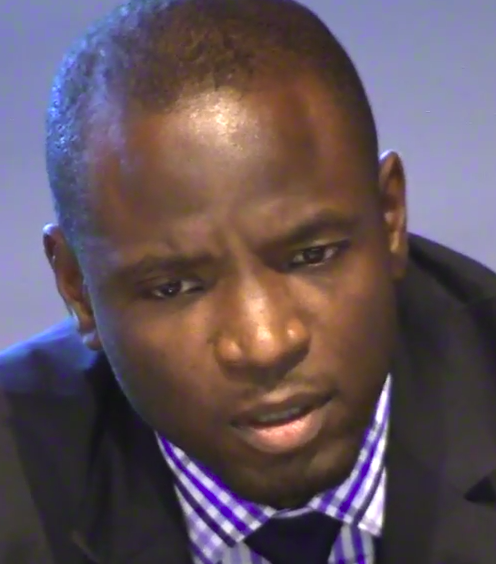
Duwayne Brooks
Community hub
Duwayne Brooks
logo
8 pages, 0 posts
0 subscribers
Be the first to start a discussion here.
Duwayne Brooks
Duwayne Brooks
from Wikipedia

Duwayne Lloyd Anthony Brooks OBE (born 27 September 1974) is a former councillor in the London Borough of Lewisham. He was a friend of Stephen Lawrence and was with him when he was murdered.[1]

Key Information

Early life

[edit]

Brooks was born in Lewisham to Jamaican parents. He grew up in Deptford and attended Blackheath Bluecoat Church of England School in Charlton. In 1991 he went to study engineering at Woolwich College and at Lewisham College a year later.[2]

Murder of Stephen Lawrence

[edit]

Brooks was with his friend Stephen Lawrence when he was murdered on 22 April 1993, and experienced severe post-traumatic stress disorder as a result of the attack.[3] He sought damages under the tort of negligence for his treatment by the police in the aftermath of the murder, as a suspect rather than a witness.[4] This claim was rejected on the basis that case precedent, particularly the case of Hill v Chief Constable of West Yorkshire (1989) had not established that police should owe a duty of care to claimants impacted by their negligence.[5] Although, unlike Hill, the police had harmed Brooks directly, rather than him being harmed by their lack of action, the police were not deemed liable for his psychiatric injuries.[6] The murder led to an inquiry headed by Sir William Macpherson which concluded that the Metropolitan Police Force was "institutionally racist".

Brooks was arrested after allegations that he was involved in an incident during an anti-racist march outside the British National Party headquarters in Welling days after the murder.[7] Although Brooks was charged, the judge dismissed the case against him.[7] It was later revealed that the Special Demonstration Squad had been set to discover any incriminating details about members of the Justice for Stephen Lawrence campaign, including his parents and friends. The allegations against Brooks subsequently appeared.[8] Brooks sued the Metropolitan Police in 2006, winning £100,000 in compensation.[9][10]

Political career

[edit]

In February 2009, Brooks became a councillor for the Liberal Democrats in the London Borough of Lewisham following a by-election in the Downham Ward.[11][12] Later that year, he was elected onto the Safer Communities Board at the Local Government Group as Lead Member for the Liberal Democrats.[13] He was re-elected for the Downham Ward in May 2010,[14] and appointed "Community Cohesion and PREVENT Champion" at the Local Government Group months later.[13]

In autumn 2010, Brooks was named among the potential candidates[15] for the 2012 London mayoral election[16] but was never shortlisted. He was part of the team around the eventual Liberal Democrat Mayoral candidate, Brian Paddick, said to be as a proposed Deputy for Youth and Communities.[17] He stood unsuccessfully as the Liberal Democrat candidate for Mayor of Lewisham in 2014.[18] He was appointed Officer of the Order of the British Empire in the 2015 Birthday Honours for public and political service.[19]

Brooks was shortlisted to be the party's candidate for the 2016 London mayoral election, but withdrew in August 2015 in order to assist a review of stop and search by police in Northamptonshire.[20] In 2018, he stood unsuccessfully as an independent candidate to become Mayor of Lewisham.[21][22][23]

Brooks joined the Conservative Party in May 2018.[24] He was longlisted to be their 2020 London mayoral candidate, but was not selected.[25]

References

[edit]
Revisions and contributorsEdit on WikipediaRead on Wikipedia
from Grokipedia
Duwayne Lloyd Anthony Brooks OBE (born 27 September 1974) is a British and former local recognized for surviving the 1993 racist of his friend Stephen Lawrence. On 22 April 1993, the 18-year-old Lawrence and 18-year-old Brooks, school friends since 1985, were waiting for a bus in , southeast , when they were approached and attacked without provocation by five white s who shouted racial slurs before stabbing Lawrence to death; Brooks escaped the assault but suffered physical injuries and subsequent psychological trauma. Brooks provided immediate eyewitness descriptions to police, identifying attackers including Neil Acourt, though his account faced scrutiny and mishandling by investigators who treated him with suspicion as a black male suspect rather than a victim, contributing to early investigative failures. Entering politics after working in technical roles, he was elected as a Liberal Democrat councillor for Downham ward in the London Borough of in 2009, focusing on community safety, and later supported Paddick's 2012 London mayoral campaign as deputy for and communities. Brooks received the Officer of the (OBE) in the 2015 Queen's Birthday Honours for public and political service. By 2018, he had affiliated with the Conservative Party, expressed interest in the 2024 London mayoralty as a candidate, and continued advocacy in justice, including appointment to the Youth Justice Board in 2023.

Early Life

Childhood and Family Background

Duwayne Brooks was born on 27 September 1974 in , South East London. His parents originated from , reflecting the wave of immigration to the in the mid-20th century. Brooks grew up primarily in , an area neighboring known for its working-class demographics and diverse population during the 1970s and 1980s. He resided in Grove Park, also within the London Borough of , with his mother, stepfather, two sisters, and one brother in a modest household. The family faced financial constraints typical of many immigrant households in post-industrial urban Britain at the time. Brooks has a half-sister approximately ten years his junior, born later in the family's life. At age 16, he left his mother's home to live independently, marking an early transition to self-reliance.

Education and Early Influences

Duwayne Brooks was born on 27 September 1974 in , , to Jamaican immigrant parents. He grew up in , a working-class area in southeast perceived by some as rougher than neighboring districts like , where his friend Stephen Lawrence resided. By early 1993, Brooks had moved into a , reflecting a period of independence amid his late teenage years. Brooks attended Blackheath Bluecoat School, a in Charlton, southeast , where he met Stephen Lawrence on their first day in 1985, initiating a close friendship that endured through regular contact. By 1993, at age 18, he had left school to study at college, aligning with his aspirations during a time when he and Lawrence, both pursuing A-levels or equivalent studies, often met after classes. Early influences on Brooks included his upbringing in Deptford's multicultural but socioeconomically challenged environment, which Lawrence's parents reportedly viewed as contributing to a "bad influence" perception of him, though Brooks countered that Lawrence engaged in activities like drinking and smoking that he avoided. The formative friendship with Lawrence, forged in the shared context of and urban life, shaped his social circle and experiences prior to the 1993 incident, with no documented involvement in prior criminality or notable extracurricular pursuits.

Friendship with Stephen Lawrence

Duwayne Brooks and Stephen Lawrence met on their first day of at Blackheath Bluecoat School, where they quickly became best friends. Brooks later described Lawrence as one of his closest friends during his testimony to the Stephen Lawrence Inquiry in 1999, emphasizing the bond formed in their early teenage years. Their friendship endured beyond school years; while Lawrence progressed to sixth form, Brooks left education earlier but maintained regular contact with him. Brooks recounted in court proceedings that they would often meet at the school during lunchtimes and at the end of the day, reflecting a routine companionship typical of longstanding peers. In his 2003 memoir Steve and Me: My Friendship with Stephen Lawrence and the Search for Justice, Brooks detailed the personal significance of their relationship, portraying Lawrence as a key influence in his life prior to the events. This account underscores the depth of their pre-murder association, rooted in shared school experiences rather than familial or professional ties.

Involvement in the Stephen Lawrence Murder

The Attack on April 22, 1993

On the evening of April 22, 1993, Stephen Lawrence, an 18-year-old black student, and his friend Duwayne Brooks, also 18, were waiting for a bus numbered 161 to at a stop on Well Hall Road in , South East London, near the junction with Dickson Road. The pair had met earlier that evening after Lawrence attended a meeting related to his architectural interests. Around 10:40 PM, a group of four to six white youths approached from the direction of Dickson Road, shouting phrases including "What, what, nigger?"—indicating a racial motivation for the confrontation. The attack was unprovoked, lasting approximately 10 to 20 seconds, during which one of the youths stabbed Lawrence multiple times in the and arms, severing his axillary arteries and causing fatal blood loss. Brooks, who was also targeted in the assault and struck on the head, fled initially while urging Lawrence to run, but he was briefly pursued by some of the attackers before they turned back. Lawrence, despite his severe injuries, managed to run more than 100 yards before collapsing near a tree on the pavement. Brooks returned to the scene, found Lawrence unresponsive but breathing with significant bleeding, and immediately ran to a nearby phone box to dial 999 at approximately 10:43 PM, requesting an . He then paced anxiously while awaiting help, checking for the return of the attackers. Emergency services responded with an ambulance arriving around 10:55 PM, by which time Lawrence had lost consciousness from . He was transported to the Brook Hospital, where he was pronounced dead at 11:17 PM. Brooks provided an initial account to arriving police officers, including PC Julie Geddis and PC Helen Bethel, describing the white male stabber as approximately 5 feet 8 inches tall, of medium build, aged 18 to 22, with long frizzy light brown hair extending over his ears and an oval face. A subsequent coroner's in 1997 ruled the death an resulting from an unprovoked racist attack by five white youths.

Brooks' Account and Initial Police Contact

On the evening of April 22, 1993, Duwayne Brooks and Stephen Lawrence were waiting for a bus at a stop on Well Hall Road in , southeast , around 10:30–10:40 p.m. Brooks later recounted that a group of five or six white youths suddenly approached them in an unprovoked manner, with one shouting a racial slur before the group lunged at Lawrence, him twice in the during an attack lasting approximately 3 to 15 seconds. Brooks himself was struck during the assault but managed to flee, urging Lawrence to run as they separated; Lawrence ran about 130 yards before collapsing from his injuries. In his initial descriptions, Brooks identified the primary attacker as a white male approximately 5 feet 8 inches tall, of medium build, aged 18 to 22, with long, frizzy light extending over his ears. Brooks immediately sought help after the attack, flagging down passing vehicles and telephoning emergency services at 10:43 p.m. from a nearby phone box, reporting the stabbing and providing a location description. Police officers, including PCs Bethel, Smith, and Gleason, arrived at the scene shortly before the ambulance at around 10:50 p.m., but their focus shifted to questioning Brooks rather than prioritizing first aid for Lawrence, who was still conscious but bleeding profusely. Officers described Brooks as "agitated" and "aggressive," perceptions later attributed in the inquiry to unconscious racial stereotyping, rather than recognizing him as a traumatized victim and key witness. PC Gleason took a brief initial statement from Brooks at the scene, recorded in his pocket book, marking the first formal account of the incident. Accompanied by PC Smith to Brook Hospital (now Queen Elizabeth Hospital), where Lawrence was pronounced dead at 11:17 p.m., Brooks was left unaccompanied for periods and received minimal support, contravening basic victim care protocols. He provided a more detailed statement to PC Gleason at the hospital around 11:30 p.m., reiterating the racial motivation and group attack. Later that night, between 1:30 a.m. and 5:30 a.m. on April 23, Brooks gave a comprehensive statement to DC Cooper at Plumstead Police Station, where he was described as calm and cooperative, though police failed to inquire whether Brooks himself had been assaulted or to offer trauma support. The Stephen Lawrence Inquiry later found these early interactions indicative of institutional failures, including inadequate sensitivity to the victim's race and trauma, which undermined Brooks' confidence and the investigation's momentum from the outset.

Aftermath of the Murder

Witness Testimony and Identifications

Duwayne Brooks provided his initial to police shortly after on April 22, 1993, describing a group of five to six white youths who approached with racist remarks including "what, what ?" before launching an unprovoked attack; he detailed one attacker as approximately 19 or 20 years old, wearing blue jeans and having bushy light brown hair, who struck Lawrence on the head. This account, given between 01:30 and 05:30 at to Detective Constable David Cooper, formed the basis of his testimony, which he confirmed on May 1, 1993, and expanded during a facial identification session on May 6, 1993. Brooks participated in several identification parades between May 7 and June 3, 1993, at , where he identified Acourt on May 13, leading to Acourt's charge for the murder that evening, and Luke on June 3, resulting in Knight's charge on June 24. He did not identify Jamie Acourt on May 7 or David Norris in a 1995 parade, and on May 13 during Gary Dobson's parade, he selected a volunteer rather than Dobson. In September to December 1993, Brooks additionally claimed to recognize two men at a Star Burger location as involved attackers, describing them as brothers or twins, though this aligned inconsistently with prior descriptions. The reliability of Brooks' identifications faced substantial scrutiny due to the circumstances of the attack—a fleeting glimpse lasting about three seconds from 15-20 yards away at night while running backwards in shock—which he himself acknowledged post-parade on June 3, 1993, suggesting reliance on physical descriptions and external prompts rather than firm facial recognition. Inconsistencies appeared in his accounts, such as varying descriptions of the stabber's hair (long and frizzy light brown versus or ) and the weapon (iron bar versus ), alongside potential from other witnesses' statements or coaching by lawyers like . The Crown Prosecution Service discontinued proceedings against Acourt and Knight on July 28, 1993, deeming Brooks' evidence weak, and in the 1996 private prosecution trial, Mr. Justice Curtis ruled it valueless for lacking true recognition and due to confusion, halting the case under R v. Turnbull guidelines. During the Stephen Lawrence Inquiry, Brooks reiterated identifying Acourt and Knight but criticized police for treating him as a rather than a victim, questioning his account of racial motivation, and suggesting guesses during parades, which undermined his credibility. Detective Superintendent Ian Crampton initially assessed Brooks as calm and truthful on , , but later officers like Detective Constable Crane viewed him as uncooperative, potentially influenced by his trauma or institutional biases in handling black witnesses. In a 2023 , Brooks stated he was "100% certain" he could have identified sixth Matthew White in early parades had White been included, accusing police of in handling despite White's arrests in 2000 and 2013 yielding no charges. Other eyewitnesses, such as Stacey Benefield, provided supplementary accounts but did not yield firm identifications of the prime suspects, leaving Brooks' testimony as the sole direct basis for early charges.

Police Mishandling and Institutional Criticisms

Upon arrival at the scene of the attack on April 22, 1993, officers failed to provide to Stephen Lawrence, despite Brooks' pleas, and instead prioritized securing the area while treating Brooks with suspicion rather than as a trauma victim or key witness. Brooks later reported that officers appeared repulsed by Lawrence's blood and dismissed his account of a racially motivated gang attack, initially hypothesizing a drug-related altercation between the two friends. This early mishandling exacerbated Brooks' distress, as he was left unattended for over an hour before medical attention, contributing to his subsequent . In the ensuing investigation, police repeatedly questioned Brooks' credibility, describing him in internal notes as "aggressive, anti-police, distressed and unhelpful," which led to stereotyping that undermined his . Brooks provided descriptions of attackers, including one resembling Matthew White, but officers treated him as a potential rather than a reliable source, even interviewing him under caution and implying involvement in the incident. This approach delayed pursuits of leads from his identifications and contributed to the failure to key suspects promptly, with Brooks later stating that police efforts seemed aimed at discrediting him to protect the investigation's flaws. Further institutional lapses emerged in 2013 revelations that the had secretly bugged meetings between Brooks, his , and police officers handling compensation claims related to the case, recording private discussions without consent from 2001 onward. Police admitted to the , which Brooks described as an compounding the original trauma, and it prompted internal reviews acknowledging breaches of trust but no criminal charges against officers. The 1999 Macpherson Inquiry attributed such patterns, including the stereotyping of Brooks, to "institutional racism" within the force, though subsequent analyses have highlighted broader incompetence and as causal factors, with of lost and unfollowed leads pointing to systemic operational failures beyond racial bias alone. Criticisms extended to the police's , as Brooks' trauma was intensified by repeated interactions that prioritized institutional defense over victim support, including failures to protect him from retaliation and delays in addressing his PTSD claims. Brooks pursued compensation, winning settlements in 2006 and later, but these were marred by admissions of not limited to race, with Brooks noting in 2014 that the Met's biases affected him as a working-class individual regardless of ethnicity. Independent reviews, such as the 2014 Ellison Review, confirmed bugging and other misconduct but emphasized evidential gaps in proving intentional sabotage, underscoring persistent institutional shortcomings in handling witnesses from marginalized backgrounds.

Compensation Claims Against the Metropolitan Police

Duwayne Brooks initiated legal action against the Metropolitan Police Service (MPS) shortly after the April 22, 1993, murder of Stephen Lawrence, alleging negligence in the police response to the attack and subsequent investigation mishandling that exacerbated his trauma. Brooks claimed the officers failed to protect him as the surviving victim, treated him as a suspect rather than a witness, and subjected him to racial stereotyping, leading to psychiatric injury including post-traumatic stress disorder. These claims encompassed negligence, false imprisonment, misfeasance in public office, and breaches of the Race Relations Act 1976, with Brooks seeking damages for the alleged failure to provide equivalent service to non-white victims. In August 1999, he issued writs against 15 officers and the Crown Prosecution Service for these breaches, arguing differential treatment based on race. The MPS successfully defended against Brooks' core claim in a landmark 2005 ruling in Brooks v Commissioner of Police for the Metropolis. The court held that police investigating crimes owe no general in to individual victims or witnesses, as such liability could undermine operational priorities and public safety. This decision overturned a lower court finding in Brooks' favor, emphasizing that policy considerations precluded imposing tortious duties that might deter effective policing. Despite this setback, Brooks pursued parallel claims of and against the MPS and individual officers, contending that his treatment reflected institutional bias rather than mere investigative error. In March 2006, the MPS settled out-of-court with Brooks, paying him £100,000 in damages plus costs and issuing a formal apology for his mistreatment following the . The settlement addressed allegations of racial and by officers, including failures in witness support and investigative fairness, without admitting liability on the dismissed grounds. Brooks' solicitor described the payout as recognition of the MPS's mishandling, which had compounded his suffering, though the force maintained the resolution avoided protracted litigation amid post-Macpherson scrutiny of racial practices. Subsequent claims against 13 individual officers under proceeded separately but did not yield further public awards.

Role in the Macpherson Inquiry and Subsequent Reviews

Duwayne Brooks, as the sole surviving witness and victim of the racist attack on Stephen Lawrence on 22 April 1993, provided critical evidence to the Macpherson Inquiry through nine detailed statements describing the assailants, the sequence of events—including racial slurs such as "what, what ?"—and the Metropolitan Police's handling of the scene. He participated in identification parades, selecting Acourt on 13 May 1993 and Luke Knight on 3 June 1993, though these identifications were later undermined by inconsistencies attributed to a fleeting glimpse and potential external influences. Medical advice precluded live oral testimony, with his statements instead read into the record on 15 May 1998. The inquiry's February 1999 report dedicated Chapter 5 to Brooks' account, highlighting police failures such as stereotyping him as "aggressive" and "unco-operative" at the scene—despite his trauma—leaving him unaccompanied at the hospital without victim support, and neglecting forensic opportunities like retaining his clothing. These lapses, including inadequate liaison and supervision during parades, contributed to evidentiary weaknesses that led to the Prosecution Service discontinuing charges against suspects on 28 July 1993. Assistant Commissioner Johnston conceded the force "let him down" in addressing Brooks' needs as a primary victim. Brooks' underscored broader investigative deficiencies, including delayed recognition of the crime's racial motivation and mishandling of . In the 2014 Stephen Lawrence Independent Review, Brooks' prior testimony and experiences informed assessments of Metropolitan Police conduct, particularly surveillance of him and his solicitor during civil proceedings settled in 2001, as well as questionable prosecutions such as for criminal damage at a May 1993 demonstration—dismissed as an due to trauma-induced delays—and a 1999 case where police was found. The review found no evidence of or smears targeting Brooks to discredit the Lawrence campaign, but noted ethical concerns over intelligence gathering on his post-inquiry activities and inadequate support as a vulnerable witness. Later examinations, including 2021 Home Affairs Committee scrutiny and 2023 probes into original officers' actions toward Brooks, referenced his account to evaluate persistent failures in victim treatment and evidence integrity, though without new direct involvement from him.

Surveillance and Bugging Revelations

In June 2013, the reported that the had secretly recorded at least two meetings in 1999 and 2000 between its officers, Duwayne Brooks, and his solicitor at the Deighton Guedalla law offices in , , during discussions related to Brooks' compensation claim against the force for its post-murder treatment of him. The covert recordings were authorized internally using form 728s by then-Deputy Assistant Commissioner John Grieve, who led briefings on the Stephen Lawrence investigation following the 1999 Macpherson Report. Grieve's stated rationale was to safeguard the integrity of police evidence, amid suspicions that Brooks or his representatives might themselves be making unauthorized recordings of the sessions. However, documents later released by Brooks' legal team revealed an additional purpose: to create a defensive record protecting Grieve and a colleague from anticipated complaints by Brooks about police conduct in the case. Brooks' solicitor, Jane Deighton, condemned the operation as "scandalous" and potentially unlawful, arguing it undermined trust in post-Macpherson police reforms aimed at addressing institutional failures. The responded by initiating an internal probe via its Directorate of Professional Standards. The bugging revelations coincided with broader scrutiny of police surveillance tactics in the Lawrence case. The 2014 independent review by Mark Ellison QC, commissioned to assess undercover policing and potential corruption, specifically investigated the extent, purpose, and authorization of monitoring directed at Brooks and his solicitor. Ellison's findings documented 18 intelligence reports on Brooks' activities spanning two years, generated by (SDS) undercover operations targeting justice campaigns linked to the murder, though the review noted no evidence of a targeted smear campaign against Brooks individually. Subsequent disclosures from the Undercover Policing Inquiry (UCPI) in April 2025 identified SDS officer N81—named as David Watson—as having infiltrated groups involving Brooks, the Lawrence family, and related black justice campaigns, including surveillance shortly after the 1993 murder. UCPI hearings in October 2025 further revealed that undercover officers, including one who participated in clashes during the original Stephen Lawrence inquiry hearings, maintained covers to facilitate ongoing monitoring of campaign activities. These operations, part of SDS efforts starting in the mid-1990s, persisted despite the Macpherson Report's criticisms of police insensitivity toward Brooks as a witness and victim.

Personal Trauma and Recovery

Psychological Impact and PTSD Diagnosis

Duwayne Brooks experienced profound psychological trauma following the racially motivated attack on April 22, 1993, during which he witnessed his friend Stephen Lawrence being fatally stabbed. This event precipitated a diagnosis of severe (PTSD), characterized by symptoms including emotional distress, memory inconsistencies in early statements, and long-term avoidance of publicity. Brooks himself acknowledged suffering from PTSD as early as 1995, which affected his ability to provide coherent testimony in initial legal proceedings, leading to perceptions of unreliability by authorities. Medical and legal assessments confirmed that the PTSD stemmed directly from the violence of the assault, with Brooks reporting nightmares, , and emotional numbing that persisted for years. In civil claims against the , expert evidence established that the disorder was "very severe," linking it causally to the unprovoked attack rather than subsequent investigative failures, though police conduct—such as treating Brooks as a —exacerbated his symptoms by eroding trust and prolonging isolation. The condition remained undiagnosed or unmanaged for an extended period post-attack, contributing to professional and personal disruptions until at least the late 1990s. During the 2011 retrial of suspects Gary Dobson and David Norris, Brooks provided tearful testimony recounting the assault while attributing inconsistencies in his prior accounts to PTSD-induced effects, such as fragmented recall of the rapid sequence of events. Psychiatric evaluations in related proceedings, including the Macpherson Inquiry's review of witness handling, underscored the trauma's intensity, noting Brooks' greatest distress arose from helplessly observing Lawrence's mortal wounds amid racial abuse. Recovery efforts involved therapy, though full resolution was complicated by ongoing legal battles and media scrutiny, with Brooks later describing the psychological burden as a barrier to normalcy for over a decade.

Professional Challenges and Pre-Political Career

Following the 1993 , Duwayne Brooks, then aged 18, faced significant barriers to establishing a stable professional life, compounded by undiagnosed (PTSD) and ongoing interactions with the . After leaving school, Brooks resided in a hostel at age 16, where he developed practical skills in communication and administration while commencing an engineering course. Brooks trained as a and secured employment in the field, starting at a firm on a of £60 per week and earning recognition for resolving operational crises through diligent . By around 2002, this remained his primary day job, though the psychological toll of the trauma manifested in memory issues and heightened stress, exacerbating professional instability. Police scrutiny intensified these difficulties, with Brooks subjected to multiple arrests on questionable grounds, including twice for possessing offensive weapons—later clarified as work tools—and an accusation on 17 1999 of taking and driving away his own vehicle. conditions prohibiting him from restricted his mobility, directly hindering job performance and commute reliability. Brooks attributed these incidents to deliberate efforts to undermine his , stating, "They wanted me to lose my job, to break me down," amid broader following his against the police for mishandling his witness status. The cumulative stress contributed to physical decline, including significant from forgetting to eat. These episodes, alongside untreated PTSD diagnosed later, limited Brooks' capacity for consistent career progression prior to his political involvement in the early 2000s. He later pursued victim support initiatives, including operating a charity aiding victims, as an extension of his experiences rather than formal .

Political Involvement

Entry into Local Politics (2000s)

In the early 2000s, Brooks transitioned from his role as a into focused on and . Around 2002, he was invited to speak at a local event on knife , which prompted him to begin mentoring young people in his and eventually establishing a charity to support victims of . This involvement drew him toward formal politics with the Liberal Democrats in , where he credited the local party's experienced activists for training him in grassroots campaigning techniques, such as distributing leaflets, taking action photos, and conducting door-to-door . By 2008, Brooks had joined the campaign team of Liberal Democrat mayoral candidate Brian Paddick for the London elections, marking his initial foray into electoral politics and building on his community safety advocacy. This period of preparation culminated in his successful bid for a council seat in 2009, reflecting his motivation to leverage personal experiences with institutional failure to influence local policy on safety and justice.

Tenure as Liberal Democrat Councillor (2009–2015)

Duwayne Brooks was elected as a Liberal Democrat councillor for the Downham ward in the London Borough of in a held on 19 February 2009, receiving 1,067 votes alongside fellow Liberal Democrat candidate Sue Clutten who secured 1,075 votes. The followed the of a previous councillor, marking Brooks' entry into local politics after years of advocacy related to the Stephen Lawrence case. During his tenure, Brooks focused on community safety issues, serving as the Liberal Democrats' lead member for community safety on the Local Government Association's Safer Communities Board for four years. In this role, he contributed to initiatives aimed at preventing gang violence and enhancing local safety measures in . He also supported broader party efforts, including involvement in Brian Paddick's campaign team for the . In September 2010, Brooks announced consideration of a run for mayor under the Liberal Democrats, highlighting his intent to address injustice informed by personal experience. His council service ended following the May 2014 local elections, in which Liberal Democrat representation in was significantly reduced, leading to the loss of his seat. Brooks had stood as the party's candidate for Mayor of in 2014, though the bid was unsuccessful amid the party's local setbacks. His contributions during this period were recognized with an OBE in the 2015 Queen's for public and political service.

Broader Candidacies and Party Considerations

In 2012, Brooks served as the proposed deputy mayoral candidate for youth and communities on Liberal Democrat Brian Paddick's mayoral ticket, focusing on restoring trust between police and communities, inspiring youth engagement, and addressing gang culture through opportunity creation. He competed in the Liberal Democrats' selection process for their 2016 mayoral nominee in June 2015, as one of six contenders, though Caroline Pidgeon ultimately secured the candidacy. Following his defeat in the 2015 local elections, which ended his councillor tenure, Brooks disaffiliated from the Liberal Democrats, citing misalignment with their values on issues like welfare dependency versus personal empowerment. He joined the Conservative Party around May 2018 and pursued its nomination for the 2020 mayoral election, reaching the longlist but not advancing further. In this bid, Brooks emphasized tackling social injustice, crime, and community disconnection, arguing for Conservative policies promoting responsibility and innovation over criticism of incumbent Sadiq Khan's leadership. Brooks announced his candidacy for the as a Conservative on April 22, 2023, motivated by his experiences of institutional failures following Stephen Lawrence's murder, which he believed necessitated a "hand-up" approach to empower marginalized communities through and family values rather than expansive handouts. Despite expressing gratitude for the Liberal Democrats' early support in his political entry around 2002, he aligned with Conservative principles to address systemic issues like policing and youth opportunity from a position of direct authority. He was not selected as the party's nominee, with chosen instead.

Controversies and Criticisms

Arrest During Anti-Racist Protest

In the weeks following on April 22, 1993, heightened tensions over racism prompted anti-racist groups to organize demonstrations targeting the (BNP), whose headquarters in , southeast , became a focal point due to its proximity to the and perceived links to far-right . Duwayne Brooks, as Lawrence's close friend and eyewitness, participated in such protests, including a demonstration outside the BNP office where clashes occurred between protesters and police. On one occasion during these events, Brooks was on allegations of involvement in a scuffle or violent incident amid the unrest. The arrest reflected broader police scrutiny of Brooks, who had already faced skepticism from investigators regarding his account of the , with officers initially treating him more as a than a victim. Undercover officer Peter Francis, embedded in left-wing activist groups from 1993 to 1997, later claimed he provided with information portraying Brooks as engaging in at the Welling , as part of efforts to undermine his . These tactics aligned with documented patterns of police operations aimed at discrediting campaigners and witnesses in race-related cases, though Francis's disclosures emerged publicly only in 2013. Ultimately, the charges against Brooks were dropped due to lack of evidence, highlighting questions about the proportionality and motivation of the arrest amid chaotic protest conditions. The incident contributed to perceptions of institutional bias within the , as later inquiries noted officers' stereotyping of Brooks influenced their handling of him, exacerbating distrust in the Lawrence investigation. No conviction resulted, and Brooks continued his advocacy, though the episode underscored ongoing frictions between protesters and in the .

Disputes Over Testimony and Book Publication

Duwayne Brooks's testimony as the primary eyewitness to the April 22, 1993, murder of Stephen Lawrence faced scrutiny for perceived inconsistencies, particularly regarding his identifications of suspects in police parades. On May 13, 1993, Brooks selected Neil Acourt from a lineup, and on June 3, 1993, he identified Luke Knight, though these identifications were later challenged in court proceedings. During the 1996 private prosecution initiated by the Lawrence family, a judge deemed Brooks's identification evidence unreliable due to variations in his account, resulting in the dismissal of charges against the Acourts and Knight before the trial concluded. Additionally, reports emerged that Brooks had privately admitted to a associate making a "calculated guess" during one identification parade, an allegation he vehemently denied, contributing to doubts about his reliability raised by defense counsel and police handling. These disputes were compounded by Brooks's evolving descriptions of the attack, including the number of assailants (initially reported as five or six) and the sequence of events, which were cross-examined during the 2011–2012 Old Bailey trial of Gary Dobson and David Norris. Brooks maintained that the group of six white men shouted racial slurs before launching an unprovoked assault, during which he observed Lawrence struck twice with distinct weapons, but critics, including some media and legal observers, highlighted discrepancies with other witness statements and forensic timelines as undermining credibility. The Macpherson Inquiry (1999) acknowledged police mistreatment of Brooks as a victim-witness, including initial suspicion of his involvement and inadequate support, which exacerbated perceptions of his testimony as inconsistent, though the report attributed much of the issue to institutional failures rather than deliberate fabrication. In 2003, Brooks co-authored Steve and Me: My Friendship with Stephen Lawrence with journalist , detailing his experiences and criticizing the Lawrence family for allegedly exploiting the tragedy and hindering his recovery, including claims that they portrayed him negatively to advance their campaign. The book prompted libel actions; sued the publishers, Time Warner Books, asserting it contained false and defamatory statements depicting her as manipulative and uncaring toward Brooks, such as allegations of pressuring him into unfavorable media roles. In 2004, the ruled in her favor, awarding undisclosed and costs, with the publishers issuing an apology for the "untrue and damaging" content. Separately, family friend Oduro settled a libel claim in September 2003 over passages implying his unreliability as a , receiving and an admission that the assertions were unfounded. Brooks defended the book as his truthful perspective but later expressed regret over the ensuing family rift, which intensified public and media disputes surrounding his role in the case.

Shifts in Political Alignment and Public Statements

Brooks served as a Liberal Democrat councillor for until 2015, after which he did not seek re-election and disaffiliated from the party. In May 2018, he joined the Conservative Party, marking a notable shift from centrist toward conservative . This transition reflected his growing disillusionment with left-leaning policies on law and order, particularly under Labour administrations. In public statements, Brooks has repeatedly criticized the Labour Party for fostering an "authoritarian state" and a "police state" through expansive surveillance and regulatory measures during its periods in power. He attributed such developments to Labour's governance, contrasting it with his experiences of institutional failures in policing, while positioning the Conservatives as better equipped to address urban crime and injustice. For instance, in 2018, Brooks called for London Mayor Sadiq Khan—a Labour politician—to resign over rising knife crime, arguing that Tory policies on stop-and-search offered a more effective response than Labour's approach. By 2023, Brooks expressed intent to challenge Khan as the Conservative candidate for Mayor in the 2024 election, emphasizing his personal knowledge of injustice as a basis for reforming the and prioritizing community safety over what he viewed as politically motivated leniency. He was longlisted for the Conservative nomination but ultimately not selected, underscoring his alignment with the party's emphasis on tough policing despite the historical context of the Stephen Lawrence case under a prior Conservative government. These positions represented a departure from his earlier Liberal Democrat advocacy, which had focused on and local services while still critiquing Labour dominance in urban politics.

Honors, Legacy, and Recent Activities

Awards and Recognitions

In the 2015 Queen's Birthday Honours, Duwayne Brooks was appointed Officer of the (OBE) for public and political service. The honour, announced on 13 June 2015, recognized his contributions as a Liberal Democrat councillor in from 2009 to 2015, during which he advocated on community and justice issues. Brooks received the award amid ongoing public interest in the Stephen Lawrence case, in which he was a key witness, though the citation emphasized his elected role rather than the 1993 incident directly. No further national honours, such as knighthoods or higher orders, have been recorded for Brooks as of 2025.

Ongoing Advocacy and Inquiries (Post-2015)

Following the conclusion of his tenure as a in 2015, Duwayne Brooks has remained actively engaged in efforts to secure accountability for police handling of the Lawrence investigation and related undercover operations. As a core participant in the Undercover Policing Inquiry (UCPI), launched in 2015 to examine undercover activities from 1968 to 2008, Brooks has testified and contributed to hearings revealing surveillance targeting him, the Lawrence family, and associated justice campaigns. In April 2025, the UCPI publicly named undercover officer N81, identified as David Francis, who infiltrated groups linked to Brooks and the Lawrences to gather intelligence, including directives to report potentially discrediting information about Brooks. UCPI hearings in October 2025 further disclosed that Francis participated in physical clashes during the original Stephen Lawrence proceedings to maintain his cover, enabling continued monitoring of campaigners. Brooks' involvement underscores his sustained push for transparency on how undercover tactics undermined trust in police responses to racist , with the examining why such operations focused on victims' associates rather than perpetrators. In July 2023, Brooks publicly asserted that police had sabotaged opportunities for him to identify Matthew White—a potential sixth suspect in the 1993 attack who died in 2021—by failing to arrange a proper identification parade despite his readiness to participate. He described this as part of broader investigative shortcomings, echoing long-standing criticisms of conduct toward him as a and victim. These statements, made amid renewed media scrutiny following a investigation naming White, highlight Brooks' ongoing advocacy for re-examination of unresolved leads in the case, prioritizing empirical evidence over institutional narratives of closure.

References

Add your contribution
Related Hubs
User Avatar
No comments yet.