Hubbry Logo
Kodak EasyShareKodak EasyShareMain
Open search
Kodak EasyShare
Community hub
Kodak EasyShare
logo
8 pages, 0 posts
0 subscribers
Be the first to start a discussion here.
Kodak EasyShare
Kodak EasyShare
from Wikipedia
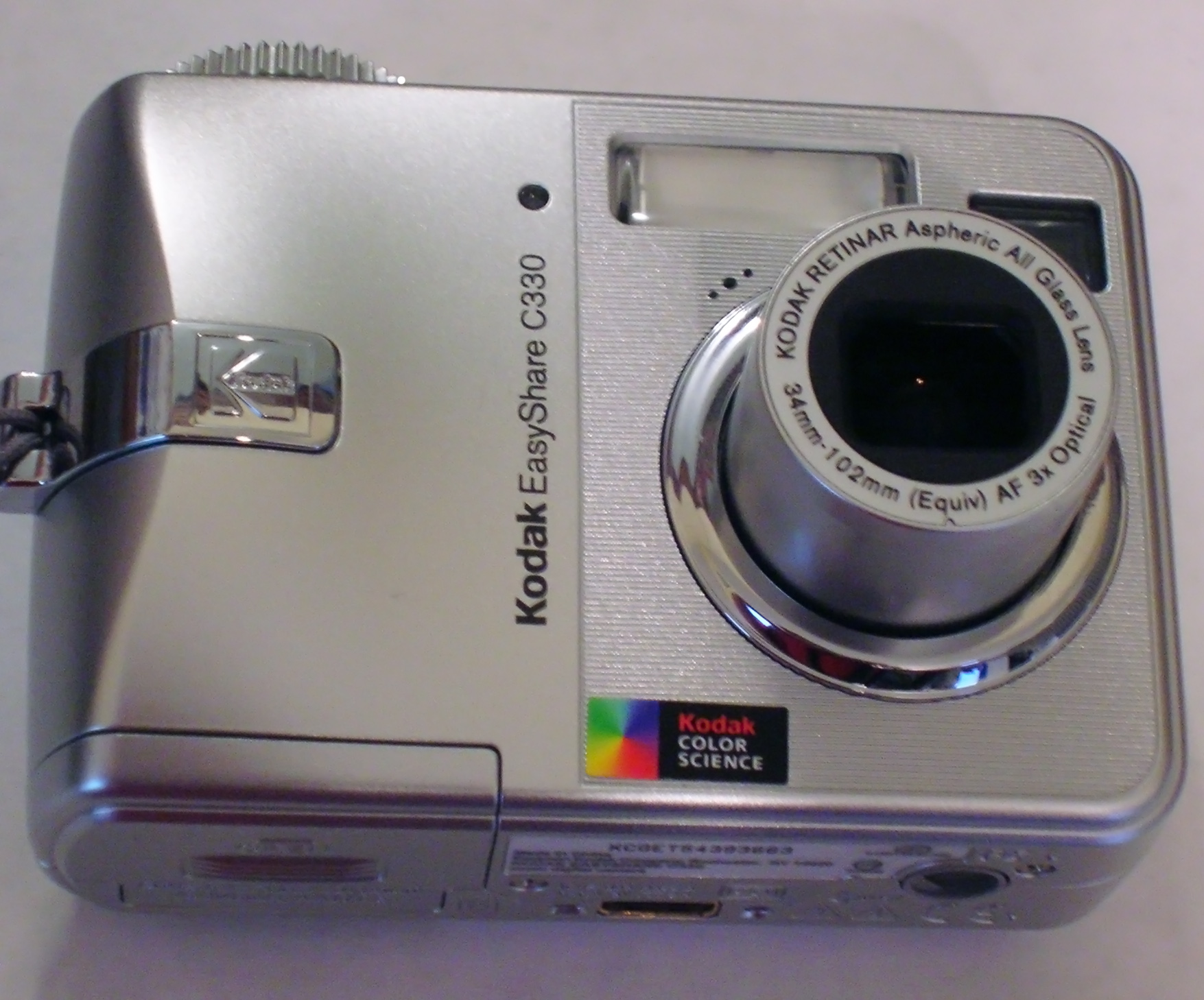
Kodak EasyShare C330
Kodak EasyShare LS743

Kodak EasyShare was a sub-brand of Eastman Kodak Company products identifying a consumer photography system of digital cameras, snapshot thermal printers, snapshot thermal printer docks, all-in-one inkjet printers, accessories, camera docks, software, and online print services. The brand was introduced in 2001,[1] and discontinued in 2012, when Kodak stopped manufacturing and selling all digital cameras and photo frames.[2][3]

Today, Kodak-branded digital cameras still exist, but they’re made by third-party companies (JK Imaging[4]) under license—not by Kodak itself.

EasyShare Digital Cameras

[edit]

The original products to use the EasyShare brand were the DX3600 and DX3500 digital camera along with the EasyShare Camera Dock.[5]

Kodak EasyShare DX6490 (2003)

Kodak EasyShare DX-Series

[edit]

The DX series cameras were the first EasyShare models released. It was originally a very basic point and shoot camera series, compatible with the original EasyShare Camera Dock. The CX series eventually replaced the lower-end DX models, and the newer DX-Series models had more advanced features and higher resolution and zoom features. The higher-end DX Series models eventually became the Z-Series. Models in the DX series were the last Kodak consumer digital cameras to use CompactFlash memory cards.

Models included:

  • DX3215 (1.3 MP, 30-60 mm zoom lens with 2X zoom)[6]
  • DX3500 (2.2 MP, 38 mm zoom lens with 3X zoom)[7]
  • DX3600 (2.2 MP, 35-70mm zoom lens)[8]
  • DX3900 (3.3 MP, 35–70 mm zoom lens)[9]
  • DX4330 (3.1 MP, 38–114 mm zoom lens)
  • DX4530(5.2 MP, 38-114mm zoom lens)[10]
  • DX4900 (4.1 MP, 35-70mm zoom lens)[11]
  • DX6440 (4.23 MP, 33–132 mm zoom lens)[12]
  • DX6490 (4.23 MP, 38–380 mm zoom lens)[13]
  • DX7440 (4.0 MP, 33–132 mm zoom lens)
  • DX7590 (5.0 MP, 38–380 mm zoom lens)
  • DX7630 (6.2 MP, 39–117 mm zoom lens).

Kodak EasyShare CX-Series

[edit]

The CX series grew out of the DX series. At the time, it was the range of the lowest-priced, most basic point and shoot cameras, typically with no more than 3× optical zoom. The CX series was replaced by the C series.[when?]

EasyShare C360

Kodak EasyShare C-Series

[edit]

The C-series[14] was Kodak's line of lower-priced, point and shoot, entry-level digital cameras.

Kodak EasyShare Z-Series

[edit]

The Z-series[15] was Kodak's high-zoom and performance-oriented range of consumer digital cameras, replacing the original DX series. Typically, Z-Series cameras have higher optical zooms than any other series. The highest optical zoom camera offered by Kodak was the Z990[16] with a 30X optical zoom.

Kodak EasyShare V-Series

[edit]

The V-Series was another style-oriented range of consumer digital cameras, replacing the original LS series. V-Series had a number of innovations, such as dual-lens technology, first introduced with the V570. The V-Series line was superseded by higher-end M-Series cameras.

Kodak EasyShare P-Series

[edit]

The P-Series was Kodak's "Performance" series intended to bring DSLR-like features to a consumer model. The series was superseded by higher-end Z-Series models. These were the only consumer models to leverage an external flash,[17] with the exception of the Z980.[18]

Kodak EasyShare-One Series

[edit]

The EasyShare-One series used an SDIO card to automatically upload pictures over Wi-Fi.

Kodak EasyShare M-Series

[edit]

The EasyShare[19] were originally a blend between thinner point-and-shoot cameras (C series) and stylish cameras (V series), later positioned as "Sleek and Stylish" with the discontinuance of the V-Series. They were usually available in a variety of colors and generally have features not available in the C-Series line.

To promote the M-Series, which featured the share button for social network media sharing, Kodak announced their "So Kodak" marketing campaign, which featured artists Drake, Pitbull, and Trey Songz.[20]

EasyShare Digital Frames

[edit]

Kodak EasyShare SV-Series

[edit]
Kodak EasyShare M575

The original line of digital frames that played pictures and videos (replaced by M-Series).

Kodak EasyShare EX-Series

[edit]

The original line of digital frames that included the features of SV-Series frames but included Wi-Fi (replaced by W-Series).

Kodak EasyShare M-Series

[edit]

The M-series[19] line of "multimedia" digital frames play pictures and videos.

Kodak EasyShare W-Series

[edit]

The W-series[21] line of "wireless" digital frames which could be connected via Wi-Fi to a home computer or the internet.

Kodak EasyShare D-Series

[edit]

The D-series[22] line of "decor" digital frames allow mounting with standard 8x10 frame.

Kodak EasyShare S-Series

[edit]

The S-series[23] currently designates digital frames that are "cordless" in that they have a rechargeable battery allowing viewing without a power cable for several hours. There was a much older frame, the S510, that was not cordless and predated the P-Series.

Kodak EasyShare P-Series

[edit]

The P-series[24] line of digital frames stands for "Photo"; these frames can only be used for pictures and not multimedia.

Other products

[edit]

The EasyShare brand also was incorporated with the original 5000-series all-in-one inkjet printers (superseded by the ESP line), thermal photo printers and printer docks (discontinued since 2012[3]), and camera docks.

EasyShare Software

[edit]

EasyShare Software

[edit]

Kodak EasyShare software[25] was used to transfer and catalog images from EasyShare cameras and could also be used with existing images (in .gif, .png, .jpg, or .tiff format) and non-Kodak digital cameras. The final version of Kodak EasyShare software was version 8.3, which included support for Windows 7. This software included the ability to upload pictures and videos to Facebook, YouTube and Kodak Gallery. Other features included the ability to rate, tag, and caption pictures, online print ordering, and photo enhancement and alteration. Kodak removed this software from its download pages in 2012.[26]

The updater component of the software was powered by BackWeb, which—though often associated with spyware—is said to be benign in this case..[27]

EasyShare Custom Creations

[edit]

This software, powered by RocketLife, is discontinued. It was a desktop application that allowed the user to create a personalized gift (ex. Photo Book) and burn the applicable files to a CD.[28] Ordering and fulfillment was handled by dropping the CD off at a retailer.

References

[edit]
[edit]
Revisions and contributorsEdit on WikipediaRead on Wikipedia
from Grokipedia
Kodak EasyShare was a consumer-oriented digital photography brand and system launched by the Eastman Kodak Company in 2001, featuring an integrated lineup of digital cameras, printer docks, software, printers, online sharing services, and accessories aimed at simplifying image capture, organization, editing, sharing, and printing for everyday users. The EasyShare system emerged as part of Kodak's strategic pivot toward digital imaging amid the decline of traditional film photography, building on the company's earlier innovations like the 1975 invention of the first digital camera prototype and the 1995 release of the KODAK DC40 point-and-shoot digital camera. By 2006, the brand had expanded to include a broad portfolio under Kodak's Consumer Digital Imaging Group, which reported net sales of $2.92 billion that year, with digital revenues surpassing traditional film-based ones for the first time. Key to its design philosophy was ease of use, evidenced by features like one-touch transfer from cameras to computers via docking stations and free desktop software for photo management, which earned top rankings in J.D. Power customer satisfaction surveys for digital cameras in the $200–$399 range and EasyShare photo printers in 2006. The product ecosystem encompassed several categories: digital cameras such as the DX series (e.g., DX3500 and DX3600 models introduced alongside the system), which offered optical zoom and compact designs for casual photographers; home imaging solutions including printer docks for seamless printing, all-in-one inkjet printers with nanoparticle inks launched in 2007, and specialized photo paper; software like the free Kodak EasyShare desktop application for editing and organizing images; online services via Kodak EasyShare Gallery (formerly Ofoto.com, with over 50 million members by 2006) for uploading, storing, and creating merchandise like photo books; and later additions such as digital picture frames introduced in 2007 for slideshow displays. The system achieved strong market positions, including the number-one unit share in U.S. digital cameras through November 2006 and leadership in snapshot printers and retail photo kiosks. Production of EasyShare digital cameras and all-in-one printers ceased in 2012 as Kodak restructured amid financial challenges and the smartphone revolution's impact on standalone cameras, with printer docks discontinued in 2010 and related media supplies ending in 2011. Official support for these products, including software updates, was discontinued in 2012, though the brand's emphasis on accessible digital workflows influenced subsequent technologies.

Overview

Introduction

Kodak EasyShare was a sub-brand of Eastman Kodak Company launched in 2001, encompassing a consumer-oriented system aimed at simplifying the capture, sharing, and printing of digital photos. This initiative marked Kodak's focused effort to make digital photography accessible and user-friendly, building on the company's long-standing legacy in imaging technology. The EasyShare ecosystem integrated key components such as digital cameras, digital picture frames, printers, camera docks, , and online sharing services like Ofoto, enabling a streamlined from shooting to display and distribution. These elements were designed to interconnect seamlessly, allowing users to transfer images effortlessly between devices and platforms without complex technical knowledge. Targeted at amateur photographers desiring an intuitive digital experience, EasyShare emphasized ease of use to democratize beyond professional circles. It exemplified Kodak's broader pivot from film-based products to digital solutions, achieving peak sales for its lineup in the mid-2000s amid growing consumer adoption, prior to a market decline driven by integration of cameras.

Design Philosophy

The Kodak EasyShare line was built on a design philosophy that extended the company's historic , "You press the , we do the rest," into the digital age, prioritizing simplicity and accessibility to make and sharing effortless for everyday consumers. This approach aimed to eliminate technical barriers, allowing users to focus on capturing and reliving moments rather than navigating complex interfaces or hardware setups. Central to this was the emphasis on "easy" sharing, exemplified by the dedicated Share on cameras, which enabled one-touch tagging of images for upload to , online galleries, or social platforms, streamlining the process from capture to distribution. A core element of the philosophy involved seamless integration across hardware and software components to create a cohesive . USB docks facilitated one-button transfers of photos from camera to computer or printer, while also handling charging and direct printing without the need for additional cables or manual connections. Bundled Kodak EasyShare software complemented this by automatically detecting connected devices, organizing images with guided, intuitive interfaces, and providing tools for and tailored to non-tech-savvy users, such as automated backups and one-click exports. This hardware-software was intended to foster a frictionless , where routine tasks like file management required minimal intervention. To promote broader accessibility and encourage spontaneous use in varied environments, the design incorporated innovations like waterproof and rugged constructions in select models, allowing submersion up to or resistance to drops and shocks without compromising core functionality. These features reflected a commitment to democratizing , making it reliable for active lifestyles while maintaining the overarching goal of simplicity and ease.

History

Development and Launch

As the digital photography revolution accelerated in the late 1990s, , which had invented the world's first prototype in , intensified its internal efforts to transition from film dominance to consumer-friendly digital solutions. Building on earlier consumer models like the 1997 DC120 Zoom, the company recognized the need to simplify image transfer and to appeal to mainstream users amid growing competition and shifting market dynamics. This development phase focused on integrating hardware with intuitive docking systems, aiming to eliminate technical barriers that hindered adoption of digital cameras. In April 2001, Kodak officially launched the EasyShare brand, introducing it as a comprehensive system designed for effortless . The debut featured the DX3500 and DX3600 Zoom digital cameras, both with 2.2-megapixel sensors, 8MB internal memory, and compatibility with cards, emphasizing one-button image transfer via the new Camera Dock. These models, priced at $300 and $400 respectively, were accompanied by the Printer Dock for direct photo printing without computers, forming the core of the initial lineup to streamline sharing for everyday users. The EasyShare initiative positioned Kodak to challenge market leaders Canon and , who held significant shares in the burgeoning sector by 2001, by prioritizing accessibility over advanced features. Early campaigns leveraged Kodak's longstanding "Share the moment, share life" to target families and casual photographers, promoting the system as a tool for quick, hassle-free capture and dissemination of personal memories. This approach highlighted the brand's philosophy of making as intuitive as traditional film, fostering broader consumer engagement in the early digital era.

Product Expansion

Following the initial launch of its digital cameras and software in 2001, expanded the EasyShare ecosystem by introducing complementary hardware categories to enhance in capturing, , and displaying digital images. In 2003, the company broadened its printer and dock offerings with the release of the EasyShare Printer Dock 6000, which allowed consumers to produce borderless 4x6-inch prints directly from compatible cameras at home. By 2007, further diversified into digital picture frames with the introduction of the EasyShare Digital Picture Frames, enabling easy slideshow viewing of photos without a computer. These additions aimed to create a seamless "share" , integrating cameras with peripherals for simplified photo management. Key milestones marked the evolution of the EasyShare lineup during this period. In 2005, Kodak launched the Z-Series, targeting users with models like the EasyShare Z700 and Z740, which offered 5x and 10x optical zooms respectively for more advanced point-and-shoot capabilities. By 2006, select EasyShare models incorporated video recording features, such as the Z612's MPEG-4 compressed TV-quality video at 30 frames per second and the V-Series' built-in for smoother handheld footage. These developments extended the product's appeal beyond still photography, aligning with growing consumer demand for multifunctional devices. The expansion garnered positive market response, with EasyShare contributing to Kodak's leadership in U.S. digital camera unit sales through the mid-2000s. In , Kodak maintained a strong third-place position globally, shipping millions of units amid a U.S. market that reached 28.3 million s overall. Partnerships with retailers facilitated bundled offerings, such as camera-printer kits, boosting accessibility and driving adoption among casual users. Technological advancements propelled EasyShare's growth, emphasizing higher resolution and integration. By 2009, models shifted to sensors up to 12 megapixels, as seen in the EasyShare Z950, enabling larger prints while maintaining ease of use. HD video capabilities emerged in later iterations, with recording added to select cameras around 2010, reflecting Kodak's adaptation to evolving digital standards. These enhancements solidified EasyShare's position as a user-friendly system for everyday .

Decline and Discontinuation

The rise of , beginning with the iPhone's launch in 2007, significantly eroded demand for dedicated like those in the EasyShare line by integrating high-quality imaging directly into mobile devices. By 2010, smartphone camera adoption had accelerated, leading to a sharp contraction in the overall digital camera market as consumers favored the convenience of all-in-one gadgets for capturing and sharing photos instantly. This shift contributed to declining sales for Kodak's consumer imaging products, including EasyShare cameras, as indicated a broader industry downturn where shipments fell by over 20% annually in the early 2010s. Kodak's financial difficulties intensified during this period, culminating in a Chapter 11 bankruptcy filing on January 19, 2012, amid mounting losses from its legacy film business and struggling digital divisions. EasyShare-related sales, which had peaked in the mid-2000s with U.S. shipments exceeding 7 million units annually, experienced a substantial decline, with falling to around 7% by 2011 as overall revenues in consumer fell by approximately 28% in 2011. These pressures, combined with Kodak's $6.75 billion debt load, forced the company to restructure and exit unprofitable segments. On February 9, 2012, Kodak officially announced the discontinuation of production for its EasyShare digital cameras, pocket video cameras, and digital picture frames, marking the end of its consumer hardware in these categories. The company ceased all related within months and ended software support for EasyShare products, including drivers and updates, by September 2012, leaving users reliant on third-party alternatives for compatibility. In the aftermath, Kodak transitioned to a licensing model for its brand, seeking partners to continue the EasyShare name on products starting in 2013, while focusing its core operations on commercial printing and . Elements of EasyShare's user-friendly sharing technology influenced subsequent Kodak-licensed devices and software ecosystems, though the original line's direct production never resumed.

Digital Cameras

DX-Series

The Kodak EasyShare DX-Series represented the initial prosumer-oriented lineup in the EasyShare digital camera family, launched in 2001 and positioned as higher-end models with optical zoom lenses and manual exposure controls to appeal to photography enthusiasts seeking more creative flexibility than basic point-and-shoots. These cameras emphasized advanced , such as Schneider-Kreuznach lenses in later models, and included features like selectable ISO settings and modes, distinguishing them from entry-level offerings. Key models in the series included the DX4330, released in 2002 with a 3-megapixel and 3x optical zoom for detailed prints up to 11x14 inches; the DX6490, introduced in August 2003 featuring a 4-megapixel CCD, groundbreaking 10x optical zoom (equivalent to 38-380mm), and manual controls for semi-professional use; and the DX7630, launched in early 2004 with a 6.1-megapixel , 3x optical zoom (39-117mm equivalent), and enhanced low-light via dual sensors. These cameras supported burst shooting modes, with capabilities up to approximately 2-3 frames per second depending on the model, allowing capture of fast action, and integrated seamlessly with 's EasyShare docks for one-touch image transfer, battery charging, and direct printing without a computer. Targeted at semi-professionals and advanced hobbyists who valued image quality and zoom versatility, the DX-Series bridged consumer and segments during its production run from 2001 to 2005. However, by 2005, the line was discontinued as market preferences shifted toward simpler, more affordable compact cameras with automatic features, prompting to pivot to series like for bridge-style models.

CX-Series

The Kodak EasyShare CX-Series comprised entry-level compact digital cameras introduced as part of Kodak's strategy to make digital photography accessible to novice users through affordable, straightforward devices. Launched starting in 2002 and continuing through approximately 2004, these models were priced under $200, with short optical zooms (typically 2x-3x) or fixed lenses in some variants, emphasizing simplicity over advanced functionality to appeal to budget-conscious consumers transitioning from film cameras. Key models in the series included the CX4230, released in 2002 with a 2-megapixel and 3x optical zoom for basic point-and-shoot imaging suitable for prints up to 8x10 inches. The CX6330 followed in 2003, featuring a 3.1-megapixel resolution and 3x optical zoom, alongside improved color processing via Kodak's Retinar . Later entries like the CX7300 in 2004 offered 3 megapixels with a fixed 37mm lens equivalent, while the CX7430 provided 4 megapixels and 3x optical zoom for slightly enhanced detail capture. These cameras typically stored images on internal memory or optional SD/MMC cards, prioritizing ease of use with automatic settings for everyday snapshots. Unique to the CX-Series were its simplified auto modes, which handled exposure, focus, and flash automatically to minimize user intervention, paired with compact 1.5- to 2-inch LCD screens for on-camera review. Basic video recording was supported at 320x240 resolution, allowing short clips with audio for casual home movies. The design focused on portability, with lightweight bodies powered by AA batteries, making them ideal for travel or spontaneous use without complex controls. Targeted at beginners, the CX-Series emphasized low cost and hassle-free operation, enabling quick photo transfer to computers via USB or optional docks for printing and sharing, aligning with Kodak's broader EasyShare ecosystem.

C-Series

The Kodak EasyShare C-Series represented the core consumer lineup of compact digital cameras from Eastman Kodak, introduced in 2005 and produced through 2011, featuring sensors ranging from 4 to 14 megapixels to cater to budget-conscious users seeking straightforward photography tools. These cameras emphasized ease of use with automatic settings and integration into the EasyShare ecosystem for printing and sharing, positioning them as an accessible entry point for digital imaging without advanced manual controls. Over the series' lifespan, more than 20 models were released, making it Kodak's most prolific compact camera range and a staple for mass-market sales. Early models like the C310, launched in August 2005, offered a 4-megapixel and for simple point-and-shoot operation, ideal for beginners capturing family moments without complexity. The C713, available from May 2008, advanced the line with a 7-megapixel CCD , 3x optical zoom, and high-sensitivity ISO up to 1250, enabling sharper images in varied lighting while maintaining affordability. By 2010, the C195 exemplified later evolution with a 14-megapixel , 5x optical zoom (equivalent to 33-165mm), and a 3-inch LCD for reviewing shots, supporting prints up to 30x40 inches. Unique to the C-Series were user-friendly enhancements like in models from the C613 onward, which automatically focused on up to five faces for better portraits, and mode for stitching multi-shot landscapes into wide images. All models supported SD or SDHC cards up to 32GB for expanded storage beyond internal memory, facilitating longer shooting sessions for everyday scenarios. Targeted at families and casual users—such as parents and grandparents—the series prioritized reliability and simplicity, with features like blur reduction and on-camera editing to minimize post-capture adjustments.

Z-Series

The Kodak EasyShare Z-Series consisted of bridge-style digital cameras designed for consumers seeking extended optical zoom capabilities without the size and complexity of single-lens reflex (SLR) models. Launched in 2005 and produced until 2012, the series offered superzoom lenses ranging from 5x to 24x optical magnification, enabling versatile shooting for landscapes, , and portraits in a compact form factor. These cameras targeted photographers and hobbyists who valued portability and creative control, providing features like manual exposure modes to experiment with settings while maintaining ease of use for casual shooting. Key models in the Z-Series exemplified its evolution toward higher performance. The EasyShare Z740, introduced in 2005, featured a 5-megapixel paired with a 10x optical (equivalent to 38-380mm), making it suitable for capturing distant subjects with clarity. Later, the Z980 arrived in 2009 with a 12-megapixel and groundbreaking 24x optical zoom (26-624mm equivalent), incorporating a detachable vertical grip for improved handling during extended shoots. The Zx1, a compact variant released in 2010, emphasized portability as a pocket video camera with a 10-megapixel , 4x optical zoom (35-140mm equivalent), and focus on HD video capture (720p) in a rugged, weather-resistant body. Unique to the Z-Series were features that bridged consumer and needs, including electronic viewfinders (EVFs) for precise composition in bright conditions, manual exposure controls for and adjustments, and standard optical to reduce blur from camera shake at longer focal lengths. HD video recording up to was introduced in later models, allowing users to capture high-definition clips alongside stills, with some supporting HDMI output for direct TV viewing. By 2011, the series evolved to incorporate interfaces in select models, enhancing navigation and focus selection for hobbyists on the go.

V-Series

The Kodak EasyShare V-Series was introduced in 2005 as a line of ultra-compact digital cameras designed for pocketable portability, with models featuring slim profiles measuring less than 1 inch in thickness to appeal to users seeking discreet options. The series emphasized stylish, lightweight construction, often with metal bodies, making it suitable for on-the-go shooting without compromising ease of use. Production of V-Series cameras continued through 2008, aligning with Kodak's broader EasyShare ecosystem that included bundled software for basic photo editing and sharing. Key models in the V-Series showcased innovative features tailored to compact form factors, such as the V570, launched in early 2006, which introduced a groundbreaking dual-lens system combining a 23mm wide-angle lens for expansive shots and a 39-117mm equivalent 5x optical zoom lens, all within a 0.8-inch-thick aluminum body weighing just 5 ounces. This 5-megapixel camera featured a 2.5-inch color LCD for viewing and included panorama stitching capabilities, allowing users to capture wide scenes seamlessly. Later, the V1073, released in 2008, advanced the series with a 10-megapixel sensor, 3x optical zoom (37-111mm equivalent), and optical image stabilization, housed in a sleek metal chassis with a 3-inch touch-sensitive LCD for intuitive controls. These models prioritized high-resolution imaging in minimalistic designs, supporting SD/MMC cards and offering face detection for improved portrait shots. The V-Series targeted fashion-conscious consumers, particularly women, by focusing on aesthetic appeal and effortless portability, with marketing highlighting the cameras' ability to fit into pockets or purses like accessories while delivering quality images for casual social sharing. Unique elements like the dual-lens technology in models such as the V570 and V705 enabled versatile wide-angle capture without increasing bulk, setting the series apart for users valuing style and discretion over advanced zoom ranges. Overall, the V-Series embodied Kodak's push toward accessible, trendy during the mid-2000s consumer boom.

P-Series

The Kodak EasyShare P-Series consisted of bridge digital cameras introduced in 2005, featuring advanced optical zooms, manual controls, and to appeal to enthusiasts seeking performance without SLR complexity. Production continued through , positioning the series as higher-end alternatives to consumer compacts within the EasyShare lineup. Key models included the P850, launched in August 2005 with a 5.1-megapixel and 12x optical zoom (equivalent to 36-432mm) with optical for steady shots at long focal lengths, supporting prints up to 13x17 inches. The P880, released simultaneously, offered an 8-megapixel , groundbreaking 5.8x wide-angle zoom (24-140mm equivalent, f/2.8-4.1), manual exposure modes, and a for external flashes, targeting advanced hobbyists. Both models featured 2.5-inch LCDs, RAW file support in the P880, and integration with EasyShare docks for seamless transfer and printing. Unique to the P-Series were prosumer features like selectable apertures, shutter speeds, and ISO up to 1600, alongside video recording at 640x480 resolution. Targeted at users bridging consumer and professional , the series emphasized versatility for creative control in a compact bridge design, though its short run reflected shifting market demands toward simpler models.

One Series

The One Series represented Kodak's early foray into wireless-enabled digital cameras within the EasyShare lineup, emphasizing seamless photo without requiring a computer. Launched in , the series introduced innovative interfaces and connectivity aimed at simplifying the upload and distribution of images directly from the device. The flagship model, the Kodak EasyShare One, debuted in January 2005 at CES and began shipping in June, featuring a 4-megapixel CCD sensor, a Schneider-Kreuznach 3x optical (equivalent to 36-108mm), and a 3-inch tilting LCD that served as both and control interface. It included 256MB of internal capable of storing up to 1,500 images, with support for expandable storage, and offered video recording at 640x480 resolution. A key differentiator was its optional Wi-Fi card (priced at $99), enabling users to photos or upload them to Kodak's services directly from hotspots, bypassing traditional computer mediation. Priced at $599 for the body alone, the camera targeted tech-savvy consumers seeking convenient sharing, but its high cost limited broader adoption. In 2006, Kodak released an updated version, the EasyShare One 6MP, as a direct successor with a higher-resolution 6.1-megapixel while retaining the core elements, including the 3x zoom, , internal storage, and integrated capabilities for enhanced sharing. This model maintained the series' focus on user-friendly features, such as organizing photos into digital albums for quick transmission. However, both iterations faced challenges, including rapid battery drain from the large LCD and Wi-Fi usage—yielding only about 120-180 shots per charge despite including two rechargeable packs—and a sometimes sluggish interface that hindered usability. These factors, combined with the premium pricing (around 600600-700 total), contributed to the series' short lifespan, with no further models developed beyond the 6MP variant.

M-Series

The Kodak EasyShare M-Series comprised ultra-slim compact digital cameras launched between 2009 and 2011, designed for stylish, pocketable with sensors from 12 to 14 megapixels to appeal to casual users prioritizing portability and ease of sharing. These models integrated seamlessly with the EasyShare ecosystem, featuring one-button upload to social sites and Kodak's online services for quick organization and printing. Key models included the M550, introduced in 2010 with a 14-megapixel , 5x optical zoom (equivalent to 28-140mm), optical , and a 3-inch LCD, supporting HD video at and face recognition for up to 20 subjects. The M580 followed in 2010 as a premium variant with similar specs but added creative modes like fisheye effects and a dedicated video button. These cameras offered internal memory plus SD/SDHC support up to 32GB, with battery life for approximately 200 shots, and emphasized slim designs under 0.8 inches thick. Unique to the M-Series were user-friendly innovations like Smart Capture for automatic scene detection, on-camera editing tools, and a one-button share feature for direct uploads. Targeted at young consumers and social sharers, the series focused on vibrant colors, , and portability for everyday snapshots, though later models incorporated elements for intuitive navigation. With over a dozen variants, it represented Kodak's final push in compact cameras before discontinuation.

Digital Picture Frames

SV-Series

The Kodak EasyShare SV-Series consisted of entry-level digital picture frames introduced in , featuring screen sizes ranging from 7 to 10 inches to cater to basic digital photo display needs. These frames were part of Kodak's initial push into the digital framing market, announced at the International Consumer Electronics Show (CES) and made available starting in March of that year. Designed for simplicity, the SV-Series emphasized affordable, wired connectivity without advanced wireless features, allowing users to view photos, videos, and music through direct media insertion. Key models in the SV-Series included the SV710, an affordable 7-inch frame with a 480x234 resolution LCD display, 128MB internal , and support for SD, MMC, MS, xD, and CF memory cards via built-in slots, alongside USB host connectivity for direct device attachment. The SV811 offered an upgraded 8-inch (16:9 ) display at 800x480 resolution, 128MB internal , and built-in stereo speakers for MP3 playback and video audio, priced at around $180 MSRP. The larger SV1011 model featured a 10-inch 800x480 resolution screen, also with 128MB and similar media support, targeting users seeking a bigger viewing area without complexity, and retailed for approximately $230. All models supported common formats like for photos, MP3 for audio, and AVI/MPEG for videos up to 15 frames per second. Unique to the SV-Series were user-friendly features like a simple for navigation, on-screen editing tools for cropping and rotating images, and multifunctional modes including clock display and calendar views, with programmable on/off timers for energy efficiency. The frames were wall-mountable in both and landscape orientations, complete with keyhole slots on the back for easy installation, and included stands for tabletop use. Targeted at budget-conscious consumers seeking straightforward slideshow functionality for home or settings, these models provided plug-and-play operation without requiring computer transfers, though optional Kodak EasyShare software allowed for PC-based and uploads. The series exemplified early digital framing's focus on , with resolutions capped at 800x480 to balance cost and performance.

EX-Series

The Kodak EasyShare EX-Series digital picture frames, launched between 2007 and 2009, introduced wireless connectivity options to the lineup, targeting families seeking convenient remote photo updates through features like and email-based sharing. These frames emphasized seamless integration with home networks, allowing users to receive and display images without transfers. Available in 8-inch and 10-inch sizes, the series focused on practical sharing for households where members could send photos from afar, embodying Kodak's "frame-and-email" concept for effortless family connectivity. Key models included the EX811, an 8-inch frame released in March 2007 with built-in for wireless photo uploads from PCs or the service. The EX1011, a 10-inch variant also launched in 2007, expanded on this with similar wireless capabilities and a larger display for enhanced viewing. Both models featured a 800x480 resolution LCD screen in a 16:9 , supporting vibrant color reproduction via Kodak Color Science technology. Unique to the EX-Series were sharing innovations like PictureMail, a firmware-upgradable feature enabling photo reception via email-like transfers directly to the frame, often within hours of sending. This allowed remote family members to email images with accompanying notes, integrating with the Kodak Gallery for automated uploads and streaming of online albums. With 128MB internal memory and support for memory cards, USB, and video/MP3 playback, the frames prioritized user-friendly remote updates over advanced display specs.

M-Series

The Kodak EasyShare M-Series digital picture frames were introduced in as stationary models in 8- and 10-inch sizes, featuring support for photos, videos, and music with intuitive touch controls for home display. These frames emphasized ease of use and capabilities, integrating with Kodak's EasyShare software for photo management. Key models included the M820, an 8-inch frame with 800x480 resolution LCD, 128MB internal memory storing up to 1,000 images, dual card slots (SD/MMC and ), USB connectivity, and built-in speakers for and video audio. The M1020 offered a larger 10-inch 800x480 widescreen display with the same 128MB memory, supporting photos, MPEG//MOV videos, and audio, along with on-frame editing like copy/delete. Both models used the Quick Touch Border for navigation without buttons and were available from May 2008 at around $110 and $140. Unique to the M-Series were features like customizable borders (e.g., , silver), automatic resizing of images to fit the frame, and slideshow modes with transitions and music integration. The frames supported wall or tabletop mounting and optional decorative kits for home decor, targeting users wanting versatile multimedia displays without wireless complexity. They integrated with Kodak EasyShare software for PC transfers and emphasized vibrant colors via Kodak Color Science.

W-Series

The Kodak EasyShare W-Series digital picture were introduced in as part of the company's lineup of wireless-enabled displays designed for seamless integration into home environments. These frames emphasized connectivity, allowing users to receive and display photos without physical transfers, spanning sizes from 8 to 10 inches during their production run through around 2010. Key models in the W-Series included the 10-inch W1020 and the 8-inch W820, both featuring built-in for automatic photo syncing from services like and , as well as access to FrameChannel for dynamic content. The W1020 offered a 10.2-inch LCD with 800x480 resolution and 512MB internal memory capable of storing approximately 4,000 resized images, while supporting playback and video formats such as MOV and MPEG-4. Similarly, the W820 provided an 8-inch 800x480 antiglare display with the same 512MB storage, interchangeable decorative mats, and compatibility with multiple memory card types including SD, CF, and xD. Both models utilized a Quick Touch Border interface for intuitive navigation without physical buttons. Unique to the W-Series were features like RSS feeds integrated via FrameChannel, enabling auto-updating slideshows with news, weather, and sports content alongside personal photos, which enhanced their role as multifunctional home hubs. connectivity (802.11b/g) allowed for wireless setup with Windows PCs using included EasyShare software, though Mac support was limited to wired transfers. While no dedicated remote was standard, the frames supported wall-mounting and played multimedia for added versatility. Targeted at tech-savvy households seeking effortless, always-on photo sharing, the W-Series facilitated online sync capabilities detailed further in Kodak's broader services.

D-Series

The Kodak EasyShare D-Series, also known as the Decor Series, was introduced in as a line of durable digital picture frames designed for seamless integration into home environments. These frames were produced through , offering rugged options in sizes ranging from 7 to 11 inches to withstand everyday use while emphasizing aesthetic appeal. The series targeted home decor users seeking devices that blend technology with traditional framing styles, allowing for easy placement on desks or walls without compromising visual harmony. Key models in the D-Series included the D830, launched in September 2009 with an 8-inch display, and the D1030, released around the same period with a 10-inch screen. The D830 featured 512 MB of internal memory capable of storing up to 4,000 images, supporting and formats, and included slots for SD/SDHC, MMC, , xD, and USB flash drives. Similarly, the D1030 offered 512 MB internal storage and broad memory card compatibility, excluding , making it suitable for users transferring photos directly from cameras or computers. Both models utilized technology to deliver vibrant colors and crisp details on their LCD displays. Unique features of the D-Series emphasized practicality and versatility, with both the D830 and D1030 equipped with USB 2.0 ports for direct connectivity and a Quick Touch Border for intuitive navigation through photos, including dynamic modes. The adopted a hybrid desk-and-wall mounting system via interchangeable faceplates that paired with standard traditional , such as 8x10-inch for the D830 and 11x14-inch for the D1030, promoting aesthetic integration into decor. Displays operated at 800 x 600 resolution with a 4:3 , 270 cd/m² brightness, and 500:1 , powered by Energy Star-compliant adapters for efficiency and mercury-free panels for environmental considerations. These attributes positioned the D-Series as reliable, wired solutions for displaying personal photo collections in living spaces.

S-Series

The Kodak EasyShare S-Series digital picture frames were introduced between 2008 and 2009 as a line of ultra-thin models ranging from 5.6 to 7 inches, emphasizing space-saving designs for tabletop or wall-mounted displays in modern homes. These frames prioritized a sleek, minimalist profile to blend seamlessly with contemporary interiors, offering easy plug-and-play functionality for viewing personal photo collections without bulky hardware. Key models in the S-Series include the S510, launched in 2008 with a 5.6-inch LCD screen featuring a 320 x 234 resolution, and the S730, released in 2009 as a 7-inch model with an 800 x 480 display enhanced by Color Science for vibrant, natural-looking images. The S510 supported and photo formats via SD, MMC, , and slots, with built-in memory allowing storage for hundreds of images and basic slideshow capabilities. The S730 advanced this with 1 GB of internal memory capable of holding up to 8,000 photos, plus support for video playback in formats like MOV, , MPEG, and MPEG-4, as well as audio integration during slideshows. Unique to the S-Series was its focus on minimalistic through slim designs and lightweight construction, making it ideal for users seeking unobtrusive displays in living spaces or offices. The S730 further distinguished itself with a providing up to one hour of unplugged operation, enabling portable sharing of content. These frames targeted consumers desiring simple, elegant solutions for daily photo and video enjoyment, often integrating with Kodak's desktop software for enhanced slideshow customization.

P-Series

The Kodak EasyShare P-Series digital picture frames, launched between 2008 and 2009, were dedicated photo-only models (no video or audio support) designed for simple image display in sizes from 5 to 8 inches. Known as the "Photo" series, they focused on affordability and ease of use with features like automatic image resizing and on-frame editing, targeting users wanting basic, stationary displays without multimedia distractions. Key models included the P520 (5-inch, 320x240 resolution), P720 (7-inch, 480x234), P725 (7-inch, 800x600 4:3 aspect), P730 (7-inch, 800x480 16:9 ), P820 (8-inch, 800x480 ), and P825 (8-inch, 800x600 4:3). Most featured 512MB internal memory storing up to 4,000 images, support for SD/SDHC, MMC, , and USB devices, and Kodak Color Science for color accuracy. The P730, for example, offered modes and transition effects, while the P820 included customizable borders. Prices ranged from $80 for smaller models to $150 for 8-inch variants upon release. Unique to the P-Series was the Quick Touch Border for buttonless navigation, allowing taps and slides for slideshow control, thumbnail views, and basic edits like rotate/crop. Frames supported wall or desk mounting, efficiency, and integration with EasyShare software for uploads. Without speakers or video, they prioritized photo quality and simplicity, filling a niche for dedicated image viewers in homes or offices during Kodak's expansion into digital displays.

Printing Solutions

Printer Docks

The Kodak EasyShare Printer Docks were introduced in as multifunctional devices that integrated camera docking, battery charging, image transfer, and direct photo into a single unit, primarily targeted at owners of Kodak EasyShare digital cameras to simplify the process without requiring a computer. The series utilized dye-sublimation to produce durable, borderless 4x6-inch prints protected by a clear laminate coating, enabling waterproof and long-lasting photos in as little as 60 to 90 seconds per print. Over the production run from to , more than five models were released, evolving to enhance speed, compatibility, and connectivity while maintaining the core one-touch operation for seamless . The inaugural model, the Printer Dock 6000 (also referred to as Series 1), launched in May 2003 and marked Kodak's entry into combined printer-dock systems, allowing users to dock compatible EasyShare cameras like the CX/DX6000 and LS600 series for automatic battery recharging in under three hours and one-touch printing of or images. It supported four print modes—current image, all images, selected images, or index prints—and connected via USB for PC transfer or TV slideshows, with initial print times of 90 seconds using 20- or 40-sheet paper/ink cartridges. In August 2003, the Printer Dock 4000 followed, tailored for earlier CX/DX3000 and 4000 series cameras, offering similar capabilities but with a bundled 10-print sample kit to encourage home use. Subsequent models built on this foundation for broader . The Printer Dock Plus, released in August 2004, introduced PictBridge support for non-Kodak cameras via USB, printing from mobile phones, and multi-image layouts (one, two, four, or nine images per 4x6 sheet), reducing print times to 60 seconds while adding an auto-enhance feature to correct exposure issues. The Series 3 model arrived in May 2005, emphasizing ImageLink compatibility with cameras from brands like Nikon and Olympus, alongside a built-in reader for SD/MMC cards and USB connectivity for PC/Mac integration, with battery charging in 3.5 hours. By 2006, the Printer Dock Plus Series 3 enhanced wireless options with built-in and optional via Kodak cards, supporting direct printing from docked EasyShare cameras or s without adapters for most models. Later iterations, such as the G600 in 2006 and G610 in 2007, focused on portability and versatility, allowing standalone use without a computer and compatibility with a wider range of EasyShare cameras through interchangeable trays, while retaining dye-sub printing for 4x6 outputs in 60 seconds. These docks targeted casual photographers seeking effortless integration, evolving from basic in early models to advanced connectivity by 2010, though production ceased as shifted focus amid digital market changes.

Photo Printers

The Kodak EasyShare photo printers consisted of standalone thermal dye-sublimation and inkjet models designed for home photo printing, launched between 2004 and 2011 to complement the EasyShare system. These printers prioritized simplicity and affordability, allowing users to produce borderless 4x6-inch prints directly from cameras or computers via USB or PictBridge connectivity, with seamless integration to EasyShare software for editing and organizing images before printing. A key early model was the EasyShare 300, a compact printer introduced in that specialized in high-quality, snapshot-style 4x6 borderless prints using dye-sublimation technology for vibrant colors and durability. It supported direct from EasyShare cameras and PCs, emphasizing quick output for casual home use without the need for professional-grade resolution. Later thermal models built on this foundation, focusing on portability and low-maintenance operation for everyday photo sharing. In 2007, Kodak expanded the line with inkjet all-in-one printers featuring pigment-based inks for improved color vibrancy and longevity at lower costs, such as the EasyShare 5300, which combined printing, scanning, and copying functions in a consumer-friendly package with a 3-inch color LCD for previewing images. This model claimed to deliver lab-quality 4x6 photos in about 28 seconds and supported up to 30 ppm for color text (tested at approximately 55 seconds per 4x6 photo and 4.34 ppm for text), though photo speeds were slower at around 1-2 ppm for high-resolution outputs; it integrated EasyShare software via included CDs for optimized print settings. The design targeted budget-conscious home users, featuring dedicated photo paper trays and low-cost ink cartridges that reduced the cost per page compared to competitors, prioritizing volume printing over premium archival quality. By 2010, the lineup included advanced all-in-one inkjets such as the ESP Office 2170, which added capabilities, connectivity, and an for multi-page tasks, while maintaining focus on photo with borderless 4x6 support and speeds up to 24 ppm in draft color mode (4 ppm ISO). Like its predecessors, it bundled EasyShare software for printing from mobile devices and emphasized economical ink cartridges, with black and color yields designed for high-volume use at a lower ongoing cost. Overall, the EasyShare photo printers appealed to non-professional users by offering reliable, integrated solutions for personal photo management and output, though they were eventually discontinued as shifted away from consumer imaging hardware.

Software and Services

Desktop Software

The Kodak EasyShare desktop software was introduced in 2001 as a core component of the EasyShare system, designed to simplify the management of digital photos from compatible cameras and docks on both Windows and Macintosh operating systems. Initial versions, starting with 1.0, focused on seamless integration with hardware for effortless photo transfer and basic organization, evolving through iterative updates to address user needs in photo handling. By version 5.2 in 2006, the software had incorporated enhanced tools and intuitive interfaces for importing and sharing media. Subsequent releases, such as version 7.1 in 2008, introduced photo tagging for easier searching and direct uploads to platforms like and the , alongside performance optimizations. The final major update, version 8.3 released around 2010, added support for and refined editing capabilities, including for efficiency. Throughout its development from 1.0 to 8.3, the software maintained compatibility across Windows and Mac platforms, emphasizing user-friendly workflows for non-technical consumers. Core features centered on automatic import of photos and videos from connected cameras or printer docks, eliminating manual file transfers through plug-and-play detection. Basic editing tools allowed users to crop images, remove red-eye, adjust brightness and color, and apply resizing without advanced skills. Organization was facilitated by tagging systems for categorizing photos and creating albums, enabling quick retrieval and sorting by date or keywords. One-click options streamlined printing to compatible printers and emailing photos, often with automatic resizing to reduce file sizes for attachments. Distinctive tools included a view that displayed photos chronologically by capture date for intuitive navigation, and built-in slideshow creation for viewing collections on the computer. The software also integrated directly with the for uploading tagged images and videos, supporting seamless sharing within the EasyShare ecosystem. These elements prioritized accessibility, allowing users to focus on creative aspects like producing simple calendars or cards via integrated printing modules. Updates to the EasyShare desktop software ceased in 2012 following Kodak's exit from the consumer digital camera market, with official support and downloads discontinued thereafter. Legacy versions remain accessible through third-party archives, though compatibility with modern operating systems like or later is limited.

Online Services

The Kodak EasyShare online services centered on the EasyShare Gallery, an online photo storage and sharing platform originally launched as Ofoto in 1999 and acquired by in 2001. Following the acquisition, Ofoto provided features such as photo uploading, private sharing with selected contacts, and on-demand print ordering starting at 49 cents for 4x6-inch prints. In 2005, rebranded the service as EasyShare Gallery to align with its broader EasyShare ecosystem, emphasizing seamless integration for users of cameras and software. The platform offered unlimited photo storage, allowing users to upload and organize images without space limits in its early years, alongside tools for creating online albums and greeting cards. Key features included direct ordering of professional prints, photo gifts like calendars, and auto-sync capabilities for digital frames, which automatically updated displays with new uploads from the gallery. By the late 2000s, the service had grown significantly, serving 75 million users and facilitating the sharing of billions of images, with integration to EasyShare desktop software enabling one-click uploads from local devices. In 2009, updated its model to require a minimum annual purchase—$4.99 for accounts under 2 GB or $19.99 for larger ones—to maintain unlimited storage and access. As part of Kodak's amid its 2012 bankruptcy, the company sold Kodak EasyShare Gallery to in April 2012 for $23.8 million, transferring approximately 75 million customer accounts and over 5 billion images. The service officially discontinued on July 2, 2012, with providing users the option to migrate their data or download photos via free DVDs or digital transfers before closure.

References

Add your contribution
Related Hubs
User Avatar
No comments yet.