


Community hub
Recent from talks
Contribute something
Nothing was collected or created yet.
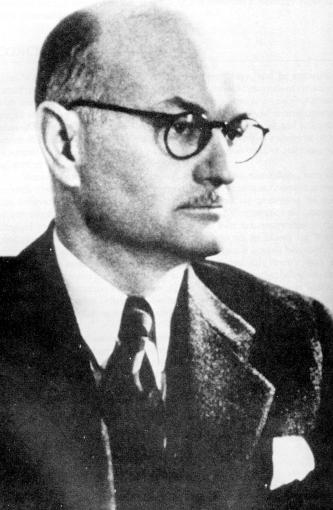
Edward C. Tolman
View on WikipediaEdward Chace Tolman (April 14, 1886 – November 19, 1959) was an American psychologist and a professor of psychology at the University of California, Berkeley.[1][2] Through Tolman's theories and works, he founded what is now a branch of psychology known as purposive behaviorism. Tolman also promoted the concept known as latent learning first coined by Blodgett (1929).[3] A Review of General Psychology survey, published in 2002, ranked Tolman as the 45th most cited psychologist of the 20th century.[4]
Key Information


Tolman was one of the leading figures in protecting academic freedom during the McCarthy era in early 1950s.[5][6][7][8] In recognition of Tolman's contributions to both the development of psychology and academic freedom, the Education and Psychology building on Berkeley campus, the "Tolman Hall", was named after him.[6]
Early life
[edit]Born in West Newton, Massachusetts, brother of Caltech physicist Richard Chace Tolman, Edward C. Tolman studied at the Massachusetts Institute of Technology, receiving B.S. in electrochemistry in 1911.[1] Tolman's father was a president of a manufacturing company and his mother was adamant of her Quaker background.[9] Tolman attended MIT because of family pressures, but after reading William James' Principles of Psychology he decided to abandon physics, chemistry, and mathematics in order to study philosophy and psychology.[9] James' influence on Tolman could be seen in Tolman's courageous attitude and his willingness to cope with issues that cause controversy and are against the popular views of the time. Tolman always said he was strongly influenced by the Gestalt psychologists, especially Kurt Lewin and Kurt Koffka.[9]
In 1912, Tolman went to Giessen in Germany to study for his PhD examination. While there he was introduced to and later returned to study Gestalt psychology.[10] Later, Tolman transferred to Harvard University for graduate studies and worked in the laboratory of Hugo Munsterburg.[1][9] He received his PhD from Harvard University in 1915.[1]
Career
[edit]Tolman is best known for his studies of learning in rats using mazes, and he published many experimental articles, of which his paper with Ritchie and Kalish in 1946 was probably the most influential. His major theoretical contributions came in his 1932 book, Purposive Behavior in Animals and Men, and in a series of papers in the Psychological Review, "The determinants of behavior at a choice point" (1938), "Cognitive maps in rats and men" (1948), and "Principles of performance" (1955).[11][12][13][14][15][16]
Purposive behaviorism
[edit]Some of Tolman's early researches were early developments of what is now called behavioral genetics. Tolman would selectively breed rats for the ability to learn the mazes he constructed. Despite the fact that his major research focus involved instinct and purpose, he was open to the idea of researching innate abilities in the rats. Tolman's study was the first experiment to examine the genetic basis of maze learning by breeding distinct lineages of rats selected for their maze performance. Tolman started and continued this research project until 1932, where, after coming back from Europe on a sabbatical leave, his interest started to decrease.[17] Tolman's theoretical model was described in his paper "The Determiners of Behavior at a Choice Point" (1938).[18] The three different variables that influence behavior are: independent, intervening, and dependent variables. The experimenter can manipulate the independent variables; these independent variables (e.g., stimuli provided) in turn influence the intervening variables (e.g., motor skill, appetite).[18] Independent variables are also factors of the subject that the experimenter specifically chooses for. The dependent variables (e.g., speed, number of errors) allows the psychologist to measure the strength of the intervening variables.[18]
Although Tolman was firmly behaviorist in his methodology, he was not a radical behaviorist like B. F. Skinner. In his studies of learning in rats, Tolman sought to demonstrate that animals could learn facts about the world that they could subsequently use in a flexible manner, rather than simply learning automatic responses that were triggered off by environmental stimuli. In the language of the time, Tolman was an "S-S" (stimulus-stimulus), non-reinforcement theorist: he drew on Gestalt psychology to argue that animals could learn the connections between stimuli and did not need any explicit biologically significant event to make learning occur. This is known as latent learning. The rival theory, the much more mechanistic "S-R" (stimulus-response) reinforcement-driven view, was taken up by Clark L. Hull.
A key paper by Tolman, Ritchie, and Kalish in 1946 demonstrated that rats learned the layout of a maze, which they explored freely without reinforcement. After some trials, a food item was placed to a certain point of the maze, and the rats learned to navigate to that point very quickly.[9] However, Hull and his followers were able to produce alternative explanations of Tolman's findings, and the debate between S-S and S-R learning theories became increasingly complicated. Skinner's iconoclastic paper of 1950, entitled "Are theories of learning necessary?", persuaded many psychologists interested in animal learning that it was more productive to focus on the behavior itself rather than using it to make hypotheses about mental states. The influence of Tolman's ideas faded temporarily in the later 1950s and 1960s.[citation needed] However, his achievements had been considerable. His 1938 and 1955 papers, produced to answer Hull's charge that he left the rat "buried in thought" in the maze, unable to respond, anticipated and prepared the ground for much later work in cognitive psychology, as psychologists began to discover and apply decision theory – a stream of work that was recognized by the award of a Nobel Prize to Daniel Kahneman in 2002. In his 1948 paper "Cognitive Maps in Rats and Men", Tolman introduced the concept of a cognitive map, which has found extensive application in almost every field of psychology, frequently among scientists who are unaware that they are using the early ideas that were formulated to explain the behavior of rats in mazes.[19] Tolman assessed both response learning and place learning. Response learning is when the rat knows that the response of going a certain way in the maze will always lead to food; place learning is when the rats learn to associate the food in a specific spot each time.[20] In his trials he observed that all of the rats in the place-learning maze learned to run the correct path within eight trials and that none of the response-learning rats learned that quickly, and some did not even learn it at all after seventy-two trials.[20]
Furthermore, psychologists began to renew the study of animal cognition in the last quarter of the 20th century. This renewed interested in animal research was prompted by experiments in cognitive psychology.
Other psychological work
[edit]Aside from the contributions Tolman made to learning theory such as purposive behaviorism and latent learning, he also wrote an article on his view of ways of learning and wrote some works involving psychology, sociology, and anthropology.[21] Tolman was very concerned that psychology should be applied to try to solve human problems, and in addition to his technical publications, he wrote a book called Drives Toward War. Moreover, in one of his papers, "A theoretical Analysis of the Relations between Psychology and Sociology", Tolman takes independent, dependent, and intervening variables under the context of psychology and sociology. Then he puts them together and show the interrelations between the two subjects in terms of variables and research.[22] In another publication, "Physiology, Psychology, and Sociology", Tolman takes the three subjects and explains how all three depend or interrelate with each other and must be looked at as a whole. Tolman creates a hypothetical situation and shows the conditions and interrelations between the three subjects in the situation.[23]
Tolman developed a two-level theory of instinct in response to the debate, at the time, of the relevance of instinct to psychology. Instinct was broken down into two parts: determining or driving adjustments and subordinate acts. Adjustments are motivations or purposes behind subordinate acts, while the subordinate acts fulfill that purpose. Adjustments are the response to a stimulus and can be arranged in a hierarchy with the lowest adjustment producing subordinate acts. Subordinate acts are randomized independent actions, excluding reflexes, that are part of larger groups of activity. While considered infinitely numerous, the amount found in a grouping is limited with identifiable boundaries. The cycle begins with a stimulus that produces a determining adjustment or a hierarchy of adjustments. The lowest adjustment then cues subordinate acts that persist until the purpose of the adjustment is fulfilled.[24]
Humans are unique in that we can think out our actions ahead of time. Tolman called this thoughts-of-acts or thinking-of-acts. This prevents us from acting completely random until something finally works. Thinking-of-acts triggers an inhibitory process that prevents the determining adjustment from cuing subordinate acts. Following the thinking, a prepotent stimulus turns those thoughts into acts. There are two ways a stimulus would be considered prepotent: (a) the original adjustment is favorable to the act produced by the foresee stimulus, or (b) the stimulus creates an alternative adjustment more favorable than the original.[24]
An example of this theory in action could be being trapped in a burning building. Without thinking, the lowest determining adjustment would be to escape, producing various acts where you may run around randomly trying to stumble upon an escape route. Or, you could stop and think, inhibiting that first process. You remember that the door in the corner leads to a hallway, to a stairwell, to a set of doors to the street. This would be an example of thinking-of-acts. The street would be the prepotent stimulus because it produces a favorable act to the original stimulus. Alternately, you could think that it might be dangerous to use the stairwell as smoke tends to pool in them and instead run to a window to call for help. This would be another version of a prepotent stimulus because it produces an alternative adjustment that is more favorable than the original. This might be because you learned that it may be safer to stay near a window and call for help than to go further into the burning building, creating a self-preservation adjustment.[24]
In 1948 Tolman wrote an article regarding the life of Kurt Lewin after Lewin's death in 1947. It contained some of Lewin's background, his contributions, and honest criticisms of his research. Overall Tolman wrote about him in a very positive light. Tolman regarded him along with Sigmund Freud as psychologists who would be well recognized in the future.[25]

Northwestern and Berkeley
[edit]Edward Tolman started his academic career in Northwestern University, where he was an instructor from 1915 to 1918.[1] Most of Tolman career, however, was spent at the University of California, Berkeley (from 1918 to 1954), where he was a professor of psychology.[1]
He was one of the senior professors whom the University of California sought to dismiss in the McCarthy era of the early 1950s, because he refused to sign a loyalty oath — not because of any lack of felt loyalty to the United States but because it infringed on academic freedom. Tolman was a leader of the resistance to the oath, and when the Regents of the University of California sought to fire him, he sued.[5] Tolman made an address to the Special Convocation at McGill University on June 11, 1954. In his address he advocated and made argument for the need of academic freedom, as well as criticized scapegoating.[26] The resulting court case, Tolman v. Underhill, led in 1955 to the California Supreme Court overturning the oath and forcing the reinstatement of all those who had refused to sign it.[5][6][7]
In 1963, at the insistence of the then President of the University of California, Clark Kerr, the Berkeley campus' newly constructed Education and Psychology building was named "Tolman Hall" in honor of the late professor.[6] Tolman's portrait hung in the entrance hall of the building. Tolman Hall was demolished in 2019 due to seismic unsafety.[27]
Awards and honors
[edit]Tolman received many awards and honors. He was president of the American Psychological Association (APA) in 1937 and chairman of Lewin's Society for the Psychological Study of Social issues in 1940; he was a member of the Society of Experimental Psychologists, the United States National Academy of Sciences,[28] and the American Philosophical Society.[29] APA gave him an award in 1957 for distinguished contributions.[30] He was elected a Fellow of the American Academy of Arts and Sciences in 1949.[31]
Personal life
[edit]Tolman was married to Kathleen Drew Tolman. They had three children, Deborah, Mary, and Edward James. Noted singer-songwriter, music producer Russ Tolman, is Tolman's grandson.
As mentioned previously, Tolman's father wished for his son to eventually take over the manufacturing company. Tolman was more interested in pursuing psychology than pursuing his father's career. Fortunately his family was very supportive of this decision.[32]
See also
[edit]References
[edit]- ^ a b c d e f "Edward C. Tolman" (PDF). National Academy of Sciences. Retrieved 2019-03-18.
- ^ Bergman, Barry (2014-11-13). "Of rats and men: Tolman, behavior and academic freedom". Berkeley News. Retrieved 2019-03-18.
- ^ Tolman, E.C. (1948). "Cognitive maps in rats and men". Psychological Review. 55 (4): 189–208. doi:10.1037/h0061626. PMID 18870876.
- ^ Haggbloom, Steven J.; Warnick, Renee; Warnick, Jason E.; Jones, Vinessa K.; Yarbrough, Gary L.; Russell, Tenea M.; Borecky, Chris M.; McGahhey, Reagan; Powell, John L. III; Beavers, Jamie; Monte, Emmanuelle (2002). "The 100 most eminent psychologists of the 20th century". Review of General Psychology. 6 (2): 139–152. CiteSeerX 10.1.1.586.1913. doi:10.1037/1089-2680.6.2.139. S2CID 145668721.
- ^ a b c Smith, Wilson; Bender, Thomas (2008-04-11). American Higher Education Transformed, 1940–2005: Documenting the National Discourse. JHU Press. ISBN 978-0-8018-9585-2.
- ^ a b c d "Tolman, Edward (1886–195)" (PDF). University of California, Berkeley. Retrieved 2019-03-18.
- ^ a b Douglass, John; Thomas, Sally. "Timeline: Summary of events of the Loyalty Oath Controversy 1949-54". www.lib.berkeley.edu. Retrieved 2019-03-18.
- ^ Carroll, David W. (2017-04-27). Purpose and Cognition: Edward Tolman and the Transformation of American Psychology. Cambridge University Press. ISBN 978-1-108-21060-7.
- ^ a b c d e History of Psychology 4ed, Hothersall. pp 487-489.
- ^ Lora Vander Zwaag, "Edward C. Tolman: 1886-1959" Psychology History. Muskingum University, December, 1998. 10 November 2014.
- ^ Tolman, EC; Ritchie, BF; Kalish, D (1946). "Studies in spatial learning. I. Orientation and the short-cut". Journal of Experimental Psychology. General. 121 (4): 429–434. doi:10.1037/0096-3445.121.4.429. PMID 1431737.
- ^ Tolman, EC (Sep 1955). "Principles of performance". Psychological Review. 62 (5): 315–326. doi:10.1037/h0049079. PMID 13254969.
- ^ Tolman, EC; Postman, L (1954). "Learning". Annual Review of Psychology. 5: 27–56. doi:10.1146/annurev.ps.05.020154.000331. PMID 13149127.
- ^ Tolman, EC; Gleitman, H (Dec 1949). "Studies in learning and motivation; equal reinforcements in both end-boxes; followed by shock in one end-box". Journal of Experimental Psychology. 39 (6): 810–819. doi:10.1037/h0062845. PMID 15398592.
- ^ Tolman, EC; Gleitman, H (Oct 1949). "Studies in spatial learning; place and response learning under different degrees of motivation". Journal of Experimental Psychology. 39 (5): 653–659. doi:10.1037/h0059317. PMID 15391108.
- ^ Tolman, EC (May 1949). "There is more than one kind of learning". Psychological Review. 56 (3): 144–155. doi:10.1037/h0055304. PMID 18128182.
- ^ Innis, NK (1992). "Tolman and Tryon: Early research on the inheritance of the ability to learn". American Psychologist. 47 (2): 190–197. doi:10.1037/0003-066X.47.2.190. PMID 1567088.
- ^ a b c History of Psychology 4ed, Hothersall. p. 494
- ^ Best, PJ; White, AM (1999-01-01). "Placing hippocampal single-unit studies in a historical context". Hippocampus. 9 (4): 346–351. doi:10.1002/(SICI)1098-1063(1999)9:4<346::AID-HIPO2>3.0.CO;2-3. PMID 10495017.
- ^ a b History of Psychology 4ed, Hothersall. p. 493
- ^ Tolman, EC (1949). "There is more than one kind of learning". Psychological Review. 56 (3): 144–155. doi:10.1037/h0055304. PMID 18128182.
- ^ Tolman, EC (1952). "A theoretical analysis of the relations between sociology and psychology". The Journal of Abnormal and Social Psychology. 47 (2, Suppl): 291–298. doi:10.1037/h0054466. PMID 14937965.
- ^ Tolman, EC (1938). "Physiology, psychology, and sociology". Psychological Review. 45 (3): 228–241. doi:10.1037/h0060722.
- ^ a b c Tolman, EC (1920). "Instinct and Purpose". Psychological Review. 27 (3): 217–233. doi:10.1037/h0067277.
- ^ Tolman, EC (1948). "Kurt Lewin: 1890-1947". Psychological Review. 55 (1): 1–4. doi:10.1037/h0058521.
- ^ Tolman, EC (1954). "Freedom and the cognitive mind". American Psychologist. 9 (9): 536–538. doi:10.1037/h0061920.
- ^ "Tolman Hall demolition". Retrieved 2019-03-18.
- ^ "Edward C. Tolman". www.nasonline.org. Retrieved 2023-03-14.
- ^ "APS Member History". search.amphilsoc.org. Retrieved 2023-03-14.
- ^ History of Psychology 4ed, Hothersall. p. 495
- ^ "Book of Members, 1780-2010: Chapter T" (PDF). American Academy of Arts and Sciences. Retrieved 10 April 2011.
- ^ Ritchie, Benbow F. (1964). Edward Chace Tolman. Washington D.C.: National Academy of Sciences. pp. 294–295.
Further reading
[edit]- Skinner, BF (1950). "Are theories of learning necessary?". Psychological Review. 57 (4): 193–216. doi:10.1037/h0054367. PMID 15440996.
- Tolman, EC (1932). Purposive behavior in animals and men. New York: Century.
- Tolman, EC (1938). "The determinants of behavior at a choice point". Psychological Review. 45: 1–41. doi:10.1037/h0062733.
- Tolman, EC (1942). Drives towards war. New York: Appleton-Century-Crofts.
- Tolman, EC (1948). "Cognitive maps in rats and men". Psychological Review. 55 (4): 189–208. doi:10.1037/h0061626. PMID 18870876.
- Tolman, EC (1951). Behavior and psychological man: essays in motivation and learning. Berkeley: University of California Press.
External links
[edit]- Works by or about Edward C. Tolman at the Internet Archive
- Account of Tolman's "Sign Learning" theory from the Theory Into Practice database, compiled by Greg Kearsley
- History of Tolman Hall
- Guide to Papers Relating to Edward C. Tolman and the Loyalty Oath Controversy at The Bancroft Library
- Edward C. Tolman at Find a Grave

Edward C. Tolman
View on GrokipediaEarly Life and Education
Childhood and Influences
Edward Chace Tolman was born on April 14, 1886, in West Newton, Massachusetts, to a prosperous family headed by his father, James Pike Tolman, a successful rope manufacturer, and his mother, Mary Harriet Chace, whose Quaker heritage instilled values of ethical introspection, moral purpose, and pacifism.[1][4] These familial principles, rooted in Quaker traditions of principled action over unreflective impulse, fostered Tolman's lifelong aversion to strictly mechanistic explanations of behavior and his preference for frameworks accounting for goal-directed intentionality.[4][5] Tolman attended the Newton Public Schools, which were regarded for their academic rigor and emphasis on disciplined inquiry.[1] His older brother, Richard Chace Tolman, who rose to prominence as a theoretical physicist and chemist at the California Institute of Technology, offered early models of empirical scientific method through discussions and shared intellectual pursuits, exposing Edward to precise observation and hypothesis-testing that later informed his psychological empiricism.[5][4] These childhood elements—Quaker ethical purposivism combined with sibling-driven scientific rigor—primed Tolman to challenge reductionist views of action during his initial college studies at the Massachusetts Institute of Technology, where he began in electro-chemical engineering but encountered philosophical critiques of determinism that redirected his focus toward human and animal cognition.[1][5]Academic Training
Tolman received a Bachelor of Science degree in electrochemistry from the Massachusetts Institute of Technology in 1911, having entered the institution under family influence toward scientific pursuits despite limited personal interest in engineering.[1] That summer, he enrolled at Harvard University, where introductory courses in philosophy under Ralph Barton Perry and psychology under Robert M. Yerkes shifted his focus toward psychological inquiry, prompting full-time graduate enrollment in Harvard's joint philosophy-psychology department later in 1911.[1] Under the primary supervision of Hugo Münsterberg, with assistance from Herbert S. Langfeld, Tolman completed his Ph.D. in psychology in 1915. His dissertation investigated the learning and relearning of nonsense syllables presented amid pleasant or unpleasant odors, adapting Hermann Ebbinghaus's serial learning paradigm to probe interference effects in verbal memory tasks.[1] These formative studies emphasized empirical measurement of habit formation and retention, providing Tolman with rigorous experimental foundations that later informed his purposive behaviorism; concurrent readings in William James and exposure to comparative methods via Yerkes fostered an early aversion to mechanistic models, favoring instead integrated behavioral patterns over discrete stimulus-response associations.[1]Professional Career
Initial Appointments
Following his PhD from Harvard University in 1915, Tolman accepted an instructorship in psychology at Northwestern University, where he taught from 1915 to 1918.[6][5] In this role, he delivered lectures on comparative psychology and animal behavior, focusing on empirical observation of instinct and learning processes in non-human subjects to build foundational skills in experimental design.[7] His time at Northwestern was marked by challenges, including the university's decision not to retain him beyond 1918, which Tolman attributed partly to his pacifist stance amid World War I pressures.[8] In the summer of 1918, Tolman was offered and accepted an instructorship back at Harvard, continuing there until 1922 while teaching similar courses in comparative and animal psychology.[6] These positions provided opportunities to refine teaching methods grounded in direct animal observation, emphasizing measurable behaviors over introspective reports, and fostering his skills in constructing controlled experimental environments.[7] During these early appointments, particularly amid the World War I period, Tolman initiated rat maze experiments to probe learning dynamics, observing how rats navigated complex paths with minimal reliance on immediate reinforcement, thus challenging assumptions of purely trial-and-error mechanisms.[9] This work contributed to his evolving perspective, moving away from peripheralist models that reduced behavior to stimulus-response reflexes toward centralist interpretations highlighting the organism's purposive orientation and internal goal-directed processes.[10][11]Positions at Harvard and Northwestern
Tolman commenced his academic teaching career as an instructor in the psychology department at Northwestern University in 1915, shortly after receiving his PhD from Harvard University.[5] During his tenure from 1915 to 1918, he focused on extending his doctoral research in human memory, publishing initial papers that explored retention and forgetting processes.[12] This period coincided with the ascendance of John B. Watson's behaviorism, which emphasized observable stimulus-response associations, prompting Tolman to begin questioning its reductive framework through exposure to alternative perspectives.[7] In the summer of 1917, while at Northwestern, Tolman traveled to Germany to study with Gestalt psychologists Kurt Koffka and Kurt Lewin, an experience that introduced him to holistic views of perception and purpose in behavior, contrasting sharply with Watsonian orthodoxy.[5] These influences informed his emerging interest in purposive elements of action, laying groundwork for later critiques of strict environmental determinism in learning. His position at Northwestern ended in 1918, attributed in part to his Quaker-based pacifism amid World War I pressures on academic institutions.Tenure at UC Berkeley
Tolman joined the University of California, Berkeley in 1918 as a member of the psychology faculty and served as professor of psychology until 1954.[13] During this period, he established and directed an animal psychology laboratory focused on learning studies, particularly using rats in maze experiments, which produced numerous graduate student publications and advanced recording technologies for behavior observation.[13] [14] Tolman mentored a generation of students through seminars and direct supervision, including David Krech, who earned his Ph.D. in 1933 under Tolman and contributed to research on learning hypotheses, and B.F. Ritchie, fostering the dissemination of his sign-learning theoretical framework.[13] Other notable students included Egerton L. Ballachey, who completed his Ph.D. in 1934 and published seven works on animal learning from lab research, and Charles Honzik, who collaborated on key maze studies.[13] In administrative capacities, Tolman served as chairman of the Berkeley psychology department, advocating for intellectual diversity amid pressures for methodological uniformity in behaviorist paradigms.[15] His resistance to rigid conformity in departmental approaches supported the evolution of psychological inquiry toward cognitive elements, influencing subsequent institutional dynamics without yielding to dominant stimulus-response orthodoxy.[13]Key Theoretical Frameworks
Development of Purposive Behaviorism
Tolman articulated purposive behaviorism in his 1932 book Purposive Behavior in Animals and Men, presenting it as a framework that treats behavior as inherently directed toward goals, driven by purposes and expectancies rather than isolated stimulus-response associations.[16] This approach rejected the molecular reduction of behavior into discrete S-R chains, favoring instead a molar perspective that views acts as integrated wholes achieving an altered organism-environment relationship.[17] By emphasizing directionality and persistence toward ends, Tolman aimed to account for the apparent teleological quality of behavior while adhering to scientific objectivity.[18] A key innovation was the use of intervening variables to mediate between environmental stimuli and observable responses, enabling explanations of complex behavior without invoking introspective mentalism.[19] These variables included drives, such as hunger, alongside cognitive constructs like expectancies of outcomes, which Tolman integrated to predict behavioral sequences based on prior organism-environment transactions.[10] Notably, "means-end capacities" represented learned connectives between actions and their consequences, allowing organisms to select paths that fulfill purposes efficiently.[16] This mechanism preserved behaviorism's empirical focus by tying variables to testable hypotheses derived from whole-act observations.[20] The theory's empirical grounding lay in demonstrations of goal-oriented navigation in animals, where behavior exhibited holistic adaptation to environmental layouts over fragmented reflex arcs.[17] Tolman argued that such patterns revealed causal processes rooted in the organism's active orientation to ends, contrasting with reinforcement-driven models by prioritizing anticipatory structures in behavioral causality.[18] This formulation positioned purposive behaviorism as a bridge toward incorporating cognitive realism within a non-introspective paradigm.[20]Concepts of Cognitive Maps and Latent Learning
Tolman introduced the concept of cognitive maps in his 1948 paper, positing that rats acquire spatial knowledge of their environments as internal representations rather than mere chains of stimulus-response associations.[21] These maps enable flexible navigation, such as taking novel shortcuts when familiar paths are blocked, as demonstrated in experiments where rats traversed elevated mazes or cross-mazes and adjusted routes efficiently upon barriers being introduced or removed.[22] Tolman argued that such behavior reflects an organism's ability to form a holistic, survey-like understanding of spatial relations, contrasting with strict behaviorist models emphasizing fixed habits or trial-and-error reinforcement.[21] Complementing cognitive maps, Tolman's work on latent learning highlighted that knowledge acquisition occurs independently of immediate reinforcement, challenging the necessity of rewards for learning. In a 1930 experiment with C. H. Honzik, three groups of rats navigated a 16-alley maze over 17 days: one group received food rewards from the start, a second never received rewards, and a third explored without rewards for the first 10 days before rewards were introduced.[3] The third group exhibited no performance improvement during unrewarded trials but rapidly reduced errors upon reward onset, dropping from an average of 30 errors per trial to under 5 within days, indicating prior acquisition of maze knowledge without behavioral expression.[3] This distinguished learning—the encoding of environmental expectancies—from performance, which requires motivational incentives to manifest.[22] Tolman critiqued the primacy of reinforcement in theories like those of Thorndike and Hull, asserting that innate exploratory drives and the formation of expectancies drive initial learning, with rewards serving mainly to select among pre-existing cognitive structures.[21] Rats in his studies displayed persistent investigation of environments even absent food, suggesting curiosity as a fundamental motivator for map-building, rather than reinforcement alone shaping behavior.[22] These ideas positioned Tolman's framework as a bridge from behaviorism toward cognitive psychology, emphasizing causal roles for mental intermediaries like spatial expectancies in adaptive, goal-directed action.[21]Experimental Research
Maze Experiments and Rat Studies
Tolman employed alley mazes and elevated mazes to assess rat navigation and learning under controlled conditions. Alley mazes consisted of enclosed passages with multiple blind alleys, often featuring 14 choice points or units, where errors were quantified as incorrect entries into dead-end paths.[22] Elevated mazes involved open, raised platforms that permitted rats to use distal visual cues for orientation, contrasting with the more response-oriented paths in alley designs.[22] In latent learning procedures, Tolman and Honzik (1930) placed rats in an alley maze without food reward for 10 initial trials, resulting in persistently high error rates averaging around 10 per run; upon reward introduction on trial 11, errors declined abruptly to approximately 2.8-3 per run over the next 30 trials, outperforming continuous-reward groups on select subsequent days.[22][23] Performance was tracked via trials-to-criterion metrics, with rewards acting as motivators to elicit previously unexpressed route knowledge, as indicated by accelerated error reduction post-incentive.[22] To differentiate place-oriented from response-oriented strategies, Tolman, Ritchie, and Kalish (1946) tested rats in maze variants; place learning groups, relying on spatial landmarks, averaged 78 total errors and reached mastery criterion in 10 trials, compared to 115 errors and 12 trials for response groups emphasizing fixed turns.[22] Tolman pioneered selective breeding for maze proficiency in 1919, publishing results in 1924 from 82 albino rats run in an enclosed maze with 4 choice points; selection bred high performers for "maze-bright" lines and low for "maze-dull," using composite scores of errors, run times, and perfect trials, yielding F1 bright rats with fewer errors than parental averages and F1 dull rats with more.[24] He subsequently collaborated with and supported Robert Tryon's program starting in 1927, which bred distinct strains over 20+ generations on a 17-unit multiple T-maze; by the eighth generation, bright rats averaged markedly fewer errors with no performance overlap versus dull rats, confirming stable heritability in learning metrics.[24]Contributions to Behavioral Genetics
Tolman initiated selective breeding experiments in the early 1920s at the University of California, Berkeley, to disentangle genetic from environmental influences on learning ability, an approach that anticipated modern behavioral genetics by emphasizing controlled manipulation of heredity.[25] In his pioneering 1924 study, he selectively mated rats based on performance in a multiple-T maze, breeding lines from high-performing ("bright") and low-performing ("dull") individuals over four generations (F1 to F4), with results indicating that offspring of bright parents averaged fewer errors (around 20-30% reduction in some metrics) than those of dull parents, providing initial evidence for the heritability of maze-learning efficiency.[26] These findings challenged strict environmentalist views dominant in early behaviorism, which posited learning as solely shaped by experience, by demonstrating that inherited factors could systematically modulate acquisition speed without altering training conditions.[27] Despite limitations such as small sample sizes (typically 10-20 rats per line) and emerging inbreeding depression leading to infertility, Tolman's work established proof-of-concept for using artificial selection to probe behavioral inheritance, influencing subsequent refinements.[26] He transferred the project to graduate student Robert Tryon around 1929, who expanded it into larger-scale breeding over 30 generations, yielding stable "bright" and "dull" strains that differed markedly in error rates (bright lines averaging 50-60 errors vs. dull at 150-200 in standardized mazes).[24] Tolman's framework interpreted these outcomes as genetic effects primarily on higher cognitive processes—such as expectancies or "means-end readinesses" for adaptive navigation—rather than innate sensory-motor reflexes, which showed no selected divergence, thus supporting a causal distinction between basic physiological mechanisms and learned behavioral capacities.[10] This research predated human quantitative genetic methods like twin studies (e.g., Holzinger's 1929 work) by providing animal-model evidence for polygenic influences on complex traits, fostering the field's shift toward estimating heritability through variance partitioning.[25] Tolman's emphasis on breeding to isolate innate versus experiential components laid foundational methods for later psychologists, including quantitative estimates of learning heritability (e.g., h² ≈ 0.3-0.5 in Tryon's strains for maze errors), though subsequent analyses nuanced the results by attributing much of the bright-dull gap to genetically influenced emotionality rather than pure cognitive learning.[26][28]Criticisms and Intellectual Debates
Challenges to Strict Behaviorism
Tolman critiqued the strict stimulus-response (S-R) mechanisms central to John B. Watson's behaviorism and Clark L. Hull's drive-based formulations, contending that they reduced complex behavior to mere reflexive chains insufficient for explaining goal-directed actions.[29] In his 1932 book Purposive Behavior in Animals and Men, Tolman argued that organisms exhibit purposive detours—deliberate deviations from direct stimuli to achieve distant goals—as evidenced by rat maze studies where animals bypassed immediate rewards or barriers to pursue anticipated outcomes, data that contradicted Hull's emphasis on contiguous S-R associations reinforced solely by drive reduction.[10] These empirical observations, drawn from controlled experiments in the 1920s and 1930s, demonstrated that rats adjusted paths flexibly upon environmental changes, such as blocked routes, prioritizing efficiency toward food goals over rigid stimulus chaining.[30] Tolman advocated for "sign-gestalt" expectations as intervening constructs, positing that learning involves forming holistic anticipations of environmental cues signaling goal attainment, rather than Hull's reliance on mechanical drive-reduction for reinforcement.[31] This framework distinguished between drive-motivated behaviors, where hunger propelled S-R sequences culminating in consummatory acts, and exploratory behaviors, where rats navigated mazes without immediate drives yet acquired spatial knowledge usable later upon reinforcement introduction—as shown in latent learning paradigms where non-rewarded groups outperformed minimally trained controls once goals were accessible.[20] Such evidence, from Tolman's Berkeley lab studies circa 1930, highlighted that expectancies persisted independently of drives, enabling performance without prior reinforcement and refuting the necessity of immediate S-R bonds for all learning.[23] To counter accusations of circularity in his intervening variables—like cognitive maps or field expectancies—Tolman insisted they must yield falsifiable predictions linking antecedent conditions to observable outcomes, operationalized through experimental manipulations.[19] For instance, violating sign-gestalt expectancies, such as altering maze landmarks, produced predictable error spikes in rat performance, confirming the constructs' utility beyond mere post-hoc descriptions and distinguishing Tolman's molar behaviorism from Hull's molecular S-R hypotheticals. This methodological rigor, articulated in Tolman's 1935 operational behaviorism paper, ensured intervening variables functioned as bridges between stimuli and responses, testable via quantitative metrics like detour latencies and goal efficiencies in replicated rat trials.[32]Critiques of Tolman's Intervening Variables and Methodology
Clark Hull, a proponent of hypothetico-deductive neobehaviorism, critiqued Tolman's intervening variables—such as "hypotheses," "expectancies," and "cognitive maps"—for insufficient operationalization, arguing that they failed to establish precise, measurable links between observable stimuli, responses, and inferred internal states, thereby undermining empirical testability and inviting unfalsifiability.[29] Hull contrasted his molecular approach, which decomposed behavior into stimulus-response chains with rigorously defined drives and habits, against Tolman's molar behaviorism, which treated goal-directed acts as wholes without breaking them into verifiable subunits, rendering Tolman's constructs more descriptive than predictive.[33] This logical positivist perspective emphasized that without deductive chains tying intervening variables to quantifiable inputs and outputs, Tolman's framework risked circularity, as variables could be invoked post hoc to explain any outcome without risk of disconfirmation. Tolman's terminology, including neologisms like "sign-gestalt-expectancy," "demand," and "means-end readiness," drew complaints in 1930s scholarly discourse for introducing opacity and conceptual ambiguity, obscuring rather than clarifying behavioral mechanisms in contrast to the parsimony favored by strict behaviorists.[10] Critics contended that such jargon borrowed from Gestalt psychology without providing the holistic field's rigor, leading to vague, anthropomorphic interpretations that prioritized intuitive appeal over analytical precision, as evidenced in contemporary reviews questioning the empirical utility of these undefined "cognitive" intermediaries.[35] Empirical challenges to Tolman's methodology centered on the replicability of latent learning effects, with experiments by Kenneth Spence and Ronald Lippitt in 1940 attempting to test sign-gestalt theory but yielding results interpretable as driven by unaccounted motivational incentives rather than reinforcement-independent cognition.[36] Subsequent debates highlighted how apparent latency could stem from subtle exploratory reinforcements, consummatory responses, or drive shifts during unrewarded trials, rather than abstract map formation, as rats' performance drops upon reward introduction were attributed to behavioral contrast or secondary reinforcer effects rather than sudden activation of latent knowledge.[23] These reinterpretations, rooted in Hull-Spence drive theory, suggested Tolman's maze paradigms overlooked fractional anticipatory goal responses (_r_G-s_G) that could mimic cognitive processes through associative chains, casting doubt on the necessity of unobservable intervening constructs for explaining navigation efficiencies.[37]Institutional and Political Controversies
The UC Berkeley Loyalty Oath Dispute
In 1949, the University of California Board of Regents, responding to heightened anti-communist fears amid the early Cold War and investigations into alleged communist influence in public institutions, mandated a supplemental loyalty oath for all university employees beyond the standard constitutional oath of allegiance.[38][14] The oath required signatories to declare under penalty of perjury that they did not advocate overthrowing the U.S. government by force, violence, or unlawful means, and had never done so—a measure aimed at safeguarding public employment from perceived subversive threats.[39] Edward C. Tolman, then a senior psychology professor at UC Berkeley, refused to sign, contending that the oath compromised academic freedom by imposing ideological tests that could chill open inquiry and infringe on principles of tenure and scholarly autonomy.[40][41] As a World War I conscientious objector with a longstanding pacifist stance, Tolman symbolized the dissent but faced no documented evidence of communist affiliation or advocacy for government overthrow; his opposition centered on preserving the university's independence from political coercion.[14] He emerged as a key leader and spokesman for the nonsigners, coordinating with over 30 faculty peers who shared concerns that the oath blurred lines between loyalty and compelled orthodoxy, potentially enabling broader suppression of dissenting views under the guise of security.[40][42] On April 21, 1950, the Regents escalated by resolving that nonsignature would terminate employment effective July 1, 1950, prompting Tolman and 31 academic colleagues to withhold compliance despite extensions.[39][8] Their dismissals were formalized on August 25, 1950, after which Tolman spearheaded a lawsuit, Tolman v. Underhill, asserting the oath's coercive nature violated due process and exceeded regental authority.[39][8] The California Supreme Court ruled on October 17, 1952, invalidating the supplemental oath as an unconstitutional infringement, as it demanded an unprecedented affirmative disclaimer without statutory basis and effectively punished faculty for exercising constitutional rights.[39] Tolman was reinstated with back pay, as were most nonsigners, affirming judicial limits on administrative overreach in balancing institutional security against individual liberties in academia.[38][43] The episode exemplified broader postwar frictions, where empirical threats of espionage and ideological infiltration clashed with defenses of unfettered intellectual pursuit, without implicating Tolman in any verified disloyalty.[42]Awards, Honors, and Recognition
Major Professional Accolades
Tolman was elected to the National Academy of Sciences in 1937, recognizing his foundational work in experimental psychology and learning theory.[44] He served as president of the American Psychological Association in 1937, a role that highlighted his influence on theoretical and applied directions in the field.[45] In 1947, Tolman became a member of the American Philosophical Society, affirming his contributions to interdisciplinary psychological inquiry.[1] He was elected a fellow of the American Academy of Arts and Sciences in 1949, an honor tied to his innovative approaches to purposive behaviorism and cognitive mapping in animal studies.[1] Tolman received the American Psychological Association's Distinguished Scientific Contribution Award in 1957, awarded for "the creative and sustained pursuit of a testable theory of learning and motivation" through decades of empirical research on maze navigation and latent learning.[46] He was also granted an honorary Doctor of Science degree from Yale University in 1951, acknowledging his empirical advancements in understanding animal cognition.[1]Legacy and Enduring Influence
Impact on Cognitive and Behavioral Psychology
Tolman's purposive behaviorism introduced intervening variables, such as expectancies and cognitive maps, which framed mental processes as empirically testable constructs rather than unobservable introspection, thereby challenging strict stimulus-response models dominant in early behaviorism.[47][48] This approach, detailed in his 1932 book Purposive Behavior in Animals and Men, emphasized goal-directed behavior observable through experimental outcomes like detour efficiencies in rats, providing a data-driven bridge to cognitive frameworks without abandoning behavioral methodology.[49] By 1948, Tolman's publication on cognitive maps further solidified this shift, demonstrating that rats formed spatial representations independent of reinforcement, influencing the 1960s cognitive revolution's rejection of pure associationism in favor of representational models.[23] His distinction between learning (acquisition of knowledge structures) and performance (manifestation influenced by drives or incentives) underscored latent learning phenomena, as evidenced in 1930 maze studies where unrewarded rats later navigated efficiently upon reward introduction, outperforming incrementally rewarded controls by up to 50% in error reduction.[23] This empirical separation prefigured broader competence-performance dichotomies in cognitive science, informing models where underlying knowledge persists despite variable behavioral expression. Tolman's framework directly shaped Albert Bandura's social learning theory, which integrated cognitive mediation—such as mental representations of observed actions—extending Tolman's maps to human observational contexts, as Bandura cited purposive elements in emphasizing expectancy-driven imitation over blind reinforcement.[50][51] In behavioral psychology, Tolman's validation of internal maps through flexible rat navigation—evident in shortcut-taking after environmental changes—laid groundwork for computational models distinguishing rote habits from adaptive planning, influencing early AI simulations of spatial reasoning where agents build environmental graphs akin to Tolman's constructs.[52][53] These ideas persist in animal navigation paradigms, prioritizing causal mechanisms like representational updating over associative chaining, as replicated in controlled studies showing map-like efficiencies in non-mammalian species under varied reinforcement schedules.[2]Contemporary Applications and Reassessments
Modern neurobiological research has revived interest in Tolman's distinction between place learning, which involves cognitive maps of spatial layouts, and response learning, which relies on stimulus-response associations, with empirical evidence supporting the former's prevalence through hippocampal-entorhinal mechanisms. A 2021 review in Frontiers in Behavioral Neuroscience synthesizes decades of data from rodent and human studies, confirming that place learning dominates in flexible navigation tasks, as animals and humans form allocentric representations akin to Tolman's hypothesized maps, enabling detour behaviors not predicted by pure response chaining.[54] This validation stems from causal interventions like hippocampal lesions disrupting place but sparing response strategies, underscoring Tolman's intervening variables as precursors to representational theories grounded in neural circuitry rather than abstract inference.[29] Reassessments of latent learning, Tolman's demonstration of knowledge acquisition without immediate reinforcement, integrate it with intrinsic motivations like curiosity, while questioning its universality in domains beyond spatial cognition. A 2021 analysis posits that what Tolman observed as latent map-building in rats reflects information-seeking drives, evidenced by dopamine-modulated exploration in ventral striatum, providing a causal bridge to adaptive behavior without requiring post-hoc reinforcement.[2] In human analogs, such as GPS-assisted navigation, studies reveal persistent cognitive mapping for efficiency, yet critiques highlight limitations: behavioral economics experiments show latent strategies falter in high-stakes decisions where immediate feedback shapes heuristics, as probabilistic models predict reliance on reinforced responses over untested maps.[55] These findings temper Tolman's claims by emphasizing contextual moderators, with empirical data from choice under uncertainty favoring hybrid models over pure latent universality. Tolman's early selective breeding experiments on rat maze proficiency, selecting for "bright" and "dull" lineages, are reassessed as foundational to behavioral genetics, illustrating heritability of learning capacities and countering pervasive nurture-dominant interpretations in mid-20th-century psychology. A 1992 historical analysis details how Tolman's 1924-1928 studies yielded genetic lines differing by up to 50% in error rates across generations, prefiguring quantitative genetics approaches that quantify variance components in cognitive traits.[24] Contemporary heritability estimates from twin and genomic studies, averaging 40-60% for spatial abilities, validate this causal role of inheritance, challenging environmentalist biases in academia that downplayed such data until molecular evidence emerged, thus repositioning Tolman's work as empirically prescient against blank-slate doctrines.[56]Personal Life and Philosophical Outlook
Family and Personal Relationships
Tolman was born on April 14, 1886, in West Newton, Massachusetts, to a family shaped by his mother's Quaker heritage, which emphasized moral responsibility, pacifism, and individual ethical conduct.[1] This background contributed to a household environment that valued purposeful action and autonomy in daily life and child-rearing, aligning with principles of self-directed moral development over strict authoritarianism.[1] On August 30, 1915, Tolman married Kathleen Drew, with whom he shared a domestic life centered in Berkeley, California, after his academic appointments there.[57] The couple had three children: daughters Deborah Tolman Whitney and Mary Tolman Kent, and son Edward James Tolman (born 1924).[58][59] Tolman retired as Professor Emeritus of Psychology at the University of California, Berkeley, in 1954 and died at his Berkeley home on November 19, 1959, at age 73, from a heart attack.[15][60]Views on Psychology's Social Role
Tolman viewed psychology's primary social utility in empirically guided interventions to counteract drives underlying conflicts such as war, applying principles of purposive behavior—goal-directed actions informed by expectancies—from his rat maze research to human-scale societal engineering. In Drives Toward War (1942), he dissected aggression, fear, and social conditioning as motivators for international strife, advocating analogous "social techniques" derived from animal dominance hierarchies and cooperation patterns to redirect these toward peaceful outcomes, such as equitable resource distribution and mutual deterrence mechanisms.[61][1] This approach underscored his conviction that psychology must transcend introspective or therapeutic fixation, instead leveraging verifiable, experimentally derived causal chains to engineer environments fostering adaptive human behavior amid inequalities and hostilities.[62] His Quaker-rooted pacifism, intensified by opposition to World War I involvement—which contributed to his 1918 dismissal from Northwestern University—influenced a Berkeley-era commitment to psychology as a tool for nonviolent reform, yet he subordinated activism to methodological stringency, rejecting unsubstantiated ideological fixes in favor of hypothesis-testing akin to his latent learning paradigms.[14] Tolman critiqued prevailing clinical emphases in psychology as inadequately empirical for broad social remediation, arguing that interventions required the precision of intervening variables (e.g., cognitive maps of social incentives) over ad hoc therapies, to ensure causal efficacy against entrenched problems like economic disparity or belligerent nationalism.[10] This empiricist orientation privileged falsifiable models from animal analogs, cautioning against applications presuming untested progressive nostrums without rat-like behavioral validation.References
- https://www.[researchgate](/page/ResearchGate).net/publication/249079868_E_C_Tolman_and_the_Intervening_Variable_A_Study_in_the_Epistemological_History_of_Psychology