Hubbry Logo
Emperor Go-DaigoEmperor Go-DaigoMain
Open search
Emperor Go-Daigo
Community hub
Emperor Go-Daigo
logo
8 pages, 0 posts
0 subscribers
Be the first to start a discussion here.
Contribute something
Emperor Go-Daigo
Emperor Go-Daigo
from Wikipedia

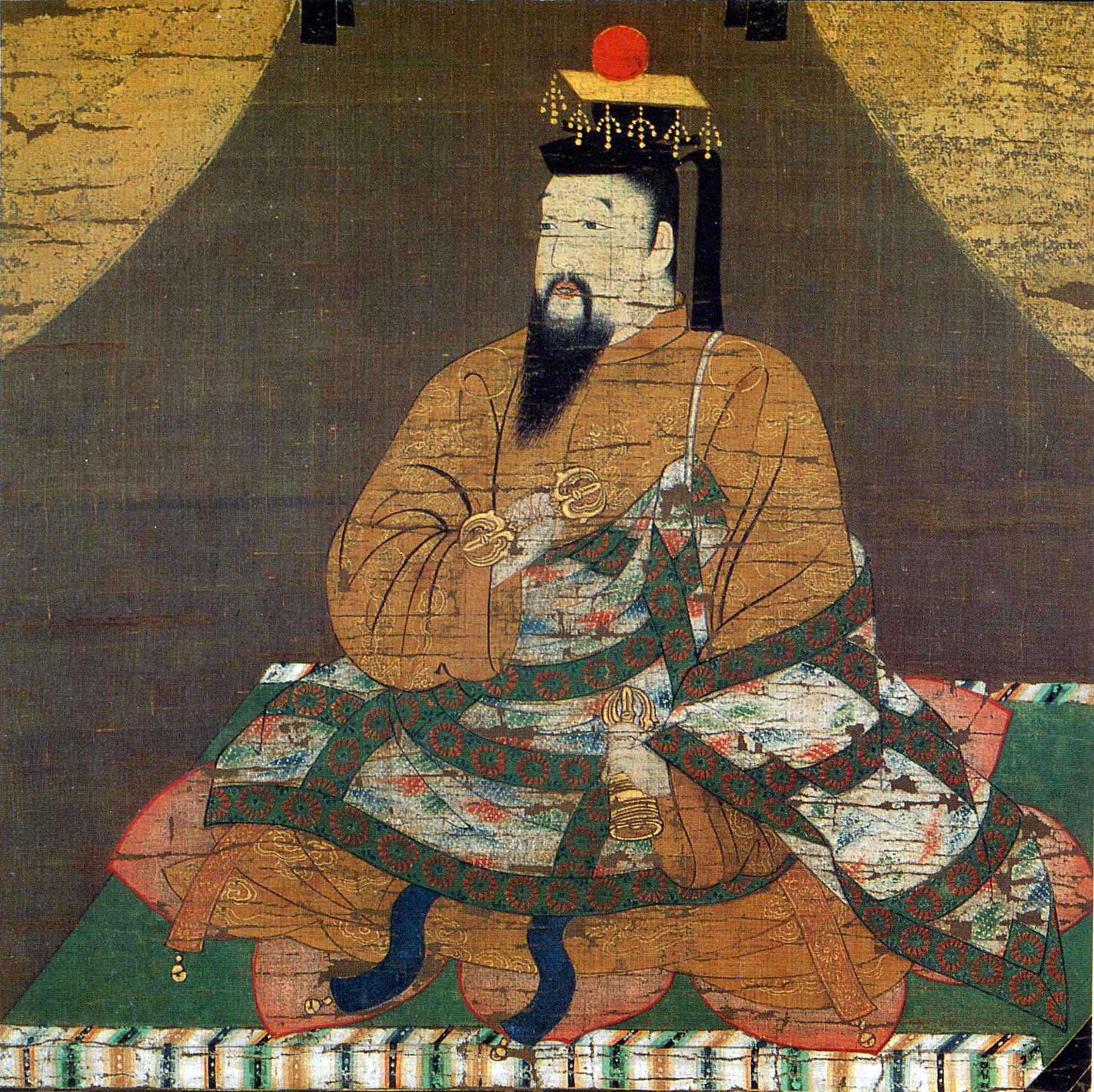
Emperor Go-Daigo (後醍醐天皇 Go-Daigo-tennō) (26 November 1288 – 19 September 1339) was the 96th emperor of Japan,[1] according to the traditional order of succession.[2] He successfully overthrew the Kamakura shogunate in 1333 and established the short-lived Kenmu Restoration to bring the Imperial House back into power. This was to be the last time the emperor had real power until the Meiji Restoration in 1868.[3] The Kenmu restoration was in turn overthrown by Ashikaga Takauji in 1336, ushering in the Ashikaga shogunate. The overthrow split the imperial family into two opposing factions between the Ashikaga backed Northern Court situated in Kyoto and the Southern Court based in Yoshino. The Southern Court was led by Go-Daigo and his later successors.

Key Information

Biography

[edit]

Before his ascension to the Chrysanthemum Throne, his personal name (imina) was Takaharu-shinnō (尊治親王).[4]

He was the second son of the Daikakuji-tō emperor, Emperor Go-Uda. His mother was Fujiwara no Chūshi/Tadako (藤原忠子), daughter of Fujiwara no Tadatsugu (Itsutsuji Tadatsugu) (藤原忠継/五辻忠継). She became Nyoin called Dantenmon-in (談天門院). His older brother was Emperor Go-Nijō.

Emperor Go-Daigo's ideal was the Engi era (901–923) during the reign of Emperor Daigo, a period of direct imperial rule. An emperor's posthumous name was normally chosen after his death, but Emperor Go-Daigo chose his personally during his lifetime, to share it with Emperor Daigo.

Events of Go-Daigo's life

[edit]
  • 1308 (Enkyō 1): At the death of Emperor Go-Nijō, Hanazono accedes to the Chrysanthemum Throne at age 12 years; and Takaharu-shinnō, the second son of former-Emperor Go-Uda is elevated as Crown Prince and heir apparent under the direction of the Kamakura shogunate.[5]
  • 29 March 1318 (Bunpō 2, 26th day of 2nd month): In the 11th year of Hanazono's reign (花園天皇十一年), the emperor abdicated; and the succession (senso) was received by his cousin, the second son of former-Emperor Go-Uda. Shortly thereafter, Emperor Go-Daigo is said to have acceded to the throne (sokui).[6]
  • 1319 (Bunpō 3, 4th month): Emperor Go-Daigo caused the nengō to be changed to Gen'ō to mark the beginning of his reign.[7]

In 1324, with the discovery of Emperor Go-Daigo's plans to overthrow the Kamakura shogunate, the Rokuhara Tandai disposed of his close associate Hino Suketomo in the Shōchū Incident [ja].

In the Genkō Incident of 1331, Emperor Go-Daigo's plans were again discovered, this time by a betrayal by his close associate Yoshida Sadafusa. He quickly hid the Sacred Treasures in a secluded castle in Kasagiyama (the modern town of Kasagi, Sōraku District, Kyōto Prefecture) and raised an army, but the castle fell to the shogunate's army the following year, and they enthroned Emperor Kōgon, exiling Daigo to Oki Province (the Oki Islands in modern-day Shimane Prefecture),[8] the same place to which Emperor Go-Toba had been exiled after the Jōkyū War of 1221.

In 1333, Emperor Go-Daigo escaped from Oki with the help of Nawa Nagatoshi and his family, raising an army at Senjo Mountain in Hōki Province (the modern town of Kotoura in Tōhaku District, Tottori Prefecture). Ashikaga Takauji, who had been sent by the shogunate to find and destroy this army, sided with the emperor and captured the Rokuhara Tandai. Immediately following this, Nitta Yoshisada, who had raised an army in the east, laid siege to Kamakura. When the city finally fell to Nitta, Hōjō Takatoki, the shogunal regent, fled to Tōshō temple, where he and his entire family committed suicide. This ended Hōjō power and paved the way for a new military regime.[8]: 15–21 

Upon his triumphal return to Kyoto, Daigo took the throne from Emperor Kōgon and began the Kenmu Restoration. The Restoration was ostensibly a revival of the older ways, but, in fact, the emperor had his eye set on an imperial dictatorship like that of the emperor of China. He wanted to imitate the Chinese in all their ways and become the most powerful ruler in the East. Impatient reforms, litigation over land rights, rewards, and the exclusion of the samurai from the political order caused much complaining, and his political order began to fall apart. In 1335, Ashikaga Takauji, who had travelled to eastern Japan without obtaining an imperial edict in order to suppress the Nakasendai Rebellion, became disaffected. Daigo ordered Nitta Yoshisada to track down and destroy Ashikaga. Ashikaga defeated Nitta Yoshisada at the Battle of Takenoshita, Hakone. Kusunoki Masashige and Kitabatake Akiie, in communication with Kyoto, smashed the Ashikaga army. Takauji fled to Kyūshū, but the following year, after reassembling his army, he again approached Kyōto. Kusunoki Masashige proposed a reconciliation with Takauji to the emperor, but Go-Daigo rejected this. He ordered Masashige and Yoshisada to destroy Takauji. Kusunoki's army was defeated at the Battle of Minatogawa.

When Ashikaga's army entered Kyōto, Emperor Go-Daigo resisted, fleeing to Mount Hiei, but seeking reconciliation, he sent the imperial regalia to the Ashikaga side. Takauji enthroned the Jimyōin-tō emperor, Kōmyō, and officially began his shogunate with the enactment of the Kenmu Law Code.[8]: 54–58 

Go-Daigo escaped from the capital in January 1337, the regalia that he had handed over to the Ashikaga being counterfeit, and set up the Southern Court among the mountains of Yoshino, beginning the Period of Northern and Southern Courts in which the Northern Dynasty in Kyoto and the Southern Dynasty in Yoshino faced off against each other.[8]: 55, 59 

Emperor Go-Daigo ordered Imperial Prince Kaneyoshi to Kyūshū and Nitta Yoshisada and Imperial Prince Tsuneyoshi to Hokuriku, and so forth, dispatching his sons all over, so that they could oppose the Northern Court.

  • 18 September 1339 (Ryakuō 2, 15th day of the 8th month): In the 21st year of Go-Daigo's reign, the emperor abdicated at Yoshino in favor of his son, Noriyoshi-shinnō, who would become Emperor Go-Murakami.[9]
  • 19 September 1339 (Ryakuō 2, 16th day of the 8th month): Go-Daigo died;[10]

The actual site of Go-Daigo's grave is settled.[1] This emperor is traditionally venerated at a memorial Shinto shrine (misasagi) at Nara.

The Imperial Household Agency designates this location as Go-Daigo's mausoleum. It is formally named Tō-no-o no misasagi.[11]

Genealogy

[edit]

Consorts and children

[edit]
Empress Kishi and Emperor Go-Daigo. From Taiheiki Emaki (c. 17th century), vol. 2, On the Lamentation of the Empress. Owned by Saitama Prefectural Museum of History and Folklore.
  • Empress (Chūgū): Saionji Kishi (西園寺禧子) later Empress Dowager Go-Kyōgoku-in (後京極院), Saionji Sanekane's daughter
    • Princess (b. 1314)
    • Second Daughter: Imperial Princess Kanshi (懽子内親王, 1315–1362) later Empress Dowager Senseimon-in (宣政門院), Saiō at Ise Shrine; later, married to Emperor Kōgon
  • Empress (Chūgū): Imperial Princess Junshi (珣子内親王) later Empress Dowager Shin-Muromachi-in (新室町院), Emperor Go-Fushimi's daughter
    • Imperial Princess Sachiko (幸子内親王, b. 1335)
  • Court lady: Fujiwara no Chikako (藤原親子) also Chūnagon-tenji (中納言典侍), Itsutsuji Munechika's daughter
    • Eleventh Son: Imperial Prince Mitsuyoshi (満良親王)
  • Lady-in-waiting: Dainagon'nosuke, Kitabatake Moroshige's daughter
  • Lady-in-waiting: Shin-Ansatsu-tenji (新按察典侍), Jimyoin Yasufuji's daughter
  • Lady-in-waiting: Sochi-no-suke (帥典侍讃岐)
  • Court lady: Koto no Naishi (勾当内侍), Saionji Tsunafusa's daughter
    • Princess
  • Court lady: Shōshō no Naishi (少将内侍), Sugawara no Arinaka's daughter
    • Imperial Prince Seijo (聖助法親王) – Head Priest of Onjō-ji
  • Court lady: Fujiwara (Ano) no Renshi (藤原廉子/阿野廉子) later Empress Dowager Shin-Taikenmon-in (新待賢門院, 1301–1359), Ano Kinkado's daughter
    • Imperial Prince Tsunenaga (also Tsuneyoshi) (恒良親王)
    • Imperial Prince Nariyoshi (also Narinaga) (成良親王)
    • Imperial Prince Noriyoshi (義良親王) later become Emperor Go-Murakami
    • Imperial Princess Shoshi (祥子内親王) – Saiō at Ise Shrine 1333–1336; later, nun in Hōan-ji
    • Imperial Princess Ishi (惟子内親王) – nun in Imabayashi
    • Speculated - Imperial Princess Noriko (憲子内親王) later Empress Dowager Shinsenyō-mon-in (新宣陽門院)
  • Court lady: Minamoto no Chikako (源親子), Kitabatake Morochika's daughter
    • Imperial Prince Moriyoshi (or Morinaga) (護良親王) – Head Priest of Enryakuji (Tendai-zasu, 天台座主) (Buddhist name: Prince Son'un, 尊雲法親王)
    • Imperial Prince Kōshō (恒性, 1305–1333) – priest
    • Imperial Princess Hishi (妣子内親王) – nun in Imabayashi
    • princess – married to Konoe Mototsugu (divorced later)
    • Imperial Prince Sonsho (尊性法親王)
  • Court lady: Fujiwara no Ishi/Tameko (藤原為子, d. c. 1311–12), Nijō Tameyo's daughter
    • Imperial Prince Takanaga (also Takayoshi) (尊良親王)
    • Imperial Prince Munenaga (also Muneyoshi) (宗良親王) – Head Priest of Enryakuji (Tendai-zasu, 天台座主) (Buddhist name: Prince Sonchō, 尊澄法親王)
    • Imperial Princess Tamako (瓊子内親王, 1316–1339) – nun
    • Princess
  • Nyōgo: Fujiwara no Jisshi (実子). Tōin Saneo's daughter
    • Princess
  • Court lady: Fujiwara no Shushi/Moriko (藤原守子, 1303–1357), daughter of Tōin Saneyasu (洞院実泰)
    • Imperial Prince Gen'en (玄円法親王, d.1348) – Head Priest of Kōfuku-ji
    • Imperial Prince Saikei (最恵法親王) – priest in Myōhō-in
  • Princess: Imperial Princess Kenshi (憙子内親王, 1270–1324) later Empress Dowager Shōkeimon'in (昭慶門院), Emperor Kameyama's daughter
  • Court lady: Fujiwara (Nijo) Fujiko/Toshi (二条藤子) also Gon-no-Dainagon no Sammi no Tsubone (権大納言三位局, d. 1351) later Reisho-in (霊照院), Nijō Tamemichi's daughter
    • Imperial Prince Hōnin (法仁法親王, 1325–1352) – priest in Ninna-ji
    • Prince Kaneyoshi (also Kanenaga) (懐良親王, 1326–1383) – Seisei Taishōgun (征西大将軍) 1336–?
    • princess
  • Court lady: Ichijō no Tsubone (一条局) later Yūgimon'in (遊義門院), Saionji Sanetoshi's daughter
    • Imperial Prince Tokiyoshi (also Yoyoshi) (世良親王) (c. 1306–8 – 1330)
    • Imperial Prince Jōson (静尊法親王) (Imperial Prince Keison, 恵尊法親王) – priest in Shōgoin (聖護院)
    • Imperial Princess Kinshi (欣子内親王) – nun in Imabayashi
  • Court lady: Shōnagon no Naishi (少納言内侍), Shijō Takasuke's daughter
    • Sonshin (尊真) – priest
  • Nyōgo: Dainagon-no-tsubone (大納言局), Ogimachi Saneakira's daughter
    • Imperial Princess Naoko (瑜子内親王)
  • Nyōgo: Saemon-no-kami-no-tsubone (左衛門督局), Nijō Tametada's daughter
    • Nun in Imabayashi
  • Court lady: Gon-no-Chūnagon no Tsubone (権中納言局), Sanjō Kinyasu's daughter
    • Imperial Princess Sadako (貞子内親王)
  • Nyōgo: Yoshida Sadafusa's daughter
  • Nyōgo: Bōmon-no-tsubone (坊門局), Bomon Kiyotada's daughter
    • Princess (Yōdō?)
  • Nyōgo: Horikawa Mototomo's daughter
    • Princess
  • Nyōgo: Minamoto-no-Yasuko (源康子) also Asukai-no-tsubone (飛鳥井局) later Enseimon'in Harima (延政門院播磨), Minamoto-no-Yasutoki's daughter
  • Nyōgo: Wakamizu-no-tsubone (若水局), Minamoto-no-Yasutoki's daughter
  • Nyōgo: Horiguchi Sadayoshi's daughter
    • daughter married Yoshimizu Munemasa
  • Court lady: Konoe no Tsubone (近衛局) later Shōkunmon'in (昭訓門院)
    • Prince Tomoyoshi (知良王)
  • (unknown women)
    • Yōdō (d. 1398) – 5th Head Nun of Tōkei-ji
    • Rokujō Arifusa's wife
    • Ryusen Ryosai (竜泉令淬, d.1366)
    • Kenkō (賢光)

Go-Daigo had some other princesses from some court ladies.

Kugyō

[edit]

Kugyō (公卿) is a collective term for the very few most powerful men attached to the court of the Emperor of Japan in pre-Meiji eras. Even during those years in which the court's actual influence outside the palace walls was minimal, the hierarchic organization persisted.

In general, this elite group included only three to four men at a time. These were hereditary courtiers whose experience and background would have brought them to the pinnacle of a life's career. During Go-Daigo's reign, this apex of the Daijō-kan included:

Eras of Go-Daigo's reign

[edit]

The years of Go-Daigo's reign are more specifically identified by more than one era name or nengō. Emperor Go-Daigo's eight era name changes are mirrored in number only in the reign of Emperor Go-Hanazono, who also reigned through eight era name changes.[12]

Japanese Imperial kamon — a stylized chrysanthemum blossom
Pre-Nanboku-chō court
Nanboku-chō southern court
  • Eras as reckoned by legitimate sovereign's Court (as determined by Meiji rescript)
Nanboku-chō northern Court
  • Eras as reckoned by pretender sovereign's Court (as determined by Meiji rescript)
[edit]

Emperor Go-Daigo appears in the alternate history novel Romanitas by Sophia McDougall.

See also

[edit]

Notes

[edit]

References

[edit]
[edit]
Revisions and contributorsEdit on WikipediaRead on Wikipedia
from Grokipedia
Emperor Go-Daigo (1288–1339) was the 96th , reigning from 1318 until his abdication on 18 September 1339 (dying the following day). Born in as Prince Takaharu, he ascended the throne amid the dominance of the , which had long subordinated imperial authority to military rule. His defining effort was the , a campaign launched in 1333 to overthrow the shogunate and reassert direct imperial governance, temporarily succeeding with the fall of but collapsing by 1336 due to discontent and betrayal by key allies like . Go-Daigo's policies during the brief restoration period favored court aristocrats over warrior interests, alienating the class that had enabled his initial victory and prompting Takauji's , which forced the emperor to flee to Yoshino and establish the . This schism initiated the Nanboku-chō era of dual imperial lines, marked by prolonged civil conflict between the loyal to Go-Daigo's lineage and the backed by the emerging . Exiled to Oki Island in 1332 following an earlier failed plot, Go-Daigo escaped and rallied forces, demonstrating personal resolve but ultimately failing to sustain centralized imperial power against feudal military dynamics. Though the restoration proved short-lived and led to further fragmentation of authority, Go-Daigo's actions dismantled the Kamakura regime and catalyzed the transition to the Muromachi period, underscoring the tensions between imperial legitimacy and samurai governance that persisted in Japanese history. His legacy endures as a symbol of imperial ambition, with memorials like Tenryū-ji temple constructed in his honor, reflecting both admiration for his vision and recognition of the practical limits of monarchical revival in a warrior-dominated society.

Early Life and Background

Birth and Family Origins

Go-Daigo was born on November 26, 1288, in (present-day ), under the childhood name Prince Takaharu (尊治親王, Takaharu-shinnō). He was the second son of the retired (後宇多天皇, Go-Uda-tennō; 1267–1324), who had abdicated the throne in 1287 shortly before his birth, and Fujiwara no Chūshi (藤原仲子), a consort from the influential clan whose relatively modest status within the court hierarchy placed her below the principal wife. Go-Uda himself belonged to the Daikakuji branch (大覚寺統, Daikakuji-tō) of the imperial lineage, descending directly from (亀山天皇, Kameyama-tennō; r. 1259–1274), whose succession arrangements with his brother (後深草天皇, Go-Fukakusa-tennō; r. 1246–1259) had formalized an alternating imperial rule between their respective lines to mitigate familial rivalries. This Daikakuji-tō represented the junior branch in the late period's dual-line system, where emperors alternated roughly every decade with those from the senior Jimyōin branch (持明院統, Jimyōin-tō), a compromise brokered to prevent outright civil strife but which sowed seeds of resentment due to the Kamakura shogunate's influence over appointments and the non-hegemonic line's subordinate role. Go-Daigo's position as a non-eldest son from a secondary consort further distanced him from immediate expectations of ascension, positioning him initially as a peripheral figure in the cloistered court's intricate web of abdications and regencies. His paternal lineage traced unbroken continuity to the ancient Yamato emperors, but the contemporary division underscored the imperial house's fragmentation amid shogunal dominance, with the Daikakuji line often relegated to ceremonial or interim roles.

Formative Influences and Court Environment

Born on November 26, 1288, as Prince Takaharu, Go-Daigo was the second son of Emperor Go-Uda (r. 1274–1287) from the Daikakuji-tō branch of the imperial family and his consort Fujiwara no Chūshi, daughter of Fujiwara no Tadatsugu. Raised within the confines of the imperial palace in Kyoto (then Heian-kyō), he underwent the standard education for high-ranking princes, which encompassed classical Chinese texts, waka poetry composition, calligraphy, and Confucian doctrines stressing hierarchical order and the sovereign's mandate. This curriculum, overseen by court scholars such as tōgū-gakushi instructors attached to the crown prince's household, aimed to cultivate erudition and ritual proficiency essential for courtly roles. The imperial court environment in late Kamakura-period Kyoto (1185–1333) was one of ceremonial pomp overshadowed by political marginalization, as real authority resided with the Hōjō regents of the . Emperors frequently abdicated in their youth to cloistered predecessors who exerted influence through advisors, a practice exemplified by Go-Uda's continued involvement after 1287. Go-Daigo matured amid escalating tensions from the shogunate's alternating succession agreement between the senior Jimyōin-tō and junior Daikakuji-tō lineages, instituted in 1272 but fraught with violations that bred resentment and intrigue. Formative influences included direct exposure to these lineage rivalries, which positioned the Daikakuji-tō as underdogs seeking to reclaim dominance, as well as the broader discontent among provincial s underserved by the shogunate following the Mongol invasions of 1274 and 1281. Confucian ideals of righteous rule, absorbed through his studies, likely reinforced an inherent sense of imperial legitimacy against warrior governance, though Go-Daigo's later actions suggest a personal resolve forged in this milieu of constrained . The court's reliance on shogunal approval for appointments and land grants underscored the emperor's symbolic status, instilling awareness of the need for direct alliances to reclaim authority.

Ascension and Initial Reign

Political Landscape of the Kamakura Period

The , established in 1185 following the and formalized by Minamoto no Yoritomo's appointment as in 1192, introduced Japan's first military government, or bakufu, headquartered in while nominally deferring to the . This dual structure maintained the emperor's legal authority over civil matters and court rituals, but the bakufu exercised control over military affairs, land stewardship, and through a network of officials, including shugo (provincial military governors) and jito (estate stewards) who enforced order and collected revenues from vassal lands. After Yoritomo's death in 1199, power shifted to the , who monopolized the position of shikken (regent to the ) beginning with in 1203, sidelining subsequent shoguns from the Minamoto and lineages into ceremonial roles. The Hōjō regents consolidated authority by mediating vassal disputes, codifying warrior law in the Jōei Shikimoku code of 1232 under Hōjō Yasutoki, and distributing estates seized from imperial loyalists after the of 1221, which crushed an attempt by Retired to reassert court dominance. This system fostered stability for over a century but bred dependency on Hōjō favoritism, as shoguns lacked independent military support. The shogunate's resilience was tested by the Mongol invasions of 1274 and 1281, which mobilized over 140,000 warriors and incurred massive costs—estimated at half the bakufu's annual revenue—without territorial gains or spoils, as the Yuan forces were repelled by typhoons dubbed kamikaze. Unable to reward participants with new lands due to exhausted estates, the Hōjō resorted to temporary certificates (bunkoku shōen), fueling samurai resentment and financial insolvency, as unfulfilled debts mounted and provincial warriors grew alienated from Kamakura's centralized control. By the early 14th century, under the weak regency of (r. 1316–1333), corruption, factional infighting, and the court's manipulation of dual imperial lines (Northern and Southern courts emerging from succession disputes) eroded Hōjō legitimacy, creating fissures exploited by disaffected warriors and ambitious emperors seeking to dismantle the bakufu's monopoly on force.

Coronation and Early Challenges

Go-Daigo, originally named Takaharu, ascended the throne on March 29, 1318, succeeding his cousin following the latter's abdication. This succession adhered to the shogunate's long-standing policy of alternating the imperial line between the senior Jimyōin branch and the junior Daikaku-ji branch to which Go-Daigo belonged, preventing any single lineage from consolidating unchecked influence. Born on November 26, 1288, in , Go-Daigo was 29 years old at his enthronement, an atypical circumstance in an era when child emperors were often installed to facilitate regency control by powerful clans or the shogunate. From the outset of his reign, Go-Daigo confronted the structural reality that nominal imperial sovereignty masked the shogunate's dominance over military, administrative, and fiscal affairs, a arrangement entrenched since Minamoto no Yoritomo's establishment of the bakufu in 1192. The regime, though weakened by the costs of repelling Mongol invasions in 1274 and 1281—which drained treasuries and bred resentment over uncompensated service—retained enforcers like the in to monitor and curb court initiatives. Go-Daigo, viewing the shogunate as an illegitimate interposition between the throne and rightful rule, began cultivating ambitions to dismantle it and revive direct imperial governance modeled on ancient precedents. These aspirations manifested in early efforts to appoint loyal courtiers and assert fiscal , but such moves provoked shogunal suspicion and intervention, foreshadowing open conflict. By the mid-1320s, Go-Daigo had initiated clandestine preparations, including alliances with disaffected monks and warriors, though these remained nascent amid the bakufu's vigilance. The regime's discovery of nascent plots in 1324, involving the execution of associate Hino Suketomo, underscored the precariousness of imperial maneuvering and intensified oversight, compelling Go-Daigo to proceed with greater caution until escalating unrest enabled bolder action in 1331.

Ambitions Against the Shogunate

Court Intrigues and Secret Plots

During the early years of his reign, Emperor Go-Daigo engaged in covert efforts to undermine the shogunate's dominance, leveraging court networks to challenge the Hōjō clan's regency. In 1324, his scheme to overthrow the shogunate—known as the Incident—was exposed through by Jimyōin faction spies loyal to the bakufu. Key associates, including the noble Hino Suketomo, were executed or exiled by the , the shogunate's enforcers, while Go-Daigo himself faced temporary before being pardoned after denying direct involvement. This incident highlighted the emperor's reliance on discreet court alliances amid the shogunate's surveillance, as the Hōjō maintained control through informants embedded in imperial circles. Go-Daigo's intrigues extended to spiritual and monastic networks, where he cultivated anti-Hōjō sentiments among to propagate his restorationist agenda. He secretly enlisted monks from institutions like Kasuga Shrine, framing his opposition as a divine mandate against the shogunate's secular overreach, which exacerbated peasant hardships through heavy taxation and . These plots involved clandestine meetings and symbolic acts, such as visits to shrines in 1324, to rally esoteric support and mask political machinations under religious pretexts. The emperor's charisma as a spiritual figurehead enabled him to bypass overt military preparations, instead fostering a web of ideological conspiracies that eroded bakufu legitimacy without immediate confrontation. By 1331, emboldened yet cautious, Go-Daigo escalated his secret plotting by fleeing to Kasagi-dera temple in Nara, where he began assembling a clandestine force of supporters under the guise of pilgrimage and retreat. This Genkō Incident plot was again betrayed, prompting Hōjō forces to besiege the temple on September 25, 1331, leading to his capture after a brief resistance. Exiled to the remote , Go-Daigo's survival of these repeated exposures underscored the causal fragility of imperial ambitions against the shogunate's intelligence apparatus, yet his persistent scheming sowed seeds for broader defections among disaffected warriors.

Alliances with Disaffected Warriors

Go-Daigo cultivated alliances with clans marginalized by the Hōjō clan's dominance over the , appealing to their grievances over land distribution, administrative corruption, and exclusion from power since the of 1221. Warriors from families tracing descent to the Minamoto, such as the Ashikaga and Nitta, were particularly receptive, as the Hōjō had sidelined their influence despite their role in establishing the shogunate. These disaffected groups viewed imperial restoration as a means to reclaim authority, with Go-Daigo promising rewards and legitimacy in exchange for military support against the bakufu. A key early ally was , a from Kawachi Province whose modest clan had suffered under Hōjō oversight; Masashige raised forces to defend Go-Daigo during the failed Kasagi uprising on November 28, 1331, holding off shogunate troops at Kasagi-dera temple before the emperor's capture. Despite the defeat, Masashige's loyalty persisted, enabling guerrilla resistance that kept imperial ambitions alive during Go-Daigo's exile to Oki Island in 1332. This alliance exemplified Go-Daigo's reliance on regional warriors frustrated by central Hōjō control, as Masashige's tactics disrupted bakufu supply lines and inspired further defections. Following his escape from exile in early 1333, Go-Daigo secured the pivotal defection of , whom the shogunate had dispatched with 1,000 troops to suppress unrest in ; Takauji, resentful of Hōjō favoritism toward rival clans, switched allegiance on May 7, 1333, capturing the capital and headquarters. Concurrently, , another Minamoto descendant, mobilized 5,000 men to assault , exploiting local discontent with Hōjō taxation and conscription burdens, culminating in the shogunate's fall on July 25, 1333. These alliances hinged on Go-Daigo's clandestine networks, forged through intermediaries like the Hino family, which leveraged warrior ambitions against Hōjō overreach.

Overthrow of the Kamakura Shogunate

Key Uprisings and Military Campaigns

In 1331, Emperor Go-Daigo initiated an uprising against the Kamakura shogunate by fleeing the capital to Mount Kasagi, where he rallied imperial loyalists in an attempt to overthrow Hōjō regency control. The shogunate forces quickly mobilized, besieging Kasagi temple and forcing Go-Daigo's capture after brief resistance; he was subsequently exiled to the remote Oki Islands. This early rebellion, though suppressed, exposed shogunate vulnerabilities and sowed seeds of discontent among warrior clans resentful of Hōjō dominance. Go-Daigo escaped Oki on February 16, 1333 (Genkō 3, intercalary 1st month), returning to the mainland and reigniting coordinated resistance through alliances with disaffected samurai like , who fortified positions in Yoshino. The pivotal military turn came with , a general dispatched in April 1333 to quell imperial sympathizers in ; facing local warrior defections favoring Go-Daigo, Takauji rebelled on May 5, 1333, storming and destroying the Hōjō administrative outpost at Rokuhara. This swift campaign neutralized shogunate presence in the capital, allowing Go-Daigo's provisional government to consolidate there by July. Concurrently, led the decisive eastern offensive, marching from with an imperial army to assault directly. Arriving in late May 1333, Yoshisada divided forces into three prongs: one targeting the Gokurakuji Pass to the west, another the Kobukurozaka Pass to the north, and his main contingent breaching from the east via Inamuragasaki. The siege intensified from June 30 to July 4, 1333, culminating in the breach of defenses, massacres of Hōjō retainers, and ritual suicides by regent and clan leaders, effectively dismantling the shogunate's core power structure. These synchronized campaigns, leveraging Takauji's western disruption and Yoshisada's direct assault, marked the shogunate's collapse without a prolonged national war.

Collapse of Kamakura Authority

In early 1333, as part of the ongoing , , initially dispatched by the to suppress imperial loyalists in , defected to Emperor Go-Daigo's cause, capturing the capital and weakening the Hōjō regents' control. Simultaneously, , receiving an imperial mandate while en route to reinforce shogunate forces at Chihaya fortress, turned against and mobilized an army of disaffected warriors to march on the shogunate's stronghold. Nitta's forces approached from multiple directions, exploiting the city's vulnerability despite its natural defenses of steep hills and coastline. The siege commenced on June 30, 1333, with intense fighting that included breaches of defensive walls and urban combat; imperial troops overwhelmed Hōjō defenses over five days, entering the city by July 4. Facing defeat, Hōjō Takatoki and leading members, along with approximately 870 retainers including 283 Hōjō males and 600 temple defenders, committed ritual suicide () at key sites like Tōshō-ji temple, effectively eliminating the regency's leadership. This and the destruction of 's administrative structures on July 4, 1333, precipitated the total collapse of the shogunate, paving the way for Go-Daigo's return to power and the . The event underscored the shogunate's overreliance on Hōjō control amid warrior discontent over land grants and succession disputes.

Kenmu Restoration

Establishment of Imperial Rule

Following the fall of the in July 1333, Emperor Go-Daigo returned to in triumph, marking the beginning of efforts to restore direct imperial governance without intermediary military authority. He deliberately refrained from appointing a Fujiwara regent or conferring the title of upon his key military allies, such as and , to prevent the delegation of power that had characterized previous eras. This approach aimed to centralize decision-making under the emperor himself, reviving the notion of personal imperial rule as envisioned in and Japanese administrative ideals. To operationalize this , Go-Daigo restructured the administrative framework by establishing new offices tailored to manage civil, military, and fiscal affairs. Key among these was the Records Office (Kirokusho), tasked with documenting and adjudicating provincial disputes, echoing ancient bureaucratic functions. Complementing it, the Warrior Office (Bushi-sho) was created to oversee loyalty and military organization, while the Numerical Office handled numerical records for taxation and resource allocation. These institutions sought to integrate warrior elements into an imperial hierarchy without granting them autonomous power, thereby subordinating martial capabilities to oversight. In April 1334, the era name was changed to Kenmu, symbolizing the "new politics" of restored imperial sovereignty, under which Go-Daigo issued edicts promoting merit-based appointments and land reallocations to loyalists. Initial measures included confiscating estates for redistribution and summoning provincial governors to for direct accountability, fostering a centralized that bypassed regional warlords. However, this establishment phase emphasized continuity with Heian-period precedents, prioritizing aristocratic courtiers in high posts over the who had enabled the overthrow, setting the stage for tensions in implementation.

Administrative Reforms and Policies

During the Kenmu Restoration, Emperor Go-Daigo implemented reforms aimed at reviving the centralized administrative structures of the ancient system, emphasizing direct imperial oversight over provincial governance and reducing the autonomy of hereditary warrior appointees. In late 1333, following the fall of the , he abolished the office of kampaku, the hereditary regency position dominated by nobles, to eliminate intermediaries between the throne and administration. This move sought to streamline decision-making and restore the emperor's personal authority, drawing on precedents from the Nara and Heian periods where imperial edicts bypassed noble intermediaries. To bolster bureaucratic efficiency, Go-Daigo established several new central offices in 1334, including the Records Office (Kirokujo) for documenting and resolving provincial disputes, the (Buke yashiki) to manage military appointments and affairs, the Court of Miscellaneous Appeals (Zassho bugyo) for handling non-standard legal cases, and the Rewards Office (Onsho bugyo) for distributing honors and estates to loyalists. These institutions were designed to integrate warrior contributions into a court-dominated framework while reviving classical codes like the for tax assessment and ritual administration, with an emphasis on merit-based promotions over hereditary claims. Land policies under the restoration invoked the ideal of "public land and public people" (kōchi kōmin), theoretically reasserting state ownership of estates to dismantle the private manor system that had empowered regional lords and the shogunate. In practice, edicts issued in 1334 ordered surveys of imperial domains and partial confiscations from Hōjō loyalists, but implementation prioritized reallocating seized lands to court favorites and select warriors rather than comprehensive , preserving much of the existing feudal patchwork. Tax collection was redirected toward the throne, with provincial governors (kokushi) instructed to remit revenues directly to , bypassing shugo military governors whose roles were curtailed but not fully eliminated.

Short-Term Achievements

Emperor Go-Daigo's Kenmu regime achieved temporary administrative centralization by abolishing intermediary regency offices, such as the kampaku and sadaijin, which had previously diluted imperial authority, enabling direct oversight of court functions from Kyoto after his return on July 23, 1333. This restructuring integrated elements of the ancient ritsuryō legal codes with contemporary realities, including the appointment of scholar-officials and select warriors to provincial governorships, displacing Kamakura-era appointees and asserting imperial control over approximately 50 key posts nationwide by mid-1334. Land redistribution policies marked a pragmatic short-term success, with confiscated estates from loyalists—totaling hundreds of —reallocated to core supporters like , who gained oversight of Musashi, Kōzuke, and other provinces, and , bolstering military cohesion and tax revenues for the fledgling government through 1335. These grants, numbering over 100 documented instances, temporarily stabilized alliances among disaffected bushi by fulfilling promises of reward, while initial tax collections under imperial directives yielded sufficient funds to sustain court operations without reliance on shogunal intermediaries. Religious and ideological initiatives further consolidated legitimacy, as Go-Daigo elevated rituals and patronized temples like , framing the restoration as a divine mandate and fostering elite buy-in through appointments of abbots to advisory roles, which helped quell early court resistance and project continuity with pre-shogunate traditions. Collectively, these measures sustained unified rule across core regions for nearly three years, demonstrating the viability of an emperor-led amid post-Kamakura fragmentation before discontent precipitated reversals.

Policy Failures and Internal Conflicts

During the Kenmu Restoration (1333–1336), Emperor Go-Daigo's policies emphasized a return to classical imperial governance modeled on the Heian period, prioritizing court nobles (kuge) in administrative appointments and land reallocations over the samurai (bushi) who had secured his victory against the Kamakura shogunate. High-ranking positions, such as provincial governorships, were often granted to aristocratic allies based on hereditary status rather than military contributions, alienating warrior supporters who expected merit-based rewards. This favoritism extended to the reclamation of shōen (private estates) previously held by Buddhist temples and nobles, which were redistributed to imperial loyalists but not sufficiently to lower-ranking samurai, exacerbating economic grievances among the provincial warrior class. Administrative reforms, including the nullification of Kamakura-era laws and the re-adjudication of prior cases, aimed to centralize but generated widespread disorder by invalidating established legal precedents without adequate replacement mechanisms. Go-Daigo's autocratic further compounded these issues, as edicts were issued without broad consultation, leading to instances of forged imperial orders and simulated conflicts that undermined governmental credibility. Efforts to fund lavish projects, such as a new imperial palace, imposed additional taxes on estates, heightening fiscal burdens on warriors already dissatisfied with unfulfilled promises of land grants and stipends. Internal conflicts arose from factional tensions at court, where Go-Daigo's reliance on a narrow circle of noble advisors clashed with the ambitions of imperial princes and military figures. For instance, disputes over control of key regions intensified when allies like clashed with princes such as Morinaga, whom Takauji briefly imprisoned in 1335 amid growing suspicions of disloyalty. These rifts reflected a deeper causal mismatch: Go-Daigo's ideological commitment to restoring pre-warrior aristocratic rule ignored the entrenched military autonomy of , who viewed the restoration as a betrayal of their role in the 1333 overthrow of . By mid-1335, such discontent had fragmented loyalties, with provincial increasingly withholding support or aligning against imperial directives, setting the stage for broader rebellion.

Downfall and the Nanboku-chō Schism

Betrayal by

, who had defected from the to support Emperor Go-Daigo in 1333 by seizing and enabling the shogunate's collapse, became increasingly alienated by the emperor's governance during the . Go-Daigo's policies emphasized restoring aristocratic influence, appointing courtiers and imperial kin—such as his son Prince Morinaga—to high administrative and military roles, which marginalized the contributions of warrior leaders like Takauji and fueled discontent over unfulfilled rewards for their service in the and subsequent campaigns. In February 1335, Takauji mobilized to the without imperial authorization to suppress the Nakasendai Rebellion led by , the son of the last Kamakura regent, decisively defeating the Hōjō remnants and securing allegiance from eastern warrior bands who viewed him as a stabilizing force. This unauthorized action, coupled with Go-Daigo's subsequent declaration of Takauji as a rebel and elevation of Morinaga to oversee affairs—effectively positioning the prince as a rival military authority—prompted Takauji to reject orders to disband his forces and instead advance westward in defiance. Takauji's army clashed with imperial loyalists under , a former ally, defeating them at key engagements including Hakone Pass, before entering on the first day of the first month of Kenmu 3 (February 25, 1336, by Gregorian reckoning), thereby directly challenging Go-Daigo's authority and marking the overt betrayal. The emperor initially fled to and then Mount Kasagi, abandoning the capital as Takauji's forces overwhelmed defenses, though the conflict persisted with counterattacks that temporarily expelled Takauji before his return later in 1336. This rupture, driven by the causal mismatch between Go-Daigo's centralized imperial vision and the decentralized power expectations of the class, precipitated the end of the Kenmu regime and the onset of dual imperial courts.

Flight to Yoshino and Southern Court

In early 1336, following Ashikaga Takauji's military campaigns against imperial loyalists and his subsequent march on Kyoto, Emperor Go-Daigo was compelled to abandon the capital amid shifting alliances and battlefield reversals. Takauji, initially an ally in the overthrow of the , had grown dissatisfied with Go-Daigo's governance, which prioritized court nobles over warrior rewards, leading to open rebellion. Go-Daigo handed the three to Takauji's forces as a tactical concession and fled northward to Mount Kasagi before proceeding southward to the rugged Yoshino Mountains in , a strategically defensible area south of Nara known for its dense forests and natural barriers. Upon arriving in Yoshino later that year, Go-Daigo reasserted his sovereignty by establishing the (Nanchō), positioning it as the rightful continuation of imperial authority against the Ashikaga-backed regime in . This act formalized the Nanboku-chō , with Go-Daigo rejecting abdication and claiming exclusive legitimacy through his direct lineage from prior emperors, despite the (Hokuchō) installing the rival in the capital. The Southern Court's base in Yoshino facilitated guerrilla resistance, drawing support from provincial warriors and courtiers loyal to Go-Daigo's ideals, though it lacked the regalia, which remained with the Northern Court, undermining claims of ritual completeness. The dual courts persisted from 1336 until 1392, with Yoshino serving as a symbolic center of resistance against shogunal dominance, though the Southern Court's military position weakened over time due to Ashikaga consolidation of power in the Kinki region and beyond. Go-Daigo's flight preserved his faction's ideological coherence but entrenched a prolonged civil conflict, as the terrain of Yoshino enabled sustained but isolated operations rather than decisive reconquest of .

Final Years and Death

Leadership in Exile

In July 1336, following Ashikaga Takauji's defection and the imperial forces' defeat at the Battle of Minatogawa on June 25, Emperor Go-Daigo fled Kyoto with the three imperial regalia, establishing the Southern Court (Nanboku-chō's Nanchō) in the Yoshino mountains of Yamato Province to assert his unbroken legitimacy against the rival Northern Court in the capital. From this remote stronghold, Go-Daigo refused abdication, positioning himself as the true sovereign and directing administrative continuity through loyal court nobles and samurai, including appointments of officials to provincial governorships and military commands aimed at reclaiming central authority. Go-Daigo's policies in exile emphasized revival of pre-Kamakura imperial precedents, such as those from the era (901–923), prioritizing direct monarchical rule, ritual orthodoxy, and appeals to warrior discontent with Ashikaga favoritism to sustain resistance; he issued edicts condemning the Northern Court's illegitimacy and mobilized Buddhist networks for ideological support, framing the as a defense of divine imperial lineage. This approach fostered a parallel in Yoshino, with revenue from loyal domains funding sporadic offensives, though logistical challenges in the mountainous terrain limited large-scale operations. Militarily, Go-Daigo coordinated defenses and counterattacks through retainers like Kitabatake Chikafusa, who in 1339–1343 authored the Jinnō Shōtōki to chronicle the Southern Court's divine mandate, bolstering morale amid losses such as Nitta Yoshisada's death in 1338. However, persistent defeats eroded territorial control, reducing the court to symbolic resistance by 1339, when Go-Daigo died on in Yoshino, succeeded by his son Go-Murakami, who perpetuated the exile leadership until the schism's nominal resolution in 1392.

Death and Immediate Succession

On September 18, 1339 (Ryakuō 2, 15th day of the 8th month), Emperor Go-Daigo abdicated the throne at Yoshino in favor of his third son, Noriyoshi-shinnō, who ascended as , thereby ensuring continuity of the Southern Court's lineage. Go-Daigo died the following day, September 19, 1339, at the age of 50, while in in the Yoshino Mountains of Nara. The immediate succession to Go-Murakami stabilized the Southern Court's leadership amid ongoing conflict with the backed by , though it did not alter the broader dynamics of the Nanboku-chō schism. Go-Murakami, reigning until 1368, inherited his father's claim to imperial legitimacy, supported by loyalists who viewed the Southern line as the true continuation of the imperial house. Go-Daigo's death thus transitioned personal authority to his heir without interrupting the court's operations in Yoshino, where rituals and administration persisted in defiance of the Kyoto-based rival regime. Posthumously, Go-Daigo was interred at a site honoring his role in the restoration efforts, with his serving as a focal point for Southern Court remembrance. The succession underscored the familial basis of imperial continuity in the face of defeat, as Go-Murakami relied on remnants of Go-Daigo's alliances to sustain resistance.

Historical Legacy and Assessments

Long-Term Political Impact

Go-Daigo's Kenmu Restoration (1333–1336) marked the last medieval attempt to reassert direct imperial rule over military governance, but its collapse initiated the Nanboku-chō period (1336–1392), a prolonged schism that divided the imperial house into Northern and Southern Courts, each claiming sole legitimacy. This rivalry, with the Southern Court continuing Go-Daigo's lineage in Yoshino, undermined unified imperial authority and facilitated the Ashikaga clan's consolidation of shogunal power, establishing the Muromachi shogunate (1336–1573) that dominated politics for over two centuries. The era's civil strife, including ongoing warfare between court-backed forces, eroded central administrative capacity and reinforced samurai clans' military preeminence, setting a precedent for de facto bakufu control under nominal imperial suzerainty. The schism's resolution in 1392, when Southern Emperor Go-Kameyama ceded regalia to the , formally unified the throne but perpetuated debates over dynastic legitimacy, with Southern claims invoked in later chronicles to critique shogunal overreach. Politically, Go-Daigo's highlighted the emperor's dependence on warrior alliances, a causal dynamic that marginalized the court in national decision-making until the 19th century, as shogunates like Muromachi and Tokugawa prioritized military hierarchies over imperial directives. In the long term, Go-Daigo's defiance against the served as a historical for imperial restoration, influencing 19th-century sonnō (revere the emperor) that fueled anti-Tokugawa . For example, in , imperial loyalists decapitated Ashikaga shogun statues at temple while sparing imperial-linked figures, an act historian Walthall attributes to reverence for Go-Daigo's asserted sovereignty. This precedent contributed to the Meiji Restoration of 1868, which dismantled the Edo shogunate and repositioned the emperor as a central political authority, echoing Kenmu's aims amid modern pressures like Western encroachment. Scholar Ivan Morris characterized Kenmu as an "unmitigated fiasco" owing to Go-Daigo's alienation of key allies like Ashikaga Takauji, yet its enduring narrative validated the overthrow of military rule as viable, shaping perceptions of imperial agency in political evolution.

Causal Analyses of Successes and Failures

The overthrow of the in 1333 succeeded primarily due to the Hōjō regents' exhaustion from defending against Mongol invasions in 1274 and 1281, which imposed unsustainable financial demands through extraordinary levies on estates and , eroding loyalty among provincial warriors whose households fragmented under the tanuke inheritance system that divided landholdings. Go-Daigo exploited this disequilibrium through persistent covert planning from the 1320s, culminating in his escape from exile at Mount Kasagi on July 1, 1333, which synchronized uprisings by allies such as , who assaulted on August 16, 1333, and , whose defection from Hōjō forces provided critical military momentum. His invocation of imperial legitimacy as a unifying further galvanized disparate factions, framing the as a righteous restoration rather than mere power seizure, thereby minimizing initial resistance. The Kenmu regime's short-term administrative innovations, including regional governance reforms informed by Go-Daigo's grasp of Chinese political models, temporarily stabilized rule by addressing local grievances neglected under shogunal centralization, fostering a sense of renewed order amid the 1333-1336 transition. However, these successes proved illusory, as the emperor's causal misjudgment lay in prioritizing a revival of the archaic bureaucratic hierarchy—favoring hereditary court aristocrats for key posts—over pragmatic incentives for the whose martial prowess secured victory, such as equitable land reallocations or offices commensurate with their contributions. This bred resentment among lower-ranking warriors expecting merit-based rewards, while high-profile allies like Takauji chafed at curtailed autonomy, prompting his 1335 rebellion from to assert independent authority. Fundamentally, Go-Daigo's downfall traced to a structural incompatibility: his bid to personally wield substantive power (kenryoku) eroded the emperor's sacrosanct symbolic authority (ken'i), which had endured for centuries by delegating governance to warrior houses, thereby alienating both conservative courtiers wary of monarchical overreach and pragmatic bushi demanding decentralized control suited to feudal economics. Devoted loyalists like sustained resistance but could not compensate for this institutional rupture, as the regime's revolutionary impulses clashed with entrenched social fragmentation and rival claimants vying to redefine the post-Kamakura order. Economic undercurrents, including unresolved manor regulations that threatened samurai incomes without compensatory gains, amplified defections, rendering the 1336 collapse inevitable absent a viable power-sharing mechanism.

Modern Scholarly Debates

Modern scholarship on Emperor Go-Daigo centers on reevaluating the (1333–1336) beyond traditional narratives of inevitable failure, questioning whether it represented a viable alternative to shogunal rule or merely a nostalgic revival of Heian-era court dominance. Historians such as Goble argue that the was not a revanchist throwback but a pragmatic adaptation incorporating warrior input and administrative innovations, such as merit-based appointments and fiscal reforms aimed at stabilizing post-Kamakura finances, drawing on primary sources like the Jinnō Shōtōki to highlight Go-Daigo's strategic use of ideology for legitimacy. This contrasts with earlier views, exemplified by Ivan Morris, who characterized the restoration as an "unmitigated fiasco" driven by Go-Daigo's overreliance on aristocratic loyalists, alienating bushi allies through unequal land distributions and neglect of military rewards post-Genkō War (1331–1333). A key debate concerns the causal factors in the regime's collapse, with causal realism emphasizing structural mismatches between imperial absolutism and the decentralized power of networks over personal flaws. Scholars like those analyzing the chronicle attribute failure to Go-Daigo's policies favoring court nobles—evidenced by appointments of figures like Hōjō Tokiyasu's kin despite their Hōjō ties—over rewarding figures like , whose 1335 defection stemmed from unfulfilled land grants amid fiscal constraints. Revisionists counter that Go-Daigo's innovations, including Shinto-infused legitimacy claims and alliances with esoteric Buddhist monks for mobilization, demonstrated adaptive governance potential thwarted by contingent betrayals rather than inherent obsolescence. Empirical data from edicts, such as the 1334 land surveys, support arguments for attempted centralization, yet underscore execution failures due to incomplete warrior buy-in. Interpretations of Go-Daigo's legacy also diverge, particularly regarding his role in precipitating the Nanboku-chō schism (1336–1392). Traditional Japanese , influenced by post-Edo narratives, portrays him as a tragic idealist whose stubborn adherence to divine-right rule prolonged civil war, costing an estimated 10–20% population decline via famine and conflict per regional records. Contemporary analyses, however, frame the schism as accelerating feudal consolidation, with Go-Daigo's Yoshino court fostering proto-nationalist imperial symbolism that indirectly bolstered later Tokugawa legitimacy claims. Debates persist on ideological influences, with some attributing his policies to Shingon —evident in reliance on figures like Sonkyō—versus pragmatic , urging caution against over-romanticizing amid source biases in pro-Southern chronicles like the Baikō Yawa. Overall, recent works privilege granular archival evidence over teleological views of shogunal inevitability, revealing a regime with untapped reformist elements undermined by misaligned incentives.

Personal and Administrative Details

Genealogy and Family

Emperor Go-Daigo, originally named Takaharu-shinnō, was born on November 26, 1288, as the second son of (r. 1274–1287) and his consort Fujiwara no Chūshi, a daughter of the noble no Sanekuni. His father had abdicated in favor of his cousin , but Go-Uda's line continued through Go-Daigo, reflecting the era's alternating imperial lineages between the Jimyōin and Daikakuji branches. Go-Daigo's primary consorts included Fujiwara no Renshi (also known as Higashinotoin-dono), who bore several of his children and served as a key figure in the imperial household, and Saionji Kishi (Fujiwara no Kishi), formally recognized as empress consort from 1318. These unions followed traditional patterns tying the imperial family to the powerful and Saionji clans, which provided political alliances amid the weakening Kamakura shogunate. He fathered at least eight sons and several daughters, many of whom played roles in the ensuing Nanbōkuchō period's dual courts. Notable sons included Prince Morinaga (also Moriyoshi or Hōjō Yoshitsugu), a military leader executed in 1335 by Ashikaga Tadayoshi; Norinaga, who succeeded as (r. 1339–1368) in the Southern Court; Sanenari, who reigned as (r. 1368–1383); and Norinari, who became (r. 1371–1392). Other sons, such as Takayoshi, Yoyoshi, Moriyoshi (Son'un), and Muneyoshi (Sonchō), held princely titles but met varied fates in the civil conflicts. Daughters, including those who entered religious orders or married into nobility, are less documented but contributed to courtly networks.
Key ChildrenBirth/DeathRole/NotesMother (if specified)
Prince Morinaga1300–1335Warrior-monk; led forces against Ashikaga; executedFujiwara no Renshi
(Norinaga)1328–1368Successor in ; continued restoration effortsFujiwara no Renshi
(Sanenari)1343–1394Southern Court emperor; abdicated amid ongoing warsUnspecified
(Norinari)1348–1424Final Southern emperor; ended dual courts in 1392Unspecified
This progeny sustained the Daikakuji line's claim against the rival Jimyōin branch, fueling the Southern Court's legitimacy for over half a century.

Key Officials and Eras of Reign

Emperor Go-Daigo's reign, spanning from his ascension on March 29, 1318, until his death on September 19, 1339, was marked by multiple nengō reflecting political upheavals. The initial phase utilized Gen'ō (1319–1321) following his decision to change the era name shortly after enthronement, and Genkō (1321–1324) amid growing tensions with the that culminated in his in 1332. After escaping and orchestrating the shogunate's fall in 1333, he proclaimed the Kenmu era (1334–1338) to symbolize the restoration of direct imperial rule, emphasizing a return to classical principles. In the subsequent at Yoshino, the Engen era (1338–1342) commenced upon Kenmu's conclusion, continuing under his lineage post-mortem. The Kenmu government eschewed traditional high offices like sesshō () and kampaku (), with Go-Daigo centralizing authority without appointing a daijō-daijin (), instead relying on ad hoc councils and personal directives as outlined in the Kemmu shikimoku code of 1336, which aimed to curb noble and clerical interference while prioritizing merit. Key military appointments included his son, Prince Morinaga (also known as Moriyoshi), as seizetsu shōgun in 1335 to command forces against dissenters, a role intended to legitimize imperial oversight of warriors but which alienated figures like Ashikaga , who had initially defected from the Hōjō to support the restoration. Prominent loyalists formed the core of administrative and martial support. Kusunoki Masashige, a from Kawachi Province, served as a primary defender, employing guerrilla tactics to protect imperial interests during the and later conflicts, embodying the code's call for disciplined service. Nitta Yoshisada led the decisive assault on in 1333, destroying Hōjō strongholds and earning rewards in land reallocations under the new regime. Kitabatake Chikafusa, a court noble and scholar, acted as a chief advisor and administrator, later authoring the Jinnō Shōtōki to justify the Southern Court's legitimacy, while managing defenses in northern provinces after 1336. These figures, drawn from both warrior and courtier classes, highlighted Go-Daigo's attempt to balance aristocratic revival with pragmatic alliances, though warrior exclusions fueled the 1336 rebellions.

References

Add your contribution
Related Hubs
Contribute something
User Avatar
No comments yet.