Hubbry Logo
Eric MorecambeEric MorecambeMain
Open search
Eric Morecambe
Community hub
Eric Morecambe
logo
8 pages, 0 posts
0 subscribers
Be the first to start a discussion here.
Eric Morecambe
Eric Morecambe
from Wikipedia

John Eric Bartholomew (14 May 1926 – 28 May 1984), known by his stage name Eric Morecambe, was an English comedian who together with Ernie Wise formed the double act Morecambe and Wise. The partnership lasted from 1941 until Morecambe's death in 1984. Morecambe took his stage name from his home town, the seaside resort of Morecambe in Lancashire.

Key Information

He was the co-star of the BBC1's television series The Morecambe & Wise Show, which for the 1977 Christmas episode gained UK viewing figures of over 28 million people. One of the most prominent comedians in British popular culture, in 2002 he was named one of the 100 Greatest Britons in a BBC poll.[1]

Early life and childhood career

[edit]

Eric Morecambe was born at 12.30pm on Friday, 14 May 1926 at 42 Buxton Street, Morecambe, Lancashire[2][3] to George and Sarah Elizabeth "Sadie" (née Robinson) Bartholomew. He was christened on 6 June as John Eric Bartholomew.[4] Sadie took work as a waitress to raise funds for his dancing lessons. During this period, Eric Bartholomew won numerous talent contests, including one in Hoylake in 1940 for which the prize was an audition in Manchester for Jack Hylton. Three months after the audition, Hylton invited Bartholomew to join a revue called Youth Takes a Bow[5] at the Nottingham Empire, where he met Ernest Wiseman, who had been appearing in the show for some years as "Ernest Wise".[6] The two soon became very close friends, and with Sadie's encouragement started to develop a double act.

When the two were eventually allowed to perform their double act on stage (in addition to their solo spots), Hylton was impressed enough to make it a regular feature in the revue. However, the duo were separated when they came of age for their War Service during the final stages of the Second World War. Wise joined the Merchant Navy, while Bartholomew was conscripted to become a Bevin Boy and worked as a coal miner in Accrington from May 1944 onwards.

Career

[edit]

Morecambe and Wise

[edit]

After the war, Morecambe and Wise began performing on stage and radio and secured a contract with the BBC to make a television show, where they started the short-lived show Running Wild in 1954, which was poorly received. They returned to the stage to hone their act, and later made appearances on Sunday Night at the London Palladium and Double Six.[7]

Following this the duo appeared as Two of a Kind on Associated Television during 1961–1968 and in annual Christmas shows for BBC from 1968 to 1977. The pair left the BBC for ITV in January 1978, signing a contract with the London station Thames Television.

Morecambe suffered a second heart attack at his home in Harpenden, Hertfordshire, on 15 March 1979; this led to a heart bypass operation, performed by Magdi Yacoub on 25 June 1979. At that time, Morecambe was told he only had three months to live.[8]

Morecambe increasingly wanted to move away from the double act, and into writing and playing other roles. In 1980, he played the "Funny Uncle" in a dramatisation of the John Betjeman poem "Indoor Games Near Newbury", part of an ITV special titled Betjeman's Britain. Produced and directed by Charles Wallace, it spawned the start of a working relationship that led to a follow-up in 1981 for Paramount Pictures titled Late Flowering Love in which Morecambe played an RAF major.[citation needed] The film was released in the UK with Raiders of the Lost Ark. In 1981, Morecambe published Mr Lonely, a tragicomic novel about a stand-up comedian. He began to focus more on writing.

They also appeared together recalling their music hall days in a one-hour special on ITV on 2 March 1983, called Eric & Ernie's Variety Days. During this time Morecambe published two other novels: The Reluctant Vampire (1982) and its sequel, The Vampire's Revenge (1983). Morecambe and Wise's final show together was the 1983 Christmas special for ITV.

Morecambe and Wise worked on a television movie in 1983, Night Train to Murder, which was broadcast on ITV in January 1985. Continuing his collaboration with Wallace, Morecambe also acted in a short comedy film called The Passionate Pilgrim opposite Tom Baker and Madeline Smith, again directed by Wallace for MGM/UA. It was released in the cinema with the James Bond film Octopussy and later with WarGames. Wallace and Morecambe were halfway through filming a fourth film when Morecambe died. It was never completed.

Personal life

[edit]

Eric Morecambe married Joan Bartlett in Margate, Thanet, Kent, on 11 December 1952. They held their wedding reception at the Bulls Head pub in Margate. They had three children: Gail (born 1953); Gary (born 1956) and Steven (born 1970).

Joan Morecambe died on her 97th birthday on 26 March 2024.[9]

In his leisure time, Eric was a keen birdwatcher, and the statue of him at Morecambe shows him wearing his binoculars. The Royal Society for the Protection of Birds named a hide after him at the nearby Leighton Moss RSPB reserve in recognition of his support. In 1984 the RSPB bought the 459 hectares (1,130 acres) Old Hall Marshes Reserve near Tolleshunt D'Arcy in Essex for £780,000, helped by donations to the Eric Morecambe Memorial Appeal.[10]

Morecambe was the nephew of the rugby league player John "Jack" Bartholomew.[11]

Alongside various other celebrities, Morecambe sent a message of support to Margaret Thatcher after she won the 1979 general election, wishing her luck during the 1979 European election campaign.[12] His message ended, "God bless you, Maggie, and good luck in the European Campaign and it is your round next."[13]

Health problems

[edit]

In a diary entry from 17 August 1967, when Morecambe and Wise were appearing in Great Yarmouth as part of a summer season, Morecambe observed: "I have a slight pain on the left side around my heart. It's most likely wind, but I've had it for about four days. That's a hell of a time to have wind."[14]

He suffered a near-fatal heart attack late on 7 November 1968 after a show, while driving back to his hotel outside Leeds. Morecambe had been appearing with Wise during a week of midnight performances at the Variety Club in Batley, Yorkshire. Morecambe and Wise appeared there in December 1967 for a week, making £4,000 (equivalent to £92,000 in 2023[15]).

From the beginning of the week Morecambe noticed he had pains in his right arm but thought little of it, thinking the pains were tennis elbow or rheumatism. That night, he headed back to his hotel; he recounted in an interview with Michael Parkinson in November 1972 that, as the pains spread to his chest, he became unable to drive. He was rescued by a passerby as he stopped the car. The first hospital they arrived at had no Accident and Emergency department. At the second one, Morecambe admitted himself, and a heart attack was immediately diagnosed. Morecambe was due to appear at the London Palladium with his partner Ernie Wise on 18 November 1968, but had to miss the performance as he was recovering in hospital. The comedian Frankie Howerd and impressionist Mike Yarwood were both late stand-ins for them instead.

After leaving hospital on 24 November 1968 under orders not to work for three months,[16] Morecambe gave up his cigarette habit and started smoking a pipe, as he mentioned that he was trying to do in August 1967. He also stopped doing summer and winter seasons and reduced many of his public engagements. Morecambe took six months off, returning for a press call at the BBC Television Centre in May 1969. On 27 July of that year, Morecambe and Wise returned to the stage at the Bournemouth Winter Gardens, and received a four-minute standing ovation.

Morecambe suffered a second heart attack in March 1979,[17] and underwent bypass surgery in June.[18]

Death

[edit]

Morecambe took part in a charity show, hosted by close friend and comedian Stan Stennett, at the Roses Theatre in Tewkesbury, Gloucestershire, on Sunday 27 May 1984. His wife Joan, who was in the audience, recalled that Morecambe was "on top form".[19]

After the show had ended and Morecambe had first left the stage, the musicians returned and picked up their instruments. He rushed back onto the stage to join them and played various instruments making six curtain calls. On leaving the stage for the final time as the house tabs fell, he stepped into the wings and collapsed with his third heart attack in 16 years. He was rushed to Cheltenham General Hospital, where he died just before 3 a.m. on Monday 28 May.[20]

His funeral was held on 4 June at St Nicholas Church, Harpenden, with the principal address delivered by Dickie Henderson. There was a private cremation service at Garston. His ashes were later returned to the church for burial in the Garden of Remembrance.[citation needed]

Ernie Wise said in an interview, "I think I had two sad days, I think – when my father died and, actually, when Eric died."[21]

Legacy

[edit]
Statue of Eric Morecambe in Morecambe, Lancashire, England
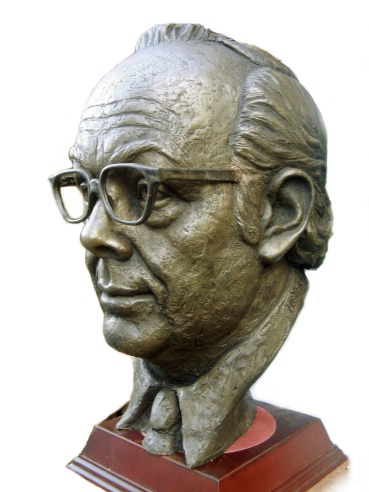
  • A larger-than-life statue of Morecambe, created by sculptor Graham Ibbeson, was unveiled by Queen Elizabeth II at Morecambe in July 1999 and is surrounded by inscriptions of many of his favourite catchphrases and an exhaustive list of guest stars who appeared on the show. The statue was vandalised in October 2014, having had one of its legs sawn off. Subsequently, it was moved to London for repair and was restored on 11 December 2014.[22]
Sculpture of Eric Morecambe, Upper Lea Valley Walk between Harpenden and Luton, England
  • In Harpenden, Hertfordshire, where Morecambe and his family lived from the 1960s until his death, the public concert hall is named after him, with a portrait of Morecambe hanging in the foyer. Morecambe often referred to Harpenden in his comedy, with a band once appearing on the show named The Harpenden Hot-Shots and in a Casanova sketch he introduced himself as Lord Eric, Fourth Duke of Harpenden "and certain parts of Birkenhead". Morecambe was the guest of honour, and performed the opening ceremony at the 75th Anniversary Fete of St George's School, Harpenden.
  • A West End Show, The Play What I Wrote, opened in 2001 as a tribute to the duo. Directed by Kenneth Branagh, each performance featured a different guest celebrity.[23] In March 2003, the show transferred to Broadway.[24]
  • In 2003, Morecambe's eldest son Gary released "Life's Not Hollywood, It's Cricklewood", a biography of his father from the point of view of his family, using family photos and extracts from previously unseen diaries.
  • Kenilworth Road Stadium, the home of Luton Town F.C., has a suite named after Morecambe. He was a supporter and one-time president of the club.[25]
  • J D Wetherspoon opened a public house called The Eric Bartholomew in Morecambe in 2004.[26]
  • At the Roses Theatre in Tewkesbury, the Eric Morecambe Room is used by local and national companies for conferences and meetings.
  • There is a bird hide named after him at Leighton Moss RSPB reserve, which is on Morecambe Bay, near Carnforth, Lancashire.[27]
  • The play Morecambe was created as a celebration of the life of Eric Morecambe. It played at the Edinburgh fringe festival in 2009 and subsequently transferred to London's West End before embarking on a UK tour in 2010.[citation needed]
  • In February 2016 Morecambe's 1968 Jensen Interceptor, which he had bought for £4,500, was offered for sale at £150,000.[28]
  • In November 2024 it was announced that a collection of Morecambe's memorabilia and personal items, from his former home, Brachefield in Harpenden, Hertfordshire, would be sold, following the death in March of his widow, Joan. The collection includes telegrams from Prince Philip and letters from Margaret Thatcher and fellow comics Ronnie Barker and Tommy Cooper.[29] At the auction, on 9 February 2025, Morecambe's distinctive imitation tortoiseshell Metzler spectacles and pipe were bought by long-time fan Robbie Williams for £20,000, much more than their £2,000 to £4,000 estimate.[30]

Bibliography

[edit]

References

[edit]

Further reading

[edit]
[edit]
Revisions and contributorsEdit on WikipediaRead on Wikipedia
from Grokipedia
Eric Morecambe (born John Eric Bartholomew; 14 May 1926 – 28 May 1984) was an English comedian renowned for his work as the taller, more exuberant half of the iconic double act Morecambe and Wise, partnering with Ernie Wise from 1941 until Morecambe's death. Born in the Lancashire seaside town that inspired his stage name, Morecambe began performing as a child on stage and radio, winning a talent contest at age 13 that led to his meeting Wise, then known as Ernest Wiseman. The pair honed their act in variety theaters and wartime entertainment before breaking into television in the 1950s with shows like Running Wild on the BBC, though their early success was tempered by mixed reviews and health setbacks for Morecambe, including a major heart attack in 1968. Their career peaked in the 1970s with the long-running The Morecambe & Wise Show on (1968–1977), followed by a stint on ITV, drawing audiences of up to 28 million viewers through sketches featuring celebrity guests, elaborate musical productions, and Morecambe's signature bespectacled, bumbling persona juxtaposed with Wise's straight-man role. The duo also appeared in films such as The Intelligence Men (1965) and The Magnificent Two (1967), and released hit records like their 1969 cover of "Bring Me Sunshine," which became synonymous with their act. Morecambe received the Officer of the (OBE) in 1976 for services to charity and entertainment, and the partnership earned BAFTA awards, including the 1974 Best . Despite surviving two heart attacks, Morecambe suffered a fatal third one on 27 May 1984, aged 58, shortly after a live in , . His legacy endures through a bronze unveiled in in 1999, annual commemorations, and planned events for his centenary in 2026, cementing as one of Britain's most beloved duos, often ranked among the greatest in polls of public favorites.

Early life

Family and childhood

John Eric Bartholomew was born on 14 May 1926 at 42 Buxton Street in , , , the only child of George Bartholomew, a working-class and later worker, and his wife Sadie (born Sarah Elizabeth Robinson), a who occasionally worked as a waitress to support her son's interests. The family lived in a modest in the seaside town, reflecting their humble circumstances amid the interwar economic challenges. Sadie's determination played a pivotal role in nurturing Eric's budding talents; she enrolled him in dance classes at Miss Hunter's school alongside his cousin Peggy and encouraged his performances, viewing them as a path to opportunity in a limited environment. George, while supportive in his easygoing way, initially held reservations about the uncertainties of , preferring stability for his son. Growing up in , Eric enjoyed a typical coastal childhood, playing on the beaches and developing an early flair for , , and through local activities. From around age four, he displayed natural showmanship, winning several talent contests in the town that highlighted his skills in singing, dancing, and impersonations—prizes that boosted his confidence and Sadie's ambitions for him. These experiences, often at venues like working men's clubs, instilled a love for performance that contrasted with the routine of his surroundings, though school reports later noted his disruptive tendencies, describing him as a "noisy pupil fond of wasting time." Eric's formal education was brief and unremarkable; he attended Lancaster Road Junior School, where a 1936 report ranked him 45th out of 49 pupils, and then Senior Boys' School, facing similar criticisms from teachers unaware of his comedic potential. He left school at age 14 in 1940, amid opportunities that drew him toward professional entertainment rather than further studies. It was during this transition that he began using the stage name Eric Morecambe, inspired by his hometown.

Initial steps in entertainment

John Eric Bartholomew, born in , , began performing on stage as a child, winning local talent contests and participating in school shows that honed his initial showmanship skills. By age 10 in 1937, he earned his first newspaper recognition for a dance performance with partner Molly, marking an early entry into local entertainment circles. These youthful efforts, supported by his family's encouragement, laid the groundwork for his budding interest in and variety acts. At age 14, Bartholomew left school in and made his professional debut in Jack Hylton's revue Youth Takes a Bow at the Empire Theatre, adopting the stage name Eric Morecambe—inspired by his seaside hometown—for the touring children's performing across Britain. This period introduced him to the rigors of professional touring, where he refined his on-stage presence through song, dance, and basic comedic routines in front of diverse audiences. During , Morecambe's early career was interrupted by ; conscripted as a Bevin Boy, he worked in the coal mines for about 11 months before being invalided out due to ill health. Through these early tours, Morecambe immersed himself in the traditions of British entertainment, drawing inspiration from its vaudevillian energy, quick-witted banter, and musical elements that shaped his versatile style. He developed proficiency on the , incorporating jazz-inflected playing into his acts, while sharpening his comedic timing through repeated live interactions that emphasized physical humor and audience engagement.

Comedy career

Partnership with Ernie Wise

Eric Morecambe, born John Eric Bartholomew, and , born Ernest Wiseman, first met in late 1939 at an audition in for Jack Hylton's revue 'Youth Takes a Bow', after Morecambe had won a talent contest that secured his invitation. Both young performers had already gained some experience on the variety circuit—Morecambe through local dance and spots, and Wise as a child singer—but their paths converged in this setting, marking the beginning of their personal and professional acquaintance. By 1941, the pair formalized their collaboration as a during a at the Nottingham Empire Theatre, where they were paired together by chance in the production. They adopted stage names to streamline their billing—Morecambe drawing his from his hometown in , and Wise shortening Wiseman for a more memorable ring—initially performing as Bartholomew and Wise before fully transitioning to . Under the guidance of Morecambe's mother, Sadie Bartholomew, who acted as their early manager, they secured bookings and honed their act, with Morecambe establishing himself as the bumbling, daft half and Wise as the exasperated . This dynamic, rooted in ad-libbed banter and , became the cornerstone of their enduring style. During , the duo entertained British troops through extensive tours organized by the Entertainments National Service Association (ENSA), performing in makeshift venues across the and overseas to boost morale amid the hardships of wartime. These grueling but formative gigs allowed them to refine their timing and rapport, often improvising routines under challenging conditions like air raids and sparse audiences. Their efforts earned them a reputation for reliability and humor that resonated with servicemen, solidifying their commitment to the double-act format despite the era's uncertainties. Following the war, Morecambe and Wise transitioned to the variety theater circuits in the late 1940s, building a steady following through live performances in provincial theaters and seaside towns. They navigated the competitive landscape of rebuilding venues, gradually climbing from supporting spots to headline acts by delivering polished yet spontaneous sketches that emphasized their contrasting personalities. This period of relentless touring not only sharpened their material but also established them as a viable professional partnership, setting the stage for broader recognition in the industry.

Early television and radio work

made their initial foray into broadcasting with radio appearances on the starting in 1947, including spots that contributed to their growing national profile through regular variety programming in the late and early 1950s. These early radio outings, building on their partnership formed in live theater during the , allowed the duo to refine their comic timing and interplay amid musical and sketch elements. Their transition to television began modestly with a guest appearance on the BBC talent show Parade of Youth on 28 September 1951. This was followed by their first starring series, Running Wild, broadcast on in 1954, a variety format that paired them with singer Joy Nichols and aimed to showcase their roots through sketches and songs. However, the show received scathing reviews, with critics dismissing it as chaotic and ill-suited to the medium; one infamous line described the TV set as "the box in which they buried ," leading to the duo's withdrawal from television for seven years while they rebuilt their career in live variety tours. The pivotal breakthrough arrived in 1961 with the ITV series Two of a Kind, produced by ATV and running for six series until 1968. Written by Sid Green and Dick Hills, the program featured the duo as hosts in a mix of stand-up routines, comic sketches, musical interludes, and appearances by guest stars including , , and , which helped solidify their television presence and drew substantial audiences across the decade. During this period, developed key elements of their enduring style, such as exaggerated paired with glamorous dance routines that added visual flair to their performances.

BBC series

After ending their contract with ATV for the series Two of a Kind, Morecambe and Wise returned to the BBC in 1968, their first appearance on the broadcaster since 1955. The duo launched The Morecambe & Wise Show on BBC Two on 2 September 1968, which ran for six series until 1977 and featured a mix of elaborate sketches, musical performances, and stand-up routines. From the second series onward, the show shifted to BBC One, broadening its reach and solidifying its status as a cornerstone of British television comedy. The series was written by Eddie Braben starting in 1969, who crafted scripts emphasizing character-driven humor centered on the duo's affectionate yet bickering dynamic, moving away from reliance on standalone gags toward integrated narratives. Braben's approach highlighted Morecambe's improvisational flair and —often involving exaggerated expressions and clumsy antics—paired with Wise's straight-man role, creating memorable set pieces like scripted "plays-within-shows" where Ernie portrayed pompous authors or directors. Celebrity guests were integral, with high-profile appearances such as delivering dramatic monologues twisted into and conducting an orchestra in a famously bungled sketch. Annual Christmas specials became cultural touchstones, transforming into national events that families anticipated as part of holiday traditions. The duo's popularity peaked with the 1977 Christmas show, which attracted 28.5 million viewers—approximately 60% of the population at the time—setting a record for the highest-rated program in British television history. Morecambe's spontaneous ad-libs and physicality remained central to the appeal, endearing the pair to audiences and cementing their golden era at the .

Thames Television series

In 1978, following a decade of success at the , Morecambe and Wise signed a contract with , motivated primarily by a substantial increase in pay and the prospect of developing another . The duo's first Thames production was a debut special aired in October 1978, marking their return to ITV after years on the . The Morecambe & Wise Show ran on ITV from 1978 to 1983, consisting of four series with 34 episodes in total, supplemented by annual specials. The format shifted toward a revue-style structure, emphasizing a blend of sketches, songs, and dances with prominent guest appearances, while reducing the elaborate scripted plays that had defined their earlier work. Notable guests included , , and , with Thames' production style highlighting glamorous sets and musical numbers but drawing some criticism for lacking the innovative pacing of the era. The final series, broadcast in 1982–1983, featured toned-down physical comedy due to Eric Morecambe's declining health, contributing to a sense of repetition in the formula. Despite these changes, the shows retained strong viewership, with episodes attracting around 15 million viewers—such as 14.6 million for a 1980 installment—though lower than the peaks of their period. The last Christmas special aired on 1983 to 11 million viewers, closing the duo's television chapter.

Films and other projects

Morecambe and Wise starred in three feature films during the 1960s, transitioning their television personas to the big screen in comedic vehicles that often parodied popular genres. Their debut film, The Intelligence Men (1965), directed by Robert Asher, cast them as a hapless coffee shop manager (Morecambe) and his friend (Wise) who become entangled in espionage after encountering a secret agent, blending slapstick with spy thriller tropes. The following year, That Riviera Touch (1966), directed by Cliff Owen, followed the duo on a chaotic holiday to the French Riviera, where they unwittingly foil a jewel heist amid holiday mishaps and romantic entanglements. These films received mixed critical reception at the time, with reviewers noting their failure to fully capture the duo's television chemistry, though they later gained a cult following for their lighthearted absurdity and nostalgic appeal. A third film, The Magnificent Two (1967), also directed by Owen, saw them as bumbling salesmen caught in a South American revolution, further emphasizing their signature bungled-adventure style. Beyond cinema, Morecambe and Wise made occasional guest appearances on other television programs, particularly in the 1970s, where their duo dynamic provided comic relief in variety and sketch formats. They featured in an episode of the comedy series titled "The Goodies Rule – O.K.?" (1975), playing exaggerated versions of themselves in a satirical media frenzy scenario. Solo outings were rare for Morecambe, who preferred the partnership, but the duo continued with occasional specials after their run ended in 1983, including holiday broadcasts that revisited their classic sketches. On stage, Morecambe and Wise maintained a presence through live tours and variety performances, reviving their act in later years. In 1983, they embarked on a successful comeback tour across the , performing updated versions of their routines to sold-out audiences, culminating in an appearance at the Royal Variety Performance at the Theatre Royal in . Earlier radio work in the 1970s included revivals on , with The Eric Morecambe and Ernie Wise Show (1975–1978), a sketch series written by Eddie Braben that incorporated musical guests and their trademark banter, airing four series of half-hour episodes. Miscellaneous projects rounded out their media footprint, including recordings and seasonal theater. They released several record albums and singles in the 1960s and 1970s, such as the novelty track "Bring Me Sunshine" (1969) and comedy albums like Morecambe & Wise Sing Flanagan and Allen (1971), which paid homage to music hall traditions through humorous covers. In the 1950s and 1960s, they took on pantomime roles during holiday seasons, appearing in productions like Sleeping Beauty (1965) at Manchester's Palace Theatre, where their physical comedy and audience interaction boosted box-office draws. These endeavors highlighted their versatility beyond core television work, sustaining their popularity through diverse formats.

Personal life

Marriage and family

Eric Morecambe married Joan Dorothy Bartlett, a former dancer and model, on 11 December 1952 in , , following their meeting earlier that year while performing at the Edinburgh Empire theatre. The couple held their wedding reception at the family's pub, the , and remained devotedly married for over 31 years until Morecambe's death in 1984. The couple had three children: daughter Gail, born in 1953; son Gary, born in 1956; and son Steven, born around 1969 and adopted in 1973. In 1968, amid the success of their BBC television series, the family relocated to , , where they established a stable home life centered on privacy and normalcy for the children. Joan played a pivotal role in supporting Morecambe through the pressures of his demanding career, managing household affairs and providing emotional stability while shielding the children from public scrutiny to protect their upbringing. Later in life, Morecambe and Joan welcomed grandchildren, with whom she shared close bonds, as depicted in family photographs from the era. Following Morecambe's death, Joan continued to nurture the family unit, preserving his legacy through charitable work that benefited children's causes and maintaining the family's low-profile existence in until her own passing in 2024.

Interests and philanthropy

Eric Morecambe was an avid golfer who participated in pro-celebrity tournaments, showcasing his enthusiasm for the sport. He was a dedicated supporter of , serving as a club director during the 1970s and often incorporating football references into his comedy routines, including the famous "Arsenal" gag from a sketch that became a cultural touchstone. Morecambe's musical interests were prominent throughout his life; he began his career as a singer in talent contests and later incorporated musical elements, such as playing, into his performances with , reflecting his early experiences in local bands. He was also a keen birdwatcher, a that led to collaborations like a 1971 BBC Nature episode with and inspired posthumous tributes such as the Eric Morecambe Hide at RSPB Leighton Moss. In , Morecambe was actively involved with children's charities, serving as president of the from 1977 to 1979, an organization that uses and the arts to support young people with disabilities or from disadvantaged backgrounds. He also performed in numerous benefit shows and charity galas to raise funds for various causes. Beyond his professional life, Morecambe enjoyed a close friendship with singer , with whom he and Wise collaborated on light-hearted television sketches that playfully teased O'Connor's musical talents, a dynamic rooted in their long-standing personal bond dating back to the . Morecambe maintained a disciplined , avoiding alcohol and giving up in his later years to focus on his family and creative pursuits.

Later years and death

Health struggles

Morecambe's health issues began prominently in 1968 when he suffered a severe heart attack on 8 , shortly after performing at the in . While driving home to his hotel outside , he collapsed at the wheel; a passer-by noticed his distress, pulled him from the car, and rushed him to Leeds Infirmary, where he was treated for . At the time, Morecambe was up to 60 cigarettes a day and drinking heavily, habits exacerbated by the intense stress of his touring schedule. The incident forced a temporary hiatus from performing, during which he underwent significant lifestyle changes, including quitting and alcohol entirely to mitigate further risks. Throughout the 1970s, continued to experience cardiac symptoms, including episodes of , amid ongoing professional pressures that strained his recovery. These culminated in a second heart attack on 15 March 1979, which occurred at his home in , . He was promptly hospitalized, and three months later, on 25 June, he underwent successful open-heart at in Middlesex, performed by renowned cardiothoracic surgeon . The procedure addressed blocked and was credited with extending his life, though Morecambe was warned he might have only months left without it. In managing his condition post-1968, Morecambe adopted a stricter diet focused on reducing and maintained regular medical check-ups, which helped stabilize his health for several years. However, the cumulative effects limited his physical exertion; during the era in the late 1970s and early 1980s, he scaled back the high-energy that defined earlier routines, opting for more dialogue-driven sketches to accommodate his reduced stamina. This adjustment occasionally interrupted productions, as seen in delays to series filming while he recuperated. Morecambe's vulnerabilities were compounded by early career warnings he largely ignored amid the relentless demands of variety tours and radio commitments in the and . The grueling pace—often involving multiple shows per day—prioritized professional survival over personal health signals like fatigue and chest pains.

Death and

Eric Morecambe suffered a fatal heart attack on 27 May 1984 during a charity gala performance at the Roses Theatre in , , where he was holidaying with his wife Joan. Having endured previous heart issues, including major attacks in 1968 and 1979 that necessitated coronary , Morecambe completed an energetic set and took six curtain calls before collapsing in the wings at age 58. Paramedics rushed him to General Hospital, where resuscitation attempts proved unsuccessful, and he was pronounced dead in the early hours of 28 May. A private funeral service took place on 4 June 1984 at St Nicholas Church in , , Morecambe's longtime home. The ceremony, attended by his immediate family, comedy partner , and a host of celebrities such as —who gave the principal —was relayed via to hundreds of mourners gathered on the adjacent Church Green. Morecambe's ashes were subsequently interred in the church's Garden of Remembrance. Morecambe's sudden death elicited profound national grief in the United Kingdom, with fans and fellow entertainers lauding him as a cornerstone of British comedy whose partnership with Wise had brought joy to millions. Ernie Wise, visibly devastated, later reflected on the irreplaceable void left by his friend, famously noting a persistent "cold draught down one side" where Morecambe had always stood during their acts. The BBC responded swiftly with a special tribute broadcast, "Bring Me Sunshine," hosted by Michael Parkinson, which aired tributes and highlights from Morecambe's career on the day of his passing. Joan Morecambe died on 26 March 2024, aged 97.

Legacy

Awards and honors

In 1976, Eric Morecambe was appointed Officer of the (OBE) in the for his services to entertainment, an honour shared with his long-time partner ; the award was presented to them by Queen Elizabeth II at . Morecambe and Wise received multiple accolades from the Variety Club of , including the Show Business Personality of the Year award, with notable presentations in 1964 and subsequent honors extending into the 1970s that recognized their enduring popularity in . The duo performed at several Royal Variety Performances, prestigious galas attended by members of the , including appearances in 1957 at the London , 1961 at the Prince of Wales Theatre, 1966 at the London , 1968 at the London , and 1972 at the London , showcasing their comedic talents to audiences and royalty alike. Posthumously, in 1999, were awarded the , the British Academy of Film and Television Arts' highest honor, recognizing their profound impact on British television comedy as a duo.

Memorials and cultural impact

A bronze statue of Eric Morecambe, depicting him in his signature pose from the "Bring Me Sunshine" routine, was unveiled by Queen Elizabeth II on the promenade in , , on 23 July 1999, becoming a major tourist attraction that draws visitors to the town annually. A second statue honoring the duo, sculpted by Graham Ibbeson and standing eight feet tall, was unveiled in the Winter Gardens of on 14 October 2016 to mark the 75th anniversary of their first performance together. The duo's television shows continue to be repeated on the , with episodes from their 1968–1977 series regularly broadcast and available in the , maintaining their visibility to new generations. Their style of light-hearted, character-driven has influenced modern British performers, with many young comedians citing as key inspirations for blending verbal wit, physical humor, and ensemble sketches. For instance, in Ricky Gervais's , the character explicitly compares himself and a colleague to , highlighting their enduring archetype of the comedic . Their signature closing song, "Bring Me Sunshine," adopted as their theme in 1969, has become a cultural emblem of British variety entertainment, often evoking and performed at public events and memorials. In 2024, marked the 40th anniversary of Morecambe's death with special programming dedicated to his life and work, including archival clips and tributes. Looking ahead, in October 2025, Lancaster City Council debated a motion to organize centenary celebrations for Morecambe's birth on 14 May 2026, proposing community events, exhibitions, and partnerships to honor his legacy in his hometown of , which was approved by the council on 5 November 2025. Following 's death from a heart attack in 1984, the was established at (part of the Royal Brompton and Harefield Hospitals ) and opened in 1988, reflecting his personal advocacy for heart health after surviving earlier attacks. His widow, Joan Morecambe, contributed to preserving his memory through her 1985 memoir Morecambe and Wife, which detailed their life together, and later supported family-authored works like Forever in the Sunshine (2024), co-written by their son Gary, ensuring authentic accounts of the duo's story.

Publications

Autobiographical and personal books

Eric Morecambe co-authored the joint autobiography Eric & Ernie: The Autobiography of Morecambe & Wise in 1973 with his comedy partner , with assistance from journalist Dennis Holman. The book chronicles their early lives, from Morecambe's childhood performances in wartime to their meeting as young entertainers and the formation of their enduring partnership, blending humorous anecdotes with reflections on the challenges of building a in variety and early television. It also addresses Morecambe's first major heart attack in , offering personal insights into his recovery and the duo's resilience amid professional setbacks. In 1978, published Bring Me Sunshine: A Harvest of Morecambe and Wise, a collection that includes personal stories alongside selections from their scripts and routines, highlighting key moments in their career while revealing more about their off-stage camaraderie and individual quirks. The title draws from their signature closing song, symbolizing the optimism that underpinned their work, and the book features Morecambe's candid recollections of family life and the joys of performing. The duo's follow-up autobiographical work, There's No Answer to That!: An Autobiography by , appeared in 1981 and delved deeper into their later career triumphs, including their successful series, as well as Morecambe's ongoing health struggles following a second heart attack in 1979. Co-written with Michael Freedland, it mixes reflective narratives on professional highs with intimate details of Morecambe's battles with coronary issues and his determination to continue performing despite medical advice. The book emphasizes themes of perseverance and the personal toll of fame, providing Morecambe's perspective on balancing , health, and the demands of .

Collaborative works with Ernie Wise

Morecambe and Wise's collaborative literary output primarily consisted of humorous books that extended their into print, often drawing from their and screen sketches. Their earliest joint publication in this vein was The Morecambe and Wise Joke Book, released in 1968 by Wolfe Publishing, which served as a lighthearted guide to through a series of one-liners, short routines, and satirical takes on entertainment life. This book captured the duo's signature wordplay and visual gags in written form, providing fans with portable versions of their act's quick-witted banter. In the , the pair contributed to several annual joke books and fan-oriented publications, featuring illustrated sketches that mirrored their TV personas—Morecambe as the bumbling optimist and Wise as the . These works, such as the 1979 edition of Joke Book published by , included curated collections of puns, anecdotes, and parody pieces aimed at holiday audiences, emphasizing accessibility and family-friendly humor. The content often incorporated material adapted from their series scripts, allowing readers to relive iconic moments like musical parodies and domestic mishaps. A standout collaborative effort was The Morecambe & Wise Special (1977), published by Weidenfeld and Nicolson as a lavishly illustrated scrapbook compiling selected TV scripts, behind-the-scenes anecdotes, comic strips, and spoof stories. This volume highlighted the duo's creative process, blending text with photographs and drawings to recreate the energy of their broadcasts, and became a that bridged their on-screen success with print media.

References

Add your contribution
Related Hubs
User Avatar
No comments yet.