


Community hub
Recent from talks
Contribute something
Nothing was collected or created yet.
Ermoupoli
View on Wikipedia | This article needs additional citations for verification. (May 2025) |
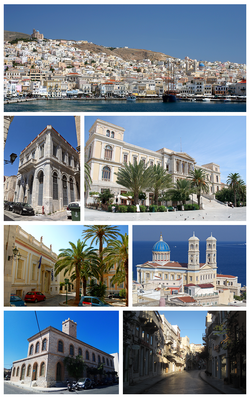
Ermoupoli (Greek: Ερμούπολη), also known by the formal older name Ermoupolis or Hermoupolis (Greek: Ἑρμούπολις < Ἑρμοῦ πόλις "Town of Hermes"), is a town and former municipality on the island of Syros, in the Cyclades, Greece. Since the 2011 local government reform, it is part of the municipality Syros-Ermoupoli, of which it is the seat and a municipal unit.[2] It is also the capital of the South Aegean region. The municipal unit has an area of 11.18 km2.[3]
Key Information


History
[edit] |
Ermoupoli was founded during the Greek Revolution in the 1820s, as an extension to the existing Ano Syros township, by refugees from other Greek islands because of the War. It soon became the leading commercial and industrial center of Greece, as well as its main port. The renowned Greek Steamship Company was founded in the city in 1856. Thousands of ships were built in the various Syros shipyards.
Eventually Ermoupoli was eclipsed by Piraeus in the late 19th century. In the following decades the city declined, remaining the administrative center of the Cyclades islands. In the end of the 20th and the beginning of the 21st century, its economy has significantly improved, based on the sectors of services, industry, education and tourism.


Geography
[edit]Climate
[edit]| Climate data for Ermoupoli, Greece | |||||||||||||
|---|---|---|---|---|---|---|---|---|---|---|---|---|---|
| Month | Jan | Feb | Mar | Apr | May | Jun | Jul | Aug | Sep | Oct | Nov | Dec | Year |
| Mean daily maximum °F (°C) | 55 (13) |
56 (13) |
60 (16) |
67 (19) |
75 (24) |
84 (29) |
87 (31) |
86 (30) |
81 (27) |
74 (23) |
65 (18) |
58 (14) |
71 (21) |
| Mean daily minimum °F (°C) | 47 (8) |
47 (8) |
49 (9) |
54 (12) |
60 (16) |
68 (20) |
72 (22) |
73 (23) |
68 (20) |
62 (17) |
56 (13) |
50 (10) |
59 (15) |
| Source: <World Weather Online= >"Ermoupoli Weather". Ermoupolis Monthly Climate Average, Greece. World Weather Online. 2016. Retrieved 13 September 2016. | |||||||||||||
Notable people
[edit]- Emmanouil Benakis (1843–1929), merchant and politician
- Olga Broumas (1949), poet and translator
- Manos Eleftheriou (1938–2018), lyricist
- Stelios Mainas (1957), actor
- Michael Melas, father of Pavlos Melas, fighter of the Greek Struggle for Macedonia
- Emmanuel Rhoides (1836–1904), writer and journalist
- Markos Vamvakaris (1905–1972), rebetiko musician
- Demetrius Vikelas (1835–1908), businessman, writer and the first president of the International Olympic Committee
Gallery
[edit]-
 Ermoupolis
 -
 Ano Syros und Ermoupolis
 -
 Postcard of Ermoupoli, 1904
 -
 The City Hall, Miaoulis Square
 -
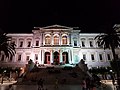 Ermoupoli town hall at night, Syros, 2019
 -
 Eleutheriou Venizelou street
 -

-
 Ermoupoli, Agios Nikolaos & Didymi
 -
 Seaside view of Saint Nicholas Cathedral
 -
 Vaporia district
 -
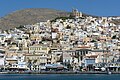 City view from the port
 -
 Ermoupolis & Ano Syros
 -
 Resurrection Church
 -
 Ermoupolis panorama, Syros, Greece
 -
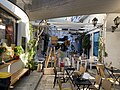 Restaurants on Emmanuel Rhoides street, Ermoupoli
.jpg)


.jpg)


References
[edit]- ^ "Αποτελέσματα Απογραφής Πληθυσμού - Κατοικιών 2021, Μόνιμος Πληθυσμός κατά οικισμό" [Results of the 2021 Population - Housing Census, Permanent population by settlement] (in Greek). Hellenic Statistical Authority. 29 March 2024.
- ^ "ΦΕΚ B 1292/2010, Kallikratis reform municipalities" (in Greek). Government Gazette.
- ^ "Population & housing census 2001 (incl. area and average elevation)" (PDF) (in Greek). National Statistical Service of Greece. Archived from the original (PDF) on 2015-09-21.
External links
[edit]
- Official website of Ermoupoli (in Greek)
| International | |
|---|---|
| National | |
| Other | |

Ermoupoli
View on GrokipediaHistory
Founding during the Greek War of Independence
Ermoupoli emerged in the 1820s as a vital refuge during the Greek War of Independence (1821–1830), when the island of Syros maintained neutrality under Ottoman rule, attracting Greek Orthodox families fleeing persecution and massacres across the Aegean. The first waves of refugees arrived in 1821 from Smyrna (modern Izmir) and Kydonies (Ayvalık), followed by survivors from the Chios massacre in 1822, who sought safety in the established Catholic settlement of Ano Syros. These early arrivals, numbering in the hundreds, were initially sheltered in local homes and churches, marking the beginning of Ermoupoli's development as an extension to the medieval township of Ano Syros on the island's eastern slopes.[7][8][9] Subsequent influxes accelerated the settlement's growth, with refugees from Psara in 1824—after its destruction by Ottoman forces—along with those from Kasos, Crete, and other islands, transforming the barren hillside into a burgeoning community. By 1822, the first houses were constructed, and in 1824, the inaugural church, dedicated to the Metamorphosis (Transfiguration), was built by Chian and Psarian refugees, symbolizing the community's resilience. This rapid expansion was driven by Greek families from various islands, who brought skills in trade and maritime activities; the population surged from a few hundred in the early 1820s to approximately 13,800 by 1828, with about one-third originating from Chios and one-fifth from Smyrna and Kydonies.[8][7][10] The settlement's name, Ermoupoli (or Hermoupolis, meaning "City of Hermes"), was officially adopted in 1826 during a community assembly, honoring the Greek god of commerce and reflecting the founders' vision of establishing a prosperous trading hub amid the chaos of war. Basic infrastructure began to take shape around this time, leveraging Syros's natural deep-water harbor; by 1824, initial wharves and docking facilities were developed to accommodate arriving ships and support the refugees' mercantile activities, further solidifying its role as a safe haven. In 1823, Greek insurgents assumed control of the port, declaring it a free port and enhancing its strategic importance until the war's end.[8][7][9]19th-Century Prosperity
Following the establishment of the Greek state, Ermoupoli was designated the capital of the Cyclades in 1834, marking the beginning of its rapid post-independence expansion as a key administrative and economic hub.[11] This status facilitated institutional growth, including the formation of the local municipality that year, which oversaw urban planning and infrastructure development. The population surged from approximately 13,805 in 1828 to 18,511 by 1861, driven by influxes of merchants, artisans, and laborers attracted to the burgeoning opportunities in trade and industry.[10][12] A pivotal development was the founding of the Greek Steamship Company in 1856, with its headquarters in Ermoupoli, which solidified the city's role as Greece's primary port for international maritime trade until the 1870s. The company operated a fleet of steamships connecting Greece to Europe, the Middle East, and Asia, handling exports of local products like hides and imports of raw materials, thereby boosting the local economy through shipping fees, jobs, and related services. This maritime dominance positioned Ermoupoli as a vital node in Mediterranean commerce, with its harbor accommodating hundreds of vessels annually during the peak years.[10] Urban expansion reflected this prosperity, with the construction of neoclassical buildings, public squares, and cultural institutions transforming the once-modest settlement into a sophisticated cityscape. Notable projects included the development of Miaouli Square as a central gathering space and the erection of grand mansions and administrative structures funded by wealthy shipowners and merchants, exemplifying the architectural influence of European styles adapted to local needs. The Apollo Theatre, completed in 1873, symbolized the city's cultural ascent, hosting operas and plays that drew audiences from across Greece.[10] The industrial sector experienced a boom in the 1860s and 1870s, establishing Ermoupoli as Greece's leading manufacturing center outside the mainland. Key industries included tanneries processing local and imported hides for leather goods, shipyards building and repairing wooden vessels and early steamships that employed thousands of skilled workers, and textile factories producing fabrics from imported cotton and wool, often powered by steam engines introduced in the mid-century. These sectors not only diversified the economy beyond trade but also created a robust working-class community, with factories like the Kornilakis Tannery and Velissaropoulos Textile Works operating at full capacity and contributing significantly to national output.[10]Decline and Modern Revival
The economic decline of Ermoupoli commenced in the late 19th century, primarily due to intensifying competition from the port of Piraeus, which benefited from infrastructure improvements and state support starting in the 1870s, diverting maritime trade away from Syros.[13] By the 1890s, this shift had triggered a severe economic crisis, marked by factory closures, rising unemployment, and substantial emigration as residents sought opportunities elsewhere in Greece and abroad.[10] The 20th century brought further hardships, exacerbated by the impacts of the two World Wars; during World War II, Italian and German occupations led to severe shortages, famine during the winter of 1941–1942, and significant loss of life, contributing to a sharp population decline to around 13,500 by the 1970s from pre-war levels of about 17,000.[14][15] Post-World War II recovery gained momentum through industrial modernization efforts in the 1960s and 1980s, including the establishment of ship repair facilities and food processing industries, which helped revive local employment and economic activity.[16] In 2011, as part of Greece's Kallikrates Programme local government reform, Ermoupoli merged with surrounding communities to form the larger Syros-Ermoupoli Municipality, enhancing administrative efficiency and regional coordination.[17] Entering the 21st century, the city experienced a resurgence driven by expansion in service sectors and tourism from the 2000s onward, with the town's population at 11,038 as of the 2021 census and ongoing cultural preservation initiatives focused on neoclassical architecture and historical sites.[15][18]Geography
Location and Setting
Ermoupoli is located on the east coast of Syros island in the Cyclades archipelago, part of the South Aegean region of Greece, serving as the island's capital and a key port town. Its geographic coordinates are approximately 37°26′N 24°55′E, positioning it centrally within the Aegean Sea amid a cluster of islands known for their maritime heritage.[19][20] The town's topography is characterized by an amphitheatrical layout that ascends from a natural harbor, creating a tiered urban form that integrates with the surrounding terrain. With an average elevation of around 20 meters above sea level, Ermoupoli occupies a municipal unit spanning 11.2 km², encompassing coastal and hillside areas that blend residential neighborhoods with public spaces. This configuration not only enhances its aesthetic appeal but also reflects adaptations to the island's undulating landscape.[21][17] Adjacent to Ermoupoli is Ano Syros, a medieval hilltop settlement perched on the nearby hillside, offering a contrasting historical layer just a short distance away. The location provides panoramic views toward neighboring Cycladic islands, including Tinos to the north and Mykonos to the east, visible across the Aegean waters on clear days.[19][22] Environmentally, Ermoupoli sits on a coastal plain fringed by modest hills, typical of Syros's varied relief in the Cyclades, which features limestone formations and rocky outcrops. The area forms part of a seismically active zone along the Aegean tectonic plate boundary, where subduction and faulting contribute to regional geological dynamics, though no major recent seismic events have been recorded as significantly affecting the town.[23][24]Climate
Ermoupoli experiences a hot-summer Mediterranean climate (Csa) according to the Köppen-Geiger classification, defined by mild and wet winters alongside hot and dry summers.[25] This regime results in comfortable year-round conditions moderated by the island's Aegean Sea location, with temperatures rarely reaching extremes.[26] Average high temperatures hover around 20°C (68°F) annually, with the coldest month, January, seeing lows of about 8°C (47°F).[27] Summers peak in July, when highs average 29°C (84°F), fostering ideal conditions for outdoor activities despite low humidity levels.[26] These figures draw from meteorological records spanning 1980–2016, with more recent 2016–2021 data suggesting minor variations potentially influenced by broader climate trends.[27] Precipitation totals approximately 400–500 mm per year, concentrated primarily from October to March, when wet days account for over 60% of the annual rainfall.[27] July and August are the driest months, often receiving less than 5 mm combined, while snowfall remains rare due to winter mildness. The Aegean Sea significantly tempers temperature fluctuations, preventing severe cold snaps or excessive heat.[26] Summers feature low humidity and occasional strong northerly Meltemi winds, which provide cooling but can intensify from May to September, peaking in July and August.Demographics
Population and Density
According to the 2021 Greek census conducted by the Hellenic Statistical Authority (ELSTAT), the municipal unit of Ermoupoli recorded a population of 13,399 residents, while the urban settlement within it comprised 11,038 individuals.[28][6] The municipal unit spans approximately 11.2 km², yielding a population density of about 1,196 inhabitants per square kilometer, reflecting the compact urban layout of the town on Syros island. Historically, Ermoupoli's population experienced significant fluctuations tied to its economic fortunes. It peaked at over 14,000 residents in the 1860s, driven by its role as a bustling port during the 19th-century maritime boom.[29] By 1951, the population stood at 16,971, but it declined in the second half of the 20th century amid the closure of industries and post-war economic challenges in Greece.[30] Post-2000, the population has stabilized, with the broader Syros-Ermoupoli municipality at 21,124 residents as of 2021, showing an annual change of -0.17% between 2011 and 2021.[31] Demographic data from the 2021 census indicate a median age of approximately 43 years, consistent with national trends of an aging population in Greece.[32] The urban settlement shows a slight female majority, in line with broader trends on Syros. Migration has shaped Ermoupoli's demographics over time. In the 19th century, a net influx of refugees from other Greek islands, including Hydra, Chios, and Psara, fueled rapid growth amid the War of Independence and subsequent refugee waves.[33]Religious Composition
Ermoupoli exhibits a distinctive religious balance, with approximately 50% of the population adhering to the Greek Orthodox Church and 47% to the Roman Catholic Church, based on 2021 estimates for Syros island.[34] Small minorities include Protestants and other Christian denominations, comprising the remaining percentage.[35] This near-even split sets Ermoupoli apart from the broader Greek context, where over 90% of the population is typically Greek Orthodox.[36] The Roman Catholic presence in Syros, including Ermoupoli, traces its origins to the Frankish and Venetian rule over the Cyclades from the 13th to 16th centuries, when Latin bishoprics were established on the island.[37] During this period, Venetian influence led to widespread Catholic conversion among the local Greek population, fostering a lasting community under the protection of Western powers even after Ottoman conquest.[38] In contrast, modern Ermoupoli developed as an Orthodox-majority settlement following the influx of Greek Orthodox refugees during the War of Independence in the 1820s, shifting the island's overall demographics while preserving the Catholic stronghold in nearby Ano Syros.[39] Religious communities in Ermoupoli demonstrate notable coexistence, marked by shared festivals such as the joint Easter processions in Miaoulis Square, where Orthodox and Catholic epitaphs converge in a display of unity.[40] The Roman Catholic Diocese of Syros and Milos is headquartered at Saint George's Cathedral in Ano Syros, serving the island's Catholic faithful.[41] Meanwhile, the Greek Orthodox Archdiocese of Syros maintains its metropolitan cathedral, Agios Nikolaos, at the heart of Ermoupoli, symbolizing the Orthodox presence in the town's central districts. Across both religious groups, the population remains predominantly Greek-speaking, with intermarriage common and no significant non-Greek ethnic communities present.[39] This linguistic homogeneity underscores the integrated cultural fabric of Ermoupoli's diverse faiths.[35]Administration and Infrastructure
Local Government
Ermoupoli is the capital of the South Aegean administrative region and serves as the seat of the Syros-Ermoupoli municipality, which was established in 2011 through the Kallikrates Programme reform merging the former municipalities of Ermoupoli, Ano Syros, and Poseidonia.[42][43] The municipality encompasses an area of 101.9 square kilometers and governs nine local communities across Syros island.[44][45] The local government is led by a mayor elected by direct universal suffrage for a five-year term, alongside a municipal council of 33 members elected proportionally from party lists.[46][47] The council, as the primary deliberative body, handles legislative functions including budgeting, urban planning, and service provision, while the mayor executes decisions and oversees daily administration. The municipality operates in the Eastern European Time zone (UTC+2), uses postal code 841 00, telephone area code 22810, and issues vehicle registration plates with the prefix EM.[48][49] Ermoupoli holds significant regional importance as the headquarters of the Cyclades Regional Unit, coordinating prefectural services such as education, health, and transport oversight.[43] The official municipal website, syros-ermoupolis.gr, delivers online services including citizen portals, announcements, and applications for permits and registrations.[45] The local administration has prioritized heritage preservation, notably through past EU-funded projects like HERMES (completed 2015) for digital cultural management and the Cultural Heritage in Action initiative (2020-2023), which supported adaptive reuse of neoclassical buildings and promoted sustainable tourism.[50][51]Transportation and Ports
Ermoupoli serves as the primary maritime gateway to Syros and the Cyclades islands, with its port functioning as the main hub for ferry services connecting to Piraeus and other Aegean destinations. Daily routes operate via modern passenger-car ferries to the Cyclades and Dodecanese, accommodating both tourists and locals with increased frequency during the summer season. The port handles significant passenger traffic year-round, alongside cargo operations that support berthing, anchoring, and the transport of goods and vehicles. Facilities include efficient docking areas managed by the Municipal Port Fund of Syros, ensuring smooth operations for arriving vessels.[52] The historic Neorion shipyard, established as one of Greece's oldest heavy industries, remains operational for shipbuilding and maintenance while incorporating cultural elements through the adjacent Ermoupolis Industrial Museum. This museum, located at the shipyard site, exhibits artifacts related to Syros's maritime heritage, including steamship salvage operations from the 19th century, and is open to the public (check current hours for schedule and modest entry fee of around €2).[53] The shipyard's legacy underscores Ermoupoli's enduring role in Aegean shipping, though its current functions blend industrial activity with public access for educational purposes. Road transportation on Syros relies on a network of island roads linking Ermoupoli to other settlements, with no rail or metro systems in place. Public bus services, operated by KTEL Syros, provide reliable connections from the central station near the port to beaches such as Galissas, Finikas, and Vari, with journeys typically lasting 15-30 minutes and fares around €2 as of 2023.[54] Free urban mini-buses facilitate travel within Ermoupoli and to nearby Ano Syros, running an integrated network through the town several times daily. Taxis and rental cars supplement these options for more flexible exploration across the island's approximately 80-kilometer road system. Air access to Ermoupoli is provided by Syros Island National Airport (JSY), situated approximately 3.5 kilometers southeast of the port town.[55] The airport, established in 1991, primarily offers domestic flights from Athens International Airport (ATH), with flight durations of about 35 minutes operated by Olympic Air and Sky Express. These services run several times daily, especially in peak seasons, transporting passengers directly to the island without international routes. Pedestrian-friendly walking routes and emerging bicycle paths enhance local mobility within Ermoupoli and its surroundings. Cultural walking tours traverse the town's historic center, combining architecture and sea views over paths of 2-3 kilometers, while family-oriented cycling routes, such as the one from Ermoupoli to Kini beach, feature gentle terrain suitable for leisurely rides. Electric vehicle infrastructure has expanded since 2020, with charging stations like those operated by PPC Mobility now available in areas such as Pagos near Ermoupoli, supporting the island's shift toward sustainable transport amid Greece's national electromobility initiatives.[56]Economy
Historical Industries
Ermoupoli emerged as Greece's premier maritime trade hub in the 19th century, serving as the busiest port in the country until the 1880s, when it handled the majority of eastern Mediterranean commerce following the Greek War of Independence.[57] The influx of refugees and merchants from Asia Minor and other regions fueled this growth, transforming the port into a vital node for exports like hides, textiles, and foodstuffs, while importing raw materials essential for local industries.[58] A key institution in this sector was the Greek Steamship Company, founded in 1856 in Ermoupoli, which established the nation's first steam navigation line and operated ironworks that marked the city's initial foray into large-scale mechanized production.[59] Shipbuilding became a cornerstone of Ermoupoli's economy, with the Neorion shipyards, founded in 1861, representing the first heavy industrial facility in the Balkans and Greece's inaugural site for constructing steamships.[60] These yards, operational from the 1860s through the 1970s, contributed to Syros' broader shipbuilding output, which included thousands of sailing vessels alongside early steam-powered innovations that supported expanding trade routes.[10] The sector's success stemmed from the port's strategic location and the availability of skilled labor drawn from immigrant communities, enabling the repair and construction of vessels that facilitated Greece's maritime dominance. Complementing shipbuilding were diverse manufacturing activities, including soap factories, tanneries, textile mills, and sawmills, which proliferated around 1860 and employed thousands of workers at their peak in the 1870s.[61][3] Tanneries processed animal hides for export, while soap production and milling operations utilized local resources and imported materials, establishing Ermoupoli as Greece's leading industrial center ahead of Piraeus and Athens by mid-century.[62] This workforce, largely composed of immigrants from war-torn regions who settled in Ermoupoli after 1821, endured challenging conditions in these facilities, driving the city's rapid urbanization and economic ascent.[58]Contemporary Sectors
In the 2020s, tourism has emerged as a primary economic driver for Ermoupoli, attracting cultural and heritage-focused visitors to its neoclassical architecture, theaters, and museums. The sector experiences pronounced seasonal peaks from July to August, aligning with the island's favorable Mediterranean climate that supports extended outdoor activities. Syros, including Ermoupoli, recorded approximately 261,000 overnight stays in 2021, with recent analyses indicating dynamic growth in arrivals and stays, positioning it among Greece's fastest-rising destinations and a top "hidden gem" for 2025.[63][64][65] The services sector underpins Ermoupoli's economy, bolstered by educational institutions and commercial activities. The University of the Aegean maintains a key campus in Ermoupoli, housing the Department of Product and Systems Design Engineering, which fosters innovation in design and engineering fields. As the administrative center of the Cyclades, Ermoupoli functions as a regional hub for banking, with branches of major institutions like the National Bank of Greece, and retail, supporting both local needs and visitor spending. Unemployment in the South Aegean region, encompassing Syros, was 7.1% in 2023, below the national average of 11.07%.[66][67][68] Light industry persists in Ermoupoli, with ship repair remaining a cornerstone at the Neorion Shipyards, which marked its 60th maintenance project in 2025 amid ongoing expansions. The yard, now under ONEX Group, is implementing a €14 million self-funded investment program over five years to modernize facilities and enhance capabilities in shipbuilding and repair. Food processing and small-scale manufacturing draw from local agriculture, including greenhouse production of vegetables, cheeses, and honey, contributing to regional output. EU support for green technologies includes technical assistance for smart electromobility initiatives on Syros, promoting electric vehicle adoption and sustainable transport.[69][70][71][72][73] Commerce in Ermoupoli thrives through its active port and local trade networks, handling significant passenger volumes that support connectivity and economic exchange. In 2021, the port recorded approximately 180,000 passenger arrivals during the summer months (June to September).[74] Vibrant local markets and shops cater to residents and tourists, offering goods from regional producers and sustaining daily commerce.Culture and Landmarks
Architecture
Ermoupoli's architecture is predominantly characterized by neoclassical and eclectic styles that emerged during its rapid 19th-century economic expansion as a major port city. The neoclassical elements, inspired by classical Greek and European models, are evident in the grand public buildings and private mansions, many designed by the Bavarian architect Ernst Ziller, who contributed significantly to the city's built environment between the 1870s and 1890s. Italianate influences, tracing back to the Venetian rule over the Cyclades from the 13th to 16th centuries, introduced Renaissance-inspired urban features such as arched facades and symmetrical layouts, blending seamlessly with later neoclassical developments to create an eclectic aesthetic. Numerous neoclassical buildings have been documented and preserved, forming a substantial architectural heritage that distinguishes Ermoupoli from typical Cycladic whitewashed settlements. The city's urban planning reflects a deliberate 19th-century design adapted to its coastal topography, featuring a dense grid of streets radiating from the harbor to facilitate trade and movement. This layout, developed starting in the 1820s amid the Greek War of Independence refugee influx, incorporates radial stairways and pathways that ascend the hilly terrain, creating a structured yet organic flow from the waterfront to inland areas. Miaouli Square, constructed in the 1870s, serves as the central hub of this plan, anchoring the grid with its expansive marble-paved expanse and surrounding neoclassical structures, which exemplify the era's emphasis on monumental public spaces. Characteristic materials in Ermoupoli's architecture include locally sourced marble for facades and decorative elements, providing durability and a luminous quality, alongside wrought iron for balconies and railings, adding intricate ornamental details reminiscent of European bourgeois styles. Preservation efforts intensified with the 1976 legislative decree, which protected all buildings constructed before 1923, establishing strict regulations to maintain the neoclassical core amid modern pressures. Ermoupoli was later designated a protected traditional settlement in 2007, reinforcing these protections. This architectural evolution stands in stark contrast to the medieval settlement of Ano Syros, with its narrow, labyrinthine alleys and fortified stone houses dating to the Venetian period, while post-1950s modernist additions, such as apartment blocks introduced during the military junta, have been limited by these protections to peripheral areas, preserving the historic center's integrity.Key Attractions and Museums
Ermoupoli, the capital of Syros, boasts a rich array of cultural landmarks that reflect its 19th-century prosperity as a maritime and industrial hub. Key attractions include neoclassical architecture, historic churches, and specialized museums that preserve the island's heritage, drawing visitors to explore its blend of Greek and Western influences.[19] At the heart of the city lies Miaouli Square, a central plaza serving as a vibrant gathering spot surrounded by cafes and neoclassical buildings. The square features a prominent statue of Andreas Miaoulis, the Greek admiral and hero of the War of Independence, erected to honor his contributions to the nation's naval efforts.[75] Adjacent to the square stands the Ermoupoli City Hall, an imposing neoclassical structure designed by German architect Ernst Ziller and constructed between 1876 and 1891 at a cost of approximately 1,300,000 drachmas. This grand edifice, one of the largest town halls in Greece, hosts cultural events, exhibitions, and municipal functions, with its facade blending Tuscan, Ionic, and Corinthian styles. The Archaeological Museum of Syros is also housed within the building since 1901.[76][77] Ermoupoli's religious sites highlight its diverse heritage, with prominent Orthodox and Catholic churches. The Agios Nikolaos Cathedral, the Orthodox metropolitan church and patron saint of the city, began construction in 1848 to designs by Greek architect G. Metaxas and was completed in 1870 after 22 years, funded by shipowners' donations. Known as the "rich" church for its opulent interiors featuring marble, frescoes, and a distinctive blue dome, it overlooks the port and symbolizes the city's seafaring legacy.[78] In nearby Ano Syros, the Catholic Cathedral of St. George, seat of the Roman Catholic Diocese of Syros and Milos, dates to around 1200 with numerous renovations, including a major one in the 17th century. This three-aisled basilica with a large central dome and triple bell tower offers panoramic views of Ermoupoli and represents the island's significant Catholic minority.[79] The city's museums provide in-depth insights into its historical significance. The Archaeological Museum of Syros, founded in 1834–1835 as the central museum of the Cyclades, displays prehistoric artifacts from sites like Kastri and Chalandriani dating back to 3000 BCE, including Cycladic figurines, pottery, tools, and marble idols, alongside classical sculptures, inscriptions, and Roman-era tombstones. Located in the western wing of the City Hall, it is open as follows (as of 2025): Winter (November–March): 08:30–15:30, closed Tuesdays and Thursdays. Summer (April–October): 09:00–16:00 (Monday, Wednesday, Thursday, Sunday), 09:00–21:00 (Friday–Saturday), closed Tuesdays; entry fee €5.[77] The Industrial Museum of Ermoupoli, established in 2000 and housed in four restored 19th-century factory buildings near the shipyards, showcases the city's industrial and shipping past through over 300 exhibits of machinery, tools, photographs, maps, and one of the first modern electric cars produced in Greece. Focused on shipbuilding and tanning industries that peaked in the 19th century, it highlights Ermoupoli's role as Greece's first industrial center; the museum operates daily from 10:00 to 16:00 except Wednesdays, with an entry fee of €2.[80] Other notable sites include the Apollon Theatre, a neoclassical opera house built in 1864 by Italian architect Pietro Sampo, inspired by Milan's La Scala and other Italian venues, seating 400 and hosting operas, concerts, and performances that underscore Ermoupoli's cultural vibrancy. The Vaporia district, a seaside neighborhood developed in the 19th century, features elegant neoclassical mansions built by wealthy shipowners, characterized by high ceilings, marble balconies, wood-carved doors, and sea views, offering a glimpse into the elite lifestyle of the era.[81][19]Notable People
Artists and Entertainers
Márkos Vamvakáris (1905–1972) was a pioneering Greek rebetiko musician and composer, renowned for his mastery of the bouzouki and contributions to the genre's foundational repertoire. Born in the Ano Syros neighborhood on the island of Syros, near Ermoupoli, he grew up in a poor family and left the island at age 12 for Piraeus, where he developed his career amid the urban rebetiko scene.[82] Vamvakáris composed over 100 songs, including classics like "Frangosyriani" and "O pasatempos," which captured themes of love, hardship, and island life, influencing generations of Greek musicians.[83] His legacy endures on Syros through the Markos Vamvakáris Museum in Ano Syros and the annual Rebetiko Festival in Ermoupoli, organized by the Municipality of Syros-Ermoupoli.[84] Olga Broumas (1949–2021) was a celebrated Greek-American poet and translator whose feminist and erotic works explored themes of identity, mythology, and exile. Born in Ermoupoli on Syros, she published her first collection, Anisychíes (Restlessness), in Greek in 1967 before emigrating to the United States on a Fulbright scholarship.[85] Broumas's English-language debut, Beginning with O (1977), won the Yale Series of Younger Poets Award and established her as a bold voice in contemporary poetry, drawing on her island heritage for imagery of sea, stone, and liberation.[86] She later served as Poet Laureate of the State of Washington (2003–2006) and translated works by poets like T.S. Eliot and William Carlos Williams into Greek, bridging her dual cultural roots until her death in 2021.[85] Stelios Mainas (born 1957) is a distinguished Greek actor known for his versatile performances in film, television, and theater. Born in Ermoupoli on Syros, he initially studied business administration before training at the Veakis Drama School in Athens, graduating in 1982.[87] Mainas gained prominence in modern Greek cinema with roles in films such as Tetarti 04:45 (2015), where he portrayed a complex father figure, and Mavra Mesanyhta (2008), earning critical acclaim for his emotional depth.[87] His stage work includes collaborations with major ensembles, contributing to contemporary interpretations of Greek classics and international drama. Nikos Mavrakis (born 1989) is a Greek actor active in theater, television, and film, with a focus on ensemble productions and character-driven roles. Born in Ermoupoli on Syros to parents George Mavrakis and Evangelia Preka-Mavraki, he grew up with two older sisters and pursued acting after early interests in the arts.[88] Mavrakis has appeared in theatrical works associated with the National Theatre of Greece, including adaptations of modern plays, and contributed to TV series that highlight social narratives in contemporary Greek storytelling.[89] His performances often emphasize collaborative dynamics, reflecting the communal spirit of his island origins.Politicians and Scholars
Demetrius Vikelas, born on 15 February 1835 in Ermoupoli on the island of Syros, was a prominent Greek author, philanthropist, and the inaugural president of the International Olympic Committee (IOC).[90] Elected at the first IOC session in 1894, Vikelas served until 1896, overseeing preparations for the inaugural modern Olympic Games in Athens that year; his term remains the shortest in IOC history.[91] As a writer, he produced works in Greek and English, including essays on Byzantine history published in outlets like The Scottish Review, and he advocated for Greek cultural revival through philanthropy, such as founding the Institut Melas in 1893 to support preschool education outside Athens.[90] Vikelas's leadership bridged commerce, literature, and international sports administration, reflecting Ermoupoli's mercantile heritage in fostering global Greek influence. Emmanouil Benakis, born in 1843 in Ermoupoli, Syros, Greece, was a influential merchant-politician and national benefactor whose career intertwined economic enterprise with public service.[92] After studying commerce in England and building wealth as a cotton industrialist in Alexandria, Egypt, he entered politics as a close ally of Prime Minister Eleftherios Venizelos, serving as Minister of National Economy from 1911 to 1912 during Venizelos's first term and as Minister of Agriculture in 1917–1918 and 1920.[93][94] Elected mayor of Athens in 1914 under a Venizelos government, Benakis focused on urban development and national resilience, later founding the Benaki Phytopathological Institute in 1924 to advance agricultural research.[95] His philanthropy extended to funding hospitals, libraries, educational institutions, and refugee aid following the 1922 Greco-Turkish population exchange, earning him recognition as a National Benefactor by the Greek state; in 1929, he donated his family's neoclassical mansion in Athens to establish the Benaki Museum, bequeathing art collections that formed its core.[92][96] Rita Boumi-Pappa (1906–1984), a native of Syros, was a distinguished Greek poet, translator, and short story writer whose intellectual contributions enriched modern Greek literature and cultural exchange.[8] Active from the 1930s onward, she published sixteen poetry collections, including works in Italian, and founded the literary magazine Cyclades in 1930, which featured prominent writers of the era and promoted Cycladic cultural identity during its two-year run.[8] Boumi-Pappa's poetry often explored themes of memory, resistance, and human experience, with texts reflecting her leftist antifascist involvement during World War II later used in works like the 1993 composition To a Thousand Murdered Girls by Caroline Ansink.[97] As a translator, she bridged Greek and international literature, rendering works by poets such as Elisaveta Bagryana into Greek and contributing to anthologies that introduced modern Greek voices abroad.[8] Her legacy endures through busts and tributes in Ermoupoli, underscoring her role in elevating the island's scholarly tradition.[98]References
- https://www.wikidata.org/wiki/Q210087
- https://www.wikidata.org/wiki/Q12149807