Hubbry Logo
Euthanasia CoasterEuthanasia CoasterMain
Open search
Euthanasia Coaster
Community hub
Euthanasia Coaster
logo
8 pages, 0 posts
0 subscribers
Be the first to start a discussion here.
Euthanasia Coaster
Euthanasia Coaster
from Wikipedia

Euthanasia Coaster
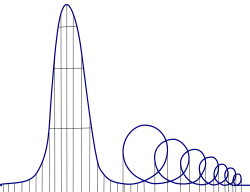
Track profile of the Euthanasia Coaster, showing its 500 m (1,600 ft) lift hill and seven clothoid inversions
General statistics
TypeSteel
DesignerJulijonas Urbonas
ModelExa coaster
Lift/launch systemCable lift hill
Height500 m (1,600 ft)
Length7,544 m (24,751 ft)
Speed360 km/h (220 mph)
Inversions7
Duration3:20
G-force10

The Euthanasia Coaster is a hypothetical steel roller coaster and euthanasia device designed with the sole purpose of killing its passengers.[1] The concept was conceived in 2010 and made into a scale model by Lithuanian artist Julijonas Urbonas, a PhD candidate at the Royal College of Art in London.

Urbonas, who had formerly been an amusement park employee, stated that the goal of his concept roller coaster is to take lives "with elegance and euphoria",[2] either for euthanasia or execution purposes.[3] John Allen, who had been the president of the Philadelphia Toboggan Company, inspired Urbonas with his description of the "ultimate" roller coaster as one that "sends out 24 people and they all come back dead".[4]

Design

[edit]

The concept design of the layout begins with a steep-angled lift that takes riders up 500 metres (1,600 ft) to the top[1], a climb that would take a few minutes to complete, allowing the passengers to contemplate their life. [3][5] (For comparison, the tallest roller coaster ever built, Falcons Flight, has a max height of 163 m (535 ft).) [6]) From there, all passengers are given the choice to exit the train if they wish to do so. If they do not, they will have some time to say their last words.

All passengers are required to press a button to continue the ride, which then takes the train down a 500 m (1,600 ft) drop, propelling the train at speeds up to 360 kilometres per hour (220 mph; 100 m/s), close to its terminal velocity, before flattening out and speeding into the first of its seven slightly clothoid inversions. [3] Each inversion would decrease in diameter to maintain the lethal 10 "g" onto passengers as the train loses speed. After a sharp right-hand turn, the train would enter a straight track that goes back to the station, where the dead are unloaded and new passengers can board.[3]

Mechanism of action

[edit]
Urbonas (left) and Euthanasia Coaster at HUMAN+ display at the Science Gallery in Dublin

The Euthanasia Coaster would kill its passengers through prolonged cerebral hypoxia, or insufficient supply of oxygen to the brain.[1] The ride's seven inversions would inflict 10 g (g-force) on its passengers for 60 seconds, causing g-force related symptoms starting with greyout through tunnel vision to black out, and eventually g-LOC (g-force induced loss of consciousness) and death.[3] Subsequent inversions or a second run of the rollercoaster would serve as insurance against unintentional survival of more robust passengers.[3]

Exhibition

[edit]

The Euthanasia Coaster was first shown as part of the HUMAN+ display at the Science Gallery in Dublin in 2012.[1] The display was later named the year's flagship exhibition by the Science Gallery.[7][8] Within this theme, the coaster highlights the issues that come with life extension.[9] The item was also displayed at the HUMAN+ exhibit at Centre de Cultura Contemporània de Barcelona in 2015.[10]

[edit]

In 2012, Norwegian rock group Major Parkinson released "Euthanasia Roller Coaster", a digital single with lyrics alluding to Urbonas's Euthanasia Coaster.[11]

Sequoia Nagamatsu's novel How High We Go in the Dark, published on January 18, 2022, prominently features a euthanasia roller coaster for children afflicted with an incurable plague.[12]

The 2023 television series Mrs. Davis features a roller coaster as a method of ending one's life.

References

[edit]
[edit]
Revisions and contributorsEdit on WikipediaRead on Wikipedia
from Grokipedia
The Euthanasia Coaster is a hypothetical steel roller coaster conceived by Lithuanian designer and engineer Julijonas Urbonas in 2010 as a euthanasia device engineered to end the lives of its voluntary riders humanely through cerebral hypoxia induced by sustained 10 g-forces during seven progressively smaller teardrop-shaped vertical loops. The ride begins with a 500-meter ascent to a drop tower, accelerating participants to near-terminal velocity before entering the lethal sequence, where extreme gravitational forces deprive the brain of oxygen, leading to euphoria, unconsciousness, and death within minutes. Urbonas, informed by his prior experience managing an amusement park in Klaipėda from 2003 to 2007, framed the project within "gravitational aesthetics," positing it as a ritualistic alternative to clinical euthanasia methods, emphasizing personal agency and spectacle in mortality. While unbuilt and presented as conceptual art, the design has provoked discourse on the ethics of engineered death, human physiological limits, and the fusion of thrill-seeking with terminal choice, earning recognition such as the Public Prize at the 2013 Update festival in Ghent.

Origin and Development

Inventor and Initial Proposal

The Euthanasia Coaster was conceived in 2010 by Julijonas Urbonas, a Lithuanian artist, designer, and doctoral researcher at the Royal College of Art in London. Urbonas, who previously managed an amusement park in Klaipėda, Lithuania, from 2003 to 2007, developed the concept as a speculative design project exploring the boundaries of human endurance and the ethics of euthanasia. Urbonas proposed the Euthanasia Coaster as a hypothetical machine intended to provide a painless and euphoric for terminally ill individuals seeking , framing it as an alternative to traditional methods by combining extreme thrill with lethal physiological effects. The initial design featured a slow ascent to a height of approximately 510 , followed by a steep drop and a series of seven inverted loops engineered to sustain g-forces exceeding 10 g for several minutes, inducing through blood pooling in the lower body. To illustrate the proposal, Urbonas constructed a using materials including etched , , carbon fiber, and , which he presented in academic and artistic contexts as a rather than a practical blueprint. The project drew on Urbonas's research in , , and , aiming to provoke discussion on the potential for to redefine end-of-life experiences while highlighting the limits of human physiology under .

Background and Inspirations


Julijonas Urbonas, a Lithuanian artist, designer, and engineer, developed the Euthanasia Coaster concept in 2010 while pursuing a PhD at the Royal College of Art. His early exposure to amusement park operations stemmed from his father's role as director of a Soviet-era park in , where Urbonas spent his childhood and later served as director from 2003 to 2007, fostering an interest in "gravitational aesthetics" and the physiological effects of extreme motion.
The concept originated as a thought experiment envisioning the "ultimate roller coaster," one that would deliver a euphoric death through sustained high g-forces inducing cerebral hypoxia, rather than mere thrill-seeking. Urbonas drew inspiration from the stagnation in contemporary roller coaster innovation and the potential of rides to push human physiological limits, combining his engineering background with speculative design to propose euthanasia as an aesthetic, ritualistic experience. He consulted ethicists, psychologists, and physiologists to ground the design in scientific feasibility, emphasizing a process of thrill followed by painless unconsciousness and death via oxygen deprivation in seven loops after a 500-meter ascent. Philosophically, the work reflects influences from , such as Kurt Vonnegut's "," which explores amid , positioning the coaster not as an endorsement of but as a of diminishing and a speculation on engineered, pleasurable mortality. Urbonas has stated that the project stems from a fascination with life's singularity—"You only live once, so be careful what you wish for"—rather than depressive ideation, aiming to provoke reflection on the boundaries between ecstasy, , and finality.

Technical Design

Physical Structure and Dimensions

The Euthanasia Coaster is envisioned as a with a cable-operated that raises a single-seat vehicle, equipped with restraints and health monitoring systems, to a maximum height of 500 meters. This initial ascent provides a gradual build-up, contrasting with the subsequent vertical drop that accelerates the vehicle to approximately 100 meters per second (360 km/h). Following the drop, the track transitions into seven consecutive inversion loops shaped as clothoid curves, or Euler spirals, to maintain consistent positive g-forces throughout each loop rather than the peaking forces of circular designs. These loops are calibrated to expose riders to sustained 10 g acceleration for about 60 seconds, leveraging principles from and to induce physiological effects without structural failure. The total track length spans roughly 7.2 kilometers (4.5 miles), encompassing , drop, and looping sections, though precise measurements are conceptual and subject to refinements. The structure draws on and to withstand extreme stresses, prioritizing durability for the lethal sequence while ensuring initial phases emphasize aesthetic and experiential buildup.

Operational Mechanism

The Euthanasia Coaster, as conceptualized by Julijonas Urbonas, begins operation with a slow ascent via a lift mechanism to a height of 500 to 510 meters, providing the necessary for the subsequent descent. Once at the apex, the single-occupant vehicle—equipped with health monitoring—awaits rider initiation of the drop, after which it accelerates downward, reaching speeds of approximately 100 meters per second (220 miles per hour). This high velocity propels the vehicle into a series of seven teardrop-shaped vertical loops arranged in a descending spiral, each utilizing a clothoid () profile to minimize jerk and maintain consistent forces. The loops decrease in diameter to counteract the natural deceleration from and drag, ensuring a sustained positive 10 acceleration—ten times the force of Earth's —for approximately 60 seconds. The heart-line engineering aligns the rider's heart with the to optimize blood flow dynamics initially, transitioning to extreme pooling in the lower extremities under prolonged 10 g loading. This induces induced loss of consciousness () through , where blood is forced away from the brain, depriving it of oxygen and leading to irreversible cessation of vital functions within the ride's duration. The design draws on principles from and to calibrate the forces precisely for this outcome, without mechanical intervention beyond the .

Physiological Mechanism

Stages of Rider Experience

The rider begins with a slow ascent via a lift mechanism to the apex of a 500-meter , a process lasting several minutes that allows time for reflection on the irreversible decision to proceed. During this phase, the increasing height amplifies perceptions of vulnerability and isolation, with the rider secured in a harness equipped with vital sign monitoring to detect any last-moment withdrawal before the point of no return. Upon release, the coaster plunges at near-terminal velocity, incorporating a heart-line roll that induces immediate vertigo and suspended breathing, transitioning into the first of seven teardrop-shaped vertical loops of progressively decreasing diameter. Initial loops generate thrill and euphoria from the adrenaline surge and early onset of mild , where blood begins pooling in the lower extremities under rising positive g-forces. As the loops tighten to sustain approximately 10 g-forces for about one minute total, physiological strain intensifies: facial tissues droop, breathing labors due to organ compression against the restraint, and emerges as oxygen deprivation to the brain worsens. This progresses to , marked by blackout, bodily numbness, and potential fleeting surreal visions, rendering the rider limp while the ride continues unabated. The final loops ensure culminates in through prolonged oxygen starvation, with the monitoring system verifying fatality post-ride to confirm without revival. The design's decreasing loop radii compensate for decelerating speed, maintaining lethal g-forces irrespective of initial momentum variations.

Basis in Human and G-Forces

The application of sustained positive g-forces (+Gz, directed from head to feet) in the vertical loops of the Euthanasia Coaster induces a cephalo-caudal shift of bodily fluids, pooling in the lower extremities and , which diminishes venous return to the heart and subsequently reduces . This hydrodynamic effect impairs the brain's oxygen supply, initiating a cascade of physiological responses including initial visual disturbances—such as at approximately 4-5 g and complete blackout at 5-6 g for untrained individuals—followed by g-induced loss of consciousness (). Tolerance thresholds vary with factors like physical conditioning, hydration, and prior exposure, but untrained subjects typically endure no more than 3-5 g for brief durations before compromises autonomic functions. At the 10 g level proposed for the coaster's terminal loop, maintained for 60 seconds, blood flow to the brain ceases almost entirely due to the overwhelming gravitational gradient exceeding vascular compensatory mechanisms, such as vasoconstriction or the baroreceptor reflex. G-LOC onset occurs within 5-10 seconds under such conditions, with absolute incapacitation lasting an average of 12 seconds initially, during which oxygenated reserves in the brain deplete rapidly. Prolonged exposure beyond this point—unmitigated by anti-g straining maneuvers or suits, which are absent in the coaster design—results in irreversible neuronal damage from anoxia, as cerebral tissues cannot sustain metabolism without perfusion; brain cell death accelerates after 3-5 minutes of hypoxia, culminating in systemic failure including cardiac arrest. Empirical data from aviation centrifuge tests confirm that sustained +Gz above 8-9 g, even in trained pilots, leads to compounded ischemic injury if recovery is prevented, aligning with the coaster's mechanism for inducing fatality through physiological overload rather than trauma.

Exhibitions and Public Displays

Initial Exhibitions and Models

Julijonas Urbonas constructed a of the Euthanasia Coaster in 2010 while pursuing a PhD at the Royal College of Art in . The model, fabricated from etched , acrylic paint, carbon fiber, and , illustrated the coaster's proposed 500-meter initial ascent, seven inverting loops, and overall track layout spanning approximately 7.2 kilometers. The scale model received its initial public exhibition as part of the HUMAN+ display at the Science Gallery in , , in April 2011. This exhibition, themed around the integration of technology and , positioned the Euthanasia Coaster as a conceptual intervention in debates on and voluntary death, drawing attention to the ethical boundaries of such advancements.

Subsequent Appearances and Adaptations

The scale model of the Euthanasia Coaster has been featured in multiple international exhibitions following its debut at the Science Gallery in as part of the HUMAN+ display in 2011. In 2013, it appeared in the "Merry Melancholy" exhibition at Eskilstuna Art Museum in , where it was presented alongside other works exploring themes of design and mortality. The following year, in 2014, Julijonas Urbonas included the model in his solo exhibition "Standing, Falling, Levitating" at Galerija Vartai in , , emphasizing its conceptual role in provoking discussions on and . In 2014, the project was also integrated into the Museum of Modern Art's (MoMA) online "Design and Violence" interactive exhibition, where Urbonas contributed an entry debating the ethics of through engineered experiences, attracting commentary from designers and ethicists on its provocative intent. The model's travels extended to broader European galleries, as noted by filmmakers who encountered it during these displays and adapted the concept into visual simulations. For instance, in 2022, director Glenn Paton produced a titled Euthanasia Roller Coaster: The Movie, which simulates the rider's physiological descent using CGI to depict the proposed g-force effects, drawing directly from Urbonas's original specifications. More recently, in August 2022, the Euthanasia Coaster was exhibited at Science Gallery in as part of the "Swarm" program, where visitors engaged with its scale model to explore intersections of human limits and technological thrill-seeking. Virtual adaptations have emerged in ; a 2024 simulation by content creator @simulatorcentral on recreated the ride's trajectory and sensory progression using visuals, garnering millions of views and sparking online debates, though such recreations lack Urbonas's direct endorsement and prioritize entertainment over philosophical depth. No full-scale physical adaptations or operational prototypes have been constructed, maintaining the project's status as a provocative art installation rather than a functional device.

Ethical and Philosophical Implications

Proponent Perspectives on Euthanasia

Julijonas Urbonas, the Lithuanian artist and designer who conceived the in 2010, advocates for it as a humane mechanism for , emphasizing its capacity to deliver death through prolonged induced by extreme gravitational forces. He describes the device as engineered to end life "with elegance and ," allowing riders to experience an initial ascent to 500 meters followed by acceleration to 360 km/h and seven inverted loops that generate 10 g-forces, culminating in and after approximately 7.5 minutes of thrill. This approach, Urbonas argues, reframes as a meaningful and pleasurable ritual, contrasting with more passive or clinical methods that may prolong suffering. Proponents align the coaster with core principles of , particularly the right to autonomy in choosing one's manner of death, especially for individuals enduring or . By leveraging physiological responses to g-forces—such as endorphin release and oxygen deprivation leading to bliss before unconsciousness—the concept illustrates how innovative engineering could minimize perceived trauma, offering a dignified exit that empowers the individual over medical . Urbonas extends this to broader societal contexts, suggesting the coaster could address existential burdens like or the ennui of extreme , where serves as a voluntary release into ecstasy rather than obligation. In discussions of technologies, supporters highlight the coaster's provocative value in challenging taboos around death, potentially advancing debates on patient-directed methods beyond pharmaceuticals like barbiturates, which carry risks of incomplete sedation or prolonged agony. While hypothetical, the design underscores arguments for as an extension of bodily , where the state's role is limited to ensuring and medical oversight, akin to protocols in jurisdictions like the since the . Urbonas has noted its dual applicability to and , positing that such a system could render executions more ethical by prioritizing rider experience.

Criticisms from Sanctity-of-Life Viewpoints

From the perspective of sanctity-of-life ethics, which assert that human life possesses intrinsic value derived from its divine origin or inherent dignity and thus cannot be intentionally ended by human agency, the Euthanasia Coaster represents a profound moral transgression. Proponents of this view, often drawing from Judeo-Christian traditions, maintain that deliberate killing, even if framed as consensual or merciful, usurps a sacred authority reserved for a higher power or natural processes, rendering any engineered mechanism for death—such as Urbonas's design—inherently illicit. This objection holds irrespective of the coaster's purported physiological efficiency in inducing cerebral hypoxia via sustained 10g forces, as the intent to kill remains the operative ethical failing. Such critiques emphasize that the coaster's conceptual framing as a "humane" or experiential finale to life further erodes reverence for by commodifying as an amusement or aesthetic event, potentially desensitizing society to life's inviolability. For instance, opponents argue it exemplifies a utilitarian that prioritizes subjective relief from suffering over absolute prohibitions against , echoing broader condemnations of as a violation of the non-negotiable duty to preserve life until its natural cessation. Neuroscientist has critiqued the design as "preposterous as a technical device," underscoring how it compounds the inherent tragedy of mortality with engineered finality, thereby mocking the solemnity inherent in human finitude rather than honoring life's sanctity. In religious contexts, this stance aligns with doctrines prohibiting and assisted death, viewing the coaster's voluntary participation as no mitigation for the act's objective wrongness; participants, even if terminally ill, lack to authorize their own destruction, as life is not a personal possession to dispose of at will. Critics further warn of downstream risks, such as normalizing state-sanctioned or mechanized killing, which could expand beyond the voluntary to coerce the vulnerable, undermining societal commitments to protect all human lives equally. These viewpoints prioritize empirical observations of euthanasia practices—where safeguards erode over time, as seen in jurisdictions like the and since legalization in the 2000s—over speculative designs promising controlled outcomes.

Broader Debates on Assisted Death

The Euthanasia Coaster, as a conceptual device combining thrill-seeking with lethal g-forces, exemplifies debates over innovative or non-medical methods of assisted , prompting questions about whether should be confined to clinical settings or extended to experiential ones that emphasize agency and prior to fatality. Proponents argue that such mechanisms could enhance personal autonomy by allowing individuals to choose a death aligned with their values, such as adventure, contrasting with passive medical interventions like lethal injections. This view aligns with broader advocacy for the , where empirical data from legalized regimes show motivations often rooted in loss of control and unbearable suffering rather than pain alone. In jurisdictions permitting , such as the since 2002 and since 2002, and physician-assisted suicide account for rising shares of total deaths—reaching approximately 5% in the by 2022, with expansions to include non-terminal conditions like psychiatric disorders and advance directives for . Oregon's Death with Dignity Act, effective since 1997, has seen over 3,000 prescriptions issued by 2023, primarily for terminal illnesses, with no reported instances of coerced use but ongoing scrutiny over underreporting of complications in early cases. Critics invoke concerns, citing evidence of normative shifts: in the , cases initially limited to unbearable physical suffering have broadened to include existential distress, with non-voluntary elements emerging in 0.4% of reported instances by 2010. Such trends fuel arguments that legalizing assisted death erodes safeguards, potentially pressuring vulnerable groups like the elderly or disabled toward premature exit, as evidenced by eligibility expansions to minors in without thresholds. Philosophically, debates hinge on balancing individual liberty against societal risks of devaluing life, with first-principles reasoning questioning whether state-sanctioned killing, even consensual, normalizes death as a solution to suffering rather than addressing root causes like inadequate palliative care. Empirical reviews indicate that while safeguards mitigate overt abuse in places like Oregon—where voluntary euthanasia has not been adopted—subtle expansions occur via judicial or legislative reinterpretation, challenging claims of static boundaries. The Coaster's extremity underscores these tensions, highlighting how artistic provocations reveal inconsistencies in equating "humane" death with efficiency versus inherent dignity, without resolving whether empirical upticks in assisted deaths reflect true autonomy or cultural accommodation to mortality fears.

Reception and Cultural Impact

Media and Public Response

The Euthanasia Coaster, conceptualized by Lithuanian artist Julijonas Urbonas in 2010 as part of his doctoral thesis at the , initially garnered attention within design and art communities for its provocative fusion of amusement engineering and euthanasia ethics. It was featured in the 's "Design and Violence" online platform in April 2014, where curators described it as a successful provocation despite deeming it "preposterous as a technical device" and lacking in artistic enjoyment. Mainstream media outlets amplified its visibility through articles framing it as a morbid thought experiment. A 2011 VICE piece highlighted its design for delivering death "with elegance and euphoria," positioning it as an unrealized project challenging conventional thrill rides. Subsequent coverage, such as a 2014 VICE article, emphasized its hypothetical mechanics while noting public intrigue mixed with unease over its lethal intent. In January 2025, Prospect Magazine questioned whether the concept constituted innovative art or obscenity, underscoring its role in broader conversations about dignified death amid advancing medical technologies. Public response has been polarized, often igniting debates on the morality of disguised as recreation. The concept resurfaced in August 2024 via videos simulating the ride's experience, prompting widespread online discussions on its feasibility and ethical implications, with users debating accessibility versus sanctity-of-life concerns. Advocacy groups like Right To Life released a first-person video in August 2024 to critique it as a "death machine," aiming to highlight risks of normalizing . While some enthusiasts, including engineering-focused analyses from May 2023, explored its physiological limits with fascination, others expressed revulsion, viewing it as glorifying rather than humane exit. These reactions reflect a divide between those appreciating its speculative critique of and detractors wary of desensitizing society to lethal technologies.

Recent Developments and Simulations

In 2024, the Euthanasia Coaster concept experienced renewed public interest through simulations, particularly on , where users created virtual first-person perspective videos depicting the ride's sequence of acceleration, loops, and fatal g-forces. These animations illustrated the hypothetical 500-meter drop reaching speeds of 360 km/h, followed by seven inverted loops inducing via sustained 10g forces for 60 seconds, leading to and . Such content sparked debates on but remained speculative, with no evidence of physical prototyping beyond Urbonas's original 2010 . Lithuanian designer Julijonas Urbonas, the concept's creator, addressed the viral simulations in interviews during 2024 and 2025, reaffirming the coaster's intent as a euphoric method for the terminally ill, emphasizing its reliance on physiological limits like g-induced blackout rather than mechanical failure. He noted that while the design draws from real physics and human tolerance data—such as pilots enduring brief 9g spikes—no full-scale engineering feasibility studies have advanced since its inception, due to ethical and legal barriers. Engineering analyses in recent media have simulated survivability, such as a 2023 YouTube examination by a fighter pilot perspective, concluding that even trained individuals would succumb to the prolonged high-g exposure, as human blood pooling prevents sustained consciousness beyond seconds at 10g. These simulations underscore the concept's basis in verifiable , including (g-induced loss of consciousness) thresholds documented in aviation research, but highlight practical impossibilities like track material stresses at extreme velocities. No institutional endorsements or regulatory discussions for emerged by October 2025, maintaining the coaster's status as provocative rather than viable technology.

References

Add your contribution
Related Hubs
User Avatar
No comments yet.