Hubbry Logo
Farm BoyFarm BoyMain
Open search
Farm Boy
Community hub
Farm Boy
logo
8 pages, 0 posts
0 subscribers
Be the first to start a discussion here.
Contribute something
Farm Boy
Farm Boy
from Wikipedia

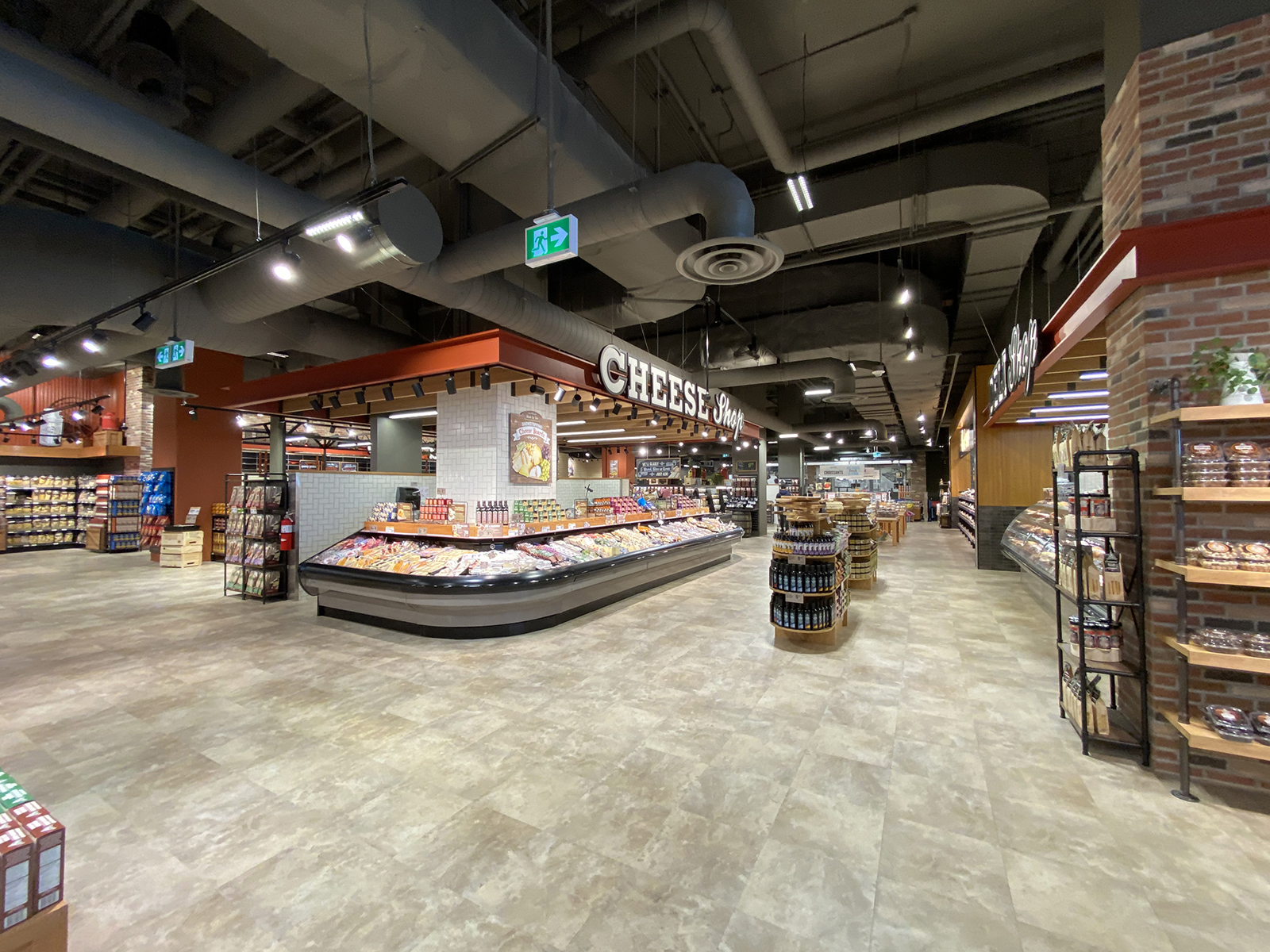
Farm Boy Queen's Quay location

Key Information

Farm Boy Bathurst Street location

Farm Boy Inc. is a Canadian specialty food retailer operating in the province of Ontario. The company is based in Ottawa, Ontario. Since 2018, the company is majority owned by the Sobeys grocery chain's parent company, Empire Company Ltd.[2]

The retailer markets itself as selling fresh produce and food products, emphasizing their branding on farm-to-table. Its current slogan can be found under the Farm Boy sign on its stores, "It's All About The Food." The stores are smaller than large supermarket chain locations and are usually located on major streets with room for large parking lots for automobile access. However, they are also conveniently located in malls and urban areas with little parking that caters to downtown pedestrians. The company has its own private label, Farm Boy, on its packaged food.

History

[edit]

On December 2, 1981, Collette and Jean-Louis Bellemare opened the first Farm Boy on Cumberland Street in Cornwall, Ontario. At that time, the modest 300 sq. ft. store sold only produce.[3] The original store was moved in 1984 by Jean-Louis and his brother Normand Bellemare.[3][4] The move to their 5,000 sq. ft. (460 m2)[5] Sydney Street location allowed them to expand their products beyond produce with dairy, deli, cheese, and meat product lines. An in-store bakery and bulk food were later added.[3]

Expansion

[edit]

By 1992, the success of Farm Boy allowed the family to expand the business into Ottawa. Beginning on Centrum Boulevard in Orleans, the company expanded in Ottawa with eight additional stores by 2007.[4] Store openings included Nepean on Merivale Road (1996), Hillside Plaza on Montreal Road (1997), Kanata (1997), Blossom Park (2003), and a second Orleans location (2004). The Ottawa expansion continued with new stores in Barrhaven (2006), Blue Heron Mall on Bank Street (2006), and the Kanata Signature Centre (2007).[6] Ottawa continued gaining Farm Boy locations at Britannia Plaza (2011), Stittsville (2011), Place d'Orleans (2012), which was the first store to offer an in-store eating area.

In the fall of 2003, the Bellemares created a board of directors to oversee the company's overall direction and appointed Jeff York as the new President of Farm Boy in 2009. In 2012, Normand and Daniel Bellemare stepped down as the Boston-based investment group Berkshire Partners invested in the company.[7]

Farm Boy expanded to Kingston, Ontario in 2012[8] and London, Ontario in 2014. Citing success in its first London location at Wellington Road just north of Bradley Ave, the company announced two more locations would open in the spring of 2015. The first is located near CF Masonville Place in the city's north end, and the region's largest store is located at Wonderland and Beaverbrook, just west of Western University. The Wonderland and Beaverbrook location also has the company's regional offices.[9][10] In the summer of 2015, Farm Boy furthered its expansion with its first location in Kitchener and Whitby. In the summer of 2016, another store was opened in the Westboro neighbourhood of Ottawa. This store was meant as an experiment for the company to have a more central location with a greater focus on in-store dining with a larger eating area and "Farm Boy Kitchen" prepared food area. In July 2017, it was announced that Farm Boy would be taking over part of the former food court location at CF Rideau Centre in downtown Ottawa,[11] which opened mid-December 2017. On March 1, 2018, Farm Boy opened their first store in Toronto, in the district of Etobicoke at Alderwood Plaza. On March 22, 2018, the company opened their 26th location in Hamilton at Harvard Square Plaza.

Sale of the company

[edit]

On September 24, 2018, Empire Company Limited, parent of the Sobeys chain of supermarkets, announced that it had signed an agreement to purchase Farm Boy from Berkshire Partners and Farm Boy's management shareholders[2] in a deal worth CA$800 million. Regulatory approval was required for the purchase.[12]

Farm Boy founder Jean-Louis Bellemare, his co-CEO Jeff York and other members of the senior executives will stay on and reinvest to own a 12% share in the new company, which will operate as a separate entity.[13] The new ownership will allow Farm Boy to continue with aggressive expansion plans into south-western Ontario, and in particular the Toronto region.[14] The business was expected to double over the next five years.[15]

Empire had no intention of integrating Farm Boy into their major chains. Michael Medline, President and CEO of Empire Company Limited, assured consumers that they will continue to get the shopping experience that defines Farm Boy. On Twitter, he made this comment in reply to many who had expressed concern: "I can assure you that we will not screw this up." Medline also told analysts in a conference call, "We do not want to ruin the magic of Farm Boy by trying to integrate them. We love what Farm Boy is doing; it has the best brand ... we want to see it grow ... We intend to enable the leadership team of Farm Boy to do what they do best: grow a highly successful retail format at double-digit rates".[2] Farm Boy products will not be sold in Empire's other chains nor will Farm Boy stock their brands. Farm Boy products will be included in the Ocado-based e-commerce business expected to start in 2020 but as a separate entity from the other Empire chains.[13]

Current

[edit]

By September 2018, the chain had 26 stores and annual sales of CA$500 million. The Financial Post summarized the store's appeal as, "It’s known for its fresh products, pre-made food, smaller stores and private label products".[13] The company announced that its focus for future expansion will be on both urban and suburban locations around Ontario.[16]

Stores

[edit]

As of August 2024, there are 50 Farm Boy locations.[17]

Animatronic figures

[edit]

Farm Boy has a selection of animatronic figures within their stores. These include Mikey, a monkey who swings above the banana display in the produce section.[18][19][20] Another animatronic figure is the Farm Boy with his dog, Barn Door Buddy. These figures where inspired by the animatronics located at the Stew Leonard's chain of stores.[21]

See also

[edit]

References

[edit]
[edit]
Revisions and contributorsEdit on WikipediaRead on Wikipedia
from Grokipedia
Farm Boy is a Canadian specialty grocery retailer based in , , known for its fresh-market shopping experience emphasizing farm-fresh produce, butcher-quality meats, sustainably sourced seafood, artisanal cheeses, and chef-prepared meals. Founded in 1981 by Jean-Louis and Colette Bellemare as a small 300-square-foot produce-only store in , the company has grown to operate 51 locations across the province as of November 2025, with plans for further expansion. Since its inception, Farm Boy has prioritized locally sourced products and a friendly, welcoming atmosphere, distinguishing itself from larger chain grocers through daily deliveries of fresh items and a focus on quality over quantity. In , the company was acquired by , the parent of the grocery chain, which has supported its continued growth while maintaining its independent brand identity. As of 2025, Farm Boy offers , weekly specials, and a variety of prepared foods, appealing to customers seeking wholesome, high-quality options in a boutique-style setting.

History

Founding

Farm Boy was established on December 2, 1981, by Jean-Louis Bellemare and his wife Colette Bellemare in , as a single-store operation specializing in fresh produce and local sourcing. The inaugural store, a modest 300-square-foot produce outlet, was located on Cumberland Street, emphasizing high-quality, farm-fresh products to stand out against larger chain grocers. The Bellemares, both Cornwall natives, drew inspiration from their local roots to create an authentic "farm boy" experience, delivering everyday freshness and value to urban and suburban customers in . At the time, Jean-Louis was just 18 years old, and the venture aimed to source directly from nearby farms, hand-selecting items daily at local markets to ensure peak quality. Operationally, the small team managed daily fresh deliveries to maintain product vibrancy, operating with a lean setup typical of an independent startup in the early . This hands-on approach laid the foundation for the chain's reputation, with the original Cumberland Street location later relocating to 814 Street in . Subsequent store openings in the region followed in the mid-.

Early expansion (1980s–1990s)

In the early 1980s, Farm Boy's growth remained rooted in its origins, with the opening of a second store in February 1983 by co-founder Normand Bellemare, which expanded offerings beyond produce to include deli items, bread, and products. This marked an initial diversification that introduced prepared foods, such as deli selections, to appeal to customers seeking convenience alongside fresh items. By October 1984, the Bellemare brothers consolidated operations into a larger 5,000-square-foot store at the current Sydney Street location in , adding meat, cheese, an in-store bakery, and bulk foods to further enhance the product range. The mid-1990s saw Farm Boy's first venture into urban markets with the opening of its inaugural Ottawa-area store in on Centrum Boulevard in 1992, shifting focus from rural to the capital region's growing population. This expansion continued steadily, with additional stores opening at 1642 Merivale Road in Nepean in February 1996, 585 Montreal Road in Ottawa's east end in May 1997, and 457 Hazeldean Road in Kanata in November 1997, bringing the total to five locations by the end of the decade—all within . These openings emphasized a commitment to local sourcing, with partnerships to Canadian farmers ensuring fresh produce availability, a strategy that built on the chain's rural authenticity while adapting to urban demands. Throughout this period, Farm Boy prioritized community involvement to foster loyalty, participating in local events and supporting regional initiatives in both and , which helped solidify its reputation as a neighborhood-focused retailer. The emphasis on prepared foods, introduced in the mid-1980s and refined during the 1990s expansions, became a key differentiator, offering ready-to-eat meals that catered to busy urban lifestyles without compromising on quality or freshness.

Growth and challenges (2000s–2010s)

During the 2000s and 2010s, Farm Boy scaled its operations as an independent retailer, focusing on regional expansion in while navigating a competitive grocery landscape. The chain added stores primarily in and nearby communities, including Nepean, building on its early model of fresh-market emphasis. By late , Farm Boy operated fewer than 10 stores, all centered in this region. This growth accelerated in the , with new locations such as the Kingston store opening in 2012 to extend reach beyond . By December 2015, the network had reached 20 stores across , , Kingston, , and , reflecting steady addition of mid-sized fresh-market outlets. To differentiate and foster customer loyalty, Farm Boy introduced signature prepared foods in the early , including house-made dips and salads produced in-store through dedicated Farm Boy Kitchens featuring salad bars and hot bars. These items underscored the chain's commitment to premium, convenient fresh options amid intensifying rivalry from national players like and Metro. The period also brought operational hurdles, including the 2008–2009 economic recession, which pressured on non-essentials and prompted Farm Boy to sharpen its positioning around high-quality fresh and prepared foods. Competition from larger chains further challenged in urban and suburban areas, leading to strategic refinements in merchandising and supply efficiency. Supporting this expansion, Farm Boy developed central kitchen facilities in at 2370 Walkley Road to centralize production of prepared foods like salads and dips, ensuring consistency across stores. By 2017, the workforce had grown to over 3,000 employees to staff the expanding network and handle increased demand for in-house products.

Acquisition by Empire Company

In September 2018, , the parent company of Inc., announced its agreement to acquire Farm Boy from and the company's management shareholders for a total enterprise value of $800 million CAD. The transaction was completed on December 10, 2018, after satisfying all customary closing conditions. At the time, Farm Boy operated 26 stores primarily in . The acquisition was driven by Empire's strategy to expand its presence in the and markets, where Farm Boy held a strong position in the premium fresh foods segment. Empire viewed Farm Boy as a complementary brand that aligned with its focus on high-quality, fresh products, enabling synergies in and while leveraging Farm Boy's loyal customer base for future growth. This move was expected to enhance Empire's competitive edge against larger rivals in urban and suburban areas without overlapping significantly in store locations. Key terms of the deal included the retention of Farm Boy's co-CEOs, founder Jean-Louis Bellemare and , to lead the as a standalone within Empire's structure, ensuring continuity in operations and brand identity. The co-CEOs reinvested a 12% stake in the company, signaling commitment to its ongoing success. There were no plans for immediate store closures, with the emphasis placed on maintaining Farm Boy's independent operations and avoiding rebranding to preserve its distinct market appeal. The deal received regulatory approval from the of , which issued a no-action letter confirming that the transaction did not raise significant competition concerns, given the limited geographic overlap between Farm Boy and 's existing banners. Integration planning focused on collaborative support from Empire in areas like and , while allowing Farm Boy to retain its autonomous for day-to-day .

Post-acquisition expansion (2018–present)

Following its acquisition by in December 2018, Farm Boy experienced accelerated growth, expanding from 26 stores at the time of purchase to 51 locations across by late 2024. This expansion was driven by Empire's strategy to capitalize on Farm Boy's fresh-market appeal in urban and suburban markets, with a focus on increasing market penetration in the and regions. Key milestones included the opening of the 50th store in Burlington on August 15, 2024, at 3230 Fairview Street, marking the chain's second location in the city and enhancing its presence in the . This was followed by the 51st store in Toronto's neighbourhood at 147 Laird Drive, which opened on December 12, 2024, and introduced a larger format exceeding square feet to serve the densely populated area. These openings exemplified Farm Boy's push into high-demand communities, responding to consumer preferences for fresh, local products amid competitive grocery dynamics. In July 2025, announced three additional stores slated for opening later that year or into 2026, further extending Farm Boy's footprint: one at 700 Drive in Kanata, another at the intersection of Bank Street and Dun Skipper Drive in Ottawa's Findlay Creek area, and a third at 39 Huron Street in Collingwood. These developments align with ongoing market demand for Farm Boy's specialized fresh offerings, supporting 's broader goal of doubling the chain's store count from 2018 levels within five to seven years. Empire has invested in modernizing Farm Boy's store designs, incorporating larger footprints—often up to 25,000 square feet or more—and expanded fresh departments to accommodate greater variety in produce, prepared foods, and local sourcing. For instance, recent locations like the Leaside store feature enhanced layouts that prioritize fresh-market elements, reflecting adaptations to urban consumer needs. Over the seven years through 2025, Empire allocated approximately $2.5 billion across its banners, including Farm Boy, for new stores, renovations, and supply chain improvements to drive sustainable growth. This investment has enabled Farm Boy to renovate and expand about 20-25% of its network annually, bolstering its competitive position in Ontario's grocery sector. In September 2025, the store at 2149 Yonge Street in Toronto was temporarily closed following a failed DineSafe inspection due to evidence of rodent activity, leading to a company-wide sanitation and pest-control review.

Operations

Store network

As of November 2025, Farm Boy operates 51 stores exclusively in Ontario, Canada, all under the ownership of Empire Company Limited. The network is heavily concentrated in the Ottawa region, where 16 stores serve the local market, followed by the Greater Toronto Area with more than 15 locations across Toronto (11 stores) and surrounding suburbs like Burlington, Mississauga, and Oakville. Additional stores are present in eastern Ontario communities, including single outlets in Kingston and Cornwall, as well as scattered sites in other areas such as London and St. Catharines. This distribution reflects a strategic focus on urban and suburban markets in central and eastern Ontario, with no presence outside the province. Farm Boy stores typically range in size from 15,000 to 25,000 square feet, though some larger formats reach up to 38,000 square feet to accommodate community needs. The layouts prioritize an open, market-like environment designed to highlight fresh offerings, with prominent aisles dedicated to farm-fresh and expansive in-store delis featuring prepared foods, cheeses, and services. This design fosters a welcoming atmosphere, including bright eating areas with free to encourage on-site dining and extended visits. To support accessibility, Farm Boy introduced curbside pickup services in , initially at select locations like the Train Yard store in to accommodate seniors and high-risk customers during the ; this option has since expanded chain-wide for convenience. Stores experience robust foot traffic, with the network reporting a 17% year-over-year increase in visits as of May 2024, underscoring their appeal as fresh-market destinations. Looking ahead, Farm Boy continues expansion with announced new stores in Kanata and Findlay Creek (), and Collingwood, with two expected before the end of 2025 and two more in early 2026, alongside additional locations in the pipeline.

Products and merchandising

Farm Boy emphasizes fresh as a core component of its offerings, sourcing up to 85 percent of its fruits and from Canadian growers, with a strong focus on Ontario-based suppliers to ensure quality and seasonality. The retailer partners with local farmers to feature items such as heirloom tomatoes and artisanal cheeses, delivered daily to maintain peak freshness and support regional . This approach highlights the chain's commitment to a farm-fresh market experience, where produce departments are prominently displayed to draw customers into an engaging shopping environment. Signature prepared foods form another key pillar, with over 160 house-made items available daily, including customizable salads, hot soups like chicken noodle, and dips such as salsas and spreads, all crafted without preservatives. These chef-prepared options, ranging from appetizers to ready-to-eat entrees, are produced in-house to provide convenient, high-quality meals that align with the retailer's fresh-food ethos. The Chef's Market section in stores features hot and cold bars, enabling customers to build personalized meals from fresh ingredients. Farm Boy's merchandising strategy prioritizes a curated selection of high-quality products over extensive variety, maintaining a focused assortment that emphasizes freshness and uniqueness rather than overwhelming choices typical of larger competitors. This includes hundreds of exclusive private-label items under brands like Farm Boy Organics, which offer organic staples such as dried bay leaves and , alongside everyday essentials and gourmet options. Seasonal promotions, featured in weekly flyers and the inSeason , tie directly to Canadian harvests, showcasing limited-time items like and harvest vegetables to celebrate regional bounty. This targeted approach, with private-label growth averaging 300 new stock-keeping units annually, reinforces the chain's of quality and locality.

Supply chain and sourcing

Farm Boy operates a central located at 2370 Walkley Road in , , which serves as the primary hub for managing and distributing fresh and other perishable goods to its network of stores across the province. This facility supports daily deliveries to ensure product freshness, with buyers hand-selecting from markets each day to minimize transit time and waste. The company's supply chain emphasizes efficiency through advanced technology, including the RELEX system implemented in , which optimizes levels, forecasts based on , promotions, and seasonal factors, and tracks expiration dates to reduce while maintaining high product availability. This system has been instrumental in supporting Farm Boy's rapid growth, handling over 4,000 products including fresh produce, meats, and prepared meals. Post-acquisition by in December 2018, Farm Boy has continued to leverage these operational foundations, though specific integrations with ' logistics for non-perishables remain aligned with broader group efficiencies without detailed public disclosures on new technologies like RFID. Sourcing practices at Farm Boy prioritize local Ontario suppliers to enhance freshness and support regional economies, with hundreds of products—including produce, meats, cheeses, and baked goods—sourced directly from provincial farms and artisans whenever possible. The retailer maintains strong relationships with over 150 local vendors, facilitated by an open-door policy that allows suppliers to demonstrate products and fosters direct buyer collaborations for . This local focus extends to prepared foods, where partnerships with producers enable the creation of signature items like salads and meals using regionally grown ingredients. Sustainability is integrated into Farm Boy's sourcing strategy through commitments to traceable local and reduced environmental impact, such as daily short-haul deliveries that limit carbon emissions from transportation. Since its founding, the company has adopted a holistic approach to , emphasizing partnerships with local farmers to promote fresh, simple foods and community ties, though specific metrics like full for all since 2015 are not publicly detailed. These practices align with broader trends in fresh and prepared foods categories, underscoring Farm Boy's dedication to ethical and efficient backend operations.

Corporate affairs

Ownership structure

Farm Boy has been majority-owned by since its acquisition in 2018, when Empire purchased the company from and Farm Boy's management shareholders for an enterprise value of $800 million. Full 100% ownership was achieved in fiscal 2024, when acquired the remaining 12% non-controlling interest held by for $77 million. As a wholly-owned , Farm Boy operates as a distinct banner within Empire's food retailing segment, managed through Inc. It is not publicly traded and files no independent financial disclosures; instead, its performance is reported within Empire's consolidated annual and quarterly filings. In fiscal 2025, Farm Boy contributed to Empire's total sales of approximately $31.3 billion, primarily through its focus on fresh foods in . Within Empire's portfolio, Farm Boy serves as a premium niche player, emphasizing high-quality fresh produce and prepared foods to strengthen Empire's competitive position against ' dominance in Ontario's grocery market. This strategic role supports Empire's broader goal of expanding market share in urban and suburban areas through differentiated offerings.

Leadership and governance

Farm Boy operates as a distinct banner within , with its leadership focused on maintaining the chain's emphasis on fresh produce and customer service while aligning with Empire's overarching corporate strategies. The current president and general manager is Shawn Linton, who assumed the role in recent years following internal promotions. Linton oversees more than 2,500 employees across Farm Boy's operations in , drawing on his prior experience as senior of at the company to drive efficiency and expansion initiatives. Governance at Farm Boy is integrated into Empire Company Limited's framework, where the parent company's board of directors provides stewardship, including strategic planning, risk oversight, and approval of key initiatives. Empire's board, composed of independent directors with expertise in retail, finance, and governance, ensures that subsidiary banners like Farm Boy adhere to corporate standards while retaining operational autonomy. Farm Boy demonstrates a commitment to ethical practices through alignment with Empire's environmental, social, and governance (ESG) framework, including annual reporting on sustainability metrics that encompass subsidiary performance. Diversity and inclusion efforts are emphasized via initiatives such as International Women's Day celebrations, which highlight female contributions across roles, and integration with Empire's broader diversity, equity, and inclusion (DE&I) goals, where over 92% of director-level and above leaders set related objectives in fiscal 2025. These practices support an inclusive workplace while fostering ethical sourcing and community engagement. In 2025, Farm Boy experienced indirect effects from leadership changes at , where departed as president and CEO earlier than initially planned, leading to the appointment of Pierre St-Laurent as the new CEO on 5. This transition maintains continuity for Farm Boy, as the continues to operate independently under Empire's oversight, with no reported disruptions to its strategic priorities or daily governance.

References

Add your contribution
Related Hubs
Contribute something
User Avatar
No comments yet.