Hubbry Logo
Felix HoffmannFelix HoffmannMain
Open search
Felix Hoffmann
Community hub
Felix Hoffmann
logo
8 pages, 0 posts
0 subscribers
Be the first to start a discussion here.
Felix Hoffmann
Felix Hoffmann
from Wikipedia

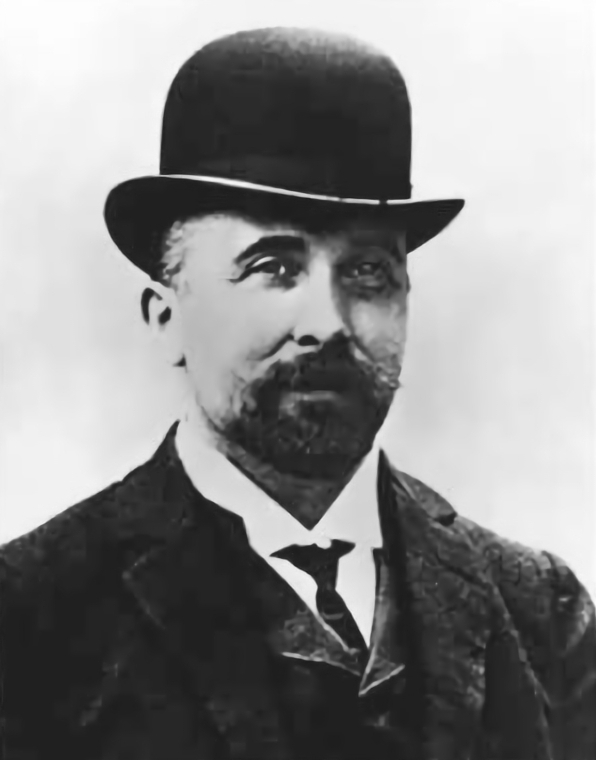
Felix Hoffmann (21 January 1868 – 8 February 1946) was a German chemist notable for re-synthesising diamorphine (independently from C.R. Alder Wright who synthesized it 23 years earlier), which was popularized under the Bayer trade name of "heroin". He is also credited with synthesizing aspirin, though whether he did this under his own initiative or under the instruction of Arthur Eichengrün is contested.

Key Information

Career

[edit]

Felix Hoffmann was born on 21 January 1868 in Ludwigsburg, Germany, the son of an industrialist. In 1889, he started studying chemistry at the Ludwig Maximilian University of Munich to study pharmacy and ended it in 1890 with the pharmaceutical state exam. In 1891 he graduated magna cum laude from the University of Munich. Two years later he earned his doctorate, also magna cum laude, after completing his thesis titled "On certain derivatives of dihydroanthracene".[1] In 1894, he joined Bayer as a research chemist.

On 10 August 1897 Hoffmann synthesized acetylsalicylic acid (ASA) while working at Bayer under Arthur Eichengrün. By combining salicylic acid with acetic acid, he succeeded in creating ASA in a chemically pure and stable form. The pharmacologist responsible for verifying these results was skeptical at first, yet once several large-scale studies to investigate the substance's efficacy and tolerability had been completed, it was found to be an analgesic, antipyretic and anti-inflammatory substance. The company then worked to develop a cost-effective production process that would facilitate the promising active ingredient to be supplied as a pharmaceutical product. In 1899 it was marketed for the first time under the trade name "Aspirin", initially as a powder supplied in glass bottles.[2]

He also synthesized diamorphine (heroin), previously achieved by Charles Romley Alder Wright[2] by acetylating different molecules. It was named Heroin due to its "heroic" nature since it was used to medicate a variety of medical illnesses from child coughs to war injuries. It was also used to cure morphine addicts and would result in worse addictions and increasing tolerance levels to the drug over time.[3]

Following the synthesis of aspirin and heroin, Hoffmann moved to the pharmaceutical marketing department where he stayed until his retirement in 1928.[1]

Hoffman was never married and died on 8 February 1946 in Switzerland. He had no known children.

Aspirin invention controversy

[edit]

Hoffmann first claimed to be the "inventor" of aspirin (as opposed to just the synthesizer) in a footnote to a German encyclopedia published in 1934, saying that his father had complained about the bitter taste of sodium salicylate, the only drug then available to treat rheumatism. The large doses (6–8 grams) of sodium salicylate that were used to treat arthritis commonly irritated the stomach lining and caused patients considerable pain and irritation. He claimed that he began looking for a less acidic formation which led him to synthesize acetylsalicylic acid, a compound that shared the therapeutic properties of other salicylates but not the strong acidity that he believed caused stomach irritations.[4][2]

An alternative credit for developing aspirin has also been offered. In 1949, ex-Bayer employee Arthur Eichengrün published a paper in Pharmazie, in which he claimed to have planned and directed Hoffman's synthesis of aspirin along with the synthesis of several related compounds. He also claimed to be responsible for aspirin's initial surreptitious clinical testing. Finally, he claimed that Hoffmann's role was restricted to the initial lab synthesis using his (Eichengrün's) process and nothing more.[5] Eichengrün died the same month he published in Pharmazie.

The Eichengrün version was ignored by historians and chemists until 1999, when Walter Sneader of the Department of Pharmaceutical Sciences at the University of Strathclyde in Glasgow re-examined the case and came to the conclusion that indeed Eichengrün's account was convincing and correct and that Eichengrün deserved credit for the invention of aspirin.[6] Bayer denied this in a press release, asserting that the invention of aspirin was due to Hoffmann.[7]

Legacy

[edit]

In 2002, he was inducted into the US National Inventors Hall of Fame.

Notes

[edit]
[edit]
Revisions and contributorsEdit on WikipediaRead on Wikipedia
from Grokipedia
Felix Hoffmann (21 January 1868 – 8 February 1946) was a German chemist best known for synthesizing acetylsalicylic acid, the active ingredient in aspirin, in 1897 while employed at the pharmaceutical company Bayer. Born in Ludwigsburg, Germany, to an industrialist father, Hoffmann studied chemistry and pharmacy at the University of Munich, graduating magna cum laude in 1891 and earning his doctorate in 1893 with a thesis on dihydroanthracene derivatives. Hoffmann joined Bayer's pharmaceutical research department in in 1894, recommended by the chemist , and quickly advanced in the company. Motivated by his father's suffering from and the side effects of existing treatments, he acetylated on 10 August 1897 to create a more tolerable form, which was later patented and marketed by as Aspirin in 1899. In the same year, he also synthesized diacetylmorphine, which marketed as for its supposed non-addictive cough-suppressing properties, though it was later recognized as highly addictive and banned in many countries by the 1930s. Following the success of Aspirin, Hoffmann rose to head Bayer's pharmaceutical marketing department and held full power of attorney by 1899; he retired in 1928 and lived privately in until his death. Although traditionally credited as the sole inventor of aspirin, historical reappraisals suggest that his colleague Arthur Eichengrün may have directed the project, with Hoffmann executing the synthesis under supervision. Hoffmann's work transformed aspirin into one of the most widely used medications globally, with applications extending beyond pain relief to preventing heart attacks, strokes, and certain cancers. He was inducted into the in 2002 for his contributions.

Early Life and Education

Birth and Family

Felix Hoffmann was born on 21 January 1868 in , , . He was the son of an industrialist and manufacturer, growing up in a middle-class family immersed in the industrial environment of . His father's business activities introduced him to chemical processes from a young age, shaping his early fascination with science. Hoffmann's father suffered from chronic , a condition that caused significant pain and highlighted the limitations of available treatments during Hoffmann's childhood. This family challenge fostered Hoffmann's interest in pharmaceuticals, as he witnessed the inadequacies of remedies like , which irritated the stomach. After completing his schooling, Hoffmann initially aspired to a career in , driven by a desire to address such familial issues through scientific means. His early environment in , a hub of emerging industry in , further reinforced this path, blending practical exposure to with a personal motivation toward .

Academic Training

Felix Hoffmann decided to formalize his practical experience in pharmacies by pursuing higher education in chemistry and pharmacy. He enrolled at the , immersing himself in the rigorous curriculum of during a period when German academia was at the forefront of chemical innovation. Under the guidance of , the esteemed professor and future Nobel laureate in chemistry, Hoffmann developed a strong foundation in synthetic methods and structural analysis, which were central to the university's emphasis on advancing . Baeyer's research on dye chemistry and polycyclic compounds provided a stimulating intellectual environment that influenced Hoffmann's approach to laboratory work. Hoffmann's prior apprenticeships in various German pharmacies had equipped him with hands-on knowledge of pharmaceutical preparations, which he built upon through exercises focused on compound isolation and reaction mechanisms. He completed his undergraduate studies in 1891, earning a degree magna cum laude for his demonstrated excellence in . Continuing his doctoral research, Hoffmann investigated complex organic structures, culminating in his 1893 graduation with a in chemistry, again magna cum laude. His , titled "On certain derivatives of dihydroanthracene," showcased his analytical skills in elucidating the properties of hydrocarbon derivatives, a topic that underscored the era's growing interest in aromatic and alicyclic compounds. This work solidified his expertise in precise organic manipulations, preparing him for industrial applications in pharmaceuticals.

Professional Career at Bayer

Entry and Initial Roles

Felix Hoffmann joined Bayer AG in Elberfeld, Germany, in 1894 as a research chemist, shortly after earning his doctorate in chemistry from the University of Munich in 1893. His recruitment was facilitated by a recommendation from his doctoral advisor, Adolf von Baeyer, aligning with Bayer's expanding needs in chemical research. Upon entry, Hoffmann was assigned to the company's chemical laboratory within the burgeoning pharmaceutical division, where efforts focused on adapting synthetic dye chemistry techniques to develop new therapeutic agents. , originally a dyestuffs firm founded in , had begun transitioning toward pharmaceuticals in the late , with initial successes like the in 1887 marking this shift. By the 1890s, under the strategic direction of figures like Carl Duisberg, who joined in and led the pharmaceutical laboratory, emphasized innovative synthetic compounds to address medical needs, growing from a regional enterprise into an international chemical powerhouse with operations spanning and beyond. In his initial roles, Hoffmann contributed to foundational laboratory work, including the testing and synthesis of organic compounds for potential drug applications. Early on, he collaborated with key figures such as Heinrich Dreser, who assumed leadership of Bayer's pharmacological laboratory in 1897 and provided mentorship in evaluating the therapeutic potential of new substances. These early experiences positioned Hoffmann within Bayer's interdisciplinary environment, bridging organic synthesis and pharmacological assessment.

Research on Analgesics

Upon joining Bayer in 1894, Felix Hoffmann was assigned to the pharmaceutical laboratory in Elberfeld, where he specialized in the development of analgesics derived from salicylates. His research built on the foundational synthesis of salicylic acid by Hermann Kolbe in 1860, a compound effective against pain and fever but plagued by severe gastric irritation and nausea when administered as sodium salicylate. To address these limitations, Hoffmann focused on chemical modifications of salicylic acid in the mid-1890s, aiming to produce derivatives that preserved analgesic properties while minimizing side effects through reduced acidity. These efforts involved systematic experimentation with acylation, particularly acetylation, to form more tolerable variants suitable for rheumatism treatment. In his laboratory work, Hoffmann employed esterification techniques, such as reacting with acid anhydrides or chlorides, to generate a series of acyl derivatives including acetylsalicylic acid, propionylsalicylic acid, butyrylsalicylic acid, valerylsalicylic acid, and benzoylsalicylic acid. These syntheses were part of a broader team effort under Eichengrün to enhance Bayer's offerings, evaluating the compounds for therapeutic potential without the harsh irritant effects of the parent . Hoffmann's contributions prior to 1897 expanded Bayer's portfolio of pain-relief drugs, with several derivatives patented by colleague Otto Bonhoeffer, including propionylsalicylic acid (US Patent 656,435, 1900) and other acidyl variants (British Patent 9,123, 1900). A subsequent pharmacological assessment by Heinrich Dreser in 1899 underscored the efficacy of these modifications in reducing and , attributing their improved tolerability to the process.

Invention of Aspirin

Personal Motivation

Felix Hoffmann's pursuit of a new analgesic was deeply influenced by his father's chronic arthritis, a condition that had plagued the elder Hoffmann for years and resisted effective treatment. Suffering from severe rheumatic pain, Hoffmann's father relied on sodium salicylate, a derivative of salicylic acid derived from willow bark, but this remedy proved unsatisfactory due to its harsh side effects, particularly gastric irritation that exacerbated discomfort in elderly patients like him. Motivated by these familial challenges, Hoffmann initiated experiments around 1897 to develop a more tolerable alternative, beginning with efforts to modify and reduce its irritancy. His personal stake in alleviating his father's suffering intertwined with a broader interest in improving pain relief for the elderly, whose sensitivity to existing remedies often limited treatment options. This emotional and practical drive prompted him to pursue techniques, seeking a stable compound that could provide relief without the drawbacks of prior medications. The project formally began in late within Bayer's laboratories, where Hoffmann, then a young , channeled this motivation into systematic research amid the company's ongoing work on pharmaceuticals. Influenced by observations of his father's deteriorating , Hoffmann aimed to create an acetylated form of that would be gentler on the while retaining efficacy, reflecting both personal devotion and a commitment to advancing therapeutic options for chronic conditions.

Synthesis and Testing

On August 10, 1897, Felix Hoffmann, a chemist at , successfully synthesized acetylsalicylic acid by reacting with in a controlled process. This reaction produced the compound in a chemically pure and stable form, addressing longstanding challenges with earlier impure versions that tended to decompose. The for the synthesis is: C6H4(OH)COOH+(CH3CO)2OC6H4(OCOCH3)COOH+CH3COOH\mathrm{C_6H_4(OH)COOH + (CH_3CO)_2O \rightarrow C_6H_4(OCOCH_3)COOH + CH_3COOH} where (often denoted as C₇H₆O₃) reacts to yield acetylsalicylic acid (CH₃COOC₆H₄COOH) and acetic acid as a . Initial efforts encountered purity issues, as prior syntheses resulted in unstable products prone to ; Hoffmann overcame this by optimizing the reaction conditions and employing recrystallization techniques to isolate the stable crystalline form. This purification step was crucial, yielding a compound suitable for pharmaceutical use without the instability observed in earlier attempts dating back to the . Following synthesis, Hoffmann and his team conducted preliminary testing, including self-administration by Arthur Eichengrün, Hoffmann's supervisor, who reported no adverse effects. Animal trials and comparative studies subsequently demonstrated that acetylsalicylic acid exhibited reduced gastric irritation compared to , a key improvement in tolerability. In 1898, the compound was handed over to Heinrich Dreser for formal evaluation; Dreser's investigations, including animal , confirmed its and properties with fewer gastrointestinal side effects, paving the way for clinical trials. Bayer filed for a on acetylsalicylic acid in 1899, securing protection for the invention. The product was named "Aspirin," a portmanteau derived from the "a" in acetyl and "spir" from Spirsäure, the archaic German term for .

Other Contributions and Controversies

Development of Heroin

In 1897, Felix Hoffmann, a chemist at , synthesized diacetylmorphine, later marketed as , by acetylating in response to instructions from his superior, Heinrich Dreser, head of Bayer's pharmaceutical laboratory. The synthesis occurred on August 21, just eleven days after Hoffmann's acetylation of to produce aspirin, employing a similar chemical approach to modify morphine's structure. This work aimed to create a derivative of morphine that would serve as a non-addictive suppressant and , addressing the respiratory depression associated with morphine while reducing its toxicity. The chemical process involved reacting with , resulting in the compound diacetylmorphine with the molecular formula C21_{21}H23_{23}NO5_{5}. Hoffmann's validation confirmed its potency, leading to pursue commercialization. In 1898, launched heroin as a pharmaceutical product, naming it after the "heroic" sense of well-being it reportedly induced in users, and promoting it as a superior, non-habit-forming alternative to for relief and . The company marketed it aggressively worldwide, packaging it in small glass bottles for over-the-counter sale. Early clinical applications focused on its use as a cough suppressant and analgesic for respiratory conditions, including , where it was seen as more effective than without the addictive risks initially attributed to . Hoffmann contributed to the initial testing that supported these claims, though the compound had been discovered earlier in 1874 by the British chemist C. R. Alder Wright, precluding patent protection. By the early 1900s, however, reports emerged highlighting its addictive potential, with documenting dependency cases as early as 1899. This led to growing restrictions, culminating in the U.S. of 1914, which regulated the distribution of opiates like and required medical registration for its use.

Aspirin Attribution Dispute

The attribution of aspirin's invention has been a subject of historical debate, centering on the roles of Felix Hoffmann and his Bayer colleagues, particularly pharmacologist Heinrich Dreser. Hoffmann synthesized acetylsalicylic , the active ingredient in aspirin, in a pure and stable form on August 10, 1897, motivated by his father's and aiming to improve upon sodium salicylate's gastric side effects. However, Dreser, as head of 's pharmacology department, conducted key tests in 1898, initially rejecting the compound as ineffective before confirming its properties in 1899 and promoting it vigorously as a superior alternative to existing remedies. Earlier attempts at synthesizing acetylsalicylic acid predate Hoffmann's achievement, providing context for the dispute over novelty. In 1853, French Charles Gerhardt produced an impure form of the compound by reacting with , but he neither purified it nor recognized its therapeutic potential, leading to its obscurity. These precursors highlight that while the basic reaction was known, Hoffmann's 1897 work marked the first scalable, pure version suitable for commercialization. Bayer's historical narratives initially credited Hoffmann exclusively, as seen in a 1934 company footnote emphasizing his personal motivation and lab entry. Over time, attributions shifted, with some 20th-century accounts elevating Dreser's role in testing and the 1899 launch, partly due to internal at where pharmacologists like Dreser held sway over chemists. Additionally, chemist Arthur Eichengrün later claimed in a 1949 publication that he directed Hoffmann's synthesis and drove early clinical trials, alleging his contributions were suppressed amid antisemitic policies during the Nazi era; this assertion, supported by archival letters, prompted further reevaluation but was disputed by . Central to the debate are key documents that illuminate the timeline and responsibilities. Hoffmann's laboratory notebook from August 1897 details the successful synthesis, preserved in Bayer's archives and confirming his hands-on role. The U.S. (No. 644,077, filed 1899, granted 1900) lists Hoffmann as the inventor, focusing on the chemical process. In contrast, the pivotal 1899 publication in Deutsche Medizinische Wochenschrift, authored by Dreser as lead, described pharmacological tests and efficacy, establishing aspirin's medical credentials without mentioning Hoffmann. As of 2025, scholarly consensus largely favors Hoffmann as the primary of aspirin, crediting his 1897 for enabling its development, while acknowledging Dreser as the key validator through 1899 testing and promotion that facilitated its market success. Eichengrün's directive influence is increasingly recognized in academic histories, though 's official stance remains centered on Hoffmann, reflecting the enduring complexity of team-based innovation at the .

Later Life and Legacy

Retirement and Relocation

After 34 years of service at Bayer, beginning in 1894, Felix Hoffmann retired in 1928 amid significant structural changes in the German chemical industry following World War I, including Bayer's merger into the conglomerate IG Farben in 1925. By this time, he had transitioned from laboratory research to roles in pharmaceutical marketing and administration, culminating in his departure from the organization. Following his , Hoffmann relocated to , where he sought a quieter life away from . He settled there after 1928 and remained out of the public eye for the rest of his days. In , Hoffmann engaged in no notable professional activities such as consulting or writing, maintaining a low profile consistent with his lifelong avoidance of publicity. He never married and had no children, living a private existence until his later years.

Enduring Impact

Felix Hoffmann's synthesis of acetylsalicylic acid, marketed as Aspirin, revolutionized and preventive medicine, establishing it as one of the most widely used drugs globally. By 2025, approximately 100 billion Aspirin tablets are consumed annually worldwide, reflecting its enduring role in alleviating , reducing , and preventing cardiovascular events through low-dose regimens that inhibit platelet aggregation. His concurrent development of diacetylmorphine, commercialized by as in 1898, initially served as a cough suppressant and substitute, promoted for its purported non-addictive properties and efficacy in treating respiratory ailments and pain. However, its high addictiveness became evident in the early , contributing to widespread abuse and prompting stringent regulations, including the U.S. of 1914 and the 1925 Geneva Opium Conference, which shaped modern international drug control frameworks. Hoffmann's contributions have earned posthumous recognition, including induction into the for his work on Aspirin and commemorative mentions in Bayer's historical exhibits, underscoring his pivotal role in pharmaceutical innovation. His inventions are routinely featured in authoritative texts on drug history, highlighting their transformative effects on medical practice. Beyond specific compounds, Hoffmann advanced the era of synthetic pharmaceuticals, paving the way for modern analgesics like ibuprofen and by demonstrating the feasibility of stable, mass-producible chemical derivatives from natural precursors. In the , reevaluations of his work emphasize Aspirin's multifaceted benefits, including potential roles in and its integration into approaches, affirming its ongoing relevance in . After retiring from in 1928, Hoffmann relocated to , where he lived privately until his death on 8 February 1946 in at the age of 78.

References

Add your contribution
Related Hubs
User Avatar
No comments yet.