Hubbry Logo
Fernando LopezFernando LopezMain
Open search
Fernando Lopez
Community hub
Fernando Lopez
logo
8 pages, 0 posts
0 subscribers
Be the first to start a discussion here.
Fernando Lopez
Fernando Lopez
from Wikipedia

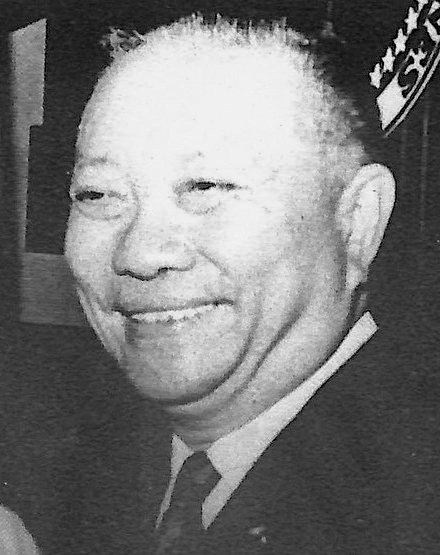
Fernando "Nanding"[1] Hofileña Lopez Sr. KGCR (April 13, 1904 – May 26, 1993) was a Filipino statesman. A member of the influential López family of Iloilo, he served as vice president of the Philippines under Presidents Elpidio Quirino from 1949 to 1953 under the Liberal Party and Ferdinand Marcos from 1965 to 1972, under the Nacionalista Party. He was also the chairman of ABS-CBN Corporation from 1986 to his death in 1993.

Key Information

Early life and career

[edit]

Lopez was born on April 13, 1904, in Jaro, Iloilo City to Benito Villanueva Lopez and Presentacion Javelona Hofileña. He was the younger brother and only sibling of Eugenio Lopez Sr. The Lopez family was the richest and most influential family in the province.

Lopez studied high school at Colegio de San Juan de Letran, finishing in 1921. He studied law in the University of Santo Tomas, earning his Bachelor of Laws degree in 1925. After passing the bar examinations, he did not go into private practice, but helped his older brother manage the family business.

In 1945, with no prior political experience, Lopez was chosen by President Sergio Osmeña to be mayor of Iloilo City.[2] In 1947, he ran for senator and won.

Lopez was one of the founders of University of Iloilo and the FEATI University in Manila.

The brothers Eugenio and Fernando owned the Iloilo-Negros Air Express Company (the first Filipino owned air service), the Iloilo Times (El Tiempo), the Manila Chronicle, and ABS-CBN Corporation.

Vice-presidency

[edit]

First term (1949–1953)

[edit]

In 1949, Lopez became vice-president under President Elpidio Quirino and concurrently worked as secretary of agriculture, serving until 1953. He was then elected once again as senator, and re-elected in 1959.

Second and third term (1965–1972)

[edit]
Vice President Fernando H. Lopez Official Portrait
Vice President Fernando Lopez with President Ferdinand Marcos at the Presidential study.

In 1965, Lopez ran with Ferdinand Marcos and won as vice president. He was re-elected in 1969, making him to date the only vice president to serve two non-consecutive terms, with two different presidents and from different parties. By the time martial law was declared in 1972, the Lopez family fell out of Marcos' favor and was targeted by the regime because of their denunciations of Marcos. The office of vice president was abolished, and the Lopez family was stripped of most of its political and economic assets.

Later life and death

[edit]

After the removal of Marcos from power as a result of the People Power Revolution of 1986, Lopez became chairman of FHL Investment Corporation and vice-chairman of First Philippine Holdings Corporation.

He died on May 26, 1993, a month after his 89th birthday, leaving behind his wife Mariquit Javellana with whom he had six children: Yolanda, Fernando Jr. (Junjie), Alberto (Albertito), Emmanuele, Benito and Mita. He was the longest living vice president until he was surpassed by Teofisto Guingona Jr. in 2017.

Electoral history

[edit]
Electoral history of Fernando Lopez
Year Office Party Votes received Result
Total % P. Swing
1947 Senator of the Philippines Liberal 1,543,830 47.29% 5th N/a Won
1953 Democratic 2,272,642 52.53% 1st N/a Won
1959 Nacionalista 2,366,166 37.01% 3rd N/a Won
1949 Vice President of the Philippines Liberal 1,741,302 51.67% 1st N/a Won
1965 Nacionalista 3,531,550 48.48% 1st N/a Won
1969 5,001,737 62.75% 1st N/a Won

Honors and awards

[edit]

References

[edit]
Revisions and contributorsEdit on WikipediaRead on Wikipedia
from Grokipedia
Fernando Hofileña Lopez Sr. (April 13, 1904 – May 26, 1993) was a Filipino statesman from the influential who served as under two presidents from different parties. Elected three times to the office—first from 1949 to 1953 alongside President of the Liberal Party, and subsequently from 1965 to 1969 and 1969 to 1972 with President of the —Lopez remains the only individual in Philippine history to achieve this distinction. Entering without prior experience, he was appointed of in 1945 by President , later elected to the in 1947 where he authored over 200 measures including laws, and during his initial vice-presidential stint concurrently acted as Secretary of Agriculture and Natural Resources.

Early Life and Family Background

Birth and Upbringing

Fernando Hofileña Lopez was born on April 13, 1904, in Jaro, Iloilo City, to Benito Villanueva López, then-governor of Iloilo Province, and Presentacion Javelona Hofileña. His father, a member of the prominent Lopez family with interests in haciendas and agriculture, had been elected governor in 1903 but was assassinated on December 27, 1907, when Lopez was three years old. Lopez was the younger of two sons, with his older brother later becoming a major industrialist; the family traced its influence in to earlier generations involved in sugar production and land ownership in the . Following his father's death, Lopez was raised primarily by his mother in Jaro amid the family's ongoing business and political networks, which emphasized entrepreneurial self-reliance in the provincial economy dominated by agriculture and trade. This environment, rooted in the Lopez clan's operations, instilled early exposure to management of landed estates and local .

Education and Formative Influences

Lopez completed his secondary education at the Colegio de San Juan de Letran in Manila, graduating in 1921. He then attended the University of Santo Tomas, where he studied law and earned a Bachelor of Laws degree in 1925. Following graduation, Lopez placed third in the Philippine bar examinations, demonstrating early academic proficiency in legal studies. Though formally trained as a , Lopez's formative influences extended beyond the classroom, shaped significantly by his immersion in the enterprises in Iloilo's and agricultural sectors from a young age. This practical exposure, combined with his legal education, fostered a pragmatic approach that prioritized economic development and rural advocacy in his subsequent political career, as evidenced by his early focus on rather than courtroom practice. His upbringing in a prominent landowning further reinforced values of and regional , influencing his lifelong commitment to and industry in the .

Business Career

Entry into Family Enterprises

After completing his law degree at the in 1930 and passing the bar examinations in 1931, Fernando Lopez opted not to enter private legal practice, instead joining his elder brother Eugenio in managing and expanding the family's business interests. In 1932, the brothers established the Iloilo Transportation Company, marking Lopez's formal entry into the family's transportation ventures, which began as a modest bus service connecting with surrounding areas in Panay Island. The Transportation Company quickly innovated by introducing the ' first double-decker buses in 1934, enhancing capacity and efficiency on regional routes amid growing demand from the and local . That same year, Lopez and his brother co-founded the Iloilo- Air Express Company, the nation's inaugural , which operated passenger and cargo flights between , , and using surplus aircraft to capitalize on inter-island trade opportunities. These early enterprises built on inherited sugar haciendas but shifted focus toward modern , reflecting the brothers' strategy to diversify beyond agriculture into high-growth sectors like . By the late , Lopez contributed to further consolidation, including the 1938 acquisition of Autobus Company, the largest bus operator on Island at the time, which strengthened the family's dominance in regional mobility ahead of disruptions. This phase established Lopez as a key operational figure in the Lopez Group's foundational transportation arm, laying groundwork for postwar expansions into utilities, media, and heavy industry.

Expansion and Key Industries

Lopez played a pivotal role in expanding the family's core business from hacienda ownership to integrated production, including milling operations, during the and 1930s, capitalizing on the post-World War I export boom that generated substantial profits for Philippine sugar centrals. The Lopez clan's diversification into sugar milling during this era transformed their landed wealth—rooted in thousands of hectares across and —into a more industrialized enterprise, with facilities processing cane from family plantations that included holdings exceeding 365 hectares in Manapla, . As a hacendero, Lopez oversaw operations in this dominant sector, which accounted for the bulk of the family's pre-war revenue amid rising global demand for Philippine and centrifugal . Beyond agriculture, expansion extended to transportation, where Lopez co-owned the Iloilo-Negros Air Express Company, the first Filipino-operated established before , facilitating the movement of goods and passengers between key Visayan islands and supporting logistics for exports. The family also ventured into with the Iloilo Times, leveraging media to influence regional commerce and , though remained the foundational industry. These moves reflected a strategic shift toward and diversification, positioning the Lopezes as magnates in agro-industry and ancillary services by the late , prior to Lopez's entry into formal .

Initial Political Involvement

Local Governance Roles

Lopez entered politics without prior experience when President appointed him acting mayor of on September 26, 1945, immediately following the Pacific War's conclusion. This appointment leveraged his prominence as a local businessman from the influential López family, amid postwar reconstruction needs in the war-ravaged city. As acting mayor, Lopez focused on stabilizing municipal administration and infrastructure recovery, though specific initiatives from this period remain sparsely documented in official records. His tenure ended prior to the elections, during which he transitioned to a successful senatorial bid under the Liberal Party, marking the brevity of his local role as a foundational step into national politics. The appointment reflected Osmeña's strategy to install reliable local figures for rapid governance restoration, with Lopez's business acumen—rooted in sugar and media enterprises—deemed suitable for addressing Iloilo's economic disruptions from Japanese occupation and Allied liberation. No controversies or detailed policy outputs from this mayoral stint are prominently recorded, underscoring its interim nature amid broader national recovery efforts.

Senatorial Election and Tenure (1947–1949)

In the 1947 Philippine Senate election held on November 11, Lopez, representing the Liberal Party, secured one of the eight contested seats in the , marking his entry into national politics following his appointment as mayor of in 1945. His victory reflected the Liberal Party's dominance in postwar elections, amid a field of candidates vying for positions in the 24-member . Lopez's senatorial tenure, spanning from December 30, 1947, to December 30, 1949, was abbreviated due to his subsequent election as under . During this period, he focused on legislative efforts supporting social welfare and , sponsoring bills aimed at addressing postwar reconstruction challenges faced by workers and vulnerable populations in the . These initiatives aligned with the Liberal Party's platform emphasizing economic recovery and social equity in the lead-up to full . His brief service established him as an advocate for agrarian and industrial reforms, drawing on his background in family enterprises in .

First Vice Presidency (1949–1953)

Election under Quirino

The vice presidential election of 1949 was conducted alongside the presidential contest on November 8, 1949, to fill the office left vacant after President Manuel Roxas's death on April 15, 1948, which elevated Elpidio Quirino from vice president to president. As the Liberal Party nominee, incumbent Senator Fernando Lopez from Iloilo partnered with Quirino to contest the Nacionalista Party ticket of Jose P. Laurel for president and Manuel Briones for vice president. Lopez, who had served as senator from 1947 to 1949, brought regional influence from the Visayas and his family's prominence in sugar and other industries to bolster the ticket's appeal beyond Luzon. Lopez secured victory with 1,741,302 votes, equivalent to 51.67% of the valid ballots cast for , outperforming Briones's 1,184,215 votes (35.14%) and Liberal Party dissident Vicente J. Francisco's 444,550 votes (13.19%). The Liberal Party's platform emphasized postwar reconstruction, agricultural modernization, and economic stabilization, areas aligned with Lopez's business background in Iloilo's haciendas and export ventures. While Quirino's presidential win faced widespread accusations of electoral irregularities and intimidation—prompting congressional proclamation amid reported unrest—Lopez's margin was wider and drew less challenge. Lopez was inaugurated as the third on December 30, 1949, assuming office for a four-year term concurrent with Quirino's. His marked the first time the vice presidency was filled by direct popular vote since , underscoring the position's role in national ticket-balancing amid factional Liberal Party dynamics.

Role as Secretary of Agriculture

Lopez assumed the role of Secretary of Agriculture and Resources concurrently with his under President , serving from September 14, 1950, to May 26, 1953. This dual position allowed him to oversee implementation while fulfilling ceremonial and legislative duties as , a practice common in Philippine administrations to streamline amid reconstruction efforts. As head of the Department of Agriculture and Resources (DANR), Lopez managed national efforts in crop production, land distribution, , and mineral resources, focusing on revitalizing war-devastated farmlands and boosting in the . During his tenure, Lopez prioritized extension services to bridge the gap between research and farmers, establishing the Bureau of Agricultural Extension in to disseminate modern farming techniques nationwide. This bureau, later evolving into the Agricultural Training Institute, aimed to train rural communities in improved agricultural practices, reflecting Lopez's emphasis on drawn from his background in Iloilo's agrarian economy. He also initiated the organization of Clubs and Rural Improvement Clubs (RICs) across the country, promoting youth involvement in and community-based self-help programs to foster sustainable and increase productivity in staple crops like and corn. These efforts targeted post-liberation recovery, where agricultural output had plummeted due to wartime destruction, with Lopez advocating for models to empower smallholders amid resources.

Policy Initiatives and Outcomes

During his concurrent tenure as Secretary of the Department of Agriculture and Natural Resources (DANR) from to 1953, Fernando Lopez prioritized the expansion of services to support recovery and farmer education. He oversaw the establishment of the Bureau of , which aimed to disseminate modern farming techniques, improve crop yields, and address knowledge gaps among rural producers devastated by . This initiative involved training programs focused on , , and seed selection, targeting smallholder farmers in key regions like and the . Lopez also promoted community-based organizations by initiating the nationwide organization of Clubs for youth and Rural Improvement Clubs (RICs) for adult farmers, fostering and practical demonstrations of improved agricultural practices. These groups emphasized hands-on in , , and , with early efforts reaching thousands of participants through local chapters by 1953. As part of broader Quirino administration goals for economic reconstruction, these programs aligned with efforts to boost food production amid inflation and supply shortages, though comprehensive yield data for the period remains limited in official records. Outcomes included strengthened rural outreach networks that laid foundational structures for future agricultural training, now evolved into the Agricultural Training Institute. The and RIC initiatives contributed to gradual adoption of better practices, helping stabilize staple crop outputs like and corn in the early , despite challenges from typhoons and limited . However, systemic issues such as tenancy disputes and uneven land distribution persisted, with Lopez's focus on extension rather than redistributive reforms reflecting the administration's incremental approach over radical changes. By the end of his term, these efforts had established a model for non-land-based agricultural support, influencing subsequent DANR programs under later secretaries.

Political Realignment and Later Vice Presidencies

Shift from Liberal Party and 1965 Election

Following the end of his vice-presidential term under Liberal Party President in 1953, Fernando Lopez grew disenchanted with the party's leadership amid internal factionalism and criticisms of administrative corruption during Quirino's tenure. On May 29, 1953, Lopez co-founded the Democratic Party as a splinter group from the Liberals, alongside General , positioning it as a reformist alternative emphasizing and pro-business policies. In the 1953 senatorial elections, Lopez topped the nationwide vote with over 2.2 million ballots, securing one of only two seats won by the nascent party, which highlighted his personal popularity in the despite the Democrats' limited organizational strength. The Democratic Party merged into the in 1957, aligning Lopez with the opposition bloc that had historically challenged Liberal dominance. This realignment positioned him as a key figure bridging business interests and regional politics, particularly from , where his family's enterprises provided financial leverage. By the mid-1960s, amid President Diosdado Macapagal's (Liberal) economic decontrol policies that clashed with Lopez family holdings in utilities and media, Lopez's ties deepened. In the 1965 presidential election, Senate President , running under the Nacionalista banner after his own break from the Liberals, selected Lopez as his vice-presidential to consolidate Visayan support and business funding. The November 9, 1965, polls pitted the Marcos-Lopez ticket against incumbent Macapagal and Liberal Senator Gerardo Roxas, with a third-party challenge from of the Progressive Party. Lopez narrowly defeated Roxas, garnering 3,531,550 votes to Roxas's 3,504,826, a margin reflecting tight competition but bolstered by Marcos's presidential plurality of over 1 million votes against Macapagal. Congress proclaimed the victors on December 17, 1965, marking Lopez's return to the vice presidency under a new administration.

Second Term under Marcos (1965–1969)

Upon assuming the vice presidency on December 30, 1965, Fernando Lopez was concurrently appointed by President as Secretary of Agriculture and Natural Resources, a position he held until 1971. In this dual role, Lopez prioritized enhancing rice production to achieve food self-sufficiency, leveraging advancements in agricultural technology such as high-yield "miracle rice" varieties developed by the . His efforts focused on coordinated programs to boost yields from approximately 28 cavans per in 1965. Lopez chaired the Rice and Corn Production Coordinating Council, established by Executive Order No. 50 on October 17, 1966, which centralized efforts to improve output through better seeds, fertilizers, and farming techniques. Dubbed the "rice czar," he oversaw initiatives that increased production, culminating in the Philippines exporting for the first time in 1968, marking a shift from chronic imports to surplus capability. These measures contributed to near self-sufficiency in by the late 1960s, driven by favorable weather and inputs, though sustained gains required ongoing policy support. As , Lopez's influence extended to natural resources management, advocating for and labor rooted in his prior senatorial experience, though specific vice presidential duties remained ceremonial amid his cabinet focus. Early in the term, Marcos issued an executive order on February 24, 1966, removing Lopez from the , signaling potential divergences in administrative priorities despite their . Overall, Lopez's tenure emphasized empirical agricultural reforms, yielding measurable output increases verifiable through production data from the period.

Third Term and 1969 Election (1969–1972)

The 1969 Philippine general elections occurred on November 11, 1969, with Fernando Lopez, the incumbent vice president, running for a third term as the running mate of President Ferdinand Marcos on the Nacionalista Party ticket. Lopez, initially reluctant to seek re-election and considering retirement, was persuaded by Marcos and close associates to continue, leveraging his established rural campaign network and record in agriculture. He faced Liberal Party candidate Genaro Magsaysay, brother of former president Ramón Magsaysay. Lopez won decisively with 3,565,295 votes to Magsaysay's 2,354,680, securing a margin of over 1.2 million votes amid an overall turnout of approximately 3 million voters. The election was marred by Liberal Party accusations of systematic fraud, including vote-buying, intimidation by armed groups, ballot box theft, and biased policing by the Philippine Constabulary, with at least 59 deaths and over 60 injuries reported in campaign-related violence from mid-September to election day. These claims, articulated by presidential candidate Sergio Osmeña Jr. as being "out-gooned, out-gunned and out-gold," focused largely on the presidential race but extended to the broader Nacionalista victories; however, Lopez's lead held through official canvassing. Inaugurated on December 30, 1969, Lopez became the only Philippine vice president to serve three terms, two under Marcos following his earlier tenure under . During the initial phase of this term, he prioritized continuity in , aiming to advance self-sufficiency programs and efforts while retaining influence over natural resources management. The term extended into 1972 amid rising political tensions, though Lopez's vice presidency effectively concluded with the declaration of on September 21, 1972, which led to the abolition of the office.

Alliance and Rift with Marcos Administration

Cabinet Participation and Contributions

Upon election as in 1965 alongside President , Fernando Lopez concurrently assumed the role of Secretary of Agriculture and Natural Resources, a position he held until his on January 14, 1971. In this capacity, Lopez oversaw key agricultural policies aimed at achieving food self-sufficiency, particularly in rice production. Lopez chaired the Rice and Corn Production Coordinating Council (RCPCC), established by Marcos in 1966, earning him the moniker "rice czar." Under his leadership, the council promoted high-yield "miracle " varieties and expanded infrastructure, boosting palay yields from an average of 1.4 metric tons per hectare in 1965 to higher levels by the late 1960s. These efforts culminated in the achieving self-sufficiency, halting imports and enabling the country's first exports in 1968, which generated $5.9 million in revenue. Beyond , Lopez initiated programs for self-sufficiency in , , and other staples, including seeding inland waters and conserving forests to prevent . From 1967 to 1969, he also served as Chairman of the Presidential Agency on Reform and Government Service, contributing to administrative reforms within the executive branch. His tenure marked a period of significant agricultural output growth, with the sector's contribution to GDP rising amid broader economic expansion under the Marcos administration.

Resignation and Emerging Opposition (1971–1972)

In January 1971, President accused Vice President Fernando Lopez and his family's business interests, including media outlets and the , of inciting a violent transport strike in against a government-imposed 6% gasoline price hike, resulting in four deaths and dozens of injuries. Marcos claimed the Lopez group's actions undermined his administration's development programs, such as infrastructure projects opposed by family-linked enterprises. On January 15, 1971, Lopez resigned from his concurrent cabinet role as Secretary of Agriculture and Natural Resources, tendered amid mounting pressure from these conflicts. Marcos accepted the resignation the following week, citing Lopez's untenable position due to affiliations with "pressure groups" fostering and eroding public confidence through adversarial media coverage. Lopez's brother, Eugenio Lopez Sr., and other family members had publicly clashed with Marcos over economic policies affecting their utilities and assets, exacerbating the personal and commercial rift. Post-resignation, Lopez shifted into open opposition, publicly decrying corruption within the Marcos administration and highlighting instances of graft in government operations. His critiques aligned with broader discontent from figures like and Jose Diokno, who demanded reforms to curb extravagance and resource mismanagement. By early 1972, as midterm elections and constitutional debates intensified, Lopez positioned himself against Marcos's consolidation of influence, including vocal resistance to perceived authoritarian drifts, though specific public statements focused on ethical governance failures rather than organized campaigns. This stance, rooted in familial business reprisals and policy disagreements, marked Lopez's transition from ally to adversary ahead of escalating national unrest.

Martial Law Criticisms and Family Conflicts

Following his resignation from all cabinet positions on January 14, 1971, Lopez publicly accused President of engaging in graft, corruption, and maneuvers to extend personal power beyond constitutional limits, positioning himself as a leading voice of opposition ahead of the 1972 elections. This criticism escalated after Marcos declared on September 21, 1972, citing threats from communist insurgency and civil unrest, which Lopez and his allies viewed as a pretext for suppressing dissent and entrenching authoritarian rule rather than addressing genuine security concerns. Lopez's Manila Chronicle, owned by the family, ran editorials and reports highlighting the suspension of , media censorship, and arrests of political rivals as violations of democratic norms, until government forces seized the outlets in late September 1972. The declaration of exacerbated the preexisting feud between the Lopez family and the Marcos administration, rooted in disputes over business regulations and a 1971 Manila transport strike blamed on Lopez-controlled utilities. Under the new regime, Marcos issued decrees nationalizing key Lopez assets, including (electricity distribution), the Manila Chronicle, and broadcasting, on grounds of economic and , resulting in the family's loss of an estimated $200 million in holdings by 1975. , Fernando's brother and head of the family's business conglomerate, was arrested on October 1, 1972, and charged with conspiring to assassinate Marcos, enduring 15 months of detention before release on bail in 1974; , his son, fled to the to evade similar charges. These actions inflicted severe financial and personal hardships on the Lopez clan, fracturing their once-dominant position in Philippine industry and media while forcing Fernando Lopez into effective political exile from power circles. The Vice Presidency, which Lopez held since , was abolished under the Constitution promulgated by Marcos' martial law assembly, eliminating his formal role and underscoring the regime's intolerance for independent figures like Lopez who had earlier warned of constitutional overreach. Despite the family's opposition, Marcos justified the seizures as necessary for development, though independent analyses later attributed them to retaliation against perceived threats rather than policy failures.

Controversies and Criticisms

Business-Political Conflicts of Interest

Fernando Lopez's simultaneous roles as and of and Natural Resources from 1965 onward overlapped with the Lopez family's dominance in key sectors, including for power distribution, for media, and agricultural assets such as haciendas and sugar mills in and , prompting accusations of inherent conflicts where policy influence could favor familial enterprises. As secretary, Lopez oversaw initiatives like rice production boosts—earning him the moniker "rice czar"—yet family-owned mills and lands stood to gain from related subsidies, land reforms, or import policies, though no formal probes substantiated direct profiteering during his tenure. Business-government frictions intensified as , under Lopez family control via Meralco Securities Corporation where held shares, required regulatory approvals for rate hikes and expansions amid rising oil costs; Marcos approved a 36.5% increase in 1972 shortly before Lopez's term ended, which critics later attributed to vice-presidential leverage despite emerging rifts. A pivotal dispute arose in early 1970 when the Lopez brothers sought relief for a planned lubricating oil facility acquisition amid economic pressures; Marcos conditioned approval on 40% equity stake, rejected after the family countered with 15%, exposing how political proximity enabled but also strained business negotiations. These tensions culminated in Lopez's January 15, , resignation from the cabinet, triggered by Marcos's public charge that Lopez family businesses and media outlets orchestrated a transport strike protesting a 6% price hike—a policy hiking costs for Meralco-dependent operations—resulting in four deaths and dozens injured. Marcos framed the incident as by a "pressure group" linked to Lopez, undermining national development, while Lopez denied involvement and cited irreconcilable policy differences. The episode underscored perceptions of media-business synergy weaponized against administration measures, with Lopez outlets like the Manila Chronicle amplifying opposition narratives. Post-resignation but pre-martial law, Marcos's administration leveled charges against Fernando and brother Eugenio Lopez, alongside allegations of Fernando's illicit stakes in government-linked deals, reflecting retrospective scrutiny of vice-presidential influence on and contracts during alliance phases. Such claims, while unproven in court amid the ensuing feud, highlighted oligarchic patterns where elite families like the Lopezes parlayed political access into economic safeguards, per analyses of Philippine dynamics. No convictions ensued before Lopez's ouster from power structures in 1972, but the interplay fueled debates on in post-independence governance.

Feud with Marcos: Viewpoints and Causal Factors

The feud between Vice President Fernando Lopez and President intensified in the early 1970s, marked by mutual accusations of and . On January 14, 1971, Lopez resigned from his cabinet position as of and Natural Resources after Marcos publicly blamed Lopez family-controlled businesses for inciting a transport strike that resulted in four deaths, alleging it was an attempt to undermine government reforms. Lopez countered by accusing Marcos of fostering and consolidating excessive power, particularly through delays in implementing agrarian and economic policies that conflicted with Lopez's agricultural interests in . From Lopez's viewpoint, Marcos represented a threat to democratic norms and economic fairness, with Lopez portraying the administration's actions as favoritism toward allies at the expense of established business families like his own, which controlled media outlets such as ABS-CBN and utilities like Meralco. Lopez's brother Eugenio Lopez Jr. amplified these criticisms through Chronicle Broadcasting Network, which aired exposés on alleged government graft, leading Marcos to decry the Lopez media empire as a tool for destabilization and oligarchic resistance to nationalization efforts. In response, Marcos viewed the Lopezes as opportunistic elites obstructing his "New Society" reforms, claiming their opposition stemmed from fears of losing monopolistic privileges in power distribution and sugar exports amid rising inflation and import controls that squeezed family revenues by an estimated 20-30% in 1970. Causal factors included deep-seated business-political entanglements and diverging visions for post-1969 governance. The Lopezes, having allied with Marcos in the and elections to defeat the Liberal Party, grew wary of his third-term ambitions and reluctance to cede power after constitutional limits, especially as Marcos delayed land reforms impacting Lopez haciendas producing over 100,000 tons of sugar annually. Escalating tensions arose from regulatory pressures on Lopez enterprises, such as Meralco's franchise disputes and ABS-CBN's critical reporting on Marcos's spending—exceeding P1 billion on infrastructure by 1971—while Marcos retaliated by freezing Lopez assets worth P500 million under in September 1972, framing it as measures against perceived elite-backed unrest. These frictions were compounded by familial stakes, with Eugenio Lopez Jr.'s 1972 arrest for alleged assassination plotting further personalizing the rift.

Allegations of Cronyism and Opposition Tactics

Allegations that Fernando Lopez and his family engaged in centered on claims that they exploited his vice-presidential role to secure preferential treatment for family-controlled enterprises, including Manila Electric Company (Meralco) and ABS-CBN Broadcasting Corporation. Critics, including figures from the Marcos administration, argued that the Lopezes influenced policy decisions to obtain government loans and regulatory approvals, such as during disputes over Meralco's rate increases amid rising fuel costs in the late and early . For instance, former President had previously accused the family of wielding influence across government branches to control state banks and extract favorable financing for their conglomerates. These assertions portrayed the Lopezes as part of an entrenched prioritizing business interests over public welfare, though such claims often served Marcos's narrative of combating elite dominance to justify his reforms. The rift escalated in January 1971 when Lopez resigned as Secretary of Agriculture and Natural Resources, following Marcos's public accusation that Lopez family businesses had incited a deadly Manila transport strike—resulting in four deaths—to pressure the government for concessions. As an opposition figure post-resignation, Lopez adopted tactics emphasizing public denunciations of corruption and calls for democratic restoration, initially restrained to avoid reprisals but intensifying after his brother Eugenio Lopez Jr.'s arrest in November 1972 on charges of plotting to assassinate Marcos. In a January 1975 interview with foreign correspondents, Lopez broke his silence, accusing Marcos of exploiting martial law powers to enrich relatives and cronies while fabricating conspiracies to silence rivals, and urged the president to relinquish authority if unable to hold promised elections. Prior to the September 1972 martial law declaration, Lopez and family media outlets, including The Manila Chronicle and ABS-CBN, amplified anti-Marcos sentiments by covering student protests sympathetically and critiquing government policies, which Marcos later cited as destabilizing propaganda. These efforts aligned with broader opposition alliances, such as with the Osmeña family, framing Marcos's actions as extortionate seizures of assets to neutralize political threats rather than legitimate nationalization. Marcos countered by portraying Lopez's tactics as self-serving defenses of oligarchic privileges, backed by alleged evidence of subversion, though the regime's control over information raised questions about the veracity of such charges.

Later Life and Death

Post-Political Business and Advocacy

After resigning from his cabinet post as Secretary of Agriculture and Natural Resources on January 14, 1971, amid accusations of family business interference in a transport strike, Fernando Lopez transitioned to outspoken opposition against President . His criticism escalated after the imposition of on September 21, 1972, when government forces sequestered key Lopez family enterprises, including , broadcasting network, and other utilities and media assets, citing and anti-monopoly rationales. Lopez publicly condemned these actions as politically motivated reprisals tied to the family's rift with Marcos, which originated from policy disputes over economic controls and media coverage. In advocacy, Lopez aligned with moderate opposition factions seeking democratic restoration, providing financial support to protest movements and elite-led initiatives aimed at Marcos's removal through non-violent and electoral means. By November 1983, following the assassination of opposition leader Benigno Aquino Jr., coalition figures including Liberals and independents urged Lopez, then aged 79, to serve as provisional head of a post-Marcos , highlighting his cross-party credentials and perceived integrity despite prior alliances. This reflected his role in bridging business elites and political dissidents, though he did not assume formal leadership amid ongoing regime suppression. On the business front, Lopez maintained ties to the Lopez Group conglomerate he co-founded with brother Eugenio Sr. in the , encompassing sugar milling, , and power distribution; however, martial law-era seizures confined his direct involvement to residual rural operations in and provinces, away from Manila's nationalized sectors. Post-1986 EDSA Revolution, which ousted Marcos, Lopez advised family-led legal battles to reclaim assets, culminating in partial recovery of shares via rulings finalized in 1991 after protracted litigation over sequestered holdings valued at billions of pesos. These efforts prioritized utility privatization and media revival, though full pre-1972 control was not restored, with Lopez's influence waning as younger relatives like Eugenio Jr. steered restructuring into diversified holdings under .

Final Years and Passing (1993)

In the early 1990s, following the restoration of family assets after the 1986 , Fernando Lopez maintained involvement in business oversight and public advisory capacities. He briefly served as an adviser on development affairs to President Fidel Ramos, leveraging his extensive experience in , , and from prior governmental roles. Lopez died on May 26, 1993, in , , at the age of 89. He was buried in , leaving behind his wife, Mariquit Javellana Lopez, to whom he had been married since 1924, and their six children.

Legacy and Honors

Legislative Achievements

Fernando Lopez served three terms in the Philippine Senate from 1953 to 1965, authoring and co-authoring more than 200 legislative measures during his tenure, a significant portion of which were enacted into law. His legislative efforts emphasized social welfare, , and , reflecting his advocacy for and reforms. Key enactments attributed to Lopez include the Public Land Act, which expanded provisions for the free distribution and of agricultural public lands to promote and productivity. He also contributed to the establishment of the Philippine Veterans Bank in 1963 via Republic Act No. 3518, providing financial services tailored to veterans, and the organizational framework for the Veterans Federation of the Philippines, aimed at coordinating benefits and support for former servicemen. Additionally, Lopez sponsored amendments to Commonwealth Act No. 186, enabling government employees to opt for voluntary retirement after 15 years of service, thereby enhancing labor protections and retirement security. He further advanced criminal justice reforms by co-authoring revisions to Articles 340 and 341 of the , which imposed stricter penalties for the corruption of minors and acts related to trafficking, strengthening safeguards against exploitation. These measures underscored his focus on equitable land access, veteran rehabilitation, and protective social legislation amid reconstruction challenges.

Awards and Recognitions

Fernando Lopez was conferred the Knight Grand Cross of Rizal (KGCR), the highest distinction awarded by the Order of the Knights of Rizal, recognizing his exemplary service to the Philippines. This honor underscores his dedication to upholding the principles of national hero José Rizal through public service. No other major personal awards or decorations are prominently documented in historical records beyond his political achievements.

Balanced Historical Assessment

Fernando Lopez's political career, spanning multiple roles including three non-consecutive terms as (1949–1953, 1965–1969, and 1969–1972), exemplifies the intersection of entrepreneurial success and in mid-20th-century , yet it also underscores the risks of familial oligarchic influence in governance. As secretary of concurrently with his first vice presidency, Lopez spearheaded initiatives that boosted production through high-yielding varieties, expanded systems, and accessible farmer loans, culminating in the country's first self-sufficiency in by the early —a milestone attributed to his "rice czar" oversight. His senatorial record included authoring or co-authoring over 200 measures, such as reforms to distribution, which aimed to democratize agrarian resources amid recovery. These efforts, grounded in practical extensions of technical aid and credit, reflect a pragmatic approach to economic stabilization, earning him electoral mandates that no other has matched. However, Lopez's achievements must be weighed against the systemic entanglements of his family's conglomerate, which dominated sectors like sugar refining, broadcasting via , and utilities, often leveraging political proximity for expansion. Critics, including analyses of pre-martial law economics, have highlighted how such dynastic structures fostered "," where policy decisions potentially favored Lopez enterprises, as seen in infrastructure projects and media influence that blurred lines between public duty and private gain. As mayor of from 1945, Lopez effectively curbed post-liberation graft and restored order, yet this local success paralleled the family's broader consolidation of regional power, raising causal questions about whether anti-corruption drives served broader oligarchic consolidation rather than pure reform. The rift with President , escalating from Lopez's 1966 removal from the to his 1972 cabinet resignation and the subsequent sequestration of family assets under , reveals deeper causal frictions: initial alliance fractured by the Lopez media's critical coverage of Marcos policies, interpreted by some as ideological opposition verging on alliance with anti-government elements. While Lopez positioned himself as a defender of democratic norms amid mounting authoritarian pressures, the feud's fallout—including alleged government orchestration of his sons' 1975 kidnapping—intensified perceptions of politicized vendettas, eroding his post-1972 influence. Historically, this episode illustrates how personal and familial ambitions, amplified by media control, clashed with centralizing executive power, contributing to the polarization that precipitated without resolving underlying elite rivalries. Lopez's educational contributions, such as co-founding Iloilo College and , added to institutional capacity but remain secondary to these power dynamics in assessing his enduring impact.

References

Add your contribution
Related Hubs
User Avatar
No comments yet.