


Community hub
Fire Shark
View on Wikipedia
| Fire Shark | |
|---|---|
 | |
| Developer | Toaplan |
| Publishers | |
| Designers | Sanae Nitō Yuko Tataka |
| Artist | Shintarō Nakaoka |
| Composer | Masahiro Yuge |
| Series | Shark |
| Platforms | Arcade, Mega Drive/Genesis |
| Release | ArcadeMega Drive/Genesis |
| Genre | Scrolling shooter |
| Modes | Single-player, multiplayer |
Fire Shark[a] is a 1989 vertically scrolling shooter arcade video game developed and published by Toaplan in Japan and Europe, and by Romstar in North America. It is the sequel to Flying Shark, a game released in 1987 on multiple platforms. Set in the year 1991, the game focuses on a mysterious armada launching a worldwide attack from a small island in the Mediterranean Sea. Players take control of the titular biplane to counterattack the enemy forces.
Fire Shark was ported in-house to the Mega Drive/Genesis and published worldwide by DreamWorks, Toaplan and Sega between 1990 and 1992. The console launch featured various changes compared with the original release. A conversion for the X68000 was developed but never released. The game was well received in arcades across Western regions where reviewers commended its graphics, sound and gameplay, but it proved to be less popular in Japan due to the high difficulty level. The Mega Drive/Genesis version was also met with mostly positive reviews from critics across multiple regions.
Gameplay
[edit].png)
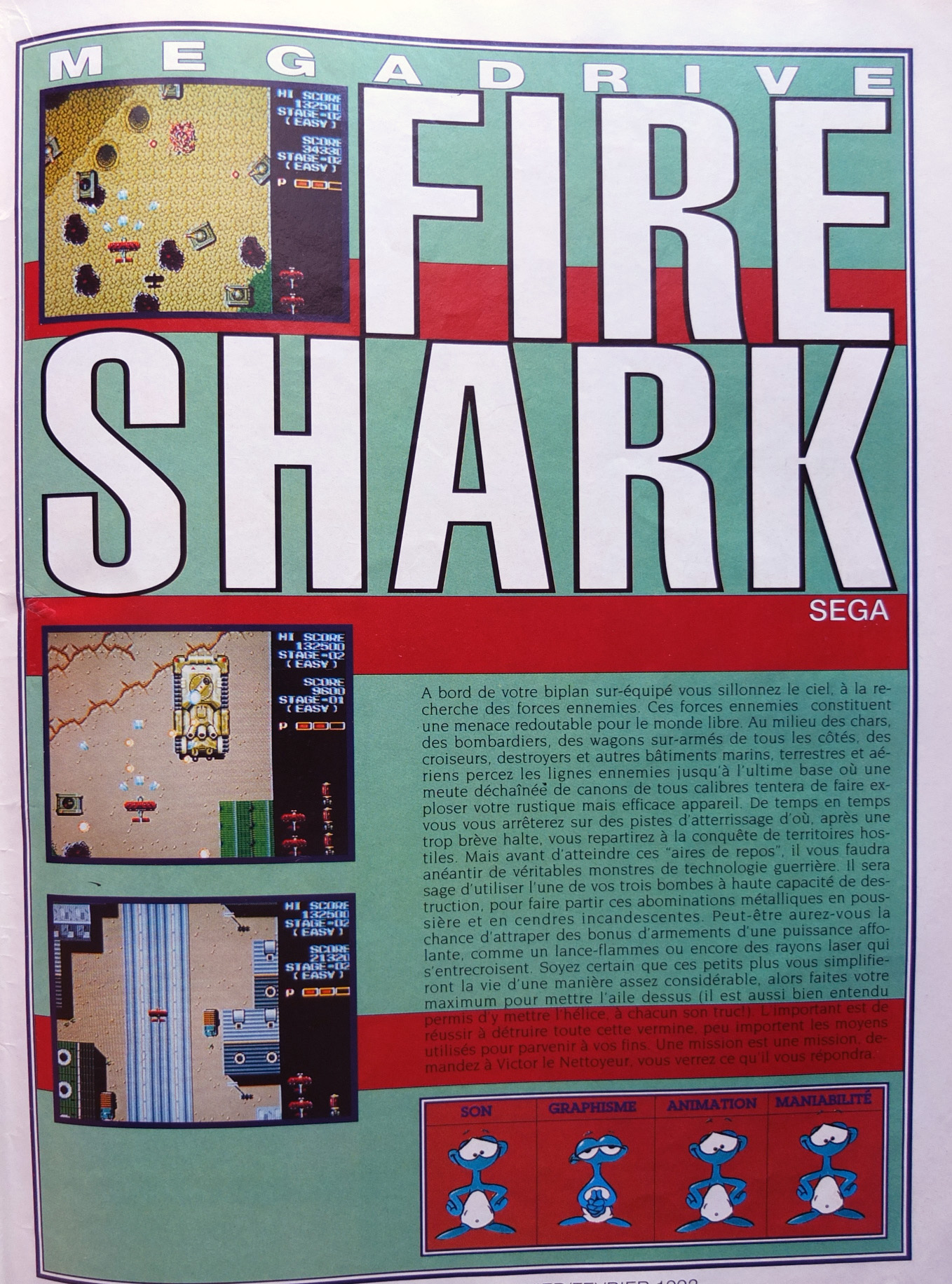
Fire Shark is a military-themed vertically scrolling shoot 'em up game reminiscent of 1942, where players take control of the titular biplane through ten increasingly difficult levels in order to defeat an assortment of enemy forces like tanks, battleships, kamikaze monoplanes and artillery from the mysterious Strange Fleet armada. This is the main objective of the game.[1][2][3][4] The game plays similarly like its predecessor, as players control their craft over a constantly scrolling background and the scenery never stops moving until an airport is reached. Players have two weapons at their disposal: the standard shot that travels a max distance of half the screen's height and bombs capable of obliterating any enemy caught within its blast radius.[1][4]
There are three types of weapons to pick up that appear as colored icons by destroying zeppelins: a wide shot, a laser beam and a flamethrower.[1][2][4] There are also other items like "S" icons that increases the overall speed, "B" icons that acts as extra bomb stocks, "P" icons and 1UPs on rare occasions.[1][2][4] By acquiring three "P" icons in a row, players increase their plane's firepower to one level, with the third power level being the highest.[1][2][4] Once the plane is fully powered up, grabbing additional icons grants extra points instead. Reaching high-scores is also crucial to obtain extra lives, which are obtained at certain score values.[2] Players can grab lightning-shaped medals for points by destroying containers on the playfield.[2][1]
Depending on the settings in the arcade version, the title uses either a checkpoint system in which a downed single player will start off at the beginning of the checkpoint they managed to reach before dying, or a respawn system where their ship immediately starts at the location they died at.[3] Getting hit by enemy fire will result in losing a life, as well as a penalty of decreasing the ship's firepower and speed to his original state and once all lives are lost, the game is over unless the players insert more credits into the arcade machine to continue playing. Once all ten stages are complete, the game loops back to the first stage after completing the last stage as with previous titles from Toaplan, with each one increasing the difficulty and enemies fire denser bullet patterns.
Plot
[edit]The plot summary of Fire Shark varies between each region and version.[5][6] In the original arcade version, a mysterious enemy fleet known as the Strange Fleet arrived at a small island of the Mediterranean Sea during summer night in 1991, with few people noticing its sudden arrival. In the span of two years, the Strange Fleet grew larger and larger, culminating in a worldwide attack as a result. As the Strange Fleet continues their assault, those who oppose them cried "Fire Shark! Fire Shark! It's time to take-off!! Beat them for our sake. Go! Go! Fire Shark!".[5][6] In the Sega Genesis port, the game takes place in the year 19X9 on an alternate Earth instead, where a global superpower known as the S Corps, which specializes in a heavy industrial army begins invading various countries, with all seemingly lost when a phantom pilot flying a super-powered biplane called the Fire Shark flies in to save the world from domination.[2]
Development
[edit]
Fire Shark's development process and history was recounted between 1989 and 2012 through Japanese publications such as Shooting Gameside by former Toaplan composer Masahiro Yuge. Yuge acted as the game's composer, with Shintarō Nakaoka serving as artist, while both Sanae Nitō and Yuko Tataka were also involved in the production as designers, though none of the members in the development team were credited as such in neither version of the game.[7][8][9][10][11]
The team wanted to convey "the same strengths" as its predecessor, Flying Shark, by adding elements like the flamethrower as a way to promote the game, with Yuge stating that the weapon acted as a successor to the blue laser in 1989's Truxton.[10][12] Yuge later stated that he regretted not balancing the game's difficulty for both arcade owners and players.[12] The development team settled on using the word "same" when coming up for the project's title, which translates to "shark" in Japanese to convey a strong animal sound.[13] Nakaoka was also responsible for drawing the crowd during the takeoff sequence at the beginning of the game that was, according to Yuge, later animated during their leisure for diversion.[10][12]
Release
[edit]Fire Shark was first released in arcades by Toaplan in Japan on 2 November 1989,[14][15] then in Europe later the same year,[16][better source needed] followed by a North American release by Romstar in March 1990.[17] In October 1989, an album containing music from the title was co-published exclusively in Japan by Scitron and Pony Canyon.[8] In October 1990, a Sega Genesis port of Fire Shark developed in-house by Toaplan was first released in North America by DreamWorks, which was a division of Toy Soldiers, Inc.[18] It was released for the Mega Drive in Japan by Toaplan on 2 November of the same year,[19] while Sega published it in Europe in April 1992.[20] The port is faithful to the original arcade release and includes a harder difficulty setting but has a number of key differences, such as a smaller color palette that led to sprites being recolored in different ways, along with other presentation and gameplay changes from the original version.[3] To promote the Mega Drive version, a TV advert was aired in Japan.[21][22] A version for the X68000 was in development and planned to be published by Kaneko, but was never released despite being advertised in Japanese publications such as Oh!X.[23]
The Mega Drive/Genesis port was later re-released by independent publisher Retro-Bit in 2020.[24] In 2022, the arcade version was included in the Hishou Same! Same! Same! compilation for Nintendo Switch and PlayStation 4 as part of M2's Toaplan Arcade Garage label.[25] The arcade original was included as part of the Sega Astro City Mini V, a vertically oriented variant of the Sega Astro City mini console.[26]
Reception
[edit]| Publication | Score |
|---|---|
| AllGame | (Arcade)    [27] [27](Genesis) [28] |
| Computer and Video Games | (Mega Drive) 90%[29] |
| Electronic Gaming Monthly | (Genesis) 33/40[18] |
| Famitsu | (Mega Drive) 31/40[30] |
| Aktueller Software Markt | (Mega Drive) 8/12[31] |
| Beep! Mega Drive | (Mega Drive) 33/40[32] |
| CVG Mean Machines | (Mega Drive) 71%[33] |
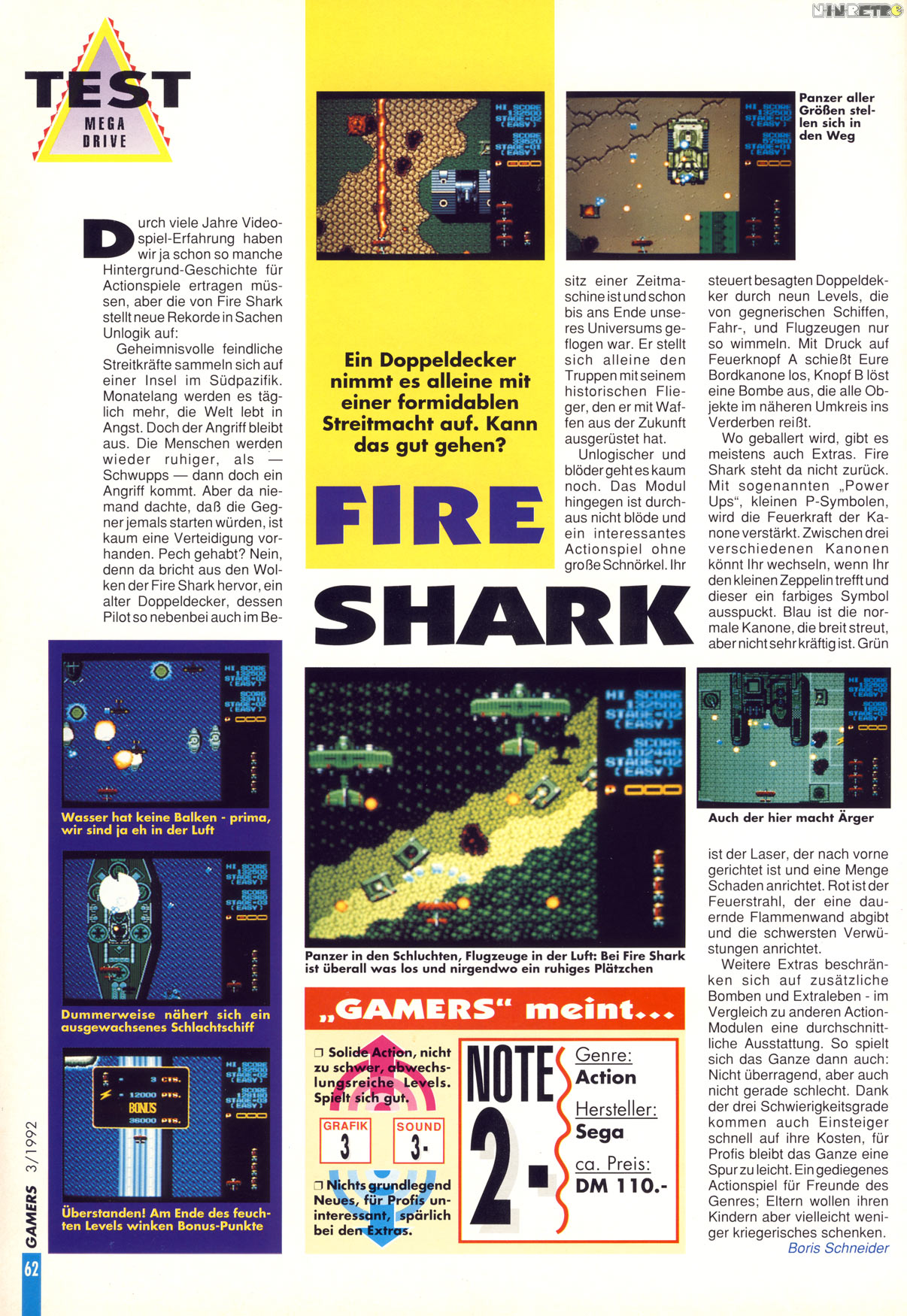
| Gamers | (Mega Drive) 2-[34] |
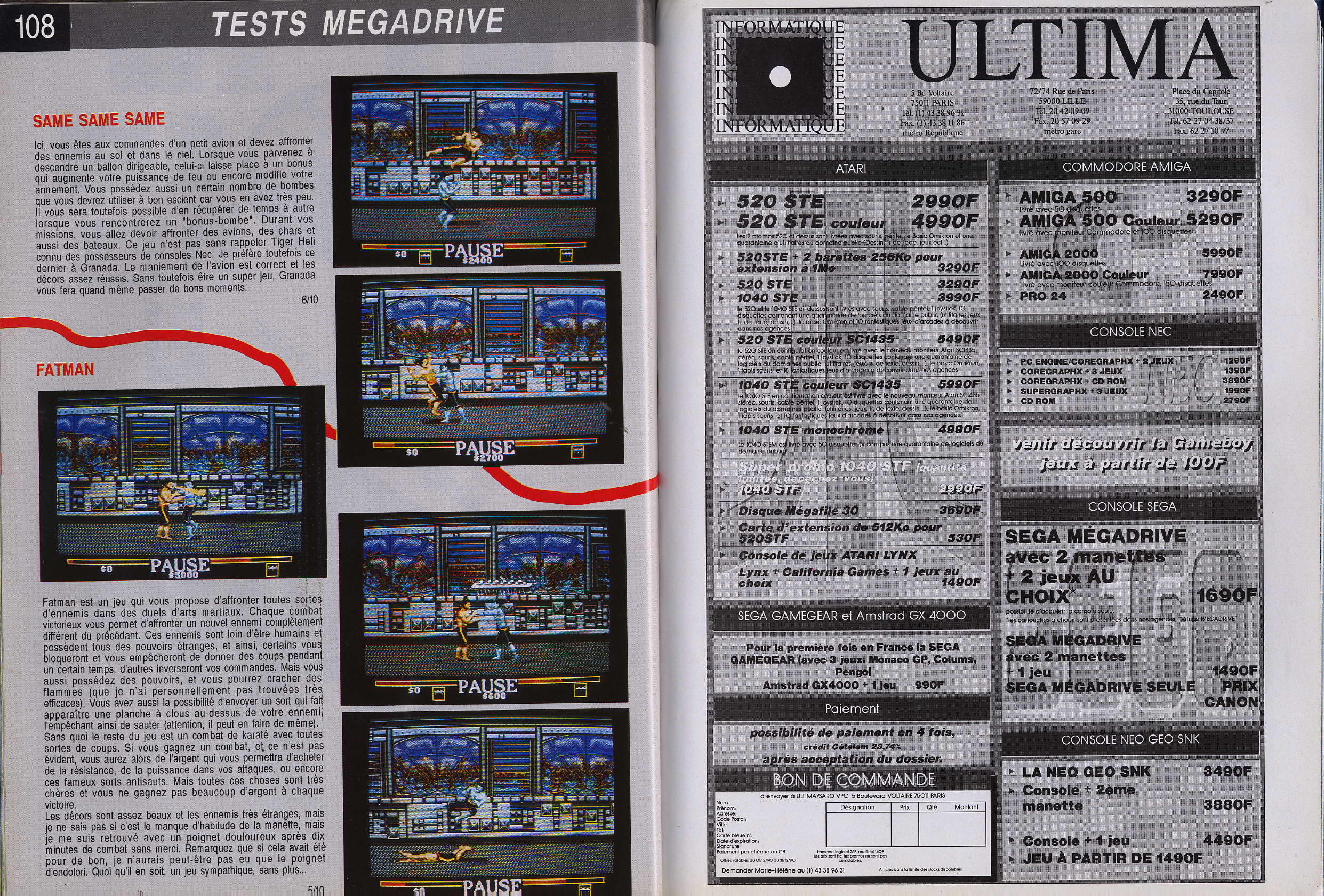
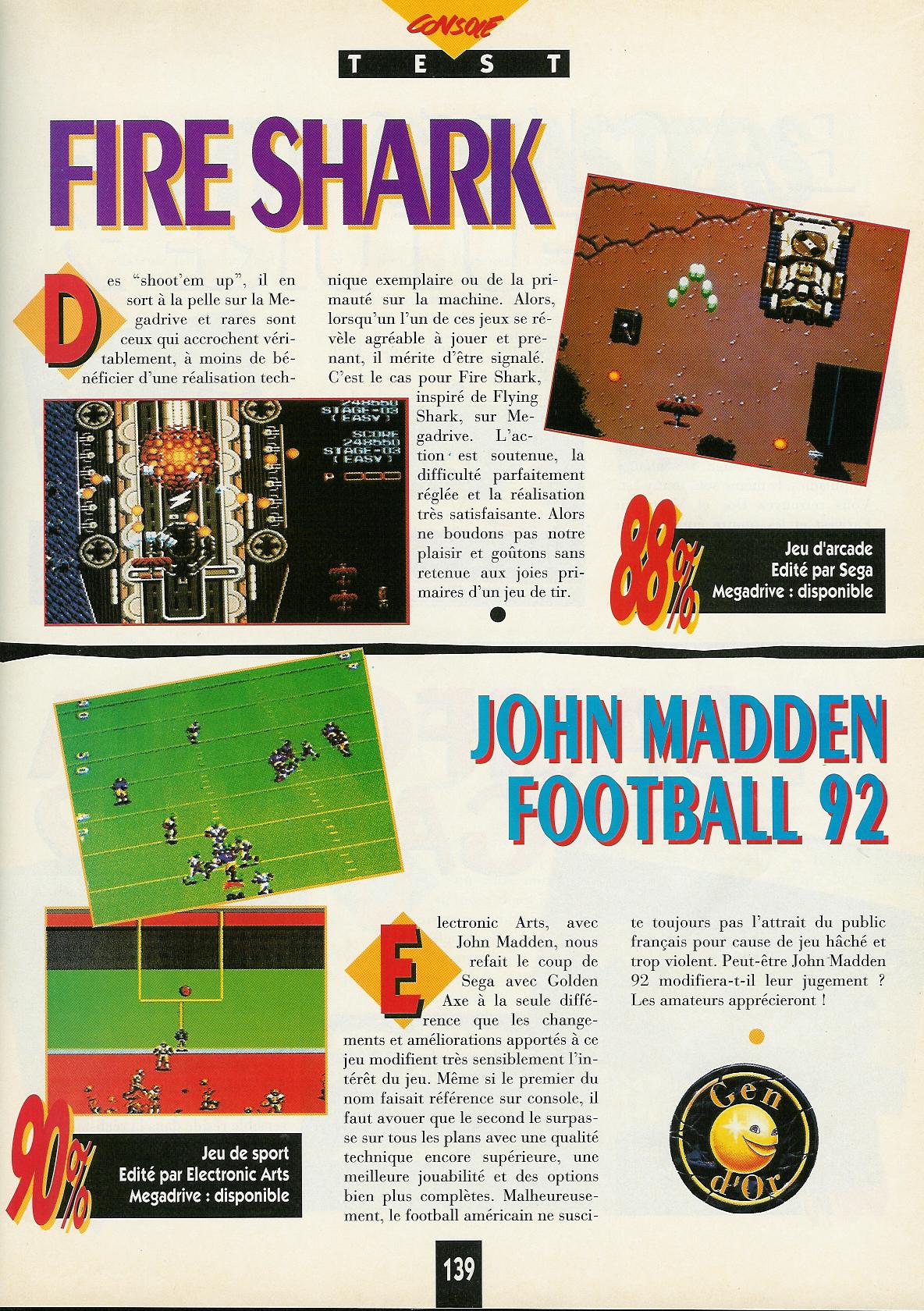
| Génération 4 | (Mega Drive) 6/10[35] (Mega Drive) 88%[36] |
| HobbyConsolas | (Mega Drive) 79%[37] |
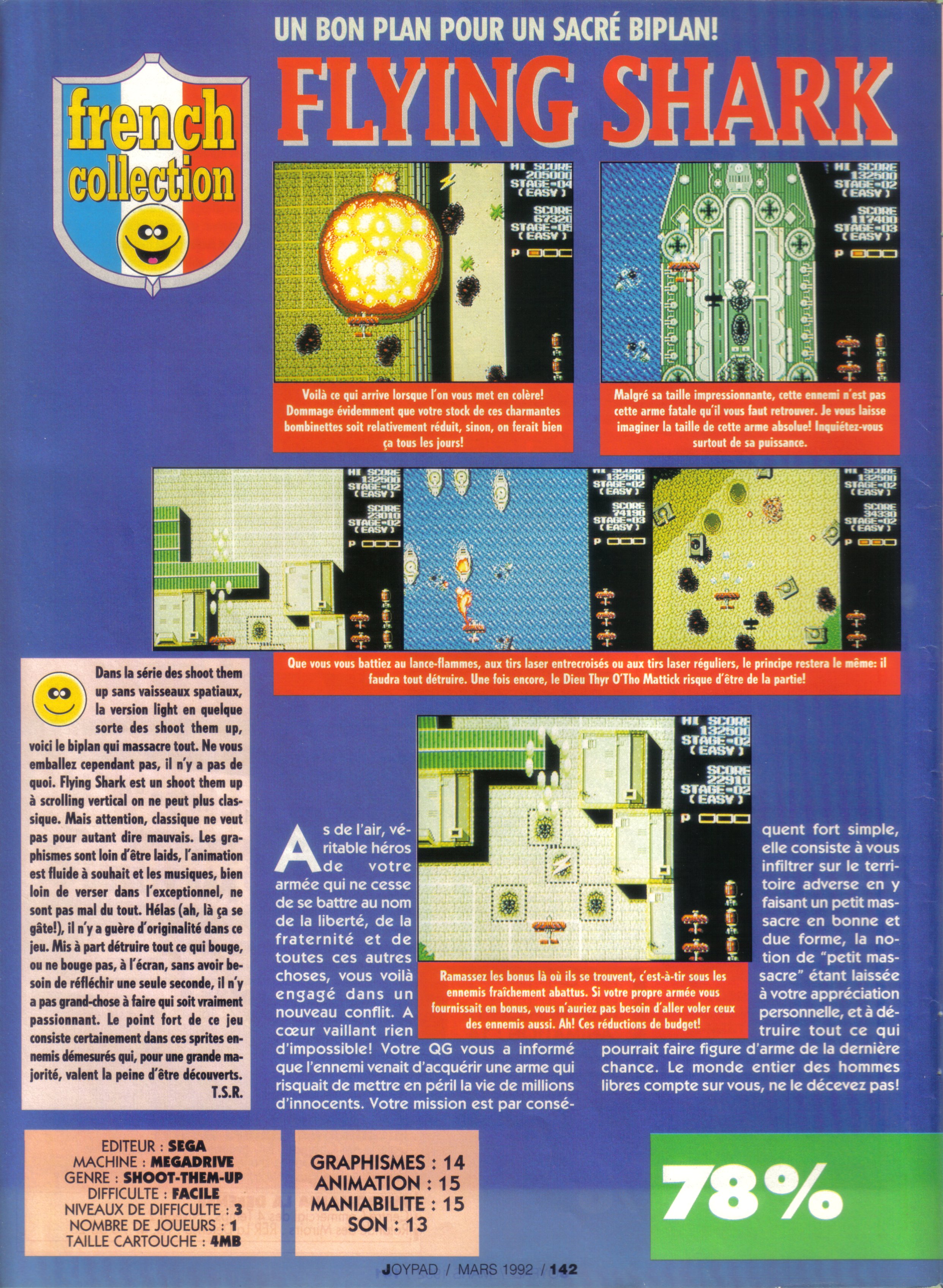
| Joypad | (Mega Drive) 78%[38] |
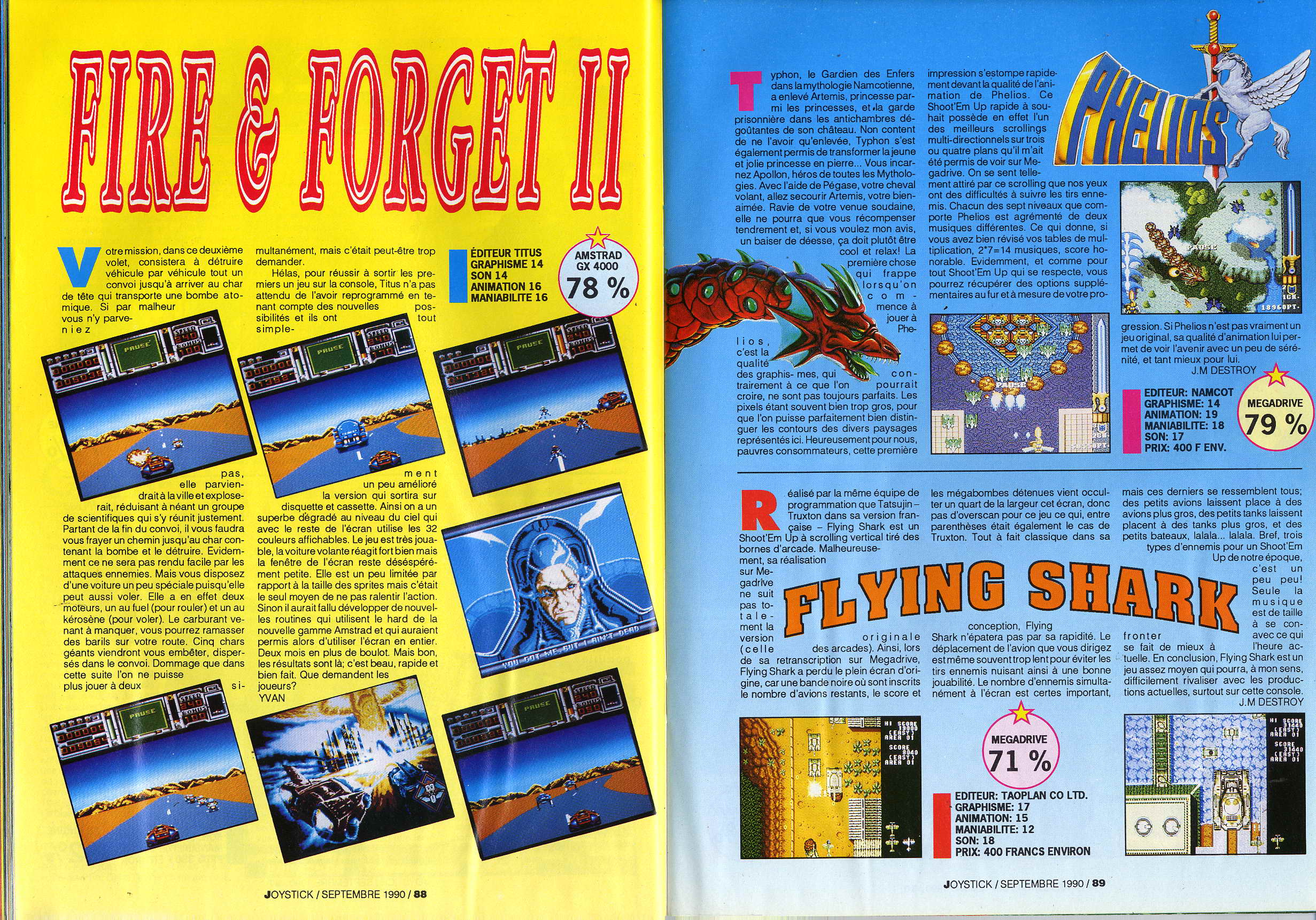
| Joystick | (Mega Drive) 71%[39] |
| Mega | (Mega Drive) 78%[40] |
| Mega Drive Advanced Gaming | (Mega Drive) 68%[41] (Mega Drive) 53%[41] |
| Mega Force | (Mega Drive) 11/20[42] |
| MegaTech | (Mega Drive) 59%[43] |
| Micromanía | (Mega Drive) 44/60[44] |
| Play Time | (Mega Drive) 56%[45] |
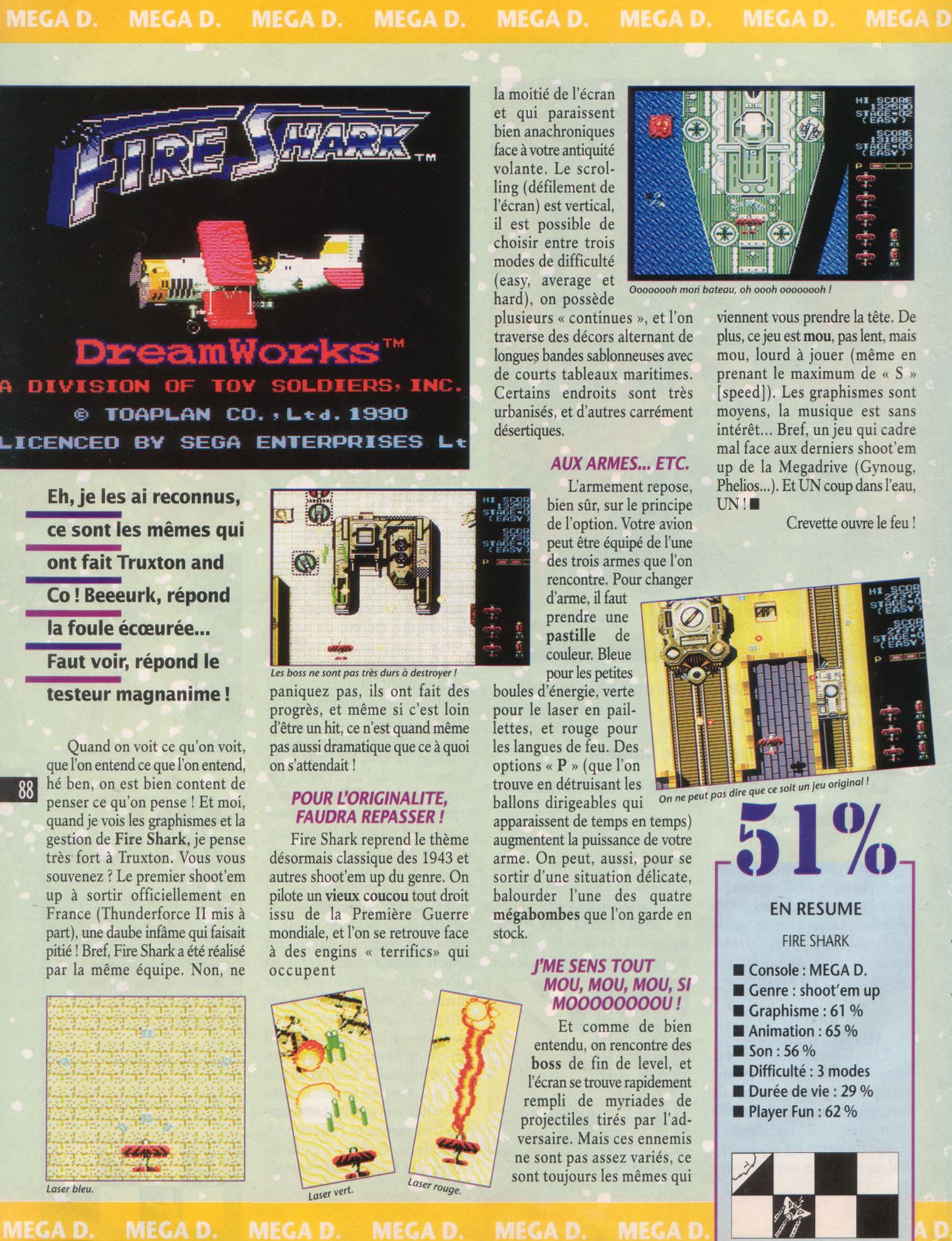
| Player One | (Mega Drive) 51%[46] |
| Power Play | (Mega Drive) 59%[47] |
| Raze | (Mega Drive) 87%[48] |
| Sega Force | (Mega Drive) 61%[49] |
| Sega Power | (Mega Drive) [50] (Mega Drive) 63%[51] |
| Sega Pro | (Mega Drive) 83%[52] (Mega Drive) 90%[53] (Mega Drive) 75%[54] |
| Superjuegos | (Mega Drive) 70%[55] |
| Zero | (Mega Drive) 74%[56] |
| Publication | Award |
|---|---|
| Gamest Mook (1998) | Best Shooting Award 8th, Annual Hit Game 34th (Arcade)[57] |
![[icon]](https://en.wikipedia.org/wiki/File:Wiki_letter_w_cropped.svg) | This section needs expansion. You can help by adding missing information. (September 2021) |
In Japan, Game Machine listed Fire Shark on their January 1, 1990 issue as being the fifth most-successful table arcade unit at the time.[58] According to Masahiro Yuge, Fire Shark was well received in Western arcades but proved to be less popular in Japan due to its high difficulty.[59]
German magazine Power Play compared it with 1943: The Battle of Midway and Vapor Trail: Hyper Offence Formation.[60]
The Mega Drive/Genesis version was well received when it was released,[61] earning a score of 33 out of 40 in Electronic Gaming Monthly.[18]
Legacy
[edit]The rights to Fire Shark, its predecessor and many other IPs from Toaplan are now owned by Tatsujin, a company named after Truxton's Japanese title that was founded in 2017 by former Toaplan employee Masahiro Yuge, and is part of Embracer Group since 2022.[62][63][64][65] Artist Perry "Gryzor/Rozyrg" Sessions cited Fire Shark as one of the main influences for Super XYX.[66]
Notes
[edit]References
[edit]- ^ a b c d e f Satomi, Yasuyuki (January 1990). "Super Soft Corner - Video Game: 鮫! 鮫! 鮫!". Micom BASIC Magazine (in Japanese). No. 91. The Dempa Shimbunsha Corporation. pp. 288–290.
- ^ a b c d e f g Fire Shark instruction manual (Sega Genesis, US)
- ^ a b c Zverloff, Nick (1 February 2011). "Fire Shark". Hardcore Gaming 101. Archived from the original on 21 May 2019. Retrieved 30 November 2019.
- ^ a b c d e "鮫!鮫!" (in Japanese). Shooting Star. Archived from the original on 17 October 2020. Retrieved 30 November 2019.
- ^ a b Fire Shark arcade flyer (Toaplan, JP)
- ^ a b Fire Shark arcade flyer (Toaplan, EU)
- ^ Abeto, Kobatsu (September 1989). "東亜プランインタビュー". PSG (in Japanese). Vol. 10. F.S.G Club. (Translation by Shmuplations. Archived 2017-05-31 at the Wayback Machine).
- ^ a b "PCCB-00007 | Same! Same! Same!". vgmdb.net. VGMdb. Archived from the original on 9 January 2016. Retrieved 30 November 2019. (Translation by Shmuplations. Archived 2019-10-22 at the Wayback Machine).
- ^ "当世ゲーム業界 働く女性事情 - ワーキング・ガール: 田高祐子•二藤早苗 (東亜プラン) Character Designer". Beep! Mega Drive (in Japanese). No. 14. SoftBank Creative. November 1990. p. 87. (Translation by Shmuplations. Archived 2019-11-21 at the Wayback Machine).
- ^ a b c "東亜プラン シューティングクロニクル 特設ページ". SweepRecord (in Japanese). SuperSweep. 27 October 2011. Archived from the original on 15 February 2020. Retrieved 15 February 2020. (Translation by Shmuplations. Archived 2019-10-02 at the Wayback Machine).
- ^ "Behind The Game with Masahiro Yuge: Fire Shark". Toaplan Shooter's Collector's Edition. Retro-Bit: 1–5. 2020.
- ^ a b c Kiyoshi, Tane; hally (VORC); Yūsaku, Yamamoto (3 February 2012). "東亜プラン特集 - 元・東亜プラン 開発者インタビュー: 弓削雅稔". Shooting Gameside (in Japanese). Vol. 4. Micro Magazine. pp. 41–48. ISBN 978-4896373844. (Translation by Shmuplations. Archived 2019-09-06 at the Wayback Machine).
- ^ "東亜プラン シューティングクロニクル". SweepRecord (in Japanese). SuperSweep. 14 November 2011. Archived from the original on 21 October 2019. Retrieved 30 November 2019. (Translation by Shmuplations. Archived 2018-07-11 at the Wayback Machine).
- ^ "Fire Shark (Registration Number PA0000452607)". United States Copyright Office. Retrieved 22 September 2021.
- ^ Lambie, Ryan (21 June 2018). "Toaplan: the rise and fall of Japan's greatest shooting game company". Den of Geek. Dennis Publishing. Archived from the original on 21 June 2018. Retrieved 30 November 2019.
- ^ "Video Game Flyers: Fire Shark, Toaplan Co., Ltd. (EU)". The Arcade Flyer Archive. Retrieved 22 September 2021.
- ^ "ACME: New Product Review". RePlay. Vol. 15, no. 7. April 1990. pp. 50–79.
- ^ a b c Harris, Steve; Semrad, Ed; Alessi, Martin; Williams, Ken (October 1990). "Fact File: Fire Shark". Electronic Gaming Monthly. No. 15. Sendai Publishing. p. 73.
- ^ "Software List (Software Licensee Release)". Sega Hardware Encyclopedia (in Japanese). Sega Corporation. Retrieved 15 May 2023.
- ^ "The Release Schedule" (PDF). Computer Trade Weekly. No. 383. Opportunity Publishing. 20 April 1992. p. 19. Retrieved 25 February 2025.
- ^ "BEメガCM - 『鮫! 鮫! 鮫!』". Beep! Mega Drive (in Japanese). No. 38. SoftBank Creative. November 1992. p. 34. Archived from the original on 17 October 2020. Retrieved 12 December 2019.
- ^ Tatsuya Uemura (24 July 2019). MD版『鮫!鮫!鮫!』TV-CM メイキングVTR. YouTube. Archived from the original on 21 December 2021. Retrieved 12 December 2019.
- ^ "The Softouch - Software Information: 新作情報 -- 鮫! 鮫! 鮫!". Oh!X (in Japanese). No. 143. SoftBank Creative. March 1994. p. 25.
- ^ McFerran, Damien (15 September 2020). "Retro-Bit Is Republishing Some Of Toaplan's Best Console Shooters In Physical Form". Nintendo Life. Nlife Media. Archived from the original on 25 September 2020. Retrieved 30 October 2020.
- ^ Romano, Sal (27 October 2021). "Toaplan shoot 'em up collection Hishou Same! Same! Same! announced for PS4, Switch - Due out in spring 2022 in Japan". Gematsu. Retrieved 15 July 2021.
- ^ McFerran, Damien (17 December 2021). "Sega's Astro City Mini Is Getting A 'TATE' Version Packed With Shmup Goodness". Nintendo Life. Nlife Media. Retrieved 17 December 2021.
- ^ Baize, Anthony (1998). "Fire Shark (Arcade) - Review". AllGame. All Media Network. Archived from the original on 16 November 2014. Retrieved 1 December 2019.
- ^ Baize, Anthony (1998). "Fire Shark (Sega Genesis) - Overview". AllGame. All Media Network. Archived from the original on 15 November 2014. Retrieved 1 December 2019.
- ^ Regan, Matt (January 1991). "Reviews - Megadrive -- Sky Shark". Computer and Video Games. No. 110. Future Publishing. p. 67. Archived from the original on 27 June 2015. Retrieved 1 December 2019.
- ^ "NEW GAMES CROSS REVIEW: 鮫! 鮫! 鮫! (メガドライブ)". Famitsu (in Japanese). No. 113. ASCII. 9 November 1990.
- ^ Alter, Sandra (January 1991). "Konsolen - Einer gegen alle". Aktueller Software Markt (in German). No. 48. Tronic Verlag. p. 100. Archived from the original on 17 October 2020. Retrieved 1 December 2019.
- ^ "BEメガ•ドッグレース – 鮫! 鮫! 鮫!". Beep! Mega Drive (in Japanese). No. 14. SoftBank Creative. November 1990. p. 22. Archived from the original on 17 October 2020. Retrieved 1 December 2019.
- ^ Rignall, Julian (November 1990). "Complete Guide to Consoles – The Complete Games Guide – Megadrive – Flying Shark". Computer and Video Games Mean Machines. No. 4. EMAP. pp. 26–39.
- ^ Schneider, Boris (March 1992). "Test - Mega Drive - Fire Shark". Gamers (in German). No. 3. MLV-Verlag. p. 62. Archived from the original on 17 October 2020. Retrieved 1 December 2019.
- ^ "Tests - Megadrive - Same Same Same". Génération 4 (in French). No. 29. Computec Media France. January 1991. p. 108. Archived from the original on 1 February 2014. Retrieved 1 December 2019.
- ^ "Console Test – Fire Shark – Megadrive". Génération 4 (in French). No. 40. Computec Media France. January 1992. p. 139. Archived from the original on 17 October 2020. Retrieved 1 December 2019.
- ^ Sanz, José Luis (July 1992). "Lo Más Nuevo - Megadrive - Fuego en el Cielo - Fire Shark". Hobby Consolas (in Spanish). No. 10. Axel Springer SE. pp. 88–89.
- ^ Morisse, Jean-François (March 1992). "French Collection - Un Bon Plan Pour Un Sacré Biplan! - Flying Shark". Joypad (in French). No. 6. Yellow Media. p. 142. Archived from the original on 17 October 2020. Retrieved 1 December 2019.
- ^ Demoly, Jean-Marc (September 1990). "Tests - Megadrive - Flying Shark". Joystick (in French). No. 8. Anuman Interactive. p. 89. Archived from the original on 17 October 2020. Retrieved 1 December 2019.
- ^ "Fire Shark". Mega. No. 9. Future Publishing. June 1993. p. 20.
- ^ a b "Review: Fire Shark". Mega Drive Advanced Gaming. No. 5. Maverick Magazines. January 1993. pp. 92–95.
- ^ "Zapping - Megadrive - Fire Shark". Mega Force (in French). No. 4. MegaPress, S.A.R.L. January 1992. p. 103. Archived from the original on 17 October 2020. Retrieved 1 December 2019.
- ^ "Game Index - Tora! Tora! Tora!". MegaTech. No. 1. EMAP. December 1991. p. 81. Archived from the original on 17 October 2020. Retrieved 2 December 2019.
- ^ D.M.L. (July 1992). "Video Consolas - Un Viejo Héroe - Fire Shark (Megadrive)". Micromanía (in Spanish). Vol. 2, no. 50. HobbyPress. p. 79.
- ^ Gnad, Stefan (May 1992). "Mega Drive Review - Fire Shark". Play Time (in German). No. 12. CT Computec Verlag GmbH & Co. KG. p. 95. Archived from the original on 17 October 2020. Retrieved 2 December 2019.
- ^ Drevet, Cyril (February 1992). "Tests De Jeux - Mega D. - Fire Shark". Player One (in French). No. 17. Média Système Édition. p. 88. Archived from the original on 17 October 2020. Retrieved 1 December 2019.
- ^ Gaksch, Martin (February 1991). "Power Tests / Videospiele - Strohfeuer - Fire Shark". Power Play (in German). No. 35. Future Verlag. p. 148. Archived from the original on 17 October 2020. Retrieved 1 December 2019.
- ^ "Import - Fire Shark (Mega Drive)". Raze. No. 4. Newsfield. February 1991. p. 74. Archived from the original on 7 October 2016. Retrieved 1 December 2019.
- ^ Pitt, Adrian (June 1992). "Mega Drive - Reviewed! - Fire Shark". Sega Force. No. 6. Europress Impact. pp. 68–69. Archived from the original on 17 October 2020. Retrieved 2 December 2019.
- ^ Jarratt, Steve (October 1991). "The Hard Line - Tora! Tora!". Sega Power. No. 23. Future plc. pp. 54–55. Archived from the original on 17 October 2020. Retrieved 2 December 2019.
- ^ Lawton, Rod (February 1992). "Power Review - Fire Shark". Sega Power. No. 27. Future plc. p. 50. Archived from the original on 17 October 2020. Retrieved 2 December 2019.
- ^ "Mega Drive – ProReview: Fire Shark". Sega Pro. No. 2. Paragon Publishing. December 1991. p. 67. Archived from the original on 17 October 2020. Retrieved 2 December 2019.
- ^ "The A-Z of Sega Games – Fire Shark (Mega Drive)". Sega Pro. No. 3. Paragon Publishing. Christmas 1991. p. 18. Archived from the original on 17 October 2020. Retrieved 2 December 2019.
- ^ "Mega Drive – ProReview: Fire Shark". Sega Pro. No. 18. Paragon Publishing. April 1993. p. 65.
- ^ de Castro, Juan P. (February 1993). "Consola - En pantalla: Fire Shark - Guerra por tierra, mar y aire". Superjuegos (in Spanish). No. 2. Grupo Zeta. pp. 24–25.
- ^ "Review - Mega Drive - Fire Shark". Zero. No. 33. Dennis Publishing. July 1992. p. 38. Archived from the original on 17 April 2013. Retrieved 1 December 2019.
- ^ ザ・ベストゲーム2 - アーケードビデオゲーム26年の歴史: ゲーメスト大賞11年史 (in Japanese). Vol. 5 (4th ed.). Shinseisha. 17 January 1998. pp. 18–19. ISBN 9784881994290.
{{cite book}}:|work=ignored (help) - ^ "Game Machine's Best Hit Games 25 - テーブル型TVゲーム機 (Table Videos)". Game Machine (in Japanese). No. 371. Amusement Press, Inc. 1 January 1990. p. 29.
- ^ "東亜プラン". Gamest (in Japanese). No. 49. Shinseisha. September 1990. pp. 68–69. (Translation by Shmuplations. Archived 2019-11-07 at the Wayback Machine).
- ^ Gaksch, Martin; Fisch, Henrik (April 1990). "Power Tests / Automatenspiele - Zurück in die Zukunft". Power Play (in German). No. 25. Future Verlag. pp. 130–133. Archived from the original on 17 October 2020. Retrieved 1 December 2019.
- ^ Thomas, Daniel (5 July 2004). "Genesis Reviews – Fire Shark". sega-16.com. Archived from the original on 7 July 2018. Retrieved 7 December 2019.
- ^ "ライセンス事業" (in Japanese). TATSUJIN Co., Ltd. 2019. Archived from the original on 25 December 2018. Retrieved 30 November 2019.
- ^ Bravo, Roberto (12 September 2018). "Nueva compañía "Tatsujin" asegura tener gran parte de las IPs de la extinta Toaplan" (in Spanish). Gamercafe. Archived from the original on 21 October 2019. Retrieved 30 November 2019.
- ^ "[JAEPO2019]TATSUJINやナツメアタリの参入が発表されたexA-Arcadia。出展コーナーの模様を紹介". 4Gamer.net (in Japanese). Aetas Inc. 26 January 2019. Archived from the original on 21 October 2019. Retrieved 30 November 2019.
- ^ "Embracer Group Announces the 11[th] Operating Group: Embracer Freemode". Embracer Group. Retrieved 14 February 2025.
- ^ Überwenig, Toma (30 November 2020). "[Interview] Rozyrg talks about Super XYX, its lengthy development & more!". Shmup'Em-All. Archived from the original on 6 January 2021. Retrieved 6 January 2021.
External links
[edit]


- Fire Shark at GameFAQs
- Fire Shark at Giant Bomb
- Fire Shark at Killer List of Videogames
- Fire Shark at MobyGames
- Fire Shark Archived 10 October 2019 at the Wayback Machine at The Toaplan Museum
| Games |
|  | ||||
|---|---|---|---|---|---|---|
| Related games | ||||||
| People | ||||||
| See also | ||||||








| Arcade systems |  | |
|---|---|---|
| Video game consoles | ||
| Portable devices | ||
| Dual systems | ||
| Licensed consoles | ||
| Online gaming services | ||
| Accessories | ||
| Amusement venues | ||
| Related | ||