Hubbry Logo
Fire brickFire brickMain
Open search
Fire brick
Community hub
Fire brick
logo
8 pages, 0 posts
0 subscribers
Be the first to start a discussion here.
Fire brick
Fire brick
from Wikipedia
Refractory bricks in a torpedo car used for hauling molten iron

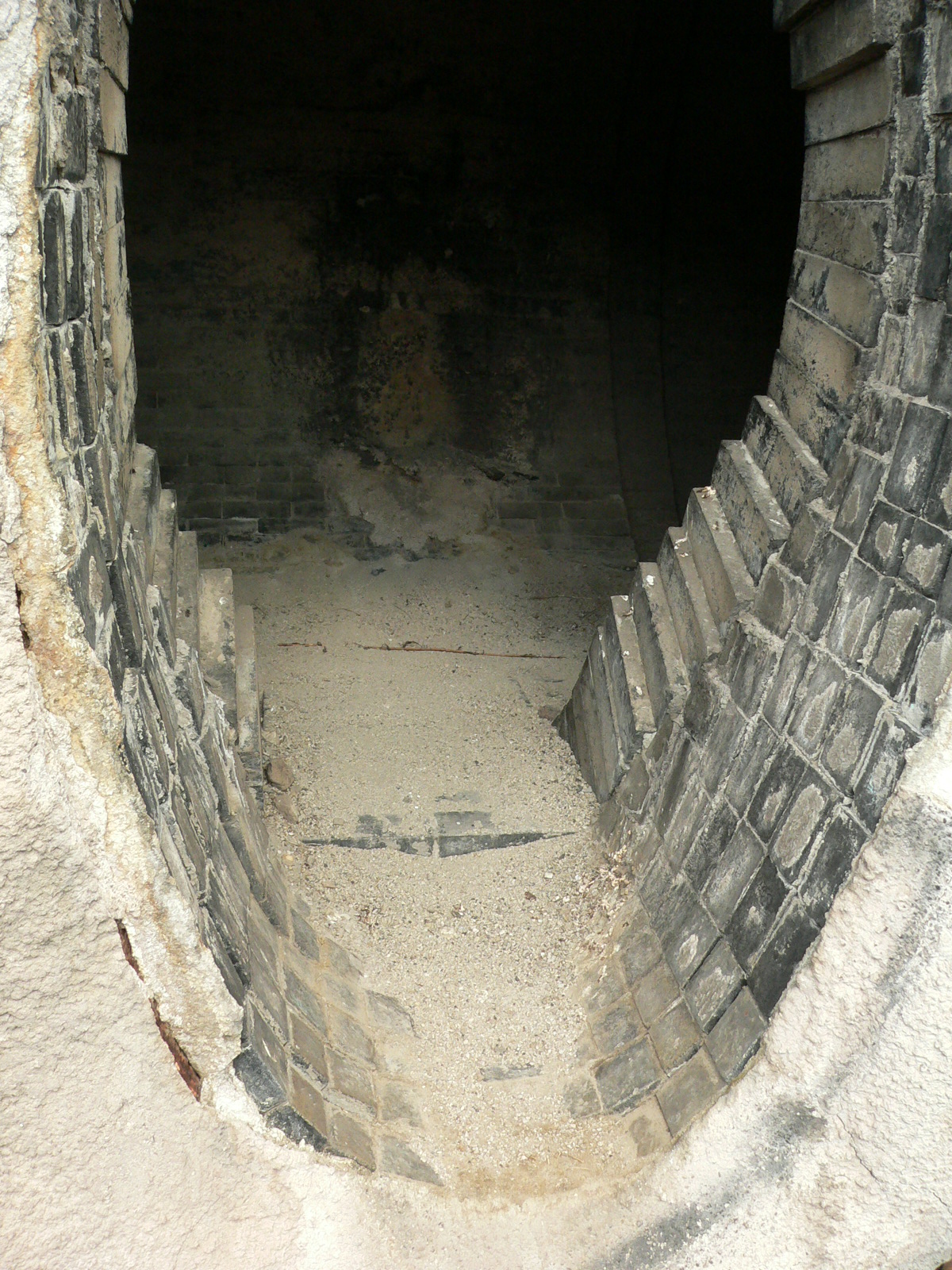
A fire brick, firebrick, fireclay brick, or refractory brick is a block of ceramic material used in lining furnaces, kilns, fireboxes, and fireplaces. Made of primarily oxide materials like silica and alumina in varying ratios,[1] these insulating materials are able to withstand extremely high temperatures, and have a low thermal conductivity for greater energy efficiency. Refractory bricks generally range from 25-45% alumina, and ~60% silica, with additional magnesium, calcium, potassium oxides.[1]

Usually dense fire bricks are used in applications with extreme mechanical, chemical, or thermal stresses, such as the inside of a wood-fired kiln or a furnace, which is subject to abrasion from wood, fluxing from ash or slag, and high temperatures. In other, less harsh situations, such as in an electric or natural gas fired kiln, more porous bricks, commonly known as "kiln bricks", are a better choice.[2] They are weaker, but they are much lighter and easier to form and insulate far better than dense bricks. In any case, firebricks should not spall, and their strength should hold up well during rapid temperature changes.

Manufacturing

[edit]

There are three main manufacturing methods for firebrick: firing, cementing and geopolymerization.[3] In the first method, clay is fired in the kiln until it is partly vitrified. For special purposes, the brick may also be glazed. Firing is the most conventional process, with easy execution using traditional equipment. However, it is an energy intensive process, consuming a significant amount of energy - on the scale of 2.0 kWh per brick. Firing also releases around 0.41 kg of CO2[3] from the decomposition of carbonate materials and combustion of fuel.

To cement, refractory brick is combined with refractory cement. Portland cement is not able to withstand high temperatures and is therefore not recommended.[4] High-temperature refractory cements include furnace cements or high-heat mortar. These mixtures are applied to the brick surfaces and pressed together, and allowed to cure with time - taking anywhere from days to weeks.

A technique with the potential to replace firing and cementing is geopolymerization. Firing and cementing both require huge amounts of energy and release large amounts of greenhouse gases, thus motivating research into additional methods of production. Efforts to incorporate up to 30 wt% of waste materials into clay ceramics have been shown. Clay ceramics with 17 wt% additives displayed the highest bending strength of 30 MPa.[3] Although these waste materials are inert, they could be responsible for structural defects that change the material properties and therefore applications of these bricks.

There are two standard sizes of fire brick: 229 mm × 114 mm × 76 mm (9 in × 4+12 in × 3 in) and 229 mm × 114 mm × 64 mm (9 in × 4+12 in × 2+12 in).[5] Also available are firebrick "splits" which are half the thickness and are often used to line wood stoves and fireplace inserts. The dimensions of a split are usually 229 mm × 114 mm × 32 mm (9 in × 4+12 in × 1+14 in).[5] Fire brick was first invented in 1822 by William Weston Young in the Neath Valley of Wales.

High temperature applications

[edit]

The silica fire bricks that line steel-making furnaces are used at temperatures up to 1,649 °C (3,000 °F), which would melt many other types of ceramic, and in fact part of the silica firebrick liquefies.[citation needed] High-temperature Reusable Surface Insulation (HRSI), a material with the same composition, was used in the insulating tiles of the Space Shuttle.[citation needed]

Non-ferrous metallurgical processes use basic refractory bricks because the slags used in these processes readily dissolve the "acidic" silica bricks.[6] The most common basic refractory bricks used in smelting non-ferrous metal concentrates are "chrome-magnesite" or "magnesite-chrome" bricks (depending on the relative ratios of magnesite and chromite ores used in their manufacture).[7]

Lower temperature applications

[edit]

A range of other materials find use as firebricks for lower temperature applications.[8] Magnesium oxide is often used as a lining for furnaces. Silica bricks are the most common type of bricks used for the inner lining of furnaces and incinerators. As the inner lining is usually of sacrificial nature, fire bricks of higher alumina content may be employed to lengthen the duration between re-linings. Very often cracks can be seen in this sacrificial inner lining shortly after being put into operation. They revealed more expansion joints should have been put in the first place, but these now become expansion joints themselves and are of no concern as long as structural integrity is not affected.[9] Silicon carbide, with high abrasive strength, is a popular material for hearths of incinerators and cremators. Common red clay brick may be used for chimneys and wood-fired ovens.

Material properties

[edit]

The linear shrinkage of firebrick under compression was found to be around 12.8%.[10] This number can be decreased to below 8% with the addition of 25wt% coal ash. This is due to the high porosity of pure refractory bricks, around 31%, which compromise some of its structural integrity. When even 5wt% of coal ash is added, the porosity decreases to 24%,[10] and can withstand more compressive load. Bulk density of firebrick is between 1.88-2.05 g/cm^3, which is the approximate standard recommendation for high-temperature applications. This high-density is preferred in order to offer resistance in challenging operating environments. The standard for cold crushing strength is a minimum of 12,000 kN/m^2 for refractory materials.[10]

Potential use to store energy

[edit]

Firebricks, with their ability to withstand high temperatures and store heat, offer a promising solution for storing energy. These refractory bricks can be used to store industrial process heat, leveraging excess renewable electricity to create a low-cost, continuous heat source for industry. Due to their construction from common materials, firebrick storage systems are much more cost-effective than battery systems for thermal energy storage. Research across 149 countries indicates that using firebricks for heat storage can significantly reduce the need for electricity generation, battery storage, hydrogen production, and low-temperature heat storage. This approach could lower overall energy costs by about 1.8%, making firebricks a valuable tool in reducing the costs of transitioning to 100% clean, renewable energy.[11]

See also

[edit]

References

[edit]

Further reading

[edit]
Revisions and contributorsEdit on WikipediaRead on Wikipedia
from Grokipedia
A fire brick, also known as a refractory brick or fireclay brick, is a specialized block of ceramic material engineered to endure extreme temperatures, typically up to 1,700°C (3,092°F), while maintaining structural integrity and resisting and chemical corrosion. These bricks are primarily composed of hydrated aluminum silicates, such as (), blended with materials like flint clay, plastic clay, or calcined clay to achieve desired refractoriness. Originating from ancient uses in kilns around 3700 B.C., fire bricks have evolved into essential components for modern industrial processes requiring heat containment and insulation. Fire bricks are manufactured through processes that ensure uniformity and durability, beginning with the mining of raw clays followed by mixing, forming (via dry pressing, , or molding), drying, and high-temperature firing in at 1,180–1,650°C. The resulting bricks often incorporate (recycled material) to enhance stability, with standard shapes including rectangular blocks measuring 9 x 4.5 x 2.5 inches, as well as specialized forms like arches, wedges, and skewbacks for curved structures. Additives such as calcium-aluminate may be used in monolithic variants, like castables, which are mixed with water on-site for application as linings. This production adheres to standards set by organizations like ASTM, ensuring consistency in quality for demanding environments. Key properties of fire bricks include high refractoriness under load (measured by or PCE, ranging from 15 for low-duty to 33+ for superduty grades), low (typically 12–18% for dense types), and excellent resistance to slag erosion and spalling. Their alumina content (18–44%) and silica content (50–80%) directly influence performance, with higher alumina providing better corrosion resistance in acidic or neutral slags. Mechanical strength, such as modulus of rupture exceeding 1,350 psi at , combined with control, allows these bricks to withstand rapid heating and cooling cycles without cracking. Fire bricks are classified into categories like superduty, high-duty, intermediate-duty, and low-duty based on refractoriness, , and intended use, with refractories accounting for about 75% of total production volume. Variations include semi-silica types (18–25% Al₂O₃) for less severe conditions and high-alumina blends for enhanced durability. In applications, fire bricks line furnaces, kilns, boilers, and incinerators across industries such as (e.g., hearths), production (rotary kilns), (tanks and regenerators), and non-ferrous , where they provide insulation, contain molten materials, and extend equipment lifespan. They are also used in residential fireplaces and industrial regenerators to optimize energy efficiency by minimizing heat loss.

Overview

Definition and Characteristics

Fire bricks, also known as bricks, are specialized blocks of material engineered to endure extreme heat without significant deformation or structural failure. They are primarily composed of silica (SiO₂) at approximately 60-70% and alumina (Al₂O₃) at 25-30%, along with minor oxides such as those of magnesium, calcium, and , enabling their use in lining high-temperature environments like furnaces, , fireboxes, and fireplaces. These bricks exhibit key characteristics that distinguish them for refractory applications, including high refractoriness—the ability to resist melting or softening at temperatures exceeding 1,000°C, often up to 1,750°C depending on the variant. They also demonstrate varying thermal conductivity; insulating variants provide low conductivity to minimize heat loss, while dense types focus on structural integrity, along with strong resistance to from abrupt temperature fluctuations, and chemical inertness that protects against degradation by slags, fluxes, and corrosive gases. Compared to common clay bricks, fire bricks offer superior heat resistance with melting points reaching up to 1,650°C or higher, in contrast to the 900-1,200°C range for ordinary bricks, along with enhanced durability in aggressive, high-heat, and chemically harsh conditions. Standard fire bricks typically measure 230 × 114 × 65 mm for modular construction, with common variations like splits at 230 × 114 × 32 mm to accommodate curved or thinner installations.

History

Fire bricks have origins in ancient civilizations, with evidence of refractory materials used in kilns dating to around 3700 B.C. in the Bronze Age. The modern commercial fire brick, particularly the silica-based Dinas variant, was developed in 1822 by William Weston Young, a Quaker entrepreneur and ceramics enthusiast, in Dinas, Wales. Young, drawing on his experience with pottery firing at the Nantgarw Pottery, experimented with silica-rich clay from the Dinas rock formation to create durable bricks capable of enduring the intense heat of industrial processes during the Industrial Revolution. In the same year, the Dinas Fire Brick Company was founded with partners including his brother Joseph Young, David Morgan, and John Player, marking the beginning of commercial production in the United Kingdom. Early adoption of fire bricks occurred primarily in the burgeoning iron and industries of the , where they lined blast furnaces, converters, and open hearth furnaces to enable higher operating temperatures and more efficient production. In the UK, fireclay-based bricks, supplemented by innovations like silica bricks (developed in 1822) and tar-dolomite bricks (introduced in 1879), played a crucial role in the (patented 1856) and Thomas-Bessemer process (1879), facilitating the shift to large-scale by the late 1800s. Commercial production spread to the by the mid-19th century, with early dedicated fire brick plants including the Star Fire Brick Company established in 1864 in and the Sandy Ridge plant in 1866 by John Miller & Son, utilizing local fireclay deposits to supply growing steel mills, furnaces, and stoves. In the , fire brick production advanced significantly with the shift from manual firing and molding to mechanized processes in the early , including the introduction of low-pressure dryers in and automatic brick-making machines by , which increased efficiency and output for the global refractories industry. Post-World War II developments focused on high-alumina variants, with fused-cast alumina bricks emerging in the 1930s and further refined in the through compositions like Al₂O₃-SiC-C, enhancing resistance to and corrosion in demanding applications. These advancements extended to , where high-alumina refractories were used in various thermal protection systems.

Types

By Composition

Fire bricks are classified by composition into acid, basic, and neutral categories based on their primary chemical constituents and reactivity with slags, which determines their suitability for specific corrosive environments. Acid refractories are chiefly composed of silica (SiO₂), with silica bricks typically containing over 93% SiO₂, providing strong resistance to acidic slags but vulnerability to basic slags due to chemical incompatibility. These materials react poorly with alkaline substances, limiting their use in environments with basic fluxes. Basic refractories derive from magnesia (MgO) or chromite, offering excellent resistance to basic slags while being susceptible to acidic corrosion and silica reactions. Magnesia-based variants often exceed 85% MgO content, whereas chromite-based ones incorporate chromite ore (FeCr₂O₄) with typical compositions around 60-85% MgO and 8-18% Cr₂O₃, enhancing slag penetration resistance through spinel formation. However, magnesia-chrome bricks present environmental and health concerns due to the potential formation of toxic hexavalent chromium (Cr(VI)) under certain conditions, such as exposure to alkalis or temperatures below 1,022°C, leading to regulations on disposal and the adoption of chrome-free alternatives. This composition ensures stability in high-pH slag conditions but requires careful selection to avoid reactions with silica-bearing environments. Neutral refractories, such as high-alumina types with 50-90% Al₂O₃, or chromite-alumina blends, exhibit balanced reactivity and withstand both acidic and basic conditions effectively. The alumina content provides chemical inertness, making these bricks versatile for mixed scenarios in processes like production. Among neutral subtypes, fireclay bricks, containing 25-45% Al₂O₃ with the balance primarily silica, serve as a widely used option due to their moderate refractoriness and cost-effectiveness. Specialized variants include carbon bricks, composed mainly of or for non-oxide bonding, and (SiC) bricks with over 70% SiC, both suited for high-wear areas requiring abrasion resistance and thermal conductivity.

By Density and Structure

Fire bricks are categorized by density and internal structure into dense and insulating types, which differ significantly in their physical properties and applications. Dense fire bricks, also known as hard fire bricks, exhibit high typically ranging from 1.8 to 2.5 g/cm³ and low under 20%, providing robust mechanical strength and resistance to mechanical wear. These characteristics make them ideal for structural support in load-bearing furnace linings, where they endure direct exposure to and abrasion while offering good but with comparatively higher thermal conductivity that conducts heat more readily. In contrast, insulating fire bricks, or soft fire bricks, are lightweight with bulk densities of 0.6 to 1.2 g/cm³ and high up to 70%, engineered to trap air and minimize heat transfer for superior . This porous structure, often created by incorporating burnout materials like or foaming agents during manufacturing, reduces energy loss and enhances heat retention in high-temperature environments. Common subtypes include alumino-silicate insulating bricks, silicate-based variants, and lightweight bricks, each tailored for specific insulation needs while maintaining refractoriness. Structural variations in fire bricks further adapt them to diverse installations, with options for cores in dense types for maximum strength or hollow cores and internal voids in insulating varieties to further reduce weight without compromising insulation efficacy. Specialized shapes, such as arches and wedges, accommodate curved linings and barrel vaults by forming precise radial patterns when laid together. The primary trade-offs between these categories lie in their performance priorities: dense fire bricks excel in durability and resistance within aggressive, high-wear environments like direct zones, whereas insulating fire bricks prioritize energy efficiency and are best suited for backup layers or non-load-bearing insulation to limit heat escape.

Manufacturing

Raw Materials and Preparation

Fire bricks are primarily manufactured from raw materials selected for their high-temperature stability and resistance to . The most common base material is fireclay, a kaolinite-rich clay that provides the matrix essential for basic fire bricks. For high-alumina variants, calcined or clay serves as the key source of alumina, enabling Al₂O₃ contents up to 70% to enhance refractoriness. Silica sand contributes quartz-based structures for acid-resistant types, while supplies for basic refractories used in environments with high lime or exposure. Additives such as ash are incorporated up to 30 wt% to utilize while maintaining structural integrity. Sourcing of these materials typically involves extraction from natural geological deposits, with fireclay historically derived from coal measure seams in regions like , where early production relied on local fireclay beds for initial fire brick development. Bauxite is often imported from deposits in Guiana or processed domestically from diaspore clay in , the primary U.S. source, though reserves are depleting. Magnesite comes from magnesite ore mines, and silica sand from quartz-rich quarries. To promote , industrial wastes like fly ash and are increasingly sourced from power plants and steel mills, replacing up to 30% of virgin materials to conserve resources. Preparation begins with the raw materials through open-pit methods, followed by primary crushing to reduce large chunks to manageable sizes. The crushed material is then ground in dry pan grinders, roller mills, or hammermills to achieve fine particle sizes suitable for uniform mixing, often screened to separate fractions. These powders are blended in pug mills with and binders, achieving a content of 20-30% to form a mass that ensures workability without cracking. The mixture is subsequently formed into brick shapes using for stiff mud processes or pressing for dry or semi-dry methods, preparing it for further handling. Environmental considerations in extraction and preparation are significant due to the energy-intensive of mining and grinding, which contribute substantially to the overall of production. Incorporating up to 30% industrial byproducts like fly ash or not only reduces reliance on virgin resources but also lowers CO₂ emissions by diverting waste from landfills and enabling geopolymer-based formulations from these byproducts. Such practices mitigate extraction-related habitat disruption and energy demands, aligning with decarbonization strategies in the refractories sector.

Production Processes

Fire bricks are primarily produced through a series of forming and thermal treatment steps that transform raw materials into durable, high-temperature-resistant products. The forming stage shapes the prepared batch into bricks using methods tailored to the desired and shape complexity. Dry pressing is commonly employed for dense fire bricks, where the semi-dry mix is compacted under high uniaxial or isostatic , typically ranging from 50 to 150 MPa, to achieve uniform and minimal . , suitable for softer, more porous bricks, involves forcing a plasticized clay-rich batch through a die under lower to form continuous lengths that are then cut to size. For intricate shapes, or forming is used, pouring a mix into molds and consolidating it through or to ensure flow into detailed features. Following forming, the green bricks undergo to remove moisture and prevent defects during subsequent heating. This slow process, conducted at 110–150°C in controlled chambers, gradually evaporates free and bound water over several hours or days, minimizing shrinkage stresses that could cause cracking. The dried bricks are then fired in to develop their properties through and . Traditional firing occurs at 1,300–1,800°C, depending on composition—for instance, clay-based fire bricks at around 1,350°C—held for 24–48 hours in or roller to fuse particles and enhance strength. This high-temperature process is energy-intensive, with emissions arising primarily from fuel and material reactions. Alternative processes avoid high-temperature firing to reduce energy use and emissions. Chemical bonding utilizes cements, such as phosphate-based binders, which set at or low heat (under 200°C), enabling rapid curing without for certain applications. Geopolymerization represents a modern, sustainable approach, involving activation of wastes like fly ash or at temperatures below 200°C, often 60–80°C for curing; this method can reduce energy consumption by up to 50–60% and CO₂ emissions by up to 55% compared to traditional firing by eliminating the need for high-heat and leveraging ambient or waste-derived precursors. Quality control is integral throughout production to ensure reliability. During drying and firing, uniformity is monitored via thermocouples and sensors to avoid defects like cracks or warping, with slow ramp rates (e.g., 50–100°C/hour initially) preventing . Post-processing tests assess dimensions, density, and strength, while modern automated plants achieve yields of approximately 95% through optimized processes and waste recycling.

Properties

Physical and Mechanical Properties

Fire bricks exhibit a range of physical properties that contribute to their structural integrity in high-temperature environments. Typical for fireclay-based fire bricks falls between 1.88 and 2.05 g/cm³, providing a balance between weight and durability. Open porosity is typically 15–25% for dense variants, which influences both insulation and potential vulnerability to penetration by slags or gases. The addition of coal ash at 5 wt% can reduce this open porosity to approximately 24%, enhancing resistance to chemical infiltration while maintaining adequate breathability. During the firing process, fire bricks experience linear shrinkage of about 12.8%, which can lead to cracking if not controlled. Incorporating 25 wt% coal ash mitigates this to less than 8%, improving dimensional stability and reducing the risk of structural defects post-firing. Water absorption, closely tied to , is generally limited to under 20% in high-quality dense variants, ensuring minimal moisture ingress that could exacerbate . Specific gravity typically ranges from 2.3 to 2.6, reflecting the dense packing of particles that underpins mechanical robustness. Mechanical strength is a critical attribute for fire bricks, with cold crushing strength exceeding 12,000 kN/m² (equivalent to 12 MPa) in standard compositions, enabling them to withstand compressive loads in furnace linings. The modulus of rupture for these bricks generally spans 10-20 MPa, indicating good flexural resistance under bending stresses. Dense fire brick types demonstrate superior abrasion resistance, with abrasion loss below 10 cm³ (ASTM ), making them suitable for environments with particulate . Overall, these properties confer against mechanical in industrial settings, where repeated handling and operational stresses are common.

Thermal Properties

Fire bricks exhibit high refractoriness, defined as their ability to withstand extreme s without softening or deforming. For high-alumina types, the maximum service temperature can reach up to 1,649°C, enabling use in severe thermal environments. Fireclay variants typically have a pyrometric cone equivalent (PCE) of 28-33, corresponding to softening points around 1,650-1,710°C. These properties stem from the high alumina and silica content that forms stable crystalline structures under heat. Thermal conductivity in fire bricks varies by type and , influencing their retention and insulation efficiency. Insulating fire bricks display low thermal conductivity, typically 0.5-1.5 /m· at 1,000°C, which minimizes loss in furnace linings. In contrast, dense fire bricks have higher values of 1.0-2.0 /m· at the same , promoting better while maintaining structural integrity. This range allows selection based on whether insulation or heat distribution is prioritized in applications. Thermal shock resistance refers to the capacity of fire bricks to endure rapid temperature fluctuations without cracking or spalling, often assessed through cyclic heating and cooling tests. High-quality fireclay bricks can withstand 30-50 cycles between 20°C and 1,200°C in spalling tests, attributed to controlled and phase composition that absorb thermal stresses. Such performance is critical for environments with frequent startups and shutdowns. Fire bricks demonstrate low and high stability under prolonged exposure to elevated temperatures. The coefficient of thermal expansion is generally 4-6 × 10^{-6}/°C, reducing the risk of dimensional changes that could lead to structural failure. Additionally, they offer good resistance to creep, where deformation under sustained high-temperature loads (e.g., above 1,200°C) is minimized through dense microstructures and low impurity levels, ensuring long-term durability in load-bearing positions.

Applications

High-Temperature Industrial Applications

Fire bricks play a critical role in high-temperature , where they line furnaces and vessels to withstand extreme thermal and chemical stresses, preventing structural failure and contamination of materials. In and ceramics production, these refractories maintain integrity at temperatures exceeding 1,200°C, enabling efficient operation of equipment like blast furnaces and melting tanks. In steelmaking, fire bricks, particularly basic refractories such as magnesia-chrome or high-alumina types, line blast furnaces and ladles to endure temperatures of 1,500–1,700°C and resist erosion from basic slags containing lime and magnesia. These linings protect the furnace shell from molten iron and slag corrosion, with typical consumption ranging from 8–15 kg of refractory per ton of steel produced, depending on furnace efficiency and recycling practices. For non-ferrous , alumina-based or neutral bricks are employed in aluminum and furnaces operating at 1,200–1,400°C, providing resistance to corrosive slags rich in fluorides or sulfides. In aluminum reduction cells and copper converters, high-alumina bricks (with 55–65% Al₂O₃) form the and sidewalls, minimizing penetration by molten metal and extending lining durability in acidic environments. In glass and ceramics production, silica-based fire bricks line melting tanks at 1,400–1,600°C, offering acid resistance to soda-lime melts and low to prevent cracking. These bricks form the crown and sidewalls of furnaces, while insulating variants serve as backups to reduce heat loss through the structure, enhancing energy efficiency in continuous operations. The use of fire bricks in these applications extends equipment life and reduces downtime from relining operations, primarily through superior resistance and mitigation, while enabling longer campaign lengths.

Lower-Temperature and Residential Applications

Fireclay and red clay fire bricks are essential in residential fireplaces and chimneys, where they line hearths and fireboxes to withstand temperatures up to 800–1,000°C, offering and critical by preventing to combustible materials. These bricks, formulated from high-alumina clays, are commonly installed in wood-burning stoves and traditional fireplaces to maintain structural integrity during intermittent heating cycles and protect surrounding framing or walls from ignition risks. Their moderate and contribute to efficient heat retention within the firebox while complying with building codes for fire-rated enclosures. In lower-temperature industrial settings, magnesium oxide-based fire bricks line transition and preheating zones of kilns operating at 900–1,200°C, providing resistance to alkaline corrosion and from clinker dust. Silica bricks, with high SiO₂ content, form the walls of coke ovens at approximately 1,100°C, enduring repeated cycles and mechanical loads from charging without significant deformation. fire bricks serve as durable hearths in forming processes, handling temperatures up to 1,200°C and facilitating uniform heat distribution to prevent defects in molten shaping. Insulating fire bricks, often used as backup linings behind primary refractories in these moderate-heat furnaces, enhance heat retention due to their low thermal conductivity and high , resulting in fuel savings of 10–20% by minimizing losses through furnace walls. This secondary layer design reduces overall energy demands in cyclical operations like residential heating or light industrial kilns, extending the of the main lining while lowering operational costs. Compliance with safety standards is paramount for fire bricks in these applications; for instance, fireclay varieties adhere to ASTM C27 classifications for dimensional stability and load-bearing under heat, while insulating types follow ASTM C155 and C210, ensuring permanent volume changes remain below 2% after reheating cycles to 1,400–1,500°C, thereby guaranteeing long-term fire resistance and minimal cracking.

Energy and Emerging Applications

Fire bricks have emerged as a promising medium for thermal energy storage, particularly in systems designed to capture excess renewable and convert it into high-temperature for later use in . In firebrick resistance-heated (FIRES) technologies, the bricks are charged by passing through them via embedded resistive elements, reaching temperatures of 1,200–1,500°C, where they store with high . This stored can then be extracted and delivered to processes such as production or metal , displacing and enabling grid balancing for intermittent renewables like and solar. Modeling across 149 countries indicates that integrating firebrick storage into a 100% -water-solar could reduce overall annual energy costs by approximately 1.8% while cutting required battery capacity by about 14%. As of 2025, FIRES pilots funded by and companies like Rondo Energy and Electrified Thermal Solutions demonstrate scalability for industrial decarbonization, with projections for up to 170 GW deployment in the U.S. by 2050 to support renewable integration. Beyond basic storage, fire bricks are finding roles in (CSP) plants, where they enhance heat retention by absorbing solar-thermal energy during peak sunlight and releasing it steadily, improving system dispatchability and reducing reliance on alternatives. Additionally, innovations in carbon-negative fire brick variants utilize geopolymerization of industrial wastes, such as fly ash and , to create sustainable materials for applications that sequester CO₂ during production. These fire bricks maintain refractory properties while achieving negative emissions, supporting low-carbon construction without traditional high-energy firing processes. Key advantages of fire brick-based systems include their high volumetric , up to 1 MWh/m³ for a 1,000°C temperature swing, and exceptional under industrial , far outlasting many electrochemical batteries. However, challenges persist, such as the initial for large-scale installations and the necessity for advanced insulation to minimize losses, which can approach 1% per day without proper enclosure. Research trends since the , including U.S. ARPA-E-funded FIRES pilots and EU projects like , demonstrate scalability for industrial decarbonization.

References

Add your contribution
Related Hubs
User Avatar
No comments yet.